Author: Mei Ling Tan

  • Burger King slammed for ‘racist’ ad promoting Vietnamese burger

    Burger King slammed for ‘racist’ ad promoting Vietnamese burger

    The clip shows several people tying and failing to eat a burger with large, red chopsticks. A caption accompanying the video read “Take your taste buds all the way to Ho Chi Minh City with our Vietnamese Sweet Chilli Tendercrisp.”

    The video, shared by Maria Mo via the account @mariahmocarey, has received more than 2.7 million views. Mo told that she shared the clip as she was tired of large corporations portraying Asians in an offensive manner.

    “I could not believe that such a concept was approved for such a big, well-known company. It says a lot about what kind of demographics they must employ across the board for their ads.”

    Other social media users were quick to slam the fast foot retailer for making fun of a utensil that has been used across Asia for thousands of years.

    Viet Thanh Nguyen, the Pulitzer Prize-winning Vietnamese-American novelist, shared the clip with the comment “What’s worse, this ad or using chopsticks in your hair?”

    The advertisement was later removed from all of Burger King NZ’s social media platforms.

    Respond to the controversy, Burger King released a statement, saying: “The ad in question is insensitive and does not reflect our brand values regarding diversity and inclusion. We have asked our franchisee in New Zealand to remove the ad immediately.”

    Burger King New Zealand’s Chief Marketing Officer James Woodbridge expressed regret.

    “We are truly sorry that the ad has appeared insensitive to our community. We have removed and it certainly does not reflect our brand values around diversity and inclusion.”

    Burger King entered the Vietnamese market in 2011 but has struggled to win over local consumers. The firm hoped to have 60 outlets in the country by 2016, but as of 2018 had only 11.

  • Ford Vietnam reports 39 per cent jump in sales

    Ford Vietnam reports 39 per cent jump in sales

    Sales surged by 39 percent year-on-year to 7,501 vehicles in the first quarter, Ford announced on Thursday. The US automaker said its main products, pickup truck Ranger, premium large SUV Explorer and commercial van Transit remained top sellers in their respective segments.

    The strong performance was capped by all-time high retail sales in March of 2,501 units, a 32 percent year-on-year increase.

    “The launch of Ranger, Raptor, and Everest gave our sales an additional boost heading into the year-end, and that momentum carried through into the first quarter and helped drive our overall performance,” Phạm Văn Dũng, managing director of Ford Vietnam, said.

    The Ranger’s sales edged up to 2,786, the recently launched new Everest accounted for sales of 1,535 units and Transit saw sales of 1,208 vehicles. The EcoSport compact SUV delivered 43 percent higher sales of 1,077 vehicles.

    Focus, equipped with a 1.5L EcoBoost engine, saw sales jump by 114 percent to 543.

    The imported Explorer saw sales rise 24 percent to 350.

  • New iPhones to feature new antenna structure For Better Indoor Navigation

    New iPhones to feature new antenna structure For Better Indoor Navigation

    With just over four months to go until Apple’s next-gen iPhones are officially introduced, renowned analyst Ming-Chi Kuo is back today with his latest research note which focuses on the antenna technology Apple will use.

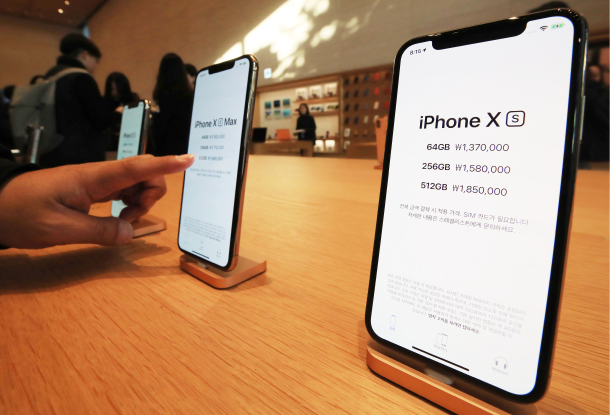
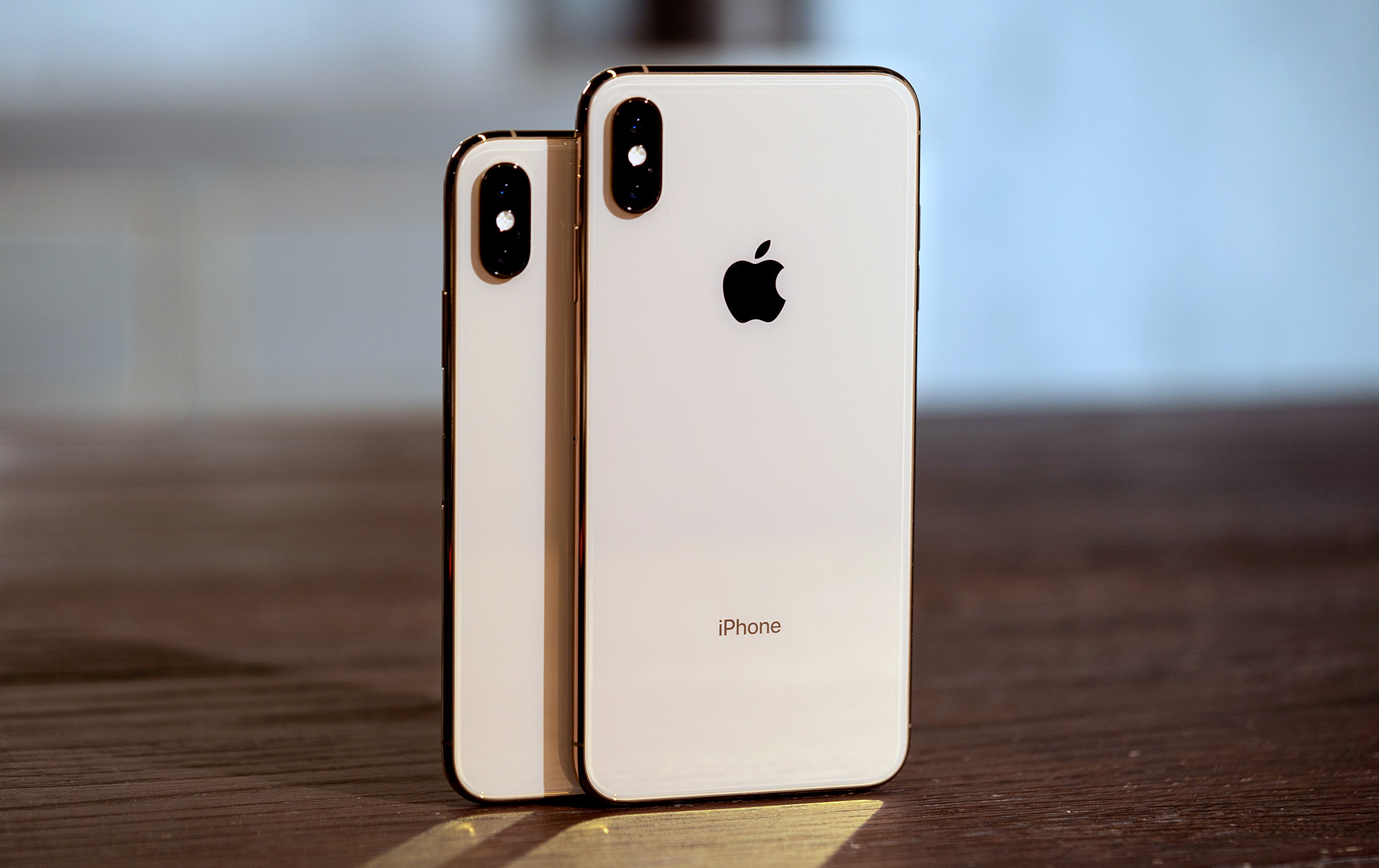
    Inside the iPhone XS, iPhone XS Max, and iPhone XR there are currently two upper antennae and two lower ones, all of which are manufactured from Liquid Crystal Polymer (LCP). According to Kuo, though, the 2019 iPhone series will introduce some major changes to this structure. Specifically, it’s predicted Apple will use a single LCP and modified polyamide (MPI) unit for the upper antenna and three MPI units for the lower ones.

    The reason for this sudden switch to MPI technology reportedly has something to do with production. In his research note, Kuo explains that the current-gen iPhones are being held back by LCP manufacturing issues which cause problems for high-frequency cellular transmission and ultimately affect yield.

    The focus on the modified-PI structure this year should result in similar 4G LTE performance and fewer production problems. Theoretically, the technology is also cheaper to produce, although Kuo believes the overall antenna production costs will rise between 10% and 20% due to new ultra-wideband upgrades that will improve indoor navigation performance. Speaking of which, recent Apple patents suggested the company was working on a feature that’d allow individual store and mall apps to integrate indoor mapping and location tracking.

    Another benefit that’ll come from the switch is a more diverse set of suppliers – Apple will apparently go from having just two suppliers to a total of five. Murata, who is already one of Apple’s suppliers, will continue to supply LCP for the upper antenna, while Flexium, Avary, and ZDT will split orders for the MPI part. Regarding the bottom MPI units, orders look set to be split between Avary, ZDT, and DSBJ. Current LCP supplier Career has been cut from Apple’s order list, according to Kuo, and will not receive new orders for the iPhone, iPad, or Apple Watch this year.

    The focus on MPI this year is a pretty major move for Apple, but according to Ming-Chi Kuo, it’s only temporary. In fact, come next year the Cupertino giant will reportedly switch back to LCP once materials have been improved and production issues resolved. This technology will then be used inside the next-gen iPad Pro models that are due to arrive in Q1 2020 and Apple’s first 5G iPhones later on in the year.

    While on the topic of 5G iPhones, it’s worth pointing out that the modem situation for these has changed quite drastically over the past month. Following Apple’s legal battle with Qualcomm which resulted in the latter refusing to supply the former with modems for its 2018 iPhone series, the expectation was that the Silicon Valley-based company would continue to use Intel modems as it introduced support for the next-generation networks next year.

    Towards the middle of April, however, Apple and Qualcomm surprisingly announced that they had reached a six-year agreement for chips. This quickly led to Intel’s exit from the mobile 5G modem market and now, according to Kuo, Apple will use both Qualcomm and Samsung 5G modems next year.

    Eventually, support for the next-gen networks will also be expanded to the iPad Pro lineup. However, Kuo believes this won’t happen until the tablets are refreshed in 2021.

  • Trump’s threat could lead to higher Apple iPhone prices

    Trump’s threat could lead to higher Apple iPhone prices

    If you live in the U.S., be prepared to pay more for the Apple iPhone. A multi-part tweet disseminated today by President Donald Trump revealed that starting next Friday, $200 billion of Chinese goods imported into the U.S. will be taxed at a 25% rate, up from the current 10%. Trump also noted that $50 billion of hi-tech goods from China that are imported by the U.S. already are taxed at 25%. While the Apple iPhone and other Apple devices have managed to evade the tariff charges, Trump is now talking about taxing hundreds of billions of dollars of additional Chinese products imported into the states, possibly including the iPhone. While Apple designs its products in the U.S., they are assembled by contract manufacturers in China and imported into the U.S.

    Trump could be merely seeking to raise the pressure on China to reach an agreement with the U.S. A negotiating team from the country will travel to Washington this week for a round of talks. This could be the last chance for both nations to reach an agreement and end a trade war that has weakened China’s economy. That weakness has hurt Apple’s business in the country. During the company’s fiscal second quarter, which ran from January through March, Apple saw its sales in China declined by 21.5% from $13.02 billion to $10.22 billion.

    The trade war between the U.S. and China went into high gear last March when the president announced a 25% tariff on $50 billion of Chinese tech products sent to the states. A couple of weeks later, the Chinese retaliated by adding a tax on 128 products imported from the U.S. The Times reported last summer that Trump had told Apple CEO Tim Cook that he would not place a tariff on the iPhone (he uses two of them, one for tweeting), although that report was later denied by the White House.

    So why has Trump decided to engage in a trade war with China? The U.S. has run a large trade deficit with China for years, and while many economists will say that this shows that U.S. consumers are wealthier than their Chinese counterparts and can afford to purchase more goods from that country, the president sees it differently. He views the trade deficit as a scoreboard showing that the U.S. is losing when it comes to trade with China.

    The president also could be losing patience with Apple CEO Tim Apple Cook. Trump has said numerous times that Apple needs to move the production of its products to the U.S., and tweeted last September that Apple could avoid tariffs by moving jobs to the U.S. And in a bizarre episode that has never been explained, back in June of 2017 the president said that he was told by Tim Cook that Apple would build “three big plants, beautiful plants” in the U.S.The president said at the time that he couldn’t say where the factories would be located, or what they would produce. There was a good reason for that; Apple denied that this conversation ever happened. But to illustrate how the president thinks, he had previously told that he wanted Apple to build its best factory in the states “even if it’s only a foot bigger than someplace in China.”

    While the U.S. has been pressing China to buy more American made goods, it also wants the country to stop demanding U.S. trade secrets and technology as a condition for doing business in China. And while there is no doubt that Trump sees the tariffs as a way to twist the arm of Chinese president Xi Jinping, the data indicates that Americans are being hurt by the price hikes being passed on to them because of the tariffs. And if the iPhone ends up on the list of products getting taxed, U.S. consumers will end up paying more for the device. How much more would depend on how much of a tariff Apple would decide to eat.

  • Apple faces a fineof $26.6 billion in antitrust probe

    Apple faces a fineof $26.6 billion in antitrust probe

    The Financial Times reports today that complaints made by music streamer Spotify against Apple will be investigated by the EU competition commission. The issue is the 30% cut of revenue that Apple charges apps in the App Store for using its payment system. Spotify calls this the “Apple Tax” and complains that it gives rival streamer Apple Music an unfair advantage. The complaint was originally lodged in March. While Apple takes 30% from Spotify and other music subscription services, it doesn’t charge other apps like Uber.

    If the EU rules in favor of Spotify, it can force Apple to change its business practices on the continent and fine Apple up to 10% of the company’s global revenue. In Apple’s case, the fine could total as much as $26.6 billion. Most likely, Apple and the EU competition committee will work out a settlement with the company promising to lower or end the so-called “Apple Tax.”

    Both Apple Music and Spotify have similar monthly subscription rates, with both charging $9.99 a month for an individual subscription, $14.99 a month for families with up to six members, and $4.99 a month for verified students. However, because of Apple’s 30% cut, in the App Store Spotify charges $12.99 a month for individuals, $16.99 a month for families and $7.99 a month for verified students. Unlike Apple, Spotify does have a free tier of service that is ad-supported, although it doesn’t allow users to download music or select individual songs.

    Just last week, Spotify announced that it grew the number of its paying Premium tier subscribers by 32% year-over-year during the first quarter. The company now has 100 million paying subscribers and 117 million who use the free ad-supported service. At last count, Apple Music had 56 million paying subscribers worldwide. However, in the states, it is Apple Music on top-barely. Just recently, the Wall Street Journal said that in the U.S., Apple Music has 28 million paying subscribers compared to 26 million for Spotify.

    A lawyer at Clifford Chance that helped Spotify file its complaint, Thomas Vinje, said that there are other music streamers that agree with Spotify’s position. However, Vinje says that these other companies are “too afraid to take on Apple.” Back in March, Apple responded to the charges by pointing out that Spotify used the App Store to grow its business over the years without making any contributions to it in return.

    “After using the App Store for years to dramatically grow their business, Spotify seeks to keep all the benefits of the App Store ecosystem — including the substantial revenue that they draw from the App Store’s customers — without making any contributions to that marketplace. At the same time, they distribute the music you love while making ever-smaller contributions to the artists, musicians, and songwriters who create it — even going so far as to take these creators to court.
    Spotify has every right to determine their own business model, but we feel an obligation to respond when Spotify wraps its financial motivations in misleading rhetoric about who we are, what we’ve built and what we do to support independent developers, musicians, songwriters and creators of all stripes.”-Apple

    Apple has been fined before by the EU’s competition commission. In 2017, commissioner Margrethe Vestager ruled that Apple had to pay 13 billion Euros ($14.6 billion USD) in back taxes. The commission found that a tax deal Apple had with Ireland was actually considered to be illegal state-aid from the country.

  • Siemens helps Vietnam build smart infrastructure

    Siemens helps Vietnam build smart infrastructure

    The deal, inked by Minister of Industry and Trade Tran Tuan Anh and a representative of Siemens AG, is part of the roadmap towards realizing the joint statement issued by the Ministry of Industry and Trade and the German Ministry of Economic Affairs and Energy last month.

    Smart infrastructure development for Vietnam is made based on the country’s economic, energy, and industrial production situation with a view to making Vietnam an industrialized economy that pursues sustainable development in the near future.

    It looks to ensure sufficient and sustainable energy, train high-quality human resources, and carry out the Green Growth Strategy and infrastructure development plan in the country.

    Before the signing ceremony, Minister Anh had a working session with German Minister of Economic Affairs and Energy Peter Atmaier and leaders of Siemens AG, during which they reviewed cooperation between the two sides under the joint statement, and urged the engagement of the German corporation in smart infrastructure building in Vietnam.

  • Elon Musk Owes $507 Million To Banks Helping Tesla Raise Capital

    Elon Musk Owes $507 Million To Banks Helping Tesla Raise Capital

    Tesla Chief Executive Elon Musk personally owes $507 million to Wall Street banks involved in Tesla’s stock and debt sale, backed by his stake in the electric car maker, a company filing showed on Thursday.

    The lending was disclosed in Tesla’s prospectus on Thursday to raise up to $2.3 billion with new shares and convertible debt, and it was $117 million less than the personal loans to Musk disclosed in Tesla’s previous prospectus in 2017.

    Still, Tesla said that if the price of its stock falls and the banks force Musk to sell some of his shares, that could create additional pressure on the stock.

    Tesla jumped over 4% after Tesla disclosed capital raising plans, which soothed investors’ recent concerns about the Palo Alto, California company and pulled its stock up from two-year lows.

    Musk, who owns 20% of Tesla, has taken personal loans from Wall Street banks for years. A Tesla 2017 prospectus showed $624 million in loans to Musk.

    The filing on Thursday showed Musk owed money to three banks working on the capital increase.

    Goldman Sachs Group Inc has $213 million in loans outstanding to Musk, while he owes Morgan Stanley $209 million, and another $85 million to Bank of America Corp . Goldman was not mentioned as a personal lender to Musk in the 2017 filing.

    Those loans are backed by Musk’s shares in Tesla, currently worth a total of around $8 billion. If Tesla’s stock declines, then Musk could be forced to sell some of those shares under terms of the loan, according to the Tesla filing.

    Mark Williams, a professor of finance at Boston University, said that investment banks can run into conflicts of interest with their deals with companies, their founders and CEOs, testing their rules to keep different businesses separate.

    “This is particularly true in the case of Tesla where you have an aggressive and vocal CEO who is prone to pushing the legal limits and gain terms that might run counter to Goldman’s conflict of interest policies,” Williams said.

    Goldman and Citigroup Inc, the top-line book runners in Thursday’s capital raise, both have “sell” ratings on Tesla’s stock, which is unusual but not exceptional on Wall Street.

    At the end of 2018, Musk and his trust had 13.4 million Tesla shares pledged as collateral for personal debts, according to another filing. That is down from 13.8 million shares at the end of 2017.

    Tesla, Morgan Stanley and Goldman Sachs declined to talk about the loans. Tesla has a policy that caps executives’ borrowings at a quarter of the value of the shares pledged as collateral.

    With Tesla repeatedly pushing back forecasts for turning a profit, its stock has dropped 27% year to date.

    Musk plans to buy another $10 million worth of shares as part of the sale announced on Thursday.

  • Vietnamese real estate market attracts Japanese firms

    Vietnamese real estate market attracts Japanese firms

    In an interview with correspondents from the Vietnam News Agency on the sidelines of the TMS Group’s investment promotion workshop in Osaka on April 9, Nakata said that it is not just Vietnam’s real estate market, but those in some Asian countries like Cambodia, Indonesia also have good prospects.

    However, he believed that Vietnam is the most attractive due to its safe and stable investment environment. According to Nakata, the real estate industry in Vietnam has been developing to become the number one investment channel.

    Kako Sasai, head of the business information division of the Japan External Trade Organisation (JETRO), said foreign investment in Vietnam’s real estate could increase in the time ahead.

    She noted that Japan’s investment in Vietnam went up rapidly from 2016 to 2018. The number of Japanese firms investing in the Southeast Asian country has surged, resulting in the increasing demand for offices and houses.

    Most Japanese investors in Vietnam evaluated that the country has lots of potentials and brings stable profits, she said.

    The Vietnamese Government and enterprises have been focusing on attracting more overseas firms to invest in Vietnam beyond the field of real estate, she added.

    According to the latest survey of JETRO, Japan’s direct investment in Vietnam has increased in terms of the number of businesses and the amount of capital. As many as 70 percents of Japanese businesses plan to expand operations in Vietnam, while 88 percent expect their revenues in the market will increase in the future.

    Toru Tomita, director general at the Osaka-based O.M.NET cooperative business association, described Vietnam as a young nation with abundant labor supplies.

    In the future, more Japanese businesses will come to invest in Vietnam, he said.

    The investment promotion workshop in Osaka is part of activities of the TMS Group to introduce the investment environment in Vietnam and seek potential partners in real estate projects that the group is implementing in Vietnam.

    Vietnamese Consul General in Osaka Vu Tuan Hai affirmed that the Vietnamese Government will create an open and equal business environment for Japanese investors.

    The Vietnamese Consulate General will continue supporting and accompanying Japanese businesses in studying, preparing and implementing business investment plans in Vietnam, he said.

    TMS Group has been cooperating with Japanese partners over the past 15 years and it has been serving as a bridge to connect Vietnamese businesses with Japanese partners in the fields of their strengths such as real estate, human resources supply, education-training, trade, services, healthcare, and high-tech agriculture.

  • Grab may be categorized as e-charter transport operator

    Grab may be categorized as e-charter transport operator

    The Ministry of Transport organized the meeting with other ministries, transport operators and associations to collect feedback for the eighth version of the draft decree before presenting it to the prime minister prior to April 15 as scheduled. Many participants at the meeting proposed Grab be listed as an e-charter transport operator.

    A representative from the Ministry of Public Security (MPS) noted that Grab was a new transport service provider that applies technology to its operations. Its services are widely used by the local people thanks to its convenient features.

    The MPS representative suggested the relevant agencies clarify Grab’s business structure and categorize it in accordance with prevailing regulations while imposing stringent management policies on the firm in terms of safety requirements for vehicles and drivers, service costs and tax and financial obligations to the State.

    Representing Grab Vietnam, Nguyen Ngoc Trang asserted that Grab functions as an e-commerce trading floor as it was previously registered with the Ministry of Industry and Trade. He also pointed out that some terms stipulated on the draft decree were redundant and illogical.

    Meanwhile, some participants at the meeting voiced their opposition to the suggestion to list Grab as an e-charter transport service provider.

    Nguyen Cong Hung, chairman of the Hanoi Taxi Association, was quoted by Nguoi Lao Dong Online as saying that the application of electronic features to operations is merely a transport connection method. It is illogical to name a new transport service type based on the connection method, Hung said.

    Also, Khuat Viet Hung, vice chairman of the National Traffic Safety Committee, stated that the five types of transport services regulated in the Law on Road Traffic were enough and creating a new service type was not needed.

    Wrapping up the meeting, Deputy Minister of Transport Le Dinh Tho remarked that the unit compiling the draft decree will take the feedback into consideration. He suggested the relevant parties continue to work on the draft decree before sending it to the prime minister.

  • Hyundai Venue Bags Over 2000 Bookings In Just One Day

    Hyundai Venue Bags Over 2000 Bookings In Just One Day

    The soon-to-be-launched Hyundai Venue SUV has garnered over 2000 bookings in India in just one day. It was just yesterday, on May 2, that the company announced opening pre-bookings for the new subcompact SUV in India. Slated to be launched on May 21, 2019, the new Hyundai Venue is the first subcompact SUV from the South Korean carmaker, and it will rival the likes of Maruti Suzuki Vitara Brezza, Mahindra XUV300, Ford Ecosport, and Tata Nexon. Customers can book the new Venue online on the company’s website or at Hyundai dealerships across India, for a token of ₹ 21,000. Few Hyundai dealers have been accepting bookings for the Venue from mid-April itself.

    The new Hyundai Venue will be offered in four variants and three engine options. While the variant details are still unknown, the SUV will come powered by an all-new 1.0-litre Turbo petrol engine, along with the tried and tested 1.2-litre naturally-aspirated petrol and the 1.4-litre diesel engine. The new 1.0-litre, three-cylinder Turbocharged engine will also get the option of a 7-speed dual-clutch transmission, while the 1.2 petrol and 1.4 diesel will come with a 5-speed and 6-speed manual gearbox, respectively.

    Visually, the Hyundai Venue comes with new design and styling, more in line with the company’s international SUV like the new Santa Fe and Palisade. The features list includes – a cascading grille with chrome detailing, projector headlamps with LED DRLs, high mounted indicators, and projector foglamps. The SUV also gets a set of new sporty 16-inch alloys, roof rails, and LED taillamps with Z cluster patterns. Hyundai will offer the SUV in 7 exterior colour options- Denim Blue, Lava Orange and Deep Forest along with three Dual Tone options.

    The Venue gets a new, fresh-looking all-black cabin with a new steering wheel, a well-laid-out dashboard, and nice fit and finish. For your comfort and convenience, the SUV also gets remote engine start/stop, remote climate control, voice recognition, vehicle relationship management, electric sunroof, cruise control, automatic climate control, rear AC vents, cornering lamps, and a cooled glovebox. This is in addition to an 8-inch floating touchscreen display, loaded with Apple Carplay, Android Auto, navigation and more.

    The new Hyundai Venue is the first connected car in its segment thanks to the BlueLink connectivity system. The system offers 10 India-only features with a total of 33 connectivity features including geo-fencing, speed alerts, SOS, panic notifications, destination sharing, and road-side assistance and so on.

  • Asia In Charge Of Electric Car Battery Production

    Asia In Charge Of Electric Car Battery Production

    Global production of batteries for electric cars is concentrated in Asia, with Chinese, Japanese and South Korean firms dominating the sector and building factories in Europe to conserve their supremacy. However, Europe is looking to strike back, with France and Germany saying on Thursday they would form an alliance to develop next-generation batteries in a bid to counteract Asia’s dominance.

    Lithium-ion batteries are a — if not the — crucial component of electric vehicles, but few companies have ventured into actually making them given the huge cost of setting up manufacturing facilities and the still limited demand. Car manufacturers have prefered to have a choice of several specialised suppliers, especially as battery technology is rapidly evolving.

    China, where half of electric cars are currently being sold, requires car manufacturers to use locally-built batteries and is calling the shots in the industry with two-thirds of the world’s production capacity of lithium-ion cells for batteries. Only Asian firms appear in the top 10 of the industry: China’s Contemporary Amperex Technology (CATL) accounted for 23 percent of global production last year, edging out Japan’s Panasonic at 22 percent.

    China’s BYD followed at 13 percent and is the only car manufacturer to have prospered in making batteries. South Korea’s LG Chem came in at 10 percent while Samsung SDI had 5.5 percent, according to the US-based Center for Automotive Research (CAR). Europe accounts for only one percent of global production. The United States also remains marginal on a global scale despite the Gigafactory that Tesla developed with Panasonic.

    Another key factor in China’s supremacy: control over the raw materials needed to manufacture the batteries: lithium and cobalt.

    According to Bloomberg, the Chinese firms Ganfeng and Tianqi control 17 and 12 percent respectively of the world production of lithium thanks to their investments in mines in Australia and South America.

    Tianqi bought a 24 percent stake in Chilean miner SQM for $4.1 billion in December. Together with the US firm Albemarle it also controls the huge Greenbushes mine in Australia.

    Meanwhile, Chinese firms control at least half of the cobalt extracted in the Democratic Republic of Congo, where 70 percent of global output comes from, according to estimates cited by Bloomberg.

    China Molybdenum bought a major site from the US firm Freeport-McMoran for $2.65 billion in 2016. China also has 80 percent of the world’s capacity to produce refined cobalt using chemical processes.

    Concerned over their access to supplies, several carmakers have concluded long-term deals with Chinese firms: Volkswagen announced at the beginning of April a 10-year deal with Ganfeng for lithium that it can provide to battery manufacturers of its choice.

    According to the BCG consultancy, the global auto battery market could reach 45 billion euros in value in 2027, with Europe accounting for 20 to 30 percent, but Asian firms are expected to benefit most.

    CATL is investing some 240 million euros to build a factory in the central German city of Erfurt that will supply BMW from 2022. The luxury carmaker has concluded a contract worth four billion euros with CATL, including 1.5 billion from the Erfurt site.

    LG Chem has been manufacturing batteries for Daimler, Volvo, Audi and Renault from a site in Poland since last year.

    Samsung SDI has a factory in Hungary, where fellow South Korean firm SK Innovation is investing $1.5 billion into two factories that could end up serving Volkswagen.

    One of the rare European specialists in batteries is Swedish firm Northvolt. It is currently building what will be Europe’s largest facility in Sweden together with Germany’s Siemens.

    Expected to cost at least 1.6 billion euros, the facility is to begin turning out batteries in 2020 and when it reaches capacity in 2023, it should be double the volume of CATL’s German factory.

    Founded by two former Tesla employees, Northvolt joined forces with Volkswagen in March to create a “European Battery Union” to promote research. Northvolt also collaborates with BMW.

    Meanwhile the Dutch firm Lithium Werks, which has already built a massive factory in China, has been in talks to build a billion-euro facility in Poland.

  • Australia’s ACCC proposes to continue regulating MTAS

    Australia’s ACCC proposes to continue regulating MTAS

    Australian telecommunications regulator ACCC has proposed to continue regulating Australia’s domestic mobile terminating access service (MTAS) for voice services, including setting default mobile termination rates (MTRs).

    But the regulator has proposed to drop the price declaration of the MTAS for SMS services as a result of increased competition from OTT messaging apps such as iMessage and WhatsApp.

    The MTAS is a wholesale service for interconnecting calls and SMS between mobile networks. The ACCC’s regulation of the service includes a price declaration, which is the MTR that operators are required to offer in the absence of a commercial agreement with the terminating network provider.

    In August, the ACCC launched a public inquiry into whether to continue the current regulation of voice and SMS MTAS, which has been regulated since 2014.

    After the inquiry the ACCC has provisionally concluded that while the voice declaration is still required, the SMS declaration is not.

    “Many consumers with smartphones are now using over-the-top messaging services such as iMessage and WhatsApp as alternatives to SMS. Importantly, we have also found that the majority of mobile plans now on offer in the market offer unlimited SMS,” ACCC chair Rod Sims said.

    “Our decision to regulate SMS appears to have had the desired effect. We are therefore proposing to remove regulation of MTAS for SMS services as we do not think continued regulation is necessary to promote competition.”

    But Sims said OTT voice services are not yet substitutes for mobile calls due to quality issues and the lack of access to services such as the 000 emergency hotline.

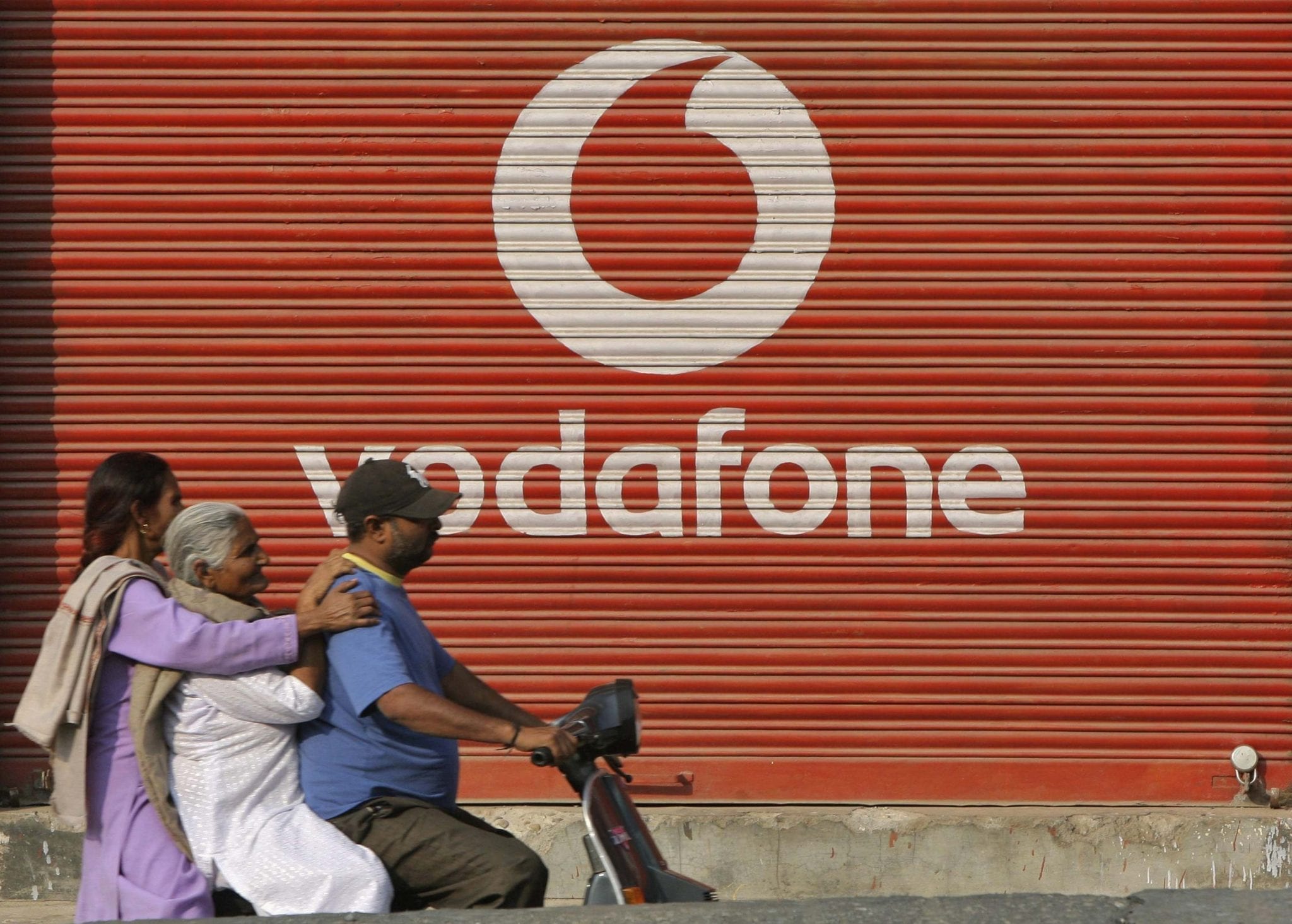
  • Airtel, Vodafone may sell stakes in merged tower company

    Airtel, Vodafone may sell stakes in merged tower company

    India’s Bharti Airtel and Vodafone Group are reportedly in talks to sell more than half of their respective stakes in the tower company that will be created through the merger of Bharti Infratel and Indus Towers.

    Bharti Infratel is Bharti Airtel’s tower division, while Indus Towers is an independently managed tower company jointly owned by the Bharti Group and Vodafone Idea.

    The combined entity is expected to have a market valuation of $12 billion to $13 billion and have a portfolio of over 160,000 towers.

    According to a report, which cites unnamed sources, Bharti Airtel and Vodafone Group are aiming to bring their stakes in the combined company down to around 13% each after the merger.

    The operators are looking to sell part of their stakes primarily to existing investor, global investment firm KKR, the sources said.

    KKR could eventually hold between 25% and 32% of the combined company, with minority stakes held by the Canada Pension Plan Investment Board (CPPIB) and some other investors.

    The stake sales could be worth around $3.2 billion for Bharti Airtel and $2.1 billion for Vodafone Group, the report states.

    It also asserts that the Vodafone Group may plan to eventually exit its investment in the company, and that the merger is likely to close in June.

  • Tata Harrier Updated With Apple CarPlay Compatibility

    Tata Harrier Updated With Apple CarPlay Compatibility

    It is likely that the first batch of Tata Harriers already sold will be able to get the connectivity system with a software update. There are no changes to the infotainment system on the SUV that continues to be offered with the 8.8-inch floating touchscreen display and has been developed by JBL. The infotainment system is offered on the XZ or higher trims.

    More recently, Tata announced that the Tiago and Tigor XZ+ variants now come with Apple CarPlay as well, having been updated with the larger 7-inch touchscreen infotainment system previously. Like the Harrier, the top variants of the Tiago and the Tigor were only offered with Android Auto on the XZ+ trim.

    Apart from the feature addition, expect no major changes on the Tata Harrier. The SUV is powered by the Fiat sourced 2.0-litre diesel motor tuned for 138 bhp and 350 Nm of peak torque. The motor is paired with a 6-speed manual transmission. A 7-speed version of the Harrier is due for launch later in the year and was revealed as the Tata Buzzard. The new offering could see an automatic transmission being introduced on the SUV.

  • Tata Motors Sales Drop By 20%

    Tata Motors Sales Drop By 20%

    These are trying time for the Indian auto industry that has been consistently witnessing drop in sales figures over the past months. April 2019 has seen a significant drop for most manufacturers with the latest being Tata Motors that saw a 20 per cent decline in volumes. The automaker sold 42,577 units last month, as against 53,511 units that were sold in April 2018. The company attributed to the drop in numbers to the weak consumer sentiment. The decline in sales is significant and the second highest reported yet, less than Toyota’s 23 per cent drop in sales, and higher than Maruti Suzuki, which reported a 19.6 per cent decline.

    Passenger Vehicle (PV) sales took a hit of 26 per cent in April this year as Tata Motors sold 12,694 units as opposed to 17,235 units sold during the same period last year. This, despite the company kick-starting the new calendar year with the launch of the Harrier SUV. Meanwhile, Commercial Vehicle (CV) sales in the domestic market dropped by 18 per cent, from 37,276 units in April 2018, to 29,883 units in April 2019. The manufacturer said that the on-going general elections also impacted demand generation in the market for both PV and CV sales.

    Sales for Medium and Heavy commercial vehicles (MHCV) stood at 9403 units last month, a drop of 33 per cent when compared to 14,028 units that were sold in April 2018, due to the revised axle norms. The Tipper segment showed growth as Tata sold 3428 units in April 2019, up by 1 per cent over last year, but sales were down overall with road and infrastructure projects slowing down in recent months.

    The I&LCV truck sales in April 2019 recorded a growth of 10 per cent at 3546 units as compared to 3,229 units sold in April 2018 and remained largely unaffected by the low market demand thanks to the growth of the e-commerce sector fuelling the sales. The SCV Cargo and Pickup segment witnessed a drop in sales at 13,996 units, down by 4 per cent over 14,620 units sold during the same period last year.

    In the commercial passenger carrier segment, Tata Motors sales stood at 2983 units in April this year, down by 33 per cent over the same month last year. The MCV bus segment has also seen a slowdown, while sales for school buses are expected to increase in the months to come on the school season begins. The automaker also announced that it is gearing up to supply vehicles that meet the safer AIS 153 regulations. Lastly, Tata’s Winger ambulances continue to see a strong demand of 2500 units, the new 15-seater Winger has seen good traction.

    Tata Motors exports saw a sharp decline in volumes at 53 per cent with 1402 units sold. Multiple factors like high stocks in Bangladesh because of the contraction in retails during the last quarter due of elections, security concerns in Sri Lanka and slump in Middle East have affected the overall industry volumes in these markets.