Author: Mei Ling Tan

  • Toyota Domestic Sales Down By 22%

    Toyota Domestic Sales Down By 22%

    Toyota Kirloskar Motor sold a total of 10,112 units in the domestic market. The domestic sales saw a drop of 22 per cent which is a big drop compared to March 2019 which showed a growth of 7 per cent. The company exported 1301 units of the Etios series this month thus clocking a total of 11,413 units. Toyota Kirloskar Motor sold a total of 13037 units in the domestic market this month of April 2018. The company exported 834 units of the Etios series this month thus clocking a total of 13871 units.

    Toyota had even in March talked about the slow pace of the market and also the soaring prices of input costs and even the high insurance costs. Commenting on the sales performance, Mr. N. Raja, Deputy Managing Director, Toyota Kirloskar Motor said, “The industry is currently experiencing a slowdown due to uncertainty of upcoming general elections that looms over the market and this slow pace is expected to continue until the new government is formed. Consumer sentiments has currently dampened due to several factors like tight liquidity, high insurance, high costs.We hope the sales growth momentum to pick up in the upcoming months post election results are out.”

    Things are about to change though as the company is all set to launch the new Glanza Hatchback as also the rebadged version of the Vitara Brezza which will mark the company’s entry into the subcompact SUV segment. The company does say that the sales are likely to pick up post election results

  • AirAsia India Desire Jet Airways’ Boeing 737s

    AirAsia India Desire Jet Airways’ Boeing 737s

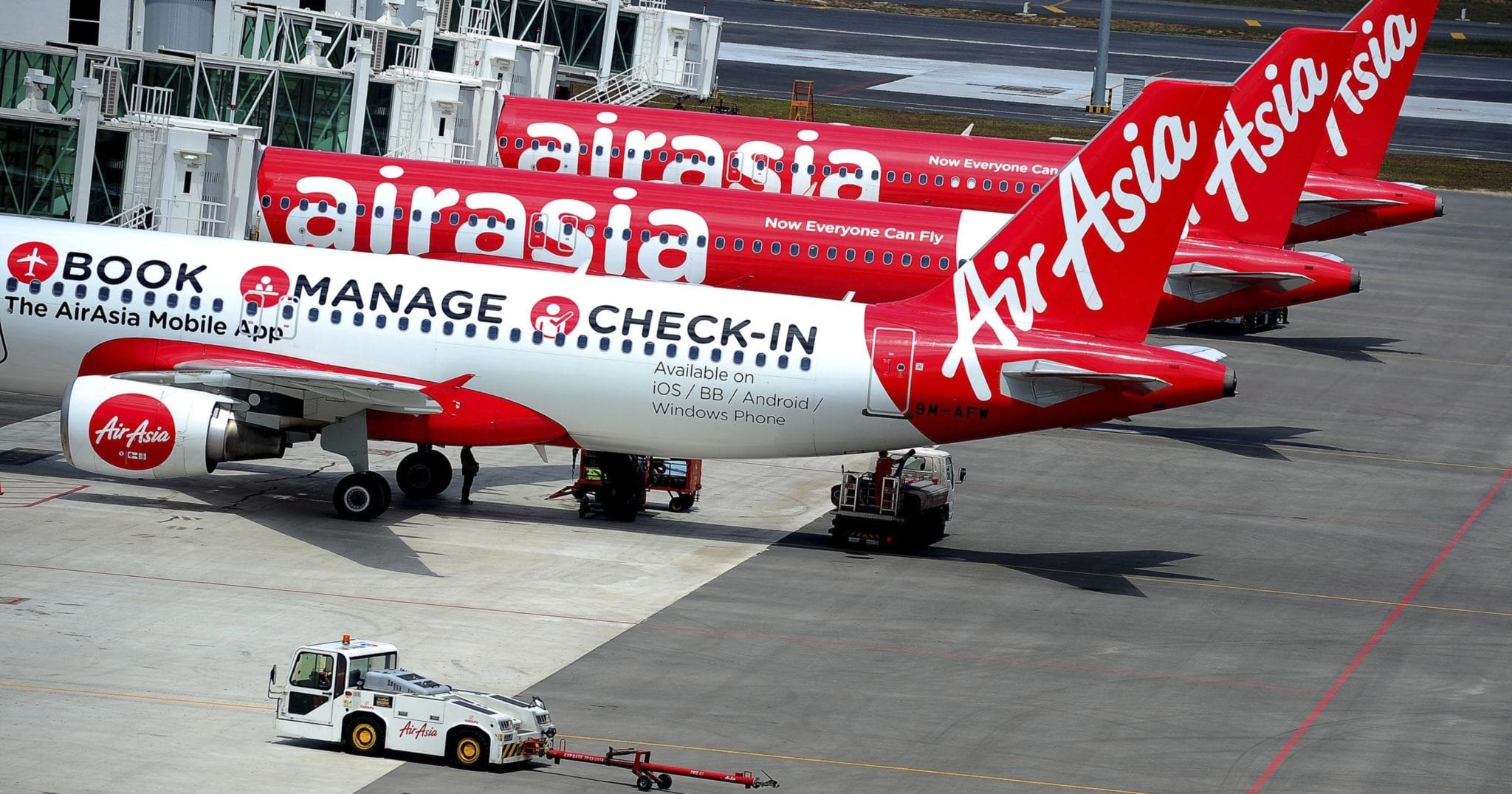
    A joint venture of Tata group and Malaysian Air Asia, AirAsia India is planning to induct some of the Jet Airways’ Boeing 737s that have now been repossessed by lessors. The move comes at the time when full-service Vistara is also planning to induct some of Jet’s Boeing 737s in its fleet.

    AirAsia India Pvt Ltd’s (AAIPL) flying license has listed Airbus fleet for its operations. The low-cost carrier (LCC) has applied for operating Boeing aircraft and the ex-Jet B737s to aviation regulator Directorate General of Civil Aviation (DGCA), according to a ToI report.

    It is to be noted that currently, AAIPL has 20 Airbus A320s and may also add five more of these planes. It is looking at ex-Jet B737s as well.  The suspension of operations by Jet Airways has suddenly freed up slots at India’s busiest airports- Delhi, Mumbai, and Bengaluru. The government has linked a temporary granting of these slots to other airlines’ to add to the capacity and to help to control the fares. The domestic market shares of AAIPL was 5.9 percent and that of Vistara was 4.2 percent in March 2019.

    This summer, AAIPL will complete its five years and become eligible to fly abroad. Full-service Vistara has already got government’s nod to fly abroad. Vistara was the first private carrier to get permission for overseas flights under the amended rules. In 2016, the government amended the 5/20 rule, which required an airline to complete fives years of operations and has 20 planes in its fleet, to fly abroad to 0/20.

    Worth mentioning here is that Jet Airways had a significant number of flights to the Gulf and Southeast Asia, and bilateral to both these places had been exhausted. If in the coming weeks and months, Jet Airways does not revive then its rights for international flights would also be distributed to other airlines.

    Air India was also looking at ex-Jet B777s and AI Express at B737s, but so far they have not taken these planes.

    In a circular dated April 25, Pawan Hans management stated to its employees that the company is not in a position to disburse employees’ salaries for the April month due to the uncomfortable financial position in Pawan Hans.

  • YouTube Music can now play local files on Android

    YouTube Music can now play local files on Android

    The phase-out of Play Music in favor of YouTube Music has been a long time coming, though Google’s actions towards this goal haven’t been particularly quick or decisive up to this point. However, with the latest update, YouTube Music has gained an important feature that brings it closer to being Google’s one and only music streaming service. We’re talking about the ability to play local files on your Android phone – something so basic, yet so elusive.

    The latest update for YouTube Music has added local music integration to the app. The feature can be found under the “Library” tab and allows you to play music files that are stored on your SD card or the internal memory of your Android device.

    Previous updates to Google’s up-and-coming music streaming app allowed it to be used for playback when opening audio files on your phone, but it didn’t have a built-in local content browser, which is the biggest change in the latest iteration.

    Upon launching the local content browser in YouTube Music, you’ll notice a message that reads, “These songs can be played on their own, but can’t be added to queues or playlists with songs from YouTube Music. They also can’t be cast to another device.” This limitation is rather odd, considering the Google Play Music allows for playlists that seamlessly mix on-device songs with tunes from the cloud. This could change in future updates, or could be a strategy to bolster the streaming subscriber base.

    Another omission that should (hopefully) eventually make it into the YouTube Music app is the ability to migrate your library from Google Play Music.

    The local music browser is not yet available worldwide, and seems to be enabled by a server-side switch on Google’s part.

  • South Korea already has 260,000 5G subs

    South Korea already has 260,000 5G subs

    South Korea’s mobile operators have already racked up over 260,000 5G subscribers since launching full-fledged services on April 3, government figures indicate. SK Telecom, KT and LG Uplus have been rapidly adding 5G customers during the first month of commercial 5G operations.

    Meanwhile the number of 5G base stations in the market has increased to over 54,200, up 7% from April 22. But coverage remains restricted to urban and dense population areas in capital city Seoul.

    But South Korean operators’ haste to be first to market with 5G for smartphones has led to some initial complaints over the coverage and speed of the 5G networks.

    According to the Ministry of Science and ICT, many of these initial complaints are being addressed, but more are expected to come to light as more people start using the networks.

  • Supermarkets lose Liquor Sales

    Supermarkets lose Liquor Sales

    Independent liquor retailers took back around 130,000 customers from supermarket chains over the 12 months to December 2018, increasing their market share from 9.8 per cent to 12.9 per cent, according to research firm Roy Morgan.

    Supermarket-owned chains, including Woolworths Group’s BWS and Dan Murphy’s, Coles Group’s LiquorLand, First Choice and Vintage Cellars, as well as IGA and Aldi, lost around 1.8 per cent of the market over 12 month period, according to Roy Morgan’s Alcohol Retail Currency report.

    “While the big two supermarket chains are competing, it appears to be largely at the expense of Aldi, IGA and other supermarkets all of whom lost share over the last 12 months,” Norman Morris, industry communications director at Roy Morgan, said.

    “Our research shows a number of drivers of buying behaviour in this market, including proximity to other shops, low prices, an easily browseable range, special offers, expert staff knowledge and good service.”

    Coles Group bucked the trend as the only major retailer to gain share over the year, jumping from 16.5 per cent to 18.1 per cent.

    And while Woolworths Group remains the clear market leader, with almost half of the alcohol market (48.3 per cent), its Dan Murphy’s brand lost 4.2 per cent of share during the period.

    Woolworths said yesterday that while Dan Murphy’s sales momentum improved over the 13 weeks to March 31, 2019, it is still expecting its Endeavour Drinks group EBIT to be below the prior year as it focuses on improving its range, service and convenience for customers.

    Likewise, Coles noted its Liquorland brand has struggled with a subdued market and lower promotional intensity in the beer category, especially over the New Year’s Eve period, which it said underperformed.

  • Angry Birds augmented reality mobile game Launched

    Angry Birds augmented reality mobile game Launched

    Rovio, the Finnish company behind the Angry Birds smash hit, announced last month that their first augmented reality mobile game is available for pre-order. Dubbed Angry Birds: Isle of Pigs, the game has now been released in the App Store and is available for free.

    Angry Birds AR uses Apple’s ARKit framework and is fully compatible with iOS devices like iPhone 6s and newer, as well as iPad 5th generation and later. Since this an Apple prime exclusive, it’s not available on Android and won’t be for a while. However, Rovio says that it’s exploring other platforms like Android, so we can expect the Finnish developer to expand the game’s availability to Google’s operating system too.

    As far as the gameplay goes, Angry Birds: Isle of Pigs takes players to a remote island where the greedy green pigs vacation in over 40 levels. You’ll meet some of the birds you already know and love, but in a more realistic environment that brings Angry Birds to life like never before.

    Thanks to the augmented reality technology, players can physically walk around structures overlaid onto objects in their own environment to find weak elements, identify different angles for the best accuracy, or discover hidden surprises that will allow them to take on the green pigs, earn more points, as well as unlock additional content.

    Keep in mind that the game may require internet connectivity and subsequent data transfer charges may apply. Even after the initial download, additional content may be downloaded, which may include data charges.

  • NOW Telecom details “NVNO” model

    NOW Telecom details “NVNO” model

    The Philippines’ NOW Telecom has introduced a new model aimed at partnering with small and medium sized businesses to deliver wireless broadband services to individual areas.

    The company’s new NOW Virtual Network Operator (NVNO) model will see the operator partner with SMEs and even individuals to bring NOW’s fixed wireless broadband technology to a particular area.

    The SMEs will be given exclusive distributorship rights over the broadband services in the given areas, which could be an office building or a local village area.

    NOW plans to enter five year business partnerships under a revenue sharing model. The business partner would be responsible for selecting the area, selling the product, marketing and installing the service and ensuring payment by subscribers.

    NOW’s Fiber in the Air service is a fixed wireless broadband internet service that provides guaranteed broadband internet for enterprises with a capacity of 2.4Gbps.

    To be selected, business partners will have a local business in the area and a strong local influence.

  • Unicom, Ericsson to collaborate on 5G development

    Unicom, Ericsson to collaborate on 5G development

    China Unicom and Ericsson have signed an agreement to accelerate the development of commercial 5G technology.

    The agreement signed at China Unicom’s 5G Innovation and Cooperation Conference in Shenzhen involves further co-operation on a 5G test network.

    The companies have already completed innovative 5G projects, such as the live 4K HD broadcast of a marathon; live 8K HD broadcast of the Women’s World Club Volleyball Championship; 360 degree panoramic live broadcasting, and driving demos.

    Meanwhile China Telecom and Ericsson announced they are collaborating to provide an end-to-end 5G network for the Beijing Expo 2019 horticultural exhibition in Beijing’s Yanqin district.

    The two companies are providing an end-to-end 5G network for the expo offering a combination of garden art and 5G mobile edge computing (MEC) technology to provide visitors with 360-degree panoramic UHD video VR live broadcasting, 5G+VR live broadcasting, and 5G cloud gaming services.

  • Google adds Tiles to Wear OS To Show Useful Information

    Google adds Tiles to Wear OS To Show Useful Information

    From a totally redesigned UI and battery life improvements to faster Google Pay and bug fixes, no matter how big or small the update there’s no denying Wear OS by Google, as it’s now called, has come a long way since it was first introduced back in 2014 under the Android Wear branding.

    Today, to help improve the overall experience even more, the Silicon Valley-based giant has announced another pretty big update to its wearable-focused OS.

    Around eight months ago, as some of you may remember, a new Wear OS design was introduced that provided users with swipeable access to a variety of things. A swipe from the bottom of the screen showed recent notifications and Quick reply suggestions, while a swipe down displayed a variety of Quick Toggles. Similarly, a swipe over to the left side of the panel brought up the Google Assistant and over on the right sat Google Fit.

    The response to this new design since its launch last summer appears to have been largely positive, and now Google is building upon it with a cool new feature that it’s calling Tiles.

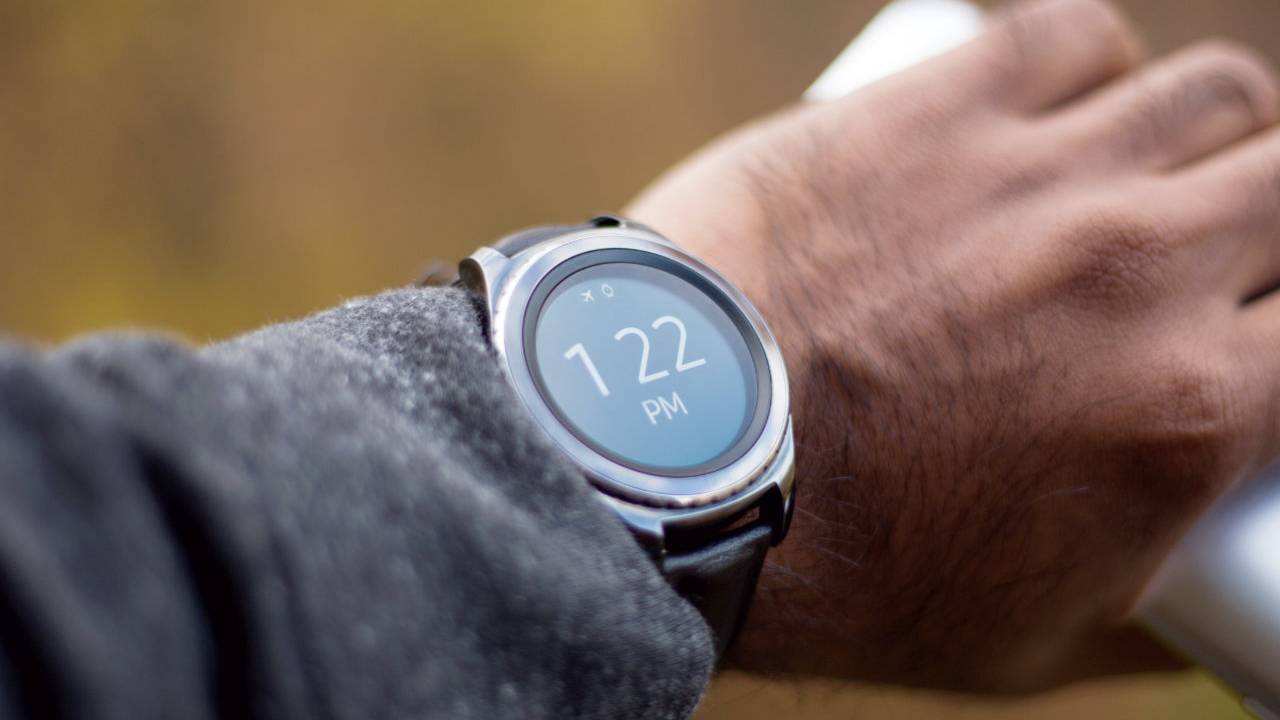
    As the name suggests, Wear OS by Google will soon integrate a number of tile-like cards into its UI that users can easily swipe through to see various bits of information that may interest them. Tiles are accessible by simply swiping to the left and, if users aren’t happy with the default order, they can be rearranged freely by long-pressing them and dragging each one individually until they are in the desired order. Alternatively, smartwatch owners can switch them around inside the Wear OS by Google app on their smartphone.

    According to Google, the initial rollout will include a total of six individual tiles. The first, called Goals, works just like the current Google Fit screen, allowing users to view their daily workout goals and start a physical activity with a simple tap.

    Another fitness-focused feature comes in the shape of the Heart rate Tile which, as expected, shows users their current heart rate. However, in order to use this one, consumers need a smartwatch with a built-in heart rate monitor. Alternatively, Bluetooth heart rate sensors such as straps can also be used.

    Joining Heart rate will be Next event and Forecast. The former does exactly what it says on the tin by displaying the next event in the calendar, while the latter allows users to prepare for the day by providing the local weather forecast.

    Completing the lineup of Tiles is Headlines which will constantly display the latest news headlines from a variety of different sources throughout the day. Also arriving as part of the update is the Timer tile which, as its name suggests, allows users to quickly set timers on their respective smartwatches.

    The new Tiles feature will begin rolling out to Wear OS watches across the globe over the course of the next month. An exact start date for this is yet to be confirmed, but Google does plan on showing the feature off at Google I/O next week where it’s also expected to announce the Google Pixel 3a and Pixel 3a XL, which will act as the company’s first mid-range smartphones.

    Regarding the future of Tiles, Google has confirmed that, over time,it’ll expand upon the current list of six by introducing new ones that center around different features. Eventually, users should have a Tile for every need.

  • First Asian Samsonite Premium store Coming to The Jewel

    First Asian Samsonite Premium store Coming to The Jewel

    The first Samsonite ultra-premium store in Asia is to open at Jewel Changi.

    The luggage brand is also planning one more outlet at Changi, raising its store network at the airport to five.

    “Every time we come up with something new, something big, we launch it first in Singapore,” Subrata Dutta, president and CEO of Samsonite Asia-Pacific told.

    “This is a new retail concept that further elevates the look and feel of the brand to something more luxurious. At Jewel, we get travel traffic from around the world. When you do something in Singapore, you get noticed by the right people.”

    Samsonite has also opened an American Tourister outlet at Jewel Changi, and will open a store at the revamped Funan mall, scheduled to open in the second half of this year.

  • CMR says most smartphones in India go for below industry ASP

    CMR says most smartphones in India go for below industry ASP

    The CyberMedia Research (CMR) report, “CMR India Mobile Pricing Index 2018”, revealed that 80% of smartphone brands are selling their handset below the average price of smartphones in India.

    Consumers want sleeker and cheaper devices, even as they demand overall better user experience, all contributing to increased average sales value of smartphones. CMR says in CY2018 India was one of the few major smartphone markets that grew by around 10%. It expects 2019 to be no different.

    According to Narinder Kumar, lead analyst -IIG CMR, “CY2018 witnessed growth in average sales value (ASV of smartphones largely due to upgradation. A majority of the current smartphone shipments are essentially upgrades, driven by consumers seeking more from their smartphones.”

    Indian and Chinese brands contributed the most to below industry average ASV, whereas 60% of brands in above ASV segment were global brands, including Apple, Google and Samsung.

    “The decline in above ASV percentage can be attributed to increasing market consolidation. There was around 10% decline in numbers of brands operating in the 4G Smartphone space. With top 10 players contributing 80% – 85% of market, there is stiff competition for rest of brands,” stated Narinder.

    CMR anticipates growth in ASV in CY2019, driven primarily by increasing consumer demand.

  • Mi Band 4 about to Arrive

    Mi Band 4 about to Arrive

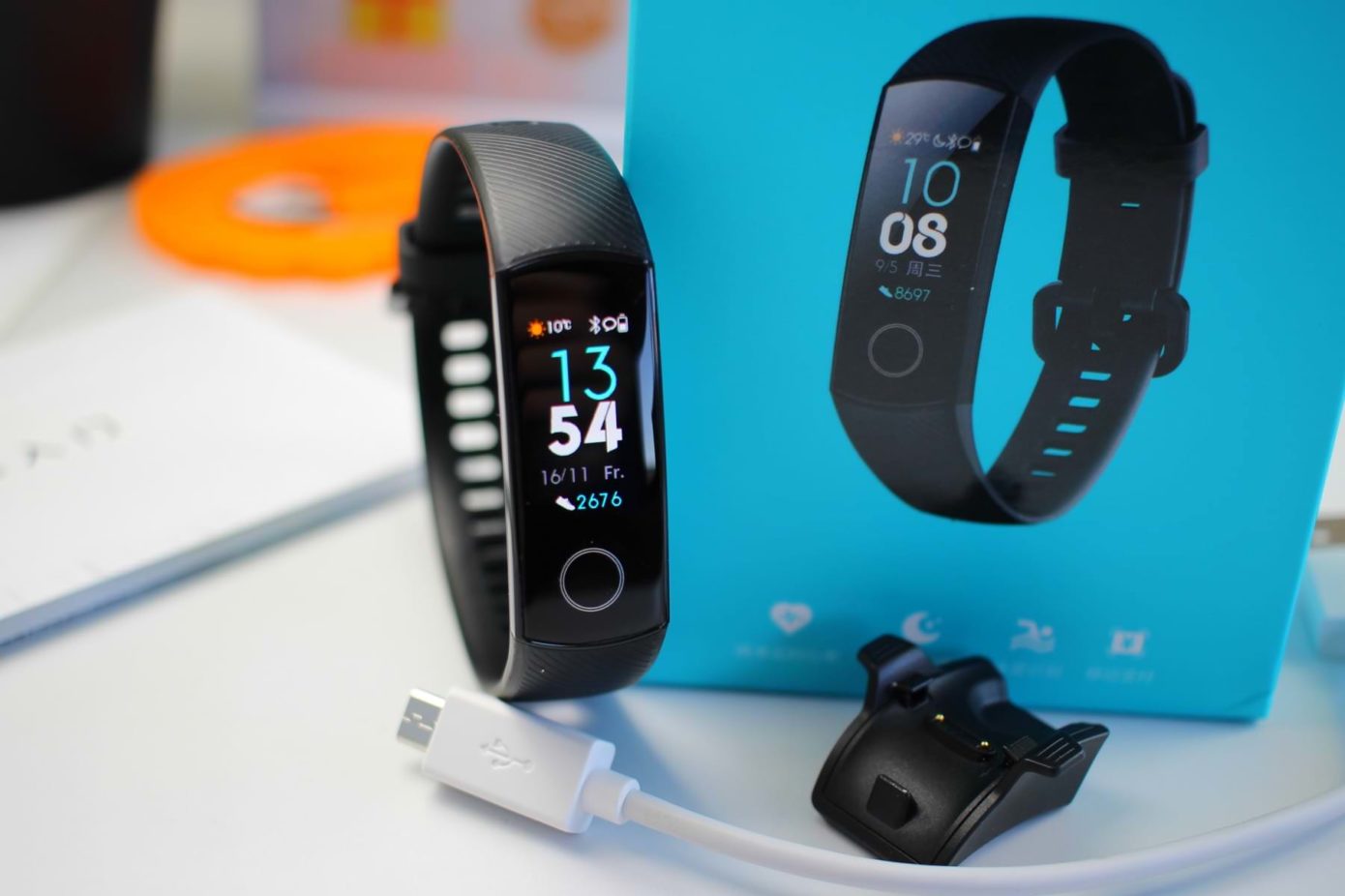
    Back in March, we told you that the Xiaomi Mi Band 3 fitness tracker is selling so briskly, Xiaomi was in no rush to release the sequel. One reason for the heavy demand is the wearable’s low price. Sold for $30 on Amazon, the device measures a user’s heart rate, counts the number of steps he or she has taken, monitors sleep quality and much more.

    But even the Mi Band 3 must step aside for a newer version with even more features. And today, spotted by DroidShout,  one of the two Mi Band 4 variants received certification by Taiwan’s National Communications Commission (NCC).

    The Mi Band 4 that was certified is model number XMSH07HM; this is the unit without NFC support. Another version with the model number XMSH08HM will come with NFC support, most likely so it can be used with the Xiaomi Pay mobile payment service. That model will be sold in China only. Both units received certification in March from the Bluetooth Special Interest Group, revealing that the Mi Band 4 will be equipped with Bluetooth 5.0 LE (Low Energy). The current model uses Bluetooth 4.2 LE.

    The NCC certification included several pictures of the Mi Band 4’s main module. There has been speculation that the Mi Band 4 will come with an electrocardiogram (ECG) scanner, similar to the one on the Apple Watch series 4. This is used to detect conditions like Atrial Fibrillation (AFib), an abnormal heart rhythm that can lead to strokes, blood clots, and death.

    Now that the Mi Band 4 is beginning to get the thumbs up from various organizations, its unveiling and eventual release surely can’t be too far away.

  • New Google Feature will Automatically Delete your Personal Data

    New Google Feature will Automatically Delete your Personal Data

    It isn’t a secret that Google tracks your location, activities and web usage through your phone. By allowing the company to monitor your Location History, Google can recommend a nearby restaurant, and allowing the company access to your personal data makes other Google apps more useful to you. At least that is what Google says. There already is a way for you to manage this information, but in a new blog post that Google published today, the company said that it has received feedback from users who want an easier way to manage or delete their personal data.

    You can already manage this data using your Google Account. On an Android phone, go to Settings > Accounts > your Gmail address > Google Account > Manage your data & personalization. From there you can opt-out of Web & App Activity, Location History, Voice & Audio Activity, Device Information and YouTube Search History. Click on the section titled Manage your activity controls to stop Google from tracking your use of Chrome and other apps.

    But the auto-delete tools that Google announced today will allow you to select how long you want Google to save your personal data. You can choose to save it for 3 months, 18 months, or until you manually delete it. If you pick 3 months or 18 months, any data older than the option you select will automatically be deleted on an ongoing basis.

    “Whether you’re looking for the latest news or the quickest driving route, we aim to make our products helpful for everyone. And when you turn on settings like Location History or Web & App Activity, the data can make Google products more useful for you—like recommending a restaurant that you might enjoy, or helping you pick up where you left off on a previous search. We work to keep your data private and secure, and we’ve heard your feedback that we need to provide simpler ways for you to manage or delete it.”-Google

    This new feature will first be made available for Location History and Web & App Activity and Google will start pushing it out in a few weeks.

  • The Motorola One Vision Will be Announced Soon

    The Motorola One Vision Will be Announced Soon

    Motorola has released a total of three Android One smartphones since 2017 – the Motorola One, One Power, and Moto X4 – but soon this list could expand with the launch of the Motorola One Vision.According to one Twitter user with a seemingly solid track record, the Motorola One Vision will make its official debut at an event held in São Paulo, Brazil on May 15th. To further back up his claim, an official-looking invite to the event was provided.

    Brazil isn’t typically the first place manufacturers head to for device announcements, but for Motorola it’s nothing out of the ordinary. Since mid-2014, the Chicago-based brand has been the second-largest smartphone vendor in Brazil behind Samsung. Most of this success is down to the budget Moto G and Moto E lineups, but from the look of things Motorola now wants to increase its sales in the mid-range segment.

    As specified by recent leaks, the Motorola One Vision should arrive equipped with a large 6.2-inch display that boasts a tall 21:9 aspect ratio and a small cut out in the top corner. It’s unclear at the moment what kind of selfie camera the latter will house, but rumor has it the smartphone will come equipped with a 48-megapixel sensor on the rear that’ll be paired with a dedicated depth sensor.

    On the internal side of things, the One Vision looks set to be Motorola’s first smartphone with a Samsung processor in side. Specifically, the Exynos 9610 that was recently used inside the Galaxy A50 was rumored. Performance-wise, this should be on par with the Snapdragon 660.

    Also to be expected is stock Android 9 Pie and a decent 3,500mAh battery. Additionally, 3GB of RAM and 32GB of storage are expected, although variants with 4GB of RAM and either 64GB or 128GB are said to be on the way too.

    Lastly, regarding the pricing and availability, the Motorola One Vision will apparently be sold in both Blue and Gold and could potentially be sold in the US in addition to Europe, Latin America, and China. The smartphone’s pricing currently remains a mystery, but this device could potentially replace the original Motorola One which means a $399 price tag seems likely.

  • The OnePlus 7 Pro in Nebula Blue and Mirror Grey

    The OnePlus 7 Pro in Nebula Blue and Mirror Grey

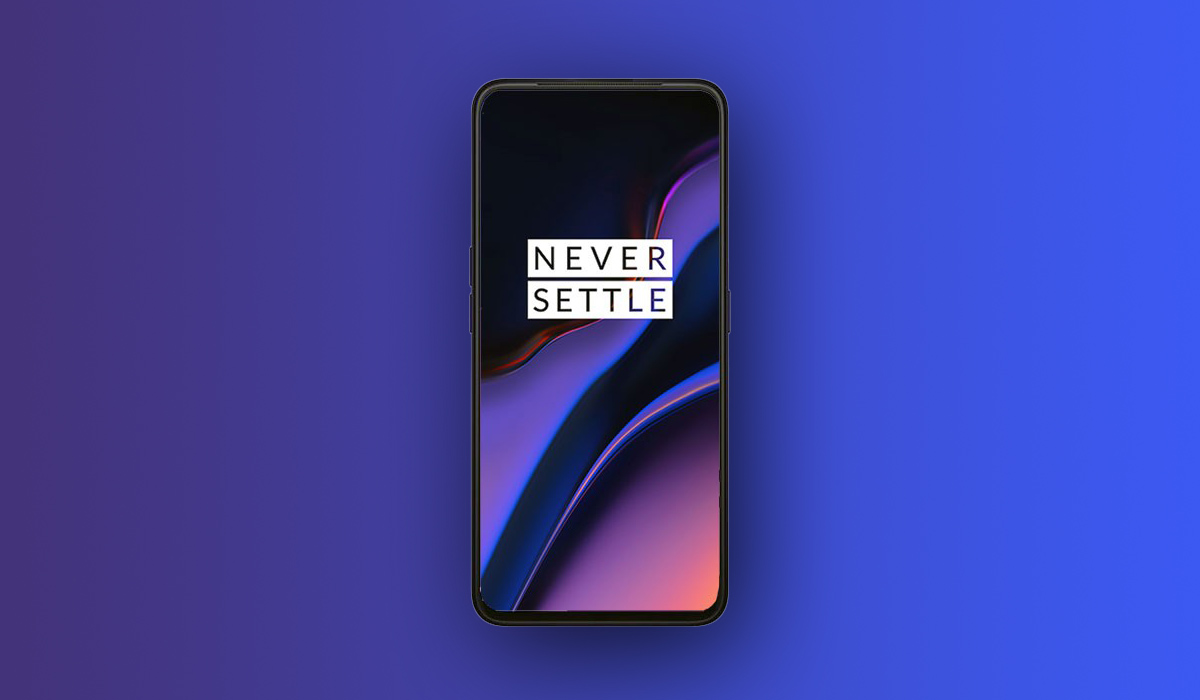
    Hours after OnePlus teased its 2019 flagship’s camera with a cover story shoot for Harper’s Bazaar India, official OnePlus 7 Pro press renders have leaked out online showing the triple-camera setup that was used and the rest of the phone’s sleek design.

    First published by the folks over at WinFuture and followed shortly after by unwatermarked versions courtesy of Ishan Agarwal, the press renders revealed today essentially confirm all other leaks and rumors.

    The OnePlus 7 Pro, as mentioned above, carries a new triple-camera setup on the rear which is aligned vertically and sits just above the dual-tone LED flash and the OnePlus logo. Regarding the actual sensors, rumor has it the flagship will sport a 48-megapixel primary camera that supports a wide f/1.6 aperture for improved low-light photography. Additionally, both OIS (optical image stabilization) and EIS (electronic image stabilization) are said to be present.

    Joining this primary snapper should be a new 16-megapixel super-wide-angle camera, similar to the one found on recent Samsung and LG flagships. Also present will be an 8-megapixel telephoto alternative which supports 3x optical zoom, as confirmed by OnePlus recently.

    Corroborated by today’s renders is the fact that the rear panel of the OnePlus 7 Pro will be carved out of a single slab of glass. In terms of colors, the renders that have leaked show the Mirror Grey and gradient Nebula Blue finishes, although a third brown option is rumored.

    Over on the front of OnePlus’ next flagship sits a huge 6.7-inch display that sports a 19.5:9 aspect ratio and a 3120 x 1440p (QHD+) resolution. This is paired with an extremely thin chin, almost no upper bezel, and virtually unnoticeable side bezels, the latter of which is party due to the display’s curved edges.

    Such a high screen-to-body ratio essentially results in the smartphone of many people’s dreams. However, it does come with one major drawback; there’s no room for the front-facing camera. Fortunately, OnePlus has a solution for this. Rather than removing the sensor entirely, the Chinese brand has chosen to equip the OnePlus 7 Pro with a small pop-out module on top. This isn’t visible in today’s renders but it’s rumored to house a 16-megapixel selfie snapper.

    Circling back to the OnePlus 7 Pro’s display, as confirmed recently it supports refresh rates of up to 90Hz. Depending on the content that is being shown, the display will automatically adjust the refresh rate to what it deems necessary, essentially improving the overall user experience while minimizing the impact on battery life. OnePlus is calling this technology Fluid AMOLED and it’ll be paired with an in-screen fingerprint scanner.

    Like most 2019 flagship smartphones, the OnePlus 7 Pro will arrive powered by Qualcomm’s Snapdragon 855 which will be paired with 6GB of RAM and 128GB of storage as standard. However, if this isn’t enough, variants with 8GB of RAM and double the storage will also be available in addition to a 12GB of RAM model.

    Unsurprisingly, the flagship will ship with Android 9 Pie and the latest version of Oxygen OS straight out of the box. It’ll also include a 4,000mAh battery and support OnePlus’ 30W fast charging technology. Those interested will be able to purchase a version with 5G support too, although this will be limited to certain markets.

    Speaking of availability, the 4G version of the OnePlus 7 Pro 4G should be available in all markets where OnePlus currently operates shortly after its announcement on May 14th. Additionally, T-Mobile is expected to carry the device in the US. Regarding its pricing, the 6/128GB variant is expected to start at $699/€699 while a recent leakpointed towards a $749/€749 for the 8/256GB model. Lastly, the 12/256GB offering is expected to cost $819/€819.