Author: Mei Ling Tan

  • Apple shares Down Since Long

    Apple shares Down Since Long

    Apple reported that it barely topped Wall Street estimates for iPhone and Services revenue during its fiscal second quarter, which ran from January through March. The company took in $31.05 billion from sales of its smartphones during the quarter, barely topping the $31.03 billion that Wall Street expected. Since the end of the fiscal fourth quarter, Apple has stopped revealing how many iPhone units were sold during the period. The revenue figure is a 17% decline from the same quarter last year.

    While iPhone sales have been struggling, Apple has been focusing on its Services business, which includes AppleCare, iTunes, the App Store, Apple Music, Apple News+, Apple TV+ and Apple Arcade (starting this fall). Apple has had a goal of reaching $50 billion in Services revenue, which would double the $25 billion it took in during fiscal 2016. For the fiscal second quarter of 2019, Apple generated $11.45 billion from the Services unit, its second largest and most profitable division. That not only topped the $11.37 billion that Wall Street was looking for, but it was also a 16% boost from the $9.85 billion that the Services unit brought in a year ago. By adding more subscription services such as Apple News+ and Apple TV+, the company is looking to take advantage of an installed base that is now numbered at 1.4 billion devices. Apple had 390 million paid subscriptions during the three months.

    During the quarter, Apple garnered $4.87 billion in iPad revenue. That was a healthy and surprising 22% improvement from the $4 billion that the tablets brought in during the fiscal second quarter of 2018, and beat analysts estimate of $4.21 billion in sales. It also was the highest growth rate for the device in six years. The Wearables unit, which includes the Apple Watch and the AirPods wireless Bluetooth earphones, had $5.13 billion in revenue for the three month period. Last year, the division grossed $3.94 billion. That works out to a strong 30% year-over-year growth rate for the unit and easily topped the $4.79 billion that Wall Street was looking for.

    “Our March quarter results show the continued strength of our installed base of over 1.4 billion active devices, as we set an all-time record for Services, and the strong momentum of our Wearables, Home and Accessories category, which set a new March quarter record. We delivered our strongest iPad growth in six years, and we are as excited as ever about our pipeline of innovative hardware, software, and services. We’re looking forward to sharing more with developers and customers at Apple’s 30th annual Worldwide Developers Conference in June.”-Tim Cook, CEO, Apple

    With the problems that Apple has had in China, where it had to cut iPhone prices at the wholesale and retail levels, sales in the country declined from $13.02 billion to $10.22 billion. Sales rose slightly in the Americas and Japan while declining in Europe and Asia (minus China).

    Overall, Apple earned $58.02 billion in the quarter, down more than $3 billion from the same quarter last year. While net income declined to $11.56 billion from $13.82 billion year-over-year, the $2.46 earnings per share figure topped Wall Street consensus forecasts by a dime.

    Investors ate up the report, along with the news that the company raised its quarterly dividend by 5% to 77 cents a share. While Apple closed the regular trading day at $200.67 a share, down 1.9%, after the report was released the stock rose 4.8% or $9.61 to $210.28 a share. At that price, Apple is worth $987 billion and is closing in on a trillion dollar valuation for the second time.

  • Facebook is making changes to the App

    Facebook is making changes to the App

    Besides unveiling a new quicker and lighter Messenger app with end-to-end encryption, and new features for Instagram and WhatsApp, Facebook announced today some changes that are being made to its flagship app. The new focus of the Facebook app will be on groups, and FB5 will feature new ways to bring together people offline. With 400 million users subscribed to over ten million active groups, the redesigned app will make it easier for users to access the groups they belong to and find new ones to join. The groups tab will show a feed from all of the groups a member has joined, with recommendations for new groups to sign up with. Starting today Facebook users will see in their News Feed more content from the groups they belong to, and content from the feeds can be sent to these groups.

    Facebook will add new features for certain groups. HealthSupport Group members will be able to make anonymous posts about their medical conditions. Job groups will have a template to allow employers to post job openings; those interested in a particular job can message the employer and apply for the job through Facebook. Gaming groups will have a new chat feature, and Facebook is looking at ways to allow buyers on Facebook Live to find out more information about a product and make a purchase without leaving the live stream. Opting into the Meet New Friends feature will allow Facebook users to meet others that they share a community with like a school, office or city. Facebook has been testing Meet New Friends and a wider rollout is coming soon. Facebook Groups will be integrated so that users can meet people they share similar opinions with.

    The company also announced the expansion of Facebook Dating to 14 new countries. Facebook Dating is available in Colombia, Thailand, Canada, Argentina, Mexico, Philippines, Vietnam, Singapore, Malaysia, Laos, Brazil, Peru, Chile, Bolivia, Ecuador, Paraguay, Uruguay, Guyana, and Suriname. This feature allows you to find potential matches from your Facebook groups, friends of friends and more. Facebook also is launching a Secret Crush feature that allows you to designate up to nine friends as Secret Crushes. If any one of the nine has opted into Facebook Dating, they will receive a notification alerting them that someone has a crush on them. If one of your crushes then adds you to their Secret Crush list, a match is made. If a crush isn’t on Facebook Dating or doesn’t add your name to his/her Secret Crush list, your interest is never revealed.

    Those using Marketplace to sell items will be happy to hear that they will soon be able to ship their wares anywhere in the continental U.S. and get paid on Facebook using a secure platform. And lastly, a new Events tab will show you things taking place around you and even recommend places to go and things to see. The tab will help you make plans with friends to meet up at an event. Some of the new features will be available right away, while others will be found on the app in a few months.

    Last week, we told you that 2.1 billion people use Facebook, WhatsApp, Messenger or Instagram on a daily basis. 2.7 billion use one of these Facebook properties on a monthly basis. The company does expect to be fined $3 billion to $5 billion for failing to comply with an FTC Consent Decree it signed back in 2011. With the latter, Facebook promised not to use member profiles without users’ approval. But during the Cambridge Analytica scandal, 87 million Facebook members had their profiles sold without permission to Cambridge Analytica and the data used to create psychological profiles.

  • Hansen Technologies acquires Sigma Systems for $117m

    Hansen Technologies acquires Sigma Systems for $117m

    Australia’s Hansen Technologies has agreed to acquire catalog-driven software vendor Sigma Systems for C$157 million ($116.8 million).

    Found in 1996, Sigma provides enterprise catalog-driven software products to the communications, media and high-tech sectors.

    The Toronto-based BSS firm has over 70 customers in 40 markets, including  Tier 1 telcos such as Vodafone, Liberty Global, Telstra (Australia), Altice, Cox Communications (USA), Ziggo (Netherlands), Telkomsel (Indonesia), J:Com (Japan), Inmarsat (UK), Telmex (Mexico), Tiscali (Italy), Telus (Canada), Sky (UK), EWE TEL (Germany) and ViaSat (USA).

    It has 480 employees with offices located in Toronto, London and Wales (UK) and Pune, India.

    Andrew Hansen, chief executive officer of Hansen Technologies, said the acquisition is a strategic move to enhance the company’s proposition to the telecoms, pay TV and energy verticals.

    Hansen said the company has driven an exceptional growth strategy through acquisitions over the past 10 years, achieving a compound annual growth rate of 28% over the last four years.

    “Bringing Sigma Systems onboard further strengthens our ability to provide valuable solutions to our customer base and creates new expansion opportunities to cross-sell Sigma’s software solutions into our broad base of energy customers,” he said.

    In 2018, Sigma reported revenue of C$73.1 million and an EBITDA of C$18.8 million.

    Through the acquisition of Sigma, Hansen Technologies expects to “significantly” expand its scale and scope in the telecoms sector.

    “Sigma’s proprietary products sit within or adjacent to the company’s core business of billing and customer management, and are well designed to capture growth opportunities from the rollout of new telecommunications services such as 5G,” the company said.

    The acquisition is set to close on May 31. Hansen Technologies said the acquisition will increase its pro-forma basis share of revenue from the telecoms sector to 38% from a reported 17% in 2018.

  • KT taps Samsung to expand PS-LTE coverage in South Korea

    KT taps Samsung to expand PS-LTE coverage in South Korea

    Samsung has signed an agreement with KT to help expand the telco’s public safety LTE (PS-LTE) network in South Korea, the vendor announced.

    The expansion deal will see Samsung provide KT with LTE network solutions based on 3GPP Release 13 in 10 major metropolitan regions in South Korea including Seoul by 2020.

    The expanded deal will also see the pair deliver what they say is the world’s first narrowband Internet of Things (NB-IoT) service over the PS-LTE network to help prevent and respond to natural disasters such as fires and people stranded in remote, mountainous areas.

    In addition to LTE radio base stations that support 700-MHz, Samsung is providing KT with a virtualized core and features such as MCPTT solutions, RAN sharing, evolved Multimedia Broadcast Multicast Service (eMBMS), Isolated eUTRAN Operation for Public Safety (IOPS), and device to device (D2D) network solutions.

    For instance, D2D allows direct and undisrupted communications between any two devices without traversing radio base stations or core networks, even in areas where bases stations are not provided.

    Samsung said D2D and NB-IoT technologies will play crucial roles in public safety network by ensuring stable, seamless, and reliable network in unfavorable environments.

    “By acquiring innovative wireless communications from Samsung, we are able to aid in life-threatening situations where data traffic is severely congested or connection is completely out of reach,” said Yoon-Young Park, senior executive vice president and head of enterprise business group at KT. “These first-of their-kind networks help responders connect with those in need.”

    KT and Samsung have been collaborated since 2016. The pair deployed the first PS-LTE network in 2016 throughout Gangwon (Pyeongchang) province of South Korea.

    In 2017, the companies delivered LTE-railway service on a high-speed train traveling at up to 250 km/hour (155 mph) using MCPTT solutions.

    The two companies are now aiming to expand the PS-LTE network further into the metropolitan areas around the country, including Seoul, Gyeonggi, Gangwon, Jeolla, Gyeongbuk and Chungnam provinces.

    South Korea’s three major carriers-KT, SK Telecom and LG Uplus- launched full-fledged commercial 5G services in early April and racked up over 260,000 5G subscribers that month.

  • Hyundai Venue Pre-Launch Bookings Open

    Hyundai Venue Pre-Launch Bookings Open

    The all-new Hyundai Venue will be launched in India on May 21 and the Korean carmaker has finally started accepting bookings. Pre-launch bookings for the Venue start today for an amount of ₹ 21,000 online on the company’s website as well as dealerships across India. The Hyundai Venue will be offered in India in four variants and seven exterior colour options- Denim Blue, Lava Orange and Deep Forest along with three Dual Tone options.

    Hyundai will offer the Venue in India with two petrol and one diesel engine options. The latest of all is the 1.0-litre, three-cylinder Turbocharged engine which puts out 118 bhp and 172 Nm of peak torque and gets a seven-speed dual-clutch transmission as an option. It also gets the i20 sourced 1.2-litre, four-cylinder kappa engine which develops 82 bhp and 114 Nm of peak torque and is mated to a five-speed manual gearbox and a 1.4-litre, four-cylinder CRDi engine which churns out 89 bhp and 220 Nm of peak torque and is mated to a six-speed manual gearbox.

    The Venue will be India’s first connected car with 33 connected features out of which 10 will be India specific. It will come equipped with an electric sunroof, cruise control, rear AC vents, Projector headlamps, cornering lamps and a cooled glovebox. The long feature list is expected to add strength to the Venue and help it compete against the competition. In India, the Hyundai Venue will rival the likes of the Maruti Suzuki Vitara Brezza, Mahindra XUV300, Ford Ecosport and Tata Nexon.

  • Global smartphone sales still in freefall

    Global smartphone sales still in freefall

    The global smartphone market remains in “freefall”, having experienced its sixth consecutive quarter of declining shipments during the first quarter, according to Canalys.

    Total unit shipments fell 6.8% year-on-year to 313.9 million during the quarter, the lowest result in nearly five years, the research firm said.

    Apple was the hardest hit of the big smartphone vendors, with iPhone shipments dropping 23.2% year-on-year to 40.2 million units, which marked the largest single quarter decline in the history of the iPhone.

    But market leader Samsung also experienced a 10% decline in shipments to 71.5 million.

    By contrast, Huawei had a strong performance during the quarter, with shipments growing 50.2% during the first quarter to 59.1 million.

    Huawei has publicly set its sights on overtaking Samsung as the world’s top smartphone vendor by unit shipments by 2020, but it will not be an easy battle, the research firm said, with its chance of success hinging on its ability to take customers in the low to midrange price bands.

  • Ford India Will Continue To Sell Diesel Cars

    Ford India Will Continue To Sell Diesel Cars

    Maruti Suzuki’s move to phase-out all diesel models within a year has certainly raised eyebrows. Tata Motors also in the past has said that it will only convert its 1.5-litre and above displacement diesel engines to BS6 and the low displacement diesel engines won’t make it beyond the timeline. There were several speculations about other carmakers as well. However, Ford India has stated that it will go ahead with diesel models in India and won’t pull the plug on any model. The American carmaker will be ready with BS6 powertrains well ahead of the April 1, 2020 deadline.

    Speaking with PTI, Vinay Rana, Executive Director, Ford India said, “We will continue to offer the power of choice to consumers and will not stop diesel models. Ford will also be fully ready with its range of BS-VI compliant diesel powertrains ahead of April 2020 implementation.” Raina believes that customers of Utility Vehicles traditionally prefer diesel engines. He added, “For instance, over 65 per cent of the consumers today buy EcoSport diesel variants compared to petrol. Despite government lifting subsidies on diesel over the years, we have seen the demand for diesel stay and expect the same to continue in 2020 and beyond.” However, he said that the company is expecting the prices of passenger vehicles in the industry to increase by up to 8 to 10 per cent.

    He also pointed out that Ford has launched its first CNG vehicle- the Aspire to support any possible shift from diesel and will continue to launch petrol versions of the models to complement diesel cars. “Ford – with the introduction of EcoSport in 2013 – was among the first to bring petrol engines into the consideration set of UV buyers. To complement the diesel technology, we will continue to deepen the portfolio of petrol engines and offer more BS-VI compliant petrol engines options to our consumers,” Raina added.

    Ford has also tied up with Mahindra to develop a new C-segment SUV for India and other developing markets. The new SUV will be developed on Mahindra’s platform and it will also supply the powertrain to Ford.

  • JK Tyre Launches Blaze Rydr For Premium Indian Motorcycles

    JK Tyre Launches Blaze Rydr For Premium Indian Motorcycles

    JK Tyre has announced the launch of the new ‘Blaze Rydr BR43′ tyre for premium motorcycles in India. These are new radial tubeless tyre and the company will be offering them in size 140/70-17 and will be targeted towards performance-oriented riders. The Blaze Rydr tyre comes with rigid shoulder design for better grip, cornering stability and a specialized tread pattern for better traction and smart water channelling. The company says that the tyre is best-suited for customers who are riding in the cities and highways.

    Vikram Malhotra, Marketing Director, JK Tyre & Industries said, “We develop products that enhance our customers’ driving and riding experience. We have entered the two-wheeler tyre segment recently and the response from the market has been very encouraging. The Blaze Rydr BR43 is another addition to fulfill the requirements of higher CC motorbike riders and we are confident that it will further improve the riding experience of customers. This further reinstates our commitment to meet the emerging needs of the market and introduce tyres that help to maintain pace with changing market requirements.”

    The new tyre comes with advanced cross over groove pattern for enhanced performance and is developed with superior tread rubber. Furthermore, the new Blaze Rydr tyres have been tested in rigorous condition to check for superior ride and handling, and it’s 100 per cent run-out tested against vibration and wobbling as well. The company says that the tyres were even tested on the race tracks by professional riders to determine speed, precision and consistency, and claims that they will allow the riders to experience a comfortable ride with total control.

    JK Tyres has also announced that the complete Blaze two-wheeler range of tyre range comes with a lifetime warranty against manufacturing and non-manufacturing defect under terms and conditions.

  • Tata Tiago & Tigor Updated With Apple CarPlay

    Tata Tiago & Tigor Updated With Apple CarPlay

    Tata Motors top-selling Tiago hatchback and its sibling Tigor have been updated with a touchscreen system on the range-topping XZ+ variants. The Tata Tiago XZ+ is priced from ₹ 5.71 lakh, while the Tata Tigor XZ+ has been priced at Rs 6.75 lakh (all prices, ex-showroom Delhi). As a result, the new system is not only better in terms of use but also gets the much awaited Apple CarPlay compatibility feature. The Tata Tiago XZ+ variant was launched last year with the new 7-inch touchscreen infotainment system but only offered Android Auto connectivity. The new compatibility option will allow iPhone users to connect their smartphone with the car that makes for distraction-free driving.

    Interestingly, existing owners of the Tiago and the Tata Tigor XZ+ variants can update their existing infotainment systems to access Apple CarPlay. Owners will have to head to a Tata Motors service centre to for a software update. In addition to the touchscreen system, the Tata  Tigor and the Tiago XZ+ variants come with new headlamp styling, and diamond cut alloy wheels.

    Apart from the feature additions, the Tata Tigor and the Tiago continue to use the same mechanicals. Power comes from the 1.2-litre three-cylinder Revotron petrol engine that belts out 83 bhp and 114 Nm of peak torque. The 1.05-litre three-cylinder Revotorq motor is tuned for 69 bhp and 140 Nm of peak torque. Both engines are paired with a 5-speed gearbox, while an AMT unit is optional.

    With the new system updated across the Tiago and Tigor family, only the performance-friendly JTP versions are yet to get the feature. The Tata Harrier too will get the update in a few weeks.The Tata Tiago is quite the seller and locks horns against a number of offerings including the Maruti Suzuki Wagon R, Hyundai Santro, and the likes, while the Tata Tigor takes on the Ford Aspire, Maruti Suzuki Dzire, Hyundai Xcent among other sub 4-metre sedans.

  • The Nokia 4.2 is now available to pre-order

    The Nokia 4.2 is now available to pre-order

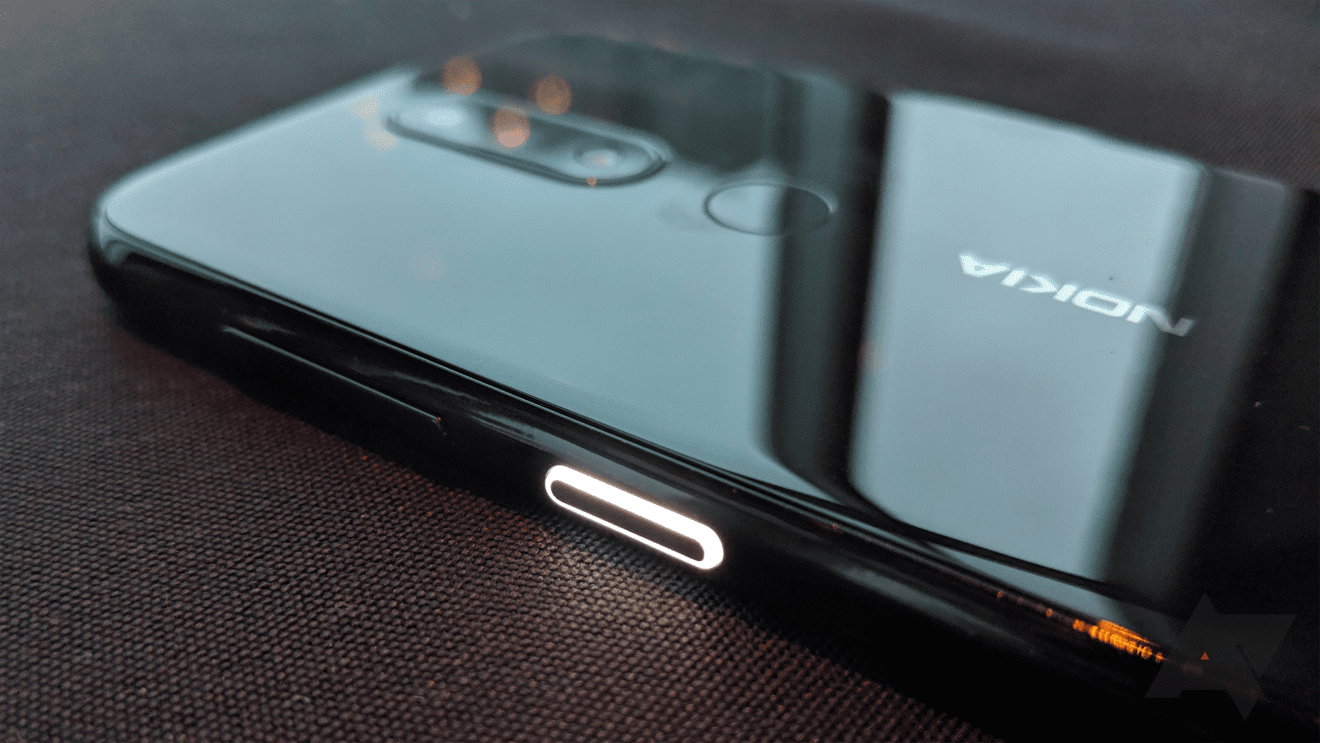
    Two months after unveiling the smartphone at MWC 2019, HMD Global has today announced that the Nokia 4.2 is coming to the United States in two weeks’ time. In anticipation of its release, pre-orders for the smartphone have already been opened up at Amazon and B&H. Best Buy should also start accepting pre-orders today but it is yet to active the page on its website. Shipments for the smartphone are due to commence on May 14. Also, the Nokia 4.2 will be available to purchase in-store at select Best Buy stores starting June 9.

    Regarding its price, the Nokia 4.2 is set to retail at $189 across the U.S. In terms of specifications and features, it offers Qualcomm’s Snapdragon 439 paired with 3GB of RAM and 32GB of storage. This chipset won’t be breaking any records any time soon, but it should certainly provide a decent level of performance for the price.

    Other Nokia 4.2 details include a notched 5.7-inch display and an 8-megapixel selfie camera. The smartphone, which will be available in Black and Pink Sand, also boasts a 13-megapixel rear camera and an additional 2-megapixel depth sensor that should help with background blur. Completing the entire setup is stock Android 9 Pie as part of the Android One program, a 3,000mAh battery, and support for T-Mobile, AT&T, Cricket, and Metro networks.

  • Honda Car India’s Sales Grow By 23% In April

    Honda Car India’s Sales Grow By 23% In April

    Honda Cars India registered monthly domestic sales of 11,272 units in April 2019 as against 9,143 units in April 2018 registering a growth of 23 per cent. The company has seen a strong sales growth thanks to the new-gen Amaze as also the WR-V. The company even exported 220 units in April 2019.

    Rajesh Goel, Senior Vice President and Director, Sales and Marketing, Honda Cars India Ltd said, “HCIL’s April sales growth is primarily due to lower base effect, as there was no Amaze in corresponding month last year during model runout. The ongoing elections and overall subdued market sentiment continues to affect the sales momentum. Going forward, the industry is heading towards a tougher year impacting sales due to volatility in fuel prices, increase in car prices owing to new regulations and stricter inventory control for smooth switchover to BS6 regime by year end.”

    The company plans to bring more cars to India in 2019. In fact the company had already announced that there would be 6 new models in three years starting 2018. The company has already launched 3 new models in the country in the form of the new-gen Amaze, CR-V and even the Civic. We wait to see what more the company brings to the table.

  • Instagram just Added Three New Features

    Instagram just Added Three New Features

    Over 500 million Instagram users now use Stories on a daily basis to freely express themselves and check in on the lives of friends, family, and influencers. Today, with the goal of keeping these users hooked, some additional features have been announced.

    Unless you select the dedicated ‘Type’ mode in Stories, currently the only way of sharing something to Instagram Stories is by taking a picture or filming a short video. But pretty soon this is about to change.

    As part of a new UI, Stories will soon be divided into three separate modes dubbed ‘Live,’ ‘Camera,’ and ‘Create.’ The first, as its name indicates, will offer Instagram’s current live streaming option while the new ‘Camera’ mode will encompass all other features that are available at the moment. This means that Boomerang, Superzoom, Focus, Rewind, and all other quirky options can be found here.

    As for ‘Create,’ this will encourage sharing without taking photos or videos. It’ll offer colorful backgrounds and include features such as Type and Archive, interactive stickers like Polls and Questions, and much more.

    Instagram has confirmed that the new Stories UI and Create mode will be rolling out globally to users in the near future. Joining the revamped Stories are new Donation Stickers. Starting today in the US, Instagram users can raise money for nonprofit organizations by simply adding a sticker to their posts.

    Users will be given a list of nonprofit organizations which displays the ones they currently follow along with a bunch of other organizations that are popular at the moment. If you can’t find the one you’re looking for, a search bar will also be available.

    Once posted, users will be able to swipe up on the Story to view how much money has been donated. According to Instagram, the amount displayed will be donated in full to the chosen nonprofit.

    On an unrelated note, Instagram is also introducing a new feature called Shopping from Creators. As the name suggests, it’ll allow users to purchase products from influencers such as Kim Kardashian, Kylie Jenner, and Gigi Hadid directly. In order to do so, Instagram users simply need to tap on a post and click one of the tagged items. Then it’s as simple as using the built-in checkout process to buy it.

    This new feature will begin rolling out to users next week but will initially be limited to a small group of creators. In addition to the three mentioned above, Kris Jenner, Chiara Ferragni, Camila Coelho, and Katie Sturino will all have access to the tools. Publishers Elle, GQ, HypeBeast, and Refinery29 will also be able to tag products.

    Tagged items can only be from the brands that are participating in the Instagram checkout beta. These include Adidas, Nike, Burberry, Prada, Michael Kors, Mac, Kylie Cosmetics, H&M, and Zara at the moment

  • AirAsia named top airline by passenger growth

    AirAsia named top airline by passenger growth

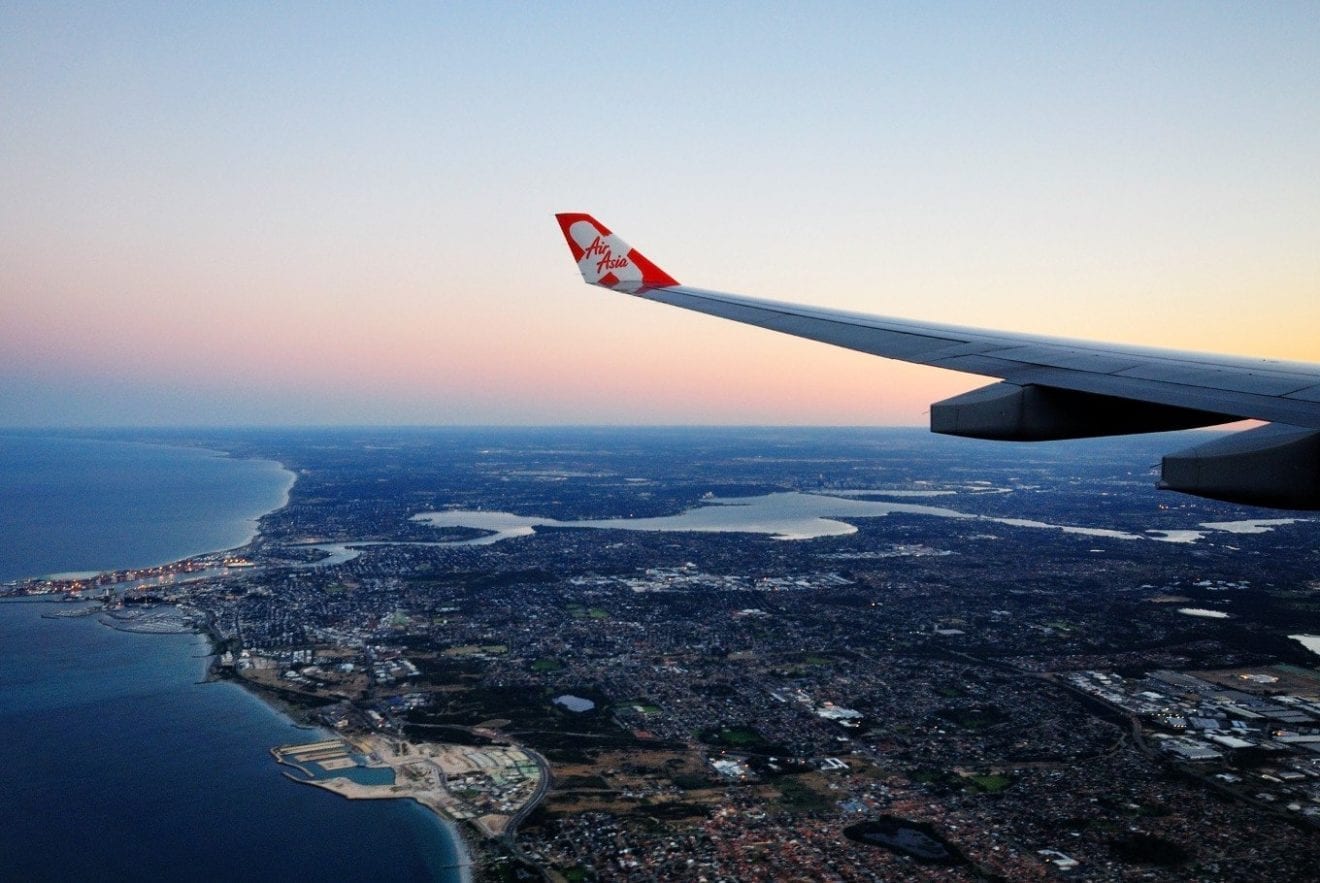
    AirAsia has been named the Top Airline by Absolute Passenger Growth (Southeast Asia) at Singapore’s Changi Airline Awards 2019 recently.

    This is in recognition of its 4.1 per cent increase in passengers carried to and from Singapore to 4.5 million pax recorded in 2018, up from 4.3 million pax the year before, the low-cost carrier said in a statement today.

    It said AirAsia was also adjudged as having the third-highest airline passenger movements overall in 2018, together with Singapore Airlines Group, Jetstar, Cathay Pacific Airways and Lion Group.

    AirAsia Singapore chief executive officer Logan Velaitham said together with Changi Airport Group (CAG), AirAsia has grown Singapore into its third-largest hub, with around 40 flights per day from cities in Malaysia, Indonesia, Thailand and the Philippines.

    “As the largest foreign carrier operating into Singapore, we will continue to link new cities and give travellers here more options,” AirAsia said.

    In support of CAG’s growth plans, AirAsia launched its first international route from Ipoh to Singapore in 2018, it said.

    The Changi Airline Awards, now in its 14th year, recognises airlines for their contributions to strengthening and growing Singapore as an aviation hub.

  • Ex-AirAsia executive joins Malaysia Airports as COO

    Ex-AirAsia executive joins Malaysia Airports as COO

    Malaysia Airport Holdings (MAHB) has appointed former AirAsia executive Mohammed Shukrie Mohammed Salleh as its new chief operating officer.

    MAHB says that Shukrie will oversee strategies related to airport operations, safety and security, as well as planning and development.

    Shukrie was formerly AirAsia Malaysia’s chief operating officer, before moving to the current position.

    It is the second senior leadership appointment at the airport operator in 2019. In January, MAHB appointed its former finance chief Raja Azmi Raja Nazuddin as its chief executive.

    On Twitter, AirAsia group chief executive officer Tony Fernandes lauded the move, saying that he was “thrilled” that Shukrie would be joining MAHB.

    “He values partners, can communicate well and is a positive human being and a team player. These are qualities that have been lacking in MAHB so I’m sure with him there now things will improve,” he adds.

    AirAsia and MAHB have been embroiled in a legal spat over passenger service charges and service levels at Kuala Lumpur International airport. MAHB has initiated court action against the budget carrier over unpaid passenger service charges, while the low-cost carrier then responded with a counter-claim against the airport operator and has been pushing for mediation.

    MAHB manages 39 Malaysian airports, including those in Kuala Lumpur, Penang, Kuching, and Kota Kinabalu.

  • AirAsia flies to Lanzhou and Quanzhou

    AirAsia flies to Lanzhou and Quanzhou

    AirAsia continues its expansion into China with two new services from Kuala Lumpur to Lanzhou and Quanzhou. These new services take the number of AirAsia destinations in China to 24, firmly cementing the airline’s position as the largest foreign carrier by capacity operating in China with over 400 weekly flights.

    “Malaysia and China are celebrating 45 years of bilateral relations this year. These exclusive direct services from Kuala Lumpur to Lanzhou in the north-west and Quanzhou in the south-east will deliver an additional 280,000 seats per annum to and from China, allowing us to forge even stronger ties between both nations,” said AirAsia X Malaysia CEO Benyamin Ismail.

    AirAsia China CEO Tassapon Bijleveld said: “AirAsia has grown its footprint in China for more than 14 years now, connecting millions of people from Asean to underserved second and third-tier Chinese cities at low fares.

    And China remains a key market for our future growth. Just recently, we launched our new Bangkok-Shenyang service and we continue to review a number of other potential Chinese routes that we hope to be in a position to announce soon.”

    Book all-inclusive AirAsia BIG member fares from as low as RM209 (one-way) to Lanzhou and RM129 (one-way) to Quanzhou on airasia.com or the AirAsia mobile app from now until May 5, 2019, for travel until Sept 30, 2019.

    Enjoy the award-winning premium flatbed to Lanzhou for all-inclusive AirAsia BIG member fares from as low as RM889 (one-way) during the same booking period.