Author: Mei Ling Tan

  • LG Acquires Avon

    LG Acquires Avon

    LG Household & Health Care has acquired Avon North America in a US$125 million deal with an affiliate of Cerberus Capital Management.

    LG H&H holds a strong market position in South Korea’s consumer goods industry, one of the world’s largest beauty markets, with more than $13.1 billion in sales last year. It currently distributes a number of its brands in the US, including Belif and The History of Whoo.

    The addition of Avon’s brand, products, employee base and network of 250,000 sales representatives throughout North America is expected to support LG H&H’s international growth strategies.

    “We recognise Avon North America’s strong brand, leading market position in the region, and talented employees and representatives,” said LG Household & Health Care CEO Suk Cha. “Avon North America’s innovative social selling model builds deep connections with customers and we are excited to leverage this as we continue to expand. We look forward to building on Avon North America’s success to drive customer engagement and long-term growth in this market.”

    “LG H&H respects and admires our strong community of representatives, and supports our mission to empower women through economic opportunity,” said Avon North America CEO Laurie Ann Goldman.

    The transaction is expected to close on September 30 and is subject to certain customary closing conditions, including regulatory approvals in the US.

  • C-star Shanghai sets records for Exhibitors

    C-star Shanghai sets records for Exhibitors

    C-star – the China spin-off of the world’s largest retail show, the triennial EuroShop in Germany – is underway in Shanghai this week. This year’s event, the fifth, features a record 138 exhibitors at the Shanghai New International Expo Centre in Pudong, with exhibits including shopfitting and store furnishings, retail technology, store design and visual merchandising, lighting, and catering and refrigeration.

    A parallel retail forum features an international line-up of speakers covering trends, technology and design, among other topics.

    C-star was the first international spinoff of EuroShop and while still a shadow of the German event, which boasted 2400 exhibitors from 60 countries and 113,000 visitors the last time it was held in 2017, the Shanghai event is growing in stature each edition. The number of exhibitors this year is up 30 per cent. After the success of C-star, organiser Messe Dusseldorf has since launched another event focused on technology, EuroCIS, and its latest new venture, In-store Asia in Mumbai, India.

    Elke Moebius, global head of retail & retail technology with Messe Dusseldorf, and director of EuroShop, EuroCIS, C-star and In-store Asia, says the company wants C-star to become “the most influential retail event in China”.

    “Our decision to come to China was absolutely the right one,” she told the opening ceremony yesterday.

    “We have succeeded in distinguishing C-star from other events.”

    Messe Dusseldorf (Shanghai) GM Marius Berlemann says with mobile and ‘smart’ retail solutions developing quickly the internationalisation of the retail industry is following suit.

    “This presents even more opportunities for global investors and corporations to flourish in China’s retail industry, and our goal as the organiser is to build the bridge and bring the world of retail together.”

    A key feature of this year’s C-star event is the ReTailor Hub where creative solutions are shown in a real-life environment. Exhibitors include apparel-store Elf Sack, cosmetics-brand Fox Fairy, food-and-beverage brand Rio (which has a robot on site mixing and serving cocktails) and unmanned store concept 24 Jian. These exhibits are complemented by retail technology and equipment suppliers showcasing instore solutions including customer-flow analytics, interactive smart displays and virtual fitting systems.

    C-star’s Brand Zone offers a premium stage for exhibitors to present their newest and most promising products and solutions to a global audience.

    This year, exhibitors include design house Malherbe Paris, Storymaker, Hideki Azuma, Onewedesign, MPlus and Koscar sharing new store concepts and smart retail solutions.

    C-star 2019 continues today and tomorrow in Shanghai.

  • Starbucks sales surge despite China Growth

    Starbucks sales surge despite China Growth

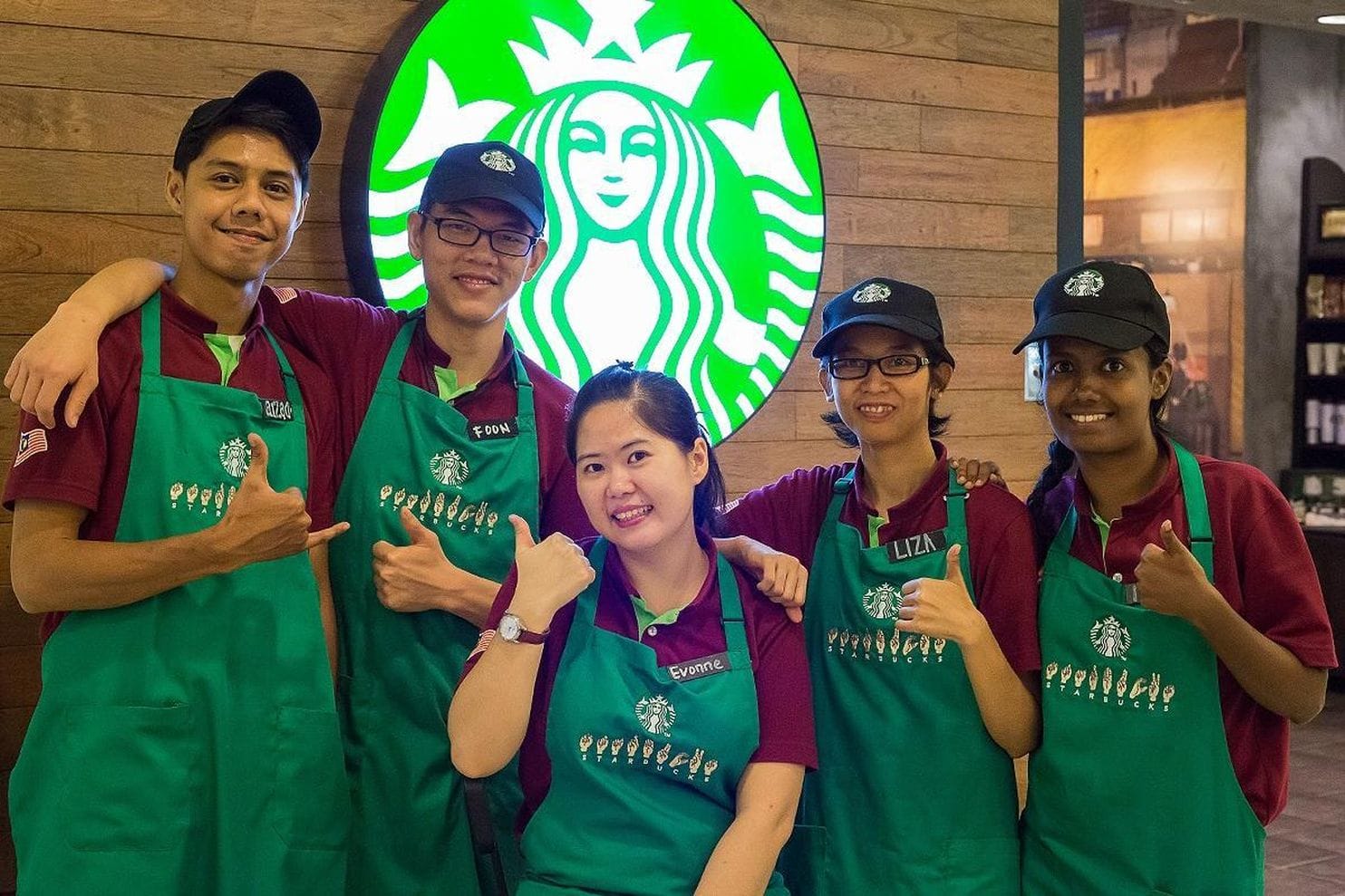
    Starbucks sales growth has surpassed expectations with a glowing earnings report released yesterday that revealed strong performance in cafes across the US and China.

    “We are especially pleased with our comparable-store sales growth in our two lead markets, the US and China,” said Starbucks CEO Kevin Johnson, “where we are also continuing to drive strong new store development with industry-leading returns.”

    The firm reported a second-quarter net income of US$663.2 million, up from $660.1 million for the same period last year.

    “While much of the beverage comp-sales growth was driven by ticket, close to half of the ticket growth was from beverage mix and match,” said company CFO Pat Grismer, “demonstrating that our higher margin premium offerings resonated with customers and customers bought more beverages per transaction.”

    The release of Starbucks’ Cloud Macchiato last month, with promotional support from singer Ariana Grande, contributed to the results with “the second-most viral Starbucks campaign ever” according to Johnson. The success accords with the firm’s strategy to build on the cold-drinks business while focussing less on limited-time offerings and Frappucinos.

    The popularity of the chain’s cold drinks, along with improvements in store, saw US sales grow 4 per cent in stores opened for at least one year.

    Same store year-on-year sales grew 3 per cent in China, where the firm is facing a serious challenge from motivated competitor Luckin Coffee. “This performance is especially noteworthy when you consider the intensity of competition from discounting in China, as well as our aggressive pace of new store development,” said Johnson.

    Transactions have decreased by 1 per cent in China, most likely as a result of increased competition, which has recently forced Starbucks to introduce a fast-delivery service in partnership with Alibaba. The firm has also seen significant growth in its loyalty program, Starbucks Rewards.

    Starbucks surpassed 30,000 outlets worldwide in the second quarter, with 94 per cent of new openings occurring outside the US. A further 2100 new stores are planned for launch before the end of the current fiscal year, nearly 600 of those in China.

  • Shandong Ruyi seeks $500m

    Shandong Ruyi seeks $500m

    Chinese textile and retail investment company Shandong Ruyi will list an IPO for its recently acquired The Lycra Co in the hopes of raising around US$500 million.

    The group is currently exploring a listing in the US as it works with Goldman Sachs, according to those familiar with the prospective deal.

    Progress has been slow for Shandong Ruyi since regulatory delays held up its $2 billion purchase of Lycra for more than a year, which it finally completed in January. Plans for the IPO are now at early stages and are subject to significant changes before listing, which is scheduled for sometime within the next three years.

    Shandong Ruyi has previously been reported as having ambitions to become “the LVMH of China” and has acquired numerous overseas fashion brands. It is now focusing on consolidating its holdings rather than pursuing new deals.

    Shandong Ruyi Investment Holding is the largest textile and apparel company in China, and ranks among the Top 100 Chinese multinational enterprises. It is headquartered in Jining, Shandong and operates 13 domestic industrial parks.

  • Australian dollar up Again

    Australian dollar up Again

    The Australian dollar has risen Monday, buying 70.42 US cents from 70.25 US cents on Friday.

    Last Friday, the local currency tumbled to a six-week low and three-year bonds rallied to record highs after surprisingly weak inflation data boosted calls for Reserve Bank rate cuts.

    The Australian dollar slid as low as 70.31 US cents on Wednesday, a level not seen since March 11, after first-quarter inflation slowed to the lowest in three years to 0 per cent when analysts were looking for a 0.2 per cent increase.

    Key measures of underlying inflation favoured by the Reserve Bank of Australia (RBA) averaged 1.4 per cent for the year, marking 13 quarters below the central bank’s target range of 2 to 3 per cent.

    In 2016, the last time inflation was this tepid, the RBA reacted with two rate cuts to the current record low of 1.50 per cent. It has since sat on the fence on policy, awaiting a pick-up in prices and a drop in the unemployment rate.

    Wednesday’s data fuelled more calls for a rate cut, with ING Bank, JP Morgan and Citi becoming the latest to predict an easing as early as next month.

    “Australian inflation shows no signs of coming anywhere near the central point of the RBA’s 2-3 per cent range, and we are biting the bullet and changing our ‘on-hold’ call for the RBA to a cut, possibly as early as the 7 May meeting,” ING economists said in a note.

    “We can’t now see how the RBA can ignore such a bad inflation miss, even with last week’s strong employment gains.”

    Wednesday’s weak inflation report set government bond futures on fire, with the three-year bond contract surging to a record high of 98.750 sending yields below the cash rate to 1.25 per cent.

    Interest rate futures sharply narrowed the odds on an easing. The probability of a May 7 cut doubled to 44 per cent and a quarter-point move was fully priced for July, compared to an October timing earlier this week.

    Across the Tasman Sea, the New Zealand dollar was 0.5 per cent down at $0.6627, languishing near its lowest since early January. The kiwi has fallen or stayed almost flat in nine of the last 10 sessions.

    The currency has been in a downward trend since late March after the country’s central bank abandoned its long-standing neutral bias to say its next move in interest rates was likely down.

    That followed underwhelming inflation data that further boosted the probability of a rate cut in New Zealand.

    New Zealand government bonds were slightly higher with yields down about 5 basis points at the long end of the curve.

  • The new golden rule for retailers to be Succesful

    The new golden rule for retailers to be Succesful

    The retail climate in Australia has long been a concern, but could there be a secret sauce to help brands reclaim valuable real estate in the minds of their consumers?

    Let’s face it — which brand doesn’t want to be like Nike? Its mass market, appeal and unique ability to stay relevant throughout its 50-year history have made it one of the most valuable brands amongst sports organisations. If Nike hadn’t already cemented its position as one of the biggest culture catalysts in the world, Colin Kaepernick has definitely made sure it has now.

    Commentators have waxed lyrical about the Kaepernick campaign and marketers have taken to it big time. But retail businesses too can take a leaf out of this book. You can’t fault the way Nike engaged with consumers on the basis of what motivates them, summed up by the campaign’s tagline: “Believe in something. Even if it means sacrificing everything.”

    This is the crux of value-based engagement: engaging consumers on the basis of what they want to do, not necessarily what they want to buy. Australian retailers need to think beyond the product, and instead provide experiences and solutions that support and enable fundamental consumer needs, desires and aspirations.

    Between the brand and consumer, the latter now has more influence over the other. The growth of online shopping means the challenge for retailers to surprise and delight is getting harder, and thanks to technology, consumers are more informed and more in control at every stage of the purchase process. They are more aware of what they want and don’t want, and their attention span depends on how well you can teach, entertain or guide them at every given moment they interact with your brand.

    Consumer loyalty and advocacy is won and lost through the quality of experiences that retailers can provide. Whether your consumer comes to you to be inspired, be motivated to do good, alleviate frustrations, fulfil desires or solve a problem, retailers now need to create and invest in experiences to retain their customers.

    There are four main types of in-store experiences:

    • Convenient: These involve removing unwanted friction and inconvenience in the shopping journey. Amazon set a new standard for frictionless retail with Amazon Go, where consumers can walk in, shop and leave without ever going through a checkout line. With time as the new currency, the retailer that removes the most painful features of the shopping journey and increases overall convenience can go a long way towards building consumer loyalty and trust.
    • Communal: Turn the store into a destination for loyal customers to gather, who orient themselves to particular causes, affinities or cultural distinctions. In Tokyo, Adidas’ RunBase concept stores work extremely well as a local runners’ hub on which customers can test new gear and receive customised training ahead of purchase.
    • Curated: The future of retail will not be about having a proliferation of choices as it has been in the past; rather, it will involve winning consumers over with thoughtful curation of products and experiences. With OPSM reminding you to order more contact lenses for the next three months, would you consider moving to another optometrist? No!
    • Immersive: While this type of experience is still in infancy, it’s a safe bet that more retailers are going to invest heavily in this space as the need for experience-based differentiation becomes paramount to survival and future growth. To promote Deadpool 2, 7-Eleven launched its first augmented reality (AR) in-store experience, which consisted of different points of engagement and encouraged customers to spend more time in-store. Deadpool could be seen through the app as guiding users around the store, and a selfie filter was available, plus scannable codes that unlocked in-store activities and loyalty points.

    The next frontier of retail will have shopper demands and desires be foreseen, processed and fulfilled before they are articulated or even consciously realised. The creation of unique experiences represents a chance for retailers to achieve true, meaningful engagement with their consumers. And by committing to helping them achieve what they want to achieve, retailers will ensure their relevance over a greater period of time.

  • Vicinity Centres Selects new Board

    Vicinity Centres Selects new Board

    Shopping centre operator Vicinity Centres has revealed that non-executive director Peter Kahan will replace Peter Hay as chair when he retires in August.

    Hay, who has served as chairman since Vicinity was formed in a 2015 merger of Federation Centres and Novion, will retire from the board after the company’s annual results are released in August.

    “It has been a privilege to work with such an exceptional board and management team to navigate through the merger and Vicinity’s formation, to see it become the unified and stronger organisation it is today,” Hay said in a statement.

    Hay said he is delighted Kahan will be taking over as chairman.

    “Peter is a highly experienced and thoughtful director who has made an outstanding contribution to Vicinity’s board during my tenure,” Hay said.

    “His extensive and successful property funds management, financial and business background, complemented by his highly strategic approach and vision, position him to be an excellent chairman through Vicinity’s next chapter.”

    Kahan, who has been a non-executive director of Vicinity since June 2015, also served as chairman of Vicinity’s Remuneration and Human Resources Committee and is a member of Vicinity’s Audit Committee.

    Kahan’s prior roles include The Gandel Group’s executive deputy chair, CEO and finance director.

    “It is an honour to be asked to succeed Peter Hay as chairman of Vicinity,” he said. “I am looking forward to working with the board and management team to continue our relentless focus and commitment to long-term value creation for Vicinity’s security holders.”

  • Tigers is strategic logistics partner for K&N Filters in China

    Tigers is strategic logistics partner for K&N Filters in China

    Tigers is working with K&N Filters, a high-performance automotive air filter and air filtration manufacturer, which is expanding operations in China, the world’s largest automotive market.

    Hong Kong-based Tigers is providing logistical support through its Chinese network of offices and facilities to USA-based K&N Filters as they grow their presence in the region.

    “Working closely with international brands like K&N Filters as a strategic logistics partner is always a pleasure for Tigers as we are specialized in global logistics and supply chain solutions,” said Laura Crow, Managing Director – China, Tigers.

    “China is a very strong market for Tigers and we are working with K&N Filters by fulfilling both its B2B and B2C orders in the region, providing marketing and trading services, as well as offering our specialist local knowledge.”

    As part of K&N Filters expansion plans in China, the manufacturer recently launched the ‘Revolution. Powering the Future’ strategy conference in Chengdu, China, to showcase the brand and product solutions to the Chinese market.

    “K&N Filters is committed to providing Chinese car owners with high-quality product performance and is continuously developing a localized product series that is more suitable for the Chinese market,” said William Wu, General Manager – China, K&N Filters.

    “Working with Tigers is the perfect match for expanding our operations in China due to Tigers’ extensive knowledge of the Chinese market and their modern approach to global logistics.”

    K&N Filters supplies air filters and air filtration systems to championship-winning teams in most forms of motorsports around the world, including NASCAR and Supercross to achieve more horsepower and brake performance limits.

  • Telenor Myanmar expanding reach of LTE network

    Telenor Myanmar expanding reach of LTE network

    Telenor Myanmar has announced it has nearly reached 100% of the nation’s townships with its LTE network, having rolled out over 6,100 LTE sites nationwide.

    The company’s LTE network now covers 307 townships, with the company having expanded to seven more townships during the first quarter.

    “Since the first quarter, the company has deployed 856 additional sites and aims to increase this to more than 1,100 by the end of the month,” according to Telenor Myanmar CTO Jai Prakash.

    “As per our commitment to bring the best possible things for Myanmar citizens, we have achieved our ambitious goal of establishing a network with 6100+ LTE sites in 2019,” he said.

    “We will keep upgrading our network for our customers with our best data network and also educating the population on how to use our service effectively and efficiently.”

    Meanwhile the operator has been working with Ericsson to prepare its network for 5G, having conducted a joint trial last year achieving 1Gbps downlink rates over its LTE network.

    In late November, the companies also commenced a pilot study involving the provision of IoT connectivity in Mandalay City.

  • ZTE, China Telecom launch 5G industrial service platform

    ZTE, China Telecom launch 5G industrial service platform

    ZTEChina Telecom and industrial equipment company Zhejiang Supcon have jointly developed a 5G-enabled industrial service platform designed to allow specialists to remotely assist on-site maintenance personnel.

    The Plantmate service platform allows on-site maintenance personnel to use augmented reality glasses equipped with high definition cameras to send real-time high definition images back to specialists over 5G.

    These specialists can then diagnose and troubleshoot problems remotely, communicating with on-site personnel over voice and video as well as a shared digital whiteboard.

    Users will also be able to access the maintenance specialist team at Zhejiang Supcon’s Hangzhou headquarters to obtain remote consultation and technical guidance for the company’s equipment and instruments.

    The three companies have announced plans to deepen their 5G cooperation in the industrial feed in the future to help jointly promote the implementation of a 5G industrial internet.

  • Roadmap reveals the Transition for an Android browser will Happen

    Roadmap reveals the Transition for an Android browser will Happen

    Back last summer, we told you that Mozilla is working on a new Android browser called Fenix. The app will eventually replace Firefox for Android and a support document posted by Mozilla offers something of a roadmap for this transition. After the Firefox browser app for Android receives Firefox68 in July, future updates will only carry security patches and bug fixes. The Firefox browser will be moved to the Extended Support Release (ESR) branch where Mozilla can manage engineering, testing, and release builds until Firefox reaches EOL (End-of-life) status.
    As we said, the Fenix browser will replace Firefox, but not until Mozilla is sure that Fenix has reached “migration readiness status.” So Firefox will continue to be kept secure and supported until Mozilla is sure that its new browser is ready to receive the migration of Firefox users. Based on the timeline created by the not for profit developer, Firefox will be kept alive until sometime next year.
    The timeline for Firefox, calls for an update to version 67 on May 14th, 2019 followed by the Firefox68 update to be disseminated on July 9th. After being moved to the ESR branch, the browser app will be updated in September, October, and December (again, these updates are for security and bug fixes only). As soon as Fenix is ready to receive those using the legacy version of Firefox, support for the latter will come to an end.
    Fenix was built from scratch; it will feature a brand new UI. Like Samsung’s OneUI interface, the most used elements will be found on the bottom of the screen. Swiping up on the display will show more available actions, and once you’re finished browsing on Fenix, open tabs are saved in a bundle called “sessions.” When the browser is in use, active tabs can be manually saved in sessions.
    Mozilla once said that “Fenix is not your parent’s Android browser.” We won’t know how accurate that statement is until the app is ready for prime time next year.
  • Nubia’s new Gaming handset has Fresh Features

    Nubia’s new Gaming handset has Fresh Features

    Remember when there was all that concern about the Qualcomm Snapdragon 810 SoC overheating? The fear was so real that Samsung decided to power the Galaxy S6 line with its own Exynos 7420 chipset, even in the U.S. where it usually equips its phones with a Snapdragon chip. Some manufacturers started using small (.6mm) heat pipes in order to dissipate the heat generated inside a smartphone.

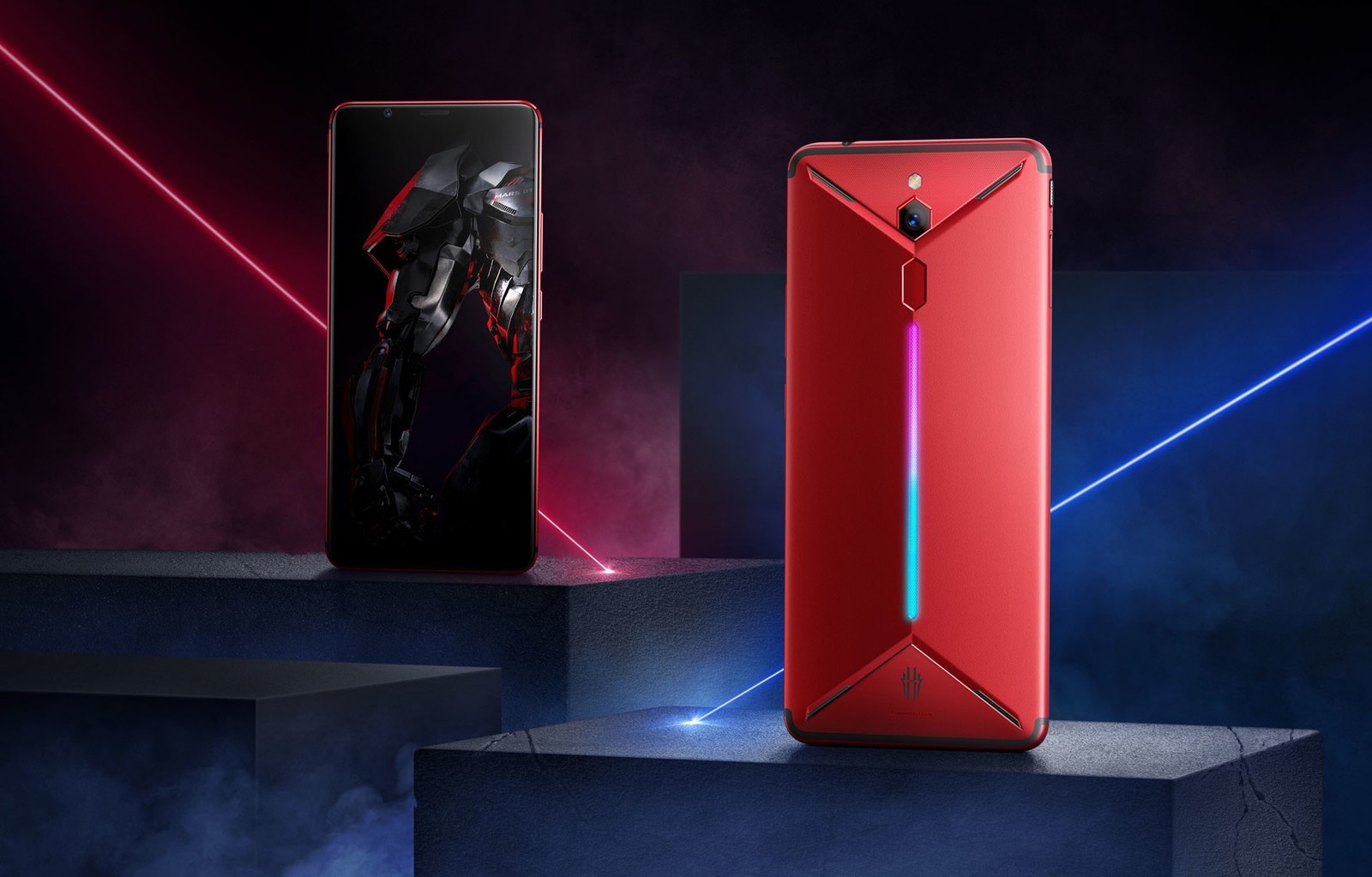
    Nubia announced the first smartphone to be equipped with a cooling fan, the Red Magic 3 gaming phone. To keep the handset’s internals cool, the device combines what the company calls “state-of-the-art liquid cooling technology” with an internal fan. Nubia says that this combination increases heat transfer by 500%; not only does this keep the phone cool in the user’s hand, it also boosts the performance of the device providing a smoother experience.

    While the Nubia Red Magic 3 will launch on May 3rd in China, it also will be available next month in the U.S., Canada and Europe (including the U.K.). Pricing has not yet been announced, but the phone does feature high-end specs. The device comes with a 6.65-inch AMOLED screen with an FHD+ resolution. With a refresh rate of 90Hz (most phones refresh at 60Hz) the Red Magic 3 will offer users smooth gameplay. The Snapdragon 855 Mobile Platform is under the hood, and there will be three different memory/storage configurations (6GB RAM/128GB storage, 8GB RAM/128GB storage and 12GB RAM/256GB storage). In addition, the phone features dual front-facing stereo speakers, DTS:X and 3D sound. This creates a “cinematic soundscape” with or without headphones. Instead of having to use a gamepad accessory, the handset has touch-sensitive shoulders that can be customized.

    The Red Magic 3 is more than just a gaming phone. It happens to be pre-installed with a nearly stock version of Android 9 Pie. On the back is a 48MP camera using Sony’s IMX586 sensor, and in front is a 16MP selfie snapper. With a 5000mAh battery inside, you won’t have to worry about finding an outlet in the middle of the day, and perhaps the next day as well. And if you happen to be an ardant gamer, the RedMagicGameSpace2.0 dashboard allows you to quick-launch games, optimize settings and the fan speeds, check the temperature inside the phone, and record in-game videos. It also allows you to block notifications so that you can enjoy uninterrupted game play. The Red Magic 3 will be available in Black or Red.

    Starting tomorrow, April 29th, consumers can sign up to win an opportunity to unbox the Red Magic 3 by visiting this website. Three first prize winners will receive the Red Magic 3 before the release date, and will get to do a live unboxing and hands-on over the Red Magic website and Nubia’s social media channels. Three second prize winners will have the opportunity to buy the Red Magic 3 at 50% off and four third prize winners get to take 20% off the price of the phone.

    Back in February, Nubia launched the Red Magic Mars gaming phone in the U.S. That model features a 6-inch LCD screen with a 1080 x 2160 resolution. While Nubia called this device a gaming phone and a daily driver in one unit (which it also says about the Red Magic 3), the $399 price surely caught the eye of smartphone buyers in the states. We don’t know the price of the Red Magic 3 yet; if Nubia keeps it low, it will be hard for U.S. consumers, unlike the phone, to keep cool.

  • Verizon expands 5G to 20 more cities

    Verizon expands 5G to 20 more cities

    Following the launch of 5G services in Chicago and Minneapolis, US operator Verizon announced 20 new cities where it will turn on its 5G Ultra Wideband network this year. Verizon previously said it will launch 5G services in parts of at least 30 cities in 2019.

    The new cities include Atlanta, Georgia; Boston, Massachusetts; Charlotte, North Carolina; Cincinnati, Cleveland, and Columbus, Ohio; Dallas and Houston, Texas; Des Moines, Iowa; Denver, Colorado; Detroit, Michigan; Indianapolis, Indiana; Kansas City, Missouri; Little Rock, Arkansas; Memphis, Tennessee; Phoenix, Arizona; Providence, Rhode Island; San Diego, California; Salt Lake City, Utah; and Washington, DC.

    Verizon also said it will roll out its fixed wireless 5G Home broadband service to some of those markets, but didn’t specify which ones would see the service. The 5G Home service delivers 300 Mbps to subscribers for $50 per month for customers with Verizon wireless service or $70 per month for those without.

    Verizon said it’s now taking pre-orders for the Samsung Galaxy S10 5G, the first 5G-capable phone to launch in the US. Verizon has a limited period of exclusivity for the phone before carriers T-Mobile and AT&T can begin offering the device.

    “The Galaxy S10 5G on Verizon’s 5G Ultra Wideband network will give our customers access to incredible speeds and the latest and greatest streaming, augmented-reality, gaming, and consumer and business applications that bring us into a future powered by 5G,” said Brian Higgins, Verizon’s vice president, device and consumer product, in a statement.

    Verizon is offering new and existing customers the opportunity to trade in an eligible smartphone and save up to $450 off the S10 5G, which retails for $1,300. Verizon is offering the 256GB version of the device for $54.26 per month for 24 months with its device payment plan; while the 512GB version is available for $58.33 per month for 24 months.

    Access to Verizon’s 5G network is available only to customers who have an “Above” and “Beyond Unlimited” plans and a 5G phone. Both plans include unlimited 5G Ultra Wideband data, hotspot and 4K HD video streaming in areas where the 5G network is available. During the company’s first 5G network launches in Chicago and Minneapolis, Verizon was charging customers an extra $10 per month, but the carrier will waive that fee for a limited as a promotion.

  • View Android Notifications on your Windows 10

    View Android Notifications on your Windows 10

    Last month, we told you that Microsoft was testing phone screen mirroring between Windows 10 and a limited number of Android handsets. The feature uses Wi-FI and Bluetooth to allow Android apps to appear on your Windows 10 PC. Originally, mirroring apps was a function available only for the Samsung Galaxy S8, Samsung Galaxy S8+, Samsung Galaxy S9, and the Samsung Galaxy S9+. Microsoft said that it would expand the list, and they weren’t lying.

    Before we tell you the additional handsets that now support this feature, we do need to tell you that it requires you to install the Your Phone Companion app from the Google Play Store. Microsoft says that the additional phones that now support the mirroring include the OnePlus 6, OnePlus 6T, the Samsung Galaxy S10e, Galaxy S10, Galaxy S10+, Galaxy Note 8 and Galaxy Note 9.

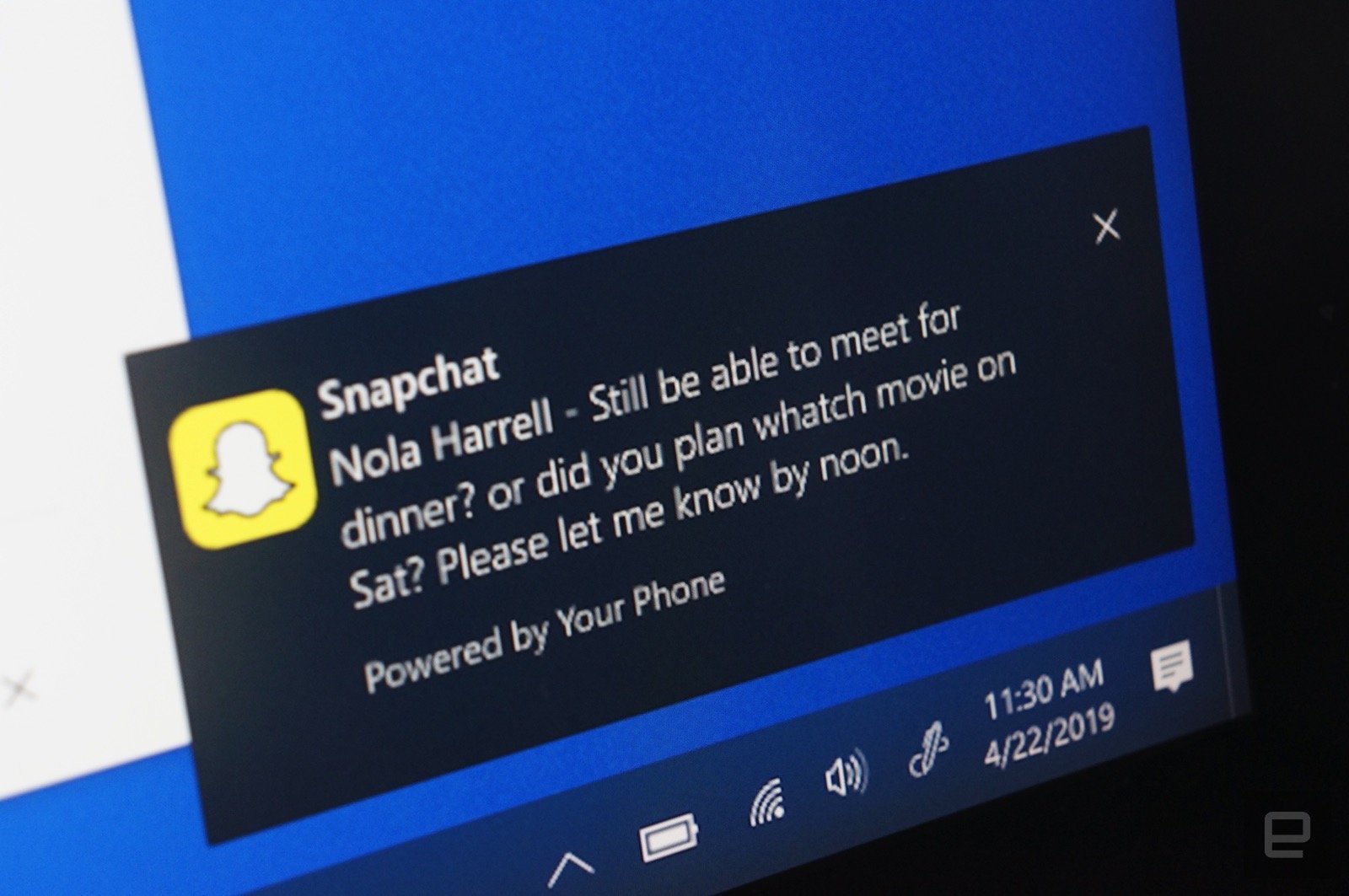
    Besides the mirroring available with the aforementioned phones, the Your Phone Companion app allows your PC to get texts, documents, and photos from any phone running Android 7 and higher. And now, the app will allow you to see phone notifications on your PC screen. Microsoft says that insiders on the 19H1 build will soon receive a preview that brings these notifications from your phone to your desktop in real time. You can decide which apps you will see notifications from on the computer screen, and if you dismiss one from the desktop, it will also disappear from your phone. These new features also will soon appear in the Your Phone Companion app.

    To see phone notifications on your Windows PC, your Android device running Android 7.0 or higher must have 1GB of RAM or more. and the Windows 10 PC must be using build 1803 (RS4) or newer. If notifications are disabled on the computer due to work policies, this feature will not work.

  • Sony’s days in the smartphone Industry are Ending

    Sony’s days in the smartphone Industry are Ending

    Sony has never been able to obtain success in the smartphone industry the way it once controlled the mp3 market, the video game console market, and the television market. Trying to differentiate itself, this year’s Xperia 1 flagship, unveiled at MWC in February, features a 6.5-inch 4K AMOLED display with a 21:9 aspect ratio. Despite what would appear to be a great screen for watching streaming video on, the pricing is sure to turn some away.

    For the second time in six years, a particular hedge fund is building up a stake in Sony hoping to influence its business decisions. Those familiar with the plans say that Third Point LLC, run by Daniel Loeb, is looking to implement its own turnaround strategy for Sony. Loeb’s fund reportedly has $14.5 billion in assets and is believed to be raising money ($500 million to $1 billion) for a fund dedicated to the purchase of more Sony shares.

    The parts of Sony that Third Point wants to take a hard look at include the semiconductor and insurance businesses and the movie studio, which some believe that Amazon and Netflix could be interested in. And while the report from Reuters doesn’t mention the mobile phone business, it most likely would be a division that Loeb would prefer to see Sony jettison. Last month, the company folded its mobile unit into the same business segment that includes its TV, camera and audio products. And a report published in March stated that by next year Sony will cut the head count in its smartphone division in half.

    Jefferies analyst Atul Goyal told clients in a note sent out last week that Sony needs to exit the mobile phone business. Sony will no doubt want to gauge the reception to the Xperia 1 before it decides whether or not to stop producing smartphones. But if Third Point LLC builds a big enough stake in Sony, the decision whether to cut its losses in the smartphone industry might be taken out of the company’s own hands.