Author: Mei Ling Tan

  • Habitat by Honestbee Flies High with global Retail Innovation

    Habitat by Honestbee Flies High with global Retail Innovation

    Habitat by Honestbee has been voted one of the must-see retail innovations in the world this year. The concept was listed among the top 16 stores to visit in the world by IGD, and Google reports it among the top 10 trending searches in Singapore last year.

    The 60,000sqft flagship store opened last October, offering more than 20,000 essential and unique food and grocery products.

    The store is billed as the world’s first tech-enabled food-and-grocery concept which uses technology to provide a seamless shopping experience with human interaction.

    According to Honestbee, customers are spending an average of two hours at the store – considerably more time than people spend in a single visit to any other supermarket in Singapore.

    Close to 500,000 people spanning all age groups have visited the store, despite its remote location. The two largest demographic groups of customers fall between the ages of 26 – 35 years old (41 per cent) and 36 – 45 (28 per cent). Two in three customers are family groups who visit the store, attracted by the mix of grocery and dining and its friendly neighbourhood feel.

    “We are pleased to have had such a resounding success since the launch, not just with customers, but also with the business community in retail, property, grocery and F&B,” said Pauline Png, Habitat by Honestbee MD.

    “Strong sales growth pushes us to continue delivering a memorable experience for customers to visit, try new products and return. This tactility that Habitat by Honestbee provides ignites a curiosity for our products, which are also available online.”

    Future growth plans

    Png says Honestbee will soon be providing an option to combine food carts on the app, enabling orders from multiple F&B concepts at the store on one receipt.

    More engaging product information and content will be added in time, along with personalised recommendations.

    “The launch of Habitat by Honestbee has allowed us to elevate our business into an omnichannel platform and work with partners like no other online player can,” said Joel Sng, CEO and founder of Honestbee.

    “Habitat by Honestbee has built on our brand’s promise and expertise in using data to optimise the customer experience.”

    Sng says the company is confident it can expand the concept into other markets.

    “In the second quarter of the year, we will be extending our food-retail leadership in Asia by launching a scalable, multi-concept kitchen and convenience store powered by data.”

    Honestbee started in early 2015 as an online concierge and food-delivery service.

  • Sogo opens at Shah Alam’s Central I-City

    Sogo opens at Shah Alam’s Central I-City

    A second Sogo Malaysia department store has launched at Central I-City shopping centre in Shah Alam, Selangor.
    The new four-storey store, designed according to a distinctive Japanese aesthetic, features 18,581sqm of retail space and more than 400 brands in a wide variety of product categories.

    “Aside from purchasing beauty products on the ground floor, shoppers can get their manicure, pedicure and waxing done at the Smooch Waxing Studio,” said Sogo Malaysia group COO Raymond Teo. “There is also the Prinz Classic Barbershop on the second level, while the shoe and bag spa is at the ladies’ shoes section on the first floor. We also have cafes for those who want to chill out without having to leave the department store.”

    A range of promotions, redemptions and activities are being held to celebrate the launch.

    “This year marks our 25th anniversary and the opening of this store is an important milestone for us,” said Sogo Malaysia CEO Toh Peng Koon. “Opening Sogo in Central I-City is not only to cater to the needs of the Shah Alam community and beyond but also to be nearer and engage more with them.”
    “We are opening two new stores this month,” he added. “After Sogo Central I-City, it will be Sogo The Mall in Mid Valley Southkey, Johor Baru, on April 23.”

    By 2022, Sogo should have expanded its total network to six stores with a total retail space of 222,967sqm, which includes Prai Megamall in Penang, Selayang, Terengganu, and the first Seibu department store at the Tun Razak Exchange (TRX) Lifestyle Precinct in Kuala Lumpur.

  • The Apple-Qualcomm deal instantly kills 5G competitor

    The Apple-Qualcomm deal instantly kills 5G competitor

    As we heard earlier today, the Apple-Qualcomm battle has ended. With those two companies making up, there were likely to be repercussions around the mobile world, but we didn’t really expect the fallout to come so quickly. With Apple and Qualcomm striking a deal, Intel has announced that it will be quitting the mobile game.

    Or at least, Intel said it will be exiting the smartphone 5G modem business. Intel put out a press release saying that it would continue to support its 4G modems, but it was cancelling its plans for 5G modems for smartphones, which were originally scheduled to be ready in 2020. Intel said it would still be investing in 5G infrastructure and making 5G modems for laptops and Internet of Things devices.

    Intel didn’t mention Apple or Qualcomm in the press release, but the timing of the announcement is almost certainly no coincidence. Part of Apple’s settlement with Qualcomm was to sign a new exclusive six-year deal for iOS devices to use Qualcomm modems. Intel might have been able to keep going with Android devices, but losing the Apple money seems to have been too much.

    While the Apple-Qualcomm deal wouldn’t have impacted Intel’s efforts in mobile processors, we can’t say we weren’t hoping a bit that Intel would give up on that business too. Intel’s mobile processors in smartphones have been pretty bad, but to be fair their tablet efforts have gotten (somewhat) better. Still Intel has a long way to go before it’s considered a major player in mobile.

  • Could Samsung Internet actually be killing Chrome on mobile?

    Could Samsung Internet actually be killing Chrome on mobile?

    Chrome is the most popular Internet browser in the world. It’s cross-platform, it syncs effortlessly across devices, it’s fast and capable, and it comes with every Android handset, ready to rock. It’s so widely preferred by users that Android manufacturers kind of gave up on developing their own browsers and just release their phones with nothing but Chrome.

    Well, most of them.

    Through the years, Samsung has persisted and kept developing its Samsung Internet browser — an app that was once a laggy mess — and has managed to make a fast, powerful browser that supports a lot of useful plugins and works in unison with other elements across the One UI interface.

    We thought we’d ask you — do you prefer Samsung Internet over Chrome? And it turns out the result is almost 50/50! Not only that, some people report that they are on another Android phone, but make it a point to go to the Play Store and download the Samsung Internet browser.

  • iPad Pro and a car, you should be looking into the Apple Pencil 2

    iPad Pro and a car, you should be looking into the Apple Pencil 2

    Apart from being pretty expensive, at $129, we really couldn’t find anything wrong with the second-generation Apple Pencil shortly after the upgraded writing accessory was unveiled alongside a new iPad Pro duo last fall. But that’s only because we didn’t think to test the functionality of the Apple Pencil 2 around a car’s keyless entry solution. Wait, what?

    We know you may have trouble believing this, but while Amazon is testing delivery by self-driving robots and Elon Musk wants to send humans to Mars, Apple seems to have recently added a note to its support webpages highlighting some decidedly weird signal interference issues between the company’s newest Apple Pencil and car key fobs.

    Although this is a very specific problem a small number of users is likely to sporadically encounter in a particular situation, it still shouldn’t happen in 2019. Basically, the wireless charging capabilities of the Apple Pencil 2 can interfere with the signal sent from a car’s keyless entry device to your automobile, making it impossible to unlock your car without a key.

    Fortunately, there’s an easy workaround you can employ whenever the aforementioned issue might crop up, as storing the Apple Pencil separately from your iPad Pro should eliminate the bizarre signal interference. You could also try to put some distance between the iPad Pro used to juice up the refreshed Apple Pencil and your key fob, although Apple’s support documents do not specify how far you need to keep the two away from each other to stop this abnormal behavior from happening.

    On the bright side, the very root of the problem appears to be connected to the charging functionality of the Apple Pencil 2, so storing the stylus while fully charged alongside a 2018 iPad Pro should not interfere with car key fob signals in any way. Bottom line, this really doesn’t sound like a big deal and something tells us Apple isn’t going to bother trying to fix the glitch. But it’s still a curious thing we never expected to hear about in this day and age.

  • Google starts rolling out Android updates via Play Store

    Google starts rolling out Android updates via Play Store

    What started as a rumor last week has now become a certainty, as Google is now rolling out Android Q betaupdates through Play Store. The main benefit is that you’ll now find Android updates much easier, or let’s say that they will find you faster and easier than before.

    A couple of Pixel users have taken to Reddit to confirm their Android Q beta updates have arrived via Google Play Store. Those with Pixel phones that run the previous Android Q beta build should start receiving notifications like the ones you usually get for an app update. Once the update is downloaded and installed, your phone will restart automatically.

    Aside from the fact that the whole process of find and downloading an update is quicker and easier, it’s also faster than previous updates. We doubt the new update method will become available to those using phones other than Pixels anytime soon, but we can safely assume that Google will reveal in-depth details about how it’s done in early May at Google I/O.

    If Google pushes for the standardization of the Android OS updates via Play Store, it could mean a more user-friendly method of updating your phone, but it certainly doesn’t guarantee that these important updates will be released faster and at the same time for everyone.

  • Walmart launched subscription service With Kidbox

    Walmart launched subscription service With Kidbox

    International retailer Walmart and Kidbox, the curated childrenswear subscription service, are teaming up to offer Walmart.com customers an exclusive, curated stylebox for kids.

    The service features an option to receive a seasonal selection, without a styling fee.

    The new stylebox will offer Walmart.com customers personalised styles selected from more than 120 premium kids’ brands. The stylebox will include four to five fashion items for US$48 – about 50 per cent off the suggested retail price for the group of bundled items.

    Clothing will include items from premium brands including BCBG, Butter Super Soft, C&C California and Puma.
    Walmart customers can order a stylebox by visiting the store’s website and completing a short style quiz for their child. Kidbox stylists use the quiz to tailor each box based on the child’s style preferences, the season and where the child lives.
    “We are thrilled to partner with Kidbox to introduce our first kids’ subscription apparel service offering premium fashion brands at a substantial savings,” said Walmart US e-commerce head of fashion Denise Incandela.

    “Over the last year, we have significantly expanded our portfolio of kids’ fashion brands as part of our broader effort to establish Walmart.com as a destination for fashion. Our partnership with Kidbox enables us to round out our offering with additional national and premium kids’ brands.”

    The Walmart and Kidbox collaboration has a charitable aspect as well. For every stylebox purchased on Walmart.com, Kidbox will clothe a child in need through its partnership with Delivering Good.

    “Walmart has done a lot over the past year to establish itself as a go-to retailer for all things fashion, and we’re honored to partner with the retailer to expand its kids’ assortment online, while also saving parents time and offering them the value and convenience of a stylebox,” said Kidbox CEO Miki Berardelli. “At Kidbox, we pride ourselves on understanding kids’ fashion preferences while also creating moments for them to learn about the importance of giving back.”

    Walmart.com has an expanding kids’ fashion assortment, which features more than 100 new brands that have been added over the last year, including Betsey Johnson, Kapital K, Levi’s, Limited Too and The Children’s Place. The retailer has also launched new shopping destinations for dance essentials and gymnastics, and licensed children’s clothing, making it easier for customers to shop for fashion featuring top movie, TV and gaming characters.

  • Jack Ma calls 12-hour work days a “blessing”

    Jack Ma calls 12-hour work days a “blessing”

    In the middle of stress awareness month, Alibaba founder Jack Ma has told his company’s workers they should be working a “996” work schedule – that is from 9am to 9pm, six days a week.

    According to a speech made this week by Ma, working 12 hours a day for Alibaba was a “blessing” to staff, and necessary for the business to achieve success.

    Ma’s comments caused a stir in China, where a conversation about work-life balance has spring-boarded off of a slowing tech industry.

    “With the pressure of economic downturn, many enterprises are facing challenges to survive… but the way to relieve anxiety is not to let employees work overtime as much as possible,” an editorial wrote.

    Ma later backtracked on his comments, calling such a work regime inhumane, unhealthy and unsustainable.

    The comments come as LinkedIn revealed work-life balance is the top cause of stress at work for Australians, with 72 per cent of survey respondents struggling to keep a balance between the two.

    The report also found that executive-level professionals are the most stressed, more so than middle management and individual contributors.

    In terms of age demographic, Generation X is the most stressed generation with over half (54 per cent) claiming to struggle with confidence in the future of their work.

  • Singapore is APAC’s top Smart Fiber City

    Singapore is APAC’s top Smart Fiber City

    Singapore is the top Smart Fiber City in Asia-Pacific, according to a new ranking released at the FTTH Council Asia Pacific Conference in Wuhan, China.

    The inaugural Smart Fiber Cities ranking list Singapore as the region’s Champion, due to the city’s 93% FTTH/B coverage, 100% 4G coverage and its over 10,000 Wi-Fi hotspots.
    For the regional rankings, FTTH Council Asia-Pacific evaluated cities with high FTTH/B coverage based on the innovative and useful solutions that have been developed to take advantage of this infrastructure.

    Cities were raked in two categories – champs and challengers. Champs have almost complete fiber coverage city-wide and have reached maturity in smart projects that have been deployed. They also generally have a comprehensive smart city framework in place and smart projects already in operation.

    Challengers meanwhile are actively deploying fiber infrastructure to meet their smart city ambitions, but their fiber-based smart services are usually limited to specific domains.

    Behind Singapore in the Champs category are Tokyo in Japan and Seoul in South Korea with roughly 90% FTTH coverage, followed by Hong Kong, Busan in South Korea, and Melbourne in Australia.

    Chinese cities meanwhile took the first three spaces in the Challenger category, with Shanghai on top with round 90% FTTH/B coverage, followed by Hangzhou and Wuhan. Runners up included Malaysia’s Selangor, Jakarta in Indonesia, Bhubaneswar in India and Ho Chi Minh in VIetnam.

    “The research into Smart Fiber Cities shows that we are just at the beginning of these developments. Across APAC, we see many mature projects in areas such as e-government and security, with 5G-based applications in, for example, transport and disaster management coming up,” FTTH Council Asia-Pacific president Venkatesan Babu said.

    “We have great expectation for the large numbers of pilots in areas such as healthcare, smart grids and autonomous traffic. We look forward to closely follow new developments in the coming years.”

  • Giordano sales down in China

    Giordano sales down in China

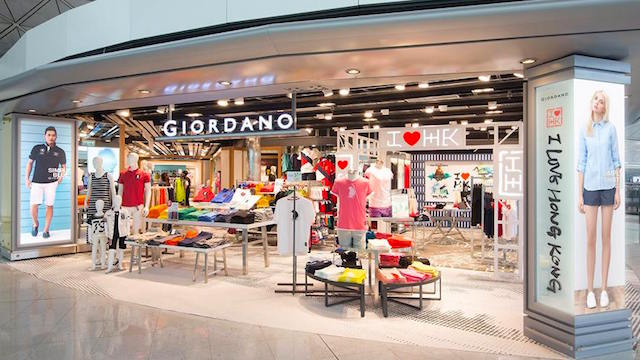
    Giordano sales in Greater China plunged by 17.7 per cent during the first quarter, dragging group-wide sales down by 10.8 per cent, or 8.5 per cent on a constant currency basis.

    In a stock exchange filing on the eve of the holiday weekend the casual apparel retailer blamed the downturn on “uncertainty stemming from the Sino-US trade dispute and abnormally warm weather”.

    Giordano sales in Indonesia, Thailand and Vietnam remained stable during the quarter, and in the fledgling Middle East market rose by 10 per cent to HK$80 million, slightly compensating for the heavy impact of China.

    By market, Mainland China sales fell from $378 million to $295 million, in Hong Kong and Macau from $248 million to $225 million and in Taiwan from $201 million to $161 million. In the rest of Asia-Pacific, they declined from $422 million to $398 million.

    In the three months to March 31, inventories rose from HK$507 million to $512 million.

    During the quarter, Giordano closed two stores in Hong Kong and Macau and reduced directly operated stores on the mainland by 31, but opened 19 franchised outlets.

  • Google Pay update brings Gmail integration

    Google Pay update brings Gmail integration

    Google is trying to build an entire ecosystem that will allow users to access any important information from just about every Google app. Gmail has been integrated with many other Google apps, but other developers noticed the benefits and added integration with the email app.

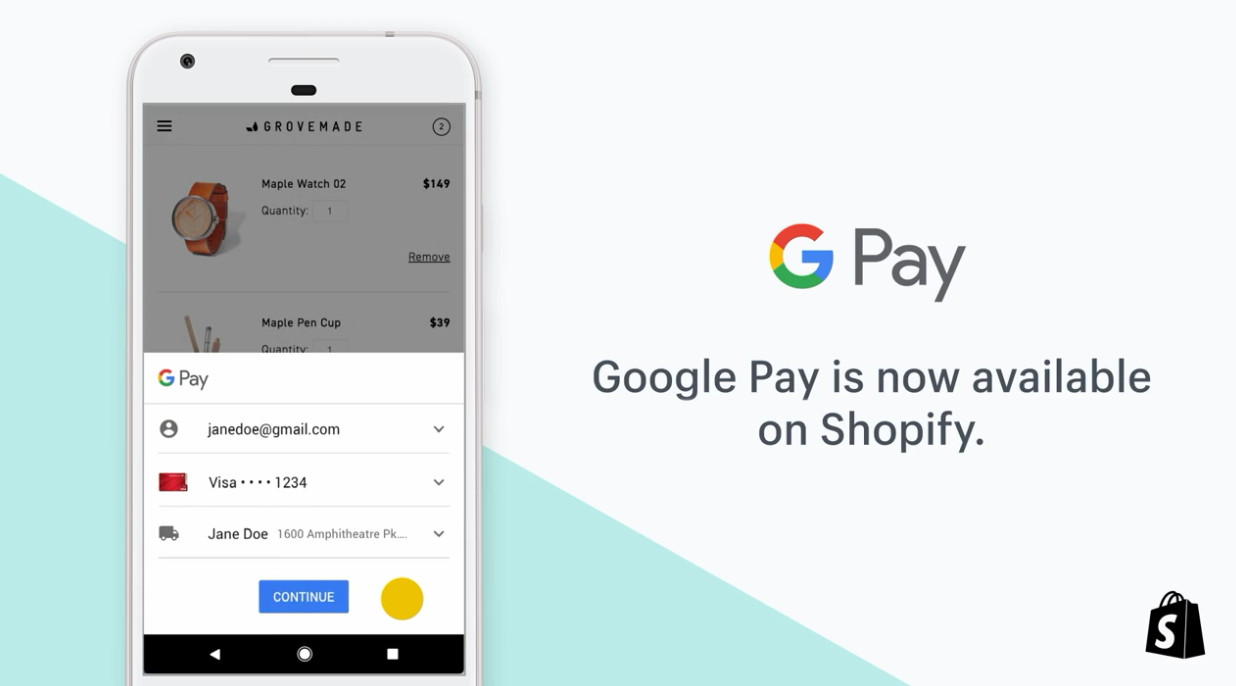
    The newest app that benefits from Gmail integration is Google Pay, which doesn’t come as a surprise since the changes were spotted a few months ago. Now, Google Pay has been updated with Gmail importing, which means that the mobile payment app will browse through your emails and add the relevant information to its system.

    For example, whenever you receive loyalty cards, movie tickets, and boarding passes in the Gmail inbox, they will be automatically added in Google Pay. Keep in mind though that if you delete the email containing the information, it will disappear from Google Pay as well.

    The improvement makes it easier to access loyalty cards, tickets, and more without having to go through your emails every time you want to know something about them. It’s also easier to find coupons and boarding passes that are being sent to your Gmail inbox and make use of them.

    It’s worth mentioning that the new Gmail import feature is disabled by default, so you’ll have to enable it in Google Pay by heading to Settings / General / Gmail Imports and using the toggle available after the latest update.

  • A Short Review Guide On Jared Goetz Shopify Ecom Hacks Academy 

    A Short Review Guide On Jared Goetz Shopify Ecom Hacks Academy 

    eCom Hacks Academy is an in-depth course for building your online business in Shopify. CNBC and Entrepreneur, Inc. featured its founder, Jared Goetz, in 2017 as he was able to earn 2 million USD in 60 days from his store. A lot of people are enticed by how Jared worked for only 30 minutes a day, which is included in the eCom Hacks Academy training. If it sounds too good to be true, check out this Jared Goetz review for a rundown of what you can learn in the eCom Hacks Academy.

    If you’re considering to avail of the training included in eCom Hacks Academy, take note that the price is 1,999 USD. Before enrolling, it’s best to know what to expect, which are the following:

    1. Training Course

    Jared teaches what he called dropsurfing, which is different from the more commonly known dropshipping. Here are some differences between the two:

    • Accordingly, dropsurfing only sells viral products while dropshipping sells what seems like a profitable product of your own choice.
    • With dropsurfing, you can travel the world without worrying for your inventory, unlike in dropshipping where you need to buy products in bulk, which could pile up in your garage.
    • Dropsurfing uses Shopify as its store while dropshipping uses both Shopify or Amazon. However, the difference is controlling traffic sources for dropsurfing, and it only hopes to make a sale on Amazon.
    • The profit dropsurfing promises for using Shopify ranges from 30-40%, which is higher from dropshipping earnings that range from only 5-10%.

    The dropsurfing concept is what Jared offers through his course: a dream business where you can work at home and travel any time. In the course, he shows you how it’s done from his own formula, which consist of the following:

    • Structure of the store
    • Techniques to convert leads
    • Effective ways to find products
    • Partnering with suppliers
    • Ads creation and scaling
    • Customer service

    Moreover, the content of the course that incorporates videos are as follows:

    • Module 1 – Overview of the structure, which has ten lessons, such as how to register with Shopify’s free 21-day trial, creating a store, establishing your domain name, phone setup, your store’s mode of payment, and basic search engine optimization (SEO) meta descriptions. Although helpful, almost all of these are available online.
    • Module 2 – Talks about setting up your store, which comes in 16 lessons. It focuses on conversion rate methods, email setup, and maximizing sales through upsells and free shipping.
    • Module 3 – Includes four lessons focusing on the products, from finding products and suppliers, to the fulfillment of orders through Oberlo.
    • Module 4 – Has 16 lessons that discuss strategies to keep your store running. Marketing campaigns such as Facebook Ads and using it like a pro, testing methods, and your budget are included in this module.
    • Module 5 – A bonus lesson that talks about conversion hacks, customer services, customer audience, and templates for abandoned cart email, which are in PDF form.
    1. Pros

    The best part of the eCom Hacks Academy is that it is legitimate, unlike many online training courses being offered on the internet these days.

    Moreover, the following are pros that make the eCom Hacks Academy beneficial:

    • Proven Method – Since the structure and formula are personally tested by its founder, eCom Hacks Academy’s strategies can give you financial freedom, similar to what happened to Jared.
    • Suitable for Beginners – Since lessons are understandable, a zero-knowledge Shopify wannabe can learn a lot from the training.
    • Teaches, Not Feeds – Unlike other courses that offer a website they’re affiliated to, Jared’s academy only guides you on how to create and operate your own site. You may even learn how to increase your sales through a new website, akin to what happened to Walmart.
    1. Drawbacks

    The training program may teach you a lot, but like any other program, there are also drawbacks to the eCom Hacks Academy. Here are some of them:

    • Expensive – A lot of online training courses come way cheaper than what Jared offers, and with the content of the program, it has a high price.
    • Not suitable for Shopify experts – Because the content is not new for existing Shopify users, the structure may only be beneficial for beginners. When it comes to setting up an account and website, which existing users may already know, it may not be worth the price for them.
    • Unrealistic Expected Sales – A promise of 5 million USD as your income may be too much. Moreover, the highlight that attracts people, which is working for four hours each week while earning 5 million USD, is a high expectation. Especially if you’re a beginner, this may not be reachable.

    Conclusion

    This review guide may help you balance your expectations regarding the eCom Hacks Academy training program. What is guaranteed is the legitimacy of Jared’s academy, but his claims may not be realistic, as his working style may not be applicable when starting up. Reaching a large amount of income may mean working hard and working smart, but it may take some time for most people. Nevertheless, feel free to try out the training program if you think this will suit and benefit you.


  • Three arrested at Mong Kok ginseng store

    Three arrested at Mong Kok ginseng store

    Hong Kong Customs officers have arrested three Mong Kok ginseng store staff, charging them with making false representations.

    Hong Kong Customs officers have arrested three Mong Kok ginseng store staff, charging them with making false representations during the sale of American ginseng.

    Their actions allegedly contravened the Trade Descriptions Ordinance (TDO) and if found guilty they face a maximum penalty of a $500,000 fine and imprisonment for five years.

    Customs were acting on a tip-off alleging salesmen of a ginseng and dried seafood shop in Mong Kok used a gift to attract a customer and further claimed that American ginseng was being sold at a specific price. After the goods were sliced, the salesmen revealed that the American ginseng was priced per tael. The price was 16 times different from expected.

    After investigation, Customs officers arrested three men, aged between 27 and 42, two of them directors of the company and the other a salesperson.

    Investigations are ongoing and the arrested men have been released on bail pending further investigation.

    A Customs spokesperson says inspections and enforcement will be stepped up ahead of the coming of the Labour Day Golden Week period.

    “Customs reminds traders to comply with the requirements of the TDO and consumers to purchase products from reputable shops,” the spokesperson said.

    “Consumers should also be cautious about the unit price and ask for more information, including the total price of the goods selected, before making a purchase decision.”

  • IoT to drive BLE market to 1.6b devices by 2023: ABI

    IoT to drive BLE market to 1.6b devices by 2023: ABI

    ABI Research forecasts that Bluetooth Low Energy (BLE) devices will exceed 1.6 billion annual shipments by 2023. Growth in segments like smart home, beacons and asset tracking, emerging IoT applications, alongside growth in existing key markets and the emergence of audio over BLE will enable the technology to achieve a CAGR of 27% between 2018 and 2023, tripling in size.

    Andrew Zignani, senior analyst at ABI Research, says the growth in BLE stems from continued technical enhancements that take advantage of opportunities arising from growing number of applications in various vertical markets.

    “BLE’s ubiquitous support in mobile devices, combined with its ability to support mesh networking, beacon functionality, and most recently, centimeter level location accuracy with the introduction of Bluetooth 5.1 and radio direction finding (RDF), is enabling BLE to be increasingly leveraged within smart consumer devices, larger scale home and commercial building automation environments, and RTLS deployments with more stringent accuracy requirements,” says Zignani.

    By 2020 Bluetooth is anticipated to enable high-quality audio streaming over BLE, providing a boost for the existing headset market and the emerging True Wireless audio device market.

    Zignani cites announcements at CES2019 such as Dialog Semiconductor demonstrating an audio over BLE proof of concept utilizing their SmartBond SoCs. “From 2020, we expect the Bluetooth audio market to take advantage of upcoming enhancements to better support truly cable-free earbud experiences while enhancing the battery life and user experience, though it may take some time for the standardization process to translate to wider mobile and ecosystem support,” explains Zignani.

    BLE chipset providers continue to innovate to provide further improvements in power consumption, further extending battery life and enabling support for battery-free devices via energy harvesting.

  • Calzedonia pays the price in Russell Street

    Calzedonia pays the price in Russell Street

    Italian fashion brand Calzedonia has reportedly renewed its Causeway Bay lease at a 15 per cent increase.

    According to reports in business media, the firm re-signed for the 400sqft retail space with just a month to spare on its existing contract at a cost of HK$9 million (US$1.15 million) for one year on the world’s most expensive retail strip, Russell Street.

    The rental translates to $750,000 ($95,674) per month, a typical figure for the shopping street that demands pricier rentals than even New York’s 5th Avenue. The street is a must-see for big-spending luxury retail hunters from Mainland China.

    The opening of the new Hong Kong-Zhuhai-Macao bridge and high-speed Express Rail Link is expected to attract higher numbers of tourists and reverse the city’s trends of falling rentals, but to date the increases has not met expectations.

    Calzedonia operates 16 outlets in Hong Kong, including those for its Intimissimi and Falconeri brands.

    The opening of the new Hong Kong-Zhuhai-Macao bridge and high-speed Express Rail Link is expected to attract higher numbers of tourists and reverse the city’s trends of falling rentals, but to date the increases has not met expectations.

    Calzedonia operates 16 outlets in Hong Kong, including those for its Intimissimi and Falconeri brands.