Author: Mei Ling Tan

  • Tigerair Taiwan to open new route flying to Palawan in the Philippines

    Tigerair Taiwan to open new route flying to Palawan in the Philippines

    Tigerair Taiwan announced Monday plans to inaugurate a new flight route between Taoyuan in Taiwan and the Philippine city of Puerto Princesa on Palawan Island starting June 7, said reports.

    It will become the third route between Taoyuan and the Southeast Asian country following the announcement by the Singapore-headquartered budget airline that it would begin flying from Taoyuan to Kalibo, a major hub for the tourist destination of Boracay island, reported UDN.

    To promote the launch of the route, individuals who book tickets between 10:00 a.m. on April 10 and 11:59 p.m. on April 11 will enjoy a discounted price of NT$399 for each single journey ticket (excluding taxes). The departure dates must be between June 7 and Oct. 18, 2019.

    There new route will offer three flights a week, according to Tigerair.

    Puerto Princesa will become the fourth destination route targeting the Southeast Asian market offered by Tigerair Taiwan, which will soon be flying 29 international routes to 22 cities, the report wrote.

    Palawan, the fifth largest island of the Philippines, boasts a plethora of wildlife, jungle mountains, and white sandy beaches. In 2016, Palawan was ranked the “Most Beautiful Island in the World” by readers of Conde Nast Traveller.

  • Poptel V9, the largest videophone with Android

    Poptel V9, the largest videophone with Android

    It’s not often that a videophone comes along, let alone one with a huge, Android-driven display, but the ever-enterprising Poptel just introduced the intriguing V9 to cover that homey dream. Equipped with a SIM card slot, the Poptel V9 nevertheless lets you take calls the old-fashioned way, like on home phones of yesteryear by simply picking up the receiver. Needless to say, it is rechargeable, so you can roam with it freely around the house and even outside in the yard or down the street.

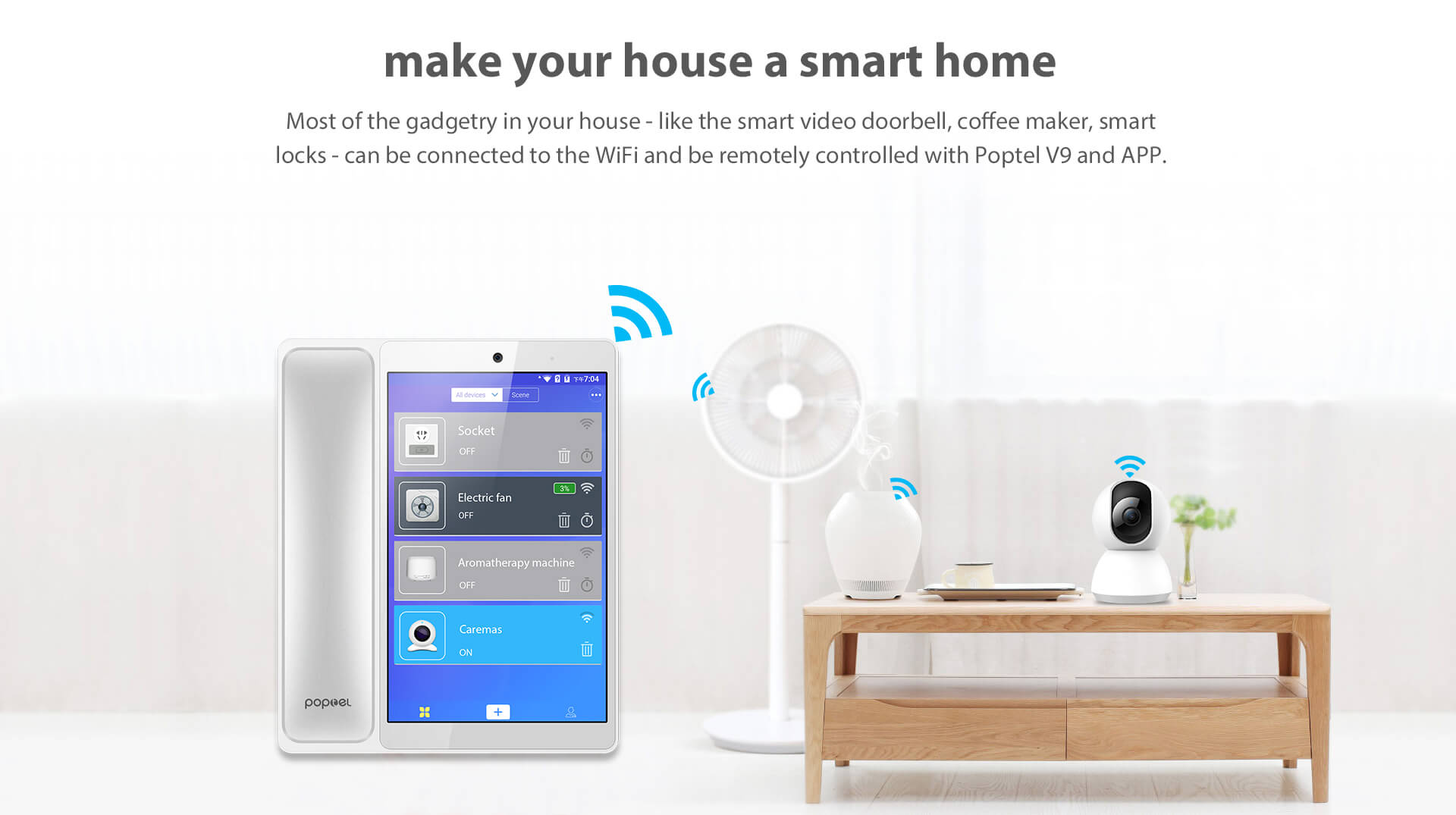
    The biggest asset of the Poptel V9, however, is its screen – literally. Equipped with a tablet-sized display, it is the biggest among all videophones with Android and allows you to gobble media content, glean caller info, use it as a digital clock and picture frame, or control your smart home appliances from the touchscreen.

    That last feature is an extra added value when it comes to the eventual home security cameras you outfitted your house with, as it can display what they are showing at any given time. Is dinner ready, where exactly did the FedEx guy leave your package on the porch, and why is the neighbor’s dog pissing on the lawn again are all pressing questions one can answer with the Poptel V9 videophone and a streaming camera.

    The specifications of the device are in line with its extremely affordable $130 price tag – 2GB RAM/16GB of storage space for apps, and 5MP front-facing camera for video chat, but that sweet 8″ display is what makes it the largest Android-laden videophone in an admittedly narrow category. The only ho-hum part is the 1800mAh battery pack and the 300 mAh one in the receiver that is good for about 3 hours of talking but you shouldn’t be yapping more than that daily anyway, you social butterfly, you.

    The SIM slot is neighboring a microSD card on for storage expansion should you need the V9 to cycle more photos than the ones you uploaded for picture-framing duties. Poptel puts an extraordinary focus on the smart home supervisory abilities of its new videophone, and with a good reason. You can prop the V9 on the kitchen table, discuss that YouTube recipe video that worked so well for the neighbor the other night, and at the same time run the robotic vacuum cleaner upstairs, check out who’s ringing at the video doorbell, turn on the floodlight outside to see them clear, and if it’s the neighbor, command the app-controlled coffee maker to start pouring a brew.

    In addition, you can control the lighting, thermostat, AC unit, smart locks, or any other home automation gizmo you have equipped your house with from the comfort of your own videophone. It’s the 90s family soap opera dream come true in a quirky, refreshingly old-fashioned looks with a modern twist. At $130, just the retro experience of walking around the house with a receiver sounds like a steal when we add the Android media machine it is attached to.

  • AirAsia to sell tickets of non-competing carriers on website

    AirAsia to sell tickets of non-competing carriers on website

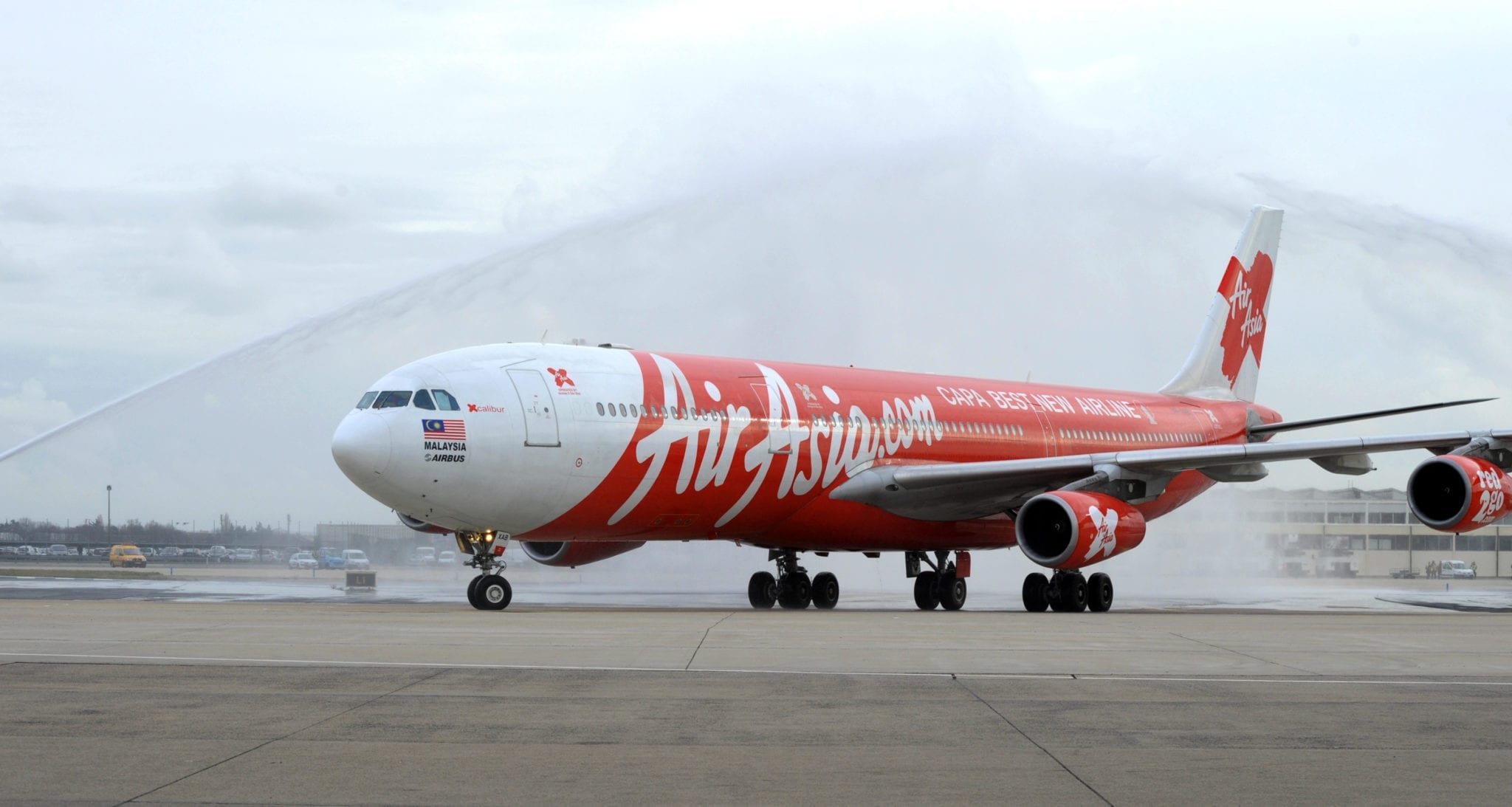
    AirAsia, whose website is used by 65 million customers every month, is considering a plan to sell tickets of non-competing carriers on airasia.com, using its size to give online travel agents a run for their money. The Kuala Lumpur-based carrier, Southeast Asia’s largest airline group, which already sells car rentals, accommodation at half a million hotels and serviced apartments worldwide and holiday packages in five regional destinations, thinks it can do a better job of selling these services than the travel industry because of the volume of data available from frequent travellers on its network.

    “I have a phenomenally strong platform that I [can] open for business to sell other content,” Tony Fernandes, AirAsia’s founder and chief executive, said in an interview with the South China Morning Post during Credit Suisse’s Asia Investment Conference in Hong Kong. “We can be as strong as any online travel agent in terms of selling hotel content. I think we can be stronger than Klook at selling activities.”

    Data is at the heart of the low-cost carrier’s ambitions to grab a bigger share of tourism revenue, which is projected to rise by 53 per cent to US$625 billion (S$847 billion) in Asia in the next five years, according to the Pacific Asia Travel Association (PATA). Airasia.com boasts 65 million unique monthly visitors, as well as data of 50 million repeat customers. Klook, an online tour agency and activities organiser founded in Hong Kong in 2014, had 16 million monthly visits last summer.

    The airline, which prefers to be seen and heard as part of a wider travel technology group, is leveraging data to know its customers better and keep them spending in its ecosystem.

    “Everyone is excited about platform businesses. Everyone is excited by GoJek and Grab and the unlimited potential of who they can reach and what they can sell,” the AirAsia founder added.

    Fernandes pointed out that the first thing people did when they wanted to travel was to buy an airline ticket, not a hotel. AirAsia.com generated US$4 billion in ticket sales last year for the budget carrier.

    “We are going to see the customer first, so we are going to take a large share of the wallet and we’re going to be good at it,” he said. “The first step would be to be as good as anyone selling hotels, selling activities. And then we may start selling [tickets of] airlines who don’t compete with us.”

    The plan may have easyJet or Ryanair selling their European flights to an Asian traveller planning a trip to the continent, he said, adding that AirAsia was currently not engaged in any active discussions with other airlines.

    “He is thinking more about a lifestyle, digital platform than a traditional airline,” said Mohshin Aziz, an analyst at Malaysian lender Maybank in Kuala Lumpur.

    AirAsia has enough user data to “formulate or create an algorithm to predict the buying pattern” of travellers, Mohshin said. “So many airlines are backwards – they don’t have a well-functioning distribution system. So [AirAsia] can easily become the one that is willing to share for some money and intelligence.”

    ​​​​​​​The scope and potential for AirAsia to sell foreign airline tickets was substantial, Mohshin said, particularly for carriers that operate services in Southeast Asia as non-stop flights to Europe or Australia, and did not have the same success in sales as a local airline would.

    Airlines such as KLM, which operates a connecting flight from Kuala Lumpur to Jakarta, or Ethiopian Airlines’ service to Singapore, could also benefit from AirAsia’s data and sales power.

    “For foreign carriers to try and get Singaporean customers, they are not going to put much effort into it. It is better for them to pass it on to AirAsia, to try and sell tickets on their behalf,” Mohshin said.

    AirAsia was well positioned in Southeast Asia, said Raini Hamdi, Asia Editor at travel and technology website Skift, citing a growing population of 650 million people, high mobile and internet use and a shift to online travel booking.

    “If AirAsia puts its energy into this, it will be successful,” she said. “It is a torch-bearer of great value, convenience, ease of use. It has a strong customer base. Add personalisation through data mining, AI, machine learning, ease of payment and ease of earning and burning points for customers, the stickiness of airasia.com will increase rapidly.”

  • Apple could end up buying 5G modem chips from unlikely sources

    Apple could end up buying 5G modem chips from unlikely sources

    You might know that Huawei manufacturers handsets and networking equipment. At the end of last year, it was the third largest smartphone company in the world and the top provider of networking gear. What you might not know is that Huawei designs its own chips. Its Hi-Silicon unit created the Kirin 980 SoC which is currently found powering up the Huawei Mate 20 Pro and the Huawei P30 series. It also will be used to drive the foldable Huawei Mate X. While Huawei designs the chips, they are actually manufactured by TSMC.

    Now as we discussed yesterday, Apple is relying on Intel to have its XMM 8160 5G modem chip ready in time for its 2020 iPhone models. There are conflicting reports about whether Intel will deliver the component in time, and as a result, we have seen rumors that a 5G iPhone might not surface until 2021. Intel says that it will be shipping the chip later this year, but just in case there is a problem, Apple has found an unlikely friend in Huawei.

    Huawei would consider selling its 5G Balong 5000 modem chips to Apple. The report cites a source who has “knowledge of the situation.” This is an unusual thing for Huawei to do considering that an executive said earlier this year that “Balong is mainly for supporting Huawei’s smart products, such as phones and IoT products, and is currently for Huawei’s internal use only.” It also seems strange considering that Huawei is looking to leapfrog over both Apple and Samsung to become the global leader in smartphones by 2020.

    Apple could turn to Qualcomm, but that is unlikely to happen since both firms have been squaring off in court over patent infringements, antitrust claims, and royalty payments, In fact, a week from today a courtroom in San Diego will host a multi-billion dollar trial between Apple, its contract manufacturers like Foxconn and Wistron, and Qualcomm. At stake are unpaid royalties amounting to billions of dollars. Qualcomm CEO Steve Mollenkopf said back in November that his company was “on the doorstep” of resolving its differences with Apple; we now know that this was not the case.

    While it seems that Huawei would be “open” to selling Apple its 5G modem chips, the other side of the equation is whether the gang in Cupertino would be willing to buy them. During the FTC v. Qualcomm case, Apple supply chain executive Tony Blevins testified that Apple was considering the use of 5G modem chips from Samsung or MediaTekfor the iPhone. Even though Apple currently uses only Intel modem chips for its handsets, Blevins talked on the stand about “Project Antique.” This was Apple’s attempt to find a second supplier to provide it with modem chips. As Blevins noted, “No offense to (Intel) but we don’t want to be single supplier with them. We wanted both Qualcomm and (Intel) in the mix.”

    Huawei’s Balong 5000 modem chip supports both mmWave and sub-6GHz 5G networks. It also is compatible with 4G LTE, 3G, and 2G networks. The important thing about using Huawei’s modem chip is that Apple could get its hands on it earlier than Intel’s chip and have more time to test a 5G iPhone. The Balong 5000 5G modem chip will debut on Huawei’s first phone to support the next generation of wireless connectivity. That device happens to be the foldable Mate X.

    Apple wouldn’t be the only one in such a partnership to benefit. Huawei would get to widen the use of its chips beyond its own devices, and you can just imagine how much revenue would flow into the company’s coffers. It also might play well in China after U.S. government attacks on Huawei have led some Chinese consumers to unofficially boycott Apple products.

    There is a huge unknown here, and that is how the Trump administration might react. Huawei is considered a threat to U.S. national security and allies have been warned not to use Huawei’s networking gear to build out 5G networks. That’s because the law in China requires a company like Huawei to gather intelligence if requested to do so. Considering that we are talking about the modem chip, a major component in communicating voice and data, there are bound to be concerns about the use of Huawei’s component inside the iPhone.

  • “The Great Move” is largely concluded

    “The Great Move” is largely concluded

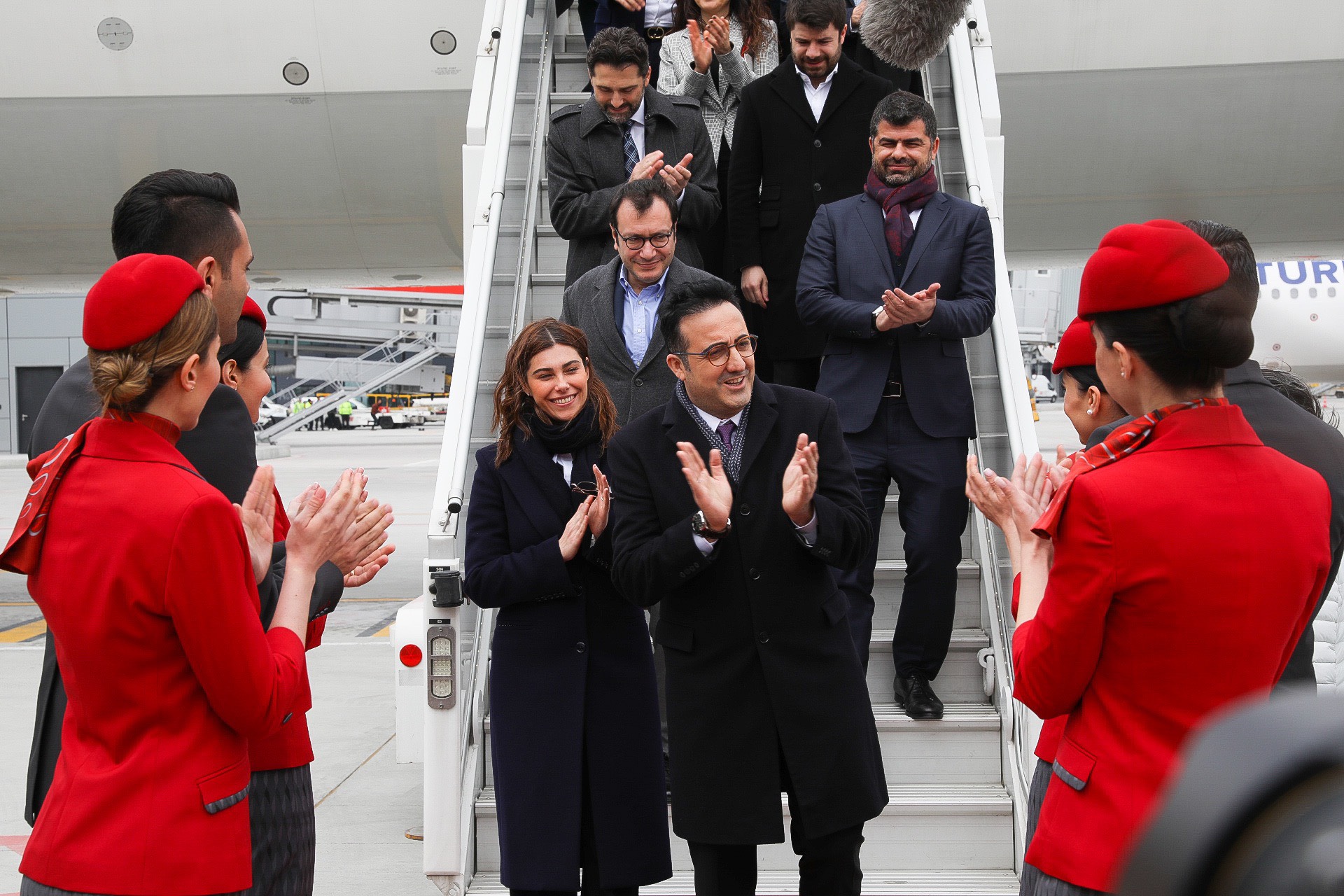
    Turkish Airline’s transition to its new home, Istanbul Airport, is largely concluded with progress at 96 percent. With the “Great Move” representing one of the most significant cornerstones of the Turkish Aviation history, Turkish Airlines has nearly concluded its gradual move to Istanbul Airport, which started following the official opening on 29th October last year. The moving operation, which started on 5th April, Friday, at 3:00, had reached 96 percent completion 12 hours earlier than the projected 45-hour plan. It concluded on 6th April, Saturday, at 20:00, and the flag carrier airline has already begun a new era at its new home, Istanbul Airport, which will be the new center of the global aviation sector.

    Commenting on the “Great Move” process, which included saying farewell to Atatürk Airport – home to Turkish Airlines throughout its 86 years of history, and moving to its new home base, Istanbul Airport, also known as “Monument of Victory”, Turkish Airlines Chairman of the Board and the Executive Committee, M. İlker Aycı said: “Currently the biggest airport project in the world, this enormous facility will be the home of the resounding local and global growth of Turkish Airlines in the future while becoming the most important driving force behind our growth with its state of the art physical capabilities and capacity.”

    “Successfully concluding its mission of being the home of our brand throughout our 86 years of history, saying farewell to Atatürk Airport was a highly saddening experience for us. However, our brand’s unstoppable growth and progress especially over the last 15 years forced us to make this decision to part ways. As Turkish Airlines became unable to fit its mold with its efficient growth performance, the need for a new home that will support its development and open its way with capacity and other physical capabilities was born. Starting with the originator of the idea for this monumental project and its biggest supporter, our President Recep Tayyip Erdoğan, as well as our Ministry of Transport and Infrastructure, IGA consortium, our various business partners, every single member of our family and everyone else who offered their toil and support, we are grateful to all of those for bringing us this bundle of opportunities, which will allow us to carry the passenger and flight experience into a whole new platform. In addition to this, I would like to also express my great pleasure and honor in announcing that the future of the global aviation will develop with Turkish Airlines at its center with our new home, and new face of our brand.”

  • Global public cloud spend to 17.5% in 2019

    Global public cloud spend to 17.5% in 2019

    Gartner forecasts worldwide public cloud services market will grow 17.5% in 2019 to reach a total of $214.3 billion, up from $182.4 billion in 2018.

    Cloud system infrastructure services, or infrastructure as a service (IaaS) is forecast to grow 27.5% in 2019 and reach $38.9 billion, up from $30.5 billion in 2018 (see Table 1). The second-highest growth rate of 21.8% will be achieved by cloud application infrastructure services, or platform as a service (PaaS).

    Gartner research vice president, Sig Nag, says “we know of no vendor or service provider today whose business model offerings and revenue growth are not influenced by the increasing adoption of cloud-first strategies in organizations. What we see now is only the beginning, though. Through 2022, Gartner projects the market size and growth of the cloud services industry at nearly three time the growth of overall IT services.”

    Gartner expects that by the end of 2019, more than 30% of technology providers’ new software investments will shift from cloud-first to cloud-only. This means that license-based software consumption will further plummet, while SaaS and subscription-based cloud consumption models continue their rise.

    “Organizations need cloud-related services to get onboarded onto public clouds and to transform their operations as they adopt public cloud services,” said Nag. Currently almost 19% of cloud budgets are spent on cloud-related services, such as cloud consulting, implementation, migration and managed services, and Gartner expects that this rate will increase to 28% by 2022.

    “As cloud continues to become mainstream within most organizations, technology product managers for cloud related service offerings will need to focus on delivering solutions that combine experience and execution with hyperscale providers’ offerings,” said Nag.

    He sees the complementary approach as driving both transformation and optimization of an organization’s infrastructure and operations.

  • 2020 Karma Revero Gets BMW’s TwinPower Turbo Engine

    2020 Karma Revero Gets BMW’s TwinPower Turbo Engine

    Karma Automotive is all set to reveal its all new 2020 Revero luxury electric vehicle at Auto Shanghai 2019 and while there’s one teaser out yet, we didn’t know what the car will be powered by. The company announced that the 2020 Revero will use a BMW TwinPower turbo three-cylinder in-line engine supplied by BMW AG to power an on-board electric generator. BMW AG started working with Karma in 2015 to help develop the onboard generator systems used in the company’s new Revero.

    Karma’s engineering team embarked on a complete redesign of the all-electric powertrain that underpins the new 2020 Revero. After extensive evaluation the team selected the highly-charged BMW engine as the optimal choice to support a new and more powerful high-voltage NMC lithium-ion battery pack and a new, transversely mounted, twin-motor rear drive module (RDM).

    Thanks to this engine the performance of the Revero will be improved too and the car will be able to go from 0-96 kmph in just 4.5 seconds which is a second faster than the model it replaced. The 2020 Revero, along with Karma’s Pininfarina-designed concept car and its all-electric Vision concept car, will form the automaker’s product announcement at Auto Shanghai 2019.

    Bob Kruse, Karma’s Chief Technology Officer said, “BMW AG is a natural fit for Karma’s luxury-tech focus because it is a proven technology leader renowned for conceiving and delivering ground-breaking innovations.”

  • Indonesia’s FiberStar extends collaboration with Huawei

    Indonesia’s FiberStar extends collaboration with Huawei

    Indonesia’s FiberStar has signed an agreement with Huawei to jointly expand high-speed fiber network services in the market.

    FiberStar recently partnered with Huawei to build a 1Tbps backbone DWDM network linking Jakarta with Surabaya. The network consists of submarine and terrestrial cables that form a ring network with a total length of more than 3000 kilometers.

    Building on this cooperation, the companies signed a memorandum of understanding at the Huawei ISP Summit Asia Pacific 2019 in Bali to strengthen collaboration in the field of fixed networks and data centers.

    FiberStar co-founder and director Thomas Dragono said Huawei shares the company’s vision for the digital transformation of Indonesia.

    “Being the pioneer of Indonesia’s neutral infrastructure service, and considering Huawei’s advancement in the optical communications field, we have both decided to explore a deeper and stronger partnership,” he said.

    “The consensus on the advantages of optical network technologies and evolution trends are the basis of cooperation between both parties. We will leverage the advanced DWDM and MPLS technology to expand the coverage of networks in Indonesia, and further facilitate the growth of the digital economy in Indonesia.”

    FiberStar was established in 2014 as a subsidiary of Indonesia’s biggest conglomerate the Salim Group.

    The company is Indonesia’s biggest carrier-neutral infrastructure provider, offering coverage to 92 Indonesian cities across the nation’s main islands including Sumatra, Java, Bali, Kalimantan, and Sulawesi.

  • Nepal to shut down CDMA from 2022

    Nepal to shut down CDMA from 2022

    The Nepal Telecommunications Authority (NTA) has reportedly decided to switch off CDMA services in Nepal from 2022.

    The regulator’s Radiofrequency Policy Determination Committee has decided on a policy of CDMA network shutdowns in order to pave the way for refarming spectrum in the 800-MHz band.

    Currently only Nepal Telecom operates an active CDMA service, under the brand Sky. The service is currently available in most areas of the country, but the user base is low due to the preference for GSM services in the market.

    Nepal Telecom had decided in 2017 to stop investing further in both CDMA and Wimax, but has not currently set a date for the network shutdown.

    The operator plans to return its 6 MHz of 800-MHz spectrum to the regulator after the network shutdown.

  • Taobao Leverages Live Streaming to Boost Rural Development

    Taobao Leverages Live Streaming to Boost Rural Development

    Taobao will leverage its livestreaming technology to help incubate 1,000 key opinion leaders in China’s countryside in an effort to boost rural development. By helping farmers go online, Taobao aims to enable farmers to find new markets and customers from their homegrown products.

    Taobao’s target is to boost the livelihood of 1,000 farmer livestreamers from 100 counties in Chinan by helping them each generate over RMB10,000 in monthly income. The idea is to drive online sales of local agricultural products via livestreams conducted by the newly minted rural KOLs – the farmers, themselves. To promote this new initiative, Taobao plans collaboration with countylevel governments to highlight local points of interest and expand the popularity and recognition of various villages participating in the livestreaming.

    “Our rural livestream program aims to empower local livestreamers to boost business for povertystricken areas, while enabling farmers to manage their own livestream e-commerce channels. It’s Taobao’s devotion to poverty relief by leveraging e-commerce and livestreaming via creative digital technologies.” said Chen Lei, director of e-commerce content at Taobao. Last year, Taobao hosted more than 150,000 agriculture-themed livestreams, which drew over 400 million viewers. Taobao innovated the “Live on the Farm” model, featured with agriculture livestreamers, KOLs, and even local government officials from counties to join livestream sessions and promote their local goods. In January 2019, Taobao’s “Live on the Farm” sevenday online sales campaign generated over RMB9.35 million in sales, right ahead of Chinese New Year, a prime gifting period in China.

    Many agriculture livestreamers tasted their first success on the platform last year, including Chen Jiubei, who has helped farmers in her hometown in Hunan province sell up to 2 million kilograms
    of previously unsaleable oranges in just 13 days last winter. Taobao also coordinated with county-level governments to provide a suite of livestreaming marketing services, including seeking out and training livestreamers, as well as identifying local selling points. With more than 60,000 distinct livestreams on agricultural products every month,

    Taobao is committed to driving RMB 3 billion in sales for the sector in 2019. This month, Taobao will roll out livestreams that introduce the source of a range of agricultural products, helping viewers discover the local landscape and customs where their products come  from. In addition, Taobao also plans to partner with CCTV, Hunan Television and Zhejiang Television to develop livestreaming shows that invite popstars and celebrities to participate in poverty-relief activities, aiming to generate more public awareness for underprivileged areas. More on Taobao Livestreaming Taobao livestreaming is an emerging marketing channel that started in 2016 and has rapidly grown into a proven marketing strategy. Powered by advanced technologies from across the Alibaba Group, KOLs and livestreamers provide both indoor and outdoor livestreaming to customers. During these livestreams, they introduce and recommend different products across diverse areas ranging from clothing, cosmetics and jewelry, to agriculture goods and plus-sized clothes. In 2018, 81 livestreamers notched over RMB 100 million in sales, respectively.

    Across all industries and sectors in China, brands and sellers are already transforming their digitalncapabilities to stimulate business development through Taobao livestreaming. L’Oréal’s flagship store experienced a nearly 20% increase in purchases after Viya and Jiaqi Li, Taobao’s most recognized livestreamers promoted the brand’s signature goods via livestream. Among the top female clothing brands, more than 30% of sales are driven by live streaming. In certain industries such as jewelry and jade, flowers and plants, the penetration rate of brands using Taobao livestreaming is close to 50%, bringing great changes to the previous online marketing mix that was adopted.

    Livestreaming serves as an efficient tool to empower traditional industries and drive sales. During the “Double 12 Shopping Festival” in 2018, Taobao organized a 12-day livestreaming event from once-booming industrial belts to rejuvenate traditional businesses with cutting-edge technologies and powerful new modes of retail operation. Livestreamers were everywhere from an agricultural products base in Sichuan and porcelain production firm in Jingdezhen to a home textiles mall in Nantong and leather factory in Haining, bringing a growing number of young customers to forgotten industrial towns. In order to inject more renewed energy into traditional industries, Taobao also launched plans at the recent summit to incubate and develop 10 offline traditional retail markets. The aspiration is to help them reach annual revenues of over RMB 100 million. Other initiatives that are being rolled out to maximize the influence of livestreaming includes developing 10 professional PGC (Professional Generated Content) organizations with over RMB 100 million revenues, creating 10 super programs with more than 100 million views and promoting over 100 regional television stations to collaborate with Tao Live, an app focused on PGC area.

  • Mobitel to invest $50m in 5G this year

    Mobitel to invest $50m in 5G this year

    Sri Lankan national mobile service provider Mobitel has revealed plans to invest $50 million this year to deploy a 5G network and upgrade its network infrastructure.

    The operator, a wholly-owned subsidiary of Sri Lanka Telecom, has commenced 5G trials ahead of a planned rollout.

    While Sri Lanka was the first country in South Asia to introduce 3G and 3.5G technology, Mobitel does not expect it to be the first to introduce 5G, the report states.

    Meanwhile Mobitel has been investing heavily to upgrade its 3G network to 4G, having spent around $100 million to convert around 100 3G base stations. The operator plans to continue the 4G upgrade, with plans to soon switch off its 3G network.

    Mobitel has now invested around $600 million over its 25 year history. But despite heavy investments and foreign exchange losses, the company managed to increase its revenue by around 10% last year.

    Mobitel is the second largest mobile operator in Sri Lanka after Dialog Axiata, with around 22.6% market share.

  • CIMB IB Research expects higher operating costs

    CIMB IB Research expects higher operating costs

    CIMB Investment Bank Research (CIMB IB Research) has retained its “reduce” call on AirAsia Group Bhd as it forecasted the company to face higher operating costs and gearing levels until 2021.

    The research house lowered its target price for AirAsia to RM1.50, from RM1.82 previously, as it expects lower core earnings per share and dividend of 13 sen.

    At 11.00am, AirAsia was trading down 1 sen or 0.38% at RM2.64 with 1.55 million shares transacted. Its market capitalisation stood at RM8.86 billion.

    In a note today, CIMB IB Research analyst Raymond Yap pointed out that AirAsia had sold 79 aircraft to lessor BBAM Ltd Partnership in 2018 and is expected to sell a further 25 planes to lessor Castlelake LP by the third quarter of this year.

    Given this, Yap explained that together with other existing operating lease aircraft, AirAsia is expected to capitalise RM11.8 billion worth of borrowings related to the operating leases in financial year 2019, effectively bringing back to the balance sheet what had previously been off-balance sheet.

    “The impact would be to raise reported gross gearing of 19% in FY18 to 198% on a pro forma basis after MFRS 16.

    “The overall impact to P&L (profit and loss) earnings from the above sale and leasebacks (S&LB) is negative because AirAsia would have to pay for the lessors’ profit margin as well as provide for a higher level of maintenance charges based on lessors’ conditions for lease returns, which tend to be strict. The net result would be a squeeze on AirAsia’s profit margins,” he said.

    Yap added that with the squeeze in profitability, AirAsia will experience greater operating leverage from unexpected changes in fuel prices, exchange rates, competitive dynamics, and airport taxes and levies.

  • Malaysian bakery Lavender Singapore Opens Its Doors

    Malaysian bakery Lavender Singapore Opens Its Doors

    Malaysian bakery Lavender is opening at Jewel Changi in Singapore this week.

    Set to open on Thursday (April 11), the store will sell Lavender’s buns, French-style choux cream puffs, and house-made pandan kaya.

    Located next to the 40m-high Rain Vortex waterfall, the outlet offers takeaway-only baked goods.

    “We try to stay competitive with prices so all our customers can enjoy our products and taste the difference in quality,” a Lavender bakery representative said.

    “Prices will definitely be different to Malaysia’s as overheads like rent, salaries and material costs will all be in Singapore dollars.”

    Malaysian bakery Lavender has six outlets in Kuala Lumpur and five in Johor Bahru, including a multi-storey flagship at Taman Pelangi.

  • Online grocery marketplace Dei Lifts Off in Singapore

    Online grocery marketplace Dei Lifts Off in Singapore

    Home-grown online grocery marketplace Dei has launched in Singapore.

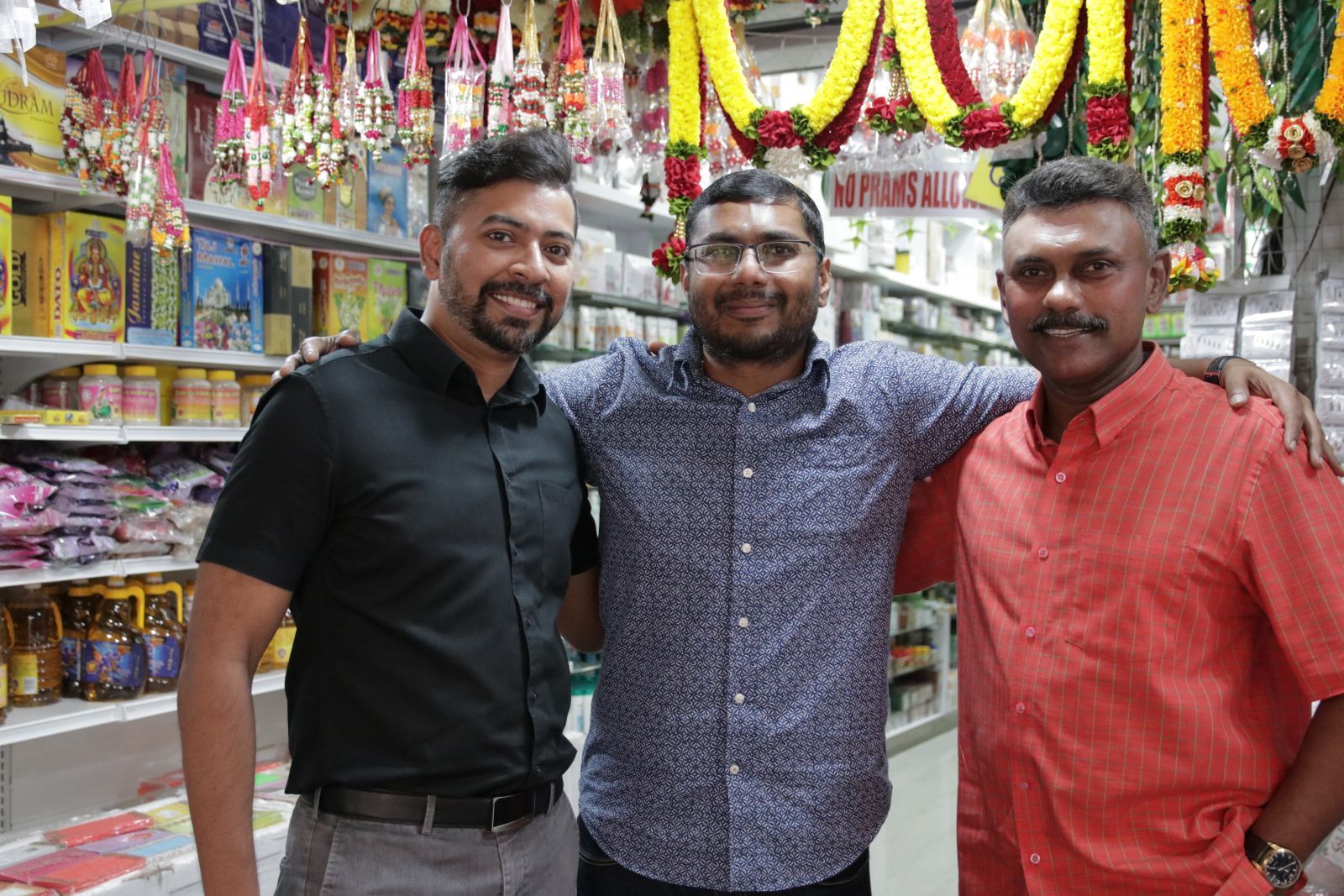
    Standing for ‘Daily Everything’, Dei hosts more than 70 physical Singapore-based Indian retailers, and 15,000 products categorised into canned goods, clothing, locally sourced vegetables, fruit and meat.

    Consumers will enjoy same-day delivery along with post-sale services.

    “Dei was founded to promote digital transformation and introduce new technologies for Little India’s merchant community,” said Jay Varman, co-founder and CEO.

    “With Dei, Little India’s retailers and merchants can enjoy greater access to the greater Singapore community and increase their revenue by up to 30 per cent.”

    Appointed by the Little India Heritage Association (LISHA) and the Singapore India Chamber of Commerce and Industry (SICCI), Dei was soft-launched in 2016, and has gained year-on-year growth of 120 per cent, peaking at an average of 50 daily orders with an estimated $900,000 in total revenue.

    “Dei helps to bridge the gap between e-commerce and the traditional brick and mortar space, allowing for the consolidation of shipments into one,” said Rajakumar Chandra, chairman of LISHA,

    “We hope to collectively onboard all business owners and merchants of Little India to ensure that everyone benefits from the nationwide digitalisation push. Furthermore, we are in discussions with representatives from Chinatown and Kampong Glam to expand into their respective precincts, thus providing a truly seamless experience for all Singaporeans.”

    The platform is currently raising seed funding for future expansion. It plans to build hyperlocal, omnichannel-integrated marketplaces across Southeast Asia.

  • Skechers Opens first duplex store in Singapore

    Skechers Opens first duplex store in Singapore

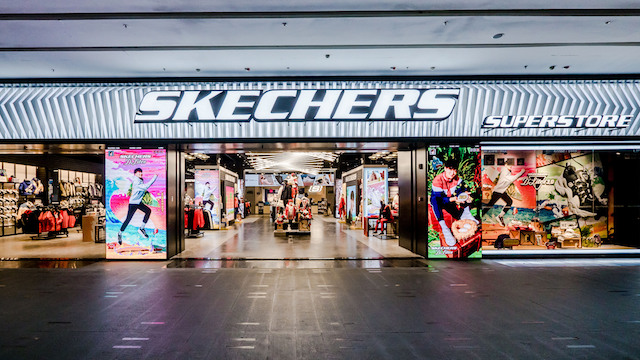
    Skechers Singapore is opening Southeast Asia’s largest and first duplex experiential concept store, at Jewel Changi this week.

    Set to open on Thursday (April 11), the 5000sqft space will incorporate new visual-merchandising and store-design elements with the use of bright lighting and cement panels.

    The space is divided into product categories, including performance, lifestyle and Skechers kids.

    The store also adopts a story-driven design, where key messages behind each product range will be highlighted through visual images and artwork.

    On Level 2 an Instagram-worthy photo zone features thematic displays and images that will be refreshed every season to reflect the keys launches with the Skechers x One Piece collaboration centrestage.

    This will be the first store in Singapore to include a shoe customisation zone with embroidery and heat-press personalisation, and to carry Jewel-exclusive collections including the Skechers SKLX series of training sneakers.