Author: Mei Ling Tan

  • India may allocate 5G trial spectrum in June

    India may allocate 5G trial spectrum in June

    The Indian government is reportedly planning to allocate spectrum to mobile operators for 5G trial services in June.

    A panel established to set the terms for 5G trials is expected to soon begin deliberations on the spectrum that will be allocated for the trials, as well as the trial time period and other factors, citing government sources.

    Operators could then commence trials in July or August, and a spectrum auction for commercial 5G services may take place from September onwards.

    According to the report, the Department of Telecom is currently in the process of appointing an auctioneer and drafting bid documents for the online auction.

    Incumbent operators Bharti Airtel and Vodafone Idea have reportedly engaged vendors including Huawei, Ericsson and Nokia over the proposed trials.

    But the mobile industry has expressed concern that the expected high cost of 5G rollouts could further damage the financial performance of what is already a highly indebted industry.

    The market’s three operators – which also include Reliance Jio Infocomm – have an estimated total net debt of nearly 8 trillion rupees ($114.15 billion), due in part to high spectrum prices during previous auctions.

  • AT&T joins Global Telco Security Alliance

    AT&T joins Global Telco Security Alliance

    The Global Telco Security Alliance, the industry alliance founded by Singtel, SoftBank, Etisalat and Telefónica. has welcomed a new member in US telecoms giant AT&T.

    The inclusion of AT&T will significantly increase the global presence and resources available to the alliance, which was first launched in April 2018.

    AT&T, which has joined the group as an equal member, has become the first North American member of the alliance.

    AT&T recently enhanced its cybersecurity capabilities and technologies though the acquisition of cybersecurity solutions provider AlienVault for an undisclosed sum. The acquisition target was converted into a wholly-owned subsidiary of AT&T named AT&T Cybersecurity.

    Globally, the alliance now has access to the expertise of more than 6,000 security experts and a global network of more than 28 Security Operations Centres. Combined, the members of the alliance have more than 1.2 billion customers in more than 60 countries across APAC, Europe, the Middle East and the Americas.

    “We are thrilled to be the first telco in North America to join the alliance, and to do so as a founding member,” AT&T Cybersecurity president Barmak Meftah said.

    te“Hackers have well established and organized communities that cooperate to produce cyber threats and it’s time large network operators work together to help deliver disruptive innovations and enable our global customers to detect and respond to threats faster and protect their digital footprint.”

  • Tata Comm, Syniverse enter managed IPX tie-up

    Tata Comm, Syniverse enter managed IPX tie-up

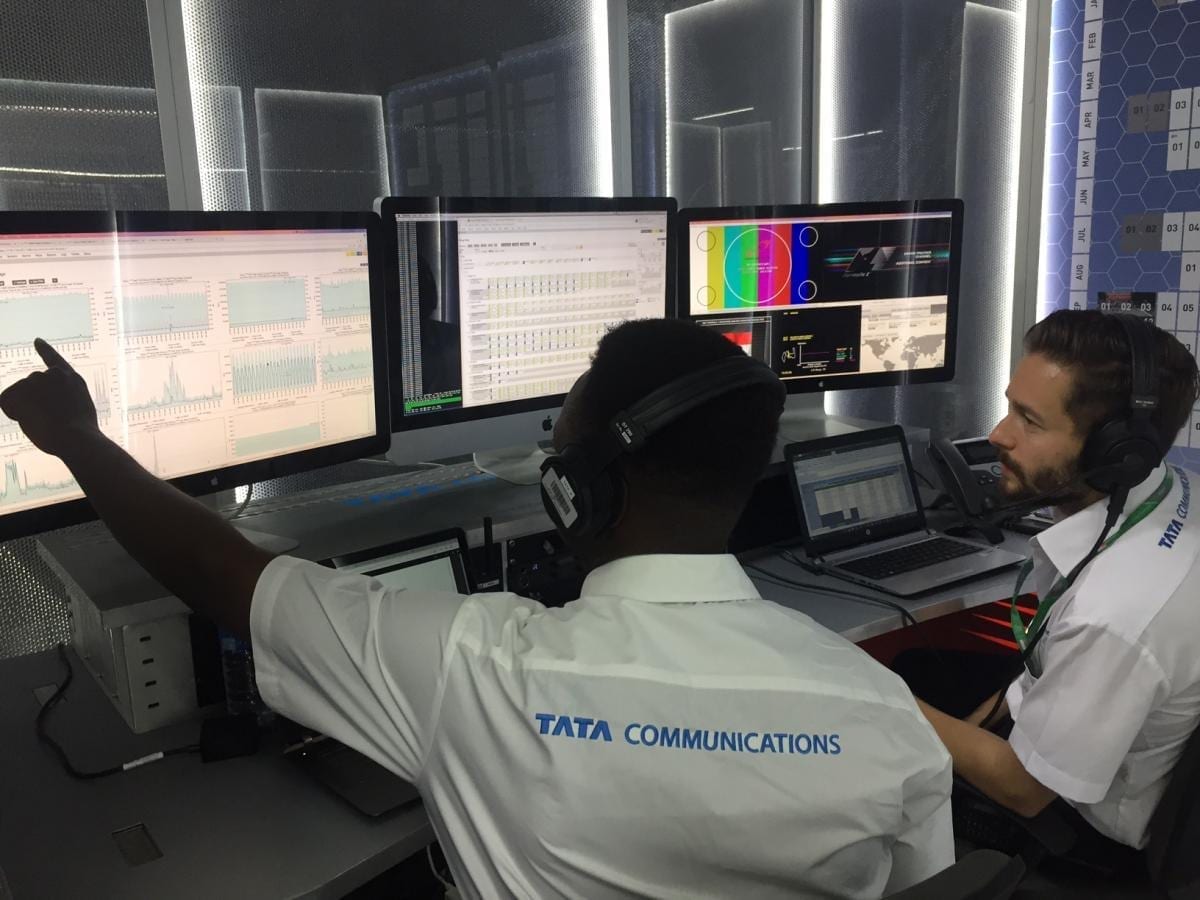
    India’s Tata Communications and US-based technology and business services provider Syniverse have teamed up to create what they are billing as the first fully-managed, end-to-end IPX network interconnection partnership for operators.

    The IPX network partnership will combine platforms that support 5G and IoT to create a comprehensive foundation for global mobility services.

    Under the IPX network partnership, Syniverse and Tata Communications will collaborate to manage traffic traveling via interconnection between the two companies’ networks to enhance quality of service and improve capacity and connectivity.

    The two operators will leverage each other’s IPX network to expand the reach of global mobile service provider customers. Both companies will have access to nearly 300 directly connected IPX/GRX customers, for a total reach of nearly 800 mobile operators.

    Customers will also be provided with enhanced monitoring, reporting, redundancy and quality of service, according to Tata Communications chief product officer Anthony Bartolo.

    “By joining forces with Syniverse, we’re one step closer to our goal of creating an environment where everything and everyone can become seamlessly connected, anywhere in the world,” he said.

    “As our customers leverage next-generation IoT and mobility services to drive their digital transformation, they need a solid foundation to ensure that they are able to capture, move and manage information seamlessly and securely worldwide. The powerful combination of Tata Communications’ and Syniverse’s capabilities and global reach will enable them to do just that.”

  • Telenor Pakistan partners with Netflix

    Telenor Pakistan partners with Netflix

    Telenor Pakistan today announced its partnership with Netflix, the world’s leading internet entertainment service. As part of this partnership, Telenor’s postpaid and corporate customers in Pakistan will be able to add their Netflix subscription fee to their monthly mobile bill, eliminating the need to share additional credit card or debit card details.

    New and existing Netflix subscribers in Pakistan will be able to select the option to pay through their Telenor mobile bills from the payments page of Netflix. They can simply complete this process by entering their Telenor mobile number, followed by the OTP (one time password).

    “Leading Pakistan’s digital transformation, we are always on the lookout for innovative ways to integrate solutions and maximize utility for our customers,” said Sardar Abubakr, Chief Digital & Strategy Officer at Telenor Pakistan. “Telenor Pakistan’s partnership with Netflix will help us achieve that through our industry-first Direct Carrier Billing (DCB) service. With this partnership, our customers will be able to get seamless access to Netflix’s stellar catalogue of original and licenced content.”

    Netflix launched its service in Pakistan in 2016 enabling its members to enjoy unlimited, ad-free entertainment on any internet connected mobile phone, laptop, desktop, tablet, or television.  More than 139 million Netflix paid members in over 190 countries enjoy TV series, documentaries and feature films across a wide variety of genres and languages.

    To promote digital and e-commerce ecosystem in the country, Telenor Pakistan launched Direct Operator Billing (DOB) in 2014 in collaboration with mobile payments company Fortumo and digital & social games publisher Gameloft for purchase of exclusive Gameloft titles and content from the gaming ecosystem. Direct Carrier Billing (DCB) was launched in 2017 through which customers may purchase content from Telenor Apps and Google Play Store, Gamebird related content and now for Netflix subscriptions as part of their mobile bills.


  • Hyperlocal Start-up, Mapprr Brings Innovation & Ease To The Customers

    Hyperlocal Start-up, Mapprr Brings Innovation & Ease To The Customers

    To provide comfort to the customers, Mapprr – a pioneer in Hyperlocal delivery concept has launched live availability of the products on-board for the first time in India along with quick 60 minutes delivery. With this, Mapprr has taken a step forward towards enhancing the quality of customer experience.  Moreover, on one hand, users experience difficulties in finding products one may need, and on the other hand roaming store to store is a big disadvantage! So, with Mapprr, users can get real time product availability updates along with quick delivery service. Moreover, users can either order from Web or Mobile Application from Mapprr!

    In the words of Aruna Subhakar, Founder & CEO – Mapprr, “Innovation in Hyperlocal market along with specialized services is making all the right noises. It works towards empowering small and local retailers to think smart and tie up their business to serve customers in their locality smartly adhering to the technological advancements. 

    He further added that the people are embracing this new dynamic marketplace, as it provides them a perfect amalgamation of the traditional and modern shopping experience.

    Mapprr has stationed out 10+ number of delivery champions in every area summing up to 100 champions. These delivery champions would receive the orders within certain distance from the store assigned to them. The company has tied up with stores like Apollo, Medplus, Ratnadeep, The Body Shop, Nykaa, HealthKart, NewU, Sangeeta Mobiles, Big C & LOT Mobiles, etc. who readily pack the products once the order is received. The delivery champions go and pick up the orders and deliver at the doorsteps. The fastest delivery in a busy city like Hyderabad is 17 Minutes!

    Currently available in Hyderabad, Mapprr delivers Groceries, Medicines, Electronics, Beauty care, Fitness Supplements, Pet Supplies, and plans to introduce Flowers, Watches, Gifting items, Mouth Sweetener like Paan, etc. This year, the company plans to hire 2,000 delivery fleet and 200 employees across Hyderabad and Bangalore. This year, Mapprr plans to expand to Pune and Gurugram.

  • YSL Beauty Hotel to open in Singapore

    YSL Beauty Hotel to open in Singapore

    SL Beauty Hotel is coming to Singapore this month, as part of a tour of the world’s fashion meccas, including Paris, New York, Tokyo, Hong Kong, Shanghai and Seoul.

    Precise details of the Singapore ‘hotel’ have yet to be revealed, but it is expected to have same style of neon lights, sleek furnishing, and comfy bedding as in previous cities. Themed rooms like the All Hours Lounge, interactive game machines, photo booths and YSL Beaute products will be on site for visitors to experiment with and Instagram.

    Products in the spotlight will likely include the Encre de Peau Cushion Leather Collector’s Edition, Rouge Volupte Shine, and All Hours Foundation.

    The one-day pop up is set to open on March 16, from 10am to 5pm, at Cherry Discotheque in Cecil Street.

  • Chicken rice eatery Liao Fan opens in Malaysia

    Chicken rice eatery Liao Fan opens in Malaysia

    Michelin-starred chicken rice restaurant Liao Fan has opened its first Malaysia outlet. Located in Ipoh, Chan Hon Meng’s birthplace, the outlet attracted a big crowd and all the food sold out on the soft-opening day last week.

    Singapore’s street food hawker Chan Hon Meng made headlines in 2016 when his soy-sauce chicken rice dish received a Michelin star. The Liao Fan Hawker Chan stall became one of the first street-food stands in the world to receive the award and also the cheapest Michelin-star meal in the world.

    The Liao Fan Hawker Chan Malaysia is non-halal as the restaurant also sells pork dishes.

  • How to get the right online pricing strategy in 2019

    How to get the right online pricing strategy in 2019

    More than 70 per cent of e-commerce retailers are leaving money on the table – and it all comes down to a single digit in their online pricing strategy.

    ‘Left-digit bias’, or the economic behavior where consumers use the leftmost-digit of a price tag in guiding their decision making, is an age-old observation in the brick-and-mortar world. (For example, $5 is perceived as significantly more expensive than $4.99, while $4.99 is perceived as just one cent more than $4.98.)

    While this concept isn’t new – research was conducted as early as 1936 – with consumer spending increasingly moving online, the more pressing question now is whether the same principle can be applied to online businesses.

    It turns out the answer is “yes.” In looking at more than six years of anonymised data from 100,000+ online businesses operating on Stripe, we discovered that the left-digit bias holds the same sway over consumers online, as it does offline. And this is especially acute across subscription businesses models, such as media streaming services and even software-as-a-service.

    Today, more than 70 per cent of online businesses worldwide are not taking advantage of this pricing model, potentially costing their businesses millions of dollars. Meanwhile, online merchants that have made the switch to an optimal pricing model stand to gain a potential revenue uptick of several percentage points or more.

    Here are some key takeaways for online businesses looking to tune up their pricing strategies in 2019 and take advantage of left-digit bias:

    0 is the most popular pricing strategy:

    Despite the popularity of prices ending in 9 offline, the most popular pricing strategy for online merchants is actually 0. The only exception here were items priced in euros.

    Pricing ending in 9 are only second-most popular, with 27 per cent of subscription prices ending in 9.

    Prices ending in 5 are also popular, perhaps because the number is an optically pleasing midpoint.

    While these are the patterns for pricing among merchants, it does not mean that they are optimal for consumers, as we’ll see below.

    It’s time to bring back 9:

    Cross referencing merchant pricing with merchants that received the most website traffic and those that are VC-funded revealed that more sophisticated businesses are more likely to set prices ending in 9 compared to other online businesses.

    While correlation doesn’t equal causation, it is reasonable to assume that these more ‘popular’ businesses are likely larger, more well-funded, or have made it a priority for them to analyse a different online pricing strategy.

    This could be an opportunity for smaller firms that do not have the same resources to analyse pricing strategies to take advantage of the left-digit bias identified by their larger or better funded counterparts.

    .

    Left-digit bias applies to luxury items too:

    There is a widely-held opinion that only sale items should end in 9. However, this misconception may actually be causing merchants to miss out on significant gains.

    According to the study, left-digit pricing was found to be influential with both luxury ($700, $800, $900 and greater in cost) and non-luxury items. In fact, new customers cluster at these higher-priced cutoff points, buying products whose prices end in 9.

    Implementing your pricing strategy:

    For online businesses looking to test the 9-digit pricing in the new year, there are a few considerations to keep in mind:

    • Larger online merchants with the benefit of higher volumes should consider testing 9-digit pricing on a portion of their offerings. The evidence shows that pricing items and subscriptions in such a way stimulates consumer buying behaviour for items as inexpensive as $0.99, all the way up to the hundreds of dollars.
    • Smaller, high-growth merchants should simply consider 9-digit pricing as a smart default. At lower volumes, running pricing experiments can take a much longer time and are prone to data ‘noise’. Instead, these businesses ought to consider 9-digit pricing as standard practice, helping to potentially level the playing field against larger competitors.

    Pricing is key in today’s competitive market, especially for lean online businesses. It can set a business apart from competitors and close a transaction with a fickle consumer. This is especially crucial in an industry where revenue gains of even a few percentage points can go a long way to ensuring long-term growth and success.


  • Little Caesars Pizza Philippines ready to launch

    Little Caesars Pizza Philippines ready to launch

    Little Caesars Pizza Philippines will launch with its first restaurant next month. The move continues the expansion of the brand’s international footprint with new restaurants in Southeast Asia. The first restaurant to open under the new franchise relationship with local operator Palmtree PH Foods Corp will be located at the Metrosquare Building in Manila.

    Senior VP of International for Little Caesars Pizza Paula Vissing said he believes the Philippines is a perfect fit for the company’s international expansion due to its strong affinity for both pizza and value.

    Palmtree owner James Kodrowski, who manages a group of companies that operate in the region, said: “Little Caesars Pizza is exactly what this market needs … We believe that the Hot-N-Ready concept will have undeniable market appeal, as well as our commitment to excellent guest service, and superior value. It is our ambition to make Little Caesars the new favorite pizza of the Philippines.”

    Little Caesars is the third largest pizza chain in the world, currently operating in 23 countries and territories. It will also open its first location in Singapore in January.

  • Card-not-present fraud will cost retailers US$130 billion

    Card-not-present fraud will cost retailers US$130 billion

    Increasingly complex card-not-present fraud will cost retailers US$130 billion globally in digital sales over the next five years. A Juniper Research study predicts that retailers’ slow pace in keeping up with new fraud prevention requirements will allow cybercriminal practices to become more widespread as more and more consumers shop online. It observes that established point-of-sale vendors will need to move towards mobile POS technology in order to expand their reach into fresh markets and reduce their exposure to card-not-present fraud.

    “A layered fraud detection and prevention (FDP) solution naturally helps directly preventing fraud, but it also offers major gains in terms of recovering potentially lost revenue through false positives,” said the report’s author Steffen Sorrell. “This is something about which retailers remain undereducated, and has allowed fraudsters to capitalise on relatively low FDP spend”.

    An implication of the Juniper research is that a low understanding of FDP investment return is causing the low uptake of the technology. the report anticipates digital payment players will be spending $9.6 billion annually on FDP solutions by 2023.

  • Vietnam borrows $188 million to boost connectivity in the north

    Vietnam borrows $188 million to boost connectivity in the north

    The Asian Development Bank will lend Vietnam $188 million to upgrade roads towards improving connectivity in northwestern provinces. Under an agreement signed by ADB and the Ministry of Finance Tuesday, the loan will be used to upgrade of 198 kilometers of roads that connect several towns and districts in northwestern provinces of Lai Chau, Lao Cai and Yen Bai with the Noi Bai – Lao Cai Expressway.

    The 265-kilometer expressway is part of the Greater Mekong Subregion (GMS) Kunming-Hai Phong Transport Corridor that connects Hanoi with northern localities in Vietnam and Yunnan Province in China.

    Some of the road upgrades will create economic opportunities for some of the poorest people in the project area, the bank said.

    “The project aims to expand the benefits of the GMS corridors to the northwestern provinces,” said Eric Sidgwick, ADB country director for Vietnam.

    “The improved connectivity will not only boost border trade, private investment and job creation in the region, but also provide better access to basic social services, such as education, health care, job training and emergency disaster relief for the people of the northwestern provinces, especially the poor ethnic minorities,” he added.

  • Blue chip stock plummets after YouTube ‘incident’

    Blue chip stock plummets after YouTube ‘incident’

    YEG shares of Vietnam’s Yeah1 Group lost over $22 million in Monday’s trading session following a YouTube incident. The incident arose after YouTube claimed SPRINGme Pte. Ltd, a Thailand-based company, indirectly owned by Yeah1 (16.93 percent), had violated its policies with some of its channel management activities, according to YouTube.

    While a series of stocks surged in Monday’s trading session, YEG was one of the few that lost out the most, down seven percent by the end of the session.

    This was equivalent to a drop of VND17,100 ($0.74) per share, down to VND227,900 ($9.82), bringing YEG’s market capitalization down by VND520 billion ($22.42 million).

    YEG shares plummeted in response to YouTube announcing it was terminating all Content Hosting Services Agreements (CHSA) after March 31 with all YEG’s subsidiaries or investment companies with business activities related to YouTube Adsense, the program that allows publishers on the video channel to serve advertisements by third parties, which in turn generate revenue for the content provider.

    The termination would apply to several of YEG’s multi-channel network (MCN) companies it has control over, such as Thailand-based SPRINGme, US-based ScaleLab, and organic Yeah1 Network Pte Ltd.

    The Yeah1 Group management has said it is seeking further clarification with YouTube regarding this action, and actively working with the video hosting website to prolong the CHSA’s after March 31.

    In 2018 alone, YEG’s YouTube AdSense business contributed about $1 million to its revenue, equivalent to 13 percent of the group’s after-tax profit. However, the digital conglomerate has also diversified and pledged to generate revenue through different channels to ensure its overall development.

    At the end of 2018, Yeah1 reported VND1.66 trillion ($71.58 million) in revenue, up 97 percent over the previous year; and VND180 billion ($7.76 million) in after tax profits, up 119 percent.

    Founded in 2006, Yeah1 is Vietnam’s largest multi-channel media ecosystem, operating TV channels, movie studios, Youtube networks, and digital news.

    It was also the first media company to go public, listing on the Ho Chi Minh Stock Exchange (HOSE) last June.

    YEG shares are currently the second most expensive stock on HOSE, behind SAB shares of Vietnam’s largest brewer Sabeco.

  • H&M opening a Tauranga Crossing store

    H&M opening a Tauranga Crossing store

    Fast fashion retailer H&M announced it will open its fifth store in New Zealand on April 4 in Tauranga Crossing, Bay of Plenty. The new store, set in 1600sqm, will have two levels and will feature apparel and accessories for men, women, youth, kids and baby, and its home concept.

    “We are thrilled to finally be opening a store in the Bay of Plenty region and offer our customers an incredible fashion destination within a superb shopping centre” said Daniel Lattemann, country sales manager for H&M New Zealand.

    “We are also looking forward to introducing our H&M Home concept as we know it has been a customer favourite since making its New Zealand debut in 2017.”

    H&M entered the New Zealand market in 2016 and opened its first store at the Sylvia Park mall. The retailer’s other stores are located in Commercial Bay in Auckland, The Crossing in Christchurch and Queensgate in Wellington.

    The Swedish fashion retailer also announced recently it will open a third Auckland store which will be located at the Botany Town Centre and will be launched in autumn 2019.

    Last month, H&M posted a drop in profits for the year ending November 30, blaming the decline on its investment aimed at boosting its online business.

    The world’s second largest clothing retailer embarked on a transformation program last year, investing heavily in logistics and digital technology aiming to improve shopping experience and product selection. This includes an upgrade in its mobile app, faster deliveries and the rollout of click-and-collect.

    In the last three months of its financial year, the company spent around 450 million Swedish crowns on logistics and technology, including resolving problems it flagged earlier in 2018.

    H&M chief executive Karl-Johan Persson said the upgrade in their logistics systems inevitably resulted in increased costs but will lead to a range of improvements for their customers.

  • Singtel, Optus complete international 5G AR video call

    Singtel, Optus complete international 5G AR video call

    Singtel and its wholly-owned Australian subsidiary Optus have completed a 5G augmented reality video call between Singapore and Australia as part of their preparations for the introduction of the next generation mobile technology.

    The joint trial was conducted using Ericsson networking equipment as well as OPPO 5G test devices running on Qualcomm’s inaugural Snapdragon 5G chipset.

    Augmented reality technology was used to provide instant on-screen annotations during a call conducted at the operators’ respective live 5G sites.

    According to the companies, the technology has the potential to open up a range of new possibilities for enterprises, such as the ability to deliver live on-the-job training and remote assistance.

    In the consumer space, augmented reality communications use cases will include holographic calls and the ability to deliver a virtual tactile shopping experience.

    “This call is a significant marker in our journey to 5G as we develop a robust 5G ecosystem to ensure that our enterprise and consumer customers will enjoy an enhanced connectivity experience,” Singtel group CTO Mark Chong said.

    “5G is a key enabler that will bring the future of augmented reality, autonomous vehicles and smart cities closer to reality.”

    Singtel and Ericsson launched a 5G Centre of Excellence in Singapore in 2017, and recently opened the first live 5G facility in the market in collaboration with Singapore Polytechnic.