Author: Mei Ling Tan

  • Korea to ban plastic bags in supermarkets

    Korea to ban plastic bags in supermarkets

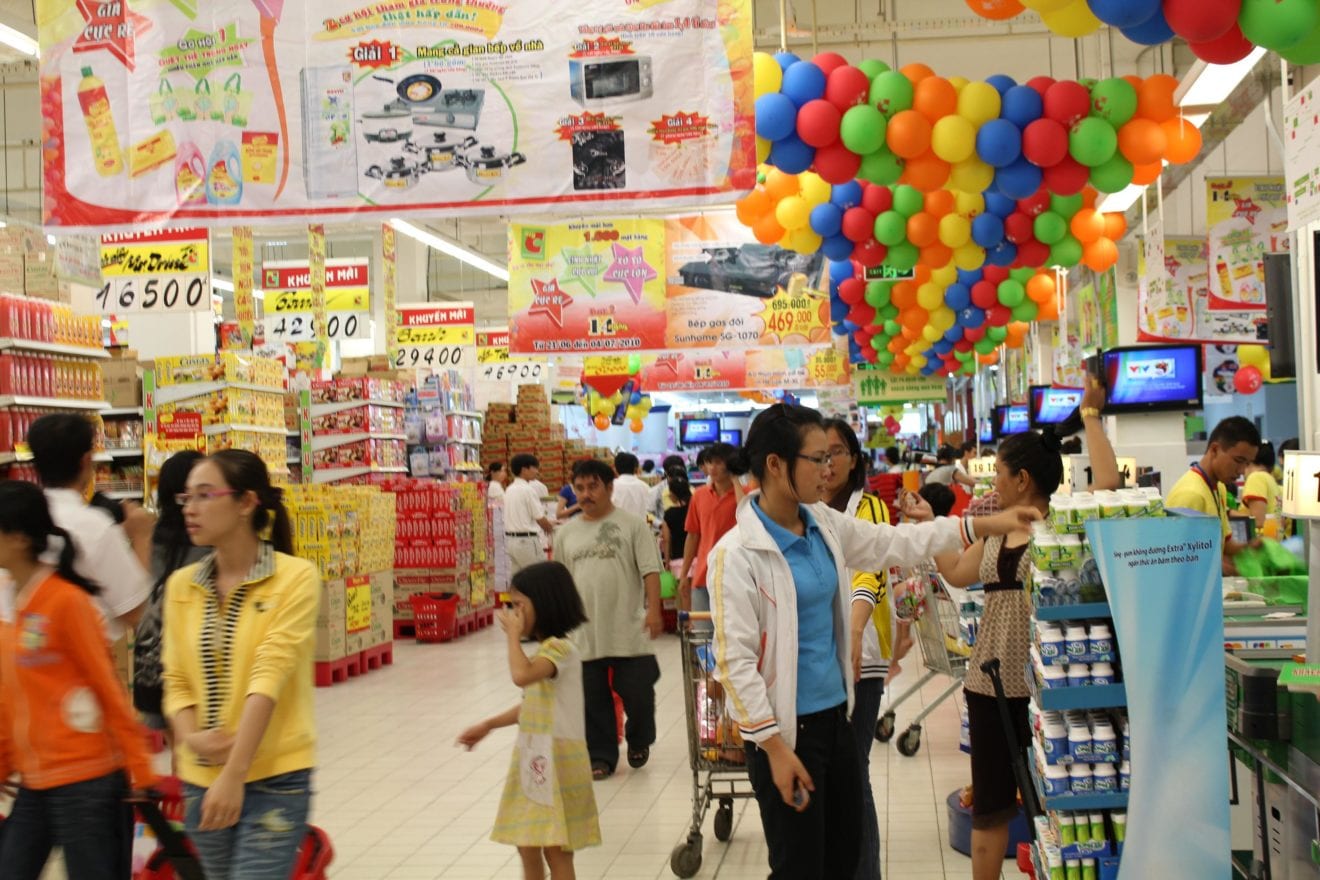
    Large supermarkets are banned from giving or selling plastic shopping bags to customers. The Ministry of Environment announced Monday that it will completely prohibit grocery franchises and supermarkets over 165 square meters (1,776 square feet) from selling or giving away single-use plastic bags from New Year’s Day. While it discouraged stores from providing plastic bags before, the ministry enforced a total ban through a revision to the Act on the Promotion of Saving and Recycling of Resources in an effort to cut plastic waste.

    Some 13,000 supermarkets are affected. If they offer disposable plastic bags, they risk fines of up to 3 million won ($2,690). The only kind of one-use bags stores can sell are the disposal bags accepted by district waste collectors. Stores will be encouraged to sell or offer paper and other non-plastic grocery bags instead.

    Supermarkets can continue to offer customers small plastic bags for wrapping items like fish and meat.

    The revision to the law also prohibits some 18,000 bakeries from handing out plastic bags free of charge.

    The ministry said it will give a grace period of around three months to help stores adjust to the change and work with local government bodies to ensure that the regulations are followed.

    Earlier this year, seven of Korea’s largest grocery and bakery franchises, including E-mart and Lotte Mart, signed voluntary agreements with the ministry to reduce disposable waste.

    That initiative has produced notable results. Paris Baguette and Tous Les Jours, for example, used 74 percent fewer plastic bags in November last year compared to the same period 2017, according to the ministry.

    “It’s necessary to reduce use of disposable waste for the environment and future generations,” said a spokesman from the ministry. “We request the people’s active participation to promote a green consumer culture.”

  • Goldwin tops sports market growth through store investment

    Goldwin tops sports market growth through store investment

    Marketing of sports brands has become increasingly retail-led in the last decade and a focus on retailing has enabled Goldwin to make serious gains while the two biggest domestic brands, Asics and Mizuno, have been distracted by overseas expansion. Goldwin took a close look at its beleaguered business 15 years ago and decided retail could be its salvation. At current rates it will catch up with Mizuno’s domestic sales in a few years.

    Goldwin was a struggling sports apparel distributor 15 years ago, floundering in declining wholesale channels, the implosion of the ski boom, and a fear of risking all on expensive retail investment, resulting in sales collapsing from a peak of ¥78 billion to less than ¥50 billion.

    No longer. The rights owner for The North Face and Helly Hansen in Japan posted another strong set of results in 1H2018: sales jumped 16.2% to ¥33.4 billion and operating profit doubled to ¥3.1 billion. The strong first half follows an equally good 2017 when sales rose 15.6%, the eighth straight year of growth. Operating profit reached ¥7.1 billion, up 81% and the highest for 25 years.

    Sales for FY2018 ending March are expected to come in 13.6% higher at ¥80 billion, with operating profit of ¥9.1 billion, up 28.1%. If these numbers turn out to be correct, Goldwin will have achieved it highest sales ever and met the goals set out in its medium-term plan ending March 2021, two years ahead of schedule. It has now updated the medium-term plan from ¥80 billion to ¥90 billion in sales, operating profit from ¥6.5 billion to ¥11 billion, and an ROE of 15% against a forecast 11.2% (the ROE in FY2017 was 15.4% and is forecast at 18% for FY2018).

    What has changed? The key factor is the success of its outdoor brands, which accounted for ¥49 billion, or 70%, of sales in FY2017, and in particular the change in management’s willingness to invest in retail stores in shopping centres a decade ago.

    Since the decision to invest in retail, Goldwin has opened well-executed stores in busy malls such as Lalaport and Lumine, as well as some very popular outlet stores. Today, its own directly operated stores account for 56% of sales. In addition, Goldwin garners another 5% of sales from e-commerce, still a small percentage but online sales were up 50% in a year. This performance is far better than either of the two largest domestic brands, Asics and Mizuno. Goldwin had little choice than to risk all given its dependence on the Japanese market for almost all its sales, forcing it to seek an alternative to its traditional wholesale model.
    Goldwin has focused investment on key brands rather than try to lift all boats at once.

    The growing appetite for outdoor fashions from both active consumers and those who just like the outdoor look, has helped propel The North Face and Helly Hansen in the last few years. In contrast, other Goldwin brands, like Ellesse, Canterbury and Speedo, which are sold at wholesale and through department store corners, have seen sales languish, falling 3.3% in FY2017.

    What is impressive about Goldwin’s stores is relentless effort to attract new footfall. In-store events are held regularly to pull in customers and deepen interaction, with customer feedback passed back to product planning and marketing teams. Goldwin also locates stores close to outdoor sports activities, such as its Nagano and Niseko The North Face Gravity stores which combine merchandise sales with ski rental services and even a library of books on outdoor sports. At the new National Stadium in Gaien-mae, it has opened an athletics complex/store called Neutralworks by Goldwin.
    On the supply side, Goldwin has worked to simplify supply chains through more direct contracts with factories, which in turn has helped streamline inventory management, resulting in a lower cost of sales, better sell-through and an increase in operating profit margins from 4.9% to 9.4%.

    Given the intense competition and the plethora of similar product from multiple sports brands, Goldwin has been investing in product innovation for both its own brands and licensed product. In 2017 it built a technical research centre in Toyama – where the company was founded – at which it develops new fabrics and performance functions using environmental chambers and motion capture systems. It has also partnered with other companies: it uses a synthetic, protein-based, petroleum-free silk developed by Spiber (in which it has invested ¥3 billion) for jackets and hoodies, and has licensed odour-reducing, sweat-absorbing fabrics originally developed by Jaxa for astronauts’ underwear.

    Goldwin is now investing in stores for other promising brands. It opened stores in Aoyama, Tokyo and Sapporo for the US brand Woolrich in October, and forecasts sales growth of 6.5% this year. Goldwin plans 10 stores for Woolrich through FY2020. For its eponymous Goldwin brand it opened the first flagship store in November in Nijubashi Square in Marunouchi.

    Going forward, plans for overseas expansion look promising for the first time. In the last two years, it introduced a new logo and updated merchandise for the Goldwin brand. It will transform what was a domestic skiwear label into a lifestyle sports label with global reach, similar to Descente’s plans for its own brand. In A/W 2019 a new lifestyle collection of sports apparel and accessories will be launched at home and overseas – this year the ‘hero’ product, a down parka using synthetic silk from Spiber, was gold winner at the European sports trade show, ISPO Munich.

    Last year, Goldwin acquired a stake in Woolrich International, a UK-based entity that owns the Woolrich brand, and plans to “participate actively” in its global development, particularly in Asia, including production – it has created a premium collection for the brand this year.

    Investment in sports retail stores will increase at home over the next couple of years, with all major sports brands looking to expand. The success of Japan in the soccer World Cup, big expectations for the Japan team in the 2019 Rugby World Cup, and the upcoming Olympics in 2020 all contribute to consumer interest in sports. Goldwin itself is hoping for an afterglow effect after the Olympics – what it calls “Golden Sports Years” – but the even more important trend is growing interest in health and well-being in general.

    What also makes the prospects for sports brands so bullish over the next decade is that interest in active sports, and the attire to go with this, is common to all age groups in Japan. This includes the fast growing population segment, the over 60s, ensuring sustained demand for many years to come. Sports and sports fashion is in many ways one of the few consumer categories to be largely immune to a demographically challenged market like Japan.

    Some local sports firms have been complacent in taking for granted customer loyalty to Japanese brands, but Goldwin has matched international brands in development of solid retail concepts, mixing innovative products with store entertainment and services, the basis of its new found success. Asics and Mizuno will be hoping that investment plans in the next few years will be enough to restore the balance.


     

  • New E-Comm Rules: Flipkart India for broad market-driven framework

    New E-Comm Rules: Flipkart India for broad market-driven framework

    India’s largest online marketplace Flipkart has requested New Delhi that a broad, market-driven framework for the e-commerce industry be put in place after consultations with the relevant stakeholders. The request came a day after the federal government announced changes in the foreign direct investment (FDI) policy for the sector. On Wednesday, New Delhi took a series of measures to tighten the norms for e-commerce companies, such as Flipkart and Amazon, barring them from selling products of the entities in which they have a stake. The altered norms also restrict them from mandating any seller to sell products exclusively on their respective platforms.

    Flipkart said that the e-commerce ecosystem has created thousands of jobs apart from fostering innovations in MSME manufacturing, supply chain, warehousing, packaging, and digital payments.

    “Government policy changes will have long-term implications for the evolution of the promising sector and the whole ecosystem. It is important that a broad, market-driven framework through the right consultative process be put in place in order to drive the industry forward,” the Bengaluru-based online retail giant said in a statement.

    Flipkart was acquired by the US retail giant Walmart for $16 billion earlier this year in what was the country’s largest acquisition and the world’s biggest purchase of an ecommerce company.

    Amazon’s India unit said that the company was still evaluating the policy changes. The new policy aims to restrict any kind of control on inventory by an e-commerce marketplace entity, thus impacting Flipkart and Amazon as they have structured their group companies in a way that would help retain control on pricing and inventory.

    “For Amazon and Flipkart, this policy change brings massive challenges. They have to not only make changes into the business model and structure of how they are selling goods, but this will also affect the profitability due to limitations on private label products,” said Satish Meena, senior forecast analyst at Forrester Research.

    “Apart from this, the planned investment in the offline channel is going to be recalibrated after this change. All these will have an impact on how they scale up the business in India,” Meena added.

  • Korean drug companies anticipate a strong 2019

    Korean drug companies anticipate a strong 2019

    Korean pharmaceutical companies are entering 2019 with high expectations as several domestic drugs are expected to gain approval from overseas regulators this year. Though the Samsung BioLogics accounting fraud scandal made 2018 a less-than-stellar year for the pharmaceutical industry, bio firms are ready to get back on their feet with new drugs and licenses.

    Daewoong Pharmaceutical is one firm hoping to get the green light for sales of a product in the United States and Europe this year. Nabota, a botulinum toxin, or botox product, was submitted for approval to the U.S. Food and Drug Administration (FDA) and the European Medicines Agency in 2017.

    Last August, Nabota became the first domestic botox product to gain sales approval in Canada after Daewoong acquired the necessary permit from the country’s health authorities.

    Green Cross is another company awaiting FDA approval. Its I.V.-Globulin SN, an immunoglobulin product that treats immune deficiencies, is being reviewed by the agency.

    Though the FDA postponed approval of the drug last September when it requested supplementary documents from the company, Green Cross is optimistic that it will eventually get the go-ahead since I.V.-Globulin SN is already being sold in both Korea and overseas markets, such as Brazil.

    SK Biopharmaceuticals is waiting for the FDA to approve Cenobamate, an antiepileptic drug. Cenobamate is the first drug for which a Korean company has applied for FDA approval independently without going through global partner companies.

    If the drug is approved, SK expects that Cenobamate will become a huge cash cow that can generate up to 1 trillion won ($898.8 million) in annual sales just in the United States. The United States is the world’s largest market for epilepsy drugs.

    Last Thursday, Hanmi Pharmaceutical filed a license application for Rolontis, a drug intended to treat chemotherapy-induced neutropenia, with the FDA through Spectrum Pharmaceuticals. Hanmi is hoping to gain approval by the first half of 2020.

    Korean drug makers are hoping to make progress with clinical trials and technology exports this year.

    Yuhan is currently working with Janssen Biotech to conduct clinical trials for lung cancer drug Lazertinib. Two months ago, Janssen purchased out-licensing rights from Yuhan for Lazertinib in a deal valued at $1.25 billion.

    One of Chong Kun Dang Pharmaceutical’s most highly anticipated drug candidates is the CKD-702 bispecific antibody, an artificial protein used for cancer immunotherapy. Given the growing interest in bispecific antibodies around the world, industry experts predict Chong Kun Dang will be able to export the drug technology as early on as the pre-clinical stage.

    Hanmi and Jeil Pharmaceutical are also expected to complete Phase 2 clinical trials for their obesity drug HM15211 and stroke treatment JPI-289 this year, while SillaJen is due to complete Phase 3 clinical trials for its cancer treatment Pexa-Vec in the coming months.

    “Domestic pharmaceutical firms have tried to venture into the United States, the world’s biggest drug market, and their efforts will lead to real results next year,” said one spokesman from a pharmaceutical firm.

  • Lulu Group opens Y Mall at Thrissur India

    Lulu Group opens Y Mall at Thrissur India

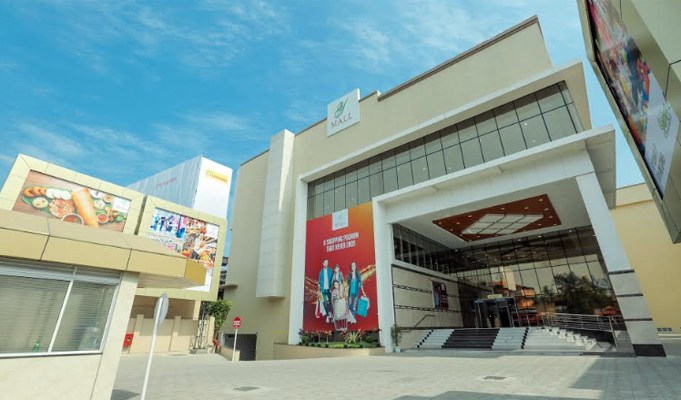
    Lulu Group Chairman and Managing Director, M.A. Yusuff Ali dedicated the newly-opened Rs 250 crore mall project – Y Mall to his home town on 29 December, 2018. M.A.Yusuff Ali’s grandchild, Ayan Ali cut the ceremonial ribbon, officially inaugurating the mall. Speaking at the inaugural event, M.A.Yusuff Ali said that the 2.5 lakh sq.ft Y Mall at Triprayar in the Thrissur district of Kerala and the 4.6 acres of land on which it has been constructed is his endowment towards worthy initiatives.

    He declared that Y Mall will be under the ownership of the ‘Y Foundation’ and the profits from the mall will be contributed towards various charitable activities under the foundation, including assistance for the places of worship in the town, who will collectively receive Rs 19 lakhs every year from the profits of Y Mall.

    This will be in addition to the various charity works under the Y Foundation, Y Mall will provide an incredible shopping, dining and entertainment experience for all the people in and around Triprayar. The Mall is within easy reach from Ernakulam, Calicut, Thrissur and almost all landmarks and prominent facilities.

    The mall features Lulu Xpress Freshmarket, which houses everything from food and grocery, ready to eat food, mobile and electronics to home décor. Home to over 40 international, national and local brands in the categories – watches; footwear; men, women and kids fashion, lingerie and innerwear, denims and casuals, accessories, eyewear, mobile and electronics,  books/gifts/toys; beauty and wellness; bags and more, the mall
    has everything to satisfy a shopper’s needs.

    Customers can visit Kerala’s first ToysRus store at Y Mall along with brands like 1946, Baby Care, Label M, My G, Jockey, Vismay, Wrangler, Sylcon, Lens and Frames, Arabian Souk, WCDI, Blackberrys Casuale, Ajmal Perfumes, La Femi, Blossom, American Tourister, Super 99 and Lulu Forex. Bank of Baroda and salon services are expected to commence within a month or two. Café Coffee Day is located on the ground floor of the mall and Chennai Ananda Bhavan on the second floor.

    The 225 seater food court is a food lover’s paradise with brands like Baskin Robbins, ChicKing, Burger Hub, Fujian Express, Dosa Tawa, Tea Stop, Pulp Factory and Chak De serving a variety of cuisines including Chinese; North and South Indian; Burgers and
    Fries, Arabic, Juices and ice creams.

    Half of the third floor is dedicated to the entertainment zone by Sparkys, which hasinnumerousvideo games; bump-a-car; carousel rides; a soft play area and many more fun-filled rides. The mall has basement parking provision and spacious open parking area for more than 800 vehicles.

    Equipped with prayer halls, feeding room, reserved parking spaces and washrooms for differently abled; special parking for pregnant women; bag, umbrella and helmet park zones;
    ambulance, ATM, money exchange and more, Y Mall is a destination for travellers and localities alike.

  • Indonesian Stock Exchange ends 2018 in the red

    Indonesian Stock Exchange ends 2018 in the red

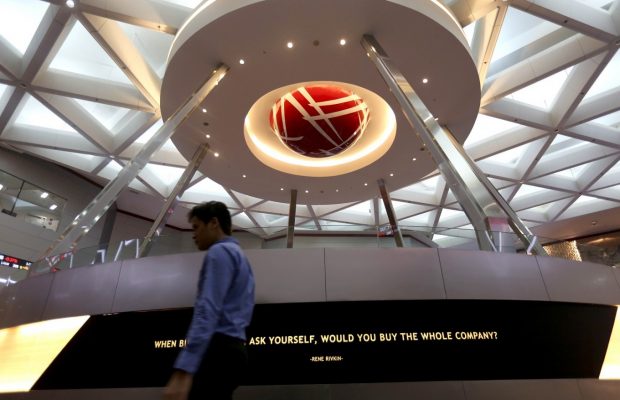
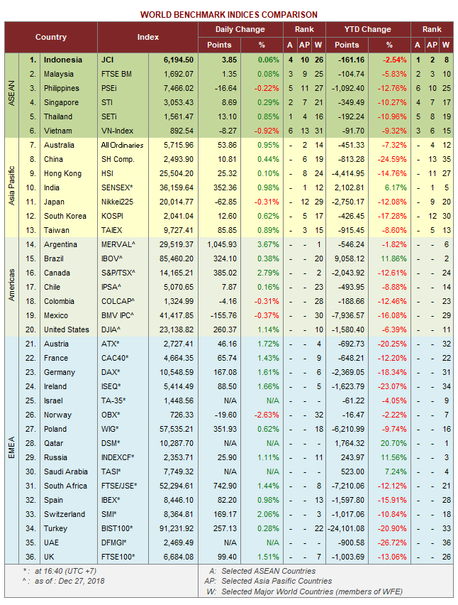
    Indonesia’s benchmark stock index declined 2.54 percent overall in 2018 amid a rough year for equities globally. Foreign investors sold a net Rp 50.75 trillion ($3.52 billion) in Indonesian stocks for the whole of 2018, compared with Rp 39.6 trillion in 2017. The market capitalization of Indonesia’s stock market meanwhile stood at Rp 7,023 trillion, compared with Rp 7,052 trillion a year earlier.

    The last trading day of 2018 on Friday last week saw the Jakarta Composite Index (JCI) closing 0.06 percent higher at 6,194.5.

    Inarno Djajadi, the new chief of the Indonesia Stock Exchange (IDX), said during Friday’s closing ceremony in South Jakarta, attended by President Joko “Jokowi” Widodo, that 57 companies listed their shares in 2018. This is a record high.

    Wimboh Santoso, chairman of the Financial Services Authority (OJK), expressed optimism during the event that the JCI would hit a level of between 6,500 and 7,000 next year.

    “We are still upbeat that the JCI has a chance to gain further. The OJK will provide stimulus to encourage more companies to list by offering various instruments,” he said.

    Wimboh said despite negative sentiment from external factors, such as the ongoing trade war between the United States and China, the business community remains optimistic about the Indonesian economy.

    Not Too Bad?

    President Jokowi also expressed optimism that the JCI may perform better next year. Citing IDX data, he said despite the 2.54 percent decline, the JCI was the second-best performer in Asia after India, which saw its benchmark stock index gain 6.17 percent this year overall.

    Jokowi said 2018 was not an easy year for the country’s economy, which was impacted by both external and internal factors.

    He said Indonesia’s large current-account deficit put pressure on the rupiah, which ultimately also affected the financial performance of listed companies. Meanwhile, normalization of US monetary policy, which caused capital outflows from emerging markets such as Indonesia, the US-China trade war and weak commodity prices also impacted Indonesian companies.

    “All of these have caused volatility in the JCI’s performance and dragged down the performance of listed companies,” he said.

    Jokowi said the government was fully committed to strengthening Indonesia’s stock market, as it should not only serve investors’ interests, but also function as a source of long-term funding for local companies to expand their business and help boost the country’s economy.

    According to Inarno, the number of registered investors on the IDX increased by roughly 222,000 to about 851,000, with 29 percent of them actively trading every day.

    The average daily trade for the whole year stood at Rp 8.5 trillion with an average frequency of 386,968. This is the biggest in Asia.

    Fundraising Down

    Fakhri Hilmi, deputy commissioner for capital market supervision at the OJK, said fundraising by Indonesian companies from capital markets in 2018 is estimated at Rp 163 trillion, which is 35.9 percent lower than last year.This figure includes initial public offerings, rights issuances and bond sales.

    “This year’s isn’t as much as last year; the value of IPOs were smaller,” he said.

    More Stocks Booking Losses

    More stocks booked losses in 2018 compared with last year. Of the 619 companies listed on the local bourse, 252 saw gains in their stock prices, while 327 booked losses. The remainder were stagnant.Of the shares that increased in value, 41 booked gains of more than 100 percent, while four increased by more than 1,000 percent.

    They are Super Energy, a company engaged in oil, gas and mining and petroleum transportation services, which saw its stock price rise by 1,450 percent this year, and financial services provider Pool Advista Finance, which saw its stock price jump 1,529 percent.

    The stock price of Prima Cakrawala Abadi, an exporter of fishing products, jumped 2,006 percent and Transcoal Pacific, a sea transportation and logistics service provider, saw its stock price skyrocket by a massive 3,714 percent.

    However, these are penny stocks. Indonesia’s shallow capital markets allow traders and brokers to trick the price of stocks that have low market values.

    Meanwhile, only 11 companies of Indonesia’s top 45 listed companies by market value, known as LQ45, booked gains in 2018.

  • Vietnamese banks deposit rates rise as usual at year end

    Vietnamese banks deposit rates rise as usual at year end

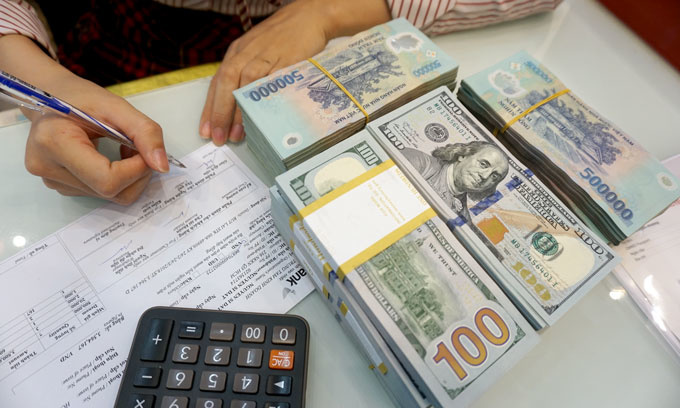
    Banks usually hike deposit interest rates and even offer promotions at the year end, and this year has been no different. On December 19 Sacombank announced a rise in interest rates on deposits of three months from 5.2-5.3 percent to 5.5 percent, and on deposits of 12 months from 6.9 percent to 7.7 percent. VPBank has increased its rates by 0.1-0.7 percentage points, with deposits of 18 months and more carrying the highest rate of 7.8 percent.

    State-owned banks such as BIDV and Vietinbank have hiked rates by 0.1 to 0.5 percentage points.

    The management of a joint-stock bank headquartered in the south said lending usually rises in the last quarter of the year to meet the rising demand for short-term credit to serve the working capital needs of companies.

    As a result, many banks increase their deposit rates, especially for short terms, it said.

    Besides, experts said lenders are running out of time to use 45 percent of short-term capital for medium- and long-term loans, with the ratio to be reduced to 40 percent on January 1.

    The National Financial Supervisory Commission has recently estimated that credit growth to have slowed significantly to 15 percent this year from 18 percent in 2017.

  • Korean Air’s jets get name of East Sea badly wrong

    Korean Air’s jets get name of East Sea badly wrong

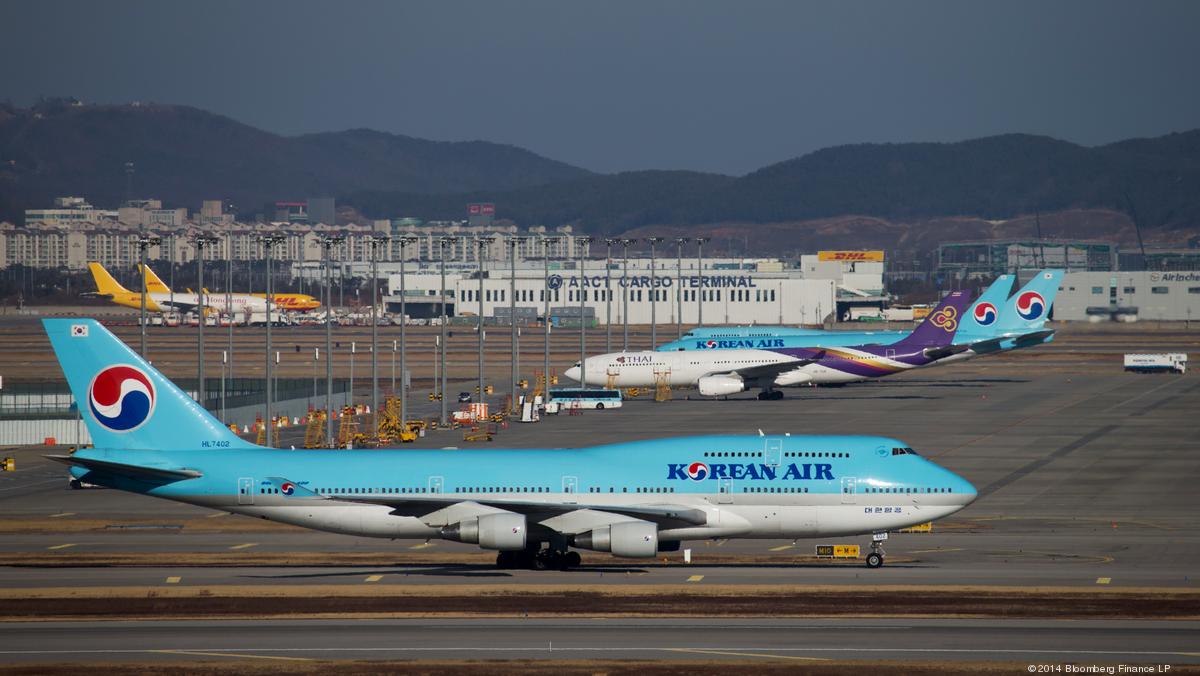
    Korean Air, the country’s flag carrier, displayed maps with the “Sea of Japan” aboard some its flights rather than the East Sea, the name supported by the Korean government. The Japanese name of the sea, which is opposed by Korea, was found on a number of passenger-entertainment monitors. According to news reports Sunday, 3-D maps on the displays aboard 787-9 Dreamliner aircraft were found to make the designation.

    Korean Air confirmed Monday that seven of its nine B787-9 planes had the problem. All other aircraft marked the location as the East Sea.

    A spokesman explained that a software upgrade was undertaken to change the maps into 3-D visuals, and that the company failed to notice the wording supplied by the developer.

    “The developer of the 3-D map is a company in the United States,” he said.

    Adjustments to replace the Sea of Japan by the East Sea in the seven aircraft were to be finalized Monday.

    “I was told that the modified version was sent to us today and delivered to the division in charge by 5 p.m,” added the spokesman, saying that the changes would be made by the end of the day.

    He said the company did not know why the other two B787-9 aircraft did not have the same problem.

    The controversy is the result of an ongoing dispute between Korea and Japan over the name of the sea located between the two countries. Both argue that their respective names had been used historically.

    Since South and North Korea first raised objection to the “Sea of Japan” name in 1992, the research on the subject has yielded conflicting conclusions.

    Korean Air received similar criticism in 2012, when its official homepage used the “Sea of Japan” name instead of the East Sea. The problem resulted from the company’s use of the Google Map service.

  • India eyes $100 billion FDI in next two years

    India eyes $100 billion FDI in next two years

    India will aim to receive $100 billion in foreign direct investments in the next two years and special industrial clusters are being created for countries like Japan, South Korea, China and Russia where their companies can invest and operate, Union minister Suresh Prabhu said. The commerce and industry minister said his ministry has also identified sectors and countries which holds huge potential for investments in India.

    “I have given a target. $100 billion of FDI should come from different sectors into India. It will not happen in one year. We have identified companies, sectors and countries and now we are going for road shows to attract investors,” Prabhu said.

    He said India would remain a top destination for foreign investors in 2019 and the ministry would look at all sectoral issues that may come come in the way to attracting overseas investments.

    “For countries like Japan, South Korea, China and Russia, we are creating industrial clusters where they can invest and operate,” Prabhu said.

    The minister said China has agreed to set up industrial parks in India and the Chinese authorities have been asked to give a list of companies that are willing to set up factories in India.

    Similarly, India would be happy to welcome firms from Europe and the US who want to move out of other countries and set up manufacturing bases in India, Prabhu said.

  • 2018 : Alibaba’s news about F&B, starting from Starbucks’ partnership

    2018 : Alibaba’s news about F&B, starting from Starbucks’ partnership

    Starbucks launched its first virtual store in China powered by technology from Alibaba Group, providing a unified, one-stop digital experience across the Starbucks app and mobile apps within the Alibaba ecosystem, including Taobao, Tmall, and Alipay. The first-of-its-kind virtual store leverages an online management hub developed specifically for Starbucks by Alibaba. It provides consumers integrated access to Starbucks’ digital offerings, including “Starbucks Delivers,” “Say it with Starbucks” social gifting and merchandise available from Starbucks’ Tmall flagship store.

    Alibaba’s technology streamlines the shopping process, pulling offers that were available in multiple digital apps into a single access point. Adopting a centralized approach to its mobile presence enabled by the Alibaba ecosystem, Starbucks now has a complete overview of its consumers’ actions online. Moreover, the integration of membership between Starbucks and the range of Alibaba apps is expected to fuel strong growth in Starbucks Rewards membership in China.

    The new virtual store steps up the collaboration announced by Alibaba and Starbucks in August 2018, when the companies agreed a deep, strategic “New Retail” partnership. Ele.me, China’s leading on-demand food delivery platform, owned by Alibaba, provides Starbucks delivery service for 2,000 stores across 30 Chinese cities.

    In October 2018, Starbucks also piloted its first “Star Kitchens” within two FRESHIPPO (previously known as Hema) supermarkets in Shanghai and Hangzhou. As the first retail brand to establish a dedicated back-of-house presence in FRESHIPPO locations, each Star Kitchen utilizes the distinct fulfilment and delivery capabilities on-site to complement the handcrafted beverages offered through existing Starbucks stores.

    The launch of Starbucks’ virtual store is also the latest example of how the so-called “Alibaba Operating System” empowering traditional retailers. After years of development in this digital age, Alibaba has created a unique system to support enterprises in the process of digital transformation that covers critical areas such as retail, marketing, finance and logistics.

  • Supermarket retailer Big C opens 147th hypermarket

    Supermarket retailer Big C opens 147th hypermarket

    Supermarket retailer Big C has launched its 147th hypermarket at Nakhon Si Thammarat. Big C Supercenter CEO Aswin Techajareonvikul said Big C’s business has continued to expand this year. “We are recruiting new employees to drive our promising business providing the best shopping experience to our customers. “In Nakhon Si Thammarat, we are offering the new shop-in-shop concept serving the variety of customers. We also focus on home appliance and electronic products responding to trend and consumers’ interests in electronics and IT products.”

    The new centre will employ more than 1000 workers and joins the firm’s network of hypermarkets, 60 markets, 671 Mini Big Cs, and 138 Pure Pharmacies, as well as e-commerce channel Big C Shopping.

  • Prosecutors drop charges against Samsung chairman

    Prosecutors drop charges against Samsung chairman

    Prosecutors dropped tax evasion and embezzlement charges against Samsung Group Chairman Lee Kun-hee on Thursday. The decision was based on the judgment that further investigation into the case was impossible due to Lee’s health issues. The investigation may resume if Lee recovers, but the possibility is slim. Lee has been hospitalized for more than four years now since a fall in May 2014.

    Lee was accused of avoiding taxes worth 8.5 billion won ($7.6 million) that involved multiple bank accounts under the names of Samsung executives. More than 1,700 accounts were found to have been used for this purpose since 2008, when the investigation started.

    Another charge against the chairman was the embezzlement of 3.3 billion won from Samsung C&T, which was used to pay for the interior renovation of Lee’s private home.

    The Seoul Central District Prosecutors’ Office, however, did decide to indict four Samsung executives who played a role in the two cases – one for the tax evasion scheme and three for the embezzlement case.

  • Thailand’s Supersports stores rebranded as fashion shops

    Thailand’s Supersports stores rebranded as fashion shops

    Thailand’s CRC Sports has rebranded its Supersports business as a sports fashion store in a move targeting millennials. Last month’s rebranding modernises the business’s image and transforms the performance store model into the fashion world. The logo has also been revised with green motifs to suggest environmental awareness.

    Three Supersports stores have already been updated with the new look, including the CentralWorld location, with 50 stores scheduled to follow early next year.

    President Tony Morton said: “Our new motto is ‘The new Supersports, where Sport is fashion’, in response to the trend of millennials being fashion-conscious, cool, healthy and cheerful.”

    The firm will also expand its online sales efforts in the coming year, with the total market size for sporting goods in Thailand expected to be worth THB30 billion (US$916.3 million) by the end of this year.

    Supersports drew in THB300 million ($9.163 million) in online sales last year – 3.5 per cent of Supersports’ THB8.5 billion ($259.78 million) total revenue – and expects online sales to reach THB500 million ($15.28 million) next year.

  • VN-Index ends year 10 percent lower

    VN-Index ends year 10 percent lower

    The VN-Index closed the last trading day of 2018 at 892.54 points, down almost 10 percent from the year’s outset. This was a drop of 93 points from January 2, the first trading day of the year. The benchmark closed below the 900-point mark on Friday, a drop of over 25 percent from its peak at over 1,200 points in April. The VN30-Index, representing the 30 largest tocks in terms of capitalization, closed at 854.99 points, dropping 10.46 from Thursday, or 1.21 percent lower.

    Many stocks in the VN30-Index also ended in the red. Diary giant Vinamilk closed at VND120,000 ($5.2), 2.6 percent lower.

    Vietnam’s top petro importer and distributor Petrolimex fell 5.69 percent to VND53,000 ($2.3), while food company Masan dropped 1.9 percent to VND77,500 ($3.36).

    However, the HNX-Index on the Hanoi Stock Exchange and the UPCoM-Index for unlisted public companies ended in the green, up 0.24 percent and 0.46 percent respectively.

    Vietnam’s largest private firm Vingroup (VIC) ended the day at VND95,300 ($4.13), 6.93 percent lower. Vincom Retail’s VRE stock dropped almost five percent to VND27,000 ($1.17).

    Total market capitalization of all three stock markets, the Ho Chi Minh City Stock Exchange (HOSE), HNX and UPCoM, was VND4 trillion ($173.25 million).

    2018 has proved the most turbulent year for VN-Index since the 2008 crisis, ending an increasing run since 2016.

  • Miu Miu Siam Paragon boutique reopened

    Miu Miu Siam Paragon boutique reopened

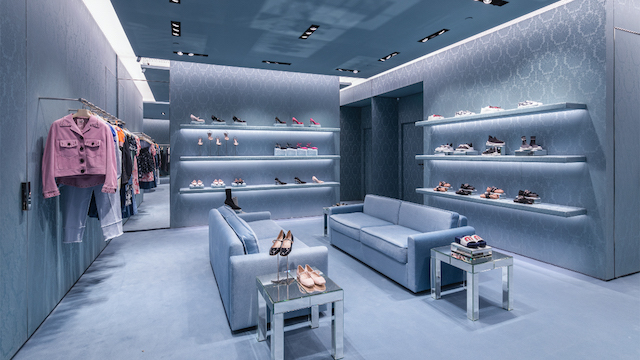
    Italian fashion brand Miu Miu is reopening its Siam Paragon boutique as the first Thai location to introduce its new concept store. The new 140sqm outlet strengthens the brand’s presence in Bangkok with a refreshed interior design and new collections of its signature accessories, bag, shoe and ready-to-wear collections.

    Among Miu Miu’s current offerings are evening dresses enhanced by Swarovski crystals and garments featuring 60’s-inspired elements.