Author: Mei Ling Tan

  • Petronas buys 10% of Block 61 onshore Oman

    Petronas buys 10% of Block 61 onshore Oman

    Petroliam Nasional Bhd (Petronas), through its subsidiary, PC Oman Ventures Ltd (PCOVL) has acquired a 10% stake in Block 61, onshore Oman from Makarim Gas Development LLC (MGD), after the conditions for the completion of the transaction were fulfilled. MGD is a subsidiary of Oman Oil Company Exploration & Production LLC. Petronas said the completion of the transaction was formalised at an event held in Muscat, Oman on Dec 27.

    Following the deal, MGD’s stake in Block 61 will be reduced to 30%, while P Exploration (Epsilon) Ltd as the operator holds the remaining 60% stake.

    Petronas noted that the acquisition of Block 61 marks an important step in realising the group’s growth strategy in the upstream sector in the region and globally, as it aligns its activities to ensure sustainable energy supply.

  • Vietnam court orders Grab to pay Vinasun $208,000

    Vietnam court orders Grab to pay Vinasun $208,000

    Grab should pay Vinasun VND4.8 billion ($208,000) for damage it has caused the top taxi firm, a court ruled Friday.

    The People’s Court of Ho Chi Minh City said in its verdict that Grab had committed many mistakes in its operations in Vietnam, tantamount to unfair competition, which damaged Vinasun’s business.

    Before 2016, Grab had registered almost 300 contract cars in Ho Chi Minh City, which increased to 23,000 by the end of last year. This led to a decrease in the number of active Vinasun cars, causing damage worth VND4.8 billion, the court found.

    By June 2017, Vinasun had provided 1.1 million trips to its customers, while Grab had over 2 million. This shows that the number of Grab cars has continuously increased causing many Vinasun cars to stay unused in parking lots, the court said.

    Grab’s entrance into the Vietnamese market has also lowered Vinasun’s market share, a damage of VND81 billion ($3.49 million).

    Although its entrance has negatively affected Vinasun, the taxi firm could not prove that Grab was the only company to cause this damage, the court said.

    For this reason, the court only required Grab to pay Vinasun the sum of VND4.8 billion for unused cars.

    Change Grab’s status

    The court also proposed that Vietnamese authorities start defining Grab as a transport business.

    Grab has said in many documents to Vietnamese authorities that it is only a technology company and not a transport company. It has also said it only provides electronic transactions and free technology for customers via electronic receipts, which has been approved by the Ministry of Transport.

    But the electronic contracts that Grab mentioned did not confirm to definitions under Vietnam’s Law of Electronic Transactions, the court said.

    It noted that Grab’s contracts did not say who the parties to them were and there were no dispute resolution terms.

    “Grab claims to be a company which provides technology and does not conduct a taxi business nor manage the drivers. But in fact, Grab does manage the drivers and charges transport fees,” the verdict said.

    “When customers order a ride, they transfer their money to Grab or pay via the driver a sum from which Grab takes a percentage. Grab also determines the bonus and punishment for drivers,” it added.

    Furthermore, Grab’s business activities do not follow the law, which requires an automobile transportation business to ensure the number of vehicles and service quality, the court said. The law also requires the business to provide employees with labor contracts, traffic safety training and social security.

    Grab does not follow these regulations and does not pay the taxes it should as a transport business, the court said.

    Since 2016, the Inspectorate of the HCMC Department of Transportation has listed 29 violations committed by Grab concerning not having a business registration certificate, list of transport contracts, and taxi signs, the court said.

    Grab has also ignored twice the Ministry of Transport’s documents asking the company to stop its service with contracted vehicles, it said.

    The ride hailing firm has also violated the law in how it gives out promotions and increase and decrease transport fees multiple times a day, the court added.

    Vinasun had filed the suit against Grab in June last year. It said Grab’s illegal activities were responsible for nearly VND42 billion ($1.8 million) of the VND76 billion ($3.25 million) in losses it had suffered in 2016 and the first half of 2017.

    The trial began in February, but was adjourned a month later to allow for more evidence to be gathered. Grab had protested the valuation of Vinasun’s losses.

    Last October, prosecutors asked the court to accept Vinasun’s petition for compensation of nearly VND42 billion, rejecting Grab’s claim it was a tech firm and not a taxi company.

    Grab responded by writing to Prime Minister Nguyen Xuan Phuc, saying that identifying it as a taxi firm would be “a step backward from Industry 4.0.”

    The latest draft of a Ministry of Transport decree requires firms offering taxi services to register as taxi firms before they can apply ride-hailing technology.

    This means that Grab and other ride-hailing firms have to register afresh as taxi businesses and comply with legal requirements related to operating licenses, drivers’ profiles and taxes.

  • FamilyMart expands Bangkok delivery service with Kerry

    FamilyMart expands Bangkok delivery service with Kerry

    Convenience store chain FamilyMart has partnered with logistics operator Kerry Express to expand its Bangkok delivery service. “Today, the e-commerce market has grown continuously for more than 20 per cent annually, and individual consumers have also had a greater demand for express delivery over the past three to five years,” said Central FamilyMart president Chiranun Poopat.

    “We have introduced Kerry Express, an express delivery service, available 24 hours a day at our FamilyMart stores in Bangkok and surrounding locations. The door-to-door express delivery will be provided to our individual customers so that they will be able to send their parcels to any locations throughout the Kingdom with fast and high-standard delivery process.”

    The new service is being promoted with a free limited-edition parcel delivery box available to customers during the Christmas period. The box will be provided to customer spending more than THB79 (US$2.42) via its express delivery service.

  • IDG Capital and Hong Kong-based I.T Group invests in Acne Studios

    IDG Capital and Hong Kong-based I.T Group invests in Acne Studios

    Acne Studios has sold minority stakes to China-focused investment firm IDG Capital and Hong Kong-based I.T Group, ending almost a year of speculation that the brand would be acquired by a larger rival.

    Acne, one of the earliest and most successful purveyors of the “Scandinavian cool” style that has since become popular across fashion and design, had held talks with potential buyers as far back as 2013, from French luxury conglomerate Kering to private equity firms. Earlier this year, the company was working with Goldman Sachs on a possible sale, at a valuation of up to €500 million ($570 million).

    Instead, IDG and I.T Group will acquire stakes of 30.1 percent and 10.9 percent respectively, from Öresund, Creades and PAN Capital, Acne said in a statement Sunday. Founder Jonny Johansson and executive chairman Mikael Schiller will remain majority shareholders in the business.

    When Acne began shopping itself around earlier this year, the M&A market for fashion and luxury was booming, powered by perceived growth opportunities and increasing market complexity that made it harder and harder for sub-scale players to compete without greater access to the capital — and expertise — that sophisticated and deep-pocketed strategic or private equity investors can bring to the table. Over the course of 2018, Dries Van Noten sold a majority stake to Spanish luxury group Puig for an undisclosed sum, and Missoni sold a 41.2 percent stake to FSI Mid-Market Growth Equity Fund in transaction worth €70 million. Most recently, Michael Kors acquired Versace for $2.1 billion.

    But in recent months, the temperature of the market has changed. The ongoing trade spat between the US and China has fuelled economic uncertainty and raised questions about the future of luxury demand. Shares of publicly traded luxury brands have plummeted.

    The Stockholm-based label, founded in 1996, launched as a niche denim brand and has since built a strong modern contemporary-luxury name, well known for its upscale ready-to-wear and a distinct Scandinavian vibe that is popular with streetwear-attuned millennials. While the brand has yet to develop a strong leather goods offering, its sneakers are gaining traction. Last year, it generated $221 million in sales revenue with Ebitda, a measure of operating profit, of $35 million. It has over 50 own-brand stores in 13 countries.

    However, sales growth slowed at the brand last year, rising just 9 percent, the slowest pace in at least a decade, according to a Goldman Sachs presentation to potential buyers. The brand still generates 43 percent of its sales through a network of 600 wholesalers, a potential point of vulnerability in a world where direct-to-consumer fashion is stealing market share from department stores.

    Acne’s two new investors are likely to give the brand a leg up in Asia, already a key source of growth (Asia drove one-quarter of Acne’s sales last year, second only to Europe, according to the Goldman presentation). I.T Group has served as Acne’s Asian retail partner since the early 2000s. IDG Group, which has also invested in Farfetch and Moncler, specialises in expansion opportunities in China and the rest of Asia (10 of the firm’s 13 offices are based in the Asia region).

    “Acne Studios will greatly benefit from their extensive know-how within fashion and the rapidly evolving universe of online and offline retail,” Schiller said in a statement.

  • Starbucks to open two stores in Macau Airport

    Starbucks to open two stores in Macau Airport

    Starbucks has expressed interest in seeking further opportunities to expand within Macau.

  • Average New Year bonuses in HCMC up 30 pct

    Average New Year bonuses in HCMC up 30 pct

    Average New Year bonus given by HCMC firms to an employee is VND3.4 million ($146), 30 percent higher than in 2018. For the 2019 Roman Calendar New Year, bonuses have been significantly higher than in 2018, Le Minh Tan, director of the HCMC Department of Labor, Invalids and Social Affairs said, citing a survey. The survey covered nearly 2,000 enterprises and 415,000 workers.

    On average, bonuses given by foreign invested enterprises for the New Year was VND9.4 million ($403.65), 70 percent higher than the last, the survey found.

    For this Roman Calendar New Year, the highest bonus was VND500 million ($21,470), given by a foreign-invested enterprise.

    For Lunar New Year (Tet), which falls in February, the highest reported bonus was VND1.17 billion ($50,343), coming from a bank headquartered in HCMC.

    The average reward for Tet offered by enterprises surveyed is over VND10 million ($430.78) per person. Only four respondent businesses reported facing difficulties and not giving Tet bonuses for employees.

    There are still some enterprises that have not announced Tet bonuses for workers, waiting for business results. These firms plan to announce their bonuses by mid-January.

    Last Tet, the highest Tet bonus in HCMC was VND855 million ($36,718), given by an unidentified private enterprise.

  • Korean iPhone owners claim low trade-in prices

    Korean iPhone owners claim low trade-in prices

    iPhone users are accusing Apple of paying Korean customers less for their trade-ins than the devices are worth, while noting differences between promotions in other countries and those in Korea.  If an iPhone owner wants to return an older model when buying a new device, iPhone Korea said it will offer up to a 300,000-won ($268.56) discount on the latest smartphones, the iPhone XS and iPhone XR. Korean customers are outraged.

    They claim that the deal has been made available to them a full month later than in other countries. In the United States, Japan and China, trade-in opportunities started in late November. The amount in compensation is also said to be too low.

    Apple Korea announced on Dec. 24 that it is taking iPhone trade-ins at its retail store in Garosugil, Seoul, and will continue to do so until late January next year.

    If the user returns an older model, it is possible for them to buy the 990,000 won iPhone XR for 690,000 won and the 1.37 million won iPhone XS for 1.07 million won.

    Internet community Clien exploded with comments on Dec. 25, the day after the announcement. “I might as well sell it at the Gangbyeon Electronics Mart rather than returning it to Apple,” said one. Another added: “It is disrespecting the customers.”

    While iPhone Korea only compensates up to 300,000 won for an iPhone 7+ released two years ago, the price for an iPhone 7+ in the second-hand market near Gangbyeon and Sindorim is around 380,000 won, according to mobile community Cetizen.

    If the product is an S class with almost no cracks, the price goes up to 450,000 won.

    After typing in the serial number for a black iPhone 7 with 128 gigabytes into the trade-in page on Apple Korea’s website, a reporter received a quote of 174,000 won. In the second-hand market, users can sell the phone for at least at 289,000 won. Apple is offering 115,000 won less for the device.

    Lee Doo-hee, a programmer who enjoys using Apple products said, “I can get more money if I sell directly, so I do not feel any need to go to the Apple store in person and exchange my iPhone.”

    Apple U.S. announced that it is offering trade-ins of about $300 for those buying an iPhone XR and iPhone XS. This is about 10 percent more than in the Korean market.

    NTT Docomo, Japan’s No. 1 mobile company, is offering the iPhone XR for 25,920 yen ($235.05), around 260,000 won, for those signing a two-year contract. No similar discounts are offered in Korea.

    “For Apple, Korea is the home turf for Samsung Electronics, Apple’s old enemy,” according to a source in the sector.

    “Apple only has to get a fair amount of earnings from hard-core iPhone fans, which possibly account for 15 percent of all mobile communications users in Korea. That is why it is pursuing unfavorable policies, like excluding certain countries from promotions.”

    It is believed that the current promotion from Apple Korea is due to the slump in sales of recent iPhones. High prices are seen as the main cause of the recent slowing of sales growth.

    Kuo Ming-chi, a Taiwanese Apple expert as well as an analyst at TF International Securities, has revised his first-quarter 2019 sales volume estimate for iPhones from a 47 million to 52 million range to a 38 million to 42 million range.

    A report written by Kuo was titled: “Shipments of iPhones in 2019 could be below 190 million.”

    The market value of Apple exceeded one trillion dollars in September last year. It is now around $700 billion.

  • Hong Kong’s Hui Lau Shan debuts in Philippines

    Hong Kong’s Hui Lau Shan debuts in Philippines

    Hong Kong dessert chain Hui Lau Shan will launch in the Philippines in February. The franchise, best known for its mango-based treats,will open at SM Megamall in Mandaluyong City with a range of desserts that are expected to draw on local fruits. Mango desserts have proven popular in the region recently, with prominent social media coverage of long queues for mango floats.

    Hui Lau Shan is a heritage brand originating from a herbal tea & tea trolley that traded in Hong Kong’s Yuen Long back in the 1960s.

  • Raf Simons exits Calvin Klein

    Raf Simons exits Calvin Klein

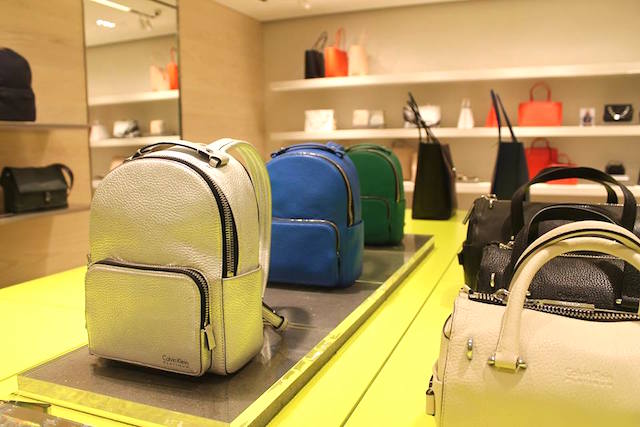
    Raf Simons is exiting Calvin Klein less than two years after his debut as its first chief creative officer and eight months before the end of his contract. The brand will not stage a runway show in February. The designer’s stint at Calvin Klein — coming after his turn as artistic director of women’s haute couture, ready-to-wear and accessory collections at Dior — won plaudits within the industry but failed to resonate commercially. His exit was widely expected after Calvin Klein parent PVH Corp. chief executive Emanuel Chirico last month criticised the brand’s uneven financial performance and skew toward “high-fashion” under Simons.

    “Both parties have amicably decided to part ways after Calvin Klein Inc. decided on a new brand direction which differs from Simons’ creative vision,” the company said in a statement. A representative for Simons declined to comment.

    Simons’ appointment in 2016 was met with much fanfare. The Belgian designer, as well known for his cult menswear label as his well-regarded stints at Jil Sander and Dior, was given a multi-million-dollar salary and the title of chief creative officer, with oversight over all aspects of marketing and design for the American megabrand, a degree of control he did not have at Dior.

    From the start, hiring a high-concept fashion designer for a brand best known to consumers for its denim, underwear and provocative marketing was a risky move. But PVH leadership saw competing businesses like Ralph Lauren stagnating for lack of creative innovation, while European stalwarts like Gucci soared after radical creative overhauls.

    With Simons, Calvin Klein hoped to not only generate a halo effect for its lower-priced products, but transform the label’s high-end ready-to-wear business, renamed 205W39NYC, from a marketing expense into a commercial powerhouse.

    But from the very beginning of Simons’ tenure, there was a disconnect between his personal aesthetic and the needs of a multi-billion-dollar, multi-tiered brand, driven less by high design and more by mass marketing, an area in which Simons had no experience. His first advertising campaign for the ready-to-wear collection, received mixed feedback. Shot by longtime collaborator Willy Vanderperre, it was arty and bloodless; far from the sexualised minimalism for which the brand was so well known.

    Yet there was plenty of industry praise for Simons’ catwalk shows. And in the first season alone, doors selling 205W39NYC jumped from 30 to 300. What’s more, Simons seemed committed to the cause of translating his designs into mass sales, visiting with Macy’s executives and hiring the Kardashian family to pose for underwear and denim advertisements.

    As recently as March, PVH appeared committed to the partnership as well, with Chirico touting the “credibility” that 205W39NYC would bring to the brand’s other lines. But PVH’s patience began to wear thin over the course of 2018, as the buzz generated by Simons failed to translate into consistent revenue growth.

    In September, a runway concept that required Simons to show off-site (recent catwalks have been held on the ground floor of the company’s headquarters) was scrapped due to budgetary constraints. Then, according to multiple sources, PVH expressed concerns that Calvin Klein’s extensive partnership with the Andy Warhol Foundation — which included merchandise — was too arty and high-brow for a mass audience.

    PVH, which also owns Tommy Hilfiger, missed sales projections in its most recent quarter. And Chirico last month called out the 205W39NYC ready-to-wear collection’s failures, adding that Calvin Klein’s recent denim collection had been a “fashion miss.” The brand’s revenue grew just 2 percent in the third quarter to $963 million. PVH shares are down 35 percent this year.

    “We will cut back on a number of these planned investments in the 205 collection business, and as we move forward, we will [be taking] a more … commercial approach to this important business,” Chirico said after PVH released financial results in November, adding that Calvin Klein will shift the focus of its marketing campaigns from high-fashion to more affordable items targeting a more mainstream audience.

    In recent months, the company had begun to dial back on some of Simons’ responsibilities, installing L’Oréal veteran Marie Gulin-Merle to be Calvin Klein’s new chief marketing officer, reporting not to Simons but to the brand’s chief executive Steve Shiffman.

    Simons earned multiple awards from the Council of Fashion Designers of America during his time at Calvin Klein and his absence will be keenly felt at New York Fashion Week, where he was one of the few designers who could command true international attention.

    “Raf brought a unique point of view to American fashion and the CFDA wishes him future success,” said CFDA chief executive Steven Kolb. “Calvin Klein is an iconic American brand that will continue to flourish under new creative direction.”

  • HK customs seized counterfeit cosmetics

    HK customs seized counterfeit cosmetics

    Hong Kong Customs has seized more than 1300 items of suspected counterfeit cosmetics after raids on three sites this week. In an anti-counterfeiting operation conducted with the assistance of the trademark owners, customs officers took enforcement action at four dispensaries, five medicine stores and a warehouse. The raids took place in Tsim Sha Tsui, Mong Kok and Sheung Shui.

    The suspected counterfeit cosmetics and skin care products have an estimated market value of about $73,000 and included soothing gel, eyebrow pencils and face powder.

    Eight men and five women were arrested, including seven shop owners and six salespersons, aged from 19 to 60. They have all been released on bail as investigations continue.

    In a statement, Hong Kong Customs said it has been carrying out stringent enforcement against the sale of infringing goods and will continue to step up patrols and enforcement actions against infringing activities during the Christmas season.

    “Customs reminds consumers to procure goods at reputable shops and to check with the trademark owners or their authorised agents if the authenticity of a product is in doubt.”

    Retailers were warned to be cautious and prudent in merchandising since the sale of counterfeit goods is a serious crime and offenders are liable to criminal liability.

    Under the Trade Descriptions Ordinance, any person who sells or possesses for sale any goods with a forged trademark commits an offence. The maximum penalty upon conviction is a fine of $500,000 and imprisonment for five years.

  • Bamboo Airways postpones maiden flight again

    Bamboo Airways postpones maiden flight again

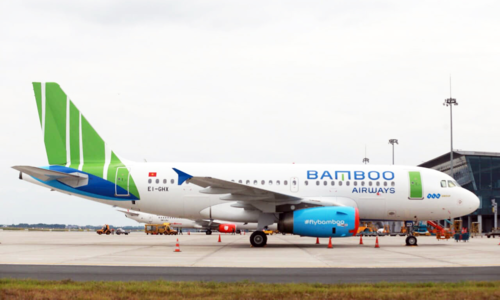
    Vietnam’s newest airline Bamboo Airways will not operate its maiden flight Thursday as scheduled, the second time it has been delayed. Its CEO Dang Tat Thanh said Bamboo Airways could not take off since it is going through “the most difficult examination ever.” “Bamboo Airways is currently going through the final stage of a tight examination by authorities before taking off,” he said, adding that the first flight would now be in mid-January. The airline aimed to launch the first flight on December 29, after failing to launch services in October as previously planned.

    The carrier, owned by conglomerate FLC, received a license last November but is still awaiting an aircraft operator certificate (AOC).

    It was established in May last year with a charter capital of VND700 billion ($30 million), which it increased two months later to VND1.3 trillion ($55.68 million).

    It has signed deals to buy 24 Airbus A320neo and 20 Boeing B787-9 Dreamliner aircraft worth a total of $8.6 billion. Earlier this month it took delivery of the first aircraft, an Airbus A319 leased from an Irish company.

    The airline plans to operate on 100 routes, connecting major cities and travel destinations in Vietnam with the rest of the world.

    FLC chairman Trinh Van Quyet said earlier that the first routes could be between Hanoi and Ho Chi Minh City and from the two cities to Quy Nhon.

    Vietnam has four other carriers still in operation: Vietnam Airlines, Vietjet Air, Jetstar Pacific, and VASCO.

  • Retailers, mall operators embrace high technology

    Retailers, mall operators embrace high technology

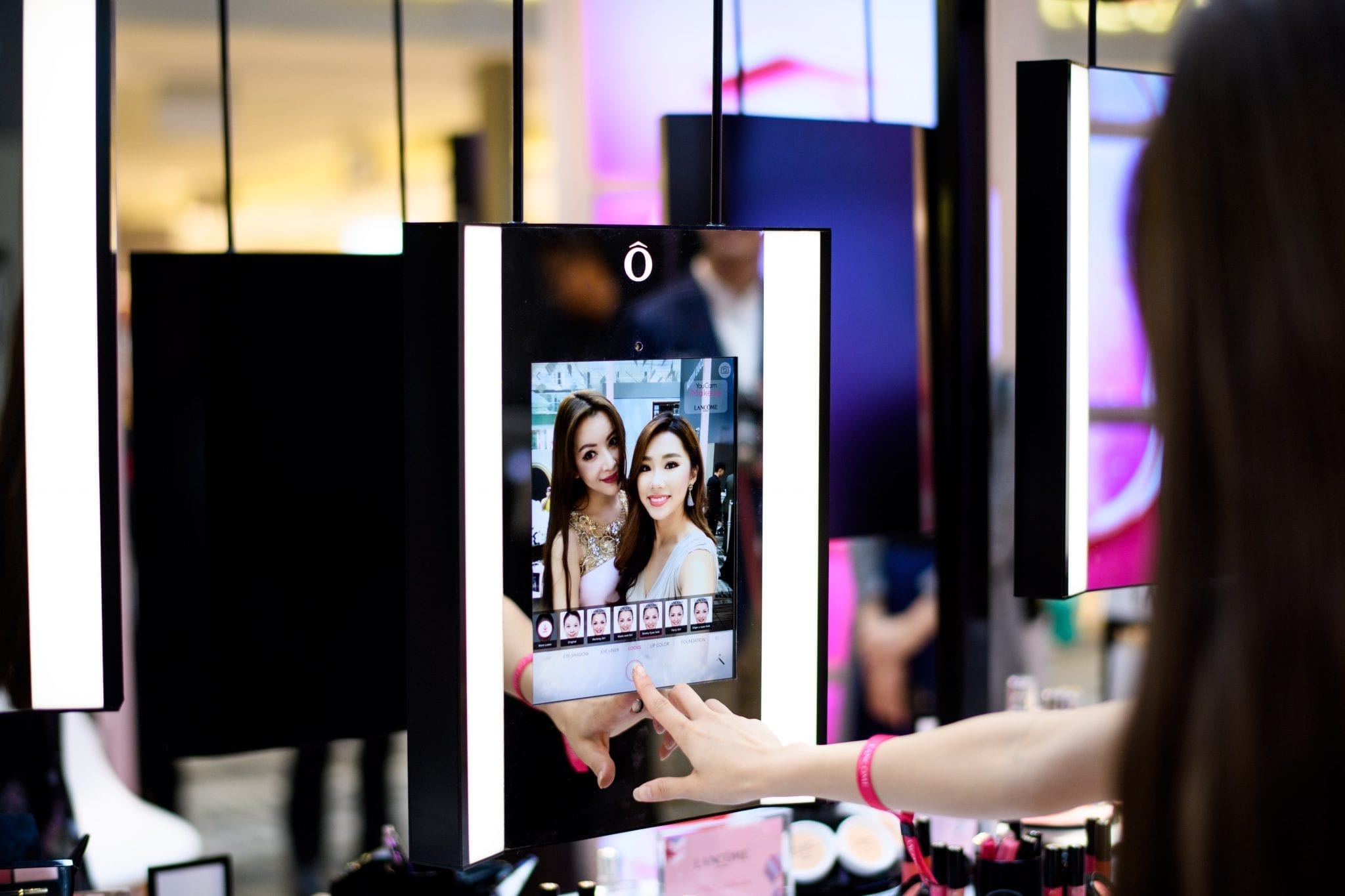
    Malaysian retailers and mall operators are jumping on the technology bandwagon, adopting technologies such as shopper tracking systems and facial recognition cameras, using data analytics to capture important shopper information. Sunway Velocity Mall general manager centre management Danny Lee said the mall completed the installation of its shopper tracking system in early December that identifies a unique ID of each mobile phone carried by shoppers, and is testing the system now.

    “It enables us to know how many times a person comes to the mall and where they go. At the same time it tells us the number of shoppers at the mall and is able to give us an accurate count of how many people visit the mall every week or month. This is phase one.

    “This will then later link into us getting data of who they are so that we can use that as an intelligence system to know our customers and to push promotion to them. For example, we’d be able to detect automatically if it’s your birthday today when you visit the mall, and if there’s a special promotion in certain outlets during your birthday, you’d get certain discounts. We’ll be working on that in phase two,” Lee said recently.

    “How the system works is that it will detect shoppers who carry smartphones. The shoppers’ travel history, traffic pattern will be recorded. Insights of shopper traffic flow in the mall, visit frequency (new traffic or returning traffic) and dwell time can be viewed on the online portal. There is also provision for integration with mobile application (to identify shopper profile to offer more personalised engagement), as well as additional reports based on user requirement.”

    Adding that it has a formula to include children and discount double counting, Lee said Sunway Pyramid had rolled out the shopper tracking system first, followed by Sunway Velocity.

    “It lets us know whether our campaign for a period of time is effective or not compared to other campaigns. In this mall (Sunway Velocity), we have 55-56 sensors throughout the mall. So it covers different zones and it can track where a person goes to, from one zone to another, and capture how many people are there. At what time, how many people are there in this atrium… we’re able to generate reports on that,” explained Lee.

    He revealed that the set-up costs for this system range from RM120,000 to RM150,000, with recurring costs of RM10,000 every month per mall.

    “Some malls have (this system) but not many have this in the Klang Valley, compared with malls in Singapore that have a lot more.”

    Meanwhile, MRCA Academy, the training arm of the Malaysia Retail Chain Association (MRCA), is promoting awareness on technology adoption, especially in the areas of facial recognition and data analytics, to help MRCA members be more efficient in running their retail businesses.

    MRCA Academy deputy chancellor Stan Singh-Jit, who is also National ICT Association of Malaysia councillor, said technology will be a catalyst that will help retailers grow their business and that it is a tool that retailers should take advantage of.

    Stan is the founder and principal consultant of Ironhorse Asia Sdn Bhd, which provides solutions for in-store point-of-sale requirement, head office merchandising needs, warehousing, supply chain management, web-store, internet business, social media consultation, maximising return on investment via customer analytics, harnessing on merchandising analytics, among others.

    He said while the recording of images is illegal due to the Personal Data Protection Act, there is another facial recognition technology that captures the identity of shoppers in a different way.

    “It tails the person… it tells you whether the shopper is a male or a female and gives you the person’s age group. If I have data today that tells me the people that come to my store, their age and gender groups, I’m able to do more of what I’m selling. This is an important factor that is missing in the retail scene.

    “Facial recognition can tell whether the person is a staff or supplier. If a customer walks past your store but doesn’t walk in, it can also tell you how many people didn’t come into your store. It’s a way to find out why people don’t come in. And if my store is here but you spend more time looking at the merchandise there, that tells me a story,” explained Stan.

    He said this method differs from a footfall counter machine, which counts every walk-in, walk-out and hence the latter may not produce accurate numbers.

    He disclosed that since this facial recognition technology is new, there are five proofs of concept for such technology in the Klang Valley at the moment, of which one is for a department store. He said that a camera may cost some RM130. A department store may have three to four floors and many cameras on each floor.

    “All good things about buying begins at the store and there are many touchpoints in the store. As a customer walks into the store, how do you capture those points… how do you prioritise the value…. we’re helping MRCA members to understand the technology and how they can use it,” he said.


  • Chow Tai Fook Jewellery Group, WeChat signed agreement deal

    Chow Tai Fook Jewellery Group, WeChat signed agreement deal

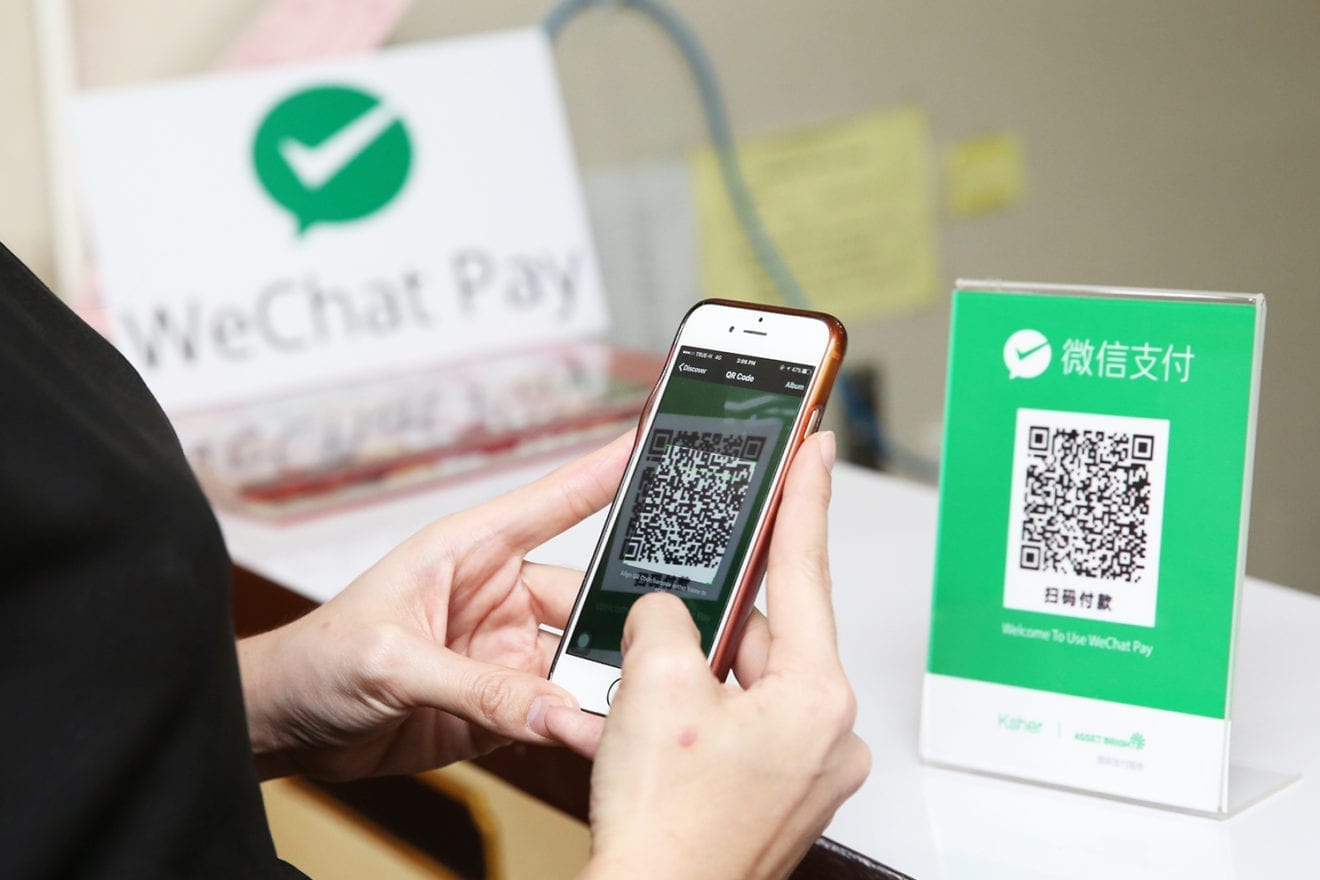
    Chow Tai Fook Jewellery Group has signed a memorandum of understanding with Chinese online platform Tencent to allow jewellery purchases using WeChat Pay. In a move to promote “seamless cross-border intelligent consumption”, the agreement allows Hong Kong WeChat users to use the platform’s digital payment solution to make purchases at specified Chow Tai Fook jewellery stores in Mainland China.

    The group is planning steps to activate WeChat Pay HK within more Chow Tai Fook Jewellery stores in the Greater Bay Area, as well as other cities throughout Mainland China. It is also seeking to extend the payment agreement to its other brands.

    “Striving for innovations and breakthroughs, we are committed to providing seamless and exceptional consumer experience through a wide range of innovative projects,” said Chow Tai Fook executive director Bobby Liu. “The introduction of advanced technology has made the convenience in offering cross-border consumption, online payments and an integrated online-to-offline shopping experience available to customers from Hong Kong.”

    Tencent Financial Technology VP Royal Chen said the collaboration with Chow Tai Fook Jewellery Group will fully make use of the available mobile payment technology.

    “Tencent Technology will vigorously promote cross-border financial cooperation. Leveraging financial and technological advancements, we aim to build a truly integrated service platform for those living in both Hong Kong and Mainland China.”

    Tencent Fin-Tech and Chow Tai Fook will also jointly explore and research proposals for ID verification in order to ease the flow of capital and manpower resources across the border.

  • Richemont joins Alibaba’s IP alliance on brand protection

    Richemont joins Alibaba’s IP alliance on brand protection

    Global luxury group Richemont has joined the Alibaba Anti-Counterfeiting Alliance, a partnership between the e-commerce giant and brands that works to protect intellectual property rights on Alibaba’s platforms. Geneva, Switzerland-based Richemont is now among the 115 members from 16 countries and regions that are a part of the IP alliance, as well as the latest from the luxury sector to partner with the e-commerce giant on brand protection. Richemont said it would share its technology, expertise and other information to support the Alliance’s efforts.

    Richemont owns 17 luxury brands, including Cartier, Montblanc, Piaget, Van Cleef & Arpels, Watchfinder & Co and Chloe, in addition to Yoox Net-A-Porter Group, the online retail platform. YNAP runs four different websites — Net-A-Porter, Mr Porter, lifestyle-goods destination YOOX and affordable-fashion seller The Outnet — as well as online flagship stores for leading fashion brands, such as Armani, Moncler and Valentino.

    The announcement comes a month after Alibaba and YNAP partnered to bring the site’s high-end goods to Chinese consumers. A joint venture between Alibaba and YNAP will launch a mobile app for the Net-A-Porter platform and menswear site Mr Porter, in addition to opening flagship stores for Net-A-Porter and Mr Porter on Tmall Luxury Pavilion, a channel that connects premier brands with China’s digital-first consumers.

    Richemont, along with New Balance, General Motors and McDonald’s, were the latest global brands to join the AACA. The alliance’s membership has more than tripled from the original 30 founding brands at its launch last year, and now includes  names, such as Bose, Canada Goose, Honda, Samsung, Mars, Adobe, Danone, Hasbro and L’Oreal, in 12 industry categories. They work with Alibaba in six key areas — proactive online monitoring and protection, a product test-buy program, offline investigations and enforcement actions, industry-law enforcement workshops, litigation tactics and public awareness campaigns — in the fight against IP infringement.

    In September last year, the AACA established an advisory board so that brands could provide feedback to Alibaba in areas related to IP enforcement. Alibaba has since upgraded its Intellectual Property Protection Portal as well, delivering faster navigation and a better user experience on the site, where rights holders report suspected infringing listing and share information with Alibaba. In addition, Alibaba’s Good Faith program, which is open to brands with a track record of accurate notice and takedown filings, has streamlined the reporting process.

    The IP alliance does not restrict its brand-protection efforts to the online space. Alibaba and its brand partners also work to find and eliminate fakes at their source. In the luxury sector, Alibaba and Louis Vuitton – one of the first members of AACA – conducted an offline investigation that resulted in the seizure in May of approximately RMB 100 million ($14.4 million) worth of counterfeit goods.

    “The protection of intellectual property rights requires all stakeholders to work closely together and share their expertise. The AACA will continue its efforts to establish industry best practices for IP protection by creating effective collaboration among brands, platforms and law enforcement,” said Michael Yao, Alibaba’s senior VP and head of Brand Protection and Cooperation.

  • Australian shopping app Booodl goes bankrupt

    Australian shopping app Booodl goes bankrupt

    Australian retail app Booodl has said goodbye officially in December, announcing it has started liquidating its assets to pay off creditors just before Christmas. Backed by media mogul James Packer and Westfield mall owner Scentre Group, Booodl first withdrew from the market last year, with the app – which connects shoppers to retailers in their immediate vicinity – filing as insolvent with the Australian corporate regulator.

    The company reported having AU$80,606 worth of assets and owed creditors $70,456, according to the recent filing.

    With creditors to be paid in full, company shareholders will not receive a return, said founder George Freney.

    “There is always a huge risk associated with technology ventures, and the unfortunate reality is that many fail,” Freney said.

    Founded by Freney in 2014, the $8 million start-up was conceived as a social media platform to play against photo pinning app, Pinterest, where users would curate personal profiles portraying their favourite things.

    Then, in 2015, Booodl evolved into a mobile shopping app, sourcing and directing shoppers to shops that they sought via the platform. In the same year, Scentre Group became a major shareholder, investing $2.85 million in Booodl to fund the research and development required to build its web and mobile platform. In particular, it funded the technology used to help consumers locate physical retail stores and in-turn see retail businesses be more easily discovered by shoppers.

    By August 2017, retail heavyweight Scentre group was using the app and website for its Westfield mall chains across Australia and New Zealand, effectively rolling out the app to 35 malls.

    “This latest milestone is validation of the role Booodl’s technology plays in the retail ecosystem. The platform now boasts $86.7 billion of shopping centre assets and is utilised by more than 150 Australian shopping centres to increase in-store visits,” Freney said, at the time of the Scentre Group news.

    Prior to this, Booodl had inked deals with shopping centre owners SCA Property Group, ISPT Super Property and QIC.