Author: Mei Ling Tan

  • Unitel introduces eSIMs to Laos market

    Unitel introduces eSIMs to Laos market

    Vietnamese military-owned operator Viettel has announced that its subsidiary in Laos Unitel has become the first mobile operator in the market to launch eSIM technology.

    The Unitel eSIM service was introduced at the beginning of March, and Unitel is aiming to encourage at least 10,000 customers to exchange their physical SIMs for eSIMs by the end of 2020.

    With the launch, Laos became the seventh of the 10 ASEAN member states to introduce eSIM technology.

    It is also the fourth market in Southeast Asia that Viettel has introduced eSIMs to. The company and its subsidiaries were the first mobile operators to offer the technology in Myanmar, Vietnam and Cambodia.

    Meanwhile another Viettel mobile brand in Laos, Metfone, has become the first operator in the market to launch mobile credit top ups using QR code scanning rather than scratch cards.

    Viettel deputy general director Tao Duc Thang said the introduction of eSIM technology marks the beginning stages of Viettel’s goal of digitally transforming the global telecommunications landscape, and becoming a pioneer in IoT technologies.

    “Viettel has well-prepared platforms and infrastructure and has made digital transformations in its fields such as telecommunications and information technology,” he said.

    “This includes application of the latest technologies in the world for a more convenient life.”
  • ZTE swings back to black in Q1

    ZTE swings back to black in Q1

    ZTE expects to have swung back to profit in the first quarter, after reporting an annual loss in 2018 as a result of the temporary ban on its import of components from US vendors.

    The Chinese vendor estimates a net profit for the first quarter of 800 million yuan ($118.9 million) to 1.2 billion yuan, which compares to a profit of 1.69 billion yuan in the first quarter of 2018.

    The first quarter results are nevertheless an improvement on the 6.98 billion yuan ($1.04 billion) loss the company recorded for the full year 2018.

    ZTE blamed its performance on the impact of the ban on the import of components from US companies imposed by the US government due to ZTE allegedly violating US sanctions on Iran by conspiring to sell equipment with US components in the market, as well as the $1 billion settlement agreement ZTE reached to have this ban overturned.

    Revenue for the year  meanwhile fell 21.4% to 85.51 billion yuan despite signs of recovery in ZTE’s major businesses of wireless networks, wireline networks and mobile devices.

    ZET has meanwhile announced it has been intensifying its investment in 5G research and development.

    The company has so far submitted more than 7,000 5G standard proposals and 3,000 5G patent applications to international organizations, and has declared over 1,200 standards of 5G standard-essential patents to the European Telecommunications Standards Institute (ETSI).

  • Thailand delays 700-MHz auction

    Thailand delays 700-MHz auction

    Thai telecom regulator NBTC has postponed plans to hold a 700-MHz auction for at least three months due to delays establishing details of the auction terms.

    The regulator no longer expects to be able to hold the 700-MHz auction in May as originally planned, citing comments from the NBTC’s secretary-general.

    Instead the earliest timeline for the auction date may be August or September, as related conditions of the auction, including the reserve price, will not be concluded until May.

    Other terms which still need to be established including the process for recalling 700-MHz spectrum to be auctioned and the compensation regime for companies affected by the recall. The regulator needs at least three months to complete related procedures.

    According to the report, the delay is also aimed at giving operators more time to arrange bank guarantees.

    The NBTC plans to push on with the auction regardless of the official outcome 2019 Thai general elections –  Thailand’s first general election since the 2014 coup – which was held on Sunday.

  • McDonald’s buys tech firm

    McDonald’s buys tech firm

    McDonald’s is set to purchase US/Israeli personalisation vendor Dynamic Yield in an attempt to boost drive-thru sales.

    The deal, reportedly worth more than US$300 million, will help the fast food vendor personalise outdoor digital drive-thru menu displays. The tech will analyse a range of variables in order to determine the most persuasive additional items to suggest to customers placing orders.

    “With this acquisition, we’re expanding both our ability to increase the role technology and data will play in our future and the speed with which we’ll be able to implement our vision of creating more personalised experiences for our customers,” said McDonald’s president and CEO Steve Easterbrook.

    Dynamic Yield has served multiple online retailers, including LVMH-owned cosmetics retailer Sephora and furniture giant Ikea. It has more than 300 clients worldwide.

    The technology will be rolled out in drive thrus at US restaurants this year before expanding to other leading international markets.

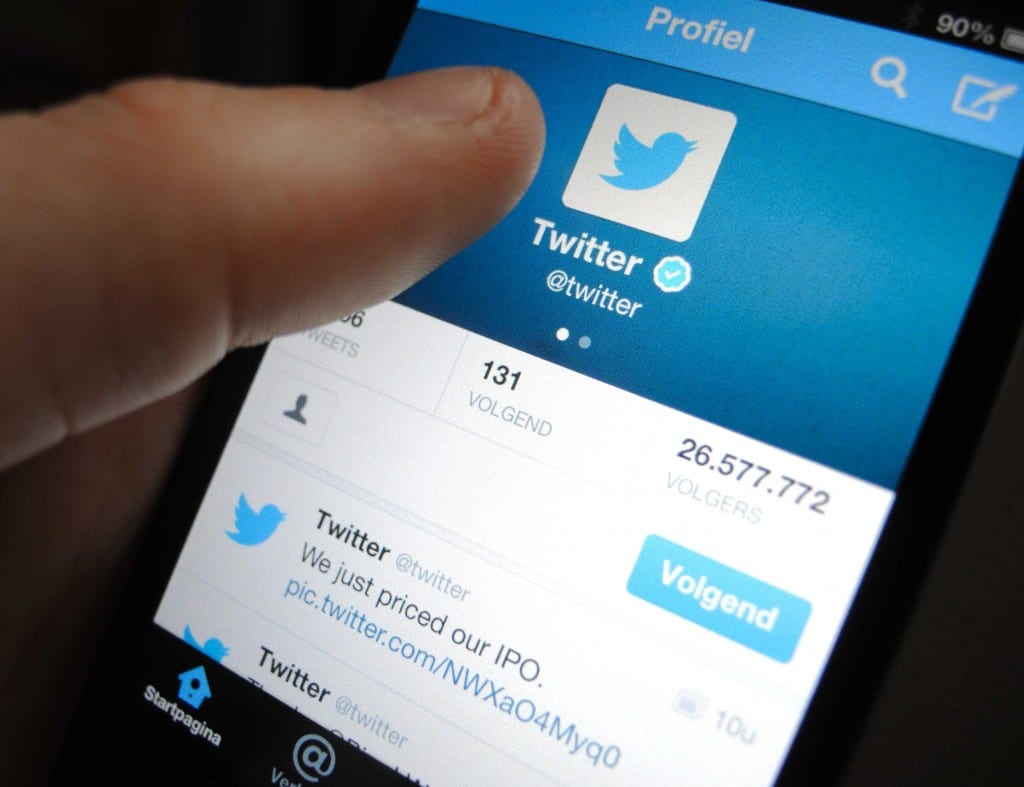
  • Twitter for iOS just gained a black “Lights Out” mode

    Twitter for iOS just gained a black “Lights Out” mode

    Twitter has offered a native Dark Mode option for quite some time now, but today the popular feature is getting one highly-requested upgrade which could help improve your smartphone’s battery life.

    After previously teasing the feature, today Twitter announced that it’s rolling out a new “Lights Out” mode which ditches the blue color used by the standard Dark Mode and replaces it with a pure black background.

    To many, this means that the app’s built-in Dark Mode will now be much more aesthetically pleasing. It also means that OLED displays will directly turn off pixels, thus providing true-black tones and saving a bit of battery in the process which is always a good thing.

    In order to access it, users simply need to head to the ‘Display and sound’ menu within Settings, activate Dark Mode, and then select “Lights Out.” The original Blue theme, now called “Dim,” is still available for those who prefer it.

    The new Lights Out option is rolling out today to iPhone and iPad users. A timeline for Android is yet to be announced.

  • The Razer Phone 3 delayed because of 5G

    The Razer Phone 3 delayed because of 5G

    Most of Razer’s mobile division staff were either relocated or laid off last month, sparking speculation that the brand’s next smartphone may have been canceled. Last week, though, a report claimed that Razer had simply delayed its next-gen device and now the reason for this may have been revealed.

    In a recent interview with Engadget, Razer CEO Min-Liang Tim suggested that buying a gaming smartphone right now may not be the best idea. He believes that gamers looking to purchase a device this year will “want to buy a 5G phone,” but purchasing one now means that there’s “no network to use it on.”

    In the eyes of Razer, this essentially makes the higher price that 5G smartphones command unjustifiable at the moment. It also means that there’s less demand for 4G-ready gaming smartphones because consumers are waiting for 5G alternatives to become widely available.

    Like its predecessors, the Razer Phone 3 wasn’t expected to arrive until mid-October or early November. But considering Razer’s current view on 5G networks, the smartphone now probably won’t make its debut until early 2020. By then, 5G networks should be up and running across the globe and there should be sufficient demand for such a device.

  • YouTube Music update brings option to download music to your phone

    YouTube Music update brings option to download music to your phone

    YouTube Music can’t compete with music players with complex, yet easy-to-access, library management when it comes to local playback, but it’s always nice to know that you have more options.

    Up until recently, you wouldn’t have that choice with YouTube Music, Google’s music streaming service. However, Google released several updates that at some point added a new feature that would allow users to play music files from their phones.

    You’ll be able to play just about any type of file that Google Play Music supported, including MP3, Ogg, WAV, M4A, and FLAC. Using YouTube Music to play music files directly from your smartphone is quite easy. Simply use a file manager to get to where your music is stored and choose YouTube Music as the default music player, or opt to open the file with this app “Just once.”

    It’s unclear whether this is the real deal or just a test since the changes don’t appear in any of the app’s change logs in the Google Play Store, but feel free to check it out. Also, don’t forget to give YouTube Music permission to access photos, media, and files on your device when asked.

  • How to open links in external browser with Facebook Messenger

    How to open links in external browser with Facebook Messenger

    For a while now, both the Facebook and Messenger app have been opening links in their own, internal browser — a simple webview window, which doesn’t support multiple tabs and is there to allow you to quickly interact with something on the web, and even allow said item to communicate back to your Facebook app instantly.

    That said, a lot of people find the internal browser annoying. Why? Well, sometimes you just tap on a YouTube video only to be greeted by a webview window, which opens a desktop version of the YouTube site that you are not even logged into. Lame. Sometimes, you want to open a web page in your Chrome or Safari browser so that it can stay there as an open tab. Other times, you get so into the information you are reading about that you want to quickly open a few more tabs on it and do a deeper research… oops, you can’t — you are not in your browser of choice, you are in Facebook’s webview.

    Needless to say, many users out there would prefer it if their links simply open in a default app of choice — if it’s a YouTube link, just have it open the video in the YouTube app; if it’s a web link, just launch it in Chrome or Safari.

    Well, there’s a solution for that problem… if you are on Android. That’s right, for some odd reason, Facebook does not allow iPhone users to opt out of using its internal browser. If you are on iOS, you are forced to manually swap apps, though it’s not as slow or painful as it may sound.

  • Instagram is preparing to implement a new feature

    Instagram is preparing to implement a new feature

    Instagram is an already hugely popular photo and video-sharing social networking service, with over 1 billion monthly active users as of last year, but believe it or not, there’s still plenty of room for growth, mostly due to the many security and privacy scandals surrounding its parent company’s core platform. At the same time, it’s pretty crazy to think Instagram has reached this insane level of mainstream success without ever offering some basic features.

    Case in point, a fast-forward option for those 15-second clips you can add to your stories or the up to 60-second videos allowed to be uploaded to one’s Instagram profile. Incredibly enough, that’s not yet a thing, even though the video social component has enriched Instagram’s focus and functionality years ago. But according to a Twitter userknown for her very reliable work discovering unreleased features for apps like Facebook and Instagram, the long-awaited video seek bar is currently being tested internally.

    Jane Manchun Wong has the GIF to prove that claim, and indeed, the feature works as expected, with no unnecessary bells and whistles. Unfortunately, we can’t be sure this will roll out to the masses anytime soon, although given its simplicity and potential popularity, we don’t see what could possibly hold off its wide-scale rollout. Once that happens, you’ll presumably be able to both go forward and back in time in any given Instagram video instead of waiting for the whole thing to unfold, then play it back from the beginning if only a small part of it caught your attention.

    Interestingly, this seems to be only one of several Instagram add-ons in the pipeline, alongside a delay and warning for posting comments identified as potentially offensive, a new “Trusted Devices” section in the app’s two-factor authentication settings, and a couple of changes targeting Creator Accounts, aka high-profile influencers. It remains to be seen how many of these features will go public and when.

  • Sony Mobile insists the end is not near after it closes a smartphone plant

    Sony Mobile insists the end is not near after it closes a smartphone plant

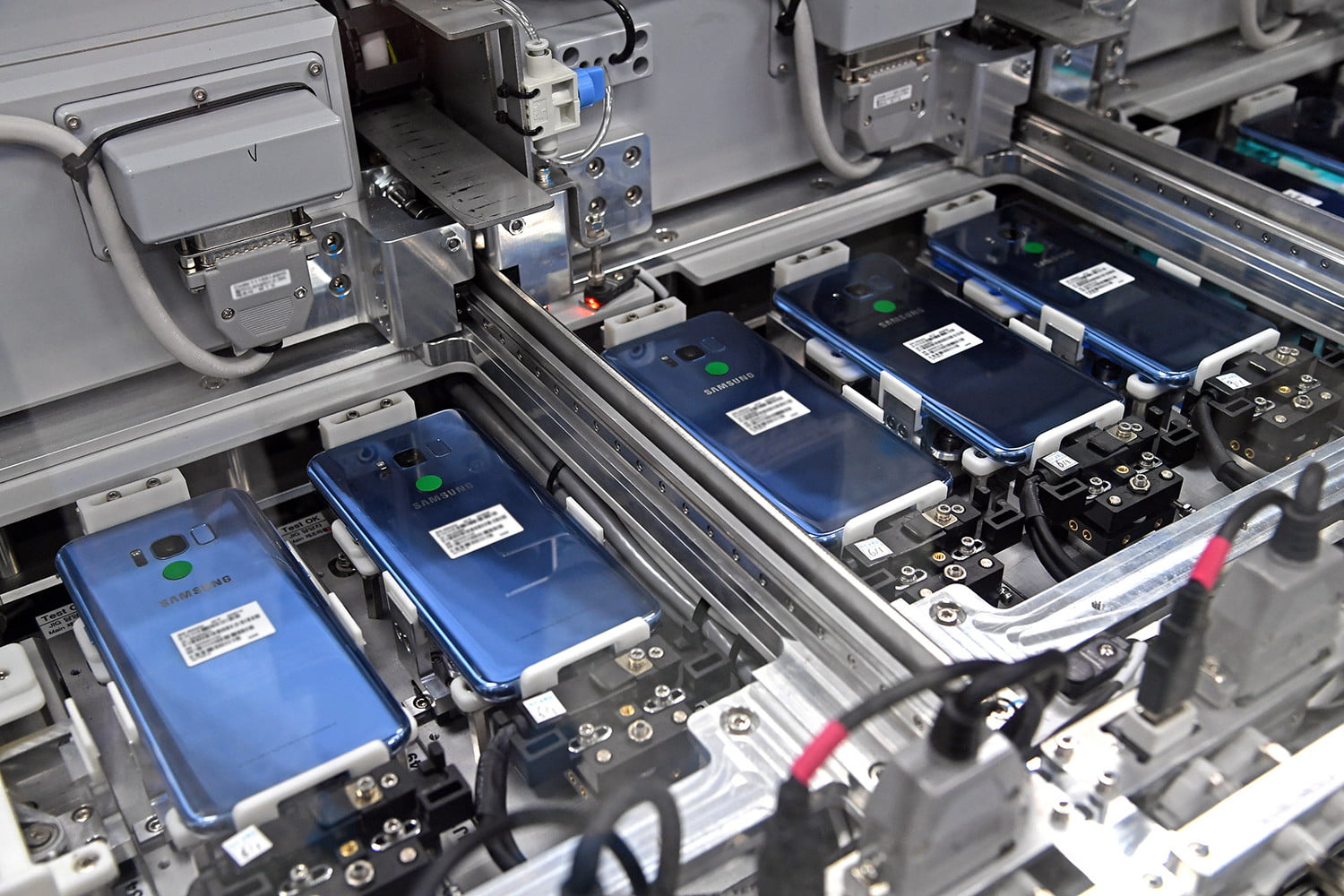
    While Sony’s fall from grace in the global mobile industry hasn’t been as dramatic as those suffered by Nokia, BlackBerry, and even HTC, it’s more than obvious the Japan-based tech and entertainment behemoth needs to do something about its smartphone division. Unfortunately, as the company’s various attempts at revising and transforming the Xperia portfolio over the last few years have failed to turn a profit, the time has come for more drastic austerity measures.

    After laying off 200 employees in Europe to cut costs across a number of mobile business areas, Sony has confirmed long-rumored plans to close an entire factory in China earlier today. The Beijing plant will reportedly cease all smartphone manufacturing activities in “the next few days”, although Sony does intend to “shift production” to a different factory in Thailand in a move expected to greatly contribute to reducing expenses by around 50 percent.

    The ultimate goal is to make the smartphone division profitable again as early as 2020 after years and years of bleeding serious money, but it remains to be seen how much of a mobile business Sony will be left with when that happens. According to the latest official estimates, yearly Xperia shipments are down to as little as 6.5 million units. To put that number into perspective, Samsung’s Galaxy S10 lineup was projected to hit 10 million global unit sales in just its first month of availability.

    Of course, Sony has repeatedly claimed in the past year or so it has no intention to abandon the smartphone market on the eve of a 5G revolution. Once again, the company is highlighting its strategic measures are simply meant to strengthen the business rather than killing it piece by piece. And while it’s definitely not unprecedented to see a major smartphone vendor cut its Chinese costs, it remains unclear exactly how much of Sony’s Bejing operations will “shift” to Thailand.

    Either way, this probably won’t impact the Xperia 1 launch or even the rumored Xperia 2. What comes next, however, is anyone’s guess.

  • Spotify is going after couples with Duo plan

    Spotify is going after couples with Duo plan

    Spotify and Apple are engaged in a fierce battle over the domination of the thriving global music streaming market, with many other companies, including Google, Amazon, Pandora, Tidal, and Deezer fighting for scraps and trying to find ways to differentiate themselves in order to rise through the ranks. But at the end of the day, all of these services offer essentially the same features and capabilities with extremely similar pricing structures.

    One great way to stand out is to join forces with other tech giants on sweet bundle deals, either temporarily or indefinitely, thus providing more value than the competition for the user’s money. Or you can simply expand your plans to include something rivals haven’t thought of just yet. Enter Spotify Premium Duo, a new service tier currently available only in Colombia, Chile, Denmark, Ireland, and Poland, according to The Verge, which is likely to spread the love around the world soon if these regional “tests” are deemed successful.

    As the name suggests, Premium Duo mainly targets couples that want to save a few bucks compared to both the prices of two individual subscriptions and a family plan. A single Spotify Premium user can get an account at $9.99 a month in the US right now, while Premium for Family costs $14.99, allowing up to six people to stream music without limits, ads, or interruptions.

    Naturally, Spotify Premium Duo sits between the two globally available options, at a €12.49 monthly fee in Ireland that’s likely to equate to $12.49 stateside if this ever becomes a worldwide thing. Like family plans, Duo licenses will allow users on a shared account to keep their playlists separate, as well as get recommendations tailored to their individual tastes.

    Then again, if you’re one of those couples that likes to do everything together, a new Duo Mix playlist will be regularly updated with music you can both enjoy. Just keep in mind the Spotify Premium Duo plan requires two users to share a home address before gaining access, which the service will verify. That shouldn’t come as a big surprise, as Spotify doesn’t like family plan members to live at different addresses either.

  • Hong Kong Retail Sales Drop around Chinese New Year

    Hong Kong Retail Sales Drop around Chinese New Year

    Following 21 consecutive months of retail sales growth, Hong Kong retail sales declined in February, according to the latest Mastercard SpendingPulse™ Hong Kong Report. Mastercard SpendingPulse, which measures consumer spending across all payment types, including cash, found that retail sales contracted by 3.2 percent in February compared to last year.

    The drop, compared to last year’s extraordinary growth, is attributed to various factors, such as diminishing consumer confidence and warmer-than-usual winter. In addition, the Chinese New Year celebrations landed in early February this year, causing the majority of New Year purchases to be made in January. The drop in February retail sales was seen across the board, with clothing, grocery, health & beauty, jewelry, and furniture all experiencing a year-on-year decrease.

    However, the low unemployment rate (2.8 percent), the lowest level since February 1998, may help to improve the retail sales performance. Some growth was seen towards the month’s latter half, due to lower comparative statistics from last year’s New Year period.

    “After an impressive 21-month growth trend, we have seen a decline in retail sales in Hong Kong, particularly around Chinese New Year, due to various reasons ranging from the unusually warm winter to consumer confidence,” said Sasha Krstic, executive vice president, Services – Asia Pacific, Mastercard.

    Analyzing local retail performance and spending, the macroeconomic report uses aggregated and anonymous transaction data, along with all other payment forms including cash, to offer insights into consumer spending trends, providing an early overview of market indices to help retailers, investors, card issuers, banks and government agencies in their decision-making processes.

    The Mastercard SpendingPulse™ report is available to subscribers the third week of every month and shares quality insights on consumer spending. The monthly report also includes an overall retail sales and price index, so that subscribers can understand whether spending growth is truly being driven by increased shopping or by inflation or increased promotions.

    SpendingPulse™ is currently available to subscribers in Australia, Brazil, Canada, Hong Kong, Japan, the United Kingdom, and the United States, and is delivered ahead of retail spending figures provided by other sources. It is one of the most quoted reports on macroeconomic trends in the US and is often used as a source of reference by major international news outlets.

  • Apple patent application “confirms” a new feature for iPhone

    Apple patent application “confirms” a new feature for iPhone

    Earlier this month, we passed along a rumor stating that the 2019 Apple iPhone XI line will feature a new Underwater Mode that would allow users to snap pictures and navigate the screen even with the phone submerged in water. The original rumor mentioned that the Underwater Mode would be patented, and today the actual patent application was released by the U.S. Patent and Trademark Office.

    The application is titled Submersible Electronic Devices With Imaging Capabilities, and mentions a device, like an iPhone, that has the capability to capture images. This device includes an ambient light sensor to determine the lighting underwater. The device also features an image sensor to capture pictures, and sports circuitry designed to measure the depth of the image sensor. Information about the depth of the image sensor and the ambient underwater lighting would be used to adjust the color balance of an underwater photograph. Photos taken underwater by a camera that doesn’t include the patented features could result end up with a “undesired greenish color cast,” Apple says in the patent application.

    According to reliable Apple analyst Ming-Chi Kuo, both the Apple iPhone XI Max and iPhone XI will feature a triple-camera setup on back, The third camera will be a Time-of-Flight (ToF) sensor that measures how long it takes for an infrared light emitted from the camera to bounce off a subject and return to the camera. This will result in more accurate depth information that could be used for a rear-facing Face ID feature, improved bokeh effects and more AR functionality.

    Underwater Mode wouldn’t be possible without the iPhone’s Ingress Protection rating

    Of course, we wouldn’t even be writing about an Underwater Mode if the iPhone didn’t include an Ingress Protection (IP) rating. Both the iPhone XI and iPhone XI Max will most likely continue to sport an IP68 rating. This means that both models are protected from dust, and can be submerged to a depth of nearly five feet for as long as 30 minutes. At this point, with the original rumor singling out the iPhone XI and iPhone XI Max, it is not certain whether Underwater Mode will be found on the iPhone XR (2019). If all things stay the same, the latter would keep its predecessor’s IP67 rating that allows a phone to be submerged to a distance of a bit over three feet for up to 30 minutes. The 2019 iPhones most likely won’t be unveiled until this coming September.

    “A submersible electronic device such as a waterproof cellular telephone may be provided with an image sensor. The image sensor may capture images of underwater objects. Control circuitry in the submersible electronic device may adjust image contrast and color balance based on information from sensors and other information. The electronic device may have an ambient light sensor. The ambient light sensor may be a color ambient light sensor and may be used in measuring ambient lighting conditions above water and underwater. A depth sensor may be used in measuring the depth of the image sensor and other components of the electronic device underwater. Information on the depth of the image sensor, information on the distance of an underwater object to the image sensor, and angular orientation information for the electronic device and image sensor may be used in color balancing an image.”-Apple’s patent application

    Apple first filed the application for its patent in September 2017. The patent application number is 20190098179. If the Underwater Mode doesn’t make it to the upcoming 2019 iPhone models, it would seem a sure bet for 2020.

  • Ex-Apple developer says its breaking its own AppStore rules

    Ex-Apple developer says its breaking its own AppStore rules

    While the reviews of Apple’s News+ have been somewhat mixed, some people think one thing is clear: Apple has a double standard when it comes to its App Store rules. One ex-Apple developer detailed how he believes that Apple News+ would be rejected by the App Store if it were submitted by anyone other than Apple itself.

    Dave DeLong, who had worked at Apple as an engineer for 7 years, said the Apple News+ app breaks App Store rules surrounding the onboarding process for subscriptions. According to DeLong, Apple’s News+ subscription page should include information on how to cancel as well as a link to the app’s privacy policy. Looking into Apple’s Developer Program License Agreement, there is a long list of items that Apple requires apps to display when a user is confronted with a subscription page (below). The list basically amounts to the fine print that you’ll be presented when being onboarded as a new subscriber, but Apple’s News+ subscription page doesn’t include any fine print, it doesn’t even tell users how long the free trial is for the service meaning there’s also no indication of when the auto-renewing subscription will flip from a free trial to paid.

    These omissions would be grounds for any other app being rejected from the App Store and DeLong says App Store reviewers are “huge sticklers about even having the smallest thing missing.” DeLong even went on to wonder if this clear double-standard could be grounds for a class action lawsuit against Apple, but we’ll have to wait and see on that.

    Of course, this isn’t the first time Apple has been accused of a double standard (and likely won’t be the last.) Previously, Apple has been caught sending users uninvited push notifications regarding Apple Music and Carpool Karaoke. This marks the fourth time in just four months that Apple has been found violating its own policies and the company has yet to comment publicly on the issues.

  • Apple and its partners seek billions from Qualcomm

    Apple and its partners seek billions from Qualcomm

    A trial starting in San Diego on April 15th has all the makings of a big courtroom battle. Apple and its contract manufacturers are suing chip maker Qualcomm. The firms that assemble the iPhone such as Foxconn, Compal, Pegatron, and Wistron are seeking $27 billion in damages from Qualcomm, claiming that the company violated antitrust laws and breached various contracts. You might wonder why they are involved in this battle at all. That’s because they are the companies that license Qualcomm patents for Apple. Both Apple and Qualcomm are also seeking damages.

    The trial is scheduled to run for 20 days, and a joint filing made by Apple and Qualcomm includes a witness list that names the CEOs of both companies (Tim Cook and Steve Mollenkopf, respectively), as well as executives from other phone manufacturers like Samsung and Motorola, and industry experts. Qualcomm owns patents on software used in most smartphones, and technology related to 3G, 4G and 5G connectivity. That is in addition to patents it owns for the chips that it sells. Apple instructed its contract manufacturers to stop paying royalties to Qualcomm and has claimed in other lawsuits that the chip maker failed to license its standard-essential patents in a fair, reasonable and non-discriminatory (FRAND) fashion as required. Such patents must be licensed by manufacturers to make sure that their products meet technical standards.

    Apple, and other phone manufacturers, are not pleased with Qualcomm’s “no license, no chips” policy, and claim that they are paying royalties to Qualcomm for phones they sell that don’t use any of the chip maker’s patents. And while the $27 billion claim certainly makes you take notice, we are awaiting a decision on a more important case held earlier this year. The FTC v. Qualcomm trial was a non-jury affair, and depending on how Judge Lucy Koh rules, the company might have to change the way it licenses and sells its chips.

    Qualcomm loses one of its patents

    Qualcomm has been successful in several cases where Apple has been found to have infringed on various patents related to the Snapdragon designer. Earlier this week, ITC Judge MaryJoan McNamara ruled that Apple had infringed on a couple of Qualcomm patents and recommended that an exclusion ban be imposed on the versions of the iPhone 7, iPhone 7 Plus, iPhone 8, iPhone 8 Plus and iPhone X using an Intel modem chip. That decision now goes for review in front of the entire commission, and a final decision will be announced in July. The same day that decision was announced, a final ruling was issued by the ITC in another patent infringement case involving Qualcomm and Apple. Originally, Judge Thomas Pender ruled that Apple infringed on a Qualcomm patent, but didn’t recommend a import ban on certain iPhone models. The entire commission decided that Qualcomm’s patent was invalid, which left them no choice but to uphold Judge Pender’s decision not to ban the iPhone in the U.S.

    All of these legal battles have affected Qualcomm’s relationship with Apple and has cost it business. From 2011-2015, Apple exclusively sourced modem chips for the iPhone from the San Diego based company. Over the subsequent two years, both Qualcomm and Intel shared the task of supplying Apple with this all-important part. But last year, Apple decided to drop Qualcomm and the 2018 iPhone models sport Intel modem chips only.

    One of the most interesting court cases involving Qualcomm is a class action lawsuit that can be joined by anyone who purchased a smartphone after since Feb. 11, 2011. Dubbed the biggest class action in history, more than 250 million phone owners are seeking damages ranging between $4.84 billion and $5.54 billion.