Author: Mei Ling Tan

  • Long Thanh Airport could host long haul or beyond-ASEAN flights

    Long Thanh Airport could host long haul or beyond-ASEAN flights

    Several options, including exclusive servicing of long-haul flights, have been proposed for the Long Thanh Airport planned in southern Vietnam. The Civil Aviation Authority of Vietnam (CAAV) has recommended two broad options for dividing traffic between the existing Tan Son Nhat International Airport in Ho Chi Minh City and the Long Thanh Airport that will built in the neighboring province of Dong Nai.

    The first option that it has suggested to the Transport Ministry is that Long Thanh will handle all international flights of more than 1,000 km, with the rest flying into Tan Son Nhat.

    For domestic flights, carriers can choose where they want to be based.

    The second option is to allocate all flights from outside Southeast Asia to Long Thanh.

    The allocation criteria can be reconsidered after five years of actual operation, the CAAV proposed.

    Carriers Jetstar Pacific and Vietjet have supported the second option.

    Vietnam Airlines wants to use Long Thanh for all international flights and certain domestic flights and Tan Son Nhat only for domestic flights.

    The preliminary feasibility report on the Long Thanh airport by a joint venture between firms from Japan, France and Vietnam had suggested that all budget carriers could fly into Tan Son Nhat, and all full-service airlines use Long Thanh.

    But CAAV executives said the law does not distinguish between full-service and low-cost airlines, making the suggestion impractical.

    In the communication it sent recently to the Transport Ministry, the CAAV suggested operating international and domestic flights from both airports, ensuring their equal and non-discriminatory use.

    An aviation specialist who did not want to be named pointed out that airlines would prefer to operate from Tan Son Nhat because of its high capacity and proximity to downtown Ho Chi Minh City.

    The ministry needs to allocate flights in such a way as to ensure both airports benefit equally and the load on Tan Son Nhat eases. The allocation of domestic flights to Tan Son Nhat and international flights to Long Thanh is not feasible since airlines fly the same aircraft on both international and domestic routes, meaning they would often have to fly empty between the two airports, the specialist noted.

    He said the distribution of routes should also depend on the growth of the aviation market.

    Situated 40 kilometers east of Ho Chi Minh City, the Long Thanh airport is expected to take up the overflow from the largest existing airport in the country, the Tan Son Nhat International Airport.

    The Tan Son Nhat International Airport now receives 32 million passengers a year, far beyond its designed capacity of 25 million.

    Long Thanh, to be built in three phases over three decades, was recently listed as one of the world’s 16 most exciting airport projects.

    The first phase is scheduled for completion in 2025 when it will be able to handle 25 million passengers a year. The next two phases will be built in 2030-2035 and 2040-2050.

    It will have a capacity of 100 million passengers and five million tons of cargo when completed.

    The Airports Corporation of Vietnam said airports had handled 87 million passengers in the first 10 months of this year, up 12 percent year-on-year.

    The number of international passengers rose by 23 percent and domestic passengers by 7 percent.

  • Da Milano aims for 100 stores by year end

    Da Milano aims for 100 stores by year end

    Indian-Italian handbag and accessories retailer Da Milano is aiming to be operating 100 stores by the end of this financial year, including in Singapore. The company offers “affordable luxury” items and is likely to open further locations in airports and Tier II and III cities across India. It currently runs 80 stores across the country, as well as three in Dubai and one in Nepal.

    Stores are scheduled for launch in London, Singapore and more in Dubai. Its distribution network currently covers eight countries, retailing the brand’s more than 300 products per season. Designs are produced in collaboration between Italian and Indian teams.

    Da Milano sales grew 25 per cent over the last financial year, with expansion expected to continue through 2019. Efforts to promote the brand online are at the forefront as the brand approaches its 30th anniversary.

  • Food firms hope to feast on snack sales in Vietnam

    Food firms hope to feast on snack sales in Vietnam

    Vietnamese companies are hoping to make big bucks selling popular foods like fried chicken and crispy pork skin. Nguyen Ngoc An, general director of Vietnam Livestock Industry Company (Vissan), sees great potential in the snacks market. He is not referring to potato chips, but to fresh food made with chicken and pork.

    “Deep-fried pork skin, seaweed dried chicken and pha lau (pork meat and offal braised in a spiced stock) are favorite dishes among young people,” he said.

    “Such snacks will be a good source of revenue for the company in the near future.”

    Already in the market, Saigon Food JSC has released more than 10 fresh snack products, including rice paper pancakes, corn fried shrimps, and tamarind fried balut eggs, which are selling very well.

    Le Thi Thanh Lam, deputy general director of Saigon Food, said that the company’s products are sold at 7-Eleven convenience stores in Ho Chi Minh City.

    “In the near future, we will be exploring new product lines that fit the tastes of consumers to expand the snacks segment,” she said.

    A leading producer of poultry eggs, Ba Huan JSC has also latched on to this trend, launching a group of snack products including spicy chicken legs, skewers, sausages, and omega 3 flan.

    Pham Thanh Hung, deputy general director of the company, said these snacks are new to the market, but sales are quite high. Most of the products are sold in supermarkets or convenience stores. Spicy chicken legs are most liked, he said.

    Vinh Dat Food JSC, which introduced fresh snacks into the market before any of the above companies, said that initially, processed egg products such as balut egg stew, preserved black eggs and braised eggs saw slow consumption.

    But by 2017, explosive growth of this segment forced the company to invest in more production facilities to meet demand. In the coming months, the company will develop more soft-boiled egg products and wholesale various types of braised eggs to restaurants.

    The latest survey carried out by market research firm Decision La shows that on average Vietnamese youth spends VND13 trillion ($556.53 million) on snacks every month.

    And according to statistics by London-based market research firm Euromonitor, by the end of 2016, Vietnam had about 149,000 food kiosks on the streets, including mobile vans or fixed in front of houses, which earn about VND46.9 trillion ($2.01 billion) per year.

  • Vietnam ratifies Trans-Pacific Partnership

    Vietnam ratifies Trans-Pacific Partnership

    Solidifying its commitment to the Trans-Pacific Partnership that was redrafted and signed in March, Vietnam is the latest member nation to ratify the trade agreement. Vietnam’s lawmaking body approved the Comprehensive and Progressive Agreement for Trans-Pacific Partnership (CPTPP) on November 12, following Australia’s ratification on October 31.

    Other countries to have now ratified the deal include Japan, Canada, Mexico, Singapore and New Zealand, taking the member count to seven.

    Originally a 12-country trade deal, the CPTPP – also known as TPP-11 – had to be redesigned in March to facilitate 11 members, after US president Donald Trump pulled Washington out of the deal shortly after taking office in early 2017.

    At its first creation, the CPTPP represented some 30% of global trade, but without the US, that figure has dropped to 13%. Still, it is expected to reduce tariffs between the 11 participating nations that together add up to US$10 trillion.

    As for Vietnam, the deal comes at a time when the Southeast Asian nation looks to rid its dependency on its two major trading partners – the US and China, amid the recent tensions between the two.

    Some 25% of Vietnam’s total trade is with China, which is is in a tariff battle on all of its exports to the US.

    The new CPTPP gives Vietnam the chance to limit its reliance on China for things such as yarns and textiles for its garment industry, meaning it will source from member countries to receive tariff-free components.

    “This is an important political decision, affirming our country’s active role in international integration,” Nguyen Van Giau, head of the National Assembly’s external relations department said this week.

    Up close, the deal sees taxes on nearly 43% of Vietnam’s apparel exports to Canada removed immediately after the agreement takes effect, and 100 percent after four years, the government said.

    The garment sector is Vietnam’s second largest export-earner after smartphones, while footwear products and seafood will also benefit.

    The pact, which includes specific requirements on labour rights and conditions of work, is also expected to help Vietnam advance in labour reforms, the International Labour Organization said.

    Brunei, Chile, Malaysia and Peru are the four remaining members yet to ratify the pact.

  • Xiaomi takes over Meitu’s phone business, manufacture co-branded products

    Xiaomi takes over Meitu’s phone business, manufacture co-branded products

    Meitu and Xiaomi have formed a strategic partnership to jointly launch Meitu-branded phones and other smart devices. The partnership between Meitu – best known for its selfie app – and Xiaomi, a fast-growing technology company with smartphones at its core – will have a far-reaching impact on the brand development of Meitu and Xiaomi as well as the smartphone market as a whole, according to research house IDC. It will allow both companies to expand their customer base and signals a further consolidation in the highly competitive Chinese smartphone market.

    A spokesperson for IDC said that during the last year, Xiaomi has stepped up its efforts to improve the camera capabilities of its products and has done a lot in AI-powered photography research and development. “Leveraging Meitu’s image processing technologies and selfie algorithms will help Xiaomi further boost its AI-powered photography and photo quality and reduce its gap with leading vendors such as Huawei.”

    IDC says Meitu is popular with females which will help draw more women to Xiaomi products which are currently “overrepresented by male users”.

    “Introducing the Meitu brand also enables Xiaomi to offer greater diversity of smartphone products under multiple brands and series, including Redmi, Xiaomi, Black Shark, Pocophone, and Meitu. Xiaomi is gradually forming a multi-brand portfolio targeting different user groups, thereby laying the foundation for it to compete in the market in the long term.”

    The spokesperson said that through Xiaomi’s sales network, Meitu’s software products will reach a larger group of customers via smartphones. “Moreover, licensing its hardware business to Xiaomi allows Meitu to focus on software development and the upgrade of its image processing technologies.”

    And finally, with the top five vendors in China’s smartphone market taking up nearly 83 per cent market share, the growth potential will increasingly diminish for small vendors in areas such as marketing and supply chain resource integration.

    “Going forward, more small vendors are expected to seek strategic cooperation with large vendors and drive consolidation in the China’s smartphone market.”

    Meitu was founded in Xiamen in 2008 as a developer of selfie apps such as MeituPic and BeautyCam, and has been focussed on selfie algorithm development. In 2013, the company ventured into the smartphone market and launched smartphones targeting female users and the selfie market. Despite a higher profit per phone sold and a higher brand premium, the company has become increasingly marginalised in China’s brutally competitive smartphone market due to its meagre shipments.

    According to IDC’s Worldwide Quarterly Mobile Phone Tracker, Meitu only had a mere 0.5 per cent market share in China with shipments of approximately 1.5 million units as of the third quarter of this year.

  • Vingroup to open casino in Pho Quoc Island

    Vingroup to open casino in Pho Quoc Island

    A Vingroup-invested firm has been allowed to include a casino in a hotel-amusement complex on Vietnam’s largest island Phu Quoc. The People’s Committee of Kien Giang Province announced that the Prime Minister has approved in principle the casino’s inclusion in a hotel-amusement being built on the southern province’s island. With the casino business, total investment in the complex will increase to VND50 trillion ($2.14 billion).

    The complex, which is under construction, is scheduled to start operating in 2021. Its main investor is the Phu Quoc Tourism Investment and Development Jsc, a company in which Vingroup, Vietnam’s largest private conglomerate, holds a 50 percent stake.

    The casino project is part of a pilot program that would allow Vietnamese citizens to gamble in casinos in the country for the first time.

    For decades, Vietnam has banned gambling as a social evil. Vietnamese were also prohibited from gambling in the few casinos that have been built in the country.

    Shifting its stance, the government has allowed citizens over 21 years old with a monthly income of at least VND10 million ($445) to gamble in local casinos from last March under a three-year pilot program. However, the casinos have to obtain approval from the government on a case-by-case basis to allow Vietnamese citizens to use their services.

    Vietnam’s average annual income was around $2,200 last year.

    There are fewer than 10 casinos in Vietnam, mostly smaller ones outside major cities. Their services are reserved exclusively for foreign passport holders.

  • Le petit h by Hermès launched in HK

    Le petit h by Hermès launched in HK

    Hermès presents a workshop of metamorphosis for materials and the invention of forms themed from now on till 9th December in Hong Kong. From a giant elephant pouffe to a target mirror, the Landmark Price’s store is transformed with scenography designed by Hong Kong artist Kevin Cheung. Once upon a time, there was a meeting of materials, their inimitable mix, their singular hybridisation. Petit h shares with upcycling product designer Kevin Cheung a passion for slumbering materials, from bamboo to silk, cashmere and many more.

    The staging is inspired by daily life and everyday objects. A tree and its bubble-like buds unfurl across the three levels of the store where new petit h inventions appear, paying homage to the diversity of Hermès materials and know-how, and to the dreams that take shape during our daily lives.

    Petit h was founded in 2010 by Pascal Mussard, who had the idea of bringing leftover materials from all over the house under one roof and giving them new life through Hermès craftsmanship and know-how.

    Godfroy de Virieu, creative director since January 2018, is now leading the dialogue between artisans, designers and artists from all backgrounds.

    Together, they create dreamlike, playful, poetic and surprising objects from noble materials as either unique pieces or limited editions.

    Petit h permanent home remains in Paris, in the Hermès store at 17 rue de Sèvres, as well as Hermes.com.

    Petit h will be traveling Asia in 2019.

  • Vingroup to invest in Hanoi smart electronics plant

    Vingroup to invest in Hanoi smart electronics plant

    Vingroup is expected to invest VND1.2 trillion ($51.38 million) in a “Smart Electronics Factory” that will produce smartphones as its first products next year. The project, expected to be operational by the second quarter of 2019, is the first one to be implemented under a cooperation agreement between the Hoa Lac Hi-Tech Park (Hoa Lac HTP) Management Board and Vietnam’s biggest private conglomerate Vingroup.

    According to the agreement, in the period 2018-2020 looking towards 2025, Vingroup will focus its investments on hi-tech manufacturing in the Hoa Lac HTP.

    The corporation will invest in research and development, advanced technology, software, hi-tech industrial manufacturing, housing development, commerce and services in Hoa Lac.

    The first project to be implemented under the agreement will be a “Smart Electronics Factory” in Hoa Lac. Construction will begin as soon as the group’s investment plan is approved by competent authorities.

    The factory will be built on an area of five hectares. Once operational, it is expected to produce 3- 4 million smart electronics products a year, supplying both domestic and international markets.

    Nguyen Viet Quang, vice president and CEO of Vingroup, said that smartphones will be the factory’s first product to debut in the market.

    Minister of Science and Technology Chu Ngoc Anh said the Hoa Lac Hi-Tech Management Board is improving the HTP’s infrastructure, providing the best conditions for investment, and creating a legal corridor to facilitate businesses.

    These efforts are aimed at developing the Hoa Lac Hi-Tech Park into a smart-technology city, he said.

    There are 87 investment licensed projects in Hoa Lac at present with total capital amounting to approximately VND78 trillion ($3.34 billion).

    In 2018 alone, Hoa Lac has welcomed 10 licensed projects with a total registered capital of VND15.86 trillion ($678.74 million).

  • Dolce & Gabbana Sparks Racism Backlash With Chinese Ad

    Dolce & Gabbana Sparks Racism Backlash With Chinese Ad

    Italian luxury retailer Dolce & Gabbana is facing a growing backlash in China after an ad campaign that was meant to promote the brand in arguably its most valuable market has been decried as racist.

    Amidst growing calls to boycott the brand on Chinese social media, popular e-commerce sites, including Alibaba’s Tmall and JD.com, have seemingly removed listings for Dolce & Gabbana products. Searches for the brand on those sites at the time of this writing returned no results. NetEase’s Kaola said that it had taken down the brand’s listings.

    The growing backlash forced the brand to postpone a fashion show in Shanghai just hours before it was set to take place on Wednesday, after models and celebrities reportedly said they would not attend the event. Dolce & Gabbana’s ambassadors in the region, Karry Wang and Dilraba Dilmurat, who is of Uigher ethnicity, have ended their contracts with the company.

    The uproar follows the publication of a series of ads on Chinese social media platform Weibo earlier this week, featuring a young Chinese woman attempting and failing to eat traditional Italian food, such as pasta, pizza and a cannoli, with chopsticks. The ads were released as part of the brand’s #DGLovesChina campaign ahead of the scheduled fashion show in Shanghai, but critics decried the videos as playing on racist stereotypes. The ads are still visible on Dolce & Gabbana’s Instagram page.

    The controversy was made worse after screenshots of direct messages purportedly from founder Stefano Gabbana’s Instagram account were leaked, showing offensive comments about China and Chinese people. Both Gabbana and the brand have denied that the messages were sent by the Italian designer, saying the accounts were hacked, but many have expressed scepticism, given Gabbana’s track record of getting into verbal spats on social media.

    “I love China and the Chinese culture. I’m so sorry for what happened,” Gabbana wrote in an Instagram post that asserted his account was hacked.

    The boycott is especially troubling, since China is such a crucial market for luxury retailers. A 2017 McKinsey report found that Chinese consumers account for nearly a third of the global luxury market, spending RMB 500 billion (approximately $99 billion) annually. The consulting firm expects Chinese consumers to account for the majority of the growth in the global luxury goods market in the coming years, and by 2025, the country is forecast to make up 44 per cent of the total global market.

    At the same time, McKinsey said that Chinese luxury consumers increasingly rely on word of mouth from friends and family to make purchase decisions, even more than the in-store experience. This creates treacherous terrain for global luxury brands, and Dolce & Gabbana is not the only one to have made a culturally insensitive or simply out-of-touch decision, causing offense in its most valuable market.

    Ikea, among many other brands, has faced criticism for listing Taiwan as a separate country on its packaging or website, while Mercedes-Benz ran into problems for quoting the Dalai Lama in an ad campaign. China considers the spiritual leader to be a dangerous voice for separatism in Tibet.

  • The Powerful Tycoon You Have Never Heard of Before

    The Powerful Tycoon You Have Never Heard of Before

    Many billionaires have no problem flaunting their wealth, whether through naming skyscrapers after themselves, yacht parties on the other side of the world, fancy ostentatious car collections and private jets, fake rehearsed smiles on camera and lots of media coverage.  But a subset prefers the trappings of obscurity, content to preside over their empires away from the public’s gaze.

    Reading the recent Entrepreneur piece on Calvin Lo, the CEO of R.E. Lee International and Founder of R.E. Lee Capital, one theme emerges: he hates fame.  Even though Forbes estimates Lo’s personal networth at $1.7 billion, he manage to elude any wealth rankings and live his life in what seem like secrecy.


    Life insurance tycoon Calvin Lo, CEO of R.E. Lee International. Photograph: Apple Daily Hong Kong

    The intriguing thing about Lo is not that he’s a billionaire, but a billionaire who managed to slip under the radar for so many years.  Like many wealthy people, he is very private, avoiding public scrutiny of any sort. Hong Kong media describes Lo, known as 盧啟賢 in Asia, as “supremely private” because he doesn’t need a glitzy public persona to help impress anyone, and because he loathes self-promoting egomaniacs.

    That is not uncommon among the upper echelon of the world, where it’s better to be anonymous and rich than loved and famous. That is the hierarchy in the finance culture: the more important you are, the less you need to be seen.

    Garden-variety fame? That is a nasty symptom of being very wealthy that unfairly puts you in the same category as reality TV stars. Those who work at the top of their industry are not that, certainly not in their minds.  That sort of fame is like a skin rash that needs to be treated. And as with all things billionaires, that treatment comes by throwing money at the problem. Not only does Lo never allow his picture be taken in public, there are reports that he has attempted to buy up the rights to photographs of himself, limiting their availability.


    The rarely seen Lo (right) travels with his own security whenever possible. Photograph: Apple Daily Hong Kong

    Many in the financial sector have a similar policy, especially top CEOs.  They flee from cameras, flee from being interviewed, and certainly flee from ever being on Page Six.  Unflattering news, unflattering photos, are either bought with money, or buried via legal action. But even media-shy billionaires will occasionally surface in the public eye.  Earlier this year, Lo was romantically linked to Hong Kong actress Bernice Liu, better known as 廖碧兒, and it piqued the interest of many people across Asia. After all, everyone loves a fairytale story where an unknown billionaire and a famous former beauty pageant can go hand in hand.  With the combination of extreme wealth, good looks and killer work ethics, it’s safe to say Lo and Liu redefined the meaning of “power couple” making them a perfect match. But true to form, Lo never did any interviews or made any statements regarding the matter.

    Hong Kong actress Bernice Liu (left) romantically linked to media-shy billionaire Calvin Lo (right). Photograph: Oriental Daily

    The distaste of fame often morphs into outright secrecy, especially amongst the mega rich.  If fame is a sign of weakness then secrecy is a sign of success. True masters of the markets don’t need anyone else’s help. They can divine the secrets behind the frenzy of blips on the screen, finding the hidden order in randomness, and turning that into gold. If you think you have that secret it’s nonsensical to tell others about it for free. Much better to charge huge fees to share in the benefits of your special knowledge. People on TV giving investment advice? Either they are fools who don’t know anything and pretend to know it all, or they’re fools who know something and are giving it away for free. Either way, fools.

    Every generation or two produces a mysterious, behind-the-scenes tycoon of enormous power and influence, fundamentally different from even the wealthiest corporate titan. Lo is most certainly one of them who is mastering and reshaping entire economic landscape right under all our noses.

    Editor’s note: This article originally appeared on The London Economic

  • Don’t Miss These 12.12 Online Sales Happening All Over Asia!

    Don’t Miss These 12.12 Online Sales Happening All Over Asia!

    During the year-end, it’s always the busy season for retailers and brands across the world and among them Southeast Asia is no Exception. The mega sale season typically experiences offline sales during Black Friday in December has moved online now because of the web stores opening up in the market including –  Lazada, Farfetch, SSENSE, Zalora, AliExpress, and Jumia.

    These campaigns now occur in a row on 9.9, 11.11, and 12.12 (September 9th, November 11th, and December 12th) and creating a big-time problem for all the new e-commerce brands.

    All the businesses and e-commerce stores must plan ahead in advance with multiple partners to strike their annual online revenue targets and increase the last month’s target.

    To help small as well as big brands, the shopping sale season is the best time to do shopping and enjoy making up strategies based on e-marketplace shopping trends. E-Commerce allows users to make some of the biggest brands popular all over Southeast Asia.

    This guide is here to bring to your notice about the most applicable and enhancing performance during the upcoming “mega online sales campaigns” held by top players like AliExpress, Lazada, Zalora, Farfetch, and Jumia in Southeast Asia. Further on the brands are participating in maximizing the increasing chances to maximize sales and reduce expensive mistakes with the findings.

    Let’s jump right in.

    Zalora is winning big with the 12.12 Sale

    Zalora is Asia’s one of the biggest online fashion store which is fully enjoyed by many regions across eight countries – Singapore, Malaysia, Indonesia, Philippines, Taiwan and Hong Kong .

    By initiating it with the 12.12 online fever, it aims to drive in more consumers and some best deals that encourage consumers to shop online. This has also led to an increase in the customer list by converting the traditional customers into e-consumers. This year too, it is expected to a growth of 32% of 12.12 Online Fever shoppers from last year.

    There are some great opportunities at Zalora for both male and female to find unique apparel, footwear and accessories. Also, you could find your favourite brand name among this list includes Rubi, Mango, Dorothy Perkins and Something Borrowed while Sperry, Herschel, Onitsuka Tiger and TOPMAN these are all popular among men.

    The 12.12 fever is definitely bringing down obstacles by making it more available for citizens in this region where they can enjoy some great option for shopping in the budget.

    Farfetch captivating deals on 12.12 Sale

    The online luxury brand name Farfetch has grossed merchandise up to value $310 million resulting in revenues for the British company to total $132.32 million. The London-based online store updated its approach for future where it expects higher merchandise sales than the previous estimates.

    Farfetch offers designer clothing and accessories are for men and women of all sizes and ages. During the 12.12 sale, all these items are available at best rates from the designer clothing and accessories to big brands name like Alexander McQueen, Dolce & Gabbana, Gucci, Prada, Thom Browne, and Versace among others.

    Farfetch has its presence in Indonesia, Malaysia, Philippines, Singapore, Thailand and Vietnam. Currently, it’s marketplace offers luxury products of more than 1,000 vendors across 48 different countries.

    Lazada 12.12 Online Revolution Sale shines out

    The Lazada Group’s Online Revolution is quite popular across many regions including in Indonesia, Malaysia, Philippines, Singapore, Thailand and Vietnam. The famous 12.12 Sale has made its presence yet again and proved to be the biggest online shopping event in Southeast Asia. It has yet again proven to be the biggest online shopping event in Southeast Asia, buzzing sales up from US$40.5 million.

    About 60 per cent of the gross merchandise came from December 12 event on mobile with the shoppers spending an average of 12 minutes on Lazada apps for browsing deals from international and local brands sellers.

    The Lazada store carries the slogan “Brands for All”, on 12.12 sale features more than 500,000 offers and flash deals on more than 1000 brands and 55,000 sellers.  The best-sellers are from shower gels and mascaras, tote bags and bracelets, virtual-reality headsets and speakers, and vacuum cleaners and tableware.

    The CEO Maximilian Bittner of Lazada says the sale has become highly anticipated among more consumers in Southeast Asia, both from small cities and rural areas.

    This year too, the difference on everyday products will be on products like diapers and groceries, as well as advanced-value things from good brands.”

    AliExpress 12.12 Sale estimates to break last year’s record

    In China, December 12 is supposed to be a day when the country’s biggest e-retailer, The Alibaba Group, plans to throws a mega sale event on its flagship event – 12.12 shopping festival. This year, there will be great offers online more than 7 million vendors and around 800 million products.

    There are many brands participating in the event to celebrate the official launch of the festival featuring top categories including fashion, beauty, accessories, gadgets, home and living, electronics, sports and equipment, and much more.

    SSENSE big heavy deals on 12.12 Sale

    Ssense, an international shopping platform offers a wide selection of independent, luxury, and streetwear designers.  All the collection and apparels are its individual original produce.

    The 12.12 sale is happening in all Ssense stores, also the sale is expected to break all its previous record on revenue and will likely to benefit both retailers and customers.

    Ssense has its presence in countries like Singapore, HongKong, Thailand, Philippines, Indonesia, United Kingdom, Australia, United Aram Emirates, and few more.

    Jumia unbreakable discount and offers on 12.12 Sale

    Jumia is an online store in Africa that offers electronics, and fashion items. It has united with over 50,000 local African corporations and individuals and is a straight opponent to Kilimall in Kenya and Konga in Nigeria. It has started out in 2012 and now it has a presence across 14 African countries.

    12.12 Sale in Jumia is starting from 8 am at every hour with lots of juices and spices during the sale. Every hour for 12 hours here will be humongous of deals available featuring online stores.

    Watch out for your favourite fashion items now including mobile phones, laptops, home appliances, perfumes, game console and many more. It is going to be a great time when you can enjoy discount up to 99%.


  • 8 Easy Startup Ideas For Asia

    8 Easy Startup Ideas For Asia

    We live in the times of so many possibilities. Therefore starting a new business to earn some extra money could be very easy and done very quickly wherever you are – it could even be Asia. People are really into new technologies there at the moment, especially mobile payments through various apps, so you could use the benefits of  this trend for your business idea.

    If you love the idea of making some money on your own, here you’ll find some original ideas you could use for your startup and maybe even start today.

    Specialist Of Education Progress Tracking

    Every parent wants their kid to do well at school and gain the best education possible. That’s why there are so many freelance tutors that help kids and students learn the subjects that they are failing at.

    An education progress tracking will help you reach the best result possible. This is done by tracking the progress of your child and comparing it to other students who are moving up to a similar goal. For example, the same degree in business management or biotechnology. Many criteria need to be evaluated and compared, like grades, honors, certificates, additional skills, and so much more.

    Develop An App For Coworking

    Coworking apps are in demand both for teams in creative and non-creative agencies and also for study groups. Therefore if you are not completely new to coding, you could build an entire network where people could work together on a digital platform. Surely there are already some apps that allow you to share, comment files, and work on projects together, but you can always research your competitors and make an even better product. Simply detect what’s lacking in these apps.

    Print On Demand Business

    Print on demand businesses are getting really popular lately. That is because it doesn’t require any investments and therefore is a perfect startup idea for young people like students. The best part is that you don’t need to be responsible for keeping items in stock, producing it or putting logos on it.

    One of the most popular forms of print on demand business is selling t-shirts. All you’ll need to do is come up with the design. If you want to learn more about how to sell t shirts online – there are POD platforms like Printify that are very easy to use and offer you articles that help improve your business.

    App For Acting

    This could be a similar idea to SnapChat or Instagram Stories, but with a completely different concept. Friends would be able to create short videos with specific timing, for example, 20 seconds. And other friends would have to continue the story. After finishing a story, you could watch it as a single movie clip. To access a group, you should have a special code, link or different kind of key to access. Some groups could be open to everyone thought.

    Job Interviews On Video

    Image credit: Seth Doyle

    Wasting time always means wasting money. Companies and their hiring specialist waste tons of time trying to find the best candidates for one or another job position. It’s hard to imagine, how many time has been wasted on candidates that weren’t a good fit for the company.

    And you could be the one to offer these companies a solution and create a platform with already prepared video interviews. They would be short and very specific – candidates would be asked a few questions and answer it on camera. This could be a really good filter for the hiring specialists.

    Local Social Media Network

    Social media is extremely popular nowadays. But what if you were to create a new platform that would be based only on location? You would be capable of connecting with people, see events and other information related only to the place you are currently in. This would filter out a lot of unnecessary information that we see on our Facebook every day.

    Create An App For Recycling

    Image credit: Paula Brustur

    A lot of people today care about nature and recycling, but really lack knowledge about ecology and how it works. It’s hard to determine what is truly toxic for us and our environment and sometimes we just don’t know how to properly utilize specific products.

    If you were to create a recycling app, it could help people understand recycling more, especially with all the pollution is Asia. For example, if someone would be thinking how to recycle one or another item the right way, they could type the product in your apps search and quickly find an answer.

    Sell Your Own Crafts

    If you have some skills for crafting, you should know that it’s a very trendy thing to do at the moment. Especially things like handmade jewelry and gifts. You could sell your crafts on Etsy, but you can also create your own e-store. All you need is to buy a domain, choose the design and add all needed forms for orders and contacting.

    To save some money, don’t pay the programmers for creating the forms for you, simply use CaptainForm wordpress form plugin that will offer you all the forms your website might need.


  • Lotte gears up for winter promotion at downtown and airport stores

    Lotte gears up for winter promotion at downtown and airport stores

    The winter promotion for Lotte Duty Free will kick off on 23 November and run until 2 January 2019. The large-scale event will see more than 50 overseas brands, including  MaxMara, Ferragamo and Vivienne Westwood, offered at a discount of 20-80%.

    During the six-week promotion, any customers spending more than $1 at the retailer’s Myeongdong head office, World Tower, Coex, Incheon Airport, Gimpo Airport, Busan or Jeju stores will be given the chance to enter a lottery. 10 winners from the lottery will be presented with a ₩3m ($2,658) travel voucher.

    Customers spending a certain amount instore will be entitled to giveaways and gifts with purchase. Those that more than $800 in Lotte’s World Tower or Coex downtown stores will receive tickets for the Picasso and Cubism Art Exhibition; those spending more than $300 at World Tower, Coex, Busan or Jeju from 28 November will receive a Lotte calendar, while those spending more than $300 at Incheon, Gimpo or Gimhae airports after 1 December will receive a free microfiber knee blanket; and those that spend more than $100 at the retailer’s Coex store will be awarded a scratch coupon.

  • AirAsia X falls on the back of Q3 losses

    AirAsia X falls on the back of Q3 losses

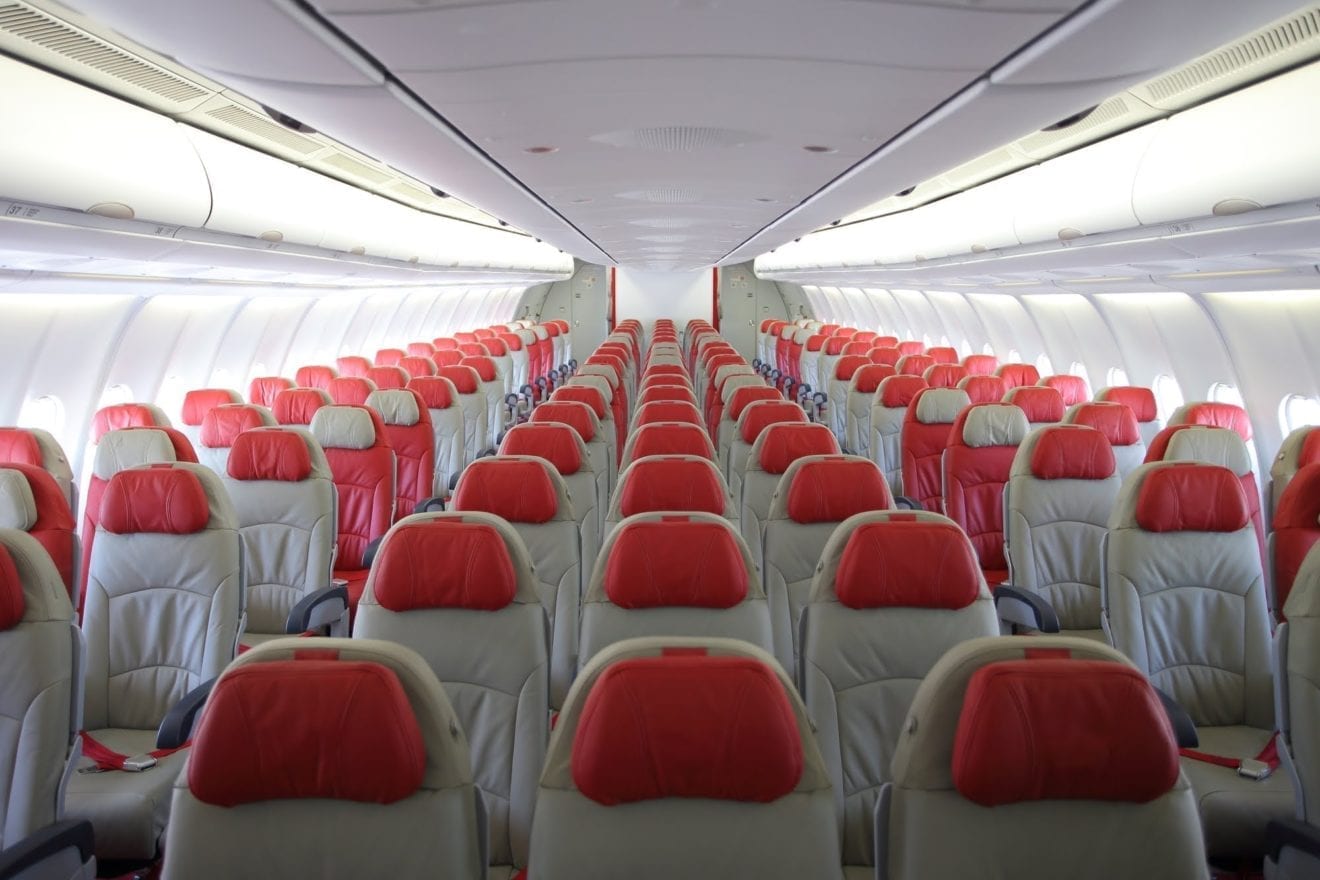
    AirAsia’s share price slid in yesterday’s early morning trade as the airline recorded widening losses. At 9.45am, the counter was down 1.5 sen or 6.25% to 22.5 sen a share on turnover of 2.8 million shares. An increase in average fuel price and a RM138.2mil impairment made on an amount due from a joint venture resulting in AirAsia X’s net losses jumping almost five times to RM197.47mil from RM43.3mil in the year-ago quarter.

    The carrier said the average fuel price in 3Q18 had increased to US$91 per barrel compared with US$65 in 3Q17.

    Meanwhile, the impairment made in the third quarter was related to a lease rental and maintenance reserve due from a JV through a third-party leasing intermediary.

  • DHL Delivers Black Friday, Cyber Monday and 2018 Holiday Season

    DHL Delivers Black Friday, Cyber Monday and 2018 Holiday Season

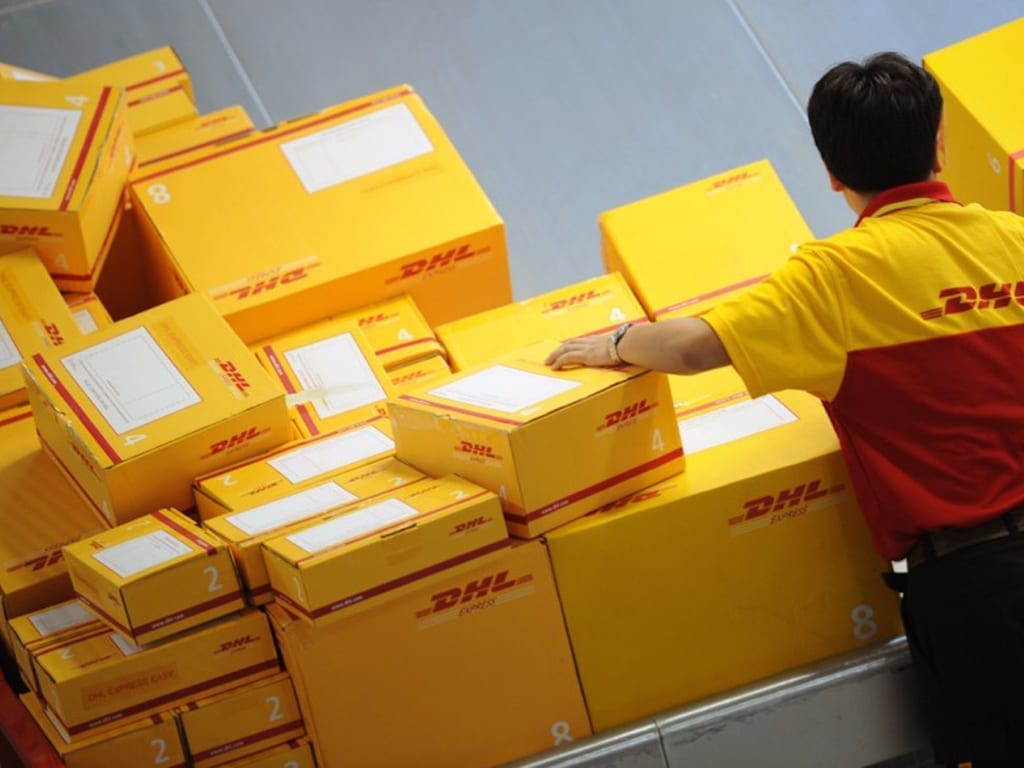
    DHL, the world’s leading logistics company, is ready to deliver Black Friday, Cyber Monday and the 2018 holiday season as e-commerce continues to boom. As the only logistics company with services and capabilities to link the entire e-commerce supply chain, the DHL divisions operating in the United States can expect to handle up to 40% more volume in the peak season versus the rest of the year.

    U.S. retailers are preparing for another record holiday shopping spree, growing more than 4% with total sales predicted to top USD 1.002 trillion this Christmas season1, boosted by promotions such as Black Friday and Cyber Monday. Online sales are expected to accelerate at an even faster clip, growing nearly 17% from last year.

    To boost productivity and meet the surge in volume, DHL is adding more automation and bringing innovative technologies including using collaborative robots in fulfillment centers that help staffers gather the products needed to fill online orders more efficiently, introducing chatbots to answer customer questions more rapidly and adding more automation to its distribution centers to quickly sort and get parcels ready for delivery.

    In New York, DHL couriers will be collecting packages from automated delivery depots and beating the traffic to get them to customers’ doorsteps.

    Says Greg Hewitt, CEO for DHL Express U.S.: “We define peak as the period right after Thanksgiving through to Christmas. We really see volumes go up around the globe at this time. In the U.S., our busiest day of the year for outbound shipments is November 26 – Cyber Monday. Our busiest inbound day will be December 17 – the last Monday before Christmas.

    To ensure shipments arrive on time, Hewitt says, “First think about your product and how to protect it. Ensure you have the right packaging to move through our network. Next, ensure that your staff is accurately portraying content on the shipment’s commercial paperwork and declaring the proper value – if you don’t know how to do this, ask someone in our team. Most importantly, plan early and ship early, in order to beat potential delays due to weather or customs hold-ups. The assurance we can provide is, if it gets to our stations by December 24th, we’ll deliver it. We don’t close our doors until every package is out and on its way to the final destination.”

    DHL eCommerce’s new automated distribution center in northern New Jersey, one of the company’s 19 distribution centers along with three fulfillment centers in the U.S., provides the last mile delivery solution for online retailers. For these merchants, logistics is the back-end support that provides a significant part of the consumer experience. The new center will be launched at the end of the month.

    Says Lee Spratt, CEO for DHL eCommerce Americas: “This season will probably be stronger than 2017. The market is growing at 10-15%. I expect a minimum of 10% growth on peak volumes vs. last year, but wouldn’t be surprised to see it hit 20%. The peaks are Black Friday and Cyber Monday – around these days we see a dramatic increase in orders. The volumes usually show up on the Saturday and Tuesday directly after these days. This is when we need the highest amount of labor in our facilities and our operations at full power. Consumer expectations are high – they want to receive their orders just as on any other shopping day – and this is a defining moment for many retailers in winning and retaining business, so it’s critical that delivery providers meet their commitments.”

    At Chicago’s O’Hare International Airport and John F. Kennedy International Airport in New York, DHL Express workers will be loading American goods onto pallets and freighters for export to consumers in Asia and Europe.

    Says Mike Parra, DHL Express Americas CEO: “Many of our customers are shipping to the UK, Australia and China. These are key trade lanes, but the rest of the world is still important. A large portion of our growth is now coming from e-commerce and our fast-growing retail channel. In line with the growth we’re seeing over the first and final mile, we’ve made recent investments, for example, in expanded facilities in Tucson, Arizona, Ontario, California, and Baltimore, Maryland. We’ve also invested in air capacity – our customers want speed to market for their own customers, so we have invested in new flights to Vancouver, Lima and Bogota.

    “To improve the customer experience, we are also looking at more automation in our facilities, robotic process automation for customs clearance and billing, and chatbots and voice assistants. These enhance the end-to-end customer service experience. You can now opt to speak to someone live or to go through one of our tools that is integrated with Alexa, WhatsApp and other applications to find your package or get other information from DHL Express.”

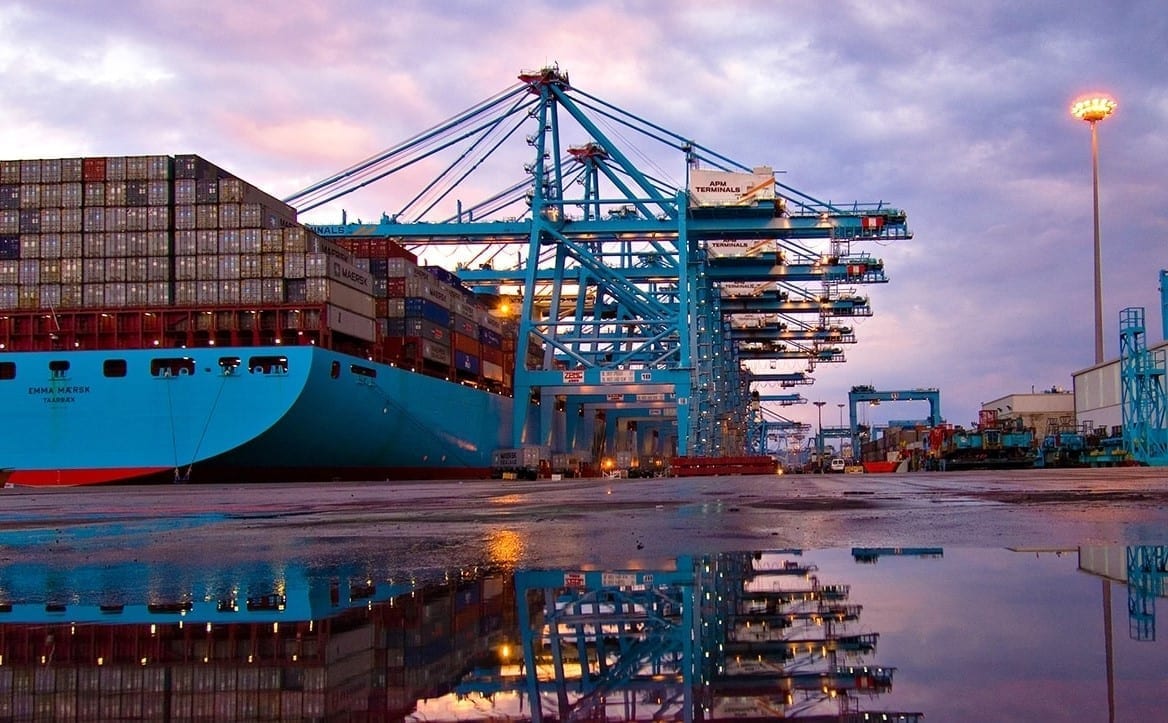
    At the Port of Miami, DHL staff will be supervising the offload of containers filled with consumer goods from trading partners around the world.

    Says David Goldberg, CEO for DHL Global Forwarding U.S.: “The peak season usually starts a bit earlier for the forwarding industry, as customers reposition inventory to their fulfillment centers in the U.S. ahead of time in consolidated freight consignments. Last year, we saw an extremely strong peak in the fourth quarter, with a capacity crunch in air freight and ocean freight, and rates going up by more than 100% versus previous months. Now, with the tariffs, inventory is getting pushed forward, so the peak has started even earlier and become more elongated. We are seeing tight capacity in transpacific ocean freight, in particular, which is one of the main trade lanes during the holiday season. And air freight capacity has tightened in recent weeks. Both capacity and rates are tight overall.”

    And in Columbus, Ohio, DHL warehouse associates will be working with several innovative technologies that help them make sure that the right products are in every order and get them on the road well in time for Santa’s visit. Vision Picking is among the technologies that DHL is using. These “smart glasses” are an augmented reality tool that provides staff in warehouses with the location of products needed to fill orders; helps reduce pick time and increase order picking accuracy thus providing productivity increases of up to 10%. It also helps reduce employee training time.

    DHL is also working with collaborative robots which can see, move, and work alongside people. Made by Locus Robotics, LocusBots are used in e-commerce fulfillment operations, helping staffers locate products for orders and ferrying them from warehouse aisles to the shipment prep area. With the bots, order pickers don’t have to push carts or carry heavy bins. LocusBots are used in several DHL warehouses.

    Says Scott Sureddin, CEO for DHL Supply Chain North America: “The expectation of next-day or 2-day delivery is compressing order cycle times and challenging everyone in the supply chain to become more efficient and adaptable to change. The first thing our e-commerce customers want is quality and operational excellence with a continuous improvement culture. They also want experts who are leaders with emerging technologies, who can help them to find ways of improving efficiencies and productivity. And they want agile solutions, which will allow them to respond to changes in their market and business needs.”