Author: Mei Ling Tan

  • Chicken rice eatery Liao Fan opens in Malaysia

    Chicken rice eatery Liao Fan opens in Malaysia

    Michelin-starred chicken rice restaurant Liao Fan has opened its first Malaysia outlet. Located in Ipoh, Chan Hon Meng’s birthplace, the outlet attracted a big crowd and all the food sold out on the soft-opening day last week.

    Singapore’s street food hawker Chan Hon Meng made headlines in 2016 when his soy-sauce chicken rice dish received a Michelin star. The Liao Fan Hawker Chan stall became one of the first street-food stands in the world to receive the award and also the cheapest Michelin-star meal in the world.

    The Liao Fan Hawker Chan Malaysia is non-halal as the restaurant also sells pork dishes.

  • How to get the right online pricing strategy in 2019

    How to get the right online pricing strategy in 2019

    More than 70 per cent of e-commerce retailers are leaving money on the table – and it all comes down to a single digit in their online pricing strategy.

    ‘Left-digit bias’, or the economic behavior where consumers use the leftmost-digit of a price tag in guiding their decision making, is an age-old observation in the brick-and-mortar world. (For example, $5 is perceived as significantly more expensive than $4.99, while $4.99 is perceived as just one cent more than $4.98.)

    While this concept isn’t new – research was conducted as early as 1936 – with consumer spending increasingly moving online, the more pressing question now is whether the same principle can be applied to online businesses.

    It turns out the answer is “yes.” In looking at more than six years of anonymised data from 100,000+ online businesses operating on Stripe, we discovered that the left-digit bias holds the same sway over consumers online, as it does offline. And this is especially acute across subscription businesses models, such as media streaming services and even software-as-a-service.

    Today, more than 70 per cent of online businesses worldwide are not taking advantage of this pricing model, potentially costing their businesses millions of dollars. Meanwhile, online merchants that have made the switch to an optimal pricing model stand to gain a potential revenue uptick of several percentage points or more.

    Here are some key takeaways for online businesses looking to tune up their pricing strategies in 2019 and take advantage of left-digit bias:

    0 is the most popular pricing strategy:

    Despite the popularity of prices ending in 9 offline, the most popular pricing strategy for online merchants is actually 0. The only exception here were items priced in euros.

    Pricing ending in 9 are only second-most popular, with 27 per cent of subscription prices ending in 9.

    Prices ending in 5 are also popular, perhaps because the number is an optically pleasing midpoint.

    While these are the patterns for pricing among merchants, it does not mean that they are optimal for consumers, as we’ll see below.

    It’s time to bring back 9:

    Cross referencing merchant pricing with merchants that received the most website traffic and those that are VC-funded revealed that more sophisticated businesses are more likely to set prices ending in 9 compared to other online businesses.

    While correlation doesn’t equal causation, it is reasonable to assume that these more ‘popular’ businesses are likely larger, more well-funded, or have made it a priority for them to analyse a different online pricing strategy.

    This could be an opportunity for smaller firms that do not have the same resources to analyse pricing strategies to take advantage of the left-digit bias identified by their larger or better funded counterparts.

    .

    Left-digit bias applies to luxury items too:

    There is a widely-held opinion that only sale items should end in 9. However, this misconception may actually be causing merchants to miss out on significant gains.

    According to the study, left-digit pricing was found to be influential with both luxury ($700, $800, $900 and greater in cost) and non-luxury items. In fact, new customers cluster at these higher-priced cutoff points, buying products whose prices end in 9.

    Implementing your pricing strategy:

    For online businesses looking to test the 9-digit pricing in the new year, there are a few considerations to keep in mind:

    • Larger online merchants with the benefit of higher volumes should consider testing 9-digit pricing on a portion of their offerings. The evidence shows that pricing items and subscriptions in such a way stimulates consumer buying behaviour for items as inexpensive as $0.99, all the way up to the hundreds of dollars.
    • Smaller, high-growth merchants should simply consider 9-digit pricing as a smart default. At lower volumes, running pricing experiments can take a much longer time and are prone to data ‘noise’. Instead, these businesses ought to consider 9-digit pricing as standard practice, helping to potentially level the playing field against larger competitors.

    Pricing is key in today’s competitive market, especially for lean online businesses. It can set a business apart from competitors and close a transaction with a fickle consumer. This is especially crucial in an industry where revenue gains of even a few percentage points can go a long way to ensuring long-term growth and success.


  • Little Caesars Pizza Philippines ready to launch

    Little Caesars Pizza Philippines ready to launch

    Little Caesars Pizza Philippines will launch with its first restaurant next month. The move continues the expansion of the brand’s international footprint with new restaurants in Southeast Asia. The first restaurant to open under the new franchise relationship with local operator Palmtree PH Foods Corp will be located at the Metrosquare Building in Manila.

    Senior VP of International for Little Caesars Pizza Paula Vissing said he believes the Philippines is a perfect fit for the company’s international expansion due to its strong affinity for both pizza and value.

    Palmtree owner James Kodrowski, who manages a group of companies that operate in the region, said: “Little Caesars Pizza is exactly what this market needs … We believe that the Hot-N-Ready concept will have undeniable market appeal, as well as our commitment to excellent guest service, and superior value. It is our ambition to make Little Caesars the new favorite pizza of the Philippines.”

    Little Caesars is the third largest pizza chain in the world, currently operating in 23 countries and territories. It will also open its first location in Singapore in January.

  • Card-not-present fraud will cost retailers US$130 billion

    Card-not-present fraud will cost retailers US$130 billion

    Increasingly complex card-not-present fraud will cost retailers US$130 billion globally in digital sales over the next five years. A Juniper Research study predicts that retailers’ slow pace in keeping up with new fraud prevention requirements will allow cybercriminal practices to become more widespread as more and more consumers shop online. It observes that established point-of-sale vendors will need to move towards mobile POS technology in order to expand their reach into fresh markets and reduce their exposure to card-not-present fraud.

    “A layered fraud detection and prevention (FDP) solution naturally helps directly preventing fraud, but it also offers major gains in terms of recovering potentially lost revenue through false positives,” said the report’s author Steffen Sorrell. “This is something about which retailers remain undereducated, and has allowed fraudsters to capitalise on relatively low FDP spend”.

    An implication of the Juniper research is that a low understanding of FDP investment return is causing the low uptake of the technology. the report anticipates digital payment players will be spending $9.6 billion annually on FDP solutions by 2023.

  • Vietnam borrows $188 million to boost connectivity in the north

    Vietnam borrows $188 million to boost connectivity in the north

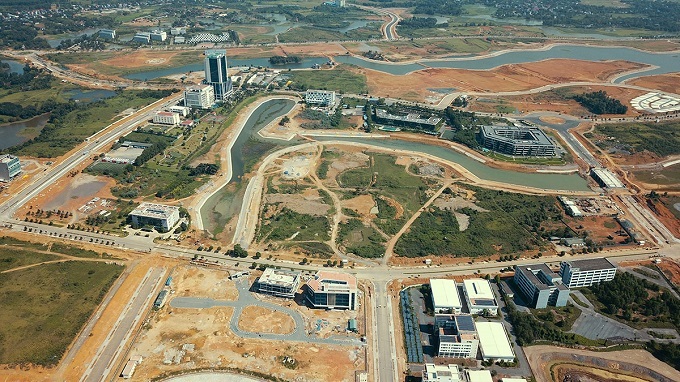
    The Asian Development Bank will lend Vietnam $188 million to upgrade roads towards improving connectivity in northwestern provinces. Under an agreement signed by ADB and the Ministry of Finance Tuesday, the loan will be used to upgrade of 198 kilometers of roads that connect several towns and districts in northwestern provinces of Lai Chau, Lao Cai and Yen Bai with the Noi Bai – Lao Cai Expressway.

    The 265-kilometer expressway is part of the Greater Mekong Subregion (GMS) Kunming-Hai Phong Transport Corridor that connects Hanoi with northern localities in Vietnam and Yunnan Province in China.

    Some of the road upgrades will create economic opportunities for some of the poorest people in the project area, the bank said.

    “The project aims to expand the benefits of the GMS corridors to the northwestern provinces,” said Eric Sidgwick, ADB country director for Vietnam.

    “The improved connectivity will not only boost border trade, private investment and job creation in the region, but also provide better access to basic social services, such as education, health care, job training and emergency disaster relief for the people of the northwestern provinces, especially the poor ethnic minorities,” he added.

  • Blue chip stock plummets after YouTube ‘incident’

    Blue chip stock plummets after YouTube ‘incident’

    YEG shares of Vietnam’s Yeah1 Group lost over $22 million in Monday’s trading session following a YouTube incident. The incident arose after YouTube claimed SPRINGme Pte. Ltd, a Thailand-based company, indirectly owned by Yeah1 (16.93 percent), had violated its policies with some of its channel management activities, according to YouTube.

    While a series of stocks surged in Monday’s trading session, YEG was one of the few that lost out the most, down seven percent by the end of the session.

    This was equivalent to a drop of VND17,100 ($0.74) per share, down to VND227,900 ($9.82), bringing YEG’s market capitalization down by VND520 billion ($22.42 million).

    YEG shares plummeted in response to YouTube announcing it was terminating all Content Hosting Services Agreements (CHSA) after March 31 with all YEG’s subsidiaries or investment companies with business activities related to YouTube Adsense, the program that allows publishers on the video channel to serve advertisements by third parties, which in turn generate revenue for the content provider.

    The termination would apply to several of YEG’s multi-channel network (MCN) companies it has control over, such as Thailand-based SPRINGme, US-based ScaleLab, and organic Yeah1 Network Pte Ltd.

    The Yeah1 Group management has said it is seeking further clarification with YouTube regarding this action, and actively working with the video hosting website to prolong the CHSA’s after March 31.

    In 2018 alone, YEG’s YouTube AdSense business contributed about $1 million to its revenue, equivalent to 13 percent of the group’s after-tax profit. However, the digital conglomerate has also diversified and pledged to generate revenue through different channels to ensure its overall development.

    At the end of 2018, Yeah1 reported VND1.66 trillion ($71.58 million) in revenue, up 97 percent over the previous year; and VND180 billion ($7.76 million) in after tax profits, up 119 percent.

    Founded in 2006, Yeah1 is Vietnam’s largest multi-channel media ecosystem, operating TV channels, movie studios, Youtube networks, and digital news.

    It was also the first media company to go public, listing on the Ho Chi Minh Stock Exchange (HOSE) last June.

    YEG shares are currently the second most expensive stock on HOSE, behind SAB shares of Vietnam’s largest brewer Sabeco.

  • H&M opening a Tauranga Crossing store

    H&M opening a Tauranga Crossing store

    Fast fashion retailer H&M announced it will open its fifth store in New Zealand on April 4 in Tauranga Crossing, Bay of Plenty. The new store, set in 1600sqm, will have two levels and will feature apparel and accessories for men, women, youth, kids and baby, and its home concept.

    “We are thrilled to finally be opening a store in the Bay of Plenty region and offer our customers an incredible fashion destination within a superb shopping centre” said Daniel Lattemann, country sales manager for H&M New Zealand.

    “We are also looking forward to introducing our H&M Home concept as we know it has been a customer favourite since making its New Zealand debut in 2017.”

    H&M entered the New Zealand market in 2016 and opened its first store at the Sylvia Park mall. The retailer’s other stores are located in Commercial Bay in Auckland, The Crossing in Christchurch and Queensgate in Wellington.

    The Swedish fashion retailer also announced recently it will open a third Auckland store which will be located at the Botany Town Centre and will be launched in autumn 2019.

    Last month, H&M posted a drop in profits for the year ending November 30, blaming the decline on its investment aimed at boosting its online business.

    The world’s second largest clothing retailer embarked on a transformation program last year, investing heavily in logistics and digital technology aiming to improve shopping experience and product selection. This includes an upgrade in its mobile app, faster deliveries and the rollout of click-and-collect.

    In the last three months of its financial year, the company spent around 450 million Swedish crowns on logistics and technology, including resolving problems it flagged earlier in 2018.

    H&M chief executive Karl-Johan Persson said the upgrade in their logistics systems inevitably resulted in increased costs but will lead to a range of improvements for their customers.

  • Singtel, Optus complete international 5G AR video call

    Singtel, Optus complete international 5G AR video call

    Singtel and its wholly-owned Australian subsidiary Optus have completed a 5G augmented reality video call between Singapore and Australia as part of their preparations for the introduction of the next generation mobile technology.

    The joint trial was conducted using Ericsson networking equipment as well as OPPO 5G test devices running on Qualcomm’s inaugural Snapdragon 5G chipset.

    Augmented reality technology was used to provide instant on-screen annotations during a call conducted at the operators’ respective live 5G sites.

    According to the companies, the technology has the potential to open up a range of new possibilities for enterprises, such as the ability to deliver live on-the-job training and remote assistance.

    In the consumer space, augmented reality communications use cases will include holographic calls and the ability to deliver a virtual tactile shopping experience.

    “This call is a significant marker in our journey to 5G as we develop a robust 5G ecosystem to ensure that our enterprise and consumer customers will enjoy an enhanced connectivity experience,” Singtel group CTO Mark Chong said.

    “5G is a key enabler that will bring the future of augmented reality, autonomous vehicles and smart cities closer to reality.”

    Singtel and Ericsson launched a 5G Centre of Excellence in Singapore in 2017, and recently opened the first live 5G facility in the market in collaboration with Singapore Polytechnic.

  • Coles starts selling food on eBay

    Coles starts selling food on eBay

    Coles on Wednesday started selling a range of ‘everyday essentials’ on eBay, in a bid to reach some of the marketplace’s 11 million unique monthly visitors. The offering includes perishable and non-perishable items in Coles’ everyday essentials range across several categories, including select pre-packaged fresh food, pantry, personal care and household items. The items at launch are available to eBay shoppers in metro Sydney, Melbourne and Brisbane. Shoppers will initially have just one delivery option, though more will be added throughout the year, according to a statement from eBay and Coles. 

    Alister Jordan, chief executive of Coles Online, described the partnership as being all about convenience.

    “By partnering with eBay, we are providing our customers another convenient way to access our products and have them delivered straight to their door,” he said in a statement.

    The idea is that consumers who are already buying fashion, homewares and electronics on eBay can also complete their food shopping on the online marketplace, rather than having to make a second – virtual – trip to Coles’ e-commerce site.

    “It really comes down to convenience and being able to choose from a great range of groceries as well as those bigger ticket items you can’t get from a supermarket,” Julie Nestor, eBay’s CMO told.

    “Think about planning for a dinner party and being able to purchase everything from the table setting to the meal ingredients on the one site – it’s a more convenient, seamless way to shop online.”

    There is also the fact that more and more brands stocked on supermarket shelves are increasing their direct-to-consumer sales through their own websites or marketplaces like Amazon, which expanded into the pantry category last October, though it doesn’t yet offer fresh food in Australia. For eBay, the partnership seems to be about growing its eBay Plus membership program, which it launched in May 2018 in what many saw as a response to Amazon Prime. The program, which costs $49 a year, includes unlimited delivery and returns on new items bought on eBay, discounts on the Stan streaming service and opportunities to earn points through Coles’ flybuys loyalty program.

    Nestor confirmed that launching Coles’ food offering on eBay has been in the works for some time.

    “After we successfully launched our partnership with flybuys last year, this is a natural extension of our relationship with Coles,” she said.

    Nestor declined to say how many members are currently signed up to the eBay Plus program, but she described the uptake so far as “really positive” and said the company expects it to continue to grow with the launch of Coles on eBay. EBay Plus members get free delivery on orders that are $49 and over, and they earn double the number of flybuys points on all orders.

  • DHL Global Forwarding appoints Fabian Rybka to head Bangladesh and Sri Lanka

    DHL Global Forwarding appoints Fabian Rybka to head Bangladesh and Sri Lanka

    DHL Global Forwarding, the leading international provider of air, sea and road freight services, has appointed Fabian Rybka as Cluster Head for DHL Global Forwarding’s operations in Bangladesh and Sri Lanka, along with partner operations in Bhutan, Nepal and the Maldives.

    Rybka brings to the role more than 10 years of experience at DHL Global Forwarding in both Asia and Europe, serving most recently as Head of Business Strategy and Development for DHL Global Forwarding ASEAN and South Asia, where he spearheaded successful growth initiatives in Bangladesh and Sri Lanka amongst other markets. Previous roles saw him specialize in designing and executing growth plans for DHL Global Forwarding’s high-potential markets including Italy, India, Singapore, Bangladesh, Indonesia and the Philippines, as well as key operations in European markets.

    “Fabian has built up a formidable track record for turning even the most challenging business situations into environments of high growth and customer satisfaction,” said Thomas Tieber, CEO, DHL Global Forwarding ASEAN and South Asia. “He has already proven that ability in guiding our teams in Bangladesh and Sri Lanka to significant results while understanding the nuances of the local market operations. I can think of no better individual to lead these growth markets and further build on our strong market position.”

    In the new role, Rybka will apply his extensive business development expertise to further boost productivity and expand DHL Global Forwarding’s range of services in the markets under his leadership, focusing particularly on developing key products in ocean freight and value-added services like customs and integrated warehousing. He also continues to lend his business turnaround skills to projects throughout the broader South Asia and Asia Pacific regions.

    “I firmly believe Bangladesh, Sri Lanka and the surrounding markets of Bhutan, Maldives and Nepal hold opportunity for substantial growth. We have a role to play to connect these economies to the rest of the world, supporting foreign businesses to invest in these markets, and also encouraging exports from local businesses overseas,” Rybka said. “Bangladesh’s GDP is growing faster than almost anywhere else in Asia at 7.3% per annum, while Sri Lanka continues to see steady increases in both imports and exports[2] that point to its growing connectedness and market opportunity within the global economy. As business optimism grows, my goal is to ensure we make our world-class logistics services as accessible and reliable as possible to enterprises of all sizes throughout the cluster.”

    Rybka holds an MBA from the University of Cooperative Education in Stuttgart, Germany, as well as a Global DHL CEO Award for his work in CSR and sustainability. Formerly one of Germany’s top junior football coaches, he also organizes and hosts youth football competitions — including one of the world’s largest, in Switzerland — to support the community work of SOS Children’s Village, a DHL GoTeach partner organization with whom he has volunteered for more than 10 years.

    Read more at https://vietnamnews.vn/media-outreach/505358/dhl-global-forwarding-appoints-fabian-rybka-to-head-bangladesh-and-sri-lanka-operations.html#qzaaIQjDkqMUVr8X.99

  • Thai AirAsia says it will not buy shares in Nok Air

    Thai AirAsia says it will not buy shares in Nok Air

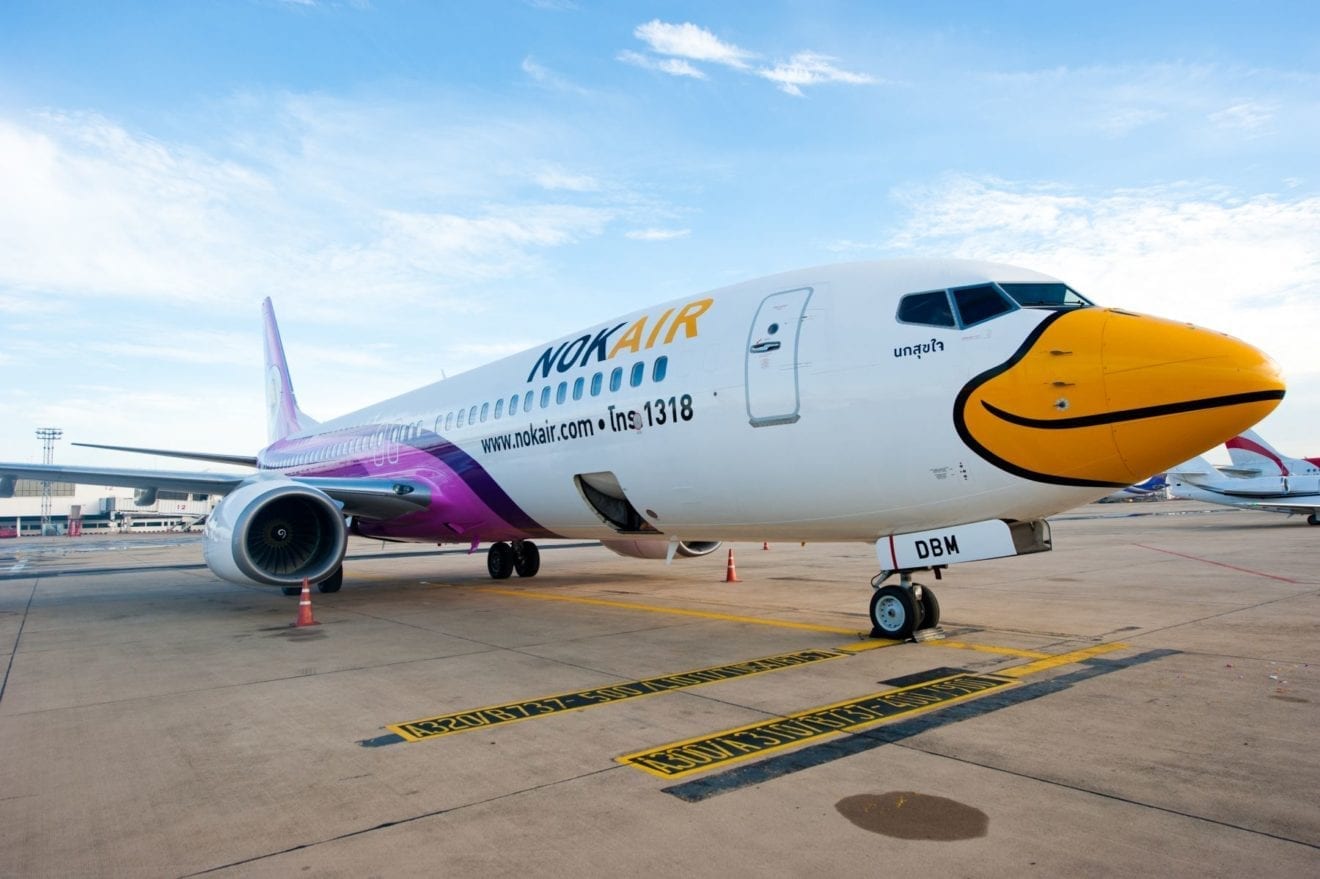
    Asia Aviation, majority shareholder of budget airline Thai AirAsia, said on Wednesday that it would not proceed with an acquisition of shares in rival carrier Nok Airlines, sending Nok’s shares down.

    Nok’s shares fell more than 12% and Asia Aviation’s prices slid nearly 3% in the morning trading session.

    Asia Aviation said in February that it was in talks to buy Nok shares, although Nok had said at the time that it was “not aware of any details in this respect”.

    Nok is 53% owned by the Jurangkool family, which also controls Thai Steel Cable PCL and unlisted auto parts maker Thai Summit.

    Intense competition among budget airlines has led to quarterly losses since 2015 for Nok.

    Asia Aviation owns 55% of Thai AirAsia, with the remainder held by Malaysia’s AirAsia Group Bhd.

  • Telstra to trial 5G in banking sector

    Telstra to trial 5G in banking sector

    Australia’s Telstra has used this week’s Mobile World Congress to announce a partnership with Commonwealth Bank of Australia And Ericsson to trial 5G edge computing technologies in the financial services sector.

    The three-way collaboration will involve testing end-to-end banking solutions over 5G technology in an effort to explore the future of banking.

    The companies will evaluate how 5G edge computing can help reduce the network infrastructure currently required at bank branches to support high-speed transactions.

    Speaking at the event, Telstra group executive for networks and IT Nikos Katinakis said 5G has the potential to transform the global financial services sector.

    “5G edge computing is all about bringing the network closer to the user or application. For financial institutions like Commonwealth Bank, it will help to enhance existing banking applications as well as deliver new use cases such as artificial intelligence, all supported by a range of software defined networking solutions,” he said.

    “Together with Ericsson, we are pleased to be working closely with Commonwealth Bank, an industry leader, to help them design and deliver the next generation of banking services, powered by Telstra’s 5G technology and using edge computing.”

    Katinakis added that the lessons learned from the collaboration will be applicable to other industry verticals beyond financial services.

  • Indonesian airline Garuda talking with Go-Jek to provide logistics support

    Indonesian airline Garuda talking with Go-Jek to provide logistics support

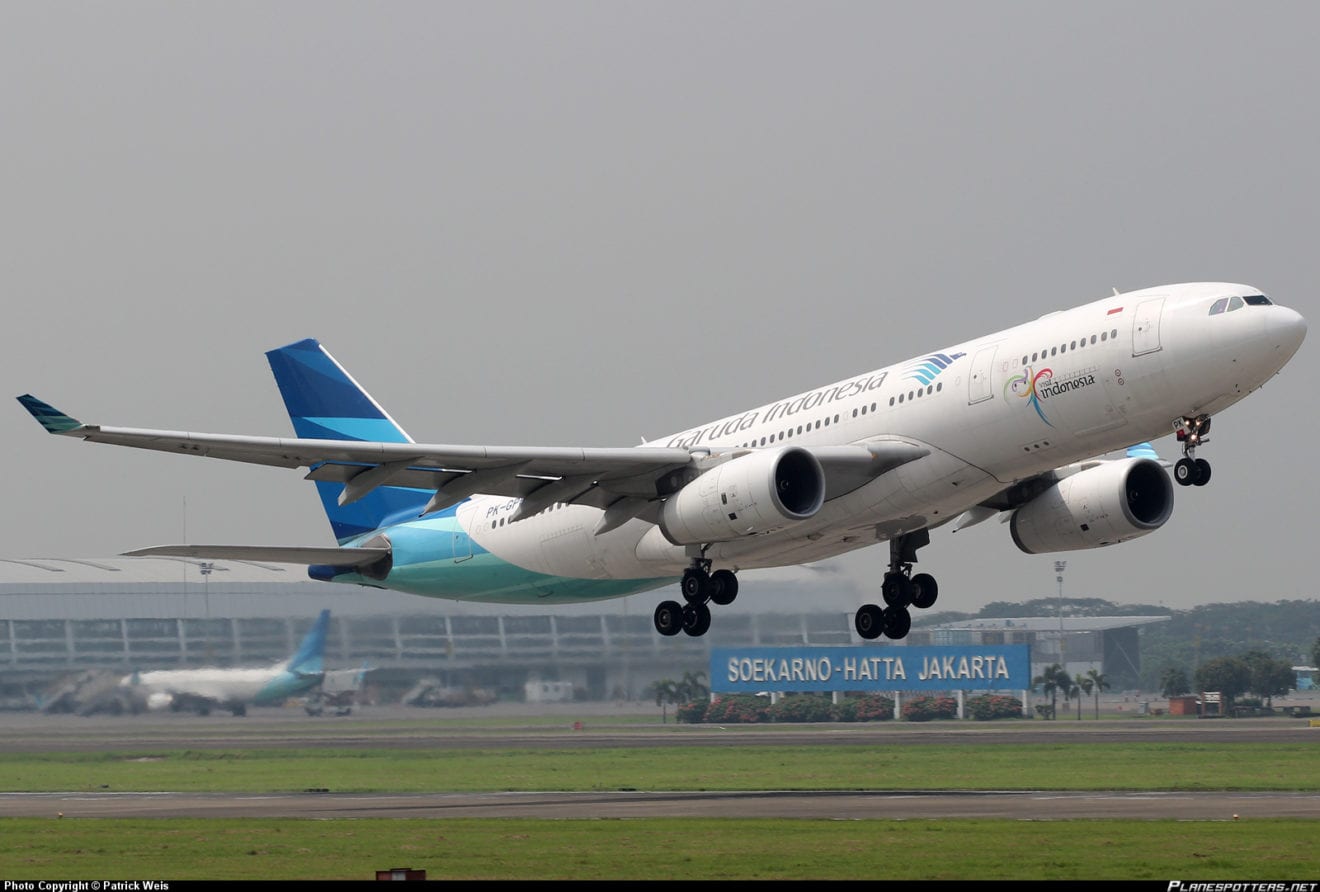
    Indonesia’s national carrier Garuda and Go-Jek are in talks for a partnership that will make it easier for the ride-hailing and e-commerce app to move goods to customers within the 17,000 islands of the sprawling Southeast Asian archipelago. Garuda chief executive Ari Askhara told Reuters the talks are in an advanced stage and an agreement is expected to be finalised by the two companies in the next few months. Askhara said Garuda was developing a new technology relating to e-commerce and logistics. The partnership would enable goods ordered via Go-Jek’s app in one city in Indonesia to be delivered in another using Garuda’s fleet, he said. The CEO did not provide more details.

    Started in 2011 in Jakarta, Go-Jek has evolved from a ride-hailing service to a one-stop app through which its customers can make online payments and order everything from food, groceries to e-commerce goods.

    Go-Jek, which is valued at between US$9 billion and US$10 billion according to sources, declined to comment.

    E-commerce has been growing rapidly in Southeast Asia’s biggest economy, but one of the main obstacles is logistics as the islands are sprinkled across an area bigger than the European Union.

    Go-Jek recently raised over US$1 billion in a funding round as it challenges Singapore-based rival Grab for a larger share of the region, sources told Reuters.

    The Go-Jek proposal is one of several being explored by Garuda to cut its dependence on passenger traffic as the airline tries to grow its profits after a bumpy 2018.

    The airline has been battling for market share against local market leader Lion Air, which in October suffered a crash of a Boeing Co 737 MAX jet, killing all 189 people on board.


  • Tekka Place Soft opens End of Year

    Tekka Place Soft opens End of Year

    Hospitality-and-retail integrated development Tekka Place has marked its topping out, and is scheduled for a soft opening by the end of this year.

    Located at 2 Serangoon Road, the complex has a main tower and a seven-storey annex with rooftop deck. Tekka Place will cater to the needs of nearby residents, office workers and commuters of both the North East and Downtown MRT lines, as well as house the new Citadines Rochor serviced residences, attracting new international visitors.

    Tekka Place’s construction started in mid-2017, managed by Lum Chang-LaSalle joint venture.
    Nearly 50 per cent of the 70,000sqft lettable retail space in the integrated development has been leased or is in advanced negotiations.

    “Even though we have been approached by reputable local and international retail and F&B brands, we are selective in curating Tekka Place’s retail mix to both reflect and build on the unique cultural identity of the Little India heritage precinct, and to complement the shopkeeper businesses in the area,” said Kelvin Lum, director at Lum Chang Holdings and spokesperson for the joint venture.

    XinTekka, a new food hall concept by Andrew Tan will occupy 10,000sqft of the mall, offering a spread of local culinary favourites with a twist. XinTekka is set to be Singapore’s newest dining destination.

    “We very much look forward to the forthcoming completion of Tekka Place, which will add to the revitalisation of the precinct as well as the dynamism of Little India,” said Rajakumar Chandra, chairman of the Little India Shopkeepers and Heritage Association.