Author: Mei Ling Tan

  • Huawei invited to participate in India’s 5G use case trials

    Huawei invited to participate in India’s 5G use case trials

    Huawei has reportedly received an invitation from the Indian government to participate in the telecom ministry’s 5G technology trials, after being initially left out of the list of vendors asked to take part.

    Huawei India CEO Jay Chen told that the company has received an invitation after approaching the government to express an interest in taking part.

    The telecom ministry’s earlier decision to exclude Huawei and ZTE from the list of vendors approached to take part in the trials led to speculation that India could follow Australia and the US in preventing Chinese vendors from participating in their respective nation’s 5G rollouts.

    But after Huawei expressed an interest in participating in the trials, the telecoms ministry announced that it will evaluate the vendor’s proposal and consider including Huawei in the planned 5G field trials.

    According to Huawei’s Chen, Huawei has a collaborative relationship with the Indian government and has already been working with various Indian operators in laying the groundwork for 5G deployments.

    The vendor has expressed an interest in running 5G trials in two Indian cities, including Delhi, and plans to partner with operators, academia and companies in adjacent industries to identify relevant 5G use cases for the Indian market.

    According to the report, ZTE has yet to receive an invitation from the ministry.

  • Nokia demonstrates smart city solution for Viettel

    Nokia demonstrates smart city solution for Viettel

    Nokia has completed a demonstration of its smart city management solution IOC for Vietnamese military-run operator Viettel in support of the government’s smart city ambitions.

    Nokia demonstrated its Integrated Operations Center to the operator during a trial in Hanoi.

    The IOC solution is designed to orchestrate smart city operations providing a unified real-time management of all smart city assets and services. Using a combination of automation and analytics, the solution aims to help cities improve productivity and identify new revenue and efficiency opportunities.

    Viettel will be able to use the solution to more effectively manage traffic in Hanoi by leveraging video analytics and video management solutions.

    The Vietnamese government plans to leverage Nokia smart city technologies to address a number of common city problems such as waste management, energy management and traffic management, while enabling better utilization of resources.

    “We are honored to help Viettel conduct this important demonstration. Nokia’s IOC is a proven solution to manage smart city infrastructure efficiently. This end-to-end solution provides a real-time view of the different applications, devices and systems used in the smart city. Its integrated analytics capability further opens up new revenue opportunities for the service providers,” Nokia Global Services head of public sector practice Alexander Van Overveld said.

    “Smart cities promise to provide sustainable living, and we are committed to enabling Viettel to deliver world-class use cases and solutions to its customers.”

  • HKBNES launches free public Wi-Fi at tram shelters

    HKBNES launches free public Wi-Fi at tram shelters

    HKBN Enterprise Solutions (HKBNES) has formally launched a free high-speed public Wi-Fi network on tram shelters across Hong Kong in association with Hong Kong Tramways and Cody Out of Home (Cody OOH).

    The HEREWIFIFREE service provides public free Wi-Fi with unlimited sessions on nine key tram shelters located along the busiest commercial and residential centers on Hong Kong Island.

    HKBN launched a pilot of the new service in May, and usage levels have grown 40% by the end of August. The unlimited usage session enhancement meanwhile launched in June.

    “We are happy to support this high-speed free Wi-Fi service to bring Hong Kongers speedy and convenient online connectivity,” HKBN director Mikron Ng said.

    “Our partnership with Tramways and Cody OOH is another example of how we showcase our win-win-win model in which Tramway passengers, Cody OOH customers and our corporate customers can all benefit.”

    “Hong Kong Tramways is pleased to collaborate with HKBNES and Cody OOH in order to offer innovative services,” added Hong Kong Tramways commercial and corporate affairs manager Antoine Sambin.

    “The high quality and the user-friendly experience of the free Wi-Fi solution are valued by the tram passengers, pedestrians and retail communities in the near vicinity. We aim to keep contributing to a smarter city thanks to our Tram Shelters network.”

  • Wi-Fi Alliance introduces new Wi-Fi naming scheme

    Wi-Fi Alliance introduces new Wi-Fi naming scheme

    The Wi-Fi Alliance has introduced a new naming scheme for the various generations of Wi-Fi technology in a bid to reduce confusion among consumers and increase sales of next-generation equipment.

    Through the initiative, devices supporting the upcoming IEEE 802.11ax standard will be labeled as Wi-Fi 6. The naming convention will also be applied retroactively, with 802.11ac Wi-Fi to be renamed Wi-Fi 5 and 802.11n Wi-Fi to be designated as Wi-Fi 4.

    Product vendors will be able to use the Wi-Fi 6 designation to identify the latest generation of Wi-Fi that a device supports, while service providers will be able to identify the capabilities of a Wi-Fi network for their customers.

    In support of the new naming scheme, Wi-Fi Alliance will adopt the generational naming scheme for its certification programs. The Wi-Fi Certified 6 certification program will launch next year.

    “For nearly two decades, Wi-Fi users have had to sort through technical naming conventions to determine if their devices support the latest Wi-Fi,” Wi-Fi Alliance president and CEO Edgar Figueroa said.

    “Wi-Fi Alliance is excited to introduce Wi-Fi 6, and present a new naming scheme to help industry and Wi-Fi users easily understand the Wi-Fi generation supported by their device or connection.”

    The new naming scheme has widespread industry support, with vendors including Intel, Netgear, Qualcomm, Ruckus Networks, Aruba and Boingo Wireless having already issued statements endorsing the new convention.

  • Bharti Airtel buys AI startup AuthMe

    Bharti Airtel buys AI startup AuthMe

    Indian telecoms operator Bharti Airtel has acquired AuthMe ID Services (AuthMe), a Bengaluru-based start-up focused on artificial intelligence (AI) based solutions, in a bid to bloster its AI portfolio.

    Financial details of the deal were not disclosed.

    As part of the deal, the core team of AuthMe will join Airtel and be a part of Airtel X Labs in Bengaluru.

    Airtel set up Airtel X Labs to drive innovation in the areas of AI, IoT, AR and VR and is “building a world-class team” for the facility, the operator said in a statement released on Wednesday.

    “We are thrilled to bring on board a bunch of highly talented people who share our passion for building exciting digital solutions that benefit our customers,” Bharti Airtel global CIO Harmeen Mehta said.

    We are rapidly scaling up Airtel X Labs, our digital innovation factory, and these new solutions will accelerate our journey towards rolling out intuitive digital products, particularly in vernacular languages, for our 430 million plus customers.”

    In addition, Airtel has acquired the intellectual proprietary rights for two flagship solutions developed by AuthMe.

    One of the solutions is called Callup AI, which has created a chat and voice assistant that uses AI to quickly and effectively resolve customer queries over email, chat and phone calls. The solution is used by 10 companies across three countries in banking, finance, payments and housing domains.

    The other solution, the “Fintech OCR”, is an end to end Optical Character Recognition (OCR) pipeline built for financial documents. The application is designed for processing KYC docs, bank/credit card/loan statements, mark sheets, and can be customized to process known formats of other documents. It can pick up any language with standard fonts, Airtel said.

    In a separate announcement, Airtel said it has launched its VoLTE services to Bengal and Sikkim to enable customers in all towns across the two states to enjoy HD quality voice calls with faster call setup time.

  • Nokia, UTS to establish 5G skills accelerator in Australia

    Nokia, UTS to establish 5G skills accelerator in Australia

    Nokia has teamed up with Australia’s University of Technology Sydney (UTS) to launch a new training facility aimed at broadening the skills base of Australia’s communications industry in 5G and other advanced communications technologies.

    The new Nokia 5G Skills Accelerator will provide UTS students, staff, industry personnel and Nokia customers, business partners and employees with access to cutting edge 5G technologies and training practices.

    It will focus on technology domains that will underpin the delivery of fixed and mobile high speed communications. These areas will include radio access, IP routing, optical and core networks, fixed broadband access, security and IoT platforms.

    More than 1,000 students and industry personnel are expected to attend the Nokia 5G Skills Accelerator at UTS next year, Nokia said.

    “Australia will be among the world leaders in 5G adoption and can be a pacesetter in the development of new mission-critical services in areas like industrial IoT,” Nokia head of Oceania Zoltan Losteiner said.

    “We need to accelerate the development of the right skills and knowledge to ensure Australia can reap the full benefits, and Nokia is proud to partner with UTS in this new national training facility.”

    Nokia is also a member of the UTS Rapido program, a collaboration of more than 200 researchers in areas such as data analytics, cyber security, 5G and IoT. Nokia is also a key member of Nokia’s Australian graduate program.

  • Ooredoo demonstrates 5G aerial taxi

    Ooredoo demonstrates 5G aerial taxi

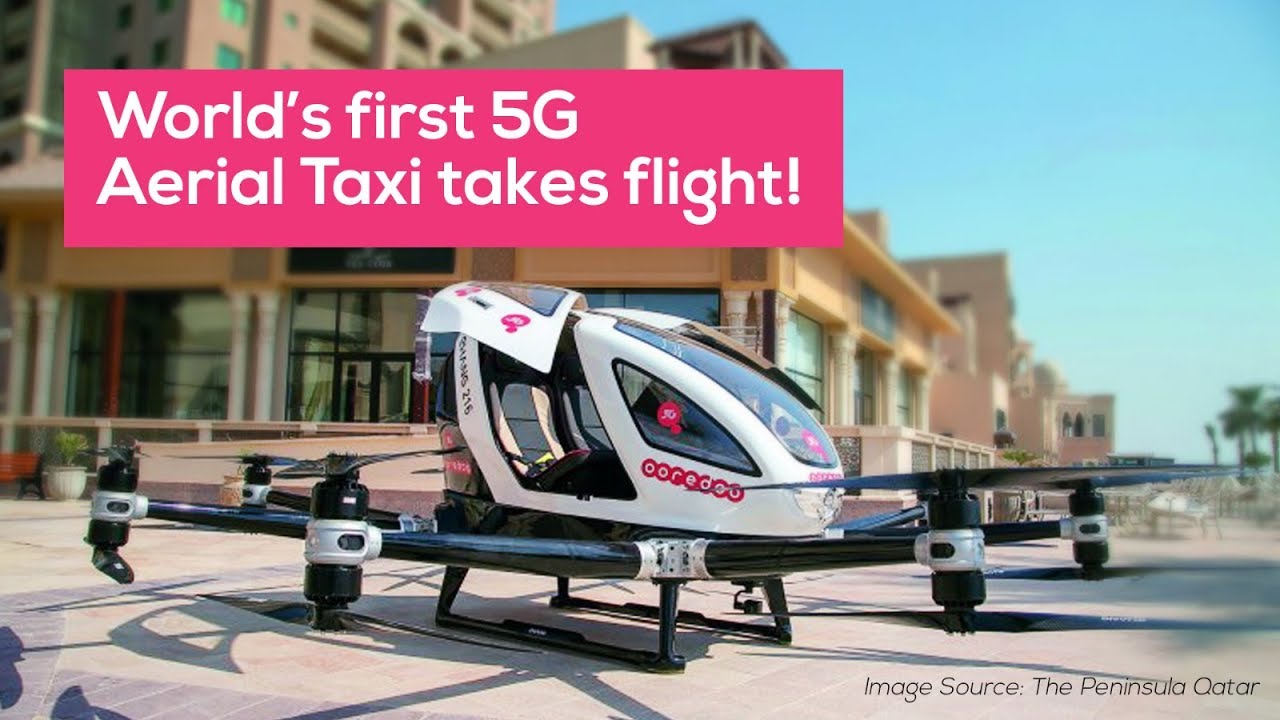
    Qatar-based Ooredoo has acted to showcase the power of 5G to enable smart city applications with a trial of the world’s first self-driving 5G connected autonomous aerial taxi.

    During an event at The Pearl artificial island in Doha, Ooredoo also showcased technologies including a 5G experience bus to allow visitors to experience the potential of 5G while commuting and a 5G house boat.

    The 5G connected aerial taxi is a large drone-like vehicle large enough to transport two people to a destination up to 20 minutes away at speeds of 130km/h. The autonomous vehicle runs on Ooredoo’s commercially-ready 5G network.

    Meanwhile Ooredoo’s 5G bus experience provided passengers with the ability to browse the internet with 5G speeds of up to 2.6Gbps while in transit.

    Finally the 5G house boat was equipped with 8K VR streaming gaming technology to demonstrate 5G’s potential to usher in the future of entertainment.

    “The Ooredoo 5G roll-out is growing daily, but as our customers cannot yet access the speeds and benefits of our ongoing investment, we wanted to demonstrate the true power of 5G and showcase what our technology will do for Qatar in the near future and in the years to come,” Ooredoo CEO Waleed Al Sayed said.

    “Ooredoo is leading global Internet of Things innovation thanks to our world-class 5G networks and we are the clear partner for Qatar’s growing Smart City technological needs. Thanks to our Supernet network and IoT solutions, Qatar will soon be able to offer the futuristic experiments shown today to everyone connected to Ooredoo 5G.”

  • Grab secures e-money license in the Philippines

    Grab secures e-money license in the Philippines

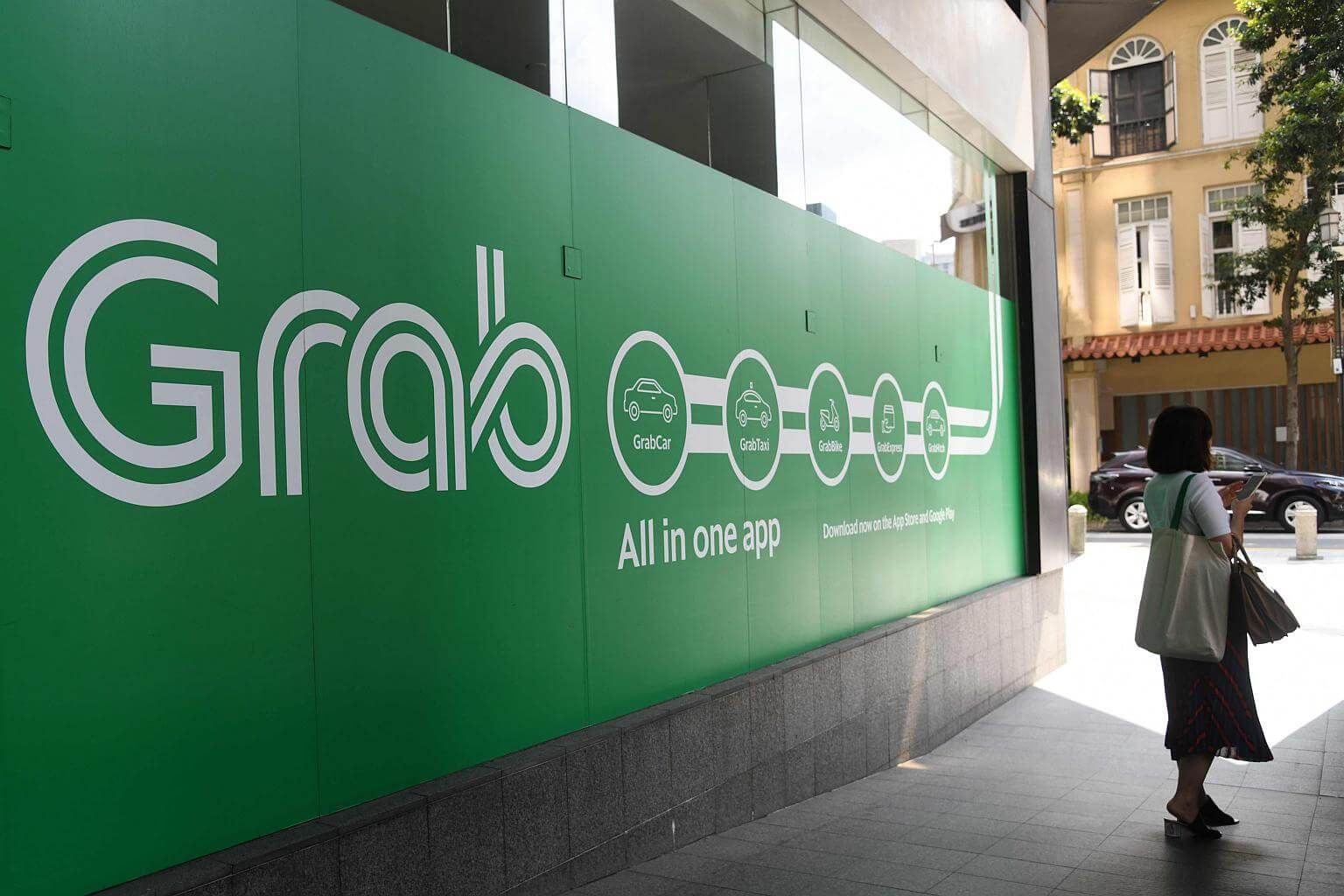
    Ride-hailing company Grab is expanding its mobile wallet services in the Philippines following receipt of an e-money license from the Bangko Sentral ng Pilipinas (BSP).

    Statistics from the central bank revealed that more than 98% of transactions in the Philippines still happen in cash, whereas 86% of people remain unbanked. Cash handling and services also cost millions of pesos a year to the banking industry.

    Besides its existing payments functions for ordering rides, express delivery and peer-to-peer credit transfer, Grab will soon be able to order food, pay their bills and purchases from their favorite stores and restaurants.

    As with rides, new services may help customers earn points with its GrabRewards loyalty program, with offers from partners such as SM Cinema, Cebu Pacific flights, McDonalds or Globe prepaid.

    The GrabPay mobile wallet built into the Grab app is designed to offer a low-entry barrier to secure cashless payment options for both consumers and merchants.

    The first feature to be launched by Grab under the e-money license will be the option to top-up prepaid load from the Grab app. Users in the Philippines who wish to top up their prepaid load, can tap the ‘Load Now’ bar below the GrabPay mobile wallet bar alongside other features including send, request and top up wallet.

    After entering the phone number to be topped up, they can select their top-up product. The request is sent to the telco service provider and receipt provided.

  • Myanmar Net taps Ruckus Networks for carrier-grade Wi-Fi

    Myanmar Net taps Ruckus Networks for carrier-grade Wi-Fi

    Myanmar’s largest pure-play ISP Myanmar Net contracted Ruckus Networks to deploy a carrier-grade Wi-Fi network across all major townships in Yangon and Mandalay.

    Through the deployment, Myanmar Net is offering consumers and businesses internet access at speeds of up to 62Mbps and prices competitive with the mobile operators’ existing data plans.

    Ruckus Networks provided Wi-Fi access points that use its smart antenna system with 180-degree and 120-degee antenna patterns to provide wider coverage and more stable connectivity.

    Allen Miu, CTO of Myanmar Net parent company Frontiir, said the company was facing a number of unique challenges with the deployment, associated with Myanmar’s extreme weather, power fluctuations from the nation’s old and unstable power grid and high population density.

    “Besides AP density, the high population density is also a challenge as we anticipate huge demand for our services due to the very affordable prices we offer. One of the key initial concerns we had was whether Wi-Fi technology could hold up to the growth and demands on our network,” he said.

    “Being the first in Myanmar to deploy a wireless network for the general populace is no easy feat, and we are only able to make this a reality with Ruckus’ engineering expertise and knowledge.”

  • Vietnam’s first car-hailing app FastGo heads overseas

    Vietnam’s first car-hailing app FastGo heads overseas

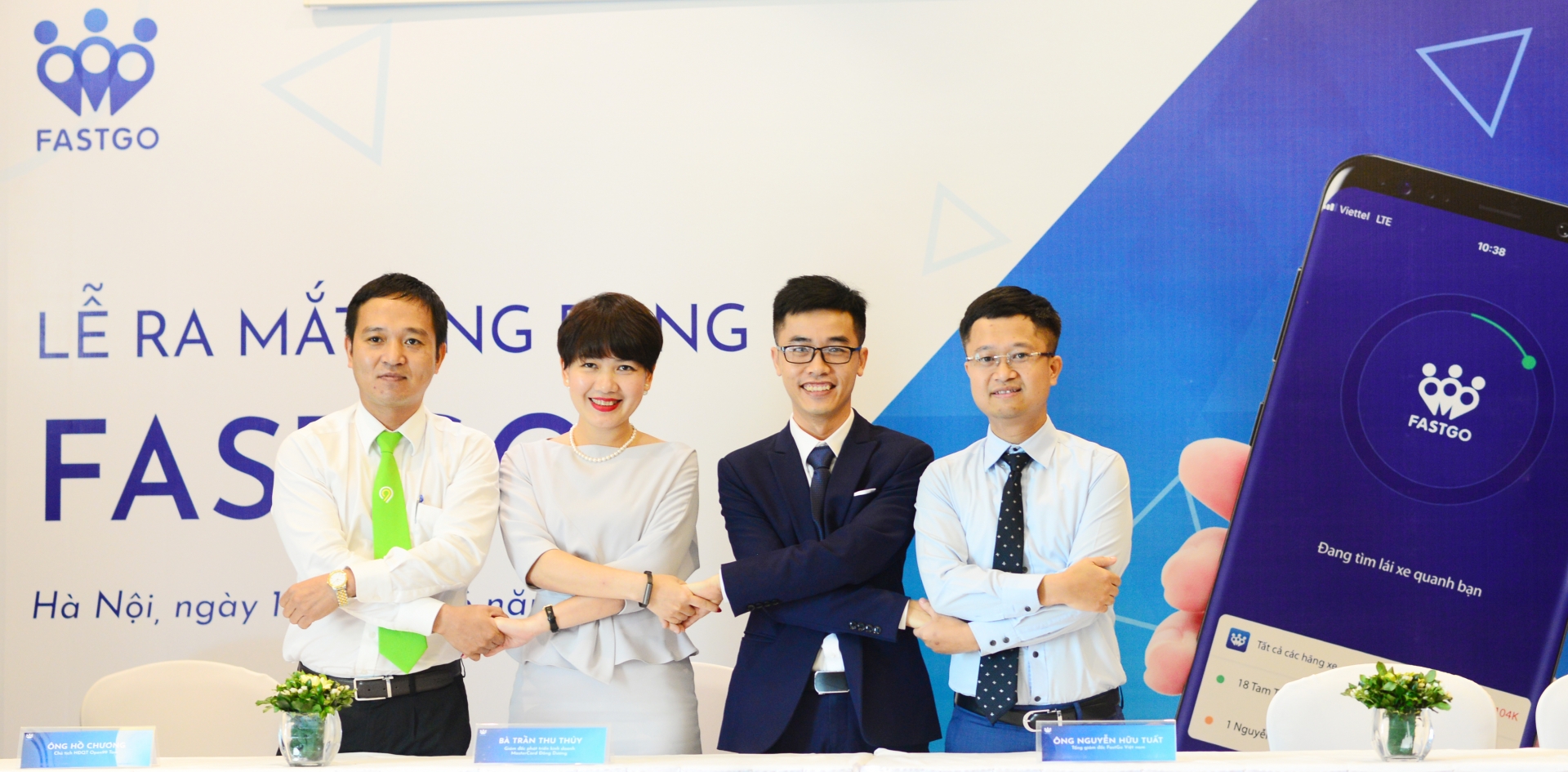
    FastGo, a Vietnamese ride-hailing app, plans to launch its service in Indonesia and Myanmar in December as it hopes to become one of the top companies in the field in Southeast Asia.

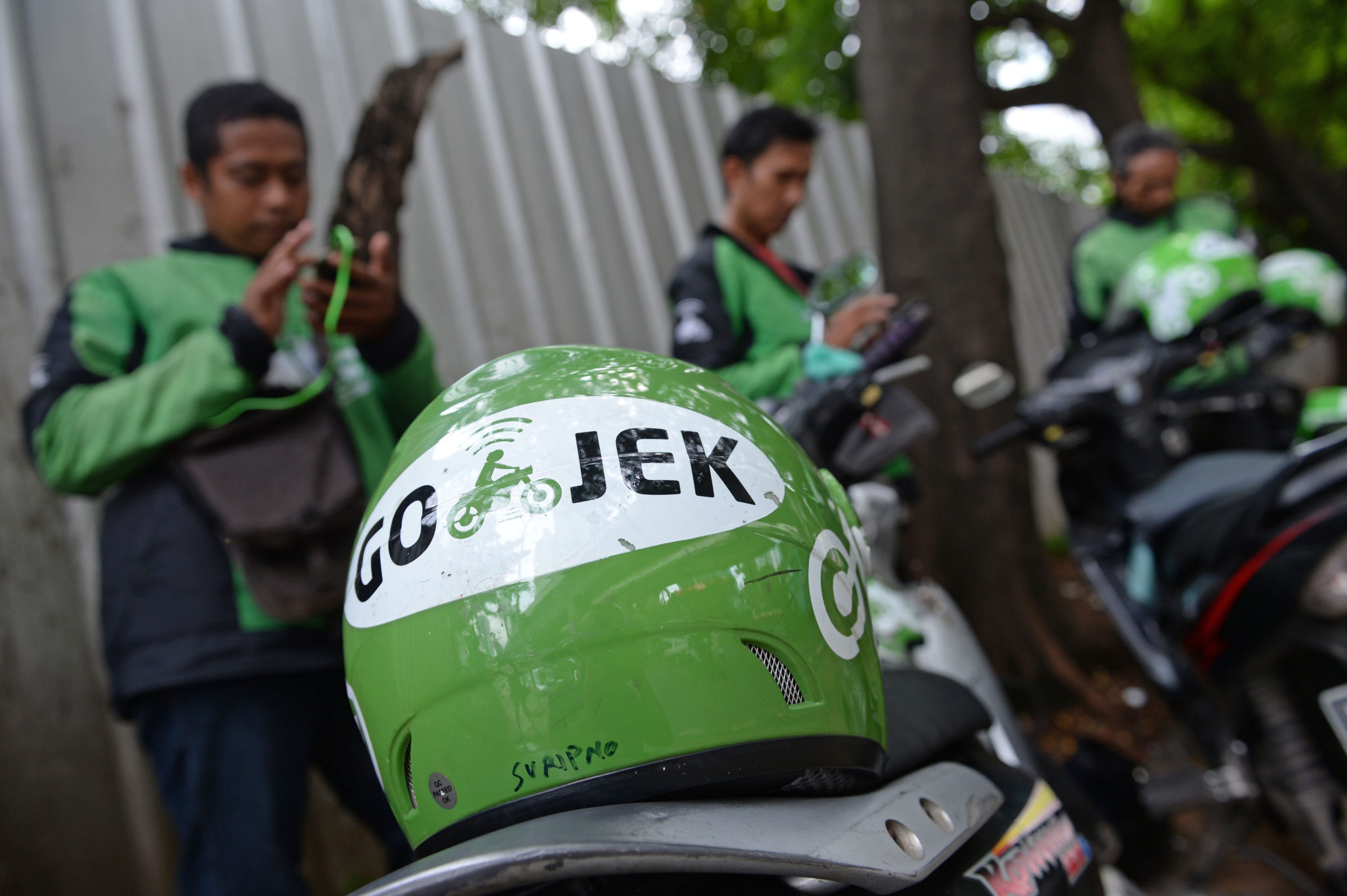
    This move abroad comes just five months after it launched in Vietnam, positioning itself as the company’s answer to Singapore-based Grab, the biggest player in Southeast Asia, and Indonesia’s Go-Jek, which launched its first overseas operation in Vietnam last month, GoViet.

    FastGo offers a private car and taxi service in Hanoi, Danang and Ho Chi Minh City. As of early October, it claimed to have reached 20% of the local market with some 30,000 drivers registered on its system. The app was developed by MPOS Vietnam Technology, a tech startup created by FastGo’s co-founder and chief executive Nguyen Huu Tuat. MPOS set up Vietnam’s first mobile payment solution in 2013 and has links with many local partners including banks and insurers.

    “Although the Southeast Asian ride-hailing sector is dominated by Grab and Go-Jek, FastGo has strategic partners, networks and relevant strategies for the Indonesia and Myanmar markets in place,” Tuat told in an interview on Thursday.

    Tuat said this background would allow FastGo to expand in both domestic and regional markets and balance the ride-hailing market. This is currently dominated by the two big names who are busy expanding their ecosystems. FastGo is aiming to reach 30% market share in Malaysia and Myanmar after six months, Tuat said.

    MPOS has some experience in the ride-hailing business, providing the technology and platforms used by two taxi companies — Mailinh in Vietnam and Blue Bird in Indonesia — since 2016.

    “FastGo is not a competitor of taxi companies but a partner. We provide technical solutions and the platform to both taxi companies and private car owners, while giving more options for consumers,” Tuat explained.

    FastGo does not collect commission from its drivers, but charges them 30,000 dong ($1.30) each if they earn more than 400,000 dong per day.

    FastGo is committed to keeping passenger tariffs unchanged, but suggests they offer tips (ranging from 10,000 dong to 100,000 dong) to drivers to help secure a ride during peak hours. FastGo’s target passengers are white-collar workers and young people who are willing to use credit cards or mobile payment, but it also accepts cash.

    Tuat said the company’s main revenue and profit would not come from ride-hailing but from planned services including deliveries and finance lending.

    Hanoi-based FastGo is a member of NextTech Group, formerly known as PeaceSoft, with sister companies pioneers in financial technologies, e-commerce, e-logistics and investment across Southeast Asia. The group operates in eight countries and serves more than 12 million customers and 40,000 enterprise partners.

    The 35-year-old founder of FastGo has more than 15 years’ experience working in the Vietnam technology industry and has co-founded three startups, including PeaceSoft. Tuat led these companies through fundraising rounds from investors such as data group IDG, Japanese tech company SoftBank, online retailer eBay, Malaysia-based MOL AccessPortal and U.K. fund ACTIS.

    NextTech is also behind one of Vietnam’s first e-marketplaces, ChoDienTu, e-payment platform NganLuong and mobile wallet Vimo. It is also involved with two cryptocurrency trading platforms.

    FastGo will focus on working with existing partners and clients in each of NextTech’s current markets.

    “Unlike Grab or Go-Jek, the two biggest players in the region which built ecosystems from their ride-hailing services, the FastGo app is a value-added service to NextTech’s existing ecosystem and we will optimize all the advantages of that system,” Tuat added.

    FastGo secured at least $3 million from the tech-focused venture arm of private equity group VinaCapital in its first round of fundraising in August. The company is hoping to raise $50 million in the next round — scheduled for the first quarter of 2019 — to help accelerate regional expansion. FastGo plans to raise funds every six months.

    It hopes to make its service available in 20 cities in Vietnam and five other Southeast Asian markets, including the Philippines, Cambodia and Thailand, by the end of next year.

  • Air New Zealand and Singapore Airlines’  continuing their alliance for another five years

    Air New Zealand and Singapore Airlines’ continuing their alliance for another five years

    The New Zealand government has given the green light to Air New Zealand and Singapore Airlines’ (SIA) continuing their alliance for a further five years. Under the partnership, which began in 2015, the pair codeshares on routes between New Zealand and Europe, India and Southeast Asia via Singapore. The partnership also includes revenue sharing and coordination of capacity and pricing.

    New Zealand transport minister Phil Twyford said reauthorisation of the alliance would result in more benefits to passengers.

    “Reauthorisation of the alliance will result in more benefits to travellers. These benefits include a wider range of flight times, more seats and reciprocal frequent flyer schemes,” Twyford said in a statement on October 5.

    “The services the airlines provide through the alliance strengthens New Zealand’s ties with our close neighbours in South East Asia and with other emerging markets throughout Asia.

    When the alliance was first approved in late 2014, it paved the way for Air New Zealand to resume nonstop flights between Auckland and Singapore.

    There has been further capacity increases since then, with SIA starting Singapore-Canberra-Wellington flights in 2017 and adding extra flights on the Singapore-Christchurch route. In May 2018, SIA tweaked its Wellington services, switching the mid-point stopover from Canberra to Melbourne.

    Meanwhile, the pair has added more frequencies on the Auckland-Singapore route and will have three nonstop flights a day from October 28 2018.

    The two carriers said in a joint statement the alliance had increased seat capacity by more than 25 per cent between New Zealand and Singapore.

    Further, it noted there would be 35 return flights a week between the two countries in the peak months.

    “The decision to re-authorise the alliance reinforces the benefits it has delivered to the New Zealand market in its first four years,” SIA senior vice president for marketing and planning Tan Kai Ping said.

    “We look forward to continue working closely with our alliance partner Air New Zealand, to provide even more travel options for our customers.”

    Air New Zealand chief strategy, networks and alliances officer Nick Judd said the partnership with SIA had been “key to successfully growing Air New Zealand’s international network and delivering important benefits to our customers”.

    “Singapore Airlines has been a strong alliance partner and we are excited at the opportunities the re-authorisation provides our two airlines,” Judd said.

  • Philippines-based tech startup CloudSwyft just got backed by WSI Group

    Philippines-based tech startup CloudSwyft just got backed by WSI Group

    The IT firm WSI Group has infused an undisclosed amount of funding into the tech skills-focused learning platform. Philippines’ IT distribution giant Wordtext Systems, Inc. Group (WSI Group) has announced today that it has backed tech skills learning platform CloudSwyft. The undisclosed amount raised will be used for supporting the market expansion plan across the Asia Pacific.

    With the IT-Labs-as-a-Service approach that has served companies in creating and managing IT training and assessments, so far the company has managed to generate its revenue through platform subscription and certificate vouchers.

    The platform offers the verified certification in the IT industry for students or employees with names like Microsoft backs it up. The company was founded in 2015 by Dann Angelo De Guzman and in the past had raised US$736,000 from Future Now Ventures, an Australia- and Philippines-based venture capital firms in 2015 and 2016.

    “The partnership with Microsoft helped us kick-start significant traction bundling our platform with hundreds of learning content in Data Science, AI and other modern technology skills. We were able to bring CloudSwyft into Singapore, Malaysia, Indonesia, Thailand and of course, the Philippines. We have been focusing on bringing results. Now, this is where we are heading and we are just getting started,” said De Guzman said on their Asia Pacific expansion plan after raising the funding.

    Beside closing an investment deal with WSI Group, CloudSwyft has also locked in a major partnership with IBPAP (IT Business Process Association of the Philippines) to capture and channel through hundreds of ITO and BPO companies in the Philippines to support the upskilling and reskilling talent of their workforce.

  • Indonesia’s Go-Jek invests in online media startup

    Indonesia’s Go-Jek invests in online media startup

    Indonesian ride-hailing and online payment company Go-Jek has invested in digital media startup Kumparan as part of its expansion into online content, it said.

    Go-Jek, whose backers include Alphabet’s Google and China’s Tencent Holdings, has grown rapidly since launching eight years ago in Indonesia, a country with a population of more than 250 million people.

    The company already offers a wide range of app-based services outside ride-hailing, such as food delivery and movie tickets, as it competes with the other main ride-hailing app operating in Indonesia, Singapore-based Grab, which bought the Southeast Asian business of Uber this year.

    Go-Jek said the investment in Jakarta-based media startup Kumparan had been done through its recently launched venture capital arm Go-Ventures, but did not disclose the size of its funding.

    Kumparan is a hybrid news and social media platform that enables users to create content. “There will be a series of strategic collaborations that we are exploring with Kumparan in supporting Indonesia’s technological developments,” said Go-Jek’s corporate affairs chief Nila Marita.

    Go-Jek is betting heavily on becoming an online multimedia content provider for Indonesia and set up its own in-house studio in 2018 to produce original films, in partnership with local film production houses. The company plans to eventually launch a subscription-based original content service.

    “At present, we are still in the exploration phase of the concept related to the creation of creative content,” a spokesperson for Go-Jek said. “As a local company, Go-Jek will continue to support local content creators.”

  • An overview of the Vietnam’s startup scene

    An overview of the Vietnam’s startup scene

    When you think of the startup scene in Southeast Asia, places like Singapore and Indonesia may come to mind, but Vietnam is another tech ecosystem on the rise. With a domestic market of over 95 million people and an economy that has grown 6% on average in the past 10 years, the population is becoming increasingly wealthy. In addition, the talent pool in Vietnam is young and increasingly educated with a growth mentality. Costs of operating are relatively low and there is a high rate of internet penetration—approximately 50 million users in 2017.

    It will come as no surprise then that Vietnam’s startups grew 14% in the first quarter of 2017 alone, with 39,580 startups entering the market. A Topica Founder Institute report stated that startup investments in Vietnam were $291 million USD in 2017, a 42% increase from 2016. However, there are still significant hurdles to foreign investment, such as the need for a stronger legal framework to protect venture capitalists and a more streamlined licensing and tax structure. Moreover, although Vietnam has significant technological expertise as an outsourcing hub, the startup scene could benefit from greater business acumen.

    In response, Viet Kieu, or Vietnamese people who have studied or worked overseas, have taken on leadership roles, accounting for more than half of the founders out of the 26 firms that 500 Startups Vietnam has funded. Their experience with multinational corporations, understanding of cultural differences, and English proficiency have been instrumental to the success of the Vietnamese startup scene. Still, the country itself is finding ways to support its startups.

    The Government and Accelerators Are Fueling Growth

    The Vietnamese government is aggressively promoting small enterprises. In 2017, deputy prime minister Vuong Dinh Hue announced the goal of doubling the number of businesses in Vietnam from half a million to one million by 2020. Vietnam Silicon Valley is a government-sponsored initiative to provide legal and financial support to 2,600 startups over the next 10 years. Lastly, the government has relaxed visa programmes for Viet Kieu, allowed them to regain citizenship under specific conditions, and exempted them from certain foreign investment requirements.

    Tech accelerators are also pushing the growth in startups. Topica Founder Institute is a 14-week programme with an impressive track record of 60 graduate startups, $20 million USD in funds raised, and $100 million USD in valuation since 2011. VIISA, the Vietnam Innovative Startup Accelerator, is an accelerator programme and seed stage fund of $6 million USD. Launched in 2013, Vietnam Silicon Valley is a government-sponsored bootcamp that includes a $20,000 USD investment and access to 60 mentors and 52 startup alumni. Lastly, TechFest is an annual event showcase of over 200 startups, hosted by the Ministry of Science and Technology and broadcast over live television.

    With major resources behind them and a positive climate for tech businesses, here are four Vietnamese startups showing immense promise.

    Logivan

    Based out of Hanoi, Logivan is a web-based platform that connects businesses with a fleet of over 5,000 trucks, which are constantly tracked and optimised. The logistics industry makes up approximately one quarter of Vietnam’s GDP, and in 2016 logistics firms earned approximately $8.5 billion USD in revenue, owing in part to the country’s underdeveloped transport infrastructure which causes prices to rise. Logivan plans to disrupt and digitise this industry, centralise and automate logistics, increase capacity, and improve supply chain efficiency.

    In November 2017, the up-and-comer won “Best Startup” at RISE Pitch Battle, the largest technology conference in Asia, and earned a sponsorship from Uber Chief Technology Officer, Thuan Pham. In August 2018, Ethos Partners, Insignia Ventures Partners, and VinaCapital Ventures funded a $1.75 million USD Series A round to expand Logivan’s logistics services in four major economic hubs across Vietnam. The startup previously received a $600,000 investment in March 2018 from Insignia, which the company matched during its time at the Topica Founder Institute accelerator programme.

    The company was founded by Linh Pham, a former Goldman Sachs technology analyst and Cambridge University graduate who previously founded Snappetite, a time-dependent platform for deals. Pham’s vision is to reduce prices, offer transparency, and provide real-time tracking for shippers and cargo owners.

    Foody

    Founded in 2012 in Ho Chi Minh City, Foody is a gourmet media company and user-submitted review platform for any location food-related, including restaurants, bars, cafes, bars, bakeries, and resorts. The company boasts hundreds of thousands of locations, images, and comments.

    One of Vietnam’s most successful startups, Foody has received numerous rounds of funding by an array of investors. Seed and Series A funding was provided by Japanese VC firm, Cyberagent Ventures, and Pix Vine Capital. In 2017, Singapore-based consumer internet group, Sea Limited, acquired an 82% controlling interest in the company for approximately $64 million USD, the largest investment of the year. Sea, one of Southeast Asia’s first unicorns, is valued at about $3.75 billion USD and previously funded a Series B round in 2015, which was followed by a Series C investment by Tiger Global Management less than a month later.

    Like many other startup leaders in Vietnam, Foody’s founder and CEO, Dang Hoang Minh, spent time abroad. Born in Vietnam, he went to Australia for university and studied Software Engineering and Information Systems before returning to his home country. Foody has expansion plans in Indonesia and Thailand.

    Ami

    Based in Ho Chi Minh City, Ami is capitalising on Vietnam’s booming real estate market by developing a suite of software and hardware products that will help owners and property managers connect with residents and digitise their information. Based upon blockchain, internet of things, and artificial intelligence technologies, the company’s products include:

    • Ami A Biz, a supply chain logistics to verify authenticity in goods and ownership
    • Ami Citizen, a digital record of individuals used by landlords and businesses
    • Ami University, a data management tool for universities to track students and professors
    • Ami Building, a condominium management platform
    • Ami Electricity, a web-based metre tool
    • Ami Fingerprint, an online storage space for fingerprints

    In the past couple of years, the startup has had an incredible growth trajectory. It won the top prize at the 2017 TechFest competition, and subsequently received $9 million in funding from the Vietnamese real estate corporation, Binh Minh Group. Between October 2017 and April 2018, the number of tenants in its property management product tripled. With approximately 1,500 rooms in its marketplace, the company’s target for 2019 is 100,000 rooms across the entire country. Looking forward, Ami plans to create a digital community between Vietnam’s citizens and their residences, schools, and businesses.

    Tiki

    Established in March 2010 as an online book dealer, Tiki is a business-to-consumer e-commerce company and the fastest-growing retail company in Vietnam. With more than 300,000 products in 12 categories, the company posted 2016 revenue of approximately $2.7 million USD and a loss of about $7.8 million USD after high operational expenditures needed to entrench itself in the consumer marketplace.

    Despite its losses, Tiki has been an attractive investment, especially as the e-commerce sector grew by more than 25 percent in 2017. The startup received initial funding in 2013 from Seedcom, CyberAgent Venture, and Sumitomo Corporation. In 2016, the startup was valued at $45 million and subsequently received $17 million USD for a 38% stake by VNG Corporation, which specialises in digital content, online entertainment, social networking, and e-commerce. Most recently, Chinese megaretailer JD.com Inc. and South Korea’s STIC Investment funded a Series C round of $54 million USD to help consolidate Tiki’s market presence.

    As one of the top four general e-commerce retailers in Vietnam, Tiki is well-positioned to leverage the influx of foreign investments that are flooding the sector.

  • Indonesian coffee startup Fore Coffee has bagged seed funding

    Indonesian coffee startup Fore Coffee has bagged seed funding

    Fore Coffee’s seed funding will be East Ventures’ third insider-incubated project after EV Hive and Warung Pintar.

    Early-stage venture fund East Ventures has announced today its third incubation, which is Fore Coffee, an on-demand high-quality coffee startup from Indonesia. East Ventures invested seed funding to the company, which aims to make specialty coffee easily available for customers.

    The company is now on its way to opening its second flagship store at Plaza Indonesia in October and is looking to open more branches in both malls and offices. The first outlet is at the second floor of Otten Coffee outlet in the heart of Jakarta.

    “We are leveraging from the network and expertise from our predecessor Otten, and we are equipped with machine and technology to deliver the finest quality coffee to our customer. Our goal is to have the day where everyone has access to affordable specialty coffee close to them every day,” said Robin Boe, CEO of Fore Coffee.

    Wilson Cuaca, Managing Partner of East Ventures, who also becomes the chairman of the startup, added that the country’s vastly growing tech ecosystem has changed the way consumers get their food. Cuaca gave an example of Luckin Coffee in China, which manages to serve a new demand for food consumption with a new bottoms-up startup design

    Fore Coffee started serving its first cup on August 8, 2018, and as of today, is serving 1,000 cups a week.