Author: Mei Ling Tan

  • Smart taps Samsung for VoWiFi service launch

    Smart taps Samsung for VoWiFi service launch

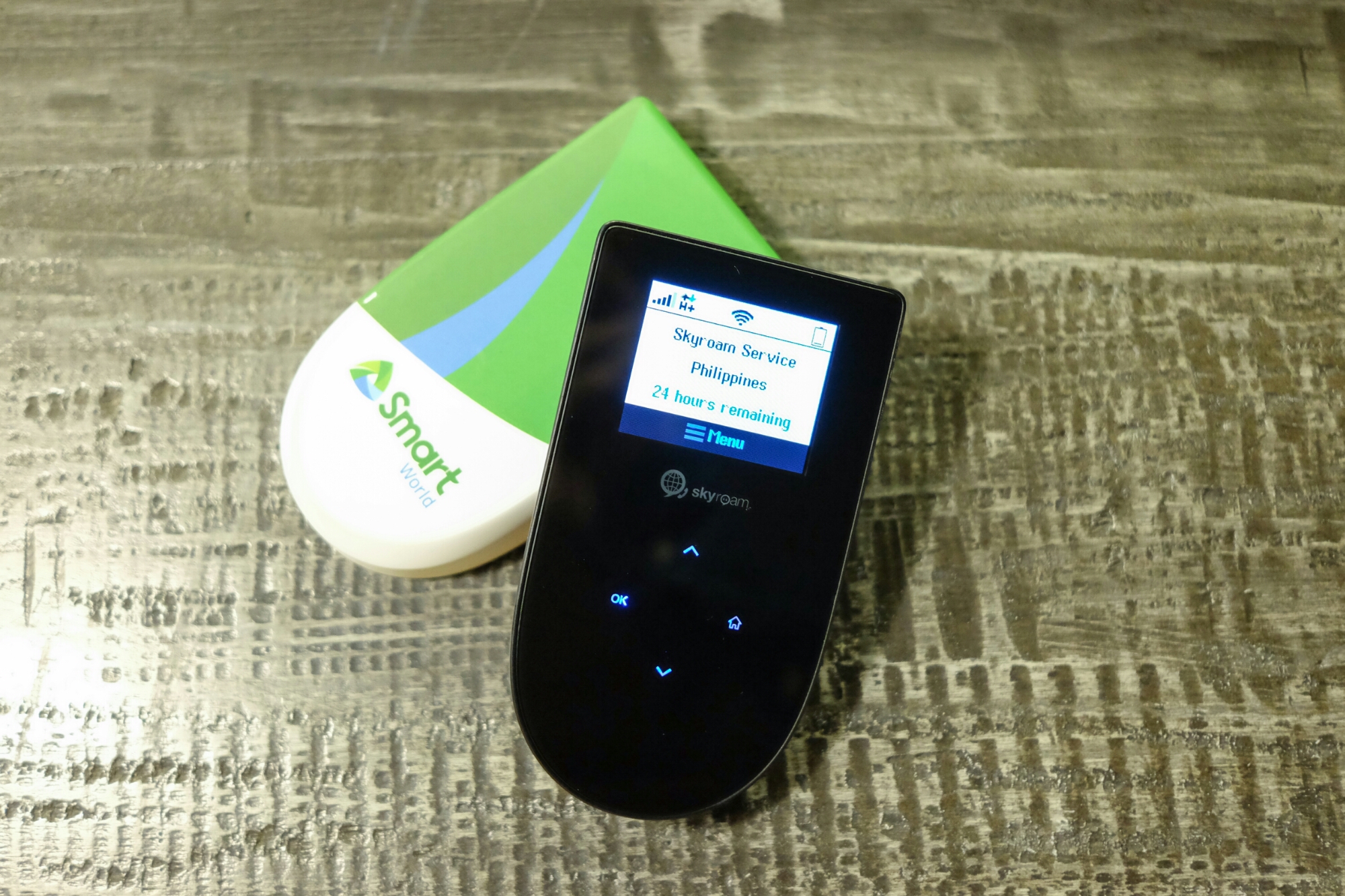
    PLDT’s mobile subsidiary Smart Communications has teamed up with Samsung for the launch of its voice over WiFi (VoWiFi) service.

    Smart said the service will initially available to selected subscribers by October after Samsung releases its latest firmware over-the-air update.

    Smart customers can make VoWiFi calls using Samsung smartphones such as the Samsung Galaxy S8 and S8+, Galaxy S9 and S9+, Note 8, and Note 9 via any WiFi connection like Smart WiFi and PLDT Home WiFi.

    VoWiFi, also known as WiFi calling, lets customers make and receive calls and text messages over a WiFi connection using their smartphone’s native dialer, without having to install a third-party app.

    Smart said WiFi calling will also be available soon to other select Samsung devices.

    Earlier this month, Smart made its first successful VoWiFi call over a live network in Cebu, in partnership with its technology partners Huawei and Samsung.

    Mario G. Tamayo, PLDT-Smart senior vice president for network planning and engineering, said the call is the first of its kind outside metro Manila, and “a key part of PLDT and Smart’s integrated efforts to continuously improve and evolve our voice services.”

    Last year, Smart also made the country’s first voice over LTE (VoLTE) mobile call, which uses LTE or 4G to conduct calls.

    Smart is also deploying carrier-grade Smart WiFi in high-traffic public places across the country, such as transportation hubs like MRT-3 and LRT-1 stations, major airports, bus terminals and seaports across the country, as well as in schools, government buildings, hospitals, malls and entertainment centers.

  • Softbank tests NIDD technology for IoT services

    Softbank tests NIDD technology for IoT services

    SoftBank said it has been using NIDD (non-IP data delivery) technology to allow its IoT services to bypass the internet.

    The Japanese operator announced recently that it has succeeded in completing what it claims is the world’s first connection test in a commercial environment for NIDD, which has been newly defined in the 3GPP for NB-IoT.

    Softbank said NIDD enables users to transmit data to IoT devices without allocating an IP address, which reduces the risk of a malicious attack targeting an IoT device, making it possible to build a highly secure IoT network.

    By eliminating such data as header information additionally required in conventional data communications, the company added, the electric power needed for communication is reduced and a broader area can be covered.

    Also, by enabling connection on a closed network with IoT platforms provided by service providers and with external application servers, Softbank said it will enable operator to build a highly secure network from end to end.

    Currently Softbank is providing IoT services using NB-IoT and LTE Cat-M1 technologies, for which an IP address is allocated.

    The company said it aims to introduce and commercialize NIDD technology for devices tailored to various businesses and fields, such as crime prevention, social infrastructure and agriculture, making full use of its distinctive features of high security, low power consumption, and high area coverage.

    A handful of companies – including Microsoft, Amazon Web Services (AWS), Qualcomm, DK Corporation, Affirmed Networks and SB Cloud – are supporting the company’s NIDD experiment in Japan and will work together with Softbank toward further development of the IoT market.

    “We expect that NIDD technology to reduce communication load for IoT devices and enables to accelerate utilization in IoT field especially for those who had difficulty in conventional conditions,” said Akira Sakakibara, CTO at Microsoft Japan.

    “As NIDD technology corresponds to open standards, it can easily connect to Microsoft Azure IoT platform and enable to implement data management, view and AI features. SoftBank and Microsoft Japan will continuously contribute to accelerate IoT technology utilization in every industry.”

    Tadashi Okazaki, head of solution architect at Amazon Web Services Japan, said security for IoT devices is strongly in demand as IoT popularity is growing.

    “With the implementation of NIDD technology which securely connects AWS IoT platform and peripheral device, we expect to accelerate the popularization of IoT technology,” he said.

    “Low power consumption is one of the characteristic of NIDD technology. Therefore, we hope to solve the long discussed controversy of IoT devices’ high power consumption.”

  • NEC completes construction of SACS cable

    NEC completes construction of SACS cable

    Japanese vendor NEC has announced it has completed the construction of the first subsea cable crossing the south Atlantic ocean for Angola Cables.

    The South Atlantic Cable System (SACS) has been deployed and is now ready for commercial service. The cable system spans between Angola with Brazil, connecting the African continent to Latin America directly for the first time.

    The system uses a four fiber pair configuration to deliver an initial design capacity of 40Tbps. In Angola, it will land at the existing Sangano cable landing station, while in Brazil it will land in a newly constructed data center constructed for SACS and another cable system connecting Brazil with the US.

    SACS was partly funded through a loan provided by the Japan Bank for International Cooperation to Angola state-owned development bank the Banco de Desenvolvimento de Angola.

    “NEC is honored to have been selected as a partner for SACS, the world’s first optical submarine cable system crossing the South Atlantic, directly connecting two Portuguese speaking nations of Angola and Brazil,” NEC GM for submarine networks Toru Kawauchi said in a statement issued on Monday.

    “Yesterday, all communication between the two continents had to go up north and cross the North Atlantic. From today, this new cable will bring information at the speed of light, improving the connectivity between the two nations and two continents.”

  • HCMC office rents soar to five-year high

    HCMC office rents soar to five-year high

    High-rise buildings in downtown HCMC have seen monthly rents rocket to $70 per square meter, the highest in five years.

    A report on the Ho Chi Minh City office market in the third quarter of 2018 said the main reason for rising prices is that office supply is not able to meet current demand.

    The report, prepared by real estate service firm Jones Lang LaSalle (JLL) Vietnam, noted that in the past three months, the average gross rent of Grade A office towers rose to about $50/sq.m per month, up by nearly 7 percent over the same period last year.

    However, the highest gross rents of towers in prime locations in HCMC soared even higher to $70/sq.m per month. This marks a record high for nearly half a decade.

    Similarly, rents for Grade B rental properties located in Districts 1 and 3 of the city have surged over the $30/sq.m per month threshold.

    Rental office space occupancy rates for Grade A properties are now over 95 percent while Grade B offices have been filled up 96.5 percent.

    Office occupancy has accelerated as a result of the boom in information technology, e-commerce and co-working space industries. The demand for HCMC office space could increase by 10 percent every year for the next 10 years, according to JLL Vietnam.

    As of the third quarter of 2018, the total office space for lease in HCMC was approximately two million square meters: Grade A buildings totaled 250,000 square meters; Grade B, 900,000 square meters; and Grade C, about 810,000 square meters.

    The JLL report also forecasts that in the next three months, office rents in HCMC will continue to rise quickly due to the lack of new premises to meet the huge demand.

    Grade A and B office space will continue to be in short supply in the fourth quarter of 2018, as the next 11 buildings planned are only to be completed by 2019-2020 at the earliest, it said.

  • Richemont in Talks to Buy Buccellati from Chinese Owner

    Richemont in Talks to Buy Buccellati from Chinese Owner

    Swiss luxury holding firm Richemont is in talks to acquire jewellery manufacturer Buccellati from Chinese holding company Gansu Gangtai.

    The Chinese company took an 85 per cent shareholding in the Italian company a year ago for US$226 million, but the brand has performed poorly during the first half of this year. Gansu Gangtai’s initial plans to invest further in the brand have been scuttled by new restrictions in Chinese foreign investment and reported management difficulties.

    The company is currently valued at $313 million under the proposed deal, in which a Qatari investor, Mayhoola, has also expressed interest.

    Buccellati turns 100 next year and is known for its ornate, lush jewellery designs and bejewelled, golden iPad covers.

    It operates physical stores in Shanghai and Beijing, as well as retailing online on JD.com.

  • VinFast sedan, SUV should cost around $50,000

    VinFast sedan, SUV should cost around $50,000

    Experts say VinFast’s sedan and SUV should cost below and just above $50,000, respectively, to be competitive in Vietnam.

    VinFast’s debut at the Paris Motor Show this month has sparked much speculation among Vietnamese customers on the selling price of the two models expected to hit the domestic market next year.

    Apart from promising “high-end cars at reasonable prices”, the automaker has not revealed any concrete price range.

    Industry analysts say vehicle prices depend on multiple factors such as dimensions, comfort, vehicle safety technology, operation, design as well as production, assembly and localization.

    However, these factors will only amount to a base number, as the final price would depend heavily on the brand’s business strategy, they add.

    The marketing and sales director for a Japanese automaker believes that reasonable price tags for the sedan and SUV should fall approximately below VND1 billion ($42,800) and VND1.2 billion ($51,300) respectively.

    Product position is crucial to any car brand, he explained. The company cannot just simply open with high prices and lower them once it achieves a desired market share. The strategy may seem workable at first glance, but runs the potential risks of previous customers feeling that they have lost something, and therefore, turn their backs on the brand.

    He also believed that LUX A2.0 and LUX SA2.0 are not VinFast’s ‘trump cards’. Initially, the manufacturer may accept not to prioritize profits. Attention and acceptance of the brand, especially for new products, would in fact be the most important factors when entering a new market.

    The director of a distributor of imported German cars said he also believes reasonable prices should hover around the VND1 billion mark. If the price is set between VND1.4-1.6 billion ($59,900-68,500) as per, the company will be creating obstacles for itself, as VinFast is still very young.

    “Even if VinFast is 5 to 10 years ahead of other companies, it would still need just as much time or longer to establish a brand and build customer trust,” he said. “The initial ‘national pride’ and excitement for novel products will inevitably cool down over time.”

    Moreover, he said, it would take at several years after the models hit the road to verify their quality and durability, not the mention the fact that technology and equipment for the cars have not yet been finalised.

    Bui Sinh, who has held senior positions with several luxury car brands in Vietnam, praised VinFast’s ‘clever’ strategy to start with high-end models. “Once you make a good impression with a mid-range or above product, making small cars will be easy”.

    VinFast had not done the opposite, as in reality many automakers specialising in affordable cars faced much difficulties expanding upwards into luxury segments, he added.

    However, Bui Sinh reminds that caution must be taken with a low pricing strategy. If the market response does not meet the company’s expectations, the company would be locked into covering losses over the next few years.

    On specialist said: “If customers are enthusiastic over a VND1 billion car, selling smaller models at VND300-400 million ($12,800-17,100) will be much easier.”

  • Malaysia’s govt undecided on fuel subsidy plans

    Malaysia’s govt undecided on fuel subsidy plans

    The government, which has promised to stabilise the fuel prices and reintroduce fuel subsidies to targeted groups in its manifesto, has yet to make decision on its fuel subsidy plans.

    “We are still drafting it. We have not come up to a number yet, and whether there is a decrease or increase (in fuel subsidy) we will see when we table it in the parliament,” Minister of Entrepreneur Development Mohd Redzuan Md Yusof said.

    “We are still trying to make estimates to what impact it (the subsidy plans) has to the economy of the country,” he added.

    On Budget 2019, Mohd Redzuan said the government is trying its best to come up with a fair and balanced budget, noting there will be an increase in the development expenditure.

  • Ted Baker Asia sales free falls

    Ted Baker Asia sales free falls

    Ted Baker Asia sales slipped in the 28 weeks to August as the UK brand trimmed its store network in Hong kong and Mainland China.

    According to its latest results filing, Ted Baker Asia sales fell 1.8 per cent in real terms, however in constant currency they rose 1.8 per cent, to £11.2 million.

    Sales per square foot excluding e-commerce sales decreased 4.4 per cent.

    “We continue to refine and develop our strategy for success in Asia,” said chairman David Bernstein.

    In China, Ted Baker closed one store, one concession and one outlet store. It closed another store in Hong Kong.

    But Bernstein said the company’s e-commerce concession businesses in China and Japan performed well with sales of £1.7 million (up by £600,000 compared with last year) which expressed as a percentage of total Ted Baker Asia retail sales came to 15.2 per cent.

    In Asia, Ted Baker licensees opened new stores in India, Malaysia, Singapore and Taiwan during the period.

    Globally, Ted Baker retail sales, including e-commerce, rose 1.1 per cent to £220.1million. Group revenue, including licensing, rose 3.5 per cent to £306 million.

    “Ted Baker has continued to develop and expand as a global lifestyle brand across its markets and distribution channels despite challenging external trading conditions,” said founder and CEO Ray Kelvin. “This continued growth is testament to the strength of the Ted Baker brand, the design and quality of our collections as well as the dedication and talent of our teams.

    “Whilst we believe that the second half of the year will remain challenging due to external factors, we are well positioned to continue Ted Baker’s long-term development. Our flexible business model ensures that our customer has multiple channels to engage with Ted Baker and our global e-commerce business continues to expand, supported by our digital marketing strategy and unique stores that showcase the brand.”

  • JD Central plans unmanned retail shop debut in 2020 for Thailand

    JD Central plans unmanned retail shop debut in 2020 for Thailand

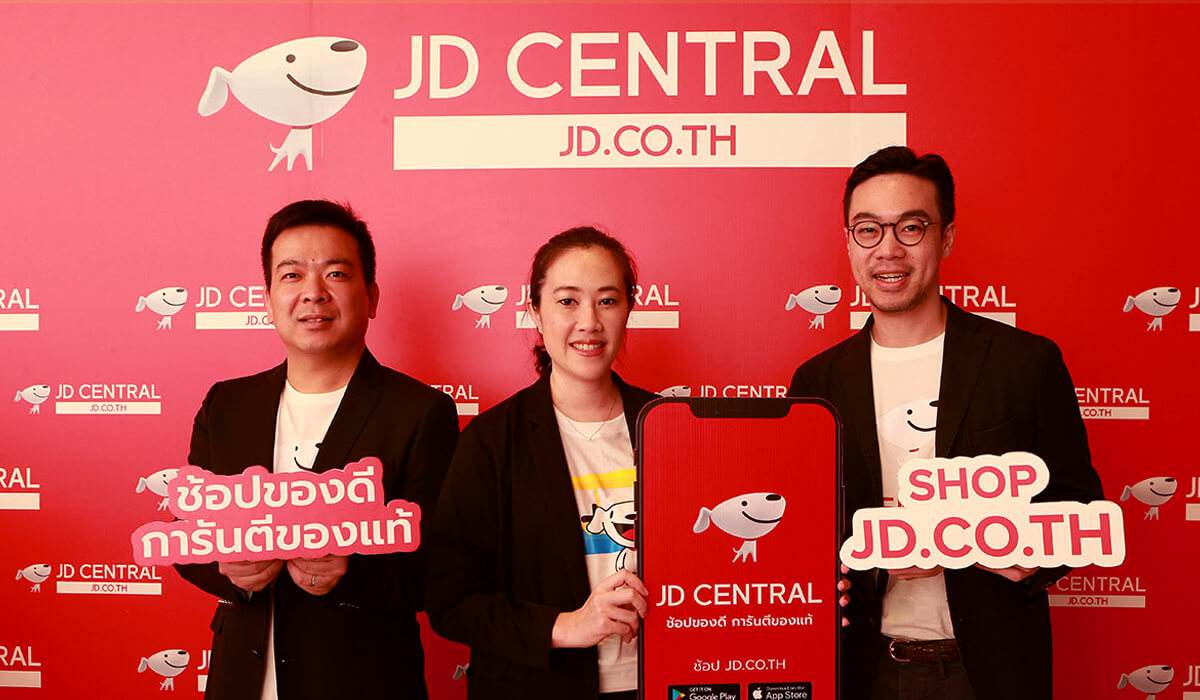
    JD Central – the new joint venture between Chinese online specialist JD and Thailand’s Central Group – has revealed plans to open automated stores, starting next year in Bangkok.

    Vincent Yang, JD Central’s CEO, said the company is evaluating a location where it could test an unmanned store format. Customers would enter the store and transact using facial recognition software.

    The move would be one of several initiatives the company is evaluating using new-generation technology. Another is the use of autonomous warehouse robots to replace humans in warehouses to reduce overheads.

    “We need to get approval to use robots and autonomous delivery vehicles in Thailand,” Yang said.
    Speaking after the official launch of JD Central, which has been operating in pre-launch mode for three months, Yang said the company plans to be Thailand’s largest online retailer by 2020.

    “E-commerce in Thailand will increase to 10 per cent of the total retail market in three years, up from 3-5 per cent today, thanks to competition and user experience,” he said.

    During the three-month trial, orders on the new platform increased 15-fold. Yang claims just 2 per cent of orders were returned and there was a 50 per cent repurchase rate by customers. Four out of every five customers accessed the site via mobile.

    JD Central offers products from 4000 brands, the most popular to date being mobile phones, food, home accessories and apparel.

    The company also has a strong focus on authenticity, guaranteeing no fake goods are on sale on its platform.

    “We are positioned to be the most trusted online platform brand by focusing on customer experience with authentic products. If customers find any fake products on our website, they will be refunded three times the original price,” he said.

  • Malaysia’s Aug exports decline 0.3%, trade surplus at nearly 4-year low

    Malaysia’s total exports fell marginally by RM215.2 million or 0.3% to RM81.8 billion in August, the second time exports recorded a decrease in 2018 after February due to the high base effect, according to the Department of Statistics.

    Trade surplus also recorded the lowest value since November 2014 at RM1.6 billion on the back of a double-digit growth of 11.2% or RM8.1 billion in imports to RM80.2 billion in August.

    Total trade stood at RM162 billion, RM7.9 billion or 5.1% higher than the same month a year ago.

    The main products which contributed to the decline in exports were palm oil and palm oil-based products (-RM1.5 billion); liquefied natural gas (-RM918.3 million); timber and timber-based products (-RM49.0 million); and natural rubber (-RM39.5 million).

    However, increases were recorded for crude petroleum (+RM1.3 billion); electrical & electronic products (+RM985.5 million); and refined petroleum products (+RM232.2 million).

  • Daiso Japan Launches Sakura-themed Store in Philippines

    Daiso Japan Launches Sakura-themed Store in Philippines

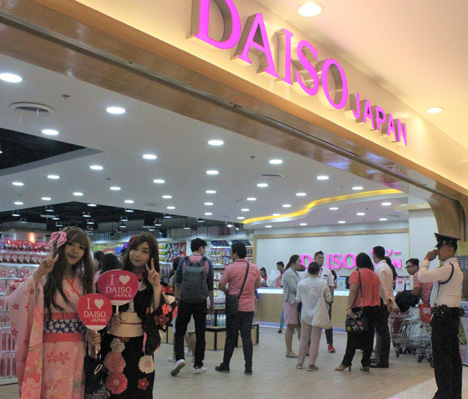
    Daiso Philippines has opened a Sakura-themed flagship store in Robinsons Galleria, Quezon City.

    Following the first store in Tuguegarao, the new one is inspired by the Sakura flowers and the Japanese culture of minimalism.

    The interior is designed with the elements of pale-coloured wood and stainless steel, with contrasting pink-coloured products, most notably Hello Kitty-themed perfumes, cosmetics and other products.

    “The inspiration behind the theme is basically Sakura being an iconic, and beloved flower of Japan and Daiso is in totality a representation of everything Japanese,” says Bernice Jayne Chioa-Bunoan, marketing services manager at Daiso Japan.

    More than 70,000 products ranging from kitchen essentials to stationery products to laundry utensils are sold from PHP88.

    Established in 1977 in Japan, Daiso now has 3000 stores all over the world. Daiso Philippines was launched in 2009.

  • Competition heats up in third-party merchandise, food delivery market

    Competition heats up in third-party merchandise, food delivery market

    With huge demand driving Vietnam’s merchandise, food delivery market, investors are keen on a piece of the action.

    After operating for a year in HCMC Lalamove, a logistics company headquartered in Hong-Kong specialising in same-day delivery and courier services, came to Hanoi Wednesday.

    A day earlier Grab had released its food delivery app, GrabFood, after a period of testing.

    The food delivery market looks extremely lucrative, and businesses want to cash in, industry insiders said.

    “By 2020 Vietnam will have over 50 million customers shopping online,” Phillippe Rambaud, head of Lalamove’s Hanoi market development division, said. “This will be a large market for on-demand delivery services.”

    Nguyen Duc Loi, CEO of Lalamove Vietnam, said the firm aims to have 10,000 contracted drivers on a permanent basis.

    Grab Vietnam CEO Jerry Lim claimed GrabFood’s growth has been very impressive, with the number of its contractors increasing eight-fold in just a month of testing in Hanoi.

    “GrabFood is the next major step for Grab in becoming a super-app which meets all the essential needs of people’s daily lives,” he said.

    “The way each individual service interconnects and complements each other allows us to build an ecosystem that delivers real benefits not only to our customers and drivers but also to our business partners and vendors,” Jerry Lim added.

    Go Viet has launched Go Send as a complementary service, but also aims to develop it into a super-app like Grab. It also plans to launch a food delivery service later this year.

    Last year Go Send delivered over 800,000 fashion products and handled 2.3 million food orders for 203,000 small-scale online vendors.

    But despite their major success in the online delivery market, the three entrants have to face the difficulties that come when competing with established incumbents popular in the market such as Delivery Now (Foody), and Vietnammm.

    Besides, many of their drivers are reluctant to make advance payments to vendors and take on the risk of wrong delivery and customers not accepting goods.

    Lalamove for instance has a policy of having drivers make advance payments for food/goods of up to VND3 million ($130.4) in HCMC and VND2 million ($86.95) in Hanoi.

    Many vendors still do not focus on delivery through third party applications as an important income stream.

    A representative of a milk tea chain in Hanoi told VnExpress that revenues still come mainly from direct sales and phone orders as well as the chain’s own digital app.

    Its response times are still much faster than using third party apps, he said.

    As more and more providers of delivery services emerge, he believed the most important factors vendors would look for are effective support systems and prices.

    The intense competition means consumers will benefit increasingly from the variety of choices and the discounts and improvements in service competitors constantly make to gain market share.

    Companies like Grab, Go Viet and Lalamove uniformly claim competition is good for the market, consumers and the businesses themselves.

    One of them said the Vietnamese market would see even more competitors in future.

    Analysts said this boom would soon spark a struggle between digital delivery platforms and traditional services just like the ongoing between Uber and Grab and traditional cabs.

    Do Xuan Quang, deputy head of Vietnam Logistics Business Association, said Vietnam was the fastest growing e-commerce market in Southeast Asia, and along with the strong growth of the logistics industry at 15-20 percent, a similar movement in the delivery market is not surprising.

    In 5-10 years, the delivery market in Vietnam will be valued at around $10 billion, he said.

    U.K.-based market research firm EuroMonitor International values the food delivery market in Vietnam at around $33 million this year and at more than $38 million in 2020.

    It also puts the annual growth rate of the market at 11 percent.
  • Tesco Lotus Thailand profits down

    Tesco Lotus Thailand profits down

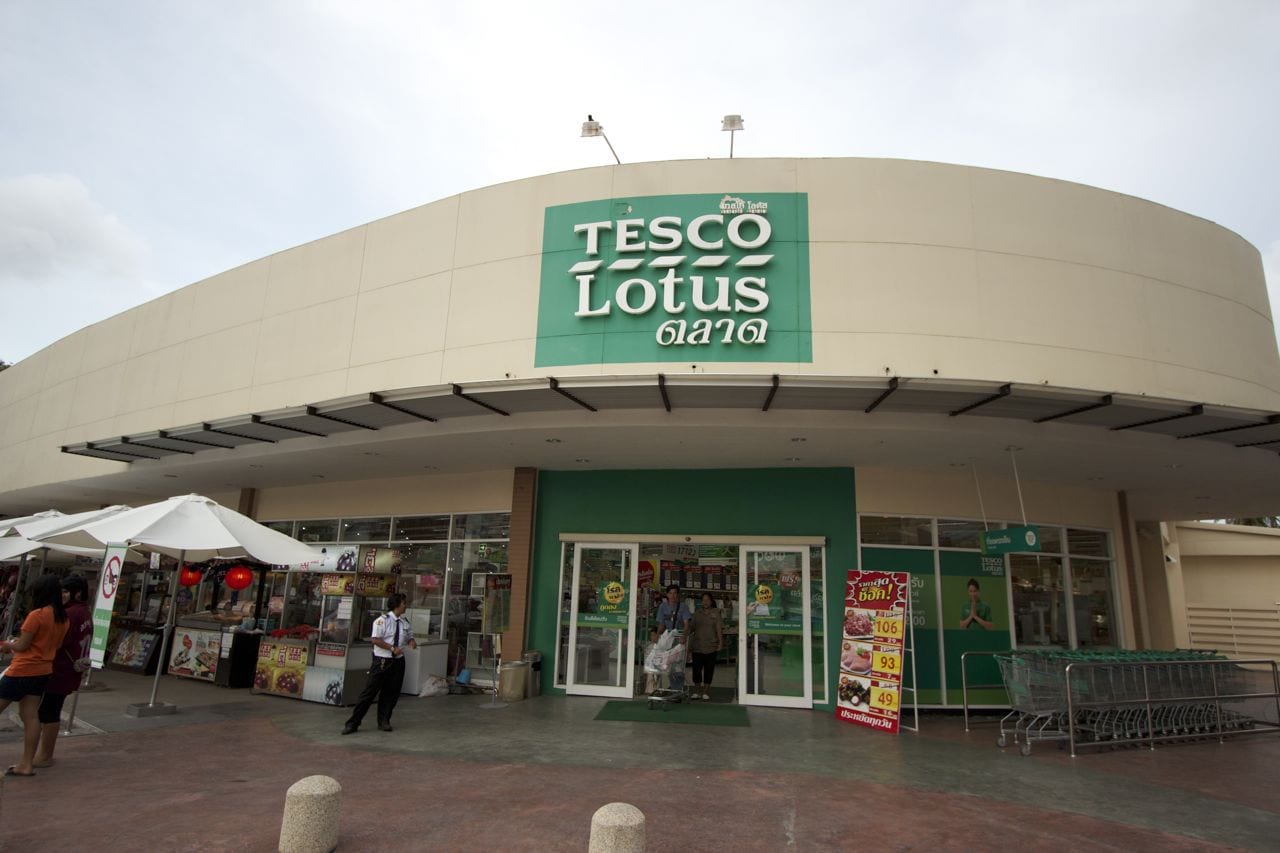
    Falling sales by Tesco Thailand impacted the UK parent company’s first half results released overnight.

    Like-for-like sales across Asia – which also includes the neighbouring Malaysia stores – fell by 4.8 per cent, explained by the company’s decision to exit its unprofitable Tesco Thailand cash-and-carry business.

    But the company’s profit in Asia fell by 29.1 per cent.

    Despite the disappointing numbers, Tesco CEO David Lewis moved to reassure investors that tesco Thailand was still an important focus.

    “In Thailand we’re market leader, it’s still the most profitable part of the group and there’s still significant growth to be had,” he said.

    Tesco reported an operating profit before one-off items of £933 million, which has 24 per cent ahead of the same time last year, but missed analyst expectations of £978 million.

    “I don’t think the market had fully factored in the Asian [business] but we’re really encouraged by the UK,” said Tesco CFO Alan Stewart.

  • Asian Coffee : Vietnam quiet despite recovery in global prices; Indonesia premiums tighten

    Asian Coffee : Vietnam quiet despite recovery in global prices; Indonesia premiums tighten

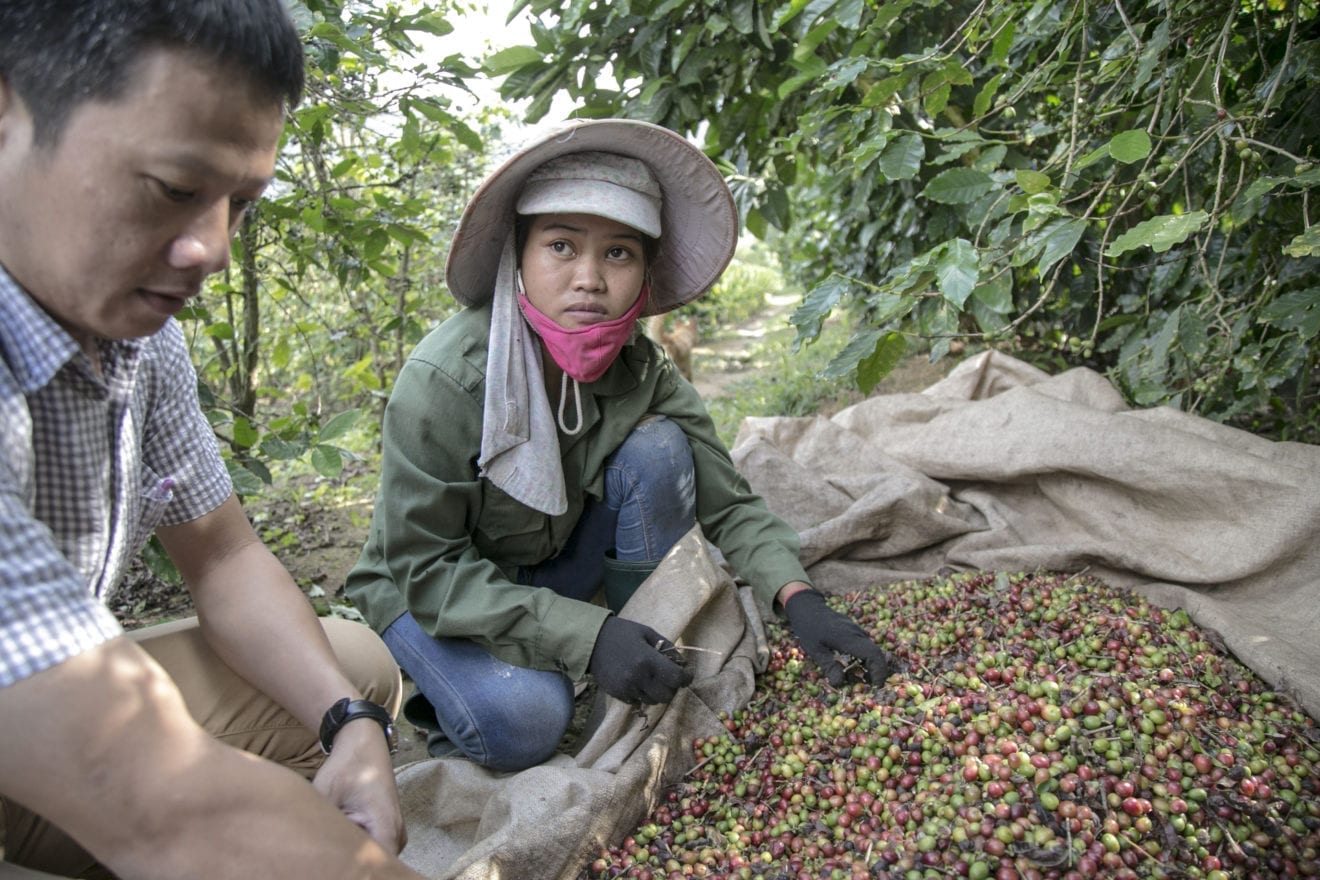
    Global coffee prices recovered but markets were subdued in Vietnam and Indonesia due to low stocks in both the countries, traders said.

    In Indonesia’s Lampung province, exporters quoted premiums for the grade 4 defect 80 robusta at $25 to $30 premium a ton to London’s November and December contracts, down from last week’s $50 premium, a trader said.

    Another trader quoted the beans at $70 premiums to November and January contracts.

    “Market prices rose in the past week, we have to cut premiums,” one of the traders said, adding that only a few transactions took place this week due to weaker demand and low stock after Indonesia’s main harvest ended last month.

    Indonesia coffee exports from the province of Lampung in Sumatra in September plunged 51 percent from the same month last year to 10,058 tons, official data showed, with lower production this year and higher domestic demand contributed to the drop in exports.

    “Global buyers have shifted to Vietnam because its cheaper there,” the trader added.

    In Vietnam, exporters have started offering beans from the upcoming harvest since stocks from the past crop were running low, while farmers are still not satisfied with the price despite a recovery in global prices, traders said.

    Farmers in the Central Highlands, Vietnam’s largest coffee growing area, offered coffee at VND34,000-34,400 ($1.46-$1.47) per kg, up from VND32,600-32,800 last week, but still below a 6-year-high level of more than VND47,000 hit last year.

    “The green bean (prices) are too low and the cost is increasing. (In) some countries, the running cost is even higher than the price,” said Luong Van Tu, chairman of the Vietnam Coffee and Cocoa Association.

    Regardless, Vietnam in the 2017/2018 crop exported an estimated 1.8 million tons of coffee, up 12.95 percent from the previous crop, while January-September exports grew 19.6 percent annually to 1.46 million tons, government data showed.

    Exporters offered Vietnam’s 5-percent black and broken grade 2 robusta at $30-$40 discount per ton to London’s November and January contracts, same as last week, but importers asked for a larger discount of $50, traders said.

    Extended rains in Vietnam’s coffee growing region have raised concerns about the quality and timing of the upcoming harvest, which could start as early as next month.

    Scattered showers are expected over the next week in the Central Highlands region, the National Centre for Hydro-Meteorological Forecasting agency said on its website.

  • Dr. Martens maker sues online retailer Yoox over lookalike boots

    Dr. Martens maker sues online retailer Yoox over lookalike boots

    Airwair International Ltd, the company that makes Dr. Martens, is suing Yoox-Net-A-Porter Group for selling shoes that, it claims, look too much like its iconic lace-up boots.

    The lawsuit, filed in federal court in San Francisco, alleges trademark infringement, trademark dilution and unfair competition which first reported the story.

    Dr. Martens is reportedly calling for a preliminary injunction against the online retailer.

    This isn’t the first time the British brand has sued a competitor for ripping off its designs.

    In 2017, Airwair International slapped US-based shoe brand Steve Madden with a lawsuit for trademark infringement, claiming that it unlawfully copied Dr. Martens’ two tone grooved sole edge, DMS undersole and heel loop.

    In 2013, the company sued US-based shoe brand Chinese Laundry, citing similar trademark infringements.