Author: Mei Ling Tan

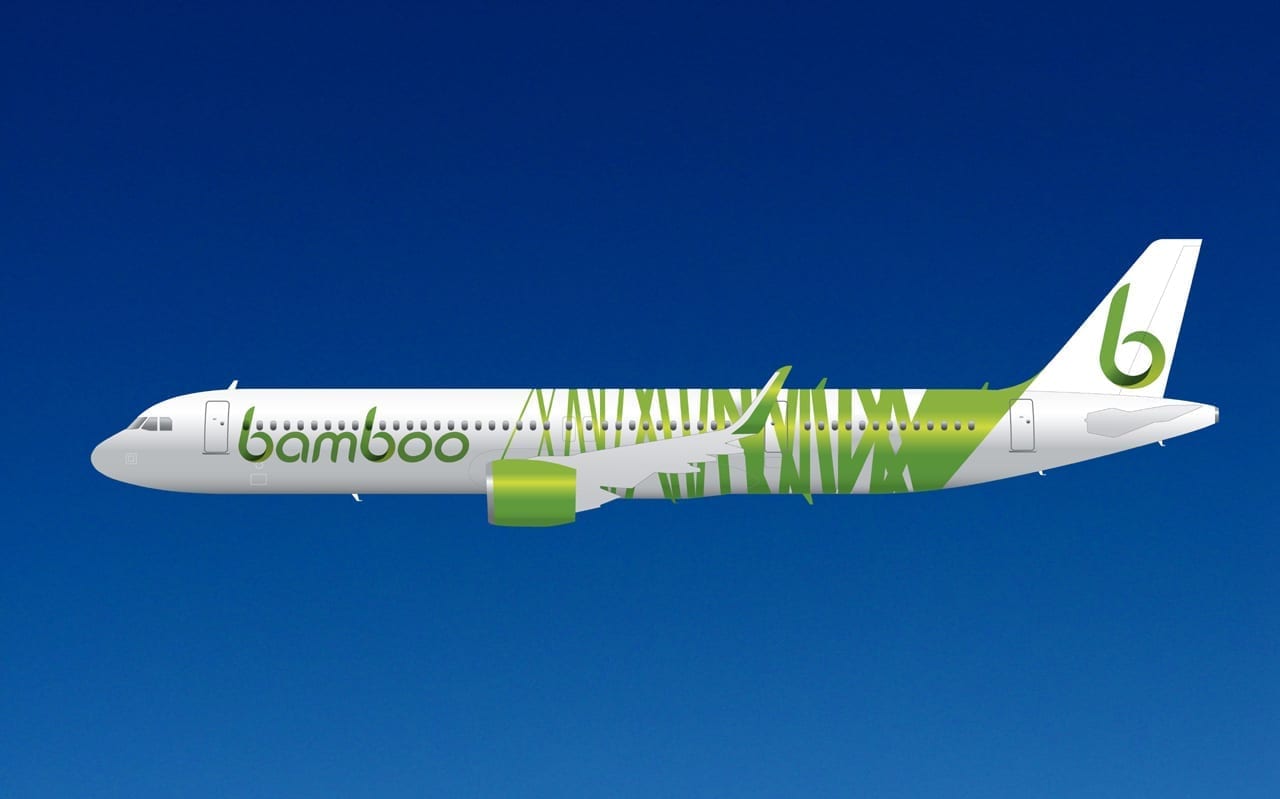
  • Bamboo Airways gets license, to start flying before year end

    Bamboo Airways gets license, to start flying before year end

    Vietnam’s newest airline, Bamboo Airways, has received its long-awaited aviation license and plans to launch its first flight within the next 45 days. The carrier, the country’s fifth, is allowed to operate 10 aircraft on both domestic and international routes and to carry passengers and cargo on its flights.

    It plans to fly on 100 routes, connecting Vietnam’s major cities with popular domestic and international tourist destinations.

    But initially it is likely to only operate on certain sectors like Hanoi-Quy Nhon and Ho Chi Minh City-Quy Nhon. Quy Nhon is a city on the central coast.

    According to Bamboo Airways general director Dang Tat Thang, most of the preparatory works have been completed for the maiden flight to take off before the end of the year.

    It needs to obtain an aircraft operator certificate and obtain permission for parking and selling tickets, which are expected to take 30-45 days from the date of license issuance.

    Bamboo Airways was founded by Vietnamese private firm FLC in mid-2017 with a charter capital of VND700 billion ($30 million), which it increased to VND1.3 trillion ($55.68 million) recently.

    The airline has signed deals to buy 24 Airbus A320neo and 20 Boeing B787-9 Dreamliner aircraft worth a total of about $8.6 billion.

  • Hard Rock Cafe to be reintroduced in Philippines

    Hard Rock Cafe to be reintroduced in Philippines

    Bistro Group has acquired the exclusive franchise for Hard Rock Cafe in the Philippines, planning to reintroduce the brand in the region after a year’s absence. The Hard Rock group has high hopes for the partnership given the new local partner’s proven performance in the “Western-driven market.”

    Area franchise development VP Steve Yang said: “The Bistro Group is a strong industry player and with its robust portfolio of brands as well as its track record for more than 20 years, we are confident that they will be a strong partner to help us take Hard Rock Cafe in the Philippines to the next level.”

    The new Hard Rock Cafe will open next month in a 653sqm space at the Conrad S Maison mall in Pasay City, with four to five branches potentially in the works for Cebu and Bonifacio Global City.

    “Putting Hard Rock inside a mall is in response to the current lifestyle trend and is one of the best locations we’ve seen in our operations,” Yang said.

    Hard Rock’s VP for franchise operations and development Anibal Fernandez said the company wants to expand its presence in high-growth markets frequented by locals and tourists.

    “Last year alone we launched cafes in Spain, Austria, South Africa, Andorra, Bolivia, India, Cambodia, Myanmar, Argentina and Nicaragua. In 2018 we are developing in Africa, Middle East, Europe, North and South America, South Asia and China, among others.”

  • Alibaba breaks record Singles Day sales

    Alibaba breaks record Singles Day sales

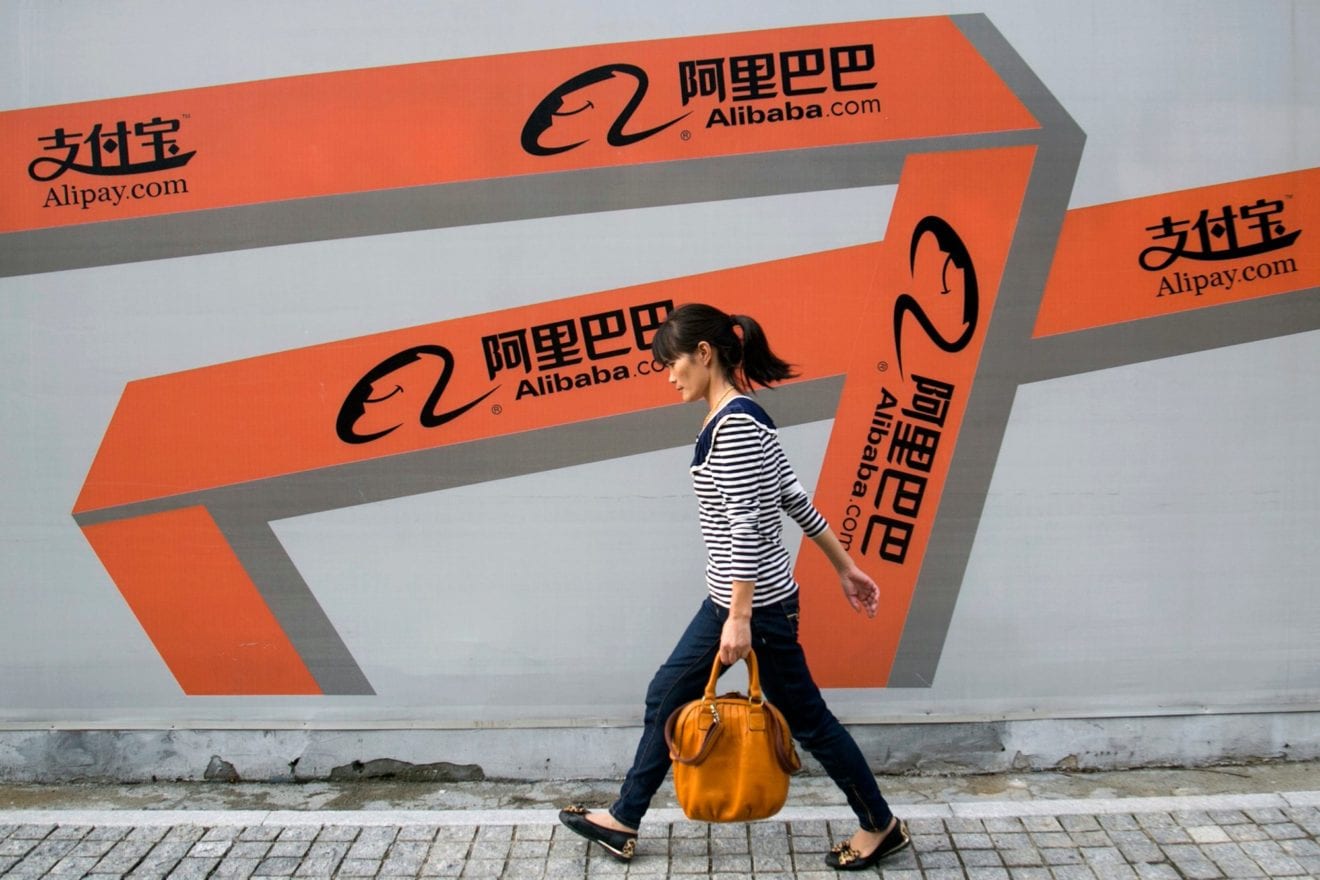
    E-commerce giant Alibaba has reported a 27 per cent increase in the gross merchandise value of goods sold during yesterday’s 11.11 shopping festival. Total GMV of Singles Day sales settled through Alipay reached RMB213.5 billion (US$30.7 billion), setting a much-anticipated record – with more than 40 per cent of consumers buying through international brands. Last year’s event brought in $25.3 billion in GMV.

    According to Alibaba, RMB6.9 billion ($992 million) of GMV was settled in the first one minute and 25 seconds, and RMB69.3 billion ($9.967 billion) in one hour and 48 seconds.

    Comparatively, Amazon’s recent Prime Day sales were estimated to have reached approximately US$4.2 billion by Wedbush Securities analyst Michael Pachter.

    Australia, Japan, the US, South Korea and Germany were among the top countries selling in the event, with 230 markets having participated.

    Australian supplement retailer Swisse ranked as the top brand imported into China through the promotion.

    “Today we witnessed the strength and rise of China’s consumption economy, and consumers’ continued pursuit to upgrade their everyday lifestyles,” Alibaba Group CEO Daniel Zhang said.

    “Participation from the entire Alibaba ecosystem enabled our brand and merchant partners to engage with consumers like never before.”

    According to Texas A&M University’s Professor Venkatesh Shankar, customers globally want to buy both online and in-store, from any device and through any payment method, while getting a high level of customisation and service.

    Singles Day’s popularity across the world suggests a new chapter of computer-enhanced shopping experiences has begun..

    As the Chinese middle-class grows, retailers around the world are offering their own Singles Day offering in order to service a burgeoning market.

    “The global retail market is adjusting to China’s rising economic power, and Chinese customer’s desire for AI-enhanced mobile shopping experiences,” Shankar wrote.

  • LG Chem picks first CEO from outside group

    LG Chem picks first CEO from outside group

    LG Chem said Friday it nominated Shin Hak-cheol, vice chair and executive vice president of 3M, as its new head. It is the first time the chemical company hired a chief executive from outside the company since its foundation in 1947. Current LG Chem CEO Park Jin-su climbed the ladder during his 42-year career at the company.

    LG Chem said it has been looking for a person who can systemize global business operations as overseas production and marketing of lithium-ion batteries has increased along with demand for electric cars.

    “Shin has gained global perspective and experience in operating a global materials and components business,” LG Chem said in statement. “He is the right person capable of responding to a rapidly changing business environment and bringing change in corporate culture and structure.”

    Shin started at 3M Korea in 1984 as a technical supervisor and then joined 3M Philippines in 1995 as its managing director. In 2011, he was named executive vice president of 3M International Operations, becoming the first Korean to lead 3M’s overseas businesses, LG Chem said.

    His most recent role at 3M was leading global teams, including the research and development, strategy and business development and business transformation teams, as vice chair and executive vice president at the 3M headquarters in Saint Paul, Minnesota.

    Shin will begin commute to work and be officially inaugurated as the chief executive during the shareholders meeting in March.

    Park will retire as Shin is inaugurated, but the exact date has not been announced yet. The company grew into a 28 trillion won ($24.8 billion) company under Park. In 2011, it posted around 22.6 trillion won in sales.

    Industry analysts say this may be the beginning of a major transformation at LG under the leadership of 40-year-old Chairman Koo Kwang-mo.

  • Vietnam’s Vietjet valued second in Southeast Asia

    Vietnam’s Vietjet valued second in Southeast Asia

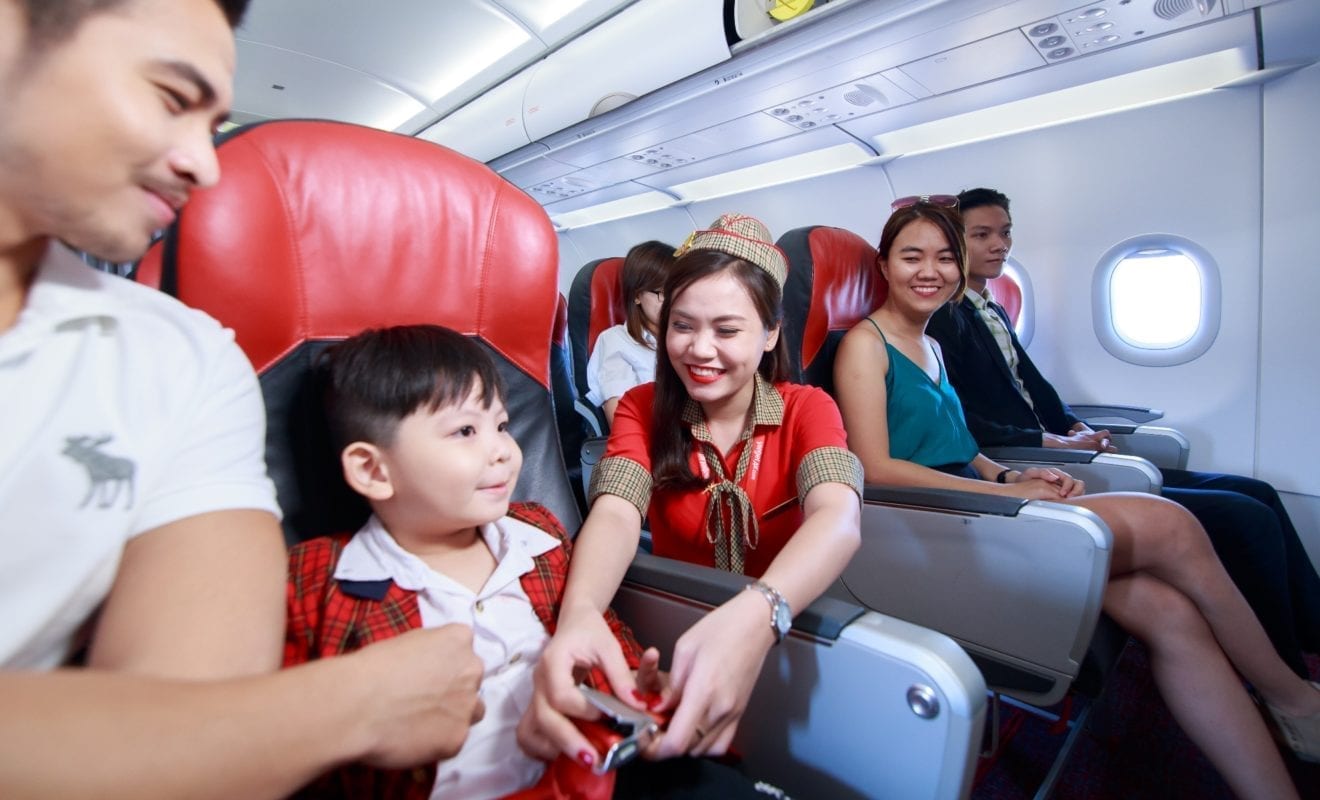
    Vietnam’s largest private airline, Vietjet Aviation, is the second most valuable airline in Southeast Asia by market capitalization. Vietjet’s value is only behind Singapore Airlines, as reported last Thursday. Last Friday, the airline was valued at $3.02 billion while Singapore Airlines topped the region at $8.29 billion.

    On Thursday, Vietjet Air launched a new international route between Hanoi and Japan’s Osaka. It plans to open two more routes to Japan in December and January.

    Earlier this month, Vietjet signed a $6.5 billion agreement to buy 50 Airbus A321neo jets.

    The airline said that the order was in line with its growth strategies and will enhance its operational efficiency and capacity, especially on international routes.

    In Vietnam, Vietjet only has to contend with two domestic rivals: the state-run Vietnam Airlines and its low-cost arm, Jetstar Pacific Airlines.

    “There are only three airlines in Vietnam, and that arrangement facilitates profit generation domestically,” a representative at an international brokerage told the Nikkei Asia Review.

    In March last year, Vietjet’s market capitalization surpassed that of state-owned Vietnam Airlines only a week after it was listed.

    Vietjet currently operates 60 Airbus jets with more than 385 flights daily within Vietnam and to countries and territories such as mainland China, Hong Kong, Japan, Malaysia, Myanmar, South Korea, Singapore, Taiwan and Thailand.

  • Furla opens largest Malaysian store

    Furla opens largest Malaysian store

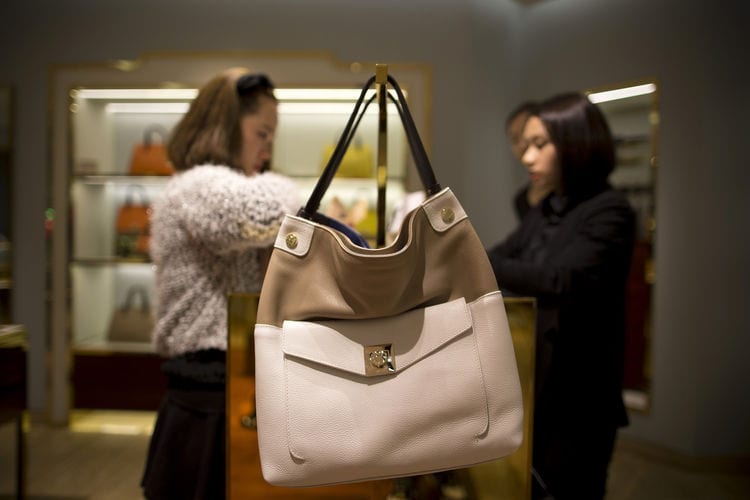
    Italian luxury label Furla has launched its largest store in Malaysia. The new 1290sqft boutique in Kuala Lumpur’s Suria KLCC has been lavishly decked out in rosewood and Italian travertine marble alongside opalescent glass and champagne gold finishing on product displays. Several local celebrities were spotted in attendance at the store’s launch.

    The brand’s new range is now featured in store, including the Furla Cometa quilted camera bag and the Cometa tote. Furla is also offering its Cruise 2019 fur-free collection.

  • Start-ups in Korea challenged by overregulation and lack of exits

    Start-ups in Korea challenged by overregulation and lack of exits

    Park Jong-hwan is a Korean start-up success story. Twenty years ago, he was living in a basement room with a friend. In 2015, he became a legendary figure after selling his Kim Gisa navigation service to Kakao for 62.6 billion won ($56.0 million).

    The co-CEO of Kim Gisa Company, who now also runs co-working space company Work&All and a start-up accelerator, met with JoongAng Ilbo on Nov. 2 to discuss the challenges faced by start-ups in Korea.

    During the interview, he expressed the need for a change in government regulations.

    “It is difficult for a second Kim Gisa to emerge in this regulatory environment,” said Park. “When I meet start-ups these days, they don’t have the confidence to start new things but instead worry about facing legal or social problems.”

    “In an environment that first regards new ideas or businesses as illegal, start-ups lose confidence and creativity,” complained the Kim Gisa Company founder.

    Park has struggled with regulations and a negative attitude towards the industry since his early start-up years. When nominated for an award, it was almost rescinded as his service didn’t provide location services inside buildings. When Kakao tried to implement Kim Gisa’s technology to match rides, it was met with government opposition. The government’s strong stance against the growing carpool and ridesharing industries is an issue that particularly frustrates the start-up pioneer.

    Park, whose father is a veteran taxi driver of 40 years, said he understands the opposition from the taxi industry but explained that the carsharing service provides a better alternative for taxi drivers.

    “If a company-owned taxi driver opts to operate on a car-sharing platform, the driver will pay two to three percent in fees instead of the payment to the taxi company, leading to increased income,” said Park. “If we set aside a partial fee for every service and provide it to the taxi industry, as it is done in Australia, private taxi drivers will be less opposed.”

    “The government should be a mediator in the changing times,” he added. Park also argued that Korea’s business environment, which make start-ups mergers and acquisitions (M&A) difficult, pose as an unseen stumbling block for tech-based start-ups.

    A positive cycle of investment, growth, profit return and reinvestment can only occur when there are numerous success stories of start-up exits. But complex tax-related regulations, difficult conditions for initial public offerings and a negative attitude toward start-up exits all prevent M&A from taking place, said Park.

    “If start-ups grow and are bought out by large corporations, they then fall under new regulations as they are considered an affiliate company of a large corporation, even if they maintain the same workforce and business structure,” explained Park. “M&A can only be undertaken by large corporations with enough cash, but the reality is that it’s difficult because of such regulations.”

    The start-up founder lamented the lack of successful exits since Kim Gisa, “There hasn’t been a large-scale M&A in the three years since Kim Gisa,” he notes. “Promising local start-ups are leaving to countries abroad.”

    Park’s co-working sharing company aims to ease some of the burdens faced by start-ups and provide an accommodating environment in the country’s tech hub in Pangyo, Gyeonggi. While tech giants such as NHN, Nexon and AhnLab are able to afford the high rent in Pangyo, it is difficult for start-ups.

    Park argues that acquisition of start-ups by tech giants will become more common if start-ups settle down in Pangyo and create an environment similar to Silicon Valley.

    “I would like to provide a mentoring space to help others reduce the time spent on trial and error,” said Park. “I am looking at two to three start-ups in which to make investments.”

    The start-up mentor said that updating regulations that stand in the way of start-up development could help create new jobs – one of the main promises of the government.

    “When the number of start-ups increases and their businesses grow, there will naturally be more recruitment. The quality of jobs will increase as the number of them rises.”

  • Wagyumafia launches in Hong Kong

    Wagyumafia launches in Hong Kong

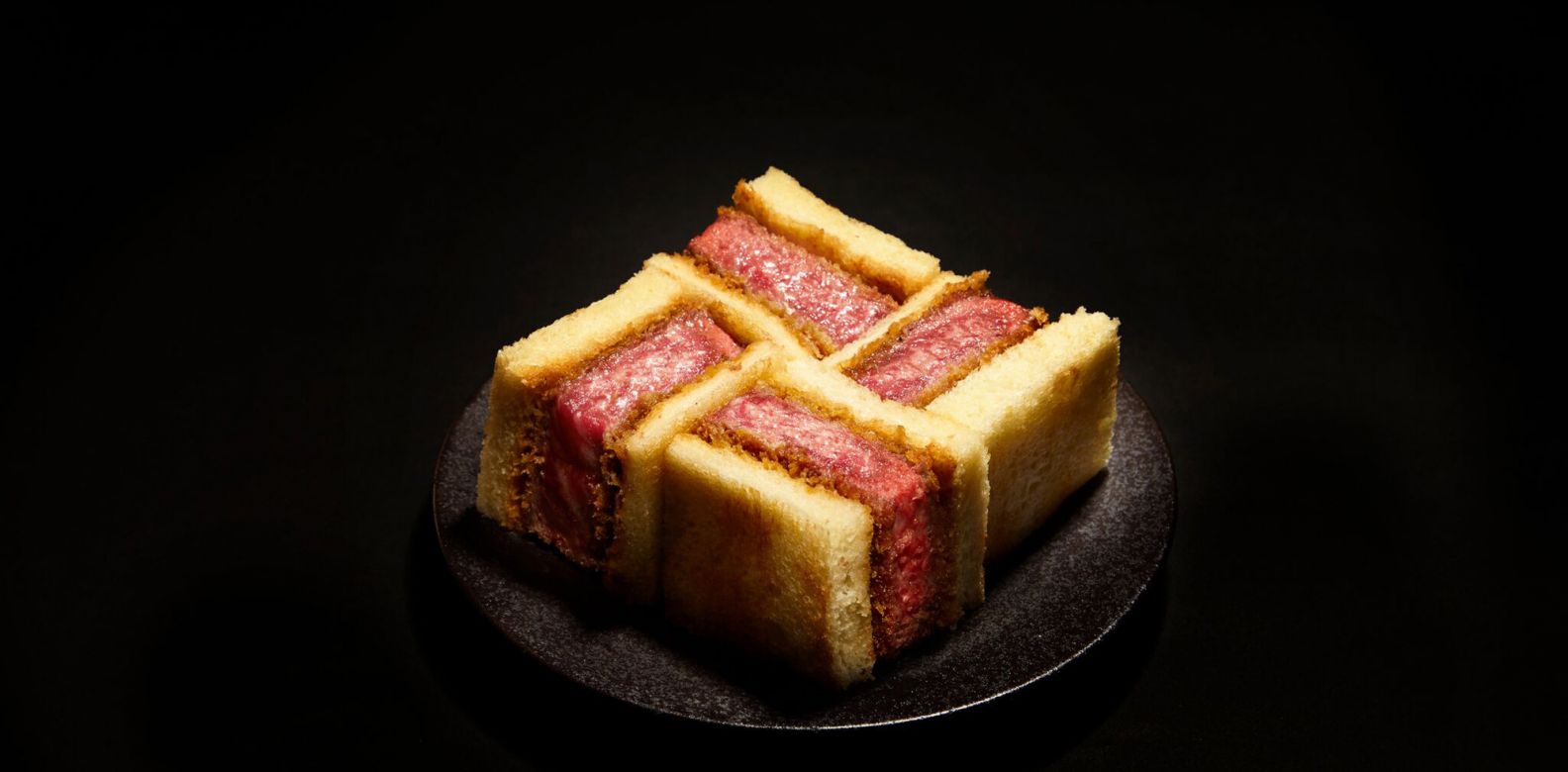
    Japanese restaurant chain Wagyumafia is set to open in Hong Kong’s Wan Chai. It will be the franchise’s first international location since launching two years ago. Wagyumafia is known for its premium beef and members-only business model. The brand has gone through an extended promotion under co-founder Hisato Hamada, who has hosted pop-up events for the franchise in top international locations – including Paris, London, Singapore and New York.

    The new Hong Kong location will be open for 18 members at a time, serving an omakase menu focused on choice Wagyu and Kobe beef yakiniku and shabu-shabu dishes.

    Hamada said “Wagyumafia seeks to buy only the top 1 per cent of Kobe beef. To ensure our premium quality standards are met, we source our products from the top 20 best farmers in Japan.”

    Reservations will be opened to non-members sometime after the first month of trading.

  • Singles’ Day boosts Korean brands

    Singles’ Day boosts Korean brands

    China’s massive Singles’ Day shopping spree provided a huge boost to Korean retailers, with some companies posting their highest sales figures ever. Since 2009, Chinese retail giant Alibaba Group has transformed Singles’ Day, which falls on Nov. 11, into an online shopping festival with large discounts offered for 24 hours.

    Other ecommerce giants like JD.com soon followed suit, making Singles’ Day into a Chinese version of Black Friday, although much bigger.

    At Alibaba, the number of transactions on Nov. 11 has steadily increased since the event began in 2009.

    Despite concerns that the ongoing trade war between the United States and China may have put a break on the income growth of middle-class Chinese consumers this year, Singles’ Day once again broke records.

    Chinese shoppers purchased a total of 213.5 billion yuan ($30.6 billion), worth of goods on Sunday, a 27 percent surge from last year’s record. The year-on-year growth rate was slower than last year’s 39.3 percent.

    Over 40 percent of shoppers made purchases from international brands, said Alibaba.

    Among the countries that sold products to Chinese customers on Sunday, Korea ranked third after Japan and the United States.

    Korea placed at No. 3 on the list in 2016, but fell two ranks last year after the deployment of the U.S.-led terminal high altitude area defense (Thaad) antimissile system. The incident soured relations between the two countries and provoked a boycott movement against domestic brands in China.

    The exact volume of Korean goods purchased on Sunday was not disclosed, but it was evident that the shopping spree had an impact on local companies, as some of them reported record-breaking figures on Monday.

    Food company Nongshim, famous for Shin Ramyun instant noodles, set a new record for Singles’ Day revenue since it launched online sales in China in 2013.

    The company sold 5 million yuan worth of instant noodles at ecommerce website Taobao on Sunday. This was a 25-percent increase compared to last year’s Singles’ Day and 10 times the average sales made at the Chinese ecommerce website per day.

    The No. 1 best seller for Nongshim was a multipack of its eight most famous noodle brands, including Shin Ramyun, Neoguri and Kimchi Ramyun.

    “We organized huge promotional events ahead of Singles’ Day, as well as collaborating with [social media influencers in China] to air live videos of cooking Shin Ramyun,” the company said.

    Eland Group’s Chinese office sold 444 million yuan worth of fashion goods through ecommerce website Tmall.

    Based on sales records, the fashion group focused on presenting a wide array of outerwear like coats and jackets. A padded jacket from its kid’s brand, Paw in Paw, sold over 20,000 units during Singles’ Day.

    Beauty companies also did well. At LG Household & Health Care, cosmetics sales increased 50 percent compared to last year’s Singles’ Day. Daily necessities jumped even higher by 73 percent year on year. Its brand, The History of Whoo, LG’s biggest success in China, sold 23 billion won ($20.2 million) worth of products, a 72 percent increase year on year.

    Although LG did not disclose the entire sales volume, the company spokesman said that “this year has set a record for Singles’ Day.”

    Rival Amorepacific unexpectedly set positive records as well. The company has been struggling after it lost Chinese consumers in the Thaad row. On Sunday, it generated 37 percent more sales compared to Nov. 11 last year. Several products from brands like Sulwhasoo and Laneige that were prepared for the Singles’ Day promotion sold out.
  • China’s LightInTheBox to acquire Singapore ecommerce Ezbuy

    China’s LightInTheBox to acquire Singapore ecommerce Ezbuy

    Chinese online retailer LightInTheBox will acquire Singaporean e-commerce platform Ezbuy for approximately US$86 million, subject to some closing conditions. Ezbuy, which has more than 3 million customers in Southeast Asia and Pakistan, has grown from a middleman service linking international consumers and Chinese e-retailers to become a more traditional online retailer in its own right. It secured US$17.6 million earlier this year, predominantly from Chinese investors.

    LightInTheBox CEO Zhiping Qi said: “This transaction is part of our larger plan to build our business-to-consumer cross-border ecommerce out to scale globally,” citing Ezbuy’s supply chain management as potentially supporting the firm’s emerging markets strategy.

  • SK Korea keeps building Vietnam ties

    SK Korea keeps building Vietnam ties

    SK Chairman Chey Tae-won met with Vietnam Prime Minister Nguyen Xuan Phuc in Hanoi Thursday to discuss the conglomerate’s plans to invest more in both private and public companies and introduce measures to ease environmental problems there.

    They met for the second time in a year. As a result of the previous meeting, SK purchased a 9.5 percent stake in the holding company of Masan Group, one of Vietnam’s largest private enterprises, for $470 million in September.

    “We are pursuing further cooperation with private companies after our first meeting beginning with investment in Masan Group,” said the chairman of Korea’s third-largest conglomerate. “We expect cooperation in other areas such as privatization of state-owned companies to speed up.”

    Nguyen explained Vietnam’s privatization plans to Chey while asking SK to help develop the country’s growing industries.

    “Chairman Chey is the only foreign company chief that I meet every year, my interest in SK is special,” said Nguyen.

    Chey also said the group will help Vietnam combat environmental problems that stem from industrial development. SK Group currently supports the reforestation of a mangrove forest in Vietnam.

    Mangrove forests used to cover 4,400 square kilometers (1.08 million acres) of Vietnam, but only 30 percent remains. Since last May, SK Innovation has provided support to reforestation efforts in a mangrove forest in Tra Vinh province and reforestation research by Ho Chi Minh City University of Technology.

    SK’s relationship with Vietnam has grown over the years. Energy subsidiary SK Innovation has taken part in oil exploration and crude oil production from the country’s offshore oil fields since 1998. SK’s construction unit, SK E&C, has helped build petroleum complex projects in the country.

    Chey also participated in the Hanoi Forum Friday and Saturday.

    The Korea Foundation for Advanced Studies, an academic non-profit organization, and Vietnam National University in Hanoi jointly launched the forum this year to encourage academic cooperation between the two allies.

    Korea Inc. has been paying increasing attention to Vietnam as an alternative investment destination to China. Vietnam is expediting privatization amid a difficult fiscal situation, putting on sale several government-owned companies.

    In late October, Samsung Electronics Vice Chairman Lee Jae-yong paid a visit to Vietnam and vowed to increase investment during a meeting with the Vietnamese prime minister. Samsung Electronics operates major phone manufacturing lines in Vietnam, which has helped Vietnam become the second-largest exporter of mobile phones after China. As a manufacturing location, Vietnam serves as an important strategic partner for many Korean companies’ global supply chain.

    LG Display and textile giant Hyosung are also Korean companies with manufacturing units in Vietnam.

    During President Moon Jae-in’s visit to the country earlier this year, senior executives from SK and Samsung were in the president’s entourage in an effort to establish stronger business relations.

    In 2017, Korea placed second in terms of direct foreign investment in Vietnam, following Japan. Vietnam is currently Korea’s fourth-largest export partner.

  • Lee Hwa Jewellery experiential concept store has opened

    Lee Hwa Jewellery experiential concept store has opened

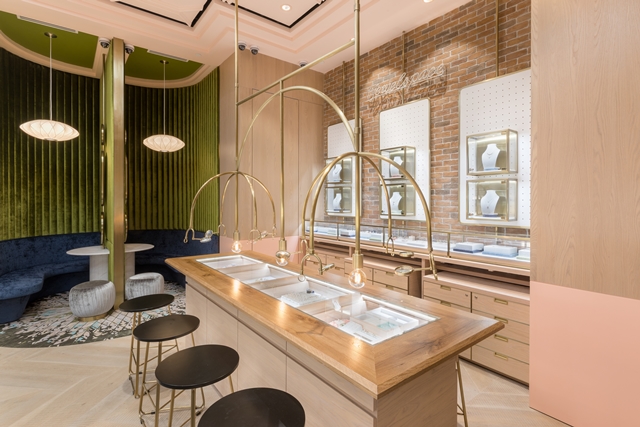
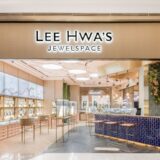
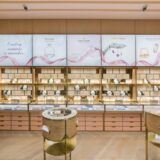
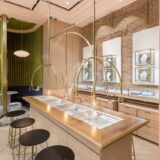
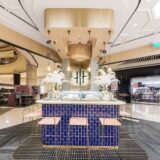
    Lee Hwa Jewellery has introduced a new experiential store inviting customers to “get intimate” with jewellery. In a bid to meet millennial “experience economy” market demand for immersive retail experiences, Lee Hwa’s Jewelspace – a bespoke design concept launched at its newly re-opened boutique at Suntec City – has broken away from the traditional look and feel of jewellery boutiques, resulting in a more contemporary instore experience for customers.

    Built around a gallery-like atmosphere, the brightly-lit new boutique does away with traditional glass counters, instead featuring modern elements such as themed display walls and vertical glass displays, a maker space and interactive countertops that let customers get closer to its range of fine jewellery.

    The store’s layout and concept is inspired by the experiences of visiting an art gallery, spending a romantic day out, and creating bespoke pieces at a workshop.

    Lee Hwa Jewellery’s business director Mavis Toh said today’s retail scene is vibrant, sophisticated and innovative, and the same can be said for today’s consumers, especially the millennials, who are driven by a desire for deeper and differentiated brand experiences.

    “Customers will continue to visit brick-and-mortar stores as long as there are new and interesting reasons to go. As retailers, we aim to provide these reasons with a brand-new bespoke boutique concept that will not only excite them, it will allow them to experience jewellery shopping in an entirely new way.”

    A statement from the brand highlighted retail expert predictions that the personalisation of customer experiences will continue to be a key retail trend as consumers seek out highly personalised shopping experiences that cannot be replicated online. It posed that the trend of personal service is also expected to reshape the retail landscape as brick-and-mortar retailers compete with online retailers for the consumer dollar.

  • Vietnam ratifies Asia-Pacific trade pact

    Vietnam ratifies Asia-Pacific trade pact

    Vietnam became the seventh country to ratify the Comprehensive and Progressive Agreement for Trans-Pacific Partnership (CPTPP) Monday afternoon. With its ratification, the National Assembly (NA) has assigned the task of reviewing related bills and legal enactments to the Government, the Supreme People’s Court, the Supreme People’s Procuracy and other relevant bodies.

    Once reviewed, the government agencies shall request that competent authorities amend, supplement or enact new laws in a timely manner to ensure uniformity and adherence to the roadmap for implementing commitments contained in the CPTPP.

    The Prime Minister will be responsible for approving and directing the relevant central or local agencies in implementing the CPTPP pact.

    The CPTPP is a major trade pact between Vietnam and 10 other countries that seeks to boost trade by reducing tariffs.

    Speaking at a recent NA session, Deputy Prime Minister Pham Binh Minh said that the CPTPP “will benefit Vietnam overall.”

    Because the trade pact will cover 13.5 percent of global GDP, Vietnam’s GDP will be able to grow by 1.32 percent, and its exports 4.04 percent by 2035, he added, citing a report by the Ministry of Planning and Investment.

    However, the Deputy PM also enumerated challenges that Vietnam would face when joining the CPTPP.

    Domestic products such as pork and chicken might face strong competition from imported products. Other products that can have trouble competing include paper, steel and cars, Minh said.

    The other six countries to ratify the pact are Australia, New Zealand, Canada, Japan, Mexico and Singapore.

    The four countries still to ratify it are Brunei, Chile, Malaysia and Peru.

    Originally a 12-member agreement known as the Trans-Pacific Partnership (TPP), the pact was thrown into limbo when U.S. President Donald Trump withdrew his country from the deal in January 2017.

    Following the U.S. withdrawal, the remaining 11 countries renegotiated parts of the TPP, removing some of Washington’s demands. In March, they signed the revised CPTPP, also known as TPP-11.

  • Hyundai to unveil new large SUV Palisade

    Hyundai to unveil new large SUV Palisade

    Hyundai Motor’s new large SUV, set to be unveiled at the Los Angeles Auto Show later this month, will be called the Palisade. According to the carmaker Friday, its new model for the 2020 model year will be revealed on Nov. 28 during a press event at the L.A. motor show.

    The company will start taking preorders for the SUV in the Korean market starting at the end of this month, earlier than other countries. Hyundai Motor America said Thursday the car will be available in the U.S. market in the summer of 2019. Hyundai said the SUV was named after Pacific Palisades in southern California, an affluent neighborhood that boasts a series of coastal cliffs. The carmaker is hoping that the Palisade will live up to its premium-sounding name.

    The three-row SUV will offer seven or eight passenger seats, according to a spokesperson from Hyundai Motor. The major focus in designing the car is enabling everybody inside the car, even those in the third row, can enjoy their own space. In some vehicles with third rows, space is tight.

    The carmaker said its new Palisade will offer the most seating space among competing vehicles in the same segment. It also promised diverse seat adjustment options and an easy-to-use interface for adjusting car settings for passenger convenience.

    “For large SUVs, carmakers need to offer more value than just the basic driving performance,” a Hyundai spokesman said. “The spacious interior and intuitive interface for safety and convenience services offered in the car are its competitive edge.”

    The carmaker is expecting a lot from this vehicle, as it in hopes to make the Palisade its flagship SUV model when families are increasingly lean towards bigger SUVs over sedans. The Palisade will replace the Max Cruze (Santa Fe XL overseas) as Hyundai’s largest SUV.

    Specifications and pricing for the Palisade were not released on Friday.

  • Baby Milo Launched Pets Collection Pop-Up Store

    Baby Milo Launched Pets Collection Pop-Up Store

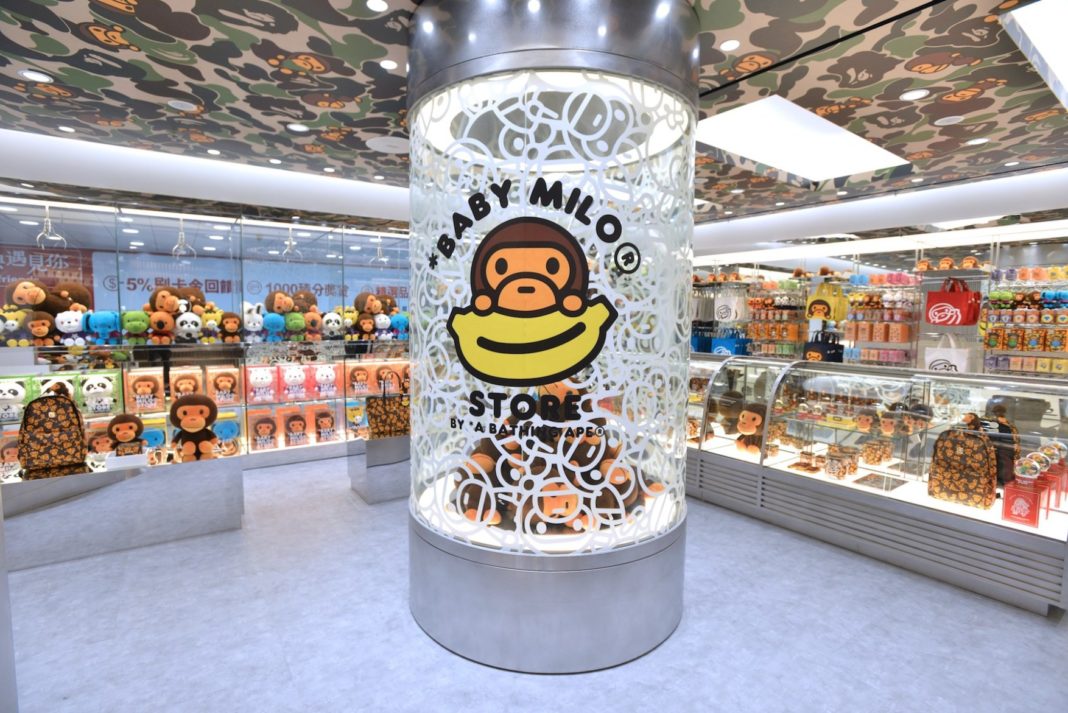
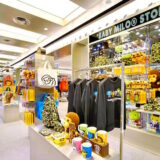
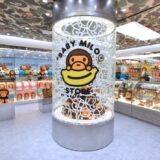
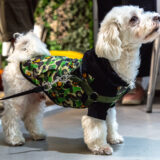
    Japanese apparel brand A Bathing Ape has opened a Baby Milo petwear pop-up in Hong Kong. The pop-up features a ball pool out front for canine friends to play in while attendant humans shop, as well as a quieter pet space out back. Also highlighted in-store is a Baby Milo dog tag engraving station and a flipbook photobooth.

    The pop-up is offering soft goods and toys for pets, including beds, chew toys, leashes, carry bags, and towels, among others.

    The pop-up will run until November 18 at 19 Old Bailey Street, Soho, from noon to 7pm.

    A Bathing Ape is owned by Hong Kong’s I.T Group.