Author: Mei Ling Tan

  • Singapore telcos expect partner ecosystem boom

    Singapore telcos expect partner ecosystem boom

    Half of communications service providers in Singapore expect to improve revenue by at least 16% in just two years by leveraging partner ecosystems, according to a new study from BearingPoint.

    Over 80% believe that partner ecosystems can help them remain competitive and 70% expect that ecosystems can improve the customer experience.

    But most operators are yet to embark on the execution of ecosystem strategies due to a series of technological challenges, including lacking  the right technology in place to manage monetization across the partner ecosystem.

    Other significant challenges include overcoming complex IT environments that may not be able to support minimum viable products and having the right technology to manage the partner ecosystem.

    Only 30% of operators in Singapore have embarked on partner system execution, while 40% are about to do so, 10% are analyzing their options and 20% are at the very start of their journey, the survey found.

    “Based on our research, companies leveraging digital platform-based business models have already doubled their growth rate compared to businesses that have stayed stagnant in their CSP transformation efforts,” BearingPoint Asia Pacific senior representative Dr Chris Stephenson said.

    “That only a fifth of CSPs appear to be in the initial stage is a matter of concern.  A lot of CSPs today continue to rely on rapid product commoditization rather than proactively taking steps to create new more compelling products that will drive profits now and in the future.”

  • Vietnam stock market in Free Fall

    Vietnam stock market in Free Fall

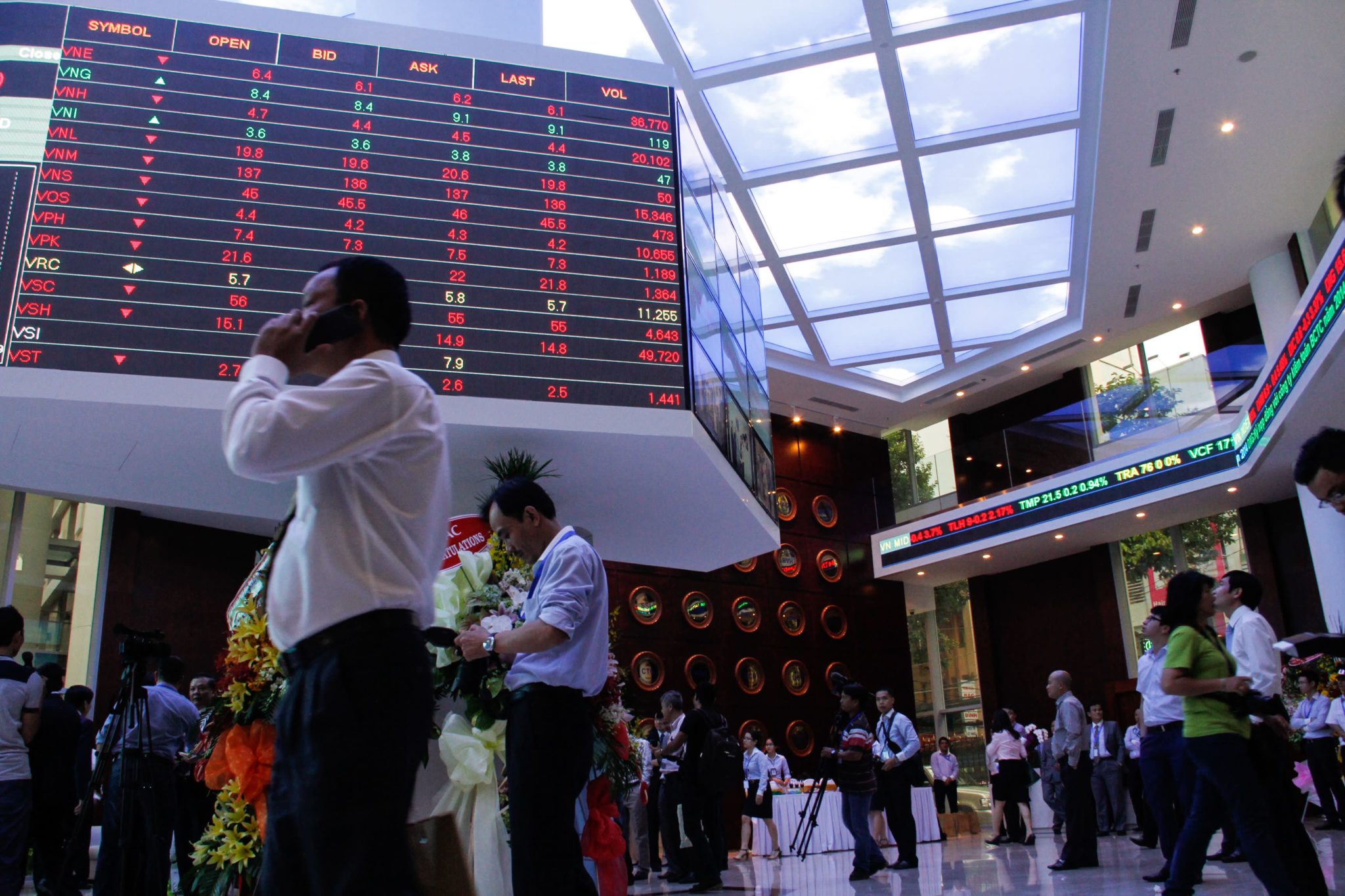
    Vietnam’s stock market dropped 2.87 percent to more than 987 points on Monday, the second time this year that it has dropped below the 1,000-point level.

    The benchmark VN-Index on the Ho Chi Minh Stock Exchange (HOSE) fell from 1,000 points for the first time this year on May 23 and did not bounce back to that level until June 4.

    As supply surpassed demand, sellers were pushed to sell their stocks at all costs, leading to falling prices.

    The VN-Index hit 984.24 on the last trading day of 2017, the highest ever since 2007, before reaching 1,000 points early in January.

    Since then, it has stayed at more than 1,000 points until the drop on May 23.

  • Huawei tests 3GPP R16 standards

    Huawei tests 3GPP R16 standards

    Huawei has announced it has completed verification testing for a series of new technologies and functions due to be introduced in the 3GPP Release 16 5G phase 2 standards.

    The company has tested and verified ultra-reliable and low latency communications (URLLC) scenarios including cellular vehicle to everything (C-V2X), as well as massive machine type communication (mMTC) and enhanced mobile broadband (eMBB).

    The C-V2X test involved a roadside unit and mobile edge computing technologies in a self-driving vehicle scenario including reacting to a car in front conducting an emergency lane change.

    Video signals were sent to a vehicle-to-everything control center to make a decision such as implementing a lane change or braking, and transmitted back to the vehicle as instructions.

    Meanwhile mMTC involved using 5G NR for uplink to enable video enabled services over 5G networks as well as 5G-enabled AI on university campuses.

    “Currently, the formation of 5G standards is at a critical juncture. June 2018 is a pivotal moment in history with the formation of standalone (SA) standards and the release of R15,” Huawei said in a statement.

    “It also serves as a great starting point for researches on R16 study items and work items. December 2019 is expected to see the completion of a full set of 5G standards meeting all ITU. Huawei is fully committed to preparing for the finalization of R16 standards and supporting the standardization of 5G enhanced technologies.”

  • Bank Cards are the New King in Australia

    Bank Cards are the New King in Australia

    Australian consumers are accelerating their shift towards digital payments and away from cash and cheques, with new figures showing paying by card has surged while people make fewer trips to the ATM for cash.

    Consumers made more than 8.3 billion card payments in 2017 – equal to a rate of almost 23 million transactions a day, according to a report from electronic payments industry group AusPayNet.

    The bulk of those card payments – 5.6 billion – were made on debit cards, AusPayNet said, with credits tending to be used on more expensive purchases but still showing an increase in volume and value.

    At the same time the number of cheques used fell almost 20 per cent to 89.7 million for the year, and the number of ATM withdrawals made fell 5.9 per cent to 610.1 million.

    AusPayNet CEO Leila Fourie said the high uptake of technology and internet use in Australia, where almost 90 per cent of the population own a smartphone, was behind the increase in new ways of conducting transactions.

    “This is driving uptake in digital payments and laying down a powerful base for the next wave of payments innovation,” she said.

    AusPayNet said more 60 per cent of consumers with a smartphone used their device to make payments.

    Among the technological shifts aiding the uptake of digital payments is the New Payments Platform launched in February – a digital and near-real-time payments system allowing instant peer-to-peer payments.

    AusPayNet also found Australia has a relatively high number of EFTPOS terminals and low number of ATMs compared to other countries.

    Australia has 39,337 EFTPOS terminals per million inhabitants and 1,355 ATMs, while Canada has 38,892 EFTPOS terminals and 1,888 ATMS, the report said.

    Australia ranked above Canada, Italy, Singapore and the UK on EFTPOS point concentration, while it lagged Korea, Canada, Belgium and Russia on the ATM count.

  • JD.com hastens e-commerce race in Southeast Asia

    JD.com hastens e-commerce race in Southeast Asia

    Chinese online retailer JD.com has signed on Google as a strategic partner in a move seen to complement the former’s ambitions to expand into Southeast Asia while giving the latter a toehold in a market that it gave up in 2010.

    Google’s investment in JD.com comes as e-commerce companies, including Alibaba Group and Amazon, race to expand their global reach and carve a larger slice of market share in regions such as Southeast Asia, where the potential for e-commerce is viewed as largely untapped.

    Chinese smartphones brands such as Vivo, Oppo and Xiaomi have proven to be a hit among consumers in the region of 650 million people with their affordably priced models. Tencent Holdings, the online gaming and social media giant, is the largest shareholder in Singapore-based Sea, which operates Shopee, a regional e-commerce platform. Other internet services companies such as Didi Chuxing and Meituan Dianping have invested in local champions such as Singapore-based Grab and Jakarta-based Go-jek, respectively.

    Alibaba bought Singapore-based e-commerce platform Lazada and appointed one of its co-founders and most senior executives, Lucy Peng, to head the push into Southeast Asia.

    JD.com, too, has its eyes on Thailand, with a new online shopping platform developed with Thailand’s Central Group slated to open on June 18. In Vietnam, JD.com invested in local e-commerce firm Tiki.vn earlier this year. In Indonesia, JD.com launched a local online retail business JD.ID two years ago.

    “Logistics and language sites, everything should be localised here,” Winston Cheng, JD.com’s president of international business said in an interview in Singapore last week before the Google tie-up.

    “Today, people have higher and higher demand,” he said. “They want anything anytime anywhere but right away so the cross-border business model takes too long to wait for.”

    JD.com achieved 159.2 billion yuan (US$24.7 billion) in orders from June 1 to June 18, generating annual growth of 37 per cent for the company’s 618 Mid-Year Shopping Festival, an online shopping event similar to Alibaba’s Singles’ Day Shopping event on November 11.

    JD.com has also deepened cooperation with its biggest shareholder Tencent, launching a new shopping function on WeChat before the 618 Shopping Festival. The function enables consumers to shop on JD.com within WeChat, China’s biggest social network and messaging app. Product pages from JD.com pop up when consumers type product-related keywords into the search functions on WeChat.

    Google, together with other US internet companies such as Facebook and Twitter, are blocked in China, although several firms still maintain offices in the country selling advertisements to Chinese firms hoping to reach an overseas audience. Other companies, like Apple, continue to sell their products and services in China after complying with local rules, such as hosting its cloud services for the Chinese market on the mainland.

    “Google’s strategy for investing in JD.com is two-pronged. On one hand, it hopes to have a significant partner in China to support the company, which could help it reintroduce services like cloud or advertisements in China,” said James Yan, research director at Counterpoint. “Secondly, JD.com is strong in areas like logistics, courier delivery and so forth, which Google can tap on to expand its e-commerce ambitions.”

    The partnership is complementary as JD.com is in the business of e-commerce and logistics and is unlikely to clash with Google’s other services, such as cloud or OS services, Yan said.

    “We want to accelerate how retail ecosystems deliver consumer experiences that are helpful, personalized and offer high quality service in a range of countries around the world, including in Southeast Asia,” Karim Temsamani, president of Google’s Asia Pacific operations, said in a statement.

    The Asia-Pacific region is one of the largest and fastest growing e-commerce marketplaces in the world, with people in Southeast Asia alone expected to spend US$88.1 billion online by 2025, according to Temsamani.

    “This partnership with Google opens up a broad range of possibilities to offer a superior retail experience to consumers throughout the world,” Jianwen Liao, JD.com’s chief strategy officer, said in a statement. “This marks an important step in the process of modernising global retail.”

    Southeast Asia consists of 11 countries with a total population of 653.4 million, about 49 per cent of whom live in urban areas, according to the latest United Nations estimates. Only three per cent of the region’s retail sales are currently conducted online.

    Among the biggest barriers to developing a regional Southeast Asian market is the lack of mobile payments, with about 70 per cent of the region’s population still unbanked. The thousands of islands that make up the archipelagic nation of Indonesia also presents logistics challenges.

    JD.com will adopt different strategies to cater to the differences of the region, according to a spokesman. While there is no one-size-fits-all model given the different infrastructure, languages, cultures and religions across the region, e-commerce is still booming because of the commonality of a rising middle class, the spokesman said.

    “Alibaba sees Southeast Asia as a priority region within our global strategy,” an Alibaba spokesperson said in comments made before the JD.com-Google partnership announcement. “We are also committed to contributing to the growth of the digital ecosystem in Southeast Asia by driving initiatives to develop an e-commerce talent pool.”

  • AirAsia to start flights to Ipoh

    AirAsia to start flights to Ipoh

    Low-cost carrier AirAsia Group Bhd is adding services to Ipoh and also looking at restarting flights to Kuantan, according to its group chief executive Tan Sri Tony Fernandes.

    He said this in a tweet this morning from his handle @tonyfernandes: “We opening IPOH soon and also looking to restart Kuantan. Would mean we would fly to all local destinations.”

    AirAsia had initially introduced flights to Kuantan in June 2008, but dropped it later.

    At 11.49am, AirAsia fell 1.25% or 4 sen to RM3.15 with 1.9 million shares done.

  • Retail interest in Myanmar robust, but foreign investment is lacking

    Retail interest in Myanmar robust, but foreign investment is lacking

    When RHB, a Singapore brokerage, first selected Singapore Exchange-listed Yoma Strategic Holdings as one of its top five stock picks for retail clients on May 2, shares of the company soared 15 percent, hitting a 4-month high of 48 cents on May 9 as investors hurried to get onboard.

    “Yoma Strategic offers a pure play on Myanmar, and is well positioned to capture growth opportunities in the country,” wrote RHB analyst Vijay Natarajan in his report.

    While prospects could be “clouded” because of Rakhine, Mr Natarajan believes Myanmar holds long-term growth potential and views “the stock as the best proxy for investors to get exposure to Myanmar.”

    With GDP growth projected to hit 6.8pc in 2018-19 and rise further to 7pc in the next fiscal year, according to the World Bank’s latest estimates, Myanmar remains one of the most promising emerging economies in Asia and retail investors have been keen for a slice of the pie.

    Yet, Myanmar’s economy also remains one of the most difficult to access, with few avenues available for retail investors to tap. “Many Maybank clients have been asking about opportunities to invest in Myanmar. But other than Yoma Strategic, there are hardly any other options for retail investors to enter the country,” said Chua Hak Bin, senior economist at Maybank Kim Eng Research.

    Mr Chua added that there is still a lack of statistics and data available on Myanmar compared to other countries, which has made it hard to generate reports that will help his clients make investment decisions.

    Consequently, many have been channeling funds into Vietnam instead. “Vietnam has opened up its economy, signed on to the Trans-Pacific Partnership [of 11] and attracted a flood of foreign direct investments,” Mr Chua said.

    Vietnam is also experiencing a tourism boom, led by tourists from China, as well as a remittance boom, as overseas Vietnamese re-invest their earnings, including into the property market. This has driven the current account and balance of payments into a surplus, even though imports have been on the rise.

    Notably, Vietnam’s push to equitise its State-owned enterprises has also helped to boost interest and liquidity in the country’s stock market. “Vietnam has been the rockstar in ASEAN. There are lessons for Myanmar from Vietnam’s experience,” Mr Chua said.

    ‘Many Maybank clients have been asking about opportunities to invest in Myanmar. But other than Yoma Strategic, there are hardly any other options for retail investors to enter the country.’ Chua Hak Bin, Maybank Kim Eng Research

    Companies Law

    While efforts to reform the economy have been slower than expected to materialise, Myanmar, for its part, has taken credible measures to liberalise its market with the enactment of several new laws, including the Myanmar Companies Law, which was signed last December.

    Among the most anticipated regulations is one that will allow foreigners to own stakes of up to 35pc in local companies, including the five listed on the Yangon Stock Exchange.

    “The purpose of this regulation is to allow foreigners to own shares in local firms and for local companies to benefit from access to foreign capital,” said U Aung Naing Oo, director general of the Directorate of Investment and Company Administration (DICA), during the Myanmar’s Business Leaders Summit in Yangon last week.

    At the summit, U Aung Naing Oo reaffirmed that the process of enforcing the Company Law “is going well. The key aim is to make it easier for foreign investors to invest in Myanmar. As promised, we will be able to fully enforce the law by August 1,” he said.

    In fact, the YSX has seen a spike in interest from local companies to list on the exchange since the Companies Law was approved. Within a year, investors should be able to trade shares of three more firms – engineering company Great Hor Kham, Myanmar Agro Exchange Public Limitedand logistics player Ever Flow River  -on the exchange.

    Still, some say it could take a while yet before the equity market opens up to retail investors. Pedro Jose Bernando, a partner at law firm Kelvin Chia, warns that while the Company Registration Office has already circulated draft rules on the Companies Law, it appears“they are more concerned now with the implementation of the e-registration system, and not so much with how the substance of the law, including the 35pc threshold will be implemented,” he told The Myanmar Times.

    He added that the 35pc rule will like be rolled out incrementally, to privately-owned Myanmar companies first, before being extended to public-listed companies, if at all.

    Stocks to watch

    In the meantime, investors still keen on placing their bet on Myanmar still have a few other stock options to consider. Singapore-listed Memories Group, the vehicle which holds Yoma Strategic and Yangon-listed First Myanmar Investments’ tourism businesses, is one.

    The company, which came to market in January, operates Balloons over Bagan and the Hpa-an Lodge and Pun Hlaing Lodge businesses. In March, it also bought a luxury yacht business in Mergui.

    London-listed Myanmar Strategic Holdings (MSH) is another option. Just last week, the company took up a $150,000 minority stake in Myanmar-based digital consulting firm, nexlabs. This came a month after MSH and Auston Institute of Management announced a joint venture to set up and operate a private school in Yangon. It is also invested in the Ostello Bello hostel chain in Bagan, Mandalay and Inle Lake.

    Then, there is London-listed Myanmar Investment International, an investment holding company with stakes across the financial services, telecommunications, healthcare and tourism sectors.

    Investors can also consider a handful of other companies which operate businesses in Myanmar, including Thai national oil and gas company PTT Exploration and Production Public Company Limited (PTTEP) as well as Thai Beverage, which is listed in Singapore.

    Last year, Thai Bev bought a 50pc stake in Myanmar Distillery Co, which makes Grand Royal whisky. In 2013, it acquired Singapore’s beverage maker Fraser & Neave (F&N), which this year received Myanmar Investment Commission approval to manufacture and distribute beer in the country, three years after it sold its 55pcstake in Myanmar Brewery to Japan’s Kirin Holdings for $560 million.

    In the meantime, Yoma Strategic is already upping its game. Last week, the company announced a joint venture with Pernod Ricard, which makes Chivas and Ballentine’s, to produce and distribute whisky in Myanmar.

  • Thailand on the Verge of Becoming a Cryptocurrency Heaven

    Thailand on the Verge of Becoming a Cryptocurrency Heaven

    Following the Royal Decree by Thailand’s regulatory authorities on May 14, 2018, that cryptocurrencies are formerly digital assets, the Asian nation is set to take its local blockchain-based digital currency industry to the next level by showing five Initial Coin Offering (ICO) projects the green light to operate in the area, out of the 50 startups that filed for approval.

    A Crypto Giant in the Making?

    The Thai Securities and Exchange Commission (SEC) is looking to register five ICO projects later in June when the cryptocurrency decree takes effect.

    According to the SEC director of equity finance Thawatchai Kiatkwankul, of the 50 firms that filed to launch their crypto-based fundraisers, only five meet the set standards of the SEC. As such they will fall under the regulatory watchdog’s approval.

    Amidst that backdrop, the SEC is looking to hire more staff and expand its operations to enable it to handle both Initial Public Offerings (IPOs) and ICOs.

    ICOs Must Have Real Use Cases

    While many startups have succeeded in developing products and services to solve real-life problems via the ICO route, the sad truth remains that there are a vast array of projects that have no real use cases but are merely interested in deceiving people with technical grammatical jargons and cart away with their funds.

    The regulator has also hinted on easing the rules governing crypto investments and transactions provided investors become more educated concerning the risks involved in the burgeoning industry.

    Bitcoin, Six Altcoins, 90-days Ultimatum, and Token Sale Information

    The Thai authority’s guidelines also entail that only seven established cryptocurrencies including bitcoinether, XRP, litecoin, stellar, ethereum classic and bitcoin cash could be used as trading pairs.

    With the latest development, the SEC has mandated all “stakehodlers” in its crypto space including exchanges, brokers, ICO organizers to endeavor to come under its umbrella within 90 days.

    Additionally, all market participants are required to seek approval from the Thai Finance Ministry before carrying out activities in the virtual currency industry. Interestingly the SEC has also made it clear that retail investors are not allowed to purchase ICO-generated tokens worth more than 300,000 baht ($9,000), while institutional investors and high net worth persons can pump in an unlimited amount of funds into any project. At a time when crypto-related businesses and digital currency exchanges are migrating to Malta due to the nation’s amenable regulation for cryptos, this latest move by the Thai authorities could also lure more blockchain startups to the region.

  • No betting on World Cup matches in Vietnam allowed

    No betting on World Cup matches in Vietnam allowed

    Sports betting is legal, but a betting operator has not been selected for premier football event. Football fans and punters in Vietnam cannot bet on World Cup matches this year, even though sports betting has been legalized.

    Only a few companies have shown interest in operating a betting business in Vietnam, and none of them have actually submitted bidding documents.

    The lack of agreement between relevant ministries on how to organize the bidding process is among the reasons for the delay, an unnamed Finance Ministry source told Tuoi Tre.

    Limited betting options are another reason. Vietnam only allows betting on international soccer games recognized by the governing body FIFA and approved by the sports ministry. These include the World Cup, the Confederations Cup, Copa America, Champions League and Europa League. These are all short tournaments with limited number of matches, leaving a lot of “idle time.”

    Meanwhile, the most popular football leagues in Vietnam, the English Premier League (EPL), La Liga (Spanish League), German Bundesliga, Serie A (Italia) and Ligue 1 (France), are out of the betting pool.

    If a bookmaker were to operate for just FIFA recognized tournaments, they would suffer heavy losses, said economist Nguyen Tri Hieu.

    According to a government decree that took effect on March 31, 2017, Vietnamese citizens can bet on international football games and horse and greyhound races. Only those above 21 years old are allowed to gamble and bookmakers have to be at least 500 meters away from schools and other public venues for children. The minimum bet value is VND1,000 (4.42 cents) and the daily maximum limit is VND1 million ($44).

    Bookmakers will have to meet strict charter capital requirements: VND1 trillion ($44.2 million) for horse racing and soccer and VND300 billion ($13.2 million) for greyhound racing. It is planned that one soccer betting provider will be selected for a five-year trial phase through a bidding process.

    On Thursday, Vietnam’s National Assembly approved a new law that allows locals to bet on sports events. The law is based on the 2017 government decree. Under the new law, betting will be allowed for other sports when the government approves a decree proposed by the Ministry of Culture, Sports and Tourism. The new law will not come into effect until next year.

    Vietnamese are known for their love of gambling. It is estimated that they spend at least $800 million a year on gambling overseas, mainly in Macau, Singapore and Hong Kong.

    Official figures show that Vietnamese citizens spent $13 billion on the lottery between 2011 and 2015, driving an average 12 percent gain in annual revenues of lottery companies over that period, according to Nikkei.

    The Tuoi Tre report quoted a source from the Ministry of Culture and Information as saying that for now, “It is unclear when soccer betting will start.”

  • Internet streaming one up on traditional TV in Vietnam

    Internet streaming one up on traditional TV in Vietnam

    Industry insiders say local Over-The-Top service providers should act together instead of against each other. Vietnam is seeing a trend of people switching from traditional TV to over-the-top (OTT) media services which allow them to watch movies and other shows on the internet.

    In a recent survey done by Kantar Media Vietnam, an information and consultancy group, 84 percent of the respondents aged 15-54 said they use the internet every day. In Hanoi, people spend 229 minutes each day on the internet, almost an hour and a half higher than the time for TV, which is only 145 minutes, the survey found.

    A significant 45 percent of respondents in Hanoi, Ho Chi Minh City, the central city of Da Nang and southern Can Tho said they watched video on demand (VOD).

    Vietnam is one the leading countries in the online video trend, with 90 percent of the respondents saying they watch online videos every week, said market research firm Nielsen.

    “People nowadays want to watch what they want, whenever and wherever they want,” said Bui Huy Nam, CEO of state-owned cable TV provider VTVCab, adding that this trend makes the transition from traditional TV to OTT inevitable.

    YouTube remains the largest OTT service in the country, with 87.3 percent of respondents in the Kantar Media survey saying they use this website frequently to watch videos online.

    Local sites such as PhimMoi.net [New Movie] and ZingTV rank second and third with 28.9 percent and 26.4 percent respectively, the report said.

    With such a large market demand, local OTT providers are adopting different strategies to eke out an advantage in this tight race.

    National broadcaster VTVCab is looking to work with internet service providers to provide free content to users, earning revenue from advertisements. The company’s ambition is to create a platform where users can share their own video content.

    FPT Play, a cross-platform application which allows users to watch TV shows and movies online, is focusing on improving its content by working with strong media production companies in the country.

    While there is strong competition between legal OTT providers, they also need to fight the battle with illegal ones. Illegal content makes up about 95 percent of OTT services in Vietnam, said Ngo Thi Bich Hanh, vice chairwoman of media firm BHD.

    “There is an intense competition between OTT firms in the country. It’s a competition between local firms and between them and foreign providers,” Hanh said.

    To ensure the success of OTT services in Vietnam, local businesses need to cooperate on a shared platform, said Nguyen Thanh Lam, director of the Department of Radio and Television Communication and Electronic Information. “They should not go alone in this market,” he added.

    Echoing Lam, Le Quang Minh, director of the VTV24 News Center, said that working together will keep OTT businesses from “hitting the bottom.”

    “We want local OTT providers to sit down together to create a sustainable market which is strong enough to compete with the leading video streaming services in the region and in the world instead of racing against each other,” Minh said.

    A study by OTT provider Muvi estimates Southeast Asia market revenues reaching $650 million a year in the next three years. On the global scale, Netflix, Hulu, Amazon and Youtube have a total of 2 billion subscriptions, taking 40 percent of the world’s OTT market share, the study said.

  • Line Thailand launching theme park in Bangkok

    Line Thailand launching theme park in Bangkok

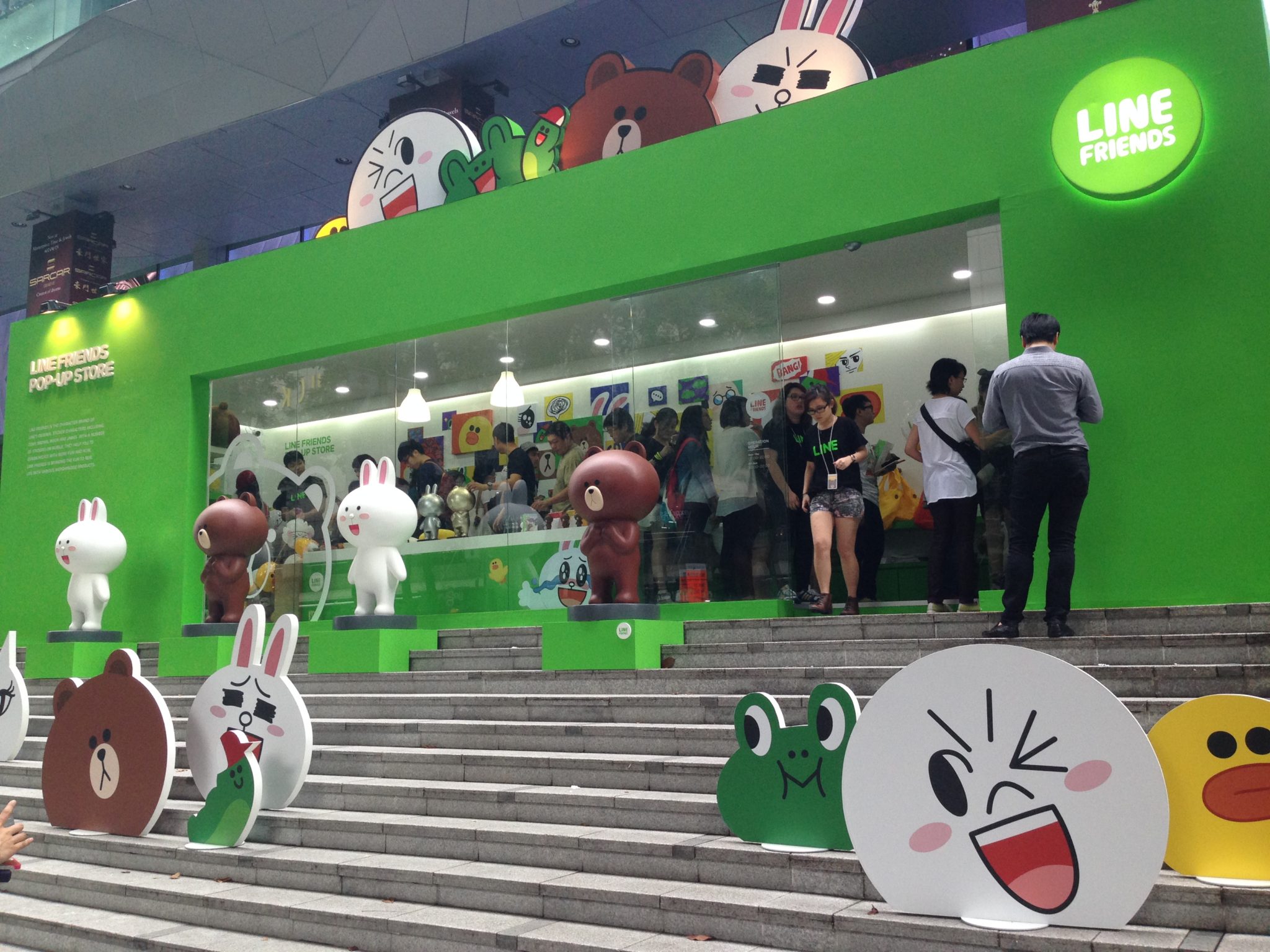
    Line Thailand, a Japanese company that started off as messaging app and has since expanded its services across food delivery to finance, will open its first digital indoor theme park in Bangkok’s Siam Square One on Friday.

    Line Village Bangkok: The Digital Adventure will cover 1300sqm across three floors of the mall. The visitor experience will begin with a mystery: finding a key to get in to Line Village. From there, guests proceed one stage at a time from a space tunnel to a library, then to a kitchen, theatre and rooftop, where the games and Line characters await.

    One of the highlights is for fans to see the world of their favourite chat stickers via a VR headset, and the attraction also includes a merchandise store and a themed restaurant.

    While several Asian cities already have Line stores, Bangkok will be the first to have a permanent indoor park.

  • Kiki pop-up store adds Buzz to Centrepoint in Orchard Road

    Kiki pop-up store adds Buzz to Centrepoint in Orchard Road

    A pop-up store selling KiKi products, including four flavours of its Taiwanese noodles, has launched at the Centrepoint in Orchard Road.

    It is part of a collaboration between Buzz Convenience Store and KiKi Fine Goods Singapore and will open daily for two to three months. Products available at the 205sqft KiKi pop-up store include Mala Paste and Sichuan Pepper Powder as well as noodle packets in four flavours.

    Buzz was the first retail chain to bring the noodles to Singapore on February 1. The noodles are promoted by Taiwanese actress Shu Qi, and have been promoted as a healthier alternative because they are sun-dried, unlike many other types of instant noodles which are fried.

    Visitors to the pop-up store on June 16 can join a tasting session with Singaporean chef John See, who will be cooking the Aromatic Scallion and Sichuan Pepper noodles.

    Meanwhile, the food director for upcoming movie Crazy Rich Asians will be at the store the same afternoon.

  • Thailand Post to launch e-commerce service offering local products

    Thailand Post to launch e-commerce service offering local products

    Thailand Post is to add e-commerce to its logistics services, offering locally made products from across the country.

    From the fourth quarter, the enterprise will pilot exports of community-made products to Japan by collaborating with Japanese online marketplaces. The move aims to capitalise on cross-border e-commerce to compete with Chinese internet giants dumping their products in Thailand.

    “The company spent 10 million baht to launch Thailandpostmart.com, helping local communities sell their products in a marketplace with special delivery costs,” says Thailand Post president Samorn Terdtampiboon. The website, co-developed with BEC Tero, gathers local products nationwide into a “digital community”, aiming to be the largest distribution channel for agricultural products, crafts, food and One Tambon One Product items.

    The site’s eight categories are halal products, health and beauty, mail products, best cuisine in Thailand, best provincial products, locally made products, home and garden, and automotive.

    In the next phase, the site will integrate with at least 5000 points of sale in communities by year-end through collaboration with the Ministries of Commerce, Industry, Interior, Energy and Agriculture, as well as the Bank for Agriculture and Agricultural Co-operatives, to bring more local products to the e-marketplace.

    After the official launch, there will be an estimated 12,000 stock-keeping units of locally made products by April next, with THB200 million (US$6.2 million) in sales revenue through the website.

    Products can be delivered to buyers within two days after order and payment, and mobile apps for both Android and iOS will be available soon.

    By the fourth quarter, Thailand Post will pilot cross-border products to Japan’s largest e-marketplace for items like crafts, jewellery and locally made goods.

    Thailand Post will next month launch an e-wallet developed with partner 2C2P.

  • Katong Plaza up for increased sales

    Katong Plaza up for increased sales

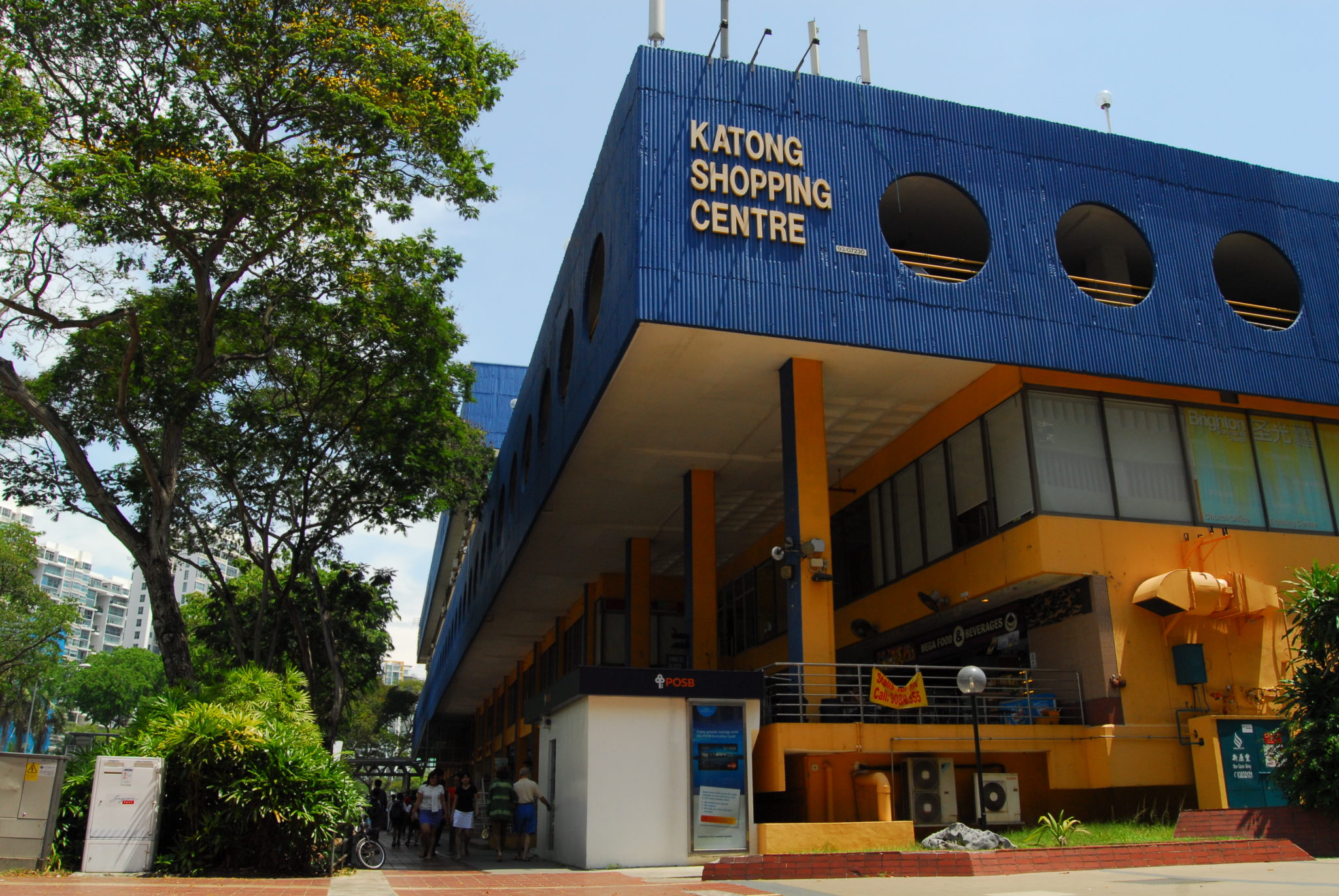
    Freehold Katong Plaza is up for collective sale at S$188 million, the expected price translating to $1969 a square foot per plot ratio.

    Sole marketing agent Huttons Asia says the mixed commercial and residential development has a land area of 34,044sqft and can yield a possible 102,133sqft of gross floor area after redevelopment.

    It is 120m from the future Marine Parade MRT station, says Huttons Asia’s head of investment sales Terence Lian. It is also close to schools.

    “Katong Plaza is strategically nestled within an established F&B and retail belt in the heart of Katong. We see a huge potential for the site to be transformed as the successful developer could introduce lifestyle cafes and eateries along the plot’s 150m frontage along Brooke Road,” says Huttons Asia’s deputy-head of investment sales Angela Lim.

    The public tender for Katong Plaza closes on Saturday next.

  • MyDeal launching Click Frenzy-like sales event with discounts

    MyDeal launching Click Frenzy-like sales event with discounts

    Online marketplace MyDeal has launched an end of financial year (EOFY) sales event, spruiking discounts and offers from its own sellers as well as participating retailers that will offer sales on their own sites.

    Called Australia’s Night Online, the sale will kick off at 6pm on 26 June and last for 24 hours.

    Customers can expect discounts on a range of popular items such as iPhones, Surface Pros, as well as discounts across commercial products such as office furniture, computers and office supplies.

    MyDeal plans to leverage the existing consumer spending intent to build hype for participating retailers, from technology brands, like Microsoft to fashion brands like Nasty Gal.

    The marketplace has partnered with Cash Rewards, Houzz, ZipPay and Compare and Connect to drive traffic for the event and expects impressions of more than 10 million.

    It has also partnered with Rakuten Marketing, which will be facilitating advertising space during the event for retailers not participating through the MyDeal platform.

    MyDeal is launching Australia’s Night Online off the back of its success during Click Frenzy 2017, when it was the most visited online retailer with 433,000 visits, according to Hitwise.