Author: Mei Ling Tan

  • Queensland strawberries shine in Asia

    Queensland strawberries shine in Asia

    A delegation of Queensland strawberry growers and industry representatives recently returned from Hong Kong and Indonesia.

    The delegation visited 17 different retail outlets, from high-end supermarket chains such as Great Food Hall in Hong Kong and Ranch Market in Jakarta, right through to suburban wet markets and local street stores.

    While encouraged by the opportunity they saw to ship fruit into these markets, the delegates also gained an impression of the competitive environment they are entering.

    “Hong Kong is a very competitive market with strawberries from the US available in every market type,” said Luigi Coco, chairman of the Queensland Strawberry Growers Association and a strawberry grower from Elimbah. “US strawberries are also available in Jakarta with locally-grown Indonesia strawberries also available.”

    The delegation coincided with a number of trials involving Queensland strawberry exports.

    Coco, from A&E Coco and Sons, Charmaine Davey from Berry Patch Marketing, and Brendon and Ashleigh Hoyle from Ashbern Farms all collaborated to trial shipments to both Hong Kong and Jakarta.

    “Within 24 hours of picking the strawberries on our farm, they can arrive at the importer’s distribution centre in Hong Kong” said Brendon Hoyle. “The Hong Kong cold chain is very sophisticated and strong relationships between these businesses and the retail and food service industry has been established”.

    The supply chain to Jakarta is slightly more complex than Hong Kong, with no direct flights from Brisbane currently available. There is also a requirement for pest treatment.

    Despite these challenges, Queensland strawberries were exported and available for purchase by consumers.

    “It was a highlight seeing strawberries from our farm being sold and purchased in Ranch Market in Jakarta,” said Davey. “The colour and size of the Queensland-bred strawberry varieties, including Red Rhapsody, are very attractive to the consumer.”

    Jennifer Rowling, the development officer for Queensland Strawberry Growers, and Clinton McGrath and Bronwyn Ford, both from the Queensland Department of Agriculture and Fisheries, were also part of the delegation.

    The travel was part of a project funded by the Queensland government’s Growing Queensland Food Exports programme, which was also supported by the Queensland Strawberry Growers Association.

  • HKD6 Million Parking Spot Sets New Record in Hong Kong

    HKD6 Million Parking Spot Sets New Record in Hong Kong

    What would you do if you had over USD760,000? Some might purchase a house or travel around the world, but in high-cost Hong Kong, one buyer just used that amount to buy a 15-square-meter parking spot.

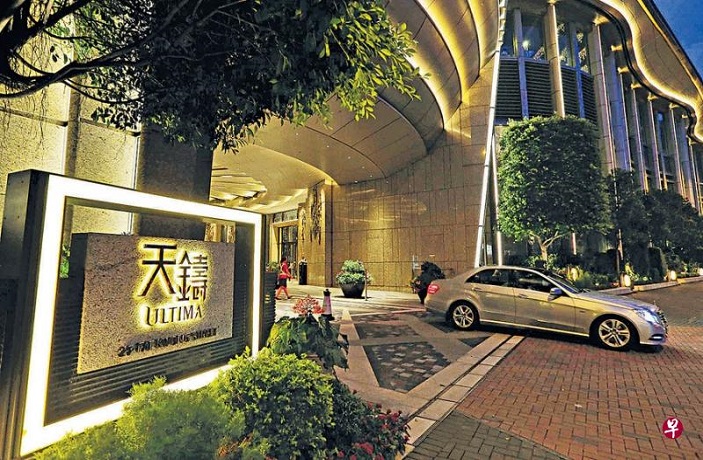
    The parking spot is located in Sun Hung Kai Properties’ Ultima apartment complex in Kowloon District, and sold for HKD6 million (RMB4.86 million) last week.

    The average price of parking spaces in Ultima costs over HKD40,000 per square meter, well above an average of HKD15,000 across the whole city and HKD16,000 in Kowloon District, as measured by local real estate company JLL.

    Based on official documents, the seller was a Hong Kong couple who paid HKD3.4 million for the parking spot last September. Since then, the value has risen by about 76.5 percent.

    The deal set a new record in Hong Kong, one of the most unaffordable cities in the world. The Special Administrative Region also previously made headlines as being the most expensive place to shop, as well as rent offices and retail space, on Earth.

    As the graphic above shows, the previous highest price for a parking spot in the city was HKD5.18 million, set one year ago. The Ultima apartment complex has 527 units and only 370 parking spots, which makes parking cars very difficult.

    Sandia Lau, a director at Centaline Property Agency, explained more about the ‘luxury residential area.

    “The residents have a lot of cash and simply do not care about a few million dollars when a flat costs about HKD100 million,” she said, “Their convenience is more important.”


  • These 6 Countries Are Booming in E-commerce

    These 6 Countries Are Booming in E-commerce

    Among the 28 largest internet companies in the world, 11 are e-commerce businesses. Per Statista, Global retail e-commerce sales are forecasted to reach $2.77 trillion this year. Consider that 62 percent of the world’s 7.2 billion population already owns a mobile phone, and by 2019, over 5 billion people will have access to the internet through their smartphones.

    Yet while global e-commerce is undoubtedly thriving, it’s true potential remains untapped, especially when looking at the growth potential for these six booming e-commerce markets.

    China

    China’s 2017 retail e-commerce sales reached $1.2 trillion. From the rise of two of the top 10 internet companies in the world in JD.com and Alibaba, to socially adopted mega-shopping holidays like “Singles’ Day”—China’s large economy is turning more digital by the day. This is underscored by its high consumer confidence index (CCI), currently sitting at 122 as of January 2018. E-commerce accounts for 23 percent of China’s overall retail sales, and there’s a lot of room for growth. China boasts a forecasted compound annual growth rate (CAGR) over 17 percent. This is on par with many underdeveloped markets expecting to see major e-commerce strides in the near future.

    United States

    While e-commerce only makes up 10 percent of the overall U.S. retail economy, that market is expected to reach $5.3 trillion in 2018. U.S. e-commerce sales generated over $431 million in revenue in 2017. With a healthy 96 percent of Americans shopping online, it’s projected to be a $535 billion market by 2019.

    United Kingdom

    Over 19 percent of retail sales come from online purchase in the U.K. With an annual e-commerce revenue exceeding $121 billion, it’s the third biggest market in the world behind China and the U.S. As of March 2017, 87 percent of U.K. consumers had made an online purchase in the last year.

     Japan

    Japan was projected to generate over $111 billion dollars in retail e-commerce sales in 2017. Japan’s relatively small country size, single language, urban population and widespread tech adoption (91 percent) all contribute to its ideal e-commerce environment. E-commerce sales in Japan make up less than eight percent of all retail sales, leaving plenty of room for future growth.

     Germany

    Ninety-three percent of German consumers shopped online in 2016, according to research from Mintel. German e-commerce revenue accounted for nearly eight percent of overall retail sales in 2017 at roughly $77 billion. Growth ahead looks steady with 2018 and 2019 projected to haul in $82.5 and $87.5 billion, respectively. These numbers look even more encouraging when you consider under half of German retailers offer their goods online, leaving inevitable room for growth in the coming decade.

    South Korea

    South Korea’s e-commerce boom has largely resulted from widespread mobile phone adoption and an overall tech-savvy culture. Having the fastest Wi-Fi in the world probably helps too. Their e-commerce sales accounted for 9.8 percent of its total retail sales in 2017 at $46.6 billion annual revenue. E-commerce revenues project to hit $50.5 billion in 2018.

    Countries to Watch

    These six countries may be the powerhouses, but e-commerce is growing globally. In India, where just 2.2 of total retail sales comes from e-commerce, a massive population and widespread mobile phone adoption make it a sleeping giant. In fact, India ranks just behind Malaysia for CAGR from 2016-2021, at 23 percent. Other Southeast Asian island countries like Indonesia, the Philippines, and Vietnam forecast for 20.7, 18.3, 17.2 percent, respectively. And don’t count out large countries like Brazil and Russia, the latter of which boasts the largest number of internet users in Europe.

    Why Borders Don’t Matter

    Aside from country-specific trends, the main thing to take away is that the world is going online to shop for the things they need. According to a Nielsen report, 57 percent of online shoppers purchased from an overseas retailer in the last six months. Only one continent—North America—saw less than a majority (45 percent) of shoppers making an overseas purchase.

    Global e-commerce is on pace to truly be global, as consumers become more comfortable looking to e-stores abroad for more product selection, better prices, or more availability. This borderless e-commerce system will handsomely reward the companies that learn how to build an ecommerce website with appeal to a global audience and personalized experiences.

  • Alibaba, JD.com race toward faster delivery

    Alibaba, JD.com race toward faster delivery

    Alibaba holds a controlling stake in smart logistics company Cainiao, a relationship that has drawn much scrutiny from the SEC, so it has been moving toward this concept of a vast smart logistics network for a while now. Its efforts to ramp up faster delivery are not only about making that happen throughout China, but internationally as well.

    Alibaba has also been facing growing competition from JD.com, its biggest e-commerce rival in China, and in recent years the companies seem to have been pursuing similar growth strategies, with frequent investments in brick-and-mortar retail. Alibaba, for its part, invested more than $1 billion in two different firms to feed it brick-and-mortar expansion, while JD.com has deepened a partnership with Walmart, and committed to building hundreds of unmanned convenience stores.

    Now, the rivals are shifting their attention to logistics, perhaps taking a page from Amazon’s book of how to expand retail dominance by building a network capable of reliable express delivery. That being said, Alibaba  and JD.com have much more vast canvases to work with, though they could face similar regulatory scrutiny being placed on technologies like drone delivery in the U.S.

    The big question is just how far both Chinese companies will look to extend their logistics reach. JD.com has already reportedly been considering a fulfillment center in Los Angeles as an outpost for a U.S. logistics expansion. Meanwhile, Alibaba has dabbled in the U.S. market, mostly focusing on Chinese tourists and immigrants through Alipay, although at one point it was rumored to be in talks with Kroger about a partnership.

  • Dippin’ Dots and Doc Popcorn to Debut in China

    Dippin’ Dots and Doc Popcorn to Debut in China

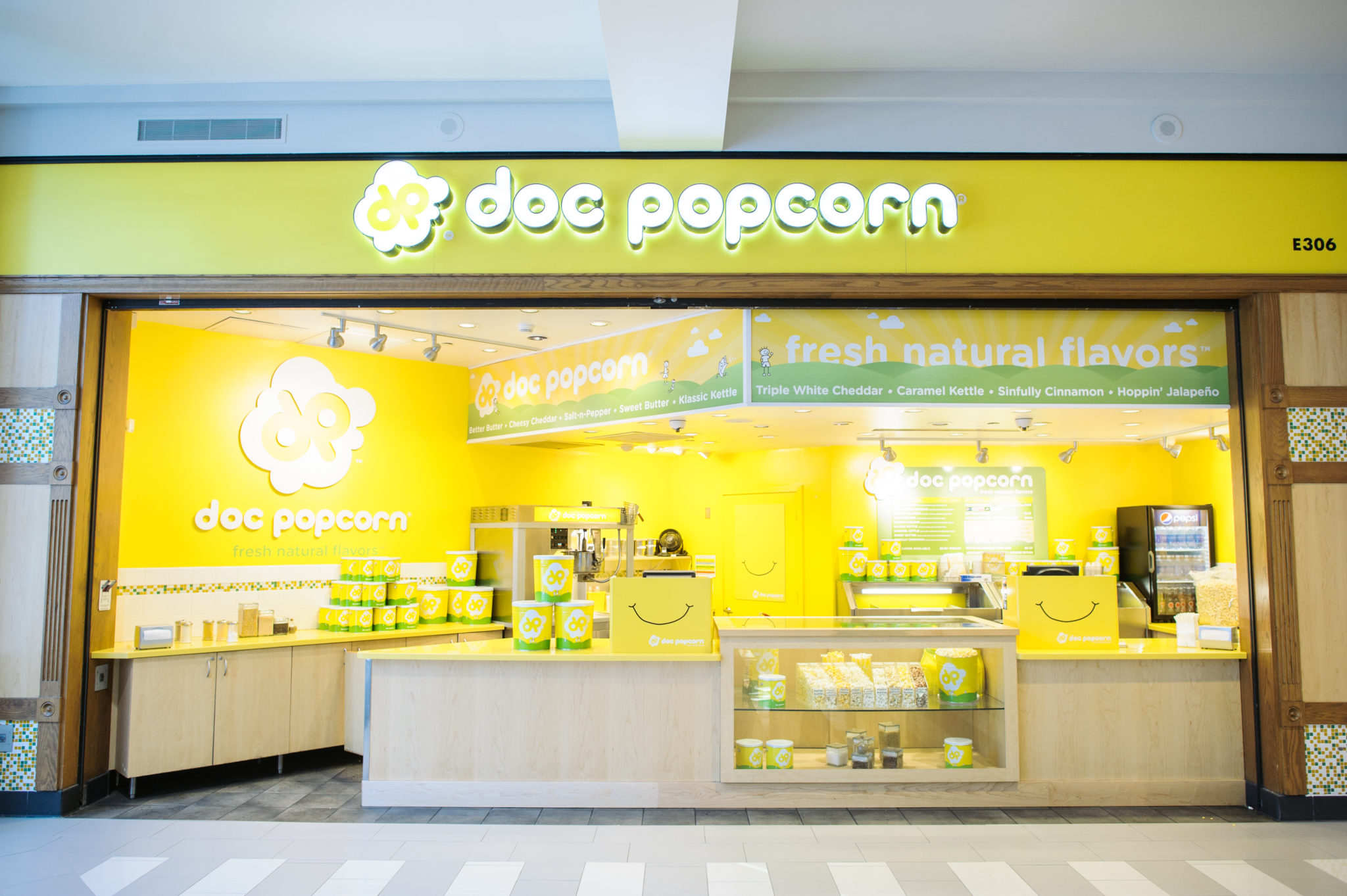
    Two US fast-food chains, Dippin’ Dots and Doc Popcorn, have made their debut in China.

    It is opening its first two locations, in Pudong and Yangpu in Shanghai, with a third location scheduled to open at the Shanghai South Railway Station in August. A flagship store is planned for the Shanghai Shimao Plaza Store on Nanjing Road.

    “We look forward to serving our products at venues where families gather to have fun, and with more than 26 regional amusement parks in development, we are confident in the growth opportunity,” says Dippin’ Dots chief development officer Stan Jones.

    Dippin’ Dots and Doc Popcorn plan to open corporate sites as well, targeting high-traffic areas like entertainment venues.

    While the company says it plans to open outlets throughout China, it has not said if that includes Hong Kong or Macau.

    “We’ve streamlined the supply-chain process to ensure fully stocked product,” says Jones.

    Warehouses and cold storage have been set up in China as product will be shipped from the US. The sister brands’ franchising group established a business entity in Asia three years ago and signed its first licensing agreement with Shanghai Desire Food.

    Dippin’ Dots has produced and distributed its flash-frozen beads of ice cream, yogurt, sherbet and flavoured ice products since 1988. Made in Paducah, Kentucky, the products are distributed throughout the US and in 11 countries.

    Using whole-grain kernels and proprietary flavours, Doc Popcorn handcrafts popcorn free of trans fat, MSG, and artificial colours and preservatives. Founded in Boulder, Colorado, Doc Popcorn started franchising in 2009.

  • Singapore retail sales still lacklustre in April

    Singapore retail sales still lacklustre in April

    Retail sales continued its lacklustre streak in April, ticking up marginally by 0.4 per cent compared to a year ago, dragged down by a sharp dip in computer and telecommunications equipment.

    This followed March’s 1.1 per cent drop in retail sales.

    Excluding motor vehicle sales, retail takings inched up 0.7 per cent in April, according to Singapore Department of Statistics data released on Tuesday.

    Performance among the retail industries was a mixed bag, with the largest decline seen in computer and telecommunications equipment (-9.8 per cent), followed by apparel and footwear (-3.4 per cent), supermarkets and hypermarkets (-2.3 per cent), and department stores (-1.7 per cent).

    The top performer in April was petrol service stations, which reported a sales growth of 8.5 per cent, due partly to higher petrol prices.

    On a month-on-month basis, seasonally-adjusted retail sales fared even worse, decreasing by 0.2 per cent in April. Excluding motor vehicles, retail sales declined 1.7 per cent.

    The total retail sales value in April 2018 was estimated at S$3.6 billion, of which online sales accounted for about 4.4 per cent.

    The food and beverage services index was also awash in red in April, dipping 1.2 per cent compared to a year ago. On a month-on-month basis, it fell by 3.4 per cent.

    The total sales value of food and beverage services in April 2018 was estimated at S$662 million, lower than the S$670 million in April 2017.

  • Miniso India plans big expansion this year

    Miniso India plans big expansion this year

    Discount chain Miniso India plans to open 200 stores by year’s end.

    India has become a fertile market for many international retail brands, including Gap, H&M and Zara. So far, Miniso has opened 20 stores in India.

    A World Bank report says India’s economy has grown by 6.7 per cent from last year, and is expected to grow to 7.3 per cent this year, overtaking China as the world’s fastest-growing economy again.

    India’s GDP of about US$2.6 trillion made it the world’s sixth-largest economy last year.

    Rapid development of the economy also laid a good foundation for the prosperity of India’s retail industry.

    India’s robust economic growth and rising household incomes are expected to increase consumer spending to $4 trillion by 2025.

  • Reebok names new global creative director

    Reebok names new global creative director

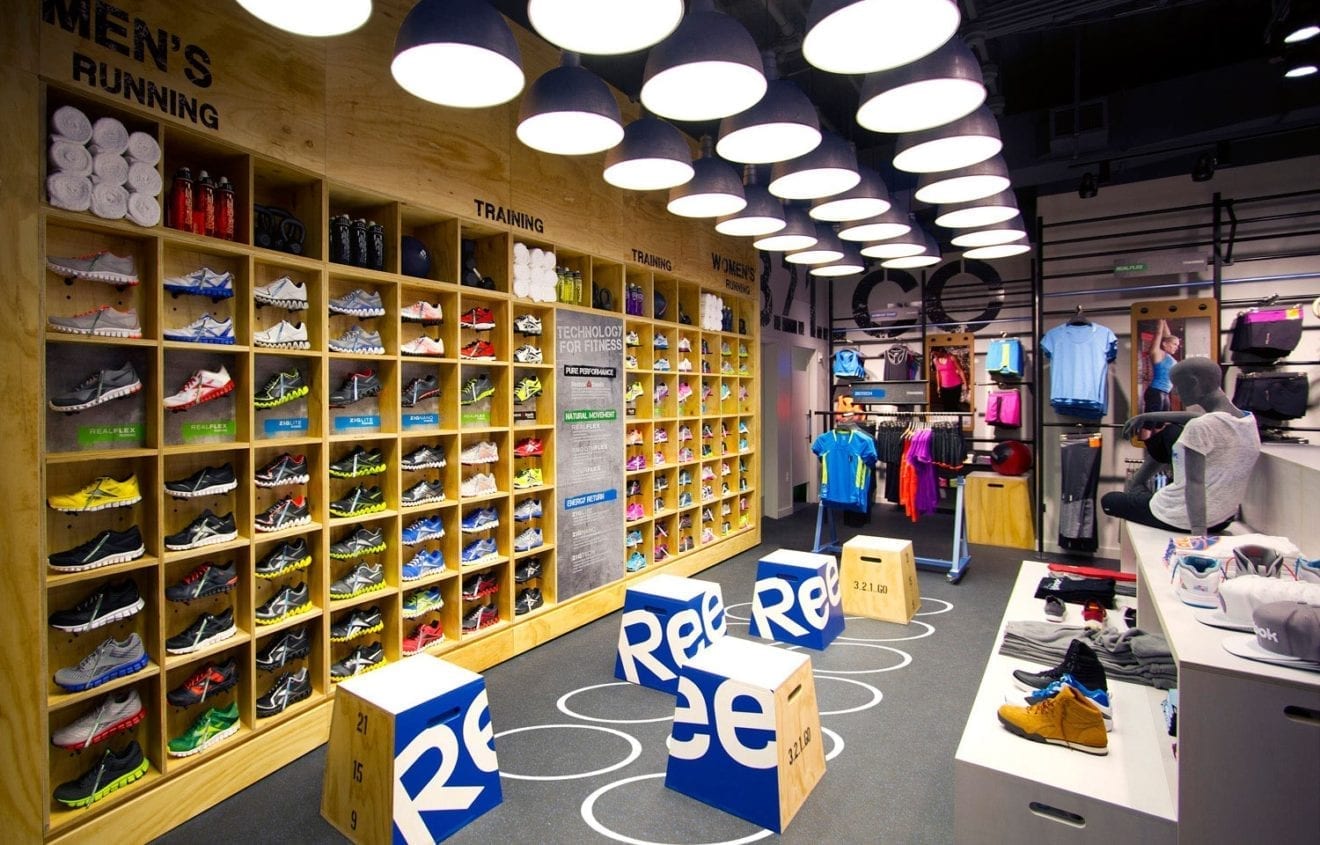
    U.S. sporstwear brand Reebok has recruited Nike alumni Karen Reuther to be its global creative director.

    The Adidas-owned Reebok has tapped Reuther to replace Thomas Steinbruck, who exited the company earlier this year.

    With 12 years brand creative experience at Nike, Reuther was appointed global creative director at the rival U.S. sports company during her multi-year tenure. She has also served as VP creative at VF Corporation and director of consumer insights and trends at Ziba Design.

    Most recently, the executive served as creative director and brand psychologist at Cast Collective, a Boston-based group of consultants specialising in design, innovation and technology.

    Clients included Puma, Vans, Timberland, Pantone, Piaggio Fast Forward, TJX Cos. Inc., Everybody Fights and Ideo.

    “Karen brings a wealth of experience, both in our industry and from the outside,” commented Reebok President Matt O’Toole.

    “Her expertise, clear vision and leadership skills will guide our design excellence, inspire creative rigor and craft and deliver a unified global design strategy for Reebok.”

    Reuther will lead all aspects of design and brand identity across all of Reebok’s brands and channels, working in conjunction with the company’s product and marketing teams.

    “I am incredibly excited to join Reebok,” said Reuther in a release. “

    “This is a brand with a heritage that is unmatched, with some of the most iconic footwear silhouettes in the industry. But beyond this great heritage is an authentic fitness brand, with a unique and powerful purpose. I am particularly excited to help Reebok merge the past and the present–bringing fitness and fashion together to create the very best products on the market.”

    In its latest earnings release in early May, Adidas said sales at loss-making fitness brand Reebok fell 3% due to declines in the training and running categories.

    Overall, Adidas said group sales rose 26% in greater China for the same period.

  • Lift non-tariff barriers on car imports, Thailand tells Vietnam

    Lift non-tariff barriers on car imports, Thailand tells Vietnam

    Thailand wants Vietnam to lift non-tariff barriers on its completely built-up car units (CBU).

    Earlier this year, the Vietnamese government had stiffened inspections on all CBUs, which are completely assembled units ready to export.

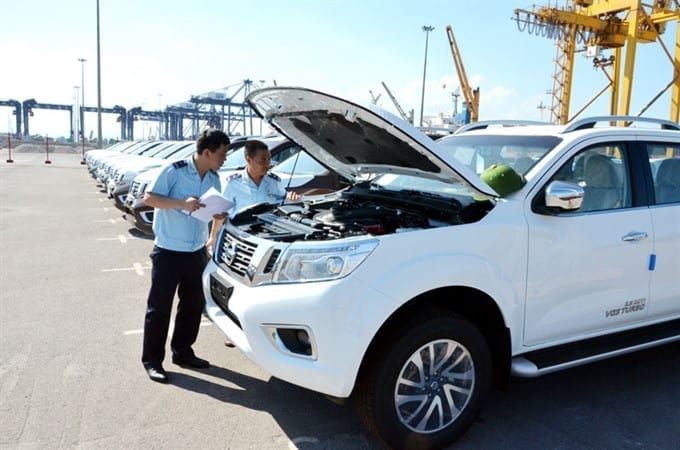
    The new restriction requires CBUs to pass environmental and emissions tests done by a Vietnamese laboratory.

    However, Vietnam lacks the laboratory facilities to handle a large number of cars, and the move could be a new measure to block car imports.

    Vietnam Register is currently the only car testing facility. The agency will test select a car from a shipment at random. The whole process will take about two months, a long time for a shipment to be passed.

    Somchai Harnhiran, Thailand’s deputy minister of industry, said the country’s automotive industry has lost 80 percent of its car exports to Vietnam. He said both governments will discuss this topic further in the future and hopes “for a good sign from both countries.”

    It is also reported that shipments of cars to Vietnam have been stalling for over six months.

    Thailand’s auto makers have reported that around 4,590 units were exported to Vietnam in the first quarter of this year, while the country’s annual target is 65,000 units.

    Auramon Supthaweethum, director-general of the Trade Negotiation Department, said that the country will continue to revisit this issue at every upcoming meeting with Vietnam and will propose mutual recognition arrangements (MRAs) at the Joint Trade Committee meeting in August.

    She explained that MRAs will allow Thailand to inspect its cars before shipping them to Vietnam.

    Vietnam has yet to agree on the MRAs.

    Among 922 imported cars since the beginning of June, 564 cars were from Thailand, according to General Department of Vietnam Customs.

    Beside Thailand, Vietnam has this year imported cars several other countries including China, Germany, Slovakia, Hungary, Spain.

  • Red soles are Christian Louboutin’s trademark

    Red soles are Christian Louboutin’s trademark

    World-famous designer Christian Louboutin has won a legal battle to protect his brand’s distinctive red soles.

    In 2012, Louboutin sued rival firm Van Haren for selling high-heeled shoes with scarlet soles, reports bbc.com.

    Under EU law, companies cannot trademark common shapes of products such as the soles of shoes and Van Haren argued that applying red to a shoe sole came under the law and, as a result, Louboutin did not have trademark protection.

    However, the European Court of Justice said shape trademarks do not apply to Louboutin’s red sole, reports bbc.com.

    Louboutin first designed his trademark shoe in 1993, using an assistant’s red nail polish.

    The luxury brand said it “warmly welcomes” the judgement.

    “For 26 years, the red sole has enabled the public to attribute the origin of the shoe to its creator, Christian Louboutin. This case will now be referred back to The Hague court, which is expected to confirm the validity of the red sole trademark,” said a statement from the company.

  • More Japanese renting clothes and bags

    More Japanese renting clothes and bags

    • Millennials do not care much for car or home ownership, but for smaller purchases like fashion they have tended to follow the habits of generations past.
    • With mobile technology making sharing so much easier and the practice more familiar, more are turning to fashion rental services, and now major retailers like Marui and Aoki are adding their weight to the trend.
    • With one site claiming 70% of customers are new to the brand, renting offers clear marketing benefits to brands too.

    Fashion rental services are proliferating in Japan. For a fixed fee, they offer consumers the chance to rent a set number of clothes and accessories over a month or longer. The new services emulate those in the West, such as Rent the Runway in the US, which claims 6 million users and sales of US$100 million, and there are numerous start ups in this area.

    There are two main types of fashion subscription: one where customers choose the items themselves, and the other where the rental service selects product based on preferences.

    Start Today’s Omakase Teikibin, which launched last month, uses the latter model, with stylists selecting new items based on customer profiles that are sent automatically to subscribers on a regular basis.

    Customers can then choose to buy or return the items they receive. Whatever the type, almost all services offer customers the chance to keep renting an item in their possession.

    Fashion rental services offer brands a great way to attract new customers who might be afraid to invest in a purchase, particularly if it is a high ticket item, or just because it is a new type of style they are not used to.

    For true fashion lovers on a limited budget, renting means being able to wear many more brands than would be possible by purchasing, and, for busy mums/working women, renting via online services is quick and almost risk free, obviating time spent in shop changing rooms.

    In Japan, there are also many other categories of product being offered for rent. Recent new services include Flect from Dinos-Cecile, which rents furniture for periods of up to three years, and Rentio, which specialises in rentals of high end cameras and scanners, with pick up and returns via convenience stores.

    Stripe International has been offering fashion rentals through its Mechakari service since September 2015. Its claim that, since starting, 70% of customers are new to Stripe brands shows just how beneficial fashion subscriptions can be as a marketing tool for a retailer or brand – a marketing tool that consumers pay for to boot. There have been 600,000 downloads of the Mechakari app to date although only around 10,000 users pay for the ¥5,800 a month subscription.

    Stripe can even rent items that are hard to sell, such as pure white coats and jackets which customers would normally baulk at buying for fear of getting dirty. Since rental services include cleaning fees, this doesn’t seem to be a problem. Unlike other services, Mechakari only rents out new clothes – returned items are cleaned and then sold on Stripe’s website as used clothing.

    Laxus and Karitoke are two of the most well-known fashion rental services, with Laxus specialising in high end bags and Karitoke in watches. Although the core customers are in their 30s, both firms see a significant number of younger subscribers on lower incomes signing up for the chance to own a slice of luxury even if only for a month – thereby also creating potential customers for luxury brands in the future.

    Both services claim they are able to rent the much gaudier items that luxury brands say sell in much smaller quantities, and often the gaudier the better – i.e. the lack of long-term commitment makes consumers much bolder.

    Laxus’ app was downloaded 400,000 times in 2017, and garnered gross transaction values of ¥15 billion. For a flat monthly fee of ¥6,800 it now rents 25,000 products from 54 brands ranging from Louis Vuitton to Jimmy Choo, and claims a bag can be rented in 20 seconds using its mobile app. A new idea is to encourage users to send in their own luxury bags to rent out to others; Laxus cleans them up and then gives owners ¥2,000 a month for each bag rental.

    Air Closet, which launched in February 2015, offers a styling service like Omakase Teikibin, each month sending a package of items selected from 100,000 SKUs covering 300 brands. 70% of its customers are women in their 20s to 40s, and 40% have an average income of more than ¥7 million a year.

    Most are typical select shop customers, but Air Closet’s surveys of its customers suggest around 80% like items or brands sent to them that they wouldn’t normally consider if they were purchasing.

    Air Closet now claims 150,000 members, but does not reveal paid subscribers – although to encourage more subscriptions, from February it offered a money-back guarantee to customers who are not satisfied after one month.

    Edist.Closet is similar to Mechakari, but with the added benefit of having professional stylists in place to select the merchandise offered, although customers retain control of what they rent. It has 10,000 members, mostly non-paying subscribers, of which 50% are mothers. While not revealing how many paid subscribers it has, Edist claims 90% of those who do subscribe remain after three months.

    Businesswear retailer Aoki Holdings launched its own take on the rental market In April. Called Suitsbox, the service offers subscribers Aoki suits along with shirts and ties, with a minimum monthly fee of ¥7,800, but rising to ¥15,800 and ¥24,800 – not a bad return given the top priced suit on Aoki’s online store is only ¥79,000.

    The basic service includes one suit, shirt and tie, while the most expensive service delivers three suits, four shirts and two neckties a month. As with other services, cleaning is included in the price.

    As rental services have increased in scale, they are becoming a fund of useful data. Air Closet for example makes it easy for customers to give feedback on items rented, sometimes encouraging them with points, helping Air Closet build a database of consumer opinion on brands and items. Stripe International does the same with Mechakari, passing the customer comments back to its product planners.

    SC developers and major retailers are also interested. As reported recently, Marui is a firm believer in the sharing economy and wants to see 5-10% of its sales from such services longer term. It also wants a slice of the fashion rental market, and has started opening up corners in its stores for rental services like Laxus and Karitoke. SC developers are also offering tenancies to Laxus and Air Closet – the latter has created a styling store in Harajuku where customers can get advice from shop stylists, which it intends to roll out to SCs .

    All of which is very positive, but with many services still reluctant to reveal the number of paid subscriptions they have, it is hard to gauge the sustainability of these businesses longer term. Even Stripe International admits much more growth is needed to make services offer a decent return.

    Even so, with the likes of Marui and Aoki on board, fashion rental subscriptions look like they are here to stay. They are particularly suited to those millennials with a lower propensity and desire to own stuff, and are another sign of the increasing assimilation of the sharing economy in mainstream society.


  • Vietnam’s May auto sales slip 0.7 percent year-on-year

    Vietnam’s May auto sales slip 0.7 percent year-on-year

    Vietnam’s total vehicle sales edged down 0.7 percent to 23,065 units in May from a year ago, the Vietnam Automobile Manufacturers’ Association (VAMA) said on Monday.

    Sales by VAMA member-manufacturers edged up 2 percent to 22,374 units in May from the year-ago period, including commercial vehicles, passenger cars and special-purpose vehicles.

    Vietnam’s Truong Hai Auto Corp, which assembles sedans, trucks and buses, led the sales in May, followed by Toyota Motor Corp.

    May sales of passenger cars by VAMA members climbed 20 percent month-on-month, while commercial vehicle sales dropped 18 percent and special-purpose vehicles slumped 40 percent, VAMA said in a report.

  • Toyota Pumps $1b in Grab in Auto Industry’s Biggest Ride-Hailing Bet

    Toyota Pumps $1b in Grab in Auto Industry’s Biggest Ride-Hailing Bet

    Toyota Motor has agreed to buy a $1 billion stake in Grab in the biggest investment by a carmaker into a ride-hailing firm, at a time when traditional automakers are racing to team up with disruptive tech companies.

    The value of six-year-old Grab will be just over $10 billion after the investment, said a person familiar with the matter.

    The deal comes as the auto industry faces a spike in the need for technological prowess with the advent of features such as autonomous driving, while app makers offer passengers the option to forgo car purchases by connecting them with drivers.

    Some automakers have responded by partnering with makers of ride-hailing apps, which dominate the fast-growing field of mobility services, in anticipation of a future of reduced car ownership.

    General Motors has invested in US ride services firm Lyft, whose rival Uber Technologies is also backed by Toyota. Meanwhile Japan’s SoftBank Group – also an investor in Grab and Uber – last month said it would invest $2.25 billion in GM’s autonomous vehicle unit Cruise.

    Toyota’s trading arm invested an undisclosed sum in Grab last year. This time, the automaker is lead investor in a financing round launched after Grab acquired Uber’s operations in Southeast Asia, a region of 640 million people.

    Grab called it the largest-ever investment globally by an automotive manufacturer in the ride-hailing sector.

    The Singapore-headquartered firm did not disclose how much fresh capital it aims to raise. It raised $2.5 billion in its last round in July, resulting in a reported value of $6 billion.

    Grab said it logs six million rides a day via apps downloaded onto over 100 million mobile devices. The firm also offers online to offline services, such as food delivery and digital payments, which it aims to expand deeper into the region using funds from its latest financing round.

    “We will work with partners like Toyota to continue to transform transportation in Southeast Asia,” Grab said in an email. “We want to be the one-stop mobility platform for users.”

    It also said Toyota will appoint an executive to Grab’s board of directors while a dedicated Toyota team member will be seconded to Grab as an executive officer.

    Toyota said it aimed to offer financing, insurance and maintenance services to drivers based on data collected through recorder devices already installed in some Grab vehicles.

    “Going forward, together with Grab, we will develop services that are more attractive, safe and secure for our customers in Southeast Asia,” Toyota executive Shigeki Tomoyama said in a statement.

    The data could also help Toyota develop its own next-generation mobility services, including a self-driving electric vehicle aimed at companies for use in tasks such as ride hailing, package delivery and mobile shops.

    Other Grab investors include Japan’s Honda Motor, South Korea’s Hyundai Motor and Chinese ride-hailing firm Didi Chuxing. Uber acquired 27.5 percent of Grab in exchange for the US firm’s Southeast Asian business earlier this year.

    Grab’s main rival is now Indonesia’s Go-Jek, which last month said it would invest $500 million to begin expanding abroad.

  • Suitsupply still has plans for Asia after its 100th store

    Suitsupply still has plans for Asia after its 100th store

    European men’s fashion brand Suitsupply has opened its 100th international store, in Boston, and plans to expand in Asia.

    Founded in 2000 as a vertically integrated, direct-to-consumer brand that offers customers high-quality menswear at attainable prices, Suitsupply already has stores in Hong Kong and Singapore.

    While the brand started as a webstore, it soon after expanded into brick-and-mortar. It created spaces where customers could feel the brand’s products and have alterations made while they waited.

    “People are drawn to Suitsupply because of the energy and flair we bring to tailoring,” says Suitsupply founder/CEO Fokke de Jong. “They want to experience our brand and product both in person and online.”

    While no specific details were revealed about which Asian markets are a priority for the company, it is thought to favour a push in greater China.

  • Vietnamese stocks fall after 8 sessions of gain, Thailand extends rise

    Vietnamese stocks fall after 8 sessions of gain, Thailand extends rise

    Vietnam shares fell on Tuesday after eight consecutive sessions of gains, while Thai shares rose for a second straight day on the back of energy and consumer staples stocks.

    Broader Asian markets were choppy as the historic U.S.-N.Korea summit started in Singapore amid hopes that it could pave the way to ending a nuclear stand-off on the Korean peninsula.

    The fixation with the summit is as much about whether the two sides will strike a deal as it is about what would comprise a deal, Mizuho Bank analysts said in a note.

    “It appears that the term ‘de-nuclearization’ must be thrown into the mix somewhere, but strictly with wiggle room for both parties… and in return, the United States may offer some conditional reprieve on sanctions with sunset clauses,” Mizuho Bank said.

    Vietnam shares fell as much as 3.3 percent, snapping eight sessions on gains, with Vietnam Technological and Commercial Joint Stock Bank (Techcombank) down 4.5 percent and Vingroup JSC 3.5 percent lower.

    Malaysian shares were down for a third straight session, declining as much as 0.4 percent. Malayan Banking Bhd declined up to 1.3 percent and was headed for a third straight session of fall.

    CIMB Group extended its fall into a third session with a drop of up to 1.8 percent.

    An analyst said there is no immediate catalyst for the local market to see an upward trend as investors are still evaluating the policies of the new government.

    Investors are taking profit on whatever strengths they can find, said the analyst, adding that: “If the (U.S.-N.Korea summit) goes well, it could lead to slight optimism in the local market.”

    Thai shares rose as much as 0.7 percent as convenience stores operator CP All PCL gained 2.2 percent, while PTT PCL rose nearly 2 percent and PTT Exploration and Production PCL added 1.9 percent as oil prices edged higher.

    Indonesian financial markets are closed until June 19 for Eid Al-Fitr, while the Philippines was closed on Tuesday for Independence Day.