Author: Mei Ling Tan

  • Tmall and Intersport launch interactive megastore in Beijing

    Tmall and Intersport launch interactive megastore in Beijing

    Tmall and Intersport unveiled a co-branded store in Beijing yesterday, complete with interactive features that offer consumers in China a more engaging and informative shopping experience.

    Under the new name “Tmall x Intersport,” the two-story, 1300sqm space that sits in Beijing’s tourist hotspot Qianmen has been transformed into a futuristic megastore. The revamp underscores that more global brands are recognising the power of New Retail—tech-driven retail model pioneered by Alibaba that captures the best of online and offline shopping experiences.
    “We believe Tmall is the ideal partner in our endeavour to further our engagement with Chinese consumers by providing them the best-quality and most-fashionable sports goods in the market,” said Victor Duran, CEO of the Switzerland-based sportsgoods retailer Intersport.

    Established in 1968, Intersport has more than 5000 branches in 44 countries. It sells sports brands such as Nike, Puma, Reebok, Adidas, North Face and Dynatour. Intersport made its foray into China in 2013 and opened its Tmall flagship store in September 2016.

    “These new in-store technologies provide consumers in China an unprecedented shopping experience that is both entertaining and educational so they can have fun while shopping for the exact products that meet their unique demand,” the CEO said.

    Currently, Intersport has 24 stores in China with the goal of expanding to at least 100 – a combination of larger flagship stores in major cities and smaller specialty stores – during the next couple of years. “It makes sense to have Tmall technologies to be the link to connect all the stores together,” Duran said.

    New Retail is the new solution

    Many industry watchers have pointed to New Retail as the solution for brick-and-mortar retailers feeling the squeeze from e-commerce. By harnessing engaging technologies, store owners can attract more customers through both online and offline channels. Moreover, these technologies can generate insights to help businesses gain a more-precise view of China’s market trends and customer preferences.

    “We are excited to see an extensive range of Tmall’s New Retail technologies and features under one roof in Intersport’s store,” said Jessica Liu, president of Tmall Fashion and Luxury. “What’s even more encouraging is to see our merchants embracing the New Retail concept and exploring its potential. When customers try out these features firsthand, we are confident that they will see the convergence of online and offline shopping as the future of retail.”

    The Tmall and Intersport store is the latest example of how Alibaba’s New Retail technology is helping brands build up and reimagine their business in China since the push began in late 2015. To date, Tmall Fashion has collaborated with over 400 brands, including top names such as Burberry and Zara, and upgraded more than 50,000 storefronts all over China. Liu said the goal is to increase the collaboration to 1000 brands and help digitise 200,000 storefronts nationwide in the next year.

    Educate your customers

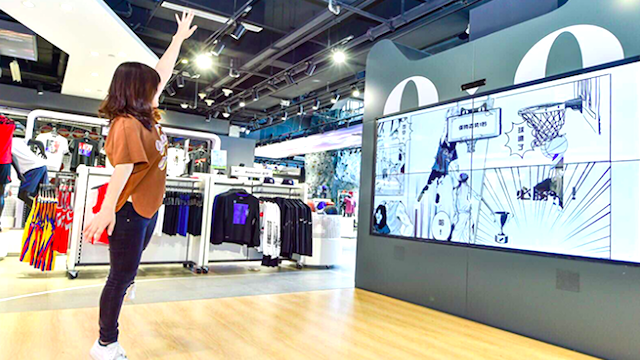
    At the grand reopening yesterday, customers were welcomed by an array of state-of-the-art technologies and augmented reality-powered interactive games. For example, the Smart Shelf and the Smart Shoe Mirror can instantly tell customers all the information they need about a certain shoe they pull from the shelf. This way, the customer can make a more-informed decision on whether or not the products fit their individual demands.

    Education on how a product suits an individual’s needs is an especially crucial element in the sportswear and gear market in China, said Tom Birtwhistle, director of China digital strategy at PricewaterhouseCoopers.

    With a government-led mandate to become more physically fit, and as China gears up to host the 2020 Summer Olympic and the 2022 Asia Games, Chinese customers are becoming more interested in adopting an active lifestyle, he added.

    “Chinese consumers are massively curious in learning about new brands and products. For new sports they want to be educated on the activity and understand how technical features can enhance their performance,” said Birtwhistle.

    His research indicates growth in the athletic fashion category is outpacing China’s overall fashion market. The segment is forecast to see 9 per cent growth annually in sales between 2017 to 2020, versus just 4 per cent for men’s and women’s fashion.

    At the smart megastore, shoppers can also get wardrobe tips from an AI Shopping Assistant – an interactive mirror that recommends related accessories or items that complement the article of clothing they are trying on.

    Can’t find what you want in the store? No problem. The megastore is equipped with Cloud Shelf technology, a virtual shelf that quadruples the volume and production selection customers can choose by simply tapping on the touchscreens, according to Tmall.

    A 24-hour interactive window display at the store’s main entrance means people can shop at the megastore around the clock. By using motion-sensor technology, the giant screen wall can distinguish the gender and approximate age of the passersby and recommend the best type of shoes for that person.

    Those who don’t want to lug heavy shopping bags or bulky shoe boxes around the streets of Beijing can opt to have their purchases delivered to a designated address anywhere in the country. Cainiao, Alibaba’s logistics service, can make the delivery in as quickly as two hours for locations within 5km of the store. Next-day delivery is also available for locations outside of Beijing.

    By scanning the QR code of a product on their phones, customers of the Tmall and Intersport store can also place the products in their Virtual Shopping Bag, so they can still buy the item online after they leave the store.
  • Rivieras brings South of France lifestyle to HK

    Rivieras brings South of France lifestyle to HK

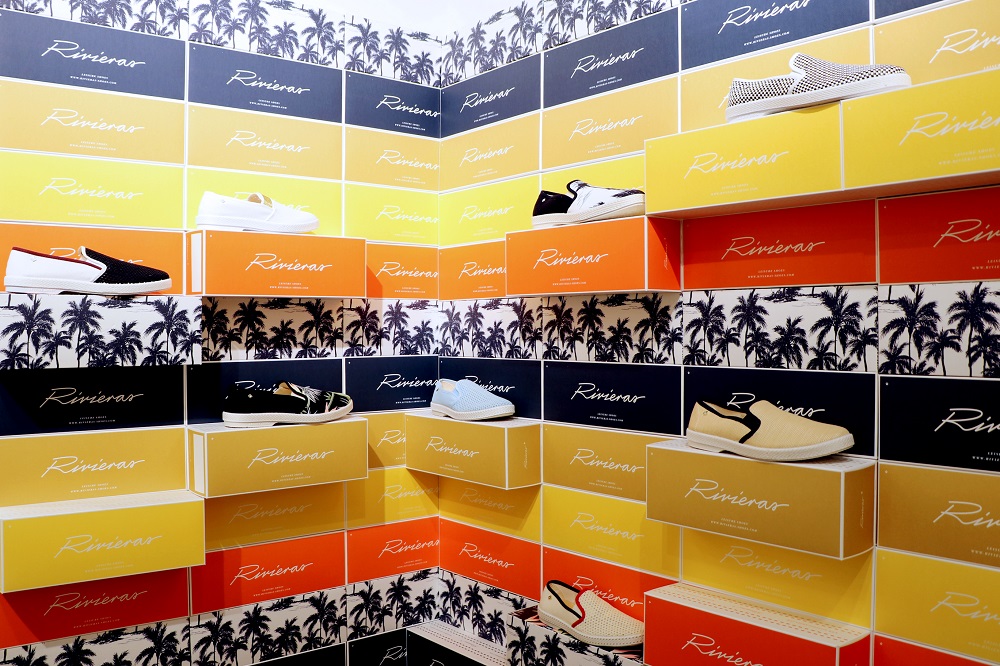
    The French Riviera has long been the bastion of chic and as such has inspired countless fashion brands that promise to recreate its jet-set look, from Vilebrequin swimwear to K. Jacques sandals and APM Monaco jewellery.

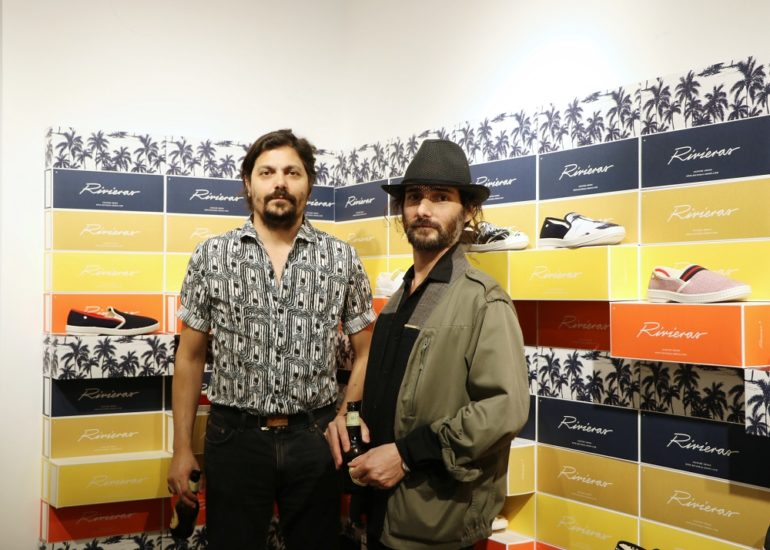
    The one that carries its name, however – a footwear brand that recently opened its first pop-up store at Kapok in Hong Kong – isn’t about emulating the style of its rich and famous residents.

    “It’s more about recreating a lifestyle, or a feeling. Our products are not aspirational – we want our customer to be able to buy more than one pair because it not only looks good, but it’s easy to wear with everything,” Rivieras co-founder Fabrizio Corveddu says.

    Former marketing executive Corveddu founded the brand with his creative director cousin Dan Amzallag almost a decade ago. Interestingly, the inspiration for its first and most popular style didn’t come from France, but from a popular shoe worn in Spain in the 1950s that resembles a moccasin.
    To bring it into the 21st century, the duo altered the silhouette slightly and added functional details including a leather sole, before launching it in three colours. Within a year it was picked up by cult retailers, including Dover Street Market, Colette and Opening Ceremony.

    Since then Rivieras have become a summer essential for hipsters looking for a more stylish alternative to flip-flops. While the simple, no-fuss shape of its shoes is still a major draw, the brand focuses on fashionable details to keep customers coming back.


    For example, the classic comes in single colours as well as three subcategories – called 10°, 20° and 30° – which refer to the amount of foot coverage the shoe provides.

    “The 10° provides full coverage, meaning the back and front of the shoe are made from a solid fabric, while a 30° style will feature an open weave fabric so it looks lighter and more summery,” Corveddu says.

    In addition to the classics, which take up most of the collection each season, the duo has added new series such as the Tour du Monde (Around the World), which plays with different colour blocks inspired by different countries, as well as new silhouettes including the Smoking style, which comes with an adjustable elastic bridle.

    With any specialist brand, however, there is the risk of being pigeonholed, which is why Riviera has collaborated with other brands and designers – including Christophe Lemaire, Clot and St James – on capsule collections. They also experimented with more wintry ranges, before realising that being season specific is what gave their products an edge over competitors.

    “There’s a space for everybody, which is why we stick to our proposal. Fashion is a constant cycle, things come back so quickly then they disappear. Sometimes we lose attention and then people come back. I feel this summer, people are coming back to this look, style and feeling,” Corveddu says.

    That’s not to say that he doesn’t have big ambitions for the brand. He recently launched a small accessories collection in the Paris store featuring summer essentials such as towels, bags, hats and swimming shorts, although his ultimate goal is much bigger.

    “I want to create a Rivieras resort that will completely embody the lifestyle that we represent,” he says.

  • Fuel price hike propels Vietnam’s May inflation to record high

    Fuel price hike propels Vietnam’s May inflation to record high

    Recent fuel price hikes have kicked up Vietnam’s Consumer Price Index (CPI) this month by 3.86 percent year on year, the General Statistics Office has reported.

    The hike was led by traffic and transportation services, which rose 1.72 percent over last month, followed by food and beverages by 0.88 percent and housing, construction and utilities by 0.34 percent.

    The increase in CPI this month is attributed to the fuel price hikes on May 8 and May 23, in which A95 and E5 fuel prices went up by VND1,010 per liter (4 cents), while diesel prices increased by VND960 per liter.

    The new gasoline prices have, in turn, pushed up the fares of transport services, said Huynh Quoc Thinh, CEO of the Phu My transport company. Fuel costs for containers and heavy trucks account for 40 percent of the total revenue. For other types of vehicles, the ratio is 30 percent.

    Higher transport tariffs could lead to higher general consumer prices, economists say.

    “Most of the products will have to suffer higher transportation costs, directly or indirectly, and therefore, the people will have to take the ‘full force’ of this increase,” economist Ngo Tri Long said.

    In addition to fuel price hikes, the plan to raise environment taxes on fuels starting in July could further increase inflation and hurt businesses in the country, the economists have warned.

    Under a Finance Ministry proposal being reviewed by the Standing Committee of the legislative National Assembly, the environment tax on gasoline will increase by 33 percent to VND4,000 per liter (17 cent).

    If approved, the tax increase would raise inflation by 0.11 to 0.15 percentage points in 2018. Vietnam has set an inflation target of 4 percent for this year.

    During a cabinet meeting last month, PM Nguyen Xuan Phuc warned that inflation could increase further as global prices of crude oil and basic commodities rose.

    “We cannot be careless when it comes to inflation,” he said.

  • Alibaba demonstrates smart ordering in cafe and restaurants using voice AI

    Alibaba demonstrates smart ordering in cafe and restaurants using voice AI

    Alibaba Machine Intelligence Technologies has unveiled an intelligent speech interaction technology aimed at “smart ordering” in cafes and restaurants. The new technology lets buyers order their food item or coffee by speaking to a smart ordering machine.

    The Alibaba DAMO Academy unit, which focuses on fundamental AI research, said the machine will understand the customer order requests and display the order onscreen in a split second.

    Buyers can modify their orders as many times as they want, and the machine is expected to catch all the changes and update immediately. For example, a customer might say: “I want to order two large cups of cappuccino. Oh, please make them with less sugar and decaf. To go. And sorry. That should be three cups of cappuccino, two large and one small.” The smart ordering machine will then display the full order as two large cups and one small cup of decaf cappuccino, all with less sugar than usual and note that it’s for takeout.


    Smart ordering is possible through the team’s latest research in spoken language understanding (SLU), a field that involves both speech processing and natural language processing. First, the team develops a multi-modal speech interaction solution that can capture both voice and visual features, taking into account such things as the speaker’s pace, pauses between words, pronunciation, breaths and facial expression. Next, the team builds a reinforcement-learning model that allows for revisions and intent detection. All are important in the SLU field, making it possible to apply the latest SLU technology into commercial use.

    The solution is currently only for Chinese-speaking customers. The smart ordering machine is expected to roll out to the market in the next few months, and the technology solution will be available on Alibaba Cloud to benefit small and medium-size enterprises.

    Zhijie Yan, Head of Intelligent Speech Interaction at Alibaba Machine Intelligence Technologies said, “Our multi-modal speech interaction solution, underpinned by our insights in spoken language understanding, can be used in different scenarios including food and beverage ordering, customer service, voice commands for home appliances and in smart cars, and voice response to inquiries in shopping malls or airports.” “With the smart ordering machine as a perfect example, we believe the solution would greatly enhance the customer experience and make running a business more efficient,” added Yan.

    In December last year, Alibaba introduced far-field voice-recognition technology to ticketing kiosks in Shanghai metro stations, allowing passengers to use their voices to tell the kiosks their destination, and the machines will recommend the best route.

  • Pos Malaysia’s Q4 profit nearly triples to RM29m on higher contribution from courier biz

    Pos Malaysia’s Q4 profit nearly triples to RM29m on higher contribution from courier biz

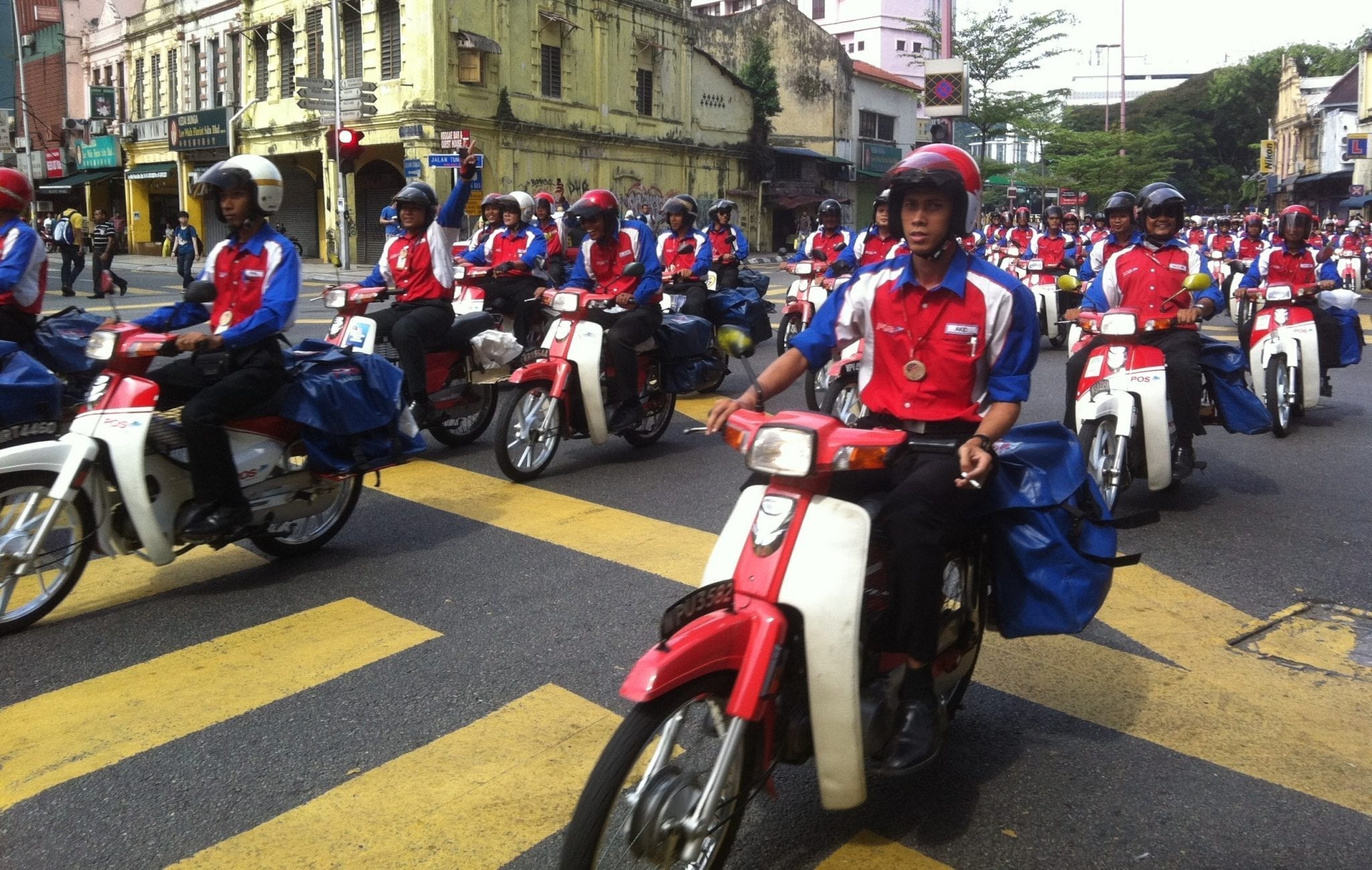
    Pos Malaysia Bhd’s net profit for the fourth quarter ended March 31, 2018 almost tripled to RM29.03 million from RM9.89 million a year ago, mainly due to higher contribution from the courier business coupled with improved cost management.

    Against the same quarter the previous year, its revenue increased 3% to RM653.08 million from RM653.55 million.

    For the full year period, Pos Malaysia’s net profit jumped 13.9% to RM93.25 million from RM81.88 million a year ago, while revenue was up 18.7% to RM2.47 from RM2.08 billion.

    Pos Malaysia the group’s future performance is mainly driven by the continued growth in e-commerce.

    “Technology and e-commerce remains a key platform to spur the growth of small and medium enterprises (SMEs) within the country. As the key player in the e-fulfilment space and with the widest last mile delivery network, the group is a key beneficiary of e-commerce growth in Malaysia. This will also benefit our end-to-end logistics businesses as heightened economic activity should increase the need for our services. Accordingly, we are generally optimistic Pos Malaysia’s prospects remain positive.”

    Pos Malaysia’s share price fell 5 sen or 1.4% to close at RM3.55 on some 197,200 shares done.

  • Indonesia Firms Face $34b in Losses Due to Cyber-Attacks

    Indonesia Firms Face $34b in Losses Due to Cyber-Attacks

    Cyber-attacks on Indonesian companies in 2017 will eventually cost domestic businesses $34 billion due to direct financial losses and long-term reputation damage, according to a recent study commissioned by global technology giant Microsoft.

    The study — which was carried out by research consultancy firm Frost & Sullivan by surveying 1,300 businesses and IT companies in the Asia-Pacific region — also put total potential losses to the region from cyber-attacks at $1.745 trillion, or 7 percent of the region’s current GDP.

    Almost half of Indonesia’s companies could have already been affected by cyber-attacks last year. The study found 22 percent of companies surveyed in Indonesia reported they had a security breach, while 27 percent were unsure if they had had one, due to a lack of data forensics assessments.

    Sixty-one percent of organizations either do not think about cybersecurity at all, or only after starting a new project. Almost seven out of 10 companies which had cyber attacks saw job losses in the last 12 months.

    “Companies face the risk of significant financial loss, damage to customer satisfaction and market reputation — as has been made all too clear by recent high-profile breaches,” said Haris Izmee, president director of Microsoft Indonesia, in a statement last week.

    Last year, Indonesia saw over 205 million cyber-attacks, including the ransomware WannaCry that attacked the country’s major hospitals, according to the Ministry of Communication and Information Technology.

    In calculating the potential losses, the study took into account direct financial losses from the attacks themselves, the opportunity cost to the organization caused by the incident, such as loss of customers because of reputation loss. The study also estimated cyber-attacks induced costs on the broader economy, such as a decrease in consumer and business spending.

    A large organization — one that has more than 500 employees — can possibly incur an economic cost of $16.3 million due to cyber-attacks.

    Of this, only $1 million is likely to be a direct cost to the company itself. Around $5.7 million is predicted to come from indirect costs, and $9.6 million to come from the induced costs.

    Over 90 percent of cyber-attacks can be prevented with maintaining most basic best practices, such as strong passwords, use of multi-factor authentications for suspicious log-in attempts and keeping all software up to date, Microsoft said.


  • Spanish handcrafted leather brand Lottusse opens flagship store in Hong Kong

    Spanish handcrafted leather brand Lottusse opens flagship store in Hong Kong

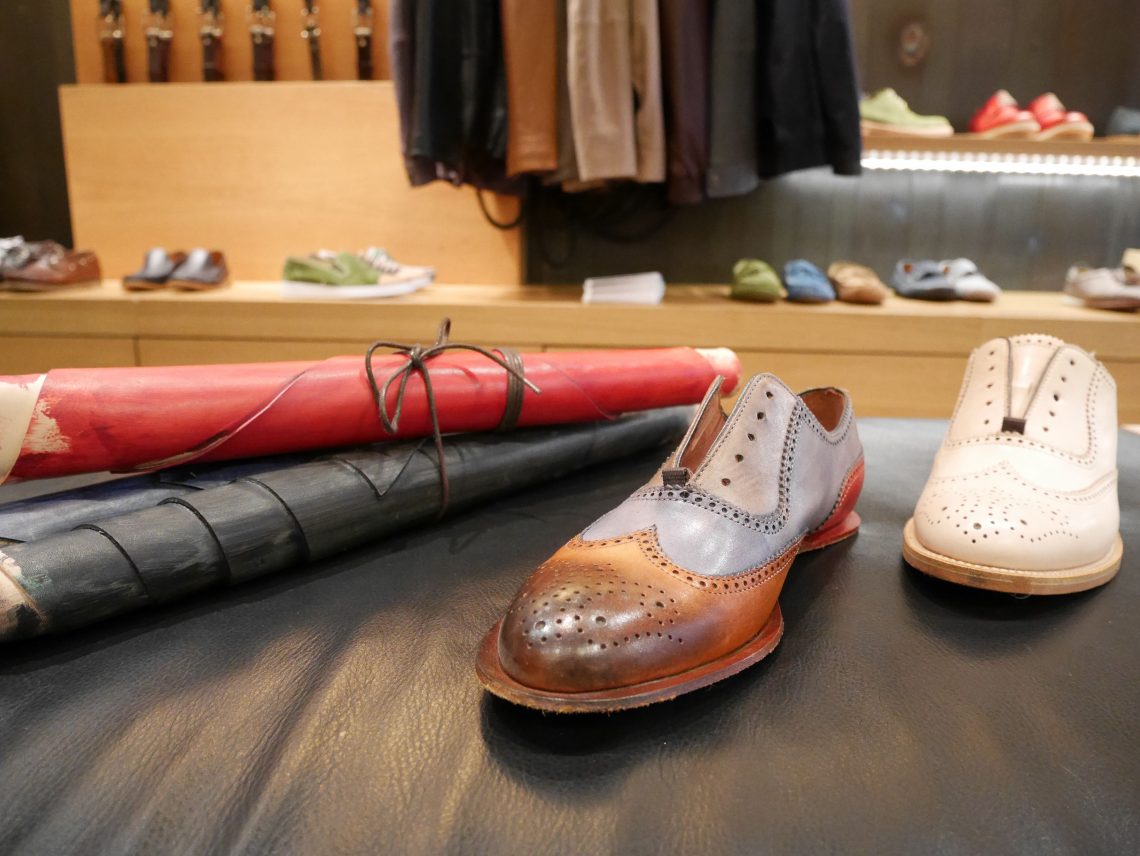
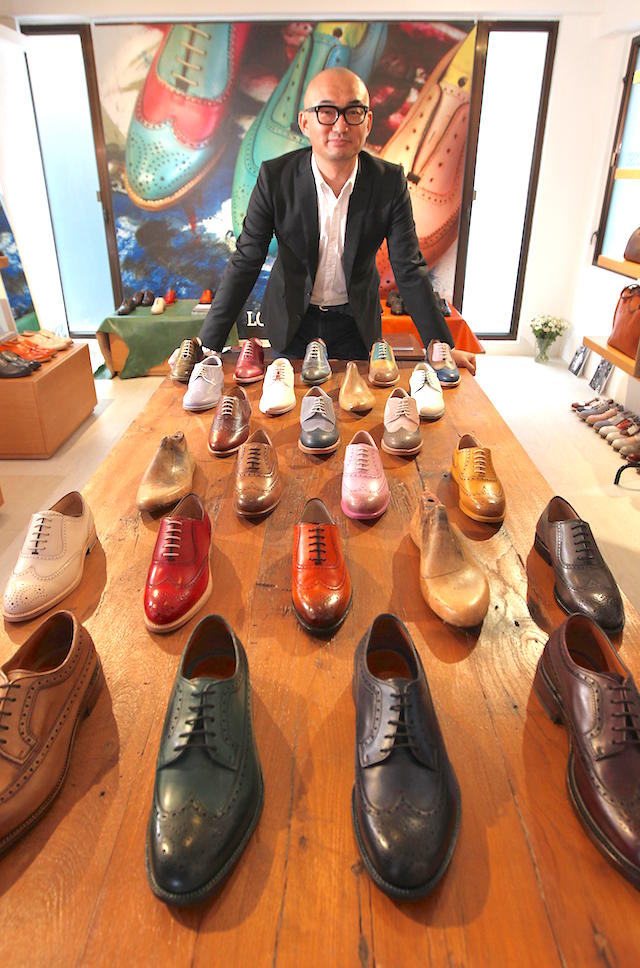
    Spanish footwear brand Lottusse has opened its first flagship store in Hong Kong, at the newly reopened heritage site of the former Central Police Station and Victoria Prison compound.

    Lottusse, with a heritage dating back to 1877, sees the new store as an integral part of a regional business expansion via Hong Kong, following successful showrooms in the city.

    A Fluxa family-owned handcrafted leather brand, Lottusse takes quality at the heart of its business philosophy, according to the company’s Asia area manager, Yuji Yosumi.

    Customers can order Lottusse shoes with personalised options, which will then be handcrafted by masters at Lottusse’s factory in Mallorca, Spain, ensuring the family craftsmanship tradition is strictly followed. Customers can also buy ready-made shoes in a wide range of designs.

    In 2014, the brand opened a showroom in Hong Kong where personalised shoes can be ordered. Yosumi said the company sees good timing now to commence retail operations with the new shop in Central to tap Hong Kong’s growing status as an international retail hub in the region.

    “Hong Kong, as the gateway to Asia, is the ideal place for us to test the markets in the region. We initially set up a showroom in the city four years ago and from there we have developed solid clientele from Japan, South Korea, Taiwan and Singapore through Hong Kong. It is the right time in the right place for us to move to the retail business with this new shop.

    “Hong Kong’s retail industry is sophisticated with a good diversity of discerning clientele in terms of both locals and visitors from around the world. Our Hong Kong retail store not only manages the city’s retail operations but also will develop wholesale business across Asia.”

    Associate director-general of investment promotion Dr Jimmy Chiang welcomed the opening of Lottusse’s flagship store in Hong Kong. “It shows a vote of confidence in our retail industry.

    Apart from participating in the vibrant retail sector in Hong Kong, the brand can also make good use of the city’s advantages including a free port, a low tax base and the absence of sales tax to expand its business in the region.”

  • Allianz Malaysia Q1 earnings rise 30% to RM87m

    Allianz Malaysia Q1 earnings rise 30% to RM87m

    Allianz Malaysia Bhd’s net profit for the first quarter ended March 31, 2018 jumped 29.9% to RM87.23 million from RM67.17 million a year ago, due mainly to higher contribution from both general and life insurance segments.

    Its revenue grew 5.2% to RM1.27 billion compared with RM1.21 billion in the previous year’s first quarter, thanks to higher gross earned premiums and investment income.

    Allianz said the general insurance industry will likely see some volatility in a fully liberalised environment, which can be expected to remain for up to two to three years, as seen in other markets where detariffication has taken place.

    Competition is likely to intensify in the run up to the anticipated next phase of liberalisation in 2019. The general insurance segment aims to maintain its market leadership in 2018 and will continue to drive initiatives to ensure a profitable portfolio and create value for its customers and distribution partners. It will also leverage on digital assets to enhance its processes and service proposition to customers.

    Meanwhile, the life insurance industry grew at a softer pace with total industry new business recorded a growth of 1.9% in 2017 and 3.1% in first quarter of 2018. The segment will continue to strengthen its agency force with a focus on increasing productivity.

    Allianz said the group will remain focused on delivering sustainable results of its insurance businesses to its shareholders in 2018.

  • supreme’s new brooklyn store features a giant skate bowl

    supreme’s new brooklyn store features a giant skate bowl

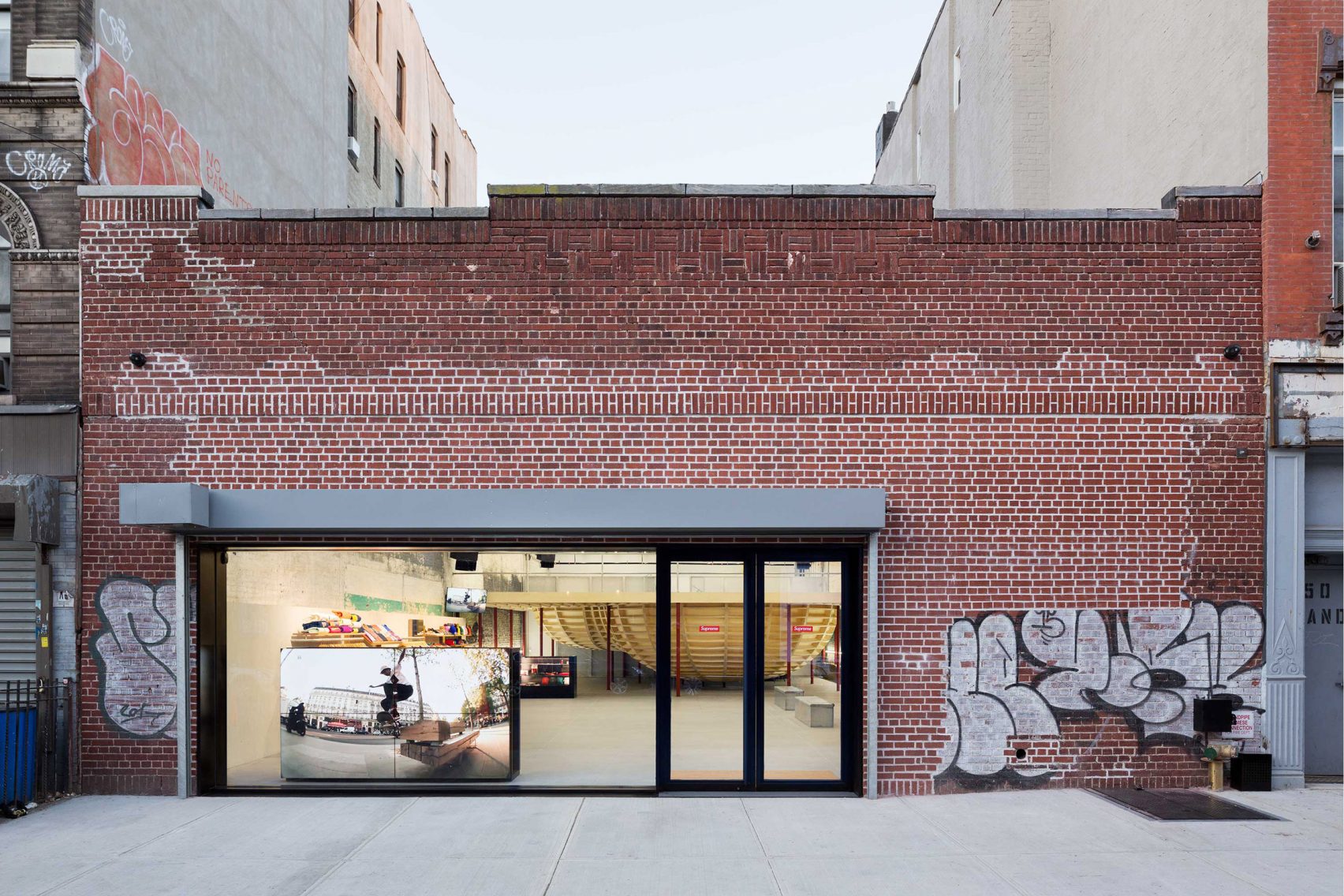
    The new Supreme Brooklyn store features a free-standing skate bowl, merging leisure and retail for the famous streetwear brand.

    The space was designed by New York firm Neil Logan Architect and is located inside a retrofitted warehouse, once used for parking delivery trucks, as reported.

    As Dean Kaufman’s photographs show, the architects left the brick walls exposed and large industrial-style skylights bathe the space in natural light.

    Supreme is an edgy skate, fashion and apparel brand founded in New York in 1994, which gained massive international brand exposure in a collaboration with Louis Vuitton last year.

    The Supreme Brooklyn store store-cum-skatepark spans 2938sqft, with an open-plan retail area at the front, and a section for storage and skateboarding towards the rear.

    The free-standing skate bowl was designed by Steven Bladgett of American art collective Simparch and custom-built with Baltic birch plywood. The structure is supported by a series of red poles around its perimeter, providing enough height for skateboarders to drop into the bowl and for fitting rooms to be housed underneath.

    Images of the store can be viewed below :


  • Robinsons Place opened in Ormoc City

    Robinsons Place opened in Ormoc City

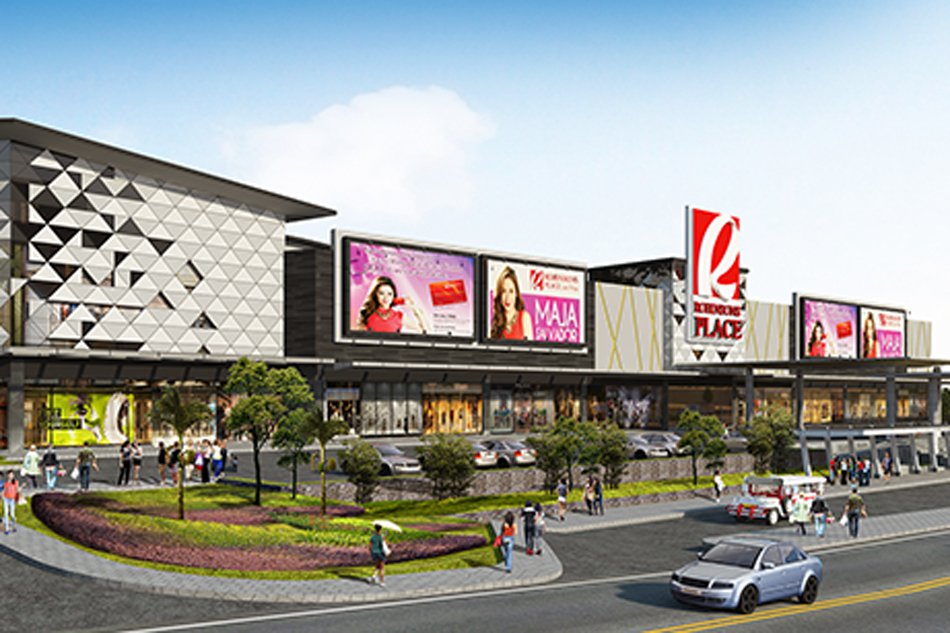
    Robinsons Malls has strengthened its presence in the Visayas region with the opening of Robinsons Place Ormoc, a three-level, full-service mall in Ormoc City.

    It offers a variety of national and global brands along with the chains of Daiso Japan, Handyman, Robinsons Department Store and Robinsons Supermarket.

    Its products and services extend to health and beauty, gadgets, banking, courier and government-related processes and requirements with its Robinsons Malls Lingkod Pinoy Center.

  • Manolo Blahnik strengthens its expansion in Asia with Bluebell Group

    Manolo Blahnik strengthens its expansion in Asia with Bluebell Group

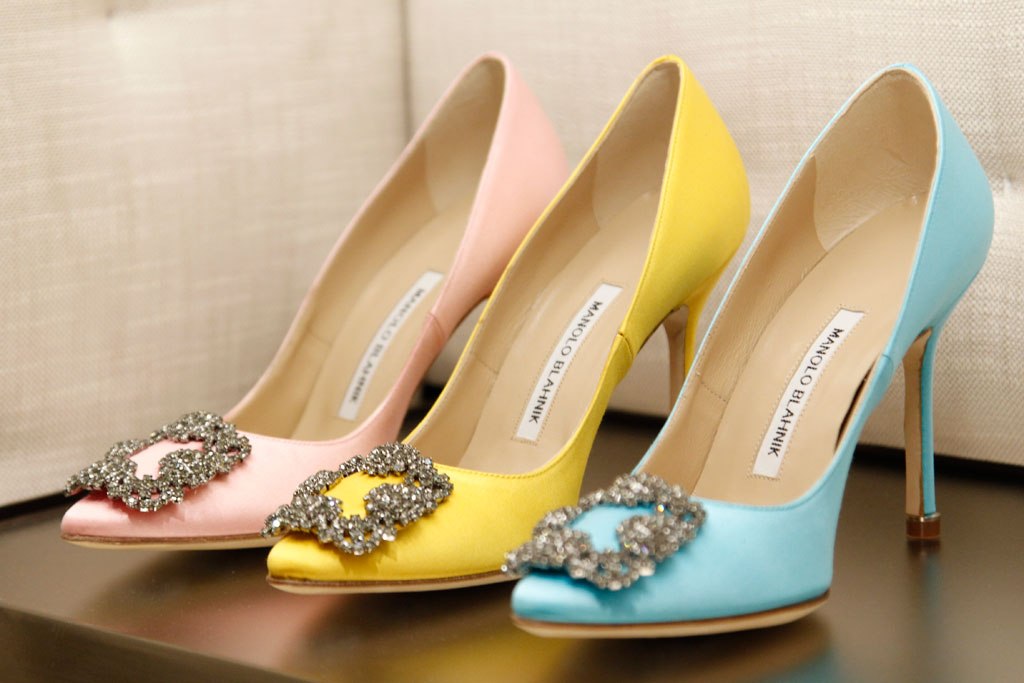
    In May 2018, Manolo Blahnik has opened its doors to the public at the triple tower complex Marina Sands Bay in Singapore, strengthening its presence in Asia with Bluebell Group.

    “Marina Bay Sands is one of the most recognized places in Singapore. It has been at the forefront of uniquely combining innovative architecture, luxury shopping and leisure, so I am very excited that now Manolo Blahnik will be part of this special concept,” said Kristina Blahnik, the label’s chief executive officer.

    The retail space was designed by the architect Nick Leith-Smith, who has signed several collaborations with the brand. For this store, Nick has blended Blahnik’s identity with local architecture, materials and elements of the cultural context. The aim was to create a retail space that could communicate with locals in their own codes. The store incorporates a mix of architectural styles seen around Singapore.

    The opening follows a series of activities to expand the brand’s presence in Asia. The partnership with Bluebell Group aims at “optimizing and restructuring” Blahnik’s distribution in the region. Previous retail developments included the opening of two new locations in Tokyo and Kuala Lumpur, Malaysia. The Marina Bay Sands store will be the brand’s only standalone location in Singapore.


  • Korean retail conglomerates eye pet business more and more

    Korean retail conglomerates eye pet business more and more

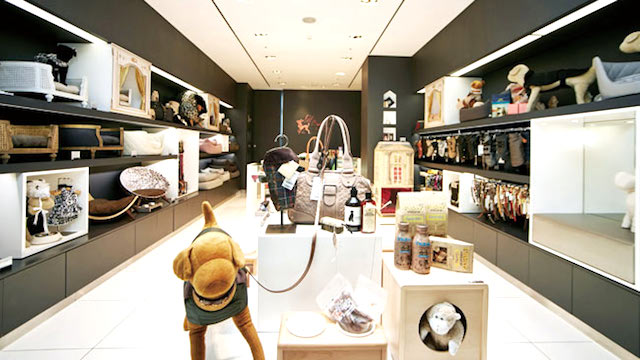
    South Korean retail conglomerates like CJ, Lotte and Shinsegae are catering more and more for pet owners as market demand grows.

    They have opened pet shops that offer products and services ranging from food and grooming services to even lodging for pets. They are also launching their own branded product lines.

    Shinsegae International’s household goods brand Jaju has launched its pet product line Jaju Pet, which plans to sell innovative pet products such as its “slow round bowl”, designed to help pets eat their food slowly, and plastic dog-waste bags that can be connected to a dog collar.

    E-Mart, Korea’s first discount retail outlet run by Shinsegae, has opened Molly’s Pet Shop with its offering of products and grooming services. It even has its own pet hotel. Since opening at the end of 2010, E-Mart now runs 35 Molly’s stores.

    Lotte Department Store opened a pet consulting service dubbed Zipsa in Gangnam in January. The store offers such services as dog-walking or pet-food delivery.

    Online shopping malls are also trying to catch some action. GS Shop has launched a “pet zone” on its mobile platform offering services that cater to various stages of a pet’s life cycle, while CJ Mall has its All Pet Club, offering food and clothing products as well as services such as lodging and funerals.

    Food companies Binggrae, Dongwon F&B Harim, KGC and Pulmuwon are also launching pet-food brands.

    Korea’s Ministry of Agriculture, Food and Rural Affairs says the pet industry has grown by more than 14 per cent on average a year since 2014. The market size was tabulated at KRW2.3 trillion (US$ 2.1 trillion) last year and is expected to surpass the KRW3 trillion won mark this year.

    The pet-loving population is estimated to be around 10 million individuals in 4.57 million households. Analysts say that as single or two-person households increase and as the aging population grows, society will see more people raising pets in the future.

  • Disruptive Technology, Automation Force Change in Workers’ Skills: McKinsey

    Disruptive Technology, Automation Force Change in Workers’ Skills: McKinsey

    Changes in global demand for different types of workforce skills, caused by the rapid growth of technology, will require business organizations to provide training programs to employees.

    McKinsey Global Institute (MGI), a think-tank of consulting firm McKinsey & Co., projects that by 2030, demand for technological expertise will increase by even 55 percent, while for social and emotional skills, needed in leadership and management, will rise by 24 percent. Demand for higher cognitive skills such as creativity, critical thinking, decision making and complex information processing will rise moderately, by 8 percent.

    According to McKinsey, some 800 million workers worldwide, or one-fifth of the global workforce, will lose their jobs to artificial intelligence.

    “Preparing for and managing the growing shifts in demand for different types of workforce skills represents one of the biggest challenges of the next decade. Our research highlights the big increase in demand for tech and social skills that are currently in quite short supply and an oversupply of skills that may be less needed in the future, including physical and manual skills,” MGI director Jacques Bughin said in a statement last week.

    Demand for basic cognitive skills, like simple data input and processing, will drop by 15 percent, while demand for manual and physical skills will decrease by 14 percent.

    According to a similar study by the Asian Development Bank, though technology has changed certain job tasks, it actually contributes to higher and faster economic growth, as automation will create higher demand for more goods and services, which in turn will create more new jobs to replace obsolete ones.

    Using data from 12 countries in Asia from 2005 to 2015, ADB estimated that 66 percent of jobs in the region, or 101 million jobs per year, were lost to automation. Among the most vulnerable are those in the manufacturing industry.

    After analyzing data in 12 Asian countries from 2005 to 2015, ADB estimated that 66 percent of jobs in the region, or 101 million jobs per year, had lost to automation. However, there was an 88 percent increase in employment over the period, or 134 million jobs per year, well offsetting the jobs lost to automation.The MGI and ADB reports are unanimous in their conclusions that working culture, training programs and organization structures must be redesigned.

    “Companies will take the lead in building their own future workforce, but all stakeholders — educators, foundations, industry associations, organized labor and of course policy makers — will have a role to play,” MGI partner Susan Lund said in the statement.

    “In our research, we identify a range of approaches and discuss the experience of some companies which are already engaging in large-scale workforce retraining,” she said.

    MGI suggests that companies and business leaders will have to decide in the coming years whether to pursue training using in-house resources or to partner with educational institutions that will provide external learning opportunities for employees.

  • My Melody Café Is Opening In Singapore At Suntec City

    My Melody Café Is Opening In Singapore At Suntec City

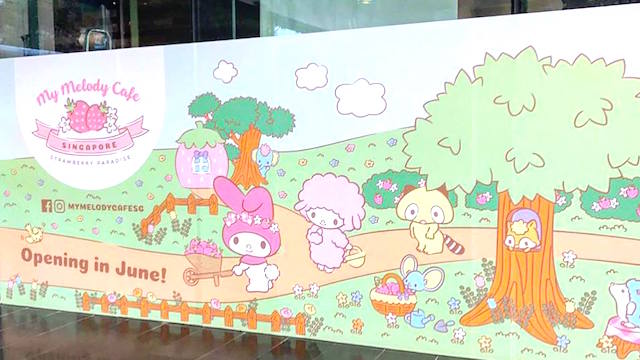
    Japan’s My Melody Cafe plans an outlet at Suntec City.

    Commonly known as My Melo, the character central to the cafe is a white rabbit from Japanese characterisation company Sanrio who is said to be a good friend of Hello Kitty.

    With an al fresco garden setting, the cafe will feature a floral arch, garden-themed mural wall and a cottage house.

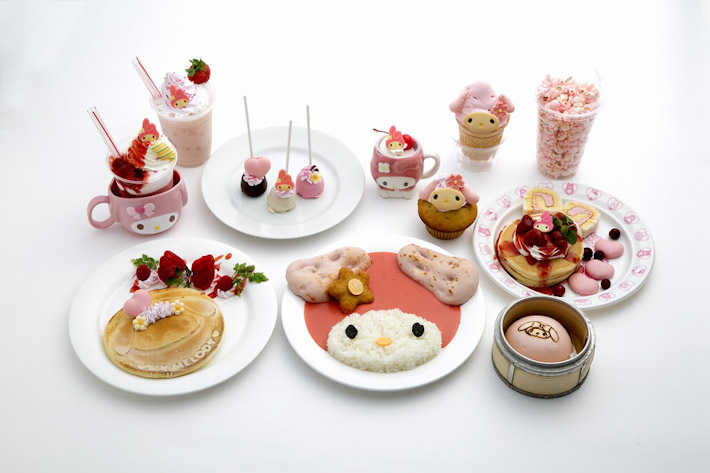
    The menu will offer five mains, six desserts and seven character-customised drinks.


  • Levi’s Indonesia Presents Special Collections for Ramadan and Idul Fitri

    Levi’s Indonesia Presents Special Collections for Ramadan and Idul Fitri

    Denim jeans might not be the first thing that pops into our minds when we prepare our wardrobes for Ramadan and Idul Fitri. But let’s admit it, these are among the most versatile clothing items, which we can easily mix and match and wear to almost every occasion.

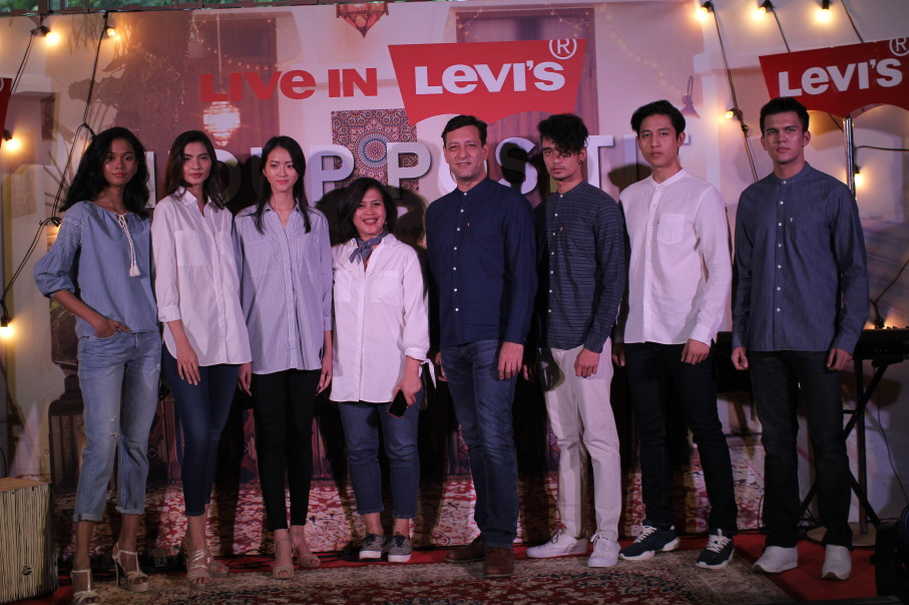
    Pioneering jeans brand Levi’s presented its special collections for Ramadan and Idul Fitri in Jakarta on Tuesday (22/05).

    “Ramadan and Idul Fitri are among the most important moments for Indonesia’s fashion industry,” said Adita Idris, head of marketing at Levi’s Indonesia. “And that’s why we’re now launching new collections specially for this season.”

    The collections are named after three main activities usually associated with Ramadan and Idul Fitri, which are Buka Puasa (Iftar), Mudik (Homecoming) and Lebaran (Idul Fitri).

    In the Buka Puasa collection, Levi’s features casual looks that combine regular and slim-fit denim pants with button-up shirts for men and women in a variety of indigo hues.

    Classic plaid patterns enhance some of the shirts in the collection.

    “People usually go straight from their campuses or offices to restaurants for iftar, so [in this collection], we’re presenting something that they can easily wear from day to night.”

    Levi’s presented more relaxed looks in its Mudik collection.

    Presenting this collection, the female models wore light cotton tank-tops and loose-fitted blouses with floral prints, matched with Levi’s 710 skinny cropped jeans that extended to just above their ankles.

    The male models on the other hand, wore a combination of regular-fit denim pants, T-shirts with simple graphics and trucker jackets. A scarf tied around the neck added a macho touch to the overall look.

    “All denim pants in this collection are made with our latest Performance Cool technology, which makes the jeans lightweight and breathable,” Adita said. “The fabric also moves perspiration away from the skin, keeping it cool and comfortable all day.”

    In the Lebaran collection, female models sported elongated and oversized tie-cuff shirts in hues of white and gray, which were matched with black and dark-blue skinny denim pants.One of the outfits in the Lebaran collection.

    “Simple dark-wash denim pants are more suitable to wear during respectful occasions, such as silaturahmi [visiting relatives’ homes] on Lebaran day,” Adita said.

    In the Lebaran collection, the male models presented long-sleeved shirts with Mandarin collars in plain white and denim hues, which were paired with Levi’s 505 regular-fit jeans.

    “As you can see, with our rich variety of clothing items, we can surely accommodate your every need for this festive season,” the head of marketing said.

    These special Ramadan and Idul Fitri collections are available in Indonesia and Malaysia.

    “In Indonesia, these items are available at all original Levi’s stores, as well as Sogo and Matahari Department Stores,” Adita said.

    ‘Hidup Positif’ Campaign

    Levi’s also used the occasion to launch a video campaign titled “Hidup Positif” (Positive Lifestyle).

    “Ramadan is a moment for introspection,” Adita said. “Therefore, in this special moment, we would like to encourage our customers to see things from a positive point of view and to always choose love, rather than hate.”

    The video campaign features a song with the same title by Yogyakarta-based band Batiga, which won last year’s Levi’s Band Hunt, and Malaysian actress-singer Daiyan Trisha.

    “I think the song is especially good and necessary, especially in the light of recent incidents in Indonesia,” said Riosa Oktaf, the band’s vocalist. “And it’s also in line with our vision as a band, which is to touch the hearts of our listeners and encourage positive values among them.”

    The video campaign is currently aired on Levi’s social media accounts, as well as by various TV channels and in cinemas.

    As winner of last year’s Levi’s Band Hunt, Batiga is also entitled to a record deal with Universal Music Indonesia.