Author: Mei Ling Tan

  • The Fragrance Shop opens more stores

    The Fragrance Shop opens more stores

    UK perfume retailer The Fragrance Shop expanded its store portfolio to 33 stores last year.

    The retailer has enjoyed another bumper year with net sales up to £121 million, a 6 per cent increase, thanks to blockbuster launches from brands such as Chanel, Jean Paul Gaultier and Emporio Armani; and increased distribution on Tom Ford and Dior.

    Online operations continued to expand, with year-on-year e-commerce sales rising 27 per cent.

    Founded in 1995, The Fragrance Shop now operates 214 stores nationwide.

  • Cathay Pacific taps Red Hat for hybrid cloud transition

    Cathay Pacific taps Red Hat for hybrid cloud transition

    Airline Cathay Pacific is using Red Hat solutions and services to transform its legacy infrastructure into a modern hybrid cloud architecture.

    Using Red Hat OpenStack Platform and Red Hat OpenShift Container Platform, Cathay Pacific created a more efficient and scalable platform for developing and delivering new services, enabling the company to ultimately create a better overall experience for their customers.

    Based in Hong Kong, Cathay Pacific is an international airline offering passenger and cargo services to 200 destinations in 52 countries and territories worldwide. Digital capabilities are a critical function of the company’s business strategy for growth, with the heart of this initiative emphasizing a responsive and adaptable customer experience.

    Cathay Pacific’s legacy infrastructure and development process posed a challenge, making it difficult for the airline to maintain a high level of performance from its internal systems and customer-facing applications. Its existing systems were inflexible and time consuming to modify, forcing the company to handle an increasing level of technical debt dedicated to system maintenance and “keeping the lights on.”

    Using Red Hat’s open standards-based, enterprise technologies and guided by Red Hat’s technical expertise, Cathay Pacific migrated from its legacy infrastructure to a hybrid cloud architecture, consisting of a private cloud environment that includes Red Hat OpenStack Platform which can provision workloads as needed into public cloud instances.

    Forming the bridge to the public cloud is Red Hat OpenShift Container Platform, which supports more than 50 consumer-facing applications.

    With Red Hat OpenShift Container Platform, Cathay Pacific is able to move applications in a more streamlined fashion across its hybrid infrastructure and is able to scale computing resources up and down as demand requires.

  • NTT Docomo trials 5G at 305km/hr

    NTT Docomo trials 5G at 305km/hr

    Japan’s NTT Docomo, parent company NTT and vendor NEC have jointly achieved the first 5G transmission between a 28-GHz base station and a 5G mobile station in a car moving at 305km/hr.

    The trial also achieved a 1.1Gbps high-speed data transmission to a 5G mobile station moving at 293km/hr as well as fast handover between 5G  base stations and a 5G mobile station moving at 290km/hr.

    During the trial at the Japan Automobile Research Institute, a test environment was created using a car traveling at speeds similar to that of Japan’s bullet train high-speed railways.

    To overcome the challenges associated with long-range transmission of 28-GHz radio waves, the base and mobile stations were both equipped with beamforming and beam tracking technology.

    The 5G base station also used massive MIMO antennas with 96 elements and supporting up to two beams, and two antenna units per base station.

    Docomo also succeeded in a wireless live transmission of 4K, 120 frame per second video from a car moving at speeds of 200km/hr using NTT’s real-time 4K high frame rate HEVC codec.

    Sony Business Solutions Corporation provided the 4K camera for the trial, while Docomo Team Dandelion Racing manager Dandelion Limited tuned the trial car for an ultra-high-mobility environment and operated the car on the test course.

  • Cebu Pacific takes delivery of 3 new Airbus jets

    Cebu Pacific takes delivery of 3 new Airbus jets

    Cebu Pacific said Thursday it took delivery of three more brand new Airbus A321 CEO jets, as it pursued a fleet modernization.

    The country’s largest airline said it now has 65 aircraft, including 4 Airbus A321 CEO, 36 Airbus A320, 8 Airbus A330, 8 ATR 72-500 and 9 ATR 72-600.

    The new A321 CEOs have a capacity of 230 seats, 50 seats more than previous models.

    “Coupled with investments in avionics, this will enable CEB to operate more efficiently, and offer even lower fares to its customers,” the airline said.

    Gokongwei-led Cebu Pacific said it invested $4.9 billion on its new A321 fleet, with deliveries of 3 A321 CEO and 32 A321 NEO spread from this year until 2022.

  • Expats confused over Vietnam’s profile picture requirement for phone users

    Expats confused over Vietnam’s profile picture requirement for phone users

    Some have no idea about the requirement, others find it invasive while network providers can’t guarantee help in English. Expats are having issues with Vietnam’s new regulation which asks phone users to submit a profile picture to their network provider.

    The Ministry of Information and Communications requires mobile subscribers to provide photographic proof of their identities before April 24, or they will be locked out of their network.

    Ryan, 28, is a Briton working in Hanoi. He had no ideas about the new regulation until we contacted him because the profile photo request was sent to his phone in Vietnamese.

    “I’ve never had to do this in the U.K. or in any other countries I’ve travelled through,” Ryan said, adding that he finds the requirement “invasive”.

    In light of recent data breaches by companies as large as Facebook, Ryan is concerned that his information could fall into the wrong hands. “I don’t know if I could trust my network provider with my information,” he said.

    The government claims the requirement will result in better control of network subscribers and prevent spam accounts.

    But while network providers claim user data will only be used to manage subscribers as stated by law, experts believe the regulation has loopholes that could be taken advantage of.

    The images could slip through the network security holes, a scenario in which the responsibility of the network provider has not yet been clearly defined, said lawyer Vu Tien Vinh.

    A photo taken by a customer and sent to a network provider cannot be authenticated, Vinh added.

    Having been to many Asian countries, Mark from Canada finds the regulation odd. “Why would a phone company need my photo?” he said.

    Ryan and Mark are not the only expats who are having issues with the regulation. Many foreigners are also confused as local mobile operators don’t seem to provide the assistance they need.

    On Saturday, customer service centers of all major network providers were packed with customers coming in to have their photos taken.

    Amid the chaos, employees at the centers suggested that foreigners could bring in their passport, or take a photo of their passport and submit it to the companies’ websites. But, they could not guarantee there would be anyone who speaks English available to help.

    Vietnam has 118.7 million mobile subscriptions, according to official data and there are 82,000 foreigners living and working in the country. As of last week, at least 38 million mobile phone users have not provided adequate personal information to network providers, said Nguyen Duc Trung, a senior telecommunications official at the Ministry of Information and Communications.

    Mark is one of them. The 35-year-old is not planning to do anything yet. “I’ll see if they actually lock my account,” he said.

  • CMHK signs NB-IoT agreement with Sino Group

    CMHK signs NB-IoT agreement with Sino Group

    China Mobile Hong Kong (CMHK) and property developer Sino Group have signed an agreement to deploy a narrowband IoT network across Sino Group’s residential and commercial properties.

    The partnership aims to develop pre-5G infrastructure initially focused on the provision of smart home, smart shopping mall and smart property management solutions.

    The deployment will support Hong Kong’s transformation into a smart city and help accelerate social development, the companies said.

    Under the partnership, IoT and big data technologies will be applied to enhance the agreement of Sino Group’s commercial tenants, improve the group’s property management efficiency and facilitate environmental protection.

    “The 5G evolution is crucial to shaping Hong Kong into a smart city, and CMHK is imperative to proactively develop 5G mobile service applications towards advancing the development of Hong Kong’s 5G mobile communication network,” CMHK director and CEO Sean Lee said.

    “With plans to upgrade our existing base station equipment, we are well poised for the arrival of 5G and the future Internet of Things. We are extremely excited about our partnership with Sino Group to further its property network coverage, and support its future development.”

    CMHK was awarded the first trial permit for 5G tests among Hong Kong operators by the Office of the Communications Authority in March. The operator plans to commence lab tests with 5G commercial equipment using the assigned 5G trial spectrum later this quarter.

  • FedEx Malaysia trains eye on growth post-merger

    FedEx Malaysia trains eye on growth post-merger

    Following the merger of its parent company with rival TNT Express a year ago at the global level, FedEx Malaysia is now positioning itself for greater growth in the country.

    “Our aspiration is to always be better than before,” FedEx Malaysia managing director Chong Siang-Chung told us in an interview, saying the group is focused on sustainable growth and contributing to the country’s gross domestic product (GDP).

    While declining to share the specific details of its growth target, Chong alluded to projections on the country’s GDP growth as a benchmark. The World Bank sees Malaysia’s GDP growing at 5.8% this year, while Bank Negara Malaysia forecasts the growth rate to come in between 5.5% and 6%.

    FedEx Malaysia currently operates a fleet of over 200 trucks and vans in the country and flies two of its four aircraft from Malaysia on a daily basis. Globally, FedEx Corp operates a fleet of over 660 planes and 170,000 vehicles, and delivers some six million parcels a day.

    It has two Malaysian gateways — Kuala Lumpur International Airport and Penang International Airport — both part of the group’s AsiaOne network that connects 20 major cities in the Asia-Pacific region for next-day deliveries.

    FedEx Corp acquired TNT for €4.4 billion in May 2016, which it said was to strengthen its European road network.

    In Malaysia, the merger of the logistics service providers’ operations has been going smoothly, according to Chong. Integration of their ground operations, which began on July 31 last year, is already completed. Its sales operations will be integrated by June this year.

    “Our customers already know by now that when they make their orders through FedEx or TNT, vans carrying either brand may show up,” shared Chong. On top of that, customers have been able to enjoy earlier shipping and response times as a result of both brands’ immediate coverage expansion, he said.

    FedEx first established freight operations in Malaysia in 1989 and introduced express operations in 1993, while TNT has had a presence here since 1976.

    Chong joined FedEx Malaysia in 1998 before moving to TNT Malaysia in 2003 as a sales and marketing director. He was later appointed TNT Malaysia managing director for Malaysia and Brunei in 2011.

    According to him, the shared values of both FedEx Malaysia and TNT, which place emphasis on prioritising people, have smoothed the merging of operations and his transition into his current role, to which he was appointed in November 2017.

    Going forward, Chong said FedEx Malaysia still sees much excitement in the last-mile delivery segment due to the e-commerce boom, which the group views as an opportunity.

    “We get many requests to change delivery addresses and time based on what is convenient to customers,” Chong said. With that in mind, the group is leveraging on technology to address this need through FedEx Delivery Manager, which offers SMEs (small and medium enterprises) and e-retailers flexible delivery options.

    The group is unfazed by the intense competition in the domestic market among courier service providers, which has crimped margins for companies such as GD Express Carrier Bhd and Nationwide Express Holdings Bhd.

    “We see it as a good thing that the industry is attracting more and more players,” Chong said, noting that this signals business is growing.

    FedEx Malaysia sees its own value proposition in providing “total custodial services”, Chong said, particularly to SMEs, for which it has developed various shipping options that include cost-effective alternatives, and web-based solutions.

    Although the group has historically served mostly large multinational corporations, Chong shared that it has seen an increasing number of SMEs relying on its services for e-commerce deliveries.

    “Our current portfolio is quite balanced between SMEs and big businesses,” he said, adding that FedEx Malaysia is still largely focused on business-to-business transactions.

    A 2016 Asia-Pacific survey by FedEx, which focused on SMEs, found that most of these companies had limited knowledge of overseas markets. FedEx, therefore, found that it could act as a source of sharing knowledge, Chong said.

    As for challenges the group faces in Malaysia, he said customer requirements are growing increasingly sophisticated based on industry-specific needs.

    “Some of our customers, such as those in the healthcare supply chain, want to know more about how their parcels are being transported,” he said. To cater to such requests, one of the products it has developed is FedEx SenseAware, which allows customers to monitor the temperature, humidity, light exposure, barometric pressure and location of their shipments using data collected from multiple sensors.

    Chong also said FedEx Malaysia is committed to supporting the government’s initiatives under the national Logistics and Trade Facilitation Masterplan, which aims to make Malaysia the “preferred logistics gateway to Asia” by 2020.

    This includes the establishment of a Digital Free Trade Zone by the Malaysian government in partnership with Alibaba, which Chong welcomes as a measure to promote trade.

    “We also have a responsibility to support this initiative seeing as how it is expected to benefit the economy of Malaysia,” he said, adding that FedEx Malaysia would therefore continue to provide strong support to businesses and SMEs here as a logistics service provider.

  • AirAsia Group records 87pct load factor in Q1

    AirAsia Group records 87pct load factor in Q1

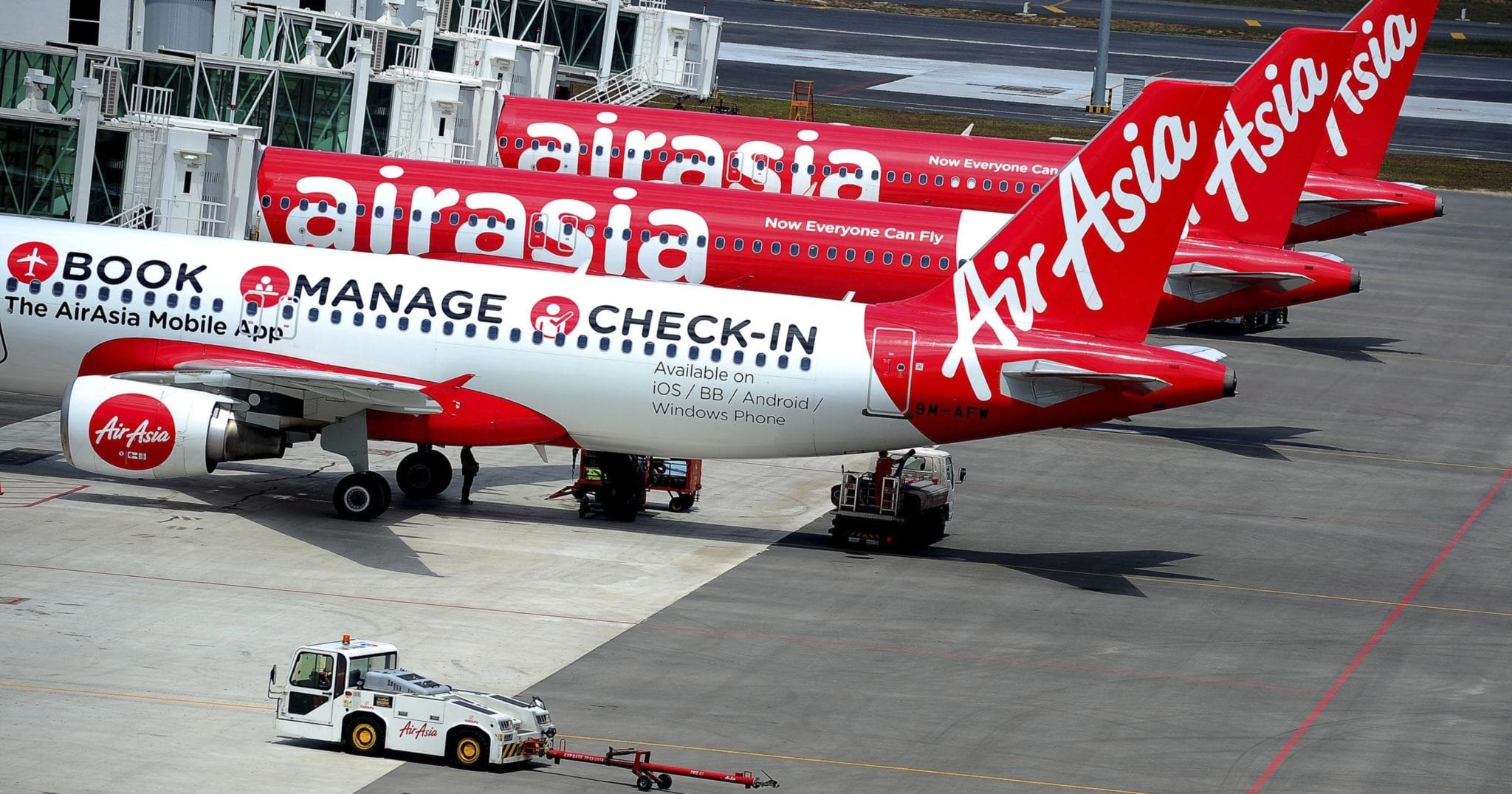
    AirAsia Group Bhd recorded a load factor of 87 per cent for the first quarter ended March 31, 2018 (Q1 2018), down two percentage points from the same period last year.

    In a statement on its operating statistics released on Friday, the budget carrier said its seat capacity rose 19 per cent  year-on-year (y-o-y) during the quarter under review.

    “The number of passengers carried increased 16 per cent y-o-y to 10.65 million, in line with the added capacity,” it said.

    AirAsia said in Q1 2018, the group’s total fleet size grew to 123 aircraft, comprising 87 in Malaysia, 15 in Indonesia (PT AirAsia Indonesia Tbk) and 21 in the Philippines (Philippines AirAsia Inc).

    “Malaysia increased frequencies on 13 routes, namely seven from Kuala Lumpur, five from Kota Kinabalu and one from Johor Bahru,” it said. Indonesia commenced operations of three new routes: two from Medan and one from Padang, while the Philippines commenced operations of four new routes, all originating from the Clark International Airport since establishing the airport as a hub.

    The company also reported that Thai AirAsia posted a load factor of 91 per cent in Q1 2018, improving two percentage points from the same quarter in 2017.

    As for AirAsia India, the budget airline said its load factor was down by six percentage points y-o-y to 83 per cent for the first three months of the year, while AirAsia Japan achieved a load factor of 79 per cent in Q1 2018, up 15 percentage points quarter-on-quarter.

  • ZTE on life support after US export ban

    ZTE on life support after US export ban

    ZTE has been forced to cease its global operations as a result of the crippling sanctions imposed on the company by the US government.

    In an announcement to shareholders, ZTE said [PDF] that the major operating activities of the company have ceased due to the activation of the denial order from the US Department of Commerce’s Bureau of Industry (BIS).

    This order prohibits US companies, including ZTE’s major suppliers such as Qualcomm and Google (for Android), from exporting their products to ZTE for a period of seven years.

    The denial order was initially imposed but automatically suspended in March last year on the condition that ZTE adhere to a settlement agreement which included penalizing the senior officials responsible for the decision to contravene the Iran sanctions.

    But the BIS activated the denial order last month after accusing ZTE of violating these conditions by offering full bonuses to executives implicated in the case and failing to issue letters of reprimand in a timely manner.

    The sanction relates to an investigation into ZTE’s alleged sale of telecommunications equipment containing US components to Iran in violation of US sanctions imposed on the country.

    ZTE’s announcement states that the company has sufficient cash to remain in business “as of now”, and is actively seeking a modification or reversal of the denial order from various US government departments.

    But in light of the ongoing trade war between the US and China, the Trump administration may not back down so easily, which would threaten ZTE’s ongoing existence.

  • GCX to upgrade HAWK cable

    GCX to upgrade HAWK cable

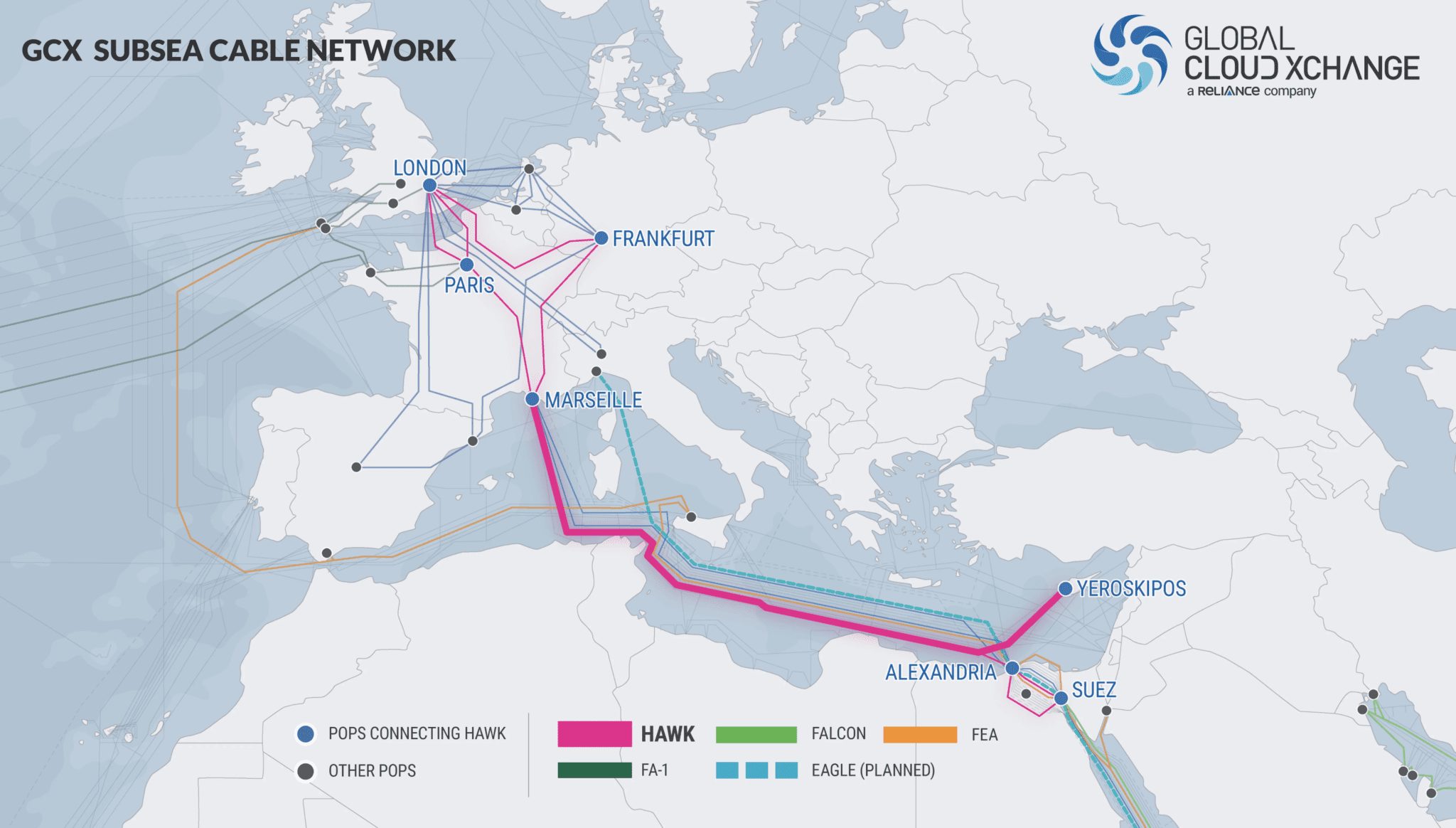
    Reliance Communications’ Global Cloud Xchange (GCX) has announced plans to upgrade a branch of the HAWK subsea cable to meet growing demand for bandwidth between Europe and emerging Asia and the Middle East.

    The company will work with Cyprus’ incumbent operator PrimeTel to upgrade the HAWK branch into Cyprus to 100Gbps.

    The HAWK cable system links Marseille and Paris in France, London in the UK, Frankfurt in Germany, Yeroskipos in Cyprus, and Alexandria in Egypt, and connects to GCX’ global subsea and European backhaul network.

    The cable is integrated with PrimeTel’s Cyprus gateway and hub, which was activated in 2011 to enable ultra-high bandwidth services across the Emerging Markets corridor.

    “With the recent upgrade, we have now broadened our reach into PrimeTel’s Cyprus Hub in Yeroskipos, providing enhanced coverage to meet the growing demand for high-performance, low-latency connectivity across the emerging markets in the Middle East and Asia,” GCX COO Wilfred Kwan said.

    “The network enhancement has already started to attract interest across key growth markets and we are pleased that the first 100Gbps wavelength connection for a major carrier is already in the process of being activated.”

  • EllaLink gets anchor customer for trans-Atlantic cable

    EllaLink gets anchor customer for trans-Atlantic cable

    The Atlantic will be getting yet another subsea cable system it seems, but this time it’s on a route rarely travelled.

    EllaLink has won a key anchor customer for a cable system connecting Portugal with Brazil. The research and education networks GEANT and RedCLARA are putting €25 million ($29.6 million) up for direct capacity between Europe and South America.

    As currently planned, EllaLink will bring some 72Tbps of connectivity between the two continents. In South America it will land at both Fortaleza and at Praia Grande near Sao Paolo, two popular cable destinations with plenty of interconnection options.

    In Portugal the system will come ashore at Sines, not far from Lisbon and at a new location distinct from other cables landing in the region and with terrestrial access over to Madrid of course. In between are several islands that will probably see branches, such as Madeira and Cabo Verde.

    We haven’t seen a cable on this route since ATLANTIS-2, and unlike most new builds it doesn’t seem to be on the radar of the big cloud/content guys. That may change as interest in the nearby interconnection market of Madrid continues its rapid growth.

    EllaLink offers a bypass route between Europe and Latin America that doesn’t land first in the eastern US. By taking the direct route and avoiding North America, latency will be substantially reduced, probably by about half or more.

    Alcatel Submarine Networks will be handling the installation, which is envisioned to be complete sometime in 2020.  With much of its funding in place, it looks as if this cable system is ready to move onto the marine survey and construction.

  • Former eHarmony marketing chief joins telco startup

    Former eHarmony marketing chief joins telco startup

    eHarmony’s former managing director, Nicole McInnes, has taken up the inaugural marketing leader’s chair at media telco startup, OVO.

    OVO provides a range of mobile phone plans to Australian consumers matched with data-free allowances across its own digital content platform, OVOplay. The group launched in 2016 and is positioning itself as a new type of hybrid telco/media offering, tapping into the Optus 4G network to deliver services and content.

    McInnes is the company’s first c-level appointment and first marketing chief. Most recently, she spent seven months as marketing director of WooliesX. Prior to this, McInnes was the local marketing director for eHarmony for 18 months. Her resume also includes marketing executive roles with Pandora and Adshel.

    “The day of the telco becoming the broadcaster has been a long time coming. OVO knows it, and is ahead of both industries in making it happen,” McInnes said in a statement announcing her appointment.

    “As a digital marketer who has been fortunate enough to get paid to indulge my deep interest in content and human connection that media represents, OVO is an exciting opportunity. This is a company that for all its success to date, is still in its early stages, with so much more creativity and creation to be undertaken to help it really take off.”

    McInnes said she joins OVO as it prepares to debut its patented machine-learning video platform. Her priority list also includes ramping up both the brand’s mobile business and exclusive digital sports and entertainment content partnerships.

    To date, OVO said it’s amassed more than 20,000 hours of unique content across sport and entertainment including e-sports, gymnastics, motorsport, sailing and Triple M and HIT radio currently available on OVOPlay. The intention is to build out this library of content as it rolls out its AI-driven video delivery platform over the coming months. The company also claims 60,000 mobile subscribers.

    OVO CEO, Matt Jones, said he’d known McInnes for years and was keen to get her on-board.

    “It was her experience inspiring consumers on behalf of digital native companies that were pioneering machine learning algorithms, that convinced me she was right for OVO,” he said.

  • BRI Syariah Floats 2.6bn Shares for Rp510/unit

    BRI Syariah Floats 2.6bn Shares for Rp510/unit

    Bank BRI Syariah has been listed as an issuer at the Indonesia Stock Exchange today, May 9. With the code BRIS, BRI released more than 2.6 billion new shares or 27 percent of its paid up capital.

    BRIS IPO price was set at Rp510 per share. The SOE Ministry’s deputy for restructuring and business development said BRI Syariah is the first sharia issuer to be listed at the IDX.

    “With the price, BRI Syariah managed to be oversubscribed twice,” president director Moch. Hadi Santoso said here on Wednesday.

    BRI Syariah is the subsidiary of Bank Rakyat Indonesia established in November 2008. As of March 2018, BRI Syariah’s assets amounted to Rp94.7 trillion.

    Hadi said the IPO proceeds will strengthen the company’s capex and help BRI Syariah included in the BUKU III banks category.

  • Rice exports up 27pc to $1.57bln in Jul-Apr

    Rice exports up 27pc to $1.57bln in Jul-Apr

    Rice exports rose 27 percent to $1.57 billion during the first 10 months of the current fiscal year as exporters pushed fresh cargoes to Indonesia, Kenya and other markets during the period, an industry official said on Wednesday.

    Rice exports amounted to $1.23 billion during the corresponding period last year.

    Rafique Suleman, senior vice chairman of Rice Exporters Association of Pakistan (Reap) said exports increased 15 percent to 3.22 million tons during the 10 months of the current fiscal year of 2017/18.

    Suleman said exports of non-basmati rice to Indonesia increased during the period.

    Local traders exported 50,000 tons of non-basmati rice to Indonesia during the July-April period. Kenya remained the largest buyer of Pakistani non-basmati rice, buying 323,000 tons of rice amounting to $118 million.

    China was also one of the largest importers of Pakistani non-basmati rice. “By the end of April, we exported 274,000 tons of rice valuing $100 million (to China),” Suleman said.

    He said demand for rice in the international market is increasing. The crop was good in terms of both quality and quantity this year, he added.

    Reap senior vice chairman said the country has come out of the crisis of low exports, which was observed during the last three years.

    “Value of rice export trade has been showing improvement due to the coordination of Reap office bearers with the Trade Development Authority of Pakistan and customs,” he said. “Reap members are putting in untiring efforts, and aggressive marketing to increase rice exports and to earn valuable foreign exchange.”

    The industry official said rice exporters are making investments to install modern rice processing machinery and using value-addition technology.

    Suleman said the association is sending trade delegations to various countries for rice marketing. “Last month a delegation came back after a successful visit to Iran, which is very lucrative and a potential market for basmati rice.”

    Around 100,000 tons of rice has so far been exported to the neighbouring country during the current season.

    Suleman said Government Trading Corporation of Iran has issued tenders for 20,000 tons of basmati, in which many Pakistani rice exporting companies would participate. He hoped that a handsome amount of foreign exchange would be fetched by Pakistani rice exporters.

  • Garuda Indonesia Holds Empty Flight Promo

    Garuda Indonesia Holds Empty Flight Promo

    Indonesia Airline Garuda holds promo for “empty legs flight” or non-passenger flights during the month of 2018 Ramadan.

    “‘Empty legs flight’ is a term for when, as an example, a flight from Solo to Jakarta is packed with passenger but there is no demand for the opposite direction, so it is empty. The promo price for Solo-Jakarta route will be applied on the travel period May 18 to June 19, 2018 and June 27, 2018,” said General Manager of Garuda Indonesia of Surakarta Branch Office, Hendrawan in Solo, Wednesday (5/9/2018).

    As for the Jakarta-Solo route, the ticket promo is valid for May 17 to June 7, 2018 and June 27, 2018.

    “Especially for June 27, this coincides with the simultaneous elections in Indonesia,” he said.

    He said for prices applied during the promo period starts from IDR440.000 per passenger.

    “Normal price for these routes would be above IDR1 million per passenger,” he said.

    He hopes the promo can boost travel demand during the “low season”.

    “Usually there is a decrease in the number of passengers in the first two weeks of Ramadhan, a decrease of about 15 percent either for Solo-Jakarta route or vice versa,” he said, as quoted from Antara.

    He said on a normal day, of a capacity of 162 seats, the average load rate is about 72 percent or equivalent to 583 passengers for five flights of Solo-Jakarta route per day.