Author: Mei Ling Tan

  • Telstra sets speed record with metro network trial

    Telstra sets speed record with metro network trial

    Australia’s Telstra, Ericsson and Ciena say they have achieved the world’s fastest speeds during a demonstration using Telstra’s transmission network in Melbourne.

    The companies achieved 400Gbps speeds over 61.5-GHz spectrum using Telstra’s transmission network, representing the highest spectral efficiency per fiber pair achieved in a live environment.

    This represents transmission speeds of up to 30.4Tbps per fiber pair, a significant improvement from the previous record of 25.6Tbps.

    Such speeds were made possible using software programmable wavelengths controlled by Ciena’s WaveLogic Ai modem technology and Blue Planet manage control plan and Liquid Spectrum applications.

    Telstra plans to introduce the technology as part of an upgrade to its long haul, metro and regional optical networks. Ericsson is providing end-to-end systems integration for the project and managed the deployment of technology for the demonstration.

    Telstra has already deployed Ciena’s industry-first programmable coherent modem, which offers up to three times the data capacity of the earlier modem technology deployed on the Telstra network.

    “Over the next five years we forecast traffic on our network will grow by five times. We are investing in our network and developing these innovations to meet this growing demand by providing unprecedented levels of scale, automation and intelligence,” Telstra director of IP and transport engineering David Robertson said.

    “This technology will be deployed in our domestic transmission network and we will look for opportunities to use it in Telstra’s international subsea cable network, which is the largest in the Asia-Pacific region.”

  • Likely loss in first half, Esprit Holdings to be alert

    Likely loss in first half, Esprit Holdings to be alert

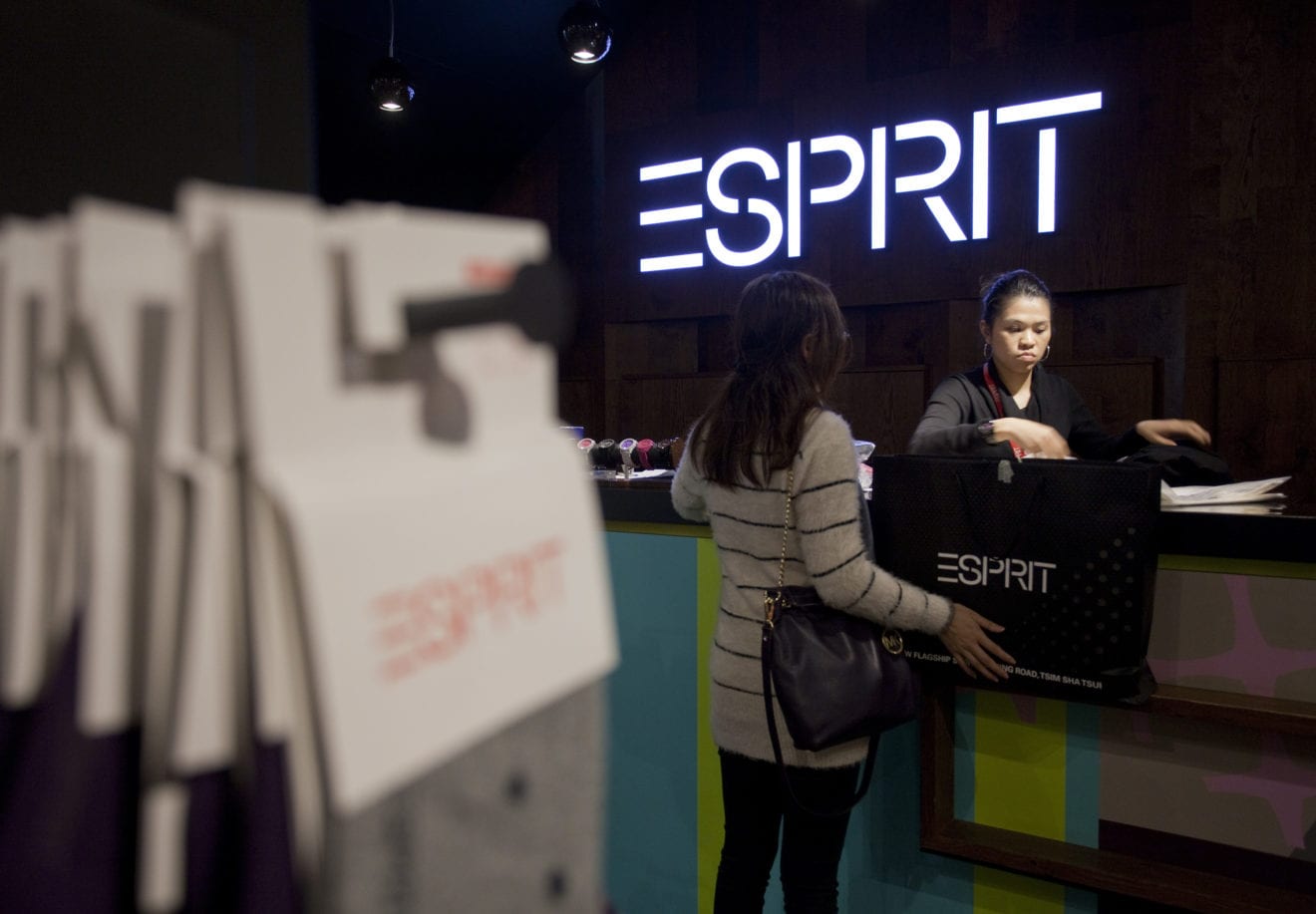
    Fashion group Esprit Holdings has issued a warning it expects a net loss for its first half, to the end of December.

    Based on a preliminary review of its unaudited consolidated management accounts, the net loss is expected to be in the range of about HK$950 million (US$121.5 million) to $980 million, compared to a net profit of $61 million in the same period a year earlier.

    Esprit attributes the anticipated loss to the combination of three major factors:

    1. Full impairment of the remaining balance of the goodwill and customer relationships in association with the group’s China business, which has had a “significant decline” in recent years, resulting in a negative impact of about $795 million before taxation.

    2. A larger-than-expected drop in group revenue in the second quarter after expecting a modest decline as a result of strategic rationalisation of its distribution footprint. The decline was exacerbated by lower sales at its brick-and-mortar stores. As a result, loss before interest and taxation (LBIT) and before the China Impairment is estimated to be in the range of $150 million to $180 million for the first half, compared to LBIT of $13 million in the same period a year earlier. While gross profit margin had slightly increased and running expenses had further reduced in the first half, it was not enough to outweigh the negative impact of the revenue decline.

    3. Net taxation expense of about $5 million in the first half in contrast to a net taxation credit of $74 million in the same period last year.

    Esprit’s company secretary, Florence Ng Wai Yin, says the board wants to reassure shareholders that the group is in the midst of fine tuning its strategic measures to establish a solid platform for long-term profitable growth. “The retail environment continues to be challenging, and because of the seasonality of the business, the performance in the second half of a financial year is usually not as good as the first half. This means the financial performance of the group in the second half remains uncertain.”

    Esprit expects to release its interim results at the end of next month.  

  • Idea Q3 revenue falls 25% from MTR cut “body blow”

    Idea Q3 revenue falls 25% from MTR cut “body blow”

    India’s Idea Cellular has reported a steep 24.9% decline in Q3 revenue and a surge in net losses as a result of the “body blow” from regulator Trai in the form of a mobile termination charge cut.

    Revenue for the quarter fell to 65.1 billion rupees ($1.02 billion), and the operator’s standalone net loss climbed 182.3% to 13.52 billion from 4.78 billion a year earlier.

    The decision by regulator Trai to reduce mobile termination rates from 0.14 rupees to 0.06 rupees per minute resulted in a steep 57% decline in interconnection usage charge rates, which Idea said negatively impacted revenue for the quarter by 8.2 billion rupees.

    “The new domestic MTC rate and recently announced drop in ‘International mobile termination’ settlement charges effective 1st February, 2018 from 53 paisa (0.53 rupees) to 30 paisa per minute, remains a body blow to all operators and reduces investable funds for the critical ‘Digital India’ program,” Idea said in its quarterly report.

    “The international IUC rate drop only benefits the foreign operators, with no commensurate benefit to Indian consumers but with significant foreign exchange and revenue loss to the Indian exchequer.”

    Idea also blamed ongoing “unrelenting rate pressure on voice and mobile data services as high ARPU consumers migrate to unlimited voice bundled data plans.”

    Despite its financial woes, Idea said that the company had managed to accrue 7.5 million net customer additions for the quarter due in part to a large influx of subscribers porting to the company from operators exiting the market in India’s wave of consolidation.

    This took Idea’s total customer base past the 200 million milestone for the first time to 203 million.

    The adoption of unlimited voice bundled data plans also led to an explosion in voice volumes for the quarter, with voice minutes of use growing 10.8% sequentially. Data usage per data subscriber also surged to 4.74GB per month during the quarter, from just 703MB a year earlier.

    Idea said it is in the final stages of the approval process for its planned merger with Vodafone India, which is expected to close in the first half of the year. The proposed $23 billion merger would create India’s largest operator by subscribers with around 400 million customers.

  • Shinsegae to buy local furniture company for $168 mln

    Shinsegae to buy local furniture company for $168 mln

    South Korean retail giant Shinsegae will buy a local furniture company Casamia for KW180 billion (US$167.8 million) in a bid to tap into the country’s home-furnishing industry.

    Shinsegae Department Store will sign a contract with the company’s founder “and others” to buy a 92 per cent stake in the company, as reported.

    Launched as a small furnishing shop in Seoul in 1982, Casamia now has multiple brands, ranging from home decor to office furniture. Sales reached KW121.9 billion in 2016.

    Shinsegae has declined to comment on the acquisition, and Korea Exchange has asked that it confirm media reports in a regulatory filing.

  • Ringgit marches higher against US dollar

    Ringgit marches higher against US dollar

    The ringgit marched higher against the US dollar today, appreciating by 59% since it was last seen in April 2016, said Oanda Head of Trading for Asia Pacific, Stephen Innes.

    At 6pm, the local note ended at 3.8840/8870 against the greenback from 3.9110/9140 on Wednesday.

    Innes said the ringgit touched the 3.8 level, rising 15% from its weakest point in early 2017.

    It strengthened against the US dollar as it continued its depreciation amid the increase on the overnight policy rate by 25 basis points to 3.25% by Bank Negara Malaysia today.

    He said the increase did not have much impact on the ringgit as the markets had fully priced in the move.

    “However, we think the market found itself a little oversold and with what amounted to be a dovish rate increase by BNM, traders booked profits.

    “If we consider that we could be entering extended cyclical downtrend on the US dollar, the ringgit could still rally below 3.80 level in near term,” he told Bernama.

    On another note, Innes also said that oil prices, which has come off their highs, would remain above the budget’s forecast and continue to support ringgit’s strength.

    The ringgit was traded mixed against a basket of major currencies.

    It rose against the Singapore dollar to 2.9746/9781 from Wednesday’s 2.9803/9832 and gained versus the yen to 3.5630/5661 from 3.5658/5695 yesterday.

    It declined against the euro to 4.8286/8327 from 4.8242/8295 on Wednesday and went down against the British pound to 5.5491/5537 from 5.5110/5168 yesterday.

  • Dairy farm and 7-eleven to sell premium coffee

    Dairy farm and 7-eleven to sell premium coffee

    Dairy Farm is launching a multimillion-dollar campaign to introduce a premium coffee blend in its 260 7-Eleven Daily Cafe kiosks.

    With its cappuccinos and lattes just $14 to go, it is staying well below the prices of established coffee shops like Pacific Coffee or Starbucks.

    “We identified different segments in the coffee market in Hong Kong and we found this is a ripe opportunity,” says 7-Eleven sales and marketing director for Hong Kong and Macau Elman Lee.

    “They’re not looking for a barista to serve them, or for coffee art. They want accessibility, grab-and-go, but a quality coffee.”

    Lee says the coffee venture is actually a strategic move. “With the trend of current lifestyles we want to build more signature products for our brand.”

    Already 7-Eleven is working on a signature ice-cream product and is looking to add more signature ready-made snacks. For now, coffee is the focus, with new store designs moving the Daily Cafe kiosk machines next to the cash registers.

    While 7-Eleven does not often run media campaigns, it is bolstering its coffee offer with transit ads on bus seats, exteriors and MTR windows along with print ads and store promotions throughout Hong Kong and Macau.

    Hip hop group FAMA is fronting the campaign, with support on Facebook and WeChat from other local celebrities, including Everest climber John Tsang and even a cat, Brother Cream, from a Kowloon convenience store.

  • Exports to Asia boost Schiphol Cargo to a record 1.75 million tonnes in 2017

    Exports to Asia boost Schiphol Cargo to a record 1.75 million tonnes in 2017

    Schiphol Cargo reported an increase of 5.4 per cent on yearly tonnage in 2017 with strong demand in the Far East for European goods boosting total figures to 1,752,498 tonnes.

    Europe’s third largest air cargo hub experienced an uptick in cargo throughput of 7.4 per cent year-on-year between January and October 2017, with total figures for January to December 2017 reaching 1.75 million tonnes.

    Imports to Schiphol from the Far East in 2017 increased by 3.1 per cent to 299,386 tonnes, with exports to the region growing by 8.8 per cent year-on-year to 316,097 tonnes.

    Asia remains Schiphol’s largest market, with Shanghai, China, the busiest destination.

    European exports grew 19.1 per cent to 123,950 tonnes in 2017, with imports up 18.2 per cent to 124,992 tonnes.

    “We have continued to build on initiatives in 2016 and 2017 with the aim of enhancing the experience of our pharmaceutical, e-commerce, and perishables customers, and our continued commitment to quality is having positive results,” said Jonas van Stekelenburg, Head of Cargo, Amsterdam Airport Schiphol.

    “The upswing in e-commerce shipments, both inbound and outbound, was a large contributor to the cargo volumes for this market.

    “A number of flights transit Europe en-route to Asia, and we can attribute a proportion of the growth in our European figures to the developing Asian market.”

    Flights to Asia transiting European destinations including Baku, Azerbaijan, and Moscow, Russia, continue to contribute to an increase in outbound figures to the Far East.

    Latin America inbound cargo was up by 21.5 per cent in 2017 to 123,524 tonnes due to a number of additional full freighter flights on the route. Outbound cargo grew by 1.8 per cent to 76,498 tonnes.

    Import volumes from Africa decreased by 6.6 per cent to 109,751 tonnes due to temporary aeronautical restrictions that have been in place since June 2017.

    Imposed by the Kenyan Authorities, the restrictions mean that fewer direct freighter flights are coming from Nairobi, Kenya.

    Exports to Africa were down 5.4 per cent on 2016 to 51,743 tonnes.

    Imports from the Middle East increased by 3.4 per cent to 97,789 tonnes in 2017, with export tonnage increasing by 2.1 per cent year-on-year to 122,617 tonnes.

    Imports from North America were down by 5.6 per cent to 141,714 tonnes year-on-year reflecting changes in regional strategy by some airline partners, whilst North America export volumes were up by 4.4 per cent to 164,509 tonnes.

    A total of 496,748 Air Traffic Movements flew in 2017, an increase of 3.7 per cent on 2016.

    A maximum number of 500,000 ATM until 2020 has been agreed between Schiphol Group, the local community, airlines, and the Dutch Government.

    “This is no reason to hold back on our quality initiatives; we need to stay alert, prepare for what is coming, and seek the necessary innovations,” said van Stekelenburg.

    This year (2018) began on a positive note at Schiphol, with an increase in load factors as well as a slight growth in ATMs as a consequence of unused slots.

    “It is very positive that in this current 2017 / 2018 winter season, all requested, full freighter slots were granted, and many freighters were able to continue their business at Schiphol with ad-hoc slots,” van Stekelenburg continued.

    “It is Schiphol’s objective to aim for sustainable growth at the airport after 2020 and airfreight is an important part of that.”

    “On the belly side we expect AMS to grow in 2018 both in terms of volume and capacity.

    “The outlook for 2018 – as, globally, we see even more air traffic growth – is a challenging one.

    “The slot scarcity has been a challenge for us as a cargo community, and in some cases, cargo stakeholders were under-represented in the various sections of the airport community.

    “In 2018 we will act on this, together with all freighter airlines, handlers, and other logistic service providers.

    “Trust, increased cooperation, and improved agreements between all stakeholders are essential in this respect,” concluded van Stekelenburg.

    “Close collaboration with our Cargo Community remains vital and is a strong focus for 2018. Together we will continue to pursue our ambitions of better digital information exchange, and further quality improvements in the supply chain, particularly for pharma, e-commerce, and perishables.”

    Schiphol Cargo’s Smart Cargo Mainport programme initiatives such as the Holland Flower Alliance, Pharma Gateway Amsterdam, and European Green Fast Lanes are working towards this goal by focusing on improved information sharing, and optimal landside logistics.

    Innovations such as the compliance checker, developed in partnership with Cargonaut, are examples of how collaboration within the Schiphol Cargo Community is shaping its journey towards becoming Europe’s smartest cargo hub.

  • DFS Group Announces Exclusive New Bvlgari Collection

    DFS Group Announces Exclusive New Bvlgari Collection

    DFS Group, the world’s leading luxury travel retailer and the magnificent Italian High Jeweler, BVLGARI, are delighted to introduce the new Serpenti Passion Red collection, available exclusively at DFS airport stores and T Gallerias from January 1, 2018.

    This exclusive collection introduces four new brilliant BVLGARI pieces, immediately recognizable by their
    unmistakable Italian design reflecting 2,700 years of Roman history, and embracing stylistic audacity and a
    penchant for rich, vibrant colour.

    The collection features two Serpenti Twist Your Time watches with interchangeable straps crafted in calf and
    Karung leather in pink and red or burgundy and black, a Serpenti Seduttori pendant with a ruby eye, and a
    Serpenti Forever ruby red handbag in brushed metallic calf leather with a red and white Serpenti head and onyx
    eyes.

    Christophe Chaix, DFS Group Senior Vice President Fashion, Watches, Jewelry and Accessories said the introduction of the new collection symbolizes DFS Group’s appreciation of BVLGARI’s unrivalled commitment to high-end quality.

    “We are delighted to continue our unique partnership with BVLGARI, whose name is synonymous with a luxurious lifestyle,” said Christophe. “These stunning new designs are a perfect complement to DFS’ belief that
    life should be lived beautifully. We are sure our discerning traveling customers will be thrilled to find Serpenti
    and Seduttori in our collection of fine watches and jewelry.”

    Lelio Gavazza, Executive Vice President Sales and Retail BVLGARI, said the new collection signifies what
    BVLGARI is and has always been about; homage to legacy, and the grace of uniquely designed jewelry,
    watches and bags.

    “BVLGARI is pleased to present this exclusive capsule collection to DFS. This premium network represents the
    ultimate luxury retail shopping experience in travel retail channel. With BVLGARI‘s unique products combined
    with DFS expertise in delivering customized customer experience, we are certain to satisfy various travelers’
    needs, especially during the coming Chinese New Year holiday. ”

    DFS brings BVLGARI’S new Serpenti Passion Red range to global travelers, luxury shoppers and particularly
    to customers in Hong Kong, China, Macau and Japan who value high-quality luxury fashion and jewelry.
    BVLGARI’sSerpenti Passion Red will be available for purchase at T Galleria by DFS stores worldwide until 31
    December 2018.

    Details of the new BVLGARI Serpenti and Seduttori range:

    • BVLGARI Serpenti Twist Your Time 27mm Watch with Pink and Red Interchangeable Straps in calf and Karung leather: Watch size 27 mm in steel case, Mother of Pearl dial sourced from Australia and Indonesia, pink bracelet calf with two loops, hour/minute display, quartz stones, waterproof up to 30 metres and Crown with Rubellite

    • BVLGARI Serpenti Twist Your Time 27mm Watch with Burgundy Red and Black Interchangeable Straps in calf and Karung leather: Watch size 27 mm in steel case, red dial, bordeaux bracelet calf with two loops, hour/minute display, quartz stones, waterproof up to 30 metres and Crown with Rubellite

    • BVLGARI Seduttori Pink Gold Pendant with Ruby: Pink gold necklace with .24 ct pear ruby in a round mounted setting

    • BVLGARI Serpenti Forever Nappa Handbag Ruby Red Limited Edition: Flap Cover, Serpenti Forever
    Accessories, brushed metallic calf leather in ruby red and light gold with 100% Nappa Ruby Red lining.

  • Outrigger Konotta Maldives Resort Announces New Package

    Outrigger Konotta Maldives Resort Announces New Package

    The Outrigger Konotta Maldives Resort has announced three new exciting developments for holidaymakers: a new mega value-added Family Getaway experience, an improved All-Inclusive (AI) offering, and a new All-Inclusive Plus (AI+) package.

    The Family Getaway Experience gives a family of four to six their own private 282 sqm two-bedroom luxury pool villa with complimentary transfers by flight and speed boat from Male to the Outrigger in the beautiful south of the Maldives.

    “Our Family Getaway and all-inclusive options really allow guests to switch off from their busy lives and rejuvenate surrounded by pristine natural beauty,” says John Allanson, the resort’s General Manager.

    On site, parents can fully relax with two hours of baby sitting per day offered by the resort.

    There are great activities available. Kids can enjoy beach games, yoga, meditation, “Little” chef and “Teen” chef lessons, paper arts and craft classes, and designing their own t-shirt.

    Children eat free in the Blue Salt restaurant on the same meal plan as their parents.

    Adults have multiple options such as spa treatments, group yoga, cooking classes, the art of barbecuing, scuba diving, paddle boarding, or jet skiing.

    Activities for the whole family include a myriad of wonderful options such as swimming across the equator, family picnic on a remote island, snorkelling trips, dolphin quest, semi-submarine excursions, learning about the stars, and a private family movie night.

    Guests can do good while on holiday. They can join resort’s in-house marine biologist and participate in the island’s coral conservation and education activities, part of Outrigger’s worldwide OZONE program.

    Many of the options are included in the Family Getaway Experience. Others involve a surcharge.

    All-Inclusive and the New All-Inclusive Plus
    The Outrigger in the Maldives has also ramped up its AI offering and created a new AI+ special package. Both let couples and families relax without worrying about extras.

    The enhanced All Inclusive package now includes breakfast, lunch and dinner at The Deck and Pool Bar as well as the main Blue Salt international restaurant. It includes a great selection of wines, beers, cocktails, teas and coffees from any outlet from 11am daily.

    With a new and generous meal and activities credit system, guests can experience an array of themed dinners at Driftwood, enjoy Japanese dining in Nala Rah, have private in-villa dining or have a barbecue on the beach.

    Many non-motorised activities are also included.

    For US$99++ per person per night, experience freedom with AI+ which gives all of the above benefits plus minibar refills, great discounts on private destination dining, reductions on spa treatments and full enjoyment of the chef’s premium dining experiences at The Deck, Blue Salt, Driftwood and Nala Rah (Japanese).

    Guests also enjoy exceptional discounts on private yoga and gym sessions and on the sommelier’s premium wine selections.

    “Families can create their own private luxury world in the azure Indian Ocean at the Outrigger,” says General Manager Allanson. “Unmatched luxury is just a step away with our Family Getaway and all-inclusive options.”

  • L’Oréal Collaborates with Bolloré Logistics to Donate Skincare and Haircare Products

    L’Oréal Collaborates with Bolloré Logistics to Donate Skincare and Haircare Products

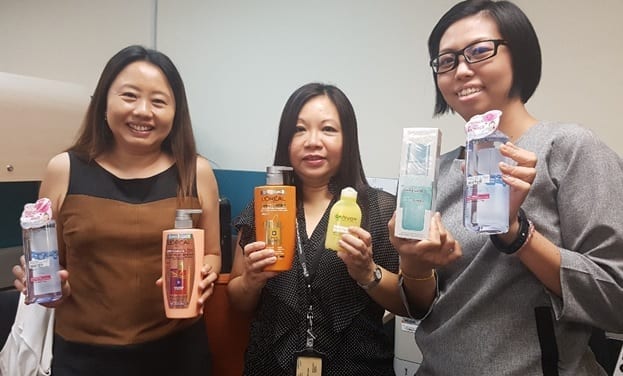
    In December 2017, L’Oréal Singapore partnered with Bolloré Logistics Singapore to donate and deliver nearly 12,000 skincare and haircare products to National Cancer Center Singapore (NCCS) and Humanitarian Organization for Migration Economics (HOME).

    L’Oréal Singapore reached out to both philanthropic organizations to provide and transport daily necessity products that would be beneficial to them, while Bolloré Logistics sponsored the pick and pack process.

    Products donated to NCCS will be for cancer patients, survivors’ caregivers, staff and volunteers. Dovetailing on SingHealth’s Giving Week from November to December 2017 which encourages giving back to society, staff were treated to L’Oréal Singapore’s skin and haircare products in appreciation for their conscientiousness in caring for their patients, and also to celebrate life and the friendship forged in the fight against cancer. Paying it forward, staff members at NCCS made donations to the Community Cancer Fund to help needy patients pay for their treatment expenses.

    Products donated to HOME went to migrant and domestic workers in Singapore who face problems such as mistreatment and abuse, and the shelter services provide a place of refuge and social support for those who have suffered or have been trafficked. At the shelter, these hair and body wash products are a daily necessity, and take a huge burden off the expenses needed to run the shelters.

    Bolloré Logistics Singapore Managing Director Frederic Marcerou said, “Bolloré Logistics Singapore teams are proud to be included in this meaningful cause”. “We are greatly supportive and happy that we can contribute our L’Oréal and Garnier products to assist NCCS and HOME’s causes”, said Supasita Kraisri, General Manager of L’Oréal Singapore Consumer Products.

    “It is very close to our hearts to be a supporting light to these causes and provide encouragement
    and care in practical ways”, shared Isabelle Lim, Corporate Communications Director of L’Oréal
    Singapore.

  • World’s biggest brands put on notice over 5,000,000-tonne laminate packaging problem

    World’s biggest brands put on notice over 5,000,000-tonne laminate packaging problem

    Big brands have been put on notice about their inaction over the world’s growing 5,000,000-tonne problem of plastic aluminium laminate waste.

    Following revelations about the scale of the problem in the UK and internationally, the CEO of the company behind the world’s only solution for recycling laminates – food pouches, pet food pouches, toothpaste tubes, sachets – has called on the world’s biggest FMCG companies to support investment in new processing capacity.

    Enval CEO Dr Carlos Ludlow-Palafox has written an open letter addressed to the CEOs of companies that benefit from laminate packaging, such as Unilever, Kraft, Nestlé Mars, Colgate, Campbell’s, GSK and Hain-Celestial to get behind efforts to process post-consumer waste.

    Across Europe and the US, billions of plastic aluminium laminate pouches, tubes and sachets are being discarded and sent to landfill or incineration while consumers are often misled into thinking that they are recycled, as reported.

    In the UK alone more than 10 billion laminate packaging items are sold annually but fewer than 1 in 20,000 is recycled. Of the remainder two thirds go to landfill and the rest are incinerated. This recycling rate is 50 times worse than that of disposable coffee cups, which has received great attention from media and politicians alike.

    Because the material contains bonded plastic and aluminium, the packages cannot be treated either as plastic or as aluminium. Only the Enval process can deal with them, however currently there are no major initiatives in place in the UK or the world to collect and sort post-consumer packages and genuinely recycle them.

    To process the waste, Enval has developed the world’s only commercial scale plant to deal with the material, which uses a microwave heating method to recover the aluminium into reusable ingots and process the plastic into reclaimed oil.

    Manufacturers and waste companies have undertaken successful trials with the Enval plant but have failed to support wider collection and processing efforts due to a reluctance to make the initial investment required.

    Enval CEO Dr Ludlow-Palafox said the lack of involvement by the FMCG brand owners and the risk-averse nature of the waste handling sector has meant the Huntingdon plant is still the only one in operation.

    “We believe the time for complacency is over. FMCG brands are using laminate packaging because of its exceptional characteristics and cost and environmental benefits. Yet the fact remains that more than 10 billion pouches, tubes and sachets end up being thrown away in the UK alone. This is inexcusable now that we have an environmentally sustainable and economically viable solution. These same companies boast about their environmental credentials: it is time for some action.

    “Consumers are buying laminate packaging in good faith – often either thinking it can be recycled or because there is no other choice. Big brands have reaped the benefits of advancements in packaging technology while delivering no certainty to consumers.

    “The problem of single-use laminates dwarfs that of coffee cups. Brands and regulators now need to put their money where their mouth is and ensure that laminates can be genuinely reprocessed and these materials brought into a circular economy that benefits both the market and the planet.”

    Independent studies commissioned by WRAP UK and the UK’s Department for Environment, Food and Rural Affairs (DEFRA) have shown that laminates can be readily separated from waste streams using conventional sorting technology. These studies also proved that a majority of householders, when asked, sort laminates for recycling for collection as they do with other materials.

  • Yitu Technology Eyes Southeast Asia AI Market

    Yitu Technology Eyes Southeast Asia AI Market

    Yitu Technology, a Shanghai based artificial intelligence technology company, has opened a new office in Singapore as part of its effort to boost growth in Southeast Asia, Hong Kong, Macau and Oceania.

    The office will act as launching pad for the company to introduce AI and collaborate with public, banking and healthcare sectors across the region, Yitu general manager for Southeast Asia, Hong Kong and Macau Lance Wang said at a launching event on Tuesday (23/01).

    “We see huge potential in Singapore and Southeast Asia. With our strength in R&D, we believe we can contribute more to the artificial intelligence sector here,” Wang said.

    A 2017 study by global consultants McKinsey & Company estimated Southeast Asia could gain potentially $897 billion in economic value if countries in the region pursue proactive artificial intelligence adoption across all sectors, including manufacturing, financial services, healthcare and transportation.

    Founded in 2012 by Leo Zhu, a UCLA-trained artificial intelligence scientist, and Lin Chenxi, a former Alibaba Cloud engineer, Yitu made its breakthrough by implementing AI technology for face recognition in the banking industry.

    Its facial recognition technology was rolled out in 2015 at 1,500 China Merchants Bank branches across China to help the bank verify customers. Other banking clients that have implemented the technology include Shanghai Pudong Development Bank and Agricultural Bank of China.

    Yitu’s facial recognition technology, capable of analyzing 1.8 billion faces in less than three seconds, was deployed at large-scale events like the G20 meeting and the BRIC Summit in China last year.

    The company has also developed an AI system that helps doctors analyze medical data and medical imaging faster and more accurately.

    Regarding plans for an expansion in Indonesia, Wang said the company is quite open to collaborate with distributors, banks or even airport operators that are interested in deploying the artificial technology.

    Scott Ong, the technical director of Southeast Asia, Hong Kong and Macau at Yitu, said the decision to set up an office in Singapore was made primarily to gather the best talent from around the region. Yitu also plans to open research and development centers in Singapore later this year.

    Yitu’s move is in line with Singapore’s plan to boost its artificial intelligence research. The island country set aside 150 million Singapore dollars ($113 million) in funding to support Singapore-based research institutions and plans to train 200 artificial intelligence engineers over the next three years.

    “With Yitu setting up an R&D lab in Singapore, it will give the best and brightest AI talent from Singapore a chance to work alongside a technology leader like Yitu to tackle the challenges and problems across industries for Singapore, Asia and the world,” said Ang Chin Tah, director of infocomms and media at Singapore Economic Development Board.

    Yitu received $55 million in Series C investments led by Hillhouse Capital Group, a Chinese private equity firm focused on the consumer, industry and healthcare sectors last year. Others who participated in the investment round include Yunfeng Capital, Sequoia Capital, Banyan Capital and ZhenFund.

  • CapitaLand Mall Trust remain stable despite challenges as retail sector stalls

    CapitaLand Mall Trust remain stable despite challenges as retail sector stalls

    Despite challenges in the retail sector, CapitaLand Mall Trust (CMT) maintained stability in its fourth quarter.

    “This points to the underlying strength of our well-located malls, and the management’s continuous focus on enhancing their offering as well as improving efficiency,” says CMT management company CMTML chairman Professor Richard Magnus.

    CMT achieved net property income (NPI) of S$119.3 million (US$90.6 million) for the period, to the end of December, up 2.6 per cent from the final quarter the previous year.

    With Singapore’s GDP growth expected to be stable this year, competition in the retail sector will remain intense, with new retail space coming onstream, says Magnus. “To stay at the forefront of a dynamic retail landscape, CMT will continue to push the boundaries and explore new ways to future-enable its malls.”

    CMT’s malls had an occupancy rate of 99.2 per cent at December 31, says CMTML CEO Tony Tan.

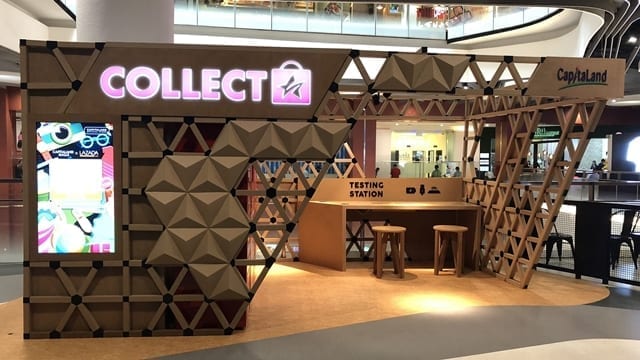
    “As part of our ongoing effort to enhance the offline and online shopping experience in our malls, we introduced seven click-and-collect lounges under CapitaLand’s partnership with e-commerce player Lazada. They are in Bedok Mall, Bugis+, IMM Building, JCube, Plaza Singapura, Tampines Mall and Westgate.”

    He says construction for Funan is progressing well. “With less than two years to target opening, Funan has received strong leasing interest for its retail and office components.”

    For its fourth quarter, CMT recorded growth of 1.8 and 2.6 per cent in gross revenue and NPI respectively year on year. The increase was mainly because of higher occupancy for Bugis Junction and The Atrium@Orchard, partially offset by lower gross revenue from Bedok Mall because of lower rental rates and reduced occupancy.

    For the full year, CMT recorded S$682.4 million in gross revenue, down 1.1 per cent. This was mainly because of the closure of Funan mall for redevelopment, lower rental rates and the lower occupancy at Bedok Mall. This was partially offset by higher rental from IMM Building, JCube and Clarke Quay.

  • ASEAN companies face US$750b risk from cyberattacks

    ASEAN companies face US$750b risk from cyberattacks

    Companies across the ASEAN bloc face a growing risk of cyberattacks, which can expose the region’s top-listed firms to a US$750 billion erosion in current market capitalisation.

    This was revealed on Tuesday in a new research commissioned by Cisco.

    Conducted by global management consulting firm A.T. Kearney, the research underlines that ASEAN’s growing strategic relevance, driven by economic expansion and ongoing digital adoption, make it a prime target for cyberattacks.

    A combination of nascent policy preparedness, absence of a unifying regional governance framework, shortage of skilled talent, underestimation of risk and lack of adequate investment are among the factors contributing to the heightened risk.

    The research report, titled “Cybersecurity in ASEAN: An Urgent Call to Action”, emphasises that cyber-security risk across the bloc will continue to escalate as the bloc gets more digitally interconnected.

    ASEAN countries underspend on cyber security. The region currently spends an average of 0.07 per cent of its collective gross domestic product (GDP) on cyber security annually. It will need to increase the spending to 0.35-0.61 per cent of GDP between 2017 and 2025 to be in line with the best benchmark (based on spending levels as percentage of GDP for Israel).

    The research estimates that this translates to $171 billion in collective spending needed across ASEAN countries during the period. Limited sharing of threat intelligence, often because of mistrust and a lack of transparency, will lead to even more porous cyber-defence mechanisms.

    Naveen Menon, ASEAN President at Cisco, said: “Digital innovation and adoption are central pillars of economic growth for ASEAN. Its success hinges in large part on the bloc’s ability to combat cyber threats. Cyber security needs to be an integral part of policy discussions at the semi-annual ASEAN Summit, with the aim of developing a unified policy framework for the region. The corporate sector also needs to start treating cyber security as a business wide issue that can only be tackled by adopting a risk-centric approach to building resilience, rather than just an IT problem.”

    Lương Thị Lệ Thuỷ, general director of Cisco Việt Nam, said: “Việt Nam has fallen to rank 101 among 195 countries in the Global Security Index 2017 compiled by the UN International Telecommunication Union, down 25 places from 2016.”

    “The National Assembly (NA) has been discussing the need to formulate a law on cyber security. It has been put under consideration at the fourth session of the 14th NA. However, all stakeholders need to work together to help build cyber-security capabilities in Việt Nam to ensure that we are able to combat these threats,” Thủy said.


  • Prada’s new concept Spirit pop-up Bar in Macau Galaxy Mall

    Prada’s new concept Spirit pop-up Bar in Macau Galaxy Mall

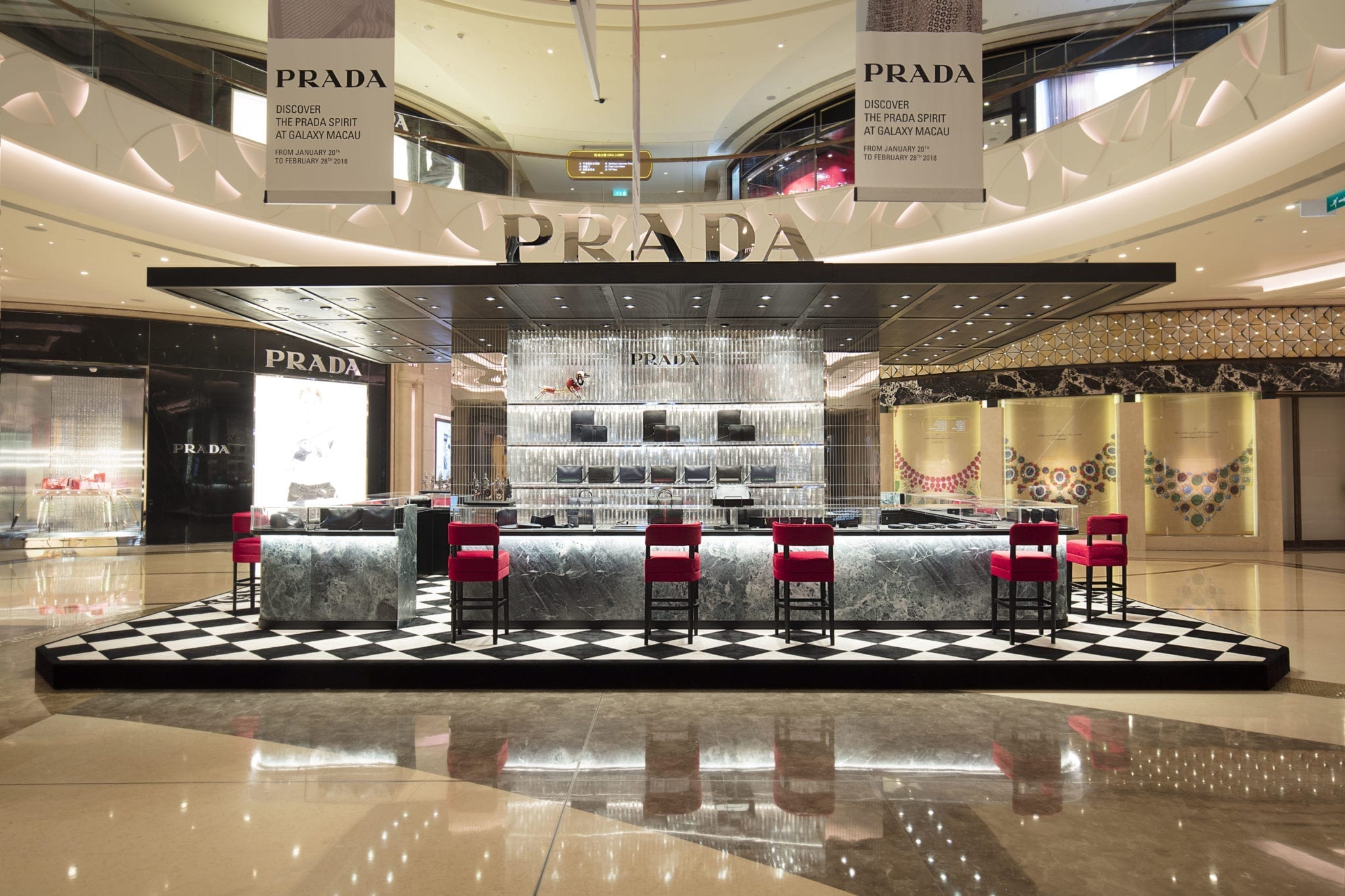
    Just in time for the Lunar New Year, Galaxy Macau and Italian fashion house Prada have introduced the Prada Spirit retail project, running until the end of next month.

    Following the success of the Prada Station pop-up with it railway theme, the project offers exclusive products in a concept location, allowing shoppers to socialise in a relaxed, luxurious atmosphere.

    Premiering at The Promenade Shops of the Galaxy Macau, Prada Spirit will later travel to other major cities in Asia including Beijing, Shanghai, Hong Kong, Taipei, Singapore and Seoul.

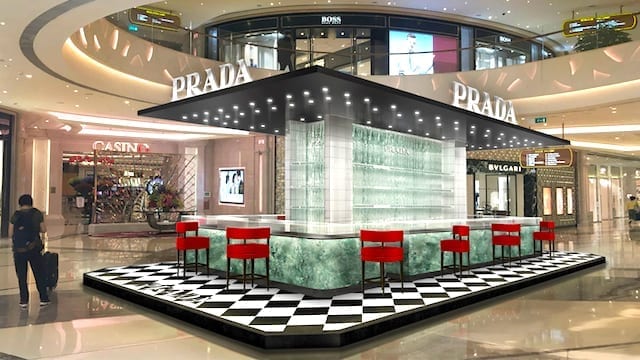
    With a setting inspired by traditional Italian cafes, it displays an exclusive collection of leather bags and accessories. Lounge corners feature red velvet sofas and small black tables. A central, squared counter is lined with display cases, while a wall-chandelier with multi-faceted Perspex blades makes a contrast with the black-and-white marble checkered flooring. High wooden stools complete the space.