Author: Mei Ling Tan

  • Myanmar allows full foreign ownership in Retail Business

    Myanmar allows full foreign ownership in Retail Business

    Foreign companies are now allowed to invest in Myanmar’s retailers and wholesalers, including holding 100% stakes, as the country makes efforts to lift foreign investment amid the Rohingya refugee crisis.

    The Ministry of Commerce announced the change on Friday, explaining that it wants to increase competition in the sectors and promote price stability and technology transfers. The new rule took effect on Wednesday.

    But restrictions still apply. Foreign companies must invest at least $700,000 to take an up to an 80% stake in retailers, and $3 million for anything more. They cannot own minimarkets and convenience stores with floor spaces of 929 sq. meters or less. For wholesalers, the minimums are set at $2 million for up to an 80% stake and $5 million for more.

    The ministry is also letting foreign companies themselves bring their products into Myanmar and sell them instead of going through local importers as in the past. This could encourage automakers and appliance manufacturers to make further inroads here.

    Foreign companies could technically take stakes in Myanmar retailers and wholesalers before if they received the ministry’s approval. But almost none got the green light. Japanese retailer Aeon, one of the handful that did, began operating supermarkets with a local partner in 2016.

    Emerging economies often restrict foreign investment to protect homegrown retailers and wholesalers. It is unusual for a country like Myanmar, with per capita gross domestic product of only $1,200 or so in 2016, to relax the rules so much.

    But de facto civilian leader Aung San Suu Kyi has come under fire for delays in key economic reforms. And human rights abuses against the Rohingya Muslim minority, hundreds of thousands of whom have fled to neighboring Bangladesh, are making American and European businesses uneasy about operating in Myanmar.

    The country approved about $5.7 billion of foreign investment in the 12 months ended March, down for a second straight year. A further decrease could throw a wrench into a development strategy heavily reliant on foreign money.


  • New form of Hide and Seek IoT malware discovered

    New form of Hide and Seek IoT malware discovered

    Security researchers from BitDefender have discovered a new form of the ‘Hide and Seek’ IoT malware, which targets several generic devices.

    The most worrying aspect of this new strain is its ability to persist despite a reboot. With previous versions, equipment owners could always remove IoT malware from their smart devices, modems, and routers by resetting the device.

    Hide and Seek’s original version, discovered in January 2018, was notable for using a proprietary peer-to-peer network for both C&C and new infection communication. With persistence now added to the feature mix, the botnet has become a more pressing concern for owners of the 90,000+ IoT devices already infected and other equipment that are vulnerable and still unprotected.

    “The botnet seems to undergo massive development as new samples compiled for a variety of architectures have been added as payloads,” said Bogdan Botezatu, senior e-threat analyst at Bitdefender, in a blog post concerning the new variant of the malware.

    According to the Bitdefender researchers, there are at least 10 different versions of executables that can run on 10 different system variants.

    Botezatu said that new binaries now include code to leverage two new vulnerabilities to compromise more IPTV camera models. “In addition to the vulnerabilities, the bot can also identify two new types of devices and pass their default username and passwords,” he said.

    The malware targets several generic devices. Once infected, the device scan for neighboring peers for the presence of the telnet service. As soon as the telnet service is found, the infected device attempts brute-force access.

    “New variations of the Hide and Seek malware continue to exploit common issues with system/software hardening in deployed IoT devices,” Irdeto global head of software protection John O’Connor said.

    “The current generation of the Hide and Seek botnet could effectively be stopped in its tracks if diligent system hardening was applied during development, including proper management of applications, permissions, ports and user IDs/passwords. As a result, hardening should be a baseline requirement of a system in the development phase.”

  • AirAsia, Garuda cancel flights to and from Yogyakarta due to Merapi eruption

    AirAsia, Garuda cancel flights to and from Yogyakarta due to Merapi eruption

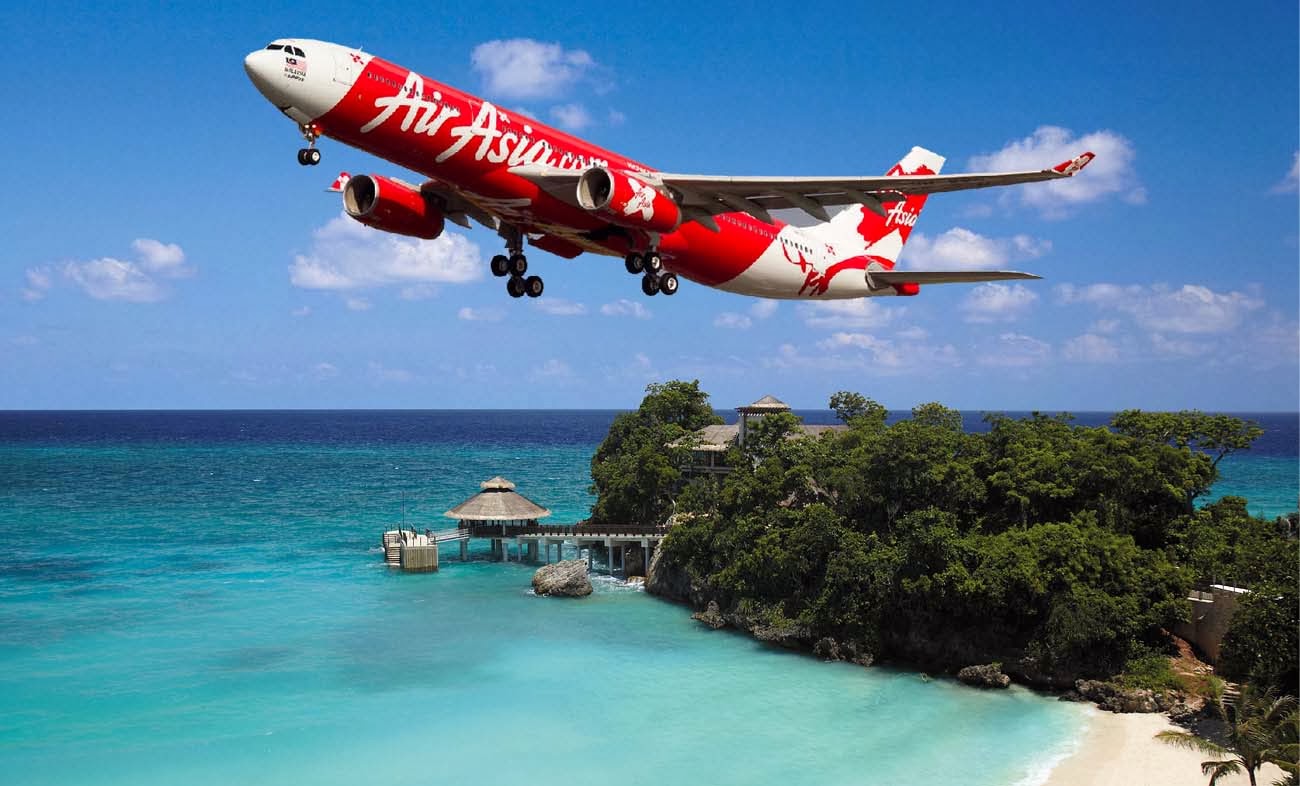
    AirAsia and Garuda Indonesia have cancelled a total of at least 26  flights to and from Yogyakarta after the eruption of Mount Merapi forced the ancient Javanese city’s airport to close.

    The cancelled AirAsia flights are AK 346, AK 347, AK 348 and AK 349 (Yogyakarta – Kuala Lumpur, Kuala Lumpur – Yogyakarta), QZ 659 (Singapore – Yogyakarta), QZ 7557, QZ 7550, QZ 7551, QZ 7552 and QZ 7553 (Yogyakarta – Jakarta, Jakarta – Yogyakarta), XT 8448 and XT 8449 (Bali – Yogyakarta, Yogyakarta – Bali).

    Passengers of cancelled flights will be given the option of rescheduling, rerouting their journey or a refund or credit. AirAsia also advised passengers to check AirAsia’s website and social media accounts for further updates.

    Meanwhile Garuda, Indonesia’s national carrier, cancelled 14 flights.

    Yogyakarta’s Adisutjipto International Airport, 520km south-east of Jakarta, was closed at about 10:42am on Friday local time, and reopened at 2:17pm, state air-navigation operator AirNav Indonesia said in a statement Friday.

    Mount Merapi’s eruptions are minor, caused by accumulation of volcanic gases, and shouldn’t lead to further outbursts, the Centre for Volcanology and Geological Hazard Mitigation at the nation’s Energy and Mineral Resources Ministry, said in a statement, adding its status is “normal.”

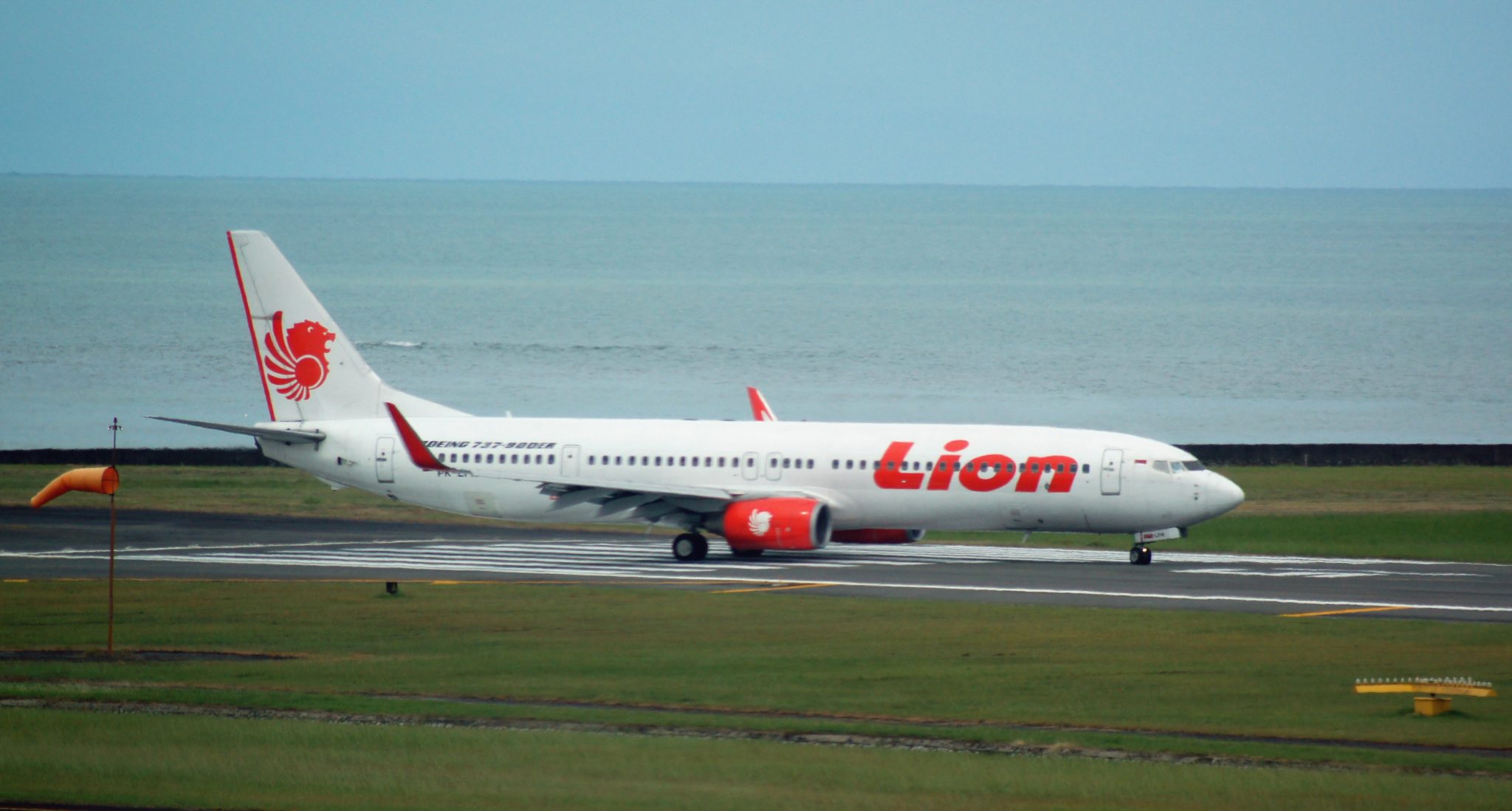
    Other airlines that canceled flights include those operated by the Lion Group.

    It said it would inform passengers of affected flights through email and text message.

    “AirAsia strongly encourages all guests to update their contact details at airasia.com to ensure that they are notified of any updates to their flights,” AirAsia said in a statement on Friday.

    Indonesia is located on the so-called Pacific Ring of Fire, an arc of volcanoes and geological fault lines surrounding the Pacific Basin. According to the Volcanological Survey of Indonesia, the archipelago has about 120 active volcanoes. It has had two of the world’s biggest volcanic eruptions in the past two centuries: Mount Tambora in 1815 and Krakatau in 1883.

    Last year, Mount Agung on the neighbouring island of Bali erupted and forced the airport at the popular holiday destination to close several times. Yogyakarta is also a prominent tourist spot for Buddhist pilgrims.

    The volcanic ash and gases spewed can be dangerous to planes passing through the plume. In 1982, all four engines on a British Airways Boeing Co. 747 stalled when the plane encountered the debris from Mount Galunggung in Indonesia.

    The plane dropped for almost four miles before the pilot was able to restart three engines and make an emergency landing in Jakarta.

  • SingPost back in black with $23.9m profit and a bright future

    SingPost back in black with $23.9m profit and a bright future

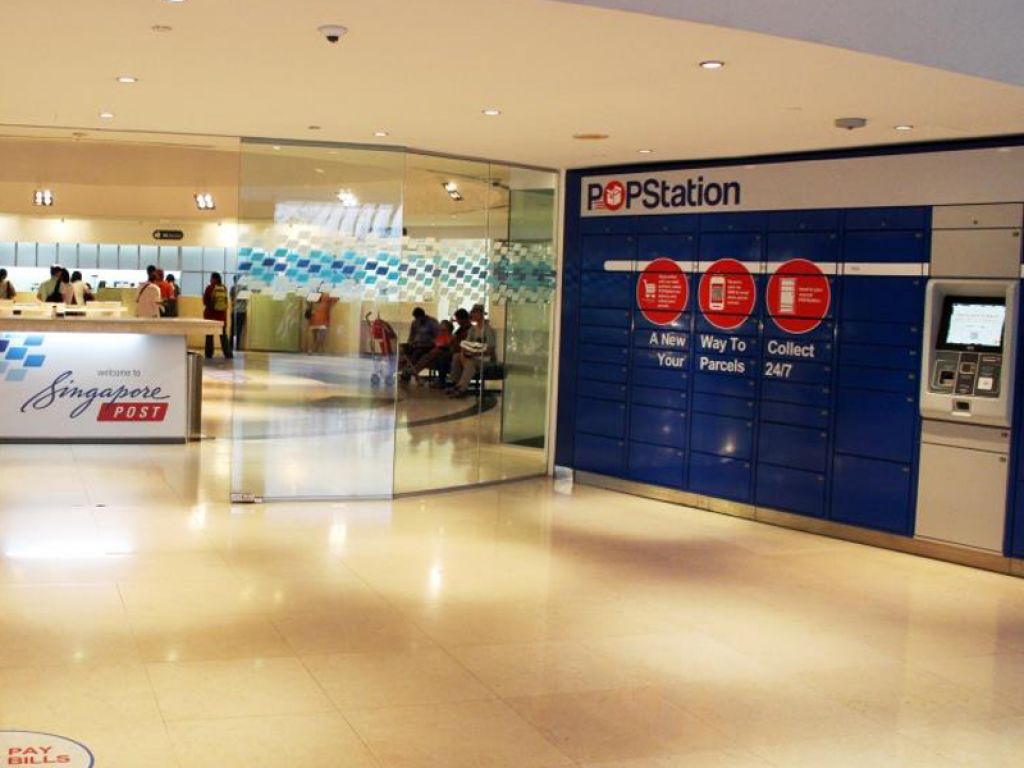
    Singapore Post (SingPost) swung back into the black for its fiscal fourth quarter, booking profit of $23.9 million in the absence of one-off impairment charges in the corresponding period last year.

    Revenue for the three months to March 31 was also up 13.5 per cent to $367.5 million on growth in e-commerce-related activities across its postal and logistics segments, SingPost said. Earnings per share were up to 0.9 cent from a loss per share of 3.03 cents last year.

    For the full year ended March 31, SingPost booked a profit of $126.4 million on the back of $1.46 billion in revenue.

    The board recommended a final dividend of two cents per share to be paid out on July 31.

    For the fourth quarter last year, SingPost was hit with an impairment charge of $208.6 million related largely to the TradeGlobal and Postea acquisitions, as well as a property in Toh Guan, which SingPost highlighted was partially offset by a fair value gain on investment properties of $108.7 million, mainly for the SingPost Centre building.

    The postal segment’s revenue rose 18.2 per cent in the quarter and 15 per cent for the full year as strong growth in international mail revenue helped offset the decline in domestic mail revenue, SingPost said.

    Domestic mail revenue declined 6.6 per cent for the full year to $229.4 million, due to lower letter mail volumes with the “continued migration” towards electronic forms of communication.

    Revenue for SingPost’s e-commerce segment rose 15.7 per cent in the fourth quarter to $65.31 million, and was stable for the full year.

    “SingPost is well positioned to benefit from the strong growth in global e-commerce and last-mile deliveries as we progress to the next phase of our strategy,” said group chief executive Paul Coutts. “We continue to execute on our transformation and build on our partnership with Alibaba in e-commerce. We are integrating and scaling our e-commerce businesses in the United States and South-east Asia, as well as the rest of our overseas operations, and optimising the cost structure of the SingPost group.”

  • McDonald’s Malaysia denies any connection to Israel

    McDonald’s Malaysia denies any connection to Israel

    The Malaysian franchise of McDonald’s Corp said it was “disappointed” with calls on social media to boycott the fast-food restaurant chain in apparent retaliation against the US’ recognition of Jerusalem as the capital of Israel.

    Social media users in the Muslim-majority country have called on people to boycott various American companies following United States President Donald Trump’s decision to relocate the US Embassy in Israel to Jerusalem.

    One Twitter user, who goes by the name, TheUsopIbrahim, stated without citing sources that US-headquartered McDonald’s “channelled funds to Israel”.

    McDonald’s Malaysia said in a statement on Facebook on Saturday that the chain does not support or engage in any political or religious conflicts.

    Mr Azmir Jaafar, managing director and operating partner of franchisee Gerbang Alaf Restaurants, said: “The claim that McDonald’s channels funds to Israel is a false accusation, a lie, fake and slanderous.”

    He added that Gerbang’s largest shareholder is Muslim.

    The Malaysian and Singaporean franchise rights were bought by Saudi Arabia’s Lionhorn a year ago, as part of the US parent’s strategy of moving away from direct ownership in Asia.

  • Mumuso Vietnam accused of fraud

    Mumuso Vietnam accused of fraud

    Fashion and lifestyle goods retailer Mumuso Vietnam has been accused of selling Chinese goods as Korean products.

    The allegation surfaced on South Korean SBS News, which reported that the Shanghai-based company has been duping customers into thinking it is a South Korean store chain selling South Korean goods. The news channel also said Mumuso’s registered office in Seoul could not be found.

    Legal representatives of Mumuso Vietnam say the company registered its brand under the protection of the Korean Intellectual Property Office without any production activities there. It also has a branch in Shanghai, redesignated as its headquarters.

    Mumuso authorised its Shanghai office to take over its business activities, including production and brand management.

    Mumuso’s business in Vietnam is under a franchise contract.

    “Mumuso wants to strengthen its brand overseas before returning home, where competition is fierce,” says Mumuso Vietnam director Nham Phi Khanh.

    He admits that no Mumuso merchandise has undergone quality inspections in Korea, but is imported directly from China. “Our products meet standards and regulations set by the Drug Administration of Vietnam and the Department for Food Safety and Hygiene under the Ministry of Health.”

    Mumuso Vietnam has 27 outlets, mostly in Hanoi and Ho Chi Minh City. The stores sell a wide range of goods, from cosmetics to household items, all labeled as “Mumuso – Korea”, with product information mainly written in Korean and Chinese, and prices ranging from VND22,000 (US$1). All come with a “Made in China” tag.

    The Mumuso retail concept is loosely based on that of another Chinese company Miniso, which has drawn criticism for marketing its products as Japanese.

    Meanwhile, Mumuso Vietnam has announced it intends to increase the number of its outlets in Ho Chi Minh City and Hanoi to 80.

  • Asia outpacing Europe by TETRA adoption

    Asia outpacing Europe by TETRA adoption

    Terrestrial trunked radio (TETRA) technology is gaining popularity in Asia, as well as in new markets beyond public safety, according to IHS Markit.

    The research firm estimates that TETRA deployments worldwide grew 16% in 2017, due to both refreshes in mature markets as well as fresh deployments in new areas.

    Europe remains the largest market for the European Telecommunications Standards Institute (ETSI) developed TETRA standard, but the Asian and Latin American markets for the technology are expected to grow at a faster rate than Europe over the next few years.

    Asia already posted its largest growth in deployments in 2017, with deployments across airports, metro systems and other transport hubs, the company said.

    TETRA has emerged as the technology of choice for emergency services, but is also seeing adoption in industries such as transport, utilities and the industrial sector.

    As well as land mobile radio (LMR) based TETRA systems, LTE is emerging as an alternative. Private LTE networks have been deployed in China, Australia, South America and several MEA markets, IHS Markit noted.

    The research firm said LTE might be used as a substitute for TETRA and other high-end LMR technologies over the next five to ten years. But in the short term, LTE is expected to be used to complement critical voice communications with data capability rather than replace LMR altogether.

  • NEC to help Docomo upgrade to 5G

    NEC to help Docomo upgrade to 5G

    Japan’s NTT Docomo has entered an agreement with NEC covering the supply of control units for 5G base station equipment to help commercialize 5G services.

    NEC plans to develop technology to enable existing telecoms equipment such as high density base station equipment to be fully compatible with 5G. Docomo plans to leverage this technology to meet its goal of launching 5G services in 2020.

    Under the agreement, NEC will achieve 5G compatibility through software upgrades and a minimal replacement of hardware to maximize the use of existing high-density base station equipment, using the base station technology NEC first launched in February 2015.

    The upgrade will allow Docomo to continue providing LTE and LTE-Advancedservices even after the equipment is upgraded to be made compatible with 5G.

    “Docomo aims to deploy and expand our commercial 5G services efficiently by maximizing the use of existing communications equipment,” NTT Docomo CTO and board member Hiroshi Nakamura said.

    “This agreement with NEC is in line with that policy and we expect it to make a significant contribution to our 5G services. Going forward, Docomo accelerates co-creation of new services and businesses with vertical industry partners.”

    The operator has separately announced that its board of directors has proposed a number of changes in executive positions for approval at next month’s shareholders meeting aimed at further developing the company.

    Among the proposed changes include the appointment of five senior executives to the board, the hiring of a new executive vice president, and the promotion of four candidates to senior vice president.

  • Koda’s Profit Skyrockets

    Koda’s Profit Skyrockets

    Furniture specialist Koda has reported a near fourfold rise in net profit for its third quarter thanks to growing exports, and increased sales of its Commune brand.

    Revenue for the period grew 22.5 per cent to US$13.4 million, while net profit was $1.2 million.

    Earnings for the first nine months soared 60.4 per cent to $3.6 million, closing in on net profit of 4.05 million for the entire year to the end of June.

    Barring unforeseen circumstances, the group expects its performance to improve.

    “Our third-quarter net profit jumped by more than 260 per cent,” says Koda MD James Koh. “Our China expansion plans have also exceeded my expectations.”

    Commune CEO Joshua Koh says its plan to have 100 stores in China by 2020 is well on track. We are thankful to Enterprise Singapore and the Info-communications Media Development Authority for supporting our growth strategies.”

    Commune has 45 stores in China as well as outlets in Singapore, Malaysia and Australia.

  • 3 HK wins permit for 26-GHz, 28-GHz 5G trials

    3 HK wins permit for 26-GHz, 28-GHz 5G trials

    Hutchison Telecommunications Hong Kong Holdings’ mobile division 3 Hong Kong has secured a temporary permit to conduct 5G new radio trials.

    Hong Kong’s Office of the Communications Authority (OFCA) has granted 3 Hong Kong permission to conduct network trials using 26-GHz and 28-GHz millimeter wave spectrum, the operator said.

    The permit will allow 3 Hong Kong to possess, establish, maintain and use transmitting and receiving stations for indoor and outdoor 5G trials, which are expected to commence in the third quarter.

    The operator successfully applied for a 5G indoor test permit for the 3.5-GHz band last August and completed a number of tests over the remainder of the year.

    “3 Hong Kong is determined to launch a 5G service at the earliest opportunity, after 5G spectrum specifications and standards have been finalized,” the company said.

    OFCA has previously announced plans to ensure Hong Kong is one of the earliest adopters of 5G technology by setting the regulatory groundwork for commercial services to be launched in 2020.

    In March, 3 Hong Kong activated Hong Kong’s first five-carrier aggregation (5CC CA) LTE-Advanced services, using its 900-MHz, 1800-MHz, 2100-MHz, 2300-MHz and 2600-MHz spectrum. During network trials, the company achieved speeds of 1.1Gbps over the network.

  • Trump intervening to get ZTE back in business

    Trump intervening to get ZTE back in business

    n an unexpected twist in the ongoing saga over the ban on ZTE importing US components, president Donald Trump has indicated he may throw a lifeline to the Chinese vendor.

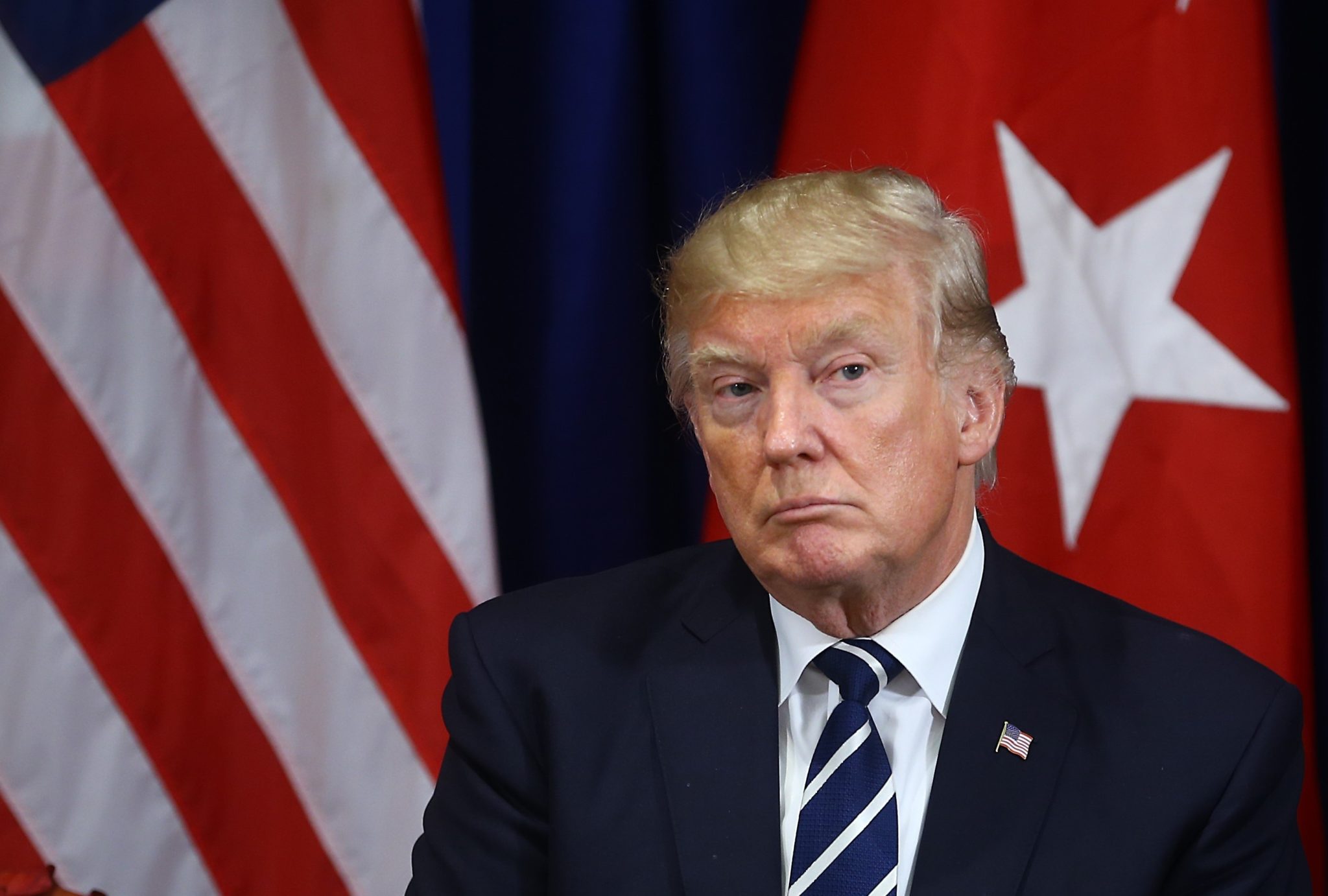
    On Sunday, Trump tweeted on his official account that he is working with Chinese president Xi Jinping on a resolution that will allow ZTE to resume operations.

    “President Xi of China, and I, are working together to give massive Chinese phone company, ZTE, a way to get back into business, fast. Too many jobs in China lost. Commerce Department has been instructed to get it done!,” he wrote.

    ZTE was forced to cease major operations last week as a result of the import ban imposed on the vendor by the US Department of Commerce’s Bureau of Industry (BIS) in April.

    The ban was originally imposed last year but automatically suspended on the condition that ZTE comply with its settlement agreement over the investigation into the vendor’s sale of telecoms equipment including US components to Iran, in violation of US sanctions.

    Trump’s announcement comes as the US and China are conducting trade talks aimed at resolving the disputes between the world’s two largest economies. Chinese vice premier Liu He reportedly met with officials in Washington on Friday, while Xi’s top-ranking economic adviser plans to visit this week to continue the

  • Shiqi Metro Mall golden egg for Dasin

    Shiqi Metro Mall golden egg for Dasin

    Acquired on June 19 last year, Shiqi Metro Mall has proved a profit booster for Dasin Retail Trust, according to its financial results for the three months to the end of March.

    Dasin is the only China retail property trust providing direct exposure to the growth of the Guangdong/Hong Kong/Macau Bay Area, and has an initial focus on retail malls. Its four present malls each had 100 per cent occupancy at the end of March.

    Largely because of the contribution of the Shiqi mall in Zhongshan, net property income year on year increased by 85 per cent. This was 3 per cent higher than forecast.

    Opened 10 years ago, the regional mall’s anchor tenants include Gome Electronics, Jane Eyre Furniture Mall, Jinyi Cinemas, KFC, RT Mart, Starbucks, Superior City Department Store, Watsons and Xin Xuan Hotel Restaurant.

    Other Dasin malls include Xiaolan Metro Mall, with tenants including Bank of China, Chow Tai Fook, KFC, McDonald’s, Pizza Hut and Sunning.

  • AirAsia under selling pressure

    AirAsia under selling pressure

    Shares in AirAsia Group Bhd plunged by  nearly 13% or 47 sen on the first trading day after the general election last Wednesday. Selling pressure emerged on counters that are perceived to be linked to the incumbent Barisan Nasional, the low cost carrier is among them.

    Meanwhile, CIMB Investment Bank Bhd downgraded the stock on the back of higher oil prices and a return to losses at its Indonesia and Philippines operations, which was exacerbated by currency depreciation.

    This morning, AirAsia shares opened at RM3.25, down 12.16% from its previous close price of RM3.70.

    However, the shares have since pared down its losses and at 9:57am, the counter was trading at RM3.54. The stock saw 27.2 million shares traded, valuing AirAsia at a market capitalisation of RM11.83 billion.

    “We downgrade our recommendation on AirAsia from Add to Hold on the back of what we believe to be sustainably higher oil prices,” CIMB analyst Raymond Yap said in a note to clients today.

    “Additionally, the Indonesian rupiah and Philippine peso have been showing signs of sustained weakness against the US dollar and the current exchange rates are already weaker than what we have incorporated into our forecasts.”

    In line with the stock downgrade, CIMB has also cut AirAsia’s target price to RM3.84, from an earlier forecast of RM5.31.

    According to CIMB, AirAsia’s core net profit is at risk from the oil price rise, the latter of which have rallied by 15% to US$77 per barrel year-to-date.

    The anticipated lower earnings has prompted CIMB to trim down its forecast of AirAsia’s core net profit by 30% to RM882 million in financial year ending Dec 31, 2018 (FY18), from an earlier forecast of RM1.31 billion, as it take into account of higher jet fuel price assumption of US$85 per barrel from US$75 per barrel previously.

    “Even with our lower core earnings forecasts, it appears that the risks are to the downside,” CIMB added.

    For 2018, CIMB noted that AirAsia, as a group, only hedged about 12% of its jet fuel requirements at an average strike price of US$68.55 per barrel, which was in contrast to the position it took in 2017, where it had hedged 75% of its requirements at an average price of US$60 per barrel.

    “As a result, the AirAsia group is largely exposed to the spot price of jet fuel,” CIMB said.

    Going forward, CIMB assumed that AirAsia will only be able to recoup 15% of the hike in jet fuel prices from higher ticket prices, since the rise in the price of jet fuel has been faster than expected. At present, CIMB said AirAsia does not currently have fuel surcharge mechanisms in place.

    “The impact of higher oil prices will be felt more keenly from the second quarter of 2018 onwards since the pricing of jet fuel purchases tend to be lagged by one month,” it added.

    As for the currency depreciation, CIMB said the US dollar has, since the start of this year, appreciated by 3% against the rupiah and by 5% against the pesos.

    “More upside for the US dollar is possible against these two currencies due to the impact of higher oil prices on their economies,” CIMB said.

    CIMB said the depreciation of these two currencies, in addition to the higher oil prices, is expected to drive Indonesia’s AirAsia and Philippines’ AirAsia (PAA) back into the red for FY18, although both airlines delivered profits in FY17.

    As for PAA, CIMB said it is expected to come under severe pressure from the six-month closure of the Boracay island resort from late-April to late-October 2018, given that the island traffic accounts for 22% of its seat capacity.

    In FY17, CIMB said PAA increased its fleet by three aircrafts and added a staggering four planes in 1Q18F alone, bringing the total fleet to 21 planes.

    “The fleet growth could not have come at a more inopportune time,” it said.

    Despite the higher oil prices, CIMB said PAA should deliver slightly stronger core earnings due to yield recovery in the domestic aviation space as well as continued robust growth of inbound Chinese tourist numbers.

  • Lion Air opens new Surabaya-Haikou charter route

    Lion Air opens new Surabaya-Haikou charter route

    The country’s largest private low-cost carrier, the Lion Air Group, has opened a new charter route from the East Java capital of Surabaya to Haikou, the capital of the Chinese island province of Hainan.

    Flying once a week, the fleet’s Boeing 737-900 ER aircraft will serve the new route, accommodating up to 215 passengers starting Friday.

    “We are very proud to be able to expand our international connectivity by opening a charter flight to China from Indonesia’s second biggest city, Surabaya. The new route will increase our service to customers and provide more options for those traveling from China to Indonesia,” said Lion Air Group CEO Edward Sirai in a statement?

    In collaboration with Hainan United Airlines Travel Group Co., the JT 2661 flight will depart on Fridays at 5:40 p.m. local time from Surabaya’s Juanda International Airport  and arrive at 11:45 p.m. at Haikou Meilan International Airport. The Indonesia-bound flight JT 2660 will fly Saturdays at 12:55 a.m. from Haikou and land in Surabaya at 5 a.m.

  • BMW Contract Assembler to Make Engines in Malaysia

    BMW Contract Assembler to Make Engines in Malaysia

    Malaysian conglomerate Sime Darby Motors and BMW Group Malaysia open a 132 million ringgit ($33.5 million) engine plant for locally assembled vehicles and to support exports to regional markets including Vietnam and the Philippines.

    Sime Darby Managing Director Dennis Ho tells reporters the plant will produce 10,000 units a year in a single shift.

    The 91,493-sq.-ft. (8,500-sq.-m) engine plant is the first of its kind for contract manufacturer Sime Darby. Until now, locally assembled BMW and Mini models have used engines imported from Germany or Austria.

    The new facility will assemble 3- and 4-cyl. gasoline engines, 4-cyl. diesel engines and 3- and 4-cyl. gasoline engines for plug-in hybrid vehicles. It is the second BMW engine plant in the region after Rayong, Thailand.

    The new engine operation is alongside the assembly plant and regional parts-distribution center.

    Ho says there is no compromise in the quality of engines being built at the plant in Padang Meha 233 miles (375 km) north of Kuala Lumpur. “The standards of the quality checks are similar to those used in Germany,” he says. “The parts and components are imported from Germany.”

    BMW Group Malaysia CEO Harald Hoelzl says Malaysia plays a major role in BMW’s plans for Southeast Asia.

    “In Malaysia, BMW has already successfully achieved a 15% increase in the deliveries of BMW, Mini and BMW Motorrad vehicles, with 3,000 vehicles in the first quarter,” he says.

    Malaysian motoring analyst Paul Tan says the inclusion of diesel engines is interesting because BMW Malaysia no longer has diesel models in its lineup. “This means that the company is likely looking to introduce new oil-burning models soon,” Tan says on his website.

    Sime Darby Chairman Abdul Aziz Wan Abdullah says the company aims to be the preferred contract-assembly partner for the most dynamic automakers in the region.

    “We aim to produce more than 50,000 vehicles (including Mazda and Hyundai vehicles produced at the company’s Inokom plant), as well as the engine parts and components for the vehicles by the year 2020,” he says in a statement.