Author: Mei Ling Tan

  • Melt Shop has plans to open shops in Southeast Asia

    Melt Shop has plans to open shops in Southeast Asia

    Melted sandwiches are about to take on the world, including Southeast Asia, according to the directors of US franchise chain Melt Shop.

    Founder/managing partner Spencer Rubin believes the company is perfectly positioned to begin franchising internationally after expanding into the Middle East.

    Melt was established in 2011 and now has eight corporate locations in New York, Philadelphia, and Minneapolis. Parent company Aurify Brands is a hospitality-focused business founded by multi-unit franchisees, and its plans for the Melt Shop include a global target of more than 100 locations over the next five years.

    “Melt Shop has spent the past six years perfecting our brand and business model,” says Rubin. “The timing is right to take our New York-born fast-casual concept to the world.”

    He says the company sees immense potential to grow through franchising, and is targeting experienced multi-unit franchisees who have restaurant and hospitality experience.

    “Keeping the integrity of the Melt Shop brand is important to us. We will have dedicated operators overseeing the day-to-day running of our international locations. An intense and all-encompassing training program will also ensure no steps are overlooked.

    “We strongly believe in compliance, and it is important we find partners who are dedicated and passionate about the Melt Shop brand. All locations will follow the same processes and quality standards, and we’ll do everything to make sure it is consistent across every location.”

  • Tezuka Shoten brings manga to Thailand

    Tezuka Shoten brings manga to Thailand

    Thailand’s first Japanese manga bookstore/cafe, Tezuka Shoten & Cafe, has just opened in Bangkok’s Paradise Park shopping centre.

    It has been brought to Thailand by MJ Service (Thailand), a company that helps Japanese companies set up in Thailand. MD Toru Sasaki co-presided at the store’s opening ceremony, which was attended by three Thai actresses.

    It has two zones: a bookstore featuring works by manga artist Tezuka Osamu, and a cafe serving snacks and drinks inspired by the artist’s work. There is also the Tezuka Spot where all his works can be read free in Thai on smart devices.

    The store plans family activities based on manga comic books.

  • Pizza Maru opens at Northpoint City

    Pizza Maru opens at Northpoint City

    Korean chain Pizza Maru soft launches in Singapore today with its debut store at Northpoint City in Yishun.

    Pizza Maru is known for its patented green-tea wellbeing pizza dough, which is fermented for more than 48 hours with micro-algae chlorella as well as natural grains such as barley and flaxseed.

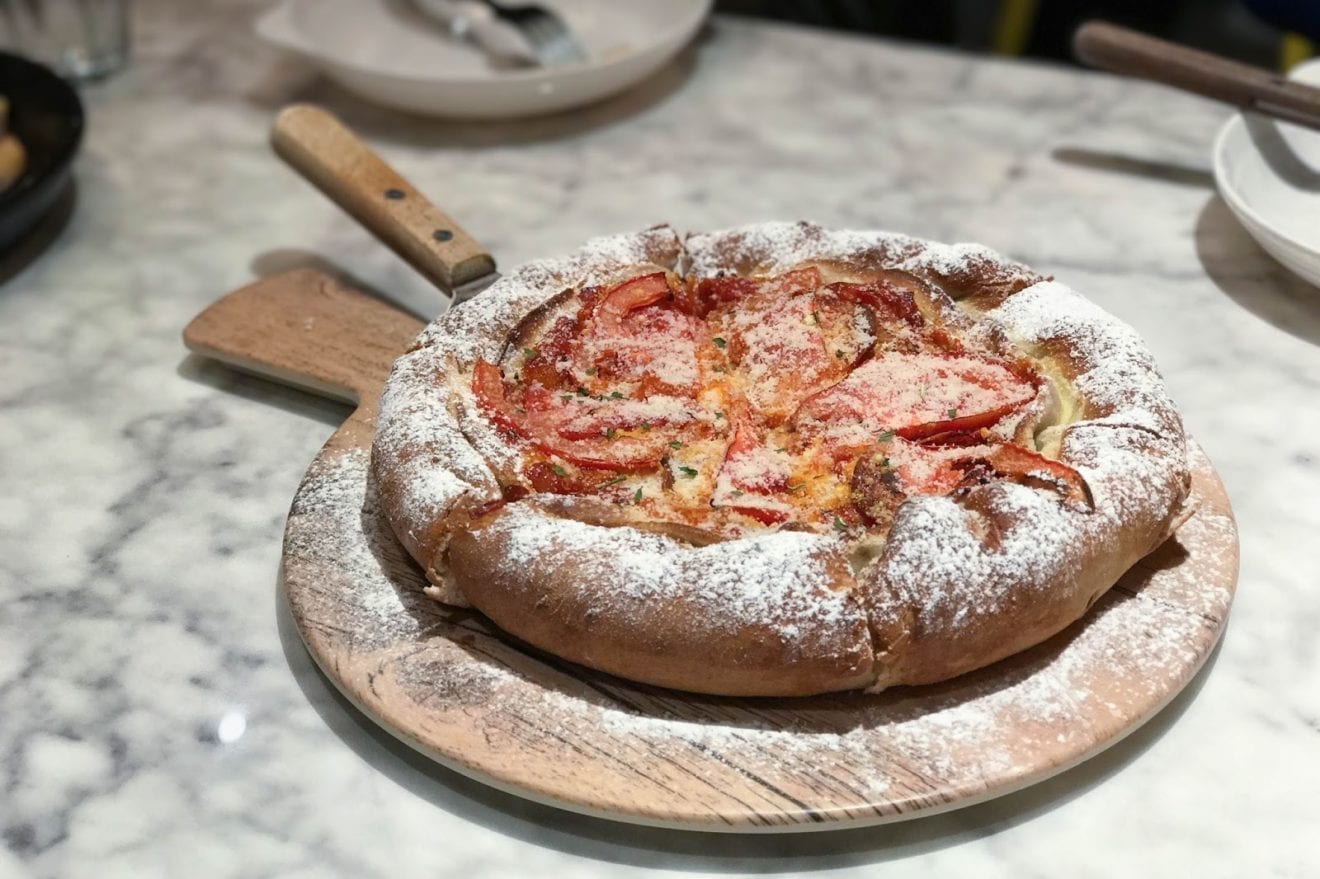
    One of its feature dishes is Real BBQ Chicago, a deep-dish pizza combining chicken leg pieces, potato cubes, roasted onions, tomatoes, mushrooms and cheeses blended with honey and barbecue sauce. The puffy crust is made from fibre-rich, antioxidant-packed black-rice dough.

    Korean fried chicken is also a staple of Pizza Maru, the star dish being the Supa Hot Tak Gangjeong with a choice of two levels of spiciness.

    Seating 80 diners, the restaurant will have its official grand opening on January 15.

  • Macau retail sales continue to climb

    Macau retail sales continue to climb

    Macau retail sales are on the rise with businesses reporting increased turnover year-on-year. Data from the Statistics and Census Service (DSEC) shows 68 per cent of interviewed restaurants and similar establishments registered a year-on-year rise in receipts or a stable business performance in October, a six percentage point rise from September.

    And the proportion of interviewed retailers reporting a year-on-year sales increase in October rose by eight percentage points from September to 59 per cent.

    The best performing retail categories were cosmetics, with 78 per cent of retailers reporting an improvement, leather goods, (80 per cent), and apparel, (60 per cent).

    Some 21 per cent of interviewed retailers registered a year-on-year sales decline, down by three percentage points over September. Of department stores, 11 per cent reported a decline and 22 per cent of watch and jewellery vendors.

    Generally, retailers expected their sales to be stable in November, with 77 per cent predicting a year-on-year sales increase or a steady business performance, the same proportion as in October.

    Dining out data

    The proportion of western restaurants (25 per cent) reporting a year-on-year growth in receipts went up by nine percentage points, while that of Japanese & Korean Restaurants (44 per cent) was down by 13 percentage points. On the other hand, the share of establishments recording a year-on-year decline in receipts decreased by six percentage points over September to 32 per cent.

    Restaurants and similar establishments interviewed were cautious about their business prospects, with 68 per cent expecting a year-on-year rise in receipts or a steady performance in November, up by four percentage points from October. Among the various types of establishments, 50 per cent of the western restaurants and 73 per cent of the Chinese restaurants predicted their receipts to increase or to remain stable in November, up by 10 and three percentage points respectively from October.

    The DSEC says the sample of the Business Climate Survey on Restaurants & Similar Establishments and Retail Trade was selected based on the value of receipts of the establishments, comprising 167 restaurants and similar establishments (accounting for 53 per cent of the industry’s receipts) and 135 retailers (accounting for 70 per cent of the industry’s receipts).

  • Hawaii’s Eggs ’n Things first opening at Plaza Singapura

    Hawaii’s Eggs ’n Things first opening at Plaza Singapura

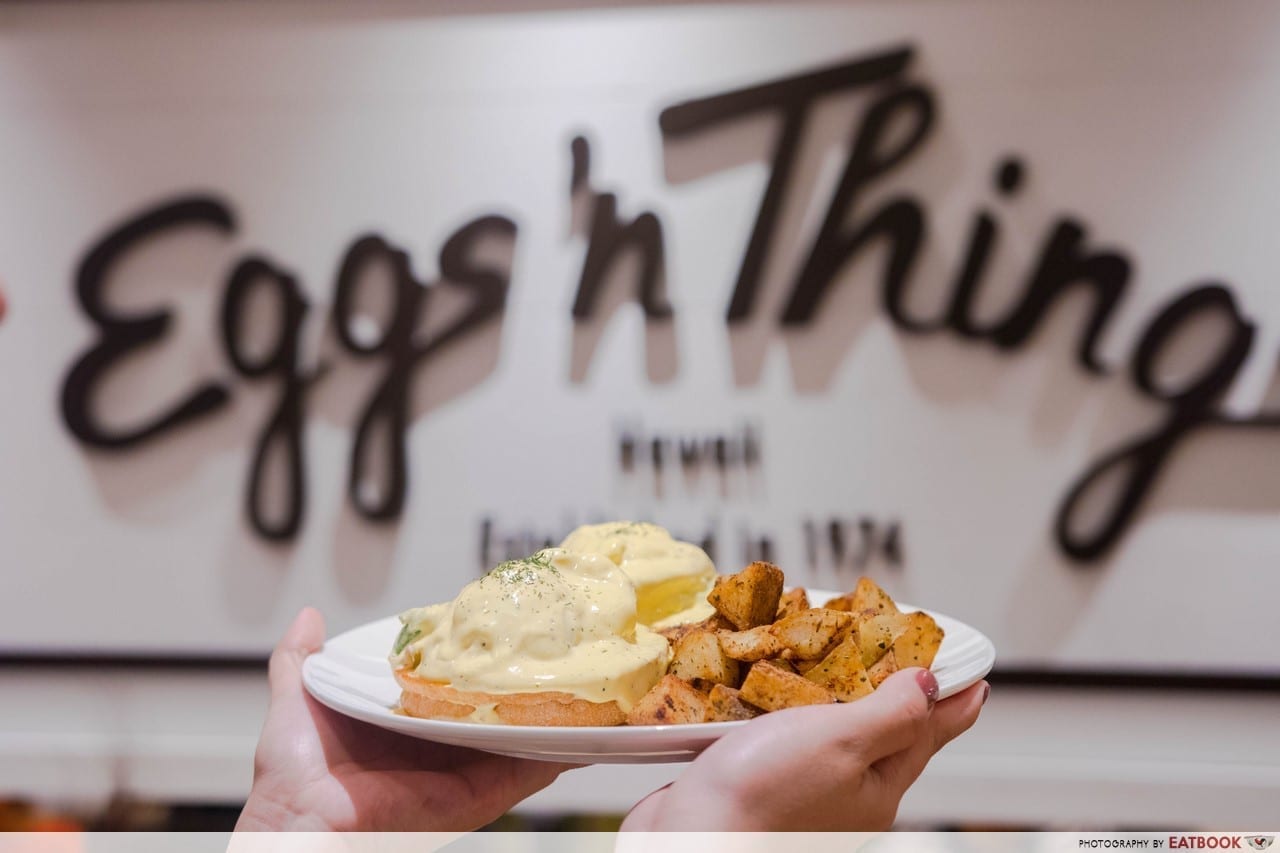
    Hawaiian cafe brand Eggs ’n Things has introduced its breakfast-style menu to Singapore with an outlet at Plaza Singapura.

    As well egg dishes, the casual eatery offers pancakes, crepes and waffles.

    Singapore is the second stop for the brand, launched in Waikiki in 1974. It has 19 outlets in Japan, where its Harajuku store in Tokyo still attracts queues.

    The Singapore cafe emphasises its use of freshly baked bread, organic and locally sourced beef and chicken, and house-made sauces without added flavouring or preservatives.

    Pancakes and waffles are served with an optional tower of whipped cream, the cheese omelette comes with spinach, bacon and roasted potatoes, while the Hawaiian Loco Moco dish comprises rice, a hamburger patty doused in gravy, and two fried eggs.

    Drinks include milkshakes, organic cold-pressed fruit juices, smoothies, free-trade organic tea, and coffee made from a blend of Brazilian, Indonesian and Mexican beans.

  • Retail Food Group shares continue to plummet battling other retailers

    Retail Food Group shares continue to plummet battling other retailers

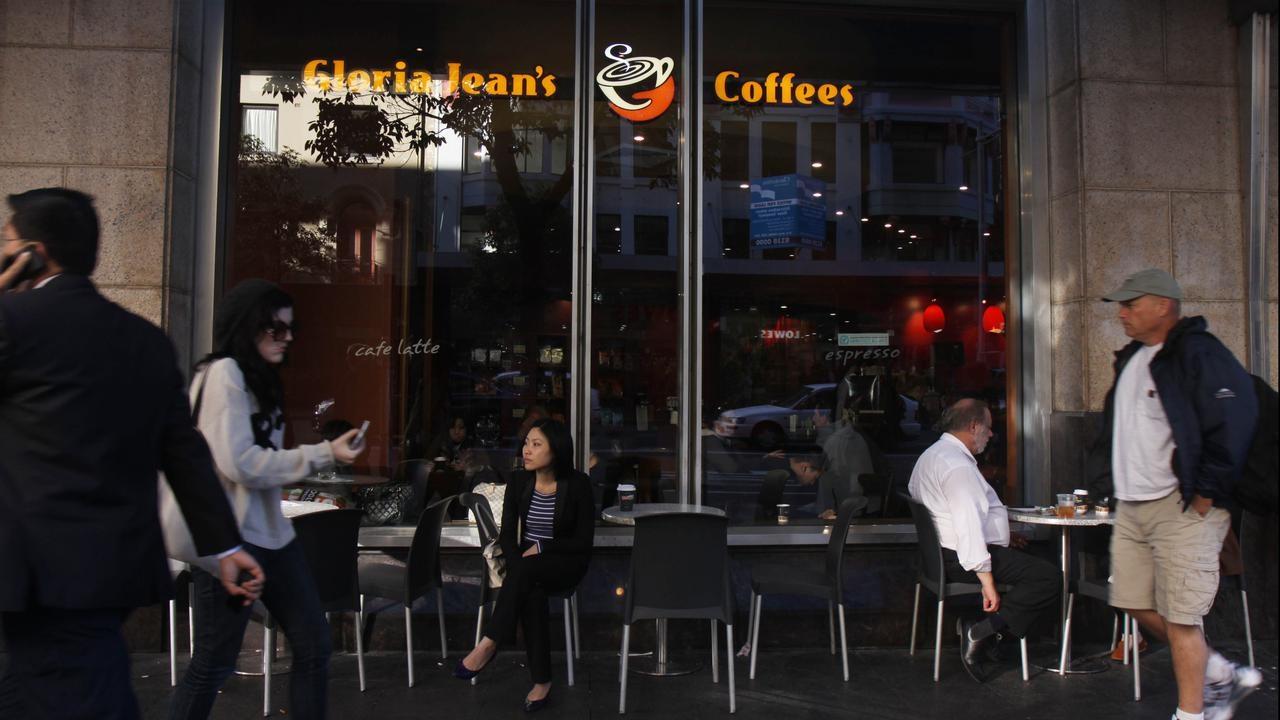
    Shares in Retail Food Group have continued to plummet for a second day after a damaging profit warning from the embattled owner of the Gloria Jean’s, Michel’s Patisserie and Donut King brands.

    RFG shares fell 17.9 per cent to $1.625 on Wednesday – their lowest value since July 2009, compounding a 25 per cent slump suffered on Tuesday when the company warned its first-half profit is expected to decline by more than a third.

    The franchise chain owner’s shares have now fallen 63 per cent since December 11, after Fairfax Media first published stories from an investigation into allegations of high fees and financial stress suffered by franchisees.

    The Fairfax reports have also claimed that significant proportions of Gloria Jean’s and Pizza Capers franchises are up for sale.

    On Thursday morning, shares recovered and bounced up over 20 per cent to $1.96.

    The plummeting stock prices has wiped $507 million from RFG’s market value in just eight trading days.

    RFG did not respond to requests for comment from AAP on Wednesday, however the company has previously denied all allegations in the reports and has blamed a tough retail environment as having a negative impact on its franchisees’ sales.

    The company said on Tuesday that its Crust Pizza and Donut King brands have continued to perform in line with forecasts but Michel’s Patisserie, Brumby’s and Gloria Jean’s are trading below expectations.

    It said domestic franchise revenue is now expected to be lower than previously anticipated, and it will book one-off costs of $7 million, including expenses linked to a business-wide review, in its accounts for the six months to December.

    As a result, the group’s now expects a net profit of around $22 million for the half year, down 34 per cent on $33.5 million in the same period a year ago.

    Meanwhile a law firm involved in a class action against Volkswagon has turned its attention to Donut King and Gloria Jean’s owner the Retail Food Group.

    Bannister Law says it is investigating a potential class action against RFG, and whether the company had reasonable grounds to issue forecasts between August 29 and December 7 of underlying annual profit growth, and whether it should have corrected its guidance earlier than December 19.

  • Rescued retailers’ employees finally paid out

    Rescued retailers’ employees finally paid out

    Administrators for rescued retail chains Marcs and David Lawrence have paid out all employees affected by the company’s transition to new ownership.

    Deed administrator Rodgers Reidy said M. Webster Holdings, which formerly traded as Marcs and David Lawrence, paid a distribution to the employees of the company representing payment in full of employee entitlements.

    “While many current employees were re-employed by FFS Retail, a subsidiary of Myer, when it purchased the assets, those employees who were not re-employed have now been paid their entitlements in full,” said Andrew Barnden of Rodgers Reidy.

    “We have been working closely with Myer to transition the assets to FFS Retail in a seamless manner.

    “In the new year we expect to pay a distribution to the unsecured creditors of the company, which will finalise the successful sale and restructure of the company. We also understand that many former suppliers have also benefited from the sale through ongoing trade.”

    Myer salvaged the Aussie fashion duo from liquidation in April.

    The fashion retailers, which are two of Australia’s best-known labels, had employed about 1130 staff in Australia and another 42 in New Zealand across their 52 stores, 11 outlets and 140 concessions, until entering administration in February.

  • Bic Camera, Rakuten looking at JV

    Bic Camera, Rakuten looking at JV

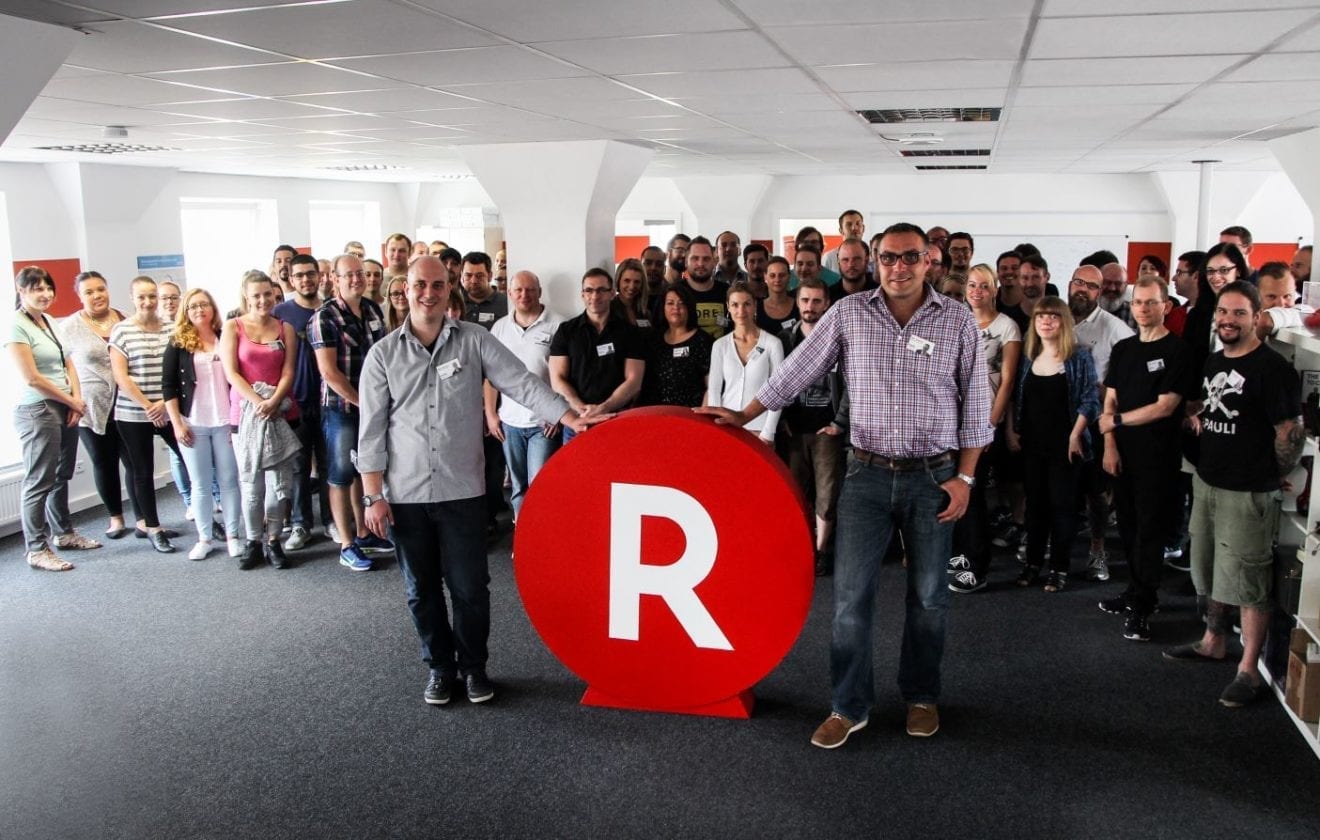
    Japanese e-commerce site Rakuten and consumer electronics retailer Bic Camera are considering a JV that will marry virtual and real stores.

    They expect to sign a basic agreement soon with a view to setting up their partnership early next year to work toward launching their e-commerce site in April.

    Bic Camera already has an online store on Rakuten Ichiba virtual mall. Through integrating their systems, Bic Camera will upgrade its online store into a joint site that will offer improved services, such as easy booking for delivery and installation.

    Buyers will also be able to search for brick-and-mortar Bic Camera locations that carry the product that interests them. Eventually, the scope of their cooperation will be expanded to cover in-store pickups of online orders, common shopping points and joint delivery services.

    While online sales account for nearly 30 per cent of consumer electronics  and appliance sales in Japan, shoppers say they want to touch and see products before buying. They also criticise the lack of attentive delivery and installation services they can find at physical stores.

    For Bic Camera, 9.2 per cent of its sales, at ¥72.9 billion (US$643 million), were online for the year to the end of August. While the company has its own e-commerce site, it does not anticipate much negative impact from launching the store with Rakuten.

    “Most of the Rakuten Ichiba shoppers will be new customers for us, because people who buy in the ‘Rakuten economic zone’ are different from those who buy from our website,” says a Bic Camera official.

  • GrabPay set to launch in Philippines

    GrabPay set to launch in Philippines

    Singapore-based taxi-booking company Grab plans to launch its digital payments platform GrabPay in the Philippines within the next six months.

    It is holding discussions with the central bank about acquiring an e-licence.

    Grab Philippines public affairs manager Leo Emmanuel Gonzales said it plans to roll out GrabPay as a digital payment app for retail purchases. The company currently offers mobile payment services via its top-up service GrabPay Credits and its rewards system GrabRewards.

    It launched GrabPay’s store and restaurant payments feature in Singapore last month after rolling out peer-to-peer fund-transfer services in August.

    Grab claims 63 million users across Southeast Asia.

  • Bata debuts AW Lab at Suntec City

    Bata debuts AW Lab at Suntec City

    Asia’s first AW Lab multi-label sneaker store has been opened at Suntec City by the Bata shoe company.

    It is part of a new approach by the 123-year-old Czech brand, now headquartered in Switzerland.

    “You are going to see things coming from Bata in the next few months that you would never have expected,” says Bata CEO Alexis Nasard.

    He says there are plans to expand the brand’s presence in Singapore, where it has had a presence since 1931. And as well as developing their product ranges, Singapore’s 41 current stores will be revamped, says Nasard. Some stores already have the new look, including the Eastpoint Mall and VivoCity outlets. Another has just opened at Northpoint City.

    Nasard says Singapore is a strategic focus for Bata because it is “the window of Asia”.

    “It’s an acid test for all of Asia Pacific. It is one of the most competitive marketplaces, with a very fickle and demanding consumer.”

  • Honda considers developing all solid-state EV batteries

    Honda considers developing all solid-state EV batteries

    Honda Motor is considering developing all solid-state batteries for electric vehicles (EVs) as a growing number of global automakers look to come up with powerful, next-generation car batteries to reduce vehicle emissions.

    Tighter global emissions regulations are forcing automakers worldwide to shift to electric cars, including all-battery EVs that will require capacity to deliver longer ranges and faster charge times, but at lower cost than lithium-ion batteries.

    “We’ve been researching all solid-state batteries,” Honda spokesman Teruhiko Tatebe said.

    “At the moment we’re not developing them with another automaker.”

    Kyodo News reported on Thursday that Honda and Nissan Motor Co were developing all solid-state EV batteries. Nissan was not immediately available for comment.

    A growing number of automakers including Toyota Motor Corp and Volkswagen  are developing all solid-state batteries, which offer more capacity and better safety than conventional lithium-ion batteries by replacing their liquid electrolyte with a solid, conductive material.

    Earlier this month, Toyota said it was considering jointly developing the next-generation batteries with Panasonic to share high R&D costs.

    The automaker is planning to have a production-ready battery in the early 2020s, and has highlighted the need to accelerate the pace of battery development as it and other automakers plan to ramp up the number of electric models they sell in the coming decades.

  • Huawei teams with Baidu on AI development

    Huawei teams with Baidu on AI development

    Huawei has entered a partnership agreement with Chinese search giant Baidu covering AI platforms and technology, internet services and content ecosystems.
    The two companies plan to develop an open mobile and AI ecosystem using Huawei’s HiAI platform and Baidu Brian, a collection of AI assets and services.
    The HiAI platform is being developed on Huawei’s embedded AI chipset, the Kirin 970. The chipset was used in the Huawei Mate 10, the world’s first smartphone powered by an embedded AI chipset, which launched earlier this year.
    The planned joint AI ecosystem will use Huawei’s neural network processing unit and Baidu’s PaddlePaddle deep learning framework to empower AI developers and provide consumers with a rage of AI offerings and smart services.
    In addition, the partners will work together on voice and image recognition for smart devices to enable more efficient human-machine interaction, and jointly build an augmented reality ecosystem for consumers.
    “The future is all about smart devices that will actively serve us, not just respond to what we tell them to do,” commented Richard Yu, CEO of Huawei’s consumer business group.
    “With a strong background in R&D, Huawei will work with Baidu to accelerate innovation in the industry, develop the next generation of smartphones, and provide global consumers with AI that knows you better.”
  • AirAsia celebrates Clark-Caticlan-Boracay inaugural flight

    AirAsia celebrates Clark-Caticlan-Boracay inaugural flight

    AirAsia is now flying direct to Boracay via Caticlan airport from Clark, Pampanga. The airline, voted the World’s Best Low Cost Carrier for nine years running, flew its maiden flight today with summer inspired theme held at pre-departure area in Clark International Airport. AirAsia flight Z2 922, with pilot in command Captain Samuel Yu-Asensi arrived at 10:55 a.m. AirAsia’s iconic red plane was greeted with a traditional water cannon salute upon landing. Philippines AirAsia’s chief pilot for training and standards Captain Darren Acorda said, “Today marks another milestone for AirAsia operations in Clark airport with the addition of our third domestic route. We are closing the year with Clark-Caticlan route but this early we have already started offering our signature low fares to three more new destinations out of Clark. Clark-Iloilo, Clark-Puerto Princesa and Clark-Tacloban commencing in January, and we are here to give only the best quality service that every traveller from Central and Northern Luzon deserves.”

    To celebrate, AirAsia is offering promo fares for Clark-Caticlan from as low as P1,566 now available for booking at airasia.com today until 31 December 2017 valid for travel between December 18 2017 until January 8, 2018. Clark International Airport officials led by CIA Corporation President Alexander Cauguiran, DOT Regional Director Carol Uy, and Mabalacat Mayor Crisostomo Garbo graced the send-off ceremony with Philippines AirAsia chief pilot for training and standards Captain Darren Acorda representing the airline CEO Captain Dexter Comendador. “AirAsia believes in Clark. We established our base operations here and launched commercial flights in 2012 with only two planes – and now we have a fleet of 17 jets and we are aiming to expand and grow operations here in the coming years,” Acorda said. AirAsia’s Clark-Caticlan operates daily with flights departing Clark at 1:50 p.m. and arriving in Caticlan at 3:05 p.m. Meanwhile, AirAsia is also set to launch three domestic flights starting January 26, 2018.

    Clark-Puerto Princesa and Clark–Iloilo routes will operate three times a week or every Tuesday, Thursday, and Saturday while Clark–Tacloban route is every Monday, Wednesday, Friday, and Sunday. AirAsia has marked its return to Clark with the launching of flights to Davao and Kalibo from Clark International Airport last March. AirAsia launched commercial flights from Clark in 2012 before transferring its hub to Metro Manila following a strategic partnership with a local carrier in 2013. AirAsia has since been operating on a much larger scale from Metro Manila and has expanded its domestic and international network with flights from secondary hubs in Cebu and Kalibo operating a fleet of 17 aircraft from only two planes when it opened in Clark five years ago.

  • Kingsoft Cloud picks Equinix for SEA expansion

    Kingsoft Cloud picks Equinix for SEA expansion

    Chinese software and Internet service company Kingsoft Cloud Holdings has selected the Equinix International Business Exchange (IBX) data center in Singapore to expand into Southeast Asia.

    According to the Global Mobile Consumer Survey, published by Deloitte, mobile application usage such as social networking, messaging, and gaming, is increasingly popular within Southeast Asia. By strategically deploying its network into Equinix Singapore’s carrier-neutral Internet hub – Asia-Pacific’s network hub, Kingsoft Cloud is able to bring an improved connectivity infrastructure closer to Southeast Asia users for an enhanced mobile application performance experience.

    Offering cloud-based hosting, storage and database services, Kingsoft Cloud is the main cloud service provider in mainland China to Chinese smartphone maker Xiaomi. It provides a bulk of the cloud storage on Xiaomi’s operating system that has helped the company serve its rapidly growing customer base both in China and in the world.

    With the increasing mobile adoption and usage in the Southeast Asia region, Kingsoft Cloud has selected Equinix’s Singapore facilities to reduce network costs and enhance user experience by bringing its cloud infrastructure closer to users in the region and interconnecting with multiple Internet Service Providers.

    Equinix’s data center campus in Singapore is the most network-dense across the Asia-Pacific region, housing many of the international and regional networks connecting South Asia. Together with a wide portfolio of interconnection solutions, the campus offers a private, secure, and highly reliable environment for Internet servers and telecommunication equipment, essential for the continuous operations of applications and business operations.

    Kingsoft Cloud’s move to expand in Southeast Asia is in line with the forecast of the Global Interconnection Index, published by Equinix. The Index anticipates more than fourfold growth in Asia-Pacific’s Interconnection Bandwidth, reaching 1,120 Tbps by 2020, with cloud and IT services alone expected to increase at a Compound Annual Growth Rate (CAGR) of 42%.

  • Telenor Myanmar to buy more 1800-MHz spectrum

    Telenor Myanmar to buy more 1800-MHz spectrum

    Telenor Myanmar will pay $80 million to acquire additional 1800-MHz spectrum to help it optimize its 4G network.

    The operator will acquire an additional 2×10-MHz of 1800-MHz spectrum, doubling its holdings in the spectrum band.

    Telenor is exercising its right to acquire additional spectrum on a first come first served basis, as stipulated in the terms of the process the operator used to acquire its first 2×10-MHz of 1800-MHz spectrum – also for $80 million – in May.

    By the end of the year, Telenor expects that its 4G network will cover Myanmar’s top 50 cities and most famous destinations, which represents a footprint of around two thirds of the nation’s urban population.

    The operator has invested over $2 billion in Myanmar since winning a nationwide telecom license along with rival Ooredoo.

    “Myanmar has shown an exceptional hunger for mobile data, and to meet the incredible demand Telenor continues investing in a state-of-the-art network. Today, we are doubling our capacity for delivering high-quality 4G services, resulting in an immediate benefit for our customers who will experience smoother internet services and better indoor coverage,” Telenor Myanmar CEO Lars Erik Tellmann said.

    “Myanmar has clear ambitions of accelerating its digital economy, and I believe that increased deployment of an ultramodern mobile infrastructure will support Myanmar in its digital transformation.”