Author: Mei Ling Tan

  • Uber Vietnam CEO leaves post, reasons unknown

    Uber Vietnam CEO leaves post, reasons unknown

    The company had to pay nearly $3 million in back-taxes and fines last month, but it is unclear if this had any bearing on the decision. Uber Vietnam has announced that its CEO Dang Viet Dung has left the company. No information about the reasons for his departure or who will replace him has been revealed.

    Dung, 32, took the helm of Uber Vietnam when the U.S.-based firm first entered the country in 2014.

    A graduate from Amherst College in the U.S., he took the post after halting a master program at Harvard Business School.

    Late last month, tax authorities in Ho Chi Minh City collected VND66.68 billion ($2.93 million) in arrears from Uber Vietnam, including fines for faulty declarations and late payments.

    Following the incident, rumors started to spread that Uber would be leaving Vietnam. The company was quick to dismiss this.

    As of August, Uber had four million users in Vietnam, according to official company data.

  • Polygamy dating app draws criticism in Indonesia

    Polygamy dating app draws criticism in Indonesia

    A Tinder-style dating app for polygamists has sparked controversy in Indonesia, the world’s most populous Muslim nation — but its developer says he “just wants to help” unmarried middle-aged women.

    Indonesian law defines marriage as between a man and a woman but polygamy is tolerated in certain circumstances, despite being generally frowned upon. Ayo  Poligami, loosely translated as “let’s go polygamy”, is a free smartphone app that matches married and single Muslim men with women who want to create “big families”.

    It has attracted more than 56,000 members since its launch in April, according to developer Lindu Cipta Pranayama.

    But women’s rights campaigners have criticised the app, warning of a strong link between polygamy and domestic violence.

    “Due to the controversy, I initially wanted to permanently shut down the site, but when I saw many women in their 40s of 50s who are still virgins and unmarried I decided to keep it,” Pranayama told Tuesday.

    “Can you image being in your 40s or 50s but never been touched by a man?” added the 35-year-old, who created the app after failing to find a wife on several dating sites.

    Indonesian men who apply to one of the country’s Islamic courts, which have jurisdiction over marriage, are able to take a second wife under certain circumstances.

    For example, a court may review and grant an application if the man’s first wife is unable to bear children or has a disability and gives her permission.

    Adriana Venny Aryani, from Indonesia’s National Commission on Violence Against Women, said polygamy as facilitated by Ayo Poligami could be harmful to wives.

    “When the husband is practicing polygamy, women are emotionally abused, economically (abused), and sometimes violently,” she said.

    Pranayama said a high number of fake accounts had caused the platform to temporarily close, but a new version is set to launch on Thursday with more stringent user criteria.

    Indonesian authorities recently shut down another controversial matchmaking site, Nikahsirri.com, which offered “virgin auctions” for men and women looking for marriage.

    Police arrested the founder of the short-lived site, Aris Wahyudi, over the “pornographic content” it contained.

  • Indonesia’s Inflation Eased in September to 3.72%, Weighed by Food Prices

    Indonesia’s Inflation Eased in September to 3.72%, Weighed by Food Prices

    Inflation in Indonesia continued to ease in September as some basic food commodity prices dropped, suggesting full-year inflation will be limited despite a pick up in the first few months of the year.

    September’s consumer price index, a gauge of inflation, rose 3.72% compared with the same period a year ago, slowing from August’s 3.82% rise, the official Statistics Agency said Monday. Compared the month before, prices rose 0.13%, after falling 0.07% in August.

    The median forecast from a survey of 10 economists by The Wall Street Journal was for 3.70% year-over-year inflation. The median prediction for on-month inflation from seven economists polled was 0.10%.

    Inflation was stoked by a 1.03% increase in education costs in September, compared with August. But a 0.53% fall in basic food prices mitigated the impact on headline inflation, the agency added.

    Core inflation, which excludes volatile food prices and those determined by the government, picked up to 3.00% compared with a year ago, August’s 2.98%, the first increase in many months, which may indicate an early recovery in consumers’ purchasing power.

    Although inflation is likely to continue retreating for the rest of the year, Bank Indonesia isn’t expected to cut interest rates again next month, after two consecutive 0.25-percentage-point cuts recently.


  • Online Printing Startup Gogoprint Launches in Singapore

    Online Printing Startup Gogoprint Launches in Singapore

    Gogoprint, the leading online printing startup in Southeast Asia, has formally launched in Singapore. It has opened its third regional office: Singapore follows from Bangkok, Thailand, and Kuala Lumpur, Malaysia. Gogoprint’s business proposition involves solving one of the printing industry’s biggest pain points – high fixed costs and requisite order volumes, particularly among small and medium sized businesses. It does this with its proprietary algorithmic software which manages and pools together small orders, and distributes the cost of printing. As a result, it is able to offer premium printing services at a competitive cost, enabling SMEs and startups to print their products such as business cards, digital booklets, leaflets, flyers, posters, gift vouchers, postcards and stickers more cost-effectively.

    Gogoprint’s Singapore office will be helmed by Laurent De Candido, Managing Director and co-founder at Gogoprint. Around expanding to Singapore, he said: “We’re pleased to deepen our commitment to small and medium sized businesses and freelancers in Southeast Asia by expanding into Singapore, a country where we already have thousands of clients. It is one of Asia’s leading hubs for nimble, innovative, on-demand business models, which often struggle with cost effectiveness around going-to-market.”

    “By enabling the printing of smaller quantities through a hassle-free ordering processes, we are well positioned to help these businesses go to market more cost-effectively. In the process, we are leading the charge to modernize Southeast Asia’s multi-billion dollar printing industry,” added De Candido.

    The market for online printing in Southeast Asia in 2016 was estimated at US$25 billion a year. In the 12 months since August 2016, Gogoprint has grown its revenues by over 500 percent; its number of customers by 400 percent to over 16,000 (including 10,000 in Thailand and 3,000 each in Singapore and Malaysia); and its employee headcount over 300 percent to 90 people (including 60 in Thailand, and 30 spread in Malaysia, also operating Singapore). Its clients are largely in the education, entertainment, healthcare, hospitality, travel, transportation, food and beverage, retail and manufacturing sectors. This includes the likes of Lazada, Booking.com, Jameson Whiskey, Accor Group, as well as the Nanyang Technological University (NTU) in Singapore.

    Around the benefits of working with Gogoprint, Sruthi Varier, Project Officer at Nanyang Technological University said: “NTU was looking for an online printing vendor to reduce printing costs. We wanted to achieve this without compromising quality to our students, faculty, alumni and partners. We are very pleased to have chosen and to be working with Gogoprint, and highly recommend them for their fast delivery and cost-effectiveness.”

    Since launching in November 2015, Gogoprint has raised a mid-six figure U.S. dollar investment from OPG (Online Printing Group). Apart from its growing geographic footprint, it looks to expand into multiple product categories including calendars, large-format printing, printed pens and flash drives.

    “As more and more consumers get overflowed with online content, never before has it been more important for tangible marketing to attract consumers for brands to stay in people’s minds. Especially in Singapore, we see a lot of potential for more complex or purely promotional products. This gives us the right surge to capture the Southeast Asian online printing market, with Indonesia as a natural next destination”, said De Candido.


  • Google unveils new moves to boost struggling news organizations

    Google unveils new moves to boost struggling news organizations

    Google will implement a new policy that will allow publishers more flexibility to regulate subscriptions. Google announced new steps to help struggling news organizations Monday — including an end to a longstanding “first click free” policy to generate fresh revenues for publishers hurt by the shift from print to digital.

    The moves come amid mounting criticism that online platforms are siphoning off the majority of revenues as more readers turn to digital platforms for news.

    “I truly believe that Google and news publishers actually share a common cause,” said Google Vice President Philipp Schindler.

    “Our users truly value high quality journalism.”

    Google announced a series of measures, the most significant of which would be to replace the decade-old policy of requiring news organizations to provide one article discovered in a news search without subscribing — a standard known as “first click free.”

    This will be replaced by a “flexible sampling” model that will allow publishers to require a subscription if they choose at any time.

    “We realize that one size does not fit all,” said Richard Gingras, Google’s vice president for news.

    This will allow news organizations to decide whether to show articles at no cost or to implement a “paywall” for some or all content.

    Gingras said the new policy, effective Monday, will be in place worldwide. He said it was not clear how many publishers would start implementing an immediate paywall as a result.

    “The reaction to our efforts has been positive,” he told a conference call announcing the new policy.

    “This is not a silver bullet to the subscription market. It is a very competitive market for information. And people buy subscriptions when they have a perception of value.”

    Google said it is recommending a “metering” system allowing 10 free articles per month as the best way to encourage subscriptions.

    One-click subscriptions

    The California tech giant also said it would work with publishers to make subscriptions easier, including allowing readers to pay with their Google or Android account to avoid a cumbersome registration process.

    “We think we can get it down to one click, that would be superb,” Gingras said.

    He explained people are becoming more accustomed to paying for news, but that a “sometimes painful process of signing up for a subscription can be a turn off. That’s not great for users or for news publishers who see subscriptions as an increasingly important source of revenue.”

    Google would share data with the news organizations to enable them to keep up the customer relationship, he added.

    “We’re not looking to own the customer,” he said. “We will provide the name of user, the email and if necessary the address.”

    Gingras said Google is also exploring ways “to use machine learning to help publishers recognize potential subscribers,” employing the internet giant’s technology to help news organizations.

    He added that Google was not implementing the changes to generate revenues for itself, but that some financial details had not been worked out.

    Google does not intend to take a slice of subscription revenues, he noted.

    “Our intent is to be as generous as possible,” he said.

    Research firm eMarketer estimates that Google and Facebook will take in 63 percent of digital advertising revenues in 2017 — making it harder for news organizations to compete online.

    Facebook is widely believed to be working on a similar effort to help news organizations drive more subscriptions.

    Google created a “Digital News Initiative” in Europe in 2015 which provides funding for innovative journalism projects.

  • Goldman Sachs studying whether to trade bitcoins

    Goldman Sachs studying whether to trade bitcoins

    Large banks have until now avoided trading in bitcoin due to its reputation as a conduit for illicit activity.Goldman Sachs is exploring whether to launch a trading  venture in bitcoin in response to client demand, a person familiar with the matter said Monday.

    Goldman’s consideration of the digital currency could give bitcoin a boost at a time when it is under criticism in China and by some large banks.

    Goldman is looking at establishing a team that could trade bitcoin and other digital currencies, said a person familiar with the bank’s thinking.

    The venture might resemble other Goldman teams that trade euros or treasury bonds. Goldman has received interest from a variety of parties, including investment funds, insurers and corporate clients. The study is at an early stage and may not yield a decision to proceed with such a venture, the person said.

    “In response to client interest in digital currencies, we are exploring how best to serve them in the space,” said Goldman spokeswoman Tiffany Galvin.

    Large banks like Goldman Sachs have until now avoided trading in bitcoin due to its reputation as a conduit for illicit activity.

    At the same time, financial companies have been active in the development of “blockchain,” the underlying technology of bitcoin, which is seen as a potentially important technology.

    Bitcoin critics include JPMorgan Chase chief executive Jamie Dimon, who called the digital currency a “fraud” that will eventually “blow up.”

    But Morgan Stanley chief executive James Gorman offered measured praise for bitcoin last week, calling it “obviously highly speculative” but “not something that’s inherently bad.”

    Bitcoin has retreated since breaching the psychologically important $5,000 level on September 1. On Monday, it traded at $4,375.

  • Facebook to hire more than 1,000 people to thwart election manipulation ads

    Facebook to hire more than 1,000 people to thwart election manipulation ads

    Facebook on Monday said it will hire more than 1,000 people to thwart deceptive ads crafted to knock elections off course.

    The announcement came as the leading social network turned over to Congress some 3,000 Russia-linked ads that appeared to use hot-button issues to turn people against one another ahead of last year’s US election.

    “Today we are delivering those ads to congressional investigators,” Facebook vice president of global policy Joel Kaplan said in an online post.

    “Many appear to amplify racial and social divisions.”

    The ads appeared to be linked to a Russian entity known as the Internet Research Agency, and violated Facebook policies because they came from inauthentic accounts, according to Kaplan.

    “Aggressive steps” by Facebook will include hiring more than 1,000 people to bolster its global ads review teams in the coming year, Kaplan said.

    Facebook also planned to ramp up investment in machine learning to identify and take down ads violating the social network’s policies.

    “Enforcement is never perfect, but we will get better at finding and removing improper ads,” Kaplan said.

    Facebook will require those interested in running ads related to US elections to confirm businesses or organizations they represent.

    Asking forgiveness

    Facebook chief executive Mark Zuckerberg last month announced a crackdown on efforts to use the leading social network to meddle with elections.

    Zuckerberg outlined a series of steps that would help prevent the manipulation of the social network, including more transparency on political ads appearing on Facebook.

    Facebook last month agreed to hand over information about the ads from the Internet Research Agency to special counsel Robert Mueller’s investigation of the 2016 election..

    An internal Facebook review showed that Russia-linked fake accounts were used to buy ads aimed at exacerbating political clashes ahead of and following the 2016 US presidential election.

    Some 470 accounts spent a total of approximately $100,000 between June 2015 to May 2017 on ads that touted fake or misleading news or drove traffic to pages with such messages, a Facebook official said.

    While the amount of money involved was relatively small, enough to buy roughly 3,000 ads, the accounts or pages violated Facebook policies and were shut down, according to Facebook chief security officer Alex Stamos.

    Zuckerberg over the weekend posted a message marking the Jewish holiday of Yom Kippur, or day of atonement, asking forgiveness “for the ways my work was used to divide people rather than bring us together.”

    Free speech vs abuse

    Facebook vice president of communications Elliot Schrage on Monday posted answers to “hard questions” prompted by the Russia ads.

    The social network estimated that 10 million people in the US saw the ads, some 44 percent of those views happening before the November election and the rest afterward.

    Many of the ads did not violate Facebook rules regarding banned content, but instead broke a policy barring accounts from hiding who is really running them, according to the social network.

    “That means that for most of (the ads), if they had been run by authentic individuals, anywhere, they could have remained on the platform,” Schrage said.

    “This is an issue we have debated a great deal.”

    Facebook has become an important platform for debate on political and social issues, and faces the challenge of protecting free speech while guarding against malicious interference in elections.

    “We are dedicated to being an open platform for all ideas — and that may sometimes mean allowing people to express views we — or others — find objectionable,” Schrage said.

    “This has been the longstanding challenge for all democracies: how to foster honest and authentic political speech while protecting civic discourse from manipulation and abuse.”

  • Gentle Monster Singapore takes movie theme

    Gentle Monster Singapore takes movie theme

    A documentary movie has inspired the theme for Korean luxury eyewear brand Gentle Monster Singapore’s new store at Ion Orchard.

    By US director Ron Fricke, Samsara explores spirituality and the human experience. Key symbols from the 2011 film, a camel, lion and child, feature throughout the shop in intricate art installations, offering an immersive experience for customers.

    As they enter the store, shoppers are greeted by the camel, an installation comprising a futuristic spinning wheel with multiple threads and a camel-shaped prop that moves up and down.

    They then enter a darkened space featuring the lion, a sculpture made of tresses of hair surrounded by wall-mounted lion tails.

    In the final room is a platoon of rotating dolls and a throne in a lit setting of faux arches.

    Gentle Monster says the store explores the core philosophy of salvation introduced in Friedrich Nietzsche’s Thus Spoke Zarathustra 2, in which the German philosopher writes that salvation can be achieved only through overcoming one’s self. He describes the three transformations of the spirit as obedience, symbolised by the camel, with the lion for governance and child for complete freedom.

  • Genki Sushi owner buying into rival

    Genki Sushi owner buying into rival

    hinmei, which owns Japanese restaurant chain Genki Sushi, will buy a one-third stake in bigger rival Sushiro Global Holdings from European private equity firm Permira.

    Permira has agreed to sell its stake in Sushiro Global, which it bought from Japanese private equity firm Unison Capital in 2012, to Shinmei.

    Permira, which paid about ¥80 billion (US$708.5 million) for Sushiro, boosted the value of the company by cutting costs on fish ingredients by using its global network.

    The market for Japan’s conveyor-belt sushi market is expected to grow by about 25 per cent to ¥625 billion this year from ¥500 billion in 2012, according to research firm Fuji Keizai.

  • SaladStop! heading for Korea

    SaladStop! heading for Korea

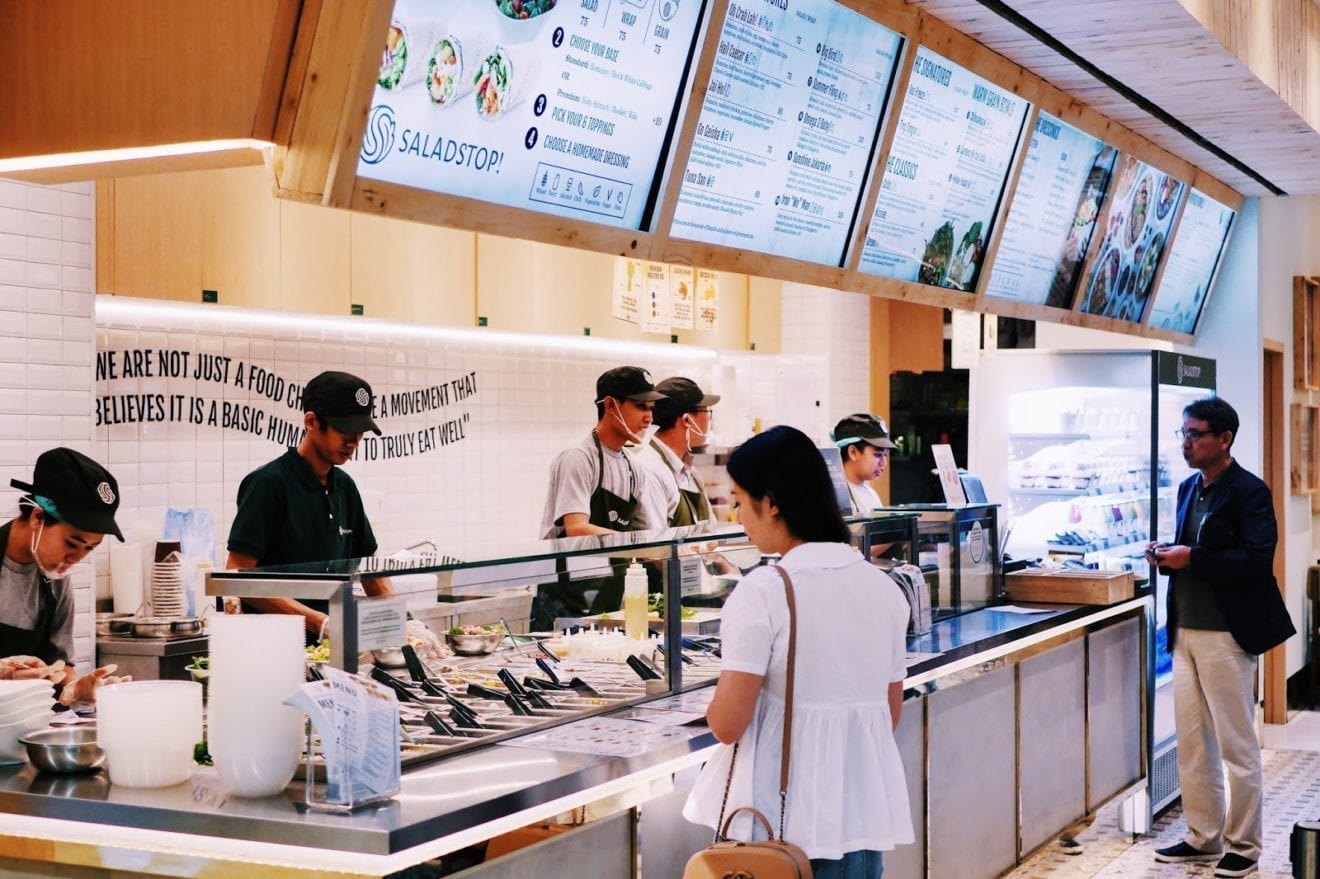
    Established eight years ago, Singapore food brand SaladStop! is about to launch into Korea.

    It opens in Seoul next month, about the same time as its first non-Asia location, in Barcelona. The brand has 19 outlets across Singapore, 12 in the Philippines, three in Jakarta and four in Tokyo.

    Co-founded by Adrien Desbaillets and his father Daniel, SaladStop! Is still a family affair. At 36, Adrienne is president while Daniel, 67, is director and chairman. Daniel’s sister Katherine handles marketing while her Paris-born husband Frantz Braha is business development manager, spearheading overseas franchising.

    The Desbaillets are Swiss citizens who put down roots in Singapore 22 years ago. Daniel was previously a hotel executive. When Adrien returned to Singapore after working in China for a hotel investment company, he planned a chain of nutrition-conscious quick-service restaurants.

    However, the says affordable, wholesome and nutritious were three options rarely found together in one meal, and he guessed that expats like himself were “craving a good salad”.

    Father and son opened their first store in Marina Square, working with corporate chef Tony Tan.

    All overseas locations have more or less the same core combos, but franchise holders modify them to suit local preferences.

    In Singapore, the next stage of growth is a mobile app.

  • AirAsia offers year-end grand sale

    AirAsia offers year-end grand sale

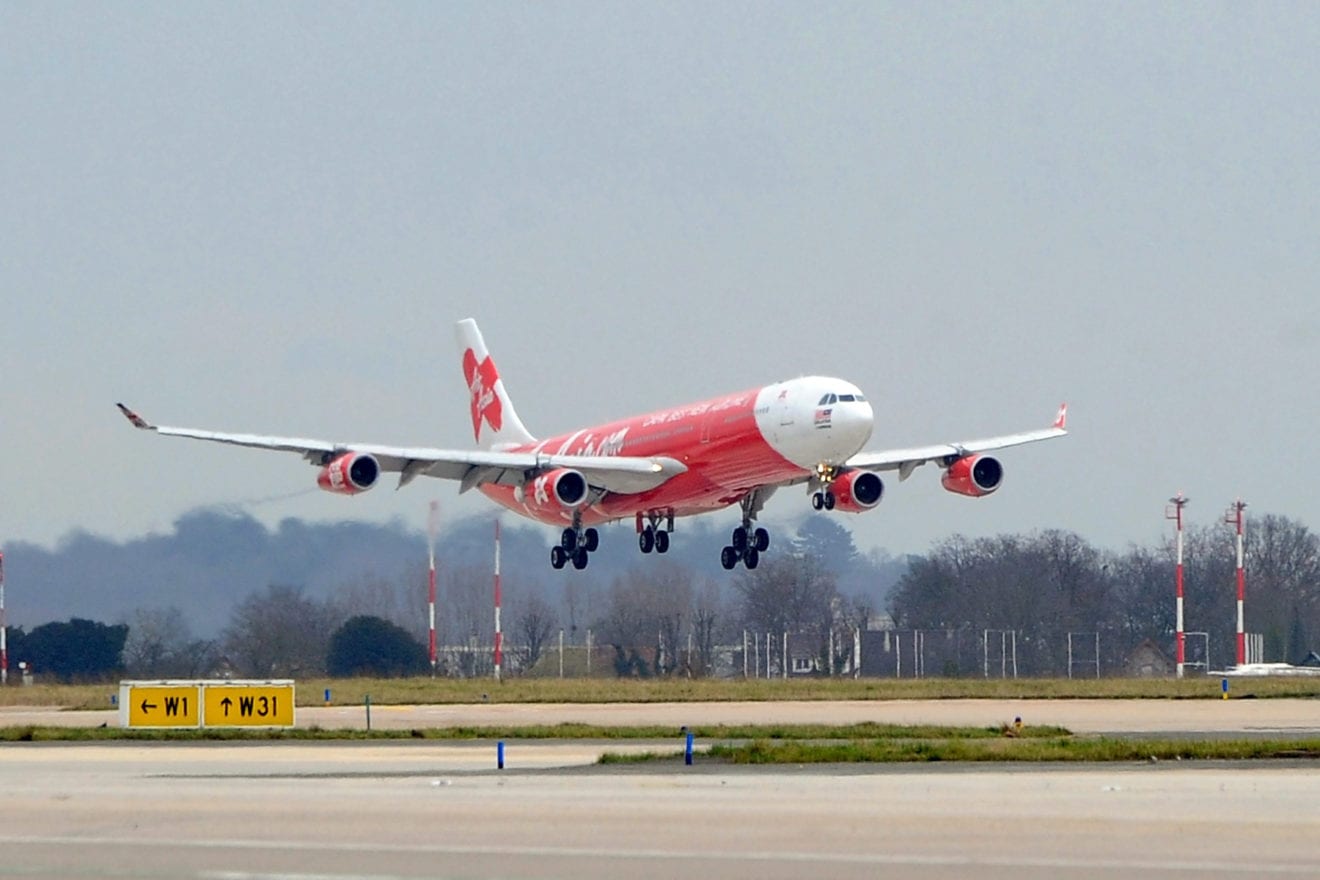
    AirAsia is offering low-fare deals from as low as RM39 for flights from Kuala Lumpur to Penang, Sihanoukville, Luang Prabang, Pattaya, Shantou, Kalibo (Boracay) and Visakhapatnam.

    The budget carrier said in a statement that travellers from Kuching to Langkawi and Pontianak also can enjoy the low fares starting from RM79, and from as low as RM169 for flights from Johor Baru to Macau and Kolkata.

    Flights from Kuala Lumpur to Perth, Taipei, Shanghai and 120 more destinations in Asia, New Zealand, the Middle East and the United States, can enjoy fares starting from RM279.

    The airline said the promotion also included the AirAsia X Premium Flatbed seats, with fares starting from RM699 for flights from Kuala Lumpur to Perth, Taipei and several other destinations.

    The year-end grand sale promotion runs from Monday to Oct 15 for immediate travels up to March 31, 2018, available online at www.airasia.com and AirAsia mobile application.

    Customers can also opt for the Value Pack, which offers 20kg checked baggage allocation, meals, standard seat selection and travel insurance coverage, inclusive of the One Hour On Time Guarantee and Baggage Delay coverage.

  • Vodafone Australia to roll out Massive MIMO from 2018

    Vodafone Australia to roll out Massive MIMO from 2018

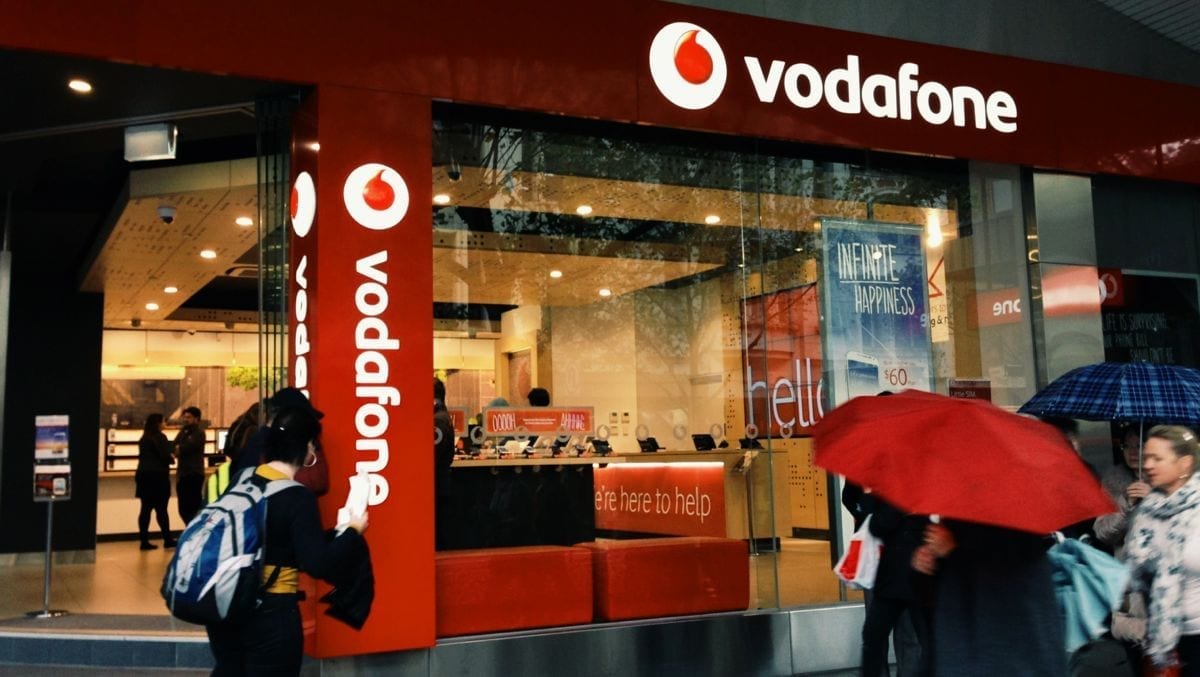
    Vodafone Australia has joined rival Optus is testing massive multiple-input multiple-output (MIMO) technology, and plans to start rolling it out from 2018.

    The operator announced a recent successful trial of Massive MIMO in the 1800-MHz FDD band.

    The trial, conducted with Huawei in a suburb of Sydney, used 20 MHz of 1800-MHz spectrum to achieve a peak cell throughput of 717Mbps across eight simultaneous devices.

    Vodafone revealed plans to roll out its FDD Massive MIMO technology to selected mobile sites during 2018.

    “This week’s demonstration is another significant step towards 5G, following our live 5G trial last year which saw speeds of up to 5Gbps,” Vodafone GM of technology strategy Easwaren Siva said.

    “When it is rolled out in an area, FDD Massive MIMO will give the Vodafone network multiple-fold increase in capacity, delivering a consistently high quality network experience, even in times of high usage.”

    Rival Optus last week announced plans to start rolling out Massive MIMO on its mobile network at the end of the year, after completing trials in June that combined Massive MIMO with three carrier aggregation. This trial was also conducted with Huawei.

  • Tata Comms trials live 360-degree video streaming

    Tata Comms trials live 360-degree video streaming

    Tata Communications and Formula 1 have conducted a test of truly live 360-degree video streaming at the 2017 Formula 1 Singapore Airlines Singapore Grand Prix.

    To-date, any 360-degree video experiments in sports have been hampered by a 30-second delay between the 360-degree video and live TV feeds, preventing a widespread adoption of the technology.

    This proof-of-concept by Tata Communications and Formula 1 is the first time when the live 360-degree video feeds and TV broadcast have been shown in complete sync.

    There were two 360-degree cameras at the Marina Bay Street Circuit in Singapore in the trackside and paddock to show how viewers at home could immerse themselves in the world of F1 and experience these exclusive areas through a virtual reality (VR) like environment via the Official F1 App.

    For example, during a Grand Prix build-up, fans could use their tablet to access a live 360-degree video feed from the paddock and see the biggest names in the sport. Or, during a race, as a driver pulls into the pits for a tyre change, fans could complement the action on TV with a 360-degree view of everything that is happening in the pit lane in real-time.

    The live video feeds from the two cameras were distributed from the Marina Bay Street Circuit in Singapore back to Europe using Tata Communications’ Media Ecosystem. This includes the Video Connect service, which brings together traditional video contribution and IP connectivity globally in the cloud, underpinned by Tata Communications’ global network.

    “Eliminating the delay in 360-degree video means that, for the first time, it’s possible to offer fans truly live 360-degree video experiences on a global scale,” said Mehul Kapadia, managing director of Tata Communications’ F1 Business.

    “This will enable sports and entertainment organisations to engage with their audiences in new ways and generate new revenue streams – helping the 360-degree video and VR market achieve its $60 billion potential,” said Kapadia.

  • Panasonic to launch new auto battery line at ex-TV screen plant in Japan

    Panasonic to launch new auto battery line at ex-TV screen plant in Japan

    Japan’s Panasonic said on Friday it will start producing automotive batteries at its former television screen plant in Japan, accelerating its battery drive to meet anticipated demand for electric vehicles.

    Panasonic, the exclusive battery cell supplier for Tesla’s mass-market Model 3, is reinventing itself as a provider of advanced auto parts to escape the price competition of smartphones and other lower-margin consumer products.

    The new battery production will start at its LCD plant in Himeji, western Japan, in the financial year from April 2019, using space left vacant after it closed its unprofitable TV screen manufacturing business last year.

    The company declined to comment on the size of new investment or the production capacity of the new line.

    The Himeji plant currently produces screens for vehicle dashboards and medical equipment, but output has dropped significantly after it exited TV screen production.

    Panasonic sees batteries as a key driver for its plan to nearly double its automotive business revenue to 2.5 trillion yen ($22 billion) in the year through March 2022.

    Already one of the leading suppliers of automotive lithium ion batteries, it currently has five production sites in Japan.

    It started mass production of battery cells at Tesla’s Gigafactory in Nevada earlier this year and plans to follow suit at a new plant in Dalian, China.

  • China sets 2019 deadline for automakers to meet green-car sales targets

    China sets 2019 deadline for automakers to meet green-car sales targets

    China has set a deadline of 2019 to impose tough new sales targets for electric plug-in and hybrids vehicles, slightly relaxing an earlier plan to launch the rules from next year that had left global automakers worried about being able to comply.

    Car makers will need to amass credits for so-called new-energy vehicles (NEVs) equivalent to 10 percent of annual sales by 2019, China’s industry ministry said in a statement on Thursday. That level would rise to 12 percent for 2020.

    A single vehicle can generate multiple credits meaning the proportion by NEVs by volume would likely be lower.

    The targets, announced by the Ministry of Industry and Information Technology (MIIT), closely mirror previously announced plans, but remove an explicit 8 percent quota for 2018, in effect giving carmakers an extra year grace period.

    The quotas are a key part of a drive by China, the world’s largest auto market, to develop its own NEV market, with a long-term aim to ban the production and sale of cars that use traditional fuels announced earlier this month.

    Global automotive manufacturers, however, had urged a softening of the proposals for all-electric battery vehicles and electric plug-in hybrids.

    Under the rules, car makers will receive credits for new-energy vehicles including plug-in hybrids and fully electric cars that can be transferred or traded. Firms with annual sales volumes above 30,000 units will need to comply with the targets.

    These credits – which will vary depending on the range and performance of the vehicle – will be used to calculate if firms have met their quota, a system which would likely mean the actual proportion NEVs made up of total sales was lower.

    “The rules could result in the production of more than one million EVs annually in China by 2020, or about 4 percent of sales,” Simon Mui, a transport and energy exert at the U.S.-based Natural Resources Defense Council wrote in note.

    GREEN CAR ROLL-OUT

    Carmakers were in general positive about the move.

    “We welcome the Chinese auto industry’s shift towards greater adoption of NEVs and will comply with relevant regulations presented by authorities,” Ford Motor said in a statement responding to the announcement.

    General Motors said it would “strive to comply with the NEV mandatory requirements”, though it added “continued joint efforts by the government and companies are essential to build broad-based consumer acceptance for NEVs”.

    “GM has sufficient capacity to manufacture NEVs in China,” it said in a statement.

    Japan’s Honda Motor said it planned to launch an electric battery car in China next year and would “try to expand our lineup of new energy vehicles” to meet the quotas.

    China is keen to combat air pollution and close a competitive gap between its newer domestic automakers and global rivals. It wants to set goals for electric and plug-in hybrid cars to make up at least a fifth of Chinese auto sales by 2025.

    Reuters reported in August that China would delay the implementation of the NEV quotas until 2019, giving global automakers more time to prepare.