Author: Mei Ling Tan

  • Emporio Armani Hong Kong launches star hunt

    Emporio Armani Hong Kong launches star hunt

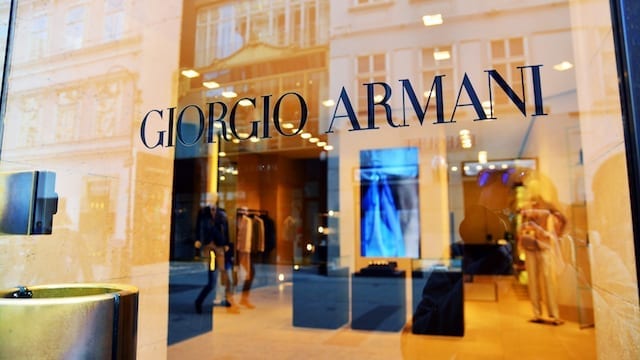
    High-fashion brand Emporio Armani Hong Kong has launched its first-treasure hunt app, with augmented-reality technologies to enable users to track down a special quarry, Shanghai actor Hu Ge.

    Until October 17, the EA Collector app can be downloaded to scan AR images on four Hu Ge posters scattered around Harbour City. Users will then be able to take virtual photos with the Emporio Armani brand ambassador for Greater China and Asia Pacific.

    Users who present one of Hu Ge images can redeem a gift at the Harbour City Emporio Armani store, with a limited-edition postcard holder for anyone collecting all four images. There are limited daily quotas for this offer.

    Furthermore, there is a a chance to win an invitation to Emporio Armani’s party to meet Hu Ge by using the app to submit a virtual photo with the actor before October 15. The actor himself will choose 10 winners to attend the party, on October 18.

    To celebrate the event, a limited-edition Hu Ge Octopus Card will be launched at all Emporio Armani stores across Hong Kong.

  • Foody Vietnam sold to Singaporean firm

    Foody Vietnam sold to Singaporean firm

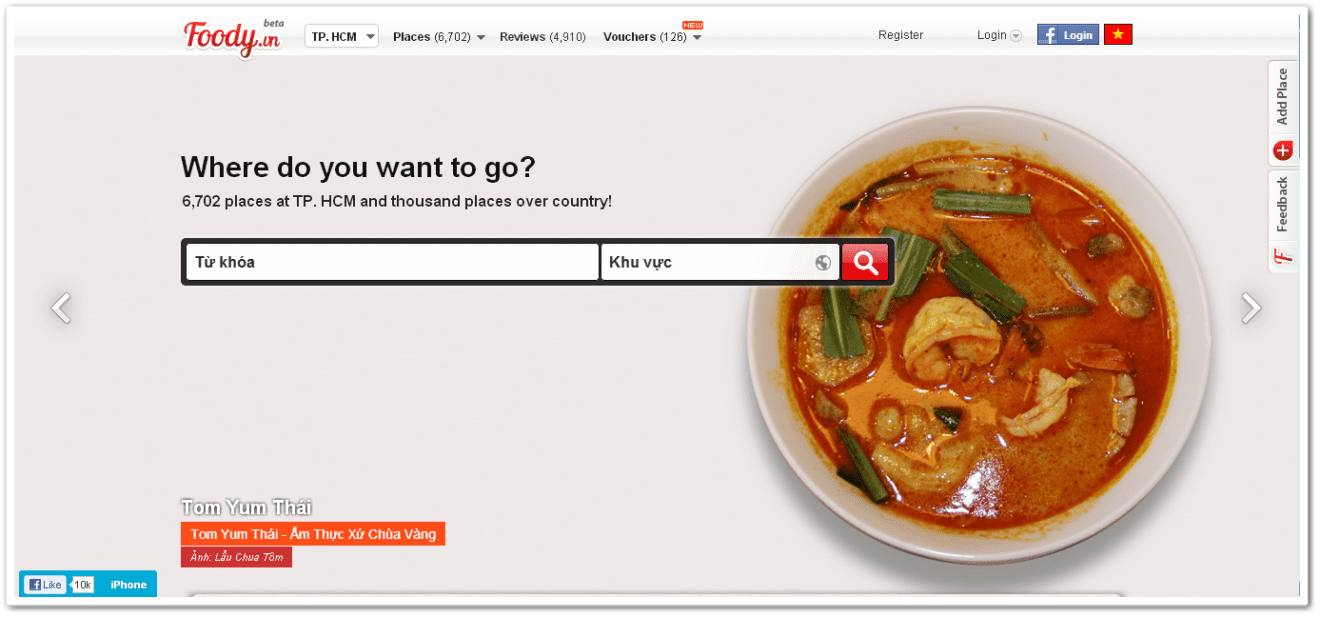
    Online restaurant directory Foody Vietnam has sold a majority stake to consumer internet group Sea Limited.

    Worth about US$64 million, the transfer was announced on a NYSE listing by Sea.

    Foody, which also accepts meal bookings and runs a delivery service, has announced that foreign entity Airview Investment of Singapore has taken an 82 per cent shareholding.

    Sea says it has acquired a Vietnamese food-delivery platform to help expand its payment platform AirPay, launched in Vietnam in 2014.

    “We intend to pursue strategic investment and acquisition opportunities in order to grow our user base, deepen our market penetration and further expand our offerings, including complementary services and products,” says Sea.

    Foody Vietnam was founded in 2012. Sea, valued at $3.75 billion, has already invested in Foody, as series-B investor in July 2015.

  • New Body Shop CEO named by Brazilian owners

    New Body Shop CEO named by Brazilian owners

    The new Body Shop CEO has been named by its new owner, Brazilian-headquartered Natura Group.

    He is David Boynton, who currently heads up bespoke shirt retailer Charles Tyrwhitt.

    Having sealed its Body Shop acquisition earlier this year, Natura is keen to shape its three brands – the others being its namesake and Aesop – into a major multinational retail business. Combined, the three businesses currently turn over US$6 billion in annual sales and already have a presence in 69 countries.

    Boynton cut his retail teeth in the grocery sector before joining Hong Kong-based AS Watson and then playing a significant role in building the L’Occitane business internationally. He starts his new role on December 4.

    “I am delighted to be joining The Body Shop at this exciting time as it becomes part of the Natura family,” Boynton said.

    “I have admired both companies from afar for years and it is truly a great match, bringing together two values-driven beauty businesses with a passion for the preservation of the natural world and respect for people and communities.”

  • Cebu Pacific includes tax in fares

    Cebu Pacific includes tax in fares

    The Philippines’ low-cost airline, Cebu Pacific, is now including the cost of the Domestic Passenger Service Charge (DPSC) in all ticket quotes.

    Commonly known as the “Terminal Fee” the inclusion is for domestic flights operating out of airports managed by the Civil Aviation Authority of the Philippines (CAAP).

    It became effective across the airline’s booking system for domestic flight sectors, 15 September. CAAP was the last airports operator to allow airlines to collect the tax. Previously, passengers had to queue at tax counters to pay the fee prior to boarding.

    However, the airline noted that the announcement applies to airports under CAAP. There are different arrangements on paying the tax in place at Ninoy Aquino International Airport in Manila, Mactan-Cebu International Airport, Clark International Airport and Godofredo P. Ramos Airport in Caticlan (Boracay).

    Manila International Airport Authority and the Mactan-Cebu International Airport Authority have included domestic terminal fees for the Manila and Cebu airports in ticket payments since 2013.

    Passengers who are only transiting through the 33 CAAP-managed airports are exempted from paying the DPSC.

    Depending on the airport, CAAP terminal fees range from PHP50.00 (approximately USD1) to PHP200.00 (approximately USD4).

    “While the total cost paid by passengers who booked flights on Cebu Pacific became slightly higher due to the addition of the terminal fee, this system is a convenience to travellers. They no longer have to line-up at the counters to pay for the domestic terminal fee,” said, Cebu Pacific vice president for corporate affairs, Atty JR Mantaring.

    Cebu Pacific passengers have also been given the option to pay the travel tax on international flights of PHP1,620.00 (approximately USD32), plus a handling fee of PHP80.00 (approximately USD2) when they book their flights online, via www.cebupacificair.com, or through Cebu Pacific ticket offices.

    Passengers who are exempt from the tax, or are eligible for reduced travel tax, can still book, pay and confirm their flights on Cebu Pacific, but will need to present valid tax exemption documents upon check-in.
  • Shell starting to edge out 7-Eleven Singapore

    Shell starting to edge out 7-Eleven Singapore

    Convenience store chain 7-Eleven Singapore is about to divorce from oil company Shell after an 11-year partnership.

    Shell Singapore has started rebranding its petrol station convenience offer to align with its “long-term business strategy”. Retail general manager Aarti Nagarajan says this started with the launch of its Tampines Avenue 2 station in June.

    “A national revamp will take place in phases with the introduction of Shell Select and Deli by Shell”.

    Saying the move would allow it to focus on more profitable activities, Shell engaged 7-Eleven in 2006 to run its petrol station network in Singapore. It had nearly 70 stations then, but the number has dropped to 57.

    “We are committed to invest and grow our retail business in Singapore, which remains a strategic country for Shell,” says Nagarajan.

  • Michael Kors Philippines updates Makati flagship

    Michael Kors Philippines updates Makati flagship

    Michael Kors Philippines has completed the renovation and reopening of its flagship store at Greenbelt 5 in Makati.

    The US affordable luxury brand is distributed in the Philippines by Stores Specialists Inc (SSI) and has other stores at Central Square on Bonifacio High Street, Newport Mall, Power Plant Mall, Rustan’s Makati, and Shangri-La Plaza Mall.

    “Michael Kors has contemporary styling and great value. It is very up to date with trends interpreted in a way that resonates with every kind of style,” says SSI Group president Anton Huang.

    He says Michael Kors Philippines has noted a recent upturn in sales of ready-to-wear lines, while bags and accessories and footwear are the most popular categories in the local market. “Up-to-date, ready-to-wear apparel has become more important to our customers. It’s been successful.

    “For apparel, there’s growth season after season.”

    Huang says the brand’s fortunes are rising along with the evolving sophistication of Filipinos’ lifestyles.

  • Triple O’s to expand in Hong Kong

    Triple O’s to expand in Hong Kong

    To celebrate its 20th anniversary, Canadian burger chain Triple O’s plans a five-year expansion that includes four more outlets in Hong Kong.

    Created by restaurant chain White Spot in 1997, Triple O’s already has six locations in Hong Kong since arriving in 2004, and this month will launch in Macau.

    “We are looking for more growth in all of our markets,” says White Spot/Triple O’s president Warren Erhart. “Asia has some of our top locations. Our restaurants in Pacific Place and Shatin do more sales on a per-unit basis than any of our stores in British Columbia.”

    The brand’s 67 locations include two in Singapore.

    While other US fast-food chains adapt their offering for international market, Triple O’s has done little to change the original Canadian taste for Hong Kong consumers, says Triple O’s owner/franchisee Cynthia Suen. She says one of the key points that led her to bring the chain to Hong Kong was the familiarity of the product, driven by the heavy flow of Hong Kong residents travelling and moving to Vancouver since the 1970s and 1980s.

    Suen says she might consider taking Triple O’s to China, with the blessings of Erhart and White Spot owner Peter Toigo. It depends on the success of the Macau outlet.

  • Calvin Klein China opens lifestyle store in Shanghai

    Calvin Klein China opens lifestyle store in Shanghai

    Calvin Klein China has opened a multibrand lifestyle store in Raffles City Shanghai.

    A wholly owned subsidiary of PVH, Calvin Klein has simultaneously opened a similar store in Düsseldorf, Germany.

    Shanghai’s two-storey store offers men’s and women’s CK Calvin Klein, Calvin Klein Jeans, Calvin Klein Underwear and Calvin Klein Performance apparel and accessories.

    Its design concept communicates the brand’s minimal, modern aesthetic with added colour and sumptuous materials to enhance the consumer experience, says the company. Cobalt-blue curtains frame the entrance, while geometric rugs in soft pink offset the grey concrete. Kvadrat/Raf Simons fabric is used throughout as well as Utrecht chairs by Gerrit Thomas Rietveld.

    Oversized silhouette cut-out images of models in the brand’s latest styles hang from the ceiling.

    Digital technology offers a personalised shopping experience. Interactive video and denim-fit guide walls enable customers to browse and try on items featured in the brand’s current campaign.

    An interactive video table invites customers to explore the brand on a deeper level via newspaper, magazine and online articles about the brand, key milestones, runway show videos and events, as well as the official Calvin Klein social-media platforms.

    “As we continue to focus on expanding Calvin Klein’s global footprint, it is our objective to bring a best-in-class retail experience to key markets and shopping destinations,” says CEO Steve Shiffman.

    Founded in 1968 by the designer and his business partner Barry Schwartz, the brand’s global retail sales exceeded $8 billion in more than 110 countries last year.

    Owner PVH also has such brands as Speedo, Tommy Hilfiger, Van Heusen and Warner’s in its portfolio.

  • National Bookstore plans two-pronged expansion

    National Bookstore plans two-pronged expansion

    National Bookstore plans to double its store network to 500 while strengthening its online presence.

    A revamped website will soon enable shoppers to browse and buy from the store’s online catalog and pick up the merchandise in physical stores, says MD Xandra Ramos-Padilla.

    The chain hopes to open its 240th store by the end of the year and the 330th by 2020. And while renovating shops, it is experimenting on new formats such as the National Bookstore Express, inspired by convenience stores.

    Founded 75 years ago by Ramos-Padilla’s grandmother Socorro Ramos, the bookstore chain targets up to 20 store openings annually.

  • Telkomcel launches 4G in Timor Leste

    Telkomcel launches 4G in Timor Leste

    Timor Leste’s Telkomcel has launched 4G services using equipment from technology partner Ericsson.

    Telkomcel has deployed Ericsson’s virtual EPC and LTE RAN Ericsson Radio System software to allow it to provide LTE services to its customer base.

    Ericsson also provided a hyperscale data center system for the deployment to deliver a network capable of supporting high-capacity environments and solutions.

    Telkomcel was established in 2012 by parent company Telin from neighboring Indonesia, and now has around 450,000 mobile customers from a total population of 1.2 million. The operator has been a longstanding Ericsson customer.

    “This cooperation represents a significant milestone as it further strengthens our partnership with Telkomcel and is another testament of our commitment to our customer’s success,” Ericsson president for Indonesia and Timor Leste Jerry Soper said.

    “With the availability of 4G subscriber services, the people of East Timor will be able to enjoy even more of the features of smartphones that have significantly influenced the way people live and do business.”

  • Huawei to deploy gigabit network for Brisbane Skytower

    Huawei to deploy gigabit network for Brisbane Skytower

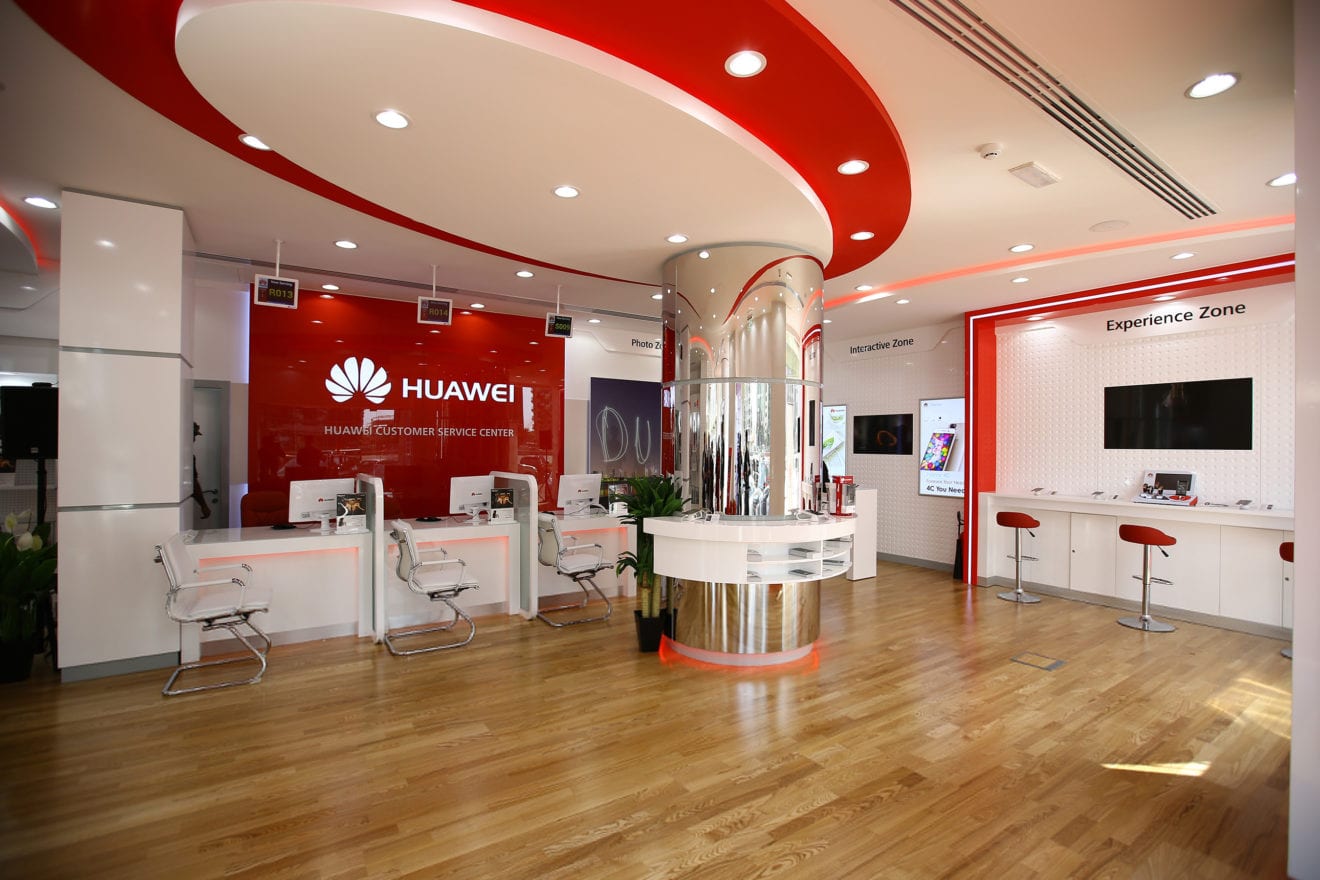
    Honeywell and Huawei, are deploying a gigabit network and a Passive Optical LAN (POL) solution for the Brisbane Skytower in Australia.

    Brisbane Skytower is a landmark building under construction in Brisbane, Queensland, Australia. Located in Brisbane’s central business district, this iconic residential tower will become Brisbane’s tallest building when completed in 2018/2019.

    Honeywell will provide Skytower with its Enterprise Buildings Integrator, a building automation system that takes charge of system integration, covering the Heating, Ventilation, and Air Conditioning, security protection facilities, etc.

    Additionally, Honeywell will centrally manage various building sub-systems, provide a visualized management portal and alarm management and work-order management services, designed to deliver efficient facility management, fast response, and predictive maintenance.

    Huawei will meanwhile deliver the gigabit network to achieve smart network inside the Skytower. In contrast to a traditional complex LAN which limits the performance of bandwidth-intensive applications, using POL technology, an enterprise can combine data, voice, video, and other weak-current systems into one optical network.

    Huawei’s solution will bear all services through a single fiber that will be upgradable to 10G PON while reusing existing cables.

    Prominent features include high bandwidth, high reliability, comprehensive security authentication, easy deployment and Wi-Fi coverage.

    “We’re excited to work with Huawei to build a gigabit network for Skytower, Brisbane’s iconic 270-meter, 90-story residential tower. The network is the first-ever installation to utilize one common fiber optic cable for telephony/data and building services,” Honeywell Building Solutions executive GM Mark Dunn said.

  • UPS-SF Holding joint venture receives regulatory approval in China

    UPS-SF Holding joint venture receives regulatory approval in China

    UPS and SF Holding, the parent company of SF Express, have announced the approval of their planned joint venture by China’s Ministry of Commerce (MOFCOM). The JV enables UPS and SF to collaborate on development and provision of international delivery services from, initially, China to the US and, in the future, to other trade lanes. The JV approval is a positive development for international trade and allows the two leading companies to leverage their complementary networks, service portfolios, technologies and logistics expertise.

    UPS is one of the world’s largest express delivery companies and a leading global supply chain integrator. SF is a market leader in express delivery in China, with extensive China-wide network coverage, comprehensive service capabilities, and the highest brand recognition in the Chinese small package industry. The newly approved joint venture is a continuation of UPS and SF’s collaboration that began in 2015, when UPS Worldwide Express service was made available at SF’s Heike retail stores in Shanghai and Shenzhen.

    “We’re delighted to help the many customers in China who will now be in a position to trade more easily across borders and better compete on the global stage thanks to product offerings from the UPS and SF joint venture,” said Ross McCullough, president of UPS Asia Pacific. “UPS has an aggressive multi-year growth plan in China. Aligning our two networks will increase our market presence by connecting China’s consumers and manufacturers to the US and around the world with logistics solutions that strengthen cross-border B2B and B2C capabilities. This JV is highly symbolic of UPS’s confidence in long-term growth opportunities in China.”

    “The establishment of this joint venture boosts global expansion of Chinese enterprises beyond local borders,” said Alan Wong, group vice president of SF. “SF and UPS are able to maximise the strengths of both companies to continuously innovate and create more competitive products that deliver strong value for customers.”

    The alignment of UPS’ and SF’s transportation networks provides customers with greater coverage, additional routing options, increased capacity, and more choice in transit times and service options.

    With the joint venture approved, customers seeking an economical solution for less urgent shipments can opt for Global Reach Plus, the new joint venture deferred express product that features the full visibility and reliability of a premium express service. Customers are expected to gain:

    • Time-in-Transit Reliability with 5-7 business days deliveries jointly powered by UPS & SF’s combined networks.
    • End-to-End Visibility: Visibility from door-to-door using SF’s tracking tool, integrated with UPS’s industry-leading technologies.
    • Single Point of Contact for customer service via SF; shipment pick-up by SF at the origin & delivery by UPS at the destination.
    • Flexibility: Late order cut-off time for shipment pick-ups, and multiple delivery options including the use of UPS My Choice and UPS Access Point network.

    The joint venture supports these highly competitive joint service offerings on the China-to-US lane, with planned expansion to markets in the rest of the world. Both companies can now utilize their own assets to boost operational effectiveness and efficiency for businesses while aligning business processes in order to provide seamless customer care for all parties shipping out of China.

  • Shoppers can create bespoke clothing online real-time

    Shoppers can create bespoke clothing online real-time

    New online made-to-order clothing shop Frilly allows customers to create bespoke clothing and see the effect in real-time.

    According to Springwise, the independent, innovation publisher, which scans the globe for the most promising innovations and new business ideas, Frilly is “an alternative for those who don’t want cookie-cutter clothing”. Unsurprisingly, it uses digital tools to transform a traditional service.

    Los Angeles-based Frilly allows customers to choose a piece of clothing and then customise almost everything about it – from hem length and color to material and style.

    Frilly co-founders Jeni Ni and Shangwei Ding were inspired to start the business while out shopping one afternoon. The pair realised that there was always one aspect of every garment that they were not happy with. They realised that if they could devise a system that would allow people to change those nagging details, then customers could be completely happy with every purchase.

    It took the pair three years designing the 3D simulation software to bring their dream to life. The Made to Measure Service uses an advanced AI algorithm to tailor garments to a client’s unique measurements. Customers choose and customise their pieces online, which are then handed over to a designer to create.

    As each variable is changed online, Frilly’s proprietary software allows the customer to see the effect in real-time on screen. A model gallery and a pop-up window provides recommendations from the designer, and demonstrates how to adjust each piece to achieve the exact look the customer wants, as well as offering a 360 degree view of the item’s details – from draping to the weave and texture of the fabric.

    Frilly’s made-to-order model also reduces waste and over-buys. Fabrics are chemical-free and the company is also committed to offering sustainable options, such as the use of recycled fabrics.

  • Optus to roll out Massive MIMO from end-2017

    Optus to roll out Massive MIMO from end-2017

    Australia’s Optus plans to roll out Massive MIMO (multiple-input multiple-output) technology on its mobile network starting at the end of the year, after completing successful trials combining Massive MIMO with three-carrier aggregation (3CC CA).

    Optus completed live network testing of 3CC Massive MIMO in June, achieving a top speed of 818Mbps, the operator revealed.

    The trial was conducted with Huawei on live traffic at Macquarie Park in northern Sydney. Optus said the trial made it the first operator in the world to complete a successful live network implementation of massive MIMO and 3CC CA technologies together in the same equipment.

    In addition to the improved speeds, site capacity during the live testing was boosted by almost four times compared to that of existing four transmit four receive (4T4R) MIMO base stations.

    Optus plans to start the rollout of Massive MIMO in selected capital cities starting from the end of the year, with a focus on high traffic and congested areas.

    “Earlier this year, Optus launched a 4.5G network and completed Australia’s first field trial of Massive MIMO technology,” Optus Networks managing director Dennis Wong said.

    “We’re committed to leading Australia in terms of 5G development and testing, and this recently completed world-first 3CC Massive MIMO test is further testament to our commitment and developments we have been able to achieve in this space.”

    Optus is Australia’s second largest mobile operator, and is a wholly-owned subsidiary of Singapore’s Singtel.

  • Motorola Philippines moves beyond Manila

    Motorola Philippines moves beyond Manila

    Motorola Philippines has opened a Motorola Kiosk in SM Batangas, its first retail venture outside Metro Manila.

    It is its fourth store since Motorola entered the Philippines in October last year, and follows the opening of a kiosk in Cyberzone, Mall of Asia, two months ago.

    Motorola launched with two concept stores, in the Cyberzone area in SM North Edsa Annex and SM Megamall, both run by MemoXpress.

    Lenovo Mobile Business Group Philippines country manager John Rojo says the brand aims to create more consumer engagement through activities and communications.

    All Motorola concept stores carry the full Moto smartphone lineup.