Author: Mei Ling Tan

  • Globe Telecom taps Cloudera to harness machine learning

    Globe Telecom taps Cloudera to harness machine learning

    Globe Telecom in the Philippines has deployed the Cloudera platform to enhance customer experience and deliver real-time targeted marketing campaigns and offers to its 60 million customers.

    Globe Telecom is using machine learning with Cloudera to enrich customer experiences across channels and deliver targeted and optimized products and services, while maintaining compliance with the latest industry data regulations.

    The operator’s mobile data traffic grew 85% from 151 petabytes (PB) in 2016 to 280 PB this year. Mobile data is a growing and significant contributor to total mobile revenues for the first half of 2017 versus the similar period a year ago.

    “To sustain our growth, we are always looking for ways to improve customer experiences across our channels and touchpoints,” said Gil Genio, chief technology and information officer at Globe Telecom.  “Our ability to strategically manage and monetize information about our customers will enable us to deliver value-added products and further differentiate ourselves in today’s competitive business landscape.”

    With Cloudera Enterprise now at the core of Globe Telecom’s data management architecture, the increasing volumes of data are ingested from different sources and channels into a centralized data hub and made available to all employees across the organization with full fidelity and security.

    Mark Micallef, regional VP for Asia Pacific and Japan at Cloudera, said Globe Telecom can now use data to gain valuable insights, make accurate business decisions faster and deliver targeted marketing campaigns and offers to enhance their customer’s experience.

  • Mobility is the top priority in corporate travel

    Mobility is the top priority in corporate travel

    Four in five travel managers now believe mobility to be the biggest priority in managing corporate travel, according to Sabre Corporation‘s 2017 Asia Pacific Corporate Traveller study.

    According to the study conducted on corporate travel professionals from across 19 countries in the region, more than 43% of corporate travelers are also deviating from company policy ahead of the trip and 42% are making changes while traveling.

    When asked what it is they considered to be the biggest priority in managing corporate travel in their organization, 80% of travel managers said they believe mobility – from making a booking through a mobile device, to itinerary management, to staying in touch with their traveller via instant messaging – is their top priority.

    Two in three (66%) also quoted looking at alternative forms of payment technology as a high priority area for them.

    Today, new technologies are emerging at a rapid pace, ultimately opening up countless new revenue channels for travel companies to tap into. Travel managers have an opportunity to engage their corporate travelers on multiple devices at all points of the journey for a truly seamless trip.

    Product solutions that can seamlessly integrate booking, itinerary management, messaging, virtual payments, expenses reporting and travel risk management will help corporate travelers improve their traveller experience, whilst helping their organizations maximize efficiency, streamline expenses and improve compliance.

  • iflix team with Fortumo for direct carrier billing

    iflix team with Fortumo for direct carrier billing

    iflix and mobile payments firm Fortumo have launched direct carrier billing for iflix users, which number about 620 million people across Indonesia, Pakistan, the Philippines and Thailand.

    Users can now subscribe to iflix and enjoy access to unlimited video entertainment by using their airtime balance or monthly phone bill to pay for the service.

    Carrier billing for iflix via Fortumo has been made available for subscribers of the mobile operators Smartfren and 3 (Indonesia), Telenor and Zong (Pakistan), Smartand Globe Telecom (the Philippines) and DTAC (Thailand).

    iflix and Fortumo expect to announce support for more carriers in Asia as well as the Middle Eastern & African region over the upcoming months.

    In the emerging markets where iflix operates, less than 10% of people own a credit card while smartphone ownership is already around 40% of the population. This means direct carrier billing allows a significantly larger portion of people the ability to pay for iflix subscriptions.

    “As we continue rapid expansion into emerging markets globally, we are confident that Fortumo will provide seamless payment integration in our markets”, said Tim Whelan, iflix global head of payments.

    iflix has leveraged Fortumo’s Payments API to expand its payment reach across its Asian markets, allowing iflix to roll out direct carrier billing for multiple mobile operators at once using Fortumo’s pre-existing integrations with the carriers.

    iflix can simultaneously use advanced features of direct carrier billing such as free trials dynamic pricing with a fully iflix-branded payment flow to increase user acquisition and payment conversion.

  • Smart Transfer launches cross-border m-payment app

    Smart Transfer launches cross-border m-payment app

    Smart Transfer has introduced a person-to-person mobile payment platform that supports international social payments across multiple currencies at no charge to users.

    The Smart Transfer app allows international money transactions to be made to any bank account, phone number, email address, or social media platform.

    The Smart Transfer app allows users to send money to recipients via all social media platforms, mobile numbers, email addresses or conduct cashless payments through QR code at partner merchants. There is no need to know the receiver’s SWIFT codes, bank codes, branch codes or account numbers.

    While overseas money transfers typically take two to five working days, Smart Transfer’s cross-matching engine and integration with various banks across different countries, moves money to overseas bank accounts within seconds.

    Smart Transfer’s peer-to-peer model eliminates the numerous middlemen and excessive fees involved in conventional international money transfers, streamlining the traditionally lengthy process and saving users significant time and money. Smart Transfer’s proprietary currency cross-matching engine also touts favorable exchange rates, passing the savings on to the consumers.

    Smart Transfer features a multi-currency wallet, enabling users to send and receive money across seven currencies (HKD, CNY, SGD, USD, GBP, IDR, and AUD). User monies are held with trusted bank partners such as Hang Seng Bank, Standard Chartered Bank, and Bank of China, providing a layer of assurance to users over safety of their funds.

    The app also features a built-in chatbot that is able to execute transactions according to a user’s instructions. It is integrated within Facebook Messenger and Telegram to break down language barriers, leveraging AI-based natural language processing technology to process four different languages (English, Chinese, Japanese and Indonesian).

    Smart Transfer is currently supported across the United States, United Kingdom, Hong Kong, Australia, Singapore, and Indonesia, with plans to expand its offerings to more than 212 countries and up to 30 currencies by end of 2017.

  • Central Group launches luxury cross-border shopping

    Central Group launches luxury cross-border shopping

    Conglomerate Central Group has taken a step toward an omnichannel strategy by launching a cross-border e-commerce luxury brand experience it claims is a world first.

    It has introduced access to its luxury-brand websites through messaging app WhatsApp as part of its vision of integrating online and offline shopping channels, says Central Group chairman/CEO Tos Chirathivat.

    “This move is calculated to serve the lifestyles of Central Group’s new customers by providing seamless integration of online and offline shopping channels,” he says. “That is the vision of the group moving forward.”

    Central Group is putting together a network of global luxury department stores across eight cities, including locations in Italy, Spain, Denmark and Germany, as well as Bangkok’s Central Chidlom and Central Embassy.

    It offers a digital magazine and e-newsletter through the website AuxVillesDuMonde.com, provides information fashion, food and culture in the eight cities. The website supports eight languages and also has a mobile app for Android and iOS.

    Users can add luxury department stores in WhatsApp, check product availability through live chat and make purchases through online payment options. Users can then pick up products at the store or have them shipped to their home.

    Central Department Store Group CEO Yuwadee Chirathivat says the company has spent €500,000 (THB19.8 million/US$595,000) on the website.

    “Cross-border shopping at nine stores in eight global cities is a new retail phenomenon,” she says. “Through the WhatsApp live-chat option, Thai shoppers will be able to order products from Europe and have them shipped in two to five days.”

    Shoppers have to pay import tax depending on the country of origin of their purchases.

    Central Department Store Group expects revenue from overseas stores to climb by 40 per cent this year, with revenue from abroad representing more than 20 per cent of Central Department Store’s THB130 billion (US$3.9 billion) revenue.

  • Mazda to make all models hybrid, electric by early 2030s

    Mazda to make all models hybrid, electric by early 2030s

    Mazda Motor plans to make all of its vehicles electric-based, including petrol hybrids, by the early 2030s, Japanese media reported on Friday, as more automakers shift strategies to meet tightening global emission regulations.

    The Japanese automaker plans to use electric motors in all of its models by that time, Kyodo News reported, without citing sources. A Mazda spokeswoman declined to comment on the report.

    At the moment, Mazda’s line-up does not include any all-battery electric vehicles, though it sells one hybrid model, a version of its Mazda3.

    The company has said it will introduce electric powertrain technologies including electronic vehicles (EVs) from 2019.

    To catch up with other larger automakers including Nissan Motor, which already market electric cars, Mazda has partnered with Toyota Motor Corp to develop technology.

    Meanwhile, it has also developed an ultra-efficient petrol engine, which can be used in hybrids, and plans to incorporate that into its cars from 2019.

    Unveiling the new technology last month, Mazda CEO Masamichi Kogai said its gasoline, diesel and electric vehicle technologies would “co-exist” in the future.

    The automaker, which also specialises in highly-efficient diesel engines, on Thursday launched a new CX-8 model in Japan, which is only available as a diesel model at the moment.

    Other global automakers are planning to shift away from internal combustion engines towards electrification in the coming years.

    Volvo Car Group in July said that all of its new models from 2019 would use electric motors, while Volkswagen earlier this week said it would launch 80 new electric cars across its brands by 2025.

  • South Korea’s Hyundai launches new Genesis sports sedan in SUV-driven market

    South Korea’s Hyundai launches new Genesis sports sedan in SUV-driven market

    South Korea’s Hyundai Motor Co launched its first new sedan under the premium Genesis marque in Seoul on Friday, hoping to cement the brand’s place in the luxury segment and make up for its lack of a strong SUV line-up.

    U.S. pop singer Gwen Stefani will perform for about 10,000 people at a gala event to launch the G70, the third sedan to carry the Genesis name but the first to be marketed exclusively under Hyundai Motor’s (005380.KS) fledgling premium brand.

    Starting from $33,000, the sporty four-door offers bang for the buck as it takes on rivals including affiliate Kia Motor’s (000270.KS) Stinger sedan and BMW’s 3 series.

    But analysts say the G70 will not solve Hyundai’s troubles in the United States, where sports utility vehicles (SUVs) are all the rage and the two previous Genesis-branded sedans failed to take off.

    “Look at Cadillac, with just one crossover, the brand is struggling in the U.S. It will be much the same story for Genesis until they can get a crossover to market,” said Dave Sullivan, product analysis manager at U.S. consultancy AutoPacific.

    “It’s not because the G70 will be a bad product … The sedan lineup just doesn’t match consumer demand.”

    The G70 debuts in South Korea on Friday followed by the United States early next year. Hyundai has not said when it would enter China and Europe, which are dominated by German premium brands.

    “G70 will pave the way for growth and expansion of the Genesis brand,” Executive Vice President Lee Kwang-guk told a media event.

    Hyundai Motor expects annual sales of over 60,000 G70 sedans globally.

    Hyundai has said the Genesis line-up will grow to six by 2021, with the addition of two SUVs and an electric vehicle.

    Genesis division head Manfred Fitzgerald told reporters that the next Genesis model will be an SUV, without elaborating further.

    Hyundai’s China sales tumbled more than 60 percent in the second quarter due to its lack of a strong SUV line-up and political tensions between China and South Korea over North Korea’s nuclear weapons program.

    In the United States, SUVs made up 35 percent of Hyundai’s total U.S. sales from January to August this year, far lower than the industry’s 62 percent, according to U.S. researcher Autodata.

    CRITICAL TEST

    The Genesis project is being closely watched by Hyundai Vice Chairman and heir apparent Chung Eui-sun, as he prepares to take over the world’s No.5 auto group from his father, 79-year-old Chairman Chung Mong-koo.

    As the first Genesis model which was not previously sold as a Hyundai, the G70 will be a key test of the two-year-old marque’s ability to survive in a fiercely competitive field.

    Its chief rival will be Hyundai affiliate Kia’s slightly cheaper Stinger, which shares the same platform as the G70 and launched in late April. Other rivals include BMW’s 3 series, Audi’s (NSUG.DE) A4 and Mercedes-Benz’s C-class.

  • Pizza delivery by robot cars has arrived with big questions

    Pizza delivery by robot cars has arrived with big questions

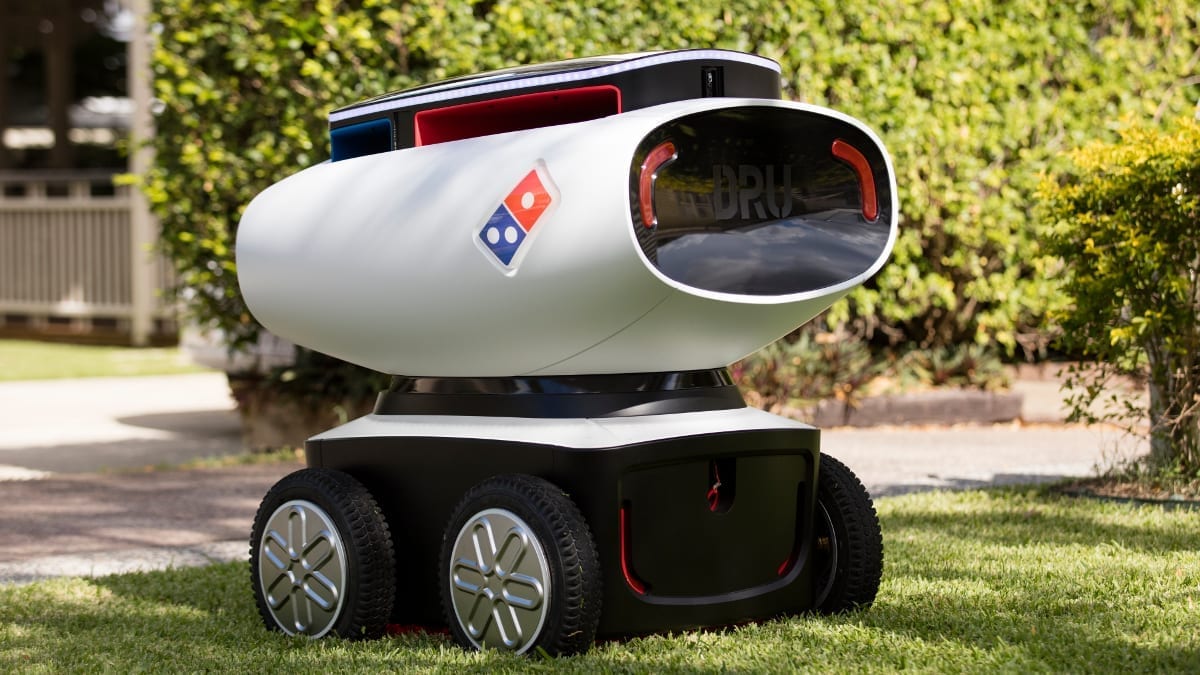
    Domino’s Pizza and Ford have paired up in a pilot project that will look at how humans interact with driverless food-delivery cars. Ann Arbor is home to thousands of students, an age group not likely to view this new technology with suspicion. But it could turn into a fascinating social experiment for the food industry.

    Customers ordering through Domino’s will be able to track their delivery in real time by using a downloadable app on their smartphones. They receive a text message that gives them a four-digit code to use once the car arrives.

    But it’s the final portion of the drive that could prove unpredictable for Domino’s. The driverless delivery vehicle could end up in the driveway, or near the curb. Customers may not want to go out to the car if it’s raining or snowing. Domino’s USA president Russell Weiner says these challenges are a major part of the experiment.

    “We’re interested to learn what people think about this type of delivery,” he said in a recent statement. “The majority of our questions are about the last 50 feet of the delivery experience.”

    No tipping attractive to students

    Human behaviour can be difficult to predict at the best of times, especially when dealing with food. This will be the first time a food service or retail company has used driverless cars to interact with actual consumers.

    The experience will certainly offer convenience for customers in a variety of ways. With the app, expectations will be managed, and quality of service — Domino’s key strategic focus — will be more consistent.

    That’s because delivery times will be streamlined, fewer pizzas will be damaged in handling mishaps and the customer won’t have to deal with tips — at least not for now. No tipping will reduce price points, making delivered pizzas more affordable. For cash-strapped students, that’s key.

    For Domino’s, the business case for a driverless fleet is unquestionably strong. Lower insurance costs, lower fuel consumption, consistent delivery times, no thefts, controllable temperatures to keep food safe for customers so therefore less waste — the list goes on.

    Domino’s delivers more than a billion pizzas annually, and has more than 100,000 drivers. Running a driverless fleet could save the company millions.

    Embracing the concept of home food deliveries without having to hire drivers cannot come soon enough for the food service industry, which is looking for ways to increase revenue beyond their regular foot traffic.

    Restaurant operators won’t need to deal with the headache of hiring the right people for delivery, and delivery is an important means of expanding the brand outside their facilities.

    Home delivery can be dicey

    Most of us who have ordered home-delivered food have had mixed experiences.

    Some drivers make convicted felons look like choir boys, causing customers to be hesitant about the food. But home delivery is no walk in the park for the drivers, either.

    Drivers in the U.S. have told of finding themselves in unbelievably awkward situations,including being tipped with weed, being asked to eat with the customer to offer company, showing up during domestic disputes and being greeted by a naked customer as the front door opens.

    There’s an endless list of unpleasant scenarios that would discourage anyone from contemplating home food delivery as a full-time job or even part-time job.

    A humanless home food delivery experience, on the other hand, also offers a unique perspective on the market currency of convenience.

    For years, price has been king. In study after study, price has trumped any other feature consumers were looking for in food service.

    Consumers crave convenience and privacy

    Younger generations, however, have a different take on convenience. Price remains a significant factor for higher revenues of course, but the constant quest for more convenience on both sides of the food continuum is now reaching the point of obsession.

    Getting rid of delivery personnel is now a realistic approach. With driverless home food delivery, one could potentially get food delivered without seeing a single human being — a frightening thought for some, a reassuring one for others.

    In the future, consumers could binge on their favourite junk food several times a week without the embarrassment of seeing the same delivery person.

    No matter how you look at it, Domino’s and Ford are onto something. After all, driverless technologies are consistent with what Domino’s is all about.

    The company has been successful over the years with its mastery of home delivery. Joining forces with Ford could make the company even more efficient.

    Nonetheless not all of us needs Domino’s to get our food fix. Divorcing the human aspect from food is simply impossible for many food service companies — thousands of them, in fact. And thank goodness for that.

  • Ikea online stores planned for Singapore, Malaysia

    Ikea online stores planned for Singapore, Malaysia

    Ikea online stores are to be launched in Malaysia and Singapore.

    Ikea Southeast Asia MD Christian Rojkjaer says the Singapore site is currently in testing phase and will go live to the public within a fortnight.

    The Malaysian site is less advanced, with a vague launch date of next year.

    “For Malaysia, we are currently in the development stages and we look forward to sharing more when we enter the testing phase next year,” another spokesperson for Ikea said in a media interview.

    News of the much-awaited Ikea online debut in the two markets comes on the heels of a RM908 million (US$212 million) commitment to a regional logistics hub in Malaysia.

    The Swedish homewares and furniture company has recently launched an online store in Shanghai as the first step of a broader e-commerce strategy in China.

    Rojkjaer said in an interview that the brand’s Ikea Damansara store receives about 6 million visitors annually.

    Ikea plans to increase its ASEAN store network to 20 by 2026.

  • China’s e-Shand Redwood sells logistics assets to Invesco

    China’s e-Shand Redwood sells logistics assets to Invesco

    e-Shang Redwood (ESR), a pan-Asia logistics real estate developer, owner and operator, has formed a joint venture with Invesco Real Estate to acquire and manage core logistics assets in China, marking the first collaboration of its kind for both parties in the region.

    The portfolio consists of class A stabilized logistics real estate assets in China, valued in excess of RMB 2 billion (US$300 million). Invesco acquired a majority stake in the portfolio from ESR. ESR will retain an equity interest and act as the project and property manager of the assets to drive future value for Invesco in partnership with Invesco’s asset management team.

  • Vietnamobile achieves nationwide 3G coverage

    Vietnamobile achieves nationwide 3G coverage

    Vietnam’s fourth largest mobile operator Vietnamobile has announced it has achieved 90% population coverage with its 3G network following a year of heavy infrastructure investments.

    The company’s 3G network now covers all 63 cities and provinces in the country.

    When the operator first announced plans to achieve nationwide 3G coverage a year ago, its 3G network only covered 12 of these cities and provinces.

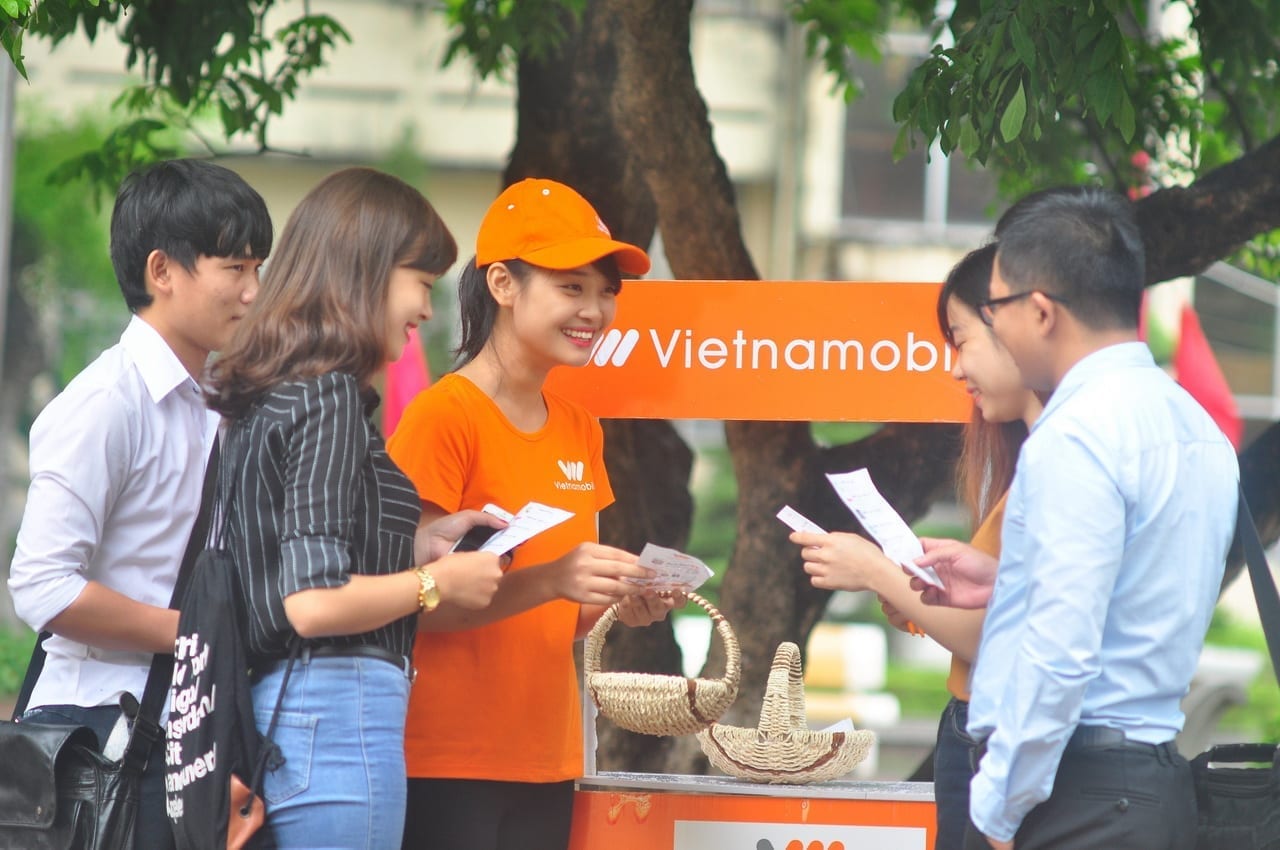
    Vietnamobile has been differentiating itself from its larger rivals by focusing on the needs of Vietnamese youth across the nation.

    To celebrate the milestone, Vietnobile is introducing two new data packages for young customers, including a pay-as-you-go data pla starting at 1Gbps  for 15,000 dong ($0.66), upgradeable to 5GB.

    Meanwhile the second plan will offer 1GB of data per day for 50,000 dong per month, subject to a cap of 30GB per month.

    Vietnamobile is also introducing a dedicated iOS and Android app to help customers monitor and manage their accounts.

    Vietnamobile launched in 2009 as a joint venture between Hanoi Telecom Joint Stock Company and Hutchison Asia Telecommunications Group (formerly Hutchison Telecommunications International). The company has historically faced challenges competing with its more established rivals due to a spectrum shortfall.

  • The Kooples is looking to Asia for expansion

    The Kooples is looking to Asia for expansion

    Parisian fashion label The Kooples is looking to Asia for expansion, starting with two monobrand stores in Hong Kong in November.

    It is about to sign a partnership deal with a regional retail group, with its Hong Kong stores to be in the Harbour City and Pacific Place shopping malls.

    This will build on the handful of retail outlets it currently has in Asia, stores and retail corners mainly in Thailand and South Korea.

    Above all, the new partnership will lead to the opening of the label’s first stores on Mainland China, from next year. The Kooples’ only presence in China is a retail corner at the Galeries Lafayette department store in Beijing. Similar formats could follow as Galeries Lafayette is a partner, and is planning further stores in China.

    Meanwhile, The Kooples is evaluating the launch of a dedicated China e-commerce site.

    Following Hong Kong and China, the Parisian label and its local partner are also considering Japan.

    In the fiscal year to August 31, The Kooples’ revenue was around €220 million (US$263.1 million), on par with the previous year, and the company sees Asia as a crucial growth driver for the 400-store brand.

    “Asia’s the next challenge” says GM Nicolas Dreyfus.

    The Kooples has appointed the director for its Asian subsidiary: former Balmain Asia COO Laetitia Mergui.

  • Jung Wook-jun switches gender focus

    Jung Wook-jun switches gender focus

    On the 10th anniversary of his avant-garde fashion label Juun.J, South Korean designer Jung Wook-jun has ventured into rare territory for him: womenswear.

    His latest collection starred in the Hong Kong Trade Development Council’s Centrestage event last week, and much like his menswear it featured oversized silhouettes, excessive layering and street-style tailoring.

    Jung, 50, says the switch to womenswear coinciding with the anniversary follows his usual pattern of change and renewal. He says women have been wearing his clothes for a long time, and people around him have been asking him to make womenswear for years.

    He says his aesthetic has gradually shifted over the years from menswear with feminine elements to increasingly gender-neutral clothes. Now he is reversing the dynamic by giving womenswear a more masculine edge.

    Jung is working with Hong Kong fashion boutique Joyce again this month on a menswear-focused pop-up store inside Lane Crawford IFC as well as online. Titled “No Man is an Island”, it features collections from similar avant-garde designers Raf SImons, Rick Owens and Yohji Yamamoto.

  • Vietnam retail sales soar this year

    Vietnam retail sales soar this year

    Vietnam retail sales soared 10.3 per cent in the first eight months of this year, according to figures released by the General Statistics Office.

    Even after the effects of inflation were removed from the data, sales were up by 8.9 per cent, total spending estimated at US$114.7 billion.

    The rise was higher than for the same period last year and underline the significant improvement in the local population’s disposable income levels.

    Excluding hospitality and catering sales from the data, Vietnam retail sales totalled $86.1 billion, three quarters of the total trade. Strongly performing categories included apparel, appliances and food, up 14 per cent, 11.6 per cent and 10.6 per cent respectively.

    Vietnam’s total retail market is forecast by the Association of Vietnam Retailers to reach US$179 billion by 2020.

  • Changi Airport Group partners with Alipay

    Changi Airport Group partners with Alipay

    Alipay and Changi Airport Group (CAG) have signed a strategic five-year partnership agreement to roll out the Alipay mobile payment option on a wide scale at the airport.

    They have also agreed to share marketing activities by offering customised and targeted shopping and dining offers to Chinese passengers using Alipay.

    Run by Ant Financial Services Group, Alipay has more than 520 million active users and is the first Chinese mobile payment partner for Singapore’s airport.

    Changi Airport’s yearly concession sales grew 5 per cent to hit another new high at S$2.3 billion (US$1.7 billion) last year, with travellers from China accounting for a third of all retail sales. The new mobile payment option will offer travellers more convenience when shopping and dining at the airport, including duty-free shops for cosmetics and perfumes, and wines and spirits.

    Progressively introduced at the airport since May, the Alipay mobile payment service is now available at more than 78 shopping and dining outlets. Under the joint marketing agreement, Alipay and CAG will collaborate to create information and promotions for passengers, as well as location-based information about shopping and dining options at the airport.

    Alipay will also partnering CAG in the eighth season of the “Be a Changi Millionaire” anchor shopping promotion. Shoppers who use Alipay as a payment mode will double their chances of winning the $1 million cash prize or an all-new Volvo S90 luxury sedan.

    “Changi Airport provides a myriad of customised services for our Chinese travellers including our Mandarin-speaking shopping concierge services and Chinese version of the airport’s online shopping portal,” says CAG senior VP for airside concessions Teo Chew Hoon.