Author: Mei Ling Tan

  • Cebu Pacific boosts Davao hub with direct route to Tagbilaran

    Cebu Pacific boosts Davao hub with direct route to Tagbilaran

    The Philippines’ leading airline Cebu Pacific continues to expand its domestic network by adding a new route that will directly link Davao City with Tagbilaran, Bohol. Starting October 21, 2017, the carrier’s wholly-owned subsidiary, Cebgo, will begin flying between Davao and Tagbilaran four-times-a-week (Tuesdays, Thursday, Saturdays, and Sundays). The new Davao-Tagbilaran route establishes a seamless connection for both air passenger and cargo service, ultimately benefitting the economies of the greater Davao area and the province of Bohol.

    “As part of our efforts to improve the overall customer experience for everyJuan, we have been taking to heart the suggestions and feedback from our guests. We’ve looked at the feasibility of the Davao-Tagbilaran route and are optimistic that this new air link will not only answer the clamor from the local communities, but stimulate trade and tourism in both destinations,” said Alexander Lao, President and CEO of Cebgo.

    To officially launch the beginning of this new route, CEB is offering an introductory, all-in seat sale of PHP599 until September 17, 2017, or while seats last. Travel period is from October 29, 2017 to March 31, 2018. Davao serves as the Cebu Pacific hub in Mindanao, linking the city to more places than any other carrier.

    Cebu Pacific flies directly to Bacolod, Cagayan de Oro, Cebu, Dumaguete, Iloilo, Manila, Tacloban and Zamboanga as well as to Singapore. Aside from Davao, CEB also operates flights out of five other strategically placed hubs in the Philippines: Manila, Cebu, Clark, Kalibo, and Iloilo. The airline’s extensive network covers over 100 routes across 26 international and 37 domestic destinations, spanning Asia, Australia, the Middle East, and USA. For bookings and inquiries, guests can visit www.cebupacificair.com or call the reservation hotlines (+632)7020-888 or (+6332)230-8888. The latest seat sales can be found on CEB’s official Twitter (@CebuPacificAir) and Facebook pages.

    Guests may also download the Cebu Pacific mobile app on the App Store and Google Play. Cebu Air Inc. is the largest carrier in the Philippine air transportation industry, offering its low-cost services to more destinations and routes with higher flight frequency within the Philippines than any other airline. Its 60-strong fleet is comprised of two Airbus A319, 36 Airbus A320 and eight Airbus A330. Between 2017 and 2022, CEB expects delivery of 7 more brand-new Airbus A321ceo and 32 Airbus A321neo aircraft.

    Its wholly owned subsidiary, Cebgo, currently offers flights to 27 Philippine destinations and one international destination, utilizing an exclusive fleet of eight ATR 72-500 aircraft, and six ATR 72-600 aircraft. Cebgo has two strategic hubs in the Philippines namely, the Ninoy Aquino International Airport (NAIA) Terminal 4 in Manila and Mactan Cebu International Airport (MCIA) in Cebu.

  • Rickshaws to jump start India’s all-electric drive

    Rickshaws to jump start India’s all-electric drive

    India, one of the world’s most polluted nations, has one of the most ambitious plans to kick its fossil fuel addiction. India will roll out nearly 100,000 battery-powered buses and autorickshaws onto its sulphurous city streets in the coming weeks, setting it on the bumpy road to making new vehicle sales all-electric by 2030.

    Analysts say the target is “daunting”.

    Transport is a major source of India’s carbon emissions and the Greenpeace group blames at least 1.2 million deaths a year in the country on pollution.

    Getting off diesel and petrol would improve the nation’s health and bolster India’s bid to meet the bold climate change targets it pledged in Paris in 2015.

    India is not alone in wanting all-electric cars, though it is aiming to go faster than others.

    Britain and France have said they want to end the sale of fossil fuel cars by 2040.

    But electric and hybrid models make up just three percent of all cars on the road worldwide, say London-based consultancy firm PwC.

    That figure is even lower in India, underscoring the enormity of Prime Minister Narendra Modi’s electric challenge.

    On top of gradually bringing in electric rickshaws and buses in New Delhi, the government has issued a tender to auto makers for 10,000 cars to replace pollution producers at four government ministries.

    “To go all electric is a daunting task,” said PwC partner Abdul Majeed.

    “Electric vehicles have a few huge challenges to deal with before they can take off in a big way.”

    Low-cost solutions

    The government does not want to pay for a network of charging stations for millions of future green motorists to power up depleted car batteries.

    Instead it hopes private energy companies will invest in “swapping bays”, where drivers can exchange empty batteries for fresh ones, Ashok Jhunjhunwala, principal advisor to the power minister and the official spearheading the efforts, told AFP.

    It plans to lease batteries separately for public transport and taxi fleets. It also wants more work on smaller, easier to use batteries.

    Amara Raja Batteries, an Indian battery manufacturer, would be part of the “swapping model”, said its chief executive S. Vijayanand.

    “The headache of managing and charging the battery will not be with the driver then,” he said.

    Other ideas include setting tougher efficiency standards so new vehicles use less power.

    “The idea is to keep it as low-cost as possible,” Jhunjhunwala said. “Vehicles and chargers must happen without subsidies and must make business sense.”

    Mahesh Babu, chief executive at Indian conglomerate Mahindra, said it was an exciting project but government efficiency targets are “idealistic and might lead to compromise on consumer needs and safety.”

    Others are more optimistic.

    Reductions in the size and cost of electric vehicles, coupled with rapid technological advances, mean India’s ambitions were “very feasible”, said Bill Hare, chief executive of the Berlin-based Climate Analytics consultancy.

    ‘India’s challenges’

    Foreign car majors are not ready to bring their electric offerings to India.

    Mercedes said it needs a reasonable timeline and improved incentives for motorists — currently a tiny sum that could be withdrawn at any time — to bring in electric cars.

    Tesla boss Elon Musk — who in July launched Model 3, a mass-market version of Tesla’s pricier cars — has postponed entry to the Indian market.

    But at $35,000, even the cheapest Tesla is out of reach for most Indians. Most of the three million new cars added to India’s roads every year are far cheaper, compact vehicles.

    Nissan Motor is test driving its Leaf model to see how it performs on Indian roads and copes with pollution and extreme weather conditions.

    That leaves the field wide open for Mahindra, currently the only company selling electric cars in India.

    Its hatchback, sedan and van sell in Delhi from $11,000 to $15,000, after a subsidy of $2,300.

    The company hopes to sell up to 5,000 units this year, including autorickshaws.

    So far it has tied up with cab firms in a handful of cities, logistics firms and start-ups that offer a sharing system of self-driving cars.

    “We want to meet India’s challenges,” Babu said.

  • H&M cuts prices to shift leftover summer clothes

    H&M cuts prices to shift leftover summer clothes

    ‘The rapid shift from offline to online in the young value fashion market has been one factor behind disappointing sales trends in the past couple of years.’

    Budget fashion group H&M has slashed prices to shift unsold summerwear, in the latest sign the Swedish company is struggling to keep pace with rivals as young buyers move online.

    Seemingly unstoppable for decades, H&M has been hit by tougher competition in the past couple of years from cut-price brick-and-mortar rivals. It is also trying to improve its e-commerce offering to counter new online-only players.

    H&M entered its third quarter with higher-than-usual inventories that needed to be sold before autumn collections arrived. On top of that, overall demand has been sluggish in some of its key markets, such as Germany.

    “The rapid shift from offline to online in the young value fashion market has been one factor behind disappointing sales trends in the past couple of years,” said Societe Generale analyst Anne Critchlow, who has a “sell” rating on H&M’s shares.

    “In most countries, online is not yet integrated with the stores and free delivery and free returns are not available.”

    Sales at H&M, the world’s second-largest clothing retailer after Zara owner Inditex, reached 51.2 billion crowns ($6.4 billion) in its June-to-August financial quarter against a forecast 51.6 billion in a Reuters poll.

    Local-currency growth was 4 percent, just below forecast.

    H&M said the aggressive summer markdowns had led to an improved inventory position ahead of the fourth quarter and that autumn sales were off to a good start.

    H&M’s shares, which have tumbled from all-time highs near 370 crowns in 2015, were up 2.2 percent to 218.10 crowns at 1400 GMT.

    The company has launched several independent and mostly higher-end brands in recent years to broaden its customer base in the face of growing competition in its budget segment, but the core H&M chain still accounts for the bulk of its sales.

    H&M is also intensifying efforts to catch up with services offered by pure-online players such as Asos and Zalando as shopper behaviour and expectations transform even faster than H&M had expected.

    It is now testing “click-and-collect” – picking up items bought online in stores – in Britain, and rolling out faster delivery options and online returns in stores in some markets.

    RBC Capital Markets Richard Chamberlain with an “outperform” rating on H&M, said he expects sales and gross margin trends to improve next year helped by the online improvements. ($1 = 7.9924 Swedish crowns)

  • Facebook hires AI expert, launches lab in Canada’s Montreal

    Facebook hires AI expert, launches lab in Canada’s Montreal

    The lab will be Facebook’s fourth, after sites in Palo Alto, New York, and Paris. Facebook Inc has hired artificial intelligence academic Joelle Pineau to head its new research lab in Montreal, the Silicon Valley social media company said on Friday.

    Once the exclusive domain of academic researchers, artificial intelligence has grabbed the attention of the corporate world as businesses from healthcare to financial services look to use algorithms to sort through reams of data in search of patterns to solve problems.

    The lab will be Facebook’s fourth, after sites in Palo Alto, New York, and Paris, and joins similar AI research efforts in the city from Microsoft Corp and Alphabet’s Google.

    The company will also invest $7 million to support AI research at academic institutions in Montreal, the Canadian Institute for Advanced Research said in a statement.

    Pineau is a co-director of McGill University’s Reasoning and Learning Lab whose work focuses on developing and applying models and algorithms applying robotics to healthcare, transportation and language processing.

    One project she has been working on at McGill, where she will maintain her academic position, is a robotic wheelchair.

    Pineau will be joined by fellow researchers Pascal Vincent, Michael Rabbat and Nicolas Ballat, and Facebook expects the team to grow to around 30 researchers.

    Facebook already uses AI for image recognition, language analysis and targeted advertising. It also uses AI to identify and remove what the company deems “inappropriate content.”

    The Facebook project will be connected to McGill University’s Centre for Intelligent Machines and to the Montreal Institute for Learning Algorithms, started by University of Montreal professor and machine learning pioneer Yoshua Bengio, two sources with knowledge of the plans said.

    Combined, University of Montreal and McGill have more than 200 researchers, including students, working on AI research projects, Bengio said. That is up from around 150 cited by Google last year, which it called the greatest academic concentration of AI research in the world.

    The mostly French-speaking province of Quebec boasts around 90 start-up companies focused on artificial intelligence.

    The Canadian federal government has pledged C$125 million to build AI expertise in Montreal, the Toronto-Waterloo corridor, and Edmonton, while the provincial Quebec government has also promised some C$100 million ($82 million) specifically for AI research.

  • Toshiba is being sold ?

    Toshiba is being sold ?

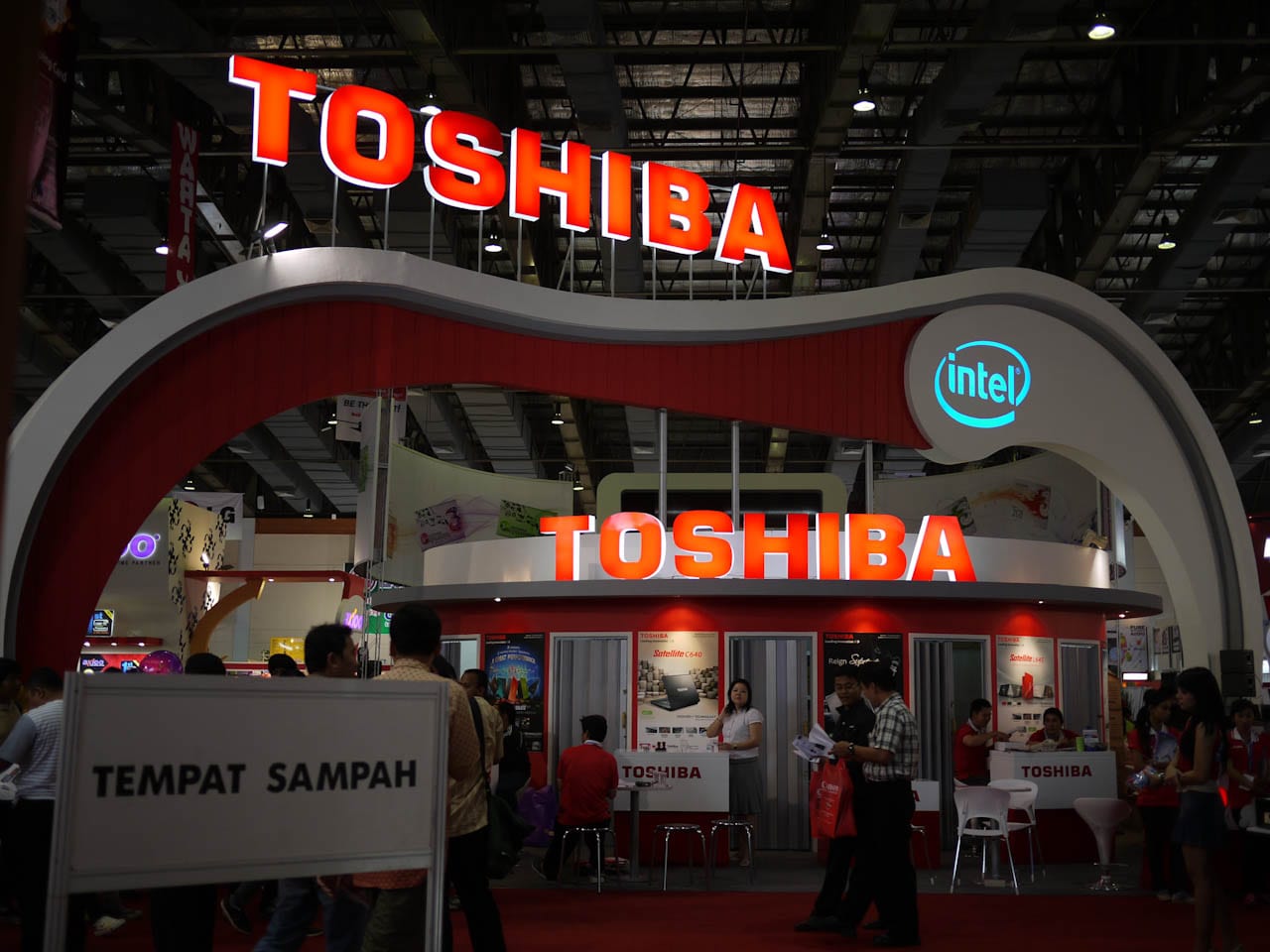
    Toshiba has been stuck in tortuous negotiations over selling the segment, which could raise as much as $20 billion.

    At a train station used by hundreds of workers at struggling Japanese electronics giant Toshiba, an advert is apparently trying to poach staff worried by their employer’s precarious financial position.

    “Do you work for ‘that’ electronics company? If so, come and work for us!” screamed the ad for Toyota.

    The mere fact Toshiba staff are apparently being urged to jump ship by rivals underscores the difficulties suffered by the former industrial titan.

    Strapped for cash, the firm is soon expected to be forced to sell off part of the family silver — its key memory chip business, which accounts for around a quarter of its total annual revenue.

    Toshiba has been stuck in tortuous negotiations over selling the segment, which could raise as much as $20 billion.

    Three parties have been vying for the prize: a US-South Korean consortium led by investment fund Bain Capital, Toshiba’s US chip factory partner Western Digital and Taiwan’s Hon Hai Precision, better known as Foxconn.

    On Wednesday, Toshiba said it had signed a memorandum of understanding with the Bain consortium but this did not prevent them still talking to others.

    Selling the profitable chip division is seen as key to Toshiba’s survival, as one of Japan’s best-known firms battles to recover from multi-billion-dollar losses at its US nuclear operations.

    It could also face the humiliating prospect of being delisted from Japan’s stock exchange if the sale does not raise the sufficient funds.

    Fall from grace

    The move to sell represents something of a fall from grace for Toshiba, which can trace its history back as far as 1875 when the company set up a telegraph factory in the now swanky area of Ginza in Tokyo.

    In the 1930s, the firm manufactured the first Japanese vacuum cleaner, the first fridge and the first washing machine, which still works today — albeit with an almighty racket.

    It has been involved in the manufacture of an astonishing array of items from tiny electronic chips to nuclear reactors, with everything from televisions, computers and highway toll gates in between.

    But Toshiba is not the only once-mighty Japanese conglomerate to feel the pain from ferocious foreign competition.

    Household names Panasonic and NEC have been forced into major restructuring, and Sharp was acquired by Foxconn.

    Toshiba’s problems stem in large part from what Yasuyuki Onishi, a specialist in the sector, described as its “reckless” purchase of US nuclear unit Westinghouse, which racked up billions of dollars in losses before being placed in bankruptcy protection.

    This is the “main cause of the crisis that the group is suffering”, Onishi told AFP.

    Those huge losses came to light as the group was still recovering from revelations that top company executives had pressured underlings to cover up weak results for years after the 2008 global financial meltdown.

    Its most recent results published in August revealed a loss of $8.8 billion in the last fiscal year, although it predicted it would be back in the black this year.

    ‘Pothole in the road’

    But most analysts believe Toshiba is too important to fail.

    Tokyo is believed to be unwilling to lose sensitive technology, with security questions swirling over systems already using Toshiba’s memory chips, which are widely used in data centers.

    The government also needs the company to take care of the painstaking task of decommissioning reactors at the Fukushima plant crippled by the 2011 tsunami.

    Toshiba could end up becoming “just a company that dismantles Japanese nuclear plants”, mused Onishi.

    “Toshiba will avoid bankruptcy for now but it will shrink and end up disappearing,” said the expert.

    Masahiko Ishino, an analyst at Tokai Tokyo Research Center, said the sale was designed to help Toshiba meet temporary funding difficulties.

    It will “fill in a pot-hole in the road”, he said, arguing also that the speculated price tag is too cheap.

    “The business is a magic hat out of which comes 500 billion yen (of operating profit) every year,” he said.

    “It’s like a huge property is being bequeathed. Everyone is trying to get a bigger share.”

  • Hotels told to cough up for playing music on TV by Vietnam’s copyright watchdog

    Hotels told to cough up for playing music on TV by Vietnam’s copyright watchdog

    Collection of the controversial royalty fees will resume after a three-month break following a public backlash.Vietnam’s music copyright watchdog has announced that it will resume charging hotels across the country royalty fees for playing music on TV.

    The Vietnam Center for Protection of Music Copyright (VCPMC) will be charging all hotels VND25,000 ($1.1) per year for each room equipped with a TV.

    The amount is based on similar fees charged in other countries based on information provided by the International Confederation of Societies of Authors and Composers (CISAC) and adjusted to Vietnam’s economy, the center stated.

    At a press conference on Monday, the VCPMC cited Vietnam’s intellectual property law to reaffirm its right to collect royalty fees from hotels that play music.The culture ministry has asked the VCPMC to start collecting fees again after they were put on hold in May following a public backlash, according to Pho Duc Phuong, the center’s director.

    The center also said that 80 percent of the royalties would go to the copyright holders and it would only retain 20 percent to cover its operating costs, Tuoi Tre (Youth) newspaper reported.

    The collection process will be public and transparent, and the royalties will be paid to the copyright holders every three months, said Nguyen Hoang Giang, director of the VCPMC’s northern chapter.

    “The hotels will supply us with lists of songs they frequently play, and after subtracting administrative expenses, we will split the royalties equally among copyright holders,” Giang said.

    However, the VCPMC did not explain how the hotels will be able to compile these lists, or how it will verify them.

    In May, the center’s southern chapter started asking 1, 2 and 3-star hotels in Da Nang to pay music royalty fees and threatened to take legal action against those that refused to cooperate. Many hotel owners were surprised to learn about the new fees and were quick to protest, claiming most visitors don’t use their TVs to play music and not all hotels play music in their lounges.

    However, the VCPMC has been charging 4 and 5-star hotels music licensing fees for the last 10 years, and has been organizing conferences since 2013 to inform all hotel owners of copyright laws and regulations, Tuoi Tre quoted Dinh Trung Can, the VCPMC’s deputy director, as saying.

    Following the public backlash in May, the Copyright Office of Vietnam instructed the VCPMC to temporarily stop collecting music royalty fees until it could devise a more transparent and appropriate roadmap for the collection process.

    The VCPMC is a non-governmental and non-profit collective copyright management organization. It claims to represent nearly 4,000 songwriters and copyright holders of Vietnamese songs, and more than 4 million international writers.

  • AirAsia to operate flights to Bangkok

    AirAsia to operate flights to Bangkok

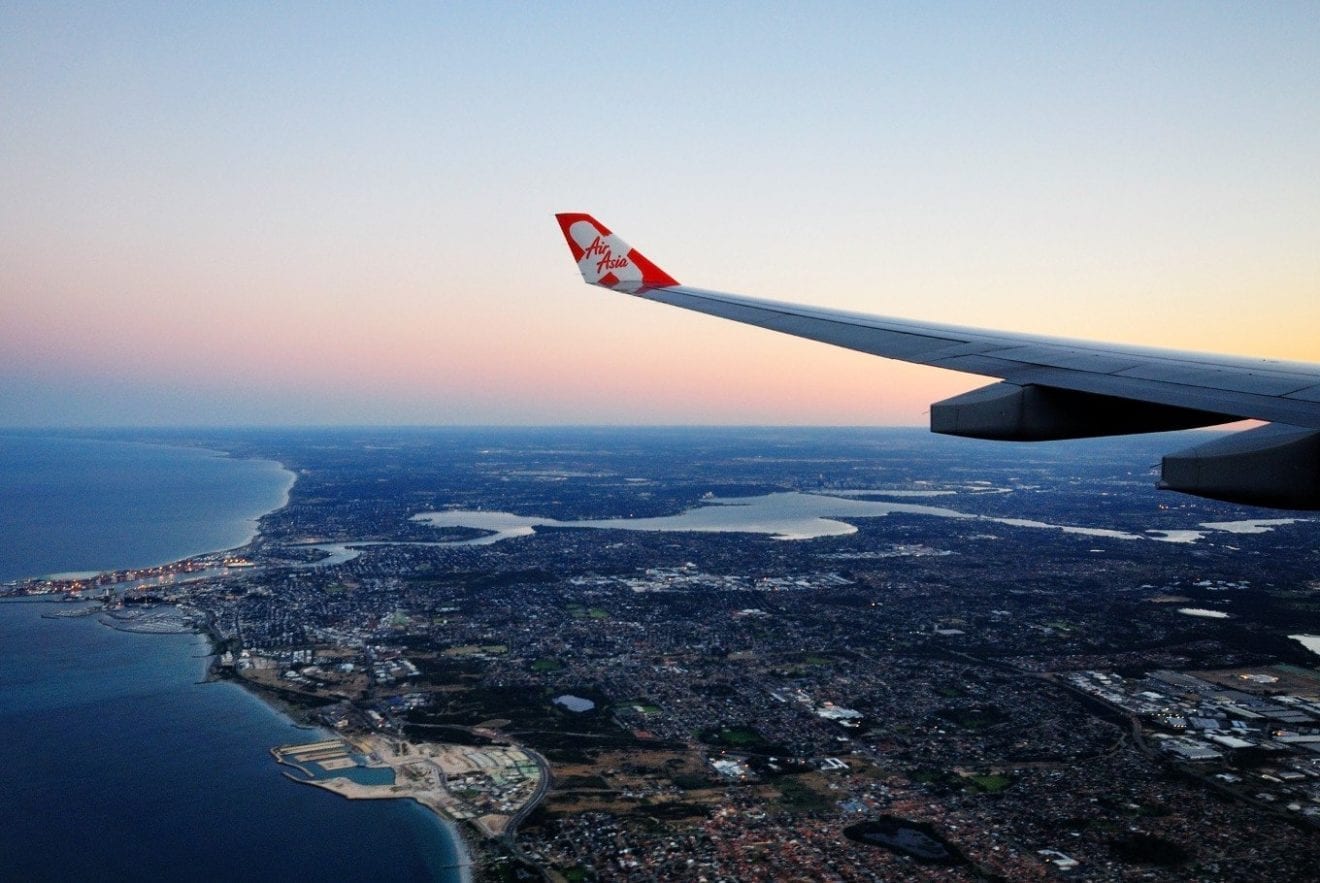
    AirAsia will operate direct flights to Bangkok from Visakhapatnam either from October or from November this year. The airline submitted a letter to Airport Director of Visakhapatnam International Airport requesting for time slots.

    Tour and Travel Operators Association of Andhra (TTOA) has been following up continuously with the airline operator starting with the visit of High Commissioner of Thailand Pisan Manawat and his team and also the top decision makers of Thai Smile to Visakhapatnam on August 31, 2013, according to TTOA chairman O. Naresh Kumar and its president K. Vijay Mohan. In the absence of a direct flight, people from Vizag region are going to Hyderabad, Chennai and Kolkata to catch flights to Bangkok and other cities in Thailand.

    The advantages of having direct flights from Vizag to Thailand over other nearest major cities is that the distance between these two destinations is only 1,905 km as against 2,400 km from Hyderabad to Bangkok and 2,254 km from Chennai to Bangkok. This will save a lot of time and money to the travellers from this region, according to the TTOA representatives. Pharmaceutical product manufacturers and other traders exporting their goods to Japan from Vizag can now route them through Bangkok, which is 268 km less than sending them through Hyderabad.

  • Inmarsat launches fleet security managed service

    Inmarsat launches fleet security managed service

    Inmarsat has announced a new managed service for ships designed to detect vulnerabilities, respond to threats and protect ships from widespread cyberattack.

    The new Fleet Secure service will be commercially launched as a standard option on Inmarsat’s award-winning Fleet Xpress service.

    Fleet Secure is a Unified Threat Management (UTM) and monitoring service that detects external attacks via high-speed satellite broadband connectivity, while also protecting vessel networks from intrusion via infected USB sticks and crew devices connected to the onboard LAN.

    Fleet Secure will integrate with Inmarsat’s Fleet Xpress maritime satellite broadband service for no additional outlay on hardware and no impact on the customer’s contracted bandwidth.

    “Cybercrime is an inevitable downside of the digital economy, on land or at sea. Other maritime cybersecurity offerings we have seen address only part of the threat or some of the management issues,”  Inmarsat Maritime SVP of safety and security Peter Broadhurst said.

    “Inmarsat’s new Fleet Secure service provides an all-inclusive, real-time managed monitoring service, giving ship operators and managers the cybersecurity tools they need to protect their fleets continuously from malicious attack or malware, detect vulnerabilities, and respond to threats.”

    The UTM is powered by Singtel’s information security subsidiary Trustwave, and is available in a choice of three service levels – gold, silver and bronze.

  • Tata Teleservices may be wound down

    Tata Teleservices may be wound down

    Indian conglomerate Tata Group is reportedly considering winding down its struggling mobile operation Tata Teleservices after failing to find a potential buyer.

    Cciting unnamed sources, Tata Group chairman N Chandrasekaran is evaluating suspending its telecoms operations to tackle the operator’s mounting debt.

    If the operations are wound down, Tata Group may need to take financial losses due to Tata Teleservices’ total debt of around 340 billion rupees ($5.3 billion), and lenders may need to take a haircut on the value of their debt owed, according to the report.

    But according to the report, a closure can only happen once these lenders agree to a loan recast program

    Tata Teleservices still has around 45 million customers for a 4% share of the total market. But the operator has been seeking a sale or merger ever since joint venture partner NTT DoCoMo decided to pull out of its 26% shareholding, exercising its option to require Tata Group to buy back DoCoMo’s stake in the venture

    The company has held discussions with Airtel, Vodafone and even newcomer and Reliance Jio, but no deal has eventuated, leaving dissolving the company the most viable option.

    A nominee of Tata Sons’ largest shareholder has also recently suggested that Tata Teleservices file for bankruptcy.

  • Greyhound Cafe Jakarta opens in Grand Indonesia

    Greyhound Cafe Jakarta opens in Grand Indonesia

    Mainly Thai fusion dishes are offered at the new Greyhound Cafe Jakarta, in the Grand Indonesia mall. With a cactus display in its outdoor area, the ground-floor cafe has a mainly black-and-white theme and offers mainly Thai fusion dishes.

    A private dining area is available as well as a smoke area, and takeaway is possible.

    The Thai brand is being introduced in Indonesia by restaurant group Arena Corporation.

    Greyhound Cafe opened its 13th international outlet last December, marking its debut in Singapore.

    At the time it had 14 cafes in Bangkok plus outlets in Beijing, Hong Kong, Kuala Lumpur and Shanghai.

    For Greyhound, the cafe was actually an afterthought to complement to brand’s fashion line.

  • BluGate broadens delivery options

    BluGate broadens delivery options

    Singapore startup Blu has introduced BluGate, a service that offers online shoppers more flexibility with deliveries.

    It has a network of 49 BluPort Parcel Terminals where shoppers can opt to pick up their purchases. These are situated in shopping malls, office buildings, Cheers convenience stores and Esso petrol stations.

    To use the service, shoppers sign up online for a BluGate account and buy BluTokens, available on demand or by plan. This gives them access to a virtual shipping address, corresponding to the parcel terminals.

  • Bo’s Coffee heading for a century

    Bo’s Coffee heading for a century

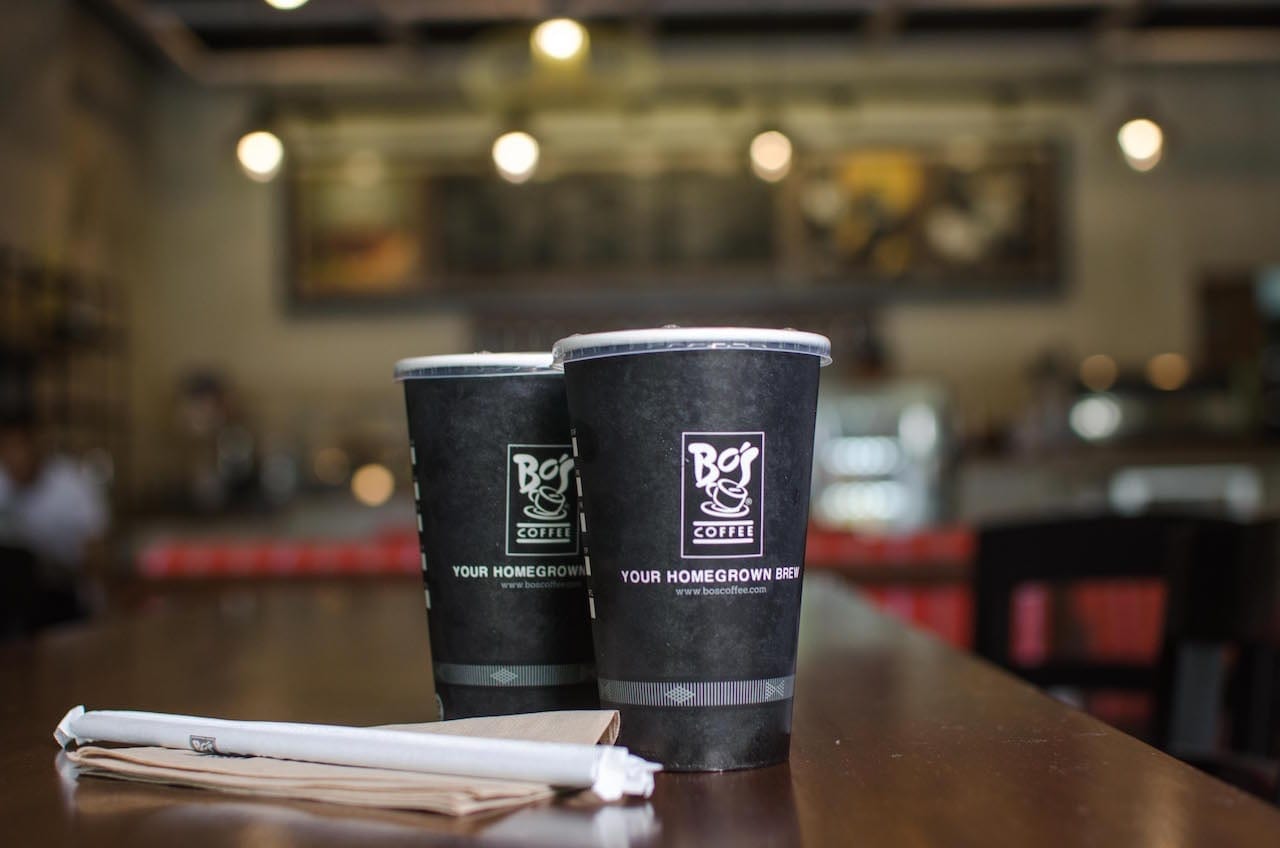
    Bo’s Coffee has opened its 97th store in the Philippines, at the NorthDrive mall in Mandaue City, Cebu.

    Leading up to the opening, the Cebu brand organised a tasting session through Philippine Coffee Origins, says brand and marketing manager Toni Santos. This featured five locally harvested beans, from Batangas and Sagada in the Mountain Province, Mt Kitanglad in Bukidnon, Mt Apo in Davao and Mt Matutum in Cotabato. Store coach Serah Amor Samson showed how the manual brewing or pour-over session is done.

    Bo’s Coffee operations VP Ivy Theresa Benatiro says the company hopes to end the year with a 100th store in Intramuros, Manila. Meanwhile, its first two international stores will open in Qatar before November.

  • Zero Halliburton luggage lands in Manila

    Zero Halliburton luggage lands in Manila

    Zero Halliburton, the only luggage to have travelled to the moon and back, has landed in S Maison at Conrad Manila.

    Marking its launch in the Philippines, the 80-year-old global luggage brand is exhibiting the aluminum briefcase that stored rock and soil samples from the National Aeronautics and Space Administration’s (NASA) Apollo 11 lunar mission in 1969. It is also unveiling its aluminum and polycarbonate luggage and, soon, the Greenwich Collection, lightweight cordura nylon luggage with built-in smart features.

    Surprisingly, the luggage was originally developed to suit the needs of just one man, founder Erle Halliburton, an oilfield engineer, says company chairman Hiroaki Morishita. Realising that he needed a durable piece of luggage for his travels across the rough Texas terrain, Halliburton and a team of engineers designed the world’s first aluminum travel case.

    Impressed with the prototype, his friends convinced Halliburton to make the case commercially available. Zero Halliburton became part of history when Apollo 11 astronauts Edwin Eugene “Buzz” Aldrin, Michael Collins and Neil Armstrong took a case to the moon and back.

    The line has since extended to wheeled business bags, pilot cases, backpacks and duffel bags using newly developed materials and designs.

    Zero Halliburton’s flagship store is in New York City’s Madison Avenue, and Brazilian football superstar Ronaldinho of FC Barcelona has signed up to endorse the brand.

  • The Lime Truck brings tacos to Suntec

    The Lime Truck brings tacos to Suntec

    Featuring fusion food, Californian chain The Lime Truck has parked one of its kitchens on wheels in Singapore – its first permanent site out of the US.

    At the PasarBella@Suntec City food hall, the stationary truck has a Mexican-inspired menu serving six varieties of taco as well as Singapore exclusives like fried chickenskin with chipotle honey drizzle and cheese. The Lime Truck also makes its own tortillas, a first for Singapore.

    There are also slushies, churros for dessert, and rice and salad bowls topped with grilled meat. There are also one-off daily specials.

    The truck initially appeared in Singapore at a pop-up event in Orchard Road three years ago as part of a charity initiative with Fiji Water, where more than 1000 tacos were sold out in two hours.

    Chef Daniel Shemtob launched The Lime Truck in 2010, expanding it from a single truck in Orange County, California, to five trucks in other cities in the state. He also has three restaurants in California, and came to cook at the truck’s Singapore launch.

    The Lime Truck won the second season of Food Network’s The Great Food Truck Race in 2011 and was placed on Yahoo’s Top 10 Trucks In America list for three years running from 2012.

    “There’s a hidden Asian element to a lot of the dishes, so it’s familiar but kind of different,” says Shemtob, who picked up his cooking skills “from the streets”. He started cooking when he was about six years old, learning from YouTube, cookbooks and “just messing around in the kitchen”.

    While regulations prevent the food truck from roving the streets as it does in California, Shemtob says he hopes it can make appearances at events such as the Formula One races.

  • Singapore retail sales continue to rise

    Singapore retail sales continue to rise

    Real Singapore retail sales rose in July – but restaurants noticed a downturn.

    According to Statistics Singapore, retail sales (excluding motor vehicles) rose 2.2 per cent year-on-year for the month, to S$3.7 billion. Including motor vehicles, they rose 1.8 per cent.

    Against June, retail sales (excluding cars) rose 2. 6 per cent.

    Sales of food & beverage services declined 0.5 per cent in July, to an estimated total of $723 million.

    Compared to July 2016, retail sales by petrol service stations, of medical goods & toiletries, by department stores, of watches & jewellery, wearing apparel & footwear, computer & telecommunications equipment, recreational goods and at supermarkets increased between 0.1 per cent and 8.1 per cent in July.

    But sales of furniture & household equipment, by food retailers, mini-marts & convenience stores and of optical goods & books decreased between 1.2 per cent and 6.3 per cent.

    Turnover of restaurants decreased 5.8 per cent year-on-year in July. But, sales of fast food outlets, by food caterers and other eating places rose between 1.5 per cent and 7.1 per cent.