Author: Mei Ling Tan

  • Silk Contract increases efficiency, safety with Zebra Technologies solution

    Silk Contract increases efficiency, safety with Zebra Technologies solution

    Zebra Technologies Corporation has announced that Silk Contract Logistics has deployed Zebra’s voice-directed warehouse picking solution to enhance its worker productivity and competitive advantage. Silk Contract Logistics operates across a range of sectors, including retail and fast-moving consumer goods (FMCG), light industrial and food and dairy, providing a tailored approach to wharf cartage, warehousing and distribution.

    With 21 warehouses spread across Australia, Silk Contract Logistics has deployed a suite of Zebra’s warehousing solutions, supported by Zebra’s PartnerConnect Premier Solution partner Skywire, to both futureproof its business and establish itself as an innovator in the Australian warehousing industry.

    The Enterprise Asset Intelligence solutions that the third-party logistics company deploys include Zebra’s mobile printers, and wearable computers equipped with voice-directed picking software TekSpeech Pro – making it the first enterprise in Australia to fully harness Zebra’s multi-modal voice solution. With these visibility solutions, Silk Contract Logistics aims to increase offerings to its customers, provide better safety to staff, improve functionality and efficiency, and enhance its service profile for its clients’ future use.

    Matt Hannah, chief information officer, Silk Contract Logistics, said, “We’re always looking at ways to lean on technology to enhance the warehouse experience, particularly for staff and clients. With Zebra’s wearable technology and voice-directed TekSpeech Pro software, our staff are now able to adopt a ‘hands-free’ approach on the warehouse floor – increasing accuracy and improving safety during the picking process.”

    James Shepherd, CEO, Skywire Australia, commented, “The multimodal wearables allow pickers on the floor to access and verify information – swiftly and accurately – improving operational visibility. Skywire is proud to have partnered Zebra in delivering a robust solution that has built Silk Contract Logistic’s status as an innovator in the warehousing space.”

    “Zebra has worked with Silk Contract Logistics for a number of years. As a forward-thinking logistics provider, Silk has now moved to a fully integrated system. Silk is the first business to implement TekSpeech Pro in Australia so we are looking forward to seeing Silk and its clients gain financial and operational efficiencies from this voice-directed warehousing solution,” said Tom Christodoulou, regional director, Australia / New Zealand, Zebra Technologies Asia Pacific.

    Key facts

    • Silk Contract Logistics has deployed Zebra’s wearable solution including the WT41N0 wearable computer, the Bluetooth-enabled RS507 ring scanner and TekSpeech Pro voice-directed picking software.
    • The WT41N0 wearable computer screen can be used to display images of goods or complex identifiers such as serial numbers (in non-barcode format) that are not efficiently conveyed in a voice-only system, while ring scanners allow workers to handle material with both hands.
    • TekSpeech Pro has the capability to combine functionalities of a camera, display screen, location services and RFID, which also opens-up applications in areas outside the warehouse, such as retail and field service. Silk Contract Logistics is the first enterprise in Australia to deploy this solution
    • Silk Contract Logistics has also deployed the QLn-series direct thermal mobile printers that are able to produce labels on-demand at the point of activity. These printers are built to be tough, yet small enough to be used on the move. The QLn420 is able to withstand the rigors of the warehouse and is proven to have drop-resistant durability. Its ease of use also enables increased worker productivity.

  • NOC Coffee Co opens minimalist second branch

    NOC Coffee Co opens minimalist second branch

    NOC Coffee Co has opened its second branch in Hong Kong, offering its famed latte art in Gough Street, Sheung Wan.

    Opting out of creating a dramatic or fanciful exterior, design agency Studio Adjective has created a minimalistic façade in glass, highlighting the coffee bar and its baristas plus customers.

    As it is on a narrow street, NOC makes the most of its size by using the cement floor as tiered seating. Gradually, the platform extends to form a staircase that leads up to an area with communal tables and bar stools.

    Painted surfaces and wooden wall panels blend in with a white countertop that houses coffee machines. The store also offers healthy breakfasts and bagels.

    The original NOC store is in Graham Street, Central, plus there is the NOC Roastery flagship at Bohemian House in Des Voeux Road.

  • Optus Business launches network-agnostic SD-WAN

    Optus Business launches network-agnostic SD-WAN

    Optus Business has launched its first software-defined wide area networking (SD-WAN) offering, powered by Riverbed Technology.

    The new offering, dubbed Optus Fusion SD-WAN, provides organizations with improved network management capabilities by monitoring the health of every network path reinforced with application awareness capabilities. It helps IT managers understand how their network is performing and where bandwidth is being used.

    These insights allow businesses to improve and prioritize data flow between branches, as well as Amazon Web Services (AWS) and Azure cloud environments, to immediately address business needs.

    Optus claims its solution is “one of the first SD-WAN solutions in Australia that can be deployed as an ‘over-the-top’ managed service across any business network – regardless of provider or connection.”

    “Business is moving at an unprecedented pace and, in an effort to remain relevant, organizations have deployed technologies from multiple providers. To ensure the long-term success and ROI of these strategies, Optus Fusion SD-WAN allows businesses to independently manage their networks in real-time, while also gaining the ability to instantly connect to the cloud,” said Enzo Cocotti, director of Optus Business.

    Optus Fusion SD-WAN is built on Riverbed SteelConnect, an application-defined SD-WAN solution that provides an intelligent and simplified approach to designing, deploying and managing hybrid networks.

    “Gartner predicts 30% of businesses will have deployed some form of SD-WAN platform by 2019, up from just 2% today. This is the start of the evolution of SD-WAN in Australia. As organizations continue to adopt more and more cloud apps and services, the network has to adapt to become more agile and intelligent,” said Keith Buckley, vice president for Australia and New Zealand at Riverbed Technology.

  • “Startup” Zone a hotbed for inventors to showcase innovations

    “Startup” Zone a hotbed for inventors to showcase innovations

    Electronics pioneers in Hong Kong’s flourishing startup ecosystem will be the focus of a dedicated zone at next month’s Hong Kong Electronics Fair (Autumn Edition).

    Organiser HKTDC has launched the Startup Zone providing around 100 startups from around the world an opportunity to showcase their innovative products in categories such as smart home, wearable electronics, 3D printing, IoT devices and e-health and fitness.

    A series of events including pitching, mentoring, sharing sessions and product launches over the four-day event will connect startups with prospective partners, investors and customers from all over the world.

    Anyone can attend the Startup Zone, and – if you register through this link – you can save $100 as a reader of Inside Retail Hong Kong.

    At an earlier edition of the Hong Kong Electronics Fair, the zone received high praise from participants.

    “We brought together over 20 angel investors here to listen to presentations by various startups at pitching session,” explained Dr Samson Tam, chairman of the Hong Kong Business Angel Network. “The session drew some strong responses. The Startup zone is getting more exciting with a lot of activities coming into play to gain exposure.”

    Steven Kayalicos, director of The Product Group from Australia, said he was impressed by the zone’s broad offer of new technologies, ideas and products.

    “It is likely that I’ll co-operate with two to three startups that I met at the pitching event,” he said.

    The HKTDC Hong Kong Electronics Fair (Autumn Edition) 2017 will be held from October 13-16 at the Hong Kong Convention and Exhibition Centre.

  • Chinese bidders lining up for Bally International

    Chinese bidders lining up for Bally International

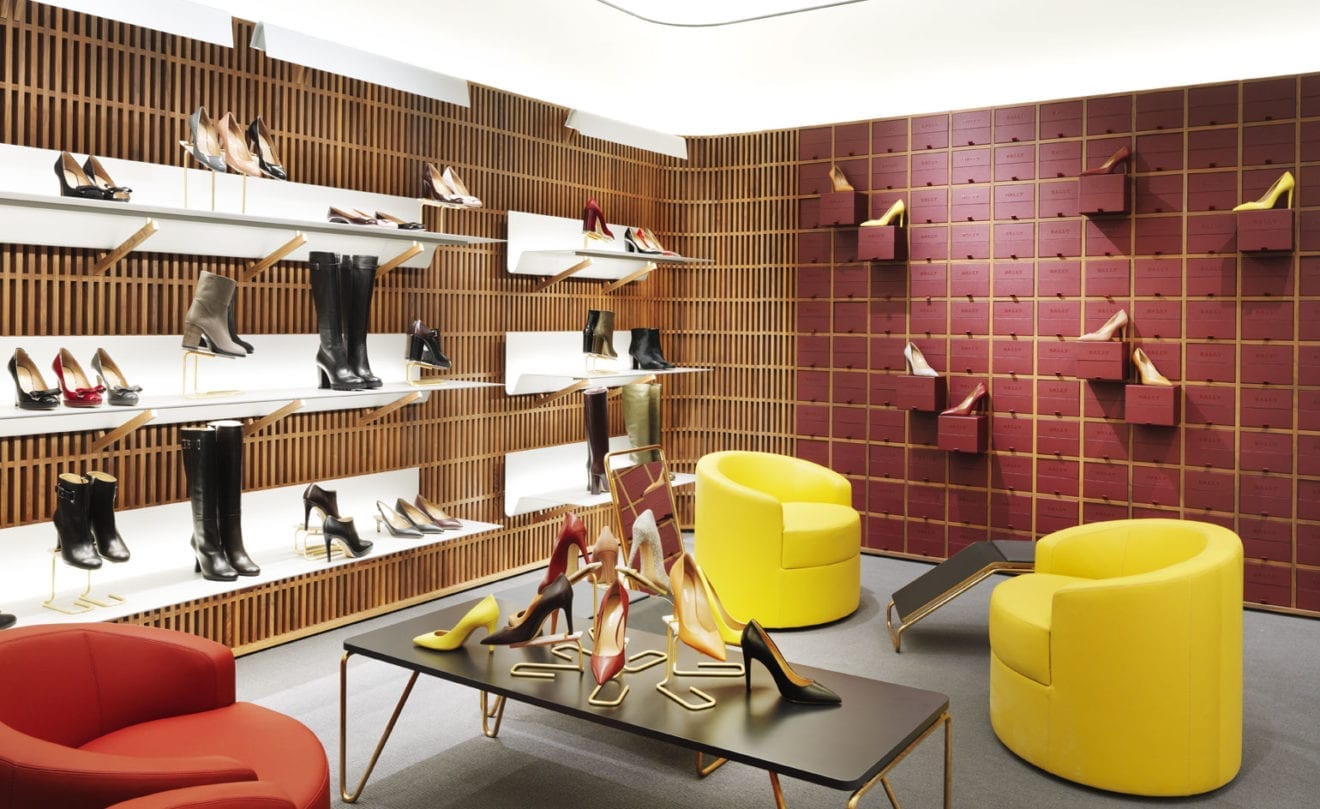
    Chinese apparel manufacturer Fujian Septwolves Industry and conglomerate Fosun International are among bidders for the €600 million (US$717 million) Swiss luxury leather goods company Bally International.

    Non-binding offers coming in this week also included Japanese trading firm Itochu Corp.

    Bally parent JAB Holding, owned by the billionaire Reimann family, said in April it was reviewing options for the Swiss company to focus on its F&B business, which has acquired Keurig Green Mountain and Krispy Kreme Doughnuts.

    In July, JAB bought Panera Bread in a deal that valued the bakery/cafe chain at about $7.5 billion. The same month, the firm agreed to sell London-based shoemaker Jimmy Choo to Michael Kors Holdings for about £896 million ($1.2 billion).

    Founded in 1990, Septwolves makes and distributes its own menswear brands including Owooo and Wolf Totem. Last month it acquired majority stake in the company that owns the licence for the Karl Lagerfeld brand in Greater China.

    Meanwhile, Itochu owned about 34 per cent of London-based apparel maker Paul Smith Group Holdings as of March, while Shanghai-based Fosun, which controls French resort group Club Mediterranee, also owns Italian suit maker Raffaele Caruso, women’s fashion brand St John and Greek accessories brand Folli Follie.

    Founded in Switzerland in 1851, Bally makes luxury leather shoes as well as belts, bags, wallets and clothing. It was previously owned by US buyout firm TPG, which agreed to sell the firm to JAB in 2008.

  • Dolce & Gabbana profits quadruple over 12 months

    Dolce & Gabbana profits quadruple over 12 months

    Dolce & Gabbana profits have virtually quadrupled from a year ago. A year ago the Italian luxury fashion house’s profit was €17.93 million (US$21.5 million), while this year the two owners of the group cashed in dividends of €80 million, reports CPP-Luxury.com.

    Its consolidated group turnover for last year hit €1.3 billion, compared to €1.18 the previous year, a rise of 9.6 per cent.

    The group includes Dolce & Gabbana Holding, Dolce & Gabbana Trademarks, which controls the group’s licences, and Dolce & Gabbana.

    Retail business has risen 7.1 per cent to €769 million, while the wholesale business jumped 8.7 per cent. Only licences dropped, by 9.2 per cent to €61.2 million.

    At home in Italy, Dolce & Gabbana has only a 24 per cent market share, compared to 27 per cent in the rest of Europe, 13 per cent in the Americas and 6 per cent in Japan.

  • Jollibee linked to Pret-A-Manger bid

    Jollibee linked to Pret-A-Manger bid

    Philippines-based Jollibee Foods is reportedly running the numbers to buy gourmet sandwich and coffee chain Pret-A-Manger.

    Sources have told Reuters news agency that the Pret-A-Manger bid would value the business at in excess of US$1 billion, and close to the $1.1 billion it achieved in sales last year.

    While at first glance the Filipino food concept – which has low-cost burgers, chicken pieces and fries as its staple menu – seems an unlikely bedfellow for the London-based sandwich concept which targets office workers, Pret-A-Manger’s previous owners have included US fast-food giant McDonald’s.

    Quoting “sources familiar with the matter”, Reuters said Jollibee has been holding in-camera talks with an advisor over a bid for Pret-A-Manger, affectionately known by its customers as ‘Pret’.

    Jollibee Foods, founded by entrepreneur Tan Caktiong in 1975, recently opened its 1000th Jollibee restaurant in the Philippines and has 2700 stores in all, including in Hong Kong, China, Vietnam and the US. The company is valued at $5.2 billion and its portfolio also includes joint ventures owning Highlands Coffee and Pho 24 (in Vietnam), Smashburger (the US), Chowking (China) and Burger King (Philippines). Its domestic brands include Greenwich, Mang Inasal, Chowking and Red Ribbon.

    Pret has about 400 stores worldwide, including a small network in Hong Kong, selling breakfasts, hot beverages, cakes, its own snack foods and its core sandwich offer.

    The company is owned by private equity company Bridgepoint, which earlier this year was reportedly mulling a listing on the New York Stock Exchange.

  • Startups beat Ericsson, Huawei, Nokia in telco cloud market

    Startups beat Ericsson, Huawei, Nokia in telco cloud market

    The telco network is starting to provide opportunities for much smaller companies and even startups are now winning business against the established giants Ericsson, Huawei and Nokia, according to ABI Research.

    Findings of ABI Research’s Telco Cloud Hot Tech Innovators report show 15 companies that are creating new types of innovation and bringing fresh ideas to the telco market.

    These companies include cloud players, new entrants, network specialists, and software developers, which were previously barred from entering the telecoms market.

    “The 15 companies we have profiled illustrate a completely new way of developing network technology. In some cases, they have even won business against Tier-1 vendors, which are 100 times their size, have 100 times their R&D budget and have a formidable sales organization,” said Dimitris Mavrakis, research director at ABI Research.

    “These companies win with software skills, cloud computing, open sourcing, and being free of a legacy business to support,” said Mavrakis.

    The 15 companies ABI Research has profiled, and the new wave of startups go directly opposite the established norm as some of them are 10-people companies and rely on open source projects to win business.

    ABI Research said that only by embracing this new trend can telcos break free from their connectivity-driven business model. Frinx, inManta, Metaswitch, Netrolix, NFWare and Yotta Communications are a few examples of startups that would have no place in the market five years ago.

  • Decline in traditional ship finance, lack of provision from regional banks threaten ME shipping

    Decline in traditional ship finance, lack of provision from regional banks threaten ME shipping

    Delegates at Seatrade Offshore Marine & Workboats Middle East (SOMWME), opening at Abu Dhabi National Exhibition Centre (ADNEC) on 25-27 September 2017, will hear how shipping faces a capital shortfall of tens of billions of dollars, this year alone, as European banks restructure products and scale back ship financing operations.

    According to reports verified by Reuters, the substantial decline in finance from European banks, compounded by a lack of shipping finance provisions from regional banks, has caused liquidity in the shipping industry to tighten, forcing marine operators to seek alternative finance in order to continue operations.

    The discussion will be tackled during the SOMWME Finance Update, in a session titled “Taking stock – how to make the most of your company assets,” which concludes the first day of the conference programme.

    The session will analyse the viable financial options and trends shaping the offshore marine and workboat industries. The panel features renowned industry experts such as David Manuel, Senior Marine Specialist — Petrodata, IHS Markit; Knut Mathiassen, Managing Partner, NorthCape DMCC; Bora Bariman, Head of Energy & Marine, Corporate & Institutional Banking Group, National Bank of Fujairah and Tien Tai, Partner, HFW.

    Calling for the Middle East shipping industry to urgently reassess how it secures liquidity, Tien Tai commented: “The traditional European banks with ship finance desks are no longer lending the historic amounts they once did and this is compounded by a number of European banks retreating from the ship finance sector altogether.

    “In the Middle East, we see some new lenders coming into the shipping industry but this does not replace the capital shortfall left by the exiting banks. There has been an ascendancy of alternative capital providers in the last 18 months, offering liquidity at a higher pricing, although these are more suited to one or two ship projects and not a substantial refinancing.”

    The industry has weathered many storms since the global credit crunch impacted operations in 2009, however, there is hope on the horizon.

    Islamic finance is widely regarded as a positive means by which to generate equity and maintain health in the sector, although growth is hampered currently by muted enthusiasm from major local banks to operate active shipping desks.

    Recognising that liquidity was tightening, earlier this year Dubai Maritime City Authority was examining the possibility of creating a US$1 billion shipping fund to support the emirate’s maritime sector during this time. According to ship valuation company VesselsValue, the UAE’s shipping fleet is estimated to be worth up to US$10 billion.

    Tai added: “In terms of what it takes to get financing these days, you really have to be a top tier owner with a strong credit rating – but not everyone is a strong owner. The owners in the Middle East dominate the small and mid-tier space and it is these owners feeling the squeeze in the decline of traditional ship finance.

    “The companies we see receiving finance from banks all demonstrate a strong track record of previous borrowing, contributions from owner and shareholder equity, and a transparent structure and a young fleet.”

    Commenting on the importance of the finance session at SOMWME, Emma Howell, Group Marketing Manager, Seatrade Portfolio, UBM EMEA commented: “The finance update is always an essential element of every SOMWME event we organise and the 2017 version will no doubt contribute vital insight to a very timely conversation. The issues that face the global industry are amplified in this region by the fast pace of growth and the economic importance of shipping and trade

    “The ability for the regional banking industry to identify and react to the gap in the market will be vital to the health and agility of the sector in future as countries across the region realise their developmental ambitions.”

    Moving away from the conference – new to the exhibition floor this year will be ‘Drone Zone’ in partnership with ABS and Drone Pro. With three live demonstrations shown daily, this exciting Zone will showcase new tools such as wearable technologies, unmanned aerial vehicles /drones, and remotely operated vehicles.

    “These live demonstrations reflect the growing use of advanced inspection technologies across the shipping and offshore sectors as the increasing complexity of assets and operations shifts how classifi­cation services are delivered,” added Howell.

    ABS, which is bringing the presentations to SOMWME with Drone Pro, is currently conducting field studies to evaluate how the current capabilities of wearable technology, particularly eyewear, are best applied to enhance asset-inspection practices. The pilot programs, which include a range of vessel and offshore asset types, are focused on improving the efficiency of class opera­tions, streamlining the capture and visual display of information and creating a more collaborative environment for remote interaction.

    Seatrade Offshore Marine & Workboats is the largest workboat and offshore marine event outside of the USA, attracting more than 100 offshore marine and workboat companies.

  • Nokia unveils cloud-based developer portal

    Nokia unveils cloud-based developer portal

    Nokia has announced new online portal that will enable the development of compelling digital applications using Nokia AirGile cloud-native core products.

    The Nokia Developer Portal will provide secure access to products using APIs, enabling third-party developers to build and test the interoperability of solutions with Nokia AirGile cloud-native core products to accelerate introduction in a commercial network.

    The Developer Portal will be made available at the end of September.

    Nokia is also making the Shared Data Layer available on the Developer Portal. Using APIs, developers will be able to securely use information such as policy, charging and subscription data, in line with country regulations and customer permission, to develop and test location-based, big data analytics and network diagnostic applications.

    The Shared Data Layer also enables the creation of virtualized 5G network functions using a highly reliable and resilient data storage mechanism.

    Nokia continues to foster the growth of a vibrant cloud ecosystem on the Open Ecosystem Network. New Shared Data Layer and Telecom Application Server communities are being added and the existing CloudBand Application Manager ecosystem is being integrated.

    The communities offer an online platform for operators, enterprises and developers to collaborate, discuss and develop new solutions that leverage these products.

    Nokia AirGile cloud-native core is the new name for an expanding portfolio of products that allow operators to implement the agility, scalabilty, programmability and reliability of the cloud into their networks. The AirGile cloud-native core portfolio comprises.

  • UberEATS finds big potential in South Korea food delivery market

    UberEATS finds big potential in South Korea food delivery market

    UberEATS, a food delivery service app run by ride-sharing pioneer Uber Technologies Inc., finds big growth potential in South Korea’s food delivery market due to its advanced wireless networks and growing orders on mobile phones, a senior company executive said.

    The U.S.-based business launched its UberEATS service in Seoul in August 2017,. The service is already available in 112 cities across 28 countries, where it has 60,000 restaurant partners.

    “Seoul is a perfect place for UberEATS. We find South Korea’s fastest internet speed really helpful for our business here. We are looking to expand our business in a few more regions in Seoul at least within this year,” Jaycee Lam, general manager of UberEATS North Asia, said.

    The executive did not elaborate on the names of the additional regions in Seoul. UberEATS service is now available in Itaewon and Gangnam, two downtown districts in the capital city.

    As for other possible cities, he only said there are growing requests from local customers to launch the UberEATS service in cities such as Busan, a southern port city, and the scenic Jeju Island.

    In the past four weeks, more than 200 restaurants have signed up to UberEATS, with more expected to jump on board. Partners deliver food using their own bicycles, scooters or cars and receive a fee from Uber.

    The majority of the food is delivered within 35 minutes to customers and free of charge for the time being as part of a promotion. But the company plans to receive a flat 3,500 won (US$3.00) delivery fee per order from customers, the general manager said, without giving any a specific time frame.

    To differentiate itself from local rivals such as Baedal Minjok and Yogiyo, UberEATS will focus on selecting the best restaurants and providing its customers with an insightful analysis of their businesses and industry outlook in a win-win strategy, he said.

    The UberEATS service was first launched in Toronto, Canada, in 2015 to deliver restaurant meals on-demand to homes and offices.

    The app-based service works like its ride-sharing sister app Uber. When an UberEATS app user orders food from a restaurant on his mobile phone, the restaurant calls a nearby delivery partner and asks him to collect the food when ready and deliver it right to the door of the user.

    UberEATS’ launch here is part of Uber’s commitment to South Korea’s US$14 billion food delivery market, the general manager said, expecting UberEATS to make the pie a lot bigger.

    “Since we have launched our transportation (or ride-sharing) business in Korea, we always think about what is the best way for Uber to keep being involved in the market deeper and then contribute here. UberEATS is one of the options that we can run in the ‘promising and fast-growing’ market,” the executive said.

    Still, a lack of awareness of the UberEATS service is the one area that can be improved in South Korea, he said.

  • Indonesia retail sales down first time in six years

    Indonesia retail sales down first time in six years

    Retail sales in Indonesia declined 3.3% in July 2017, compared to last year, according to a central bank survey released this week, marking the first drop in retail sales in nearly six years.

    Food and beverage sales, as well as home furnishing and electronic appliances were particularly weak in July, Bank Indonesia wrote in the survey report.

    The news follows a strong result in June for the month, were retail sales grew 6.3% on a yearly basis.

    The last month to show a contraction was September 2011, when sales were 5.9% below a year earlier, said BI.

    Compared to previous years, consumption has been weak in Indonesia.

    Typically, strong sales occur ahead of the holidays at the end of the Muslim fasting month, followed by a period of weak consumption. This year, the fasting month ended in late June.

    The same survey – made up of 700 retailers in 10 major cities – went on to project retail sales in August would make a come back for a 5.3% gain on last year.

    Prices are expected to increase in the next three to six months, followed by better sales in January 2018, the survey found.

  • Laneige enters US Sephora

    Laneige enters US Sephora

    Cosmetics brand Laneige, run by Amorepacific, will be available at the multi-shop brand Sephora in North America starting on Saturday 23 September, according to Amorepacific.

    Laneige products will be distributed through 144 Sephora stores across the US along with 74 stores in Canada, according to the company.

    Sephora is the largest distributor of Beauty Multi Shop in the United States, with 365 stores, and is famous for leading the American beauty trends.

    Sephora stores in Canada have been carrying distributing Laneige since September 2015.

    The brand previously launched in the US through the retailer Target in 2014, but pulled out from the stores in 2015. It is re-entering the market through an exclusive contract with Sephora.

    Laneige will be developing products exclusively for the American millennial target demographic and strengthen customer experience through localizing strategies, the company said.

    Laneige will satisfy customer’s need by showing sleeping beauty category such as Water sleeping mask, as well as K-beauty’s core items and Laneige’s best sellers Water Bank, Bibi Cushion, Two-tone Lip Bar.

    The company is trying to diversify global markets.

    Since launching in Asia market in April 2002 with Sogo Department Store in Hong Kong, Laneige has been expanding into 12 countries around the world in this year’s high-level strategy based on best-selling products.

    As of 2017, Laneige is available in 12 countries in Asia and North America. The brand is currently preparing for launch in Australia and France.

    An official of Laneige said, “The entering Sephora means that Laneige has achieved a good result in a short period of time. We will introduce more US customers about K Beauty in the future. “

  • ZTE verifies 5G dynamic resource deployment

    ZTE verifies 5G dynamic resource deployment

    ZTE announced it has become the first vendor to complete high-layer tests of experimental network equipment prototypes as part of phase II of China’s national 5G technical network architecture tests.

    The company was able to verify functions including base functions of split central unit/distributed unit architecture, dynamic resource deployment and dual-connectivity mobility. The testing phase also included verification of basic wireless network architecture and functions.

    During the high-layer test of experimental wireless network prototypes, ZTE used its cloud-ready central units as well as a one-click new radio system with central unit-distributed unit split architecture.

    The verification follows air interface tests as part of phase II of the IMT-2020 Promotion Group’s China 5G Technology Research and Development Trial.

    In these tests ZTE showcased a range of products including virtualized core networks. Connectivity tests were conducted with instrument and chip vendors, and the company also conducted lab and field tests. Testing results met the key performance requirements for 5G networks.

    “The 5G technical testing organized by the IMT-2020 (5G) Promotion Group plays an important role in 5G development, and is critical in promoting 5G key technologies, verifying 5G solutions, and supporting the freezing of a unified 5G standard,” ZTE GM Bai Gang said.

    “ZTE will continue to fully engage in phase III work.”

  • Huawei to pour $1b into digital transformation

    Huawei to pour $1b into digital transformation

    Huawei Technologies is planning to invest $1 billion over the next three years on developing solutions and platforms to help telecoms operators speed up their digital transformation and monetize digital services, said Ryan Ding, president of the company’s carrier group.

    “Digital transformation is now a common goal, but digital services are different in many ways. In the past three years we used to talk about the architecture and direction of digital transformation. This year our focus has already shifted to digital business and services. This is a very encouraging change,” Ding told audience at company’s annual Operations Transformation Forum in Hong Kong on Monday.

    Citing an IDC survey commissioned by Huawei, Ding said 72% of carriers believe that digitalization is a mid-to-long term process which will take around three to five years to complete. And more than half of them are planning to provide products and services in the near future.

    While such change will affect telcos’ traditional voice and data business, Ding noted that enterprise IT and private line, video, IoT services will boost operators’ business growth and become the most important new business opportunities in the coming one to two years.

    “Communication network is the core asset for carriers, which brings telcos three major advantages: wide coverage, massive connection, and centralized operation,” he said. “Enterprise IT and connectivity, video, and IoT services allow operators to give full play to their network advantages and are also well combined with digital technologies.”

    Yet these services present different challenges to telcos. For example, for enterprise private line, how to reduce time to market, whereas for video is high bandwidth and NB-IoT service is battery life.

    That said, operators must redefine their network capabilities end to end and adopt new technologies in order to fully tap the new business opportunities, Ding said.

    He said Huawei will continue to build solution-oriented business and technical capabilities, solution development processes, and digital business enabler platforms, and realize the implementation and close-loop from strategy and execution.

    Howard Liang, senior vice president and chairman of Open ROADS community, pointed out telcos’ focus of digital transformation has now been shifted to the how and where to get started.

    “Digital operational transformation touches on many issues, but ultimately it’s about creating values [to the company]. Last year we talked about why we [the industry] need to move into digital transformation. This year the focus has shifted to the questions of how and where to begin,” Liang said at an opening keynote.

    Liang indicated that there are three key ingredients needed for the success of digital transformation. First is to follow a “Digital Mastermind”, which he recommended telecoms operator follow a comprehensive set of prescriptive methods for transformation built on the work of the Open ROADS community.

    Second is to create an industry reference model that allows best-in-class solutions to be incorporated into the “to-be-solution”. Finally, telcos need to prioritize transformation activities to ensure real value is delivered throughout the process.

    Liang said the three ingredients are based on Huawei’s own transformation activities and its experience working with operators over the past few years.

    “Building on the experience of digital transformation within Huawei over the past two years, together with findings and best practices identified by the both the Open ROADS Community and from wider industry, we have created a clear methodology to guide us, which we call the Digital Mastermind,” the executive noted.

    He said digital operations transformation ultimately is about creating additional business value, while providing a better, more compelling experience for customers. But operators have many different objectives for transforming their digital operations.

    Liang said Huawei has already put its Digital Mastermind into practice at HKT’s digital operations transformation project, Project Earth.