Author: Mei Ling Tan

  • Coconut farming languishing

    Coconut farming languishing

    Exports of coconut-based products are sluggish due to challenges and difficulties facing the coconut processing industry and coconut cultivation, according to the Bến Tre Province Agricultural Promotion Centre.

    A study by the centre found that coconut farmers earn on average VNĐ60-70 million per hectare annually, but this could increase to VNĐ100-110 million if coconut is intercropped with cocoa, pomelo or shrimp farming.

    The central province of Bình Định is the third largest coconut growing area in the country behind the Mekong provinces of Bến Tre and Trà Vinh.

    Here, coconut farmers have benefitted from a steady rise in prices since 2015. Now dried coconuts sell for VNĐ9,000 – VNĐ10,000 each while fresh coconut milk is sold for VNĐ13,000 – VNĐ14,000 at groves.

    Nguyễn An Điềm, a former chairman and CEO of the Bình Định-headquartered firm Pisico, said in Asian countries with developed coconut processing industries such as Sri Lanka and the Philippines, the trees offer high economic value because all segments of the industry, from farming to processing, have been modernised.

    Điềm said coconut meat is exported from Việt Nam to European countries where it is processed into ice cream, milk and chocolate, the fibre is sold to Japan for making automobile seat cushions, and shell dippers can be used to make activated carbon, which fetches millions of đồng per kilogramme.

    The timber is used for making handicraft products, he said.

    Though coconut yields are high, the processing industry has not developed much, and thus Việt Nam exports raw materials, which do not fetch high prices.

    Nguyễn Đăng Phú, deputy head of the Ministry of Industry and Trade-run Research Institute for Oil and Oil Plants, said one hectare in Việt Nam produces 9,863 coconuts or 1.9 tonnes of copra per year, the highest in Asia.

    But its coconut export turnover is only worth a third to a fifth of other countries’, he said.

    A coconut fetches VNĐ8,000, but products made from it are valued at up to VNĐ40,000, he said.

    No investment has been made in building coconut processing plants to manufacture high-value products, he added.

    More investment needed

    To enhance the value of coconut-based products, authorities should have policies to mobilise investments in plants, Điềm said.

    He said many enterprises want to invest in such plants, but hesitate because of the realisation they would face raw material shortages since coconut groves are small in size and scattered around the country. r oil to provide enough raw materials for processors.

    They said more investment is required for research into coconut strains and processing and agricultural promotion activities.

    The Government should provide financial support to farmers for acquiring new strains and technologies, they said.

    Coconut co-operatives must be strengthened and alliances must be established in the farming and processing sectors, they said.

    Brand names must be developed for Vietnamese coconut and promoted, they added.

    Read more at https://vietnamnews.vn/economy/393313/coconut-farming-languishing.html#AMBOxsWykDHyCdQD.99

  • Beans and Brown to take cafe business offshore

    Beans and Brown to take cafe business offshore

    JAS Asset has launched Beans and Brown to take over coffee-house chain Casa Lapin, with plans to introduce the brand overseas and list the subsidiary within three years.

    It is part of the space-management company’s renewed focus on retailing business over the past three years. “That’s why it launched one community mall a year between 2014 and 2016,” says JAS Asset CEO Suphot Wanna.

    He says the diversification move is a springboard for the firm to enter the food and cafe market. It last month signed an agreement to acquire the Casa Lapin trademark and F&B business from the Coffee Project chain. With a budget of THB42 million (US$1.2 million), Beans and Brown was established as a 60:40 JV to manage Casa Lapin.

    Casa Lapin has seven branches in Bangkok, with three fully run by Beans and Brown. The others are a collaboration with partners. Beans and Brown plans to three more Casa Lapins in CBDs this year, then next year add at least 10 outlets a year. A highlight will be the opening of a Casa Lapin flagship store at a premium shopping complex in the heart of Bangkok.

    Casa Lapin’s next step will be to expand to Asian cities such as Hong Kong, Seoul, Singapore, Taipei and Tokyo.

    Beans and Brown expects its revenue to grow by 600 per cent within three years, from THB60 million this year to THB360 million in 2020.

    Presently, 70 per cent of Casa Lapin’s revenue comes from coffee and beverage sales, with the rest from food/bakery, says Beans and Brown CEO Surapan Tanta.

    “In the future, we plan to add souvenirs to our places to generate more income, as our target groups are new-generation people with a love for quality and great design,” he says.

    “The joint venture with JAS Asset enables us to develop Casa Lapin further. With JAS Asset, we have professionals in charge of management, marketing strategies and staff training.”

  • Singtel to close copper-based ADSL networks

    Singtel to close copper-based ADSL networks

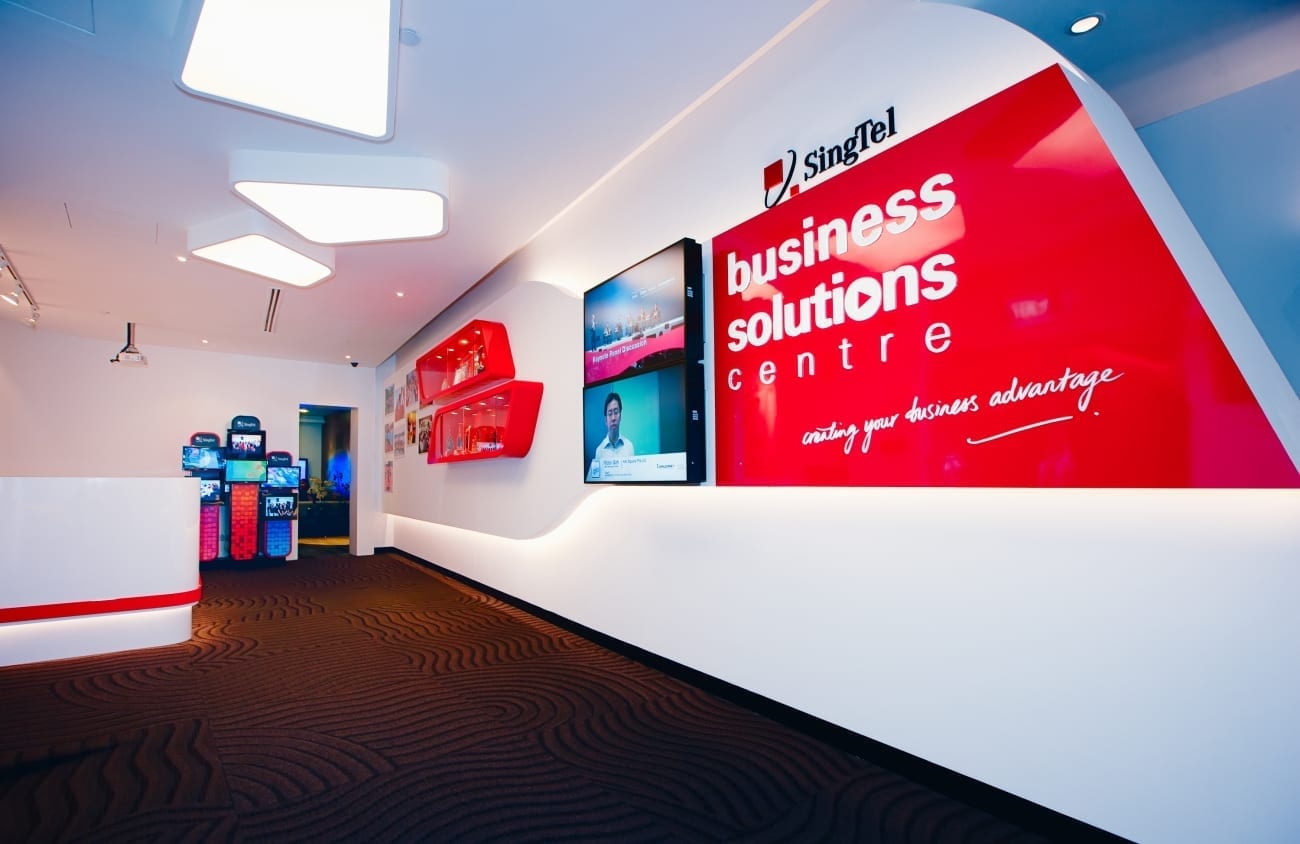
    Singtel has revealed plans to progressively shut down its copper-based ADSL networks as part of a push to accelerate fiber based service adoption to business and residential customers.

    The operator will shut down copper-based ADSL that supports broadband, TV, digital voice and private network services in stages during a process expected to be completed by early 2018.

    In addition, Singtel plans to cease copper deployment to commercial buildings that obtain temporary occupation permit (TOP) status from April 2018, and instead serve customers in the buildings using fiber-based networks. The company stopped deploying copper to new residential buildings in 2013.

    “We are pleased to make this technology adoption push in support of today’s digital economy and tomorrow’s connected Smart Nation. Fiber-based networks today [are] capable of offering far greater speeds and supporting a much wider range of services than the prevailing copper-based networks,” Singtel VP of consumer products for consumer Singapore Wong Soon Nam said.

    “Singtel will work closely with relevant stakeholders to ensure our customers will enjoy a smooth and fuss-free transition to the fiber network. We will also reach out to customers through various channels to make sure they are informed of the impending change and make available a range of affordable plans to cater to their varied communication needs.”

  • Supersnap International Opens the Most Advanced Data Center in Asia

    Supersnap International Opens the Most Advanced Data Center in Asia

    SUPERNAP International today announced the opening of one of the largest, most advanced data centers in the ASEAN region, SUPERNAP Thailand, The Bangkok Campus.

    The opening of the campus is a major catalyst for propelling the success of “Thailand 4.0” – the Thai government’s plan to transform the country into a high-value based economy through innovation and technology.

    This new multi-tenant carrier-neutral data center facility, located in the eastern province of Chonburi, plays an important role in the region as the critical infrastructure that powers the ability of businesses to succeed on the growing Internet of Things, Cloud and Artificial Intelligence markets. SUPERNAP Thailand is expected to be a catalyst for attracting more investment to the region and is poised to become the data center hub for Asia Pacific.

    SUPERNAP Thailand’s BANGKOK 1 data center is designed and built to the specifications of the industry-renowned, Tier IV Gold-rated Switch LAS VEGAS multi-tenant/colocation data centers in the United States. Its advanced design and diverse connectivity options are expected to enable clients to respond to rapid market growth and connect to global economies.

    “We welcome clients throughout ASEAN, APAC and the rest of the world to run their mission-critical IT infrastructure in what we expect will be one of the most secure, reliable and connected data centers in the world,” said Sunita Bottse, Managing Director of SUPERNAP Thailand. “Our high standards in uptime, security, efficiency and resiliency can be critical for corporations who operate 24 hours a day in every business line – including finance, e-commerce, oil and gas, transportation and health care.”

    The world-class SUPERNAP Thailand data center is one of the safest places to operate mission-critical IT infrastructure in the region. Its location 110 meters above sea level is outside of the flood zone and links to national and international telecommunications carriers enabling businesses to connect to key markets in Asia and around the world.

    SUPERNAP Thailand incorporates Switch’s patented designs that deliver highly efficient HVAC (heating, ventilation and air conditioning) technology enabling the facility to host high-density IT workloads. It is designed to achieve a target PUE range of 1.35-1.45 – a level more efficient than other data centers in ASEAN, which typically have PUE levels above 2. Its efficient design and plans for sourcing renewable energy helps SUPERNAP Thailand promote economic growth and technology development in a sustainable manner, directly in alignment with the sustainability goal of Thailand 4.0.

    The SUPERNAP Thailand data center in Chonburi is expected to include: 

    • 21,000 square meters of data center space with two data halls
    • 20 megawatts of power distributed through diverse 115 kilovolt transmission paths
    • Proprietary tri-redundant UPS power system
    • Up to 40 kilowatts of power per cabinet
    • Multi-carrier fiber couples with separate paths
    • Patented Switch SHIELD: dual independent roof decks rated to withstand 322 kph winds
    • 24/7 on-site network operations center (NOC), fire, safety and security
    • On-site, on-net member resources including conference spaces

    “Companies that have built their own data centers in the past are now realizing that they can mitigate risks and achieve better service level agreements (SLAs) by operating in SUPERNAP Thailand’s mission-critical colocation data center,” Sunita Bottse said. “Clients who tour the SUPERNAP Thailand data center experience first-hand the power and scale of the campus and what that means to their business growth.”

  • Honestbee flies high with new logistics services honestbee GOODSHIP

    Honestbee flies high with new logistics services honestbee GOODSHIP

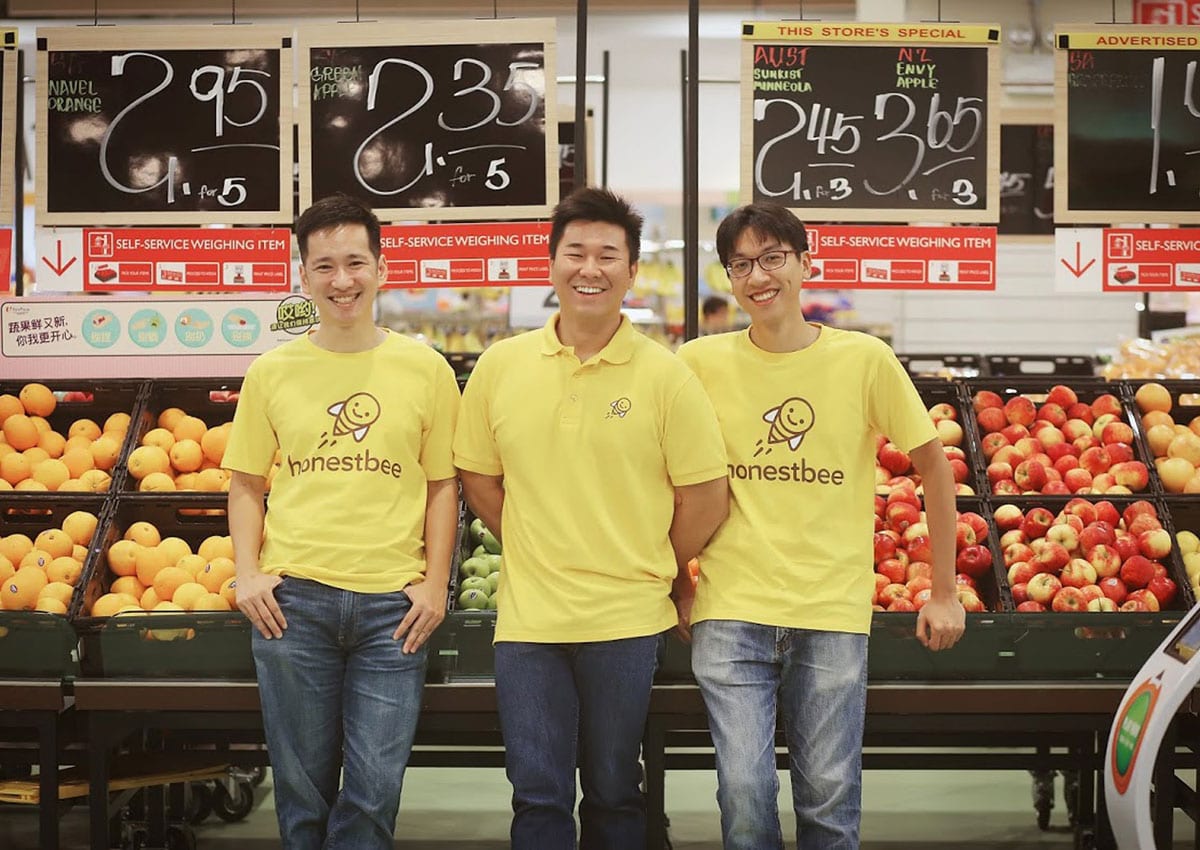
    Honestbee, Asia’s leading and trusted online concierge and delivery service has today officially announced the launch of honestbee GOODSHIP, their logistics service in Thailand.

    Honestbee GOODSHIP has been operating parcel deliveries in Bangkok for a couple of months before this official announcement, catering to B2B and B2C deliveries. The focus is on last-mile same-day or next-day e-commerce delivery with a move towards on-demand delivery for end-consumers within an hour to follow soon.

    Country Head of honestbee GOODSHIP, Theresa Mathawaphan has a background in retail, technology management and business start-up and was part of the international team who developed the country’s first tech start-up incubator at the Thailand Science Park. She is confident that honestbee GOODSHIP will be a good partner for many businesses in the city.

    “Logistics can let companies down and therefore being able to call on the reliable services of a third-party, and one that understands the need for a fast, trustworthy delivery is crucial, particularly in a city where, whether online or offline, goods need to move quickly. Customer tracking and a real-time fleet tracking system are essential elements of this service too.”

    Thailand’s Electronic Transactions Development Agency has forecasted that the total e-commerce market in Thailand this year will be worth Bt2.52 trillion (USD74 billion).

    With daily deliveries of honestbee GOODSHIP now surpassing the grocery and restaurant deliveries combined, the target is to deliver in excess of 50,000 orders per day over the next 12 months.

    As well as Thailand, honestbee GOODSHIP has a successful presence in Singapore, Malaysia, the Philippines and Japan.  More countries are to be rolled out to provide the excellent services to its partners and non-partners.

    Currently, honestbee runs two B2C delivery services in Bangkok; groceries handpicked by shoppers and delivered fresh to customers’ doors in one hour as well as restaurant food deliveries with customers ordering online and on-demand delivery in less than 60 minutes.

    Bounthay Khammanyvong, honestbee Country General Manager, Thailand has experience in building up successful companies to create billion-dollar businesses and working with cutting edge e-commerce. He believes that honestbee GOODSHIP is a natural progression for honestbee and will really take flight in Thailand.

    “E-commerce in Thailand is going through an incredible boom period, and at the heart of that success is logistics, both for businesses which need products delivered to certain branches or retail outlets and for consumers who order online. With its own boutique-style e-commerce platform, honestbee has relevant experience of business and consumer delivery demands in order to create the right quality of customizable services and branding customers can trust.”

    The Thai e-commerce market is not only growing but consumer experience online is growing as is the digital ecosystem, Internet penetration and social commerce channels which contributes to the majority of all deliveries.

    Currently honestbee GOODSHIP’s fleet consists of 80% delivery motorbikes or ‘Rider-Bees’ and 20% delivery trucks. There are also services rolling out soon that would help marry the online and offline world.

    Some of the current honestbee GOODSHIP clients include Nu Skin, SE-ED Books, aCommerce, Aramex, Siam Outlet, City-Link and OfficeMate.


  • Jabong becomes the third largest global digital partner for Dorothy Perkins

    Jabong becomes the third largest global digital partner for Dorothy Perkins

    Dorothy Perkins, the UK-based women’s fashion retailer, which has been dressing and inspiring women worldwide for more than 100 years, has announced Jabong as their third largest global digital partner. The brand is available on Jabong, with an extensive collection of over 3,000 SKUs, which are currently priced within a range of Rs.999 to Rs.7,999. In the last three years of this association, Jabong has recorded a 50% CAGR in sales.

    John Kenchington, Multi Channel Director, Dorothy Perkins said, “As one of India’s best loved fashion e-tailers, Jabong has been our partner of choice in India since 2014. They have helped us position our brand to the right audiences in a way that matches perfectly with our persona. Their immense contribution towards raising brand awareness for us in the country, is a testament to Jabong’s track record of providing the ideal launch pad for top global brands entering India.”

    Gunjan Soni, Head, Jabong said, “Our team is exhilarated that Jabong has emerged as the third largest partner for Dorothy Perkins worldwide, even though we only sell in India. It is actually a salute to our fashion forward women consumers who form the major share of our customer base. Dorothy Perkins with its continued focus on fast fashion is one of the most loved brands on the platform. We will continue to ramp up our efforts to provide the best of international fashion to our consumers.”

    Jabong has been aggressively expanding its product portfolio and has added 50+ new brands this year with a special focus on adding international brands. A few of these include New Era Caps, Forever 21, Mothercare, Cover Story, AAY, Aeropostale, Scotch and Soda, Esprit, Alcott, Antony Morato, North Face, Mast and Harbor and Swarovski among others.

  • NY Portuguese Short Film Festival’17 in Thailand” to be held on Sep 16-17

    NY Portuguese Short Film Festival’17 in Thailand” to be held on Sep 16-17

    The Camões Portuguese Cultural Centre in Bangkok and the Embassy of Portugal in Thailand, in partnership with Arte Institute in New York and Siam Piwat present the “NY Portuguese Short Film Festival ’17” in Thailand for the second year between September 16-17, at Royal Paragon Hall, the 5th floor, Siam Paragon

    The NY Portuguese Short Film Festival (NYPSFF) was the first Portuguese film festival in NYC and the US. The Festival shows the work of the new generation of young Portuguese directors. By annually organizing the Festival in several countries, the Arte Institute intends to expand and gather new audiences for the contemporary Portuguese cinema worldwide.

    This year, the Festival showcases 11 shorts films by Portugal’s most promising filmmakers. The short films were selected and submitted to a distinguished jury composed of American, Portuguese and Brazilian film experts, as Rúben Alves (Director), Márcio Miranda Perez (São Paulo International Short Festival) and Don Cato (Director).

    In this regard, the Camões Portuguese Cultural Centre and the Embassy of Portugal in Thailand in partnership with Arte Institute in New York and Siam Piwat organize the “NY Portuguese Short Film Festival’17in Thailand aiming to support and disseminate the works of Portuguese short film directors to international audiences. 11 short films with English subtitles will be showcased between September 16-17, at Royal Paragon Hall, the 5th floor, Siam Paragon.

    His Excellency Francisco Vaz Patto, Ambassador of Portugal to Thailand will preside over the opening ceremony on Saturday, September 16, 2017 at 6.00 p.m. onwards.

    Don’t miss it!! The return of the NY Portuguese Short Film Festival to Thailand presents a unique blend of culture and new perspectives on the mind and spirit, transmitting the life of the Portuguese through short films, which this year’s highlights the short film Carga, by Luís Campos, the awarded film at this year’s festival in New York.

    The “NY Portuguese Short Film Festival’17” in Thailand is divided into two series of 54 minutes each.

    First series include CARGA, by director Luís Campos, THE WOOD CRAVER OR THE WORLD’S MOST IMPROVED WORKSHOP, by director João Vasco, THE FEAR INSTALLATIO, by director Ricardo Leite, YOU, by director Hugo Pinto and ONCE UPON A THREAD, guest short film by director Patrícia Figueiredo.

    The second series showcases A ROOM IN LISBON, by director Francisco Carvalho, ALVANÉU, by director André C. Santos, MANUEL, by director Bruno Carnide, THE AMAZING ORDINARY MAN, by director Paulo Portugal, RIBBON TOOTH, by director Sara Gouveia and A LONG DAY, guest short film, by director Sérgio Graciano.

  • Visa cardholder spent THB 28 on snacks and won gold

    Visa cardholder spent THB 28 on snacks and won gold

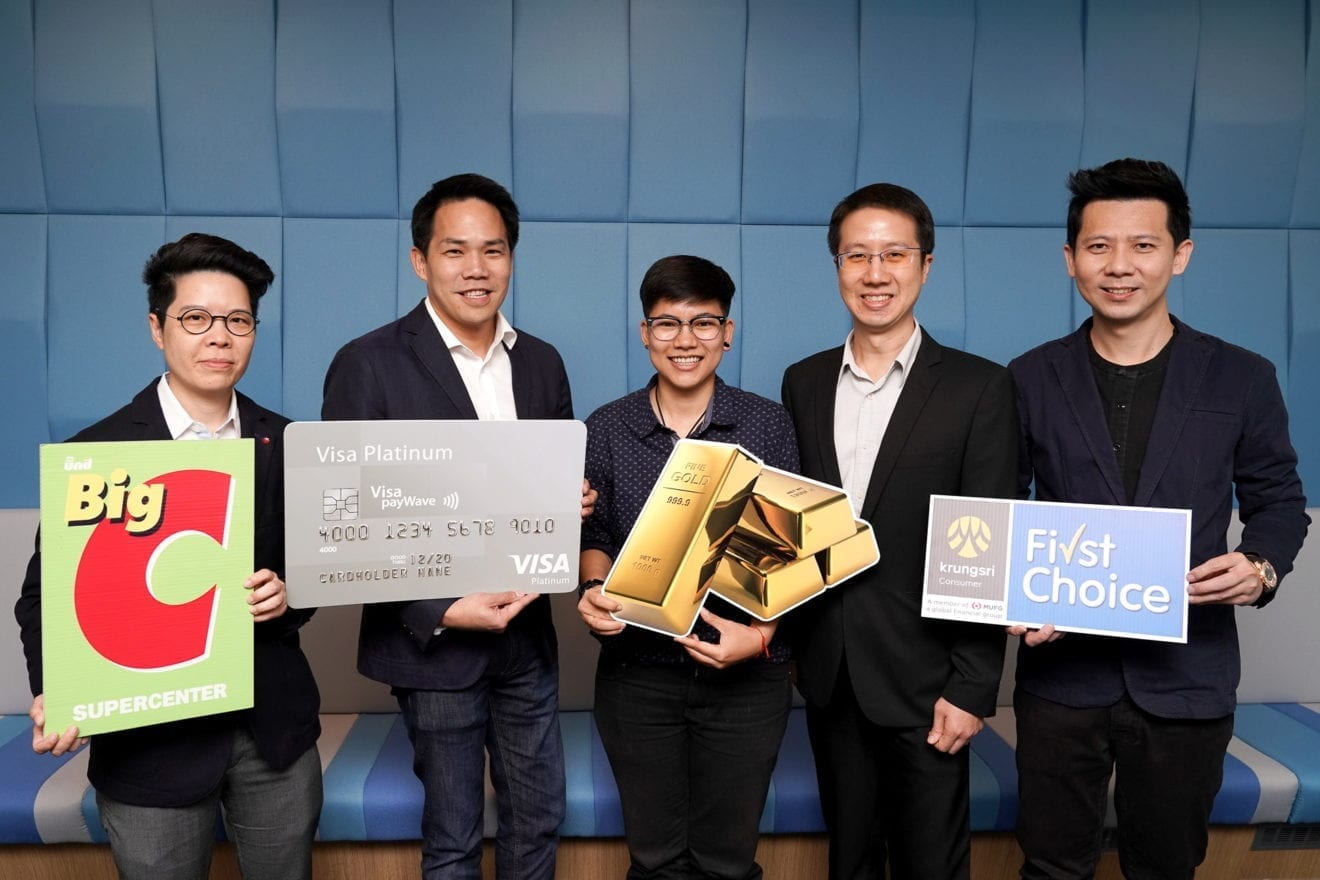
    Suripong Tantiyanon (second left), Visa Country Manager, Thailand, together with Athip Sinpagekan (second right), Senior Vice President, Head of Marketing – Consumer Financial Services, Ayudhya Capital Services Co., Ltd, and Dr. Piyawan Piyapong (left), Senior Vice President, New Service Development of Big C Supercenter PCL congratulate Nanyapat Paransirijarune (center) on winning THB1 million worth of gold.

    Ms. Nanyapat won this Visa campaign by using her Krungsri First Choice Visa card on her Samsung Pay to purchase THB 28 snack from Big C Supercenter. Big C Supercenter, as the lucky retailer that served Ms Nunyapat, also received THB 1 million as part of the campaign.

    More than 20 major retailers nationwide joined the campaign that ran from January to March 2017, including 7-Eleven, Big C, Emporium, Family Mart, Gourmet Market, Home Fresh Mart, Isetan, Hello Kitty House, Krispy Kreme, Lawson, Major Cineplex, MaxValu, McDonald’s, Siam Paragon, Tang Hua Seng, Tesco Lotus, The Mall, Tom n Tom Coffee, Tops, and Watsons.

    “Contactless is continuing to gain momentum among consumers and merchants, in Thailand and markets around the world. The campaign demonstrates Visa’s commitment to improve payment experience, ensuring that it remains seamless, frictionless, reliable and secure. It is consistent investment like this, underpinned by Visa’s global standards, that encourages wider adoption of electronic payments in the country,” said Suripong Tangtiyanon, Visa Country Manager, Thailand.

    Visa contactless payments combine unparalleled convenience with security. Visa payWave transactions under THB 1,500 require no signature. A Visa payWave card uses encryption technology via an EMV chip to protect cardholders’ data, while Samsung Pay features the Visa Token Service, which replaces cardholders’ information, such as account numbers and expiration dates, with a unique digital identifier (a “token”) that can be used for payment without exposing a cardholder’s more sensitive account information.

    There are more than 400,000 merchants in Thailand that accept Visa payWave and Samsung Pay, the latter can also be used at magnetic stripe-only point-of-sales.

  • Kakao takes its leap into the smart speaker market

    Kakao takes its leap into the smart speaker market

    Kakao on 5 September 2017 unveiled its smart speaker, Kakao Mini, which will officially hit shelves by the end of September this year.

    Kakao, which operates the country’s most popular messaging app Kakao Talk, said the Kakao Mini will work on its artificial intelligence platform called Kakao I. It can be controlled by voice commands.

    The Kakao Mini has a square design with fabric on the sides, which has a minimalist, familiar design that can fit well with the surroundings in small sizes.There are four buttons at the top that let users adjust the volume and turn the microphone on and off.

    The Kakao Friends figure, which is released together, has a magnet and can be easily attached to the top of the Kakao Mini. The figures are provided to the initial purchaser on a first come, first served basis.

    The Kakao Mini is equipped with four high-end microphones to accurately capture users’ speech. As the device can connect to other speakers via Bluetooth, users can utilize features of the Kakao Mini through other premium audio systems as well.

    The speaker also connects to KakaoTalk, allowing users to check and send messages verbally.

    The device automatically updates software to continuously provide users with new features, the company said.

    The Kakao Mini offer users convenience by being linked to portal site such as daum as well as Kakao Talk. Kakao Mini will evolve to reflect new features with automatic update method.

    Pre-orders for the Kakao Mini will start later in September 2017.

  • SoftBank, Huawei demonstrate 5G use cases

    SoftBank, Huawei demonstrate 5G use cases

    Japan’s SoftBank teamed up with Huawei to demonstrate various real-world use cases for 5G.

    The companies demonstrated real-time ultra high definition (UHD) video transmission with a throughput of over 800Mbps, as well as remote rendering via a GPU server using edge computing.

    During the video tests, SoftBank and Huawei installed a UHD camera outside the demonstration room, then compressed the data from the camera in real-time using an encoder and transmitted it via 5G to a UHD monitor via a decoder.

    Scenery was also captured via a 180-degree camera equipped with four lenses pointed in different directions. Captured input was sent to smartphones and tablets over the 5G network to create a 180-degree panoramic video image. Huawei said this technology can be applied to virtual or augmented reality.

    In addition, the demonstration involved remote manipulation of a robotic arm with an ultra-low latency of less than 2ms for near real-time control.

    The technology was used to allow a robotic arm to play a game of air hockey, detecting the position and projected trajectory of the puck and returning the shot to the human player.a

  • Mastercard adds payment capabilities to vivoactive 3

    Mastercard adds payment capabilities to vivoactive 3

    Mastercard has added payment capabilities to the newly launched Garmin vívoactive 3 fitness tracker and smart watch.

    The move aims to to provide active customers with a watch that frees them from having to carry their phone or wallet around.

    Fitness enthusiasts will be able to make contactless payments and pay by holding their device near a contactless terminal at nearly 6.6 million merchant locations globally.

    Garmin users will enter payment information in the Garmin Connect Mobile app (available in Apple and Android app stores) by scanning a card or manually entering their information. Once the app has synced with the smartwatch, the card is available for use. The user can quickly launch their wallet from the controls menu and tap at a contactless terminal whenever they wish to make a payment.

    By using Mastercard’s token service, the 16-digit card number found on the front or back of a payment card is replaced by a unique alternate number or “token.” The token number is not only different from the card number but is also, on its own, useless, when trying to perform a transaction via a different device – making each transaction secure.

    Bringing secure payment functionality to the Garmin vívoactive 3 is the latest initiative within the Mastercard Commerce for Every Device program that is designed to provide consumers a safe and secure way to pay from any device of their choice. Simplicity and security are at the core of the Garmin Pay capability.

    “Technology is enabling fitness companies to provide athletes with the most comprehensive performance trackers we have seen in our time,” said Kiki Del Valle, senior vice president in charge of the program.

    “Adding payment capability to these devices is a natural next step to make training and fitness experiences more relevant, personal, and convenient.”

    “We want to be true training partners and support the active lifestyles of our users,” said Dan Bartel, Garmin vice president of worldwide sales.

    “With Mastercard technology, our users no longer need to be tethered to their physical wallets and can pay for things in a safe, simple, and secure way. This partnership enables us to empower our consumers to use the device that is most convenient to them, with a high level of security.”

  • Starbucks Korea eyes record sales and profits

    Starbucks Korea eyes record sales and profits

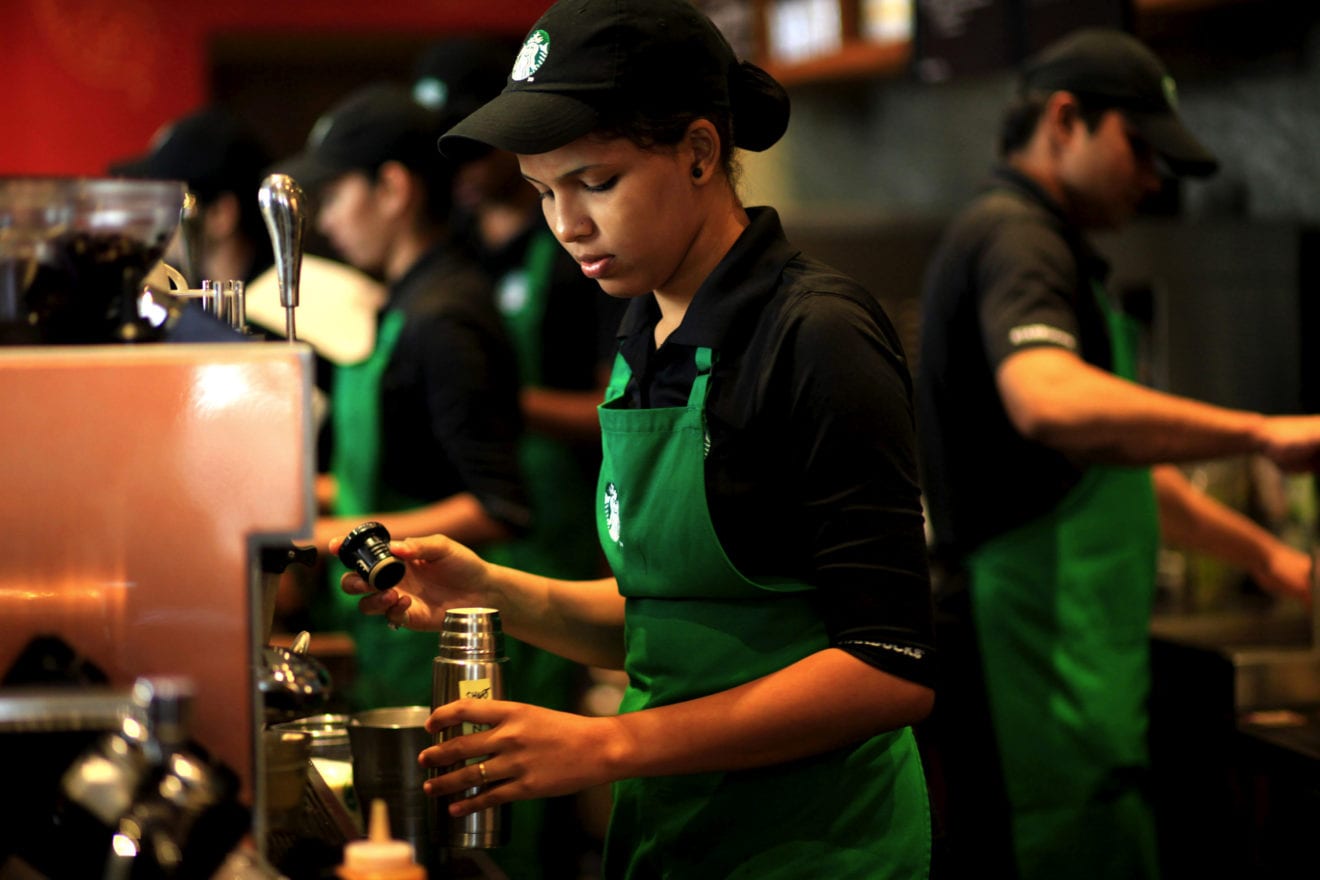
    Starbucks Korea is expected to exceed a record 100 billion won (US$88.4 million) profit this year as the US coffee chain’s popularity booms.

    Industry sources told Yonhap news agency that the 50-50 joint venture between retail conglomerate Shinsegae and the US company achieved a 52.8 billion won operating profit on 593.5 billion won in sales during the first six months this year. That marks the first time Starbucks recorded more than 50 billion won in profit since it opened its first local branch near Ewha Womans University in Seoul in 1999.

    Full-year profit is likely to easily surpass the 100 billion-won mark as coffee shops usually earn more during the latter half of the year, which includes Christmas and the year-end holiday season.

    The strong figure compares with those of its local competitors Twosome Place and Angel-in-Us Coffee, which averaged between 10 and 20 billion won during the same period.

    Sources told Yonhap the popularity of Starbucks in South Korea is due to the growing loyalty of women in their 20s and 30s, pointing out that the company has succeeded in promoting its image as a luxury brand in South Korea where the luxury coffee market has yet to mature.

    Starbucks Korea’s annual sales topped the 1 trillion-won mark for the first time last year.

    Starbucks has 1050 stores in the country as of the end of June, the world’s fourth-largest number of Starbucks Coffee stores on a pro-rata population basis, behind only Canada, the US and Singapore, according to industry data.

    The number of the stores has risen sharply from 327 in 2010 and 500 in 2013 to 1000 as at the end of last year.

    The dramatic rise has apparently been helped by the regulations that ban franchises from opening new stores within a 500-metre radius from the shop of the same brand: Running its own stores, rather than franchising, exempts Starbucks from such regulations.

    However, critics say while the regulations aimed to protect food franchise contractors from intense competition, they have instead aided foreign businesses operating in South Korea.

    “We are not subjected to the franchise law as all of our shops are run by the company directly,” a Starbucks Korea official said.

  • McDonald’s USA revamps McCafe

    McDonald’s USA revamps McCafe

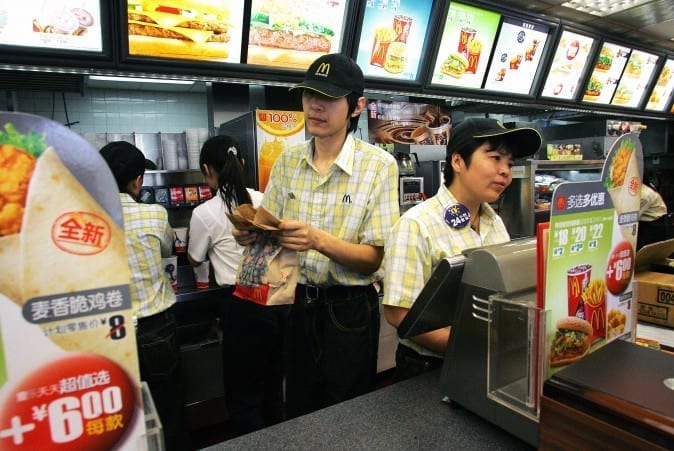
    McDonald’s USA has revamped its McCafe brand, introducing new imagery and new beverages.

    Originally launched in Australia in 1993, the coffee concept has been rolled out in an increasing number of markets internationally in recent years but had traditionally underperformed in McDonald’s home country.

    Now, president Chris Kempczinski believes he can change that.

    “This is just the start of our McCafe commitment. We understand how important the coffee culture is for consumers and we are committed to meeting that demand at the taste, convenience and value only McDonald’s can offer,” he said, announcing the relaunch.

    “This is a central part of our growth strategy and we can’t wait to share what’s next.”

    McDonald’s UAS will now offer cafe-quality espresso beverages and an expanded retail offer in its McCafe stores across the country.

    An expanded menu now includes Caramel Macchiato, hot or iced; Cappuccino, with French Vanilla, caramel or hazelnut flavours, and fresh-brewed Americano. For a limited time, all small-sized beverages will be offered at US$2 a cup.

    Early next year, McCafe will expand its retail presence by partnering with The Coca-Cola Company to introduce a line of bottled, ready-to-drink McCafe Frappe beverages in three flavors: Caramel, Vanilla, and Mocha.

    New image

    In addition to the menu additions, the refreshed McCafe look will include a new brand logo and packaging McDonald’s says will evolve with the seasons. McDonald’s will also begin transitioning to an updated and expanded McCafe presence in-restaurant with a sleek, modern look in 2018 as part of its evolving ‘Experience of the Future’.

    “Our new McCafe beverages start with 100 per cent Arabica beans that are freshly ground and skillfully made on demand,” said Chef Dan Coudreaut, VP culinary innovation, with McDonald’s USA.

    As part of the upgrade, McDonald’s has introduced new coffee makers, “allowing for the new espresso-based beverages to be handcrafted with a consistent, flavourful taste” in nearly all of McDonald’s USA’s 14,000 restaurants.

  • Alibaba and Mexico forge digital deal

    Alibaba and Mexico forge digital deal

    Alibaba and Mexico have signed a deal to promote the nation’s products online and help tap into the Chinese economy though e-commerce.

    In a ceremony at Alibaba Group’s headquarters, Alibaba Group’s executive chairman Jack Ma and Mexico’s President Enrique Peña Nieto witnessed the signing of a Memorandum of Understanding (MoU). Alibaba Group president Mike Evans and Undersecretary of Industry and Commerce of the Ministry of Economy of Mexico José Rogelio Garza were the signatories of the MoU.

    Under the agreement, Alibaba will work closely with the Ministry of Economy of Mexico to help Mexican SMEs to expand into international markets, in particular China, starting with a tailored program for them to benefit from the company’s B2B trading platform, Alibaba.com. Alibaba, together with its ecosystem partners, will also share expertise in logistics and payment platforms in order to enhance the cross-border e-commerce capabilities of Mexican SMEs and to attract Chinese tourists to Mexico.

    Alibaba will also share with Mexican SMEs international best practices related to digital transformation and e-commerce trends. Specialised training will focus on key areas including e-commerce, digital payments, logistics and analytics that drive consumer insight, product innovation and rural development in China. This is an effort to create a more inclusive world by helping SMEs and entrepreneurs to better reap the benefits of globalisation by leveraging e-commerce and learning from Alibaba’s experience in China.

    “Alibaba is one of the world´s largest technology companies with a sophisticated e-commerce ecosystem and a remarkable reach of more than 500 million active annual consumers globally,” said President Peña Nieto. “By partnering with Alibaba, we can expand Mexico’s export options in China and in Asia more broadly, while enhancing Mexican SMEs’ knowledge of e-commerce and cross-border trade.”

    “Alibaba is committed to inspiring, motivating and enabling SMEs from around the world to grow and thrive through e-commerce and the use of technology,” said Ma. “We are delighted to help promote cross-border trade with Mexico through this MoU. We view our cooperation as a way to energise economic development in both countries.”

    Ma travelled to Mexico last May and met with Nieto to discuss how technology plays a critical role in economic development and competitiveness. Discussions regarding the signing of this MoU began during that visit. Alibaba says the deal demonstrates Alibaba’s interest in, and commitment to, facilitating the entry of Mexican SMEs into the large Chinese consumer market.

    China is Mexico’s third largest trading partner globally, with much room for growth. Today, well-known Mexican products, ranging from agricultural products to packaged food and tourism, are already being sold in Alibaba’s ecosystem.

  • Zara India going online next month

    Zara India going online next month

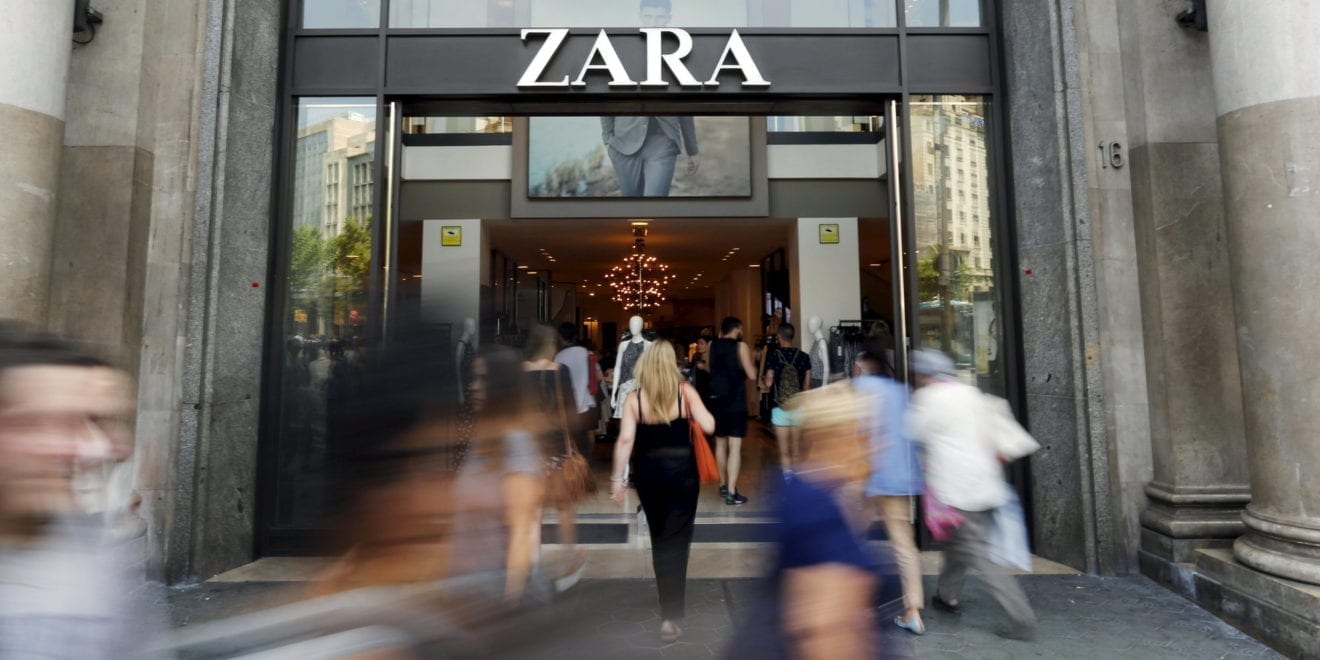
    Zara India is launching an online store on October 4, it has announced on its Facebook page.

    This follows the Spanish clothing retailer launching e-commerce sites this year for Malaysia, Singapore, Thailand and Vietnam.

    With a presence in 93 countries, the Inditex Group’s flagship brand added 279  stores last year to take its total to 7292 outlets.

    It plans to open up to 500 stores this year.