Author: Mei Ling Tan

  • Queue greets H&M Vietnam launch in HCMC

    Queue greets H&M Vietnam launch in HCMC

    Queues marked the official launch for H&M Vietnam, with more than 4000 customers on its first day in Vincom Center Dong Khoi, Ho Chi Minh City.

    It announced the opening a month ago on its Facebook page.

    The first 1000 customers at the Swedish fast-fashion brand’s new shop were each given a limited-edition bag, while other shoppers received shopping vouchers.

    H&M Southeast Asia CEO Fredrick Famm says the timing is right for the company to expand to Vietnam. “H&M has been researching and preparing for its Vietnam expansion for a long time.”

    Famm says H&M is looking for further locations in Vietnam.

  • Yves Saint Laurent co-founder Pierre Bergé dies

    Yves Saint Laurent co-founder Pierre Bergé dies

    Yves Saint Laurent co-founder Pierre Bergé has died at 86 years old at his country home in southern France following a long illness.

    The French businessman and art patron was the life and business partner of Yves Saint Laurent, who died in 2008 at the age of 71. They formed the famous fashion house in 1961. The two married in a civil ceremony in the final year of Saint Laurent’s life.

    “I will always remember him as a man instilled with a fertile tension between avant-gardism and the will to work relentlessly to inscribe creation in history,” says chairman/CEO François-Henri Pinault of Kering, which now owns the Yves Saint Laurent brand.

    “From the outset, he wished to preserve all the archives of Yves Saint Laurent’s work, an inestimable patrimony that will soon be made available for the public the world over to see in exceptional museums.

    “This man who has just left us was a great cultural figure, and a man with convictions he fought tirelessly to uphold. Pierre Bergé was at the same time a visionary precursor, a great patron, a creative and passionate businessman and a defender of noble and universal causes. He was a tireless patron of young creation, notably through the Andam Association (Association Nationale des Arts de la Mode) he had created. He was also a generous patron of heritage.”

    LVMH chairman/CEO Bernard Arnault says Bergé’s vast cultural knowledge and refined taste made him a great pioneer. “He made a considerable contribution to France’s spotlight in the world, both by the maison he founded and directed, as well as the cultural institutions he presided over.”

    Book specialist

    Bergé was born on the Île d’Oléron in 1930. The son of a schoolteacher and a civil servant, he took an early interest in literature. When he moved to Paris in 1948 he became a book dealer specialising in first editions. He socialised with writers including Albert Camus, André Breton, Jean Cocteau (for whose work he owned rights), Jean-Paul Sartre and Louis Aragon.

    In 1958 he met Yves Saint Laurent, then head designer at Christian Dior. After Saint Laurent had been conscripted for military service, Bergé helped stage his return with the Yves Saint Laurent haute couture house in 1961. Bergé would manage it until 2002.

    Bergé was the founding president of the Fondation Pierre Bergé – Yves Saint Laurent, which was recognised as a national institution in 2002 and works to conserve Saint Laurent’s body of work, organise exhibitions, and support cultural and educational activities.

    In the 1960s, Bergé expanded Saint Laurent’s business from haute couture into the far more profitable ready-to-wear market; he established Saint Laurent Rive Gauche boutiques in Paris, New York and other cities.

    In 1986 he sold 25 per cent of the Saint Laurent business to Italian entrepreneur Carlo de Benedetti, using the money to buy Charles of the Ritz, which owned  designer perfumes including several Saint Laurent fragrances like Opium and Rive Gauche.

    In 1993, Bergé and Saint Laurent sold the YSL Groupe for US$655 million to French pharmaceutical giant Elf Sanofi, which in 1999 sold the group to Gucci.

    Bergé’s death comes as two new major museums dedicated to Yves Saint Laurent are to be opened by the Fondation Pierre Bergé

  • Hooters Asia puts on bold front in rent tussle

    Hooters Asia puts on bold front in rent tussle

    Despite facing eviction from its Lan Kwai Fong location for failing to pay rent, Hooters Asia still plans expansion in Hong Kong.

    Legal documents filed with the High Court on Friday on behalf of the landlord, Dor Fook Company, say the US restaurant/bar has failed to pay more than HK$1.13 million (US$145,000) in rent since April despite “repeated demands and requests”.

    Meanwhile, Hooters Asia says it still plans four more venues for Hong Kong, despite its sole outlet breaking even for the first time last month.
    Hooters signed a 10-year lease for the Wyndham Street venue in April last year, agreeing to pay $330,000 a month for the first year.

    Hooters Asia president Daniel Yong, who took over management two months ago, says he is surprised by the legal action as he has already discussed repayment with the landlord. The former manager resigned this year, leaving a “messy accounting system” and unpaid bills, says Yong.

  • Orchard Road to gain design incubator

    Orchard Road to gain design incubator

    A “design incubator” to showcase home-grown brands and designers will open in the heart of Orchard Road by the end of next year.

    This was revealed by Trade and Industry Minister S Iswaran at the Singapore Retail Industry Conference on Friday.

    He said the design incubator, to be run by retailer Naiise, will house a retail showcase and incubation space under one roof. It is expected to feature more than 60 local brands covering fashion, lifestyle products and souvenirs, and is being supported by the Singapore Tourism Board, Spring Singapore and JTC. Helping local brands go global is one of the key strategies of the Retail Industry Transformation Map launched last year.

    Local brands and designers may soon also be able to use department stores as a launchpad to showcase their products, boost their profile and expand market access. Iswaran said Spring is working with department stores to explore the incubation of local and regional designers.

    Also, the Singapore Retail Association (SRA) is embarking on a project under Spring’s Local Enterprise and Association Development Plus (Lead+) program to transform and upgrade its capabilities, the minister said. It will undertake specific initiatives to drive the adoption of retail and backend technologies among retailers, including the use of the “endless aisle” which enables retailers to showcase all their products without having to stock them in their physical stores.

    SRA will develop a website mobile portal and enhance its GoSpree shopping app launched in June.

    Government agencies are also looking at ways to enliven Orchard Road as a shopping and lifestyle destination, said Iswaran. He said a steering committee overseeing this has been set up, co-chaired by three government ministers.
    Other initiatives on the table include enhanced programming along the pedestrian malls, pop-up and permanent activations at available spaces, and making the shopping belt more pedestrian friendly.

    Iswaran said the retail industry is an important part of the republic’s economy. The sector comprises 23,000 retail establishments that chalk up about S$35 billion (US$26 billion) in annual receipts and contributed 1.4 per cent to Singapore’s GDP last year.

    As another resource for retailers, the Retail Centre of Excellence will be launched at the Singapore Management University’s Lee Kong Chian School of Business next month. It will partner retailers in addressing the gaps and challenges of the fast-changing retail landscape, Iswaran said.

  • Furla sales soar 63 per cent in Asia-Pacific

    Furla sales soar 63 per cent in Asia-Pacific

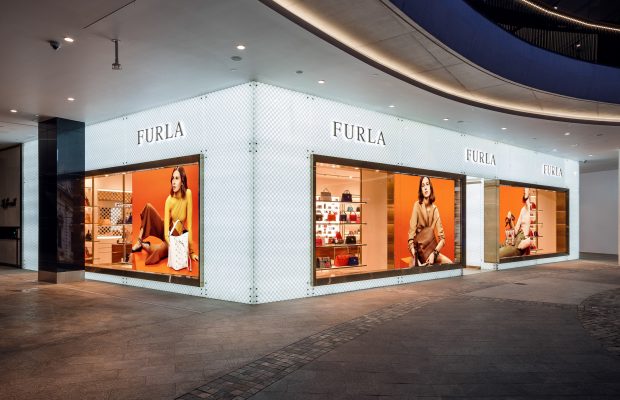
    Italian fashion group Furla continues to thrive in Asia, the region now accounting for half its global sales.

    After recording its highest-yet turnover and profit in 2016, Furla sales rose a further 23.5 per cent in the half year to June 30, reaching euro 238 million.

    The Asia-Pacific region registered 63 per cent growth, with China, South Korea and Australia standout markets. Sales in Japan rose 16 per cent.

    With products available in over 100 countries, Furla Group has 444 mono-brand stores, about half of which are directly managed, and is present in over 1200 multi-brand and department stores.

    “The results of the first half of 2017 make us very proud and underline the way turnover has doubled over the last three years,” commented CEO Alberto Camerlengo.

    “This growth, in extremely complex scenarios, is important in all markets as is the improvement in the quality of our distribution network and of our relationship with our strategic partners,” he said.

    Our intent is to continue growing organically both in our diverse product categories and in our geographic footprint.”

    Japan is by far Furla’s largest country market, accounting for 24 per cent of its sales. The rest of the Asia-Pacific region accounted for a further 24 per cent in the half year. Europe, Middle East and Africa accounted for 45 per cent and the US for 7 per cent.

    Furla’s travel retail channel has also grown substantially: up 47 per cent, thanks to a presence in 52 countries, with a total of 292 sales points ranging from boutiques to corners, shop-in-shops, aircraft and cruise ships.

    Across all channels, organic growth was a major factor in the group’s success, but like-for-like sales in directly operated stores also registered double-digit growth.

    In the second half of this year, Furla plans to open new stores in Hong Kong, Beijing, Tokyo and Prague.

  • Tigers Linking Rail Freight Destinations

    Tigers Linking Rail Freight Destinations

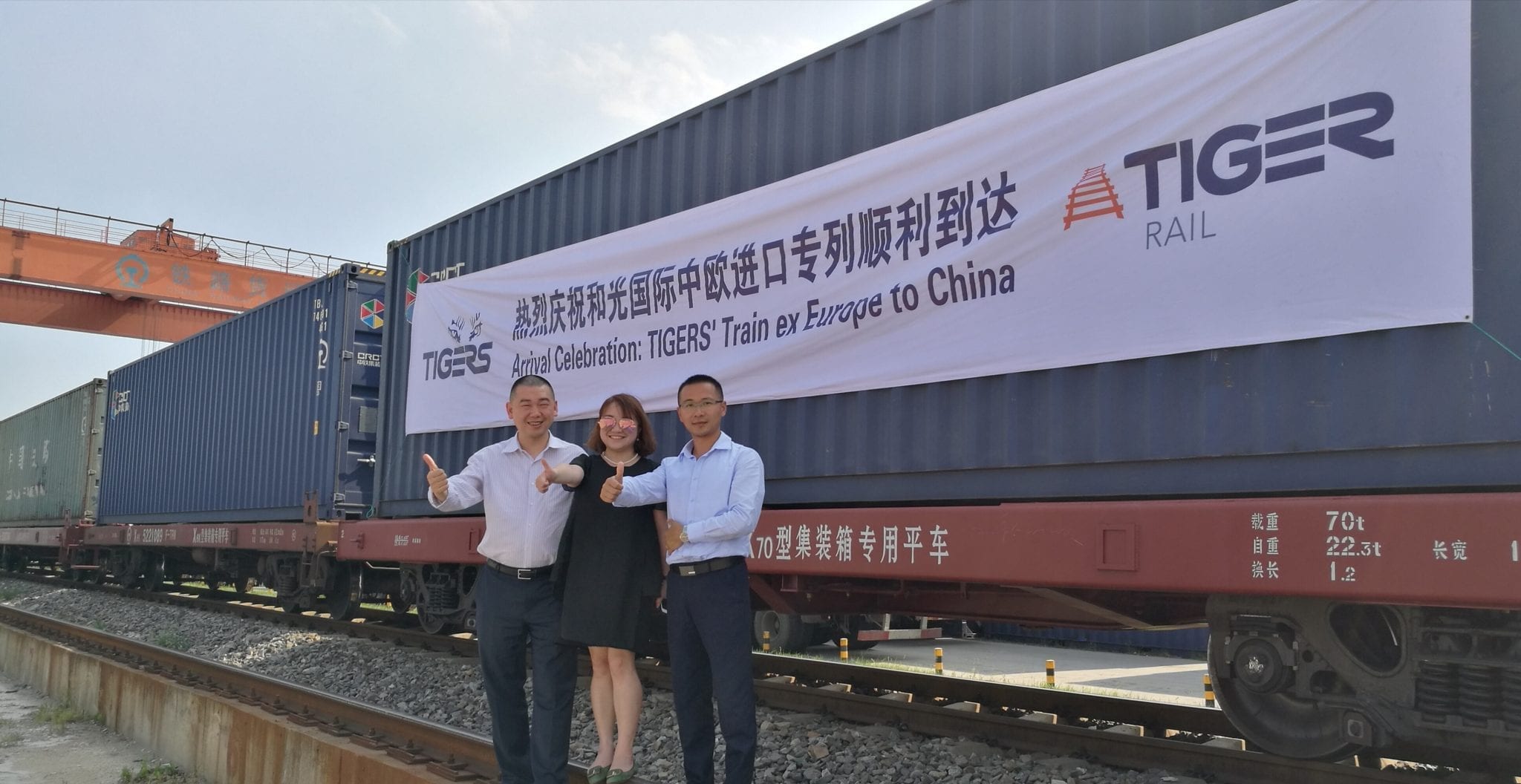
    Tigers has launched a new rail freight service, called Tiger Rail, offering customers a 16-day transit time both east and westbound, between Duisburg, Germany, and Hefei, Chongqing, and Chengdu, China.

    Tiger Rail customers can charter a train, or book Full Container Load (FCL) or Less than Container Load (LCL) shipments on weekly scheduled services to and from over 15 origin stations in China.

    The Hong Kong-headquartered supply chain specialist is also planning to offer

    e-commerce customers shipping parcels from Europe to China a cost-effective service along the new Silk Road.

    “We have seized the opportunity to provide integrated logistics for our customers, who increasingly require shorter transit times than ocean freight, and lower costs than airfreight, making Tiger Rail the perfect solution,” said Paul Huang, Managing Director, Tigers China.

    “Our customers benefit from lower shipping costs by empty container return in Switzerland for westbound services, and Shipper’s Own Container (SOC) for eastbound services, for both FCL and LCL.

    “Tigers has already supported customers to transport over 500 TEUs as FCL, and 1500 cubic meters (CBMs) as LCL along the new Silk Road.”

    Tiger Rail’s inaugural shipment took place over the summer, on behalf of one of one of the largest manufacturers of exhaust and suspension systems, which chartered a train to transport construction materials, auto parts, and electronics.

    “We are currently preparing test shipments for European Union (EU) Business to Consumer (B2C) parcels importing to China with Tiger Rail, and look forward to expanding our rail freight capabilities even further,” said Andrew Jillings, Chief Executive Officer and Group Managing Director, Tigers.

    Tiger Rail customers can track and trace their freight shipments using the Tiger Trax platform.

    The launch of Tiger Rail comes only weeks after Tigers achieved Authorised Economic Operator (AEO) certification in the UK, expanded its footprint with a new office in Leeds, and launched a post-Brexit solution to combat any disruption caused by Brexit.

  • Domestic gold prices fall sharply

    Domestic gold prices fall sharply

    Gold prices slumped in the Vietnamese market on Tuesday morning. On the Hà Nội market, selling price of one tael, or 1.205 ounces, of State-owned SJC’s gold declined by VNĐ190,000 (US$8.3) to VNĐ36.75 million.

    On the buying side, the price of each tael also fell VNĐ160,000, trading at VNĐ36.53 million.

    In the southern cities of HCM and Cần Thơ and central Đà Nẵng City, one tael of SJC’s gold declined VNĐ250,000 during selling, trading at VNĐ36.73 million. Meanwhile, one tael was being bought at VNĐ36.53 million.

    Bảo Tín Minh Châu Gold Jewellery Company and Doji Gold and Jewellery Corporation (DOJI) listed their selling prices at VNĐ36.68 million and VNĐ36.70 million, respectively. Buying rates of their gold were listed at VNĐ36.62 million and VNĐ36.60 million, respectively.

    On the Asian market, gold is trading at some $1,325 per ounce, equivalent to VNĐ36.36 million per tael.

    On global gold trading website Kitco.com, the price of gold slipped 1.2 per cent per ounce to end at $1,330.24 per ounce, the largest drop since July 3. Last Friday, global gold price hit a yearly peak of $1,357.54 per ounce.

    Thus, the price of one tael of gold in Việt Nam is some VNĐ410,000 higher than that on the world market.

    Global gold prices declined due to an upward trend in the dollar rate following an uptick in risk appetite fuelled by relief that North Korea did not test-fire missiles or conduct nuclear tests over the weekend as some had feared, Reuters reported.

    Assets traded primarily in dollars, such as gold, are very sensitive to currency fluctuations. An increase in the dollar rate will lead to gold becoming more expensive compared with other currencies and the demand for gold also decreases, the website said.

    Meanwhile, the worst-case scenario due to Hurricane Irma’s impact, the most powerful hurricane ever recorded in the Atlantic, looked to have been avoided, easing concerns of investors about the negative impact of the storm on the US economy.

  • AirAsia offers ‘red hot’ seat sale

    AirAsia offers ‘red hot’ seat sale

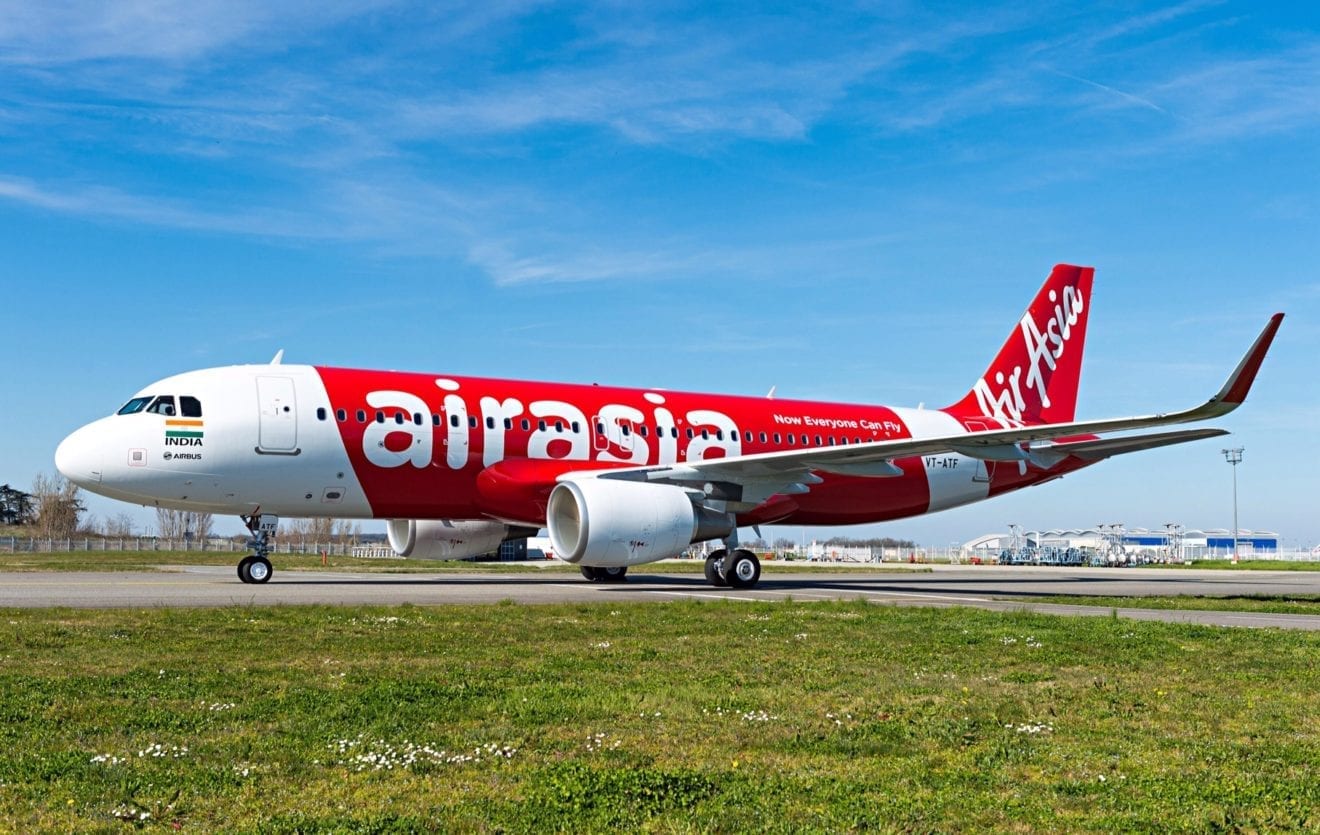
    Up to five million promotional seats are up for grabs in AirAsia Group’s red hot seat sale campaign. Book seats via airasia.com or the AirAsia mobile app from September 11 to 17 for travel between 1 March to 21 November 2018 to enjoy fares from as low as P17 for flights from/to Manila, Clark, Cebu, Davao, Palawan, Bohol, Kalibo, Caticlan/Boracay, Tacloban, and Iloilo.

    Also up for grabs from as low as P1,290 are promotional flights to international destinations from the Philippines to Taipei, Kuala Lumpur, Kota Kinabalu, Incheon/Seoul, Canton/Guangzhou, Shanghai, Macau, Singapore, and Hong Kong. AirAsia Philippines CEO Captain Dexter Comendador said that now is the perfect opportunity for their loyal guests and Filipino travellers to connect from many places conveniently. “We continuously add new routes and increase frequencies into our network. Exciting red hot deals await those who would like to travel overseas to over 120 destinations across all Asean countries, Asia, Australia and beyond,” he said.

    AirAsia is set to fly between Manila and Iloilo starting October 1 while direct flights between Davao and Kuala Lumpur will commence on December 21. Promotional flights from the AirAsia group’s hub in Kuala Lumpur to Australia, Japan, Maldives, and other destinations are also available.

    Big Members get to enjoy priority access and will be able to make bookings on airasia.com and redeem flights starting from zero Big Points, exclusively via the BIG Loyalty mobile app from September 10. It’s free to sign up as a BIG Member via airasia.com, airasiabig.com or BIG Loyalty mobile app to redeem promo flights during this promotion. AirAsia Group Chief Commercial Officer Siegtraund Teh said the airline firm continues to grow with more flights to even more destinations, making travel easier.

    “We want our valued guests to be able to take full advantage of our unparalleled frequency to new, exciting places, so it is our great pleasure to offer up to five million promo seats in our biggest campaign ever to help them on their way,” he said. For latest updates on promotions and activities, please follow AirAsia on Twitter (twitter.com/AirAsia) and Facebook (facebook.com/AirAsia).

    AirAsia Philippines is a wholly owned subsidiary of AirAsia Inc. which is a joint venture company among Filipino investors Antonio Cojuangco, former Ambassador Alfredo Yao, Michael Romero, Marianne Hontiveros, and Malaysia’s AirAsia Berhad. AAP operates a fleet of 17 aircraft with domestic and international flights out of hubs in Manila, Cebu and Kalibo.

    The airline operates several flights to/from Manila, Davao, Cebu, Kalibo, Caticlan(Boracay), Tacloban, Tagbilaran (Bohol), Puerto Princesa (Palawan), Clark and Iloilo in the Philippines with international flights to/from Shanghai, Taipei, Incheon (Seoul), Hong Kong, Macau, Kuala Lumpur, Kota Kinabalu, and Singapore. AAP is part of the AirAsia Group that has been awarded the World’s Best Low Cost Carrier for nine consecutive years running by Skytrax since 2009 to 2017. AirAsia, the leading and largest low-cost carrier in Asia, services the most extensive network with over 120 destinations.

    Within 15 years of operations, AirAsia has carried over 350 million guests and grown its fleet from just two aircraft to over 170. The airline is proud to be a truly Asean (Association of Southeast Asian Nations) airline with established operations based in Malaysia, Indonesia, Thailand, Philippines, India and Japan, servicing a network stretching across all Asean countries and beyond.

    The carrier was named the World’s Best Low Cost Airline in the annual World Airline Survey by Skytrax for nine consecutive years from 2009 – 2017. AirAsia is the first airline globally to collaborate with INTERPOL to implement the I-Checkit system to screen the passports of all its prospective passengers against information contained in the world police body’s Stolen and Lost Travel Documents database.

  • Vietnam’s government steps in to suspend sweeping new tax hikes

    Vietnam’s government steps in to suspend sweeping new tax hikes

    The proposed increases would make it harder for the country to hit its ambitious economic growth target this year.

    The Vietnamese government has instructed the Ministry of Finance to put on hold a series of proposed tax hikes to make life easier for local businesses and the growth target more achievable.

    The ministry is planning to increase a number of different taxes and fees, including raising value-added tax (VAT) from 10 percent to 12 percent.

    It insists that raising indirect taxes such as VAT is essential and an international norm, according to the ministry. The higher taxes were designed to make up for an inevitable shortfall that would occur when Vietnam fulfils its commitments to free trade agreements and removes import tariffs, and will also help tackle rising public debt, the ministry said.

    However, the government has said that in order for the country to reach its economic growth target of 6.7 percent this year, a goal that some experts say is unrealistic, taxes should remain unchanged for now.

    Vietnam has been working hard to realize its growth target.

    The central bank in July reduced its lending interest rate by 0.25 percent to 6.25 percent for the first time in three years to boost economic growth, as many Vietnamese companies still rely heavily on bank loans.

    In early June, the government put forward fresh plans to tap more oil and gas, despite warnings from lawmakers of becoming over-reliant on the mining industry to fuel growth.

    The Ministry of Industry and Trade will increase the amount of crude oil exploited this year by 8 percent to 13.28 million tons, and gas by 10.4 percent to 10.6 billion cubic meters. This will help add around 0.25 percent to economic growth.

    But outsiders view Vietnam’s economic prospects a bit differently.

    In July, HSBC revised down its previous forecast of 6.4 percent, saying the country’s economy is likely to grow by only 6 percent this year.

    Earlier, the Asian Development Bank raised its forecast for Vietnam’s economic growth this year from 6.3 percent to 6.5 percent, while the World Bank reversed its prediction from 6.5 percent to 6.3 percent, and the International Monetary Fund also lowered its forecast to 6.3 percent.

  • Apple set to unveil anniversary iPhone in major product launch

    Apple set to unveil anniversary iPhone in major product launch

    Apple hopes iPhone X will silence critics who say the company has lost its innovation edge.

    A decade after then-CEO Steve Jobs unveiled the first iPhone, Apple Inc on Tuesday is set to introduce a completely redesigned top-of-the-line iPhone along with two other new phones, as well as a big upgrade to the Apple Watch and a higher-definition Apple TV.

    The splashy launch event will take place at the Steve Jobs Theater at Apple’s new Apple Park “spaceship” campus – widely considered to be the final product designed by Jobs, who died in 2011.

    The new products and the holiday shopping season that follows are the most important for Apple in years. The company has sold more than 1.2 billion iPhones over the past decade and ushered in the era of mobile computing, but last year suffered a substantial decline in revenue as many consumers rejected the iPhone 7 as being too similar to the iPhone 6.

    Apple hopes the new high-end phone, expected to be called the iPhone X, will silence critics who say the company has lost its innovation edge. It features an edge-to-edge display with richer colors and facial recognition to unlock the phone without the need for a fingerprint reader or physical home button.

    The two other models, expected to be called the iPhone 8 and iPhone 8 Plus, are intended to update the iPhone 7 and iPhone 7 Plus. They could also include some new features, such as a glass back similar to the iPhone 4 that would help facilitate wireless charging.

    The phones are expected to come with a steep price tag. Bernstein analyst Toni Sacconaghi predicts the top-end model will cost $899, though other analysts expect it to cross the $1,000 threshold. That compares to a top base price of $769 for the iPhone 7 Plus prior.

    Much of that added costs is driven by more expensive parts, like a higher-resolution display, 3D sensors and more memory capacity. “Some of these components are just darned expensive. There’s just no doubt about that,” said Brian Blau, an Apple analyst at Gartner.

    Blau expects Apple to keep several lower priced models in its lineup.

    Watch for wireless networks

    Analysts also expect Apple to reveal a new Apple TV that operates at higher resolution than its previous set. The higher resolution could play into Apple’s efforts to court Hollywood, which have shifted into a higher gear recently with two high-profile executives hired away from Sony.

    The company is also expected to reveal more details about the HomePod, its voice-activated home speaker that competes against Amazon.com Inc’s Echo devices and the Google Home speaker. Apple announced the HomePod in June and said it will ship in December.

    Lastly, Apple is expected to announce a new version of the Apple Watch. Previous versions of the watch had to be tethered to a user’s phone in order to receive send or receive data, but the new version is expected to connect to wireless data networks just like a phone.

    Apple does not say how many Apple Watches it sells. Gene Munster, a veteran Apple watcher and analyst with Loup Ventures, believes the watch could double or even triple in sales because of the new connectivity.

    But even a huge boom in one product will not move the company’s financials like the iPhone, which accounted for 63 percent of Apple’s $215 billion in sales last year. Even if Apple crushes rivals like Fitbit Inc and Garmin in smart watch sales, Apple remains the iPhone company.

    “It’s a really big deal for the wearables category for Apple, but it’s not a big deal for the company,” Munster said.

  • Carmakers face electric reality as combustion engine outlook dims

    Carmakers face electric reality as combustion engine outlook dims

    ‘There’s going to be a huge increase in prices in 2021-22 if effective electrification becomes as widespread as people expect.’

    European car bosses gathering for the Frankfurt auto show are beginning to address the realities of mass vehicle electrification, and its consequences for jobs and profit, their minds focused by government pledges to outlaw the combustion engine.

    As the latest such announcement by China added momentum to a push for zero-emissions motoring, Daimler, Volkswagen and PSA Group made disclosures about their electric programs that could give policymakers some pause.

    Planned electric Mercedes models will initially be just half as profitable as conventional alternatives, Daimler warned – forcing the group to find savings by outsourcing more component manufacturing, which may in turn threaten German jobs.

    “In-house production is almost irrelevant to the consumer,” Daimler boss Dieter Zetsche told reporters and investors on the eve of the Frankfurt show, speaking in the midst of a German election campaign in which automotive jobs have loomed large.

    Volkswagen, for its part, said it was seeking new global supplier contracts to source 50 billion euros ($60 billion) of electric car content including batteries, which are not yet manufactured competitively in Europe.

    “A company like Volkswagen must lead, not follow,” Chief Executive Matthias Mueller told reporters.

    VW diesel emissions-cheating exposed by U.S. regulators triggered global public outrage, dozens more investigations into test-rigging by the wider industry and a push by some lawmakers to ban diesel and eventually all engines.

    Tightening noose

    Tesla Inc shares jumped nearly 6 percent on Monday after a Chinese minister said it was a question of when, not if, Beijing bans fossil-fuel cars, tightening the rhetorical noose around the combustion engine. France and Britain have promised its outright abolition by 2040.

    But PSA, the maker of Peugeots and Citroens, said it was concerned about the risks if consumers are left behind in the rush, and a new generation of battery cars does not sell.

    “If it doesn’t gain acceptance in the market, then everybody – industry, employees and politicians – has a big problem,” PSA Chief Executive Carlos Tavares said in a pre-show interview with German weekly Bild am Sonntag.

    While Tesla has carved itself a successful premium niche, electric vehicles have yet to penetrate volume markets, with the heavily subsidized exception of Norway, and still account for less than 1 percent of global car sales.

    Automakers have sought to adapt to the changing tide – and in some cases distance themselves from “dieselgate” – by announcing multibillion-euro investments in electric cars, underpinned by plans to sell millions within a decade.

    A year into the scandal, VW unveiled plans to develop 30 new electric cars and sell 2 million-3 million annually by 2025. On Monday it upped the goal to 80 models and said it would need four times the capacity of Tesla’s “gigafactory” to supply their batteries.

    Jobs flight

    Since the battery is the single biggest-value item in an electric car, however, experts point out that mass adoption would shift business and jobs from European suppliers to China, which already dominates the automotive power-pack market.

    According to consulting firm AlixPartners, electric drivetrains including batteries require 40 percent less manufacturing labor than mechanical ones. That would hit 112,000 jobs at European suppliers, even before any outsourcing.

    A phase-out of combustion engines by 2030 could cost 600,000 jobs in Germany alone, the country’s Ifo economic institute has warned. Chancellor Angela Merkel, on course for re-election on Sept. 24, said she was “no friend of bans”, in a Berliner Zeitung interview published on Tuesday.

    Any deepening of the doubts surrounding mass electric car uptake could vindicate Fiat Chrysler CEO Sergio Marchionne – one of the few car bosses who has largely resisted the plug-in vogue.

    “My aversion to electrification was based on pure cost issues,” Marchionne told analysts recently, predicting that stubbornly high battery costs would combine with tightening combustion-engine regulation to choke off overall sales.

    “There’s going to be a huge increase in prices in 2021-22 if effective electrification becomes as widespread as people expect,” Marchionne said. “That, based on everything I know in terms of economics, will cause a shrinkage of demand.” ($1 = 0.8358 euro)

  • Nokia extends wireless portfolio

    Nokia extends wireless portfolio

    Nokia is extending its enterprise wireless networking portfolio with new small cells, Wi-Fi, multi-access edge computing and cloud packet core capabilities.

    The new components aim to allow businesses to manage and operate their own private wireless networks to support their digital transformation initiatives.

    The company’s new virtualized multi-access edge computing (MEC) solution will allow operators to deliver private LTE networks to enterprises over their 4G network, and to allow enterprises to run MEC over commercial-off-the-shelf servers.

    Nokia has also introduced a new compact outdoor AirScale Wi-Fi access point and added a hybrid access gateway capability to the Cloud Packet Core.

    “We want to support the evolution toward the fourth industrial revolution by giving companies the ability to leverage private wireless networks for their critical communications needs and rapidly ramp-up business applications that improve efficiency,” Nokia head of advanced mobile network solutions Thorsten Robrecht said.

    “We continue to evolve our end-to-end solutions and services to allow enterprises to transition towards digitalization in a smooth and cost-efficient way in preparation for 5G automation in the future.”

  • Singtel adds HOOQ to OTT video portal app

    Singtel adds HOOQ to OTT video portal app

    Singtel has expanded its OTT video portal app CAST to incorporate the video on demand streaming service HOOQ.

    HOOQ, a joint venture between Singtel, Sony Pictures Entertainment and Warner Bros, has a library of over 20,000 movies and TV series. It has launched across SEA and in India.

    Movies are available on the platform up to 90 days after cinema release, and TV series are telecast on the same day as the US.

    With its incorporation into CAST, the HOOQ content library can now be viewed on mobile devices, tablets or TV screens through Android TV or Chromecast.

    CAST users will be offered a three-month trial of HOOQ, after which they can subscribe on a 12-month contract for S$4.90 per month.  Access can also be purchased contract-free for S$7.90 per month.

    “Hollywood, Asian and kids’ content are extremely popular with our customers. We are pleased to offer HOOQ’s vast selection in the palm of their hands or comfort of their own homes,” Singtel managing director home consumer Goh Seow Eng said.

    “We will continue to expand CAST’s content library for our customers’ enjoyment.”

  • Cebu Pacific opens up baggage requirements

    Cebu Pacific opens up baggage requirements

    Cebu Pacific has announced a special deal for passengers travelling from Guam to Manila, and back — perfect for bringing “pasalubong,” or gifts, to friends and family, or shopping for Filipino delicacies to bring back home.

    Starting this September up until Dec. 15, 2017, all passengers flying between Guam and Manila who prepurchase baggage allowance of 40 kilograms will get an additional 25 kilograms, free of charge. That’s a total of 65 kilograms, or 143 pounds of check-in baggage — equivalent to the weight of a ‘balikbayan box.’ The free baggage allowance will be added upon check-in at the airport.

    “We are excited to offer Guamanians traveling to and from the Philippines a free top-up on their 40-kilogram baggage allowance, up to a maximum 25 kilograms. This will allow our guests to make room for more presents, or for Filipino treats they will surely come to enjoy. There’s less reason to worry about excess baggage, and more reason to stock up on great finds in the Philippines,” said Candice Iyog, vice president for marketing and distribution at Cebu Pacific.

    Cebu Pacific started flying between Manila and Guam in March 2016.

    CEB currently flies up to three times weekly to and from Guam, offering seamless connections to a total of 37 domestic and 26 other international destinations across Asia, Australia, USA, and the Middle East.

    Information was provided in a press release.

  • Vietnam named most affordable country in the world for foreigners

    Vietnam named most affordable country in the world for foreigners

    Nearly one in five said they have far more money at their disposal than their lifestyles require.

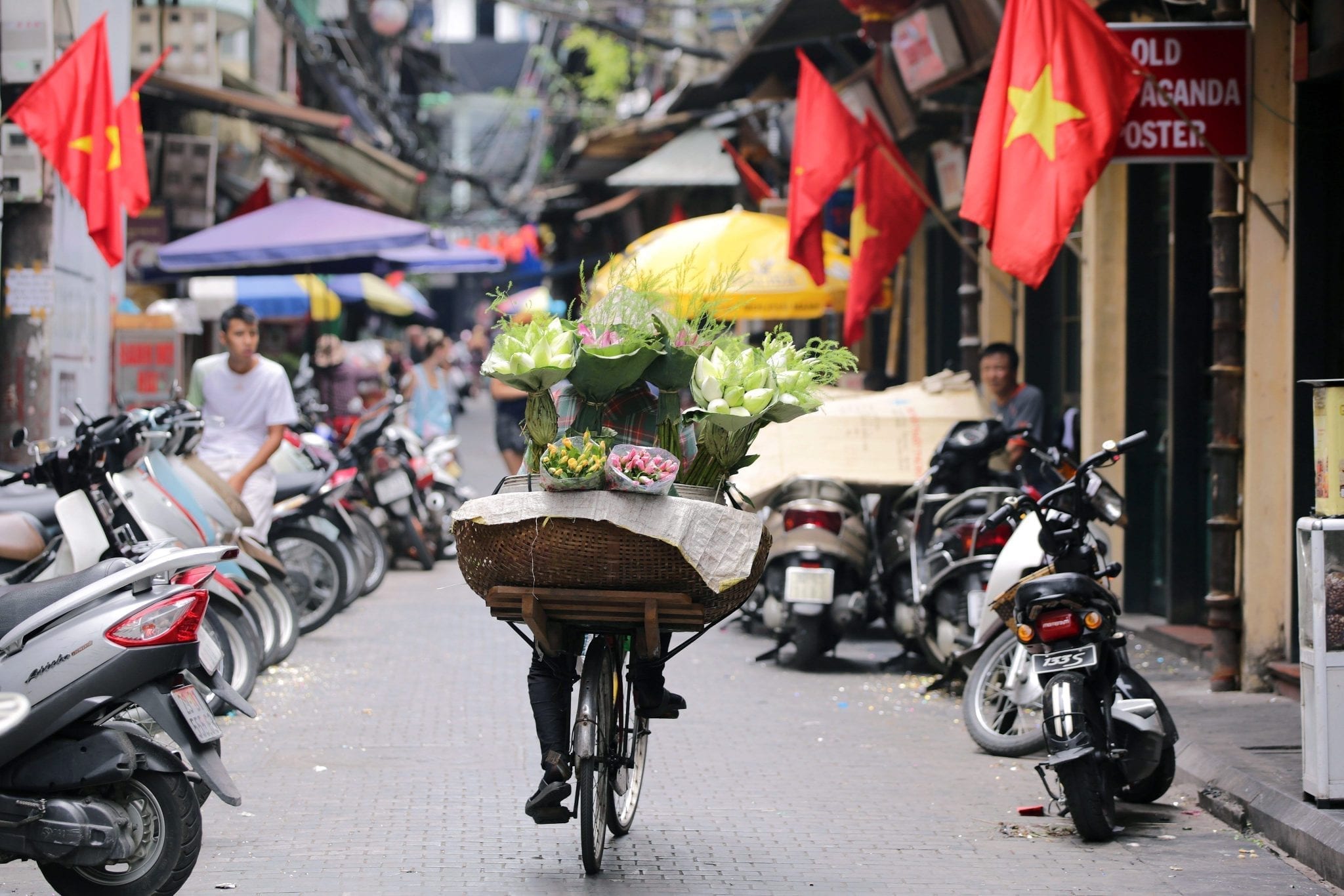
    The Expat Insider 2017 survey released on Thursday has put Vietnam in the spotlight as the cheapest place to live for expats.

    The country has jumped five places from the previous year to top the 2017 table, confirming how affordable it is for foreigners to live and work here.

    The survey was developed by asking 12,519 respondents, representing 166 nationalities and living in 188 countries around the world, how they felt about their financial situation, and whether their disposable income was sufficient to cover their expenses.

    The cost of living in each country was compiled from the global cost of living database Numbeo. All amounts are in U.S. dollars and current as of September 2017.

    Mexico and Colombia round off the top three most affordable locations, while expats living in Switzerland and Israel find it the hardest to get by on the money they make