Author: Mei Ling Tan

  • Just Group director steps down

    Just Group director steps down

    Premier Investments has announced retail veteran and Just Group core brand director, Colette Garnsey, will permanently step down from her role due to a serious medical condition.

    In a statement, the retail group said Garnsey would be unable to work full time and undertake the required travel as part of the role.

    Garnsey was previously group general manager at Pacific Brands.

    She has had over 30 years’ experience in retail and was formerly in senior management at David Jones Limited for over 20 years, most recently holding the position of group GM. She is a board member of Australian Wool Innovation Limited (since 2011), the L’Oréal Melbourne Fashion Festival (since 2006), a committee member of the TCF Innovation Council (since 2010) and a judge of the Veuve Clicquot Business Woman of the Year.

    In its first half results, Premier Investments lifted its underlying first-half profits 9.7 per cent to reach 100.6 million.

    The owner of several retail brands including Smiggle, Peter Alexander, and Just Jeans reported record underlying EBIT of $93.0 million, up 10.6 per cent on the comparable 26 week period last year ($84.1 million). Underlying net profit before tax increased 10.8 per cent to $90.9 million.

    At the time, Premier also announced the appointment of Nicole Naccarella as the new group GM of Jacqui E, reporting to Garnsey. Naccarella joined from Harris Scarfe where she was GM of apparel, and was previously the group GM of womenswear, intimates and accessories at Myer.

    The company also appointed Vicky Kordatou, a former business manager of Myer Miss Shop to the role of merchandise manager for woven tops, dresses and coats. Joanne Simmonds was appointed merchandise manager responsible for knits, separates and accessories and is a former Portmans merchandise manager .


  • Mazda announces breakthrough in long-coveted engine technology

    Mazda announces breakthrough in long-coveted engine technology

    Mazda said it would become the world’s first automaker to commercialize a much more efficient petrol engine using technology that deep-pocketed rivals have been trying to engineer for decades, a twist in an industry increasingly going electric.

    The new compression ignition engine is 20 percent to 30 percent more fuel efficient than the Japanese automaker’s current engines and uses a technology that has eluded the likes of Daimler AG and General Motors Co.

    Mazda, with a research and development (R&D) budget a fraction of those of major peers, said it plans to sell cars with the new engine from 2019.

    “It’s a major breakthrough,” said Ryoji Miyashita, chairman of automotive engineering company AEMSS Inc.

    The announcement places traditional engines at the center of Mazda’s strategy and comes just days after Mazda said it will work with Toyota Motor Corp to develop electric vehicles and build a $1.6 billion U.S. assembly plant.

    “We think it is an imperative and fundamental job for us to pursue the ideal internal combustion engine,” Mazda R&D head Kiyoshi Fujiwara told reporters. “Electrification is necessary but… the internal combustion engine should come first.”

    A homogeneous charge compression ignition (HCCI) engine ignites petrol through compression, eliminating spark plugs. Its fuel economy potentially matches that of a diesel engine without high emissions of nitrogen oxides or sooty particulates.

    Mazda’s engine employs spark plugs under certain conditions, such as at low temperatures, to overcome technical hurdles that have hampered commercialization of the technology.

    Executive Vice President Akira Marumoto called Mazda’s engine technology the automaker’s “heart”.

    The engine is called SKYACTIV-X and Mazda had no plans to supply the engine to other carmakers, Marumoto said.

    AEMSS’ Miyashita said a key issue would be how smooth and responsive the engine is.

    “Is it jerky? If so, that would pose a big question when it comes to commercializing this technology.” he said. “Hopefully Mazda has an answer to that question.”

    Mazda also said it would introduce electric vehicles and electric technology in its cars from 2019, focusing on markets that restrict the sale of certain vehicles to limit air pollution or that provide clean sources of electricity.

    In addition, it said it aimed to make autonomous-driving technology standard in all of its models by 2025.

    Mazda’s announced its petrol-engine technology breakthrough on the same day that shares in Japan’s GS Yuasa Corp surged after a newspaper reported that it would start producing a lithium battery that would double the range of electric cars as early as 2020.

    Mazda’s share price closed down 1.3 percent. That compared with a 0.3 percent fall in the benchmark Nikkei 225 index.

  • Khun Thai Tea heading for Singapore

    Khun Thai Tea heading for Singapore

    Singapore’s Khun Thai Tea, the franchisor for the Thai iced black-tea brand that originated from a pushcart in Bangkok, is about to launch its first outlet in the city.

    This follows its establishment in the Philippines last year as its first step toward expansion in Asia.
    Elis Chai, who co-founded Khun Thai Tea along with fellow Bronze Media Singapore owner Jeremy Lee, says their company has retained global rights for the brand, based on a recipe created in 1955 by Auntie Marlee, the sole proprietor of a pushcart in Sukhumvit.

    “Her recipe for ‘cha-yen’ was restricted to her family members,” says Chai. “Her pushcart soon came to be Sukhumvit Soi 11’s best-held secret. Its popularity rose in tandem with the street’s fame, which was earning a well-deserved reputation as a dining and nightlife destination.”

    More recently, Auntie Marlee began searching for successors to continue and expand on her pushcart’s legacy, finally tying up with Filipino Nancy Padilla. This led to SM Mall of Asia in Manila becoming the first outlet outside of Bangkok to feature Auntie Marlee’s tea in June last year. Padilla owns and runs the Khun Thai Tea Shop (Philippines), including “khun” (Thai for “respect”) in the franchise name as tribute to Auntie Marlee.

    Two more Khun Thai Tea outlets followed: one at Star City Amusement Park in Manila, and another at MegaMall Manila in the Ortigas business district. Lee says more branches are set to open in Manila before the end of this year.
    With Khun Thai Tea established in Singapore as global franchisor, Lee says rapid expansion across Asia is planned. “We will strive to bring a Khun Thai Tea branch to every Asian shopping mall.”

    As well as the tea, the shops offer other Asian-influenced drinks as well as snacks. The drinks include the coffee and tea mix yuan yang, first brewed in Hong Kong, and ice bandung, inspired by a Malaysian recipe that combines rose syrup with milk. Taiwanese-style boba (small tapioca balls) are an optional extra.

    Snacks include Thai-influenced items such as crispy kangkong and tea toast.

  • Thai Beverage signs to buy KFC restaurants

    Thai Beverage signs to buy KFC restaurants

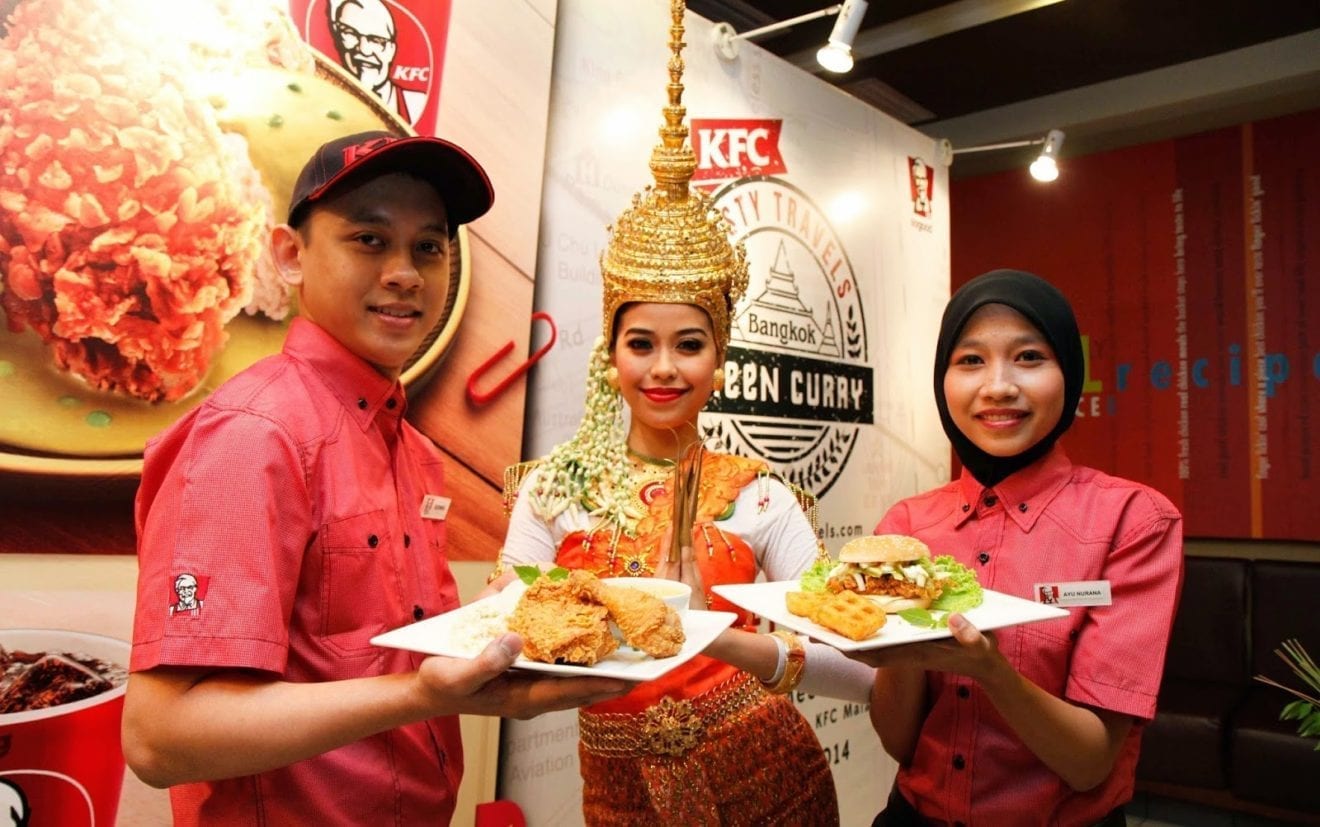
    Thai Beverage  (ThaiBev), the maker of Chang beer and SangSom rum, is expanding into the fast-food business with a deal to buy Thailand’s KFC restaurants.

    ThaiBev’s agreement, covering more than 240 restaurants, is costing it about THB11.3 billion (US$340 million). It also covers stores under development, with the cost of those locations to be determined when the transaction closes.

    KFC is owned by US corporation Yum! Brands, which also runs the Pizza Hut and Taco Bell chains.

    ThaiBev chairman/founder Charoen Sirivadhanabhakdi has been seeking to diversify the company with a goal of generating more revenue from non-alcoholic beverages by 2020.

    Thailand accounted for 2 per cent of KFC’s sales in emerging markets last quarter, and was the only region in that division to have sales drop year-over-year, posting a 2 per cent decline.

    Sirivadhanabhakdi previously expanded his property business amid government measures to curb alcohol consumption in Thailand. He was ultimately forced to list the company unit in Singapore in 2006 after activists and Buddhist monks held protests to block a local share sale. The company’s long-term strategy involves generating half of its revenue from markets outside Thailand and non-alcoholic beverage. Sales outside Thailand amounted to less than 4 per cent in the last fiscal year.

  • DaTang restaurant goes “Italian”

    DaTang restaurant goes “Italian”

    DaTang restaurant has opened its second branch at the Italian-inspired Venice Grand Canal Mall in Bonifacio Global City in Taguig City.

    Presenting Chinese fusion, the restaurant combines traditional and modern cooking techniques and ingredients. Its name combines the words “Da”, which means great, and “Tang” to signify the Tang dynasty, considered one of the most prosperous Chinese eras, especially in literature and food.

    DaTang’s modern interior in black, brown and gray, with traditional touches such as red lamps, classic paintings and jars of spices and herbs. The dinnerware is marble.

    Its Taiwanese chefs draw on styles and flavours from the eight great Chinese cuisine traditions – Anhui, Cantonese, Fujian, Hunan, Jiangsu, Shandong, Sichuan and Zhejiang – fusing them with modern techniques.

    “Our brand is trying to do something different from traditional Chinese food,” says DaTang F&B director Tani Lu. “We combine a lot of elements, like Chinese, Japanese and Western styles and mix them together to create new Chinese fusion food.”

    While there are no stir-fried noodles, beef with broccoli, or sweet-and-sour fish, there are such standards as steamed fish. The signature chicken dish is fried chicken wings coated with a sweet garlic sauce glaze.

    There are borders and private spaces in the restaurant, as well as a bar for wine and cocktails.

    DaTang first outlet is nearby in Forbes Town Center, Metro Manila.

  • Quickly Philippines opens first store in Pampanga

    Quickly Philippines opens first store in Pampanga

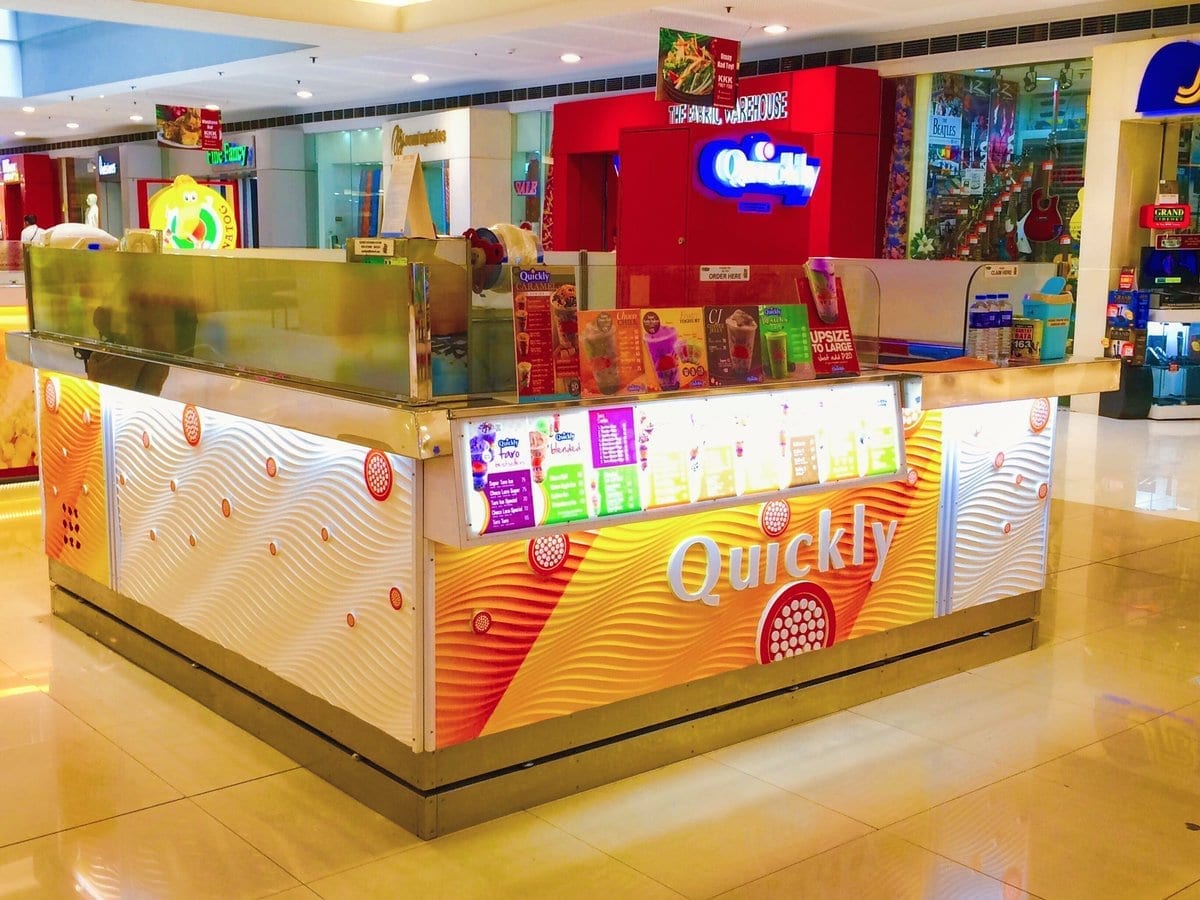
    Quickly Philippines has opened its first outlet in Pampanga as it expands its local footprint.

    The Taiwanese tea chain, which opened its first store in Recto in Manila more than a decade ago, now boats 60 outlets across Metro Manila, Laguna, Cavite and Cebu.

    More regional locations will follow, the company says.

    Quickly claims its point of difference is serving fresh, healthy and exciting drinks including healthy fruit shakes made from natural fruit puree and blended drinks with pearls, puddings and other add-ons.

    Franchisee April Ocampo-Bertulfo saw an opportunity to bring something well-loved and proven to the province.

    “This brand is already in the Metro for several years now, and we thought, why not bring it here in Pampanga? We are sure that kabalens will love our products and will leave them wanting more as Quickly offers dozens of flavors and only uses high quality ingredients.

    “Quickly doesn’t add preservatives so it’s always fresh and healthy,” she said.

    Since its founding in Taiwan, Quickly has expanded into the US, Canada, Europe, Australia and Asia.

    Quickly is cashing in on the growing demand driven by health conscious consumers who believe its juices offer health benefits like aiding the fight against cancer.

    Ocampo-Bertulfo says the brand’s fruity variants are not powder-based, so customers will be refreshed with cooling drinks made from all-natural ingredients.

    “With every visit to our store and with every purchase of a Quickly cup, we promise that every sip cools you down and gives you satisfaction.”

    The new Quickly Philippines outlet celebrated its formal opening last weekend. The store is located on the Ground Floor of SM City Pampanga.

  • Bangkok retail space limited despite growth

    Bangkok retail space limited despite growth

    Downtown Bangkok retail space is limited until the end of the year, according to a second-quarter report by property consultant Edmund Tie Thailand.

    Total retail stock downtown was 1.34 million sqm for the period, with three retail completions totalling 12,513 sqm as well as one of 6311 sqm in midtown. The next project is set for completion in the first quarter of next year.
    Average occupancy levels in the downtown for the quarter were steady at 92.7 per cent from the first quarter despite the new supply. Occupancy increased by 0.6 per cent year-on-year, and the average retail rent remained the same at THB2600 baht (US$78) a sqm per month – a decline of 1.14 per cent on year-on-year.

    Retail developments in the midtown market set for completion this year are all part of either office or residential mixed-use projects.

  • Online spending eases in June

    Online spending eases in June

    The growth rate for New Zealanders’ total online retail shopping eased back slightly in June, but spending was still up 10 per cent compared to June last year.

    According to the latest BNZ and Marketview monthly report on New Zealand’s online retail sales, purchases from offshore online retailers accounted for 44.5 per cent of the month’s online spending, and spending at these retailers was up 13 per cent on June 2016.

    A surge in spending on Computers and Electronics drove half of the increase.

    Clothing had a quieter month than usual, with purchases from offshore online retailers only up  per cent on June last year.

    Spending at local online retailers was up 9 per cent on June last year.

    “While slower than the double-digit growth rates we’ve generally been seeing since 2016, this level of growth is still more than double that of local bricks-and-mortar stores, which were only up 4 per cent on June last year,” said Gary Baker, director, institutional research, Bank of New Zealand.

    Food store-types drove approximately half of the growth at local online sites (June 2017 vs June 2016).

    Clothing purchases were also strong at local online merchants, up 16 per cent on last June.

  • Logistics startup aCommerce seeking further funding

    Logistics startup aCommerce seeking further funding

    Thailand-based end-to-end logistics startup aCommerce is seeking to raise more than US$30 million in a series-B funding round.

    Insiders say the company is in discussions with global and local private equity groups to raise funding before the last quarter of this year.

    Founded in June 2013, aCommerce is a regional full-service e-commerce software provider, delivering tailored product to global brands and retailers including Hewlett-Packard, Lazada, Line, L’Oreal, Matahari Mall, Nestle, Philips, Samsung and Unilever.

    In July last year the company raised a $10 million strategic venture round led by MDI Ventures, Telkom Indonesia’s corporate venture capital arm, making it one of the largest series-A rounds for a tech startup in Southeast Asia. Also in the round were Australian firm Blue Sky and Swiss-based services provider DKSH, which had invested in aCommerce previously.

    aCommerce, which has a presence in Indonesia, Malaysia, Singapore, Thailand and the Philippines, plans to expand to Vietnam by the end of this year. It is also expecting its Indonesia business to turn profitable in the same time frame.

    Proceeds from the latest funding round will be used to strengthen its position in Indonesia, Singapore, Thailand and the Philippines, as well as expand in Malaysia and Vietnam. Its services include marketing, fulfilment, store development, delivery, brand commerce and customer care. It launched a 7000 sqm warehouse in Cawang, Indonesia, last year and three months ago opened hubs in Bandung and Surabaya.

  • Barista helps launch Need Coffee specialty outlet

    Barista helps launch Need Coffee specialty outlet

    Champion barista Daniel Concepcion Roque and his partners at Where Have You Bean have opened Need Coffee in Paranaque City in Metro Manila.

    Roque, who represented the Philippines in the World Aeropress Championship last year, says he did not originally intend to open a coffee shop.

    “My best friend’s father was planning to put up a coffee shop and just needed the expertise to do it,” says Roque. “From then on, we signed a contract and opened Need Coffee.”

    In its manifesto, Need Coffee says it is not out to “reinvent the wheel” but simply to give customers the middle ground of specialty coffee in a not overly commercialised package.

    “The chains get it. The average consumer does not walk into a shop expecting their lives to change over a cup of coffee. They simply need coffee,” the manifesto says.

    “Right now, specialty coffee is seen as unnecessary, overpriced and merely a trend. Need Coffee is here to differentiate itself from the stigma of bad-tasting commercial coffee, but also learn from commercial shops.”

    Roque says the company wants to train and grow with its baristas, later partnering with them in their own ventures.
    The shop serves espresso, Americano, latte, hot chocolate or even iced mocha and rose water cold-brew latte. Light snacks are also available.

  • New McDonald’s China offers vision of innovation

    New McDonald’s China offers vision of innovation

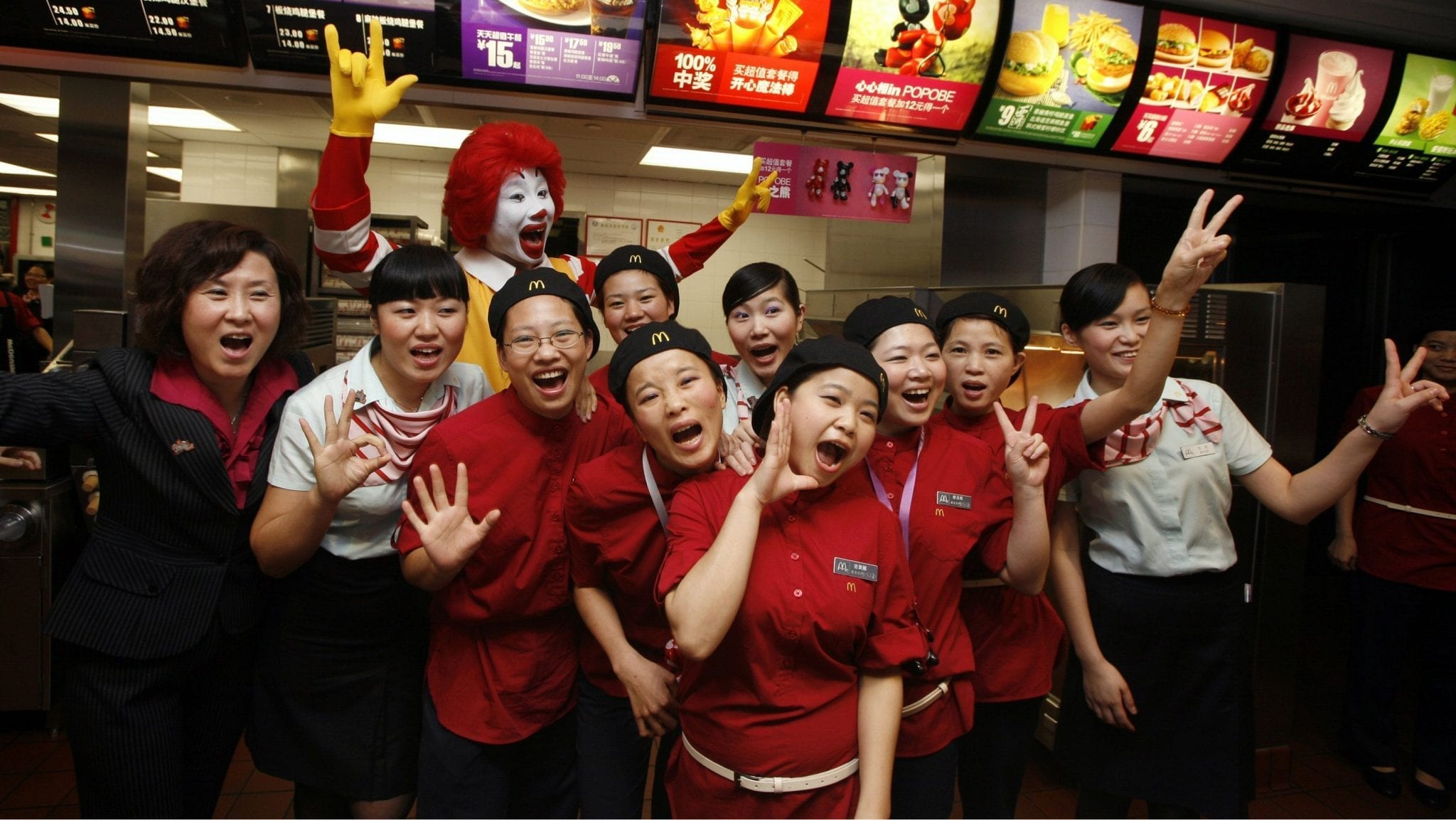
    Deliveries and a digitalised, personalised dining experience are part of the “Vision 2022” strategy to be rolled out by the new owners of McDonald’s China and Hong Kong.

    McDonald’s Corporation yesterday confirmed its strategic partnership with Citic, Citic Capital Partners and The Carlyle Group following China’s regulatory approval half a year after the deal was announced.

    It is the largest McDonald’s franchisee outside of the US, covering existing businesses in Mainland China (about 2500 restaurants) and Hong Kong (about 240). Its development initiatives for China aim to drive double-digit sales growth in each of the next five years by almost doubling the number of restaurants to 4500 by the end of 2022.

    There will also be delivery hubs for more than three-quarters of the restaurants, plus more than 90 per cent will offer the “Experience of the Future” concept, taking digitalised and personalised dining to more customers.

    Innovation hubs

    The opening pace of mainland restaurants is expected to progressively ramp up from about 250 this year to 500 a year by 2022. Vision 2022 includes plans to significantly grow the restaurant portfolio mix in tier-three to -four cities to about 45 per cent.

    Innovation hubs in Hong Kong and Shanghai will introduce new menus and advanced digital retail experience.

    “China will soon become our largest market outside of the US, and we are excited to join forces with Citic and Carlyle for better localised decision-making to meet changing customer demands in this dynamic market,” says McDonald’s Corporation president/CEO Steve Easterbrook. “China and Hong Kong are leading the global system in capturing new consumer trends such as delivery and digitalisation, and its driving strong performance and growth momentum.”

    He says the corporation will continue to play an active part in the China growth journey through its remaining interest and participation on the China board.

    “We believe this is a winning formula that fuses McDonald’s global standards and branding with Citic and Carlyle’s extensive resources and market expertise,” says new McDonald’s China board chairman Zhang Yichen.

    McDonald’s has more than 37,000 locations in more than 100 countries. About 90 per cent of the restaurants worldwide are franchises.

  • Esprit Holdings expects profit to more than double

    Esprit Holdings expects profit to more than double

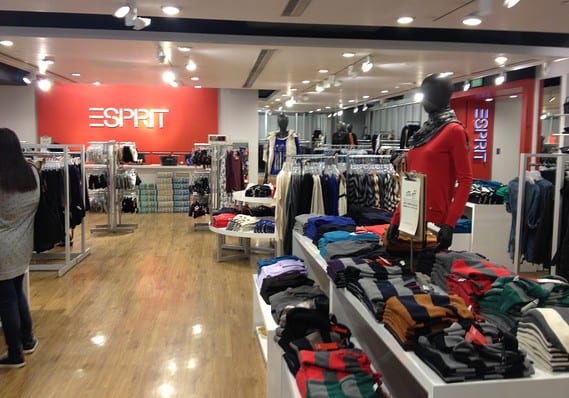
    Fashion group Esprit Holdings expects to more than double its net profit for its financial year to the end of June, it has announced in a profit estimate for The Stock Exchange of Hong Kong.

    In a preliminary review of its unaudited consolidated management accounts, the company expects a net profit in the range of about HK$50 million (US$6 million) to $80 million, compared to the previous year’s $21 million.

    Company secretary Florence Ng Wai Yin says the overall development is attributable to two main factors:

    (i) an improvement of the financial performance of the group’s underlying business (excluding exceptional items), estimated to be about $370 million to $400 million; and

    (ii) less favourable taxation credit, which has been reduced to roughly between $156 million to $186 million compared to last year’s $606 million.

    The company expects to release its final results announcement next month.

  • Furniture retailer’s share buyback delayed

    Furniture retailer’s share buyback delayed

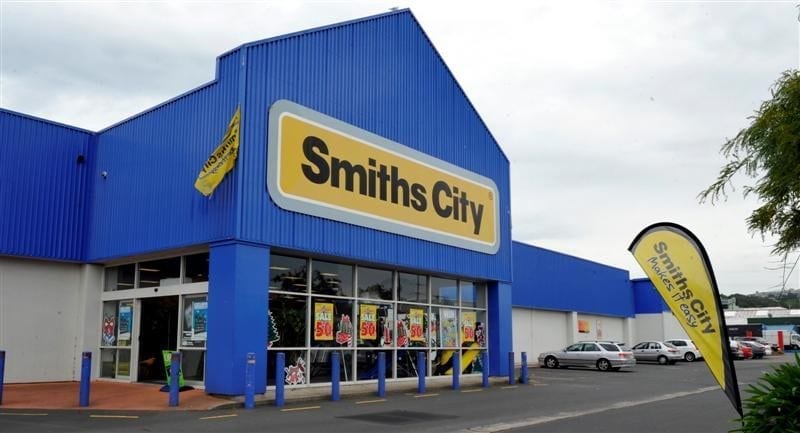
    Smiths City Group shareholders won’t vote on a $5.7 million capital return at this month’s annual meeting as the retail chain operator works through outstanding regulatory matters.

    The Christchurch-based company had planned to put forward a planned share buyback to investors at the August 21 annual meeting, but will now have to hold a special meeting later this year as it irons out the details of the deal.

    Smiths City plans to pay 72c a share in a compulsory acquisition and cancellation of three shares in every 20, provided it gets approval from the High Court, Inland Revenue, lender ASB Bank and shareholders.

    “The return of capital was not referred to in the notice of meeting as the company is still attending to some regulatory matters that need to be dealt with prior to putting the return of capital to the shareholders of the company for their approval,” chairman Craig Boyce said in a statement.

    “The company’s intention is to put the matter to shareholders for approval at an extraordinary general meeting later in the year.”

    The retailer is partway through a five-year transformation programme where it wants to quit low margin businesses and expand its Auckland presence.

    In June it reported a 54 per cent jump in underlying earnings to $2m on largely flat revenue $227.5m on a smaller restructuring bill.

    The shares recently traded at 71c and have increased 2.9 per cent so far this year.

  • Hung Fook Tong may double first-half profit

    Hung Fook Tong may double first-half profit

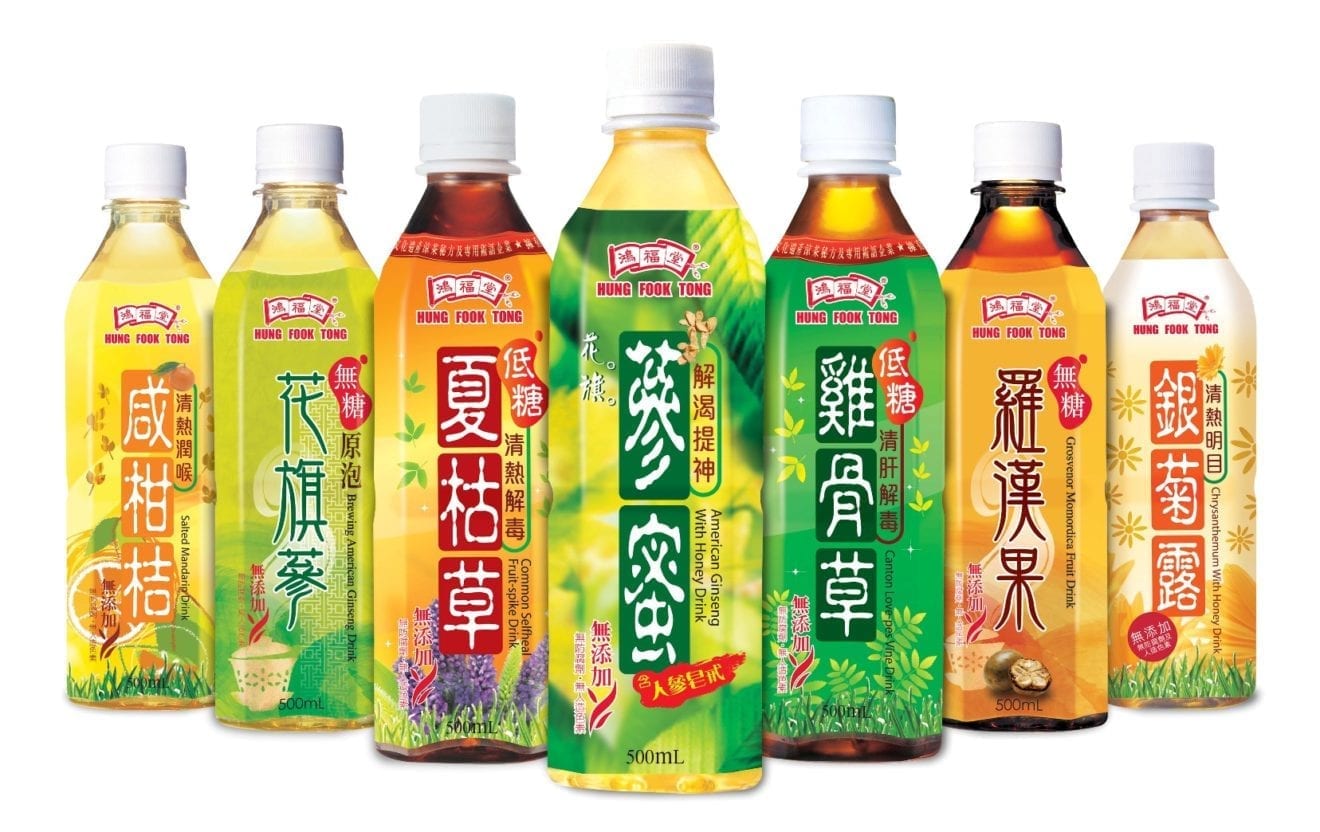
    Chinese herbal products retailer Hung Fook Tong Group Holdings has issued a positive profit alert, saying it expects to more than double the profit attributable to the owners of the company.

    Based on a review of its unaudited management accounts for the six months to the end of June, the profit is expected to be about HK$3 million (US$380,000), compared to the $1.4 million for its first half last year.

    Chairman/executive director Tse Po Tat says the increase is mainly attributable to:

    (i) an approximate 2 per cent increase in net sales, mainly in the wholesale segment through closer co-operation with key accounts in Hong Kong as well as more stringent control in rebates and discounts granted in Mainland China; and

    (ii) slight improvement in gross profit margin mainly because of continuous enhancement in procurement procedures.

    Hung Fook Tong expects to announce its interim results before the end of this month.

  • New Look has tough Q1 as sales and profits plunge

    New Look has tough Q1 as sales and profits plunge

    Fashion retailer New Look’s bonds hit fresh lows on Tuesday on the back of poor quarterly results it had just released.

    The UK chain’s results showed the company’s adjusted Ebitda declining 37.3% to £27.2m, for the 13 weeks ending June 24.

    It said this was due to the challenges it faced in UK sales and investment in strategic initiatives.

    Revenue fell 4.4% to £338.7m with New Look Brand like-for-like sales down 8.2%, UK like-for-like sales down 7.5% and own website sales down 0.6%.

    While Third Party E-commerce sales rose 15.7%, that was the best news as underlying operating profit fell 60.3% to £12.1m and the loss after tax was £15.2m after a profit of £5.8m a year ago.

    CEO Anders Kristiansen said: “As expected, the UK market has remained difficult, which has resulted in a disappointing quarter of trading.

    We have managed the business accordingly by controlling costs, tactical investment in our strategic initiatives and enhancing our product proposition.”

    He added: “The evolution of our product proposition continues, and will be bolstered by the arrival of our new Chief Creative Officer, Paula Dumont Lopez, in September.

    We are pleased with our continued expansion in China, where we opened another 17 stores taking the total number to 127. In the UK, we are now trialling our new store concept and are encouraged by the early results.