Author: Mei Ling Tan

  • IDC names Smart City APAC Award winners

    IDC names Smart City APAC Award winners

    Hong Kong has been recognized in IDC’s third annual Smart City Asia Pacific Awards, scoring awards in two of the 14 categories.

    Hong Kong won in the transportation category for its Next Generation Intelligent Transport System, and in the smart building category for its Zero Carbon Building project.

    China meanwhile won in the smart meter category for its Shenzhen Smart Water project, and in the education category for its Hubei Public Services Platform of Education Resources.

    But the biggest winner was New Zealand, which picked up four awards in the smart grid, tourism/arts/culture, connected health and public works categories, followed by Singapore, which secured three awards in the administration, economic development and social services category.

    In total 18 smart city projects were represented across the 14 categories, due to ties in four categories – administration, education, land use/environmental management and smart buildings.

    “Asia-Pacific smart city projects in the past year have exhibited strong national development focus with an increasing citizen-centric personalization combined with ‘low investment-high impact’ agendas – all in hopes of attracting the right mix of manpower talents and lucrative foreign-direct investments,” commented Gerald Wang, head of IDC Government and Education Insights Asia Pacific.

    “This socioeconomic shift towards creating more localized and quality smart city ecosystems are notably influenced by new international and regional trade dynamics. The failure of the Trans-Pacific Partnership agreement and China’s increased efforts to boost its global leadership with endeavors such as the Belt and Road Initiative will continue to shape commerce and innovation drive in the region.”

    According to IDC, the key trends shaping the future of smart city programs in APAC include efforts to improve city economics and risk management, cybersecurity and compliance, socioeconomic growth and infrastructure as well as foreign investment and manpower development.

  • Intel set to roll out 100 self-driving cars

    Intel set to roll out 100 self-driving cars

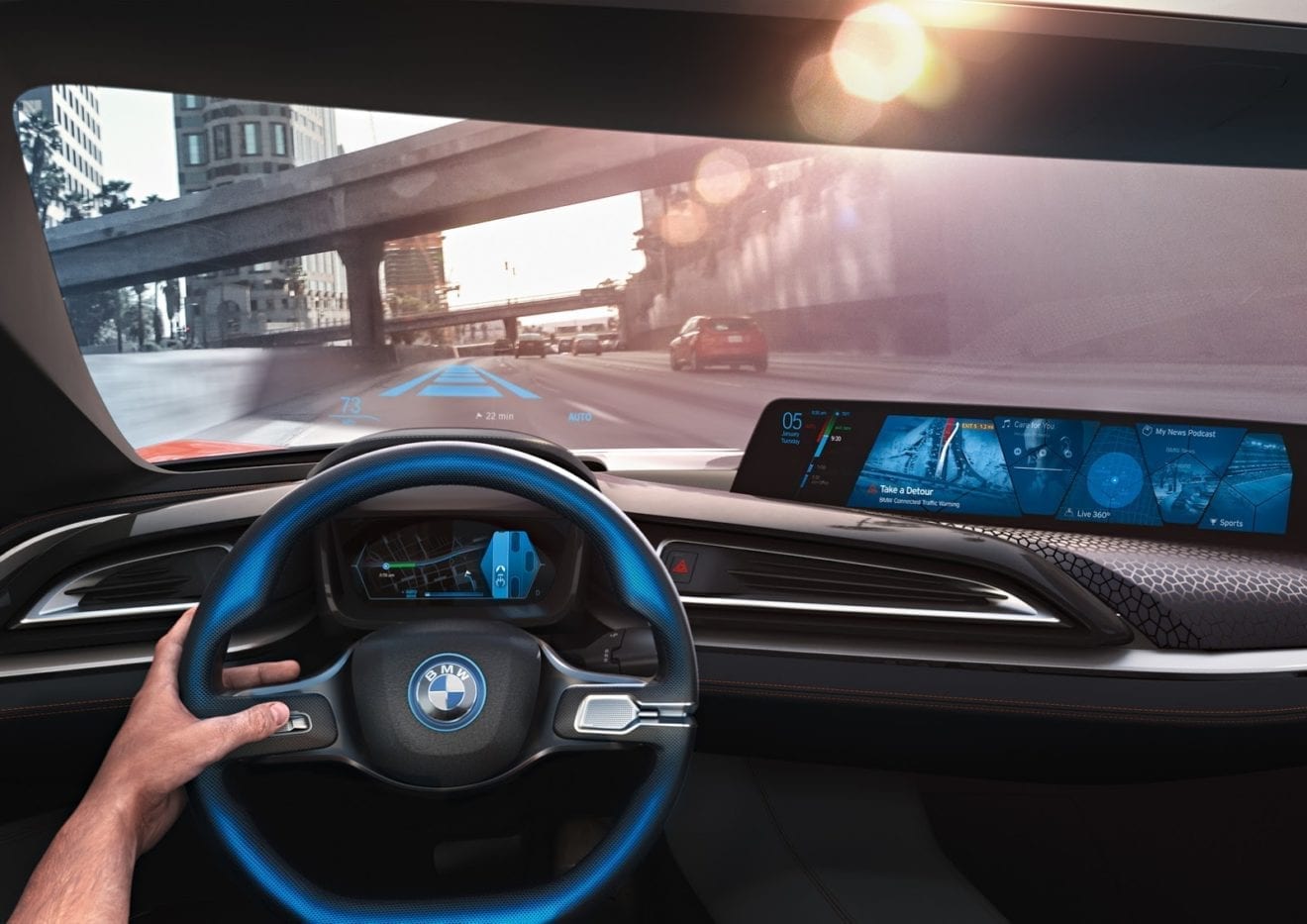
    Silicon Valley giant Intel on Wednesday (Aug 9) announced plans for a fleet of self-driving cars following its completion of the purchase of Israeli autonomous technology firm Mobileye.

    A day after closing the US$15 billion deal to buy Mobileye, which specialises in driver-assistance systems, Intel said it will begin rolling out fully autonomous vehicles later this year for testing in Europe, Israel, and the US.

    The fleet will eventually have more than 100 vehicles, according to Intel.

    The testing in real-world conditions “provides immediate feedback and will accelerate delivery of technologies and solutions for highly and fully autonomous vehicles,” said Mobileye co-founder Amnon Shashua, who is to run the unit for Intel.

    “Our goal is to develop autonomous vehicle technology that can be deployed anywhere.”

    The Intel test fleet with include various types and makes of vehicles, and capitalize on Mobileye expertise in computer vision, mapping and sensing.

    Intel, which has been expanding beyond its core of computer chipmaking, is keen for its technology to be an engine powering self-driving systems across the spectrum of vehicle manufacturers.

    “We want to enable automakers to deliver driverless cars faster while reducing costs,” Shashua said.

    Intel said the vehicles would offer “level 4” autonomy, which under industry standards represents a “high” level of autonomy just below the fully automated level 5.

    Most major automakers and several other technology firms have been stepping up efforts on autonomous driving in recent years, contending these systems will eliminate the vast majority of road accidents. Apple has a testing permit in California.

    German luxury carmaker Daimler and auto parts supplier Bosch have announced plans to work together to create completely driverless cars in the next few years.

    US-based Tesla boasts that all its models are built with the hardware for self-driving in event regulators five the technology a green light.

    US car rental giant Avis Budget earlier this year announced it will team up with Waymo on the self-driving cars being tested on Arizona roads.

  • Pandora APAC sales up 34%, eyes 60 more China stores

    Pandora APAC sales up 34%, eyes 60 more China stores

    Danish jeweller Pandora posted a surge in its APAC sales for the second-quarter period, as the Copenhagen-based firm signalled a shift toward the Chinese market to fight trading headwinds in the U.S.

    The jewellery maker known for its customisable charm bracelets said total revenue hit DKr4.83bn ($770m) – a 12 per cent gain on the previous year, but short of analysts’ expectations for DKr4.91bn.

    Net profit for the period dipped from DKr1.2bn to DKr1.1bn – analysts had expected it to be flat, said the news source. EBITDA reached DKr1.61bn, compared with an expected 1.74 billion.

    “We are pleased with the results for the second quarter delivering double digit top-line growth and continued healthy profitability,” said Anders Colding Friis, chief executive of Pandora.

    By market, Pandora said the US “remains challenging,” despite a comparable sale increase of 8 per cent. The EMEA increased 10%, driven by the UK, while APAC (China and Australia) revenues grew 34 per cent.

    “Markets like China, Italy, the UK, and Australia performed well, reflecting the significant growth potential for our product offering in both our newer and more developed markets. We also continue to make strides in improving the quality of our global store network and added net 70 new concept stores during the quarter.”

    The news follows on from Pandora’s first quarter period announced earlier in the year where it was reported that China revenues grew 91% in local currency.

    As a result, the company elevated its strategic focus in China to open 60 Pandora-branded stores in the nation this year, up from its previous estimate of 50.

  • Wireless VR headsets to strain data networks

    Wireless VR headsets to strain data networks

    Wireless VR headsets will further strain telecoms networks, with data consumption from the devices set to grow by over 650% over the next four years to over 21,000 petabytes by 2021, Juniper Research predicts.

    When combined with traffic generated by VR headsets connected to PCs and consoles, this consumption will reach over 28,000 petaytes, the research firm said in a new report.

    VR requires fast data speeds to stream content effectively, ensuring that by 2021 data demand for each VR device is expected to exceed that of 4G, Juniper Research said. Growth in traffic will be driven by the need for higher image quality and framerates as VR becomes more mainstream.

    The report recommends that operators be brought into the VR standards conversation now to prepare for the growth in consumption and help make VR more accessible.

    Technologies designed to reduce the amount of data processing required, such as foveated rendering, will also need to be universally adopted.

    Meanwhile, although the first wave of the new generation of VR headsets has concentrated on single-user experiences, the report predicts that social VR will play a more important role in the future of the technology.

    Companies such as Facebook and WeChat are developing VR platforms and several popular VR games are incorporating social elements.

    “VR is currently seen as very isolating,” research author James Moar said. “The promise of having new worlds to explore is much more compelling when other people can share the experience, which needs social games and social interfaces, as well as the development of cross-platform standards.”

  • Fossil Group Asia sales down 9%, CFO quits

    Fossil Group Asia sales down 9%, CFO quits

    American watchmaker Fossil Group said total revenues took a dive in the second-quarter, on the back of soft sales in traditional watches and retail disinterest across all regions including Asia.

    For the three months ended July 1, the company’s net sales slipped 12.9 per cent to US$596.8 million from $685.4 million.

    By region, Asia was the best performing market, but still recorded a 9 per cent dive in revenues. This bettered the Americas down 16 per cent, while sales in Europe fell 10 per cent, said Fossil Group.

    By category, watch sales decreased 9 per cent, despite an increase in the connected watch business.

    Sales also declined in the company’s leather category, which was down 25 per cent, and in the jewellery category, slumping 22 per cent.

    “With the first half of 2017 now behind us, we believe that our traction in wearables, our significant progress in our supply chain evolution and our reduction in infrastructure costs show that we are pursuing strategies that can improve our profitability and return the company to solid growth over time,” said Kosta Kartsotis, chief executive officer, Fossil Group.

    The company’s net loss came to $344.7 million, or $7.11 a diluted share, compared with net income of $6 million, or 12 cents, a year earlier.

    Moreover, Fossil’s chief financial officer Dennis Secor has left the company due to personal/family reasons. The company said Jeff Boyer is set to join Fossil on October 16 as the new CFO. He is already a board member.

  • AirAsia now flies from Kuching to Langkawi, four times a week

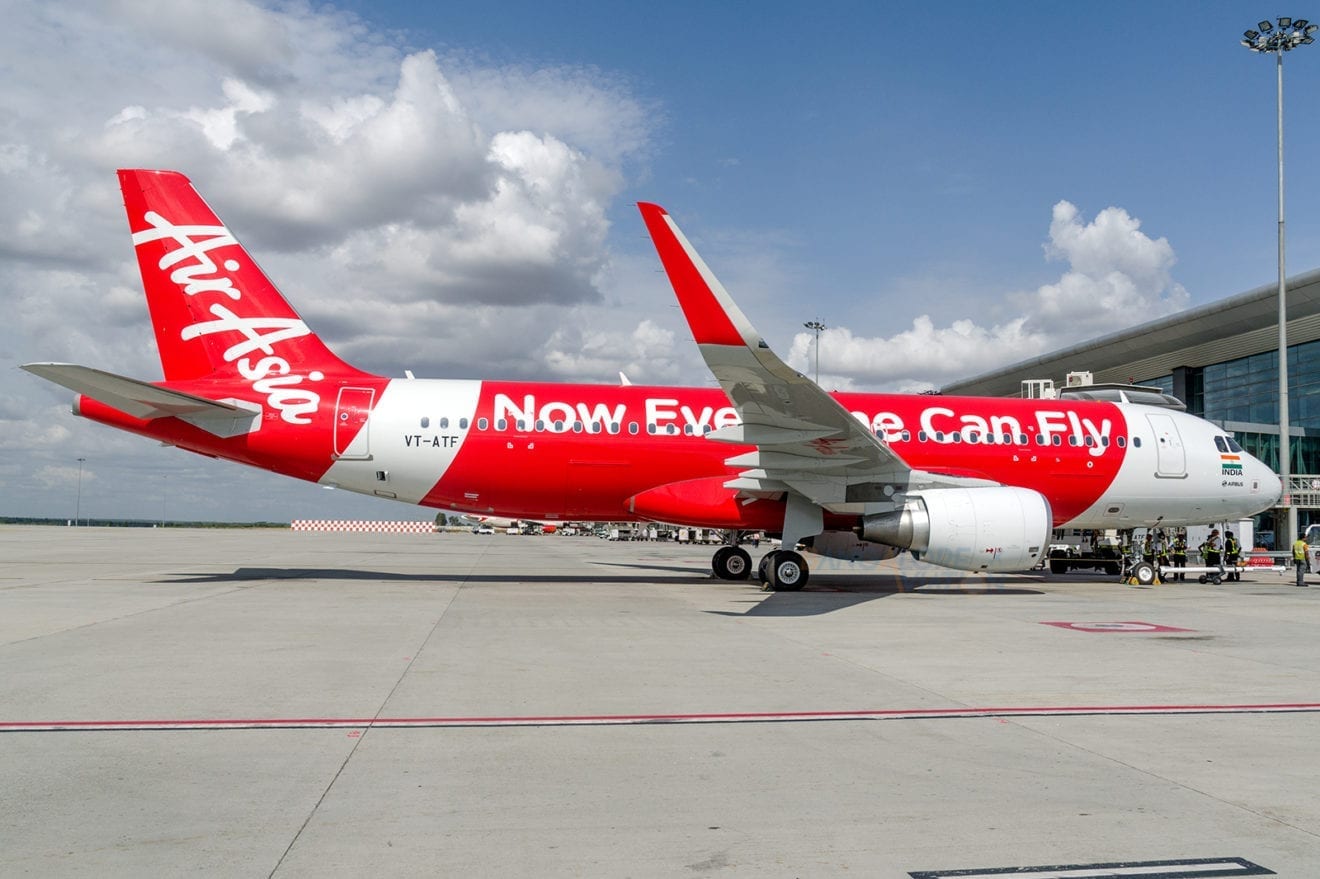
    AirAsia today launched its inaugural flight from Kuching to Langkawi, operating four weekly flights on Monday, Wednesday, Friday and Sunday.

    AirAsia Commercial Head Spencer Lee said the airline is committed to continue growing the hub as Sarawak has a lot to offer beyond being a tourism destination.

    “Increasing connectivity into the state is important for us as it is also one of the top preferred investment destinations in the country, with the Sarawak Corridor of Renewable Energy (SCORE) attracting investors to set up manufacturing plants on ICT, agriculture, industrial and many more,” he said.

    “We have flown about 3.2 million guests in and out of the Kuching hub last year. We believe the introduction of the two new routes; to and from Kuching, namely Pontianak recently and Langkawi today, echoes our commitment in Sarawak,” he said.

    Speaking to the media at the airport’s VIP lounge here, Lee said AirAsia is expected to launch another new international route from Kuching by the end of this year.

    “We will be introducing one more new route, flying to an international destination from Kuching within these few months. We hope to create more routes next year,” he added.

    Meanwhile, state Tourism, Arts, Culture, Youth and Sports Minister Datuk Abdul Karim Rahman Hamzah said AirAsia has done plenty to bring in more routes and it is time for the private sector to play their role.

    “This is a good opportunity for us to attract those from Langkawi as AirAsia is the only airline that connect Sarawak to Langkawi now. We cannot expect the airline to introduce a new route and then assist us in promotion and marketing.

    “Hence, I hope the private sector, especially tour operators as well as the Sarawak Tourism Board, will take the initiative to promote and market Sarawak to the world,” he said.

    “We need more qualified and trained tour guides, commercial complexes as well as more private hospitals to be set up to boost our medical tourism,” he added.

    Karim also touched on negotiations to construct a Low Cost Carrier Terminal (LCCT) in Kuching with AirAsia, and said he hopes it will materialise soon.

    “We are still discussing and negotiating with AirAsia on the LCCT project. I will reveal more when things have being finalised,” he said.

    AirAsia now flies to 11 destinations from Kuching, with more than 220 weekly flights. Besides Langkawi, other destinations are Miri, Sibu, Bintulu, Kota Kinabalu, Johor Bahru, Kota Bharu, Penang, Kuala Lumpur, Singapore and Pontianak.

  • Nissan to sell its electric battery business to GSR Capital

    Nissan to sell its electric battery business to GSR Capital

    Nissan Motor Co said on Tuesday it has agreed to sell its electric battery business to Chinese investment firm GSR Capital for an undisclosed sum.

    The business to be sold to GSR includes battery plants in Tennessee, England and Japan, the Japanese automaker said in a statement.

    Nissan will first take full control of the business – Automotive Energy Supply Corp – by buying the combined 49 percent minority stake held by NEC Corp and its subsidiary NEC Energy Devices. NEC Corp said it has approved the sale of its stake.

  • Nokia expands development, deployment of 5G First

    Nokia expands development, deployment of 5G First

    Nokia has announced plans to implement early 5G specifications, enhancing its ‘5G First’ portfolio with the 3GPP 5G Phase I protocol, to meet growing interest for 5G mobility applications emerging from operators, notably in markets like US, China, Japan and South Korea.

    In a statement, Nokia said the vendor will push for accelerated 3GPP industry standardization while building on early customer experiences with its Nokia 5G First end-to-end solution, launched last February.

    This 5G NR (New Radio) air interface standard, which is due in early 2018, is designed to support a wide variety of 5G devices and services.

    Nokia said it is building on extensive field experience already gained with Nokia 5G First, which has generated valuable insights into areas such as the use of radio propagation in higher frequencies, massive MIMO and beamforming, integration with existing networks versus standalone implementations, the use of small cells in 5G deployments, and the importance of cloud native core and cloud RAN technologies.

    ”Through 5G First, Nokia is evolving its 5G strategy to drive the industry rapidly towards the adoption of standards-based commercial applications as early as 2019,” said Marc Rouanne, president of mobile networks at Nokia.

    “Doing so will require broad cross-industry support, and we call upon regulators and governments to free up and enable the use of spectrum at low-, mid- and high-frequency bands for trials,” said Rouanne.

  • AirAsia May Launch Hua Hin Flights

    AirAsia May Launch Hua Hin Flights

    Malaysia’s AirAsia has indicated the possibility of launching the first regular international flight to Hua Hin in December.

    The no-frills carrier intends to offer a daily service from Kuala Lumpur airport 2 (Klia2) to Hua Hin airport with Airbus A320 narrow-body jets.

    The plans can only be confirmed once the Ministry of Transport approves a package of incentives that the airline has requested to make the flight viable, Darun Saengchai, director general of the Department of Airports, told the Bangkok Post yesterday.

    He did not disclose when the approval is expected, saying only that it should not take too long if the airline is to meet the planned launch date.

    He also did not specify the extent of incentives AirAsia asked for, but insisted that they will not be exclusive to the Malaysian airline, but also offered to others wanting to start international flights to Hua Hin.

    Insiders yesterday confirmed to the Post that AirAsia asked departments to waive parking and landing fees and halve the passenger service charge (airport tax), which is at 400 baht for international passengers, for up to five years and reduce office space rental charges at the airport.

    AirAsia has also asked for a US$15 (500 baht) cash incentive for each international passenger it brings on the flight.

    Officials from local government, state agencies and the private sector held a meeting last week in the district of Prachuap Khiri Khan to make arrangements for the planned AirAsia flight launch.

    AirAsia yesterday would not confirm details of its planned Hua Hin flight launch.

    The department, local authorities and the Hua Hin tourism and hospitality industry are enthusiastic about AirAsia’s plan, which will address the lack of regular commercial flights to the vacation destination.

    Commercial air services to Hua Hin were sporadic in the past, and airlines retreated due to inadequate passenger traffic volumes.

    Thailand’s commuter airline Kan Air was the last to stop its limited domestic flights to Hua Hin early this year due to aircraft issues.

    Earlier, no-frills Thai Lion Air dropped its Hat Yai-Hua Hin flights.

  • XPO Logistics announces Q2 2017 results

    XPO Logistics announces Q2 2017 results

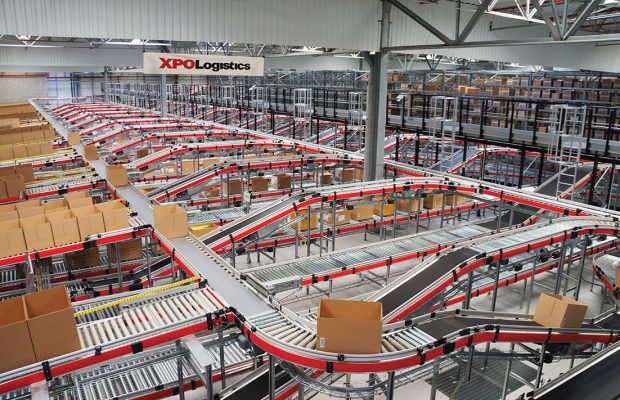
    XPO Logistics announced financial results for the second quarter 2017. Revenue was US$3.76 billion for the quarter, compared with $3.68 billion for the same period in 2016. Revenue increased year-over-year by $210.4 million, excluding the second quarter 2016 revenue from the North American truckload unit divested in October 2016. Net income attributable to common shareholders was $47.6 million for the quarter, or earnings of $0.38 per diluted share, compared with net income attributable to common shareholders of $42.6 million, or earnings of $0.35 per diluted share, for the same period in 2016.

    Adjusted net income attributable to common shareholders, a non-GAAP financial measure, was $75.0 million, or adjusted earnings of $0.60 per diluted share for the second quarter of 2017. This compares with adjusted net income attributable to common shareholders of $50.4 million, or adjusted earnings of $0.42 per diluted share, for the same period in 2016. The adjusted net income attributable to common shareholders for the second quarter 2017 excludes: $19.9 million, or $12.8 million after-tax, of integration and rebranding costs; $27.2 million, or $17.6 million after-tax, from non-cash unrealized losses on foreign currency contracts; and a loss on the conversion of convertible notes of $0.4 million, or $0.3 million net of tax. Reconciliations of non-GAAP financial measures used in this release are provided in the attached financial tables.

    Adjusted earnings before interest, taxes, depreciation and amortization (“adjusted EBITDA”), a non-GAAP financial measure, improved to $370.8 million for the quarter, excluding $19.9 million of integration and rebranding costs. This compares with $354.9 million of adjusted EBITDA for the same period in 2016, which included the North American truckload unit.

    XPO Logistics generated $216.0 million of cash flow from operations and $98.1 million of free cash flow in the quarter.

    Raises financial guidance
    The company raised its full year targets for adjusted EBITDA to at least $1.365 billion in 2017 and at least $1.6 billion in 2018.

    XPO Logistics reaffirmed its 2017-2018 cumulative free cash flow target of approximately $900 million, including at least $350 million of free cash flow generated in 2017.

    CEO comments
    Bradley Jacobs, chairman and chief executive officer of XPO Logistics, said, “Our strong start to the year accelerated in the second quarter, with record results for revenue, net income and adjusted EBITDA. The most notable growth came in last mile and contract logistics – two fast-growing parts of the supply chain where we hold leading positions in e-commerce. Importantly, we’re continuing to grow adjusted EBITDA faster than revenue in both transportation and logistics. In North American less-than-truckload, we increased volume while improving the adjusted operating ratio to 84.6%. This is the best quarterly adjusted operating ratio for our LTL business in at least two decades.”

    Jacobs continued, “The investments we’re making in sales and technology have already yielded a record $1.43 billion of new business through June, which is 62% higher than last year. Our global pipeline stands at over $3.3 billion, our cost initiatives have substantial runway, and the operating environment is favorable. Given these strong fundamentals, we raised our two-year guidance. Our new targets are for adjusted EBITDA of at least $1.365 billion in 2017 and $1.6 billion in 2018.”

    Second quarter 2017 results by segment
    Transportation: XPO Logistics’ transportation segment generated revenue of $2.41 billion in the quarter. This compares with $2.42 billion for the same period in 2016, which included $133.4 million of revenue from the North American truckload unit divested on October 27, 2016. Segment revenue was led by increases in truck brokerage and last mile, partially offset by a decrease in global forwarding revenue and unfavorable foreign exchange rates.
    Operating income for the transportation segment increased to $160.0 million in the quarter, compared with $153.2 million a year ago. Adjusted EBITDA for the segment was $282.7 million. This compares with $275.7 million a year ago, which included the truckload unit. The increases in operating income and adjusted EBITDA were primarily due to an improvement in adjusted operating ratio in the North American less-than-truckload unit, to 84.6%, partially offset by higher purchased transportation costs in truck brokerage and intermodal.

    Logistics: The company’s logistics segment generated revenue of $1.40 billion for the quarter, compared with $1.33 billion for the same period in 2016. The year-over-year increase in revenue was primarily due to strong demand for contract logistics in both Europe and North America, partially offset by a decline in managed transportation revenue and unfavorable foreign exchange rates. In Europe, contract logistics growth was led by e-commerce and cold chain contracts in the UK and the Netherlands. In North America, the largest gains came from the e-commerce and industrial sectors.
    Operating income for the logistics segment increased to $64.3 million, compared with $51.1 million a year ago. Adjusted EBITDA for the segment improved to $123.0 million, compared with $106.9 million a year ago. The increases in operating income and adjusted EBITDA were primarily due to revenue growth, productivity improvements and SG&A cost reduction.

    Corporate: Corporate SG&A expense was $39.3 million for the quarter, compared with $34.0 million for the same period in 2016. The increase in corporate expense primarily reflects an increase in share-based compensation expense tied to the increase in the share price of XPO stock.
    Six Months 2017 Financial Results

  • Thailand to invest in infrastructure development

    Thailand to invest in infrastructure development

    Thailand’s strategically important geographic location gives it ample advantage to become a primary regional economic hub, not only in trade, investment and tourism, but also in communication and transportation networks that connect to other regions around the world. And the government has in recent years made investment in domestic infrastructure its top priority.

    The Thailand infrastructure action plan for 2017 is worth US$25.2 billion and includes 36 projects, covering rail, roads, air transport and ports around the country. The government plans to begin selling Thailand Future Fund investment units in October as an infrastructure investment alternative. It’s a way of raising liquidity from the public for the construction of massive state infrastructure projects. The unit sales are expected to reap $1.1 billion.

    The Industry Ministry recently revealed that Thailand’s emerging Eastern Economic Corridor (EEC) is expected to see investment in infrastructure projects reach $43 billion in the next five years — for airport expansion, new railways and cities, port development and spurring modern industry.

    Helping ensure the success of its infrastructure development, the government will provide full support, including eliminating barriers, rules and regulations in order to generate real, high-value investments, as well as a one-stop service to facilitate investment in the EEC. The Board of Investment of Thailand (BOI) in turn offers enticing and competitive privileges, including a corporate tax holiday for up to 15 years, exemption from import duties on machinery and raw materials, 17% personal income tax credits for executives, experts and researchers working in designated zones, grants to support investments in R&D, innovation and human resource development, permission to own land for promoted activities, and one-stop service to facilitate business operations.

    An integrated local and cross-border transportation network

    Fast-paced development of a comprehensive network of interconnecting transport routes across the country will accommodate rapidly surging demand for both domestic and cross-border transportation. Government agencies are expediting efforts to call for bids on several new mass-transit routes and an expressway system throughout Greater Bangkok, and motorway, double-track rail and high-speed train projects across the nation.

    Prime Minister Prayut Chan-o-cha has made a personal appeal for public support for the Thai-Chinese high-speed railway planned to link Bangkok to the northeastern province of Nakhon Ratchasima. The same railway is envisioned as connecting with Chinese high-speed trains in Laos traveling to China, as part of a joint Chinese-Thai effort which forms part of Beijing’s vast infrastructure drive known as the “One Belt, One Road” initiative.

    Another high-speed train project, the 193.5-kilometre Bangkok-Rayong route, which will link the Eastern Economic Corridor to Suvarnabhumi, Don Mueang and U-tapao international airports, is in now undergoing a feasibility study and preparations for a public private partnership (PPP).

    Elsewhere in Thailand, a Bangkok-Hua Hin high-speed railway and a mass-transit rapid monorail system for Phuket are currently being assessed for feasibility.

  • Geodis to manage BMW’s distribution centre in Korea

    Geodis to manage BMW’s distribution centre in Korea

    In April 2017, BMW Korea opened a new regional parts distribution centre for BMW, MINI and motorcycle spare parts in Anseong, Gyeonggi Province, 70 kilometres south of Seoul. GEODIS is entrusted with the logistics of this over 50,000 sqm site, one of BMW’s biggest Regional Distribution Center in the world.

    On this new site, GEODIS annually manages over one million order lines and handles up auto parts deliveries across South Korea. The Group deals with thousands automotive parts stored, more than twice the volume compared to the previous facility.

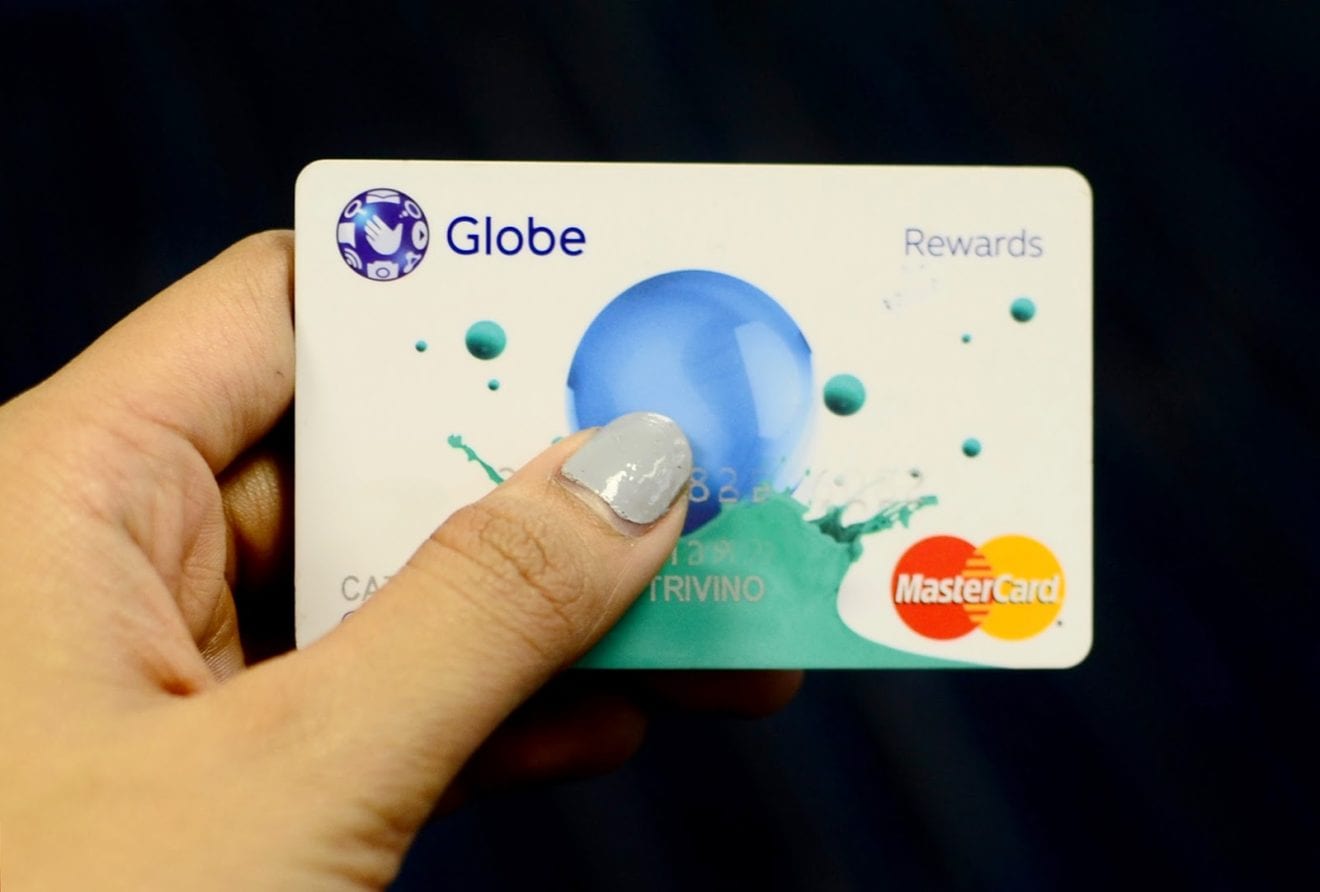
  • Globe’s GCash debuts QR code payments

    Globe’s GCash debuts QR code payments

    Globe Telecom’s GCash has launched the Philippines’ first QR code payment service, which it has named GoPay.

    The GoPay feature within the GCash mobile money app will allow customers to use their GCash account to pay for goods and services using their smartphones by scanning QR codes displayed by merchants.

    The service will enable merchants to accept mobile payments using their own GCash wallets, eliminating the need for eftpos machines. GCash said this will make mobile payment acceptance available even to roaming vendors and small neighborhood stores.

    Alibaba’s Ant Financial, which popularized QR code payments in China via its Alipay subsidiary, invested in GCash’s immediate parent company Mynt in February to help develop the Philippines’ digital money market.

    “Our goal has always been to make finance more inclusive by building a cashless ecosystem. GoPay QR payments solution will close the loop and drive merchants accepting GCash payments,” Mynt CEO and President John Rubio said.

    “We plan to extend this service from all types of retailers nationwide down to our favorite fishball vendor.”

    GCash is available for both Android and iOS, and users can deposit funds into their GCash wallet at over 12,000 partner outlets across the Philippines.

  • Paypal launches innovation labs in India

    Paypal launches innovation labs in India

    Online payments company PayPal has set up two new innovation labs at its Chennai and Bangalore tech centers in India.

    These are the first of such facilities in India set up by the company and third globally after the US and Singapore.

    These labs will support projects in machine learning, artificial intelligence, data science, IoT, software-defined radio, virtual and artificial reality and basic robotics, among other fields, according to a release shared by the company.

    They will also be integrated with some of the company’s ongoing initiatives, such as the PayPal Incubator, to develop and nurture fintech startups, the statement added. Launched in 2013, PayPal’s startup incubator offers office space, mentoring and technical training, and networking opportunities to companies incubated.

    “The focus will be on fuelling new-age technology and giving rise to unconventional ideas with the potential to transform the ecosystem we operate in,” said Mike Todasco, director of Innovation, PayPal.

    Paypal is one of the companies that have made a play for India’s fintech space after the government’s recent demonetisation move.

    To strengthen its position in the market, PayPal has reportedly sought a wallet (prepaid payment instrument) licence from the Reserve Bank of India.

  • 3 HK upgrading 4G capacity on MTR

    3 HK upgrading 4G capacity on MTR

    3 Hong Kong has completed the first phase of a project to enhance its 4G network capacity at 18-high traffic MTR stations.

    The company has upgraded its equipment at the concourses of the Tsim Sha Tsui, Prince Edward, North Point, Quarry Bay, Yau Tong, Jordan, Mong Kok and Yau Ma Tei stations.

    The whole project is expected to be complete by July 2019, and will involve upgrades throughout stations and tunnels to increase its 4G network capacity at the 18 MTR stations manyfold.

    “Using mobile service at MTR stations has become an integral part of our daily lives. 3 Hong Kong is therefore working on 4G enhancement at 18 high-traffic MTR stations to boost capacity manyfold and strengthen the network,” 3 Hong Kong CTO of Mobile Daniel Chung said.

    “The project is gradually being extended to other stations. We are constantly monitoring 3 Hong Kong’s network performance to ensure that customers enjoy an advanced mobile network featuring comprehensive coverage, high capacity, high speed and high reliability, outside and inside of MTR stations.”