Author: Mei Ling Tan

  • Philippines may lift foreign ownership caps on telcos

    Philippines may lift foreign ownership caps on telcos

    The Philippines government is considering lifting foreign ownership restrictions on local telecoms companies and other utilities to help stimulate the industry.

    The government has proposed to raise the current cap limiting foreign direct ownership to 40% of a utility company up to 70%. While the economic planning ministry believes the change could be implemented with the passing of a new law, the 40% cap is enshrined in the constitution and some analysts believe lifting the cap would require a constitutional amendment, which would be very difficult to pass.

    The Philippines’ duopoly of telecoms operators are both part owned by foreign investors. PLDT is around 25% owned by Hong Kong based First Pacific and Globe Telecom is 20% owned by Singtel and operated as a joint venture with Ayala Group.

    Philippines president Rodrigo Duterte has been firmly calling or the telecoms industry to improve services for Filipinos, and has threatened to bring in new competition to improve competition and quality. He has also asserted that foreign investment is needed to improve the Philippines’ telecoms sector.

    Duterte is scheduled to deliver his second State of the Nation Address today.

  • AirAsia looks to consolidate units under “One AirAsia” plan

    AirAsia looks to consolidate units under “One AirAsia” plan

    AirAsia’s group CEO, Tony Fernandes, has announced his intention to consolidate the airline’s Southeast Asian units under one list holding company.

    Known as the “One AirAsia” plan, AirAsia plans to unify its units in Malaysia, Indonesia, the Philippines and Thailand, as well as go public in two years’ time, according to Bernama. Fernandes said the airline’s group deputy CEO Rozman Omar, is “working hard” to create the group company and that the corporate structure exercise requires plenty of effort.

    This is due to the fact that AirAsia has to persuade the Malaysian, Indonesian, Philippine and Thai governments to change ownership rules. He added that having a listed holding company within AirAsia is “working really well” as the airline is reducing costs, combining its services and standardising its products.

    AirAsia’s recent launch of direct flights from Kuala Lumpur to Davao showed the airline’s commitment in expanding in the Philippine market, said Fernandes. AirAsia also plans to grow its fleet to aid its expansion plan, as well as the increasing demand for affordable air travel.

    Earlier this year, AirAsia said its current focus will be on “digitalisation”, as it recognises that travellers of today want a personalised and seamless travelling experience. It also launched MyCorporate, a suite of products exclusively made with its business traveller in mind. Companies that sign up to MyCorporate will have access to a convenient, easy-to-use online booking system and comprehensive reporting to keep track of corporate travelling expenses.

    Recently, the airline found itself in a quandary due to the existence of a doppelganger. Going by the name of Azeri Asia TV, the media channel is owned by Azeri Asia Holdings (M) Sdn. Bhd. The loyalty programme of the channel too bears resemblance to that of AirAsia’s, flaunting the name “Azeri Asia TV BIG Loyalty Programme”. AirAsia in a press statement cautioned the public and said that this infringes on its intellectual property rights. It added that it had “never authorised Azeri Asia to use AirAsia’s corporate identity”.

  • The State Of The Aging Craft Beer Industry

    The State Of The Aging Craft Beer Industry

    The craft beer industry may still have some few more good years left in it, but its old has started showing after years of enjoy double-digit growth over the past years. Single-digit growth only happened last year and with it come the concern that the industry is set for a poor performance.

    While several factors played a hand in the slowdown, it is most likely that the craft beer industry from here on will be on a downhill journey.

    The Industry Is Aging Well

    As of 2016, the Brewers Association said the growth of the craft beer industry slowed shy of 6%, which was a seven digit drop from that of 2015 and a twelve digits from that of 2014. Well, nothing good lasts forever; likewise, no business can register a torrid growth forever. But it can be said that the craft beer industry did last longer than expected and its reached full maturity. Now focus is on what the future hold for the industry’s producers.

    From the chart above, it’s clear that the industry as seen the last of its good days and it most likely is a victim of its success.

    Boston Beer may not be the first in the craft beer industry but it rapidly became the face of craft beer product. Its success was the start of many other home brewers making their leap in the big-league. The Samuel Adams brands also contributed to the cultural changes that lead to changing how a beer tasted a transition for the weal amber-color beer that were in mass production done by Miller, Molson Coors, and Anheuser-Busch InBev to the dark and richer-tasting brew.

    Bound To Be Bigger Than Ever

    With more than 5,300 breweries in operation, that is an outstanding number that the country has seen it is history. And of these, 99% are in the craft brewing industry. That is a significant figure, a huge leap from that of less than 2,000 breweries in 2011. Based on that information, the breweries growth stands at around 21% annually. Is the craft beer industry running its last leg?

    Boston Beer attribute to its depleted sales to wholesalers and retailers over the last twelve months to the increased demand for shelf space. The wholesalers and retailers are considered as the bridge between the producers and the consumers.

    The growth of the craft breweries caught the attention of mega-brewers but their sales soon took a similar direction, flat-lining and taking a decline soon after. To answer the poor turn of events, Molson launched Blue Moon and Anheuser-Busch followed suit with Shock Top; nevertheless, the domestic beer sales never improved. So, they began purchasing the smaller players in the industry and Anheuser-Busch bagging much of the competitions. Other big players that made significant investments in the craft brewery industry include Constellation, Heineken, and Molson Brands (NYSE:STZ).

    The decline seen in the brewing of craft beers may be attributed to the turn of events stated above. Nearly 1.2 million barrels have been taken out via the acquisitions must of which was from regionals with much of this coming from micro-breweries and brewpubs. As such, the Brewers Associated noted, based on that data, that the craft is bound to get even smaller. This craft beer industry report has an even more in-depth look into this.

    Continuing To Take Market Share

    According to the trade group, a craft brewery qualifies to be considered as such if it produces around six million barrels annually and with a control or ownership by a mass brewer that is below 25% and mostly uses traditional brewing ingredients and methods. Ballast Point Brewing was a known craft brewer; it was bought by Constellation Brands, an acquisition that saw it pulled out of the group. The same fate befall all the other craft beer makers that were acquired by Anheuser-Busch over the past years.

    The remaining breweries, as of 2016, account for the 1.4 million barrels recorded during the same year which was higher than the volume of barrels taken out and a sign of a better things still to come for the industry. Nevertheless, the many craft brewers still in play contributed to an increased competition for the limited shelf space.

    A Shakeout In The Works?

    The craft beer industry is most likely going to consider some reductions and making alliances over the next years. 97 breweries close in 2016, 29 more than what was seen in 2015 and 51 the year before that. The numbers may seem alarming but the market still has many old players and new ones who keep coming in; thus the increased competition only promises to make it harder for brewers to operate profitably.

    Ultimately, the industry will have to consider a craft beer shakeout which may help keep the breweries that are in the pink operational even as the few local favorites fade off.

  • Maritime industry experts to discuss cyber security

    Maritime industry experts to discuss cyber security

    IT protection and cyber security will take center stage at the biennial Seatrade Offshore Marine and Workboats Middle East (SOMWME) exhibition and conference, taking place at the Abu Dhabi National Exhibition Centre (ADNEC) from 25 – 27 September 2017.

    The focus on IT systems at sea follows the recent global WannaCry attack, which shut down computers used by Spanish ISP Telefonica, FedEX and the UK’s National Health Service, among others, affecting some 200,000 computers in 150 countries. This was followed later in May with the British Airways outage, which saw hundreds of flights cancelled over a holiday weekend and £500 million wiped of parent company IAG’s value.

    Peter Broadhurst, Senior Vice President Safety & Security Services, Inmarsat, the mobile satellite company, will deliver the keynote presentation in the Knowledge Theatre, “Cyber Security: Protecting the Industry”, assessing the new risk factors of an increasingly connected shipping industry and how industry players can protect themselves against cyber security threats.

    “Hacking, ransomware and system outages have long been a concern for the shipping industry, particularly with the advent of the Internet of Things (IoT) and the connected ship. These risks are heightened due to the significant growth in networks of physical objects accessed through the internet,” said Broadhurst.

    According to a 2016 global analysis report by the Ponemon Institute, which surveyed data collected from 383 companies in 12 countries, the average total cost of a data breach stands at US$4 million, a figure that has increased 29% since 2013. The average cost per lost or stolen record is $158, with a 15% average price increase since 2013. In total, the number of security incidents reported in 2015 stood 63% higher than in 2014.

    Emma Howell, Group Marketing Manager, Seatrade portfolio commented, “Over recent weeks and months, we have seen huge organisations crippled by ransomware attacks and IT meltdowns – compromising systems and costing some businesses many millions of dollars. The need for the shipping industry to tackle this growing menace head-on is greater than ever before and we look forward to welcoming decision makers and industry leaders to debate these important issues.”

    However, compounding the issue, insurance providers are yet to close all of the gaps in their policies, leaving shipping companies at even greater risk and facing huge financial losses.

    “Most insurance policies have Cyberattack exclusion clauses, for property damage and business interruption and this exposes shipping companies and ship owners to huge risks. We have seen some response from the insurance industry but until comprehensive products are rolled out the responsibility of backing up systems, protecting data and ensuring a network is robust and secure, very much remains with the shipping company and ship owner,” added Howell.

  • BCA Wins Gallup Great Workplace Award for Second Time

    BCA Wins Gallup Great Workplace Award for Second Time

    Qualified and trained human capitals is an important aspect for Bank Central Asia, also known as BCA, in maintaining competitive advantage and in supporting business strategy.

    BCA constantly strives to improve human capital through a range of effective development programs and quality staff recruitment. On that commitment, BCA has again been chosen to be the only company from Indonesia to be awarded the Gallup Great Workplace Award.

    The award was presented by Head of Consulting Gallup, South-East Asia Taek Lee to BCA’s Vice President Director Armand Hartono at Hotel Indonesia Kempinski, Jakarta. Also present at the award ceremony was BCA Director Lianawaty Suwono and Head of Human Capital Management Division of BCA Hendra Tanumihardja.

    “Convenience, safety, and reliability are BCA’s top priorities when providing financial services to all BCA customers. We are determined to continue to be a leader in the national banking industry that contributes greatly to the Indonesian economy. BCA recognizes that the priorities and all of these business strategies rely on the support of qualified employees. To that end, BCA will continue to improve the competence of human capitals through coaching, training, and learning, “Armand said on Saturday (7/22).

    The company provides continuous training and development programs, instills performance-based work culture, and actively provides career development opportunities for 25,073 employees by 2016.

    These development programs are balanced with BCA’s efforts to build work-life balances to improve employee productivity and effectiveness. The Gallup Great Workplace Award received by BCA today is an appreciation of BCA’s commitment.

    The Gallup Great Workplace Award is an award initiated by Gallup’s strategic consulting firm. This award is an appreciation of the companies that succeeded in building a positive and productive work environment, helping the company achieve the best performance.

    It is also a differentiator between the Gallup Great Workplace Award with other awards, namely this award sees the relationship between engagement with the achievement of business companies/organizations.

    “The Gallup Great Workplace Award appreciates the company’s commitment to building workplaces that give employees energy and enthusiasm to work every day. We recognize that high engagement not only produces stronger business results, but also improves the welfare of every employee and their family. Employee wellbeing is the company’s essential contribution, “said Taek Lee, Head of Consulting Gallup, South-East Asia.

    Of companies worldwide meeting the criteria, only about 8 percent of companies are awarded the Gallup Great Workplace Award.

    This year, The Gallup Great Workplace Award is followed by companies from more than 30 industries, most of which come from the banking and insurance industries.

    In 2017 alone only 37 companies that get this predicate. Globally, the level of engagement among award winners is 70 percent and the ratio of between employees engaged with actively disengaged is 14:1.

    To achieve this award, companies follow the Employee Engagement Survey with employees of at least 50 employees with an 80 percent response rate. Companies earning an average grade of at least 4.4 out of 5, are eligible to be nominated for this award.

    Since its inception in 2007, BCA became the first indigenous Indonesian company to achieve GGWA in 2015 and maintain that achievement in 2017. BCA managed to get a response rate of 97 percent in Team Engagement Survey which is higher than the minimum response rate of 80 percent.

    BCA also managed to get the Team Engagement Survey score of 4.66, which is also higher than the minimum requirement of 4.4. In addition, the various Team Engagement programs conducted by the company helped boost business performance which is also one of the indicators of BCA’s victory.

    Various efforts were made by BCA to maintain a positive work environment. BCA will continue to refine human resource development programs in line with the development of the business environment and the needs of BCA.

    BCA will closely monitor the needs of human resources and continue recruitment and development efforts to prepare future generations of leaders as part of effective succession planning. BCA also consistently develops and introduces employee value proposition which is BCA’s values that emphasizes the principle of continuous improvement and friendly environment.

    “Investment in technology and infrastructure ensures BCA is able to provide reliable services through multi-channel network sharing while improving efficiency in various aspects of the business. Human capital investments are primarily in professional development and training programs, encouraging staff to work effectively and enabling BCA to provide customer service of the highest quality, “said Armand.

  • Asia stocks hit 9-1/2-year high, markets await BOJ, ECB meetings

    Asia stocks hit 9-1/2-year high, markets await BOJ, ECB meetings

    Shares scaled near-decade peak on Thursday, bolstered by a surge in global stocks to a record high on strong U.S. corporate earnings.

    Asian shares scaled near-decade peak on Thursday, bolstered by a surge in global stocks to a record high on strong U.S. corporate earnings, while investors awaited the Japanese and European central bank meetings for clues on their policy outlooks.

    MSCI’s broadest index of Asia-Pacific shares outside Japan added 0.15 percent, hovering near its highest level since December 2007.

    Japan’s Nikkei gained 0.1 percent. Australian stocks rose 0.3 percent and South Korea’s KOSPI advanced 0.15 percent.

    The MSCI World index rose for its tenth straight session on Thursday and set a record high for the sixth consecutive day, lifted by all-time closing highs on Wall Street on strong earnings reports.

    “In the U.S., the earnings season seems to be surprising a little bit on the upside,” said Bruce McCain, chief investment strategist at Key Private Bank in Cleveland.

    “What we have seen recently in the economic reports suggests it should be even better overseas… So we have come to the point where things look pretty good in the U.S. and it looks even better in prospect overseas, so what’s not to like about equities,” he said.

    The yen was marginally stronger at 111.83 to the dollar early on Thursday.

    The Bank of Japan ends its two-day policy meeting on Thursday and is expected to paint a brighter picture of the economy but cut its inflation forecasts again. It is set to keep policy unchanged and reinforce that it will lag well behind major global central banks in scaling back its massive stimulus programme.

    The euro was up about 0.1 percent at $1.1528 early on Thursday, after scaling a 14-month high this week following seemingly hawkish comments by European Central Bank President Mario Draghi.

    At Thursday’s meeting, the central bank may drop a reference to its readiness to increase the size or duration of its asset-purchase programme before announcing in the autumn how and when it will start winding down its bond buying.

    “The euro has surged enormously on the back of hopes that the ECB is going to start the process of shutting the door on loose monetary policy,” Naeem Aslam, chief market analyst at ThinkMarkets UK, wrote in a note.

    “The ECB needs to be clear about its forward guidance and it should reinforce that in a subtle manner. Coming out of the gates too aggressively would create shock waves in the market.”

    The dollar index, which tracks the greenback against a basket of trade-weighted peers, was steady at 94.762.

    The Australian dollar revisited Wednesday’s two-year high early on Thursday, still heady from the minutes of the last Reserve Bank of Australia meeting, released Tuesday, which showed the central bank had turned more upbeat on the economic outlook.

    The Canadian dollar was flat on Thursday at C$1.2601 to the dollar. On Wednesday, it touched a 14-month high on record domestic factory sales and higher oil prices.

    Oil prices, which hit a two-week peak on Wednesday on a bigger-than-expected weekly draw in crude and gasoline inventories in the U.S., were marginally lower early on Thursday.

    U.S. crude fell less than 0.1 percent to $47.10 a barrel, after jumping 1.6 percent overnight.

    Gold rose about 0.1 percent to $1,241.06 an ounce on Thursday.

  • Staggering 32.8 million people playing online games in Vietnam

    Staggering 32.8 million people playing online games in Vietnam

    The gaming market is projected to make $365 million this year, making it the 28th largest in the world.

    More than a third of Vietnam’s population play online games and they are expected to spend $365 million on virtual entertainment this year, making it the 28th biggest market in the world, according to a games data site.

    The Amsterdam-based Newzoo, which surveyed online players in major cities, estimated that 32.8 million people will be playing online games in Vietnam this year. Players’ ages range from 10 to 50 years old, with more than half of them from 21-35 and usually with a paid job.

    The survey found 45 percent of gamers play across all platforms, from PC to mobile and console.

    Women account for 43 percent of “active” players on PC/laptop, defined by those who play more than once a month, the survey found.

    This new information is important for games producers in Vietnam given the small ratio of games designed for women.

    More than half of Vietnam’s population of nearly 92 million has access to the internet.

    A report this month from social media marketing and advertising agency We Are Social found Vietnamese Facebook users had jumped 40 percent from last year to around 64 million, making Vietnam the 7th most active country on the social network.

    Google statistics in April also showed that many Vietnamese people spend their summers searching on Google and watching YouTube.

    Trailers on the site got more than 500 million views across the country in summer 2016, up a staggering 136 percent from the previous year. Every day during that summer, 100 million mobile searches were made on Google in Vietnam, it said.

  • Shippers reluctant to embrace digital solutions risk losing money

    Shippers reluctant to embrace digital solutions risk losing money

    Forwarders and shippers unwilling to implement digital solutions will increasingly be left behind by rivals able to generate cost savings and service improvements through new technologies, according to Alex Ruf, a 25-year logistics veteran and CEO of logistics marketplace book-cargo.com, one of the world’s largest freight rate search platforms.

    “It’s not about choosing whether or not to adopt new technology and working practices,” he said. “It is about when you do so – change is inevitable.”

    Ruf insisted all supply chain stakeholders – whether procuring or providing air, land or ocean forwarding services – could now reduce costs and improve supply chain transparency by deploying new technological solutions.

    “And, of course, customers also want lower quotes and improved transparency so it’s win-win,” he added.

    “Whether now or in the near future, failing to embrace digitisation and the automation of supply chains and freight bookings will have an impact on profits and customer relations.”

    Mr Ruf also claimed it was wrong to frame the discussion about new technologies entering the logistics space as a battle between incumbents and disruptors.

    “New technology does not have to be negatively disruptive to the traditional ways that forwarders and shippers conduct business,” he said. “Certainly, book-cargo.com is designed to enhance the businesses of our users, not detract from them. The feedback we get from forwarders and shippers is very positive.”

    book-cargo.com was soft launched in October last year and already has some 6,000 registered shipper and forwarder users making it one of the world’s largest freight rate search marketplaces. The system provides a fast and easy way to request and compare freight rates for global FCL, LCL, Air and Road shipments online, with comparisons possible based on price and transit time.

    book-cargo.com offers easy-to-use tariff management and rate upload functions as well as analytical tools which enable strategic planning across variables including reply times, hit ratios and most requested lanes. Online bookings can be made by forwarders, shippers or agents with just a few clicks.

    “book-cargo.com brings the freight forwarding and logistics industry into the digital age,” said Mr Ruf. “It’s already one of the world’s largest freight rate searching platforms and we are attracting more users every week.

    “Forwarders like it because they can upload their rates. Counter-parties like it because they can get an immediate response.

    “As well as shippers using it to procure rate and routing options by all modes, freight forwarders are also reaching out to other forwarders. And book-cargo.com also helps forwarders who do not have partners or agents in specific countries to find them.”

    Using book-cargo.com, Electronic Data Interchange (EDI) connections can be established to share booking details and/or shipping instructions with other users. Chat functionality has been built in to allow information and communication at the request/shipment stage. Once a booking is made, book-cargo.com provides a tailored control tower to ensure end-to-end supply chain visibility.

    “An information revolution is taking place and companies are demanding greater visibility, more sophisticated analytics and the ability to make better and faster decisions,” said Mr Ruf. “book-cargo.com facilitates this. It is open 24/7. It enables searches, comparisons and bookings to be made in just a few clicks by forwarders and shippers. And it vastly reduces the time and resources required to effectively manage supply chains for both buyers and sellers of air, ocean and land freight services.”

  • Korean online shopping growth surge as retail sales stumble

    Korean online shopping growth surge as retail sales stumble

    Online shopping is experiencing a growth surge, accounting for close to 20 percent of all retail sales in the first quarter of this year.

    Retail transactions in the three months to March totaled 96.56 trillion won (US$85.83 billion), a growth of 4.7 percent from the same period a year before, according to Statistics Korea. The sum of online shopping was 18.21 trillion won, or 19 percent of the total.

    This represents a 19.6 percent leap from the same quarter of the previous year and the largest total since related record keeping began in 2010.

    The ratio of online sales to all retail sales has grown in double digits every quarter since the fourth quarter of 2012, when it was 10.2 percent. It reached 17.7 percent in the last quarter of 2016.

    In monetary terms, the amount of transactions has also expanded by double digits, increasing the growth pace from 11.2 percent in the first quarter of 2013 to 23.2 percent in the third quarter of 2016. It fell to 19.6 percent in the first three months of this year.

    The mobile sector played a critical part in contributing to online shopping, accounting for 59 percent of the sales in March.
    “Mobile shopping has grown with the wide penetration of smartphones, and shopping malls have also been pushing their mobile platforms,” a Statistics Korea official said.

    Such high performance of online sectors contrasts with sluggish figures in the overall retail market. Retail sales gains that reached over 10 percent in the first two quarters of 2011 shrank to 0.6 percent by the second quarter of 2013. They bounced back somewhat to 3-5 percent last year.

    Sales at department store, the strongest source of offline shopping, have backtracked. The monetary amount of transactions fell 1.5 percent in January from a year before, 5.6 percent in February and 3.5 percent in March. The figures showed a decrease of 2.2 percent in April and 4.6 percent in May.

  • Abercrombie launches on Alibaba’s Tmall

    Abercrombie launches on Alibaba’s Tmall

    Abercrombie & Fitch has announced it is launching both its Abercrombie & Fitch and Abercrombie Kids brands on Alibaba Group’s Tmall this month. Abercrombie & Fitch Tmall is China’s largest platform for brands and consumers.

    Through Tmall, Alibaba reports reaching 454 million annual buyers. The core consumer is under 35 and shops primarily on their mobile devices. Abercrombie’s target customer is in their 20s and shops digitally.

    Pairing up with Tmall is a data driven move that should result in much needed financial success for Abercrombie as it continues to rebrand.

    Moving onto Tmall reveals insight into Abercrombie’s plans for chasing the Chinese consumer. Abercrombie recently opened a new retail concept flagship in Hong Kong’s Harbour City. Additionally, Abercrombie operates 10 retail stores across China.

    Abercrombie’s rebranding began with a revitalization of its retail concept. The brand describes its new retail concept as intimate and service oriented. To that end, Tmall offers the capabilities to make online shopping more individualized through marketing tools.

    Tmall offers live streaming options and big data options designed to personalize and streamline the shopping experience.

    “Alibaba Group places a strong emphasis on consumer engagement, which aligns with our focus on creating a unique online brand experience for our customers, as well as facilitating a seamless and frictionless shopping experience” said Fran Horowitz, Chief Executive Officer of Abercrombie & Fitch Co.

    Tmall has sold the Hollister brand since 2014. This month is the first time Abercrombie has put its namesake brands on the platform.

    Jessica Liu, President of Tmall Fashion, Alibaba Group said consumers both online and in China have “sought [the brand] out for some time.”

    Abercrombie will begin selling a full assortment of men’s, women’s and kid’s product on Tmall starting July 26.

  • Vietnamese spending more money on travel

    Vietnamese spending more money on travel

    Vietnamese now tend to prefer outbound tours instead of domestic ones as it has become less costly to travel abroad and foreign agencies are more professional in promoting tours. Travel firms including Vietravel, Saigontourist, Du Lich Viet and Tugo have reported sharp increases in bookings for outbound tours.

    According to VITA, 6.5 million Vietnamese traveled abroad last year, an increase of 15 percent over 2015, and they spent $7-8 billion during the trips. Domestic travel has also been growing well. In the first six months of the year, the number of domestic travellers reached 40.7 million, up 25 percent compared with the same period last year (32.4 million).

    The improved income of Vietnamese is the major reason behind increased travel demand.

    However, analysts believe that internet development is also an important factor They said travel firms now are taking full advantage of the ‘addiction’ of Vietnamese to the internet and smartphones to stimulate demand for travel.

    Le Tu from Google Asia Pacific cited Google’s statistics that 90 percent of Vietnamese smartphone users are aged 30 and under and up to 40 percent use two smartphones.  Vietnamese check their mobile phones 150 times a day.

    The frequency of Vietnamese searching for travel information is even more surprising. At least 48 percent of smartphone users search for information about hotels, and 42 percent search for information about flights.  18 percent search for both.

    Vietnamese also spend more money. A report from Nielsen showed that tourism ranks fourth among the group of products on which Vietnamese spend money the most on e-commerce, after clothing, entertainment products and cosmetics.

  • Valeo profit up 20 pct on LED lights, thermal systems

    Valeo profit up 20 pct on LED lights, thermal systems

    French car parts maker Valeo said first-half profit rose 20 percent as demand for LED lighting and fuel-efficient engine systems helped sales to outpace global auto markets.

    Net income rose to 506 million euros ($588 million) from 422 million a year earlier, the company said in a statement on Thursday.

    Revenue increased 16 percent to 9.464 billion euros, shy of the 9.558 billion expected by analysts, based on the median of nine estimates in an Inquiry Financial poll for Reuters.

    Stripping out the effects of acquisitions and currency fluctuations, the like-for-like sales gain was 9 percent, six percentage points ahead of global auto market growth.

    The results “confirm the growth and profitability potential of our innovations portfolio”, Valeo Chief Executive Jacques Aschenbroich said in the statement.

    Under Aschenbroich, Paris-based Valeo is positioned to benefit from a widespread regulatory emissions crackdown thanks to its push into electric-car and other fuel-saving technologies. It has also become a major supplier of autonomous driving systems in partnership with Israel’s Mobileye.

    Lighting and thermal systems both recorded 11 percent sales growth in like-for-like terms. Comfort and driving assistance posted 7 percent sales growth, with powertrain up 6 percent.

    Order intake – which drives future sales – rose 16 percent to 14.9 billion euros, the company said. That excludes 3 billion euros already booked by its new eAutomotive electric-car venture with Germany’s Siemens, created last December.

    Valeo reiterated full-year goals, including sales exceeding global auto demand growth by five percentage points and a slight increase in the group’s operating margin.

  • Singaporean bank gets go-ahead to open up in Vietnam

    Singaporean bank gets go-ahead to open up in Vietnam

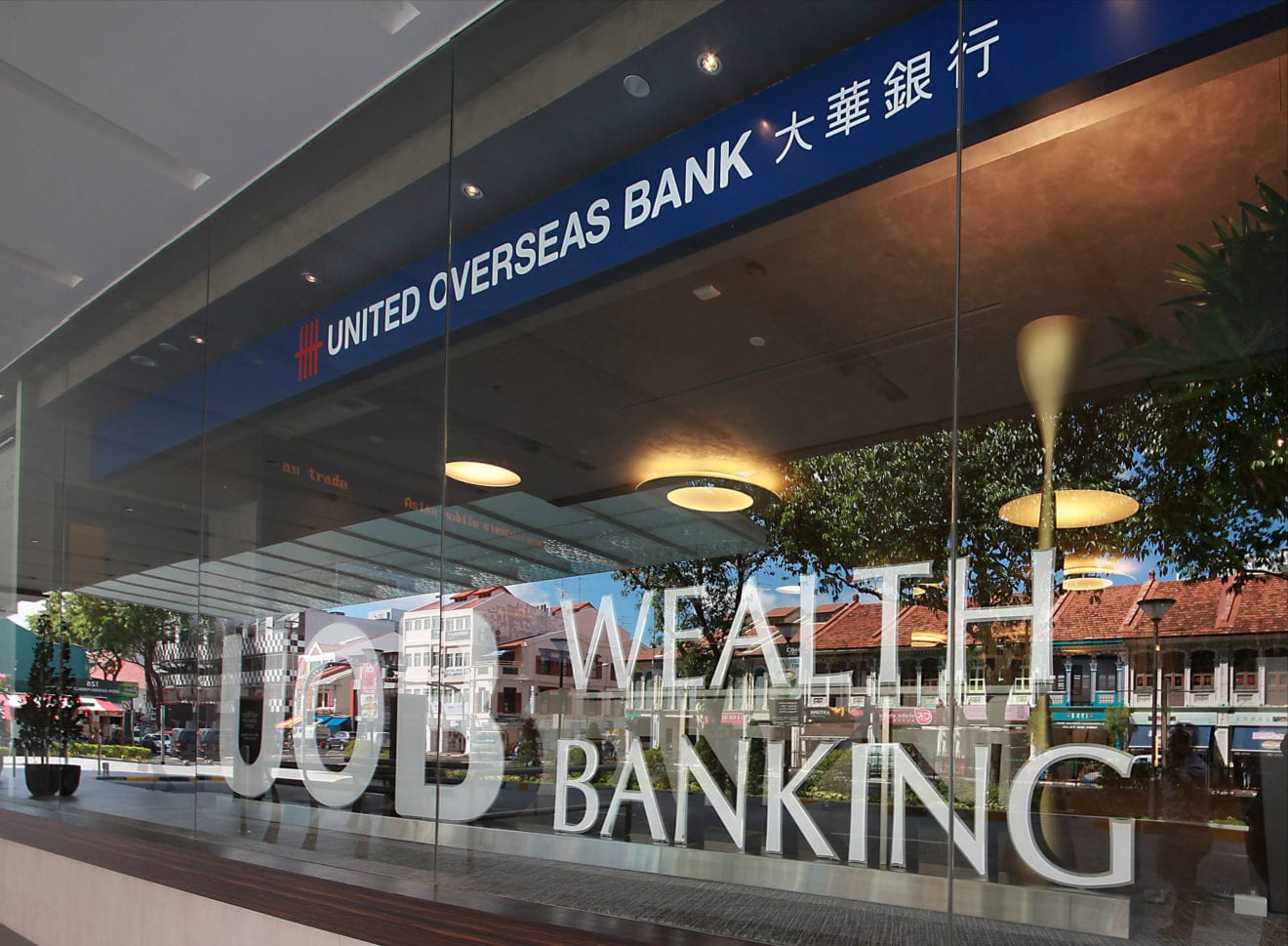
    United Overseas Bank is the first Singaporean institute to be given a license to start up shop in Vietnam. The State Bank of Vietnam has granted a license for Singapore’s United Overseas Bank Ltd (UOB) to open a fully-fledged foreign-owned bank in Vietnam, according to a statement released on Thursday.

    UOB is one of Asia’s leading financial institutions with a network of 500 offices spanning 18 countries and territories, including one in Ho Chi Minh City.

    The bank is considering opening a branch in Hanoi to gain access to fast-developing areas in the north such as Hai Phong, Quang Ninh and Hai Duong.

    Since 2013, UOB has channeled more than $3 billion in foreign direct investment from Asia into Vietnam.

    UOB will be the ninth wholly foreign-owned bank operating in Vietnam, after ANZ, Hong Leong, HSBC, ShinHan, Standard Chartered, CIMB, Public Bank Berhad and Woori Bank.

    Singapore is a major business partner, but does not yet have a fully-owned bank in Vietnam, while other countries, even with smaller investments, have already established banks, according to the Ministry of Planning and Investment.

    By 2020, Vietnam will have to open up its banking sector under commitments made to the World Trade Organization.

  • Netflix shares jump as subscriptions top 100 million

    Netflix shares jump as subscriptions top 100 million

    Netflix ended the rencent quarter with 103.95 million subscribers.  Netflix on Monday reported that its number of subscribers climbed more than expected, topping 100 million worldwide and sending shares in the leading on-demand television service soaring.

    Netflix shares leapt more than 10 percent to $178.75 in after-market trades that followed release of earnings figures showing the Silicon Valley-based company added 5.2 million subscribers in the recently ended quarter to raise the total to 103.95 million for its streaming service.

    Most of the subscriber growth came from outside the U.S., where Netflix has invested heavily in establishing itself as a global television service.

    “That is what you want to see, subscriber growth,” said Silicon Valley analyst Rob Enderle. “Their international efforts are paying dividends right now.”

    Netflix ended the quarter with slightly more than half of subscriptions coming from outside the US, a first for the company.

    Profit was up 61 percent to $66 million, Netflix said. Revenue increased 32 percent to $2.78 billion from the same quarter last year.

    “We underestimated the popularity of our strong slate of content which led to higher-than-expected acquisition across all major territories,” Netflix said in a letter released along with the earnings figures.

    Culling content

    Netflix told investors that it was determined to balance boldness and financial discipline as it continued to bolster its programming slate.

    The company has cut shows that weren’t attracting sufficient numbers of viewers, taming costs as it boosted subscriber numbers in a combination that played well with investors, according to analyst Enderle.

    The company remained committed to investing in original programming. Netflix said it will release 40 feature productions this year ranging from “big-budget popcorn films to grassroots independent cinema.”

    Netflix and rival Amazon Prime have been pumping money into original shows to win fans and set themselves apart in an increasingly competitive bid for viewers’ time.

    “The competition for entertainment time is always intense, but the silver lining is that the market is vast and diverse,” Netflix said.

    More than a billion hours of video is viewed daily at Google-owned YouTube, while Netflix streams a similar amount of video to subscribers over the course of a typical week, according to the company.

    “The shift from linear TV to on-demand viewing is so big and there is so much leisure time, many internet TV services will be successful,” Netflix said.

    “The internet may not have been great for the music business due to piracy, but, wow, it is incredible for growing the video entertainment business around the world.”

    Netflix and Amazon have proven they can break into a market against intimidating entrenched positions of cable companies, according to Enderle.

    Netflix forecast that it would add 3.65 million more subscribers around the world in the current quarter.

    “We are making good progress with our international expansion as improving profitability in our earlier international markets helps fund significant investment in our newer territories,” Netflix said.

    Netflix reported a loss of $13 million outside the U.S. in the recently ended quarter, but said it expected to end this year with an overall profit in its international operations.

  • Vietnam and Singapore firms set up logistics joint venture

    Vietnam and Singapore firms set up logistics joint venture

    The new company is expected to improve logistics services at Vietnam’s northern port city of Hai Phong. Quang Binh Import and Export Joint Stock Company has inked a joint venture deal with Transworld GLS Vietnam Ltd, a unit of Transworld Singapore Group, to establish Transworld QBV ICD.

    The joint venture will specialize in providing warehouse, loading and unloading, packing and customs clearance services and other services related to road, rail and waterway transportation at Quang Binh – Dinh Vu ICD (Inland Container Depot) in Hai Phong.

    In its first phase, the company will invest in transport and customs clearance services on an area of 10 hectares at the ICD.

    Quang Binh Import and Export is a producer and distributor of fertilizer, chemicals, agro-aqua products, food and beverages, bonded warehouse and yard service, and import-export and import & re-export service.

    Ranked among the top 500 largest firms in Vietnam by the Vietnam Report Company (VNR) last year, it is also a leading provider of warehousing and logistics services in Hai Phong.

    Understanding the importance of ICDs in the interntional logistics and supply chain, the company decided to invest in the Quang Binh – Dinh Vu ICD last year.

    The Quang Binh-Dinh Vu ICD will be developed in three phases, with the first phase including a warehouse capable of handling 100,000 tons of goods per year and yard’s capacity of 250,000 TEU per year. Once completed, Quang Binh-Dinh Vu will be one of the biggest ICDs in northern Vietnam.

    ICDs are inland customs clearance points used by importers and exporters. A combination of customs departments, carriers, freight forwarders and customs brokers allow exporters and importers to save time and money.

    The joint venture with Transworld GLS Vietnam aims to make the operation of the Quang Binh-Dinh Vu ICD more effective.

    Transworld Singapore is one of the fastest growing companies in Asia and owns nearly 40 container ships and more than 30,000 containers, particularly well-known for its refrigerated container.

    Transworld QBV ICD JSC is looking to develop Quang Binh – Dinh Vu ICD to be an enclosed logistics chain service that entails depot, yard, warehouse, transportation, LOLO equipment and auxiliary infrastructure, serving as the biggest transit and customs clearance point in Northern Vietnam.

    Speaking at the signing ceremony, Mahesh Sivaswamy, chairman of Transworld Singapore, said: “Starting operation, the Transworld QBV ICD will contribute to cost reduction for enterprises by speeding up and improving efficient clearance service at the port. We engage that the volume of import and export cargo going through our depot is going to significantly increase, making a positive contribution to the budget of Hai Phong City.”