Author: Mei Ling Tan

  • Sephora Studio store concept unveiled in Boston

    Sephora Studio store concept unveiled in Boston

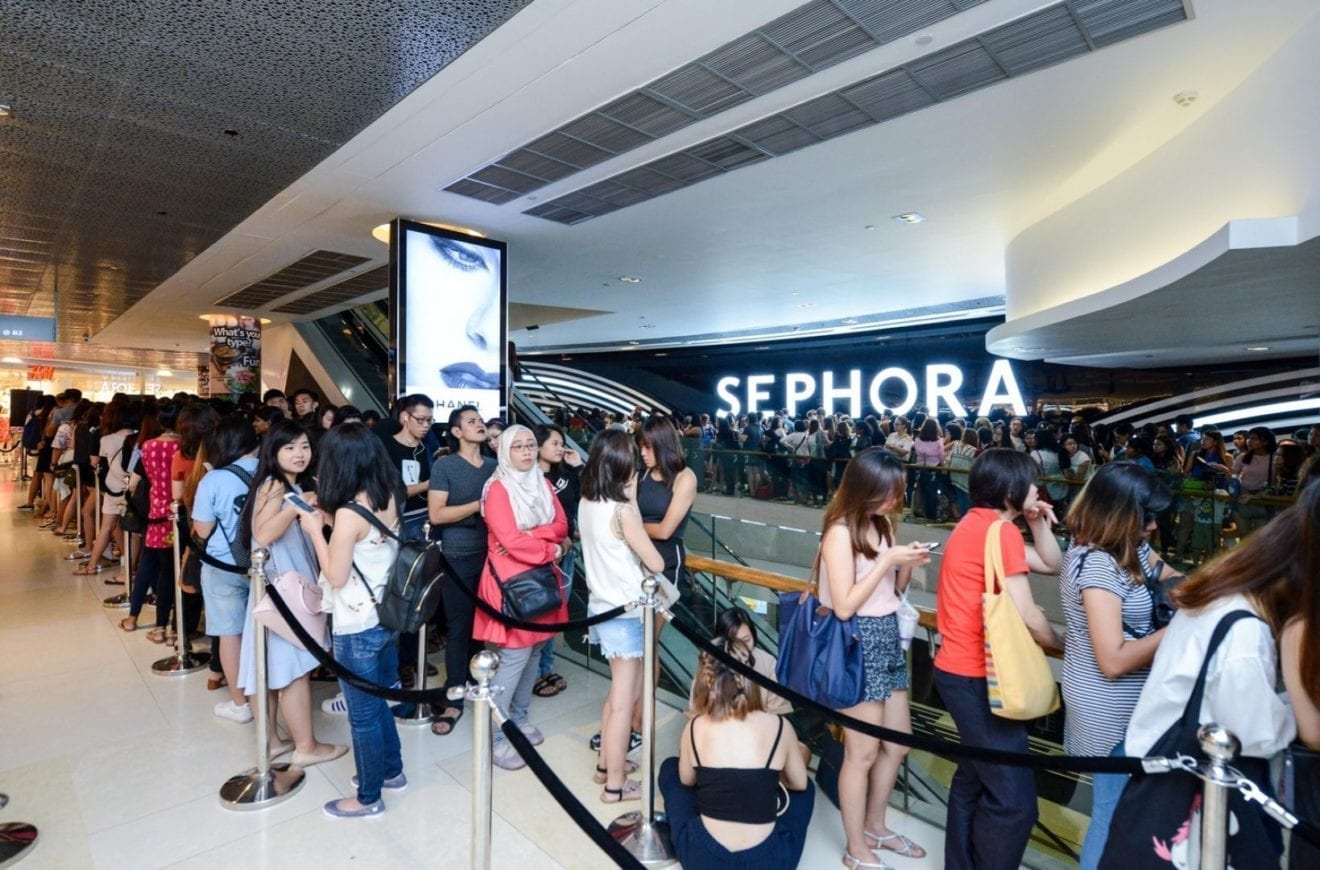
    Global beauty retailer Sephora has unveiled its first new concept mini-store format, in Boston. The Sephora Studio is contained within just 2000 sqft (190 sqm) and – in the company’s words – has an “emphasis on artistry and skincare services”.

    The store opened on Boston’s high-end shopping strip, Newbury Street, on Friday.

    “The Sephora Studio presents clients with an optimised store design and intimate format that fosters personalised connections between our clients and the store’s top-ranking beauty advisors,” said Calvin McDonald, president and CEO of Sephora Americas.

    “In today’s retail environment where very little is constant and clients’ expectations are ever-evolving, one thing has remained true for Sephora: there is no better way to create meaningful connections with clients than through personalised experiences and a customised approach to beauty. We could not be more focused on that notion than we are with the opening of Sephora Studio.

    “The Studio merges the best of an inclusive neighbourhood retail environment with best-in-class digital tools that enable our expert beauty advisors to customise recommendations on an individual basis,” said McDonald.

    Online to Offline strategy

    Sephora Studio integrates a variety of digital tools to optimise client experiences before, during and after their store visit. Among them are digital welcome and service menu screens for easy navigation and self-help, and beauty advisors with mobilised devices that can quickly service clients with appointment check in, looking up their Beauty Insider loyalty program status, and retrieving Sephora.com ratings and reviews on any product throughout the store.

    Additionally, Sephora Studio features two omnichannel product delivery options: order in store and same day pick-up. Both delivery features offer ease and convenience for purchase of product not available at the store. With order in store, Sephora staff can place the client’s order through Sephora.com with complimentary standard shipping or reduced next day shipping. For those who may need products faster, Sephora Studio will partner with another Boston store, Sephora Prudential Center, one of the first Sephora US stores to offer same day pick up.

    From October, Boston area clients can purchase on their device via the Sephora app and pick it up at Sephora Prudential Center the same day.

    Teach, inspire and play

    Meanwhile, Sephora’s innovative retail concept designed to Teach, Inspire, Play will extend to Sephora Studio by encouraging clients to freely test products from a curated selection of brands across prestige cosmetics, skincare, hair care and fragrance.

    “Sephora Studio is a destination for iconic, cult and emerging prestige beauty brands, including makeup, skincare, haircare and fragrance such as Benefit, Bite Beauty, Bobbie Brown, Bumble and bumble, Caudalie, Drunk Elephant, Drybar, Fresh, Kat Von D Beauty, Milk Makeup, Ole Henriksen, Ouai, Sunday Riley, NARS and Verb. The studio will offer clients a safe place to learn, play and master new looks with ongoing inspirational group learning-style Sephora Beauty Classes,” the company said.

    Clients can drop by to check makeover availability or book a premium service at one of the eight beauty studio seats in advance using Sephora’s client reservation system available online, through its app and via Facebook Messenger.
  • Bossini profit warning issued

    Bossini profit warning issued

    A “significant” drop in Bossini profit attributable to its owners is expected for the year to the end of June.

    Its board says the group expects only a small profit close to breakeven, compared to the profit attributable to the owners of HK$292 million (US$37 million) for the previous year.

    It says reasons for the decrease include a non-recurring gain of about $265 million on the disposal of property in the previous year, and a drop of about 13 per cent in revenue from the $2 billion of the previous year, attributable to continuously weak consumer sentiment and “severe competition” in core markets.

    This information is based on a preliminary assessment only, says Bossini, with its audited annual results to be announced in late September.

  • Honestbee Food launches meal deliveries

    Honestbee Food launches meal deliveries

    Honestbee Food restaurant delivery service has been extended to Hong Kong.

    This follows the grocery and concierge service Honestbee partnering last month with eight major supermarkets, including UK retailer Tesco.

    To mark the launch of the meal-delivery service, Honestbee Food is offering special deals to Hong Kong customers, plus a free delivery promotion, until September 20.

  • Macau retailers still cautious, despite better sales

    Macau retailers still cautious, despite better sales

    While retail outlets and dining establishments had better year-on-year sales in May, Macau retailers are still cautious about their business prospects, says the Macau Statistics and Census Service (DSEC).

    For its monthly business climate survey, the DSEC interviewed 167 dining enterprises that account for 53 per cent of the industry’s receipts, and 135 retailers that account for 70 per cent of trade.

    Despite their caution, 26 per cent of retailers expect a year-on-year increase in sales, up three points from May, while 38 per cent are less optimistic. During May, 36 per cent of the retail respondents indicated a year-on-year sales decline, a drop of two points.

    Experiencing better-than-expected results were adults’ clothing retailers and supermarkets, which exceeded forecasts by 40 and 33 points respectively.

    For June, 80 per cent of the respondents in the leather-goods area expect improved sales with all respondents having year-on-year increases in May.

    Watches, clocks and jewellery retailers had a 24-point rise in expectations for June, hitting 50 per cent, while department stores predict a 22-point increase to 56 per cent.

    Restaurants had a six-point drop from the previous month in the percentage of respondents reporting year-on-year growth, while those who had a year-on-year decline rose 10 points to 33 per cent.

    DSEC says the results were better than expected, as the April survey indicated only 18 per cent of respondents expected better sales figures.

    Expectations for last month are mainly pessimistic with 41 per cent of respondents expecting receipts to dip while while only 22 per cent expect a rise. Predicting increases are 27 per cent of Chinese restaurants, 25 per cent of Western restaurants and 18.8 per cent of Japanese and Korean restaurants.

    On the other hand, 60 per cent of Western restaurants foresee a drop.

  • Uniqlo releasing JW Anderson collaborative range

    Uniqlo releasing JW Anderson collaborative range

    A JW Anderson collaborative range will roll out at Uniqlo stores and at Uniqlo.com in September. Featuring British classic designs, the fall/winter range comprises 33 pieces for men and women featuring the signature London fashion brand’s graphic design aesthetic.

    “The point of this collaboration is that I believe in democracy in fashion, and what I hope will be achieved is that any age demographic can pick up and find something within the collection to relate to,” says JW Anderson founder Jonathan Anderson. “Doing something with Uniqlo is very interesting. It means you come up with a wardrobe that is universal and quirky.

    “The idea of reducing something to its essence is a very Japanese cultural thing. It can be culturally, textile or silhouette driven, but it’s about the idea of reducing something down so you can create the most impact.”

    “This line embodies our shared vision of offering elegance, simplicity, timeless comfort and individuality through LifeWear,” says Fast Retailing senior VP Yuki Katsuta, who is head of research and design at Uniqlo.

    “The inspiration for much of the clothing we wear today was the uniforms, workwear and sportswear that originated in the British Isles. We have combined the energy, creativity and traditional touches of JW Anderson with our fit, fabrics and functionality as part of our quest to craft wardrobe essentials that are enduringly appealing.”

    Design is a key focus for the collection, notably through such classics as a double-breasted belted trench coat, a wool-blend quilted jacket, a Fair Isle sweater and a striped scarf. The trench coat is accented by a tartan lining, and tartan is also used for a selection of down jackets, shirts and padded tote bags.

    Also in the line are multi-border cut-and-sewn pieces, knits, stoles in vivid hues, ruffle blouses and skirts. There are tweed coats in signature herringbone and shirts in extra-fine cotton, as well as knits in extra-fine Merino wool.

    Northern Irish designer Anderson established his company in 2008, attracting attention with his debut collection in that year’s London Fashion Week.

  • BTPN targets Indonesia’s growing m-banking userbase

    BTPN targets Indonesia’s growing m-banking userbase

    Respondents to the Pwc 2017 Indonesia Banking Survey reveal that 52% of Indonesian banks see technology as the main driver of bank transformation over the next 3-5 years. Respondents say that e-banking is their top investment priority.

    Surveyed banks also affirm that while branches continue to be the preferred channel for banking, customers are clearly moving towards mobile and internet channels. According to PwC, in this regard foreign banks enjoy greater traction with customers via their mobile and internet channels.

    Seeing this trend, PT Bank Tabungan Pensiunan Nasional Tbk. (BTPN) has embarked on a digital transformation strategy of its own, including enhancing how it targets and engage Indonesia’s growing mass affluent customers with its Jenius digital/mobile banking app solution.

    According to BTPN, Jenius is a hybrid implementation that is digital at the core but leverages the bank’s physical outlets in a targeted way. Jenius has already seen strong take up, overachieving on BTPN’s original app download goals. It also has significant potential to grow given the penetration of smartphones in the region and the large underbanked population.

    Peterjan van Nieuwenhuizen, Head of Digital Banking at BTPN said, “BTPN is committed to pioneering banking to suit customer lifestyles. We have built a system [Jenius] that enables our customers to complete basic banking processes without going to the branch. With an expanding middle class and growing mobile internet use here, we saw the significant opportunity this creates for financial services. Our philosophy is ‘do good, do well’ and we want to embody that in all aspects of the bank. Our customers look to us for innovation and fast, efficient services.”

    Powering Jenius is Finastra’s FusionBanking Essence Digital platform, which according to Finastra removes complex banking processes, enabling the bank to create highly personalized and easy digital experiences for its customers. Fast and secure sign-up and authentication make banking on the move simple.

    In addition to meeting customer demand for multi-channel digital banking experiences, FusionBanking Essence Digital enables BTPN’s Jenius to attract better-priced funding and more deposits from a new market segment as well as to bring products to market faster. Modern software architecture has enabled the bank to quickly transform digital solutions into powerful sales engines and increase revenue opportunities. It will also enable it to continue evolving alongside the broadening digital landscape in Indonesia.

  • DHL, FC Bayern expands cooperation in gaming market

    DHL, FC Bayern expands cooperation in gaming market

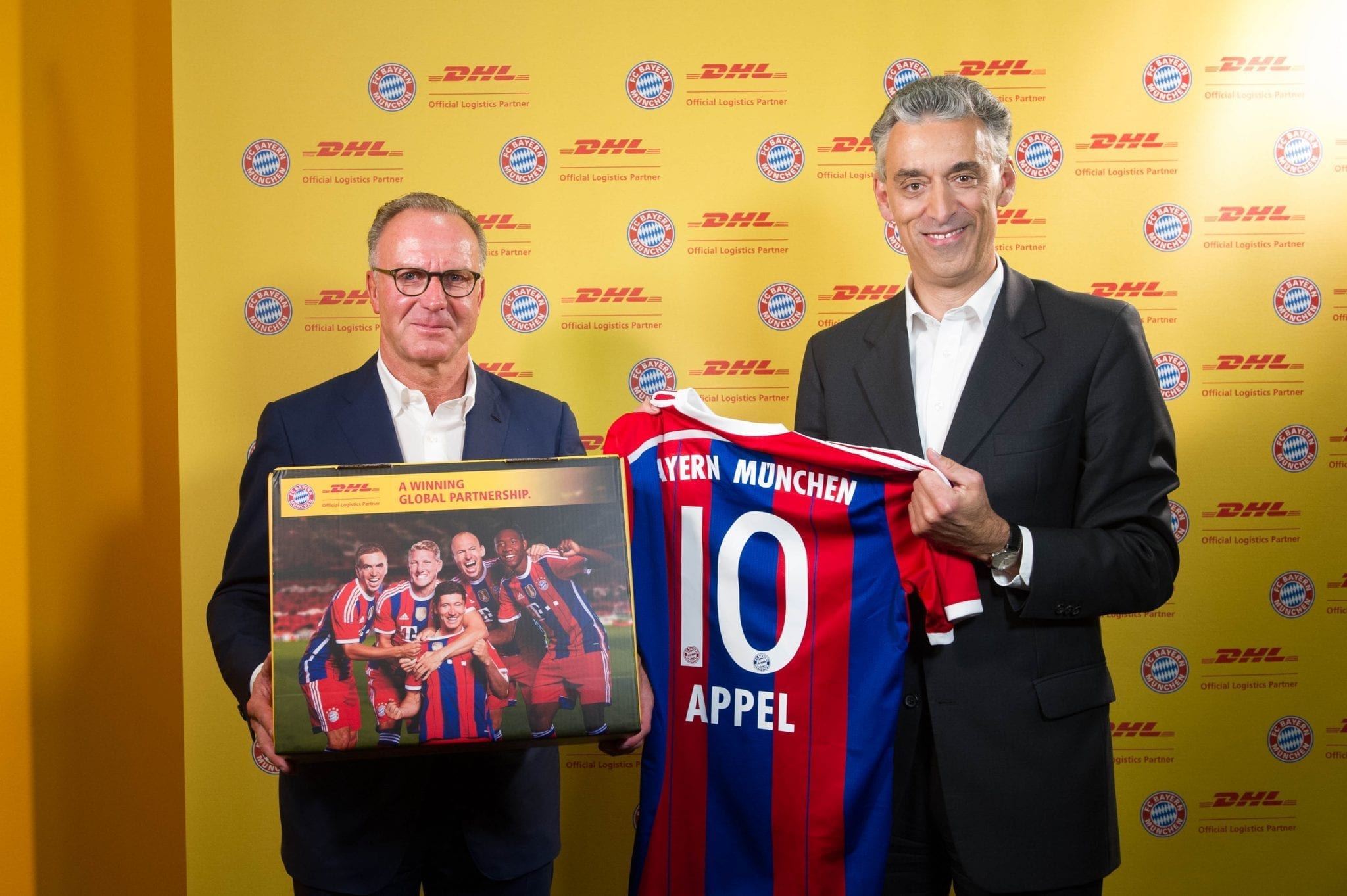
    DHL and Germany’s FC Bayern Munich yesterday announced the expansion of their cooperation with innovative activations within the video gaming market, specifically in the FIFA 18 game set to launch in September 2017.

    This is DHL’s bid to tap on the massive potential of the computer games market, which analysts predict will grow its revenue from US$493m in 2016 to US$1.1b in 2019.

    In 2015, DHL helped the club to launch its online flagship store on Tmall Global. As the team’s official logistics partner and e-commerce full service provider, DHL plays a key role in delivering official merchandise to FC Bayern fans in China.

    During the team’s 2017 Audi Summer Tour to Shanghai, Shenzhen and Singapore, the Bavarian club confirmed its desire to further engage with its fan base in China, providing fans with the latest club merchandise, such as jerseys and other FC Bayern products.

    FC Bayern is one of the world’s biggest football club with over 280,000 members and one of the most successful, having won five UEFA Champions League titles, three Club World Cup trophies as well as 27 German national league championships.

  • Kuehne + Nagel acquires two perishables specialists

    Kuehne + Nagel acquires two perishables specialists

    With the acquisition of CFI, Commodity Forwarders Inc., an airfreight forwarder of perishables products in the USA, and Trillvane Ltd, one of the largest perishables specialists in Kenya, Kuehne + Nagel expands its global perishables network by adding more than 150,000 tons of perishables and further strengthens its position in providing end-to-end international and domestic fresh chain solutions.

    CFI, 1974 established by Alfred Kuehlewind as one-man office in Los Angeles shipping strawberries to Europe, today operates 14 locations throughout the United States including Alaska and Hawaii with more than 700 employees. The company is specialised in airfreight export and import as well as distribution of seafood, all kinds of agricultural products, flowers and greens. As a leader in the US perishable forwarding industry, CFI differentiates itself through its expertise, ability to provide high-end visibility and delivering unprecedented product quality for its customers’ fresh chains.

    Alfred Kuehlewind, Founder and CEO of CFI: “We are looking forward to become part of the Kuehne + Nagel Group. The planned transaction will offer us new growth perspectives and access to a global logistics network. Both companies’ customers will benefit from an extended service scope.”

  • Givenchy Wins on Gogoboi’s New E-Commerce Channel

    Givenchy Wins on Gogoboi’s New E-Commerce Channel

    It was only in April that top Chinese KOL Gogoboi launched his own WeChat boutique “Bu Da Jing Xuan,” a platform on which he curates selections of goods from luxury e-commerce retailers like Yoox, Net-A-Porter and Farfetch to sell to his fans (he’s got over 7 million followers on Weibo).

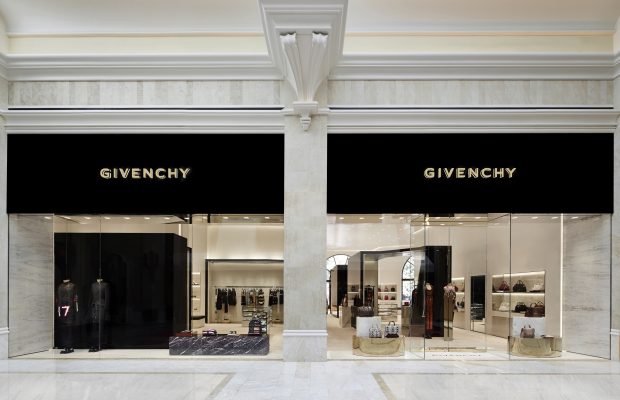
    But Gogoboi has already gotten his first luxury brand on his platform, Givenchy.On July 14, Givenchy launched its new Duetto handbag collection on this platform and became the first luxury brand to test out this influencer’s own e-commerce channel.

    The official price of the new collection is 7490 yuan, which is consistent with the offline price. This exclusive online sale includes seven styles (in addition to black and white, the bag also came in a variety of colors), and for each style, there were six bags available for purchase.

    The result was a success. The featured black-and-white style was sold out after half an hour after the campaign went live, and within 72 hours, all of the available styles were sold out.

    With a background in fashion editorial, Gogoboi’s distinct writing style is what first garnered him a loyal fan base. His witty humor and harsh comments on celebrity styles make his blog stand out in the competitive KOL landscape.

    Mr. Bags recently wore in a handbag collaboration with Tod’s and “Miss Shopping Li” stepped out of fashion to embark on her first collaboration with the car brand MINI and is in the midst of launching her own brand.

    It’s never a one-way street, while bloggers are busy broadening their horizons, brands are also looking for better ways to take advantage of their massive fan economy.

  • Reliance Jio launches “free” 4G phone

    Reliance Jio launches “free” 4G phone

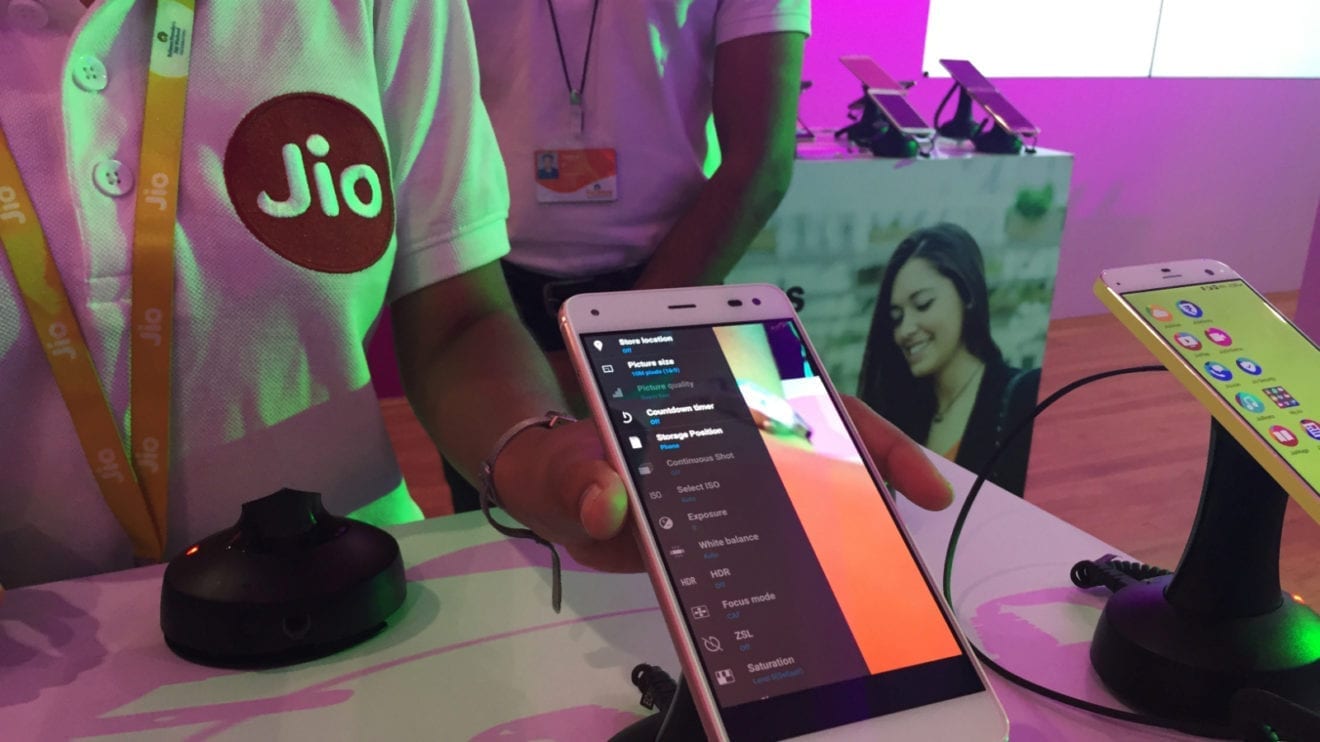
    India’s Reliance Jio Infocomm has disrupted the mobile market once again with the launch of a “free” 4G handset named the JioPhone.

    The operator is offering the JioPhone for a security deposit of 1,500 rupees ($23.29), fully refundable after three years.

    The handset is being produced in India. It will be offered under a plan worth 153 rupees per month for free voice calls and SMS as well as unlimited data with a daily fair use cap of 500MB.

    The device has a keypad and a 2.4-inch, 240×320 display. It supports Bluetooth, NFC payment and access to Jo services including JioTV and JioMovies, and has a rear camera, SD card slot and headphone jack.

    An additional data plan worth 309 rupees per month will allow mirroring of the phone screen to any TV to support streaming services at home.

    Announcing the handset, Reliance chairman Mukesh Ambani said around two thirds of India’s mobile users do not have smartphones, leaving them unable to access Jio’s 4G-only network and leaving Jio unable to attract these customers. The Jio Phone is intended to help the company reach this audience.

    Preorders of the Jio phone will commence next month. The introduction of the device will only increase the intense competition in India’s mobile market triggered by Jio’s explosive entry onto the scene with its pan-India 4G network.

  • Luxury goods group Hermes sales growth slows in Q2

    Luxury goods group Hermes sales growth slows in Q2

    French luxury goods group Hermes said on Friday (July 22) it expected first-half 2017 operating profitability to be close to the peak level of 33.9 per cent of sales achieved in the first half of 2016, thanks to foreign exchange gains.

    Hermes, known for its US$10,000 (S$13,679) Birkin bags and US$400 printed silk scarves, made the forecast after sales growth slowed in the second quarter, broadly in line with expectations, and reflecting mostly challenging year-ago comparables.

    Chief executive Axel Dumas told a conference call that sales momentum remained “quite good” with sustained demand for Hermes’ Birkin, Kelly, Constance and Lindy bags, robust demand for shoes, while the silk business continued to rebound.

    In China, Hermes sales were still growing in double digits in the quarter, while Europe benefited from a rebound in tourist flows, which was particularly strong in Italy and in London thanks to a weaker pound, he said.

    France was broadly flat, while growth in America also slowed due to high year-ago comparisons

    Hermes reported an 8.3 per cent rise in revenue at constant exchange rates to 1.361 billion euros (S$2.16 billion), compared with 11.2 per cent growth in the first quarter. Analysts had forecast about 9 per cent growth on average.

    Sales growth at its leather goods division, which makes up 50 per cent of group sales, slowed to 9.7 per cent from the 15 per cent rise achieved in the first quarter.

    The luxury industry has suffered in the past couple of years as demand in China slowed and attacks in France deterred some tourists from travelling to Europe.

    A recovery in tourism in Europe and stronger Chinese consumption are expected to lead a rebound in the luxury sector this year, the Bain consultancy predicted in May.

  • ZTE, Intel developing vEPC application

    ZTE, Intel developing vEPC application

    ZTE and Intel have released a white paper covering an NFV reference design for a containerized vEPC application as part of the two companies’ joint research into virtualization of telecoms networks.

    The two companies are jointly researching cloud native and NFV technologies. Intel is helping ZTE develop virtual evolved packet core applications based on cloud native architecture.

    The white paper highlights that such vEPC applications are compatible with and open to cloud platforms based on open source container technology. The vEPC application uses s microservice design to achieve network function atomization to speed delivery of new services.

    Each microservice is also run, upgraded and deployed separately to improve flexibility, the companies said.

    A vEPC microservice adopts a stateless design to achieve 99.999% carrier-grade reliability in commercial off the shelf hardware.

    The vEPC solution is expected to be fully compatible with 5G, with guaranteed upper layer service continuity for future wireless network evolution and upgrades.

  • Australians prefer biometrics to PINs for payments

    Australians prefer biometrics to PINs for payments

    More than half of Australians prefer fingerprints, voice or retina scans in place of PINs when authorizing, according to research commissioned by Visa.

    The research also indicates that 29% of Australians are ready to use an internet-connected device, like a smart home virtual assistant or connected fridge to make payments on their behalf.

    “Australian shoppers are at the forefront of the global evolution of commerce, providing a big opportunity to merchants and financial services providers to similarly lead their international counterparts in innovation,” Visa group country manager for  Australia, New Zealand and the South Pacific Stephen Karpin said.

    “As the Internet of Things and biometric capabilities become integrated into our everyday experiences, we’ll experience a significant shift in how payments are made. In our lifetime, we will see infinitely more choice in how Australians pay, from watches, fridges and mobile phones, to eyes and fingers. And we’ll experience personalization that we never thought possible, powered by artificial intelligence.”

    Visa estimates over three billion of its cards are circulating globally with about 44 million merchants accepting the Visa card as payment. The card company predicts that with the introduction of connected devices and the continued growth of digital commerce, those numbers will expand 30 billion different ways of paying and 400 million physical and digital acceptance points.

    According to Futurist Anders Sorman-Nilsson, ease of use will drive consumers to adopt new patment and commerce experiences. “Connected, AI enabled devices ready to pay will only be pervasive if the experience is easy, seamless and secure,” he added.

    Many of the new payment methods currently using smartphones rely on biometrics for authentication. More than half of respondents surveyed by YouGov (56%) said they are comfortable using their thumbprint, voice or retina for payment. According to the research, the appeal of biometrics is that it is more secure (45%) and the need to not have to remember a pin/password (40%) is driving consumer adoption and readiness.

    But while consumers are keen to embrace biometric authentication, less than half (39%) of respondents were willing to share their personal information in exchange for convenience in payments.

    Karpin attributes this hesitation to prevailing privacy concerns.

  • LVMH’s Louis Vuitton launches e-commerce website in China

    LVMH’s Louis Vuitton launches e-commerce website in China

    French fashion brand Louis Vuitton, part of luxury giant LVMH , said on July 21st it had launched an e-commerce website in China to tap a booming online shopping market.

    Louis Vuitton, which opened its first store in Beijing in 1992, said the website offered leather goods, small leather goods, shoes, accessories, watch and jewellery, luggage, and the newly launched Les Parfums Louis Vuitton.

    Payments can be made via UnionPay, Alipay and WeChat, the statement said.

    The website will be available in 12 cities – Beijing, Shanghai, ChongQing, Chengdu, Guangzhou, Shenzhen, Hangzhou, Nanjing, Shenyang, Dalian, Haerbin, Wuhan. More cities will be added later on.

    It is the 11th e-commerce market for Vuitton since it launched its first site in France in 2005.

  • Ford to petition to avoid recall of 2.5 million vehicles

    Ford to petition to avoid recall of 2.5 million vehicles

    Ford Motor will petition to avoid a U.S. recall of about 2.5 million vehicles with Takata air-bag inflators that the Japanese auto supplier declared defective last week, U.S. regulators and the automaker said on Friday.

    Separately, the National Highway Traffic Safety Administration said Nissan Motor agreed to recall 515,394 2007-2011 Versa cars after Takata declared 2.7 million vehicles to have potentially defective inflators.

    Ford spokesman John Cangany said the automaker will file a petition requesting “to continue testing and analyzing our inflators.” The NHTSA said the petition will seek an exemption from the recall because Ford believes the issue is inconsequential.

    Ford said the issue covers 2.5 million vehicles, including the 2007-11 Ranger, 2006-12 Fusion and Lincoln MKZ, 2006-11 Mercury Milan, and 2007-10 Ford Edge and Lincoln MKX. Ford previously said it covered about 2.2 million vehicles.

    Last week, the NHTSA said that new testing prompted Takata to declare inflators defective in Ford, Nissan and Mazda Motor vehicles in some driver-side air bags built from 2012 through 2015.

    The NHTSA said in a statement on Friday that “testing data shows that the propellant in this inflator is degrading and on the path towards potential ruptures in the future. There are no reported ruptures in the real-world or in testing.”

    Takata air bag inflators are already linked to 17 deaths and more than 180 injuries worldwide, and the recalls will eventually cover about 125 million inflators.

    Nissan said last week it would recall 627,000 Versa cars from the 2007-12 model years, including 515,000 in the United States “out of an abundance of caution.”

    Nissan said testing of 895 inflators showed no ruptures, while one “exhibited an elevated internal pressure.” Takata said the inflators potentially could rupture “after several years of exposure to high absolute humidity.”

    Mazda said last week the issue impacts just 6,000 of 2007-09 B-series trucks that were built under a previous Ford partnership. The company said on Friday that it also plans to file a petition to avoid a recall.

    Ford shares fell 1.5 percent on Friday to close at $11.53.

    The automakers have 30 days to submit their petitions, and the NHTSA will then take public comment before making a decision.

    More than 65 percent of 46.2 million previously recalled Takata airbag inflators in the United States have not been repaired. The issue is the largest-ever auto-safety recall, covering 17 automakers.

    Takata filed for bankruptcy protection in June.