Author: Mei Ling Tan

  • Moschino launches first cosmetic collection with Sephora

    Moschino launches first cosmetic collection with Sephora

    Italian luxury fashion label Moschino is making its first leap into cosmetics, teaming up with global beauty retailer Sephora to distribute its debut make-up collection.

    The Moschino x Sephora collection is centred on bright colours and features quirky packaging, such as Moschino’s signature teddy bear in gold.

    The seven items include lip-gloss, brushes, a highlighter and an eye shadow, the latter housed in a palette designed to look like a shopping bag.

    Collection prices range from US$23 for the miniature shopping bag eye shadow to $68 for the teddy bear brush set.

    It marks the first cosmetics collection to come out of the Jeremy Scott-helmed Moschino. Part of the Aeffe group since 1999, the Italian brand already has a retail history with Sephora, with its multiple fragrances being sold there.

    The cosmetics debut follows up Moschino’s foray into furniture when, in March, it released a capsuled collection designed in collaboration with furniture company Gufram.

    In the APAC region, Sephora has stores in China, Hong Kong, Indonesia, Malaysia, The Philippines, Singapore, Thailand, and Australia and New Zealand. It’s also present in Europe, and in North and South America.

  • The Rise of Selfies in E-Commerce in 2017

    The Rise of Selfies in E-Commerce in 2017

    Over the last few years, e-commerce has evolved from a supporting act into a leading role. Retailers globally are looking for e-commerce to drive their future growth. As a part of this effort, retailers are realizing the benefits of providing an exceptional customer experience for their online shoppers.

    The maturation of existing technologies, including computer-vision, has provided retailers with the possibility to create compelling online customer experiences that drive results, increase customer conversion and loyalty as well as provide retailers with a wealth of information about their shoppers.

    Selfies and computer-vision in general are making their presence felt in the online customer experiences of retailers and are quickly winning the attention of shoppers.

    Solutions targeting specific e-commerce verticals, such as Amazon’s Outfit Compare for fashion, Smart Picture for home improvement and interior design or Revieve’s Digital Skincare Advisor for beauty are examples of offerings that are attracting the attention of ecommerce executives as they strive to grow their online businesses

    The most important benefit of leveraging selfies as part of creating a compelling customer experience for your shoppers is saving their time. Through selfies, shoppers are able to find products relevant for them and their desires faster than ever.

    Furthermore, selfies are becoming an increasingly important factor in building true one-tone personalization into e-commerce experiences.
    The fundamental shift being created by technology-lead solutions targeting specific verticals has to do with recent acknowledgements that not all online shopping is alike.

    The expectations of online shoppers vary widely across product groups and categories and retailers can no longer afford to consider their e-commerce visitors similar across verticals.

    This results in the need for retailers to create specific, vertical- or category –focused customer experiences to meet the needs of online shoppers and presents a change in the mindset of most e-commerce retailers.
    Although selfies are a relatively novel way of interacting with the shopper online, they represent an important opportunity for retailers in creating a competitive advantage through the online customer experience and helping combat against the dominance of Amazon.

    The days of building “one-size-fits-all” experiences for shoppers online will soon be but a distant memory.

  • GM joins other carmakers investing in self-driving startup Nauto

    GM joins other carmakers investing in self-driving startup Nauto

    General and Japan’s Softbank Group Corp are among the latest investors in Nauto, a Silicon Valley startup developing software for self-driving vehicles.

    Nauto, based in Palo Alto, said on Tuesday it closed a $159 million Series B funding round, led by Softbank and venture capital firm Greylock Partners. Previous investors included German automaker BMW and Japanese automaker Toyota, as well as German insurance firm Allianz.

    Nauto is unusual in attracting money from big-name automakers, and also in its focus on software and data, which cost less to develop than hardware or entire vehicles.

    “Any (vehicle) manufacturer is better than any startup at building cars,” said Stefan Heck, founder and chief executive officer of two-year-old Nauto. “Our aim is to provide the data, intelligence and a cloud platform” to automakers that plan to begin putting self-driving cars on the road from 2020.

    The amount of GM’s investment in Nauto was not disclosed. The Detroit automaker bought Silicon Valley startup Cruise Automation in early 2016 for more than $500 million.

    Heck declined to specify the company’s post-funding valuation. He did say it was shy of $1 billion, “unicorn” status in Silicon Valley shorthand.

    “But we’re getting there,” he said.

    To develop its technology, Nauto is retrofitting windshields of commercial trucks from North America to Europe and Japan with dual cameras: one aimed at the road and the other at the driver. The goal is to gather data on driver distraction and on the environment around vehicles and speed development of self-driving technology.

    Using such techniques as computer vision and deep learning, a form of artificial intelligence, the company is analyzing video feeds and data from the retrofit devices to improve driver performance and safety. Learning more about how humans drivers behave is critical, Heck said, because self-driving cars must share the roads with those vehicles for at least the next 20 to 30 years.

    “During that transition period, we need autonomous vehicles that are not just smart, but are able to collaborate with humans,” Heck said in an interview.

    Nauto is working with investors and other companies “to learn from human drivers, the best and the worst, to inform” the development of self-driving vehicles.

    Heck declined to say how many vehicles are using Nauto’s cameras and software, but said the company expects to accumulate more than one billion miles of real-world data within the next year.

  • Alibaba opens cashier-free retail store in China

    Alibaba opens cashier-free retail store in China

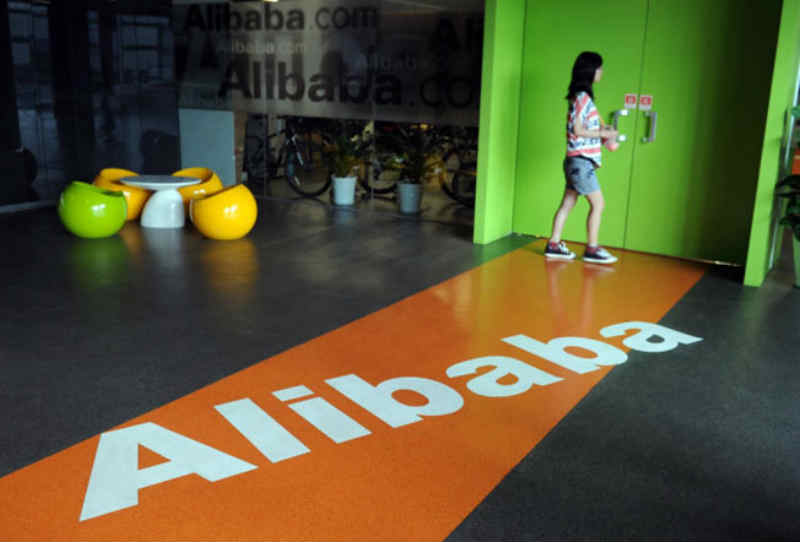
    Alibaba Group has opened its first cashier-free retail store in China.

    The Chinese e-commerce and tech giant has opened its first Tao Café, an experimental cashless cafe, empowered by artificial intelligence and data technologies through the use of the Alipay e-payment service.

    Located in Hangzhou, capital of east China’s Zhejiang Province, the 200-square-metre store offers beverages, fast food and snacks and can accommodate 50 customers at a time.

    “The Tao Cafe, an experimental cashier-less and cashless coffee shop, is another feature for Alibaba to outline its technology capability bridging the world of offline and online shopping,” Chris Tung, chief marketing officer of Alibaba Group, told reporters.

    At the café, customers use their Taobao app to scan a QR code in front of the shop where a camera set with face recognition detects their identity.

    The data links to their Taobao accounts so they can buy a cup of coffee using voice-recognition technology. From here, the beverage will be brought to their table and users can shop online using their smartphone to access Taobao while they wait.

    Alibaba joins other retail chains and tech start-ups flooding the market with their own offering of staff-less retail. This includes mega rival Amazon and its Amazon Go store, which debuted last year via tracking cameras, utilising a facial and voice recognition system.

    And it’s a trend that looks set continue in retail, according to experts.

    Neil Wang, president of global consulting firm Frost & Sullivan China, told local media that staff-less stores will bring the “next spring” to the retail industry.

    “Staff-less stores are a combination of digital payments, radio frequency identification technology, biological recognition, big data and AI,” Wang told China Daily.

    “They will lower the risk of shop lifting, optimize the goods and reduce costs, from running and maintenance costs to human labour.”

    China’s banking institutions handled more than 25.7 billion mobile payments last year with a transaction volume of 157.55 trillion yuan (23 trillion U.S. dollars), according to a report by the People’s Bank of China, the central bank.

  • s.Oliver selects Manhattan Associates to expedite order fulfilment

    s.Oliver selects Manhattan Associates to expedite order fulfilment

    Not only do today’s consumers demand a seamless shopping experience across channels, they want orders to be fulfilled in ever-shorter timeframes. Iconic global fashion brand s.Oliver Group has selected Manhattan Associates to meet these service expectations and to execute the next phase of its omni-channel growth strategy.

    The Germany-based company is deploying Manhattan’s distributed order management and store dulfilment solutions to orchestrate orders and to provide customers with more reliability and convenience in terms of how they take delivery of goods. s.Oliver Group will use the software to pool and govern the availability of inventory across its ecommerce and store distribution channels. The new approach will better leverage the brand’s entire supply chain, driving product availability improvements and delivering a more fulfilling customer experience. The ability to accelerate goods flows will also improve stock turns, reducing capital tied up in excess inventory.

    Ansgar Weber, digital operations & IT director at s.Oliver Group, commented, “Operating complex omni-channel services such as ship-from-store is impossible without having a streamlined and reliable IT infrastructure across all channels. An Order Management System, which fulfills orders against network inventory based on an optimized routing logic, is critical to success. The Manhattan solutions will provide our store associates with a consolidated view of inventory and orders and will better leverage our stores to increase speed to the customer. New click-and-collect and ship-from-store fulfillment options will allow us to get goods into the hands of customers quicker whilst the latter will also complement our distribution center during peak selling events, such as Black Friday.”

    Pieter Van den Broecke, Managing Director Benelux and Germany at Manhattan Associates, commented: “It is imperative that retailers are able to effortlessly handle omni-channel transactions and be able to make the buying and fulfillment experience as convenient as possible for the customer. Those that do will be able to deliver an outstanding customer experience and earn brand loyalty amongst their customers. Forward-thinking fashion brand s.Oliver Group is committed to delivering these service capabilities and we are excited to play a key role in its omni-channel transformation.”

  • With new Takata air bag recalls, automakers may face more liabilities

    With new Takata air bag recalls, automakers may face more liabilities

    Takata’s bankruptcy filing last month was meant to draw a line under the auto industry’s biggest safety recall, but last week’s announcement of more air bag inflator recalls suggests automakers could face fresh liabilities in the future.

    In late-2015, U.S. regulators gave Takata until the end of 2019 to prove that its replacement air bag inflators – which add a drying agent to combat moisture that can set off the ammonium nitrate compound in an inflator, with potentially lethal results – are also safe.

    If Takata fails that test – and some industry consultants, explosives experts and former employees question whether the workaround guarantees safety over the long-term – the 100 million or so replacement inflators currently being installed may themselves need to be replaced.

    “Absent proof that the other desiccated inflators are safe, they will also be subject to recall,” the U.S. National Highway Traffic Safety Administration (NHTSA) said in a statement last week. The agency declined to comment on the risk that additional inflators may be subject to recall.

    NHTSA announced last Tuesday that new testing at Takata prompted the Japanese parts firm to declare 2.7 million of the new air bag inflators defective, raising questions about the risk from replacement air bags as moisture can still seep into the propellant of some inflators.

    Takata’s automaker customers, which have so far borne much of the estimated $10 billion cost of replacing faulty bag inflators, could be on the hook for future liabilities in the event that Takata fails to prove that the desiccant workaround is sufficient.

    Last week’s recall is the first to involve Takata bag inflators that use a drying agent.

    Nearly 20 automakers have been affected by the air bag recalls, and some still use Takata inflators for replacements in the recalls. Automakers including Honda Motor Co, Toyota Motor Corp and Nissan Motor Co have said they will stop using Takata inflators for new contracts for future models.

    “If NHTSA in the future raises issues about the safety (of desiccated inflators) we will of course comply with their orders,” Nissan’s chief sustainability officer Hitoshi Kawaguchi told Reuters. “At the moment, our focus is on getting replacement inflators to our customers.”

    Toyota said it was “working closely with all stakeholders, including Takata, other suppliers and relevant agencies, to assess any potential impact and take action accordingly” on the recall issue. Honda, Takata’s biggest client, declined to comment.

    “The automakers… and Takata – they all know that this is a future issue,” said Scott Upham, chief executive at Valient Market Research, whose clients include auto parts suppliers. “But I think everybody is concerned about the near-term issues, and the financial arrangements of the bankruptcy.”

    Takata says it has produced around 100 million replacement inflators containing drying agents: the 2.7 million recalled last week used calcium sulfate, and the rest contain zeolite.

    “We still have to prove the safety of our desiccated inflators, but we believe those using zeolite are safer than those using calcium sulfate,” said spokesman Toyohiro Hishikawa.

    The company has declined to comment further on the testing process or the NHTSA deadline.

    Takata is the only global air bag maker to use ammonium nitrate as a propellant in its inflators. The compound’s vulnerability to high temperature and moisture can trigger an explosion that can spew shrapnel inside a vehicle. The defect has been linked to at least 17 deaths, mostly in the United States.

    ‘Lengthening the Fuse’

    The new inflators with the added desiccant have not been linked to any deaths or injuries, but the problems with the original inflators typically took five years or more to emerge.

    Keiichi Hori, who oversees automotive safety components at the Japan Explosives Society, said adding a drying agent can reduce, but not eliminate, the risk of uncontrolled explosions.

    If the desiccant can prevent all moisture from reaching the inflator propellant, “then it would be possible that the inflators could be used safely,” he said. “Otherwise, alternatives should be considered.”

    But Upham, the industry consultant, predicts the recalled parts will themselves eventually be recalled – because ammonium nitrate is fundamentally too volatile – and Takata’s carmaker customers may again have to foot the bill given that Takata is unlikely to be able to cover the costs.

    “Automakers are hoping and praying that the desiccant solves the problem… (but) this might come back to bite them,” Upham said.

    Former Takata employees involved in manufacturing inflators have said the desiccant may buy Takata time. One told Reuters last year that by adding the desiccant, “you’re just lengthening the fuse, not correcting the problems.”

    Key Safety Systems, a U.S.-based components supplier owned by China’s Ningbo Joyson Electronic Corp, has agreed to buy Takata’s good assets such as seat belts and steering wheels, for $1.6 billion. The plan is for Takata’s air bag business to be wound down by March 2020 after making replacement inflators for the ongoing recalls.

  • The Boom Is Here As Indonesia Tourism Tops Asean Growth

    The Boom Is Here As Indonesia Tourism Tops Asean Growth

    Yahya has overseen new strategies to increase tourism in established areas and welcome foreign visitors from new target markets and countries, developing infrastructure in outer regions and rebranding dry marketing.

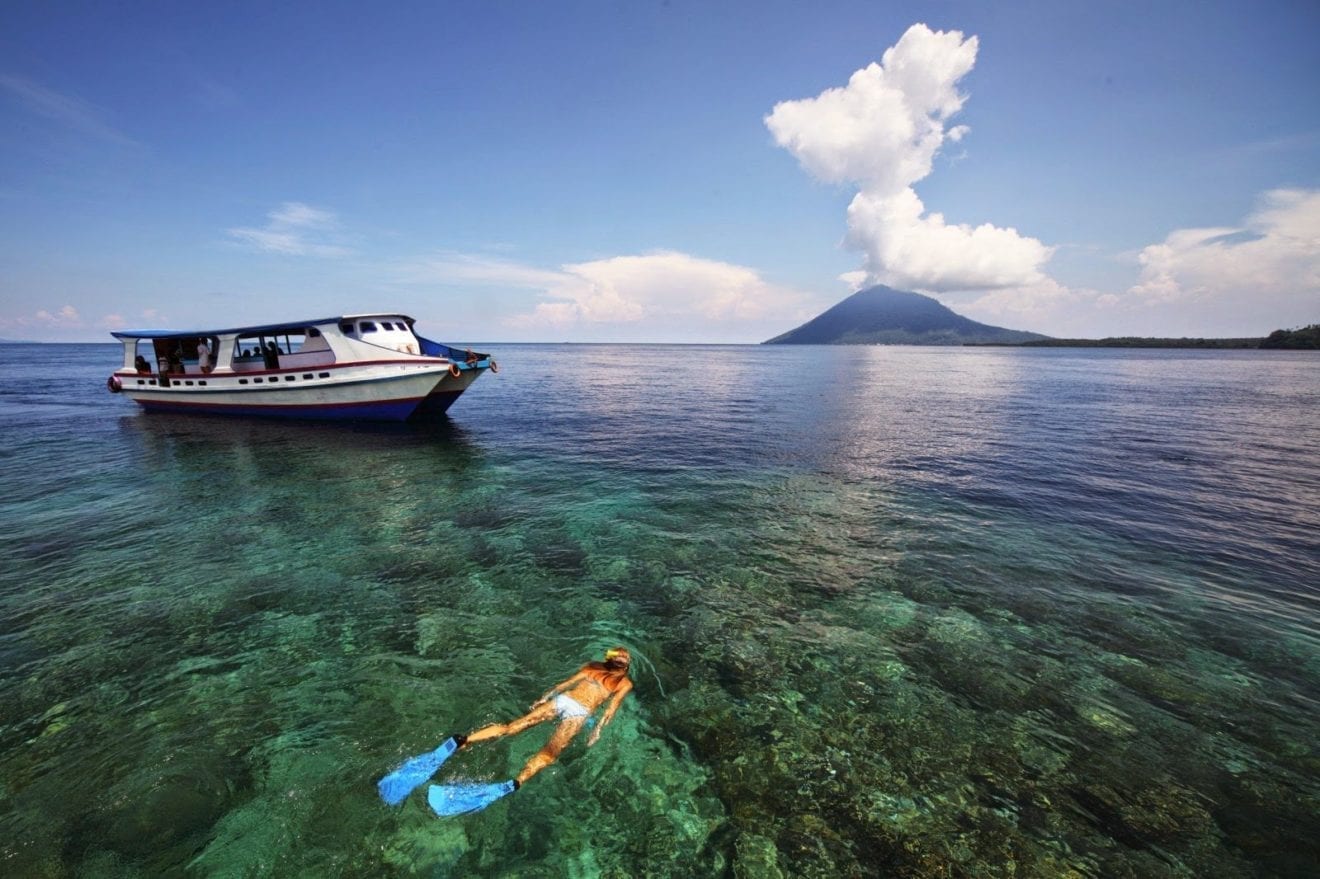
    The improvement can be seen with a massive increase in foreign tourists visiting the archipelago this year. Data from the Central Statistics Agency (BPS) shows 4.2 million foreign tourists visited Indonesia from January to June, a 19.34 percent increase from the same period a year earlier which saw 3.52 million visitors.

    Tourist visits in April skyrocketed with a 26.75 percent increase on the same period in 2016. Indonesia welcomed 1.14 million visitors this April, up from 902,000 recorded the year earlier.

    Indonesia is outpacing regional players – including tourism giant Thailand – in growth.

    Data published by The Business Times found growth in Singapore’s incoming visitors from January to April this year increased only 4.4 percent on the previous year. The slowing in growth contributed to a 2 percent decline in revenue for the local hotel industry in the same period, reaching just SGD$1.06 million (US$766,837).

    According to a report from Chinese state news agency Xinhua, foreign arrival figures in Malaysia contracted 0.5 percent so far in 2017 on a year on year basis. The result follows a push into Chinese and Indian markets from the Malaysian tourism authority and a target of 31 million visitors for the year.

    Thailand, which has long been a favourite of tourists from around the world, has continued to grow. Data from the Thai Ministry of Tourism and Sports shows foreign arrivals increased by 2.91 percent in the first four months of the year compared to the same period a year earlier. This translates to 12.02 million visitors from January to April 2017, up from 11.68 million foreign tourists a year earlier.

    In Indonesia’s industry, recent data from BPS shows foreign visitors increased 26.66 percent in May this year from the same month a year earlier. This equates to 1.16 million visitors in 2017 compared to 905,000 a year earlier.

    Booming growth in Chinese tourism is the highest contributor, making up 13.19 percent of all foreign tourists. Visitors from Singapore made up the second largest group with 9.83 percent, followed by Australian tourists contributing 7.91 percent. Indian visitors made up 4.19 percent of visits.

    Tourism Minister Yahya said 40 percent of all foreign tourists in Indonesia visit Bali, while 30 percent head for the capital city of Jakarta, 20 percent visit the Riau Islands and the remaining 10 percent holiday elsewhere in the archipelago.

    Bali has long been a favourite, with tourists flocking to the island’s beaches, resorts and inland jungles. Visitors to Jakarta typically come for business or shopping purposes.

    Increasing foreign tourism has been significantly assisted by a renewed effort in developing infrastructure in several regions with high tourism potential which have previously been underappreciated.

    Support for these regions includes the construction of new railways and roads and developing airports into international facilities to offer better access.

    The Ministry of Tourism has also established fresh branding strategies for key locales, including Medan, Bandung, Yogyakarta, Surabaya, Banyuwangi, Raja Ampat, Makassar and Lombok.

    The ministry hopes to welcome 20 million foreign visitors to the country by 2019, using the ‘3A’ principle which focuses on attention, accessibility and amenities. This principle reflects the ministry’s efforts to improve three key aspects of the industry, to provide better access and convenience with sufficient facilities and accommodation while also boasting excellent attractions to ensure each visitor enjoys his or her trip to Indonesia.

  • Trump Takes On Tanah Lot

    Trump Takes On Tanah Lot

    Property mogul turned President of the United States Donald Trump has a lot on his plate, but that hasn’t stopped him from setting his sights on a six-star resort development in the Tabanan Regency of Bali.

    Much like the man himself, the development remains controversial. What impact will the resort have on tourism to the island and will the unrest among the local community threaten its success?

    Specifics of the resort, such as how large it will be and how many jobs it will offer the local community, are still yet to be released which has caused some concern in the regency. The land on which the resort is planned was forcibly taken, according to reports of locals, during the Suharto era and eventually developed into the five-star Pan Pacific Nirwana Bali Resort. The plans for redevelopment are believed to include expansion of the 18-hole golf course.

    Construction of the Trump International Hotel and Tower Bali, in conjunction with local magnate MNC Group founder and expected future politician Hary Tanoesoedibjo, is expected to begin in early 2018 after years of deliberation.

    The project in Bali is one of two – the other slated for West Java, which is tipped to feature a theme park. The West Java project is also causing concern, particularly among environmental activists who fear the Gunung Gede Pangrango national park development will threaten many endemic animals and fauna, according to a report from the Associated Press earlier in the year.

    Like many Trump properties around the world, the resort will be managed and maintained by a firm, in this case the MNC Group, which has leased rights to the Trump brand.

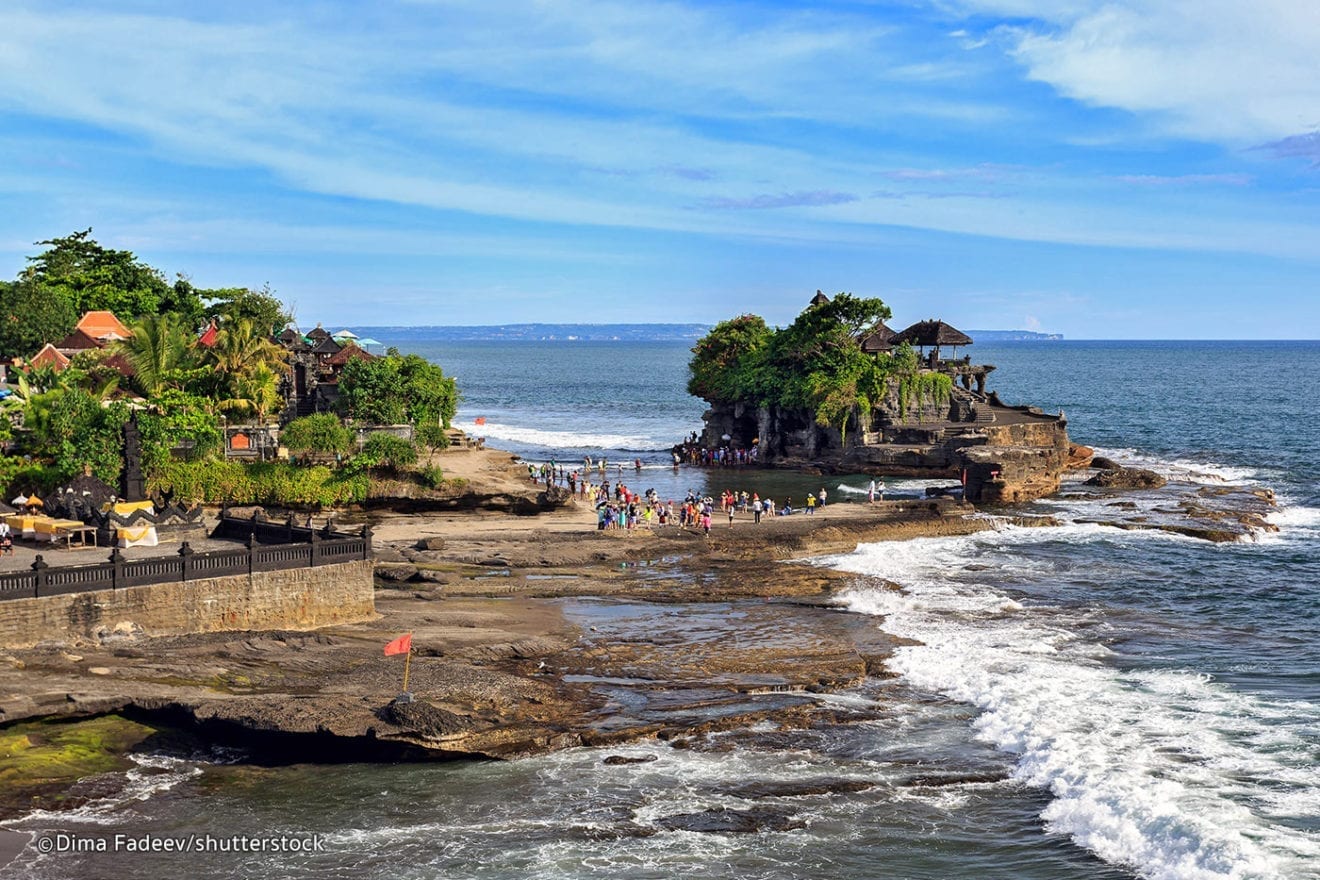
    The news has upset many in the local community who are concerned with the resort’s proximity to 16th-century Hindu temple Tanah Lot temple – one of the resort’s major attractions.

    “I would strongly recommend against any new developments that impact the temple. These things are sensitive in Bali,” I Gusti Ngurah Sudiana, local head of the country’s peak Hindu group Parisada Hindu Dharma Indonesia, told Bloomberg.

    “The Balinese don’t tend to speak up, but these things related to the sacredness of the temple are very sensitive, only the enforcement is too weak.’’

    Indonesia Investments too noted concern in a January report: “according to local beliefs land nearby temples cannot be used for the purpose of leisure (such as a golf course). On the eastern side of the existing golf course there stands a small temple and therefore local people do not want to see an upgraded (expanded) golf course.”

    “Rumours have spread across the island over further forced land sales and the potential of Tanah Lot to be all but obscured by the hotel.”

    Rumours have spread across the island over further forced land sales and the potential of Tanah Lot to be all but obscured by the hotel. At this stage, a lack of details or open consultation from the government is doing little to smooth anxieties.

    A recent Four Corners programme, a long-running television documentary series produced by the Australian state news agency ABC, investigating the development as well as the business ties between Trump and Tanoesoedibjo and featuring a segment in which Tabanan regent Eka Wiryastuti dodged questioning has become emblematic of the difficulties in obtaining straight answers.

    “If anything’s been approved, it’s been done very privately and very quietly,” Mark Davis of Four Corners says during the programme.

    Bali remains a favourite among tourists because of the island’s ability to balance dream beach resort holidays and strong cultural experiences. A development which threatens that balance could threaten the unique drawcard Bali offers the world.

    But, obscured details aside, does Bali need a big name attraction like Trump?

    Maybe not, data from the National Statistics Bureau (BPS) suggests, with overall foreign tourist arrivals growing rapidly year on year. Over 4.2 million foreigners visited Indonesia between January and May this year, a 20.38 percent increase on the same period a year earlier.

    Of that number, 2.3 million touched down at Bali’s Ngurah Rai International Airport. This represents an increase of 23.66 percent from the 1.86 foreign visitors a year earlier. Bali is on track to reach the 5.5 million foreign tourists target, around a 30 percent increase from 2016.

    But the Trump brand may need a sure-fire hit like the iconic South Bali cliff face locale. With resorts, hotels and casinos around the world carrying the Trump name taking a financial hit as his presidency continues to garner controversy, a well-located luxury resort amid an ever-growing tourist base could buck that trend.

  • Burberry sales boosted by China

    Burberry sales boosted by China

    Britain’s Burberry reported an increase in sales in the three months ending June, on the back of double-digit percentage sales growth China and positive demand APAC-wide.

    Total retail sales generated £478m in the three-month period, the London-based brand said, helped by strong performances in the UK and mainland China.

    The luxury fashion retailer said for the first quarter of the 2017-18 year, comparable sales increased 4%. In China, sales growth was in the “mid-teens”.

    Underlying sales rose by about 15% in mainland China as the chief operating and financial officer, Julie Brown, said “Chinese consumer confidence continued to build.”

    Brown said there had also been a rise in Chinese shoppers heading to Hong Kong, after a long period of decline.

    Being the first set of results to be reported under chief executive, Marco Gobetti, the new Burberry head praised the brand’s former-CEO, Christopher Bailey, for his efforts, after he was returned to perform the sole role of creative director for the brand.

    “We are pleased with our performance in the first quarter, while mindful of the work still to do,” said chief executive Marco Gobbetti.

    “This is a time of great change for Burberry and the wider luxury industry. I look forward to building on the foundations Christopher and the team have put in place and creating new energy to drive growth.”

    Luxury leather goods and a new lightweight version of the classic trenchcoat, designed for tropical climates, led the growth. Burberry’s backpacks were the best seller, overtaking the Banner bag, it said.

    The company said it wants to save at least £100m by 2019 and said it is on track to deliver £50m in savings in 2018.

    This recent rise in sales comes after Burberry reported a fall in annual profits for the 2016-17 year.

  • 2 in 3 Singapore consumers use m-payments

    2 in 3 Singapore consumers use m-payments

    Two in three Singaporeans have adopted mobile payments, according to recent research into consumer payment attitudes commissioned by Visa.

    The survey was conducted by Toluna on 500 Singaporeans to assess their attitudes toward cash and card usage, mobile banking, contactless payments and online shopping.

    According to the survey, on-demand services are accelerating the growth of mobile payments, with close to two-thirds of respondents using such services. Such services include on-demand transportation, meal and groceries delivery.

    Seventy-one percent of respondents cited convenience and efficiency as the top benefits for using such services while 35% of them stated that they enjoy shopping in the comfort of their own home.

    Expectations of such services have also shifted in response to higher adoption. According to the survey, a majority of the respondents expect their transportation (e.g. taxi or a car) to arrive within 10 minutes from the time they book the service, meal deliveries to arrive within 30 minutes upon ordering, and groceries to be delivered within 45 minutes.

    Peer-to-peer payments

    Singaporeans are also starting to embrace peer-to-peer (P2P) payments. The survey showed that seven in 10 respondents are aware of such options and one in four respondents are already using P2P services to split a bill after a meal. Benefits of using peer-to-peer payments were fuelled by merchant awareness and convenience.

    “Increased connectivity, coupled with the wider payment methods and form factors have transformed consumers’ experience in every aspect including payment. Based on VisaNet data, seven in 10 Visa cardholders are already making device-initiated payments and more than one in five Visa cardholders are active using in-app payments, fuelled by use of transportation booking apps,” Visa Country Manager for Singapore and Brunei Ooi Huey Tyng said.

    “The payment experience is becoming invisible and we believe this trend will continue with the introduction of more innovative players and services.”

  • Zara to launch online sales platform in India this October

    Zara to launch online sales platform in India this October

    As part of the ongoing international expansion of its integrated store model, Zara will launch its online store in India this October. This was confirmed by Inditex’s Chairman and CEO Pablo Isla while reviewing the company’s performance in 2016.

    Isla highlighted ‘solid, sustainable and integrated growth’ as key to the Inditex of the future.

    Besides launching Zara’s online sales platform in India, this August the Group’s brands, including Zara, Pull&Bear, Massimo Dutti, Bershka, Stradivarius, Oysho and Zara Home will open their first stores in Belarus.

    Speaking at the company’s Annual General Meeting in Arteixo, Spain, Isla defined Inditex as a company “focused on its people, devoted to creative talent and underpinned by an integrated offline-online store model.”

    In 2016, Inditex Group’s points of sale surpassed the 7,200 mark in 93 countries and 41 online markets. Group revenue reached €23.31 billion, underpinned by growth in all the regions in which it does business, while net profit amounted to €3.16 billion.

    At the end of the year, Inditex had 162,450 employees representing 99 different nationalities worldwide.

  • 7-Eleven Singapore offers medicine service

    7-Eleven Singapore offers medicine service

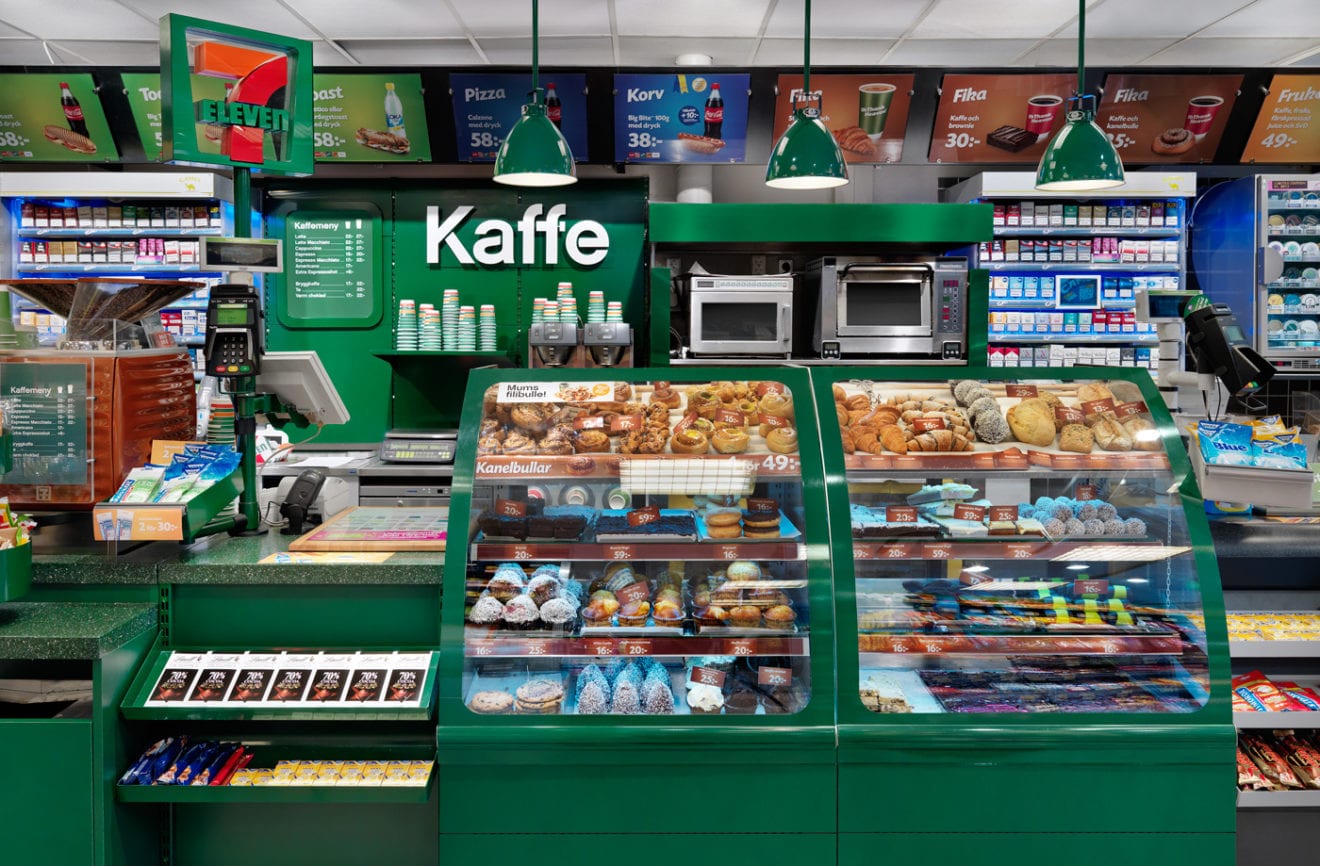
    Instead of visiting a polyclinic, select patients are now collecting their medicine at a 7-Eleven Singapore store.

    Available at 34 outlets, the service is being offered to chronic disease patients under the National Healthcare Group’s (NHG) chain of nine polyclinics, which pack the drugs for delivery to lockers in the patient’s preferred store.

    Patients receive a text message when their medicine has arrived, and access the lockers at any suitable time with a one-time code delivered to their mobile phones.

    Medicine is packed in tamper-proof bags, and if not picked up within 48 hours is sent back to the polyclinic.

    The 7-Eleven Singapore network is operated by Hong Kong-headquartered Dairy Farm International.

  • Fast-Growing Philippine Airlines Emerging as Regional Power

    Fast-Growing Philippine Airlines Emerging as Regional Power

    Once debt-ridden, Philippine Airlines (PAL) has emerged as one of the fastest growing carriers in its region.

    On June 8 it launched a daily Manila-Kuala Lumpur flight using Airbus A321 aircraft after a lapse of four years. Despite the presence of Malaysia Airlines, AirAsia, Cebu Pacific and AirAsia Philippines with seven daily services on the route, PAL is confident of making an impression. Last month PAL also introduced a daily Tagbilaran-Incheon service, making it the sixth Filipino city to connect with South Korea, joining Manila, Cebu, Clark, Kalibo and Puerto Princesa.

    PAL has begun reconfiguring its fleet of 15 Airbus A330-300s from an all-economy-class layout that seats 414 passengers to a three-class, business, premium economy and economy class arrangement designed to seat 309.

    PAL placed the first reconfigured aircraft on international routes last month, starting with Dubai and Honolulu. This month it inducts more on its Melbourne and Doha routes, followed by Sydney and Riyadh in August, Singapore, Kuwait and Jeddah in September, Tokyo Haneda in October, Tokyo Narita in November and Osaka in December.

    Now serving eight destinations in China, its biggest market, the airline hopes to penetrate the country still further, adding to Beijing, Shanghai, Jinjiang, Macau, Xiamen, Guangzhou, Chengdu and Hong Kong.

    PAL plans to deploy two Boeing 777-300ERs leased from Intrepid Aviation on a long-term basis starting in December on the London route, replacing its Airbus A340-300.

    Six Airbus A350-900s it ordered will arrive on a staggered basis starting mid-2018. PAL expects to decide either late this year or early next year on the possibility of launching flights to Frankfurt and Rome with the delivery of the aircraft.

    Domestically, PAL recently boosted operations at Clark International Airport (CIA) as part of its plans to develop its third hub. On June 22 it launched three-times-weekly  flights to Bacolod and a daily service to Tagbilaran. Four-times-weekly service to Cagayan de Oro started the following day. The carrier currently operates to Caticlan, Busuanga, Cebu, Davao and Puerto Princesa from Clark.

    Incheon remains the only international route operated by PAL from CIA, the former U.S. military base located some 43 nautical miles outside Manila. Manila and Cebu account for PAL’s other two hubs.

    The carrier currently operates a fleet of 81 aircraft consisting of 777-300ERs, A340-300s, A330-300s, A321s and A320s.

  • M1 1H profit falls 17.6%

    M1 1H profit falls 17.6%

    Singapore’s M1 has reported a 17.6% slump in net profit for the first half of the year to S$68.8 million ($50.3 million) as a result of flat revenue and higher depreciation and interest expenses.

    Service revenue stayed at $406.2 million despite a 22.3% year-on-year increase in fixed service revenue to S$61.2 million.

    Mobile revenue by contrast fell 2.9% to S$317.1 million, and international call services revenue declined 9.6% to S$28 million.

    M1’s total customer base grew 4.5% during the six-month period to 2.2 million, including 176,000 fiber customers.

    On the mobile front, postpaid customers grew 3.7% to 1.3 million with prepaid customers up 2.5% to 777,000. But the shutdown of the operator’s 2G network during Singapore’s 2G switch-off led to a slight decline in total mobile customers to 2.04 million.

    M1 also announced an increase in average postpaid smartphone data usage to 3.9GB per month, up from 3.3GB a year ago. Mobile data’s contribution to total service revenue meanwhile increased 1.5 percentage points to 55.5%.

    Based on the first-half results and the current economic outlook, M1 said it is forecasting an overall decline in net profit for the full year, but CEO Karen Kooi said the company is positioned for long term growth.

    “M1 is well positioned to capture new opportunities presented by the digital economy. We have been investing in NB-IoT network and digital solutions, and expanded our offerings to include managed infrastructure services, cyber security, business solutions and analytics,” she said.

    “This would enable us to better serve our customers and generate new revenue streams for future growth.”

  • Philippines convenience-store market among the least mature in Asia

    Philippines convenience-store market among the least mature in Asia

    The Philippines convenience-store market is one of the most unsaturated in Asia.

    The country had one store for every 35,000 people last year – a ratio similar to China – whereas in Indonesia, Malaysia and Thailand that figure ranges between 5500 and 10,000 people. In developed Asia, Japan and South Korea have around 1700 people to each store.

    With per-capita income growing about 5 per cent a year in the Philippines, the number of convenience stores has risen by 21.5 per cent a year over the past five years.

    Convenience-store sales have risen 20 per cent each of the past five years, double the rate of normal retail sales.

    With the nation’s historic ties to the US, 7-Eleven leads the way in the Philippines. The chain is licensed by Philippine Seven, which owns 45 per cent of the 1995 stores and franchises out the rest.

    Japan’s Nomura works through Robinsons Retail Holdings, which has exclusive rights to the Ministop chain for the Philippines.

    Only 7-Eleven has anything of an e-commerce presence in the Philippines, says the report, delivering goods from the country’s largest online-sales platform, Zalora Philippines.