Author: Mei Ling Tan

  • Ho Chi Minh City to crack down on tax-evading Facebook retailers

    Ho Chi Minh City to crack down on tax-evading Facebook retailers

    The tax man is threatening to shut down social media accounts, but savvy retailers know that it’s an empty threat. Ho Chi Minh City sent out tax demands to nearly 13,500 Facebook retailers over a month ago, but a representative from the city’s Tax Department told that so far only around 1,000 of them have responded.

    As a result, the city’s tax authorities have decided to work on tougher solutions to crack down on potential tax-evading online retailers, and have asked the Ministry of Finance to finalize regulations regarding tax declarations and deductions at source, as well as the supervision of online business activities.

    The city’s tax department also said it is considering a name-and-shame approach to individuals and organizations that refuse to pay tax.

    To combat retailers that open multiple Facebook accounts to avoid detection, the department claimed it had come up with multiple solutions, such as closing down accounts or sending officials posing as customers to confront them in person.

    It also said it would ask the State Bank of Vietnam for copies of retailers’ bank statements to determine their incomes, and courier companies would be asked to provide information on the quantity and value of the goods they transport for them.

    However, many online retailers say that the tax man has no authority over Facebook.

    Nguyen Thi Cuc, who chairs the Vietnam Tax Consultants’ Association, also told that Vietnam does not have a comprehensive tax policy for online businesses, and that collecting taxes is difficult because most transactions are conducted in cash.

    Many retailers claim they already have business licenses and have declared tax, and only use Facebook to advertise their products, while others say they earn less than VND100 million ($4,400) annually so they are not required to declare tax by law.


  • Nissan expects up to 20 percent of sales to be zero emission cars by 2020

    Nissan expects up to 20 percent of sales to be zero emission cars by 2020

    Nissan Motor expects that zero-emission cars will make up to 20 percent of its sales in Europe by 2020, Gareth Dunsmore, Electric Vehicle (EV) Director for Nissan Europe said in a statement on Monday.

    Nissan said it welcomed France’s commitment to reward those who choose more sustainable vehicles.

    Last week, Ecology Minister Nicolas Hulot said France would aim to end the sale of gasoline and diesel vehicles by 2040 and become carbon neutral 10 years later.

    “By 2020, where the market conditions are right, I’m confident we’ll be selling up to 20 percent of our volume as zero emissions vehicles and this will only grow,” Dunsmore was quoted as saying in an emailed statement.

  • Aeon to open second Cambodia mall in 2018

    Aeon to open second Cambodia mall in 2018

    Japanese group Aeon is expanding its presence in Cambodia with a new location, Aeon 2, announced for 2018.

    Covering 70,500 square metres of retail space, it will be the second Aeon Mall in Cambodia. The exact location has not been disclosed, nor has a date been given for completion.

    According to local media, Cambodian retailers are hailing the entrance of Aeon in 2014 as a huge success, saying its “high standards” are having a positive impact on the Kingdom’s retail sector.

    “Aeon is the first international mall operator and developer in Phnom Penh, and they have set an industry standard and expectations for other such malls in Cambodia,” said Cambo-Sia CEO, Daniel Li.

    “The demand for entry into Aeon is very high, and there is a waiting list for brands wanting to make a debut in the mall.”

    Aeon Mall, the first large-scale modern shopping mall in Cambodia, recently celebrated its third year of operation in the Kingdom.

    CBRE’s first-quarter real-estate report said prime retail rents for malls have dropped by 0.9 per cent compared to the previous quarter, averaging US$31.1 a square metre per month. Prices gained 1 per cent year-on-year.

    The second half of last year, prime rental prices in Cambodia ranged from $32 to $70 a square metre per month, according to a Frank Knight report. The upscale Vattanac Capital mall held highest priced leases for its 5000 square metres of retail space, said the report.

    Looking forward, the retail sector in Cambodia is set to further evolve over the next three years as the total modern retail space could surge from the current 212,000 square metres to 582,000 square metres.

  • H&M to open in Wellington, New Zealand

    H&M to open in Wellington, New Zealand

    Wellington’s fashion scene continues to grow as H&M (Hennes & Mauritz) opens in Queensgate Shopping Centre, Lower Hutt, later this year.

    The fashion retailer made waves in 2016 when it opened its first store in Sylvia Park shopping centre, drawing in crowds from all over Auckland.

    Now Wellington is getting a slice of the Swedish retailer with plans for the store to open late this year, with more information to be realised closer to the yet-to-be-confirmed opening date.

    Queensgate Shopping Centre was closed late 2016 after the Kaikoura-centred earthquake damaged the building’s infrastructure.

    The centre re-opened early April of this year after parts of the complex were redesigned with shock absorbent technology.

    At the time Diversified NZ Property Trust acquired the shopping centre late November of 2015, the centre was the largest enclosed shopping area in the lower North Island. It is managed by Stride.

    Stride’s general manager shopping centres, Roy Stansfield, says this announcement marks an important milestone in a large project, which has been a long time in the works.

    “We’re incredibly excited that a world-renowned brand like H&M has chosen Queensgate as the location for its first Wellington store. It’s testament to the standard of the centre and the opportunities in the region as a whole.

    “Customers and retailers alike have been curious about the works going on in the centre as we prepare for H&M’s opening, so we’re very happy to be able to finally confirm who this new tenant is,” he said.

    Leading up to the store’s launch, Stansfield says Stride will continue to share information through the company’s website, Facebook page and within Queensgate.

    “We’re very much looking forward to seeing the new store take shape.”

  • XPO awarded chilled warehousing contract for BrewDog

    XPO awarded chilled warehousing contract for BrewDog

    XPO Logistics has signed a contract with craft beer pioneer BrewDog, one of the UK’s fastest-growing food and drinks companies. XPO will provide class-leading temperature-controlled warehousing for BrewDog’s stockholding of craft beer at a multi-user, 125,000 square foot facility in Mossend, Scotland.

    The Aberdeen-based brewery – founded in 2008 by James Watt and Martin Dickie – has grown from a two-man team in 2007 to over 600 employees and ships beer to more than 55 countries around the world.

    “The team is bringing freshly filled bottles, cans and kegs from our production site to the facility in Mossend, where each batch is carefully chilled to a steady 8ºC and then assembled for onward distribution to BrewDog customers and our own chain of over 50 pubs across Europe,” said BrewDog’s Stephen McCrindle, customer service and logistics manager. He added, “The quality of our product underpins our business, and it’s important to us that we are in XPO’s experienced hands when it comes to managing our supply chain.”

    XPO has introduced a system interface between its enterprise software and BrewDog’s that improves stock visibility of kegs, cans, bottles and coasters, order processing speed and accuracy to create a more dynamic supply chain.

    Peter Fuller, XPO Logistics business unit director, said: “The growth trajectory of BrewDog has been phenomenal. The business previously operated on a ‘make it and sell it’ model using its own shared storage and production facilities, but it has now far outgrown these. We’re providing BrewDog with the sophisticated storage and supply chain facilities that a fast-growing company of this size needs.”

  • Japan retailers’ profit growth slows to 0.6% in March-May

    Japan retailers’ profit growth slows to 0.6% in March-May

    Japan’s retail sector has seen earnings growth slow notably from a year earlier in the March-May quarter due to lackluster increases in sales combined with greater labor and other costs.

    The aggregate pretax profit of 61 retailers that announced their March-May results by Tuesday increased 0.6% on the year, according to a compilation. The figure, which translates to a nearly 3 percentage point drop from a year earlier, was the smallest over the past two years. About 40%, or 26 companies, booked profit increases.

    Are winners losing their grip?

    Convenience stores, which had been the winners in retail, are perhaps at a turning point. FamilyMart Uny Holdings, which was created through the merger between UNY Group Holdings and FamilyMart last September, said Tuesday its operating profit was 12.5 billion yen ($109 million), down 31% from the combined profits of its two predecessors a year before. Renovation costs were a major factor behind the profit drop, as the company turned some 750 Circle K and Sunkus convenience stores into FamilyMarts in the quarter.

    Lawson’s pretax profit declined even with a sales increase, partly due to the costs it shoulders for its store operators for the disposal of unsold packaged meals.

    Industry leader Seven-Eleven Japan was the only one among the top three players that booked profit growth. Its operating profit climbed 2% to 59.5 billion yen.

    Meanwhile, even within the same Seven & i Holdings group, general merchandise store operator Ito-Yokado struggled, with its existing-store sales shrinking 3.2%.

    “We will reform food operations by setting up a dedicated team,” said Yuji Kaneko, an executive officer of Seven & i.

    Aeon Retail, a general merchandise unit of Aeon group, sustained an operating loss for the quarter despite slashing advertising and other costs. The company cut prices of as many as 254 food and household items in April. President Soichi Okazaki says “sales would have slid even deeper were it not for the price cuts.” To spur sales, the company plans to lower prices again as early as August.

  • Smart targets 70% LTE coverage by year end

    Smart targets 70% LTE coverage by year end

    The Philippines’ Smart Communications aims to make LTE services available in 70% of the population by the end of the year.

    A recent study from JP Morgan estimates that Smart’s nationwide LTE coverage reached 51.5% by the end of May, Smart VP of network planning and engineering Mario Tamayo said in a statement.

    Smart, the wireless division of PLDT, said the findings show that Smart is on track to meet the targets the company stipulated in the three-year network rollout plan the operator to the National Telecommunications Commission in July last year.

    The plan stated that the operator is targeting making LTE available to 95% of the company’s cities and municipalities by the end of 2018.

    The report also estimated Smart’s average broadband speeds at 11.1Mbps on a nationwide basis, ahead of rival Globe Telecom.

    Smart said it is currently re-equipping its cell sites to use low-frequency bands such as 700 MHz and 850 MHz to provide better indoor coverage, while simultaneously deploying high-frequency bands like 1800 MHz and 2100 MHz to increase the cell sites’ capacity.

    “We are asking for people’s patience and understanding as we are upgrading our network facilities. We assure you that we are taking steps to minimize the impact of these activities on our subscribers,” Tamayo said.

    “In the end, our commitment to all our subscribers is that they will enjoy progressively better mobile data services in the next few months, particularly for those using LTE devices.”

    To promote adoption of its LTE network the company has launched a new data package offer, Video Prime 99, that comes with 2GB of data and a subscription to the iflix and iWant TV streaming services. The offer is valid for seven days.

  • China said to ban use of VPNs

    China said to ban use of VPNs

    China has reportedly instructed the nation’s operators to bar their customers from accessing the internet via VPNs by February in the latest move to tighten controls over internet access.

    State-run operators China Mobile, China Telecom and China Unicom have been ordered to bar their customers from using VPNs to skirt censorship restrictions, citing unnamed people familiar with the matter.

    The government is reportedly moving to remove loopholes enabling internet users to circumvent the so-called Great Firewall of China, the system that blocks access to a range of information sources including foreign social media and news websites.

    Many businesses also use VPNs to view restricted websites, and it is unclear how the new directive will affect multinationals operating within the country.

    If the clampdown is extended to businesses it could potentially discourage businesses from operating in China or even convince them to move their local operations, the report states. But the restrictions seem to be aimed mainly at individual consumers.

    If the restrictions are extended to businesses, it will add to the new regulatory burdens due to be introduced with China’s new Cybersecurity Law, which imposes strict restrictions on the transfer of data overseas for businesses operating in China.

  • China vehicle sales rebound in June amid price cuts

    China vehicle sales rebound in June amid price cuts

    China’s vehicle sales rebounded in June, the country’s top industry association said, shaking off weakness seen in the previous two months as carmakers grappled with a rollback in tax incentives that drove strong growth last year.

    Total vehicle sales hit 2.17 million in June, up 4.5 percent from a year earlier, while sales for the first half of the year rose 3.8 percent to 13.4 million vehicles, the China Association of Automobile Manufacturers (CAAM) said on Tuesday.

    The rise in sales, which industry insiders said was helped by hefty discounting, lends a sheen to the world’s largest auto market, but growth overall is struggling to keep pace with 2016 when the market grew at its fastest pace in three years.

    Overall vehicle demand in China would likely grow just 1-4 percent this year, mainly because consumers made purchases last year to benefit from lower tax rates, said Yale Zhang, head of Shanghai-based consultancy Automotive Foresight.

    In January, CAAM predicted sales would rise 5 percent this year, slowing from 13.7 percent in 2016, citing the rollback of a tax incentive for small-engine cars and economic pressures. It stuck with that forecast on Tuesday.

    June’s rise, however, marks an improvement from April and May, when vehicle sales fell 2.2 percent and 0.1 percent, respectively, registering two straight months of declines for the first time since 2015.

    Peter Fleet, Ford Motor Co’s Asia-Pacific chief, told Reuters average vehicle transaction prices in China had fallen about 4 percent in the first half of this year against 2016. “We continue to see negative industry pricing in China,” he said.

    Ford is among the foreign brands strong in the small sedan segment that have seen China sales slow this year, others being General Motors Co and Volkswagen AG.

    Buyers in China have shied away since the purchase tax on vehicles with engines of 1.6 liters or below rose to 7.5 percent, from 5 percent, at the start of the year.

    However, there is one bright spot: sales of new-energy vehicles (NEVs) – all-electric battery vehicles and plug-in electric hybrids – that saw a 33 percent bump in June to 59,000 units, the latest CAAM data shows.

    In the first half of this year, sales volume of such NEVs totaled 195,000 vehicles, up 14.4 percent.

    China is the world’s largest market for green energy vehicles, with the government aggressively promoting the segment, including spending billions in subsidies, in a bid to fight intense urban air pollution.

  • Bad news for Japan’s retailers as Chinese tourists cut back on buying

    Bad news for Japan’s retailers as Chinese tourists cut back on buying

    They’re still coming in droves — but no longer buying in spades. After propping up sales for overseas retailers over the past decade with a shopping-driven tourism agenda, Chinese visitors are no longer returning home with suitcases bulging like before.

    A new survey by consultancy Oliver Wyman shows Chinese tourist numbers and holiday expenditure continuing to rise last year, even as shopping during overseas travel dropped 17 percent from a year earlier.

    The average Chinese tourist spent about 6,705 yuan ($986) on shopping when traveling, down from 8,050 yuan in 2015. But overall holiday spending — including on hotels and sightseeing — rose 3.5 percent to 20,317 yuan from 19,635 yuan, according to the survey of 2,000 travelers from the mainland.

    The sea change in spending habits is dealing a blow to retailers from Parisian department stores to Japanese duty-free operators and Hong Kong jewelers, but bigger numbers of wealthier Chinese may create other opportunities for leisure and entertainment operators in popular overseas destinations.

    “Businesses globally have to adjust their strategy to think about how to capture the new Chinese tourist dollar,” said Oliver Wyman’s Shanghai-based partner, Hunter Williams. “It’s less about the outlet mall now and more about the national park.”

    One reason for the change is the easier access to foreign goods in mainland China due to a booming $60 billion cross-border e-commerce market.

    Imported items can now be ordered online and delivered in as quickly as a day, often exempt from taxes levied on goods from store shelves.

    That’s damped the practice of buying overseas for the purpose of reselling locally, and the survey showed such resales falling to 3 percent of shopping expenditures from 8 percent in 2015.

    Chinese outbound spending still ranks highest in the world. In 2016, travelers from the country spent $261 billion, a fifth of the global total, up from $249.8 billion in 2015, according to the World Tourism Organization.

    But the portion contributed by shopping has fallen to 33 percent of overall travel expenditure, from 41 percent in 2015, the Oliver Wyman survey showed.

    Chinese consumers no longer need to travel overseas to stock up on items from Playtex bras to Christian Dior lipsticks and Blue Nile diamond rings, which are now available on online portals run by firms like Alibaba Group Holding Ltd. and JD.com Inc. With foreign brands increasingly using the internet to reach Chinese buyers, foot traffic to malls and outlet stores in popular overseas destinations is slumping.

    Duty-free retailer Laox Co. reported a 33 percent fall in revenue for 2016 as Chinese tourists spent less, while U.S retailer Macy’s Inc. is shutting 14 percent of its stores to stem sales declines.

    Luxury houses like LVMH Moet Hennessy Louis Vuitton SE and Cie Financiere Richemont SA and brewer Kirin Holdings Co. have pointed to sales pressures from fewer Chinese shoppers visiting stores globally, said Bloomberg Intelligence retail analyst Catherine Lim.

    The survey also showed that more Chinese tourists are traveling with children and spouses rather than going alone or with friends. That could benefit destinations that offer unique leisure experiences or entertainment options, said Oliver Wyman’s Williams.

    “The number of Chinese tourists is still rising rapidly and at quicker pace than their overall spending,” he said. “This should give industry players some pause to think about how to make up for the loss of shopping-related spending through volume.”

  • Cebu Pacific seeks to increase Manila-Sydney flight frequency

    Cebu Pacific seeks to increase Manila-Sydney flight frequency

    Cebu Pacific (CEB), the only low-cost carrier servicing Manila and Sydney in Australia, has captured the largest market share for both passenger and cargo services on the route as of April 2017 and wants to increase its flight frequencies to this destination.

    Data from Australia’s Bureau of Infrastructure, Transport and Regional Economics (BITRE) showed that CEB flew 16,441 passengers in April alone, representing 41.8% of the total market share for the Manila-Sydney route, the highest among the three carriers flying this route.

    This brings the total number of passengers flown by CEB to 59,953 – representing 41.7% market share. Its closest competitor, on the other hand, captured 33.5% market share. Load factor for CEB for the Manila-Sydney route was at an average 80% for the first four months of 2017.

    Year-on-year, total passenger volume for the first four months of 2017 of all three carriers plying the Manila-Sydney route reached 143,765, up 12% versus the 128,352 passengers flown in the same period in 2016.

    For cargo service between Manila and Sydney, CEB captured 43.8% market share of the total 789 tons carried in April 2017. From January to April 2017, CEB had 47.4% market share of the total 3,114 tons of cargo carried for that route. The total cargo volume for the first four months of 2017, however, is 30.6% lower than the 2,128 tons carried in the comparable period last year.

    “Since opening the Sydney route in 2014, we have contributed to the growth of trade and tourism between the Philippines and Australia, through year-round low fares. Today, Sydney is one of our top international routes and bodes well for our future expansion plans in the Australian market,” according to Atty. JR Mantaring, Vice President for Corporate Affairs of Cebu Pacific.

    Cebu Pacific currently offers the most number of seats between Manila and Sydney, operating up to five weekly nonstop services between Sydney and Manila, departing every Tuesday, Wednesday, Thursday, Saturday and Sunday from Sydney at 11:35 a.m. and arriving Manila at 5:50 p.m.

    The flights from Manila to Sydney, on the other hand, depart at 12:05 a.m. and arrive Sydney at 10:05 a.m.

    Recently, the airline expressed interest to increase frequency between Manila and Sydney, noting strong demand for this route.

    Cebu Air, Inc. is the largest carrier in the Philippine air transportation industry, offering its low-cost services to more destinations and routes with higher flight frequency within the Philippines than any other airline. It also offers flights to over 60 destinations including Dubai, Tokyo, Beijing, Bali and Sydney.

    CEB’s 61-strong fleet, comprised of 4 Airbus A319, 36 Airbus A320, 8 Airbus A330, 8 ATR-72 500 and 5 ATR 72-600 aircraft, is one of the most modern aircraft fleets in the world. Between 2017 and 2022, Cebu Pacific will take delivery of 7 Airbus A321ceo, 32 Airbus A321neo, and 11 ATR 72-600 aircraft.

  • AirAsia’s Shenzhen-Langkawi route starts Aug 9

    AirAsia’s Shenzhen-Langkawi route starts Aug 9

    AirAsia is expanding its connectivity by introducing direct flights from Shenzhen, China, to Langkawi starting Aug 9. Chief executive officer Aireen Omar said the concept of low-cost airline was introduced in Shenzhen with the aim of enabling more people to fly.

    “Now people in the Guangdong province are well-connected to the world through our extensive flight network of over 120 destinations in Asia, Australia, New Zealand and the United States,” she said in a statement.

    Since its inaugural flight in 2007, the airline has flown 4.3 million guests in and out of Shenzhen, bringing in high local and international passenger traffic into the city.

    Celebrating its tenth anniversary flying into Shenzhen, China, AirAsia was now offering 35 weekly flights from Shenzhen to South-East Asia.

    The average load factor for this year for the three routes from Shenzhen recorded a performance of over 85%, placing AirAsia as the leading foreign airline, in terms of flight frequency and passengers flown into Shenzhen.

    To celebrate the occasion, AirAsia is offering all-in fares as low as RM256 from Kuala Lumpur to Shenzhen and RM257 from Kota Kinabalu to Shenzhen.

  • Quality blueberries the fruit of choice for Indonesians

    Quality blueberries the fruit of choice for Indonesians

    Australian fruit is proving popular with the Indonesian middle class. Premium fresh fruit is what seems to be in demand from Indonesia, especially that which has been grown for the Indonesian palate.

    Andrew Bell, director of Mountain Blue Farms in northern New South Wales, says the successful family-owned blueberry operation had been looking for export opportunities to expand beyond the domestic market, and eventually settled on Indonesia.

    The country has a population of more than 255 million, making it a potentially important market.

    “Indonesia has a significant population, right on our doorstep,” says Bell, whose company also runs its own breeding operation. “They also have a rapidly growing middle class who are a food and health conscious, and there happened to be existing protocols for getting blueberries into Indonesia.”

    He says the typical agribusiness approach into Indonesia had either been about bulk supply (wheat, sugar), or it had entailed lower grade fruit and vegetables for specific markets.

    “We saw a different market,” says Bell. “We wanted to be in the quality supermarkets that are being built for the middle classes. We have a premium product and that’s what we wanted to sell in Indonesia. We didn’t want to compromise on what we do.”

    The company representatives spent a week in Indonesia in early 2017, meeting supermarket operators, wholesalers and distributors.

    “They all dealt with Australian food imports, and their view of our produce was the clean and green image. It’s our image up there and that’s what the Indonesian operators are selling to consumers.”

    Health benefits

    It turns out that blueberries are a middle class food because of the number of health benefits associated with them. And with the Indonesian middle class already estimated at 50 million – and growing – that represented a market worth being involved in.

    The key, he says, was finding the right partners, which came in the form of a food distribution outfit in Java that was prepared to make specific recommendations about the Indonesian palate.

    “Blueberries come in many shapes and sizes,” says Bell. “The Indonesian palate goes for a large, crunchy, sweet blueberry.”

    Blue Mountain Farms has a breeding operation in Tabulam – on the Clarence River – and they set about breeding the Indonesian blueberry.

    Those samples are being fed into Indonesian supermarkets next month but the early feedback from the distributors has been positive.

    “It’s a very large market, for a product we can perfect and grow in regional Australia. We employ around a thousand people in the season and a core of between 60 and 70 staff, and we have a network of growers around the country who we use.”

    Bell says the chance to secure a foreign market is good for agribusiness employers and the towns they operate from. He also says that Indonesian business people are easy to deal with.

    “They know what they want and they know what works,” says Bell. “That makes it so much easier for us.”

    New tastes

    AsiaLink Business CEO Mukund Narayanamurti, says the example of Mountain Blue Farms is not an isolated one in Indonesia, as the health-conscious and food safety-aware middle classes of Indonesia develop new tastes for food.

    “The main food trade out of Australia into Indonesia is wheat, sugar, live cattle and boxed beef,” says Narayanamurti. “But this is large-scale or commodity trade. When the middle classes are growing – as they are very aggressively in Indonesia – you see rising demand for value-add premium foods, and for fresh fruit and vegetables.”

    He says Australia has a reputation in south-east Asia for its agricultural output, plus the Australian image for processed and value-add foods is one of quality.

    The demand from Indonesia is not only because middle class people have more disposable income, and higher standards for what they feed themselves and their children, says Narayanamurti. He says there are also new supermarket chains being built through urban Indonesia, where the value-add and premium foods are being sold.

    “In the Indonesian supermarkets there are Australian cherries, broccoli, avocados, Brussels sprouts, citrus fruits and kale.”

    He says Indonesia’s rising wealth and expectations is dramatic and the country is estimated to have a size of middle class in the world Top 10 by 2020. With the rising wealth comes the rising consumption of quality protein – Australian meat and dairy – and a focus on eating healthy and eating safe.

    Export opportunities

    Narayanamurti says one of the main reasons for Australian agribusiness operators to keep an eye on Indonesia is the export market itself.

    Australia’s involvement in the NZ-Australia-ASEAN zone gives exporters access to reducing-to-zero tariffs on beef, wheat and cheese and other trade goods that will be reducing.

    “The bigger picture is that this trade area covers 600 million people and a market of $US2 trillion ($2.6 trillion),” says Narayanamurti. “There is a trade liberalisation program meaning you’ll be able to land goods in one country and find it much easier to distribute them to other countries.

    “It’s early days in the south-east Asian market, but Australian agribusiness operators should be developing products and services that have cross border application, as the Australian breeding services and feedlot operators are already doing in the livestock sector.”

  • GAC China to provide upstream logistics services for car imports

    GAC China to provide upstream logistics services for car imports

    Parallel car importer Shandong High Speed Qingdao West Coastport has appointed GAC China its upstream logistics provider. Under the one-year contract, it will handle the receiving and checking, container loading and freight services of an estimated 3,000-4,000 cars exported from Hamburg and Rotterdam to Qingdao and Hong Kong every year.

    Simon Xu, managing director of GAC China, is optimistic about the growth of that market and the opportunities that it will generate: “China was ranked as the world’s number one automotive market for the eighth year last year, with a double-digit total sales growth. We are also seeing a rising trend for the direct import of European cars into the country.

    “Our partnership with Shandong High Speed marks the beginning of a new chapter for GAC China, that will allow us to leapfrog into a new territory in the contract logistics market for fully assembled automobiles.”

    GAC China’s contract logistics team led by manager Tyrone Liu will work closely with GAC’s partners in Hamburg and counterparts at GAC Rotterdam to ensure the safe and prompt delivery of the vehicles.

    Chengguang Du, general manager of Shangdong High Speed Qingdao West Coastport says: “When looking for a logistics partner with global resources and extensive experience to handle the shipment of our high value automobiles, GAC came to our mind. We know GAC as a well-known brand in the logistics industry, but it was only when we flew to Hamburg and saw the facility and operations with our own eyes that we were fully convinced.”

    GAC China has already handled the first shipment under the contract – two Range Rover HSEs from Germany to Qingdao, China.

  • Singapore Myanmar Investco reports encouraging initial retail results at Yangon International

    Singapore Myanmar Investco reports encouraging initial retail results at Yangon International

    Singapore Myanmar Investco Limited has reported revenue of US$13.3 million in its travel and fashion retail segment for the year ended 31 March 2017.

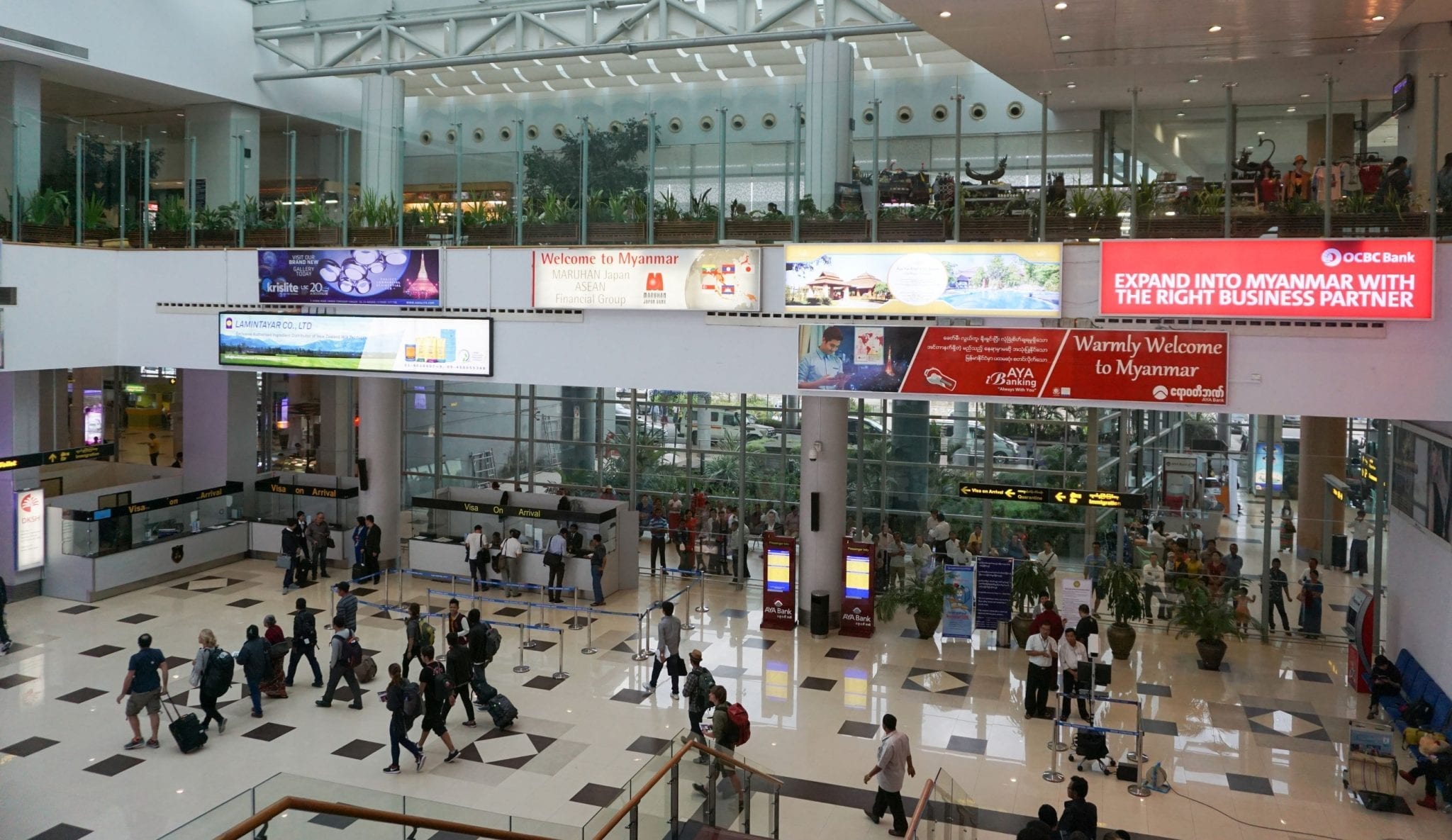
    Subsidiary SMI Retail only began duty free operations at Yangon International Airport in September 2016, meaning there is little meaningful basis for year-on-year comparison. The company was awarded contracts for duty free, other retail and food & beverage outlets in 6,700sq m of space at the airport’s new International Terminal in December 2015.

    The 6,700sq m of retail space includes a multibrand and multicategory duty free area of almost 2,000sq m on three levels

    Singapore Myanmar Investco Limited reported overall group revenue of US$23.3 million for the year, and a gross profit of US$4.8 million. Net of tax, the company reported a loss of US$7.3 million.

    “The initial results of retail operations at Yangon International Airport are encouraging although it will take time for the new terminal to reach traffic flows at projected levels,” said SMI President and CEO Mark Bedingham in the company’s annual report.

    “We have received much positive feedback from passengers and the airport management company on the quality of the duty free and travel retail stores that we have created and this initial success has been widely noticed in the city itself.

    “Notably, we have used our relationship with DFS to supply a comprehensive portfolio of international wines & spirits and beauty brands for both departures and arrivals at Yangon International Airport and have introduced more than 30 international fashion and lifestyle brands to create an outstanding retail experience for this very modern, newly-built terminal.

    “This new terminal has dramatically increased the capacity of Yangon International Airport to meet the expected rapid rise in international travellers; for business, for tourism and for Myanmar nationals who are also starting to travel overseas in greater numbers. This new terminal is already scheduled for further expansion and this will undoubtedly create new opportunities for SMI in travel retail at the airport.”

    Bedingham also noted that a number of mall owners and developers in Myanmar saw SMI as a “highly desirable partner”. He continued: “We have been pleased to work with Junction City – a new integrated upscale development in downtown Yangon. We have been able to introduce several international brands that we work with at the airport into Junction City and nearly all of these retail stores have been opened by the end of April 2017.”

    SMI signed an exclusive distribution agreement with Shiseido Asia Pacific in February 2017 and the first Shiseido flagship counter in Myanmar will open in Junction City by mid-year 2017.

    Non-Executive Chairman Ho Kwok Wai said that SMI would now move focus on organic growth across its diversified business portfolio.

    He noted a World Bank report issued on 30 January 2017 which stated that Myanmar’s economy will grow an average of +7.1% per year in the next three years.

    “The landscape in Myanmar was very different when we began our transformation in 2013 but our objective for the group remains the same: to build a diversified business model to capitalise on the strong trends in consumer spending, international tourism and infrastructure investment in this frontier market,” he said.

    “From the encouraging results shown in our portfolio of businesses so far, there is positive sentiment that we are on the cusp of major advances in Myanmar, with strong growth potential.”