Author: Mei Ling Tan

  • Indonesian embassy promotes Balinese culinary in Beijing

    Indonesian embassy promotes Balinese culinary in Beijing

    The Embassy of the Republic of Indonesia in Beijing and Hotel Conrad has promoted Balinese cuisine to the guests staying at one of the five star hotels in the capital city of China from July 6 to 16, 2017.

    “This is the second event this year,” Indonesian Ambassador to China, Soegeng Rahardjo, stated in a press statement received by Antara here on Friday.

    To support the event titled A Taste of Indonesia, Conrad Beijing presented three chefs from Bali, namely I Made Semawan, Agus Feritude, and Agus Surya.

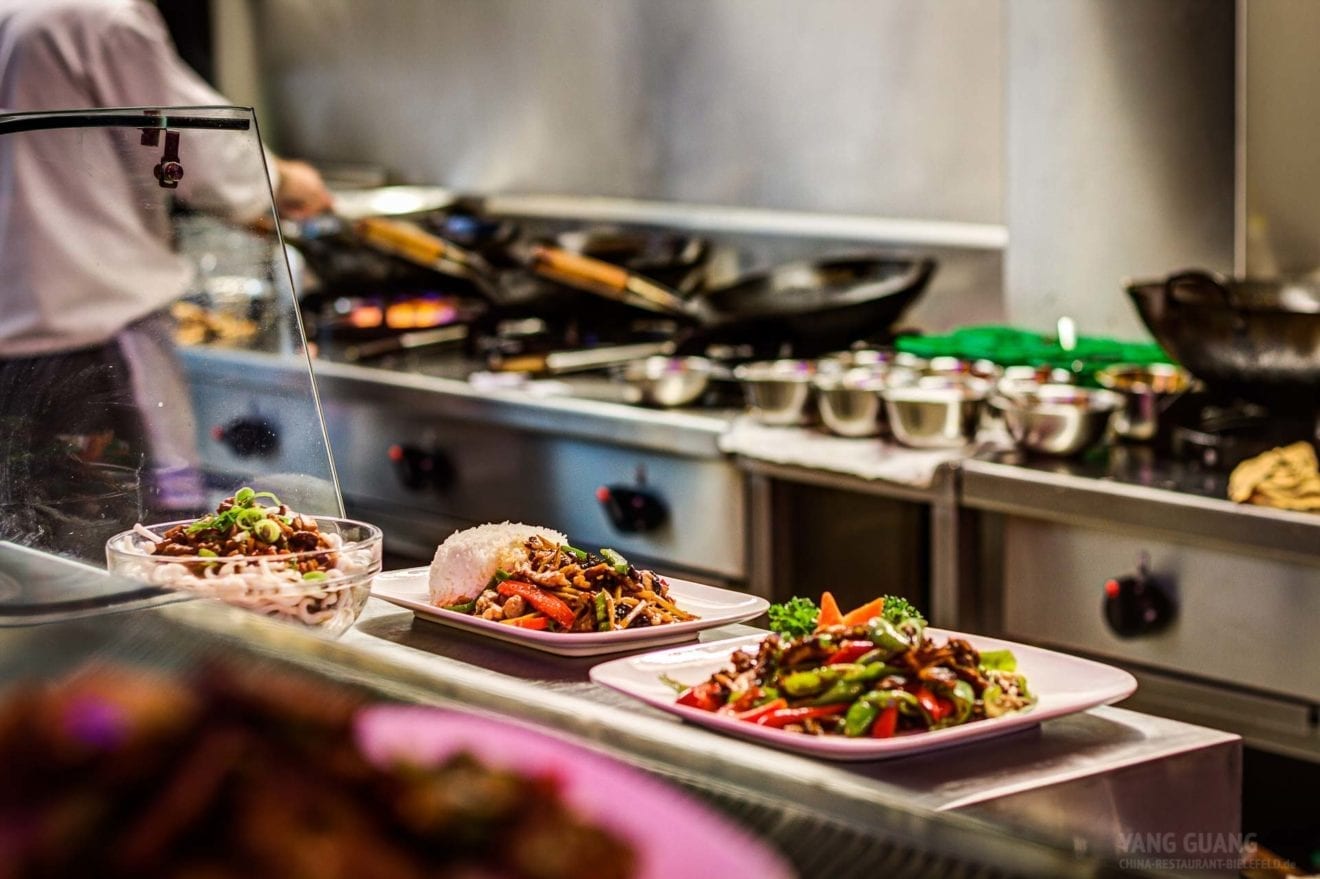
    They serve Balinese dishes of chicken, pork, fried rice, and satay, which tasted exactly the same as the ones found in the island.

    “With the growing recognition of Indonesias tradition, culinary taste, and beauty, it is expected that the number of foreign tourists visiting Indonesia will continue to increase,” the ambassador stated.

    The Embassy will continue to hold such culinary promotional events by involving several star hotels.

    Earlier, a similar event was also held by the Embassy in cooperation with Westin Beijing in mid-March.

    This year, the Ministry of Tourism expects 2.5 million tourists from China.

    In previous year, tourists from mainland China visiting Indonesia reached 1.5 million people. They still see Bali as a major tourist destination in the country.

    Garuda Indonesia has provided direct flights to Denpasar from Beijing, Shanghai, Guangzhou, and Chengdu. Several Chinese airlines also provide direct flights to Denpasar.

  • Alibaba launches low-cost voice assistant amid AI drive

    Alibaba launches low-cost voice assistant amid AI drive

    The Chinese device costs significantly less than counterparts by Amazon and Google. China’s Alibaba Group Holding Ltd launched on Wednesday a cut-price voice assistant speaker, similar to Amazon.com Inc’s “Echo”, its first foray into artificially intelligent home devices.

    The “Tmall Genie”, named after the company’s e-commerce platform Tmall, costs 499 yuan ($73.42), significantly less than western counterparts by Amazon and Alphabet Inc’s Google, which range from $120 to $180.

    These devices are activated by voice commands to perform tasks, such as checking calendars, searching for weather reports, changing music or control smart-home devices, using internet connectivity and artificial intelligence.

    China’s top tech firms have ambitions to become world leaders in artificial intelligence as companies, including Alibaba and Amazon, increasingly compete for the same markets.

    Baidu, China’s top search engine, which has invested in an artificial intelligence lab with the Chinese government, recently launched a device based on its own siri-like “Duer OS” system.

    The Tmall Genie is currently programmed to use Mandarin as its language and will only be available in China. It is activated when a recognized user says “Tmall Genie” in Chinese.

    In a streamed demonstration on Wednesday, engineers ordered the device to buy and deliver some Coca Cola, play music, add credit to a phone and activate a smart humidifier and TV.

    The device, which comes in black and white, can also be tasked with purchasing goods from the company’s Tmall platform, a function similar to Amazon’s Echo device.

    Alibaba has invested heavily in offline stores and big data capabilities in an effort to capitalize on the entire supply chain as part of its retail strategy, increasingly drawing comparisons with similar strategies adopted by Amazon.

    It recently began rolling out unstaffed brick-and-motor grocery and coffee shops, using QR codes that users can scan to complete payment on its Alipay app, which has over 450 million users. Amazon launched a similar concept of stores in December.

  • Restaurant industry starts 2017 on sour note

    Restaurant industry starts 2017 on sour note

    The restaurant industry in the three largest cities of Vietnam struggled with weak sales and traffic throughout the first quarter of 2017, according to a report by Decision Lab, a marketing research company based out of Ho Chi Minh City.

    The number of customer visits to restaurants in Hanoi, Ho Chi Minh City and Danang for the three month period dropped 9% with average spending per visit plummeting 12% when compared against the previous quarter’s figures, said Decision Lab.

    The quarter closed with 20% lower total sales for the three cities than reported for the fourth quarter of 2016.

    The data collected from the Decision Lab Foodservice Monitor indicates that both full-service restaurants and quick service restaurants experienced a decline in sales and visits in the three month period.

    Meanwhile, street food and convenience store sales managed to maintain their market size.

    Decision Lab didn’t have a solid explanation as to what caused the substantial drop. However, the company rationalized that it was due to a variety of seasonal factors, mostly involving the Lunar New Year holiday.

    During the Lunar New Year, said Decision Lab, consumers have a higher tendency to travel out of the cities to their homeland.  They also spend more time with family and eating at home during the country’s biggest holiday.

    As Vietnamese consumers began saving for the biggest celebration of the year, they cut down on going to restaurants for Breakfast, Lunch, and Dinner, both in terms of visits and spending.

    As the quarterly Foodservice Monitor report from Decision Lab shows, Delivery is the only type of consumption that enjoys stability in its market size in quarter 1. Vietnamese still highly value the convenience of placing a delivery order, having their meal cooked by professional chefs and delivered to their doorstep. Especially before, during and after Lunar New Year when everyone is swamped with work, holiday preparation, and traditional rituals, the comfort a delivery can bring is even more appreciated.

    Although not cutting down on delivery per se, consumers did spend less per order as they stayed committed to their saving plan. To tackle this lower spending per order, restaurants can offer promotions that encourage more frequent orders from consumers. Operators should also consider offering snacks/drinks at lower price point, and cooperate with third party order platforms that take care of the delivery to save themselves on delivery cost.

  • Volkswagen recalls 766,000 VW cars worldwide for brake system update

    Volkswagen recalls 766,000 VW cars worldwide for brake system update

    Volkswagen is recalling 766,000 vehicles of its core passenger car brand worldwide for a software update to their braking control systems, a spokesman said.

    The braking control system may not function properly in certain driving conditions, such as when the driver over-steers, under-steers or slams on the brakes, the spokesman said.

    The car maker is recalling 288,000 VW-brand cars in Germany over the issue. Including the Audi and Skoda brands, the German recall impacts about 385,000 cars, the spokesman said.

    The recall in Germany was first reported by news agency DPA on Saturday.

  • Disney’s created in Japan franchise reaches US$2 billion revenue worldwide

    Disney’s created in Japan franchise reaches US$2 billion revenue worldwide

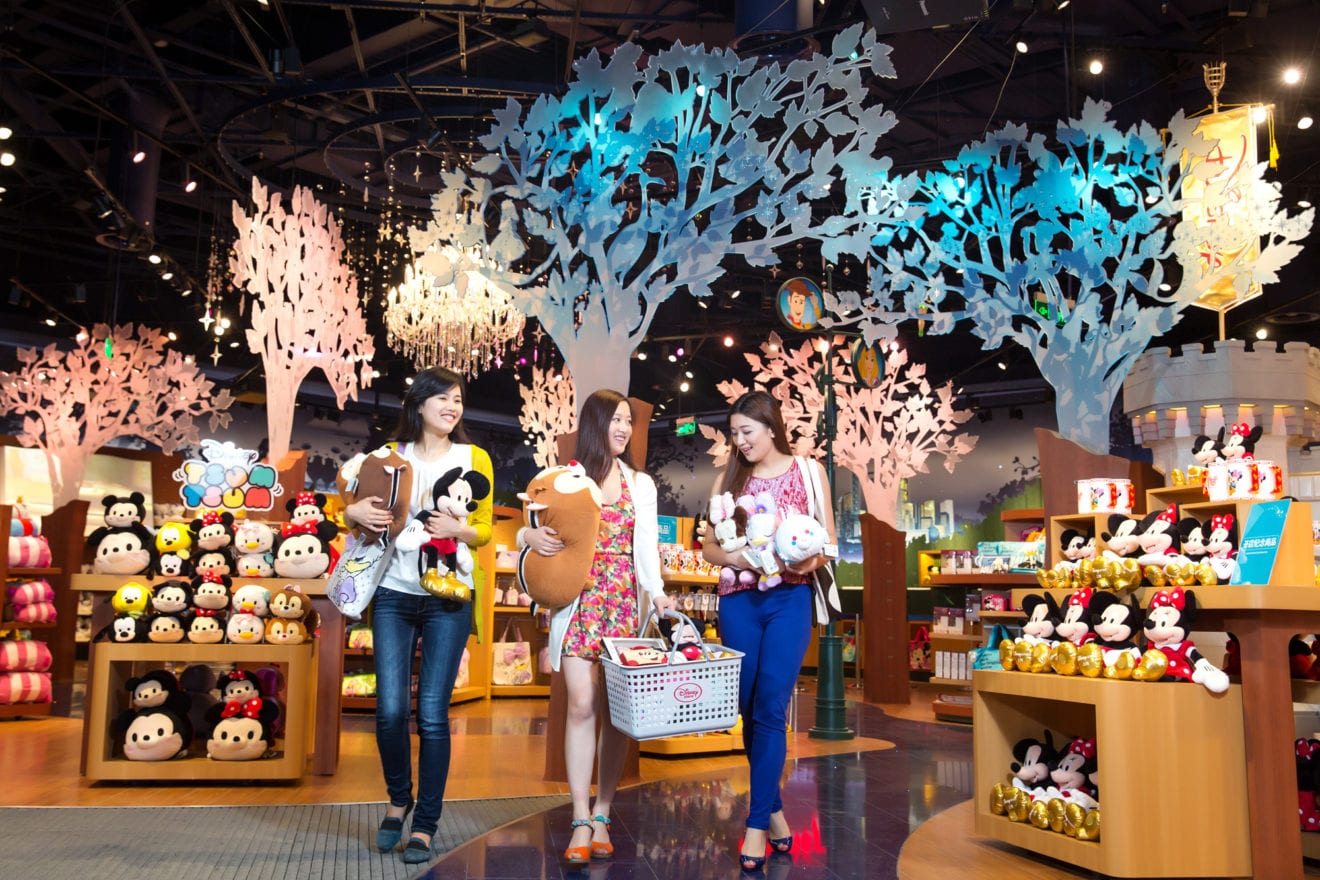
    “We couldn’t be more proud of Tsum Tsum’s Japanese-origins and its international appeal,” said Paul Candland, President, Walt Disney Asia. “Tsum Tsum connects with fans across multiple platforms and experiences and is proving to be a successful channel to introduce new intellectual property.”

    – According to LINE the game has been played over 165.4 billion times worldwide since its debut, with nearly 61.8 trillion Tsums cleared in the course of the gameplay.
    – With Tsum’s measuring an average of 7mm across (the size when played on a 4.7-inch smartphone), then 61.8 trillion Tsums would form a line 432 million kilometers long the distance from Earth to Mars and back.
    – The Tsum that players spent the most skill tickets to level up is Cinderella, followed by Beast (from “Beauty and the Beast”) and Maleficent Dragon (from “Sleeping Beauty”).

    From its humble beginnings as a popular plush toy from the Disney Store Japan, Tsum Tsum’s expanded franchise experience now spans every Disney consumer touch point including fashion, lifestyle and consumer electronics attracting a wide consumer base from boys and girls, as well as young adults. The stackable toys also have their own show with animated episodes available online and on Disney Channel as well as Tsum Tsum Tuesdays, which is now a popular subscription service in the U.S. From classic Disney characters such as Mickey Mouse and Princess to Buzz Lightyear and Darth Vader, Tsum Tsum encompasses the appeal and affinity of Disney’s key brands – Disney, Disney•Pixar, Marvel, and Star Wars.

  • Xiaomi opens second flagship store in Hong Kong

    Xiaomi opens second flagship store in Hong Kong

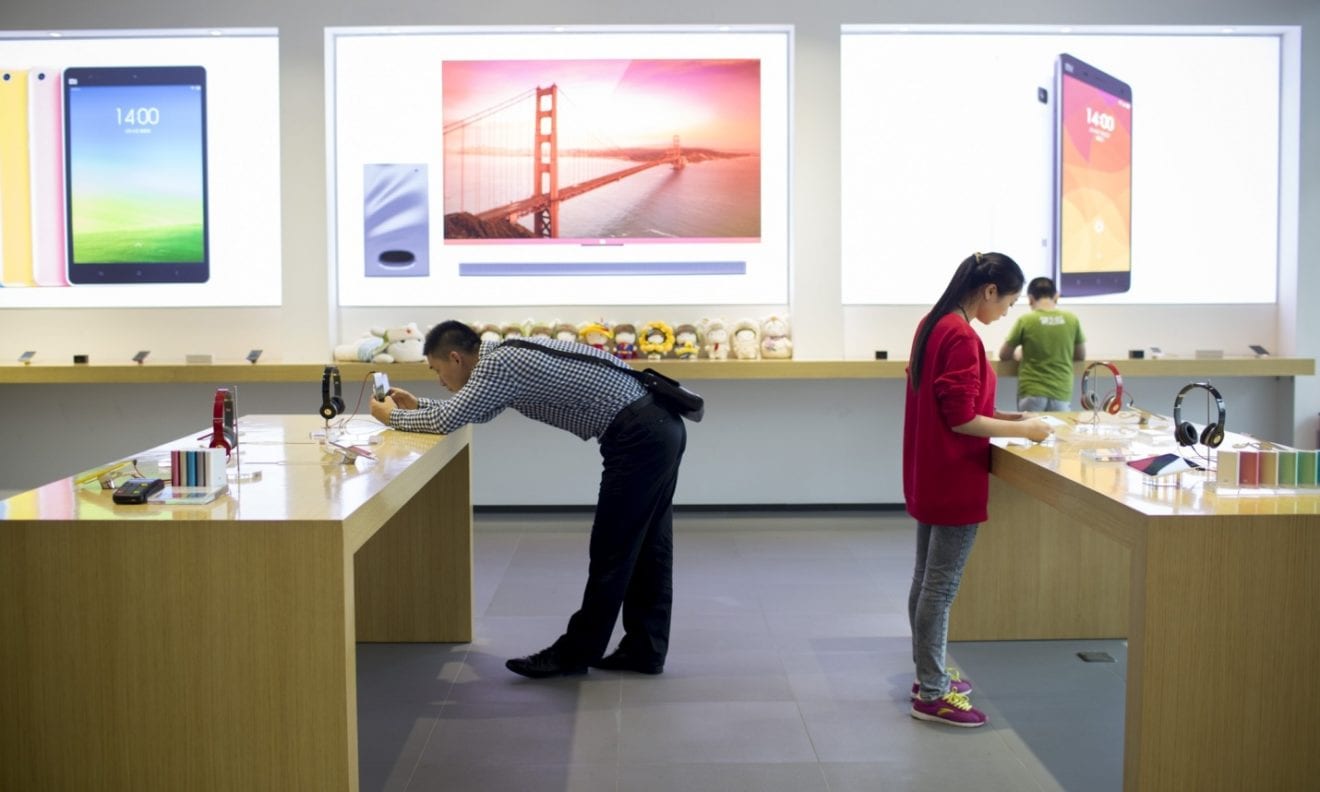
    Chinese smartphone and electronics products maker Xiaomi opened its second Hong Kong flagship store in the Hang Lung Centre, Causeway Bay.

    With an area of over 3,000 square feet, Xiaomi’s new Hong Kong flagship store has eight floors. The store provides various Xiaomi products, including smartphones, wireless routers, and smart home devices, as well as lifestyle supplies such as suitcases, pillows and towels.

    Prior to this, Xiaomi launched its first Hong Kong retail store in Nathan Road, Mong Kok in 2015.

    Wang Xiang, Xiaomi’s head of international team and senior vice president, said that the opening of Xiaomi’s second flagship retail store in Hong Kong represents the importance of this marketplace. Wang said Xiaomi hopes to open 1,000 retail stores and generate revenue of CNY10 billion over the next three years.

  • The Alibaba Group is ready to do business in Macau

    The Alibaba Group is ready to do business in Macau

    Alibaba Group Holding Limited has had its application for trademark protection accepted in Macau, enabling the Chinese e-commerce giant to enter the MSAR with a series of products.

    Brands Ant Star, Ant Star Bank, Alimebot, 阿里蜜,星匯,星安,智惠,星匯銀行,智惠銀行, are now able to create and commercialise in Macau products ranging from newspapers and magazines to credit and debit cards, scientific and nautical instruments, file sharing software and GPS equipment. But also advertising, execution and supervision of loyalty programmes and incentives, business consulting to traffic optimisation of websites, large warehouse retail services or even insurance, financial and monetary businesses.

    In total, many hundreds of products and services that the company – based in Hangzhou and founded in 1999 by Jack Ma and Peng Lei – is now allowed to conduct here.

    With over 50,000 employees, Alibaba provides consumer-to-consumer, business-to-consumer and business-to-business sales services via web portals.

    Recently, the Chinese giant invested US$1 billion (MOP8 billion) in Southeast Asian online retailer Lazada Group increasing its stake to more than 80 per cent and making is presence even stronger in the region.

    According to Forbes magazine, over the past year Ma has spent more than 800 hours flying to dozens of countries, meeting business leaders and heads of state to introduce his grand vision: small businesses from all corners of the world trading freely and securely on the Alibaba platform.

    Highly reported Jack Ma’s ambition is to see his company reach the US$1 trillion mark in gross merchandise value by 2020.

  • Mulberry links with licensee Onward for Japan joint venture

    Mulberry links with licensee Onward for Japan joint venture

    Luxury fashion and accessories brand Mulberry has added another joint venture (JV) in Asia with news that it has signed an agreement with existing license partner Onward Global Fashion to form a 50:50 JV company to operate its business in Japan.

    UK-based Mulberry said the new company will benefit from its digital and brand building capabilities coupled with Onward’s experience in distributing luxury brands across the Japanese market.

    “The joint venture will advance the group’s strategy of directly participating in key international luxury markets while continuing to refine its positioning in the UK,” it said on Friday.

    The new company will be called Mulberry Japan Co Limited and will have its HQ in Tokyo. It will develop the Group’s retail, digital, omnichannel and wholesale business in the Japanese market and is expected to be “profit-neutral” for Mulberry during the initial two-year development phase.

    Mulberry and Onward will be equal partners, each owning 50% of the share capital of the new company. Between them they will invest ¥400 million (£2.8 million) to provide funds to develop the distribution network and build the brand’s presence in the country.

    Mulberry’s CEO Thierry Andretta said the luxury firm sees Japan as a “significant growth opportunity” and that in Onward it has “a partner which has extensive luxury goods experience and a robust infrastructure which will enable us to advance our international retail and omnichannel strategy in this key market.”

    So how will it all work?  Mulberry Japan will manage all retail, digital fulfilment and wholesale distribution for the Japanese market.  A general manager has been appointed to build a local team, based in the Tokyo head office with the firm expected to be up and running later this year.

    The distribution platform currently consists of a new Mulberry store in Tokyo Ginza G6, two concessions (one in Tokyo, one in Osaka), wholesale and the Group’s mulberry.com site.

    The Japan deal comes as Mulberry makes growth in Asia a priority. Earlier this year it set up Mulberry (Asia) Limited as a JV with Challice Limited to operate the group’s business in Hong Kong, China and Taiwan. That launch also came along with “significant” marketing investment in North Asia. In addition to local marketing initiatives, Mulberry plans to invest around £3 million in additional support over the next two years.

  • Australian state picks Tesla to provide grid-scale battery

    Australian state picks Tesla to provide grid-scale battery

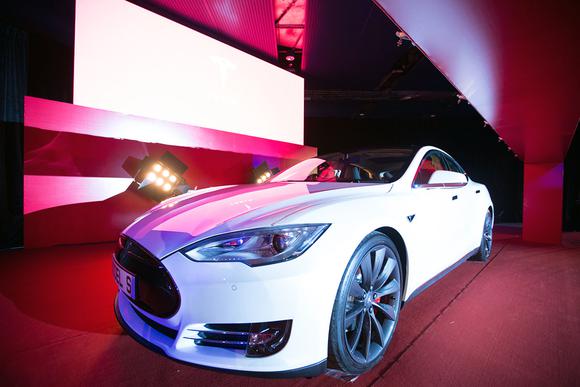
    South Australia has picked Tesla to install the world’s largest grid-scale battery that would be paired with a wind farm provided by France’s Neoen, as the state battles to keep the lights on.

    South Australia has raced ahead of the rest of the country in turning to wind power, triggering a shutdown of coal-fired plants that has led to outages across the eastern part of the nation, driving up energy prices.

    The drawback to South Australia’s heavy reliance on renewables has been an inability to adequately store that energy, leading to vulnerabilities when the wind doesn’t blow.

    Under the terms of the agreement, Tesla must deliver the 10-battery within 100 days of a contract being signed or it’s free, matching a commitment made by Tesla Chief Executive Officer Elon Musk in a Twitter post in March.

    There will be a lot of people that will look at this, ‘did they get it done within 100 days? Did it work?’” Musk told reporters in South Australia’s capital city of Adelaide.

    “We are going to make sure it does.”

    Dozens of companies from 10 countries had expressed interest in the South Australian project, which is viewed as a major test for the reliability of large-scale renewable energy use.

    Tesla said in a statement that upon completion by December 2017, the system would be the largest lithium-ion battery storage project in the world, overtaking an 80 megawatt-hour power station at Mira Loma in Ontario, Calif., also built using Tesla batteries.

  • Xiaomi, Nokia sign alliance and patent de

    Xiaomi, Nokia sign alliance and patent de

    Xiaomi and Nokia have signed new a multi-year business collaboration and a patent cross-licensing agreement covering each vendor’s cellular standard-essential patents.

    As part of the transaction, fast-growing Chinese handset vendor Xiaomi has also purchased patent assets from Nokia.

    Under the business cooperation component, Nokia will meanwhile provide network infrastructure equipment designed to meet the high capacity, low power requirements of large web providers and data center operators.

    The two companies will also work together on optical transport solutions for data center interconnections, IP routing based on Nokia’s new FP4 network processor and a joint data center fabric solution.

    Xiaomi and Nokia will likewise explore opportunities for further collaboration in areas including the internet of things (IoT), augmented and virtual reality as well as artificial intelligence.

    Xiaomi now has a presence in over 30 markets, and is a leading IoT player as well as smartphone vendor.

    “As a company seeking to deliver more exciting technological innovations to the world, we are excited at the opportunity to work more closely with Nokia in future.”Xiaomi is committed to building sustainable, long-term partnerships with global technology leaders,” Xiaomi CEO Lei Jun said.

    “Our collaboration with Nokia will enable us to tap on its leadership in building large, high performance networks and formidable strength in software and services, as we seek to create even more remarkable products and services that deliver the best user experience to our Mi fans worldwide.”

  • Gucci launches China e-tail site

    Gucci launches China e-tail site

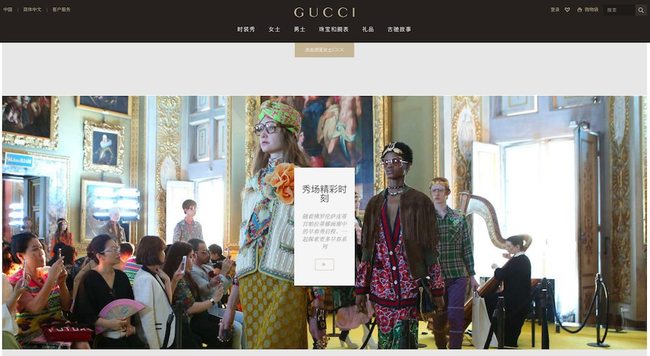
    Gucci has launched gucci.cn, its e-tail site for the Chinese market. In the words of the Italian luxury label, it will be Gucci’s only official Chinese website, created to “allow consumers a better access to Gucci products, without the limitations imposed by store location or opening hours. To optimise service speed, goods are shipped from local warehouses, and each transaction is assisted by a China-based customer service team, via live chat or phone.” In addition, payments on gucci.cn can be made using popular providers such as Alipay and WeChat.

    Content-wise, the site offers a wealth of images and a narrative with a strong visual impact, culminating in the ‘Stories’ section, which takes an in-depth look at  the sources of inspiration which influenced Creative Director Alessandro Michele’s collections, offering an exclusive glimpse of the designer’s own world.

    “Combining editorial content with commercial features – said Gucci – is an approach which has already proved effective in North America, Europe, the UAEs and Australia, where the new website was launched back in 2015.”

    As of today, Gucci’s e-tail sites are active in the USA, Japan, South Korea, Australia, Canada, the UK, Italy, Ireland, France, Germany, Spain, Portugal, Switzerland, the Netherlands, Austria, Belgium, Sweden, Norway, Denmark, Finland, the Czech Republic, Poland, Hungary, Romania, Bulgaria, Slovenia, Turkey and the UAEs.

  • Inmarsat’s Fleet Xpress honoured in Digital Technology Award win

    Inmarsat’s Fleet Xpress honoured in Digital Technology Award win

    The Fleet Xpress service from Inmarsat has secured the prestigious Seatrade Award 2017 for Digital Technology, one of the maritime industry’s leading honours, which recognises technical innovation.

    Given to acknowledge the most significant contribution to “moving the maritime industry along the digital technology track”, the Seatrade 2017 Digital Technology Award winner is selected by a special panel of judges, appointed by Seatrade for their knowledge of “Intelligent Shipping”.

    Inmarsat Maritime senior vice president market strategy, Drew Brandy, accepted the Award on June 30th. He said: “This is a reward for our entire Inmarsat team, recognising the extraordinary work behind the development, launch and delivery to market of Fleet Xpress. Setting a new standard in maritime communications, Fleet Xpress constitutes shipping’s real-world digital revolution, bringing unrivalled vessel efficiency and communication benefits to crew, and reinforcing our firm commitment to the future of connectivity at sea. With more than 10,000 ships now committed to Fleet Xpress, this award underpins the success of the service.”

    Fleet Xpress is the ‘first and only’ globally-available, high-speed satellite network owned and managed by a single operator. It is an innovative service platform that is delivering the benefits of continuous connectivity, big data and ‘digital disruption’ to shipping.

    Brandy said that the rapid uptake of Inmarsat Maritime’s Fleet Xpress since its launch in March 2016 demonstrated that shipping can participate fully in the digital revolution, at a time when the term ‘innovation’ is often overused in the maritime industry. The service delivers game-changing maritime connectivity, enabling a powerful combination of vessel efficiency gains and improved business intelligence analytics that changes the way shipping does business, he said.

  • MyRepublic planning IPO by end-201

    MyRepublic planning IPO by end-201

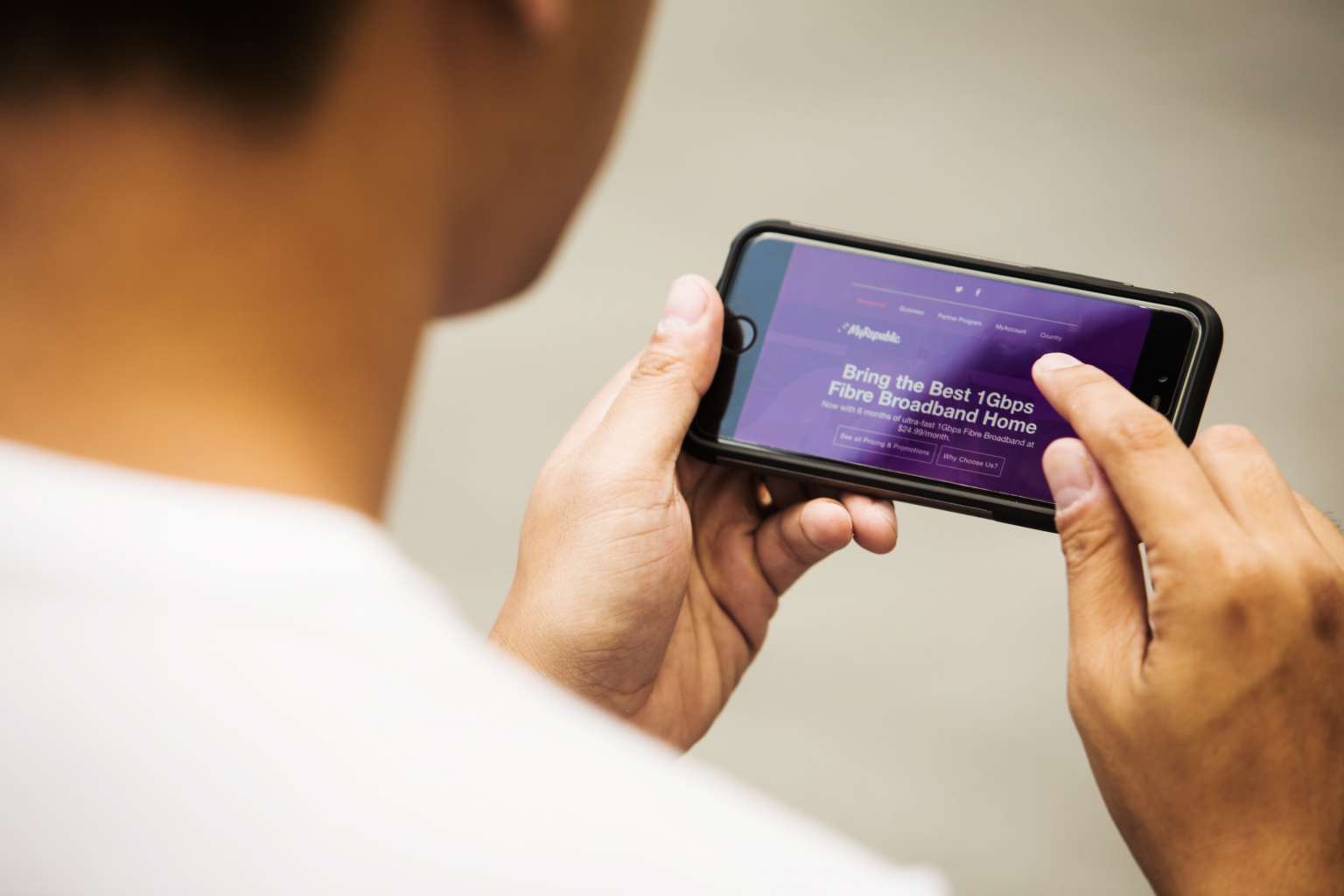
    Singapore-based MyRepublic is gearing up to conduct an IPO by the end of next year, and use the funds to expand its operations to cover at least 10 countries in the next five years.

    In a media briefing, MyRepublic said it is currently exploring listing on the Singapore, Hong Kong and/or Australian stock exchanges.

    MyRepublic is meanwhile planning an entry into the Singapore mobile market in the fourth quarter and expects to subsequently expand its mobile operations to other parts of the region by next year onwards.

    The company is likewise planning to launch TV services in the region, bcoming a quad-play provider.

    MyRepublic currently operates in Singapore, Indonesia, Australia and New Zealand, and is evaluating expanding to Myanmar, Sri Lanka, Vietnam, Myanmar, the Philippines, Thailand, Cambodia and Malaysia. By June, the company reached 200,000 broadband subscribers across the region.

    The company leverages NBN rollouts in the markets with strategic deployment of passive infrastructure to remain infrastructure agnostic and enable rapid expansion at a low cost of market entry.

    MyRepublic said it can enter a new market in 60 days and launch new products in three months. The company has entered a new market every year since 2014 and turns ebitda-positive within two years of entering each new market.

    At the briefing MyRepublic also denied reports that the company is pursuing an acquisition of Singapore’s M1. While the operator has put in a bid, it is not pursuing the acquisition, the company said, noting that while M1 is a traditional telco, MyRepublic is an “internet platform company.”

  • Bouchra Jarrar to leave Lanvin

    Bouchra Jarrar to leave Lanvin

    Bouchra Jarrar is to leave her role as artistic director at Lanvin after just 16 months. Jarrar succeeded Alber Elbaz, who left the brand after 14 years in October 2015 following disagreements with its Taiwan-based Chinese owner, Shaw-Lan Wang.

    Jarrar, a talented couturier who shuttered her namesake house to focus on Lanvin, and was last week made an Officer of the Order of Arts and Letters, one of France’s highest honours, has been unable to single-handedly revive the brand, which has suffered from falling revenues amidst a lack of investment since the days of her predecessor.

    “I have pressure,” she admitted in a March interview with the South China Morning Post. “I wanted to dedicate my whole self to Lanvin, to relaunch the maison and brand, so I shut my own label down… But I need the whole house’s support; alone it’s impossible.”

    Meanwhile, her minimal, tailored aesthetic was a departure from Elbaz’s much-loved draped eveningwear, and a new direction was always going to take time to resonate with consumers in a way that came anything close to what Elbaz achieved in his 14-year tenure. “That personal connection that Alber fostered between the brand and the audiences was deep,” said Caroline Issa, chief executive and fashion director of Tank magazine, in a September interview with BoF.

    Ultimately, initial sell-through has been underwhelming, and in June Lanvin reported a 23 percent fall in revenue for 2016, down to €162 million after a net loss of €18.3 million. By comparison, in 2015 it reported a profit of €6.3 million, and in 2012, at the label’s peak, revenues were reported at €235 million.

    The news of Jarrar’s departure follows a catalogue of issues at Lanvin. The company is said to have appointed advisory firm Long Term Partners to conduct an audit and recommend ways to reduce the company’s costs, prompting rumours of layoffs.

    Founded in 1889, Lanvin is one of France’s last major independent fashion brands. Wang, who became the brand’s controlling shareholder in 2001, has been reluctant to invest in the brand for many years. According to reports, she would not let her associate Swiss investor Ralph Bartel, who owns 25 percent of Lanvin, inject more cash into the business to support the brand as it would dilute her stake.

    “He disagrees with the options chosen by the management and wants an urgent change in strategy,” a source told Reuters of Bartel.

    Updated 7:45pm GMT on 6th July, 2017:

    In a statement issued to press Thursday evening, Lanvin confirmed Bouchra Jarrar’s departure. It read:

    Lanvin and Bouchra Jarrar have mutually decided to put an end to their collaboration. This decision is effective as of today. Madame Wang wishes to thank Bouchra Jarrar who since her arrival brought her talent to serve the company. Bouchra Jarrar thanks Madame Wang for her trust. She wishes most particularly to acknowledge the work of the teams with who she collaborated to express creativity and French know-how. Bouchra Jarrar will now concentrate on new projects.

  • Aigle opens store in Suzhou

    Aigle opens store in Suzhou

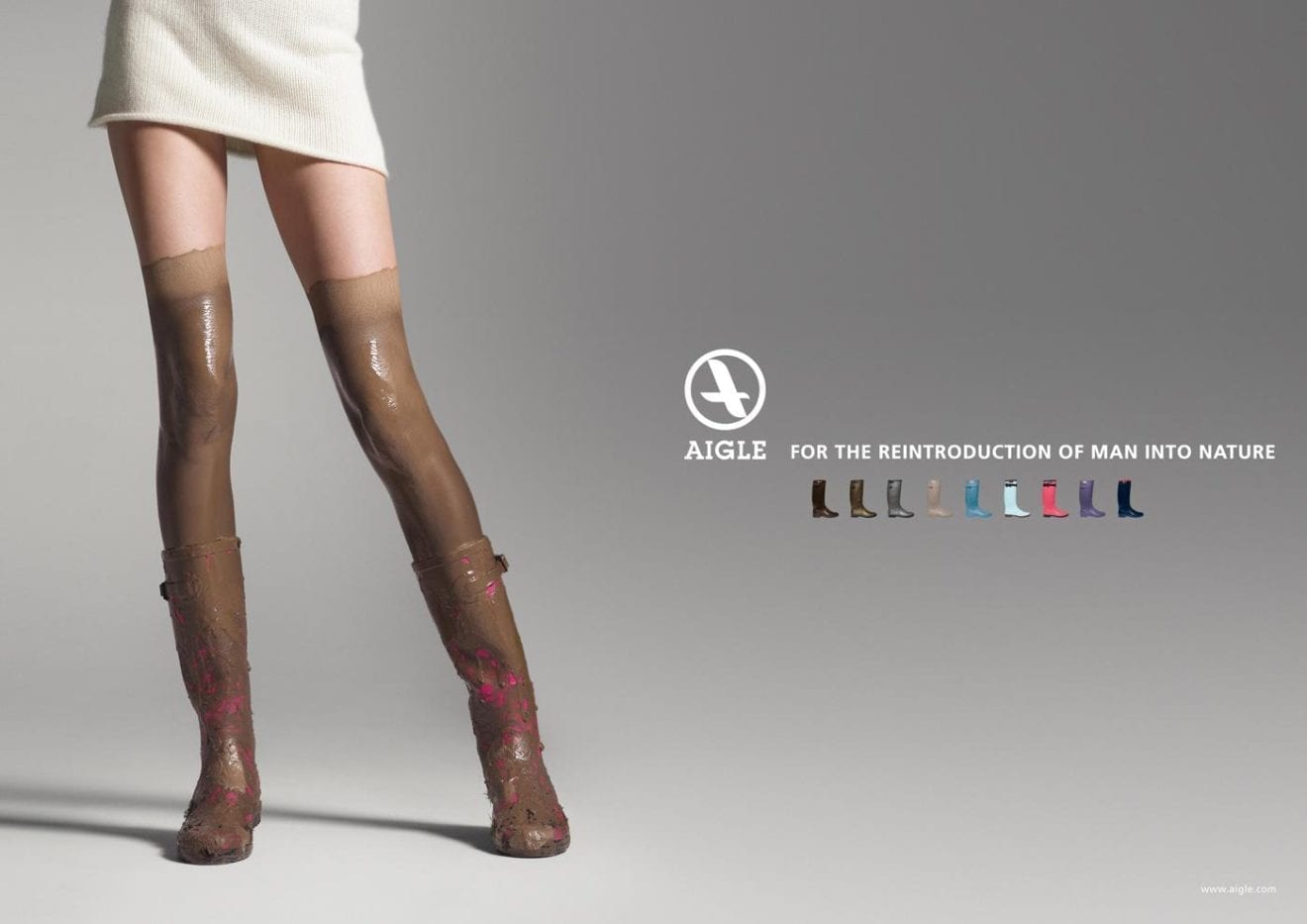
    Aigle, a French outdoor leisure brand with a history of over 100 years, has opened a store in Jiuguang Department Store, Suzhou.

    Founded in 1853, Aigle is sells leisure jackets and rain boots with both fashionable designs and functions. Its classic works include the handmade rubber boots “Miss Juliette” and “Miss Julie”. The brand entered the Chinese market in 1998, with the Chinese sportswear brand Lining as its agent.

    As a master brand of handmade rubber boots, Aigle’s craftsmanship is over 100 years old. The materials of its rain boots are all from rubber plantations in Southeast Asia and Africa, featuring unique molecular structures to ensure superior durability and tear resistance. Even in extremely cold conditions, they can still provide unparalleled comfort and flexibility.

    In regards to functional casual clothing, Aigle used new patterns in its Full Summer series of the latest season. It added linen shirts, oriental cherry blossom patterns, and sailing elements like anchors in its details.