Author: Mei Ling Tan

  • Fiserv Clients recognized for mobile banking and biometric innovations

    Fiserv Clients recognized for mobile banking and biometric innovations

    Fiserv, a leading global provider of financial services technology solutions, announced today that its clients Bangkok Bank and Gesa Credit Union were recognized for their innovative use of technology by Retail Banker International (RBI) at the Retail Banking Conference and Awards 2017.

    Thailand’s Bangkok Bank won Best Mobile Banking Strategy for delivering ‘everyday, everywhere’ banking to its customers with Mobiliti Edge from Fiserv. Gesa Credit Union, located in Richland, Washington, won Retail Banking Security Innovation of the Year for pioneering the use of biometrics in their branches with Verifast™: Palm Authentication from Fiserv.

    The Retail Banking Awards by RBI highlight the achievements of retail banking organizations throughout the past year. Award winners are highly regarded within the industry as top performers representing an exceptional level of achievement.

    “These awards are a testament to the vision of Bangkok Bank and Gesa Credit Union, both of which are powerful examples of financial institutions that are using technology innovation to deliver experiences that fit seamlessly into people’s everyday lives,” said Andrew Steadman, vice president, Product Management and Marketing, International Group, Fiserv.

    Further details of the winning entries include:

    Best Mobile Banking Strategy Award – Winner, Bangkok Bank

    With fast-growing smartphone adoption in Thailand and the rising demand from customers for on-the-go banking tools to complement their mobile lifestyles, Bangkok Bank has been continually adding new functionality to its mobile banking proposition, Bualuang mBanking. With Bualuang mBanking, which is built on the Mobiliti Edge mobile banking and payments platform from Fiserv, Bangkok Bank customers have the ability to access financial services via a mobile phone, tablet or the Apple Watch. Additionally, the bank added mobile peer-to-peer (P2P) payments and advanced push notifications and alerts that can be received directly through the app.

    Almost one year after launching the P2P service and other enhancements of the user experience, the average payment transaction volume per month increased by 350 percent and revenue increased by 300 percent.

    Retail Banking Security Innovation of the Year – Winner, Gesa Credit Union

    Gesa Credit Union piloted the use of Verifast: Palm Authentication, a fast, secure and convenient biometric authentication solution based on near-infrared scanning of an individual’s palm vein patterns. Gesa reduced the time to authenticate a member in the branch by 93 percent, speeding up the teller line while enhancing security and improving the customer experience. On a 1-to-5-point scale with 5 being the best, about 99.9 percent of Gesa members using the solution rated the palm vein technology a 5 on both the registration process and use.

    In a world that is moving faster than ever before, Fiserv helps clients deliver solutions that are in step with the way people live and work today – financial services at the speed of life.
  • Paper Moon finds new landing in the Philippines

    Paper Moon finds new landing in the Philippines

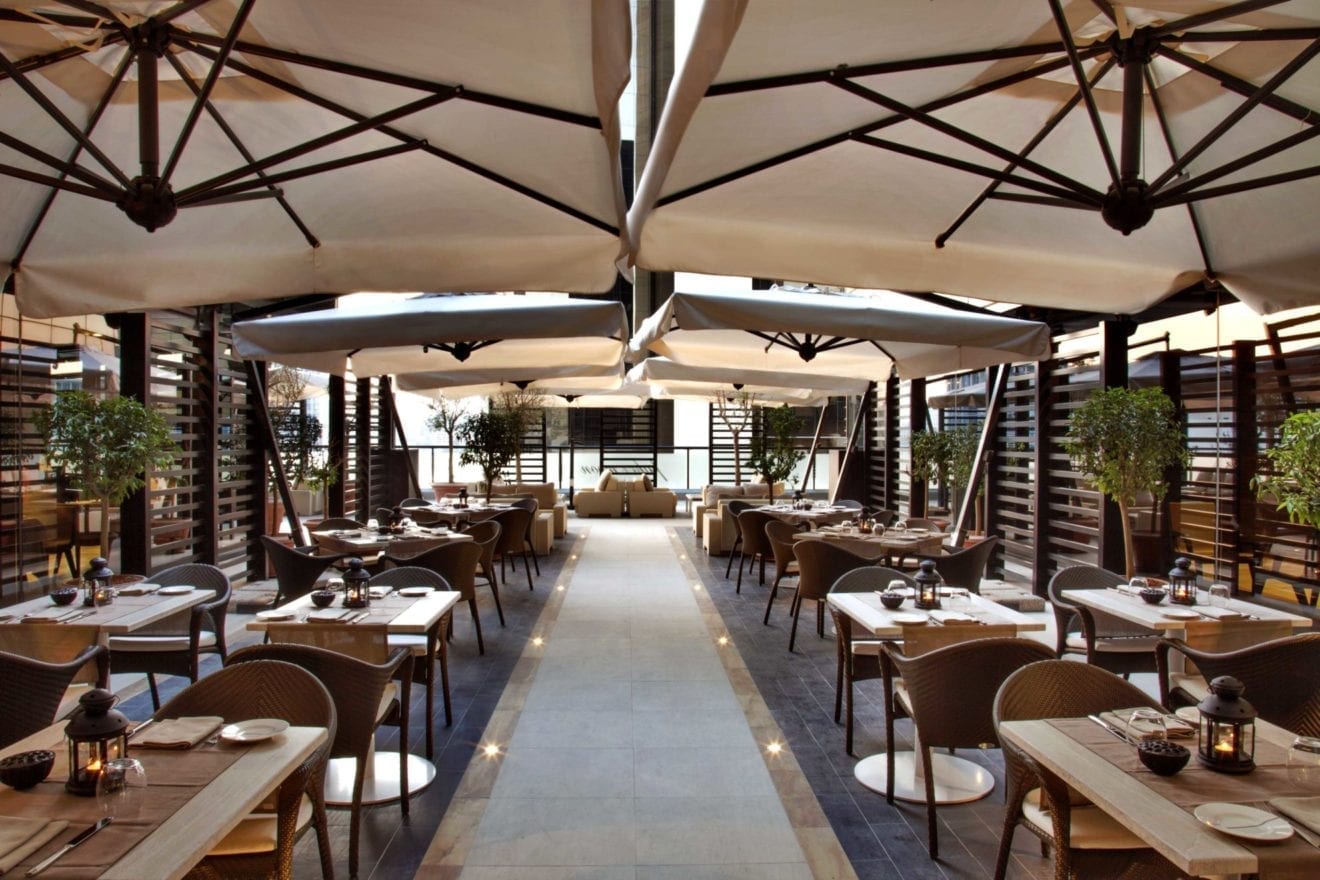
    Milan’s famous ristorante Paper Moon is now in Manila, palangga. The restaurant opened in a gorgeous roof deck setting at the Knightsbridge Residences in Century City, a few steps from Century City Mall, Kalayaan Avenue, Makati City.

    Paper Moon is Edi Tekeli’s newest passion project and marks his return to Manille after many years of living abroad. He opened the restaurant with longtime friend and Century Properties chair, special envoy to the US José E.B. Antonio and Hilda Reyes Antonio.

    After fashion retail, and knowing that Manila’s restaurant scene has become more vibrant, Tekeli felt he had found a gem in Paper Moon. He wanted to bring this rare culinary experience to the Philippines.

    Paper Moon has also opened in Istanbul and Doha.

    The grand opening in Century City coincided with Tekeli’s birthday party. He said the event was his way of expressing gratitude to friends who’ve been supporting his endeavors, such as when he brought retail brands Guess and Mango to the country.

    Among the guests were ambassadors from Italy, Massimmo Roscigno; Britain, Asif Ahmad; Singapore, Kok Li Peng; Canada, John Holmes.

    Also in attendance were Rep. Tonyboy Floirendo, Ambassador Bienvenido Tantoco Sr. and New York-based physician Norman San Agustin.

    Enrica del Rosso, who cofounded Paper Moon in 1977 with husband Pio Galligani, graced the affair and was happy to see the impeccable style touches in the restaurant.

    Tekeli is said to be opening more Paper Moon outlets in Southeast Asia.

    Rustan’s Portugal fest

    Rustan’s, in partnership with the Consulate of Portugal, recently launched “Portugal Divino!”—a celebration of Portuguese arts and crafts. At the opening, Anton Huang of Stores Specialists Inc. welcomed guests of honor led by honorary consul of Portugal to the Philippines Tony Rufino.

    Huang and Rufino later led the toast, along with Rustan’s VP for home merchandising and buying division Marilen Tantoco, Philippine Ambassador to Portugal Celia Anna Feria, award-winning Portuguese artist Arlinda Frota and Portuguese designer Ricardo Preto.

    On exhibit at Rustan’s Makati were Frota’s ceramic paintings. On May 26 to June 6, they will be on display at Rustan’s Shangri-la Plaza.

    Milestone

    Ricky Delgado Jr. of Isla LPG Inc. (ILC), the company behind LPG brand Solane (www.solane.com.ph), led its recent fifth anniversary celebration.

    “Solane has been here only for five years but we’ve already done so much,” Delgado said. “This company is respected for what it does well, and I think that if you look at how far we have come, it’s really because of the same strategy we have kept from the start—reliability safety, and we take what we say seriously.”

    Also toasting Solane’s milestone were Ruben Domingo, ILC chief executive officer; Shoichi Watanabe, Isla Petroleum and Gas (IPG) CEO; Willie Sarmiento, IPG chief finance officer; Tonito Gonzalez, ILC general manager for sales; and Yuji Fukuda and Keisuke Oba.

    Outstanding employees were handed awards: Team Ace Awards were given to the Bulk and Commercial Team. Account Manager of the Year was Haidee Alverne of the Vismin Team. Eagle Awards were given to Gigi Indangan, Regie Reyes, and Ricky Estolas, Jr. from the ILC operations staff.

  • Retail robot coming to a shop near you

    Retail robot coming to a shop near you

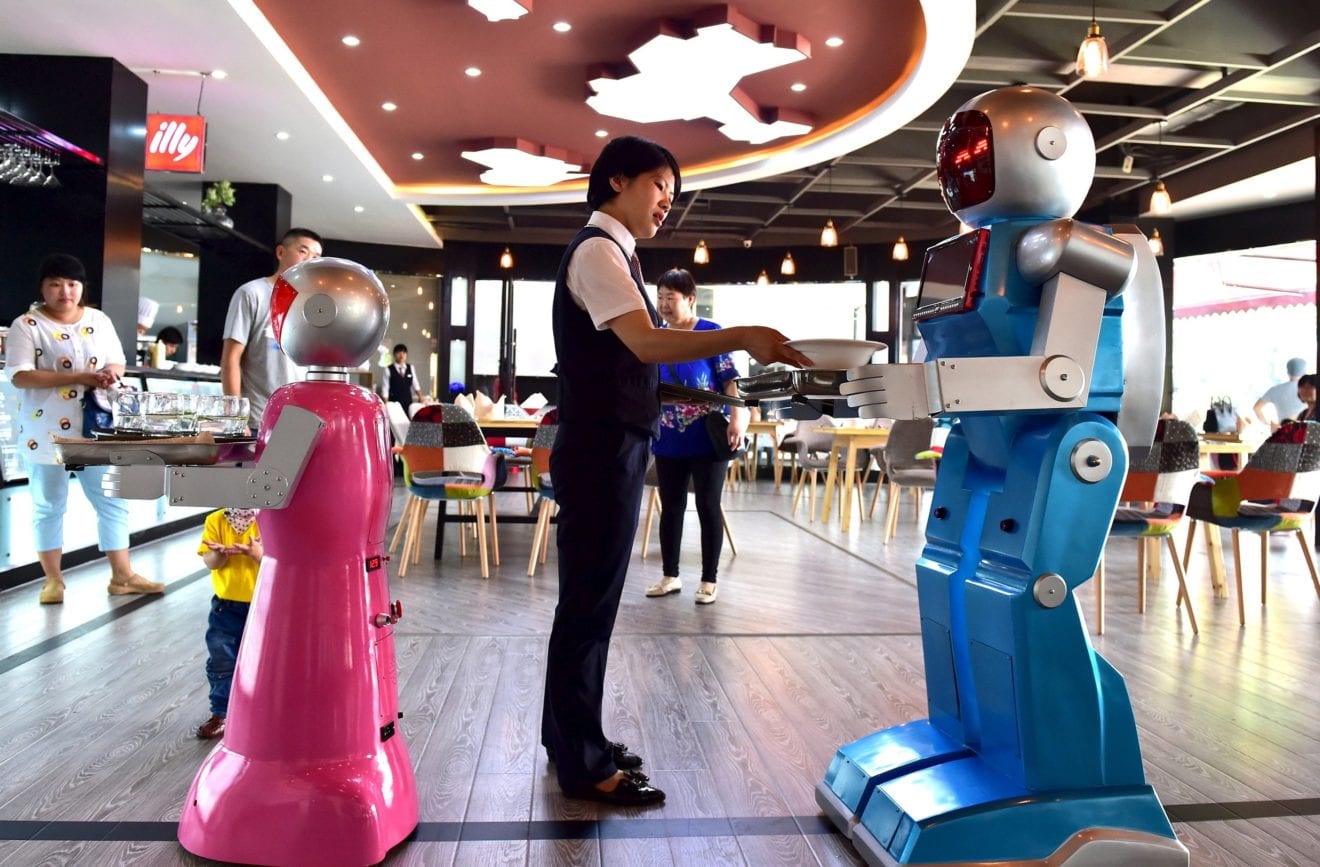
    Designed as a sales assistant, this robot can talk, guide shoppers and even receive credit card payments. In a demonstration yesterday at Marina Mandarin Hotel, the XYZrobot greeted a prospective customer with “It’s a pleasure to be at your assistance”, told him there was a special promotion on 3D printers, and led him to where the printers were supposed to be.

    The robot was even able to moderate its pace to the walk of the shopper. It was launched yesterday by Singapore consumer electronics retailer Newstead Technologies, ahead of the upcoming PC Show 2017.

    The XYZrobots could help retailers save costs, said Mr Sky Chen, 36, general manager of retail and global distribution services at Newstead Technologies.

    “This robot does not get sick or need to take leave. So if you calculate the costs of purchasing the robot verses hiring an employee, a shop could easily see how it is worth it.”

    It is understood to be the first retail robot in Asia which is able to receive payments by credit card.

    Each robot can run for about eight hours on a four-hour charge. It will also be able to return to its charging point as often as it needs.

    The robot was manufactured by Taiwanese tech firm New Kinpo Group.

    Its chief executive officer Simon Shen, 51, said: “Fewer young people (in Singapore) want to do jobs that pay less such as retail. So as our population ages, we must keep up with the manpower shortages.”

    The idea was conceived three years ago to help cope with manpower shortages and the company invested $5 million to develop it.

    Mr Shen said that people ought to be doing jobs that require higher thinking and that robots can fill in the gaps for tasks that require less of a human touch.

    But Professor Chen I-Ming of the School of Mechanical and Aerospace Engineering in Nanyang Technological University thinks that humans are always needed in certain sectors such as retail.

    “Sales is all about persuading people to buy things. You need to use hard sell or soft sell tactics based on the consumer. This is a communication skill that robots simply cannot do as of now.”

    The XYZrobot will be on display for visitors to engage with at the PC Show 2017, which will be held at Marina Bay Sands Expo and Convention Centre from June 1- 4.

    From August this year, it will be sold in Newstead’s Suntec City store for at least $12,000.

  • ‘Durian & Fruit Fest’ scheduled for Bangkok, Chiang Mai, Phuket

    ‘Durian & Fruit Fest’ scheduled for Bangkok, Chiang Mai, Phuket

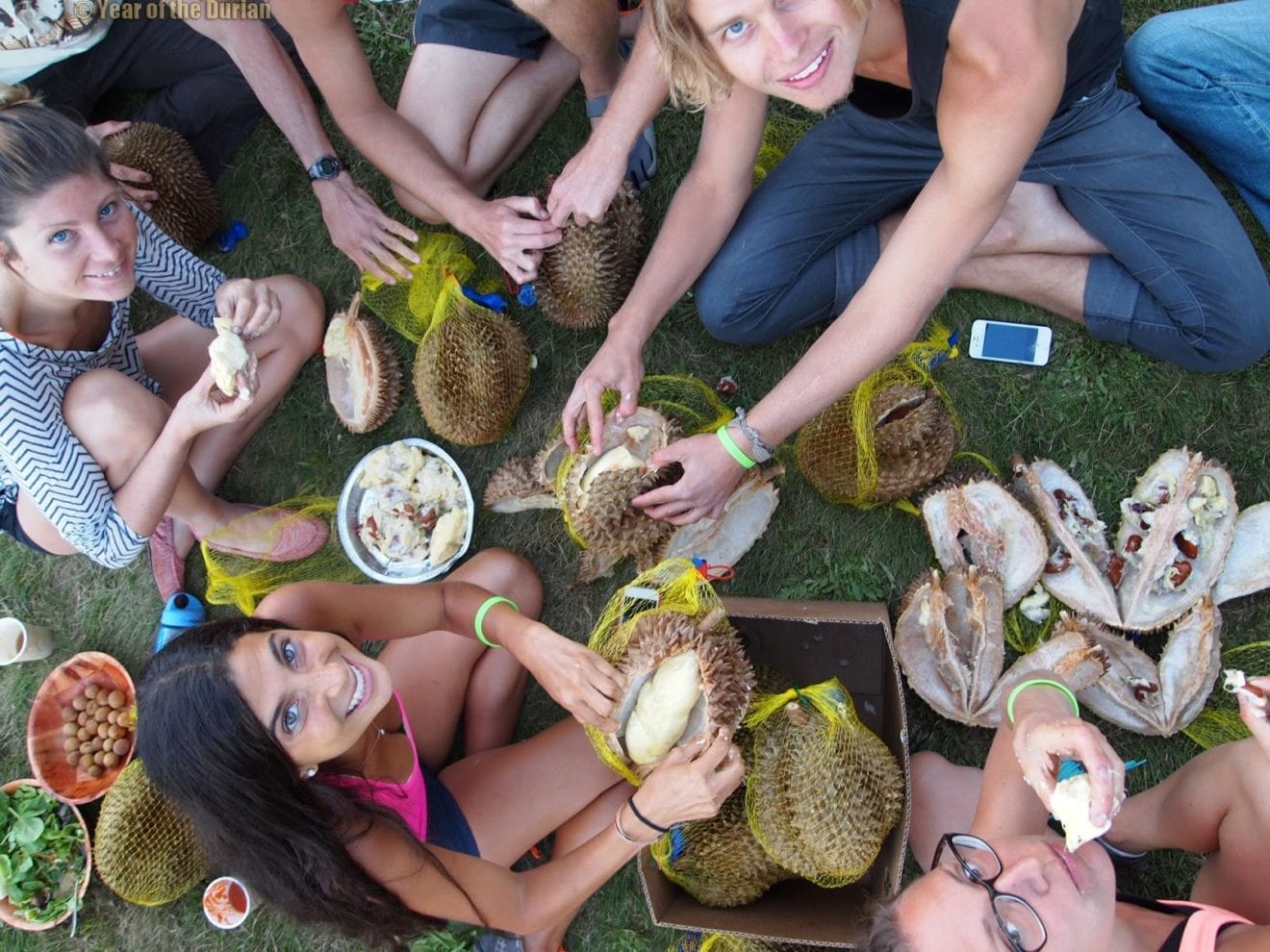
    By focusing on the “King of Fruits”, the durian, the company says it hopes to encourage fruit consumption on an international level.  Together with the Tourism Authority of Thailand, the Commerce Ministry and Central Pattana, Central Food Retail is organising the “Thailand Amazing Durian & Fruit Fest”. More than 300 Thai fruits and fruit-based processed foods will be served in buffet lines taking place in three popular tourist destinations, Bangkok, Chiang Mai and Phuket.

    Phattaraporn Phenpraphat, executive vice president for marketing and public relations at Central Food Retail, said Thailand’s excellent geographic location and pleasant climate created its potential to cultivate tasty fruits of fine quality, which are much appreciated by both Thais and foreigners.

    Fruit exports generate major income for the country. In March last year, the Office of Agricultural Economics forecasts that production of durian, rambutan, mangosteen, longan, langsat and lychee would total more than 2.3 million tonnes.

    As the operator of a supermarket business, Central Food Retail is an expert in selecting fresh, delicious and quality fruits from all over the country to provide to consumers. Last year, about 7,000 tonnes of 66 domestic fruits from 62 provinces were sold, the top 10 being banana, watermelon, other melons, durian, orange, mango, pineapple, papaya, longan and rambutan.

    This year, the company targets overall sales of 10,000 tonnes in 232 branches (as of May).

    The company hopes durian will be a selling point to promote this year’s Fruit Fest, boost Thai fruit consumption and attract more tourists.

    Last August, a durian buffet was held for the first time in Thailand – that month was in the late season for durian in the Eastern region and the harvest season in the South. Feedback from the event was excellent, the company says.

    Of the participants, 70 per cent were Thais and 30 per cent foreign tourists, mostly Chinese. According to a survey, the tourists were very pleased with the durian buffet. They said the price was reasonable and they wanted to come back if the buffet were to be organised again.

    “The company was really satisfied with the event last year,” Phattaraporn said. “It created a signature and an image of Thailand as the world’s destination for tropical fruit. Therefore, we are making the durian buffet one of our main events this year.

    “With the intention of encouraging fruit consumption and attracting tourists, we are cooperating with the Tourism Authority of Thailand, the Ministry of Commerce and Central Pattana to promote the event and create awareness among target markets, using two main strengths: the 17 types of durians and the locations of the buffets, namely Bangkok, Chiang Mai and Phuket.”

    At the event, there will be two zones, a buffet zone and a farmer’s market. In the buffet zone, there will be various kinds of Thai fruits, led by Monthong durian, the “Queen of Fruits” or mangosteen, rambutan, lychee, watermelon, banana, and papaya, along with more than 11 fruit products such as coconut water, Thai sticky rice with mango, and coconut-milk ice cream.

    In the farmer’s market, the highlights of the event will be gathered, for example, E-nak durian from Rayong province, which is quite rare, Koh Chang Chanee durian, durian Tteokbokki, durian Bingsu, crispy mangosteen, durian macaron, and durian Chinese pastry. Overall, there will be about 300 products in both zones.

    The Thailand Amazing Durian & Fruit Fest will be held in as follows:

    • Bangkok from May 24-31 at the Square A area in front of CentralWorld;

    • Chiang Mai from June 7-13 at the courtyard in front of CentralFestival Chiang Mai

    • Phuket from June 28 to July 4 at the courtyard in front of CentralFestival Phuket.

  • 7-Eleven opening futuristic store in South Korea

    7-Eleven opening futuristic store in South Korea

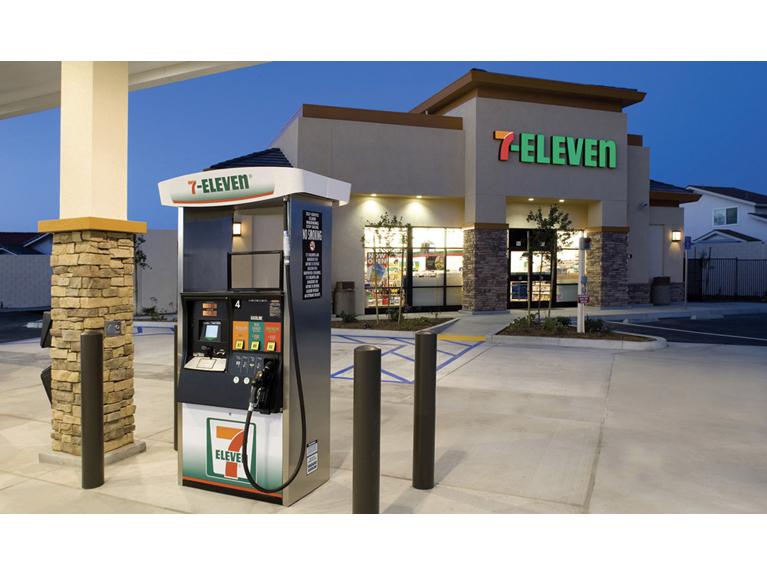
    Convenience-store giant 7-Eleven is opening a store that allows customers to pay simply with a wave of their hand.
    The store is located in the world’s fifth largest building, Lotte World Tower in Seoul, Korea. It features a biometric verification system that scans vein patterns in shoppers’ palm and allows them to pay by swiping their hands. A scanner at the self-checkout studies the size, color and shape of a shopper’s veins, and allows them to make payments after they have registered their Lotte Card user information.
    Other features include an unmanned checkout system with a 360-degree laser scanner that reads the barcode of every item within range and calculates the total cost, according to the report, and refrigerators that automatically open and shut their doors. The high-tech 7-Eleven is doing a test run, open only to Lotte staff. It is due to open to the public in August.
  • Vanguard to target retail investors in China

    Vanguard to target retail investors in China

    The Vanguard Group, which had $4.2trn in assets under management as of 3 March this year, will set up in the Shanghai Free Trade Zone under China’s Wholly Foreign-Owned Enterprise (WFOE) scheme as Vanguard Investment Management (Shanghai) Ltd.

    The new operation will be located in the Shanghai World Financial Center and plans to carry out investment management, investment consulting, client liaising and servicing, marketing, investment research, investor education and business development.

    Charles Lin will be Vanguard’s head of China and managing director, while the general manager is Clare Zhao, Vanguard’s current head of China institutional business.

    “This new milestone solidifies our commitment to China,” said F. William McNabb III, chairman and chief executive of Vanguard.

    “Bringing our unique and proven investment approach to the millions of investors in China is an important initiative for Vanguard’s international business,” said McNabb.

    Vanguard has been serving institutional clients in China, including insurance, banking, asset managers and other financial institutions, for several years, and in 2014 set up a representative office in Beijing.

    Vanguard is known in the industry for its low investment costs. It has reduced the asset-weighted average expense ratio of its US funds from 0.68% in 1975 to 0.12% today – less than one-fifth of the US industry asset-weighted average of 0.62%.

    The company has also taken its low-cost strategy to international markets including Australia, Japan, Europe, Canada, Singapore, and Hong Kong.

    Earlier this month it launched a new direct-to-consumer investment service in the UK which will charge an annual account fee of just 0.15% a year, capped at £375 (€441, $483).

  • Hotel Shilla to invest W186.5b in Hong Kong duty-free store

    Hotel Shilla to invest W186.5b in Hong Kong duty-free store

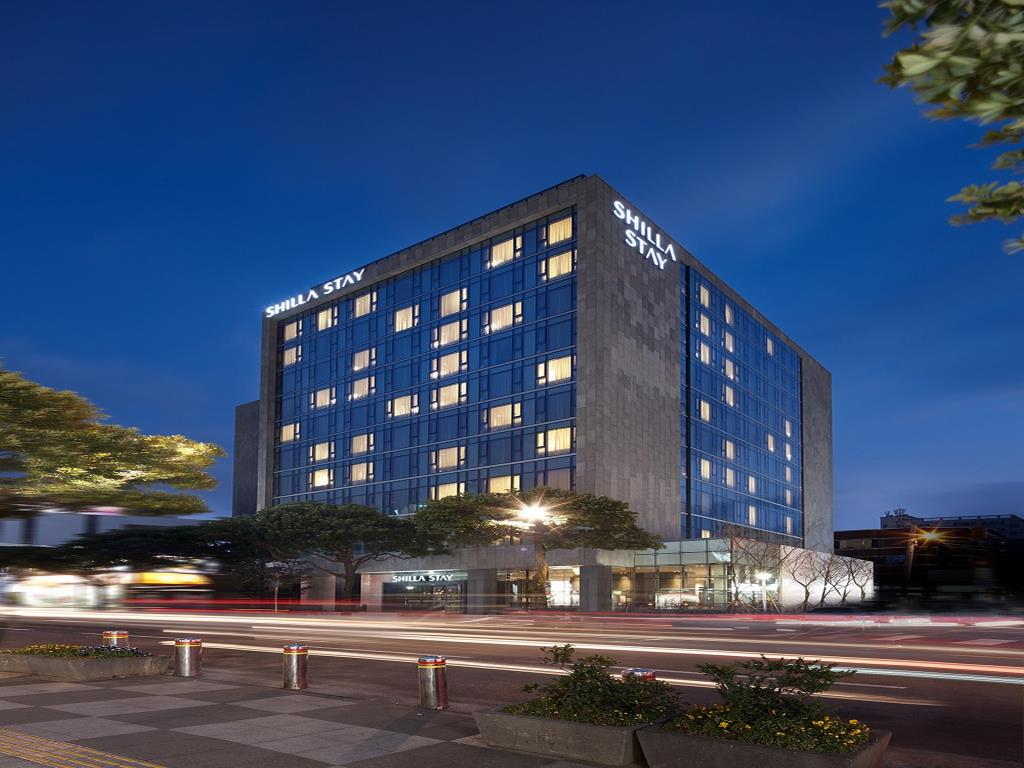
    Hotel Shilla will spend 186.5 billion won (US$166.74 million) for its duty-free store that is scheduled to open at Hong Kong International Airport in December.

    With the opening of the store, Hotel Shilla will have a presence in Asia’s three largest airports including Incheon and Singapore. The hotel and duty-free operator will issue corporate bonds worth 200 billion won to finance the investment. Hotel Shilla won the license last month and will sell cosmetics and accessories. It plans to maintain the outlet until September 2024, it said in an investment prospectus.

    The company has loaned 86.5 billion won to its wholly owned subsidiary Shilla Travel Retail Hong Kong and will also fund the remaining 100 billion won.

  • PyeongChang 2018 to Open 1st Official Shop This Week

    PyeongChang 2018 to Open 1st Official Shop This Week

    The first official shop of the 2018 PyeongChang Winter Games will open in the South Korean capital this week, selling licensed merchandise associated with the international sporting event, local organizers said Thursday.

    The PyeongChang Organizing Committee for the 2018 Olympic & Paralympic Winter Games (POCOG) said the official merchandise store of the games will open to the public Friday at Lotte Department Store’s Myeongdong branch in central Seoul.

    The store, run by South Korean retail giant Lotte Group, also one of the sponsors for the PyeongChang Games, will sell products related with both the Olympics and the Paralympics in PyeongChang, Gangwon Province, some 180 kilometers east of Seoul. The POCOG said some 300 items, including stuffed animals of the PyeongChang Games mascots, Bandabi and Soohorang, are currently available for sale, but the number of products will double by the end of June and reach 2,000 by October.

    The POCOG said the opening ceremony for the official store will take place Sunday, featuring its honorary ambassador and speed skater Park Seung-hi, as well as other South Korean celebrities.

    The POCOG said two more official PyeongChang 2018 stores will open next month at Lotte’s department store and duty-free shop in Seoul.

    The PyeongChang Winter Olympics will kick off Feb. 8 next year for a 17-day run.

  • Three key areas that will help grow Malaysia’s retail industry

    Three key areas that will help grow Malaysia’s retail industry

    The e-commerce market is one. According to BMI Research, three specific areas: big-box boulevards, e-commerce, and duty-free shopping will be the key growth areas in Malaysia’s retail sector over the coming years. They are attracting significant investment initiatives that are in line with the government’s National Economic Transformation Program.

    The government is currently stimulating public-private investment in modern ‘big-box boulevards’-large scale integrated shopping malls on the outskirts of urban centres. Multinational corporations are predicted to be attracted by Malaysia’s strong outlook for consumer spending.

    “We forecast total household spending in Malaysia to expand at an annual growth rate of 7.5% between 2017 and 2021, rising from MYR774b ($250.12b) in 20 17 to MYR1t ($323.45b) in 2021,” BMI said.

    Malaysia’s e-commerce sector is still noted to be nascent, with consumers generally preferring to shop using cash in local stores due to a lack of trust with regards to online payments. However BMI estimates that this will gradually change as consumer purchasing habits evolve, supported by the government’s National e-Commerce Strategic Roadmap.

    “We forecast Malaysia’s e-commerce market to reach MYR21.04b ($6.81b) in sales in 2017, a 28.2% y-o-y increase,” BMI said.

    Malaysia’s tourist industry is another key part of the government’s economic transformation strategy, and like retail, is one of the 12 designated areas for investment. The government’s aim is to position Malaysia as a duty-free shopping destination for the Asia-Pacific Region, centred upon Kuala Lumpur International Airport.

    “Our forecasts for tourist arrivals into Malaysia will underpin growth in duty-free retail sales. 2017 will see 28.1m international tourists , rising at an average of 5.2% y-o-y to hit 34.3m by 2021. This will be driven by ongoing weakness in the Malaysian ringgit, making the country affordable for tourists,” BMI said.

  • Whirlpool Asia-Pacific President Arvind Uppal to step down

    Whirlpool Asia-Pacific President Arvind Uppal to step down

    Home appliances maker Whirlpool of India today said Arvind Uppal will step down as President – Asia Pacific of its parent Whirlpool Corporation with effect from January 1, 2018.

    Uppal, however, will continue to be the Chairman and Non Executive Director of Whirlpool of India.

    “The Board of Directors of the company have on May 25, 2017 by circular resolution taken note of Arvind Uppal’s decision to step down from employment of the company with effect from January 1, 2018,” Whirlpool of India said in a BSE filing.

  • 100b IoT connections by 2025: Huawei

    100b IoT connections by 2025: Huawei

    There will be more than 100 billion IoT connections by 2025, predicts Huawei. The company recently shared its vision of the IoT with over 200 attendees at the inaugural Huawei IoT Ecosystem Forum, held in conjunction with CommunicAsia2017 last week.

    Low power wide area (LPWA) networks such as narrowband IoT (NB-IoT) running on licensed spectrum will represent approximately 70% of cellular IoT connections, Huawei predicted. Today NB-IoT is already powering industry applications such as asset tracking, agriculture and parking.

    While the massive number of connections is expected to enable significant productivity gains for companies and individuals, IoT will need the support of the entire ecosystem to reach its full potential.

    Lim Chee Siong, chief strategy and marketing officer of Huawei Southern Pacific region highlighted in his opening speech that Huawei will support the IoT ecosystem by focusing on three areas.

    These are building wireless network, enterprise IoT gateways and home IoT routers; providing a cloud-based IoT connection management platform, which realizes secured and reliable IoT connections; and innovating IoT chipsets, with built-in LiteOS, to make communication and connection in the IoT environment with ease.

    “We will work to develop a cohesive IoT ecosystem, which all partners and telcos can leverage as they address the IoT needs of different vertical industries,” said Lim.

    To drive innovation and glocalisation of technology services in Singapore, Huawei announced its partnership with i5Lab with NUS enterprise in November 2017 to accelerate the growth of IoT startups in Singapore.

    The collaboration aims to cater to the industry’s needs for incubation of innovative ideas, training, research support, funding, testing and certification in the region.

    Huawei  president of IoT solutions Jiang Wang Cheng commented that “We believe that IoT is a ‘GLocal’ ecosystem where telcos, local enterprises and global vendors like Huawei leverage on each others’ knowledge and capabilities to build a vibrant ecosystem. Huawei is glad to recommend our partners in different industries and establish channels of communication between operators and vertical industries. We call for more partners from across different verticals to join us to build viable IoT solutions.”

    Huawei is currently working with more than 40 partners on smart meter, smart light and connected car to offer IoT device, network, service platform, applications and system integration. In March 2017, Huawei announced plans to invest US$1 billion in developer ecosystem worldwide.

  • Nokia, DoCoMo to test 5G in 4.5-GHz

    Nokia, DoCoMo to test 5G in 4.5-GHz

    Nokia and NTT DoCoMo have jointly announced plans to conduct interoperability testing of multi-vendor technology using the 4.5-GHz frequency band, as part of broader efforts to help develop Japan’s 5G ecosystem.

    The companies will be testing 5G applications using Nokia’s AirScale base station and 5G radio interface using the Intel 5G mobile trial platform.

    End-to-end applications will be tested over the air between the base station and the device using the 4.5-GHz spectrum, which is one of the 5G candidate frequency bands in Japan.

    Nokia’s AirScale active antenna with Massive MIMO technology and digital beamforming will be used to test applications including low-latency 4K video streaming.

    “This is a vital first step to allow us to ensure that we have the 5G network infrastructure available for when we commercially introduce the technology, with an ecosystem of device vendors to offer our subscribers the best possible choice and highest quality,” NTT DoCoMo CTO Seizo Onoe said.

    “This trial is an important milestone for the development of 5G in Japan, which will be one of the first countries in the world to adopt the technology,” added Nokia Japan head Jae Won.
    “Furthermore, the initiative is an important step forward in our collaboration with NTT DOCOMO, as well as other key technology partners, as we develop a technology that will meet the ever-growing demands of huge numbers of people living in megacities.”

  • Money market changes course unexpectedly

    Money market changes course unexpectedly

    The money market has been seeing unexpected happenings in the last two weeks. Until two weeks ago, the liquidity of the banking system had been in a state of tension because lending was higher than mobilized capital. According to the National Finance Supervision Council, while lending increased by 5.2 percent, mobilized capital increased by 3.7 percent only in the first four months of the year.

    However, the money market has unexpectedly reversed with liquidity considerably improved. The interest rate performance in the interbank market last week was different from the weeks before when it decreased sharply from 4.7-4.9 percent to 3.9-4.1 percent for overnight loans (O/N).

    In OMO (Open Market Operations), no commercial bank registered to borrow capital from the State Bank on May 19, which was the first time since the beginning of the year. The average balance in OMO, which was always over VND35 trillion, has dropped to VND4 trillion.

    A BVSC report shows that the banking system’s liquidity has returned to a surplus state.

    Where’s the cash flow coming from?

    In theory, the sudden reverse in the two markets would occurs only if the State Bank (SBV) pumps capital into the market, and the quickest way for SBV to support liquidity is pumping capital through OMO.

    However, the scenario did not occur as the outstanding balance of the banks on OMO is on the decrease and is nearing zero next week.

    In the second scenario, SBV might have bought a big volume of foreign currencies from the market. This could be the foreign direct investment (FDI) flow, foreign portfolio investment (FPI), or foreign currency capital from domestic commercial banks.

    However, analysts don’t think this could happen because it was nearly impossible for foreign investors to disburse more than $1 billion within one week.

    Meanwhile, the foreign currency buy price quoted by SBV is now at VND22,675 per dollar, far lower than the prices in transactions made at commercial banks, at VND22,700 per dollar.

    The third scenario is the most likely one at this moment. SBV might have refinanced commercial banks through VAMC special bond discounts. And the VAMC special bond discount rate must be lower than the interest rate on OMO.

    With the total VAMC bond balance of up to VND280 trillion, the discount of VND35-40 trillion, or 13 percent, will not be a concern for the system.

    If the third scenario is true, many questions will be raised. How much has SBV pumped into the market, to which banks and at what interest rates? Will SBV continue pumping more capital? Which criteria do banks need to have to be refinanced?

  • Consumer spending in Malaysia to increase 5.8% in 2017

    Consumer spending in Malaysia to increase 5.8% in 2017

    It will grow at an annual average of 5.3% between 2017-2021. BMI Research reported that consumer spending in Malaysia is set to increase. The rise will be brought about the increasing disposable income. Real household spending growth in Malaysia will continue to expand the medium term.

    However, it will be modest on the back of an uptick in inflation and slightly weaker currency. Household spending will become more dynamic over the medium term as the share of non-essential spending rises. BMI foresees household spending real to grow at an annual average of 5.3% between 2017-2021. In 2017 we project a y-o-y increase of 5.8%

    Rising disposable incomes will foster discretionary spending, highlighted by robust growth in education; restaurants and hotels; and recreation and culture spending. According to BMI, these categories are set to grow at an annual average rate of 8.7%, 8.5% and 8.2% respectively.

    Consumer spending in Malaysia will benefit from a youthful and increasingly urbanised population; rising household incomes; and low levels of unemployment. The growing middle class and relatively low inflation will help generate demand for non-essential items and luxury goods.

  • Hermes’s to Debut Store in Second-Tier Chinese City to Meet Surging Demand

    Hermes’s to Debut Store in Second-Tier Chinese City to Meet Surging Demand

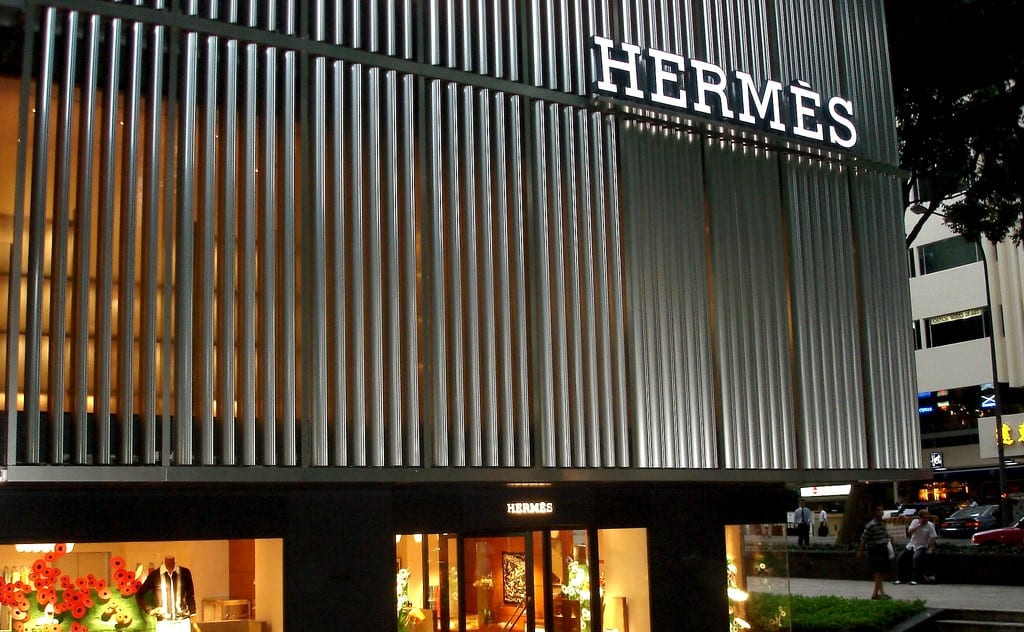
    French luxury house Hermès is set to open a new store in the city of Changsha by summer. The move marks the debut of an Hermès store in a second-tier city in China.

    Chinese cities are divided into four tiers according to their GDP and other factors. First tier cities, like Bejing, Shanghai, and Chengdu, have a GDP of over $300 billion, while second tier cities generally have a GDP ranging between $68 billion and $299 billion.

    International luxury brands have typically chosen to set up physical stores in the country’s metropolitan areas and first-tier cities. But recent studies have shown that lower-tier cities like Changsha will have more “high-income” residents and consumers than Beijing by 2030.

    Hermès has become the latest player in the sector—following the success stories of Gucci and Louis Vuitton—to benefit from the recovery of the luxury retail sector in China. According to the company’s first quarter financial report for 2017, it scored to a double-digit growth rate of 11.2 percent, growing to 1.35 billion euros. This increase was mainly driven by the strong demand of Chinese consumers for its silk scarves and Birkin bags.

    “All geographical areas have grown and we saw an acceleration of sales in mainland China, Hong Kong and Macau, which we have not seen for a while,” global chief executive of Hermès International Group Axel Dumas told.

    Dumas said that the strong China market helped to offset the downward trend in the home market of France and helped the brand re-emerge from its latest wave of doldrums.

    Hermès expanded its distribution networks in the Greater China region throughout 2016. It opened a store in the MixC Shopping Mall in Chongqing—which is one of the most popular tourist destinations in China and has garnered the nickname “Mountain City”—as the brand expected to cash in on the influx of travelers there. Hermès also launched a pop-up store in the China World Shopping Mall in Beijing, according to the annual report, and renovated its store inside the Beijing Peninsula Hotel.

    The French luxury label further stepped up its game in Hong Kong and Macau over the past year despite the fact that the retail environment in the region suffered from a “tourism winter” from mainland China. According to the firm’s annual report, in July, it re-opened the store in Hong Kong International Airport and, in August, launched a new store inside the Wynn Palace Hotel in Macau.

    The aggressive expansion into the Greater China region stands in stark contrast to Hermès’ European markets. The annual report indicated that it closed down stores in several mid-size cities in France. Another benefit to the brand, as per Dumas, is the evolving fashion taste in China, including Chinese consumers’ waning interest in showing off big logos.