Author: Mei Ling Tan

  • Huawei, REDtone, Fuisonex form cloud partnership

    Huawei, REDtone, Fuisonex form cloud partnership

    Huawei, REDtone and Fusionex have formed a three-way partnership to help  meet the rapid increase in demand for big data and analytics cloud solutions in Asia Pacific.

    According to Huawei’s Global Connectivity Index 2017, a yearly survey conducted by Huawei to track key countries in their progress towards connectivity, having a robust ICT infrastructure is foundational to digital transformation.

    While broadband networks and data centers form the basis of a digitized world, cloud services power the use and analysis of Big Data and Internet of Things (IoT) where actionable insights are driven.

    The collaboration aims to leverage on all partners’ unique expertise to intelligently identify pain points and opportunities for users while lowering opex and capex with on-demand one-stop cloud service solution.

    Under the partnership, Huawei will act as the cloud solution provider and the go-to-market advisor. REDtone flexiCloud, the next generation business-to-business cloud, will offer enterprise cloud services that runs on the Huawei’s cloud platform. Fusionex, an international software provider for analytics, big data and the IoT, will contribute business insights and analytics-as-a-service to complete the full-suite of cloud solutions tailored for verticals including healthcare, retail and more.

    “With this strategic partnership, we are moving towards swift digital transformation together with our partners and customers, as well as enabling business success of our customers by helping them to cloudify their business through our global experience and professional services. We see this as a future model of growth for enterprises in the digital era,” said George Pan, CTO of Huawei Malaysia.

    He added, “We are appreciative that REDtone and Fusionex have set their sights in helping their customers from different industries to digitalize their businesses. It excites us to launch the services with our partners beyond Malaysia through our innovative business model above IaaS, focusing on what customer want, business agility, cost efficiency and service aggregation.”

    “Businesses facing digital transformation are no longer “going it alone.” Finding the right technology partner is mission critical. At REDtone, we leverage cloud computing, Big Data, IoT and enhanced vertical applications to facilitate enterprise digitalization towards agile and smart operations, to ultimately deliver an extraordinary experience to the customer,” said Lau Bik Soon, Group Chief Executive Officer of REDtone International Berhad.

  • Vietnam rice exporters face challenges

    Vietnam rice exporters face challenges

    The rice price is forecast to continue soaring in near future, buoyed by the higher demand for rice of some countries, but Vietnam is having difficulty boosting rice shipments, heard a seminar in Hanoi last week.

    A study conducted by the Institute of Policy and Strategy for Agricultural and Rural Development shows there are nine million rice farming households nationwide, but around 300,000 of them account for the bulk of Vietnam’s rice export volume.

    Meanwhile, the nation has over 300,000 rice milling facilities, but a majority of them are small. But in Thailand, there are a mere 1,000 rice milling plants. Besides, Vietnam has around 100 rice exporters, but a mere 22 of them focus on China, one of Vietnam’s largest rice buyers.

    Industry experts said these two hindrances had led to the global market share of Vietnamese rice shrinking. Statistics of the Ministry of Agriculture and Rural Development show the country’s rice shipments last year dropped 27% in volume and 23% in value against 2015.

    Vietnam has seen gradual declines in rice exports to China, European Union, Middle East, and Sub-Saharan Africa.

    Despite the decrease in rice exports, local enterprises have shown little or no interest in the domestic market.

    Vietnamese rice producers have not been able to develop premium rice brands, according to Sergio René Araujo Enciso, an economist from the Trade and Markets Division under the Food and Agriculture Organization of the United Nations.

    Key importers of Vietnamese rice products have adopted food security policies. China, for instance, is buying rice from different countries, said Pham Kim Dung, the study’s lead researcher.

    The World Bank and the International Monetary Fund forecast that rice prices might inch up in the short term as some countries are stocking up on rice, such as Malaysia with 950,000 tons and Bangladesh with 600,000 tons.

  • 40% of the world to use digital commerce by 2021

    40% of the world to use digital commerce by 2021

    Juniper Research predicts that the digital commerce sector is set to see substantial growth in user numbers over the next 4 years, as the number of unique users exceed 3 billion by 2021.

    Juniper has identified two sectors set to drive the digital commerce market, in terms of transaction values; these are digital and physical goods as well as digital banking.

    “When we analyze the digital & physical goods sector in particular; for some time now, it has been clear that the mobile device, whether it be the smartphone or tablet, is becoming increasingly important in the world of e-commerce,” Juniper Research senior research analyst Lauren Foye said.

    Juniper has observed a shift in the market from a position where the smartphone was used as a means for discovery but not purchase, to a situation where the smartphone is used for both product discovery and purchase.

    This trend appears to be a natural progression from the relatively stagnant consumer tablet industry, whose lack of steam has been compounded by the emergence, and prevalence, of larger-screened smartphones offering an improved purchasing experience.

    Indeed, mobile as a whole is gaining traction as a remote goods purchase device, although the smartphone’s growth is accelerating faster than that of the tablet.

  • Over 20,000 Vietnamese work as Uber motorbike drivers

    Over 20,000 Vietnamese work as Uber motorbike drivers

    The ride hailing company releases business data for the first time, one year after launching its motorbike service in Vietnam.

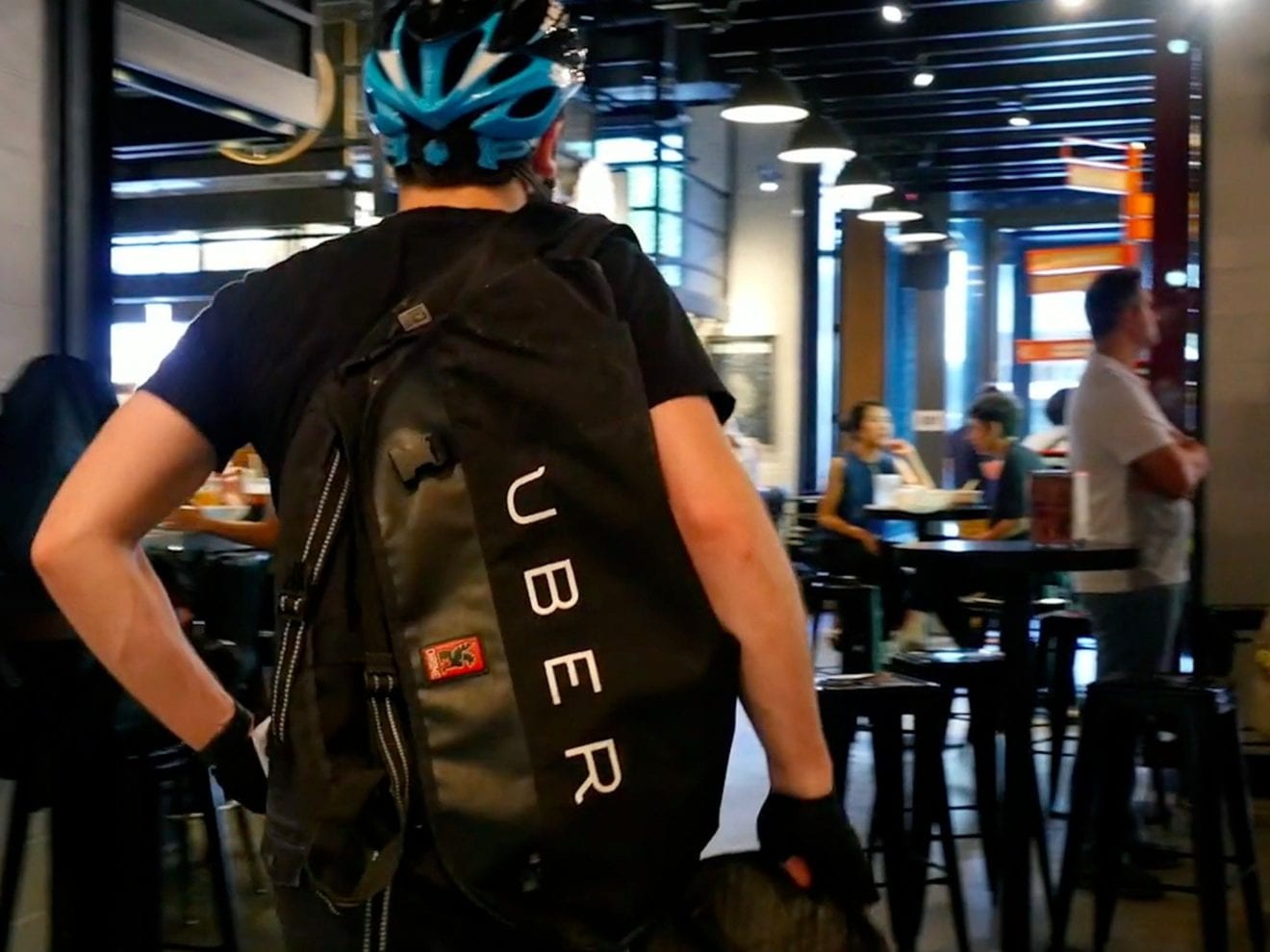
    More than 20,000 Vietnamese men and women have registered to work as motorbike taxi drivers for Uber, a representative of the ride hailing company said Sunday.

    Dang Viet Dung, general manager of Uber Vietnam, did not break down the number but he seemed eager to share that the top motorbike drivers clocked in more than 5,000 rides within a year.

    This is the first time the company, since the launch of UberMOTO in April last year, has released such figures. It also has a network of cars for the traditional Uber service.

    For future plan, Uber will offer English courses for its drivers to serve foreigners in Vietnam, Dung said.

    Before Vietnam, the UberMOTO service had been launched in Thailand, India and Indonesia.

    After Uber entered Vietnam in June 2014, collecting tax from for the U.S.-based car hailing service had been a headache for local authorities.

    Then in September last year, Uber paid taxes to Vietnam for the first time.

    In April this year Uber’s car and motorbike services were finally legalized here, even though local passengers rarely paid attention to these legal formalities.

    Before Uber, Vietnam’s transport authorities approved a pilot scheme for Grab Vietnam, Uber’s main rival, which also entered Vietnam in 2014.

    The Malaysia-based Grab is operating both car and motorbike services in the country.

    Their market shares have not been disclosed but other service providers, from taxi companies to xe om drivers, have felt threatened.

    Retail News earlier this year interviewed motorcyle taxi drivers, who said they were being beaten by Uber and Grab on their own turf.

    Some even predicted that these newcomers could eventually put old-fashioned drivers, now usually referred to as “traditional” drivers, out of business.

    This month, a video spread on social media showing a group of xe om drivers in a heated conflict with Grab drivers in front of a hospital in Hanoi.

  • DHL launches China – Belarus rail freight service

    DHL launches China – Belarus rail freight service

    DHL Global Forwarding launched a new rail freight service between Shenzhen, China, and Minsk, Belarus, on May 22 with a transit time of less than 12 days.

    The new service passes through Alatau Shankou – Dostyk on the Chinese-Kazakhstan border which is already used by several other intermodal services, including rail connections from Chengdu, Zhengzhou, and Lianyungang to continental Europe.DHL will manage the new route together with China Brilliant, an integrated service provider in manufacturing and consumption with which DHL signed a memorandum of understanding in 2016. The service offers both less-than-container load (LCL) and full container load (FCL) for electronics, industrial and automotive parts, and fresh food from both both Eastern Europe and China.

    “Eastern Europe’s economies are growing faster than almost any others worldwide, with significant export opportunities arising from the region’s rising wages and disposable income levels,” says Mr Steve Huang, CEO, DHL Global Forwarding Greater China. “Minsk offers Chinese businesses an efficient gateway into the Baltic States and Nordic countries in addition to other European destinations like Warsaw, Hamburg and Tilburg via Brest. With Shenzhen’s economy exceeding expectations to grow by 9% last year, the route also opens sizable opportunities for European exporters.”

    “The partnerships that DHL has with governments and businesses globally, coupled with our market strength in Shenzhen-based supply chains, have come together to create a solution that directly meets the needs of China’s expansion-hungry manufacturers and producers,” says Mr Zhang Chunhua, founder of China Brilliant Group.

    DHL has been offering intermodal rail services connecting China, Japan, and southeast Asia with Europe since 2010 on the following corridors:

    • North Corridor: Suzhou – Warsaw connecting Chinese engineering and manufacturing hubs to Europe in 14 days
    • South Corridor: Lianyungang and Chengdu to Istanbul via Kazakhstan, Azerbaijan, and Georgia including two water crossings in 14 days, and
    • West Corridor: Zhengzhou – Hamburg (electronics), Chengdu – Lodz (high-tech and automotive products) and now Shenzhen – Minsk (electronics and consumer products).

  • Vietnam’s budget airline VietJet seeks overseas listing

    Vietnam’s budget airline VietJet seeks overseas listing

    The plan comes amid the government’s easing of rules to potentially allow more foreign investment in the aviation market. VietJet Aviation Joint Stock Co., which controls almost half of Vietnam’s domestic airline market, is in talks to become the first company in the Southeast Asian nation to list its shares in an overseas stock exchange, Bloomberg reported.

    “We’ve been approached by some foreign stock exchanges including London, Hong Kong and Singapore, which expressed their interest in our stock,” Nguyen Thi Phuong Thao, VietJet’s founder and chief executive officer, was quoted as saying on Sunday. She added that she will meet exchange officials in New York later this week.

    Hanoi-based VietJet reportedly received shareholder approval in April to boost its foreign ownership limit to 49 percent from 30 percent.

    The increase will need to be approved by the government because foreign ownership in the industry is currently capped at 30 percent.

    “We don’t want to hide our hope to become the first Vietnamese company to list shares overseas,” Thao reportedly said.

    Her “bikini” airline, nicknamed after its unique yet controversial promotional campaign for depicting a female crew in bikinis, now rivals national carrier Vietnam Airlines in the local market.

    It went public in Vietnam in late February in a move deemed successful by local media.

    Thao, Vietnam’s richest woman, said publicly in April that her carrier was not competing directly with Vietnam Arlines. “We create our own customers. We do not take them from others.”

  • Telstra to connect 29 stadiums for Fox Sports

    Telstra to connect 29 stadiums for Fox Sports

    Australia’s Telstra has secured a contract to connect 29 sporting stadiums across the country using its nationwide Distributed Production Network end-to-end IP network for cable TV broadcaster Fox Sports.

    Under the long-term contract, Telstra will use the network to connect the stadiums to new Remote Production Hubs in Sydney and Melbourne.

    The deployment is expected to be completed ahead of next year’s National Rugby League and Australian Football League seasons.

    Telstra’s DPN has been custom-built for the media industry to allow customers to remotely produce live broadcasts combining multiple raw camera feeds and audio signals from centralized production hubs.

    According to Telstra Broadcast Services head Trevor Boal, the DPN network will deliver a standard capacity of 100Gbps for each stadium using diverse network paths, and will support the broadcasting of more than 520 live tier sporting events per year.

    “Telstra’s DPN is designed to help our broadcast customers meet the rapidly growing demand for live content by offering access to our high capacity, low latency, multi-tenant network of scale,” he said.

    “In a world first, multiple channels of uncompressed linear contribution video at the lowest possible latency will be traversing our network from sporting venues up to 3500 kilometers away from the Remote Production Hubs.”

    Telstra has already previously integrated its live, point of view miniature wearable camera technology Globecam into Fox Sports’ broadcasts.

  • Finance Ministry updates registration fees for autos, motorbikes

    Finance Ministry updates registration fees for autos, motorbikes

    The Ministry of Finance has recently updated the list of registration fees for automobiles and mortobikes, which has increased the price of many luxury models.

    In Vietnam, the registration fee is between 10 per cent and 12 per cent of the car value in different cities and provinces.

    According to the revised Decision 942/QĐ-BTC issued on May 24, the ministry has added the registration fees for 135 types of imported auto with nine seats and less, 19 types of locally-assembled cars with nine seats and less, two kinds of imported electric cars, 29 types of imported motorbikes and 127 kinds of locally-assembled motorbikes.

    Topping the list are luxury imported cars, which have high engine displacement.

    McLaren 650S Spider, with an engine displacement of 3,800cc, is priced at VNĐ22.02 billion (US$966,637); 6,000cc Bentley Flying Spur is priced at VNĐ19.5 billion; and 3,800cc McLaren 570S is priced at VNĐ12.57 billion. With a registration fee of 12 per cent in Hanoi, customers will have to pay VNĐ2.64 billion, VNĐ2.34 billion and VNĐ1.5 billion more to own these cars, respectively.

    The ministry added in the list imported Audi models and BMW models of X4 and X6, with prices ranging from VNĐ850 million to VNĐ3.4 billion and from VNĐ2.3 billion to VNĐ3.4 billion, respectively.

    The ministry also updated the prices of locally assembled models with nine seats and less into the list, including 2,400cc Toyota Hiace, which is priced at VNĐ802 million, Mercedes-Benz C200K, E250, E200 and E300 with prices ranging from VNĐ1.08 billion to VNĐ2.77 billion, 2,000cc Mazda CX5 AT-2WD at more than VNĐ1 billion and 2,400cc Ford Transit at VNĐ1.25 billion.

    Insiders said that the increase in registration fees was foreseen because it had been adjusted according to the market prices, as proposed by auto businesses.

    The ministry also added several imported motorbike types, including Harley-Davidson Cvo Limited, Harley-Davidson Ultra Limited Low, Harley-Davidson Street Glide Special and Honda CB1100 EX, which is priced between VNĐ455 million and VNĐ1.86 billion.

    The registration fee is being applied at 2 per cent of the motorbike value in cities and provinces nationwide, excluding two major cities of Hanoi and HCM City, where customers have to pay 5 per cent.

  • Consoveyo Singapore welcomes new general manager

    Consoveyo Singapore welcomes new general manager

    Consoveyo S.A. has appointed Poul H. Lorentzen as general manager for Consoveyo Singapore, effective 1 April 2017. In his new role, Poul’s top priority will be to identify and develop business opportunities for the company in Southeast Asia (SEA).

    Prior to joining Consoveyo, Poul was director of the logistics systems division at Jungheinrich Lift Trucks Pte. Ltd. He has also held various management positions at MHE-Dematic, Siemens L&A, Siemens Dematic, and Dematic, where he was responsible for the business and strategic objectives for regional growth and profitability.

    Poul hails from Denmark but has spent over 30 years in SEA. Sharing from his familiarity with the demands and intralogistics requirements of this market, he said, “There is much potential for automated material handling technologies in this region, as countries like Singapore are encouraging local businesses to stay competitive by adopting advanced warehousing solutions that enhances productivity. My experience in this industry has prepared me for this new role at Consoveyo, and I look forward to leading my team as we work towards meeting the new objectives set out by Körber Logistics Systems.”

    Jorge Couto, chief sales officer at Consoveyo, concluded, “It is an exciting time for Consoveyo as the company aligns itself to meet Körber’s expansion strategy. We have built a very qualified and motivated team to support our clients operating in the SEA region. Poul’s experience in this field will bring a great boost to the team, and I’m confident that his presence will further strengthen our Singapore team to bring Consoveyo to greater heights.”

  • ZTE calls for globally harmonized 5G ecosystem

    ZTE calls for globally harmonized 5G ecosystem

    ZTE has called on mobile operators to work towards a globally harmonized 5G ecosystem to ensure the healthy development of the telecoms industry.

    In an address at the third global 5G Event in Tokyo last week, ZTE’s director of wireless standardization and industrial relationships Wang Xinhui said that industry standardization for the future of both mobile broadband and the IoT should move forward in parallel.

    “This year is a critical year for 5G,” Wang said during his address.

    “Standardization for next-generation mobile broadband and the Internet of Things should go hand-in-hand, and cooperation with industries should be enhanced. For example, it is vital for 5G to integrate with vertical applications such as the Internet of Vehicles.”

    He said 5G standards should simultaneously meet the requirements of enhanced mobile broadband, ultra-reliable low latency communications and massive machine type communications. To ensure this, he said industry participants should collaborate more openly to build unified standards and ecosystems.

    Global 5G Events are sponsored by industry groups including the IMT-2020 promotion group, Europe’s Fifth Generation Mobile Communications Promotion Forum, the 5G Infrastructure Association, South Korea’s 5G Forum and the 5G Americas.

    At last week’s event, industry experts gathered to discuss 5G policies, spectrum, security and further cooperation in various industry verticals.

  • Vietnam ranks 8th among world’s top gold consumers

    Vietnam ranks 8th among world’s top gold consumers

    Vietnam ranks eighth among the countries in the world with the highest gold consumption in the first quarter of 2017, shows a recent report by the World Gold Council.

    Vietnam ranks eighth among the countries in the world with the highest gold consumption in the first quarter of 2017.

    As per the report, the demand for gold in Vietnam in Q1 was close to 17 tonnes, a slight rise compared to last year.

    In the first quarter, China topped the list, with a total demand of 280 tonnes of gold, an increase of 8 per cent compared to the same period last year. India came second with 123 tonnes.

    Overall, the total global demand for gold touched 1,035 tonnes in the first quarter of this year, an 18 per cent drop against the same period in 2016.

    Vietnam’s gold consumption has declined over the years, from nearly 100 tonnes in 2013 to 58 tonnes in 2016.

  • Samsung Pay arrives in Hong Kong

    Samsung Pay arrives in Hong Kong

    Samsung Pay has finally landed in Hong Kong. The Korean technology giant launched an early access program in the Hong Kong market last month, but officially launched the mobile payment system to the general public last Thursday.

    Samsung Pay can be used almost anywhere a point-of-sale (POS) terminal is available and supports payments via both near field communication (NFC) and Samsung’s proprietary magnetic secure transmission (MST) technologies.

    According the maker of the Galaxy smartphone, MST sends a magnetic signal from the supported Samsung device to the payment terminal’s card reader (to emulate swiping a physical card), allowing Samsung Pay to work almost anywhere cards are accepted.

    “We are happy to have received overwhelming, positive responses from users of Samsung Pay’s Early Access Program,” said Yiyin Zhao, vice president and head of information technology and mobile communication business for Samsung Electronics Hong Kong.

    “We look forward to building a complete digital wallet solution in Hong Kong, which will allow users to not only pay conveniently, but also use membership cards and many more.”

    Several major banks in Hong Kong, including Citi and DBS, are set to offer incentives to encourage customers to pay for items using credit cards via Samsung smartphones, The incentives include discounted food, drink and toiletries, as well as free mobile phones.

    The perks come as the South Korean company enters the Hong Kong mobile e-pay market relatively late. Apply Pay launched its mobile payments service in July last year, while Google launched Android Pay in October. Several of the mainland’s technology giants, including Tencent Holdings and Alibaba Group Holding’s financial arm Ant Financial Services Group, have also launched WeChat Wallet and Alipay, respectively, in the city.

    Samsung Pay is available on Galaxy S8+, Galaxy S8, Galaxy S7 edge, Galaxy S7, Galaxy S6 edge+ and Galaxy Note5.

  • VMware to integrate Horizon Cloud with Azure

    VMware to integrate Horizon Cloud with Azure

    Virtualization company VMware has announced plans to deliver VMware Horizon Cloud on the Microsoft Azure public cloud platform.

    The integration is designed to help customers accelerate the move to Windows 10 and brings VMware virtual desktops and applications to the increasing global presence of Azure in the enterprise – available in 38 regions globally.

    “The addition of VMware Horizon Cloud on Microsoft Azure puts VMware in a unique position to offer customers several infrastructure options for virtual desktops and applications with the flexibility to move between different platforms,” said Sumit Dhawan, senior vice president and general manager for end-user computing at VMware.

    “This is an example of VMware executing against its cross-cloud strategy and bringing innovation to the desktop-as-a-service (DaaS) category it pioneered in 2009.”

    Horizon Cloud uses a single cloud control plane to let customers choose their preferred infrastructure for delivering and managing virtual desktops and applications.

    Customers can choose from several deployment options and can dynamically switch options if use cases change, employees move or economics shift. The options include fully managed public cloud infrastructure from either VMware or Microsoft, as well as bring your own on premise infrastructure.

    VMware Horizon Cloud on Microsoft Azure is expected to be available in the second half of 2017.

  • Vietnam’s May coffee exports extend downtrend to finish at 6-month low

    Vietnam’s May coffee exports extend downtrend to finish at 6-month low

    Coffee exports for the 2016/2017 season have already fallen nearly 7 percent, based on government data. Vietnam, the world’s largest exporter of robusta coffee, will ship an estimated 120,000 tons (2 million bags) of coffee this month, the lowest volume in six months and a drop of around a quarter from a year earlier, the government said on Monday.

    This figure would bring the accumulated volume since October 2016 at the start of the current 2016/2017 crop year to 1.09 million tons, down nearly 7 percent from the previous season, based on data from the General Statistics Office’s monthly report.

    The forecast for May, which is down 25.5 percent from the same month last year, is the lowest since November 2016 when the country exported 114,600 tons.

    Falling shipments from Vietnam, the world’s second largest coffee producer after Brazil, suggest dwindling stocks. Last month’s shipments hit a five-month low of 134,800 tons, based on government data.

    Strong exports in the first months of 2017 have left foreign buyers with adequate stocks and Vietnam with less coffee beans.

    In March, a senior executive from Vietnam’s top coffee export firm Intimex warned the country could fall short of the bitter beans in May or June due to rising shipments and dwindling domestic stocks.

    The country’s stocks at the end of the 2016/2017 crop year are forecast to plunge 64 percent from the previous season to 1.38 million bags, the U.S. Department of Agriculture said in its May report released last week.

    Vietnam’s coffee crop year lasts between October and September.

  • BMW says shortage of parts from Bosch hampers production

    BMW says shortage of parts from Bosch hampers production

    German carmaker BMW said a shortage of steering gears supplied by Robert Bosch slowed production of several of its compact and mid-sized models and caused stoppages at its plants in South Africa and China.

    “Our supplier Bosch is not currently able to provide us with a sufficient number of steering gears for the BMW 1 Series, 2 Series, 3 Series and 4 Series,” BMW said in a statement on Monday.

    BMW plants in Tiexi, China and Rosslyn, South Africa have extended or pulled forward planned interruptions to production, the carmaker said.

    “We are taking advantage of the flexibility of our processes to minimize economic damage. We expect that Bosch, as the responsible supplier, will compensate for damages,” BMW said.

    Bosch meanwhile blamed the problem on a sub-supplier in Italy, which it did not name.

    “One main component of the steering system is the housing; which Bosch procures from a sub-supplier in Italy. We are currently experiencing delivery problems with this supplier,” it said in an e-mailed statement.

    It said Bosch, BMW and the sub-supplier were doing all they could to resolve the delivery bottlenecks.