Author: Mei Ling Tan

  • Private jet market warming up

    Private jet market warming up

    The news that Thai Aerospace Services has been chosen by Honda as the distributor of HondaJet in the SE Asian market has caught public attention.

    HondaJet was launched in December 2015; the manufacturer received 100 orders from all over the world.  The plane is offered to businessmen who want to save time on traveling. It entered the US market after FAA granted a certificate on meeting technical requirements.

    A representative of the Civil Aviation Authority of Vietnam (CAAV) said CAAV has not received any information from Honda about bringing HondaJet to Vietnam.

    To put a new airplane model into exploitation, manufacturers will have to work with local aeronautical authorities and fulfill procedures to obtain a license.

    Besides, every aircraft has to satisfy a series of requirements to obtain two other kinds of certificates, including ownership registration and certificate on meeting requirements to fly.

    The manufacturers also have to prove they can satisfy requirements on radio communication systems.

    “This is important for small private airplanes, because the planes have low flying range. They make noise and affect residential quarters if they fly at night,” an official from CAAV explained.

    For the last 10 years, Vietnam has been the target of many private plane manufacturers and lessors, from luxury planes such as Bombardier Inc (Canada) to helicopters such as Azur Helicopter (France).

    Analysts commented that Vietnam is a market with the number of super-rich people expected to increase by 170 percent in the next 10 years, to 540. The super-rich are defined as ones with total assets of over $30 million.

    The analysts said it would not be a problem for Vietnamese businesspeople to spend several million dollars to buy airlines. Doan Nguyen Duc, a well-known businessman, once owner two private airplanes. However, the maintenance costs and the licensing fee are big challenges.

    Jet owners will have to obtain licenses for every flight, while the owners of helicopters with low flying range will have to obtain approval from the Ministry of National Defence.

    Some years ago, Jussi Hoikka, Commercial Manager of Vinacopter, a distribution firm,  commented that though the Vietnamese average income per capita remains at “low average” level, the demand for private aircraft in Vietnam would soar in the time to come.

    One of the Vietnamese businessmen who first ordered a private helicopter in Vietnam is Chair of the Hoa Phat Group, Tran Dinh Long.

    Long placed the order about the private helicopter with Eurocopter, of which Vinacopter is a subsidiary, in Singapore in 2008.


  • Fiat Automobiles to roll out Jeep Compass on June 1

    Fiat Automobiles to roll out Jeep Compass on June 1

    Fiat India Automobiles has confirmed that it will roll out its first ever, ‘Made-in- India’ Jeep Compass production vehicle from the assembly line in Ranjangaon near Pune on June 1.

    Maharashtra Chief Minister Devendra Fadnavis will roll out the first ever ‘Made in India’ Jeep Compass production vehicle from the assembly line at Ranjangaon on Thursday, a company statement said.

    This development comes 23 months after Fadnavis, along with a high level delegation met senior Fiat Chrysler Automobiles (FCA) officials in June, 2015 at the company’s headquarters in Auburn Hills, Michigan in the Unites States.

    The delegation discussed FCA’s investment strategy in Maharashtra and reaffirmed the state government’s interest in strengthening ties with FCA, besides offering full support to the company’s manufacturing, said the statement.

    FCA has invested USD 280 million towards localisation of the Jeep Compass and has enhanced the facility to world standard. The Ranjangaon facility has become a significant manufacturing and export hub for FCA joining Brazil, Mexico and China on the global production map.

    FIAPL will be FCA’s sole manufacturing facility that will supply Jeep Compass SUVs to all international right-hand drive markets, it said.

  • Mighty Jaxx wins FedEx small business grant contest

    Mighty Jaxx wins FedEx small business grant contest

    Khoo Seng Thiam, managing director, FedEx Express Singapore congratulates Jackson Aw, Founder, Mighty Jaxx International Ptd Ltd who placed first in the 2017 Small Business Grant Contest in Singapore.

    FedEx Express recently announced the winners of the 2017 FedEx Small Business Grant Contest in Singapore. The winner of the contest was Mighty Jaxx International Pte Ltd, a design studio that specialises in developing art collectibles. The company was awarded a grant of S$25,000.

    Born out of pure love for designer toys, founder Jackson Aw has always been curious about the manufacturing process behind the toys he collects. Since their launch in 2012, the company has over produced 200 designs and delivered thousands of products to collectors in over 50 countries. Their limited-edition collectibles are designed in collaboration with world renowned artists and international brands such as DC Comics, Cartoon Network and New Balance. Mighty Jaxx International plans to use its grant to build new universes with original characters and to expand overseas to large-scale international events such as Comic-Con International.

    The First runner-up is E-TracX, a DJ academy. Its goal is to change people’s lives for the better through music. The company was awarded a grant of S$10,000. The second runner-up prize, worth S$5,000, was awarded to Xtreme DSP Global Pte Ltd, a company that sells lightweight, user-centric wireless communication headsets. The winning businesses were selected by a panel of industry leaders.

    “Small businesses make up the backbone Singapore’s economy and continue to play a vital role in an increasingly globalised marketplace. With the rise of e-commerce, it is a testament to the resilience of local SMEs that they continue to stay ahead, despite facing stiff competition within and outside the region,” said Khoo Seng-Thiam, managing director, FedEx Express Singapore. “In its second year, we hope that the FedEx Small Business Grant Contest can continue to encourage innovation and inspire small businesses in Singapore to dream big.”

    The contest was open to all for-profit small businesses that met the entry criteria, such as the number of employees in the organization and the length of time the companies had been established. Eligible SMEs were required to register online and outline their business plans to “go global”.

    Originally conceived in the US five years ago, the FedEx Small Business Grant contest has since expanded to include Brazil, France, Germany, Hong Kong, Singapore and the UK. This year, the contest made its debut in India, Italy, and China.

  • Vietnam’s job market boils hotter than regional peers

    Vietnam’s job market boils hotter than regional peers

    Another good sign for job hunters in Vietnam is that none of the surveyed companies said they had any plans to freeze recruitment, compared to a fifth of companies in Singapore who said they won’t be hiring more staff this year.

    The report was based on a survey of 8,109 employees and 2,964 employers from across various industries, with respondents from Singapore, Malaysia, Indonesia, Thailand, the Philippines and Vietnam.

    Candidates in Vietnam were the most optimistic in the region, with half saying they felt the job market had improved this year, followed by job seekers in the Philippines. Looking for jobs in Singapore and Indonesia is likely to be more stressful this year, the survey found.

    Those with experience in merchandising, marketing and information and technology are more likely to get job offers in 2017, stated the report.

    In this booming job market, Vietnamese candidates indicated they prefer job hunting online through job boards, company websites and social media.

    Employers across the region are all having difficulties hiring experienced candidates. In Vietnam, finding people to fill managerial positions is another challenge.

    The positive market outlook in Vietnam shows that the talent war is becoming increasingly tough. Employers are encouraged to adopt clear and transparent recruitment strategies and career development paths to ensure their competitive edge in this booming job market.

  • Blue Chip Group targets travel retail expansion for its emerging Korean brands

    Blue Chip Group targets travel retail expansion for its emerging Korean brands

    Asian travel retail distribution company Blue Chip Group is aiming to expand its business with existing and new travel retailers following its debut at this year’s TFWA Asia Pacific Exhibition.

    The company, which specialises in travel retail distribution of emerging Asian – in particular Korean – brands, also offers advertising and media, e-commerce and logistics services. Its headquarters are in Hong Kong and has offices in Shanghai, Seoul and Singapore.

    At TFWA Asia Pacific, Blue Chip Group highlighted leading Korean beauty brands CLIO, SNP, Jayjun and Papa Recipe. Colour cosmetics brand CLIO ran an advertising campaign at Singapore Changi Airport to drive traffic to the distributor’s stand at the show. Blue Chip Group also represents Banila co, Missha, Dr Jart + and Atopalm among other brands.

    Blue Chip Group Vice President Flora Lee said: “The show was very successful, we had a number of meetings with prospective business partners and operators and it proves that Korean beauty is in strong demand from the market.”

    Blue Chip Group has been the main distributor of Korean beauty brands to DFS Group since 2014. It has launched more than 20 brands in 22 DFS stores around the world, including T Galleria Siem Reap, T Galleria Cairns, T Galleria Hawaii, Hong Kong International Airport, San Francisco International Airport and Ho Chi Minh Airport.

    The company also partners with Shilla Duty Free, Dufry, Shenzhen Duty Free and China National Service Corporation for Chinese Personnel Working Abroad (CNSC).

    Blue Chip Group has recently launched Jayjun, Papa Recipe and Guerisson at Duty Free Americas’ Venetian Macau Resort Hotel stores. In Q3 of 2017, it will launch Leaders and Mediheal with Dufry onboard the Norwegian Joy cruise ship and will make its move into the inflight channel with Banila co.

    The company said it is targeting key Chinese customers on the Hong Kong/China border with a partnership with Free Duty at Lok Ma Chau railway station. Four beauty brands, including CLIO, are available there.

    Lee added: “This year, we have set the company objective to expand the business with existing travel retail operators as well as new partners, and to enrich their brand profiles, not limited to Korean or Asian brands but also to develop worldwide quality brands. That is why we finally made our first appearance at TFWA Asia Pacific.”

  • Singapore Airlines teams up with New Zealand craft brewer Garage Project

    Singapore Airlines teams up with New Zealand craft brewer Garage Project

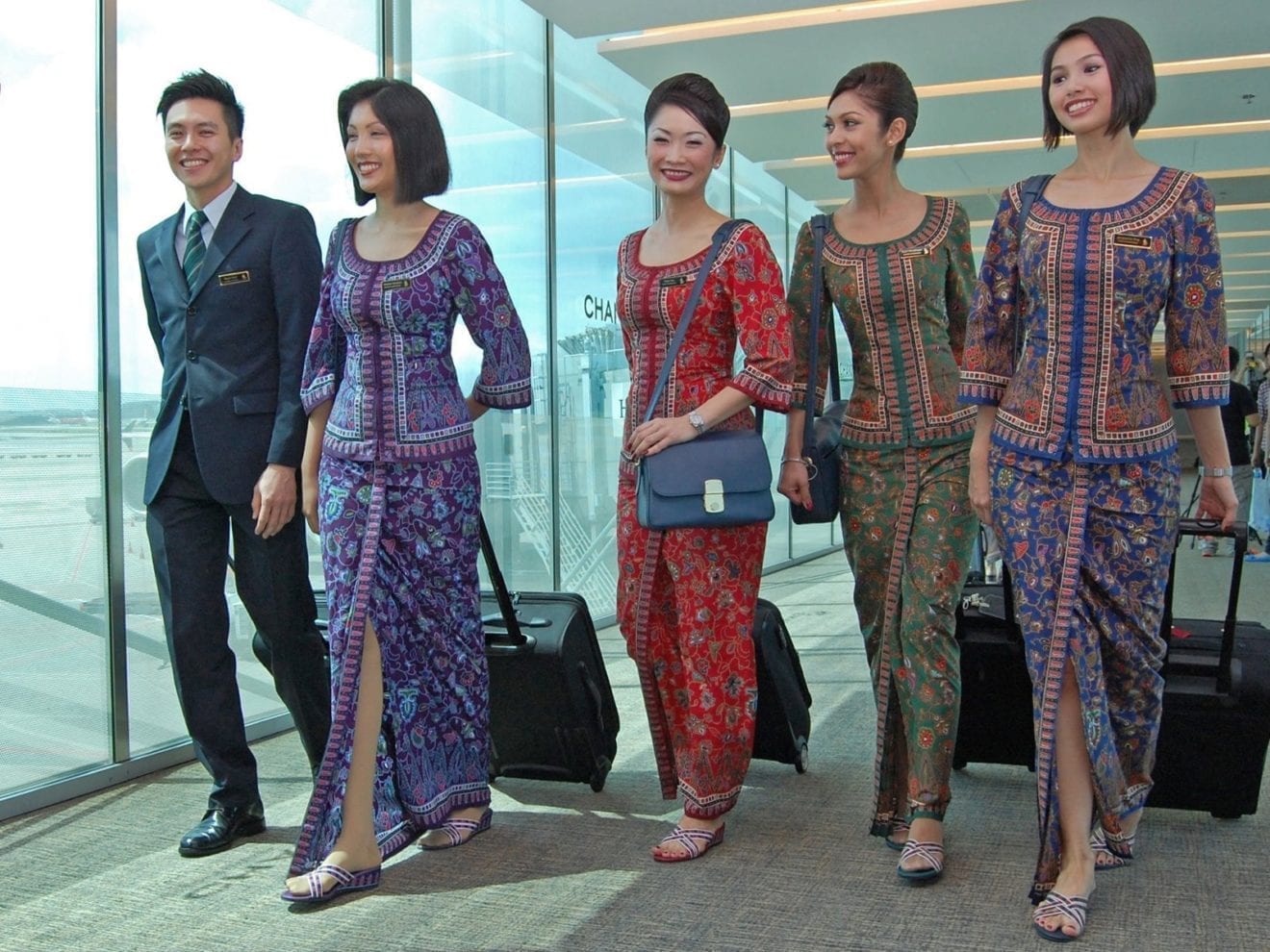
    Singapore Airlines has teamed up with Wellington craft brewer Garage Project to put its beer on all flights to and from New Zealand.

    The airline says that in response to growing demand for craft beer in the air, it will serve Hapi Daze throughout its planes from tomorrow.

    Singapore operates 18 weekly services from New Zealand and the Pacific Pale Ale will be available to up to 400,000 passengers a year.

    The airline’s general manager New Zealand, Simon Turcotte, said the brew showcased New Zealand ingredients, and had broad appeal as a ”great ambassador” for New Zealand craft beer.

    ”In the past we’ve always had a strong emphasis on the quality of our wine programme and that will remain but there’s a growing demand for craft beer.”

    There was demand from traditional markets such as New Zealand, Australia, the United States and Britain but growing interest from new markets in Asia.

    Garage Project is a leading independent, Wellington-based brewery that was started six years ago in an old car garage in Wellington’s Aro Valley.

    Turcotte said his airline always tried to partner with local suppliers wherever it flew.

    He said he was partial to the brew himself but the airline’s beverage experts in Singapore made the final call on the beer which sells for $3.50 a can through the Garage Project’s website.

  • HCM City tax department to monitor social media businesses

    HCM City tax department to monitor social media businesses

    The Ho Chi Minh City Department of Taxation has said recently that its data center is checking Facebook accounts used for conducting business, with a view to determining any tax obligations.

    Not all individual Facebook accounts, however, have to pay tax on their business. Those that are conducting “non-professional” business on an irregular basis and with low turnover will not have to pay tax.

    Only those with large sales and unpaid taxes are targeted, according to the head of the city’s tax department.

    Upon completing the checks, the department will submit plans to the city’s People’s Committee to coordinate with other departments to collect e-commerce business management taxes, including business Facebook accounts.

    At a meeting between city leaders and the department in February, the Department of Industry and Trade proposed collecting taxes from Facebook businesses.

    The Department of Tax Policy under the General Department of Taxation (GDT) is also studying the management of taxes on business activities conducted via social networks such as Facebook, YouTube, and Zalo.

    According to experts, collecting sales tax from Facebook business is not an easy task. Every organization and individual can now own multiple accounts on social networks for their business.

    Sales are mainly made in cash, so it is difficult to monitor. In addition, some people only do business via Facebook as a seasonal job or to earn more income, which also challenges tax management.

    The department’s current solution is to require people doing business on social networks to provide information such as their name, address, telephone number, and personal tax code, in order to control their business activities more strictly.

    In 2015, revenue from e-commerce in Vietnam reached $4.1 billion, an increase of five-fold compared to 2012, according to the latest data from the GDT. It is expected to reach $10 billion by 2020, accounting for 5 per cent of total retail sales in the country. E-commerce will therefore play a significant role in Vietnam’s retail sector in the future.

  • How Pizza Hut and payments are fueling China’s retail revolution

    How Pizza Hut and payments are fueling China’s retail revolution

    Part of the huge shadow Ant Financial casts is its appetite for global investment, but at the same time it’s making moves that are kicking off major changes to how payments are handled in its local market in China.

    While the world waits to see how the company’s attempt to acquire U.S.-based MoneyGram will play out, one of Ant’s existing stakes in Yum China — a 2016 spinoff of Yum Brands, which owns Pizza Hut, Taco Bell and KFC — has drawn the attention of an investor who sees the potential to reshape quick serve restaurants, mobile technology and even the middle class in emerging economies.

  • Reebonz opens S$40m e-commerce hub in Tampines

    Reebonz opens S$40m e-commerce hub in Tampines

    With both local and regional consumers increasingly buying luxury goods online, homegrown e-retailer Reebonz on Tuesday opened an eight-storey e-commerce hub in Tampines to ramp up its cross-border operations and meet the evolving demands of their customers.

    “The Reebonz e-commerce hub will be a platform for us to scale across the region in terms of having a centralised distribution centre that will distribute our products across 17 countries around the world,” said Reebonz CEO Samuel Lim. “We’ve invested heavily into warehouse management systems, distribution management systems, being able to integrate the whole operations within one central location – I think that’s important to scale.”

    The 200,000-square-foot space, which cost around S$40 million to build, is four times larger than its previous office and distribution centre and now stock more than 500,000 types of products – more than 11 times its previous capacity.

    Reebonz also plans to house an incubation hub for local luxury startups and designers in future.

    Speaking at the official opening of the hub, Minister of Trade and Industry (Industry) S Iswaran said players like Reebonz serve as “shared platforms that uplift the entire retail sector”.

    “Smaller companies might be reluctant to start due to lack of scale or technical skills,” he said. “Others may face challenges in reaching out to new customers and coordinating processes for e-commerce fulfilment.

    “Here, players like Reebonz can serve as shared platforms that uplift the entire retail sector. Smaller companies can leverage e-marketplaces like ‘Reebonz Boutiques’ to list their products, which requires less resources than a standalone platform and eases access to global markets.”

    He also highlighted how Reebonz’s e-marketplace has emerged as an online incubation space for emerging designers and local entrepreneurs.

    “Emerging designers and local entrepreneurs have a simple, less risky space to refine their branding and test new products,” he said. “I urge more local brands to take advantage of such platforms to scale up and enter new markets.”

    TAPPING GROWTH

    Since its launch eight years ago, the local brand has expanded its sourcing channels from distributors to individual sellers and boutiques around the world.

    The business-to-consumer retailer branched out to a consumer-to-consumer platform and a merchants’ marketplace last year, allowing consumers to buy and sell pre-loved items to others and giving consumers access to products from boutiques around the world.

    “It definitely helps to have a space where we can tap into the larger clientele base that Reebonz obviously has,” said shoe designer Mashizan Masjum, whose eponymous shoe label joined its marketplace platform in April.

    “As part of an emerging brand, it can be quite lonely at times as well as you’re trying to make a name for yourself regionally and globally.”

    Mr Iswaran said that the Government would help local retailers tap growth opportunities on the e-commerce front, as part of the Retail Industry Transformation Map’s target to grow e-commerce’s share of total retail receipts from 3 per cent to 10 per cent by 2020.

    This includes helping companies to enter foreign markets through e-commerce platforms and prioritising initiatives relating to the digital economy.

    “E-commerce is going to be a defining aspect of the retail industry in Singapore, the region and the world,” he said. “So we want to make sure that our companies have the capabilities to embrace this trend, ride on its growth and benefit from it. Which means capabilities in terms of the technology, business model and market access.

    “And on the other side, we want to make sure that our people have the skills to participate in the new job functions and careers that are being created.”

    According to Mr Iswaran, an estimated one in every five sales in the Asia Pacific would be conducted through an e-commerce platform, while an estimated 3.9 million users – or nearly three-quarters of residents in Singapore – will turn to e-commerce by 2020.

  • Jung Saem Mool beauty to open its first flagship store

    Jung Saem Mool beauty to open its first flagship store

    Jung Saem Mool Beauty opened a flagship store on Boulevard Road in Sinsa dong, Seoul on May 25.

    In the three flagship stores, customers can experience brand items on the first floor, and objects inspiring makeup artists on the second floor’s artist room. There is also a cosmetic garden where customer can take a rest. The first basement, which has an exhibition zone, is designed as a space to appreciate new works with drinks through collaboration with artists.

    Jung Saem Mool Beauty launched a cosmetics brand two years ago which had no formal offline channels. It was only sold online and in Jung Saem Mool Inspiration, hair & make up shop.

    Today, a first offline store is a good opportunity to develop the brand’s philosophy, which is to become a global makeup artist company representing K-Beauty. Also, it allows customers to experience and buy products from ” Jung Saem Mool “.

    Jung Saem Mool is a brand launched under her name. She has been working as a makeup artist for 28 years, and applies all her experience and know-how to the products. It differentiates itself from other brands as it qualifies itself as being a makeup artist brand. “It is our strengths which makes it easy for beginners to put makeup on like an expert,” Jung said.

    She uses SNS channels such as Youtube to pass down the make-up know-how to people. She regularly makes makeup tutorials and looks with English subtitles on her YouTube channel; receiving positive responses from overseas customers.

    Jung Saem Mool plans to expand distribution through duty-free shops and overseas exports based on this first flagship store.

  • Louis Vuitton brings its spirit of travel to South Korea

    Louis Vuitton brings its spirit of travel to South Korea

    French leather good house Louis Vuitton is embracing its traveler heritage to bring its “Volez Voguez Voyagez” exhibit to Seoul, South Korea.

    Described as a 161-year voyage, Louis Vuitton’s Volez Voguez Voyagez retrospective opened in 2015 at Paris’ Grand Palais, a special site for the brand as it displayed its bags and luggage there during the Universal Exhibitions in 1900. The title of the exhibition translates to “Fly, Sail, Travel” to celebrate Louis Vuitton’s tradition of trunk making that dates back to 1854.

    Now a traveling exhibit dedicated to Louis Vuitton’s spirit of travel, Volez Voguez Voyagez is curated by Olivier Saillard.
    The exhibit’s story is told through nine chapters, designed by Volez Voguez Voyagez’s artistic director Robert Carsen. This starts with an antique malle from 1906, design and modern enough to carry the brand through its more than 150-year history.

    Throughout this exhibition, Louis Vuitton makes the connection between the old and new, focusing on how modern pieces were inspired by antiquities; and highlighting the people behind the brand throughout its history.

    Since its original opening in Paris, Louis Vuitton’s Volez Voguez Voyagez has traveled to Tokyo.

    The Tokyo adaptation of the exhibit gave Louis Vuitton an opportunity to interact with its Japanese consumers and demonstrate its relationship with the country. Louis Vuitton has maintained ties with Japan since the end of the 19th century, citing the Mon, or family crest, as an inspiration of its iconic Monogram canvas.

    Now, Louis Vuitton is packing its bags and heading to Seoul, South Korea to stage the exhibit.
    From June 8 to August 27, consumers in South Korea will be able to view the free Volez Voguez Voyagez exhibit at the Dongdaemun Design Plaza.
    Similar to its stop in Tokyo, Louis Vuitton has added a chapter to the exhibit devoted to South Korea. South Korea is a popular destination for luxury branded heritage exhibits. For example, nearly two years after its London debut, French couture house Chanel took its “Mademoiselle Privé” exhibit to Seoul, South Korea.

    Originally showcased in 2015 at London’s Saatchi Gallery, the public exhibit explored the spirit of brand founder Gabrielle Chanel and current creative director Karl Lagerfeld. Taking this exhibit abroad allowed Chanel to share its story with a larger, global audience.

  • Bank Indonesia is seeking to integrate electronic payment

    Bank Indonesia is seeking to integrate electronic payment

    Bank Indonesia (BI) is seeking to integrate electronic payment system of various banks and issuers on toll roads during the Eid al-Fitr homecoming in June.

    BI Transformation Center Executive Director Onny Widjanarko said that the central bank has done the trial on the electronic payment integration on the toll road between Surabaya and Sidoarjo. The next trial will be implemented in Cikopo-Palimanan (Cipali) toll booths.

    Onny added that the central bank has options to integrate electronic payment system on toll roads during homecoming. The use of hybrid cards is one of the options.

    The option will be taken if the integration of technical infrastructure for toll payments could not be realized in time before the homecoming season. However, Onny said that BI would need to consult with industry working group and another regulator i.e. the Public Works and Public Housing Ministry.

    “We had wanted to implement the integrated payment systems during lebaran (Eid) but we are still discussing it in the working group whether select toll gates could adopt hybrid cards but we have to consult with the government,” he said.

    Santoso, the director of private lender Bank Centra Asia (BCA), the issuer of BCA Flazz cards in Cipali, said the bank would allow other banks to join its toll road payment system.

    “In Cipali and Gresik, BCA has encouraged [other] banks to integrate their payment systems. Meanwhile, other toll roads which are operated by Bank Mandiri must first be discussed because Mandiri has a special partnership with other state-owned lenders and state-owned toll operator Jasa Marga,” Santoso.

  • Sony relaunching OLED TVs

    Sony relaunching OLED TVs

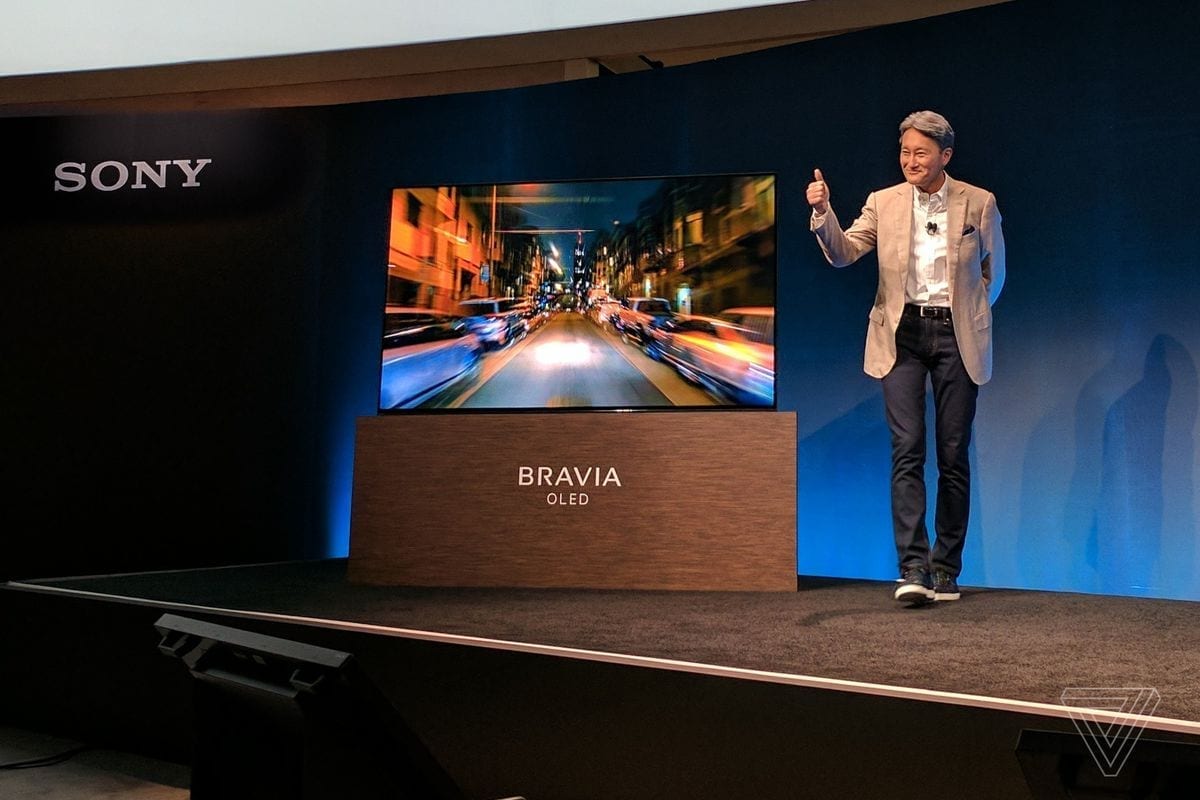
    Sony’s high-definition OLED television, which hits domestic stores next month, will mark a return after sales were halted in 2010. But instead of maintaining its fiercely independent streak, the Japanese group is enlisting the aid of South Korea’s LG Display this time around.

    Good vibrations

    The Bravia A1 series, which Sony said Monday will go on sale June 10, will carry a price tag of around 800,000 yen ($7,092) for the 65-inch model, while the 55-inch will go for about 500,000 yen. Not only does the organic light-emitting diode display generate realistic hues, it also doubles as a speaker. These sets do not come equipped with conventional speakers since the thin, bendable OLED layer is capable of emitting sound vibrations.

    LG Electronics, sister company of Sony’s panel supplier LG Display, also produces its own OLED TVs. Japan’s Toshiba and Panasonic are rivals as well. “OLEDs will really take off this year,” said a source from a major Japanese electronics retailer.

    Sony developed a prototype OLED TV in 2001 and launched the world’s first household model in 2007. But those 11-inch sets failed to attract buyers, and Sony suspended sales in 2010.

    Around that time, a glut in global LCD supplies led to a drop in prices, sending TV segments across the board into the red. Sony withdrew from a joint panel operation with South Korea’s Samsung Electronics. The Japanese company’s TV business later underwent restructuring and a spinoff.

    Sony merged its OLED panel business with Panasonic’s, and that unit is due to become a subsidiary of Japan Display later this year. Sony no longer has in-house panel technologies for consumer TVs.

    The company is making a comeback to big-screen OLEDs because “the performance of the panels we can procure have reached a convincing level,” said Ichiro Takagi, executive vice president at Sony.

    The group continued to develop professional-use TVs and advanced image processing technology even after suspending sales in 2010 in order to “be in a position to release a new model at any time,” said a Sony executive.

  • Airbnb eyes expansion in Indonesia

    Airbnb eyes expansion in Indonesia

    Global hospitality marketplace Airbnb will expand its business in Indonesia as it considers the country to be one of the most important markets in the Asia-Pacific.

    Airbnb’s country manager for Southeast Asia, Hong Kong, and Taiwan, Robin Kwok, said that Indonesia is one of the fastest growing countries in terms of inbound travel, with nearly 38,000 local homes currently listed on its rental website.

    “Indonesia is such an important country, not only in Southeast Asia, but also for the rest of APAC,” Kwok told in Jakarta on Monday.

    Kwok said her company had developed teams to educate local hosts on how to use the app.

    “We also do a lot of marketing. We want to drive more people to Indonesia,” she said.

    She said her team had also discussed with government officials about how the company could help the government gain a better understanding of the services required by visitors to Indonesia.

    Airbnb also looks forward to cooperating with local partners, Kwok said, adding that her company had high expectations for the potential partners to boost brand awareness of the company.

    Founded in 2008, Airbnb is currently present in 65,000 cities in 191 countries across the world, with 160 million guest arrivals, according to the company’s data.

  • Iflix is going to live stream soccer games in a move to outflank Netflix

    Iflix is going to live stream soccer games in a move to outflank Netflix

    Southeast Asian Netflix competitor Iflix is playing a new game: it’s going to start streaming live sports events. That’s uncharted territory for the Malaysian on-demand video platform. Netflix, which launched in several Southeast Asian countries late last year, has so far avoided going down that route.

    Iflix announced today it will launch this feature in Indonesia first – its largest market, where it launched in June 2016. Iflix will live stream all matches of Indonesia’s first and second soccer league, in partnership with local broadcaster TVOne. It’s not the only tech startup associating itself with the sport.

    TVOne is a free-to-air channel known in Indonesia for its news and sports programming.

    Live streaming runs against what on-demand platforms typically stand for, as they’re fixed to a particular time and schedule.

    In 2015, Netflix content boss Ted Sarandos told that live events don’t fit with Netflix’s watch-anytime model. Users subscribe to Netflix to watch movies, TV shows, or documentaries whenever they please.

    But Sarandos didn’t rule out the possibility of Netflix eventually changing its attitude.

    Amazon’s already doing it

    Amazon recently entered live TV broadcast territory in the US by live-streaming 10 NFL games, in a deal that cost US$50 million.

    Major social networks like Facebook and Twitter are also showing interest in the event live-streaming business.

    Outrunning Netflix

    What Iflix plans to gain from streaming sports events was not addressed in today’s press release. It may be an incentive for users to give the service a try – but the first and second league matches are also available on free TV, and live streams are found on YouTube and other sites, for those who prefer to watch on computers or smartphones.

    But while streams of some matches may be available on other sources online, “these are not always consistent nor reliable,” argues an iFlix spokesperson.

    The startup last reported 5 million subscribers across all markets – but raising that figure isn’t the most important target for now. “Iflix is focused on measuring viewership and usage, rather than subscriber numbers,” says the spokesperson. By introducing the soccer league, the startup intends to demonstrate its commitment to offer localized content for Indonesian viewers.

    Soccer, especially the local league, is growing in popularity in Indonesia and seems to have overcome some of its major challenges, like corruption.

    Iflix isn’t the only tech startup associating itself with the sport. Local unicorn startups Go-Jek and Traveloka are the main sponsors of the first and second league.

    Founder Patrick Grove is likely happy that his firm is outpacing Netflix in this regard. In an interview with us, he said his main weapon to stay competitive is speed. He wants to secure a firm footing in emerging markets, one that’s impossible to dislodge.

    Iflix and other Southeast Asia-focused streaming sites like Hooq have been able to address regional customer demands faster than their US competitor. Knowing internet connections in the region are often slow and unreliable, both sites offered subscribers the option to download a few titles for offline viewing.