Author: Mei Ling Tan

  • Social Commerce Revolution: How Tiktok Influencers Are Transforming Asian Retail Landscape

    Social Commerce Revolution: How Tiktok Influencers Are Transforming Asian Retail Landscape

    Retailers in Asia are embracing the revolution of social commerce, with platforms like TikTok leading the charge in transforming shopping habits across the region. A recent report from the social media giant revealed an astonishing statistic: over 70% of TikTok users in Asia are more inclined to make purchases based on recommendations and content from influencers. This shift highlights how traditional shopping behaviors are evolving, as younger consumers prioritize engaging, authentic experiences over conventional advertising.

    The Rise of Influencer-Driven Shopping

    Brands are not sitting idle amid this monumental change. Many are actively partnering with TikTok influencers to reach their target audiences more effectively. The appeal of shopping through curated content is undeniable; it feels fresh, immediate, and often more enjoyable than trawling through a typical online store. With influencers effectively acting as personalized shopping guides, it’s no wonder that brands are leaning heavily into this strategy, hoping to tap into the collective power of user-generated content.

    Innovative Strategies in Social Commerce

    As retailers focus on adapting to these new dynamics, many are launching creative campaigns designed to resonate with their communities. For instance, the recent collaboration between local fashion brands and viral TikTok personalities not only aims to boost sales but also fosters a sense of community around shared interests and lifestyles. Watching a fashion influencer try on dozens of outfits can sometimes feel like a digital fashion show, encouraging a more personal connection with the brand.

    Challenges and Opportunities for Retailers

    However, social commerce isn’t without hurdles. Brands must navigate the intricacies of online engagement, all while staying authentic to their core values. Consumers can spot a phony recommendation from a mile away, and maintaining trust is paramount. Retailers are honing in on transparency and authentic storytelling, crafting narratives that resonate on a personal level. After all, a good story can sell just about anything—whether it’s a luxury handbag or the latest pair of trendy sneakers.

    In a surprising twist, a recent viral TikTok challenge involving dance moves while showcasing products led to a notable spike in sales for participating brands. It turns out that adding a little fun (and a dash of cringe) can yield substantial returns in traffic and engagement.

    Market Trends Point to Continued Growth

    The future of retail in Asia is undeniably intertwined with these evolving social platforms. According to market analysts, social commerce in the region is projected to continue its robust growth, fueled by a blend of mobile connectivity, creative content, and evolving consumer preferences. Retailers who embrace these changes stand to not only survive but thrive, tapping into a new wave of consumers eager for connection and discovery.

    As we watch this trend unfold, the fusion of social media and retail creates a dynamic landscape, one where shopping is not just transactional but a new dimension of entertainment and engagement.

    Questions & Answers

    What role does TikTok play in reshaping retail in Asia?
    TikTok is leading the charge in social commerce, with over 70% of its users in Asia expressing a higher likelihood to purchase based on influencer recommendations, fundamentally changing how brands engage with consumers.

    How are brands using influencer partnerships?
    Brands are increasingly collaborating with TikTok influencers to create engaging, authentic content that resonates with young shoppers, transforming their approach to marketing and sales.

    What challenges do retailers face in social commerce?
    Retailers must navigate the need for authenticity and trust while adapting to rapidly changing consumer behaviors, all while ensuring their marketing strategies remain genuine and relatable.

  • Bangkok’s Real Estate Market Poised For Resilience Amid Economic Uncertainty

    Bangkok’s Real Estate Market Poised For Resilience Amid Economic Uncertainty

    According to a recent JLL report, six new projects are poised to make their debut in the Bangkok market by 2025, boasting an impressive average presales rate of 70%. However, most developers are adopting a conservative stance, prioritizing inventory clearance and delaying new project launches until market confidence sees a rebound.

    Market Dynamics: Rentals on the Rise

    “In the near term, rental rates are expected to surge due to high loan rejection rates, with renters increasingly leaning toward the security and flexibility that rentals provide,” the report elaborated. Despite the optimistic rental outlook, capital values are projected to rise more slowly, held back by cautious investor sentiment. Market yields are anticipated to stabilize at 5.2% through 2025, indicating a steady, albeit slow, growth trajectory.

    Quarterly Recovery in Luxury Condos

    Bangkok’s luxury condominium sector is witnessing a slight recovery, with the second quarter showing signs of resurgence, spurred by interest rate cuts and relaxed loan-to-value (LTV) measures. This bounce-back has allowed the market to return to pre-pandemic levels, although challenges remain from the economic downturn and reciprocal tariffs imposed by the US.

    Prime Apartments: A Hot Market

    Prime apartments are maintaining strong traction, with half of the total inventory achieving full occupancy during the last quarter. Vacancy rates have now fallen for two consecutive quarters, decreasing by 51 basis points to 4.2%, largely driven by corporate relocations.

    Economic Uncertainty and Its Effects

    Despite the emergence of positive trends, the luxury condominium inventory has remained steady at 72,500 units, with no new completions noted for the second quarter. Economic uncertainties have led buyers to postpone their decisions, prompting developers to be particularly prudent regarding future launches.

    Expansion of Prime Apartment Stock

    The prime apartment sector saw its stock grow to 4,700 units in Q2 2025, thanks to the addition of 39 Luxury Suites. This bolstered the Central East submarket’s status as the go-to location for prime living spaces in Bangkok.

    The Rental Market’s Continuing Surge

    Capital values have ticked up by 1.5% quarter-on-quarter, reflecting a moderate growth tempered by broader economic challenges. With demand soaring from both domestic and international renters, gross rents have risen to THB 757 per square meter per month, marking the thirteenth consecutive quarter of growth at an impressive 4.0%. This strong performance in the rental market has nudged market yields up to 5.2%, showing that sometimes economic upheaval can lead to surprising opportunities.

    Questions & Answers

    What is the average presales rate for new projects in Bangkok?
    The average presales rate for the expected six new projects by 2025 is 70%.

    How has the luxury condominium market in Bangkok performed recently?
    The luxury condominium market saw slight recovery in Q2, thanks to interest rate cuts and relaxed loan-to-value measures, bouncing back to pre-pandemic levels.

    What trends are emerging in the rental market?
    The rental market has experienced strong demand with gross rents growing for the thirteenth consecutive quarter, increasing by 4.0% to THB 757 per square meter per month.

  • Delhi NCR Logistics Space Set to Soar to 108.6 Million Sq Ft by End of 2025!

    Delhi NCR Logistics Space Set to Soar to 108.6 Million Sq Ft by End of 2025!

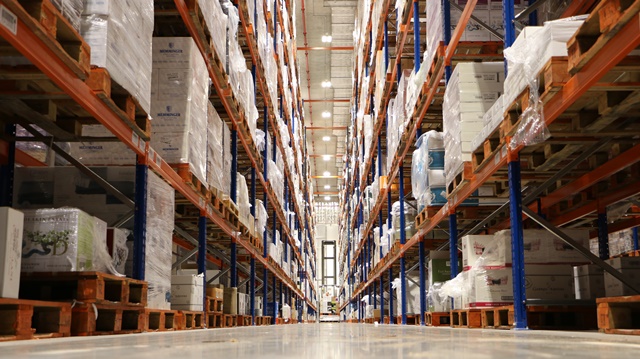
    The National Capital Region’s (NCR) warehousing market is on track to soar to 108.6 million square feet by the end of 2025. This surge is largely driven by Grade A projects, which have captured the interest of institutional investors, as detailed in a recent report by JLL. The Delhi-NH8 submarket is poised to remain at the forefront of this growth.

    “Proposed infrastructure projects, particularly along freight corridors such as DMIC, WDFC, and EDFC, are significantly enhancing warehouse demand by improving connectivity between Delhi and surrounding areas in both Western and Eastern India,” the report stated. Smart investments in these corridors are transforming transportation—and possibly saving future delivery delays that plague today’s e-commerce giants.

    Explosive Growth in Demand

    In a remarkable showing, net demand for warehousing space soared by an impressive 80% year-over-year in the first half of 2025, reaching 4.13 million square feet. Notably, 88% of this demand stemmed from Grade A facilities, highlighting a clear trend toward high-quality spaces. The Delhi-NH8 remained a powerhouse in this surge.

    The third-party logistics (3PL) and logistics sectors emerged as the primary demand drivers, closely followed by light manufacturing fields, such as auto components and engineering, which together constituted 58% of the demand during this period. Other notable contributors included fast-moving consumer goods (FMCG), e-commerce, and retail sectors.

    Institutional Developers Make Their Mark

    The market has witnessed transformative expansion in the first half of 2025, with 4.66 million square feet of new supply entering the fray. Institutional developers and investors are making a strong entrance—particularly concentrated in the lucrative Delhi-NH8 corridor.

    Despite this growth, vacancy rates rose to 21.4% in H1 2025, a reflection of the accelerating supply from large Grade A developers that outstripped demand in the market.

    Rising Rents Reflect Market Trends

    Rents in the NCR have experienced a healthy uptick, rising by 5.3% year-over-year in the first half of 2025. This increase is primarily a response to the surging demand for Grade A spaces that boast superior specifications. With institutional investors gaining a robust foothold, rents are expected to continue climbing, driven by escalating land prices, forthcoming infrastructure projects, and heightened investments.

    As the NCR warehousing market evolves, it’s clear that Grade A facilities will remain the main attraction, drawing interest and investment from across the region. In a landscape where quality is becoming king, businesses are increasingly keen to secure their place in this thriving sector.

    Questions & Answers

    What factors are driving the demand for Grade A warehouse spaces in NCR?
    The demand for Grade A warehouse spaces is primarily driven by strong interest from institutional investors and the significant growth of 3PL and logistics sectors. Additional contributors include light manufacturing fields and e-commerce, all seeking high-quality facilities.

    How have recent infrastructure projects influenced the warehousing market?
    Recent infrastructure projects, especially along freight corridors like DMIC, WDFC, and EDFC, have improved connectivity, boosting warehouse demand by facilitating smoother transport routes between Delhi and surrounding regions.

    What does the future look like for rents in the NCR warehousing market?
    Rents are projected to continue increasing as demand for Grade A spaces persists, propelled by rising land prices, ongoing infrastructure developments, and the growing presence of institutional investors in the market.

  • South Korea Unveils Bold National AI Strategy Committee to Drive Innovation and Growth

    South Korea Unveils Bold National AI Strategy Committee to Drive Innovation and Growth

    South Korea has taken a significant step forward in its pursuit of leadership in artificial intelligence by unveiling the National AI Strategy Committee. The Ministry of Science and ICT announced that the Cabinet endorsed the committee’s formation during a meeting led by President Lee Jae-Myung at the Yongsan Presidential Office on September 2.

    Elevating AI Governance and Vision

    In a move that fulfills a key campaign promise, President Lee has restructured the former Presidential Committee on AI, expanding its authority to transform it into a central command hub for AI initiatives. This new body is endowed with the responsibility to oversee strategic plans, coordinate efforts across various ministries, and assess the effectiveness of AI projects.

    Aiming for the Global AI Top Tier

    The revamped committee is tasked with setting South Korea’s national AI vision and defining medium- to long-term strategies aimed at catapulting the nation into the ranks of the world’s top three AI leaders. Its membership has grown from 45 to 50 commissioners, and now includes three vice chairs, one of whom will be a full-time representative from the private sector, enhancing operational efficiency. The Chief Secretary to the President for AI Future Planning will serve as the committee’s secretary, alongside 13 ministers representing sectors like finance, education, and defense.

    Boosting Efficiency with New Structures

    To further strengthen execution capabilities, the committee will establish a Council of Chief AI Officers, which will include deputy ministers and regional government officials. A chairperson will be appointed by the president from among the commissioners, ensuring a seamless connection between high-level decision-making and the grassroots implementation of AI initiatives.

    “Through the establishment of this presidential decree, a systematic foundation has been prepared to build the national AI command center, marking the first step in challenging the bold vision of the Lee Jae-myung administration to leap to become one of the top three countries in AI,” explained Bae Kyung-Hoon, Minister of Science and ICT.

    As South Korea charts its course towards becoming an AI powerhouse, it remains to be seen how quickly it will race ahead of the competition—will they be able to outpace the digital cheetahs of China, the US, and beyond?

    Questions & Answers

    What is the primary goal of the National AI Strategy Committee?
    The primary goal of the National AI Strategy Committee is to set South Korea’s national AI vision and establish strategies aimed at positioning the country among the top three AI leaders globally.

    How has the committee’s structure changed under the new presidential decree?
    The committee’s membership has increased from 45 to 50 commissioners, with the number of vice chairs rising from one to three, each aimed at enhancing operational efficiency and strategic oversight.

    What additional body will work alongside the committee to support its initiatives?
    The committee will operate a Council of Chief AI Officers, which will include deputy ministers and regional officials, facilitating a connection between national strategies and local implementation.

  • Revamping IP Strategies Amid IPv4 Limitations: Navigating Today’s Telecom Challenges

    Revamping IP Strategies Amid IPv4 Limitations: Navigating Today’s Telecom Challenges

    As demand for high-performance connectivity surges across the Asia Pacific, telecom operators are feeling the heat. The increasing appetite for data, coupled with expanding subscriber bases, has resulted in a pressing need for enhanced network infrastructures. However, the looming specter of global IPv4 exhaustion has many operators leaning heavily on carrier-grade network address translation (CGNAT) as a temporary solution. While CGNAT has allowed for immediate growth without necessitating a shift to IPv6, it is beginning to expose its limitations—and they are not pretty.

    CGNAT: What’s Working and What’s Not

    CGNAT effectively enables numerous users to share a single public IPv4 address, allowing operators to delay the costly transition to IPv6. It has proven particularly beneficial for low-usage subscribers in mobile and residential broadband sectors. However, this strategy brings several critical challenges that can no longer be overlooked.

    Firstly, performance issues arise due to NAT translation overhead, which increases latency and diminishes throughput, especially during peak usage times. Secondly, the compatibility of applications takes a hit; services like Voice over Internet Protocol (VoIP), online gaming, virtual private networks (VPNs), and smart home devices often stumble under shared IP scenarios. Lastly, compliance becomes a maze, with the need for detailed record-keeping to meet regulations in markets such as India and Singapore.

    For some operators, these complexities are proving to be cost-prohibitive. Maintaining CGNAT compliance often means logging every user’s port and timestamp activity for months, accumulating terabytes of data daily for large subscriber bases. One study estimated that 10,000 users could produce almost 4.7 TB of logs each year—an astonishing amount that complicates regulatory compliance and erodes any initial cost savings.

    IPv4 Leasing: A Clever Pivot

    As an innovative response, telecoms are beginning to pivot towards IPv4 leasing as a more flexible and scalable alternative. “Leasing offers operators access to clean, reputation-safe IPs on demand, restoring end-to-end connectivity for essential services and customers without locking them in for the long haul,” explains Ramutė Varnelytė, CEO of IPXO.

    IPXO, a global marketplace for IPv4 lease and management, enables internet service providers (ISPs) to efficiently lease address space from various regional internet registries (RIRs). Equipped with tools for resource public key infrastructure (RPKI), geolocation updates, and reputation monitoring, this approach not only simplifies address management but also accelerates deployment timelines, enhances customer experience (CX), and meets compliance requirements.

    A Real-World Success Story

    The APNIC’s 2024 survey highlights a shift across the Asia-Pacific, where organizations are adopting alternative strategies to combat the scarcity of IPv4 addresses. While 45% are deploying NAT and 40% are turning to IPv6, an impressive 15% are opting for IPv4 leasing. Notably, organizations in East Asia, at 27%, are the most inclined to lease addresses.

    In one striking case, a regional ISP in Southeast Asia, with over a million users, was overwhelmed with complaints related to CGNAT—from latency to failed peer-to-peer services. Rather than investing heavily in new CGNAT infrastructure or costly IP acquisitions, the ISP chose to lease 50,000 IPv4 addresses. This strategic decision liberated them from many complications associated with shared IPs, providing allocated IPs for business clients, remote workers, and high-usage residential subscribers. Within just six months, the ISP noted a remarkable 35% drop in CGNAT-related support tickets and an uptick in performance metrics.

    The Case for a Balanced Hybrid Approach

    While CGNAT still serves its purpose for light usage—think messaging, browsing, and occasional video watching—it can’t cope with latency-sensitive applications and real-time services that demand reliability. A hybrid model allows operators to employ CGNAT for everyday traffic while leveraging leased IPv4 addresses for business-to-business (B2B) clients, gamers, and others who depend on stable connectivity.

    This approach not only optimizes network performance but also sidesteps potential service quality issues, making it a savvy solution amid growing demands.

    Operational Efficiency without Commitment

    The economic and operational benefits of leasing are especially appealing. Operators can mitigate capital expenditures (CapEx) while enjoying the flexibility to expand their address space in line with market needs—without the burden of long-term asset ownership. Many leasing platforms seamlessly include adherence to compliance measures such as RPKI signing and reputation management, allowing operators to focus on growth rather than paperwork.

    Leased IPs can also smoothly integrate into cloud environments like AWS, Azure, or Google Cloud, enhancing consistency for cloud-native applications. For telecoms venturing into 5G or edge deployments, flexible access to IP resources is crucial, ensuring that essential IoT workloads and low-latency services operate smoothly, free from IPv4 limitations.

    Is It Time to Rethink the IP Strategy?

    With skyrocketing demand, the limitations of CGNAT, and the slow march toward IPv6 adoption, telecom operators across Asia are at a crossroads. IPv4 leasing emerges as a viable method to alleviate network strain, foster new services, and uphold customer satisfaction. Far from being merely a temporary solution, IPv4 leasing can be integral to a broader, more adaptable IP strategy that bridges the gap as the industry transitions.

    Questions & Answers

    How does CGNAT impact network performance?
    CGNAT can cause latency issues and reduce throughput due to the overhead involved in Network Address Translation, especially during peak usage times.

    Why are telecom operators moving towards IPv4 leasing?
    Leasing provides operators with immediate access to clean IP addresses without the hefty investments required for IPv4 acquisitions, allowing for scalability and improved customer connectivity.

    What are the benefits of a hybrid model in IP management?
    A hybrid model allows operators to use CGNAT for general traffic while allocating leased IPv4 addresses to users with higher demands, ensuring efficient network operation without compromising service quality.

  • Malaysia’s Open DC Revamps Data Centres to Power the Future of Banking and Finance

    Malaysia’s Open DC Revamps Data Centres to Power the Future of Banking and Finance

    Open DC, the data centre division of Malaysia’s Extreme Broadband (EBB), is taking a significant step towards modernising its AI data centres to bolster security and improve network performance. The company has entered into a strategic partnership with Nokia, a move that promises to reshape the landscape of data connectivity across Malaysia.

    Revolutionizing Connectivity Across Malaysia

    Through this collaboration, Open DC will implement Nokia’s cutting-edge IP network solution to connect its data centres, which are strategically located across six key sites, including CJ1 Cyberjaya, JB1 Menara MSC Cyberport, JB2 Menara Ansar in Johor Bahru, PE1 Menara Suntech, PE2 Bayan Lepas Industrial Park in Penang, and the future D8-1 facility in Kedah. With this infrastructure upgrade, the firm aims to meet the rigorous demands of the banking and financial services sector.

    Aligning with National Vision

    This initiative is not just about enhancing performance; it also aligns perfectly with Malaysia’s National Cloud Computing Policy and the government’s MYDIGITAL vision, advocating for a robust digital economy. Open DC will leverage Nokia’s comprehensive IP networking portfolio—featuring advanced tools like the data centre gateway, data centre fabric, and quantum-safe networks—to create a future-ready digital infrastructure.

    Prioritizing Energy Efficiency and Cybersecurity

    The deployment of Nokia’s 7250 and 7220 Interconnect Routers will significantly improve performance while simultaneously reducing energy consumption—a dual win for sustainability and operational efficiency. In an age where cyber threats loom large like an unexpected rainstorm, the upgraded infrastructure introduces automation and DDoS mitigation tools, reinforcing Open DC’s resilience against such challenges.

    A Joint Venture for Innovation

    In a further demonstration of their commitment to innovation, EBB and Nokia have signed a Memorandum of Understanding (MoU), setting the stage for collaborative development of next-gen data centre solutions and quantum-safe networks. This partnership will not only craft a joint go-to-market strategy focused on AI and data centre connectivity, but it will also encompass offerings like multi-cloud access, enterprise connectivity, and enhanced DDoS protection for clients.

    Empowering the Future of Enterprises

    Open DC’s Managing Director, Wong Weng Yew, expressed enthusiasm about the partnership, stating that Nokia’s solutions will enhance security, scalability, and sustainability while opening new avenues for revenue generation among enterprises. With this alliance, businesses may find their digital footprint expanding in ways they had only imagined.

    Questions & Answers

    What is the primary aim of Open DC’s partnership with Nokia?
    The collaboration focuses on modernising Open DC’s AI data centres to enhance security and improve network performance across multiple sites in Malaysia.

    How many data centres will be interconnected through this initiative?
    The partnership will interconnect data centres located at six sites, including facilities in Cyberjaya, Johor Bahru, Penang, and an upcoming site in Kedah.

    What technological solutions will Open DC implement from Nokia?
    Open DC will utilize Nokia’s IP networking portfolio, including advanced routers and automation tools designed for high performance, energy efficiency, and robust cybersecurity protections.

  • Nestlé Makes Bold Move: CEO Dismissed Due to Workplace Relationship Scandal

    Nestlé Makes Bold Move: CEO Dismissed Due to Workplace Relationship Scandal

    Nestlé, the powerhouse behind iconic brands like Nespresso and KitKat, has initiated a leadership shakeup following the dismissal of Laurent Freixe as CEO. This significant change comes after an inquiry into an undisclosed romantic relationship between Freixe and a subordinate, which was found to contravene Nestlé’s code of business conduct.

    A New Era at Nestlé Begins

    With impressive swiftness, Nespresso CEO Philipp Navratil has stepped into the role of CEO, assuming leadership of the multinational food and beverage giant. The board acted decisively, launching its investigation under the watchful eye of chairman Paul Bulcke and lead independent director Pablo Isla, with support from outside legal counsel. Bulcke expressed gratitude for Freixe’s contributions, emphasizing that the company’s values must remain at the forefront. “This was a necessary decision. Nestlé’s values and governance are strong foundations of our company,” he stated.

    A Veteran’s Journey at Nestlé Comes to a Close

    Freixe’s tenure at Nestlé began in France back in 1986. He played a vital role in guiding the company through tumultuous periods, including the subprime and euro crises. Before his recent promotion to CEO, he led the firm’s Latin America division and was appointed to the top job just last September, tasked with tackling sluggish consumer spending affecting Nestlé’s food and household goods.

    As concerns grew over Nestlé’s performance, evidenced by a nearly 25% dip in its share price over the past year, the company seeks stability amid a tricky economic landscape. Nestlé shares managed a slight gain, closing up 0.13% at 75.49 Swiss francs on the Swiss stock exchange, but the pressure remains on to deliver strong results.

    Profit Slump Signals Urgency for Change

    In late July, Nestlé announced a disappointing 10.3% decline in first-half profits, impacted heavily by lackluster consumer spending in China, despite passing on rising cocoa and coffee prices to its customers. As Navratil embarks on this new chapter, he is determined to steer the company toward recovery and growth. “The board is confident that he will drive our growth plans forward and accelerate efficiency efforts,” Bulcke affirmed, while Navratil embraced the company’s strategic vision and vowed to “drive the value creation plan with intensity.”

    Navratil’s journey with Nestlé spans over two decades, beginning in 2001. He has worn many hats, including leading the coffee and beverage sector in Mexico from 2013 to 2020, prior to becoming chief executive of Nespresso last July. The world will be watching closely as he takes the reins at Nestlé, but it’s hard not to wonder: will this experienced executive brew the perfect recipe for success amid the complexities of modern retail?

    Freixe’s dismissal isn’t an isolated incident in the corporate world. He joins a notable list of executives who have faced similar fates for relationships deemed inappropriate within their organizations. The likes of Bernard Looney at BP and Steve Easterbrook at McDonald’s have experienced the swift exit in the wake of such breaches, reminding the industry that corporate governance is still very much in focus.

    Questions & Answers

    What led to Laurent Freixe’s dismissal from Nestlé?
    Freixe was dismissed following an investigation into an undisclosed romantic relationship with a subordinate, which violated Nestlé’s code of business conduct.

    Who is taking over as CEO of Nestlé?
    Philipp Navratil, previously the CEO of Nespresso, has been appointed as the new CEO of Nestlé.

    What challenges is Nestlé currently facing?
    Nestlé is grappling with sluggish consumer spending in key markets such as China and has reported a 10.3% decline in first-half profits, prompting a need for rapid recovery and growth strategies.

  • New Zealand Eases Property Ownership Rules for Foreign Investors: What It Means for the Market

    New Zealand Eases Property Ownership Rules for Foreign Investors: What It Means for the Market

    In a significant policy shift, New Zealand is set to open its doors to affluent foreign property investors, marking the end of a seven-year ban. This ban was initially implemented by the center-left government of former Prime Minister Jacinda Ardern in 2018 to combat skyrocketing housing prices attributed to a surge in immigration and a pronounced lack of housing availability.

    While Australians and Singaporeans were exempt from the restrictions due to existing trade agreements, the newly unveiled regulations allow holders of the Active Investor Plus residency visa to purchase or build homes valued at NZ$5 million (approximately USD$2.95 million). This change is set to take effect by the end of the year and aims to strike a balance between those desiring to restrict foreign ownership and the ambition to attract wealthy investors.

    Prime Minister Christopher Luxon reported that since the visa’s launch in April, over 300 applications have been submitted, all requiring a minimum investment of NZ$5 million within three years. “The price threshold methodically navigates a path between those who do not want foreign ownership opened up and the desire to lure high-net-worth investors,” he explained.

    Interestingly, New Zealand’s geographical remoteness — once seen as a disadvantage — has transformed it into a coveted retreat for ultra-rich individuals seeking an exclusive escape. The tale of billionaire Peter Thiel, founder of Paypal and a U.S. President Donald Trump supporter, illustrates this allure. After becoming a citizen in 2011, Thiel planned an extravagant private estate but became embroiled in controversy when it emerged he had only spent a mere 12 days in the country.

    Despite a 30% surge in property prices in various regions during the pandemic, values have since declined over the past two years. Nonetheless, the housing supply remains constrained, leaving many New Zealanders struggling to secure home ownership.

    Questions & Answers

    What prompted New Zealand to relax its restrictions on foreign property ownership?
    The relaxation stems from a desire to attract wealthy foreign investors, balancing the interests of New Zealanders who support restrictions on foreign ownership with the potential economic benefits of attracting high-net-worth individuals.

    How much must foreign investors invest to qualify for the Active Investor Plus residency visa?
    Foreign investors need to invest at least NZ$5 million (roughly USD$2.95 million) over a span of three years to qualify for the visa, which allows them to purchase or build property in New Zealand.

    What has been the trend in New Zealand’s housing market recently?
    Following a significant price increase of over 30% during the pandemic, housing prices have fallen over the past two years, but the country continues to struggle with tight housing supply, making home ownership elusive for many locals.

  • Uniqlo Shakes Up Retail With Eco-friendly, Limited-edition Collection Launch

    Uniqlo Shakes Up Retail With Eco-friendly, Limited-edition Collection Launch

    Frenzy is building in the retail sector as Japan’s premium fashion retailer, Uniqlo, introduces a sensational limited-time event expected to shake up the market. From November 3 to November 6, 2023, shoppers can get their hands on exclusive pieces during the awaited “Uniqlo U Special Edition” collection launch. Each item is designed by creative director Christophe Lemaire, known for his cutting-edge designs and a knack for blending functionality with high fashion.

    Exclusive Designs and Eco-Friendly Initiatives

    The collection boasts a vibrant array of wardrobe staples that blend contemporary aesthetics with sustainability—a trend that has become increasingly significant in Asia’s retail landscape. Lemaire has utilized innovative materials in this special line, reinforcing Uniqlo’s commitment to eco-friendly practices. Notably, consumers can expect a palette that fuses seasonal colors with timeless cuts, ideal for layering as the winter chill approaches.

    Limited-Time Only! An Expectation of Success

    Shoppers are bracing themselves, not just for fashion but for an experience. Last year’s similar pop-up event caused quite a stir—think long lines and excited chatter as fashion enthusiasts snapped up their favorite pieces. This year, expectations are skyrocketing. While the official details on the exact quantities released remain under wraps, insiders hint at a strategic release to create a sense of urgency and excitement amongst consumers. Who couldn’t use a bit of adrenaline while shopping for warm winter attire?

    The Future of Retail in Asia

    As Uniqlo continues to carve out its niche in the competitive Asian market, this event signals a potential shift toward more experiential retail initiatives. Consumers today seek not only products but memorable interactions with brands. Uniqlo is stepping up to the plate, positioning itself as a forward-thinking player that recognizes this evolving landscape. Retailers across Asia will undoubtedly keep a close eye on the event’s success, as it could dictate strategies for the upcoming holiday season.

    Questions & Answers

    What is the significance of the Uniqlo U Special Edition collection?
    The collection, designed by Christophe Lemaire, combines premium fashion with sustainability, highlighting Uniqlo’s dedication to eco-friendly practices while providing stylish, functional clothing.

    How did last year’s event influence expectations for this year?
    Last year’s pop-up created a strong buzz with long lines and significant shopper enthusiasm, setting high expectations for this year’s event as customers eagerly await another exciting release.

    What does this event indicate about retail trends in Asia?
    The event suggests a shift towards more experiential retail strategies, where brands engage consumers not just through products but through memorable shopping experiences that resonate with the modern shopper’s demands.

  • Over 370,000 Singapore Bank Customers Embrace Innovative Money Lock Feature for Enhanced Security

    Over 370,000 Singapore Bank Customers Embrace Innovative Money Lock Feature for Enhanced Security

    In a striking demonstration of caution, over 370,000 bank customers in Singapore have embraced the innovative Money Lock feature, collectively safeguarding more than $30 billion from potential scams as of June 30. This initiative, highlighted in the Singapore Police Force’s Mid-Year Scam and Cybercrime Brief 2025, marks a significant shift in how consumers approach digital banking security.

    A New Guard Against Cybercrime

    Launched in December 2024 by the Monetary Authority of Singapore (MAS) and the Infocomm Media Development Authority (IMDA), the Shared Responsibility Framework (SRF) seeks to bolster accountability among financial institutions and telecommunications companies. Under this framework, these entities are now directly liable for losses incurred from phishing scams—an essential move in the ongoing battle against digital fraud.

    Enhanced Security Measures on the Horizon

    Recent developments show that the SRF is not just a paper tiger; it comes with actionable measures. As of June 16, 2025, banks have implemented a novel fraud surveillance duty to monitor suspicious transactions more closely, specifically targeting rapid withdrawals from customer accounts. Expect to see major retailers buttressing security further by instituting cooling-off periods for high-risk banking activities, like adjusting transaction limits or altering personal information—steps designed to give users a moment to reconsider potentially risky decisions.

    Brace for Friction: Security Takes Center Stage

    Looking to the future, MAS is partnering with banks to roll out a Fast IDentity Online (FIDO)-compliant hardware token. This device, which customers must insert into their devices for high-value online transactions, may introduce added friction, but the police emphasize that ensuring customer safety is paramount, even if it momentarily complicates legitimate transactions. After all, in a world rife with digital threats, a little inconvenience can go a long way in preserving one’s finances.

    As the financial landscape continues to evolve, authorities remain steadfast in encouraging customers to utilize the Money Lock service, which offers an extra layer of security against potential breaches in their digital banking capabilities. “Banks will continue to champion this service as a crucial tool to limit possible losses for customers whose accounts might be compromised,” a police spokesperson noted.

    Questions & Answers

    What is the Money Lock feature and how does it help consumers?
    The Money Lock feature allows customers to secure a portion of their funds, preventing digital withdrawals and thereby shielding them from potential scams.

    What significant policy was rolled out alongside the Money Lock feature?
    The Shared Responsibility Framework (SRF) was implemented to enhance accountability among banks and telecom firms regarding losses from phishing scams.

    What proactive measures are banks taking to address fraud risk?
    Banks are introducing cooling-off periods for risky transactions and are collaborating with MAS to implement hardware tokens that provide an additional layer of security for high-value transactions.

  • AirAsia kicks off Cebu Hub Launch

    AirAsia kicks off Cebu Hub Launch

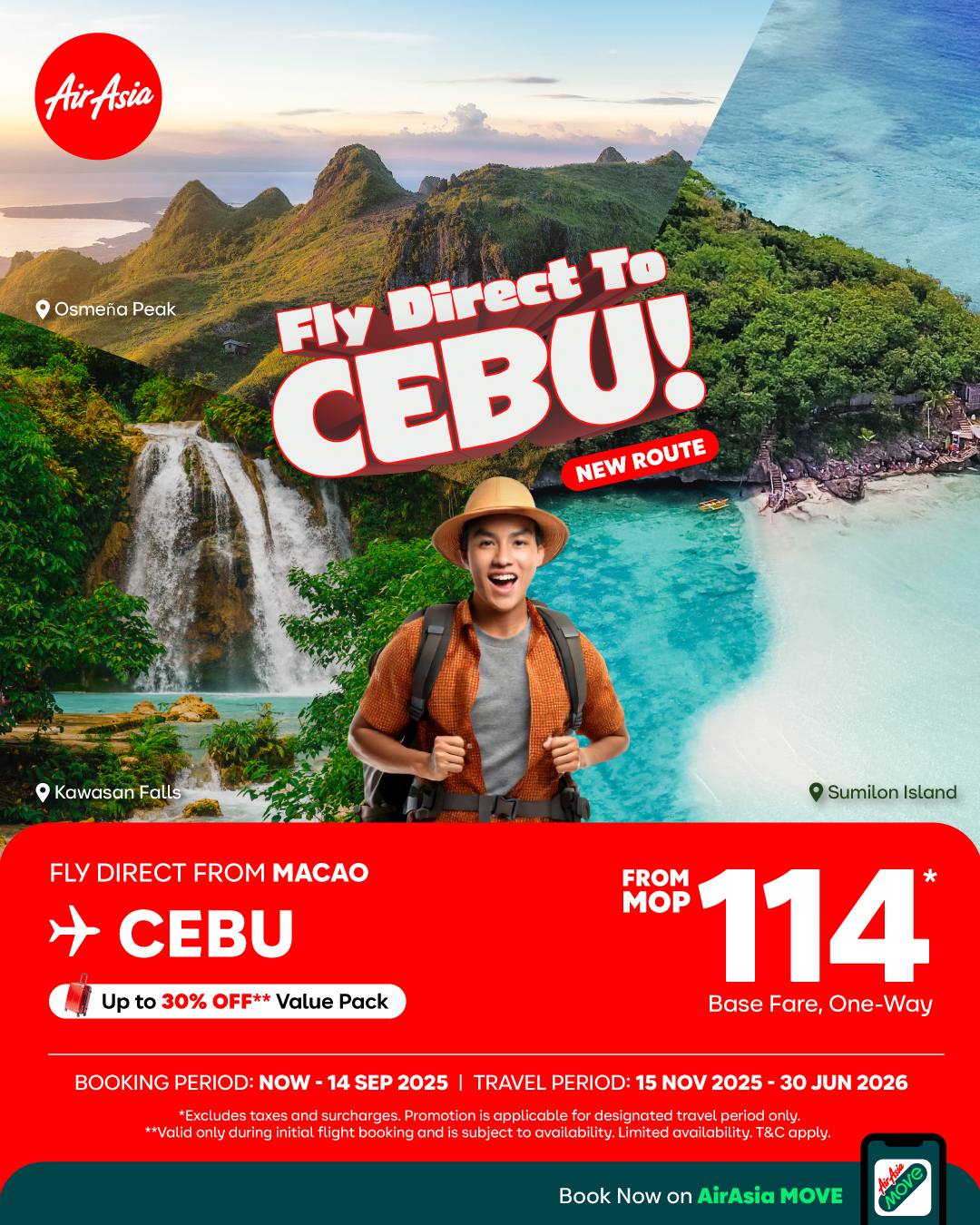
    AirAsia announces the much anticipated reopening of its Cebu hub, widening domestic and international connectivity from the Queen City of the South.

    The new direct service between Macao and Cebu, opening up affordable and convenient access to the stunning beaches and islands of the Philippines for residents of Macao, Hong Kong, and the Greater Bay Area.

    The new route, set to officially take off on 15 November 2025, will operate three times weekly between Macao and Cebu, connecting directly to AirAsia’s extensive domestic network from its reopened Cebu hub to destinations like Davao, Caticlan (Boracay), and Iloilo.

    From 3 to 14 September 2025, guests flying to and from Cebu and Macao can book through MOVE app from as low as MOP114* one-way base fare exclusive of fees and surcharges for travels between 15 November 2025 and 30 June 2026. Additionally, guests can enjoy a 30% discount on the Value Pack of the Essentials Add-on bundle.

    AirAsia Aviation Group Chief Commercial Officer Amanda Woo said, “The reopening of Cebu hub signals AirAsia Group’s strong commitment to the Philippines, exploring new gateways that will drive great economic opportunities. ”

    This Macao – Cebu new route offers a fantastic, affordable gateway for travelers from Macao and the Greater Bay Area to discover the pristine beaches and rich culture of Cebu and the wider Philippines, while also providing our Filipino guests with a convenient and budget-friendly link to explore Macao and Hong Kong. “ she added.

  • Aeon expands Vietnam footprint with first Mekong Delta shopping centre

    Aeon expands Vietnam footprint with first Mekong Delta shopping centre

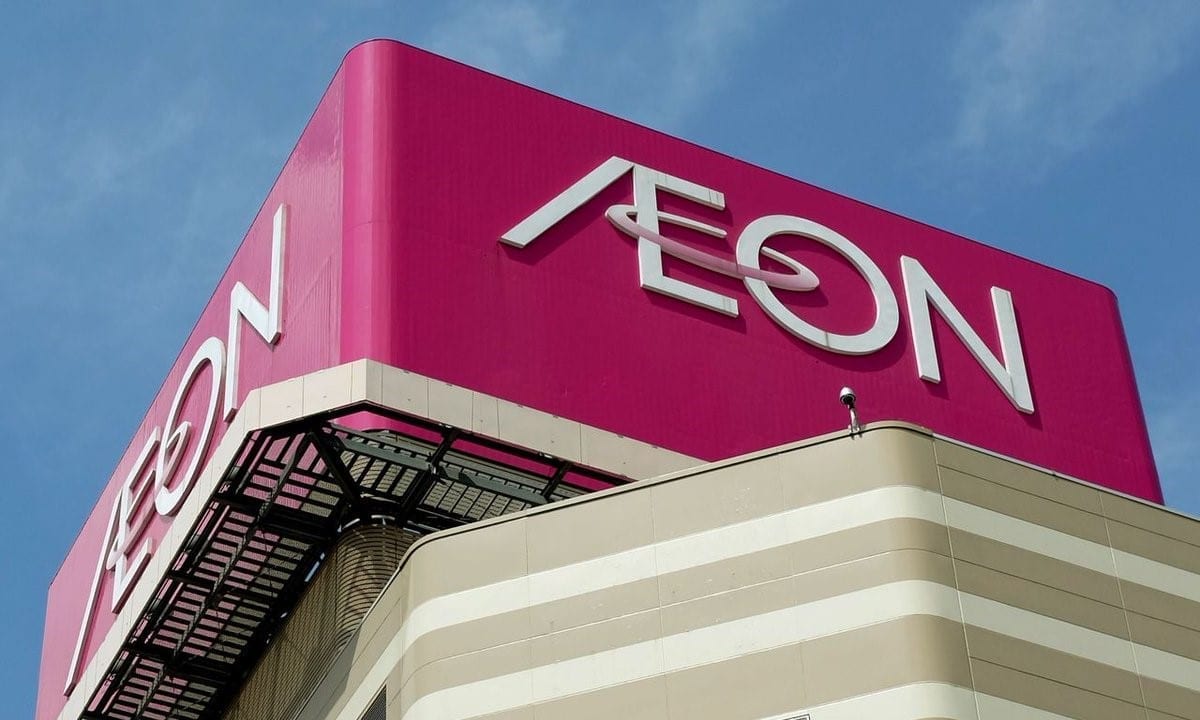
    Japanese retail conglomerate, Aeon, is set to boost its footprint in Vietnam by launching its eighth shopping complex, Aeon Tan An, marking its first entry into the Mekong Delta region.

    Operational Launch and Location

    The center is slated to commence operations on September 23, before officially launching on October 4. The mall is strategically positioned in the administrative region of Tay Ninh province, located on the bustling Hung Vuong artery, in close proximity to the National Highway 1A and a mere 1km from the significant Ho Chi Minh City-Trung Luong Expressway.

    Community-Oriented Design

    The project embodies Aeon’s “Daily Community Park” concept, blending contemporary aesthetics with green spaces and a community-focused layout. To augment the natural ambience of the center, around 11,000 plants have been integrated throughout the complex, paired with spacious seating areas and an alfresco terrace.

    Tenant Profile and Facilities

    The new center will accommodate approximately 30 retailers, a significant 80% of which are making their debut in the Mekong Delta. The retail mix will be anchored by the Aeon General Merchandise Store and will feature a diverse range of outlets including fashion and sports stores, cafes, eateries, bookstores, a cinema, and various entertainment facilities.

    The company statement emphasized the vision of Aeon Tan An as more than just a shopping and entertainment hub, but as a place where people can naturally come together and connect on a daily basis. It further highlighted the opportunities for every family member to explore unique experiences, savor enjoyable moments in a contemporary shopping environment, and benefit from high-quality services and varied entertainment amenities.

    Aeon’s current portfolio includes shopping centers in major Vietnamese cities such as Ho Chi Minh City, Hanoi, Hai Phong, and Binh Duong.

    Questions & Answers

    What is Aeon’s new project in Vietnam?
    Aeon’s latest project in Vietnam is the Aeon Tan An shopping mall, which will be their eighth shopping center in the country and their first in the Mekong Delta region.

    What is the concept behind the design of Aeon Tan An?
    The design of Aeon Tan An embodies Aeon’s “Daily Community Park” concept, which combines modern design with green spaces and a layout focused on community engagement.

    What kind of facilities and stores can visitors expect at the new Aeon Tan An shopping mall?
    Visitors to the new Aeon Tan An shopping mall can expect a variety of outlets including fashion and sports stores, cafes, eateries, bookstores, a cinema, and various entertainment facilities.

  • South Korean Fashion Retailer Musinsa Teams Up With Anta Sports To Expand Into China

    South Korean Fashion Retailer Musinsa Teams Up With Anta Sports To Expand Into China

    Musinsa, a fashion retailer from South Korea, has recently expanded its operations into China, thanks to a collaboration with Anta Sports. By creating a joint venture known as Musinsa China, the two companies aim to stimulate growth in both online and physical store outlets. Majority ownership (60%) of the joint venture will be held by Musinsa, while Anta Sports will possess the remaining 40%.

    Advancing Korean Fashion in China

    Musinsa currently collaborates with over 1500 brands on its platform and intends to use this new venture to assist Korean designer labels in making their debut in China. According to Musinsa’s CEO, Joonmo Park, this alliance merges Musinsa’s knowledge of fashion with Anta’s expertise in retail and brand management.

    Park enthusiastically shared his vision for the partnership, stating that it would utilize diverse retail channels to provide Chinese consumers with unique brand experiences. He expressed eagerness to captivate young consumers in the vibrant Chinese market.

    Roles and Responsibilities

    The implementation of Musinsa Standard, the retailer’s private-label line, and the Musinsa Store will be managed by Musinsa China. Meanwhile, Anta Sports will oversee strategic and financial aspects of the venture through its representatives on the joint venture’s board.

    Co-CEO of Anta Sports, Wu Yonghua, believes that the agreement aligns perfectly with Anta’s ‘Single-Focus, Multi-Brand, and Globalisation’ strategy. He stated their intention to integrate sportswear with fashion-forward design to better cater to the preferences of China’s younger generation.

    Anta Sports aims to use its value chain capabilities and successful ‘Brand + Retail’ operating model to empower Musinsa China. The goal is to deliver standout, style-conscious products to consumers interested in sports and lifestyle.

    The business transaction is set to be finalized by the end of the month, subject to approval from regulatory bodies.

    Questions & Answers

    What is the purpose of the partnership between Musinsa and Anta Sports?
    The partnership aims to advance the growth of both online and offline channels in China by creating a joint venture, Musinsa China.

    How does this partnership fit into Anta Sports’ business strategy?
    The collaboration aligns with Anta’s ‘Single-Focus, Multi-Brand, and Globalisation’ strategy, allowing them to integrate sportswear with fashion-forward design to cater to China’s younger generation.

    Who will oversee the operations of this new venture?
    Musinsa China will manage the implementation of Musinsa Standard and the Musinsa Store, while Anta Sports will handle strategic and financial oversight through its representatives on the board of the joint venture.

  • Yum China Unveils ‘Fried Chicken Brothers’: A New Twist On Fast-food With Chinese And Korean Flavors

    Yum China Unveils ‘Fried Chicken Brothers’: A New Twist On Fast-food With Chinese And Korean Flavors

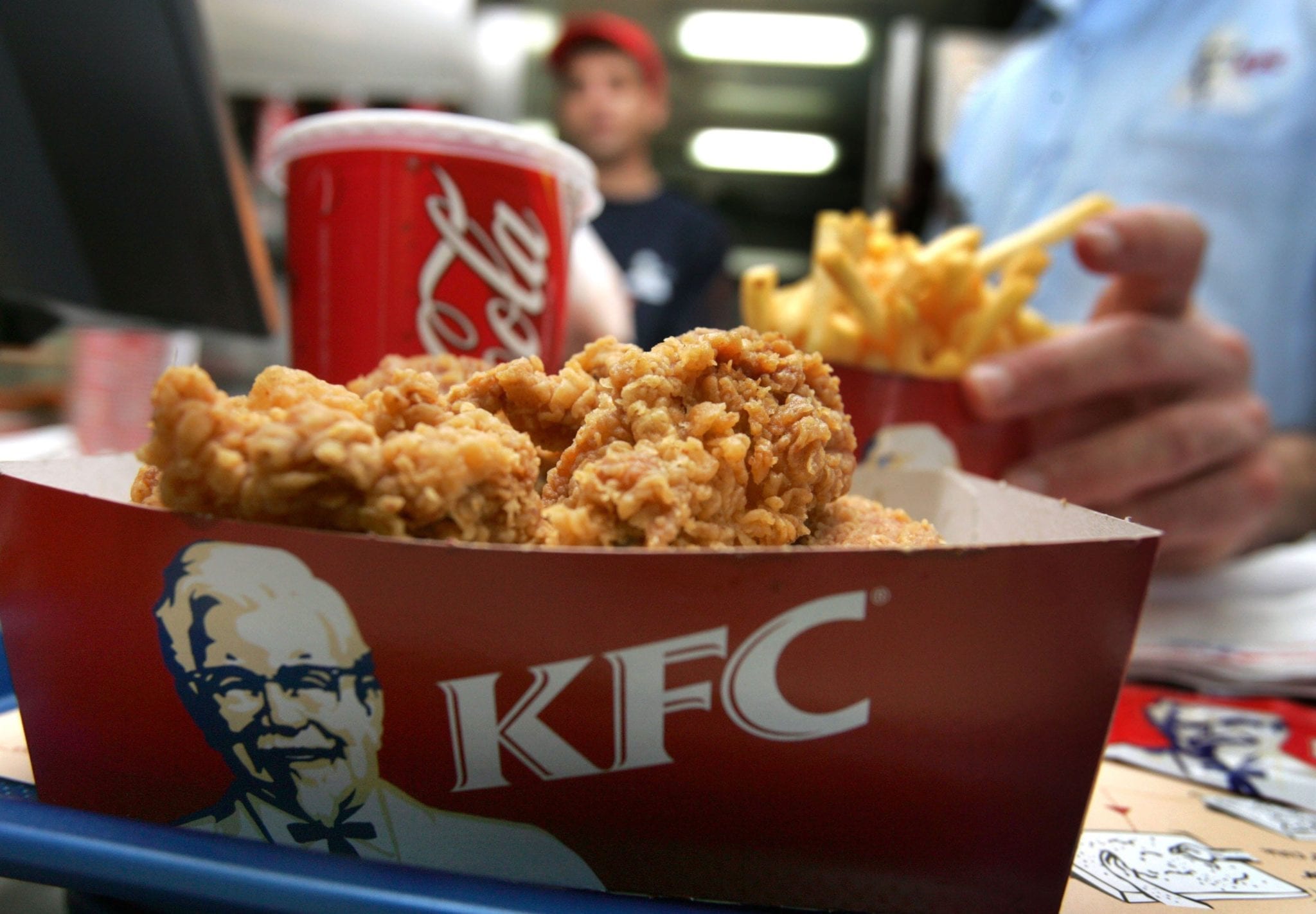
    Yum China, KFC’s operator in the country, has discreetly introduced a fresh pilot concept by the name of Fried Chicken Brothers, further diversifying its localized sub-brands.

    The pilot currently runs two compact stores in Shanghai, each approximately 20sqm in size, with a particular focus on takeaway and delivery services.

    The innovative brand presents two unique culinary adventures. One specializes in Chinese-style fried chicken, while the other embraces the distinct flavors of Korean-style fried chicken.

    The Chinese menu features dishes inspired by regional flavors, such as chicken spiced with Litsea cubeba, crispy chicken skin paired with chili, and chicken racks with a unique taste of Yanbian barbecue kimchi. The Korean-style shop, on the other hand, emphasizes boneless fried chicken, served with an array of bold sauces including creamy cheese, amber sweet and spicy, and honey mustard sauces.

    Based on user reviews, the average spending per person is estimated around 30 RMB (approximately US$4.12), positioning Fried Chicken Brothers as a cost-effective and flavor-rich alternative in the fast-food fried chicken market.

    This new addition expands Yum China’s increasing portfolio of KFC sub-brands in the country, which further includes KCoffee and Kpro. This move aligns with the company’s broader strategy of diversifying its offerings to cater to younger consumers and adapt to the ever-changing local tastes.

    Questions & Answers

    What is Yum China’s new pilot concept?
    Yum China has introduced a new pilot concept called Fried Chicken Brothers, which offers Chinese and Korean-style fried chicken.

    What does the Fried Chicken Brothers menu offer?
    The menu offers two distinct culinary experiences. The Chinese-style menu features dishes like Litsea cubeba-spiced chicken and Yanbian barbecue kimchi-flavoured chicken racks. The Korean-style menu focuses on boneless fried chicken with a variety of sauces.

    What is the positioning of Fried Chicken Brothers in the market?
    As per user reviews, the average spending per person is around 30 RMB (US$4.12), thus positioning Fried Chicken Brothers as an affordable and flavor-rich alternative in the fast-food fried chicken market.

  • Chinese Sweet Potatoes with Durian Flavor Fascinate Vietnamese Shoppers, Despite Higher Price Tag

    Chinese Sweet Potatoes with Durian Flavor Fascinate Vietnamese Shoppers, Despite Higher Price Tag

    In a curious culinary twist taking Vietnam by storm, “durian sweet potatoes” have captured the attention of food lovers across social media platforms since July. Vendors tout these unique spuds for their creamy texture and sweet flavor reminiscent of the notoriously pungent durian.

    Hong Anh, a food store owner in Ho Chi Minh City’s District 12, recalls her initial skepticism when suppliers first introduced her to the product, especially given its steep price point. However, after sampling the sweet potatoes herself, she discovered their chewy, delectable nature that “melts” in the mouth, prompting her to add them to her offerings.

    “In just half a month, I sold about 300 kilograms,” she noted, highlighting the appeal of the potatoes’ eye-catching appearance and uniform size. Customers are also drawn to them due to their intriguing name, creating a buzz in the market.

    Currently, Anh retails these sweet potatoes at VND96,000 (US$3.64) per kilogram—double the price of top domestic varieties and three times that of standard sweet potatoes. While these tubers are a staple in Vietnam, cultivated extensively in regions like the Central Highlands and Mekong Delta, they broke the bank when it comes to consumers checking their wallets.

    Last year, sweet potato exports brought in nearly VND900 billion, with farm-gate prices hovering between VND14,000 and VND16,000 per kilogram and retail prices ranging from VND25,000 to VND50,000. The growing demand for the Chinese variety has seen distributors like To Khuyen from Lao Cai Province, near the China border, importing thousands of boxes within just a month. Initially priced over VND100,000 per kilogram due to low supply, she has now lowered prices by 15%. “Since early July, these sweet potatoes have been flying off the shelves. Wholesalers snap them up as soon as the trucks arrive,” she shared.

    Beyond their enticing flavor, the potatoes boast thick, easy-to-peel skin and come packaged in chic cardboard boxes—making them a hit for consumers looking for both taste and aesthetics. Despite this, they remain somewhat of a niche offering. Representatives from the Thu Duc and Hoc Mon wholesale markets in Ho Chi Minh City remarked they haven’t introduced these varieties yet, focusing solely on local options.

    As excitement builds around these sweet potatoes, some market sellers urge caution regarding new products with unclear origins. According to the Guangdong Provincial Information Portal in China, these sweet potatoes belong to a variety called Xinxiang, or mini sweet potatoes, which have been cultivated since 2007 in southern provinces like Zhejiang and Guangdong, with farmers receiving between CNY13-16 ($1.82-2.24) per kilogram.

    Questions & Answers

    How are “durian sweet potatoes” different from regular sweet potatoes?
    These sweet potatoes are known for their chewy texture and sweet flavor, resembling that of durian, which sets them apart from traditional varieties.

    Why are these sweet potatoes priced significantly higher than local varieties?
    Their pricing reflects a combination of factors, including their imported nature, unique culinary qualities, and increasing demand among consumers curious about novel products.

    What challenges do consumers face with these new sweet potatoes?
    Some market sellers express concerns about the origins of these imported sweet potatoes, prompting consumers to be cautious when trying new and unfamiliar products.