Author: Mei Ling Tan

  • IoT revenues jump 19% to $8b in Q4’16

    IoT revenues jump 19% to $8b in Q4’16

    Nearly all tracked IoT segments recorded double-digit growth in the fourth quarter of 2016, driving an overall 19% year-to-year revenue gain to $8.2 billion for the 29 companies benchmarked in Technology Business Research Inc.’s (TBR) Commercial IoT Benchmark.

    Cloud services was the benchmark’s fastest-growing segment, at 64% year-to-year as customers increasingly adopted centralized analytics, storage and other intensive computing applications such as artificial intelligence (AI) and machine learning.

    The experimentation on the edge and the necessity of hybrid IoT are also delivering ICT infrastructure a more permanent position in the IoT stack, rather than it being a victim of cloud-based IaaS. The ICT infrastructure segment grew 7% year-to-year to 10% of total benchmarked revenue.

    IT services grew 14% year-to-year and remains a crucial component of the IoT market due to the necessity of build, run and training services in IoT. However, IT services revenue growth decelerated from 15% year-to-year in the second quarter of 2016.

    Business consulting grew 29% year-to-year. TBR believes business consulting will be less impacted by standardization, prepackaged solutions and AI due to the complex knowledge and creativity necessary to guide transformation.

    The security and connectivity segments, necessary aspects of an IoT solution, grew 28% and 16% year-to-year, respectively. Both of these segments’ revenues scale extremely close to IoT adoption — as more devices and sensors are deployed by customers the more security and connectivity are required.
  • AirAsia joins WFA’s global leadership team

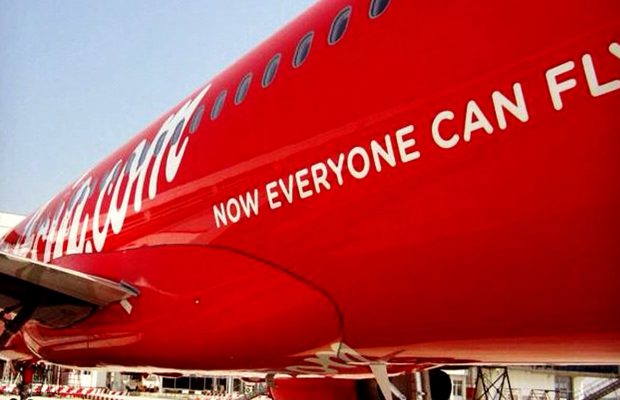
    AirAsia joins WFA’s global leadership team

    The World Federation of Advertisers (WFA) has appointed new members to the global leadership team. These appointments include senior marketers from AirAsia, Coty, Emirates, L’Oréal and RB.

    The new members of the team include Margaret Au Yong, director of media at AirAsia; Lubomira Rochet, chief digital officer at L’Oréal; Alison Keith, vice-president, global media at Coty; Boutros Boutros, divisional senior vice-president, corporate communications, marketing and brand at Emirates, and Andrea Bernhardt, global media director at RB. Phil Smith, newly appointed CEO of the British Advertisers Association (ISBA) and Ander Ericson, CEO of Sveriges Annonsörer, the Swedish Advertiser Association have also joined WFA Executive Committee.

    Ericson has been appointed as the treasurer. Meanwhile, David Wheldon, CMO of RBS and Matthias Berninger, vice-president of public affairs at Mars, have been both elected for another term as president and deputy president respectively.

    The committee brings together senior marketers and public affairs executives to reflect the dual mission of the WFA: to help marketers be more effective and efficient in terms of their marketing spend. It also helps brand owners protect and future-proof their license to operate through advocacy and effective advertising self-regulation.

    As such, the committee includes representatives from multi-national brand owners as well as heads of national advertiser associations.  “One of the many strengths of this organisation is the way that so many senior, knowledgeable executives are willing to share their time and insights to help identify and tackle the many common challenges brand marketers face,” said Stephan Loerke, CEO, WFA.

  • Sadleirs Global Logistics accredited as an ‘Australian Trusted Trader’

    Sadleirs Global Logistics accredited as an ‘Australian Trusted Trader’

    Sadleirs Global Logistics has announced that it is the ‘first’ national customs brokerage and international freight forwarder to be fully accredited as an ‘Australian Trusted Trader’ by the Australian Border Force.

    As one of Australia’s oldest family businesses (Sadleirs was founded in 1895), the certification is another pioneering milestone for the company. Sadleirs was selected due to its strong security practices and very long history of compliant behaviour.

    The ‘Australian Trusted Trader’ is a trade facilitation initiative and Authorised Operator (AEO) programme that recognises businesses with a secure supply chain and compliant trade practices. It also provides accredited businesses with a range of trade facilitation benefits. Through this recognition, Sadleirs will now have a dedicated contact within the Australian Border Force, receive a priority service and prioritised examination clearance.

  • Nokia, University of Technology Sydney team on IoT projects

    Nokia, University of Technology Sydney team on IoT projects

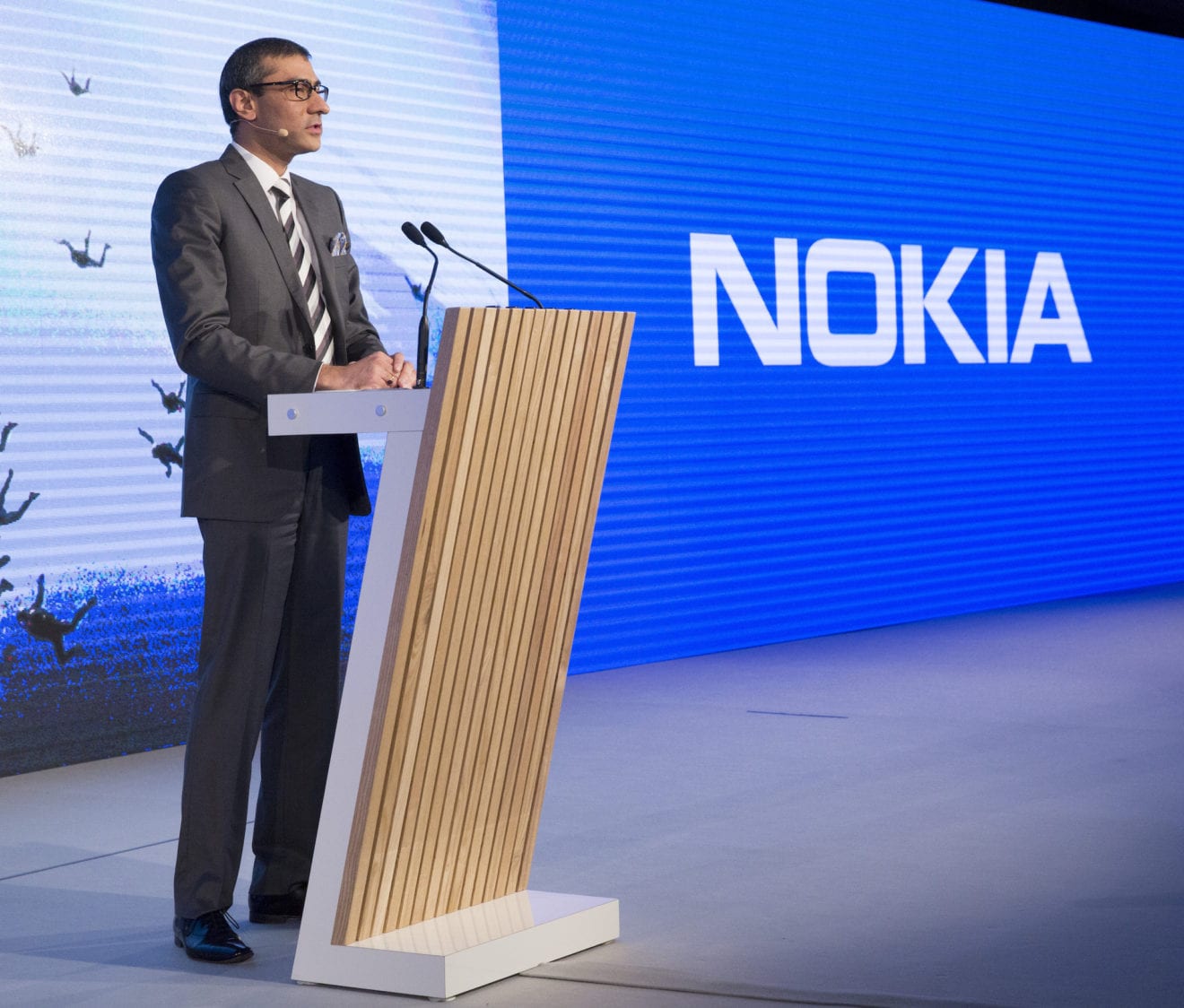
    Nokia and the University of Technology Sydney (UTS) have signed a MoU under which Nokia will join the university’s UTS: Rapido, a new technology development unit.

    The two partners will collaborate on developing IoT-based business applications using high-speed, ultra-low latency technologies such as 5G.

    In the technology partnership with UTS: Rapido — established to help businesses unlock the potential of IoT — Nokia will work on advanced engineering projects that support the development of future network services to address the specific technological challenges of service providers and enterprises.

    Nokia and UTS will also explore the expansion of the advanced engineering activity into new areas of innovation and proof-of-concept development.

    The MoU covers the creation of a collaborative innovation and training facility at UTS, for which Nokia will provide IP routing, optical, fixed and 4G and 5G mobile network components, and applications and analytics platforms for project work and training. Nokia will also participate in the advisory board of the UTS Faculty of Engineering and Information Technology.

    In one of the first UTS: Rapido projects, researchers at the university are integrating video downloads filmed around the world using the Nokia OZO virtual reality camera into the UTS 3D Data Arena. This will show how operators could combine 3D footage with real-time data and graphics to explore new services and business opportunities.

    “This association will allow us to contribute our expertise in areas such as 5G, IoT and data analytics, through UTS: Rapido, to help Nokia’s customers unlock the potential of emerging digital capabilities,” said Myriam Amielh, associate dean for external engagement at UTS.

    Ray Owen, head of Oceania at Nokia, said the successful implementation of IoT and the connectivity of potentially billions of devices will rely on the deployment of technologies such as enhanced 4G and high-speed, low-latency 5G.

  • Mobileye in deal with Nissan to create maps for self-driving cars

    Mobileye in deal with Nissan to create maps for self-driving cars

    Israeli autonomous vehicle technology firm Mobileye said on Tuesday it forged an agreement with Nissan Motor to create next generation maps to enable safe self-driving cars.

    The deal comes after a successful trial last year that culminated in Mobileye’s mapping technology being used in Nissan’s recent autonomous vehicle demonstration in London.

    “We now have significant commitments from multiple global automakers to generate and share data from camera-equipped ADAS (advanced driver-assistance systems) vehicles,” said Mobileye Chairman Amnon Shashua, adding the results will add to a global road map that is a critical feature of self-driving autos.

    Mobileye, which also is collaborating with German automaker BMW, is in the process of being acquired by Intel, which last month agreed to buy the company for $15.3 billion in a deal that promises to escalate the arms race among the world’s carmakers and suppliers to acquire autonomous vehicle technology.

  • Vietnamese consumers the most socially-conscious in Asia-Pacific

    Vietnamese consumers the most socially-conscious in Asia-Pacific

    Vietnamese consumers are the most socially-conscious in Asia-Pacific according to the Corporate Sustainability Report from Nielsen released on April 26. The report indicates that up to 86 per cent of consumers in Vietnam are willing to pay higher prices for products and services that come from companies that are committed to positive social and environmental impacts, compared to 76 per cent of consumers in Asia-Pacific.

    After Vietnamese, Filipino, Indonesian and Chinese consumers are the most socially-conscious in Asia-Pacific, with 85 per cent, 83 per cent, and 80 per cent of respondents, respectively, stating a willingness to pay extra for products and services that come from companies who demonstrate their commitment to having a positive impact on society and the environment.

    According to Mr. Rakesh Dayal, Head of Consumer Insight at Nielsen Vietnam, in the last couple of years, people have witnessed some of the negative impacts of adverse weather conditions and pollution on Vietnam’s living and business environments.

    Therefore, it would be difficult to find consumers who do not show concern for environmental and societal issues nowadays.

    In small and big ways, consumers are trying to be responsible citizens, and they expect the same from corporations.

    “Committing to sustainability might just pay off for consumer brands,” he said. “Integrating sustainability into their business models and objectives helps society and, at the same time, raises goodwill toward their brands.”

    He added that companies with strong reputations can outperform others when it comes to attracting top talent, investors, community partners, and, importantly, consumers.

    The survey indicates that the top sustainability factors influencing the purchasing intentions of Vietnamese consumers are high-quality products (79 per cent), products known for their health and wellness benefits (77 per cent), and products made with fresh, natural and/or organic ingredients (77 per cent).

    Moreover, products known for their high standards of safety carry quite similar weight with consumers in Vietnam (76 per cent).

    “Finding opportunities to bridge health benefits and the ingredients that support the claim is a powerful and impactful way to connect with consumers,” Mr. Dayal advised.

    Equally important among consumers in Vietnam is brand trust. Seventy-five per cent of Vietnamese consumers indicate they would buy products from a brand or company that they trust.

    When it comes to purchasing intentions, a commitment to the environment has the power to sway product purchases for 62 per cent of consumers in Vietnam.

    Commitments to either social values or the consumer’s community are also important, influencing 61 per cent and 62 per cent of respondents, respectively.

    “We are seeing a change in the hierarchy among drivers of consumer loyalty and brand performance,” Mr. Dayal observed.

    “Commitments to social and environmental responsibility are surpassing some of the more traditional influences for many consumers. Consumer-goods brands that fail to consider this run the risk of falling behind.”

  • Indonesia`s exports of textile  and textile products growing

    Indonesia`s exports of textile and textile products growing

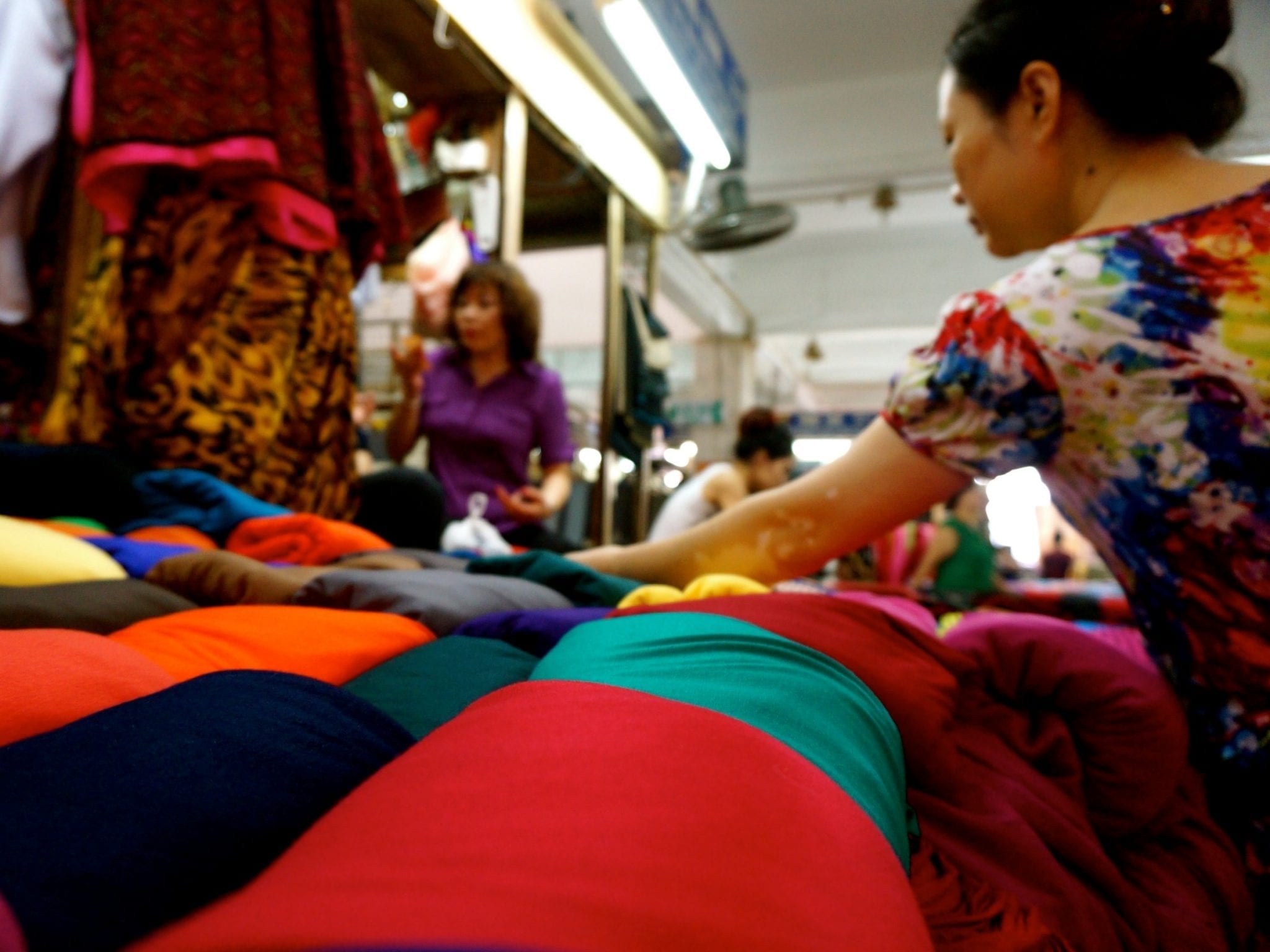
    Indonesias exports of textile and textile products (TPT) were valued at US$2 billion in the first two months of this year or 3 percent higher than in the same period last year.

    “TPT industry is a labor industry providing jobs for around 3 million people that it could serve as a social safety net,” Industry Minister Airlangga Hartarto said in a statement received here on Monday.

    Airlangga said in 2016 investment in TPT industry was worth Rp7.54 trillion with exports valued at US$11.87 billion employing 17.03 percent of workers in the manufacturing sector.

    The minister said he was optimistic the countrys TPT industry could compete well globally especially as the industry has been integrated from upstream to downstream sectors.

    The minister, however, said the industry needs revitalization as the majority of factories now use old machines especially weaving and knitting factories. The machines need replacement as they are no longer efficient .

    “Revitalization, we have begun by using new machines and equipment has shown positive result , but the program has to be continued,” he said.

    In addition, economic policy packages already issued by the government should be utilized by TPT industrialists by increasing investment, otherwise, in five years, the countrys TPT industry would find it more difficult to face competition such as from India, China, Vietnam and Bangladesh, he said.

    He said currently the Industry Ministry is preparing a special regulation on fiscal incentive in the form of fiscal allowance for export oriented labor intensive industry. Industrialists will have income tax discount to be used for business expansion, he added.

    He said the Industry Ministry is seeking comprehensive cooperation agreement with Europe and the United States in the hope of benefit in the form of better tax facility.

    He said small industries would also be facilitated to boost exports.

    Director General of Chemical, Textile and Multifarious Industries Achmad Sigit Dwiwahjono said imports of cloth are also a challenge hampering investment in TPT industry. The Industry Ministry, therefore, is teaming up with the trade Ministry to curb textile imports to protect the country TPT industry.

    In addition, the Industry Ministry encourages investment in the upstream sector to back up the domestic textile industry, Sigit said.

  • Indian cars cheapest, French most expensive in Vietnam

    Indian cars cheapest, French most expensive in Vietnam

    For many Vietnamese, Indian cars prove to be the best choice. The products are described as ‘unprecedentedly low’ with the import price of VND84 million, CIF, not including tax.

    A GDC report shows that in January 2017, Vietnam imported 5,425 cars, worth $97 million, an increase of 120.8 percent in quantity and 92 percent in value compared with the same period last year.

    The report showed the sharp increase of 233 percent in imports form ASEAN with 3,408 cars imported, accounting for 62.8 percent of less-than-nine-seat imports, which were mostly from either Thailand or Indonesia. These included 1,585 cars from Thailand, worth $31 million, an increase of 55 percent in quantity and 209 percent in value.

    The number of cars from Indonesia increased unexpectedly to 1,823, worth $35 million. Only one car came from the market last year, worth $10,000.

    From January 1, 2017, the tariff on CBU less-than-nine-seat cars from ASEAN was cut from 40 percent to 30 percent.

    A car dealer said the import volume increased sharply because domestic automobile manufacturers have stopped making some car models in Vietnam, such as Fortuner and Civic, but import them from ASEAN to sell domestically.

    The public is more concerned with the appearance of a new source of supply – India. 1,006 cars from India docked at Vietnam’s ports in January, with the average price of $3,708, or VND84 million only. However, Indian imports cannot enjoy preferential tariffs like products from ASEAN.

    In mid-2016, the average import price was VND160 million. The figure decreased to VND100 million in late 2016 and then to VND84 million in January 2017.

    Contrary to all predictions, the most expensive imports are the ones from France, not from Germany or the UK, which produce many luxury brands.

    Only six CBU cars from France were imported to Vietnam in January 2017, worth $342,000, which means the average import price was $57,000, or VND1.3 billion.

    In Vietnam, the products of two French brands – Renault and Peugeot – are distributed.

    Meanwhile, 27 cars from the UK came in January, worth $1.349 million, and 146 cars from Germany, worth $7.624 million, which meant the average import price was $52,220 for British cars and $49,998 for German cars.

  • Google Play Indonesia Games Contest announces winners

    Google Play Indonesia Games Contest announces winners

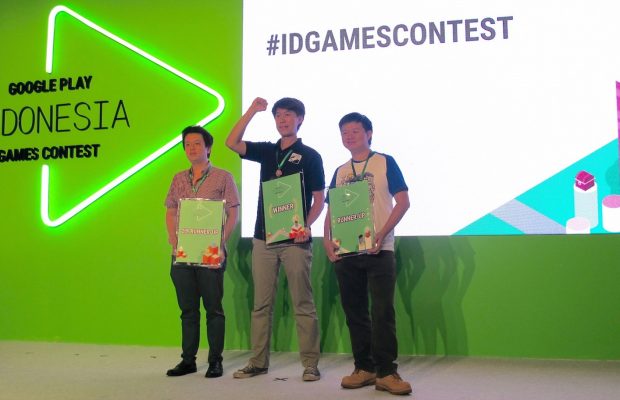
    Google on April 26 announces the winners of the Google Play Indonesia Games Contest in Jakarta. Hundreds of entries from local Indonesian developers were submitted to this competition which celebrates the spirit and great potential of local game developers.

    The 15 finalists were invited to showcase their submissions at this offline gaming expo for industry experts, Google executives and gaming enthusiasts from across Indonesia, giving them a chance to get their games noticed by the right audience.

    Before announcing the winners, the audience heard from the panel of expert judges about just how important this type of event is when it comes to nurturing developers. The audience then participated in interactive live voting to choose the winners.

    The top three winners are Warung Chain: Go Food Express followed by Tahu Bulat and Vimala: Defense Warlords.

    All three winners were given an Android TV set with 4K resolution.

    Warung Chain: Go Food Express will also be featured in an Android Developer Story video produced by Google Play and promoted on Android Developer / Play Developer channels.

    The goal of the first Indonesia Games Contest was to help nurture the local gaming ecosystem. Google Play believes that with the right support, Indonesia’s talented game developers have the potential to build even more successful businesses and enter the top ranks of game developers globally.

    Google Play Indonesia head of Business Development David Yin says, “We believe that more Indonesian developers have the talent and the drive to break into the global market and make it to the top ranks.

    “I see first-hand how much promising talent there is in Indonesia and we are committed to helping developers of all sizes get discovered and reaching gaming enthusiasts locally and globally.”

    Google Play provides developers with access to more than one billion users worldwide. The Google Play Games Contest is an initiative by Google to help Indonesian developers develop, grow, and earn in the global market.

  • President makes three pleas to creative industry entrepreneurs

    President makes three pleas to creative industry entrepreneurs

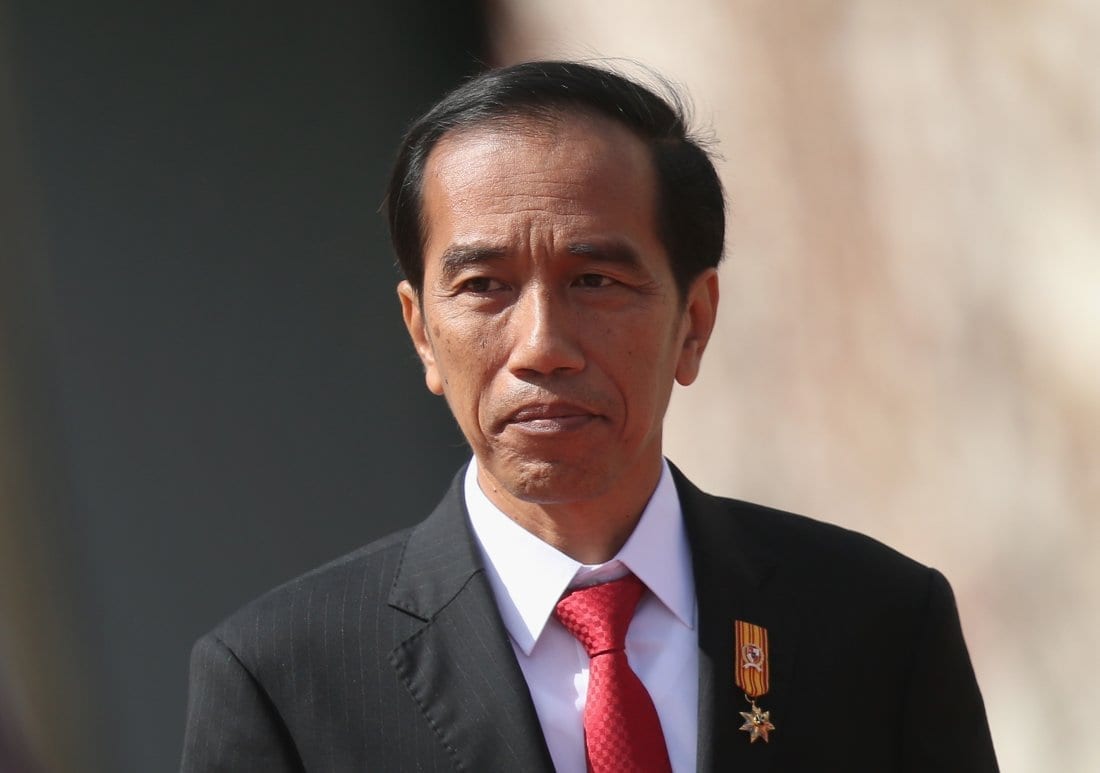
    Indonesian President Joko Widodo (Jokowi) has made three pleas to the industry entrepreneurs while inaugurating the Inacraft Exhibition 2017.

    “I have made three pleas to craft and creative industry entrepreneurs in Indonesia to keep their products on spec or meet the buyers specifications, keep the budget or price at a reasonable rate, and timely delivery of the products,” he stated at the Jakarta Convention Center on Wednesday.

    Inacraft exhibition, which will be held from April 26 to April 30, will exhibit products from 1,392 local and foreign participants. This year, Inacraft has taken Yogyakarta as the icon, under the concept “Magnificent of Yogyakarta” and the theme “From Smart Village to Global Market.”

    The second plea from the president was regarding the packaging of the products.

    “Do not forget the packaging. Make the best you can and make it interesting. This is important because most of time, the packaging is what attracts the buyers,” he added.

    His third plea was to deliver the goods on time.

    “The delivery to the consumers could be made easier with various logistics infrastructures that we already have,” he stated.

    Jokowi also pushed the entrepreneurs to make use of the governments people credits program (KUR).

    “I understand the entrepreneurs problems regarding capital. Therefore, I remind the people of the KUR program, which has an interest rate of nine percent only. Hence, the products should be made better to make the investment bigger. I think our credit programs have a competitive interest rate too,” he reiterated.

    Indonesian Exporter and Handicraft Producers (ASEPHI) data, the committee of the exhibition, remarked that the Inacraft 2017 attendees included 65.95 percent of independent individuals, 24.5 percent from the Tourism Department, 8.7 percent from BUMN, and the rest 6.07 percent from other countries such as Myanmar, Japan, Pakistan, Poland, and India.

    This year, Inacraft has set a target of retail business increase of 10 percent, which reaches Rp142 billion, commercial contract of US$12 million, and around 200 thousand buyers from various countries.

    Some of the products exhibited include batik, fashion apparels, accessories, jewelries, and other crafts.

  • Jokowi Strengthen Economic Ties with Hong Kong

    Jokowi Strengthen Economic Ties with Hong Kong

    President Joko Widodo, also known as Jokowi, has planned to strengthen bilateral cooperation between Indonesia and Hong Kong during a working visit to Hong Kong scheduled on April 30, 2017, after attending the ASEAN Summit in the Philippines on April 28 and 29, 2017.

    “We want to encourage Hong Kong business owners to invest in Indonesia, particularly in the field of infrastructure and creative industry,” Foreign Ministry spokesperson Arrmanatha Christiawan Nasir said during a press conference in Jakarta on Tuesday, April 25, 2017.

    As one of the largest economy in the region, Indonesia aims to strengthen economic ties with Hong Kong. Delegations of both countries will sign two memorandums of understanding on business collaborations and partnerships in the culture sector.

    Indonesia will also push an agenda to expedite negotiations related to the ASEAN-Hong Kong Free Trade Agreement, which is expected to increase the intensity of trades between ASEAN and Hong Kong.

    In 2016, the realization of Hong Kong’s investment in Indonesia reached USD 2.25 billion, significantly increasing from those realized in previous years that stood at around USD 691 million. The trade value between the two countries climbed to USD 3.9 billion in 2016 from USD 3.8 billion in 2015.

    President Jokowi will also discuss protections for Indonesian citizens in Hong Kong.

    “The President also pays attention to protections for our migrant workers. There are 172,000 Indonesian migrant workers in Hong Kong,” Armanatha revealed.

  • Giant ships begin to make a call at Jakarta’s Tanjung Priok

    Giant ships begin to make a call at Jakarta’s Tanjung Priok

    PT Jakarta International Container Terminal (JICT) in Tanjung Priok said it has entered a new era when it succeeded in serving a giant ship, the Otello of Frances Compagnie Maritime dAffretement – Compagnie Generali Maritime (CMA-CGM).

    “The ships of CMA-CGM are the largest ever making a call at Tanjung Priok,” Chief Executive of JICT, Gunta Prabawa, said here on Monday.

    Earlier, JICT was similarly successful in providing fast services for 2 other giant ships of CMA CGM – the Titus and Tancredi – with port productivity at the JICT of 27-30 Mph.

    Gunta described the visits by the giant ships as a new era of the appearance of more giant ships at the Jakarta port indicating that JICT has been ready to provide world class port services.

    “Global shipping companies have allowed their ships to berth at Tanjung Priok as they have confidence in our services,” Gunta said.

    The 334 meter long Otello had unloaded 1,551 TEUs of container goods at Tanjung Priok, he said.

    He said CMA-CGM has reached an agreement with PT JICT by opening new shipping service called the Java South East Asia Express Services/ Java SEA Express Services/ JAX Services.

    The weekly service will take the route of Tanjung Priok – West Coast (Los Angeles & Oakland) of the United States.

    “The first service of JAX Services began on 9 April, 2017 by the Titus of CMA-CGM. Indonesian exporters and importers are expected to utilize the service,” Gunta said.

    Earlier this month, President Joko Widodo said large ships would began to berth at Jakartas Tanjung Priok port after continued improvements in services by the port operator.

    “Soon or next week there will be a ship measuring 10,000 TEUS to call at Tanjung Priok,” Jokowi said when officially commissioning an access toll road to the countrys largest port.

    The president attributed the success in attracting large ships to Tanjung Priok to improved service including a significant cut in dwelling time.

    The dwelling time, needed for unloading, has been cut short to 3.5 days now from earlier up to six days. Long dwelling time had discouraged ships from making a visit to Tanjung Priok as it would mean losing time and an increase in berthing fee.

    The president himself stepped in to improve services, cut the red tape and simplify all procedures that reduce illegal levies earlier rampant at the port.

    The president said he hoped improvement in the port service would make Indonesia more competitive and the seas transport cost would be cheaper to and from Indonesia as large cargo ships could sail directly to and berth at Tanjung Priok.

    “The flows of goods could be much faster via Tajung Priok. Transit is no longer needed for imported container cargoes in Singapore,” he said, adding large container ships could be berthed at Tanjung Priok.

    Previously large ships carrying container goods for Indonesia have to make a transit in Singapore to unload the cargo to be loaded gain on smaller ships as Tanjung Priok could not yet accommodate large container vessels.

    The new access road would contribute to improving services at the port , Jokowi said, adding “This also helps improve the countrys competitiveness.”

    He said an estimated 3,600 containers would be transported via the 11.4 kilometer access road everyday.

  • Cebu Pacific joins Davao tourism program

    Cebu Pacific joins Davao tourism program

    The Cebu Pacific (CEB) has announced its participation in the largest travel event and tourism campaign in Davao region, the Visit Davao Fun Sale (VDFS). The carrier’s move is in support of the VDFS, which was launched four years ago, to promote Davao and peripheral areas in southern Mindanao as safe, enjoyable and exhilarating travel and adventure destinations for both local and foreign tourists.

    As part of the seven-week activities, CEB is flying-in top adventure travel bloggers and digital influencers from Singapore, Japan and South Korea to visit Davao and check out attractions such as the beaches in Mati City, Aliwagwag Falls and Eden Eco Adventure Park, go dolphin-watching off the coast of Mati, white-water rafting in the Davao River, pub-crawling in Davao’s city center, or shopping at the Aldevinco Center. “CEB takes pride in having the most flights to and from Davao. But more than the flights, we need to do our part to help entice tourists to fly to Davao and experience what the region has to offer.

    Davao and adjacent provinces have so much to offer tourists from all walks of life — from thrill-seekers to laidback travelers, families on vacation, barkadas on a getaway and even solo backpackers,” said JR Mantaring, CEB’s vice president for Corporate Affairs.

    Cebu Pacific has the most extensive domestic route network among Philippine carriers, with direct, inter-island connections to major tourist destinations. The carrier operates flights out of six strategically placed hubs in the country in Manila, Cebu, Davao, Clark, Kalibo, and Iloilo. Operating a hub in Davao, CEB has 141 flights to and from Davao, with six direct domestic routes (Cebu, Bacolod, Cagayan de Oro, Iloilo, Zamboanga and Manila) and a direct flight to Singapore. The airline’s extensive network covers over 100 routes and 66 destinations, spanning Asia, Australia, the Middle East, and United States of America.

    Launched in 2014, the Visit Davao Fun Sale is a partnership between local governments in the region, the Department of Tourism, other national government agencies and private enterprises to promote tour packages and unique experiences to tourists such as food and delicacy must-tries, as well as leisure and wellness activities. This year’s tours include special packages for Davao City, Island Garden City of Samal, Sta. Cruz in Davao del Sur where one of the trails to Mt. Apo is located, and the Hamiguitan Range and Wildlife Sanctuary. Since its launch, VDFS has helped push tourism growth in the region to double-digit levels, capping 2016 with 100,000 tourist arrivals. VDFS 2017 runs from April 16 to May 31.

  • NTT Com secures international license in India

    NTT Com secures international license in India

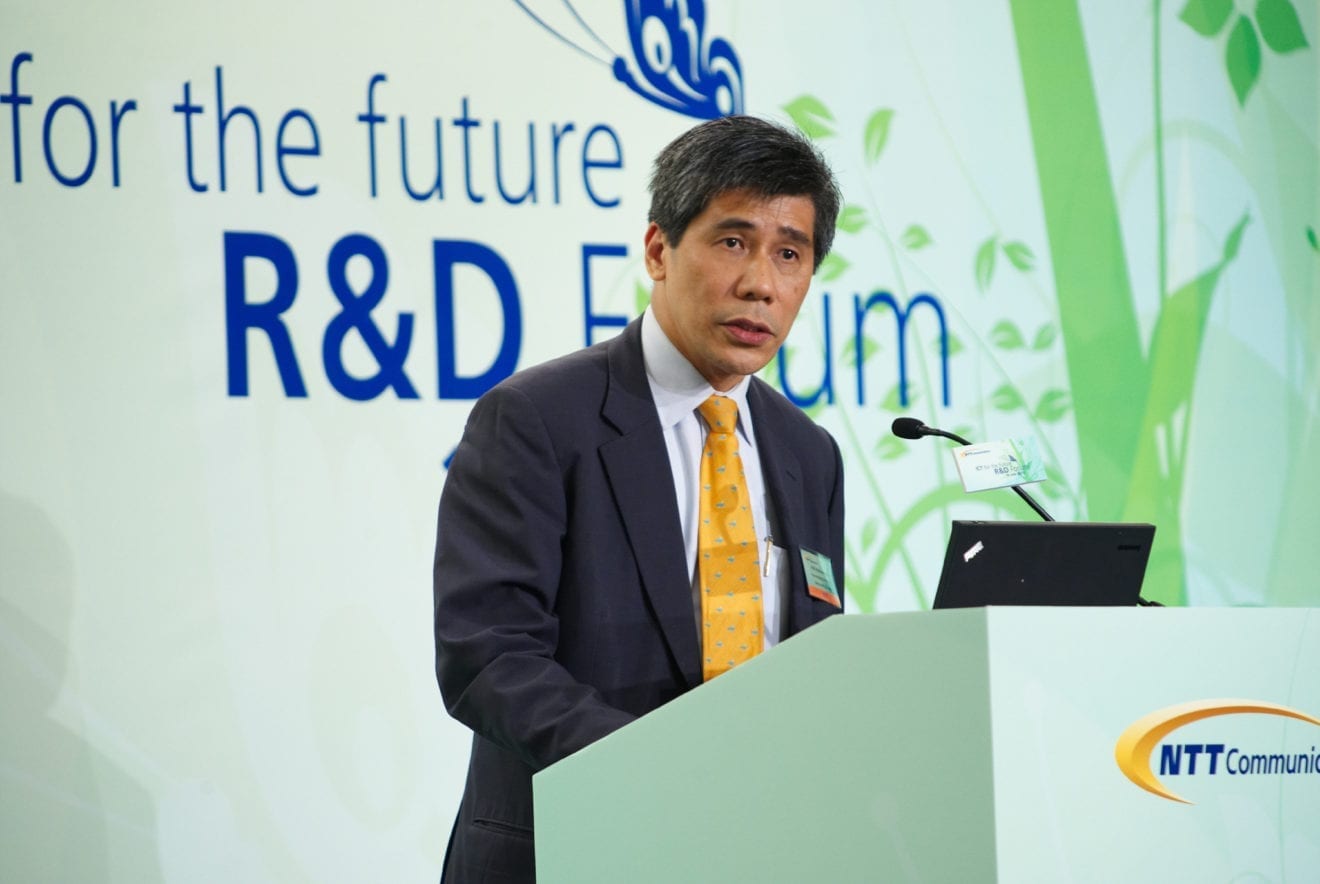
    TT Com has announced it has secured an international telecoms operating license in India via its affiliate NTT Communications India Network Services (NTTCINS).

    NTTCINS has secured a virtual network operator – international long distance (VNO-ILD) license in the market, becoming the first Japanese ICT provider to secure such a license.

    The acquisition will allow NTT Com to launch its Arcstar Universal One International Network Services in India, in addition to the national long distance network services it provides through NTTCINS.

    The company plans to offer a range of ICT solutions in the market, including WAN, LAN, data centers and value-added services. NTT Com also plans to enhance its network services and improve service quality in the market via closer relationships with local operators.

    NT Com has data centers in Chennai, Bangalore, Mumbai and Delhi. The company’s portfolio in India also includes colocation, managed hosting, cloud and ICT management services provided through affiliate Netmagic.

    “With the enhanced network capabilities coupled with managed hosting and cloud services, we are always committed to enable our customers to reap the maximum value from their technology investments,” Netmagic CEO Sharad Sanghi said.

    “This suite of offerings provides a robust value proposition as an ICT provider to meet our customers’ IT infrastructure and connectivity requirements.”

  • Jokowi optimistic of witnessing 10% growth in automotive industry

    Jokowi optimistic of witnessing 10% growth in automotive industry

    Indonesian President Joko Widodo (Jokowi) is optimistic that the automotive industry would attract more investors and grow over 10 percent annually.

    “Indonesias automotive industry is more competitive now and is growing on an average of more than 10 percent,” he remarked in Bekasi on Tuesday.

    President Jokowi expressed optimism in his remarks at the opening ceremony of PT Mitsubishi Motor Krama Yudha Indonesia (MMKI) at the Greenland International Center, Central Cikarang, Bekasi District, West Java.

    “With such a large market, I am certain that more investments will flow into the automotive sector of Indonesia, as we have a large market, and greater the investments, more employment opportunities will be available,” he emphasized.

    President Jokowi lauded Mitsubishi Motors commitment to increasing its investment by setting up a new plant in Indonesia, which will be able to offer jobs to around three thousand people.

    “This can provide employment to some three thousand people. Once again, three thousand job opportunities,” the president pointed out.

    Hence, Jokowi is committed to easing the flow of investments, particularly in the automotive sector, considering its impacts on the economic growth.

    “The inflow of investments will create more job opportunities, and it means more people will have jobs,” he stated.

    However, the president highlighted the importance of the quality of human resources to meet the high standards of the automotive industry.

    He pointed out that the government is taking steps to boost economic development by providing skilled manpower through vocational schools.

    “Here, we will strengthen vocational education, vocational schools, as well as vocational training, entrepreneurship, and the labor market,” he affirmed.

    “The government will continue to implement policies that link and match or job matching between vocation and the industry,” the president noted.

    Investment in industry will also allow the transfer of technology and knowledge to Indonesia. Hence, President Widodo has urged the employees to use the opportunity extensively.

    “I hope you will also pay attention to the transfer of technology and knowledge. Continue conducting trainings for the local human resources, and it will be better if the Japanese work ethics, such as high discipline, can be imbibed by Indonesian human resources,” he said.

    “Do not hesitate to involve the Indonesian people in creating new innovations, as they are all actually smart,” added Jokowi.

    In addition, President Jokowi is optimistic that the automotive industry would begin developing its export market.

    “The local or domestic market is large, but we also need to focus on the export market to achieve a balance,” he pointed out.

    Some VIP guests also attended the opening ceremony with President Jokowi, including Minister of Industry Airlangga Hartarto, Minister of State Secretary Pratikno, Head of the Investment Coordinating Board Thomas Lembong, Vice Minister of Finance Mardiasmo, Vice Governor of West Java Deddy Mizwar, and Chairman of Mitsubishi Motors Carlos Ghosn.