Author: Mei Ling Tan

  • Mobile app marketer MobAir to open Shanghai office

    Mobile app marketer MobAir to open Shanghai office

    MobAir is taking eMarketer’s prediction that total mobile ad spend in China will climb 58% in 2017 seriously.

    The mobile growth platform for brands, which counts AliExpress, Trivago, and Baidu as clients, is investing in Shanghai with a new office.

    The office will allow the startup to offer personalized services to local partners and broaden its footprint.

    Through MobAir, China-based CMOs will be able to take advantage of the company’s portfolio of user acquisition mobile services.

    “China’s app economy is accelerating in growth, putting it within striking distance of Japan and the United States,” Barak Aviad, CEO of MobAir said in an announcement.

    “Gaming apps are the biggest market winners regarding revenue. Therefore, our company, equipped with years of experience in utility and gaming verticals, sees enormous potential in the Chinese mobile market in terms of app advertising growth,” he added.

    MobAir has worked with leading brands in social casino and gaming to roll out successful campaigns on mobile.

    Launched in 2015 and a Global Digital Marketing Group company, it offers a performance-based mobile app marketing platform for large-scale user acquisition.

    Its native advertising solutions target premium customers and drive loyalty.

    MobAir is no stranger to China. The company has worked Chinese advertisers and publishers since its launch. According to the announcement, the company is looking expand its list of clients with China’s gaming giants.

    With the new Shanghai office, the company now operates six offices across Asia, Europe, and the Middle East.

  • Fiat Chrysler may add more self-driving supplier partners

    Fiat Chrysler may add more self-driving supplier partners

    Fiat Chrysler Automobiles may seek more supplier partners to help it develop and build self-driving vehicles, Chief Executive Officer Sergio Marchionne said on Wednesday.

    The Jeep and Ram brands are strong enough to exist as standalone entities outside FCA, Marchionne also said on a conference call with analysts after the company reported record first-quarter results. But he did not elaborate on whether there were any plans for a spin-off of either, like with Ferrari.

    The automaker reported an 11 percent jump in first-quarter operating profit, boosted by strong sales in North America, its most profitable market. Shares jumped about 10 percent on the news.

    FCA currently has a partnership with Alphabet Waymo self-driving unit. Marchionne said Waymo has an “unbeatable solution” to help build self-driving vehicles, including versions of the Chrysler Pacifica hybrid minivan, but that FCA is looking at additional partners.

    “Between now and the next three years, we need to provide viable solutions to take people around,” Marchionne said, citing Waymo’s new test program in Phoenix offering ride sharing in self-driving Pacificas.

    But FCA is considering more partners “because banking all of our solutions on one possible outcome is going to be disastrous,” Marchionne said. FCA continues to work with Waymo “in a very intense way,” he said, but “we need to look at optionality in more than one dimension” to build self-driving cars.

    FCA is retooling several U.S. plants to produce redesigned versions of the popular Jeep Wrangler and Ram 1500 pickup later this year and early next. Marchionne said the company would continue to produce several versions of the current models for several months in 2018 after the new versions begin production.

    New models from premium brands Maserati and Alfa Romeo should help boost FCA’s gross margins. Marchionne said Alfa, long a cash drain on the company, could be profitable in the fourth quarter, while Maserati has returned double-digit margins over the past three quarters. Both brands have launched new luxury utility vehicles in the United States.

    Marchionne said FCA hopes to resolve emissions certification issues “in a few weeks” with the U.S. Environmental Protection Agency and the California Air Resources Board.

    In the meantime, he said FCA will try to meet future emissions regulations without relying so heavily on diesel engines, but with a combination of gasoline engines and electric motors.

  • Malaysia Airlines offers to lease A330s from Alitalia

    Malaysia Airlines offers to lease A330s from Alitalia

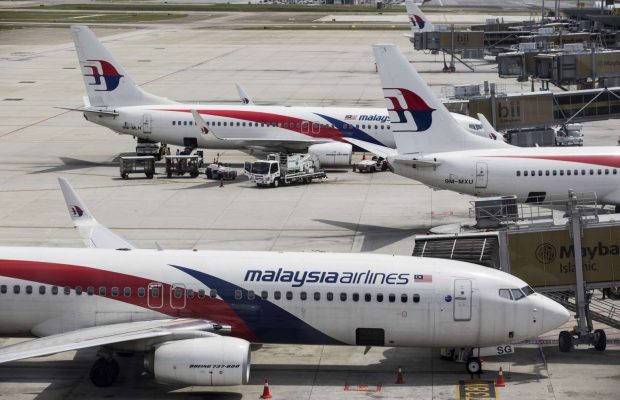
    Malaysia Airlines has offered to lease Airbus A330 jets from Alitalia if the struggling Italian airline is wound up, the Asian carrier’s chief executive told on Wednesday.

    Alitalia is preparing for special administration proceedings after workers rejected its latest rescue plan, making it impossible for the loss-making airline to secure funds to keep its aircraft flying. Workers are hoping the Italian government will step in with an alternative rescue deal.

    Malaysia Airlines could take between six and eight Airbus A330s from Alitalia, CEO Peter Bellew told in Dubai.

    An Alitalia spokesman declined to comment.

    Malaysia Airlines is emerging from a turnaround after twin tragedies since 2014, when flight MH370 disappeared in what remains a mystery, and flight MH17 was shot down over eastern Ukraine.

    Its load factors – or how full its planes are – averaged around 80% in the three months to March 31, Bellew said.

    Malaysia Airlines wants to lease between six and eight A330s or Boeing 777s for use from 2018 and a further seven to nine for 2019, he said.

    This is an increase on the six for 2018 and six for 2019 he told last month he was interested in.

    “The world really is awash right now” with large aircraft, Bellew said. “There are really good deals out there at the moment. It’s a buyer’s market right now.”

    Bellew also said he planned to make a decision on an order for 30-35 new Airbus A330neo or Boeing 787-9 widebody planes in the next four to six months to replace its A330s from the end of 2019.

    “If the prices are good … we will do an order,” he said. “But if the price isn’t right, we won’t do it.”

  • Nokia narrows losses for Q1

    Nokia narrows losses for Q1

    Nokia has reported a first quarter net loss of €435 million ($472.7 million), an improvement from the €712 million loss recorded in the same quarter a year earlier.

    Operating profit actually grew 9% year-on-year during the quarter, but net profit was impacted by higher operating expenses accrued as the company invested in digital health and digital media businesses and faced increasing licensing-related litigation costs.

    Revenue declined by a lower than expected 4% to €5.38 billion, with the revenue decline in Nokia’s networks business slowing to 6% from 14% in the previous quarter.

    Networks revenue fell to €4.9 billion, with ultra broadband networks accounting for €3.59 billion of this total and IP networks and applications making up most of the remainder.

    Nokia Technologies revenue grew 25% year-on-year to €247 million, mostly due to higher patent and brand licensing income and the acquisition of French consumer electronics company Withings in June last year.

    “Nokia’s first quarter 2017 results demonstrated our improving business momentum, even if some challenges remain,” Nokia CEO Rajeev Suri said.

    “We slowed the rate of topline decline and generated healthy orders in what is typically a seasonally weak quarter for us. We also continued to see expansion of cross-selling across our full portfolio, delivered excellent gross margins and improved group-level profitability.”

    Suri said he is cautiously optimistic about Nokia’s performance in the year ahead, and expects to meet its guidance of ahieving a profit for the full year.

    But net sales for the year are expected to decline in line with the expected “low single digit percentage” decline in the primary addressable market for the company’s networks business.

  • South Korea’s Kia invests in Indian factory after China troubles hit profit

    South Korea’s Kia invests in Indian factory after China troubles hit profit

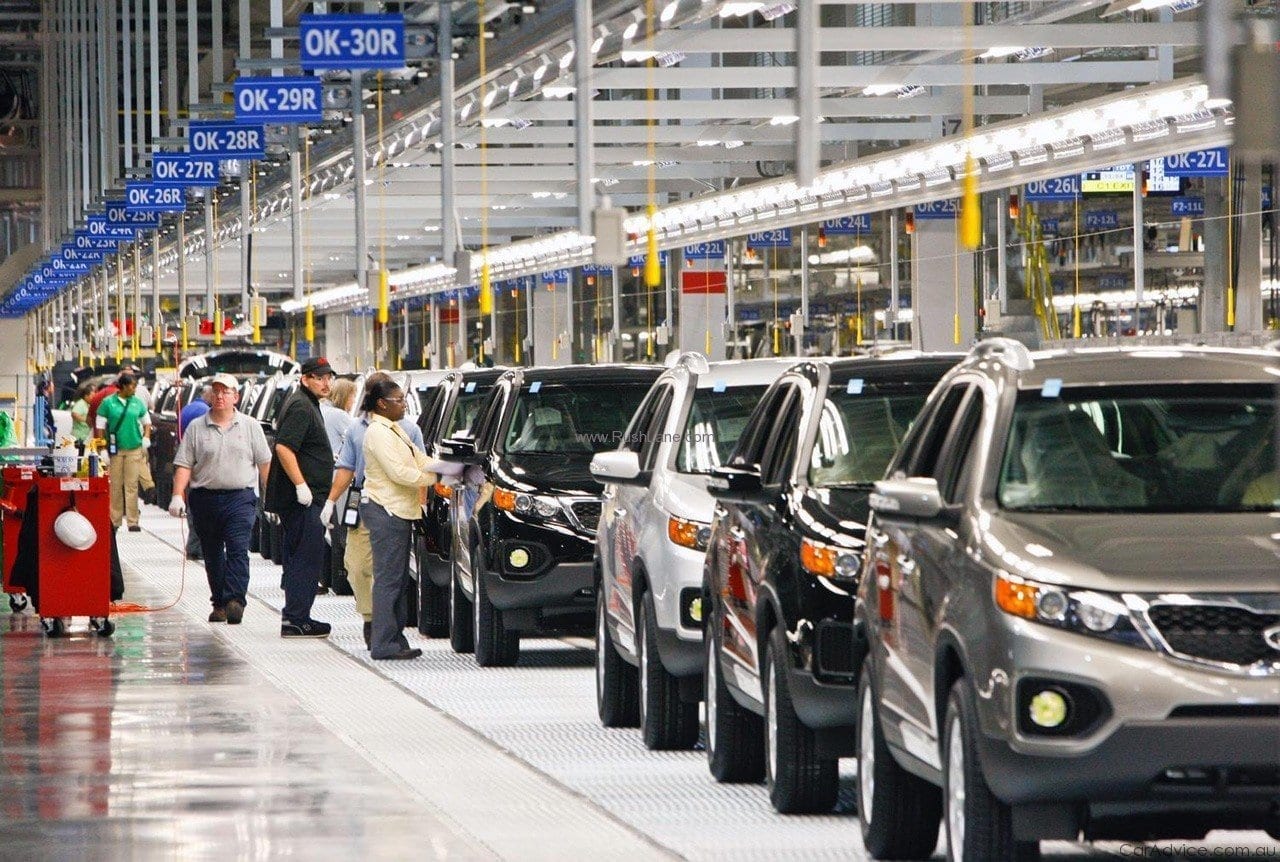
    South Korean carmaker Kia Motors Corp signed a deal on Thursday to invest about $1.1 billion to build its first factory in India, aiming to tap a fast growing market at a time when its China sales are sagging.

    The Hyundai Motor Co affiliate posted a 19 percent slump in first-quarter net profit as anti-Korean sentiment and a conflict with dealers hit its China sales, sending its shares down 2.2 percent in a flat market.

    Production at the factory in Anantapur district, Andhra Pradesh state, would begin in the second half of 2019, the company said.

    Kia is expected to leverage Hyundai’s supply chain network built around its factories in the neighboring state of Tamil Nadu to gain a foothold in the Indian market, tipped to become the world’s third-largest by 2020. Hyundai is India’s No.2 automaker by sales.

    The plant, which will have production capacity of 300,000 vehicles a year, will produce a compact sedan and a sport utility vehicle tailored for the Indian market, Kia said in a statement.

    It will break ground in the fourth quarter of this year.

    “Our new India plant will enable us to sell cars in the world’s fifth-largest market, while providing greater flexibility for our global business,” Kia Motors President Park Han-woo said in a statement.

    Reuters reported in February that Kia was close to finalizing Andhra Pradesh as the site for its first Indian factory..

    The announcement came after Kia and Hyundai Motor suffered a March sales slump in China, their biggest market, and sharply cut production in the wake of Seoul’s decision to deploy a U.S. anti-missile system, which angered China.

    “The fall in consumer sentiment in China is stemming from a political issue, a situation which is beyond the control of an individual firm and is difficult to be resolved within the short term,” Han Chun-soo, Kia’s chief financial officer, said during an earnings conference call.

    Kia would adjust its China production to reduce inventories, cut costs and launch new models including a small crossover to minimize the impact of the political row, he said.

    Kia also said its first-quarter profit was hurt by a cost of 160 billion won ($141.53 million) to recall vehicles over an engine issue in North America and South Korea.

  • 3.4b smartphones to be ready for m-payment by year-end

    3.4b smartphones to be ready for m-payment by year-end

    The install base of smartphones compatible with mobile payment platforms Apple Pay, Samsung Pay or Android Pay is on track to reach 3.4 billion by the end of the year, IHS Markit has predicted.

    The company estimates that by the end of 2017, 11% of active smartphones worldwide will be ready for Apple Pay, 61% will be compatible with Android Pay and 3% with Samsung Pay – but this overlaps with the compatibility of Android Pay.

    The total install base of compatible smartphones is meanwhile predicted to grow even further to 5.3 billion by 2021.

    But to date Apple has launched Apple Pay in just 15 international markets, Samsung has rolled out Samsung Pay in 14 and Android Pay is available in 10, leaving a large addressable market untapped.

    “To reach [the large install base of compatible] smartphones, Apple, Samsung and Android must strategically expand mobile payments services and build partnerships with banks and financial institutions,” IHS Markit mobile and telecoms analyst Ruomeng Wang commented.

    “Despite Apple Pay having a 10-month head start on Samsung Pay, Samsung has been catching up with Apple in terms of total available markets,” he noted.

    Use of the payment platforms is also increasing online. IHS Markit said currently 38 payment platforms and 2 million small businesses are supporting Apple Pay on the web, while Android Pay allows users to make payments on the Google Play store as well as multiple mobile web sites in the US.

    “Compared to Apple and Google, Samsung doesn’t have the same level of content, app platforms or web browsers designed to keep customers engaged. In order to tie customers to Samsung’s ecosystem, Samsung must actively expand Samsung Pay’s support for online retail,” Wang said.

  • Aldi enters Chinese retail market

    Aldi enters Chinese retail market

    The German retailer has a unique retail model that has captured market share around the globe, but it’s entry in China will be a little bit different.  On April 25 the company announced it had launched its Chinese presence through a collaboration with online retailer TMall Global.

    The collaboration was announced at a fashion show organized by the two companies, where models were wearing clothes from the retailer.

    “In recent years, retailers from different countries have put Tmall Global as a top choice when considering entering the Chinese market, and have achieved astounding sales,” Tmall Global general manager Alvin Liu was quoted as saying on Kejilie.com.

    “Tmall Global is very honored that we can collaborate with Aldi this time to explore new retailing opportunities together, and we believe that Aldi, known for its top-quality products, will be able to better meet the demand of Chinese consumers.

    The story reported Aldi China CEO Christoph Schwaiger as describing the collaboration as the start of Aldi’s journey in China.

    “We will try our very best to fulfil the promise to provide Chinese consumers with premium lifestyle products, and will proactively boost the growth of China’s retail scene and consumer spend,” he was quoted as saying.

    Since March 20 when Aldi did its first trial on the Tmall platform, hundreds of SKUs (stock keeping units) have already been put online to complement the usual spending habits of consumers in China’s first and second tier cities.

    During the trial period, products such as milk powder (for adults), honey and mixed nuts were bestsellers, and even ran out of stock. To solve the problem, Aldi was forced to ship in new stocks from Australia.

  • Apple to hold educative sessions at Apple Stores to increase customer engagement

    Apple to hold educative sessions at Apple Stores to increase customer engagement

    It may just be a marketing gimmick, but Apple’s latest initiative has all the elements to attract the crowd in its stores. The tech giant is planning to mobilize the mass to its stores by arranging educative sessions, dubbed “Today at Apple”, which would be organized by experienced professionals and will impart wisdom on a varied list of topics ranging from literature to coding.

    This initiative is aimed at building a better engagement between Apple enthusiasts and the brand by providing creative outlets and sessions, completely free of cost. The sessions will be held by experienced Creative Pros, who will make use of the varied products that Apple has to offer in order to educate the participants.

    Apple’s Senior Vice President of Retail, Angela Ahrendts said: “Today at Apple’ is one of the ways we’re evolving our experience to better serve local customers and entrepreneurs.”

    “We’re creating a modern-day town square, where everyone is welcome in a space where the best of Apple comes together to connect with one another, discover a new passion, or take their skill to the next level. We think it will be a fun and enlightening experience for everyone who joins,” she added.

    So if you are a photography enthusiast getting ready to sharpen your skills via six “How To” sessions at the nearest Apple store, that would cover shooting, organizing, editing and more or if you think you have elevated from all the basic stuffs, you can participate in the photo walks. If you are a coder, you can learn how to tinker around with Swift Playgrounds, which shares the same ethos that professional developers regularly apply in their day to day coding activities.

  • Online retail growth reflects changing consumption

    Online retail growth reflects changing consumption

    China’s online retail sales posted robust growth in the first quarter of the year, reflecting a changing consumption pattern, official data showed. Online retail volumes reached over 1.4 trillion yuan ($203 billion) in the first three months, up 32.1 percent year-on-year and more than double the pace of total retail sales, the Ministry of Commerce said on Wednesday.

    Online consumption of services such as tourism, dining and entertainment continued to rise, with sales of travel and take-away food rising by 64 percent and 163 percent, respectively.

    Central and western regions posted stronger growth in online spending and online shoppers in third- and fourth-tier cities.

    “Ten years ago, people said e-commerce would not take off in China. But as soon as you overcome the payment barrier, consumers here are so much more ready than in other countries to take it on,” said Richard McKenzie, a partner at consultancy Oliver Wyman.

    With the advent of better logistics, it is no wonder that online marketing is bringing more sales growth, said Vishal Bali, managing director of Nielsen China.

    “Physical and online stores don’t have to be against each other. That means more connection and integration, which is not simply for retailers but also affects consumer behaviour, manufacturers and other areas of industry,” he said.

    According to research firm Mintel, the cross-border shopping market is expected to post an annual growth rate of 15 percent from 2016 to reach 1.3 trillion yuan by 2021.

    “Haitao, or shopping directly from overseas sites, is likely to be more relevant to brands looking at initial market entry. Retailers and brands should therefore play to their different national specialties when attempting to differentiate themselves from their competitors,” said Matthew Crabbe, Mintel’s Asia-Pacific director of research.

    Another trend the Ministry of Commerce observed is that online players such as Alibaba Group Holding Ltd and JD.com Inc are expanding offline to improve the consumer experience with convenience stores as an emerging market.

    For instance, Alibaba and Shanghai-based retail conglomerate Bailian Group Co announced a partnership in February to jointly design bricks-and-mortar stores to deliver enhanced customer services through technologies such as geo-location, facial recognition and big-data driven customer management systems.

  • Korean banks expand in Vietnam

    Korean banks expand in Vietnam

    Following Shinhan Vietnam’s successful acquisition of ANZ Vietnam’s retail business, fellow Korean banks have also expanded their sizes and market share in Vietnam, seizing the lead in the foreign bank race on the Vietnamese market.

    Shinhan getting stronger

    Shinhan’s takeover of ANZ Vietnam’s retail arm has made its competitors worry, as Shinhan seems to get closer to becoming the champion of foreign banks in Vietnam, especially as the growth rate of the current leader HSBC Vietnam has been wildly fluctuating over the last five years.

    Despite a relatively low chartered capital of only VND4.547 trillion (US$200 million) and being less active than HSBC Vietnam—the number one foreign bank in Vietnam in terms of chartered capital, total assets, and profit, in 2016 Shinhan Vietnam’s profit exceeded VND1 trillion (US$44 million).

    This amount far outstripped numerous, similar-sized domestic banks and all foreign banks in Vietnam. Shinhan Vietnam’s profit was lower than HSBC Vietnam’s only.

    According to the acquisition agreement with ANZ, Shinhan Vietnam will have eight ANZ’s branches and transaction offices in Hanoi and Ho Chi Minh City, carrying on the entirety of the ANZ retail banking staff and 125,000 individual clients in Vietnam, as well as AUD1.1 billion (US$824 million) in outstanding loans and deposits.

    With 20 years of experience on the Vietnamese market and the takeover of ANZ’s retail business, Shinhan Vietnam’s position is getting steadier.

    At present, Shinhan Vietnam has a large number of corporate clients, primarily made up of Korean investors in Vietnam.

    Before the agreement with ANZ, Shinhan Vietnam had been continuously expanding its network. At the middle of April 2017, the State Bank of Vietnam permitted it to open a representative office and four branches and transaction offices in Hanoi and Ho Chi Minh City.

    Korean banks make foray into Vietnam

    Following Shinhan Bank, many other Korean banks are increasing their influence in the Vietnamese market. This expansion is easy to understand, as Korea is the biggest foreign investor in Vietnam.

    Currently, two of the eight 100% foreign-owned banks in Vietnam are from Korea (Shinhan and Woori Bank). Besides, many big Korean banks are starting to join the Vietnamese market by establishing branches or representative offices.

    These include Kexim, KEB Hana, Industrial Bank of Korea, Kookmin, Busan, and Nonghyup.

    In terms of size and market share, Shinhan and Woori Bank are in the lead among all foreign banks in Vietnam. They are formidable competition even to well-established Vietnamese banks.

    By providing good services and competitive interest rates, Korean banks are luring away a large number of clients from domestic banks.

    For instance, in Shinhan Vietnam, the outstanding loan balance of Vietnamese corporate clients accounts for at least 50% of its total corporate credit.

    In addition, Shinhan’s interest rates for home loans, car loans and consumer loans are lower than in many domestic banks. This has attracted a huge number of individual clients, especially from the middle and high income bracket.

    Besides Shinhan, newbie Woori also plans to deploy plenty of retail products in Vietnam in the course of 2017, such as cards, unsecured loans, and mortgages.

    Abundant capital, modern technology inherited from parent banks, knowledge of the Vietnamese market, and the huge number of corporate clients make up the rare advantages for Korean banks to successfully join the Vietnamese retail market, likely making domestic and other foreign banks worry.


  • Hongkongers at home with mobile shopping

    Hongkongers at home with mobile shopping

    Mobile shopping in Hong Kong and has now become a vital part of local consumers’ online purchasing habits, with more than two in every five of them having made purchases via their mobile device in the last three months, according to the latest Mastercard Online Shopping Survey.

    The survey was carried out across fourteen markets in Asia Pacific — Australia, China, Hong Kong, India, Indonesia, Japan, Malaysia, New Zealand, Philippines, Singapore,   South Korea, Taiwan, Thailand and Vietnam. A total of 8,738 consumers were polled online in November 2016.

    Results show that well over three quarters (80%) regarded security of payment facility as a key consideration when shopping online.

    The survey revealed that 44% percent of local consumers made a purchase through their mobile phones in the three months preceding the survey, up from 43% in 2015 and 38% in 2014, when the survey was first launched. An additional 14% did not make any purchases but intend to do so in the first half of 2017.

    Convenience (55%) continues to be the key driver for mobile shopping, followed by the growing prevalence of apps (42%) that make it easier to shop and the ability to shop on the go (26%).

    Regarding their mobile shopping habits, half of local consumers said they had downloaded a shopping app on a mobile device in the last six months. Clothing/accessories (34%) remain the key category purchased through mobile phones, followed by cinema tickets (26%).

    Purchase of airline tickets shot up to 21% in 2016, compared to 10% in 2015, while transactions on hotel accommodations (21%) and personal care/beauty-care products (120%) remained relatively stable.

    In terms of tools, group buying (29%) is increasingly used in Hong Kong, followed by digital wallets (17%) and financial investment apps/ in-social network marketplace apps (15% each).

    The majority of consumers in Hong Kong (88%) made at least one purchase online in the three months preceding the survey, representing a 4% increase from 84% in 2015. Four in five local consumers revealed plans to shop online in the first half of 2017.

  • Malaysia’s DFI generates near 25% profit in FY2017

    Malaysia’s DFI generates near 25% profit in FY2017

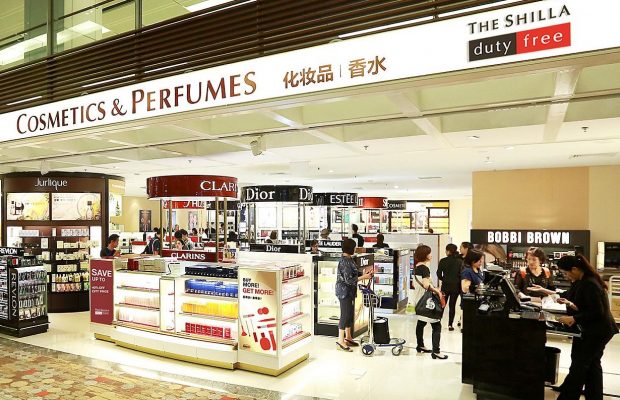
    Duty Free International Limited (DFI), the largest multi-channel duty-free and duty-paid retail group in Malaysia, in which Gebr Heinemann holds a 10% stake, has announced net profit after tax increased 24.8% to RM77m ($17.7m) from RM61.7m for the financial year ended February 28 2017 (FY2017).


    DFI’s parent company DFZ Capital Berhard entered into a joint-venture with Heinemann Asia Pacific in June 2016 with two seats on the board of directors – Max Heinemann and Marvin von Plato. DFI operates more than 40 retail outlets in Malaysia, on the border to Thailand and Singapore as well as duty-free shops in airports.

    DFI ended the fourth quarter (Q4) of FY2017 with revenue down slightly by 7.4% to RM150m compared to RM162m the previous year.

    The decrease was mainly due to a slowdown in tourism traffic to and from Thailand following the flood in Southern Thailand during the quarter and the after effects of the demise of Thai King Bhumibol in October 2016, as well as the imposition of a Goods and Services Tax at border outlets and duty-free zones with effect from 1 January 2017. On a full year basis, the Group reported an increase of 4.6% in revenue to RM632.6m for FY2017, from RM604.5m in FY2016.

    The profit before income tax in Q4, RM25.1m, was RM3.6m lower compared to RM28.7m in the same period in 2016 due to a decrease in revenue as mentioned above, coupled with an increase in management fee and lower reversal of inventories written down in the current quarter.

    On a full year basis, the Group reported an increase of 15.7% in profit before income tax to RM97.8m for FY2017, from RM84.5m in FY2016. The increase was mainly due to the overall increase in revenue and an increase in net foreign exchange gain of RM9.9m compared to the net foreign exchange loss of RM7m in FY2016. There was a recognition of gain arising from changes in the fair value of options amounting to RM4m, as well as lower professional fees incurred by RM1.6m in FY2017 when compared to FY2016.

    The above mentioned however, was partially offset by higher rental expenses and higher employee benefits expenses for FY2017.

    DFI executive director Lee Sze Siang commented on the FY2017 results: “We continue to face the challenges of the current economy and the volatility of the USD-Ringgit exchange rate, as well as the impact of unforeseen occurrences of the flood in Southern Thailand and effects of the demise of Thai King Bhumibol. Nevertheless, we have already started the process of improving our business operations, enhancing our merchandise mix and revamping our outlets. As we continue to focus on improving our operational efficiency and better managing our costs, we are confident of overcoming the challenging and competitive business environment.”

  • Korea’s economic growth accelerates in Q1: BOK

    Korea’s economic growth accelerates in Q1: BOK

    South Korea’s economy grew at a faster pace in the first quarter than three months earlier due to increased construction investment and exports, central bank data showed Thursday.

    In the January-March period, the country’s gross domestic product increased 0.9 percent from the previous quarter, improving from a 0.5 percent on-quarter expansion three months earlier, according to preliminary data from the Bank of Korea.

    The on-quarter growth is the fastest since the second quarter of last year.

    The data also showed the services sector expanded 0.1 percent from the previous quarter, compared with a 0.2 percent on-quarter expansion three months earlier.
    The central bank data showed construction investment grew 5.3 percent in the first quarter from the previous quarter, and facility investments rose 4.3 percent on-quarter in the first quarter.

    Chung Kyu-il, director general of the Economic Statistics Department at the BOK, blamed the slower growth in the services sector on a decline in the number of Chinese tourists, poor consumer sentiment and people putting off buying smartphones ahead of the release of Samsung Electronics Co.’s Galaxy S8.

    Samsung started official sales of the Galaxy S8 and the Galaxy S8 Plus smartphones in South Korea last Friday.

    The service sector includes wholesale and retail trade, restaurants, and hotels.

    Local tourism-related businesses have taken the brunt of China’s ban on trip sales to South Korea in an apparent retaliation against Seoul over a US missile defense system.

    Seoul and Washington began to deploy the US missile shield in South Korea to counter North Korea’s evolving nuclear and missile threats.

    Still, China has repeatedly pressed South Korea and the US to cancel the deployment and withdraw the missile defense system, claiming the US missile defense system could hurt China’s security interests.

    Exports — one of the major pillars for the South Korean economy — grew 1.9 percent from the previous quarter, while imports increased 4.3 percent.

    Gross domestic income rose 2.3 percent in the first quarter from the previous quarter, compared with a 0.8 percent expansion three months earlier, the BOK said.

  • Prime retail rents in Singapore dip 0.4% in Q1

    Prime retail rents in Singapore dip 0.4% in Q1

    Marina Centre, City Hall, and Bugis precincts reported lower rents. The challenging retail scene was proven by the drop in island-wide prime retail rents, which slipped 0.4% in the first quarter of the year.

    According to the Singapore Retail Bulletin by Knight Frank, this was largely due to lower rents in the Marina Centre, City Hall and Bugis precincts.

    Rents of prime spaces in Marina Centre, City Hall and Bugis precincts fell by 3.7% YoY as landlords continue to offer attractive rental packages to draw retailers.

    On a yearly basis, prime rents at the Orchard Road reported precinct reported a 0.7% slump.

    Meanwhile, average rents of prime spaces in suburban malls fell by 2.1% compared to one year ago.

    “Whilst well-established and well-managed malls generally report strong footfall trends, some other suburban malls still grapple with weakening patronage and having to achieve the right retail trade mix in a bid to improve attractiveness for consumers,” Knight Frank noted.

  • Growing flight frequency of Mideast airlines to benefit Bali tourism

    Growing flight frequency of Mideast airlines to benefit Bali tourism

    The Bali branch of the Indonesian Association of Tour Operators (Asita) said increase in the flight frequency planned by major Mideast airlines – Qatar Airways and Emirates Airlines between Middle East and Bali would significantly contribute to the islands tourism growth.

    Qatar Airways said through its Instagram it would increase flights to three times between Doha to Bali starting May 7, 2017.

    “Now there will be more reasons to see the yet untouched beauty of Bali,” the airline wrote in its social media account that drew more than ten thousands of comments.

    Earlier this month, another major airline from that region, Emirate Airlines of the United Arab Emirates already announced plan to increase flight frequency to twice everyday from Dubai to Bali starting July 2 this year.

    The increase in the flight frequency by the two world class airlines would further draw foreign tourists to Bali, Chairman of the Bali branch of Asita Ketut Ardana said here on Monday.

    Ardana said the recent holidaying visit of Saudi King Salman bin Abdulaziz Al Saud to Bali has added to the attraction of Bali for tourists from Middle East.

    “Bali is already attractive but with the visit of the Saudi King and his large entourage made Bali more attractive for holiday makers from Middle East,” he said.

    The increase in the flight frequency by the two airlines would facilitate the transport of tourists from that region to Bali, he added.