Author: Mei Ling Tan

  • Visa and Thailand Ministry of Tourism and Sports Celebrate 20 Years of Cooperation

    Visa and Thailand Ministry of Tourism and Sports Celebrate 20 Years of Cooperation

    Kobkarn Wattanavrangkul, Minister of Tourism and Sports, recently welcomed Chris Clark, Visa Group Executive for Asia-Pacific, at the Ministry of Tourism and Sports. During the visit, Mr. Clark thanked Ms. Kobkarn for the 20 years of cooperation between Visa and Thai tourism authorities, and discussed opportunities to further strengthen their partnership and drive tourism in Thailand.

    The long-standing partnership between Visa, the global leader in payments, and Tourism Authority of Thailand has resulted in a number of high-profile campaigns, boosting sustainable tourism revenues.  

    This year also marks the 18th anniversary of “Amazing Thailand Grand Sale”. Subsequently, campaigns such as “Thailand Spectacular Year End” and “Thailand Splash and Spice” were introduced to provide consistent attractions for visitors throughout the year.  

    Most recently, Visa launched the “Not a Tourist: See Thailand through Local Eyes” campaign that invited residents of Thailand to share photographs of local activities, foods, and places on social media to encourage tourists to experience Thailand at a deeper and more meaningful level.

  • Thai ISPs given 7 days to block “illicit” pages

    Thai ISPs given 7 days to block “illicit” pages

    Thai ISPs have been given just seven days to block “illicit” webpages such as anti-monarchy content deemed illegal by the courts, or face the prospect of having their licenses revoked.

    Regulator NBTC has ordered the nation’s ISPs to ensure they are compliant with the nation’s censorship regime, which also covers material such as sedition and promotion of illegal content.

    ISPs found to still be in violation after seven days could face penalties including fines, the cancellation of their licenses or even criminal charges for the management.

    The NBTC has said it will work with ISPs that claim to have technical reasons for being unable to block illicit content to help solve the problem.

    Meanwhile, the regulator and the Ministry of Digital Economy and Society are pressing ISPs to extend their content blocking to include illicit video streaming on Facebook and YouTube from local CDNs.

    The agencies plan to discuss how local ISPs will be able to block illicit content through online and streaming video on overseas-owned sites.

    This initiative was announced on the same day that a Thai man broadcast the murder of his 11-month-old daughter over Facebook Live before killing himself, a tragedy that drew international media attention.

  • 500 Startups funds Stockbit, a social network for stock trading

    500 Startups funds Stockbit, a social network for stock trading

    Indonesia’s Stockbit bills itself a “social network for stock traders.” Individual traders sign up for customizable stock market information and analytics. Basic features are free, while paying subscribers get more in-depth intelligence.

    The site’s been growing and adding features since 2012. The company just closed an investment from 500 Startups, it said in a release today. It’s a pre-series A round, and the sum is undisclosed.

    The new investment is supposed to fuel the launch of a new a feature that lets community members follow more experienced stock traders and copy their investment moves in an automated process.

    “Our proposition is simple. Just copy, let the best do the rest,” is how CEO Wellson Lo explains the feature. You can allocate a fixed amount, say US$5,000, and this amount will be invested by mirroring the person you are following. Trading “leaders,” as the people you can follow are called, also benefit. They get a share of the profits you make.

    It’s been in development since last year and will become available on Stockbit’s iOS and Android apps soon, though there’s no set launch date yet.

    Traders wanted

    Public participation in the stock market is extremely underrepresented in Indonesia, argues Wellson. Less than 0.3 percent of the adult population have a stock trading account. In Singapore, it’s 39 percent and more than 20 percent in China.

    Part of the reason is a knowledge gap, which Stockbit hopes to address by making it simple for novice traders to learn and reap benefits without risking too much.

    Back in 2015, after Stockbit last raised funds, including from local VC firm Ideosource, Wellson had told Retail News that the startup had 15,000 registered users, while paid subscribers were still only in the hundreds. The user base has about tripled since then, according to Stockbit.

    There’s an ongoing effort by the Indonesian Financial Services Authority to raise awareness about investment opportunities on Indonesia’s public markets, a development Stockbit hopes to be able to leverage for its growth.

    500 Startups partner Vishal Harnal says Stockbit is already the largest and most active community of stock traders in the country, which gives the startup an advantage over potential competition.

    Besides Stockbit, there are trading information sites like Idsaham or Infovesta, but those sites merely aggregate stock information and don’t yet offer analytics tools. Bareksa can be seen as a possible competitor, as it offers a variety of financial analytics tools and also aggregates information about the Indonesian Stock Exchange, among other functions.

    Algomerchant from Singapore has a similar solution, offering a mix of social networking and analytics. However, Algomerchant lets you subscribe to a set of trading algorithms, not individual people, explains Wellson. Stockbit’s social trading model is most comparable to Covestor in the US.

  • NBN achieves 1.1Gbps speeds in fixed wireless trial

    NBN achieves 1.1Gbps speeds in fixed wireless trial

    Australia’s nbn, the state-owned company building the National Broadband Network, has achieved speeds of over 1Gbps during a trial of fixed wireless technology.

    The company used carrier aggregation to combine seven 3.4-GHz carriers with four in the 2.3-GHz bands, achieving a downlink speed of 1.1Gbps and upstream speeds of 165Mbps.

    Using a range of various carriers across the two bands, nbn also demonstrated trial peek speeds of 400Mbps/55Mbps, 250Mbps/50Mbps and 100Mbps/400Mbps.

    The fastest 1.1Gbps speed was achieved by using three next generation Wireless Network Termination Devices (WNTDs) while the others were achieved with a single such device.

    The trial was conducted with Ericsson, NetComm Wireless and Qualcomm, and used speed testing technology from Mill Software.

    nbn has pledged to launch a 100Mbps fixed wireless product for the regional business segment in 2018.

    “Our ability to deliver gigabit speeds on fixed wireless demonstrates our continued focus on identifying and implementing tech advancements as and when they are needed, across all technologies,” nbn CEO Bill Morrow said.

    “It’s particularly exciting to be able to reaffirm our commitment to delivering a great experience to the 600,000 premises in regional Australia that will be served by the fixed wireless network. Our fixed wireless network has already been recognised as a world leader and we are determined to maintain that position by making sure regional Australians get access to the same high speed broadband available in our cities.

  • Bank Mandiri posts net profit of Rp4.1 trillion in Q1

    Bank Mandiri posts net profit of Rp4.1 trillion in Q1

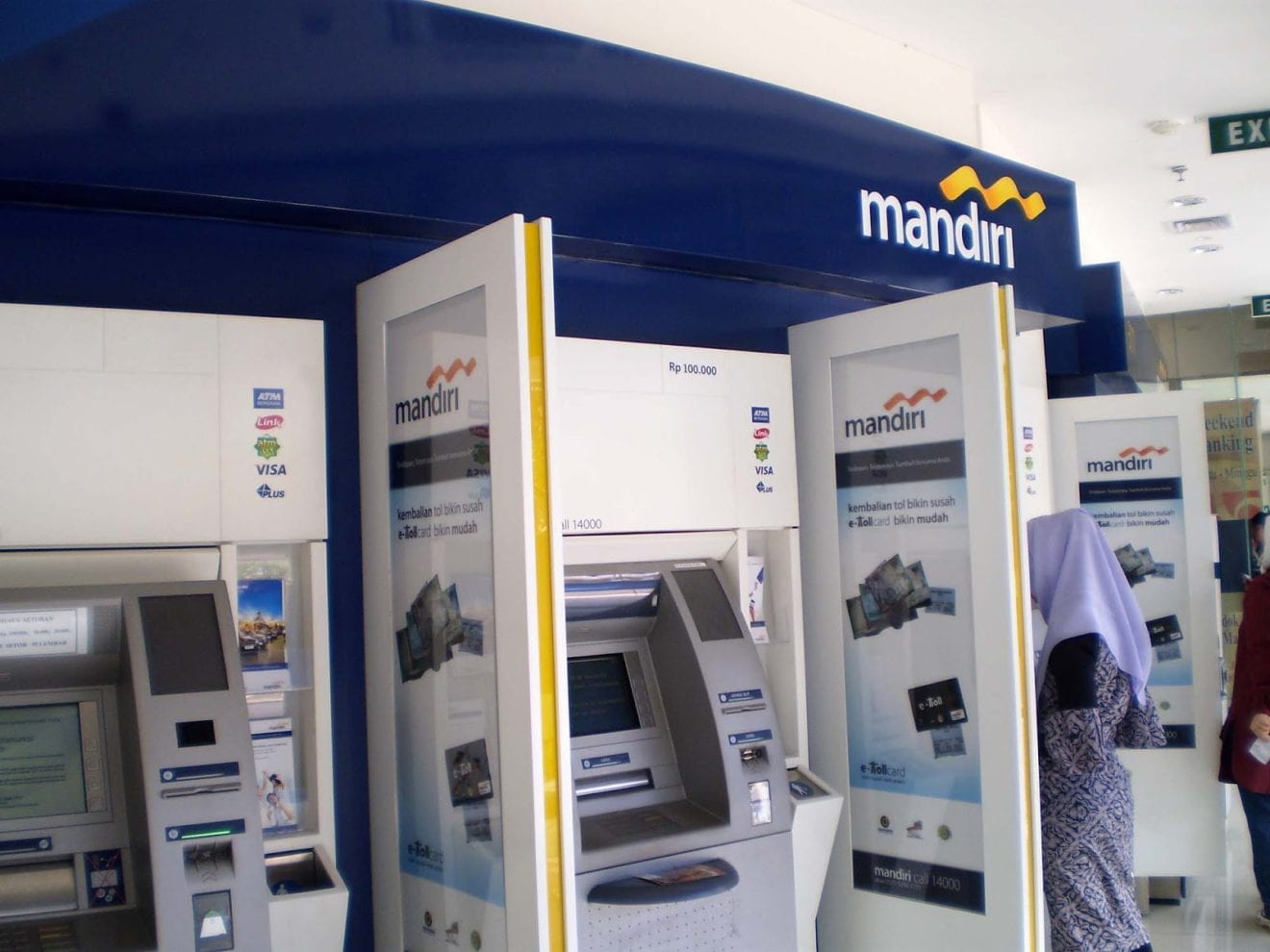
    State lender Bank Mandiri posted a net profit of Rp4.1 trillion in the first quarter of 2017, up 6.9 percent from Rp3.8 trillion in the same period last year.

    One of the factors increasing the profit was the rise in the amount of financing as reflected by credit growth, which rose 14.2 percent to Rp656.2 trillion in the first quarter of 2017, with the gross non-performing loan (NPL) ratio reaching 3.98 percent, Bank Mandiri President Director Kartika Wirjoatmodjo said here on Tuesday.

    “Although the gross NPL ratio rose 80 points year-on-year, its value was relatively good compared to Dec 2016,” he stated.

    In addition, the net profit hike was also fueled by net interest income and net premiums, which rose by 3 percent to Rp13.4 trillion, and fee-based income, which went up by 25 percent to Rp13.4 trillion.

    He added that the bank also managed to cut operating costs by 3.8 percent to Rp7.9 trillion, while operating profit before tax and reserves increased 11.9 percent to Rp10.8 trillion compared to March 2016.

    The banks total assets reached Rp1,034.4 trillion as of the first quarter of 2017, up 14.1 percent compared to the same period last year.

  • SK Telecom to build O2O platform with Bluebell

    SK Telecom to build O2O platform with Bluebell

    SK Telecom has signed a memorandum of understanding (MOU) with Bluebell Korea to cooperate on bringing cutting-edge ICT to the luxury retail industry.

    Bluebell Group is a leading operator of luxury brands in Asia, which also specializes in consulting, and has eight branches in Asia distributing products from over 100 brands. Bluebell Korea is in charge of distributing luxury goods to duty free shops and shopping malls in Asia.

    Under the MOU, SK Telecom and Bluebell Korea will work together to build an O2O (offline to online) platform to enhance travelers’ shopping convenience; bring innovative changes to luxury goods stores and distribution channels; and develop luxury goods based on ICT.

    SK Telecom plans to apply its industry-leading ICT – including its cloud-based digital signage platform “Smart Signage” and IoT-based location tracking solution – to luxury brand stores and goods so as to increase customer loyalty and sales of luxury brands.

    The luxury industry has so far strictly adhered to the craftsmanship of products and traditional sales channels – that is, offline stores. However, a slowdown in market growth coupled with the rise of young, tech-savvy consumers who are taking up a growing share of luxury spending is driving new changes in the conservative industry.

    “Through the MOU with Bluebell Korea, SK Telecom expects to bring innovative changes to the luxury market through the application of its state-of-the-art ICT including IoT technologies,” said Cha In-hyok, EVP and head of IoT business division at SK Telecom.

    “The convergence between ICT and the luxury retail industry will not only create new business opportunities for both parties but also deliver enhanced value and experience for customers.”

  • Indonesia, Singapore partner to develop startups

    Indonesia, Singapore partner to develop startups

    Local co-working space EV Hive is collaborating with Singapore’s working space BASH to provide places for startups from both countries to develop and thrive. These spaces with assist startups with business development and funding.

    “Regional companies based in Singapore can use EV Hive as a launch pad to the Indonesia market. Indonesia companies can use BASH as a stepping stone to access the regional stage,” said Willson Cuaca, managing partner of Singapore-based venture capital firm East Ventures, during the launch of the collaborative project on Tuesday. East Ventures manages EV Hive.

    Startups at the later stage (series B and above) of development can leverage support from EDBI, the global investment arm of the Singapore Economic Development Board.

    East Ventures, BASH management or SGInnovate, a development body wholly owned by the Singapore government, will work on more programs to expand talent, markets and knowledge-sharing for the customers of both co-working spaces.

    EV Hive currently manages two co-working spaces in South Jakarta and one in the Breeze mall in Banten. It plans to reach seven offices by the end of the year.

    EV Hive has facilitated the development of 36 startups, six of which are Singaporean.

    BASH, meanwhile, manages an integrated startup space in Singapore.

  • Co-working spaces taking off in Vietnam

    Co-working spaces taking off in Vietnam

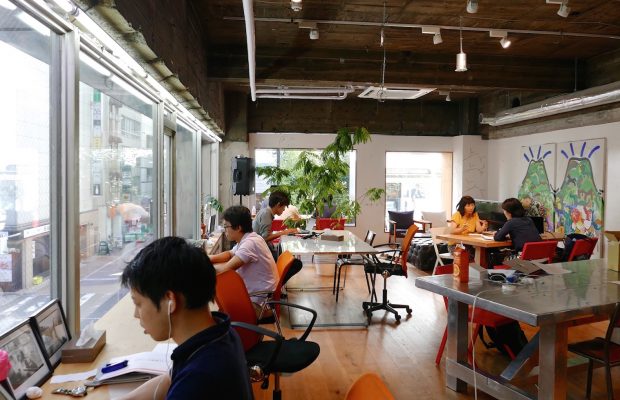
    Co-working spaces remain in the initial stages of development in Vietnam and are concentrated primarily in major cities like Hanoi and Ho Chi Minh City.  Hanoi now has around 14 co-working projects providing more than 7,000 sq m while HCMC has around ten projects with nearly 7,500 sq m for lease, according to the latest report from Cushman & Wakefield (C&W), a leading global real estate services firm.

    The most common sizes are from 300 sq m to 800 sq m and they tend to be located in the CBD or CBD-fringe districts or in new urban areas like the west of Hanoi or in Ho Chi Minh City’s District 2.

    “Globally, we are seeing demand growing at 10-15 per cent each year,” said Mr. Alex Crane, General Manager of C&W Vietnam.

    “APAC, and Vietnam in particular, is still in the early stages of co-working spaces becoming familiar and adopted.”

    Development of co-working spaces in Vietnam has been evidenced by the opening of more and more locations and especially the expansion of investors such as UP and Toong in Hanoi and Dreamplex in Ho Chi Minh City.

    UP now has two locations with nearly 1,400 sq m, Toong has three locations in Hanoi and one in Ho Chi Minh City with a total area of roughly 3,800 sq m, and Dreamplex has two locations in Ho Chi Minh City with over 3,700 sq m.

    According to Mr. Crane, there will be a further integration of co-working spaces into corporate real estate as CEOs are constantly looking to reduce real estate costs and co-working spaces offer a flexible, cost effective solution.

    “The rise of co-working spaces coincides with the number of millennials in the workforce and the working habits of Generations Y and Z will continue to impact how developers and multinational occupiers plan and use their commercial space,” he said.

    Co-working spaces are attractive to individuals, freelancers, startups and small companies mainly in the fields of technology and communications, who need flexibility as well as networking opportunities.

  • 7-Eleven sold as business declines

    7-Eleven sold as business declines

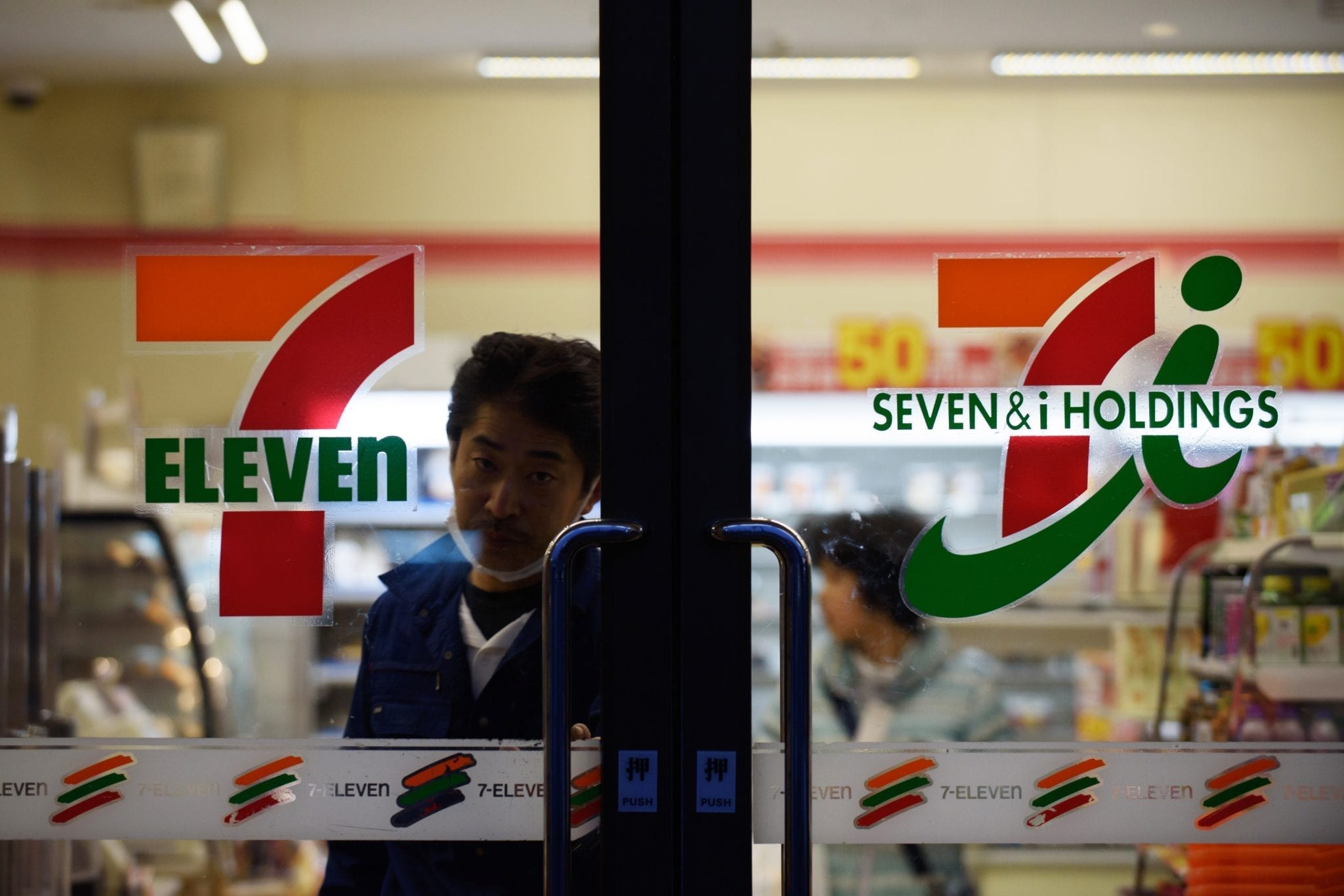
    Retail operator PT Modern Sevel Indonesia (MSI) plans to sell its 7-Eleven convenience stores for Rp 1 trillion (US$75.24 million) to PT Charoen Pokphand Restu Indonesia (CPRI), a business entity of PT Charoen Pokphand Indonesia (CPI).

    According to information from the Indonesian Stocks Exchange (IDX) published on April 21, the transaction agreement was made on April 19.

    Under the deal, CPRI agrees to take over the business activities of MSI – mini-restaurants (resto) and convenience stores – as well as assets that use the franchise system.

    The transaction, which is scheduled for June 30, is worth Rp 1 trillion, pending approval from various parties including the Trade Ministry and Financial Service Authority (OJK), shareholders, board of commissioners and 7-Eleven Inc., the owner of the brand, CPI president director Tjiu Thomas Effendy wrote in his letter to IDX’s registration director.

    “MSI and CPRI have settled various issues related to the planned transaction,” said Tjiu.

    The 7-Eleven chain of convenience stores and mini restaurants are popular among young people as most of the outlets remain open for 24 hours. However, sales have been on the decline as most customer come to enjoy the store’s free Internet and chat with their friends.

    Other local retailers like Alfa Mart and Indomart have also opened mini resto in their outlets in recent months.

  • Peugeot first quarter revenue rose 4.9 percent as new models offset forex impact

    Peugeot first quarter revenue rose 4.9 percent as new models offset forex impact

    French carmaker PSA Group’s first-quarter revenue rose 4.9 percent, the maker of Peugeot, Citroen and DS models said on Wednesday, as new models helped offset the effect of weak sales growth and a negative exchange-rate impact.

    Revenue rose to 13.63 billion euros ($14.92 billion) from 13 billion a year earlier, the Paris-based company said. Revenue at the core automotive division rose 2.5 percent to 9.02 billion euros.

    PSA also lifted its full-year market outlook to a 1 percent expansion in Europe and 2 percent in Latin America, having previously forecast flat demand in both regions.

  • SoftBank working on eSIM platform for IoT

    SoftBank working on eSIM platform for IoT

    SoftBank is developing an embedded subscriber identity module (eSIM) platform as part of its efforts to promote Internet of Things (IoT) solutions.

    The platform, which is scheduled to start operating in 2017, enables remote eSIM provisioning by connecting to carrier communication networks with the required profiles.

    When selling vehicles and other items embedded with machine-to-machine (M2M) equipment to markets abroad, until now it was necessary to prepare dedicated SIM cards with the necessary profiles to connect to the respective communication networks of overseas carriers.

    With eSIMs integrated into IoT products and M2M equipment, and by using the eSIM Platform, corporate customers will be able to remotely provision eSIMs with the profiles required for connecting to various carrier networks.

    For tablets, wearables and other consumer devices equipped with eSIMs, the eSIM Platform will also enable the remote provisioning of pre-registered contract information and other types of information, in addition to the necessary profiles for network connection.

  • Vietnam fish exporters aim to crack Europe

    Vietnam fish exporters aim to crack Europe

    The Vietnam Association of Seafood Exporters and Producers (VASEP) is showcasing Vietnamese seafood products at the Seafood Expo Global, which is being held in Brussels, Belgium, from Tuesday to Thursday. In a 264sq.m. booth, the association introduced Viet Nam’s seafood specialties, including tra fish (known as pangasius), shrimp, tuna and tilapia fish, as well as cattle fish, octopus and dried seafood products, all of which come from 25 Vietnamese seafood producers and exporters.

    The pavilion attracted foreign businesses, which shared experiences in trading aquatic and seafood products.

    In the context of a pangasius crisis in Spain and the Carrefour supermarket chain ceasing to sell Vietnamese pangasius, VASEP and the Ministry of Agriculture and Rural Development held a press conference at the exhibition to provide clear information about Viet Nam’s pangasius processing and exports to European partners.

    In his interview with Vietnam News Agency correspondents, VASEP general secretary Truong Dinh Hoe said the press conference aimed to create a correct information channel to deal with the communication crisis on pangasius, targeted at increasing exports of Vietnamese aquatic and seafood products to Europe.

    Alfons van Duijvenbode, a Dutch consultant, said European consumers have a bad impression of Vietnamese pangasius due to false information on social media.

    In recent years, the consumption of Vietnamese pangasius has fallen in the EU, meanwhile other fish have maintained or even increased sales volum, he said.

    He suggested the Vietnamese aquaculture industry interact more with consumers to provide them exact information about the products.

    Head of Vietnamese Trade Office in Belgium Nguyen Canh Cuong said that the office had worked with local partners such as Foreign Trade Association to provide information to Belgium businesses and consumers.

    Also at the event, Viet Nam held other trade promotion activities, including a dialogue for shrimp value chains and a programme for visitors to try Vietnamese seafood.

    Seafood Expo Global, the largest of its kind globally, drew the participation of over 1,600 exhibitors from 77 countries and territories this year.

    It is expected to attract more than 26,000 visitors and exporting and trading enterprises from 144 nations and territories.

  • Workplace by Facebook changes how enterprises communicate

    Workplace by Facebook changes how enterprises communicate

    Many companies in Viet Nam, such as FPT Group, BIDV, Bao Viet Life Insurance or Hoc mai online education portal, are using Facebook Workplace. Participants heard this at a workshop to share success stories of Workplace, an enterprise social network for daily work and internal communication, across Vietnamese companies in Ha Noi on Wednesday.

    They all said Workplace helped in improving communication, business exchange and interaction between members, and subsequently helped boost productivity and save time and money for companies.

    FPT CEO Hoang Viet Ha said most FPT employees were young and did not like to use email for work. Workplace was easy to use, fast to deploy and had a friendly interface.

    “It brings employees closer because it creates a friendly working environment. It helps increase communication between members, build internal culture and reduce email costs,” Ha said.

    Following six months of operation, Workplace has become an essential part of the FPT Group. Several employees and working teams rely on Workplace to solve their problems. Some 22,600 users and 3,000 active groups create between 7,000 and 8,000 posts daily and there are some 7,400 active users per week, according to Ha.

    Nguyen Thi Thu Hoa, Bao Viet Life Insurance Company’s head of MIS Department, said her company used to send up to 5,000 SMSes daily to insurance consultants. By using Workplace, the number of SMSes was reduced to 50 daily.

    “Workplace is a dedicated and secure space for companies to connect, communicate and collaborate. Organisations of all sizes can use familiar Facebook features such as newsfeed, groups, messages and events to get work done,” Ramesh Gopalkrishna, head of Workplace, APAC at Facebook, said.

    “More than 14,000 businesses are using Workplace on every continent, including Antarctica. We are excited to see more Vietnamese businesses incorporate Workplace into their organisations to transform internal culture and communications, which will help drive greater efficiency and productivity among their employees,” Gopalkrishna added.

    The Viet Nam Government Portal recently agreed to trial Facebook Workplace for their 200-strong workforce.

    Workplace by Facebook is a dedicated and secured communication platform helping companies internally connect, communicate and collaborate at work. This platform utilises familiar Facebook features such as newsfeed, groups and messages to help teams get things done.

  • Connected pallets are next greenfield IoT apps

    Connected pallets are next greenfield IoT apps

    Connected pallets are the most promising greenfield application enabled by the new wave of cellular and non-cellular LPWA technologies, according to Berg Insight.

    The research firm said in a new report the global installed base of pallets used for transportation is estimated at around 10 billion units.

    “With an average sales price of $10 per unit for regular pallets, the cost of adding connectivity can be justified by increasing efficiency in many logistics operations,” said Tobias Ryberg, senior analyst at Berg Insight.

    “The ability to track pallets can also contribute to extending their lifespan which is currently around two years,” said Ryberg.

    He added that several large industry players are evaluating connected pallets right now and they could proceed with large-scale deployments in the very near future.

    Smart cities and smart agriculture are other potential mass-volume market segments where LPWA technologies will be a key enabler. Berg Insight however believes that there are significant barriers that must be overcome before they can scale.

    Moving from today’s limited smart cities demonstration projects to city-wide deployments will be costly, complex and time-consuming. Smart agriculture is in an even earlier stage of development where the initial focus lies on proof-of-concept and application prototyping.

    “Today’s top IoT devices – the connected car and the smart meter – needed more than a decade to mature”, said Ryberg. “The smart city and the intelligent farm will need at least that much time to grow from vision to reality.”

  • Logistics startup CarPal raises additional funding

    Logistics startup CarPal raises additional funding

    CarPal has raised an additional S$3.83 million (US$2.7 million) to further develop the SaaS solution CarPal Fleet and help businesses build and control their own fleet of drivers. The round is led by new private equity participants, and the existing investor, RB Investments, has re-invested as well. This round follows the pre-series A of SG$1 million raised back in January 2016.

    Launched in July 2014, CarPal is one of the pioneering on-demand logistics service based on sharing economy, headquartered in Singapore. Over the past 2.5 years, it has steadily grown into a popular and reliable last-mile delivery service for consumers and businesses alike, delivering anything from fresh food, flowers, clothing, household appliances to furniture items.

    The company has recently announced the official launch of its new SaaS delivery management solution: CarPal Fleet.

    “Over the past few years, we learned that many of our customers wish to build their own fleet of drivers. This is mainly due to specific requirements or SOP. Hence launching a product to give customers full control over the delivery operations made a lot of sense,” says Maarten Hemmes, founder and CEO of CarPal.

    By allowing businesses to optimise the routing of delivery orders and match the best available driver, CarPal Fleet can bring delivery costs down and help businesses to compete with industry giants such as Amazon, Lazada and Zalora. The logistics startup wants to give businesses more control over their delivery fleet and help them find a healthy mix between in-house and third-party drivers, without actually having to purchase any vehicles or hire additional staff.

    Today, the company has hundreds of customers all over South East Asia. including (full-service) logistics providers, parcel delivery services, food delivery services and others. Businesses use and pay for CarPal Fleet via volume-based pricing.

    The company is competing with others in the space like Bringg and Onfleet. The main aspect that sets CarPal apart from the others is the fact that the business actually recruits drivers in every market for customers to add to their fleet, taking away the initial recruitment efforts.

    The company now consists 15 people and is headquartered in Singapore. It plans to expand into new markets and new segments with this round of additional funding, which includes growing its R&D and sales team.

    To date, CarPal has raised S$4.83 million.