Author: Mei Ling Tan

  • SKT partners with Bluebell on new business

    SKT partners with Bluebell on new business

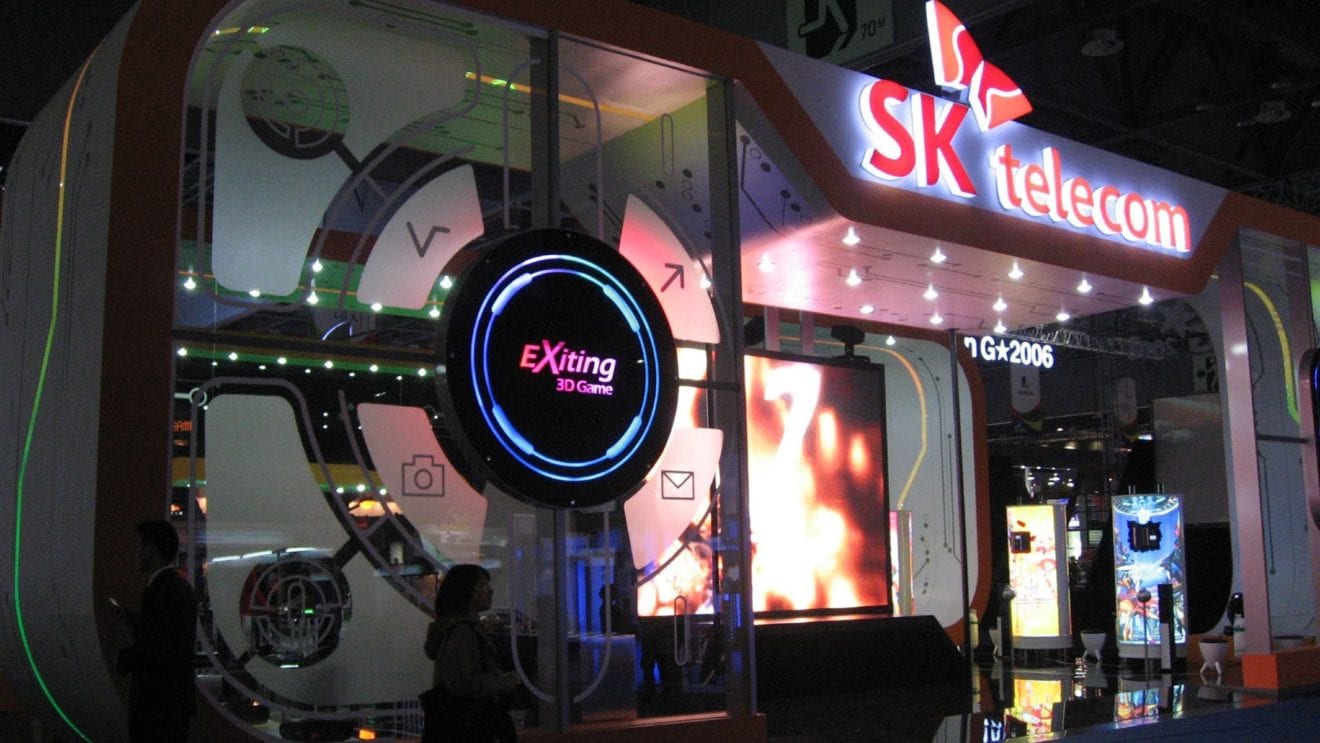
    SK Telecom is teaming up with Bluebell Korea, a local subsidiary of luxury goods retailer Bluebell Group, as the mobile carrier seeks to step up on-demand services as part of its business expansion.

    The mobile carrier said Wednesday it signed a memorandum of understanding with Bluebell Korea to cooperate on new business opportunities, by bringing information and communication technologies to the local luxury retail industry.

    Bluebell Group operates luxury brands in Asia and specializes in consulting. The group has eight branches across Asia – in Korea as well as Hong Kong and Taiwan – to distribute products from more than 100 brands. Bluebell Korea distributes luxury goods – from cosmetics to clothes, jewelry, watches and accessories — to duty free shops and shopping malls in Asia.

    Under the deal, the two companies vowed to collaborate to connect offline shoppers over online services.

    For instance, a foreign traveler to Korea may receive the latest information about luxury goods on their smartphone through SK Telecom and shop at stores affiliated with Bluebell. The goods purchased from those shops are embedded with location tracking devices so that shoppers don’t have need to worry about losing them or having them stolen, SK Telecom explains. The top mobile carrier also plans to more actively mobilize its cutting-edge technologies including cloud-based digital signage platform, where information, images and videos about products sold are displayed to respective stores’ need and users may even interact what they see.

    “The luxury industry has so far strictly adhered to the craftsmanship of products and traditional sales channels,” SK Telecom said in a statement. “However, a slowdown in market growth coupled with the rise of young, tech-savvy consumers who are taking up a growing share of luxury spending is driving new changes in the conservative industry.”

    “The convergence between ICT and the luxury retail industry will not only create new business opportunities for both parties but also deliver enhanced value and experience for customers,” said Cha In-hyok, executive vice president and head of the Internet of Things business at SK Telecom.

    The global luxury industry is estimated at 300 trillion won ($263 billion) and its impact on related markets in the clothing and accessories is immense, he added. In this age of digital revolution, fashion and retail also have been undergoing significant changes, applying emerging technologies such as virtual reality, artificially intelligent chatbots and blockchains to their day-to-day operations.

  • Bank of Korea begins effort to ditch coins

    Bank of Korea begins effort to ditch coins

    At convenience stores across the country, customers paying with cash will have the option of depositing extra change into public transit cards or converting them to rewards points. The bank’s goal is to reduce the number of circulating coins, which costs an estimated 60 billion won ($52.6 million) a year to mint.The Bank of Korea is starting with convenience stores as an experiment.

    The pilot project will run through 2019, after which the bank will decide whether to expand the option to other retail outlets.“After we review the results, we will consider whether to adopt the measure at drug stores and traditional open-air markets,” said Cha Hyeon-jin, head of the payment and settlement systems department at the Bank of Korea.

    Cha added the bank is considering a system that will let people send extra change directly to their bank accounts.About 23,050 convenience stores in Korea, including the chains 7-Eleven, CU and With Me, are participating in the project. Big discount chains like E-Mart and Lotte Mart are also part of the effort.

    The public transit cards in which customers can load their extra change include T-Money and Cash Bee. Customers can also convert the change into points on cardless rewards systems run by Hana Card and Naver Pay, a mobile payment service run by internet giant Naver. Shinhan Card will start servicing CU in May, and service for L.Point, the rewards system at 7-Eleven and Lotte Mart, will begin in July.Here’s how it works. Customers first pay for the transaction with cash. Then, if they want to load the extra change into their public transit card, they simply have to tap the card on the card reader. If they want to convert the change into points, they can also simply show a QR code from the corresponding mobile payment app.The Bank of Korea first proposed the idea of a coinless society last December, when it pledged to expand electronic payment methods to a majority of retail outlets by 2020.

    Cash transactions overall are already falling in Korea. The share of cash transactions decreased from 38.9 percent in 2014 to 36 percent last year, while credit card transactions jumped from 31.4 percent to 39.7 percent. When counting debit and prepaid cards, plastic has accounted for the most-used payment method.There are concerns that the move might hurt mom-and-pop shops and traditional markets that still deal heavily in cash. However, Cha said the coinless efforts will not likely have a big impact on them because it is still far from eliminating cash transactions altogether.

    “We will constantly discuss payment methods with smaller retailers and the possible digital divide phenomenon,” Cha said.

  • Siam Piwat lays out strategies for keeping shopping centres

    Siam Piwat lays out strategies for keeping shopping centres

    Chief executive officer Chadatip Chutrakul said that globally, retailers had been disrupted by e-commerce, the increasing number of people shopping online, and the impacts of globalisation. In Thailand, despite the growing trend of e-commerce, it is still considered to be in the trial stage.

    Nevertheless, Siam Piwat cannot remain the same, as Thai retailers are not immune to the global digital evolutions.

    “We have changed our aim, that we wouldn’t just create [shopping] destinations, but would make the destinations truly exciting, with ever-changing experiences so that people enjoy their time and want to keep coming back,” she said.

    “We must make our destinations constantly fresh, innovative and exciting all the time, places where people want to go for the fulfilment of needs that are much more than going online.”

    Chadatip received the Store Design of the Year Award for the Siam Discovery shopping centre at the World Retail Congress held early this month in Dubai. The event gathered 2,000 retailers from 65 countries and 140 speakers. These industry leaders and experts shared their ideas on global retail trends and concepts.

    She said shoppers had a perception of benefiting from lower prices when buying products online because of lower operational costs compared with physical stores. Therefore, price promotions were no longer sufficient to lure customers back to the shopping centres.

    “In developing Siam Discovery, we understood that in the new millennial era, shoppers have realised the importance of a brand’s story. They want to make the brand’s story part of their own story.

    “Good storytelling strategies by particular brands will become a significant selling point and crucial factor in adding positive value to the brand. That is why we chose to overturn completely the past retailing practice of presenting products by brand and by category.

    “Instead, multiple brands and complementary merchandise are brought together and unified with underlying stories, presented by type, by function, and by customer interest,” Chadatip said.

    She said at the reopening of Siam Center about three years ago that “retailing is no longer about shopping. It is [about] providing ever-changing experiences to individual shoppers.”

    Siam Center had been closed for six months. The shopping centre spent about a year gathering ideas for a new retail concept that aimed at attracting not only Thais but also shoppers from around the world.

    Chadatip said that over the past three years since the reopening, the 42-year-old Siam Center had proved successful by being voted by Thailand.com as being at the top of mind for shoppers.

    The shopping centre has also earned 12 different awards over the period, including for best marketing position and best renovation project. “Since the renovation, Siam Center has enjoyed a 12-per-cent increase every year in terms of both sales and traffic,” she said.

    “At Siam Piwat, we do not manage ordinary merchandise any more, but [promote the] emotional benefits of our valued customers. We have also turned [some] of them into our peers, to learn and initiate tailor-made campaigns and marketing activities based on their specific interests. This is what we have made successful with Siam Discovery and what earned us the World Retail Award this year.”

    Chadatip said the company’s four key strategies were the following.

    1 Be a leader in creativity and advance innovations that are ahead of competitors.

    2 Win the customer’s heart with good accessibility and understanding and by being “customer-centric”.

    3 Create good value through the storytelling strategies of particular brands.

    4 Work collectively with all business partners towards real win-win achievements.

    Siam Piwat owns and operates Siam Center, Siam Discovery, Siam Paragon, Paradise Park and IconSiam.

  • Honda to invest $124 mn to advance vehicle innovation

    Honda to invest $124 mn to advance vehicle innovation

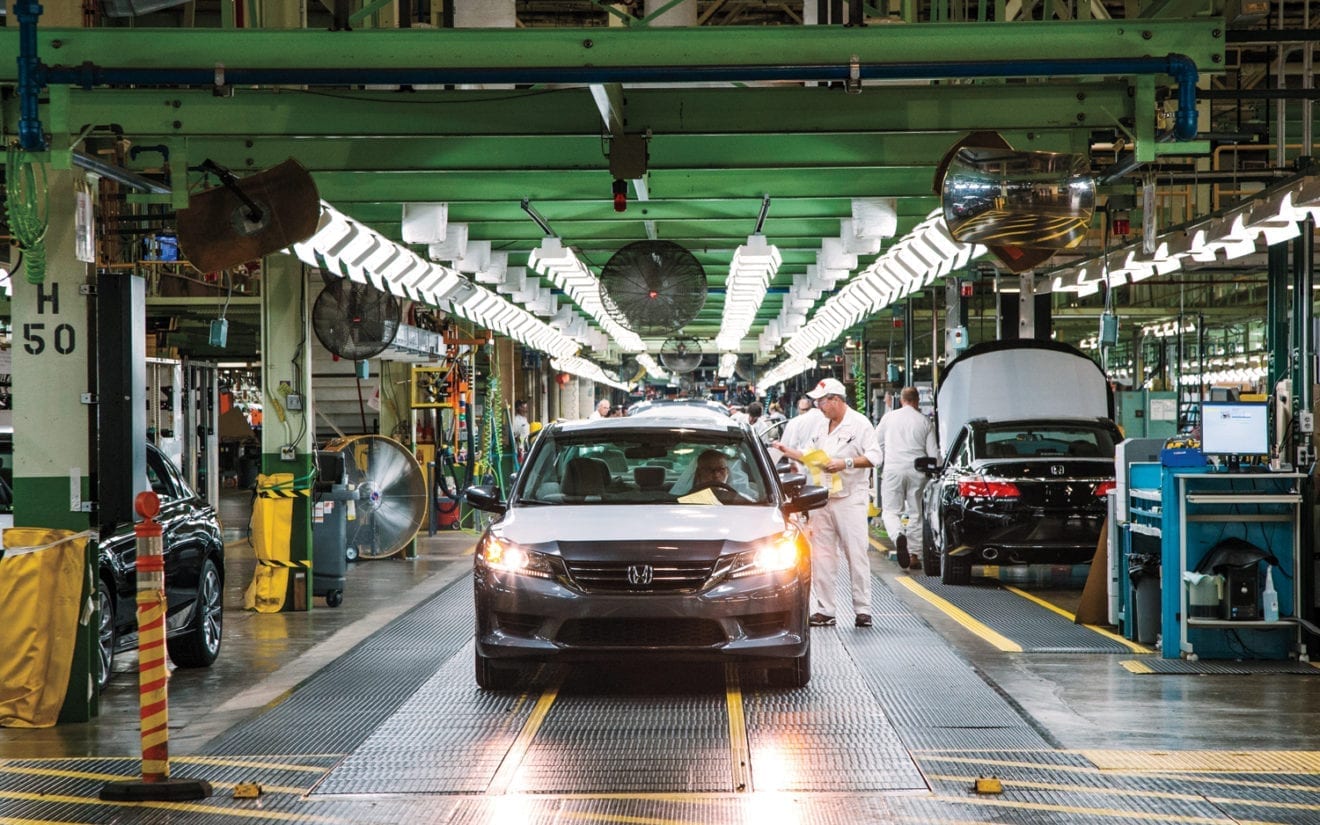
    Japanese automobile manufacturer Honda is going to invest $124 million (approx Rs 802 crore) to establish a multifunctional aeroacoustic wind tunnel facility to advance vehicle innovation and enhance the world-class testing facilities at the Transportation Research Center (TRC), in East Liberty, Ohio.

    The groundbreaking is slated for the late summer of 2017, informed the automaker in a statement.

    “This new facility will further enhance our ability to efficiently create products of the highest quality for our customers,” said Frank Paluch, president of Honda R&D Americas.

    “It will be integral to our aerodynamic and aeroacoustic R&D activity, which spans from advanced research and computer simulation, through scale-model and full vehicle development, to production vehicle performance assurance. And all of this is being done right here in the US.”

    “This innovative and industry leading asset provides us with another distinct reason for our customers to take advantage of the world-class testing facilities we have in Ohio at TRC,” said Mark-Tami Hotta, president and CEO of the Transportation Research Center.

    The aeroacoustic wind tunnel facility will have space for four secure and confidential customer bays, providing the opportunity for use by customers other than Honda.

    The advanced acoustic design will drive the next generation of wind noise reduction by utilising a strategic system of microphones and cameras set up to measure and identify potential noise issues on both the exterior and interior of a vehicle during the development stage, added the company.

  • Viettel launches nationwide 4G services

    Viettel launches nationwide 4G services

    Vietnam’s Viettel has launched 4G services across Vietnam after completing a nationwide rollout in just six months.

    The operator has now achieved 95% coverage with its 4G network, and officially launched services on Tuesday.

    The network consists of 36,000 4G base stations using 4-transmit 4-receive (4T4R) technology to improve coverage and capacity, as well as around 320,000km of domestic fiber backbone.

    According to the report, the network delivers average real-world speeds of 30Mbps to 50Mbps, but services will be provided for 40% to 60% cheaper than current 3G services.

    Viettel also plans to offer 4G-capable smartphones for as little as 1.3 million dong ($57.17), and provide free 4G SIM exchanges.

    Vietnam’s deputy prime minister Vu Duc Dam has praised Viettel for achieving the seemingly “impossible” task of launching 4G services nationwide in just six months, and expressed appreciation for the fact that the network incorporates hardware and software researched and produced domestically by Viettel’s engineers.

  • Tesco Thailand growth stalls

    Tesco Thailand growth stalls

    Tesco Thailand like-for-like sales are growing “strongly” according to the UK parent’s preliminary results released Thursday.

    Asian commentary took up a very small part of the larger company’s announcement, however the figures showed a dramatic slowdown in sales growth during the second half of the year to February 25, compared with the first half.

    Combined Thailand and Malaysian sales rose 3.3 per cent and 3 per cent respectively in the first two quarters, but plunged to a growth of just 0.4 per cent and 0.5 per cent in the third and fourth quarters. Third quarter sales were affected by Thais mourning the passing of the King in October together with a flat economy in Malaysia. The quarters also compared against strong growth period the preceding year.

    By half-year, Asian sales grew by 3.2 per cent and 0.4 per cent, giving a full-year growth rate of 1.8 per cent.

    Of Thailand, Tesco CEO David Lewis said like-for-like sales grew strongly in Thailand as the company invested in both lowering prices and improving its fresh food proposition.

    “We grew market share and were pleased to retain our number one position for customers for brand and trust,” he said.

    In Malaysia, Tesco’s top-line sales growth was held back by weak consumer spending across the market and a trend away from large stores towards convenience shopping, where the retailer is currently under-represented.

    Total international sales grew by 2.1 per cent at constant exchange rates, including a 0.8 per cent new-store contribution driven by store openings in Thailand which more than offset the impact of store closures, primarily in Europe.

    “International sales growth weakened in the second half due to an increasingly competitive environment in Europe, particularly Poland, and as we annualised a strong performance last year in Asia.”

    Global success

    Tesco’s global group sales rose 4.3 per cent to £49.9 billion, while in the UK like-for-like sales rose 0.9 per cent – the first reported full-year growth since 2009/10.

    The company ended the year with net debt of £3.7 billion, down 27 per cent after £1.9 billion of debt was repaid during the year.

    Lewis says the company is well on track with its reformation program.

    “We are ahead of where we expected to be at this stage, having made good progress on all six of the strategic drivers we shared in October. We are confident that we can build on this strong performance in the year ahead, making further progress towards our medium-term ambitions.

    “Today, our prices are lower, our range is simpler and our service and availability have never been better. Our exclusive fresh food brands have strengthened our value proposition and our food quality perception is at its highest level for five years. At the same time, we have increased profits, generated more cash and significantly reduced debt,” Lewis concluded.

  • Honda to launch all-electric battery car in China next year

    Honda to launch all-electric battery car in China next year

    Japan’s Honda Motor will launch an all-electric battery car in China next year as demand for plug-in electric vehicles (EVs) expands in the world’s largest automobile market, a senior company executive said.

    Yasuhide Mizuno, Honda’s China chief, told reporters on the sidelines of the Shanghai auto show on Wednesday the automaker was “expediting” the development of the EV. He said he expects the car to arrive in showrooms before the end of next year.

    Mizuno added that plug-in hybrid models would likely follow, but did not say when that car might hit the market in China.

    Carmakers in China are scrambling to develop and sell so-called new energy vehicles (NEVs) in anticipation of tougher new rules expected to be implemented as early as next year.

    Those rules will likely require companies to generate as much as eight percent of their China sales with plug-in cars, either fully-electric or plug-in hybrid vehicles.

  • Mobile security a top priority for SEA businesses

    Mobile security a top priority for SEA businesses

    Employee device security and customer experience are top priorities in Southeast Asia for both businesses and IT leaders, a new study indicates.

    The commissioned study on workforce transformation, conducted by Forrester Consulting on behalf of Dell, investigated the key challenges and drivers that businesses are facing in the adoption of workforce enablement technology.

    According to the survey, 81% of respondents are concerned about the legal liability issues arising from Bring Your Own Device (BYOD) policies, while 44% said that organization-wide breaches originate from employee devices.

    The complexity of the IT environment due to diverse devices, coupled with growing sophistication of security threats, outdated security policies and easy information access have made endpoint devices increasingly vulnerable.

    Employees want to work from multiple locations and use several different devices, including their personal devices, at work. Thus, they are demanding faster refresh cycles, enhanced user experience and corporate support for all their devices.

    However, organizations face challenges managing their overall PC lifecycle with 53% of respondents citing complexity from vendor management as an inhibitor for effective management. Meanwhile, the growing sophistication of threats has made old workforce technology vulnerable. 53% of respondents cited that the frequency of security PC breaches is a top concern for firms.

    “The workforce of today is a highly interconnected one with new technologies empowering people to perform at their best. IT and business leaders are embarking on a workforce transformation strategy as they need to equip their workforce with the right devices and software to optimize productivity,” Dell GM of client solutions for South Asia and Korea Rakesh Mandal said.

    “Employee experience is a critical factor in boosting financial revenue and enhancing customer revenue – a continuing priority for Southeast Asia companies as they move into the new age digital economy.”

  • Zalora to stock Abercrombie & Fitch in Asia

    Zalora to stock Abercrombie & Fitch in Asia

    Abercrombie & Fitch has entered into a wholesale agreement with Asia’s online fashion destination, Zalora.

    From next week, Zalora will stock Abercrombie & Fitch in Asia – first Hollister-branded merchandise, followed by Abercrombie & Fitch-branded lines later this month.

    The deal puts authentic Abercrombie & Fitch products into 11 Asian markets including Hong Kong, Singapore, Indonesia, Malaysia, Brunei, the Philippines and Taiwan.

    “This partnership will provide Abercrombie & Fitch access to more than 600 million of Zalora’s online customers,” said Fran Horowitz, CEO of the US fashion giant.

    “We are looking forward to partnering with Zalora to build on our strong base of loyal customers across Southeast Asia. We work hard to connect with customers wherever, whenever, and however they prefer to shop and we continue to invest in relationships and innovation to support that.”

    Horowitz said Zalora provides customers benefits including quick deliveries – as fast as three hours in some markets – and up to 100-day free returns.

  • China’s new cross-border e-commerce rules explained

    China’s new cross-border e-commerce rules explained

    The Chinese government has issued updated guidance on rules for cross-border e-commerce in the world’s second-largest economy, giving stakeholders much-needed clarity on potential changes in policy that have hung over the sector for the past year.

    China’s Ministry of Commerce said in a statement on March 17 that overseas goods purchased online and distributed through bonded warehouses would continue to receive some preferential treatment, avoiding quarantine and quality checks that could have brought the import of many popular foreign products to a halt.

    “We believe this policy move injects confidence into China’s [cross-border e-commerce] industry as it demonstrates the authorities’ determination to provide regulatory clarity and spur growth for the industry,” Fung Global Retail & Technology MD Deborah Weinswig said in an email.

    Dennis Zhang, CEO of Los Angeles-based e-commerce service provider Voyage One, agreed, saying, “It gives everybody, including our clients, peace of mind to let them know that this is something the Chinese government continues to support.”

    Pilot program refined

    Last April, Beijing announced changes to a pilot program meant to bolster Chinese consumers’ ability to buy online directly from overseas merchants via cross-border e-commerce. At the centre of the program are bonded warehouses, where international brands shipped merchandise for sale to Chinese consumers without being subject to normal import duties or rules for quarantine and quality checks on goods such as food, cosmetics and health supplements. The proposed changes would have increased the tariffs paid on that merchandise and removed the preferential regulatory treatment. This caused significant upset among international brands because some of the most popular foreign goods purchased online – the food, health supplements and cosmetics – are also the most tightly regulated by Chinese authorities.

    According to reports, cross-border e-commerce orders plummeted as much as 60 per cent in major trading hubs such as Shenzhen, Zhengzhou, Ningbo and Hangzhou a week after the announcement. A month later, apparently in response to industry concerns, regulators said they would suspend the rollout of the new quarantine and quality check restrictions until the end of this year while leaving in place the higher import tax. In its March 17 announcement, regulators extended that suspension indefinitely, saying that all goods shipped through bonded warehouses would be considered “personal items” and therefore exempt from the stricter regulations.

    The government said it might issue further guidance on cross-border e-commerce before the current rules are formalised on January 1, but the announcement at least gives stakeholders a longer runway with which to prepare for any potential changes.

    “Everything is pretty much business as usual for the rest of this year,” said Ron Wardle, the Shanghai-based China CEO of Export Now, a company that helps retailers sell online in China.

    For Alibaba, by far China’s largest e-commerce player, the news means that the online purchase of overseas goods will continue unabated, with marketing research firm eMarketer predicting the sector will reach $157.7 billion by 2020 from about $86 billion last year.

    Pumping water into pools to raise fish

    Cheng Ouyang, a director at Alibaba’s Cross-Border E-Commerce Research Center, called the announcement a “positive signal” for the sector. Using a popular Chinese idiom to describe the new announcement, Ouyang said the government was “pumping water into pools to raise fish,” which means that Beijing is allowing space for cross-border e-commerce to grow. At the same time, the government will continue to fine-tune its regulations for the sector, while stakeholders are able to take advantage of a burgeoning sales channel for foreign goods.

    Part of the ministry’s announcement also included the addition of five more pilot zones, or testing areas for bonded warehouses, in Dalian, Hefei, Chengdu, Qingdao and Suzhou, bringing the total number to 15. Wardle said the additional zones would allow for faster delivery and reduced shipping costs, “which is great for consumers”.

    Alibaba’s logistics affiliate Cainiao Network said it welcomed the news. “We already have a strong network and will work closely with our partners in the newly announced pilot zones to continuously provide seamless cross-border logistics service and better serve both merchants and consumers,” said James Zhao, director of import logistics at Cainiao.

    While the government’s statement has lent stability to the sector for the moment, Fung Global’s Weinswig said there was still no guarantee about what updates to the policy may look like if they are indeed issued later this year.

    “There are still some unanswered questions,” she said. “Will there be some imports that do not fall within personal items? Is registration for imports required which would slow down [cross-border e-commerce] imports?”

    Wardle, meanwhile, expects that any updates to policy will be a hybrid of those already in place along with recommendations from major players in cross-border e-commerce, such as Alibaba’s cross-border shopping site Tmall Global. Any such model “would benefit both consumers and brands,” he said.

    Whatever the changes, Wardle said he doubts that regulators will backtrack on the progress that has been made in China’s cross-border e-commerce sector. Stakeholders have already made significant investments in infrastructure and resources, while consumers have come to expect access to foreign goods they can’t otherwise get.

    “The floodgates are already open,” he said. “That’s going to be hard to pull everything back.”
  • Prada sales slip 10 per cent to US$3.3 billion

    Prada sales slip 10 per cent to US$3.3 billion

    Sales for luxury group Prada slipped 10.4 per cent for its fiscal year to January 31 to reach €3.1 billion (US$3.3 billion).

    The result is disappointing coming just 24 hours after LVMH reported a 15 per cent increase in sales across its multitude of brands in the latest quarter, albeit that Prada’s figures are for a full year.

    Royalties rose by 3.1 per cent to €44.8 million compared with the previous 12 months, and pre-tax earnings reached €431.2 million, or 13.5 per cent on net revenues. The group’s net income was €278.3 million.

    Prada says it was a challenging 12 months as it made concrete plans for brand development and launched an overhaul of its main processes. This transition phase coincides with the completion of a long-term plan for geographical expansion of its retail network and a bid to achieve an innovative form of integration with the digital universe.

    “The business climate was mired in uncertainty because of ongoing geopolitical tensions of
    global impact, as well as new events that have suddenly changed economic balances around the world,” says the Hong Kong-listed group.

    Meanwhile, stabilisation of some currency trends paved the way for a recovery in domestic consumption, as in China and Russia, although growth in these markets has not yet compensated for the drop in cross-border tourism.

    New designs

    Against this backdrop, the group says it took the initiative on several fronts, starting as always from the development of innovative products. Items were designed for Prada and Miu Miu in every category, particularly leather goods, including iconic handbags and special editions.

    The group also focussed on store renovation with a massive restyling program to create more intimate, exclusive environments, updated to meet new aesthetic guidelines for Prada and Miu Miu.

    During the year the group also made industrial changes under a three-year plan adopted in 2015, which aims to strengthen control over the production process by insourcing “some of the most delicate phases”. These investments are aimed to help preserve the craftsmanship at the heart of the group’s business model, while underscoring its ties to the Italian community and the sustainability of its manufacturing cycle.

    Based in Milan, Prada works with the Prada, Miu Miu, Church’s and Car Shoe brands in the design, production and distribution of luxury handbags, leather goods, footwear, apparel and accessories. The group also works in the eyewear and fragrance industries under specific licensing agreements. Its products are sold in 70 countries through a network including 620 directly run stores and select luxury department stores, independent retailers and franchise stores.

  • Younger buyers seen as key for luxury industry

    Younger buyers seen as key for luxury industry

    The younger generation will be key for the luxury industry in the next decade as it enters a “new normal” characterised by lower growth, new research shows.

    To find success, brands will need to refocus on their customers to better anticipate and cater to their needs, according to US global consulting company Bain & Company, which ran the research for luxury fashion e-commerce group Farfetch.

    The research estimates that millennials will represent 40 per cent of the global personal luxury goods market by 2025, and the characteristics of millennial behaviour are already seeping through to older generations, which accounted for 73 per cent of luxury purchases last year.

    The resultant “millennial state of mind” is characterised by three main traits:

    • Uneasiness. Digital interaction with peers is rising when it comes to choosing a product.
    • Urgency. “I want it fast, and I want it now.” The time to make a purchase is shrinking, with younger customers taking a third less time than older customers to make decisions.
    • Uniqueness. Consumers now expect brands to align with their personal values and passions.

    Online interactions are now influencing 70 per cent of luxury purchases, which means at least one digital interaction has taken place with the brand or the product before those purchases.

    For consumers between 18 and 24 years old, 14 per cent make their first luxury purchase online, and digital traffic to websites of luxury brands is double the number of store visits.

    By 2025, says the research, online and monobrand stores will become the two largest channels for luxury sales, each accounting for 25 per cent.

    Bain & Company believes that stores will continue to play a critical role in the luxury market, accounting for 75 per cent of purchases by 2025.

    Asian consumers will continue to account for more than half of the luxury market, with generation Y (millennials) and generation Z accounting for 45 per cent.

    Headquartered in Boston, Bain & Company has 55 offices in 36 countries.

    Farfetch partners with luxury boutiques and brands and was founded in 2008 by Portuguese entrepreneur José Neves. Its online platform is in nine languages, the company has offices in 11 cities globally and it express ships items to more than 190 countries.

  • Uniqlo Canada expanding to British Columbia

    Uniqlo Canada expanding to British Columbia

    Uniqlo Canada has announced plans to open its third store.

    Its debut in British Columbia, the store will open late this year, 12 months after Uniqlo entered Canada with an outlet in Toronto.

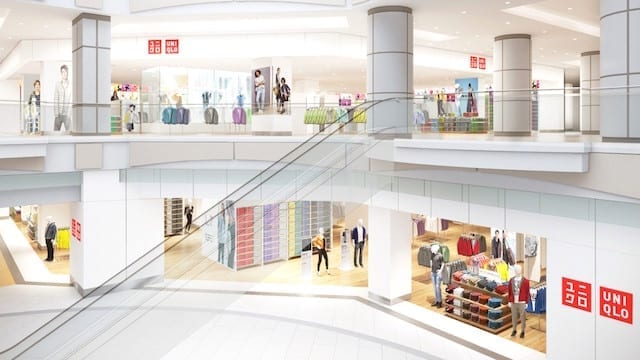
    Opening at Metropolis at Metrotown in Burnaby, British Columbia, the casual apparel retailer’s store will have 20,630 sqft (1917 sqm) of sales floor and offer its full range of core items.

    “Canada continues to be an important focus for the company globally,” says Uniqlo Canada COO Yasuhiro Hayashi. “This country’s cultural and climatic diversity represents the perfect platform for Uniqlo and our philosophy of LifeWear.”

    Product offerings at the new store will include the brand’s signature collections such as Airism, Cashmere, HeatTech and Ultra Light Down.

    Since opening its first store in Japan in 1984, Uniqlo has expanded to more than 1800 outlets worldwide. It is one of seven brands under the umbrella of Japan’s Fast Retailing.

  • Woodland India eyes Japan, South Korea

    Woodland India eyes Japan, South Korea

    Footwear and apparel firm Woodland India plans to enter the Japanese and South Korean markets in the next 12 months.

    Owned by the Aero Group, the company is also expanding at home with plans to add 120 exclusive outlets across India by the end of next year.

    Woodland India MD Harkirat Singh says the company also plans to grow its presence in multi-brand outlets.
    He says the company clocked revenue of Rs 1200 crore (US$279.9 million) in the last fiscal year and is seeking growth of 15 to 20 per cent going forward.

    Woodland, which makes most of its products in house, is also looking to add to its employee strength.
    Currently, the company has 600 exclusive outlets apart from presence in 5000 multi-brand stores in India.

  • Daimler says yet to choose semiconductor partner for autonomous cars

    Daimler says yet to choose semiconductor partner for autonomous cars

    German automaker Daimler has yet to select a semiconductor provider for its autonomous cars’ development partnership with supplier Robert Bosch, Mercedes-Benz research and development chief Ola Kaellenius said on Wednesday.

    Earlier this month, Daimler and Bosch announced a strategic partnership to develop self-driving cars.

    “We have not selected the computing supplier, and there are several capable options in the market,” Kaellenius told reporters at a roundtable discussion at the Shanghai Motor Show.

    “We are working with several partners in pre-development. What we see being available in the coming years looks very promising,” he said.

    Semiconductor manufacturers including Intel , Nvidia, and Qualcomm have started expanding their automotive product offerings in recent months as self-driving cars drive an “arms race” among suppliers.