Author: Mei Ling Tan

  • Jamies’s Italian Siam Discover Joins With Food Panda

    Jamies’s Italian Siam Discover Joins With Food Panda

    Jamie’s Italian Siam Discovery is proud to announce that it will launch a food delivery service alongside foodpanda – a popular and reliable food delivery team. Simply place your orders at www.foodpanda.co.th or on “foodpanda” mobile application and enjoy delicious Italian food delivered directly to you! A 40-baht delivery fee will be charged per order.

    Sarah Smith, General Manager of Jamie’s Italian Siam Discovery, says, “Jamie’s Italian Siam Discovery proudly presents our food delivery service, directly delivered to customers in Bangkok. We have joined forces with “foodpanda”, who are renowned for their food delivery service in Bangkok. We are going to launch our delivery service , allowing those who want to keep dry to enjoy Jamie’s Italian food at home. This is a great opportunity for those who haven’t been able to visit the restaurant to try our delicious Italian comfort food, without leaving their home or office.”

    Jamie’s Italian Siam Discovery strives to source only the best free-range, higher-welfare meat and sustainable and ethically produced ingredients. All the recipes are Italian classics with a Jamie twist. The restaurant will also work closely with Thai farmers and suppliers to showcase local produce.

    Menu recommendation

    The menu available on foodpanda has been chosen by the Jamie’s Italian team to give you a taste of Italian home cooking wherever you are. Enjoy antipasti and appetisers, including Ultimate garlic bread, Tomato bruschetta, Primavera bruschetta, Roasted carrot & avocado salad, and Porcini arancini .

    Customers can also choose from a delicious selection of pasta and pizzas – think Sausage casarecce, Tagliatelle Bolognese, Prawn linguine, Penne arrabbiata, Margherita pizza, Gennaro’s Italian sausage pizza, Funghi pizza, Italian hot pizza, and The Parma pizza.

    For mains or sides, customers can enjoy Chicken al mattone, Classic super food salad and the Jamie’s Italian Caesar salad. Plus, you can add delicious sides to your meal, from Crispy polenta chips to Spicy fries, Rainbow slaw, and Rocket salad.

    To finish, you can even order something sweet – try the Epic chocolate brownie, Raspberry rippled pavlova and Tiramisù. Don’t forget to try special drink like Italian lemonade and Italian sodas.

    Jamie’s Italian Siam Discovery and foodpanda are ready to serve you incredible Italian food made with the best ingredients – visit the website www.foodpanda.co.th or the foodpanda mobile application. A 40-baht additional delivery charge will be required per one-time order.

    Those who want to enjoy a full-option dining experience are invited to Jamie’s Italian Siam Discovery on G floor, Siam Discovery. The restaurant opens every day from 12.00 to 22.00 hrs. Bookings are available at www.jamiesitalian.co.th or call 0 2255 5222

  • Chloe Singapore launching at Marina Bay Sands

    Chloe Singapore launching at Marina Bay Sands

    Chloe Singapore will launch its first boutique at The Shoppes at Marina Bay Sands this month.

    Its store’s decor will feature textured furnishings, powdery rose beige tones on the walls and robust architecture complemented with linear lines, reports Buro 24/7.

    The French luxury fashion brand will be offering all ranges of its accessories and ready-to-wear fashion.

    To mark the opening, there will be a limited-edition calfskin and suede Faye bag – only eight pieces made – adorned with patchworks of orchid and phoenix (symbols of its new address).

    Chloe was founded by Gaby Aghion in Paris in 1952.

  • Vietnam beats China, South Africa in new healthcare ranking

    Vietnam beats China, South Africa in new healthcare ranking

    “Vietnam did very well in the study,” said Darrell West, one of the authors of the report.

    The country got the best performance in health system, scoring 19 out of 20, surpassing China and far distancing itself from Southeast Asian peer Indonesia. Nurses and midwives as well as physicians were the contributors to this high score.

    Its weaknesses are in the government’s health management capacity and infrastructure.

    Healthcare investment in Vietnam mostly comes from the public sector. To attract greater private sector investment, the country should improve transparency, make policy reforms and undertake regulatory reviews designed, the report said.

    Vietnam has a growing population, which requires better and more effective health services.

    West recommended Vietnamese leaders seek to improve its medical facilities, diagnostic systems and medical service delivery systems. These kinds of improvements will build confidence among private investors and create a climate where investors feel their financing will yield benefits.

    Vietnam’s high position in this ranking may come as a surprise for many, considering the amount of criticism directed at the healthcare system over the years. But the ranking does not simply reflect the current state, but looks at the potential of improvement brought by research and development.

  • Using artificial intelligence in the supply chain

    Using artificial intelligence in the supply chain

    Leveraging artificial intelligence (AI) for supply chains is an important next step to lower costs, improve productivity and drive growth by helping businesses reduces time-to-market.

    There are many opportunities to utilize AI along the chain from buying raw materials/components, converting them into finished products, selling to customers and delivering to end customers. Supply chains, generally, still comprise large amount of repetitive manual tasks and this is where AI can offer the most value.

    AI can be used in selling to customers using an AI-driven software platform, warehouses, transport, analysis of data and many other areas. AI allows companies to reallocate time and resources to their core business, and other high value, judgment-based jobs by using AI for low value, high frequency activities.

    In an AI-driven selling platform, the chat bots handle many of the sales, customer services and operations tasks traditionally done by humans, for example, interacting with buyers, taking down their orders and passing them on along the supply chain. This way, there is significant reductions in staff costs and also can help to overcome manpower shortage. Moreover, this solution is very applicable to green-field markets where there is explosive growth and multiple languages are required.

    In warehouses, distribution and fulfillment centers, AI can be seen in the use of robotics and sensors for conveying, stacking and retrieval systems, order picking, checking on stock level and re-ordering when stock is low. Furthermore, powerful algorithms also allow AI to automatically adapt in real-time to events in the supply chains, for example the arrival of new orders over the Internet for delivery in a few hours, changes in manufacturing schedules, or even a hiccup in the transportation schedule.

    Amazon is using robotic shelves in warehouses where robots the size and shape of a footstool carry shelves on top. These robots can glide quickly across the floor to rearrange the shelves in neatly arranged rows or bring them over to human workers, who stack them with new products or retrieve goods for packaging.

    Amazon’s robotic shelves also allow more products to be packed into a tighter space. They also make stacking and picking more efficient by automatically bringing empty shelves over to packers or the right products over to pickers. The process is more efficient than having humans walk around, so it also a good example of how automation can be combined with human labor to increase productivity.

    Autonomous vehicles and drones, for example, deploy a combination of sensors and algorithms to perform the complex work of driverless navigating. DHL is using autonomous forklifts and other self-driven equipment in warehouse operations. The next step for autonomous vehicles in logistics is to overcome regulatory and security challenges to deploy them on public roads for goods delivery operations. In the US, the use of drones is governed by the Federal Aviation Administration’s regulation known as Part 107 that went into effect on 29 August 2016.

    Supply chains are generating a huge amount of data and rather than let them go to waste, AI can help businesses make sense of them so that better decisions can be made. AI is able to quickly analyze and organize this data to enable users to see trends, and gain a better understanding of the many variables in the supply chains. Users are thus able to anticipate future scenarios and plan accordingly for uncertainties.

    Driving force of AI

    Powerful algorithms are fueling the rise of using AI in supply chains. Algorithms are instructions to the robots, drones, and autonomous vehicles etc. for calculations, data processing and automated reasoning. In a nutshell, algorithms give instructions on what and how to do in order to reach a specified end goal. More advanced algorithms, rather than follow only explicitly programmed instructions, can even go a step further in allowing AI to learn on its own in what is known as machine learning.

    Using algorithms that continuously and repeatedly learn from new data, machine learning allows AI to find hidden insights without being explicitly programmed where to look. Machine learning is a method of data analysis that automates analytical model building.

    The pioneering technology within machine learning is the neural network, which mimics the pattern recognition abilities of the human brain by processing thousands or even millions of data points. This technology is not just about optimization

    Take the example of supply chains. The algorithms are able to engage in forward thinking to predict all the volatility in the industry, come up with solutions for different scenarios and then base on the available data, choose and execute the most efficient solution. Whenever the AI is faced with a new situation, the algorithms are also adept at making real-time adjustment to pre-programmed instructions. Moreover, compare to humans, the speed and decisiveness of making decisions for AI is so much faster, because for one thing, AI is void of emotion and biasness.

    As a final testament to the power of AI, consider the following example. In January, two researchers from Carnegie Mellon University developed an AI poker player that beat four world champions and won US$1.77 million in poker chips. This is groundbreaking as it signals the ability to deal with incomplete information and to deal with situations that require bluffing and an opponent that generates misinformation.

    AI can process huge amount of possibilities and can outthink humans in terms of unpredictability if the algorithms are programmed correctly.

    AI is the future of supply chains. AI strengthens a company’s core business and opens up new opportunities that can even lead to a new business model.


  • UberEats Korea launch imminent

    UberEats Korea launch imminent

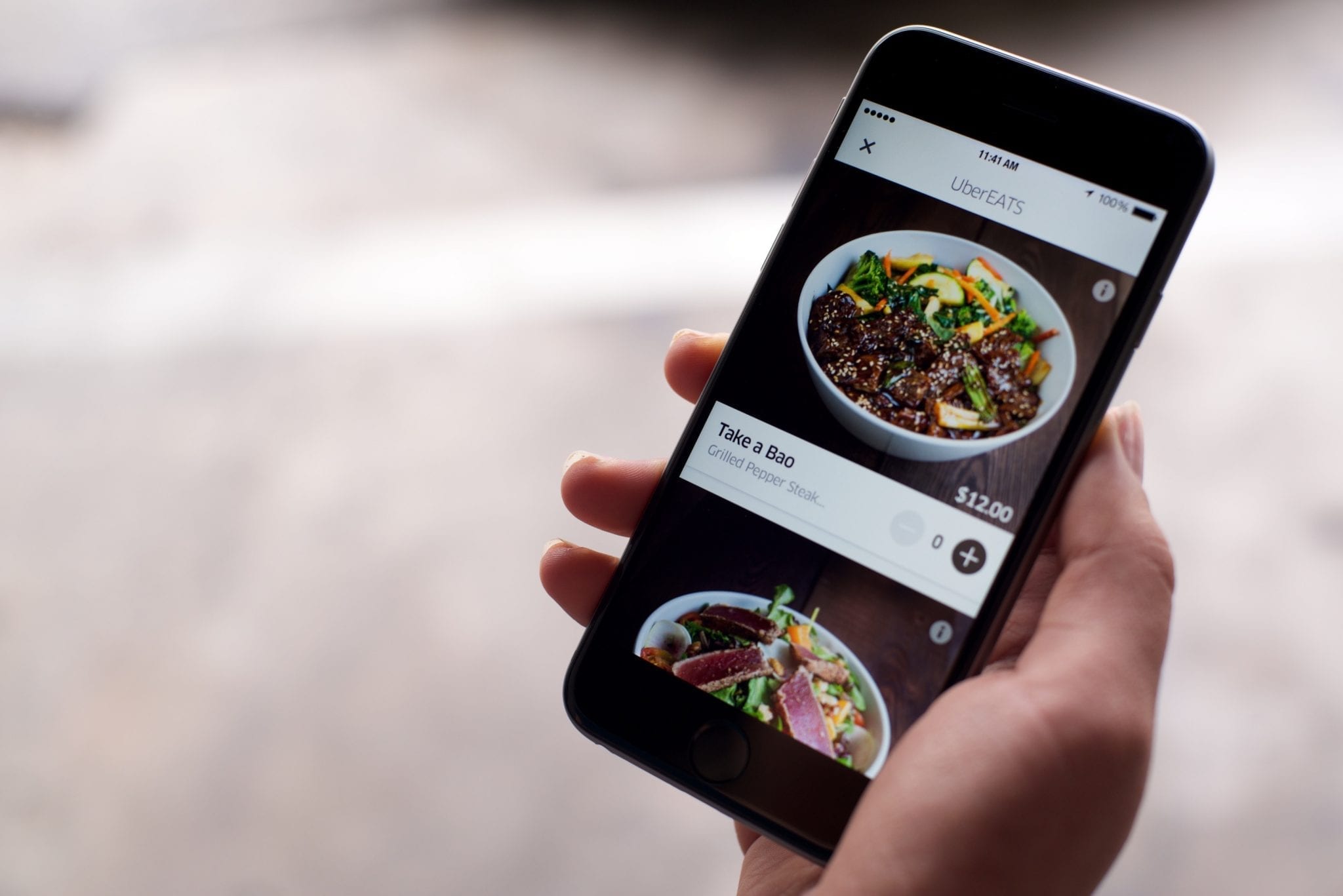
    App-based ride service provider Uber Technologies says it is planning to launch its on-demand restaurant delivery service UberEats in South Korea.

    UberEats Korea will partner with restaurants, with ordering conducted on the company’s web site or with a smartphone app.

    “The company is preparing the local launch of UberEats,” said a spokesman for Uber Korea, the local unit of Uber, on the condition of anonymity. “But at the moment, we have not decided on the exact launch date.”

    Industry sources expect the UberEats Korea delivery service to be introduced within the year.

    UberEats Korea is expected to join other local delivery apps such as Yogiyo, FoodFly and Baedal Minjok. Baedal Minjok is the market leader with more than 50 per cent market share, followed by Yogiyo and Baedaltong, which are both owned by Germany-based Delivery Hero.

    Ordering food by phone is commonplace in South Korea. However, delivery apps have become increasingly popular and now take up nearly 15 per cent of the total food delivery market which is estimated at around 12 trillion won (US$10.5 billion) annually.

    UberEats was launched as a delivery pilot in Los Angeles in 2014. Since then, it has expanded to 58 cities. The service also exists in other major Asian cities including Bangkok, Tokyo and Taipei.

  • 5G smartphone sales to hit 100m in 2021

    5G smartphone sales to hit 100m in 2021

    About 2 billion mobile phones will be shipped in 2017, a 2% rise from 2016, and this growth rate is expected to continue resulting in a staggering 10 billion mobile phones being shipped over the next five years, CCS Insight estimates

    Smartphones will continue to account for most sales, with an expected 1.53 billion shipped in 2017. This figure will rise to 1.9 billion in 2021, when smartphones will account for 92% of the total mobile phone market.

    “Although total shipment volumes will remain largely flat over the next five years, the proportion of smartphones continues to grow and the technology landscape is changing rapidly,” said Marina Koytcheva, VP of forecasting at CCS Insight.

    The forecast reveals the strong progress that 4G LTE technology has made in mobile phones over the past decade. CCS Insight expects 68% of phones shipped in 2017 to be LTE-capable, climbing to 84% in 2020.

    CCS Insight’s forecast also reveals the emerging potential for 5G-capable handsets, despite the fact that early deployment of 5G networks will focus on providing fixed wireless connections. The analyst firm expects 100 million 5G-capable phones will be shipped in 2021, and leading markets will be North America and developed markets in Asia–Pacific such as Japan and South Korea.

    China will remain the largest global market, with sales reaching half a billion units in 2021. Principal growth markets during the forecast period will be in Africa, India and some other markets in Southeast Asia.

  • Motorola scores managed mobility win in Australia

    Motorola scores managed mobility win in Australia

    Victoria Police in Australia will adopt a new managed service mobility solution for at least 10,000 police officers across the state.

    The A$50 million ($37.6 million) solution from Motorola Solutions will help increase situational awareness, safety and productivity for frontline officers.

    Motorola Solutions will lead a consortium of service providers to deliver the contract, including Optus, the second largest mobile operator in the country, as well as local IT provider CompNow. The managed service contract will run for a minimum of five years.

    The service will place real-time information at the fingertips of at least 10,000 police officers equipped with iPads and iPhones, helping them manage their daily work more safely, efficiently and productively.

    The solution is designed to help reduce the duplication of data entry by officers while increasing workforce collaboration by sharing vital information between frontline personnel and their colleagues working in control rooms.

    The technology will also help Victoria Police to preserve its mission-critical radio communications for essential emergency communications by removing lower priority traffic from the radio network.

    This investment represents a major goal within Victoria Police’s Capability Plan 2016-2025, which highlights the way the force will transform its service delivery to be more “agile, responsive, people-focussed and connected.”

  • Marina project in Labuan Bajo to cost Rp300 billion

    Marina project in Labuan Bajo to cost Rp300 billion

    Tourism Minister Arief Yahya said construction of marina port for tourist boats in Labuan Bajo, Flores, would need Rp300 billion.

    The port would facilitate growing number of international tourist boats visiting that area, the minister told reporters here on Friday.

    Arief Yahya was here to attend a meeting to strengthen tourism cooperation between the East Nusa Tenggara provincial administration and a US operator of international tourist boats, Carnival.

    The meeting took place on board the Pacific Eden that landed on the Benoa port, Bali, on Thursday.

    Also attending the meeting include Coordinating Minister for Maritime Affairs Luhut Binsar Pandjaitan, Transport Minister Budi Karya Sumadi and East Nusa Tenggara (NTT) Governor Frans Lebu Raya.

    Arief said the budget for the marina project in Labuan Bajo, which is one of the countrys 10 priority destinations would include fund from the state budget and the private sector.

    “With the fund we would build a big and long port in Labuan Bajo to allow international pleasure boats to land there,” the minister said.

    He said around the same amount of budget has also been set aside by the government in cooperation with the private sector for development of an airport named Komodo Airport in Labuan Bajo.

    The airport is named after the Komodo island, the habitat of Komodo, the ancient giant lizards, found only in the Indonesian island, which one of World wonders.

    NTT Governor Frans Lebu Raya said the Central Government supports the tourism cooperation with Carnival.

    “The central government would built the marina, to be completed in 2019, at Labuan Bajo and various other supporting facilities to make Lbuan Bajo a “home port” for international pleasure boats,” he said.

    Labuan Bajo would be the main gate for tourists coming on board pleasure boats to visits tourist objects in Flores, Lembata, Alor and Sumba, he said, adding the port is designed to be able to accommodate tourist boat with thousands of passengers.

    The port would contribute to economic development in that area with thousands of foreign tourists expected to visit and land at the port when it is operational, he said.

    The problem so far is NTT has no modern marine to accommodate international tourist boats, he said.

  • FedEx documents global citizenship efforts

    FedEx documents global citizenship efforts

    FedEx Corp. announced the online release of its 2017 Global Citizenship Report (GCR), which details how the company connects the world responsibly and resourcefully.  The annual report includes updates on the company’s strategies, goals, programs and progress in three key areas: Economy, Environment and People.  The report also includes statistics that track the progress of the company’s citizenship goals in fiscal year 2016, which ended on May 31, 2016.

    Highlights from this year’s report include:

    Economy
    FedEx invested more than US$46 million in 97 global communities in FY16 as part of its newly-launched FedEx Cares charitable giving program.  The goal of the initiative: invest US$200 million in 200 communities by 2020 to create opportunities and deliver positive change around the world.  Through FedEx Cares, the company advances entrepreneurship, creates employment pathways for underserved populations, enhances sustainable transportation, makes roads and pedestrians safer, and uses its global network to deliver resources where they are needed most.

    “We constantly challenge ourselves to tackle big problems, in our own backyard and on a global scale, whether it’s helping small businesses expand market reach or investing in communities to help address youth unemployment,” said Neil Gibson, vice president, Corporate Communications, FedEx Services.  “Everything we do to support local economies goes back to our purpose–connecting people and possibilities.”

    A diverse workforce, supplier base and culture enabled FedEx to better serve customers.  In FY16, the company spent US$9.2 billion with small, women-owned and minority-owned suppliers, a 37% increase from FY15.

    Customers who sought information about the company’s corporate citizenship and carbon emissions data as part of their purchasing process accounted for US$6.7 billion in FY16 revenue.

    Environment
    FedEx Express raised the stakes and revised its vehicle fuel efficiency goal.  The company set a new goal to increase vehicle fuel efficiency by 50% by 2025 from a 2005 baseline.  In FY15, FedEx Express met its goal of increasing vehicle fuel efficiency by 30% by 2020, which was achieved five years early.

    “FedEx is committed to advancing our vision of practical sustainability,” said Mitch Jackson, vice president, Environmental Affairs & Sustainability, FedEx Corp.  “Thanks to the innovation and commitment of our team members, we’re changing what is possible and making our goals a reality.”

    As of 2016, the company has more than 2,700 alternative fuel vehicles in its fleet, which is an increase of nearly 44% since FY15.

    FedEx also saved more than 153 million gallons of jet fuel in FY16 by continuing to modernize its aircraft fleet and improve operations.  That’s the equivalent of 230 Olympic-sized swimming pools.

    In FY16, FedEx avoided more than two million metric tons of carbon dioxide emissions through fuel and energy saving initiatives across the company, which is the equivalent to the carbon sequestered by more than 1.9 million acres of U.S. forest in just one year.

    Three new solar installations came online in FY16 bringing the total to 18, helping maintain the company’s ranking as one of the top corporate users of solar power in the U.S., according to the Solar Energy Industries Association.

    People

    Fortune again ranked FedEx as one of the “World’s Most Admired Companies”.  The survey measures nine attributes related to financial performance and corporate reputation.  This is the 17th consecutive year that FedEx has ranked among the top 20.

    Fortune also named FedEx as one of the “10 Best Workplaces for African-Americans.”

    FedEx supports team members who wish to give back to the communities in which they live and work.  In FY16, team members volunteered more than 93,000 hours in more than 500 cities worldwide.

    The company retained 88% of its full-time U.S. team members, up 8% from FY15.

  • NEC, Netcracker hold joint trial optical fibre network

    NEC, Netcracker hold joint trial optical fibre network

    NEC and Netcracker Technology have successfully conducted a trial, in collaboration with K-Opticom, for a system combining NFV and 10G-EPON technologies.

    The companies said the trial verified for the first time ever that virtualized customer premises equipment (vCPE) can be successfully applied to 10Gbps Internet connections.

    K-Opticom provides telecommunications services based on its independent optical fiber network. The company operates the “mineo” mobile phone service as a MVNO, and “eo denki,” an electric power retailing service for household use.

    VCPE provides CPE and other top-layer functions, such as Dynamic Host Configuration Protocol (DHCP) and Network Address Translation (NAT), from data centers via the Internet.

    Based on the results of this trial, further trials are being planned in preparation for the full-scale application of vCPE to 10Gpbs Internet services.

    Takamitsu Fukunaga, SVP for K-Opticom, said communication traffic volumes for home-use connections are increasing year by year, and K-Opticom estimates that these traffic volumes will continue to grow.

    “As a result, we are considering the provision of a 10Gbps service. We are engaged in continual efforts together with NEC to enable us to offer this service to our customers as soon as possible,” the executive said.

    NEC senior vice president Shigeru Okuya claimed the trial with K-Opticom is the industry’s first of its kind to validate that vCPE can be applied to 10G-EPON.

    “Moving forward, we will continue to proactively advance the development of solutions that contribute to the improvement of service quality for K-Opticom, and to make use of these results in providing SDN/NFV solutions globally,” Okuya said.

  • Siemens to set up global logistics HQ in Dubai

    Siemens to set up global logistics HQ in Dubai

    Highlighting the importance of Dubai as a strategic logistics hub between East and West, North and South, Siemens has announced plans to set up its global logistics headquarters including its portfolio for airports, cargo infrastructure and ports in the emirate in the near future. The company will also target the site of Expo 2020 Dubai as the future location for this business after the exposition ends. The move supports the legacy aspirations of Expo 2020 Dubai, as well as the industrial and logistics developments in the emirate. Siemens sees great growth potential in the Middle East region and in the logistics market globally. The company expects this development to support its Vision 2020 and related logistics businesses, creating new growth opportunities globally.

    “This strategic decision highlights Dubai’s significance as a major player in global transport and logistics, with some of the world’s biggest airlines and ports operating in and around the emirate. Siemens wants to further expand its operations in order to be close to key customers and markets. The Expo site would be a perfect match, featuring state-of-the-art facilities, infrastructure and technology, coupled with enviable transport connections,” said Siemens’ managing board member and chief technology officer Roland Busch. “We are committed to contributing to Dubai’s economic development goals with the latest innovations in technology. By using digitalization and leveraging MindSphere, our open, cloud-based IoT operating system, we support growth and boost efficiencies in logistics.”

    The headquarters in Dubai would include Siemens’ competences in its portfolio fields for airports, cargo infrastructure and ports. All levels of value addition would be represented locally, including global management and strategy, innovation, digitalization software development, sales, assembly and production. The global logistics market is growing at a compounded annual growth rate (CAGR) of 7.5 percent, according to Transparency Market Research. In a recent report, Frost Sullivan estimated the

    UAE’s logistics sector will grow at a CAGR of 5.7 per cent between 2015 and 2020.
    Siemens has been operating in the UAE for more than 40 years across its different businesses, and currently directly employs 2,600 highly-skilled workers of more than 80 nationalities and enables more than 15,600 jobs in the country. Digitalization is one of the company’s key pillars, alongside electrification and automation, and is implemented across its portfolio. The company uses innovative digital technology to merge the physical and virtual worlds, harnessing data to create value for customers.

  • M1 profit falls 14.6% in Q1

    M1 profit falls 14.6% in Q1

    Singapore’s M1 has reported a 14.6% year-on-year decline in post-tax profit for the March quarter to S$36.3 million ($26 million), attributing the result in part to higher depreciation and interest costs.

    Operating revenue grew 1.2% to S$260.7 million, with service revenue remaining flat at S$201.5 million. Fixed line revenue growth reached 22.8% to S$30 million, offsetting declines in both international voice and roaming revenues.

    M1 added 8,000 fiber customers during the quarter, taking its total base to 168,000. In the mobile segment, M1 added 24,000 postpaid customers and 3,000 prepaid customers, with its total mobile customer base reaching 2.05 million.

    But mobile revenue declined 0.5% to S$158.4 million and international call services fell 9.9% to S$15.5 million.

    Monthly MOU also declined 5.6% to 203 for postpaid customers and 9.6% to 191 for prepaid users, while net ARPU fell 2.3% for postpaid users to S$49.50 and 4.5% for prepaid users to S$11.50.

    M1 estimates it ended the quarter with an overall mobile market share of 23.8%, with a postpaid share of 24.8% and prepaid share of 22.5%.

    While announcing the results, M1 CEO Karen Kooi said the new 700-MHz and 900-MHz frequencies acquired from Singapore’s recent major spectrum auction will allow the operator to “deliver an enhanced network experience cost effectively with optimal use of spectrum.

    “With the largest Wireless@SG network and our small cell/WiFi HetNet deployment at targeted locations islandwide, we are delivering a superior data experience in places where it matters most to our customers and laying the foundation for future dense grid 5G architecture,” she said.

  • Lotte Group forced to drop $4.5bn IPO

    Lotte Group forced to drop $4.5bn IPO

    Following a 30 per cent drop in duty-free sales last month and the virtual closure of more than 100 supermarkets and discount shops in China, the Lotte Group has cancelled its US$4.5 billion IPO.

    Its woes are fallout from the mainland’s objection to South Korea’s new THAAD missile defence system, designed to knock out missiles from North Korea in the event of a war. China’s military claims the system can snoop on its installations as well. China is also angered that the system is on land sold by the Lotte Group to the South Korean government.

    These political moves have put the brakes on Lotte Duty Free’s booming South Korean sales, which rose a record 36 per cent last year to US$5.7 billion.

    Meanwhile, South Korea has protested to the World Trade Organisation (WTO) in an effort to persuade China to relax its stance.

    This means the Lotte Group will now dip out on funding for its expansion programs while its key competitor, Shilla Duty Free, has continued to expand its duty-free business overseas, including Hong Kong International Airport (HKIA), as reported.

  • Malaysia Airlines Signs the First-Ever Deal to Track Its Fleet From Space

    Malaysia Airlines Signs the First-Ever Deal to Track Its Fleet From Space

    Malaysia Airlines has become the first airline to sign a deal for space-based monitoring of its aircraft’s flightpaths. It’s a coup for the carrier, which is still reeling from the loss of the missing MH370 three years ago.

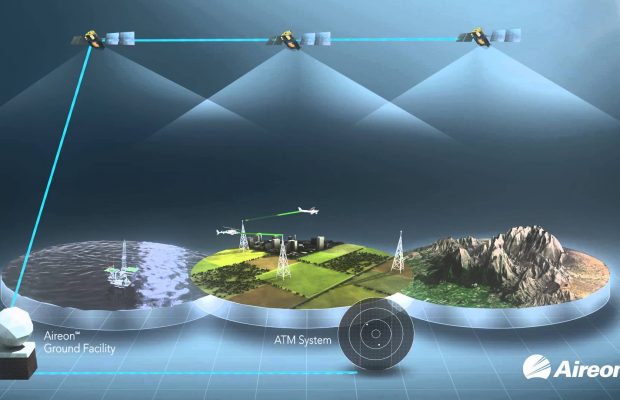
    The agreement, signed with three aerospace companies—Aireon, SITAONAIR, and FlightAware—will allow Malaysia Airlines to track its flights via satellite as they cross remote oceans, pass over polar regions, or travel anywhere else in the world, citing a press release from Aireon.

    Malaysia Airlines Chief Operating Officer Izham Ismail said in the release: “Real-time global aircraft tracking has long been a goal of the aviation community. We are proud to be the first airline to adopt this solution.”

    The location of most international-bound planes can already be monitored via a type of signal periodically broadcast from the aircraft called ADS-B (Automatic Dependent Surveillance Broadcast). These signals can be received by air traffic control ground stations and by other aircraft. They can also be tracked from space. Aireon, which is launching a new satellite network with a company called Iridium Communications, expects to complete its space-based monitoring system in 2018.

    However, it is unclear that such a network would have been able to track Malaysia Airline’s Flight 370, which disappeared with 239 people aboard on March 8, 2014. Because the plane’s location transmission system went dead, the signals that would have been received by a satellite network would not have been broadcast, Bloomberg reports.

    Although debris from MH370 has washed up onto African beaches and islands in the Indian Ocean, the main wreckage was never found.

  • Winter sports theme for Beijing’s Phase 3C mall

    Winter sports theme for Beijing’s Phase 3C mall

    An undulating sledding path will loop around the roof garden of Beijing’s planned Phase 3C mall, which also has an Olympic-sized ice-skating rink at its heart.

    A layer of fake snow will be added to the rooftop track in winter for sledding.

    Designed by Hong Kong-based American architect Andrew Bromberg of Aedas, the Phase 3C building is part of the China World Trade Center complex in Chaoyang, the city’s CBD. It is the fifth and final stage of a 30-year master plan that comprises 14 buildings.

    Phase 3C mall Beijing 1

    Bromberg’s building features a continuous loop that mimics the road, wrapping an elliptical volume at the centre with a roof garden called the Civic Green, reports Dezeen. The garden is set on three stepped levels and surrounded by a pathway that dips down to the entrance on one side.

    Cherry blossom and pine trees will be planted along the walkway, and the upper floors of the building surrounding the green will stagger backward to create terraces with seating areas and trees.

    In the centre of the building, the ice-skating rink will be surrounded by a loop of shops and cafes. There will also be art studios, exhibition spaces, an organic farm, cultural and educational amenities, and a rock-climbing wall.

    Earlier this year, the Phase 3C was awarded Best Future Project at the MIPIM Awards, an annual real-estate event in Cannes.

    You can see more images of the mall on Dezeen here.