Author: Mei Ling Tan

  • M1 launches cross-border mobile remittance

    M1 launches cross-border mobile remittance

    Singapore’s M1has launched new cross-border digital mobile remittance supporting transfers to multiple APAC destinations.

    The service named M1 Remit is available to users of M1 mobile phone numbers holding valid NRIC/FIN/Work Passes in Singapore.

    Users of the service can access real time exchange rates and remit funds to their designated recipients anytime, anywhere, through a mobile app or a browser on their smart device.

    Unlike typical remittance services where customers have to queue at a physical outlet to deposit funds, payments for M1 Remit transactions can be made at any one of the 915 AXS machines located in shopping malls, office buildings and other sites islandwide using an ATM card.

    Customers who do not have bank accounts or ATM cards can opt to make cash payment at M1’s IMM and Paragon outlets in Singapore, after completing a one-time verification process.

    Recipients will be able to cash out as quickly as within an hour of the transaction from over 23,000 cash agents and 640 banks available at the various destinations.

    M1 Remit currently offers eight remittance destinations – Bangladesh, India, Indonesia, Myanmar, Malaysia, Sri Lanka, Pakistan and the Philippines. Thailand, Vietnam, and other remittance destinations will be made available progressively. For a limited time, M1 Remit is also waiving the remittance fee to these destinations.

    “M1 Remit offers a wholly digital experience for money remittance. Nobody likes to queue, and now our customers can skip the queue and make better use of their time with and M1 Remit – Singapore’s most convenient, secure and cost-effective way to remit funds to their loved ones,” M1 chief innovation officer Alex Tan said.

  • Grab Indonesia buys e-commerce startup Kudo

    Grab Indonesia buys e-commerce startup Kudo

    Ride-hailing firm Grab Indonesia has acquired e-commerce startup Kudo for an undisclosed amount, striking its first deal since pledging to invest US$700 million in its largest market.

    Kudo helps consumers without bank accounts to shop online by connecting them with online merchants and other service providers across 500 cities and towns.

    Based in Singapore, Grab says it plans to accelerate the expansion of Kudo’s network while bringing more riders and drivers on to its own platform. The two companies also plan to explore new financial products such as consumer loans and insurance.

    Former payment-processing company Euronet Worldwide executive Jason Thompson has been hired by Grab to head GrabPay. This digital wallet for riders was introduced last year.

    Grab’s Indonesian investment promise entails building its digital payments network over the next four years in a bid to win over the 260 million people in its largest market. The company’s car- and motorcycle-hailing businesses grew more than 600 per cent in Indonesia last year.

    Valued at more than US$3 billion, Grab intends to set aside as much as US$100 million to bankroll early-stage domestic startups in mobile and financial services. It has started establishing research centres in Bangalore, Ho Chi Minh City and Jakarta to complement engineering offices in Beijing, Seattle and Singapore.

  • CDF-Lagardere, Shilla win Hong Kong Airport concessions

    CDF-Lagardere, Shilla win Hong Kong Airport concessions

    Key Hong Kong airport concessions for cosmetics, fashion accessories and liquor & tobacco have been awarded at Hong Kong International Airport.

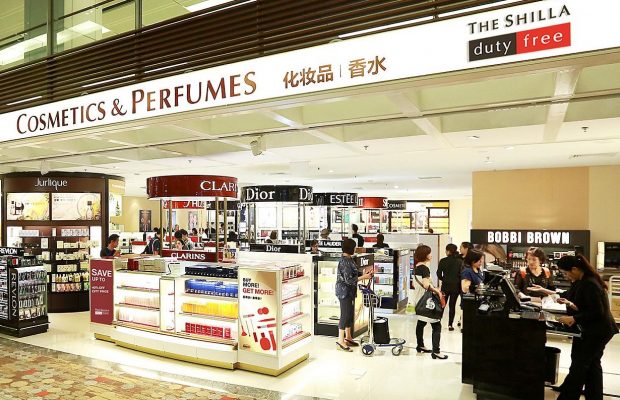
    The Airport Authority of Hong Kong has awarded the liquor & tobacco concession to China Duty Free – Lagardere Company and the perfume & cosmetics and fashion accessories concession to Shilla Travel Retail Hong Kong Limited (Shilla).

    The concessions will open from November 2017 and follow an open tender exercise.

    Cissy Chan, executive director, commercial of the Airport Authority said she is confident the new concessions “will elevate the overall airport experience and create a new shopping journey for the worldwide passengers”.

    The liquor & tobacco concessionaire will have the flexibility to include complementary products and upmarket gourmet food items.  The perfume & cosmetics and fashion accessories concessionaire will offer a one-stop shopping destination for beauty and fashion accessories, such as sunglasses, fashion watches, small leather goods and handbags.

    CDF – Lagardere, the awardee of the liquor & tobacco concession, will be introducing new experiential concepts, which include a wide selection of Chinese liquor assortment, a whisky chamber bringing an extensive offering under one roof, an in-store VIP lounge, tasting bars and more, said Chan.

    Shilla, which will be operating the perfume & cosmetics and fashion accessories shops, will bring a wide spectrum of beauty products and fashion accessories representing almost 100 brands that are new to HKIA.  There will be a dedicated zone for male-specific products, as well as a New Generation zone providing a platform for emerging Korean and Japanese brands.

    Both concessionaires will bring in new ideas to deepen customer engagement through digital initiatives. Interactive zones with virtual reality (VR), interactive and digital devices, together with iBeacon technology, will be installed inside the shops to enhance in-store navigation and real-time promotional offers.

    Charles Chen, President of China Duty Free Group (CDF) said being awarded the liquor & tobacco concession at HKIA marks an important milestone in the international development of the organisation’s duty free business.

    “We extend our sincere gratitude to the AA for their trust, and we will join hands with Lagardère Travel Retail to present a world class duty free shopping experience to the HKIA passengers.”

    Dag Rasmussen, chairman & CEO of Lagardere Travel Retail promises the company’s teams across the world will collaborate with brand partners “to bring to life a new benchmark for quality and engagement in travel retail”.

    And Roberto Graziani, president, Hotel Shilla Travel Retail says the highly contested tender win is a tribute to Shilla’s innovative category insights, deep understanding of customer needs and long-standing operational excellence.

    “We are grateful to the AA for this vote of confidence and look forward to warrant to our customers and all stakeholders, offers, services, and operational performances which will stay abreast of trends and changes in the consumers’ preferences, always maintaining a strong competitive edge throughout the length of the concession.”

  • Chanel Vietnam opens first cosmetics boutique

    Chanel Vietnam opens first cosmetics boutique

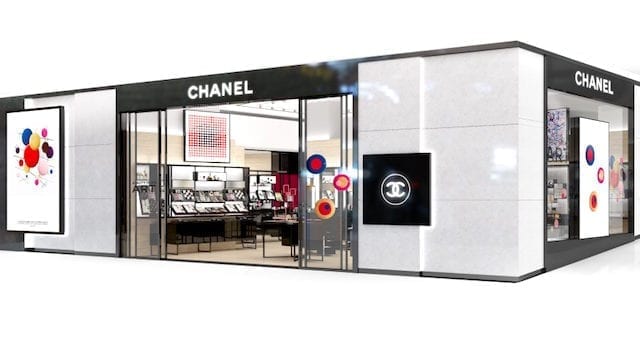
    Chanel Vietnam has opened its first dedicated cosmetics and perfume boutique.

    The 133 sqm store is located on the ground floor of the Saigon Center shopping mall in the heart of Ho Chi Minh City. It is decorated with a three-color theme of black, beige, and burgundy.

    The store showcases Chanel’s latest collections of makeup, skincare, and perfumes – with special emphasis on the “Les Exclusifs de Chanel” perfume collection with 16 scents.

    Customers will also enjoy a special skincare service called Sublimage from Chanel beauty team.

  • Midas Touch Delivers Large POS Tablet for Hospitality & Retail

    Midas Touch Delivers Large POS Tablet for Hospitality & Retail

    The MTB-3133 13” large Point-of-Service (POS) Tablet provides secure data capture, storage and transmission within a durable design ideal for food ordering. Midas Touch large POS tablet run on Windows 10 IoT Enterprise OS for seamless front and back office application integration and take full advantage of advanced Windows 10 security.

    The MTB-3133 Rugged Tablet features the integration of a 13.3″ Full-HD capacitive touch screen, energy efficient Intel Bay Trail J1900 processor, and a full-slot smart card reader within a slim, lightweight, durable package. With built-in 2M camera and GBE as well as options for RFID reader. With its large, vivid display, the MTB-3133 is perfect for the mobile cart for POS systems or the nursing cart.

    Midas Touch POS Tablet provides dedicated solutions ideal for customer service. All optional features are built into the tablet for reliable operations, providing customized POS tools for a restaurant, hotel, store or entertainment company to achieve enhanced ROI.

  • Cebu Pacific posts P9.8bn net income in 2016

    Cebu Pacific posts P9.8bn net income in 2016

    Cebu Pacific Air (CEB) posted a net income of P9.8bn in 2016, up 122% year-on-year, on the back of the strong demand for low-cost air travel and robust growth in ancillary revenues, which include baggage fees, on-board meals, and merchandise.

    Total revenues, which include CEB cargo services and wholly-owned subsidiary Cebgo, jumped 9.6% to P61.9bn, as passenger revenues surged 9.2% to P46.6bn. For the full year, CEB flew 19.1mn passengers, up 4.1% versus the 18.4mn passengers carried in 2015.
    “2016 was a great year for CEB as we continue to enable ‘every Juan’ to fly to more destinations around the Philippines and to key destinations in Asia, the Middle East, Australia, and the US.

    “CEB remains committed to further increasing inter-island connectivity within the Philippines to promote trade and tourism and help more people connect with their families and friends all around the world, while consistently providing our trademark best value fares,” said lawyer JR Mantaring, vice-president for Corporate Affairs of Cebu Pacific.

    In 2016, CEB flew to 36 domestic and 30 international destinations through 102 routes and more than 2,820 flights weekly. CEB boosted its intra-regional network in the Visayas with flights from Cebu to Ormoc, Roxas and Calbayog. The airline also launched direct service between Kalibo and Incheon, as well as its first US destination, Guam.

    CEB also teamed-up with some of the world’s leading Low Cost Carriers (LCC) to form Value Alliance, the world’s largest LCC Alliance, which aims to provide greater value, connectivity and choice for travel throughout Southeast Asia, North Asia, and Australia. CEB also opened a branch office in South Korea to boost promotional efforts in the Korean market.

    CEB capped 2016 with 57 aircraft, adding two brand-new ATR 72-600 aircraft in February 2017, to bring its current fleet to 59. For the rest of 2017, CEB expects to take delivery of one Airbus A330, two Airbus A321neo, and four more ATR 72-600, and delivering out three of its four Airbus A319 to end the year with 63 aircraft. CEB continues to have one of the youngest aircraft fleets in the world with an average age of 4.91 years.

  • Logistics association to assist in national plan on competitiveness

    Logistics association to assist in national plan on competitiveness

    The Vietnam Logistics Association (VLA) on Wednesday launched a ceremony to implement the Government’s first national action plan to improve the country’s competitiveness and its logistics sector by 2025.

    Lê Duy Hiệp, VLA chairman, said that VLA had been assigned to complete several tasks of the plan.

    In February, Prime Minister Nguyễn Xuân Phúc approved the action plan, which aims to have the logistics sector contribute 8 to10 per cent to the country’s GDP, with annual growth of 15-20 per cent by 2025.

    The plan also calls for Việt Nam to become one of the world’s 50 leading logistics services providers.

    The plan recommends new policies, more investment in infrastructure development, and better co-operation between local and foreign logistics companies.

    The aim is to have logistics companies that can be competitive in both domestic and international markets.

    Under the plan, Việt Nam will enhance connectivity with neighbouring countries and develop regional and international hubs.

    The plan calls for building level-1 logistics hubs (the highest level) in Hà Nội and HCM City, and level-2 logistic centres in Lạng Sơn, Lào Cai, Hải Phòng, Đà Nẵng, Quy Nhơn, and Cần Thơ.

    Trần Thanh Hải, deputy director of the Ministry of Industry and Trade’s Import-Export Department, said the country’s logistics development has been modest, as there are only 1,300-1,500 firms in the sector.

    More than 70 per cent of the businesses are small- and medium-sized with average capital of about VNĐ7 billion (US$320,000).

    “The country’s logistics effectiveness has been low, while available resources have not been fully exploited,” Hải said.

    The action plan would provide short- and mid-term solutions to improve the logistics sector in the next seven or eight years, he added.

    The initiatives taken by the Government to strengthen the logistics industry and increase efficiency have been supported by industry insiders.

    Christoph Matthes, managing director of logistics firm DB Schenker in Vietnam, said, “We strongly support the plan as the logistics has become more important than ever before.”

    In addition, increasing consumer demand requires a faster and more reliable way of delivery of goods.

    For many customers, logistics is no longer a matter of moving boxes from one location to another, but creating a highly efficient and reliable supply chain which enables them to be competitive in a fast-changing world.

    International trade is growing rapidly as well, and thus, a need to connect to other markets via air, ocean and road freight.

    Some of the largest export markets for Vietnam include the ASEAN region and Europe, where Việt Nam competes with other countries and where logistics costs play a vital role.

    Trade with Europe is expected to increase with the EU-Việt Nam Free Trade Agreement (EVFTA) coming into force next year.

    Experts said more steps were needed for smooth implementation of the agreement and to make sure businesses can fully benefit as soon as the treaty takes effect.

    The commitment of the Vietnamese Government to strengthen the logistics sector is an important step towards making this possible.

    Nestor Scherbey, general director of logistics firm Customs, Trade and Risk Management Services Ltd Việt Nam, said the national action plan would play a critical role in raising competitiveness.

    Logistics costs in Việt Nam are among the world’s highest, at 25 per cent of GDP, which hinders the cost competitiveness of Vietnamese firms, according to Logistics Insight Asia.

    Logistics costs in the US, Europe and the rest of the world are around 9, 13, and 15 per cent, respectively.

    “The efforts necessary to achieve a national action plan for logistics must be undertaken in co-ordination with diligent efforts by Việt Nam to implement the commitments of the World Trade Organisation Trade Facilitation Agreement (WTO TFA),” Scherbey said.

    Many of the major commitments of the WTO TFA were contained in the Trans-Pacific Partnership (TPP) and EVFTA.

    Full implementation of trade facilitation by Việt Nam would reduce the country’s international trade transaction costs by 20 per cent.

    “It is the combination of the benefits of trade facilitation, with the benefit of reducing domestic logistics costs, that will allow Vietnamese products to become fully competitive in global markets,” he said.
  • China still on radar for Lotte Group

    China still on radar for Lotte Group

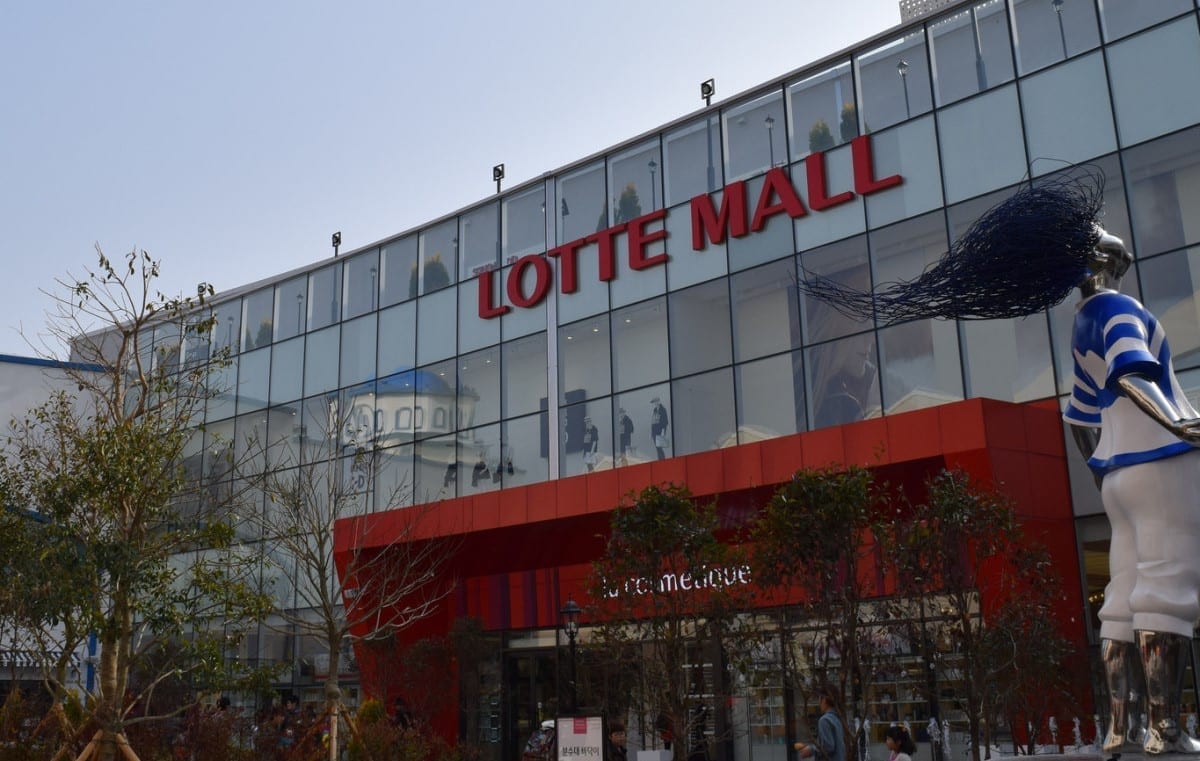
    A Lotte Group executive says the retail giant will continue to invest in its China business despite diplomatic tensions.

    Chinese authorities last month closed dozens of Lotte stores following inspections, ramping up pressure on South Korea’s fifth-largest family-run conglomerate after it agreed to provide land for the US Terminal High Altitude Area Defence (THAAD) missile system outside Seoul.

    South Korea and the US say the system is designed to thwart North Korea’s nuclear missile threat, but Beijing says the system’s radar can also reach far into China. This led to Chinese state media calling for a boycott of Lotte businesses.

    “We plan to continue to invest in our China business and continue to strengthen it,” executive Hwang Kag-gyu says. He is the head of Lotte Corporate Innovation Office and is regarded as the second-highest executive next to chairman Shin Dong-bin.

    “It has been 20 years since Lotte entered the China market. We believe the China business is still in an investment period,” he says.

    Out of 99 Lotte hypermarkets in China, 75 have been closed by Chinese authorities. Hwang says the company is working to fix the problems raised by Chinese regulators.

    China is Lotte’s biggest overseas market, generating more than 3 trillion won (US$2.7 billion) in annual revenue in 2015. It is also one of four strategic markets along with Indonesia, Russia and Vietnam that Lotte has been focussing on.

  • Burberry changes strategy to boost up sales

    Burberry changes strategy to boost up sales

    In a significant strategic u-turn the Burberry beauty business is to be out-sourced again.

    The UK fashion brand has announced a partnership with Coty to help boost the growth of Burberry beauty products from October.

    “We are delighted to partner with Coty, a world leader in luxury fragrance and makeup,” said creative chief Christopher Bailey in a statement. “Working with a global partner of their scale and expertise will help drive the next phase of Burberry Beauty’s development and position this business for future growth.

    “Further, the combination of the upfront payments and ongoing royalties is financially attractive and is expected to provide an accretive impact to our earnings from 2018/19.”

    The Burberry beauty portfolio includes fragrance lines Mr Burberry and My Burberry and make-up products. It turned over about £203 million last fiscal year.

    The appointment of Coty suggests the failure of a four-year old decision to take the beauty business in-house, after previous partner Interparfums was ended. But management disagrees.

    “We are in a very different position now to the position we were in four years ago,” said Julie Brown, Burberry’s chief operating and financial officer, explaining the strategic shift.

    “There was quite a high level of distribution of beauty products four years ago and what we wanted to do was bring it back in-house, control it a lot more carefully, and ensure we repositioned it, alongside the rest of the Burberry range.”

    Executive director John Smith said taking the portfolio in-house had helped strengthen the brand but “at the same time, we are on our own, in an industry where there is lots of competition. By partnering with Coty with their sheer scale… we do feel that we will have a lot more force in the marketplace in terms of distribution and relationships with wholesalers, department stores and so on.”

    Burberry expects be paid £130 million ($163 million) for the long-term exclusive global licence and related transfer of the beauty business, and £50 million for assets.

    Under the deal,Burberry will lead the creative parts of the business and Coty will use its industry expertise and global distribution network to optimise sales.

  • Digital ingenuity triumphs over logistics challenges at DHL Asia Pacific Innovation Day

    Digital ingenuity triumphs over logistics challenges at DHL Asia Pacific Innovation Day

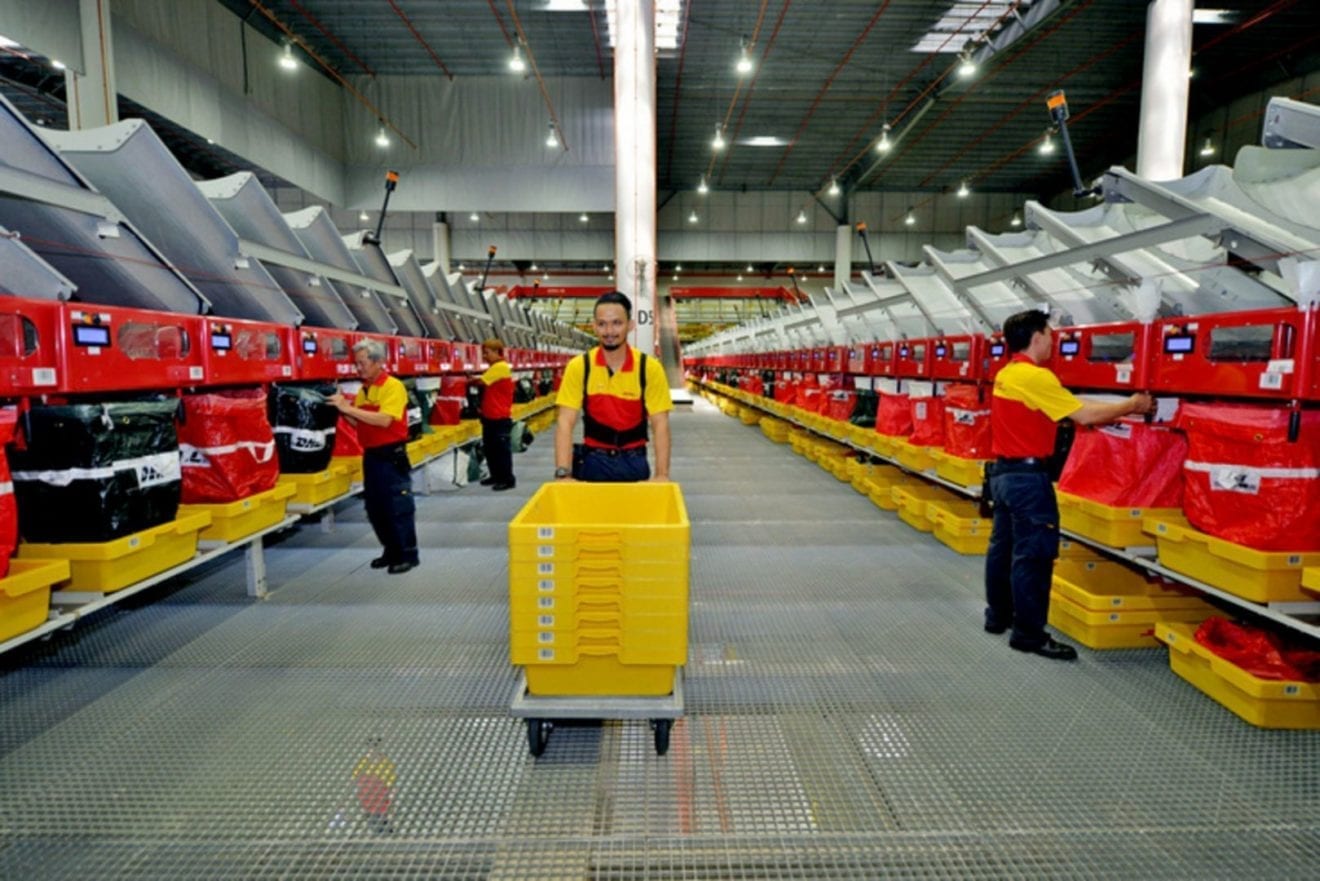
    Supply chain optimization platforms, digital payment, and robotics and unmanned aerial solutions were amongst the inventions which took center stage at the DHL Asia Pacific Innovation Day yesterday, hosted at the DHL Asia Pacific Innovation Center in Singapore. Focused on driving the future, DHL Asia Pacific Innovation Day showcased some of the latest trends and technologies shaping the logistics industry, awarding projects that have already applied these ideas to real-world challenges.

    One such project, which received the Most Innovative Customer Award, involved DHL collaborating with Schindler Lifts to develop a bespoke web-based tracking and optimization platform for their operations in Australia. Based on two years’ worth of past shipment data, the platform allows the elevator manufacturer to shave more than AU$500,000 from their annual running costs. The platform gives Schindler Lifts full visibility over the warehousing, shipping, and last-mile delivery of its elevator shipments, allowing the business to optimize end-to-end supply chain movements based on their required delivery dates.

    “The platform has enabled visibility at every stage of the process from collection to final delivery at the specified site address. Should any unexpected changes occur, both DHL and Schindler have the ability to instantly adjust with the amended delivery dates,” said George Lekkas, Strategic Procurement Manager, Schindler Lifts Australia. “Many logistics players are touting the potential of real-time tracking and data analytics to transform supply chains, but DHL has put those ideas into practice in a way that not only overcomes our unique shipment handling challenges, but can easily scale to meet ongoing growth in the Australian construction industry.”

    The Innovation Day also saw an award go to a digital payment solution developed by DHL eCommerce subsidiary Blue Dart, which enables couriers in India to collect cash-on-delivery (COD) payments through mobile Point of Sale devices and 15 different secure digital wallet options instead of physical cash. The system, which rolled out just as the Indian government took INR 500 and 1,000 notes out of circulation, enabled delivery staff to not only continue but significantly increase collection of COD payments, saving them more than 29 man-months between October 2016 and February 2017.

  • 5G indoor wireless market to be worth $509m by 2025

    5G indoor wireless market to be worth $509m by 2025

    The global equipment market for in-building wireless system, including active distributed antenna systems (DAS), passive DAS, and repeaters, is expected to grow to $10 billion in 2025, according to ABI Research.

    Yet, out of this market, 5G in-building wireless equipment will account for only 5% or $509 million in 2025, due to one year or more delay of 5G deployments indoors and in venues compared to outdoor 5G deployments starting from 2020, the research firm says.

    “As 5G nears full specification, mobile network operators will face challenges for indoor mobile coverage, including signal propagation, next-generation fronthaul/backhaul, and massive MIMO,” says Nick Marshall, research director at ABI Research.

    According to Marshall, early 5G deployments indoors and in venues will be a migration building on the features of LTE-Advanced and LTE-Advanced Pro. This will happen technology by technology and frequency by frequency, avoiding costly ‘rip and replace’ style deployments, the analyst notes.

    Marshall further points out that future 5G networks – which will comprise of a combination of different cell types and access technologies to seamlessly adapt to an array of use cases and applications – will rely on network functions virtualization (NFV) and mobile edge computing (MEC) to alter the architecture and topology of the RAN by leveraging telco data centers to virtualize signal processing in the cloud.

    NFV migrates cellular signal processing to a remote telco data center, while MEC, in a countervailing trend, migrates IT compute and storage to the network edge within the building or venue for low latency use cases and applications.

    With 5G standards yet to be finalized, many equipment vendors are actively researching and developing 5G equipment with a variety of approaches. These companies include Nokia with its AirFrame/AirScale Radio Access, Ericsson with its ERS, and CommScope with its OneCell.

  • SQ, Ethiopian Airlines to expand codeshare agreement

    SQ, Ethiopian Airlines to expand codeshare agreement

    Star Alliance members Singapore Airlines and Ethiopian Airlines plan to expand their codeshare agreement on June 1 to also cover the daily non-stop flights of Ethiopian Airlines from Addis Ababa to Singapore, according to a statement.

    Under the agreement, Singapore Airlines customers can also fly through Ethiopian Airlines’ vast intra-African network, while in turn, Ethiopian Airlines customers will have access to multiple destinations across the Singapore Airlines network.

    The airlines’ codeshare agreement started in 2011 and the expanded codeshare flights were still subject to regulatory approvals, the statement added.

    Singapore Airlines marketing planning senior vice president Tan Kai Ping said that the extended agreement was part of the carrier’s efforts to continuously expand its network in Africa, Asia and the southwest Pacific.

    Meanwhile, Ethiopian Airlines strategic and alliances vice president Girma Shiferaw said that the agreement would offered the best connectivity options with one ticket and a single check-in at the first boarding airport.

    “It will also play a critical role in enhancing investment, trade and tourism ties between a rising Africa and business-friendly Singapore.” Shiferawa said.

    Singapore Airlines, with its subsidiaries, operates a modern passenger fleet of more than 100 aircraft to 130 destinations around the world, while Ethiopian Airlines serves more than 90 international destinations across five continents with more than 240 daily departures.

  • China’s Changan forms electric car JV with local startup Nio

    China’s Changan forms electric car JV with local startup Nio

    China’s fourth-largest automaker Chongqing Changan Automobile Co Ltd and Nio, an electric car startup formerly known as NextEV, will form a joint venture to cooperate on researching and selling electric cars, Nio said on Sunday.

    China is aggressively promoting electric cars to combat urban smog and push the industry to the forefront of automotive technology, loosening rules in recent years to allow startups like Nio to flood the industry and challenge established Chinese automakers.

    The Changan-Nio JV will focus on research, sales and service for green cars, although under a broader partnership the two sides will also share resources related to smart vehicle technology, manufacturing and other areas, according to a statement from Nio.

    Financial terms of the partnership were not disclosed.

    A Changan spokesman said the company had no further information to release regarding the partnership.

    Chinese tech giant Tencent Holdings Ltd was an early backer of Nio, and rival internet company Baidu Inc last month said it was leading a new round of investment into the startup.

    Nio has also partnered with Anhui Jianghuai Automobile Group Corp Ltd to produce electric vehicles on a contract basis.

  • AirAsia is official airline partner for SEA Games 2017

    AirAsia is official airline partner for SEA Games 2017

    Budget airline AirAsia Bhd has lent its support to Malaysia’s hosting of the 29th Southeast Asian Games from Aug 19 to 31, 2017 and 9th Asean Para Games from Sept 17 to 23, 2017.

    As a Gold Sponsor, AirAsia will be providing flights for the Malaysia Organising Committee (MASOC) officials within the airline’s Asean network for the purpose of organising both sporting events.

  • Coffee industry in Vietnam turns bitter

    Coffee industry in Vietnam turns bitter

    The Ministry of Agriculture and Rural Development in turn estimated the export volume in the first quarter when compared against the same three months last year to have dipped 5.4% to 449,000 tons with revenue jumping 25.6% to US$1 billion.

    Average prices in the first quarter ticked up 32% on year to US$2,262 a ton, said MARD, adding that Germany and the US were the two largest buyers with market shares of 17% and 16%, respectively.

    Markets witnessing sharp growth over the same period last year were Belgium (230%), the Republic of Korea (79%), the US (60%), Algeria (50%), Spain (34%), Germany (29%), the UK (27%), Japan (21%) and Italy (20%).

    Compared to the end of February 2017, the price of coffee Robusta in the Central Highlands at the end of March rose by US$.09-US$.10 (US$ VND2,000-VND2,200) to US$2.03- US$2.07 (VND46,000-VND46,900) per kilogram.

    Coffee prices in Dak Lak, the largest coffee bean-growing province in the country, stood at US$2.08-US$2.11 (VND47,300-VND48,000) per kilogram as stockpiles remain low.

    According to Nam, coffee prices look to continue to increase in the near term as farmers are holding back waiting to see if prices will rise even further.

    Despite the higher coffee prices, the profits per hectare remain lower than other alternative crops such as fruit trees and pepper— resulting in many farmers getting out of the coffee business entirely.

    Solutions to boost coffee exports

    The small production scale and lack of sophisticated skills of farmers have stopped them from becoming major players in the global market, said Nam, noting the lack of access to credit has prevented them from replanting with the latest varieties and newest technology.

    Meanwhile, farmers collectively have processed 10% of the total coffee output for the year but instant, roasted and ground coffee products, have not achieved a high volume, strong brand or the quality reputation to compete with top global brands.

    Huynh Quoc Thich, deputy director of Dak Lak Agriculture and Rural Development Department, notes that most actors in the coffee segment in the province have not paid sufficient attention to quality.

    He added that the existing sales prices have not incentivized coffee growers to produce high quality coffee.

    Meanwhile, he looks for exports to drop 25-30% this year. That won’t turn around until actors in the segment comprehensively collaborate to promote brand recognition, food safety and boost added value, he concluded.