Author: Mei Ling Tan

  • Toyota Invests $1.33 Billion To Upgrade Georgetown, Kentucky Plant

    Toyota Invests $1.33 Billion To Upgrade Georgetown, Kentucky Plant

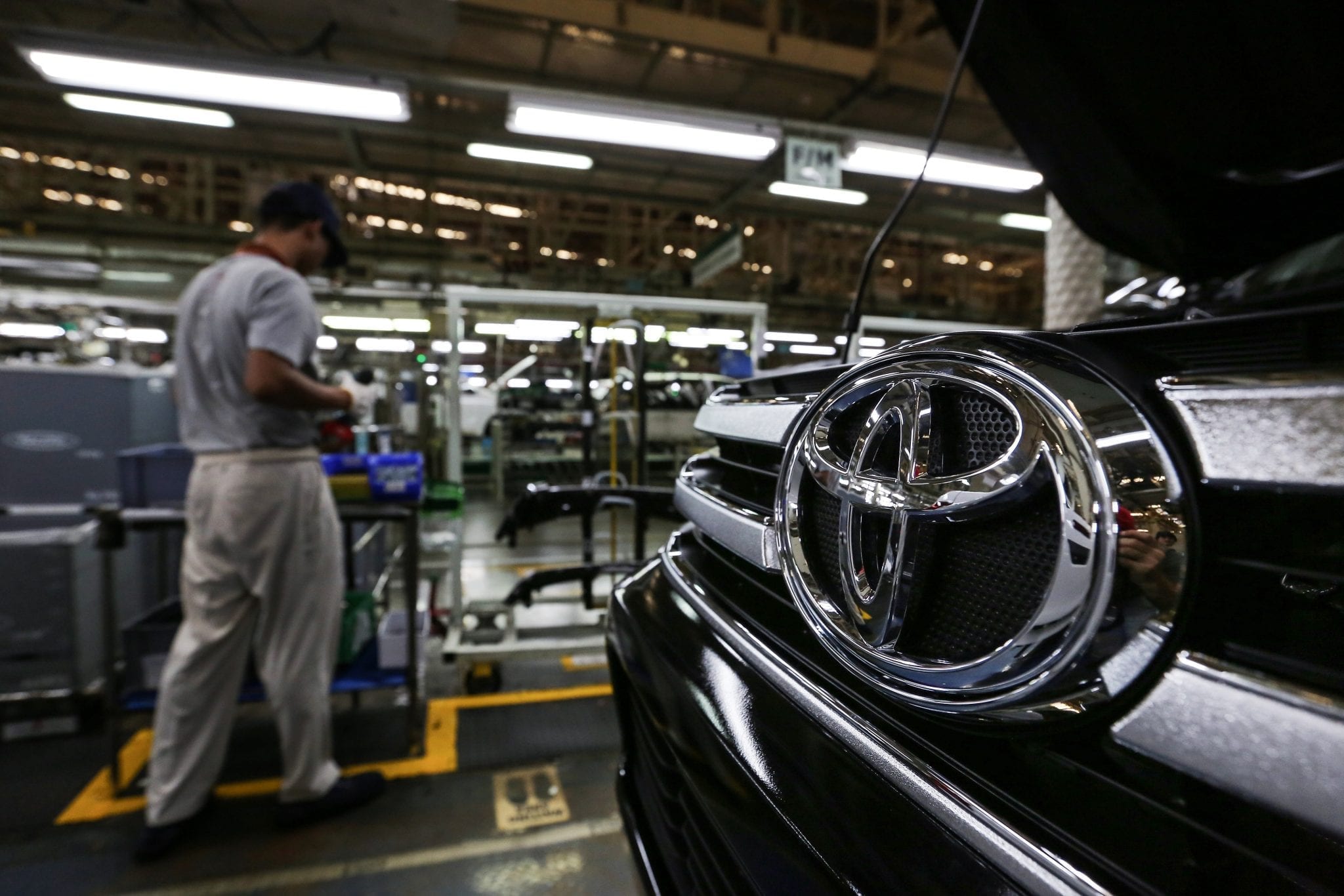
    A $1.33 billion investment will make Toyota Motor Manufacturing, Kentucky, Inc. the first plant in North America to begin producing vehicles using Toyota New Global Architecture.

    Toyota’s Kentucky assembly plant located in Georgetown, 13 miles north of Lexington and 71 miles east of Louisville, is the automaker’s largest in the world employing 8,200 team members. This represents an all-time high after recently adding over 700 people to support the upcoming launch of the 2018 Camry.

    Last year, TMMK produced nearly a quarter of the total number of Toyota vehicles produced in North America, over 500,000. In total, the plant has produced more than one-third, 11 million, of all Toyota vehicles manufactured in North America since 1986.

    Today’s announcement adds to the $530 million investment the plant committed to in 2013, in part to support Lexus production, the carmaker said. This brings Toyota Kentucky’s investment in the last four years to approximately $1.86 billion.

    “This $1.33 billion investment is part of Toyota’s plan to invest $10 billion dollars in the U.S. over the next five years, on top of the nearly $22 billion Toyota has invested in the U.S. over the past 60 years,” said Jim Lentz, CEO of Toyota Motor North America.

    “Toyota New Global Architecture is about exciting, ever-better vehicles for our customers as it will improve performance of all models, including increased fuel efficiency, more responsive handling, and a more stable, comfortable feel while driving,” he added.

    “This is the largest investment in our plant’s history and it speaks directly to the quality of our people and our products, as well as the partnerships we’ve forged in the local community and across the state,” said Wil James, president, Toyota Motor Manufacturing, Kentucky, Inc. (TMMK). “This major overhaul will enable the plant to stay flexible and competitive, further cementing our presence in Kentucky.”

    “Toyota is a global icon. This $1.33 billion investment is further proof of their commitment to producing American-made cars that are among the finest quality found anywhere in the world,” said Governor Matt Bevin. “It also serves as a testament to the hard work and dedication of the plant’s current employees, and reaffirms Toyota’s confidence in the advantages of manufacturing in Kentucky. We are grateful that this significant investment further validates the fact that Kentucky is the engineering and manufacturing hub of excellence in America.”

    “This major investment further solidifies Toyota’s long-term commitment to its Kentucky plant,” said Secretary Terry Gill of the Kentucky Cabinet for Economic Development. “Its ripple effects will add to Toyota’s three decades of transformative impact on our communities and for our residents across the Commonwealth. Additionally, this strengthens Kentucky’s status as a top state for auto manufacturing.”

  • Cebu Pacific’s Dubai route surges ahead as profit doubles

    Cebu Pacific’s Dubai route surges ahead as profit doubles

    Cebu Pacific Air boosted passenger numbers between Dubai and Manila last year as profits more than doubled, overcoming overcapacity in the global aviation sector.

    The Philippine low-cost carrier said overall passenger numbers between Dubai and Manila rose by 8 per cent to more than 252,000.

    That beat overall passenger growth at the airline, which flew a total of 19.1 million customers, up by 4.1 per cent on a year earlier.

    The airline reported profit of 9.8 billion Philippine pesos (Dh725.4 million) – an increase of 122 per cent on a year earlier. Growth in revenue from baggage fees, on-board meals and merchandise helped to drive profits higher, it said.

    Total revenue, which includes cargo services, jumped by 9.6 per cent to 61.9bn pesos.

    In 2016, Cebu Pacific flew to 36 domestic and 30 international destinations through 102 routes.

  • Jin Air ready to fly to lombok using Boeing 777

    Jin Air ready to fly to lombok using Boeing 777

    South Korean low-cost carrier Jin Air is ready to fly to Lombok in the Indonesian province of West Nusa Tenggara using a wide-bodied Boeing 777 plane to encourage the tourism industry there, an official said.

    “I have received an official (notification) from the chairman of Korean Air that its subsidiary, Jin Air, is ready to fly to Lombok using Boeing 777,” Chief of the Investment Coordinating Board (BKPM) Thomas Lembong noted following a meeting at the Coordinating Ministry for Maritime Affairs here on Monday.

    He stated that low-cost carriers are badly needed to boost the tourism industry in Indonesia.

    Although investment in the tourism sector is not large, it still plays a very strategic role in creating jobs and bringing in foreign exchange earnings from international tourists, he said.

    “This needs an extraordinary teamwork as many tourists depend on air connectivity. We need air connectivity, particularly through budget carriers, so that there will be low-cost flights from Korea, China, Japan, Australia, India, and so on,” he remarked.

    Besides low-cost carriers, the government must also prepare supporting infrastructures to boost the tourism industry, he pointed out.

    “Although the runways and terminals of airports are still good, we still need to upgrade them. We must check their electronic navigation system, so that planes can land and take off despite bad weather,” he stated.

  • Singtel’s Amobee completes acquisition of Turn

    Singtel’s Amobee completes acquisition of Turn

    Singtel has enhanced its digital marketing capabilities with the acquisition of marketing technology platform provider Turn.

    Singtel’s Amobee digital marketing arm has acquired Turn to provide the ability to offer an end-to-end advertising and data management platform for marketing companies worldwide.

    The platform will cover all channels, formats and devices and also provide access to Amobee Brand Intelligence analytics and insights.

    “The acquisition of Turn underscores Singtel’s commitment to grow and scale Amobee to become a global digital marketing leader,” Singtel Group Digital Life CEO Samba Natarajan said.

    “The powerful combination of Amobee and Turn addresses the rapidly changing digital marketing landscape. Together, we will bring marketers the most innovative, efficient, and data-driven approach to better understand and reach their customers, and enhance the way they engage them on a global scale,” added Amobee CEO Kim Perrel.

  • Goldman Sachs linked to The Body Shop bid

    Goldman Sachs linked to The Body Shop bid

    Investment bank Goldman Sachs is reportedly preparing a £600 million bid for The Body Shop.

    Owner L’Oreal decided to put the ethical cosmetics brand on the market last month, apparently unwilling to invest in arresting falling sales and market share.

    The Body Shop bid price would fall considerably short of the £850 million L’Oreal is said to be seeking – a figure roundly considered as highly optimistic in the investment community.

    Private equity companies Carlyle, CVC Capital Partners, Advent International and Apax Partners have all been reported to have shown an interest in the business. L’Oreal paid £650 million for the business in 2006.

    Founded by Dame Anita Roddick and her husband Gordon in 1976, The Body Shop has grown to more than 3000 stores in 66 countries. The original concept was to create an ethical approach to cosmetics with fewer chemicals and no animal testing.

    Sales fell 3.2 per cent in the first half of 2016 and by 2.8 per cent in the third quarter. Another decline is expected to be reported when L’Oreal releases its results this month.

    Charlotte Pearce, an analyst with GlobalData, warns The Body Shop needs to freshen its offer or face its eventual demise.

    “The brand has become outdated and has failed to provide an innovative offer with exciting new products to entice customers into stores, causing the retailer to lose out to brands with more relevant beauty and skincare ranges,” said Pearce.

  • Community park to be settled in MyTown Kuala Lumpur

    Community park to be settled in MyTown Kuala Lumpur

    MyTown Shopping Centre has opened in the Kuala Lumpur CBD as a joint development by Boustead Holdings and retail banker Ikano.

    It features 1.6 million sqft (148,644 sqm) of retail space (more than 400 stores), an alfresco dining area and a park.

    Anchor tenants include the biggest Ikea and Zara stores in Malaysia, Malaysia’s first Best flagship, Food Empire, Golden Screen Cinemas, H&M, Parkson Department Store and Village Grocer.

    Biggest ZARA in Malaysia @ MyTOWN

    Its two-acre (0.8ha) Town Park has been set aside for community events. It includes ramps and tracks for rollerblading and skateboarding. A Sunken Garden features amphitheater-style.

    MyTown is the first shopping centre in Malaysia to feature Soundscapes – special compositions and custom designed sounds to offer an immersive environment in key locations.

    MyTOWN Launch

    Mr Christian Rojkjaer – Managing Director of Ikea Southeast Asia & Director of Boustead Ikano Sdn Bhd (3rd from left) & Tan Sri Dato’ Seri Lodin Wok Kamaruddin – Deputy Chairman / Group Managing Director, Boustead Holdings Berhad (4th from left) flanked by Directors from Boustead Ikano Sdn Bhd, Boustead Holdings Bhd & Ikano Ptd Ltd including (from left to right), Mr Lee Hartigan, Dato Sri’ Ghazali Mohd Ali, Datuk Koo Hock Fee, Ms. Cheah Swee Choo, Mr Sebastian Hylving, Mr Joakim Hogsander – General Manager of MyTOWN Shopping Centre & Mr Thomas Malmberg.

    GM Joakim Hogsander describes the centre as a lifestyle mall. “We have created a special customer journey through our choice of tenants, design and experience.”

    MyTown has been awarded green building status by the US Green Building Council (USGBC) and Malaysian Green Building Index.

  • Where is Indonesian e-commerce headed?

    Where is Indonesian e-commerce headed?

    With a population of over 250 million and rapidly growing internet adoption, the Indonesian archipelago could offer a booming market for online shopping — and current projections say it will reach $130 billion by 2020.

    “The great thing is that there are a lot of investments… There are choices for consumers that love innovative solutions that are coming out from Indonesia itself,” William Gondokusumo, the CEO of Campaign.com and director of Tororo.com told.

    Recently, the Indonesian government altered regulations to allow more foreign investment in the sector. Indonesia’s investment service agency only recently allowed 100-percent foreign ownership for investments above 100 billion Indonesian rupiah ($7.53 million) for the establishment of an e-commerce company in the country.

    However, even with “big boys” such as Alibaba and JD.com coming in — and Amazon soon following with a reported $600 million investment — Gondokusumo predicted that domestic e-commerce firms won’t be pushed out as they are “more community focused.”

    The slowing Indonesian retail growth numbers of February, and indications that price pressure will continue over the next few months do not affect Gondokusumo’s bullish view on the retail and e-commerce in the country.

    “The way we see it,” he said. “All retail and media companies will eventually become their own social network.”

    On the contrary, Ken Dean Lawadinata, former CEO and chairman of Kaskus Networks, who invested alongside Gondokusumo in Tororo, held a less optimistic attitude.

    “At the moment, I have a more bearish attitude towards the IT industry, where I believe most investors and owners are pushing their company to a quick sell or short term mentality. This is not sustainable and bad for the industry itself,” he told in an email.

  • Australia’s TPG to enter local mobile market

    Australia’s TPG to enter local mobile market

    Fast-growing Australian fixed line operator TPG Telecom has bid A$1.26 billion ($944.8 million) to acquire 2×10 MHz of valuable 700-MHz spectrum, and plans to build its own mobile network using the bandwidth.

    TPG has revealed plans to spend A$600 million over three years to deploy a mobile network that covers 80% of the Australian population.

    As well as its imminent 700-MHz holdings, TPG also holds spectrum in the 1.8-GHz and 2.5-GHz bands. The operator plans to deploy a network consisting of around 2,000 to 2,500 sites, and use its extensive 21,000km fiber network as backhaul.

    TPG currently operates as an MVNO over Vodafone Australia’s network, but now plans to invest in deploying its own network. The company estimates it can break even with around 500,000 subscribers.

    CEO David Teoh said TPG expects to have several advantages over incumbent operators Telstra, Optus and Vodafone due to the ability to operate fewer mobile towers and deploy advanced mobile technology on its network, without the requirement to support legacy equipment and networking standards.

    “We believe that our mobile strategy will be complementary to our ongoing fixed line business, with the ability to bundle mobile and fixed services expected to have a beneficial effect on our already low fixed services customer churn,” he said.

    TPG was also recently selected to become Singapore’s fourth mobile operator after bidding S$105 million ($74.8 million) for a license and spectrum, and last week successfully bid S$23.8 million for 10 MHz of 2500-MHz spectrum.

    The Australian 700-MHz auction raised more than A$1.5 billion – significantly higher than the A$857 million reserve price – with Vodafone Australia also securing 2x5MHz of spectrum for A$285.9 million.

    The licenses will commence in April 2018 and expire at the end of 2029.

  • South Korea making mark in global beauty markets

    South Korea making mark in global beauty markets

    South Korea is among the top 10 global beauty markets, estimated to be worth more than US$13 billion this year, according to London-based market research firm Mintel Group.

    Its research was released on the eve of the 27th edition of In-cosmetics Global in London, said to be the world’s foremost exhibition for personal-care ingredients. As well as spotlighting South Korea’s beauty market, the research looks at trends impacting the global beauty industry and innovations in textures, ingredients and product experience.

    Facial skincare accounts for 51 per cent of total market share with $6.5 billion in retail sales and a projected 5.8 per cent CAGR over the next five years to reach $7.2 billion by 2020. Much of the success of the category comes from an abundance of product development and the fact that 68 per cent of total skincare product launches in South Korea for 2015-2016 were facial skincare products, according to the Mintel Global New Products Database (GNPD).

    Colour cosmetics make up the second-largest beauty category in the South Korean market, valued at $2.3 billion this year. Mintel research indicates the market is actively supported by consumers with a per capita spend at $45, compared to $43 in the UK and $37 in the US, and more than double the global average of $21. With a projected CAGR of 8.1 per cent over the next five years, the market is estimated to reach $2.8 billion by 2020.

    “The Korean beauty market remains buoyant thanks to fast-paced innovations and highly engaged consumers who don’t hesitate to adopt novel products,” says Mintel senior beauty analyst Jane Jang.

    Several South Korean beauty and personal-care trends are set to impact global beauty markets, says Jang…

    Facial skincare

    For facial skincare, this will be a year of extreme segmentation, says Jang. Products will become increasingly targeted and multi-functional, responding to the needs of knowledgeable and demanding consumers.

    South Korean beauty routines can comprise up to 10 steps, with moisturising, brightening, whitening and anti-ageing specific obsessions.

    “Expect to see hybrid concoctions, such as daily exfoliating moisturisers, anti-wrinkle whitening tone-up creams and lightweight nourishing oil serums, but also transformative textures, like powder-to-serum, oil-to-foam and water-to-cream. Overall, lines are blurring in every possible way to deliver new experiences and create continuous excitement around skincare.

    “A strong focus on quality and safety supports a fascination for natural ingredients, in line with ‘hanbang’, the ancient Korean herbal medicine. Tradition is taken to the next level through scientific improvements, and 69 per cent of facial skincare launches last year featured herbal/botanical claims.”

    Jang says the sheet mask craze does not seem to be slowing down. “Moving beyond basic hydrating benefits, sheet masks and patches are now designed for each part of the body and every member of the family, babies included… Some interesting examples include masks inspired by oriental acupressure massage techniques, plus injection treatments at clinics featuring micro-needles and pressure points, and sauna-effect masks that lock in moisture while trapping body heat.”

    Make-up

    South Korea’s make-up rituals last year focussed greatly on lips and complexion, using products in a diversity of shades with a variety of contouring techniques. “As such, the number of  lip colour and face make-up product launches tend to be higher than the global average,” says Jang. Mintel GNPD says lip colour launches accounted for 30 per cent of all launches of colour cosmetics in South Korea last year, compared to a global average of 27 per cent. This is followed by foundations and fluid illuminators, accounting for 16 per cent of launches.

    “The boom of hybrid formats has spawned a variety of new lip products, like lip syrups, lip crayons, lip-quids and gel sticks,” says Hang. “Lip tints are also widely diffused, but contrary to their potentially drying Western counterparts, South Korean products are lightweight and glossy, and often come as oils.”

    A Korean success story for the past few years has been cushion compacts, breaking through the Western market last year. “New launches in South Korea include multi-functional skincare claims such as moisturising, anti-ageing, whitening and UV protection; foundation-like properties; and hygiene and application innovations.”

    Jang says the trend for hybrid textures and formats is borrowed from skincare. “South Korean brands are increasingly focussing on gels, jellies, mousses and watery oils. Moreover, transforming textures combine the benefits of two or more textures within one product. For instance, liquid textures such as cream and oil that provide high moisture and spreadability transform into a water or serum for fast absorption or into a powder to give a matte and lasting finish.”

    Summing up, Jang says that because of K-beauty’s growing popularity worldwide, Western brands are constantly looking to South Korea for inspiration.

    “The popularity of South Korean beauty products lies in their high performance combined with fun packaging and sensorial cues, as well as affordable prices.”

  • Indonesia Promotes Tourism in Japanese Festival

    Indonesia Promotes Tourism in Japanese Festival

    The Indonesian government participated in the “Singen-ko Festival 2017” held in the Yamanshi Prefecture, Japan, to promote the tourism sector and investments in Indonesia.

    Indonesia was represented by state-owned airline PT Garuda Indonesia, assigned to strengthen the Indonesia-Japan diplomatic relationship.

    “The Garuda Indonesia team is led by Garuda Indonesia Commissioner Jusman Syafeii Djamal, accompanied by House of Representatives Commission X member Niko Siahaan, and a number of local celebrities, such as Donna Agnesia, Okky Lukman, Indra Bekti, and Vincent,” Indonesia’s special envoy for investment affairs Rachmat Gobel said on Monday, April 10, 2017.

    According to Gobel, Indonesia’s involvement in such cultural festival is a strategic way to strengthen ties between Indonesia and Japan. In addition, Garuda has served Japanese wine products from Yamanase on its flights. Therefore, Gobel said Indonesia must seize the opportunity to attract more Japanese investors.

    Data from the Investment Coordinating Agency revealed that Japan is the second largest investor with a total investment value of US$5.4 billion after Singapore in 2016. Japan has made investments in almost all sectors, such as manufacturing, infrastructure and automotive.

    In addition, Japan recorded a surplus of USD 25 billion in current trade balance in February 2017, increasing from USD 588.6 million in January. Official data from the Japanese government showed that the surplus increased by 18.2 percent when compared to last year. Bloomberg forecasted that the current account surplus reached USD 22.5 billion.

    Japan has maintained its trade balance surplus for years, thanks to positive trade balance and strong revenues from overseas investments.

  • Japanese-Bruneian fund seizes investment opportunities in Indonesia

    Japanese-Bruneian fund seizes investment opportunities in Indonesia

    SBI Islamic Fund (Brunei) Limited, a joint venture between Brunei Darussalam’s Ministry of Finance and Japan’s Strategic Business Innovator (SBI) Holdings, is looking for opportunities to invest in Indonesia.

    SBI Islamic Fund (Brunei) Limited CEO Amran Mohammad said the fund would build fish processing factories in Maumere, East Nusa Tenggara, and in Aceh. The facilities would be used to process tuna to be exported to Japan.

    “The one in Aceh will be much bigger than that in Maumere. We are sealing the agreement for [the project in] Aceh,” he told The Jakarta Post during the 3rd IDB Member Countries Sovereign Investment Forum in Nusa Dua on Tuesday.

    The investment for the development of the two facilities would come from its second sharia fund totaling US$60 million.

    Both Brunei’s Ministry of Finance and SBI Holdings contributed $25 million each to the fund, while the remaining $10 million comes from the Islamic Development Bank (IDB).

    SBI Islamic Fund (Brunei) Limited’s first sharia fund worth $75 million was created three years ago and invested in Indonesia’s logistics firm Pandu Logistics, among other investments.

    However, Brunei Ministry of Finance deputy permanent secretary for investment Khairuddin Abdul Hamid said the fund was still looking for another $40 million from private investors.

    “We have already talked with some prominent parties during this forum and are still waiting for the reply,” he said.

  • Say goodbye to Whatsapp India’s payment service

    Say goodbye to Whatsapp India’s payment service

    Instant messaging app WhatsApp India, owned by Facebook, has advertised for someone to head its digital transactions.

    It is the first time it has looked at moving into digital payment services globally, Reuters reports. India is WhatsApp’s biggest market with 200 million users.

    Earlier, news website The Ken reported that WhatsApp was working to launch person-to-person payments in India in the next six months.

    A job advertisement on WhatsApp‘s website says it is looking for a candidate with a technical and financial background who understands India‘s Unified Payments Interface (UPI) and the BHIM payments app that enables money transfers and merchant payments using mobile numbers.

    “India is an important country for WhatsApp, and we’re understanding how we can contribute more to the vision of Digital India,” says a WhatsApp spokesman, referring to a flagship government program that aims to boost the use of internet-based services in the nation.

    “We’re exploring how we might work with companies that share this vision, and continuing to listen closely to feedback from our users,” the spokesman says.

    Digital transactions in India have surged after Prime Minister Narendra Modi’s shock ban of certain high-value banknotes in November that accounted for more than 80 per cent of the country’s currency in circulation at the time.

    In February, WhatsApp‘s co-founder Brian Acton told local media the app was in early stages of investigating digital payments in India, and that he had spoken to the government about the matter.

    Meanwhile, Swedish communications app Truecaller, which has a large user base in India, has launched a mobile payment service on India’s UPI payment platform.

  • Volkswagen offers six-year warranty to win back customers

    Volkswagen offers six-year warranty to win back customers

    Volkswagen AG is trying to win back American customers after its diesel emission scandal with SUV warranties that it said will be the longest in the United States.

    Ahead of the New York auto show, the world’s largest automaker said Tuesday it will offer a six-year, 72,000 mile warranty on its new 2018 Atlas and 2018 Tiguan sport utility vehicles that go on sale later this year.

    “This warranty further addresses the needs of American buyers head-on,” said Volkswagen Group of American chief executive Hinrich Woebcken.

    VW said most other major rivals offer a 36,000 mile, three-year warranty on similar SUVs. The longest warranty is now offered by Hyundai Motor Co (005380.KS) and its Kia Motors Corp (000270.KS) affiliate. That warranty extends 60,000 miles or five years. The powertrain warranty is 100,000 miles, but it only lasts five years or 60,000 miles if transferred.

    The German automaker has been struggling to recover since it admitted in 2015 the company installed secret software that allowed vehicles to cheat emissions tests for six years.

    The new VW warranty is twice as long as the current three-year 36,000-mile warranty on the Tiguan. The Atlas is a new model.

    VW brand U.S. sales this year are up 10 percent this year, but fell 8 percent in 2016 to 323,000 vehicles after falling 5 percent in 2015. The automaker halted all U.S. diesel sales in late 2015.

    AutoNation (AN.N) Inc chief executive Mike Jackson said that an extended warranty could help win customers.

    “The American people are full of forgiveness. All you have to do is say you are sorry and give them a deal,” said Jackson, who heads the largest U.S. new car dealership chain. VW has “to give a price that reflects that you are asking for forgiveness.”

    In March Volkswagen pleaded guilty as part of a settlement over the automaker’s diesel emissions scandal.

    In total, VW has agreed to spend up to $25 billion in the United States to address claims from owners, environmental regulators, states and dealers and offered to buy back about 500,000 polluting U.S. vehicles.

  • H&M Sustainability goal: 100 per cent recycled by 2030

    H&M Sustainability goal: 100 per cent recycled by 2030

    The latest H&M Sustainability Report released this week aims for 100 per cent recycled or other sustainably sourced materials by 2030.

    And the Swedish headquartered retailer says it wants to be “climate positive” throughout its entire value chain by 2040.

    Another key highlight is a commitment to switch to 100 per cent renewable electricity. In 2016, 96 per cent of the company’s global electricity in its own operations came from renewable sources.

    The report also mentions that H&M in 2016 was named the biggest global user of cotton  certified by the Better Cotton Initiative.

    “When it comes to recycling and reuse, the H&M group is continuing to drive an ambitious development plan,” the company said in a statement.

    Since the start of the global Garment Collecting initiative in 2013, the H&M group has collected 39,000 tonnes of unwanted textiles. By 2020 the company aims to collect at least 25,000 tonnes of textiles every year. The report also shows that the work to scale-up the H&M group’s industrial relations and fair living wage programs continues with good progress.

    “We want to use our size and scale to lead the change towards circular and renewable fashion while making our company even more fair and equal. This is why we have developed a new strategy aiming to take our sustainability work to the next level,” said Anna Gedda, head of sustainability at the H&M group.

    “We want to lead by example, pave the way and try new things – both when it comes to the environmental and social side – to ultimately make fashion sustainable and sustainability fashionable. Our climate positive strategy is one way of doing this,” she added.

    DBL factory visit. Savar. Bangladesh

    Fashion from plastics

    This year, H&M launched its first Conscious Exclusive collection featuring clothing made from Bionic, a polyester made from recovered plastic from shorelines.

    “We are committed to proving that sustainable fashion has a place on the red carpet as well as making it part of the standard offer in our stores,” the report says.

    The Conscious Exclusive collection is available in about 160 H&M stores worldwide, as well as online from April 20.

    “We continually work with materials and processes that make our products more sustainable. In doing so, we contribute to the democratisation of sustainable fashion by making more environmentally friendly choices available to our customers.

    “We also help lift these materials to scale and create demand for further innovation. In the long run, this can change the way fashion is produced by greatly reducing the need for raw materials, which in turn lightens the burden on our precious planet.”

    Other sustainable materials in the Conscious Exclusive collection and in other H&M ranges available throughout the year include fabrics such as recycled polyester, Tencel and organic cotton.

  • Pertamina to acquire more oil and gas blocks abroad

    Pertamina to acquire more oil and gas blocks abroad

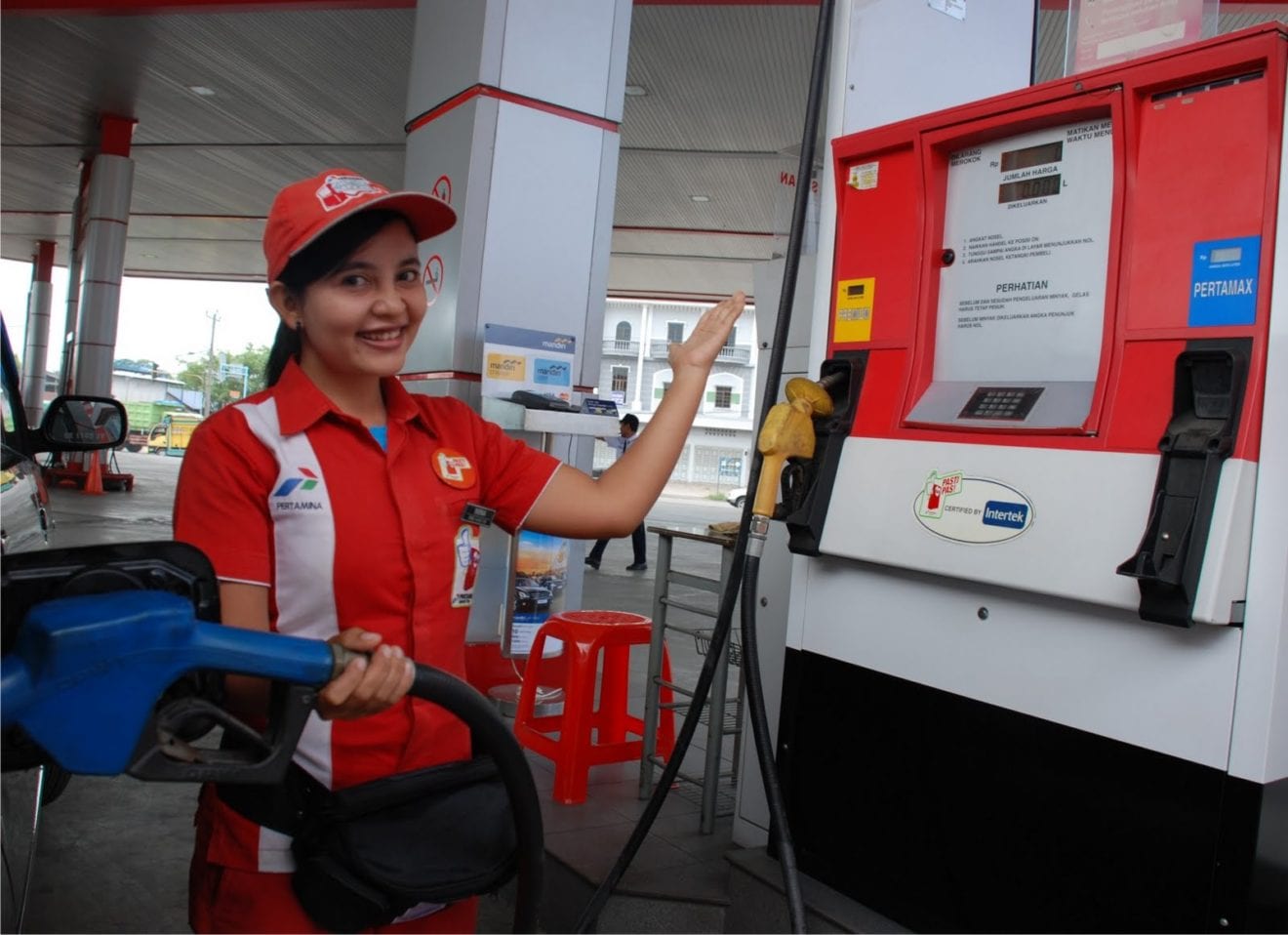
    State-owned oil and gas company PT Pertamina is seeking to acquire more oil and gas blocks in the country and abroad to meet its production target set by the government.

    “Operations abroad are expected to contribute 33 percent to the companys target of production of 1.9 million barrel oil equivalent per day in 2025,” its Upstream Director Syamsu Alam said in a media gathering here on Monday.

    The company would also be as aggressive in acquiring oil and gas blocks in the country, Syamsu said.

    Syamsu said currently Pertamina already has oil and gas blocks in operation in 12 countries such as in Algeria, Iraq and Malaysia, the first to operate , followed by ones in Nigeria, Tanzania and Gabon.

    Pertamina is preparing development of eight termination blocks in 2018 already handed over by the government to Pertamina including one in Sanga Sanga, East Kalimantan and OSES.

    Domestic assets are also optimized, Syamsu said citing the project of PHE WMO Integration, drilling of Parang Nunukan, Randugunting, enhanced oil recovery (EOR) of old wells.

    Indonesia is currently the 16th largest economy in the world with gross domestic product (GDP) at US$941 billion . In 2050, it is expected to break into the ranks of four largest after China, the United States, and India with GDP predicted at US$15.432 billion.

    Indonesia, therefore, would need support of large supply of energy , Syamsu said.

    In 2015 the countrys energy output reached 354 million tons equivalent oil including 271 million tons of coal and 113 million tons of oil, gas and renewable energy.

    While consumption of oil and gas is still high, production is decreasing with the shrinking known oil and gas reserves .

    Although Indonesia still has 60 oil and gas basins , the countrys oil reserves are ranked only the 26th in the world at 4 billion barrels. Similarly the countrys gas reserves , Indonesia is the 14th largest in the world with reserves of 100 TCF.

    The policy of Pertamina to acquire more oil blocks abroad to increase its reserves will contribute to guaranteeing energy supply in the country .