Author: Mei Ling Tan

  • Mobitel appoints Nalin Perera as CEO

    Mobitel appoints Nalin Perera as CEO

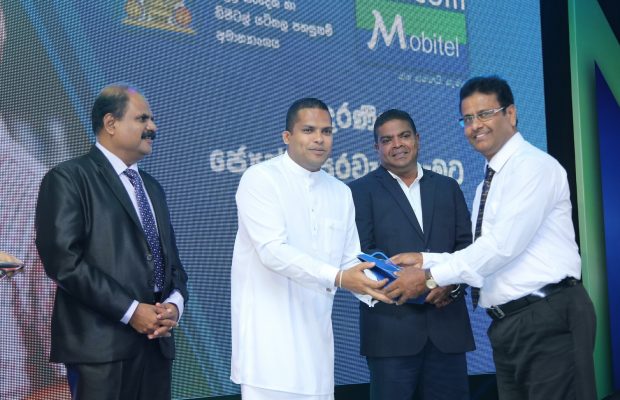
    Sri Lankan mobile operator Mobitel has appointed Nalin Perera as its CEO. Perera started his career at Mobitel in 2001 as general manager of marketing and was later promoted to the positions of senior general manager of marketing and senior general manager of contact center operations respectively. He also held the position of CMO and took over the responsibilities of COO at Mobitel in 2015.

    Commenting on the appointment, Mobitel said Perera’s strong track record “makes him the natural choice to lead the company on a forward momentum to the next phase of its evolution.”

    “He brings to the table strong insights into product and channel development, human resource management and more importantly, his understanding of the telecommunication industry as a whole, apart from his expertise in mobile telephony. His contribution to Mobitel has earned the company many accolades, including several local and international awards.”

    Perera brings 30 years of experience in mobile industry to his CEO role. He commenced his career in mobile telephony with Celltel in 1989, and led the introduction of the prepaid concept to Sri Lanka and its entire supportive ecosystem, which revolutionized the mobile industry and was the main contributor for the rapid growth in the sector in the country.

    BT appoints James Hennah to head Southeast Asia operations

    BT has appointed James Hennah as managing director for its South East Asia operations. He succeeds Ron Totton, who has recently taken on a new role as vice president in charge of BT’s operations in Switzerland, Nordics, Central & Eastern Europe and Russia (SNCR).

    Hennah will lead BT’s South East Asia team from Singapore, focusing mainly on Singapore, Malaysia, Indonesia, Vietnam, Thailand and the Philippines.

    Hennah joined BT in 1997, and was most recently CEO for BT’s global Media & Broadcast business and MD of carrier, channel and MVNO sales in BT’s Wholesale & Ventures division.

    Mark Russell to have an expanded role as MD of GCX International

    Mark Russell, president of Europe at Global Cloud Xchange (GCX), is expanding his role at the company after working for the Reliance Communications subsidiary for two years.

    Russell will take over the role as managing director of GCX International in charge of the company’s global sales across all segments, while continue to working for the company as president of Europe, GCX said Wednesday in announcing the appointment.

    Russell joined GCX in 2015 as president of Europe, where he has been instrumental in building the company’s capabilities and driving organic and inorganic growth across GCX’s European footprint, the company added.

    Russell has over 25 years of telecoms and technology experience. Prior to joining GCX, he had held senior management roles at companies including NetApp, UK software company Empower Interactive and MCI (now Verizon Business).


  • Vietnam’s top brewer Sabeco tops up profit goal for 2017

    Vietnam’s top brewer Sabeco tops up profit goal for 2017

    The company expects its annual sales to rise 3 percent against last year. Vietnam’s biggest brewer Sabeco is aiming to push sales to more than 1.7 billion liters this year, an increase of 3 percent against 2016, in a bid to raise its annual revenue by 9 percent to VND34.5 trillion ($1.52 billion) and net profit by 1 percent to VND4.7 trillion ($207 million).

    The state-owned company also plans to raise its dividend payments from 30 percent to 35 percent, as agreed by its board of director.

    Those targets will be put on the table at a shareholder meeting on April 18.

    Company bosses said that price cuts on ingredients, a preferential tax policy on malt and stable market growth in rural areas, where Sabeco is the most competitive, are the reasons for the more positive targets.

    Sabeco, known for the Bia Saigon and 333 brands, is also preparing for fiercer competition on the domestic market following Belgium’s Anheuser-Busch InBev entry into the Vietnamese market.

    With the special consumption tax on beer and wine raised from 55 percent to 60 percent on January 1 this year, and set to climb to 65 percent in 2018, as well as a labeling regulation that’s still under discussion, Sabeco is concerned that the at production cost for each beer bottle will be rise by VND200.

    In its financial statement released last month, the brewer reported VND30.66 trillion in revenue last year, up 13 percent from 2015, and a profit of VND4.6 trillion ($205 million), a 33 percent jump.

    According to the Ho Chi Minh City Securities Corporation, Sabeco’s beer sales made up 43.3 percent of the domestic market share last year, a slight decrease compared to 43.9 percent of 2015. It predicted that the figure will edge up to 43.5 percent this year.

    The trade ministry announced in August last year that it planned to sell its entire stake in Sabeco, according to a government report.

    Under the plan, the ministry would have offered a 53.59 percent stake worth VND24.5 trillion ($1 billion) in 2016 before Sabeco made its market debut, and the remaining 36 percent stake worth VND16 trillion ($705 million) in 2017 after the listing.

    However, due to delays, the trade ministry failed to sell its first Sabeco shares as planned.

    Deputy Trade Minister Do Thang Hai told local media on Monday that over 641 million shares in Sabeco had been listed on HOSE on December 6 last year at a starting price of VND110,000 ($4.85) per share. As of April 3, prices stood at VND200,400 ($8.8) per share.

    Beer consumption in Vietnam rose 12 percent year-on-year to reach 3.8 billion liters in 2016, according to the trade ministry.

    Vietnam is Asia’s third largest beer consumer by volume after China and Japan.

    Industry experts expect annual growth of 4 to 5 percent over the next five years. The country’s annual beer output is forecast to hit 4.1 billion liters by 2020, according to government projections.a

  • AirAsia joint venture’s prospects uncertain

    AirAsia joint venture’s prospects uncertain

    Talking to VIR, an official from the Department of Enterprise Management under the Ministry of Transport said that AirAsia has yet to submit an official application to establish a joint venture with Gumin and Hai Au Aviation.

    Civil Aviation Authority of Vietnam said the first time it heard of the news was from the media.

    “Hai Au, Gumin, and AirAsia. None of them has applied for a certificate to do business in air transport,” said Vo Huy Cuong, deputy director of CAAV.

    Hai Au has a license to provide general air transport for commercial purposes, with a fleet of four amphibious airplanes.

    Gumin, which operates in management consultancy, has only started operation on March 29.

    Official information is forthcoming only from Thien Minh Group.

    According to the company’s website, the new airline is going to start operation in 2018 after being ratified by the Vietnamese government.

    The new airline is going to provide “high-quality service at affordable prices.”

    An expert said that it is currently unclear whether this airline is going to be a new entity or part of Hai Au.

    However, given the time that it normally takes to obtain a license to fly commercially, the joint venture is unlikely to get a license by the end of 2018.

    Vietstar One-member Co., Ltd., which applied for a license to provide air transport services in July 2016, is still waiting.

    Narrow window

    This is AirAsia’s third attempt in 10 years to join hands with a Vietnamese partner to set up an airline.

    Earlier, Air Asia made an agreement with Vinashin (now Vietnam Shipbuilding Industry Corporation) in 2007 and with Vietjet in 2010 to set up the second foreign-invested airline in Vietnam after Jetstar Pacific.

    For one reason or another, these plans failed to materialise.

    At the moment, AirAsia has two airlines that fly frequently to Vietnam, Thai AirAsia (FD), which flies from Thailand, and AirAsia Berhad (AK) which flies from Malaysia.

    There was also Indonesia AirAsia which used to fly from Indonesia, but at the moment this activity has been suspended.

    The Vietnamese aviation market sees ripe competition from Vietnam Airlines and SkyViet/VASCO, as well as two low-cost airlines, namely Vietjet and Jetstar Pacific, the former of which is considered to be on par with big regional airlines, such as AirAsia, in terms of capital and governance ability.

    The growth in demand still outpaces the growth in supply. However, in the first quarter, demand  showed signs of slowing growth.

    Moreover, the price of airplane fuel is increasing sharply, affecting the profit of airlines.

    The average price in January this year was $65.15 per barrel, up 1.57 per cent compared to December 2016.

    CAPA Centre for Aviation expects that the profit margin for global air transport will decrease from 8.3 per cent in 2016 to 7.4 in 2017 and further to 6.6 in 2018, due to the increasing price of fuel and the surplus in airplanes as airlines have been buying too many of them recently.

    “AirAsia is very late to the party in Vietnam and as a result faces huge challenges,” said Brendan Sobie, Singapore-based chief analyst at CAPA Centre for Aviation at a recent interview with Bloomberg on the issue.

    “The market is now well served by two low-cost carriers, VietJet and Jetstar Pacific. The rate of growth will likely slow in the coming years as the market is now more mature.”

  • Nissan premium brand Infiniti global sales rise 18 percent in January-March

    Nissan premium brand Infiniti global sales rise 18 percent in January-March

    Nissan Motor’s premium brand Infiniti sold 67,367 vehicles globally in the first three months of 2017, up 18 percent from the same period a year prior, showed a press release seen on Thursday.

    Globally, Infiniti sold 28,406 vehicles in March, up 14 percent.

    The brand’s performance in the first three months of this year was led by its U.S. unit. In the United States, Infiniti sold 43,561 vehicles over January-March, up 33 percent. U.S. sales volume in March rose 33 percent to 18,266 vehicles.

    In China, the world’s biggest auto market on which Infiniti has focused to gain momentum, the brand sold over 10,000 vehicles, up 4 percent, in the first quarter of the year. Its sales increased 6 percent in March to 4,050 vehicles.

  • China Telecom, Huawei hold NB-IoT symposium

    China Telecom, Huawei hold NB-IoT symposium

    China Telecom and Huawei co-hosted a symposium in Shenzhen yesterday aimed at exploring the potential of narrowband IoT (NB-IoT) technology in smart city applications.

    The symposium attracted participants from the China Academy of Information and Communications Technology (CAICT) as well as representatives from industries including water, gas, smart meters and other fields.

    Attendees were told that the wide coverage and massive simultaneous connection capabilities of NB-IoT meke it ideally suited for deployment in smart city areas including water and gas management, street lighting and car parking.

    “NB-IoT-based Smart Water and Smart Gas are the main components in Smart City, fully exhibiting the informatization level in the public service provisioning sector of a city,” China Telecom GM of government and enterprise Sun Jian commented.

    “China Telecom and Huawei have initiated together pilot NB-IoT applications on Smart Water and Smart Gas with industry partners, including Shenzhen Water and Shenzhen Gas. Through comprehensive cooperation on standards formulation, technological research, network construction, service development, business model exploration, and associated aspects, all parties wish to jointly promote informatization construction for water and gas industries.”

    Huawei president of marketing and solutions Zhang Shunmao added that Huawei is currently shipping 200,000 NB-IoT capable chips per month, and expects to increase this to 1 million per month in the future.

    This year the company is also scheduled to deploy more than 30 NB-IoT networks for Smart City applications – particularly for public service provisioning – in over 20 countries this year.

    Separately, IoT provider Thinxtra has announced a partnership with Hong Kong wireless technology company Victory Concept to develop IoT devices for Asia-Pacific enterprises to implement using the low-power-wide area (LPWA) Sigfox network.

    Thinxtra recently announced plans to deploy a Sigfox network throughout Hong Kong by June. The devices will also be compatible with Sigfox networks in 32 countries worldwide.

    “The Thinxtra network will offer companies and researchers in Hong Kong the chance to create new products and services based on IoT. We believe that Hong Kong has the potential to be a world-leading IoT design and manufacturing hub,” Thinxtra Asia MD Murray Hankinson said.

    “With the skills and facilities to provide a reliable supply of high-quality, low-cost devices in Hong Kong, Victory Concept is helping us create the right conditions for IoT innovation to flourish here and spread around Asia Pacific and to the world.”

  • Vietnamese workers warned of ‘robot threat’

    Vietnamese workers warned of ‘robot threat’

    Robots are already being used at the 20-hectare Vinamilk actory in Binh Duong province. There are 19 robots and several workers. Everything runs on an automation process. Some robots carry packs to the filling room, while others take finished products to the storehouse.

    When robots begin to lose power, they automatically go to the battery charging area, where they install full batteries without the assistance of workers.

    Nguyen Chien Thang, director of Scan Pacific, an interior product manufacturer, who has received more orders from foreign partners in recent years, has decided to equip his newly built factory with an automated production line, which would help increase productivity by 4-5 times.

    Other large furniture companies in Binh Duong have also spent money on automation technology. A representative of Vi Dai, a supplier of machines and equipment, said the company’s sales increased by 50 percent in 2016 because more wooden furniture manufacturers bought modern equipment to increase productivity and lower costs.

    Thanks to the automation production line, which has been running in the last 10 years, Minh Long 1 Porcelain Company has cut the number of workers from 400 to 20. To date, it has imported seven robots with the value of no less than 40,000 euros.

    Analysts commented that though it is costly to replace workers with intelligent robots, using robots in production lines is a growing tendency worldwide, including in developing countries like Vietnam.

    The World Economic Forum predicted 5 million jobs would be lost by 2020 because of  artificial intelligence. The latest report from ILO shows that two-third of 9.2 million workers in the textile & garment and footwear industries in South East Asia are being threatened by robots.

    In Vietnam, ILO said 86 percent of textile & garment workers may lose jobs in the automation process, while three-fourth of workers in the electronics sector will be replaced with robots.

    Pham Thi My Le, president of Le & Associates, predicted that 80 percent of works would be undertaken by robots by 2020.

    The popularity of robots would prompt multi-national conglomerates to stop outsourcing to Asian countries and to make products in their home countries with automated production lines. If so, Asian countries, which now rely on doing the outsourcing for foreign companies, would suffer.

    Vietnam can attract foreign investments thanks to cheap labor. However,  once robots replace large numbers of workers, that advantage will diminish.

  • VW’s Audi and Porsche to join forces on vehicle development

    VW’s Audi and Porsche to join forces on vehicle development

    Volkswagen Group’s Audi and Porsche brands will join forces on vehicle development, the two upmarket brands said on Wednesday, to help the world’s largest carmaker save money in the wake of its costly emissions test cheating scandal.

    The pact comes as Volkswagen (VW) Chief Executive Matthias Mueller, who previously worked as Porsche’s CEO and Audi’s head of product management, finalizes a plan to step up development of autonomous cars, electric vehicles and digital services.

    Porsche and Audi said the focus was on jointly developing shared vehicle platforms, modules and components, in a deal that follows a period of intense in-house competition for development resources.

    Projects will be jointly headed by representatives from each brand. In the coming months, joint teams will prepare the specific areas of cooperation and define a roadmap to 2025, they said.

    Porsche, taken over by VW 2012, has emerged as a strong rival engineering center to Audi. Porsche’s MSB platform, used for its four-seater Panamera model, has been adopted for VW group’s next generation Bentley Continental model even though Audi had developed a similar offering.

    Since the group’s emissions test cheating on diesel engines was exposed in September 2015, Audi has lost two research and development chiefs and the head of its automotive electronics division, who did pioneering work in the area of autonomous driving and battery technology.

    Audi remains the group’s center of excellence for sport-utility vehicles, a lucrative and growing market, where it supplies platforms to Porsche and other brands such as Bentley.

    With self-driving vehicles likely to play a major future role in the industry, Audi also develops autonomous cars for the group.

    But a separate internal race has begun to become an engineering hub for electric vehicles, a field which includes research and development of battery cells, battery packs and electric motors.

    Porsche has developed the J1 electric cars platform, while Audi has also worked on its own electric car.

    Porsche has also taken over production of eight-cylinder gasoline engines for large sportscars for the VW group, even though Audi has its own engine factory in Hungary.

  • Philips Lighting first lighting company to “elluminate” the way forward for Omni-channel retail

    Philips Lighting first lighting company to “elluminate” the way forward for Omni-channel retail

    With the increase in operating costs and growing competition in e-commerce, Singapore’s retailers are realising the importance of leveraging omni-channel retail strategies to bring new and better experiences to today’s shoppers.

    Philips Lighting, a global leader in lighting, has become the first lighting solutions provider to announce the launch of a ‘chatbot’ on their local Facebook page, allowing users to purchase Philips Lighting’s suite of consumer products conversationally through Facebook’s messenger platform.

    Facebook’s users will now be able to get round-the-clock assistance in making their lighting purchase decisions just by interacting with the chatbot on the Facebook Messenger system. The chatbot responds with product recommendations based on the user’s inputs to the chat and allows users to make their purchase directly on the platform itself.

    Besides being the first lighting provider to officially launch a Facebook Messenger Bot, this is also one of the initiatives undertaken by the company for its LEDs Get Smart campaign, aimed at educating consumers on the benefits of installing the right lights at home. Under this campaign, Philips Lighting has also partnered with Lazada Singapore to launch its “first ever specialty e-store” on the e-commerce platform.

    These initiatives are borne from Philips Lighting’s desire to capture the local e-commerce market. A joint report by Temasek Holdings and Google has revealed that the e-commerce market in Singapore is expected to be worth US$5.4 billion (S$7.4 billion) by 2025, and is expected to make up 6.7 per cent of all retail sales in Singapore. As e-commerce gain traction and become a big contributor to the omni-channel retail trend, the firm aims to stay ahead of the game by becoming the first lighting company to tap into this growing segment. The move is also in line with the government’s plans, as revealed in the recent budget announcement, to promote digitalisation in the retail sector.

    Alok Ghose, Managing Director and Cluster Leader for Philips Lighting in Singapore, Malaysia and Exports said: “The partnership with Facebook and Lazada Singapore will serve as an excellent opportunity for Philips Lighting to tap onto the growing e-commerce market segment to unlock new business revenue. These platforms will enable us to bring  light beyond illumination to Singaporean households, connecting their home lighting systems to the Internet of Things, a viable first step in building homes in a Smart Nation.”

  • DataLase & Xerox Team for Late-Stage Inline Digital Printing Solutions

    DataLase & Xerox Team for Late-Stage Inline Digital Printing Solutions

    Xerox, the global leader in digital print technology and services, has signed an agreement with DataLase, the newly acquired SATO subsidiary and inline digital printing experts, to launch a new inkless printing solution that allows brand owners to connect with consumers with personalisation and late-stage ability to differentiate products and packaging.
    Variprint™ is the next generation of revolutionary inline digital printing solutions from DataLase which uses the new Laser Imaging Module (LIM) designed and built by Xerox. The LIM is capable of printing at higher resolutions than most inkjet digital printing solutions, creating sharper images. The LIM can produce greyscale images with a natural resolution up to 1,200 dpi and can digitally print variable information such as graphics, barcodes and text up to 1 metre per second.
    The patented laser reactive pigments are incorporated into a coating that is conventionally printed onto a variety of products or packaging. When exposed to the LIM, a colour change reaction is generated in the coating resulting in a high definition, premium quality, digital print.
    “Building on the huge interest we generated at drupa 2016, the DataLase solution can deliver a unique way to help connect brands with consumers on a one-to-one basis through personalisation and late stage differentiation of products and packaging – such as adding timely local promotions and marketing material. Real time marketing capability on pack is now a reality,” said Dr. Chris Wyres, CEO of DataLase.
    “The digital print and packaging market is growing at a healthy pace,” said Aanand Parthasarathi, Manager, Packaging Programs at Xerox. “Our new lasers, coupled with DataLase technology, will deliver new capabilities in the fulfilment process such as switching languages or a last-minute change in an ingredient list.”
    DataLase is seeing the development of a range of market applications for its technology on a global basis. Its technology can be used across a wide range of product and packaging applications in the food and drink, pharmaceutical, personal care and household sectors for case coding, labelling, product coding and folding cartons.
  • Convenience, food safety matters to Vietnamese consumers

    Convenience, food safety matters to Vietnamese consumers

    The retail market in Vietnam is quickly shifting away from traditional live markets to more modernized trade, said Nick Miles, head of Asia-Pacific at IGD, with convenience stores showing the strongest growth prospects.

    There are several factors driving this including a positive economic outlook for the country, a significant increase in gross domestic product per capita and rapidly changing shopper habits.

    The segment has also experienced a shift in shopping behaviours as younger consumers with higher disposable incomes typically make smaller, but more frequent purchases rather than splashing out on a big weekly shop.

    Of note, Mr Miles said young consumers prefer to shop in an air-conditioned environment that has products well-organized on the store shelves and provides seating areas.

    With higher take home pay they are also looking for and willing to pay for higher-quality products than can be found in most traditional live markets.

    While free trade agreements such as the ASEAN Economic Community have given rise to a race for larger supermarkets throughout the country, many stores and individuals have opted to open smaller mini-supermarkets and convenience stores.

    It is also easier to get licences for stores under 500 square metres, said Mr Miles noting that this explains why retailers have been able to expand so speedily in the large metropolitan areas such as Hanoi.

    The study said it expects to see convenience stores in Vietnam to champion innovative new products and formats such as food to go, and begin working collaboratively to develop coordinated supply chains to ensure they are making the most of their growth prospects.

    Vietnam is undergoing an organized retail revolution, explained Luong Quang Thi, general director of domestic refrigerated transport specialist ABA Cooltrans.

    Convenience stores and mini-marts are popping up everywhere, Mr Thi noted, adding that as of last June there were 1,500 mini marts across the country mostly in the larger urban areas.

    Those numbers are expected to continue to mushroom over the next few years, which in turn is fuelling a heightened demand for chilled and frozen foods, setting the stage for the cold chain industry to soar.

    ABA Cooltrans hopes to put itself at the forefront of the Vietnam cold chain expansion, he added.

    The company’s 200 reefer trucks handled 54,000 metric tons in 2016, and a newly acquired 15,000 pallet-capacity cold storage facility in Hanoi saw throughput of 100,000 metric tons.

    Convenience and food safety matters to a typical young Vietnamese consumer nowadays, said Mr Thi, adding that freezing some foods for short or long term use, is essential to prevent foodborne illness.

  • Avaya taps COL as Hong Kong distribution partner

    Avaya taps COL as Hong Kong distribution partner

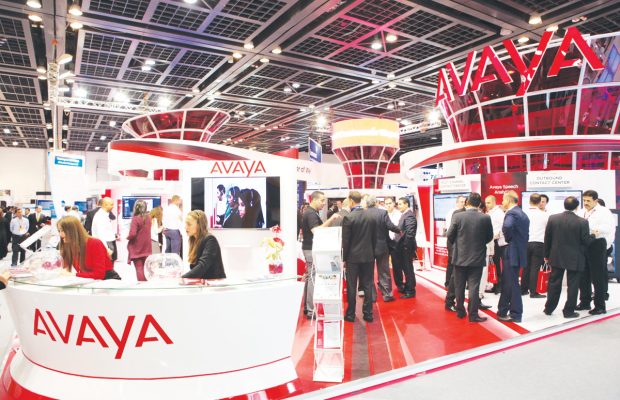
    Business communications and ICT solutions provider Avaya has appointed COL Limited as its distribution partner for the Hong Kong market.

    Under the agreement, the two companies will collaborate to drive adoption of Avaya solutions in the market and helping Hong Kong organizations achieve their digital transformation ambitions.

    COL, a subsidiary of fixed line operator Wharf T&T, will provide the full range of Avaya products – including unified communications and collaboration, contact center, cloud-based communication applications and networking solutions – to resellers in Hong Kong, and later to the wider region. Resellers will be able to offer products to enterprises of all sizes.

    COL has a more than 40 year history in Hong Kong. Its flagship product is its data center and business continuity solution, which has an 80% market share in the financial and multi-national corporation market segments.

    “This distribution agreement signals the start of an exciting time for the industry and for us. Avaya has the reputation, the reach and the commitment to deliver quality communication applications,” COL VP for the business market Kam Poon said.

    “Together and through our resellers, we will make a highly positive impact in delivering future-proof communications solutions to business customers with proven competence to design, build, implement and operate.”

  • Jetstar adds low-cost services between Australia and Vietnam this summer

    Jetstar adds low-cost services between Australia and Vietnam this summer

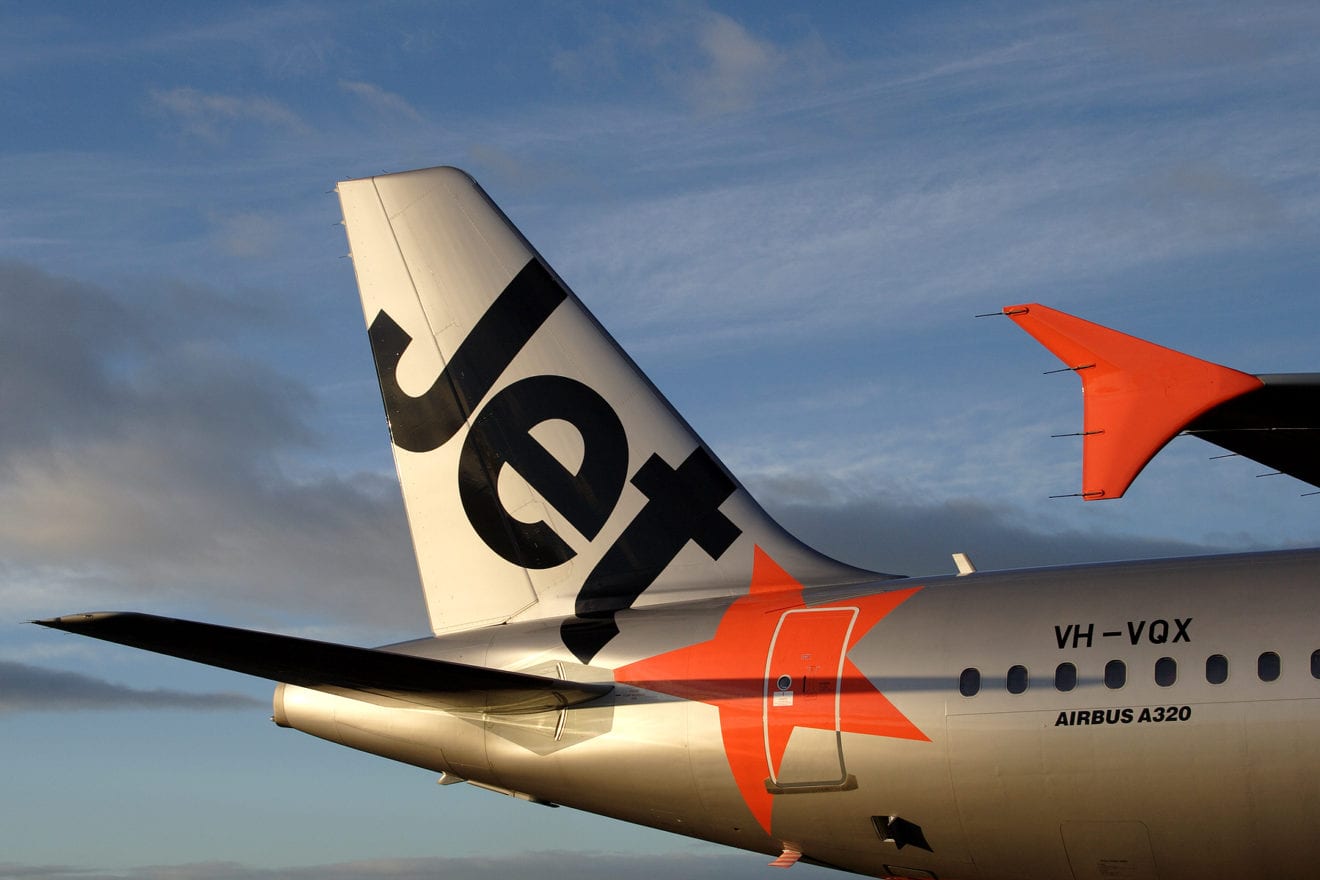
    The Qantas unit hopes to break the monopoly currently held by national carrier Vietnam Airlines, which is also a Qantas partner. Australia’s trade and tourism ministry on Wednesday announced two low-cost direct services from Melbourne and Sydney to Ho Chi Minh City by Jetstar Airways.

    The new services will take off in May this year, Assistant Minister Keith Pitt told a meeting with local media in HCMC.

    Jetstar Airways, a wholly owned subsidiary of Australia’s Qantas Airways, will operate the flights four times a week from Sydney and three times weekly from Melbourne using the Boeing 787 Dreamliner.

    Ticket sales began in January. Flights from Melbourne to HCMC will be launched on May 10, and flights from Sydney will commence one day later, subject to regulatory approval.

    “These flights will stimulate inbound tourism, business and trade to Australia. In the last 12 months, there has been a 21 percent increase in visitors from Vietnam to Australia and we expect to see that grow with the introduction of our low fares on the route,” Paul Rombeek, Jetstar Group’s Global Head of Sales, told the press.

    The new flights from Australia to HCMC by Jetstar Airways would link up to 15 domestic destinations from HCMC thanks to daily services operated currently by Vietnamese domestic partner Jetstar Pacific, Jetstar Group Chief Executive Jayne Hrdlicka said in a statement.

    Jetstar Pacific, 70 percent owned by flag carrier Vietnam Airlines and 30 percent by Qantas, is growing rapidly in an attempt to fend off a competitive threat from domestic budget rival VietJet, she said.

    Vietnam Airlines and Qantas last year said they would invest $139 million to more than double the size of Jetstar Pacific’s fleet to 30 aircraft by 2020.

    Jetstar’s non-stop flights from Australia to Vietnam will break a monopoly of direct services held by Vietnam Airlines, said the report.

    More than 320,000 Australian visitors came to Vietnam last year, up 5.6 percent against 2015. The figure in the first three months this year was over 95,000, up 3.4 percent, according to data of the Vietnam National Administration of Tourism.

  • Consortium contracts ASN for INDIGO cable system

    Consortium contracts ASN for INDIGO cable system

    A consortium consisting of Asian operators, Google and telecommunications infrastructure company Superloop have commissioned a new subsea able system linking Singapore, Indonesia and Australia.

    Singtel, Indonesia’s Indosat Ooredoo as well as Australia’s Telstra and education sector network provider AARNet have joined Google and Superloop’s SubPartners to join the INDIGO cable system.

    The cable system, formerly known as APX West and Central, will be deployed by Alcatel-Lucent Submarine Networks.

    It will span around 9,000km between Singapore and Perth on the west coast of Australia, and onwards to Sydney on the east coast. A ranching unit with two additional fiber pairs will connect Singapore and Jakarta.

    Construction of the cable is expected to be complete by mid-2019. The system will use an open cable two fiber pair desgin, providing consortium members with spectrum ownership and giving them the ability to independently adopt technology advancements and upgrades as required.

    “With internet data consumption growing by 70% in Asia last year alone these sorts of investments in international networks are critical for meeting the needs of connected consumers and businesses,” Telstra group MD for global services and international David Burns said.

    “The construction of INDIGO is timely to meet the rising demand for high-speed broadband between Asia and Australia. This cable system complements our global connectivity that links Asia, the US, Europe, Australia and the Middle East,” Singtel Enterprise VP for carrier services Ooi Seng Keat added.

    Superloop has inherited its membership in the INDIGO consortium via the recent acquisition of subsea cable operator SubPartners for $2.5 million. As part of the acquisition Superloop has provided a guarantee involving the meeting of SubPartners’ construction capex costs for the project.

  • Global telecoms service revenues due to rebound

    Global telecoms service revenues due to rebound

    The global telecommunications services market is on track to rebound after a long period in decline, reaching $1.3 trillion by 2021, MarketLine has projected.

    The market has declined at a negative CAGR of 3.4% between 2012 and 2016 due to downward price pressure motivated by intensifying competition, MarketLine analyst Nicholas Wyatt said.

    “4G mobile internet is now standard in many markets, particularly developed ones, so the only way lots of mobile operators can differentiate themselves from the competition is on price,” he said.

    “This has forced prices down and negatively impacted a market that has reached saturation point in many countries.”

    MarketLine estimates that the wireless segment contributed around $775 billion in sector revenues during 2016, or 64.9% of the $1.2 trillion total market value.

    Growing demand for mobile data is expected to help stimulate a 2.2% CAGR in the market between 2016 and 2021, driving the total market to a value of $1.3 trillion.

    Growth is expected across all regions, with APAC growing slightly higher than the US and Europe due to the region’s relatively lower saturation level.

    “Subscription volumes have plateaued in recent years, but a slight uptick is expected as populations expand and businesses require increasingly mobile staff,” Wyatt said.

  • Australia new vehicle sales edge higher in March

    Australia new vehicle sales edge higher in March

    Australian new vehicle sales bounced modestly in March as the timing of the Easter holidays resulted in more selling days compared to the same month last year.

    The Australian Federal Chamber of Automotive Industries’ VFACTS report out on Thursday showed 105,410 new vehicles were sold in March, up 0.9 percent on the same month last year.

    March this year had two more selling day than in 2016.

    For three months to March, sales were running 0.8 percent behind the same period last year.

    Sales of SUVs continued their domination with a rise of 7.9 percent on March last year, giving them 39.4 percent of the entire market. Sales of passenger vehicles dropped 10.7 percent, extending their long decline.

    Sales of light commercial vehicles jumped 11.3 percent, while sales in the heavy vehicle market rose 11.0 percent.

    Toyota Motor Corp retained first place on the sales ladder with 18.6 percent of the market. Mazda Motor Corp had another strong month taking 9.9 percent.

    Hyundai Motor took third spot with 8.3 percent, ahead of Mitsubishi on 7.3 percent. The Holden unit of General Motors took 6.8 percent and Ford held 6.5 percent.