Author: Mei Ling Tan

  • Cybercriminals building an “army of things”: Fortinet

    Cybercriminals building an “army of things”: Fortinet

    Cybercriminals are building an  “army of things” that is powered by the digital underground, according to Fortinet.

    The security company’s latest Global Threat Landscape Report covering Q4 2016 reveals the methods and strategies cybercriminals employed during the quarter in detail.

    The report confirms that Internet of Things (IoT) devices are sought-after commodities for cybercriminals around the world. Adversaries are building their own armies of “things” and the ability to cheaply replicate attacks at incredible speed and scale is a core pillar of the modern cybercrime ecosystem.

    In Q4 2016, the industry was reeling from the Yahoo data breach and Dyn DDoS attack. Before the quarter was halfway done, the records set by both events were not only broken, but doubled.

    Meanwhile, IoT devices compromised by the Mirai botnet initiated multiple record-setting DDoS attacks. The release of Mirai’s source code increased botnet activity by 25 times within a week, with activity increasing by 125 times by year’s end.

    IoT-related exploit activity for several device categories showed scans for vulnerable home routers and printers topped the list, but DVRs/NVRs briefly eclipsed routers as the thing of choice with a massive jump spanning 6+ orders of magnitude.

    Unlike other parts of the world, vulnerabilities in home routers formed the majority of IoT-based attacks in Asia Pacific. Many home routers are manufactured and deployed in this region, resulting in attacks on them being centered here.

    Mobile malware become a larger problem than before. Though it accounted for only 1.7% of the total malware volume, one in five organizations reporting malware encountered a mobile variant, nearly all was on Android.

    Substantial regional differences were found in mobile malware attacks, with 36% coming from African organizations, 23% from Asia, 16% from North America, compared to only 8% in Europe. This data has implications for the trusted devices on corporate networks today.

  • Hyundai, Kia China sales down 52 pct in March

    Hyundai, Kia China sales down 52 pct in March

    Hyundai Motor, Kia Motors sold 72,032 vehicles in China in March, down 52.2 pct from year earlier. Hyundai Motor China sales 56,026 vehicles in March, down 44.3 percent from year earlier.

    Kia Motors China sales 16,006 vehicles in March, down 68 percent from year earlier.

  • Central bank to launch app for monitoring food prices

    Central bank to launch app for monitoring food prices

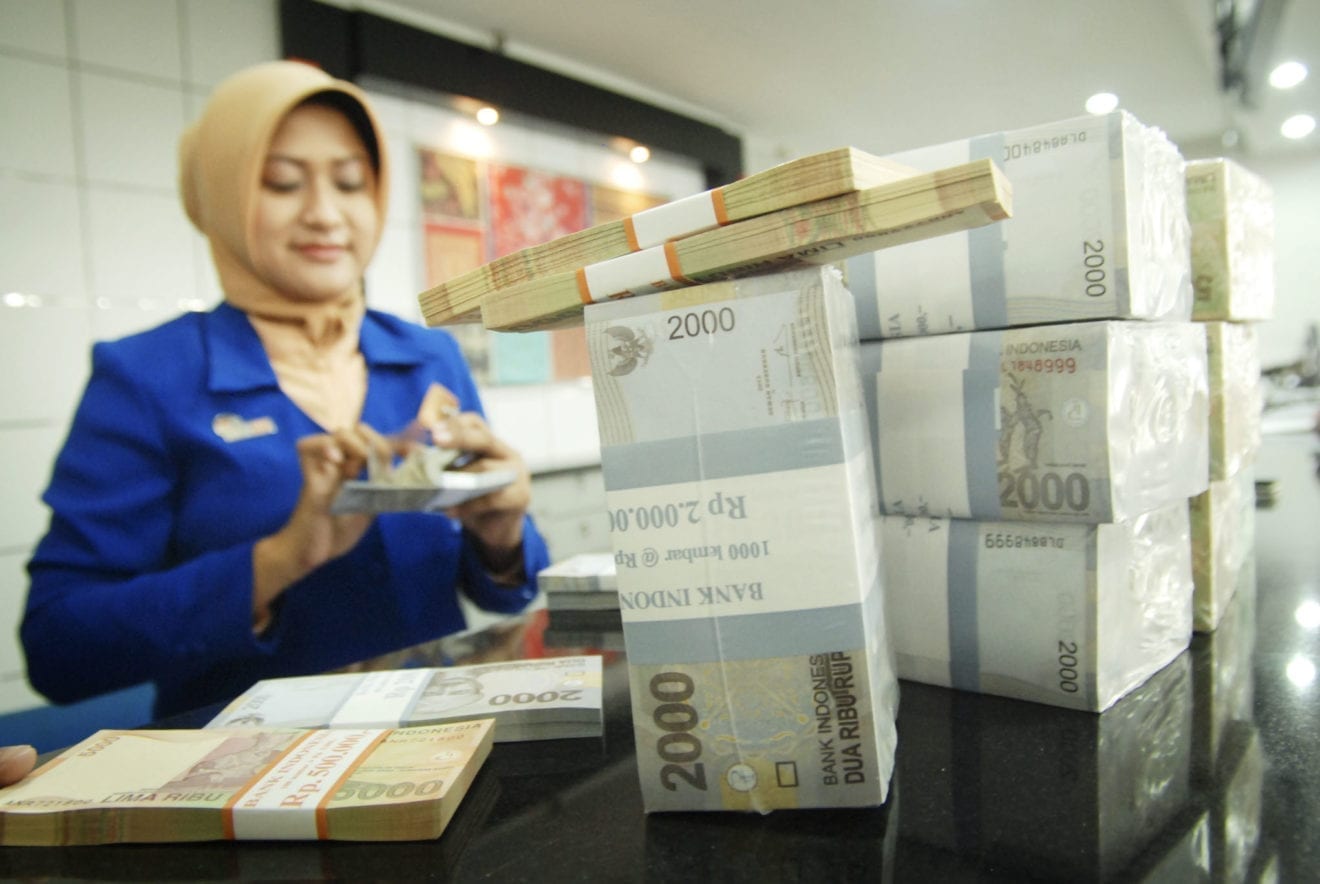
    Bank Indonesia (BI) plans to launch a mobile app through which the public and regional administrations can monitor harga pangan (the prices of staple foods) on a daily basis.

    The public would be able to use the app to avoid being deceived, while the regional administrations can use it to observe when prices go too high so they can tackle them faster.

    The public can already download the app or use it on the hargapangan.id website, but it has not been officially launched.

    The program managed by the Information Center for Strategic Food Prices (PIHPS) collects data from traditional markets in 82 cities in all 34 provinces in the country for 10 commodities: rice, shallots, garlic, red chili, birdseye chili, beef, chicken, eggs, sugar and vegetable oil.

    “The PIHPS has been running, but we’ll wait for the official launch,” Dody Budi Waluyo, the BI governor’s assistant for monetary and economic policy, said recently.

    “BI keeps improving the program. We’ll also collect prices not only from traditional markets, but also from modern markets; also maybe from big traders and touch on more commodities, as well as prices at the producers’ level. The point is we keep innovating with this,” he added.

    Previously, BI deputy governor Sugeng told the media that the central bank also plans to create a data system to track supplies of staple foods in the regions.

    All the aforementioned systems were developed so BI and the government could come up with better policies to achieve a 4 to 5 percent inflation rate.

  • New Zealand cellcos propose joint rural expansion program

    New Zealand cellcos propose joint rural expansion program

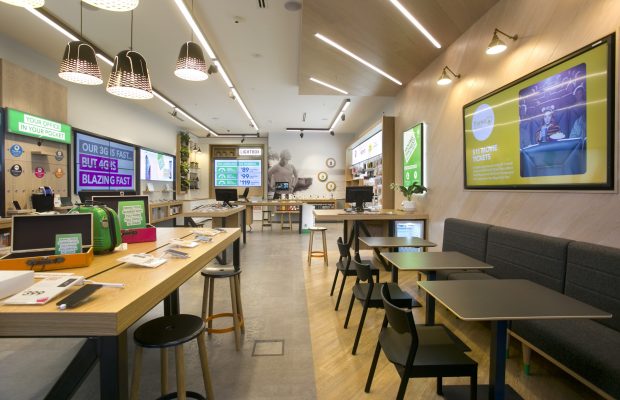
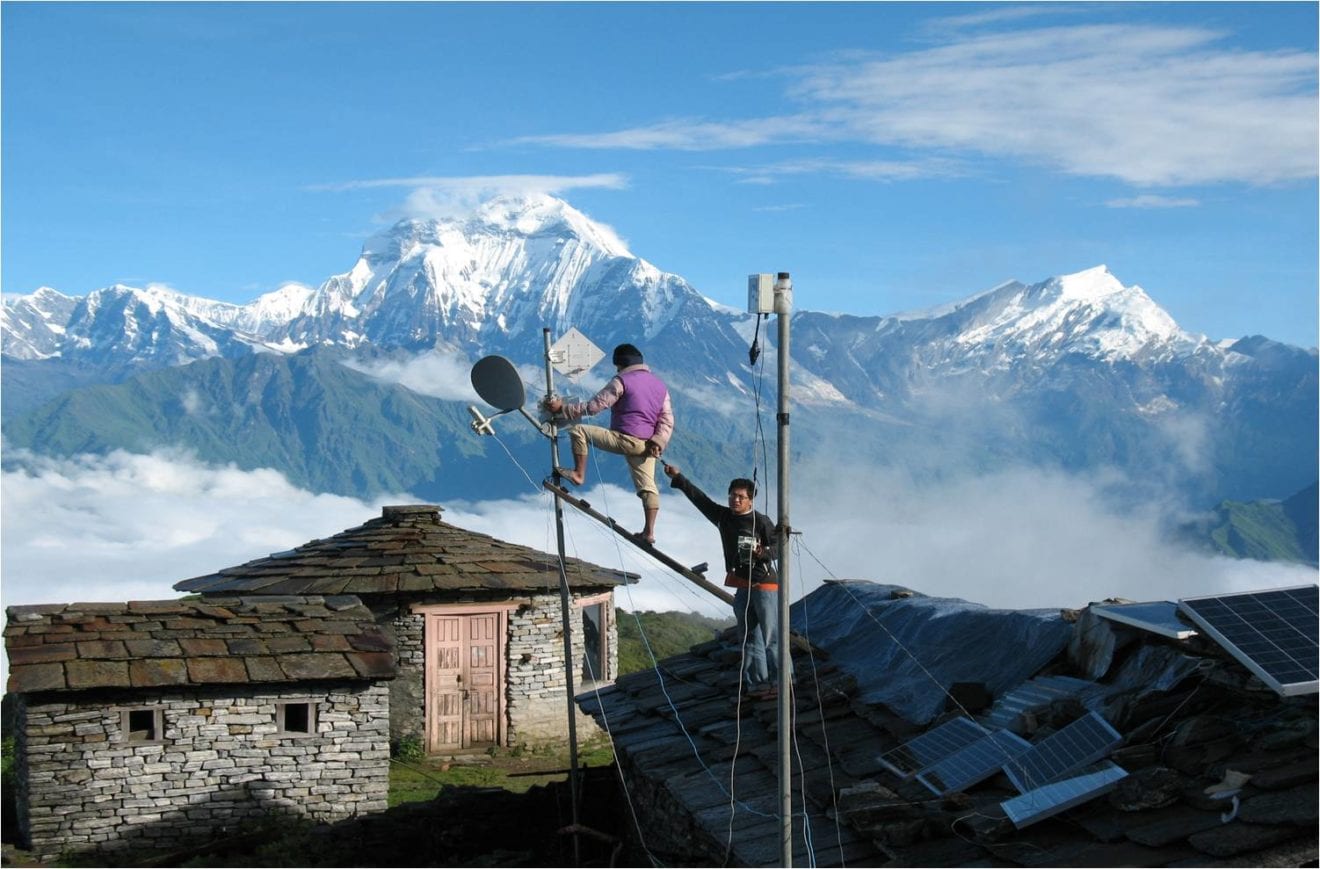
    New Zealand’s mobile operators Spark, Vodafone New Zealand and 2degrees have submitted a joint proposal to improve rural broadband and mobile infrastructure under two government programs.

    The operators have applied to be selected for the Rural Broadband Initiative Extension and Mobile Black Spot Fund programs.

    If selected, the companies have committed to investing “hundreds of millions of dollars” in the project, including NZ$75 million to deploy the infrastructure, as well as opex costs, spectrum and other resources.

    The operators said their proposed expenditure would more than match the government’s own planned NZ$150 million ($104.6 million) contribution to the program, which would come from the Telecommunications Development Levy.

    Under the proposal, the partners would roll out around 500 new cell sites providing a 25% increase in land coverage across New Zealand, providing access to fast broadband for thousands of rural households and businesses and extending mobile coverage to more than 1,200km of state highways.

    “Rural New Zealand is a key driver of our country’s economic growth and productivity and for these sectors to remain competitive they need fast broadband and mobile coverage – not just in offices, but on farms, in schools, and on the roads,” Vodafone NZ CEO Russell Stanners said.

    “The combination of the Government’s RBI funding and this investment by the three mobile network operators presents a once in a generation opportunity to deliver both competitive ultra-fast broadband and world class 4G mobile infrastructure to areas of New Zealand that today have neither.”

  • AirAsia X in talks with South Korea’s Jeju over Kuala Lumpur service

    AirAsia X in talks with South Korea’s Jeju over Kuala Lumpur service

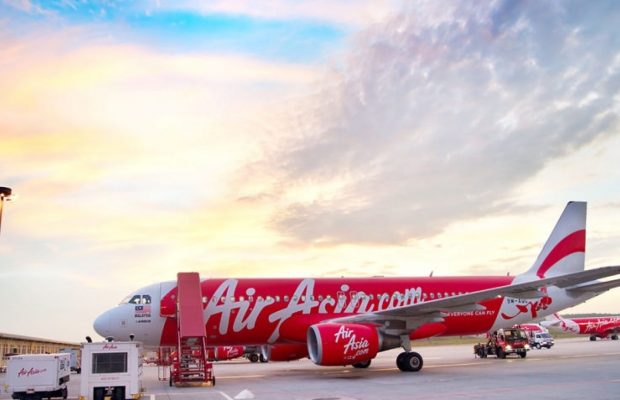
    AirAsia X is in talks with Jeju’s provincial government about direct flights between Kuala Lumpur and the South Korean resort island.

    Jeju officials said discussions were held last week in Kuala Lumpur about frequencies in the absence presently of direct flights. “We hope that we will have flights by the end of this year,” said Seo Hye-jin, a provincial official. “We have been marketing in Southeast Asia since last year.” She declined to speculate on possible frequencies while discussions are ongoing.

    China accounted for almost 96% of the island’s inbound flights in March, according to Jeju tourism officials. There were over 5,000 arrivals from Malaysia in January, making it the second largest source market after China with over 184,000.

    Observers expect Malaysia’s presence in Jeju to increase after the curtailing of Chinese arrivals in the wake of deployment of a new U.S. missile defense system in South Korea.

    China opposes the Terminal High Altitude Area Defense system because of concern about related U.S. surveillance. Seoul and Washington maintain that their sole purpose is to defend against North Korean missile strikes.

    According to travel agencies in China, tours to South Korea were curtailed from Mar. 15 under official pressure, posing a serious threat to the industry there.

    AirAsia X is an AirAsia subsidiary offering long-haul services to 23 destinations in Asia-Pacific, the Middle East, and Africa.

  • Indonesia Mulls Hosting Coffee Exhibition in South Korea Next Month

    Indonesia Mulls Hosting Coffee Exhibition in South Korea Next Month

    The Ministry of Commerce assesses that there is a significant opportunity for exporting coffee commodity to South Korea. To achieve this, the Ministry of Commerce plans to hold an exhibition in South Korea.

    Arlinda Director General of Export Development at the Ministry of Commerce, said that coffee has become a trend in South Korea, especially among young people. Therefore, this trend can be utilized  by Indonesian coffee businesses.

    “There is a significant opportunity for coffee in South Korea. We plan on conducting coffee exhibition there next month, and we must use that trend to engage the South Korean markets,” she said in Jakarta on Tuesday (04/04/2017).

    According to Arlinda, the youth market in South Korea will be easier to engage in because of their penchant to drink coffee. Therefore, Indonesia must provide the highest quality coffee, including  Arabica coffee that is a mainstay product in Indonesia.

    “The trend in young people there is coffee and tea. A seminar on food and beverage can provide us with information on local youths’ tastes. Our specialty is coffee Arabica, and we actually have 32 kinds. We are working with coffee exporters to increase their exports,” she said.

  • Another first for Hactl’s pharma handling

    Another first for Hactl’s pharma handling

    Hong Kong Air Cargo Terminals Limited (Hactl) has been confirmed as complying with all the requirements of IATA CEIV Pharma. Hactl is the first handler in Hong Kong to obtain the certification.

    Hactl’s certification is the result of an initiative sponsored by Hong Kong Airport Authority, in which all relevant industry players at the airport will undergo validation for the IATA CEIV Pharma standard.

    IATA CEIV Pharma represents a co-ordinated effort to ensure competency, as well as operational and technical readiness, for the storage and transportation of pharmaceuticals by air. It is designed to help the industry further develop a network of certified pharmaceutical trade lanes that meet consistent cold-chain management standards and assure product integrity.

    Hactl’s accreditation follows an extensive independent assessment and validation, involving detailed inspections, and personal interviews with managers and supervisors at all levels within Hactl. The assessment and validation covered the company’s quality management system and procedures, personnel, training, documentation, infrastructure and equipment, quarantine procedures, sub-contractor management, self-inspection procedures, transportation and operations. All were found to be fully compliant, with no non-conformances.

    The validation report praised Hactl’s preparations for the audit process, the helpful attitudes of its staff, and its total cooperation. Says IATA’s General Manager, Hong Kong and Macau, Yvonne Ho: “I congratulate Hactl on being the first to receive CEIV certification in Hong Kong.  In doing so, Hactl has achieved an internationally recognized standard for pharmaceutical handling.”

    Adds Hactl’s senior manager – quality assurance, Benny Siu: “We are very pleased with the positive outcome of the IATA CEIV Pharma Validation, and value the cross-departmental team effort that resulted in Hactl becoming the first to obtain this important certification.”

    Mark Whitehead, chief executive of Hactl, concludes: “We applaud the Airport Authority’s initiative in sponsoring this drive to adopt IATA CEIV Pharma in Hong Kong. It’s an excellent example of what can be achieved through collaboration, and will benefit the entire airport cargo community and its customers.”

  • Indonesia to build circuit for MotoGP in West Nusa Tenggara

    Indonesia to build circuit for MotoGP in West Nusa Tenggara

    Indonesia will construct an international circuit for MotoGP in West Nusa Tenggara province of central parts of the nation, an official said here on Tuesday.

    An agreement on the construction of the sport facility had been inked, involving a French investor, said Edwin Darmasetiawan, Director for Indonesia Tourism Development Corporation, reports Xinhua news agency

    “The commitment is clear, construction of a circuit for MotoGP in Lombok,” he said.

    The circuit would be constructed on 120 hectare of land in Lombok of the province, the director said.

    The construction is expected to be completed in 2019, said Darmasetiawan.

    The project requires funding of 13 trillion rupiah (some $1.049 billion), he added.

    The director said that the new facility is expected to help attract more foreign tourist to the province.

  • GM leads March sales as automakers report record month

    GM leads March sales as automakers report record month

    Automakers sold a record number of vehicles during March, with General Motors leading in sales volume and posting its best monthly sales performance since 2008.

    Overall Canadian sales were driven by an 11.1 percent increase in consumer demand for pickups and sport utility vehicles during the month, which more than offset a 0.3 percent dip in passenger car sales.

    Carmakers sold 187,540 vehicles last month, a 7.1 percent increase over the same period last year, which at the time was the best March since 1988, according to industry data from Desrosiers Automotive Consultants.

    Sales growth for the first three months of 2017 was 4.6 percent.

    GM Canada, which makes Chevrolet and GMC vehicles, reported double-digit sales growth, selling 30,115 total vehicles in March, an increase of 22.9 percent from a year ago when it sold 24,498 cars and trucks.

    Fiat Chrysler Automobiles, which makes Dodge and Chrysler brands, posted a marginal sales rise, with 26,531 cars and trucks sold during the month, compared with 26,469 a year ago.

    Ford Motor sold a total of 26,487 cars and trucks in Canada last month, up from 26,447, a 0.2 percent rise.

    In the United States, monthly figures came in below market expectations, adding to concerns that the boom in U.S. auto sales may be waning. Shares of the three big automakers fell on Monday, with FCA falling nearly 5 percent, GM down 3.4 percent, and Ford closing 1.7 percent lower.

    Other automakers also reported a significant increase in Canadian sales, including Nissan Motor, which sold 14,523 vehicles, representing a 26.7 percent jump. Honda Canada reported an 18.7 percent rise, selling 17,392 vehicles.

  • AirAsia steps up broadband co-operation with Inmarsat

    AirAsia steps up broadband co-operation with Inmarsat

    AirAsia has signed a tentative deal with Inmarsat to provide broadband access on Airbus A320s and A330s through the satellite communications specialist’s GX Aviation service.

    The airline currently uses Inmarsat’s SwiftBroadband service. It says the new service will provide improved broadband access with “reliable, seamless high-speed global coverage”.

    Passengers will be able to stream films, music and games through AirAsia‘s Rokki in-flight entertainment and connectivity platform, the carrier says. Installations are scheduled to begin in late 2017, with the service set to become available in 2018.

    At a media briefing during the Aircraft Interiors Expo in Hamburg today, AirAsia X chief executive Benyamin Ismail indicated that the system would initially be installed on the group’s A330s, with supplemental type certification for the widebody targeted for November. He adds that the new service will be rolled out “over time” across the entire fleet.

    Inmarsat Aviation president Leo Mondale says the partnership is of strategic importance and describes AirAsia as a “leading digital airline in Asia” as well as “one of the most important airlines in the world”.

  • Nepal telcos told to adopt 10-second billing next week

    Nepal telcos told to adopt 10-second billing next week

    Nepal’s mobile operators will need to implement 10-second billing from next week and per-second billing from October under a new regulatory directive.

    The Nepal Telecommunications Authority (NTA) has instructed operators to reduce billing durations for domestic calls from the current 20 seconds to 10 seconds from April 14.

    The reduction to per-second billing will subsequently need to be implemented from October 18 to coincide with the Nepali new year.

    The minimum billing unit for landline calls has meanwhile been fixed at 60 seconds. International calls will be reduced to 30 second billing from the April date and to 10 seconds from October.

    According to the report, the NTA implemented the reductions following consultations with the industry, but the regulator still plans to conduct checks to make sure the nation’s six operators follow the directive.

    The directive will need to be implemented by Nepal Telecom, Ncell, UTL, Smart Telecom, Nepal Satellite Telecom and STM Telecom.

  • Bank Indonesia’s top woman fights CPI with more than rates

    Bank Indonesia’s top woman fights CPI with more than rates

    Rosmaya Hadi enlisted the help of 2,000 religious leaders to fight inflation when she ran Indonesia’s central bank in West Java region. In the world’s largest Muslim country, Hadi got them to spread a message of moderation in mosques on the eve of the Eid al-Fitr festival last year, when Indonesians usually step up spending on food and gift-giving to mark the end of the month of fasting. “Don’t shop excessively, don’t buy things at any price, it is good to haggle” they preached, she said.

    “People may not listen if it’s the central bank speaking, so we had to find new approaches and rely on local leaders and the local wisdom,” Hadi said in her first interview since taking office in January as deputy governor at Bank Indonesia and the highest-ranking female official.

    Hadi, 57, plans to use that same bottom-up approach in her new role. The career central banker who rose through the regional ranks is keenly aware that controlling inflation in the country of 250 million people dotted across more than 900 islands takes more than just setting interest rates.

    “Often we form a clear policy in Jakarta but the implementation in the regions is less clear, so this needs to change,” Hadi said at her office in the capital, overlooking the iconic National Monument tower.

    Making policy more effective has been a theme under Bank Indonesia Governor Agus Martowardojo. The bank overhauled its framework last year, adopting a new benchmark rate that would transmit adjustments more quickly to the economy.

    Regional Expertise

    While there’s been some success, banks haven’t passed on the full effect of last year’s 150 basis points of reduction in the benchmark: lending rates have fallen 112 basis points in the year through January, holding back credit growth at 7.9 percent last year — the slowest pace since the Asian financial crisis in 1999 — and capping economic growth at 5 percent.

    Hadi’s promotion brings more regional expertise to policy-making in a country where inflation varies widely across provinces. In Papua, consumer prices fell 0.77 percent in February from a month earlier after Freeport-McMoRan Inc. halted production at the world’s second-largest copper mine following a dispute with the government; in Manado, North Sulawesi, the monthly inflation rate was 1.16 percent due to the rising cost of tomatoes, a key ingredient in the local cuisine.

    For the country as a whole, consumer prices rose 0.23 percent in February and declined 0.02 percent in March.

    “Bank Indonesia’s policy will now be more focused as earlier it only considered the national aggregate,” David Sumual, chief economist at PT Bank Central Asia, said by phone on Hadi’s appointment. “Jakarta and West Java may have the strongest economies, but it’s possible that smaller regions can possess systemic risk.”

    The only board member who wasn’t educated at an overseas university, Hadi holds a law degree from Universitas Padjajaran in Bandung, West Java, and completed a master’s in social and political studies at the University of Indonesia.

    She is the first deputy governor elected from a pool of regional heads, busting a myth that being sent to work at offices outside of Jakarta was to hit the glass ceiling, she said. She began her career at the central bank in 1985, and has held various roles including as head of the payment systems department, deputy director for internal finances and running the rupiah transactions office.

    ‘Different Perspective’

    In her new role, she has pledged to ensure the bank does more to boost women’s participation in the economy. Like other Southeast Asian central banks, women are generally well-represented in senior positions compared to developed-world peers, such as the Reserve Bank of Australia and the U.S. Federal Reserve, but more can be done, she said.

    “When you say having more women leaders is important because of the different perspective we bring, I am the case in point,” she said.

    Bank Indonesia has had two women on the board previously: Siti Fadrijah was appointed deputy governor in 2005 and Miranda Goeltom held the role from 1997 before being named senior deputy governor in 2004. Both were named suspects in separate corruption cases. Fadrijah died in 2015 before she was given a verdict, while Goeltom served a three-year sentence that ended two years ago.

    Cabinet Ministers

    Women account for about 30 percent of the total workforce at Bank Indonesia and occupy 10 of the 33 executive director roles, the top spot below the board of governors, Hadi said.

    Still, the labor participation of females in the wider economy lags: it was 51 percent in 2014, equal to countries in the Organisation for Economic Co-operation and Development, but lower than the 61 percent in East Asia and the Pacific, according to World Bank data. The economic gender gap cost the country more than 16 percent of its gross domestic product last year alone, the International Monetary Fund estimated.

    “Some women have this mental block that keeps them from going full tilt, telling themselves to follow the husband or settling for good enough,” Hadi said. “But we’ve had a woman as president and we have women ministers, so the doors are open. Now it’s up to us to make the most of the opportunity.”

    Nine of Indonesia’s 34 cabinet ministers are women, including Finance Minister Sri Mulyani Indrawati, State-Owned Enterprises Minister Rini Soemarno and Fisheries Minister Susi Pudjiastuti. Megawati Soekarnoputri, who chairs the Indonesian Democratic Party of Struggle that backs current President Joko Widodo, was the country’s first female president in 2001.

    Bank Indonesia hasn’t yet had a woman at the helm. “It could be anybody,” Hadi said, laughing, when asked if she could be that person.


  • DHL eCommerce expands presence in South China

    DHL eCommerce expands presence in South China

    DHL eCommerce plans to further increase its presence in South China through the introduction of its e-commerce logistics services in the Fujian province.

    The company has also announced the expansion of its Shenzhen Distribution Center and Hong Kong Distribution Center to manage a capacity of 81 million shipments a year.

    “With exports expected to make up 75% of China’s e-commerce turnover three years from now, a strong and reliable logistics framework has to be set in place to meet growing needs,” said Zhi Zheng, Managing Director, Greater China, DHL eCommerce. “Manufacturing and export hubs like Fujian will be the center stage of all future growth of e-commerce exports in China. DHL’s expertise in international shipping and fulfillment, along with our global network and strong e-commerce expertise will play a fundamental role in connecting China’s e-tailers with online markets across the world.”

    Zheng added: “We are expanding our presence in South China to better service merchants here, and provide them with the opportunity to tap on the massive cross-border opportunity. This underpins our growth strategy for South China where we will focus on growing our outbound e-commerce trade and continue to expand our offerings across Tier 2 and 3 cities.”

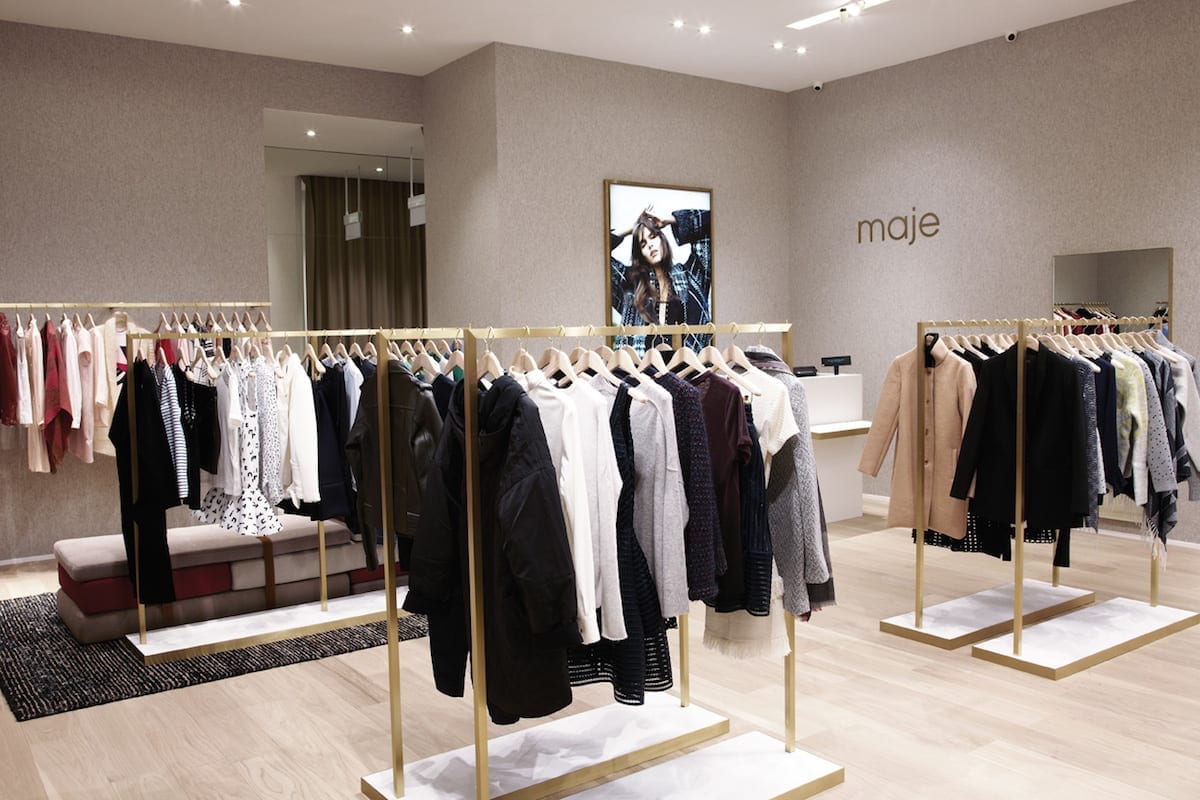
  • SMCP Group sales up 16 per cent

    SMCP Group sales up 16 per cent

    SMCP Group sales soared last year, reflecting the strength of the affordable luxury category and successful expansion in Asia.

    The French fashion retailer achieved 16.4 per cent growth in sales to €786 million (US$844 million) last year. SMCP stands for its three fashion brands: Sandro, Maje and Claudie Pierlot.

    Like-for-like sales were up 7.1 per cent, which SMCP says was a reflection of market share gains as it outperformed rivals in the affordable luxury sector. Profit increased by 22 per cent to reach €130 million.

    SMCP’s e-commerce sales grew by nearly 80 per cent to represent about a tenth of group revenues. During the year the group launched two dedicated websites in China, Maje and Sandro on Tmall.com.

    The development of the accessories range is part of the group’s objective to make Claudie Pierlot, Maje and Sandro global lifestyle brands. Maje’s “M” bag was a hit last year, says the company, and sales of accessories rose by 42 per cent over the 12 months.

    Meanwhile, the group has formed a partnership this year with Mondottica to develop eyewear collections for the Maje and Sandro brands, completing the range of accessories after shoes and leather goods.

    A new concept for Sandro Homme stores was deployed in Greater China last year as part of the company’s international targeted expansion. There were 90 openings internationally during the year, including one on Fashion Walk in Hong Kong.

    Altogether, the company opened 105 stores over the year, ending with 1223 points of sale with its brands in 36 countries. SMCP says that consistent with previous years, it will introduce new points of sale at the pace of 100 to 125 a year.

  • Police seize fake coffee shipment in robusta king Vietnam

    Police seize fake coffee shipment in robusta king Vietnam

    Over three quarters of the 850kg shipment turned out to be soybeans soaked in chemicals and flavorings. Environment police seized a shipment of fake coffee at a bus station in the central town of Vinh on Tuesday, some 300km (186 miles) south of Hanoi.

    The officers were on a routine patrol when they spotted a truck laden with 16 suspicious-looking bags, which the truck driver declared as coffee.

    The bags weighed 850 kilograms (1,870 lb), but only 200kg was real coffee, while the rest turned out to be roasted soybeans soaked in chemicals and flavoring to make them look like coffee. The beans were on their way for sale in Nghe An Province from a company in the southern province of Binh Duong, the driver told police.

    The catch is the latest in a series of cases involving fake coffee exposed over the past five years in Vietnam, the world’s biggest robusta producer and exporter.

    Fake coffee has been found across the nation, which has one of the world’s fastest growing retail coffee markets, trailing only behind Indonesia, Turkey and India, as reported by global market intelligence agency Mintel.

    Police have also uncovered small processing plants making fake coffee by over-roasting soybeans and corn in Ho Chi Minh City, which is Vietnam’s main coffee trading market, as well as in Can Tho City and provinces like Binh Duong and Thanh Hoa.

    Even in Dak Lak, the country’s top coffee-growing province, market inspectors have found coffee powder containing only 10 percent real coffee, with the majority made up of soybeans, corn and chemicals used to create the bitter taste and bubbles.

    In July 2016, the Vietnam Standard and Consumers Association said it had taken 253 coffee samples from various shops in four locations, including Hanoi and Ho Chi Minh City, and found that one third of them had very low caffeine content, while the stimulant was totally absent in five samples.

    The coffee sold in street-side shops, hospitals and schools tended to have very low caffeine content or no caffeine at all, the association said.

    A kilogram of robusta beans now fetches around VND46,000 ($2.02), while imported soybeans can be bought on the domestic market for VND12,000-14,000 per kilo. These findings by police and market inspectors have caught public attention and have changed consumer behavior.

    Changing awareness

    “Consumers are now aware that fake coffee is a real problem,” said Le Duc Huy, deputy general director of the Dak Lak-based Simexco, one of Vietnam’s biggest exporters of semi-processed robusta beans. “Many now know how to spot fake coffee.”

    He said the content of real coffee sold on the market has now doubled to around 60 percent in the southern region and the Central Highlands coffee belt.

    “But in the northern and the central regions, which lie far from the coffee processing hub, consumers may not be aware, so the coffee content there is as low as 20-30 percent,” Huy told via telephone from Dak Lak.

    Improved awareness among Vietnamese coffee drinkers has been reflected in the rising domestic consumption rate in a country where tea is also a popular drink.

    Vietnam is forecast to use 172,200 tons of coffee at home in the 2016/2017 crop year, up 10 percent from the previous season, the U.S. Department of Agriculture (USDA) said in its December report.

    The domestic consumption rate has been rising in double digits since at least the 2012/2013 season, based on USDA data. The country’s crop year lasts between October and September.

    Rising exports

    Higher domestic consumption, coupled with a rush to sell by exporters in the first months of 2017 and the smaller 2016/2017 harvest due to adverse weather, could disrupt coffee exports, traders said. More instant coffee being produced locally has also been contributing to the tighter export flow, Vietnamese industry officials said.

    Vietnam could export an estimated 180,000 tons of coffee in March, the highest monthly shipment since April 2016, based on government data released on Wednesday.

    Most of the shipments were sold in late January or February as exporters tried to cash in on higher prices while cutting costs, traders said. On the other hand, foreign buyers said they had stepped up purchases based on expectations of a smaller crop in Vietnam.

    The March estimate has brought the country’s total export volume to 847,000 tons in the first half of the 2016/2017 season, up 4 percent from a year ago.

    Vietnam could face coffee shortages from May-June due to rising shipments and dwindling domestic stocks, top export firm Intimex has said.

    Huy of Simexco said Vietnam should do more to fight fake coffee.

    “The media should do its best to help consumers spot real coffee,” he said. “Related agencies should also step up inspections of coffee shops because shop owners are making money by selling fake coffee as it costs up to 50 percent less than real coffee.”