Author: Mei Ling Tan

  • Zalora transforms e-commerce with regional e-fulfillment hub

    Zalora transforms e-commerce with regional e-fulfillment hub

    ZALORA, Asia’s Online Fashion Destination, is pleased to announce the inauguration of its new Regional e-Fulfillment Hub located in Selangor, Malaysia. Covering a total area of 470,000 square feet – approximately the size of nine FIFA football fields – and split across five levels, the e-Fulfillment Hub plays a crucial role in fulfilling thousands of orders per day and facilitating the movement of fashion goods 24/7 across eight markets: Singapore, Malaysia, Brunei, Hong Kong, Macau, Taiwan, Indonesia and Philippines.

    ZALORA gives consumers access to thousands of local and international brands. To ensure the highest level of delivery experience for consumers across all markets, ZALORA invested heavily in building its e-commerce infrastructure from warehousing facilities to last mile delivery fleets. ZALORA is revolutionising the e-shopping experience across Asia Pacific. The Regional e-Fulfillment Hub will be a key driver for ZALORA’s growth as the regional online fashion player in the years ahead.

    Best-in-class facilities and innovative technology

    ZALORA invested resources and time to develop in-house logistics and operations systems:

    One example is Mobile Picking, a customised solution that transmits picking information of customer orders through mobile devices, allowing greater scalability and on-time fulfilment. Since its introduction, picking productivity increased significantly and accuracy is now at 100 percent, due to the real-time item verification.

    To process all orders in real-time, an in-house Order Management System (OMS) was developed for the ZALORA Operations team to track movements of inventory into and out of its warehouses, process orders, manage customer returns and refunds and manage ZALORA’s own delivery fleets.

    By leveraging innovative and cutting edge technologies, ZALORA’s average lead-time from item ordered to delivered is now as low as two days for customers in the region.

    Driving e-commerce growth in the region

    The ZALORA Regional e-Fulfillment Hub holds a single pool of stock for all markets giving the 5-year-old fashion e-tailer the advantage of depth and width. In other words, ZALORA is able to offer a wider selection of goods with higher quantities available for the customers to order. The fulfilment centre can process up to 100,000 items per day and has the storage capacity to hold more than four million items at any time.

    Additionally, ZALORA is one of the few companies in Malaysia to hold the AEO status (Authorised Economic Operator). The AEO status gives ZALORA’s Regional e-Fulfillment Hub a form of “express lane” at customs, making 24/7 cross-border movements seamless and helping ZALORA provide an even faster delivery for its customers. ZALORA is the first and only fashion e-commerce retailer in Malaysia to obtain this status.

    Commitment to provide customers with best possible online shopping experience

    The Regional e-Fulfillment Hub in Malaysia serves as the sole fulfilment centre for Singapore, Malaysia, Brunei, Hong Kong, Macau and Taiwan and at the same time provides stock support for the Philippines and Indonesia markets. The facility’s strategic location and logistics capabilities make it possible for international brands to expand their reach into the Philippines and Indonesia and at the same time, customers are able to access a wide selection of brands and products including Mango, Ray-Ban, Steve Madden, Adidas, Topshop and more.

    ZALORA orders can be easily tracked either through automatic email notifications or by visiting ZALORA’s app or website in the ‘Order Tracking’ section. Thanks to the integration of courier partners into ZALORA’s platforms, the app now allows customers to track their deliveries with real-time updates.

    At the Regional e-Fulfillment Hub, returns are delivered daily where dedicated operators process and clear requests to ensure customers get refunded as soon as possible.

    Partnership with YCH Group

    To tackle an increasingly complex operating environment, ZALORA is collaborating with YCH Group, the region’s leading supply chain specialist. The two partners are working closely together on multiple fronts from infrastructure design, storage, order fulfilment solutions, and procurement. As a long-term strategic partner, YCH is supporting ZALORA’s growth, not only through investment in the e-fulfillment infrastructure, but also by giving the flexibility of future expansion – the warehouse can in fact double its operations area in as fast as six months.

    Parker Gundersen, ZALORA Group CEO commented: “ZALORA has experienced solid growth since it was established in 2012 and as Asia’s online fashion retailer, we’re committed to continuously drive e-commerce progress in the region. Offering the best range of products, coupled with a seamless online shopping experience, we are proud to deliver the first and largest Regional e-Fulfillment Hub. We’re thankful for the support of YCH and other logistics partners in the region, without them we wouldn’t have been able to build the infrastructure we, and our customers, need.”

    “Southeast Asia is poised to become one of the world’s fastest growing regions for e-commerce. We’re proud to partner with the e-commerce fashion market leader ZALORA in its regional growth”, said Margaret Toh, Executive Director of YCH Group. “Driven by innovation and the evolution of the business landscape, working jointly with ZALORA, YCH has transformed efficiency in infrastructure design and configuration, supported by automation to position the Regional e-Fulfillment Hub as a Centre of Excellence for regional e-Commerce fulfilment. Empowered by the synergies brought about by this partnership, our innovative solutions will equip ZALORA with game changing capabilities to remain competitive among its expanding consumer markets.”

  • Vietnamese Prime Minister orders rice revolution to raise quality of production

    Vietnamese Prime Minister orders rice revolution to raise quality of production

    Falling rice exports have prompted the government to rethink its strategy. Renovation at all levels of the government is needed to “create a revolution in quality and a new vision, accompanied by strategic planning in line with globalization, in order for Vietnamese rice to meet consumer demand in Asia and the rest of the world,” Prime Minister Nguyen Xuan Phuc was quoted on Wednesday as saying.

    Vietnam, the world’s third-largest rice exporter after India and Thailand, will launch a comprehensive campaign to overhaul production in order to raise yields, efficiency and export value, according to the government.

    The Southeast Asian nation went through its first rice revolution in the late 1980s. At that time, the country still had to import rice to meet domestic demand, but 1989 marked the first year of Vietnamese rice shipments, with a total of 1.4 million tons shipped overseas thanks to rapid reforms in agricultural production.

    Rice exports peaked at 8 million tons in 2012, but have since dropped due to better production in key markets such as the Philippines, Indonesia and Malaysia, as well as rising competition from India, Pakistan, China, Thailand, Myanmar and Cambodia.

    The Vietnam Food Association has targeted annual shipments of around 5 million tons this year, after sales fell to 4.8 million tons in 2016, the lowest since 2008.

    Despite continued investment, falling rice exports have prompted the government to rethink its strategy.

    Hanoi has classed rice as a strategic commodity to ensure food security for the country’s 93 million people, especially with typhoons, salination and floods posing a major threat.

    Phuc’s instruction came days after the government estimated Vietnam’s rice exports from January-March dropped 24 percent from a year ago to 1.2 million tons, a two-year low.

    Phuc has asked for rice fields to be merged or expanded in suitable areas, while the land damaged by salination should be switched to raising shrimp and other crops.

    He also called for updated agricultural technology to produce varieties with higher yields, while improving storage conditions and avoiding post-harvest losses.

    Modern irrigation systems and infrastructure projects to cope with climate change and rising sea levels are needed, Phuc said.

    Last month, the premier asked government officials to look into human and natural factors as Vietnam seeks to fight the problems threatening to sink the country’s Mekong Delta food basket, which supplies 90 percent of rice for export.

    The future of the delta, home to around 20 million people, is threatened by urbanization and dozens of dams, with more in the pipeline. Flooding and droughts that have led to salination, along with rising sea levels, should also be considered for the region’s development, a World Bank report said.

    The alluvial soil and sediment delivered to the coastal areas in the delta, where the Mekong River enters the East Sea (internationally known as the South China Sea), fell to 75 million tons in 2014 from 160 million tons in 1994, according to data from Vietnam’s National Mekong Committee.

    The WWF said that higher sea levels may inundate half of the delta by the end of the century.

  • Apple has ordered 70 million OLED panels from rival Samsung for upcoming iPhone 8

    Apple has ordered 70 million OLED panels from rival Samsung for upcoming iPhone 8

    Shares of Samsung Electronics got a boost on Tuesday after the report that archrival Apple had ordered 70 million display panels that the South Korean giant specializes in for the upcoming iPhone. Samsung’s stock closed at 2.1 million Korean won, posting a rise of 1.54 percent.

    Citing a supply chain source, Nikkei reported that Apple has placed orders for bendable organic light-emitting diode panels for use in 70 million handsets for the year. OLED offers brighter displays and better power efficiency over liquid crystal displays currently in use.

    Samsung’s OLED displays are used on its own flagship Galaxy devices, and the company is a market leader in the area. Apple is expected to launch three new iPhones later this year, with the anniversary edition iPhone 8 believed to have a slightly curved 5.2-inch OLED screen. This will be the most expensive model. The two other iPhones will have LCD displays. It would be the first time Apple has used OLED displays on its flagship device.

    Quoted IHS Markit analyst David Hsieh as saying that the order for 70 million units of OLED panels is in line with his expectations. He added that Samsung is expecting to produce as many as 95 million units for Apple in 2017, in case demand exceeds expectations. Hsieh also said Samsung is likely to be the sole supplier.

    “It is also possible that some of these 70 million handsets will not be shipped to customers this year and be carried over to next year depending on demand,” Hsieh told.

    The 70 million unit figure gives a sense of the kind of bullish demand Apple is expecting for the anniversary model, which some analysts are suggesting could cost $900 to $1,000.

    But some analysts have said it’s not likely Apple will sell all 70 million OLED iPhones this year looking at previous performance. In the fiscal first quarter, which ended Dec. 31, Apple sold 78.2 million iPhones — latest iPhone 7 and 7 Plus models and older versions.

    Neil Shah, research director of devices and ecosystems at Counterpoint Research, said he expects Apple to be able to sell around 70 million iPhones in total in the final quarter of this year when it releases the new device. But again, not all 70 million will be the OLED devices.

    “Seventy-million units of the OLED iPhone is too high for me at this point,” Shah told.

    The likelihood is Apple will sell some of the OLED phones next year, and at least have some ready in case it sees a pop in demand.

    Leaks and reports suggest that the iPhone 8 could be the most advanced yet with new features such as a front-facing camera with 3-D sensor. Analysts are expecting this to kick of a “supercycle” of iPhone sales.

  • Problems with City pork plan

    Problems with City pork plan

    HCM City’s technology-based programme to control and trace the origin of pork that began recently is encountering difficulties, according to the Department of Industry and Trade.

    Speaking at a regular department press briefing, Nguyễn Phương Đông, its deputy director, said 713 pig farms have registered to participate in the programme, but only 99 put rings with an electronic stamp on their pigs’ legs to aid in individual identification of the animals.

    Even the number that agreed to join the programme had not met the expectations of its managers, he said.

    The reason for this is that the main source of supply for the city is farms and household breeders in neighbouring provinces, who need time to change their farming and trading habits.

    But to ensure the safety of consumers, the department is working with those provinces to organise training programmes for the farmers, he said.

    The city provides small-scale breeders with a 50 per cent subsidy of the cost of the electronic rings for the first month, he said.

    Almost all wholesalers at the city’s Bình Điền and Hóc Môn wholesale markets are taking part in the programme.

    They meet 70-80 per cent of the city’s pork demand.

    Consumers can currently check the origin of pork they buy at nearly 385 modern outlets (supermarkets, convenience stores and food shops) and 140 booths at 23 retail markets.

    The project management board is now working with poultry producers and distributors in the city and neighbouring localities to implement a similar programme in June.

  • AirAsia sets up low-cost airline in Vietnam

    AirAsia sets up low-cost airline in Vietnam

    Malaysian budget airline AirAsia Berhad plans to start a low-cost carrier in Vietnam, co-operating with local businesses to enter the country’s booming travel market, company representatives told Retail News.

    AirAsia signed a shareholders’ agreement with Vietnam’s Gumin Company Limited, Hải Âu Aviation Joint Stock Company and Trần Trọng Kiên, the owner of these two companies, to form the venture last Friday, which the airline announced in a statement to Malaysia’s stock exchange.  

    The carrier, expected to start flying at the beginning of 2018, will need an investment of VNĐ1 trillion (US$44 million), of which AirAsia will hold 30 per cent stake and Gumin will hold 70 per cent.

    Vietnam is the latest country to lure Malaysian billionaire Tony Fernandes, head of AirAsia, who is aspiring to build a low-cost airline network covering Asia, as the 28 per cent growth inVietnam’s aviation market triples the rate in other Southeast Asian countries.

    Vietnam is also the fifth biggest aviation market in the region, after Indonesia, Thailand, Malaysia and Singapore, with a passenger volume that has doubled since 2013 thanks to a middle class population accounting for 25 per cent of the total population by 2010.

    In recent years, AirAsia has established affiliates in Indonesia, Thailand, India and Japan. The airline is betting on low cost airline models for international travel through its AirAsia X subsidiary. Fernandes has also ordered hundreds of Airbus aircraft worth billions of dollars to meet his ambition of growth, and he is in the process of selling a subsidiary specialising in leasing aircrafts to raise cash.

    However, Brendan Sobie, CAPA Centre for Aviation’s analyst, told that AirAsia would face huge challenges, because it entered the Vietnamese market too late. “The market is currently well served by two carriers, VietJet Air and Jetstar Pacific. The growth rate will slow down in the coming years, as the low-cost market is now more mature. ”

    Vietjet Aviation Joint Stock Company shares have grown 52 per cent since its listing on HCM Stock Exchange in February 28.

    According to a report released by ACB Securities in December last year, passenger traffic inVietnam will continue to grow at double digit rates over the next decade, after an annual growth of 17 per cent in the last decade.

  • Smartphones that fold up are coming by 2019, says Samsung engineer

    Smartphones that fold up are coming by 2019, says Samsung engineer

    A Samsung engineer recently said that he expects foldable smartphone displays to be ready for mass consumption in 2019.

    “Because the bezel-free display currently sells so well, we still have enough time to develop foldable displays,” Samsung Display principal engineer Kim Tae-woong. “The technology is expected to be mature around 2019.”

    A foldable display will pave the way for gadgets that can be folded into smaller sizes. Imagine a tablet that can be folded into a smartphone that can be folded into something even tinier and more pocket-friendly.

    Phone-makers have experimented with this sort of “foldable” technology before, though rather unsuccessfully. Kyocera launched a phone on Sprint named the “Echo” that folded in half, but used two separate display panels instead of a truly foldable display.

    A report last summer suggested that Samsung was going to launch a foldable smartphone much sooner. The device, reportedly code named “Project Valley” inside Samsung, was expected to make its debut in February during Mobile World Congress. No such device ever materialized in public view.

    There’s another reason why Samsung may be dragging its feet with foldable screens, though.

    Samsung is currently leading the market in bendable displays. Its curvy displays have been used in its flagship smartphones for the past several years, most recently making an appearance on the Galaxy S8 that launches later this month. They’re used to minimize the bezels on the front of a smartphone, allowing for a display that appears to pour over the edges of the device. Foldable displays will make bendable screens obsolete.

    The comments made by Tae-woong suggest that Samsung is going to take its time perfecting foldable displays, especially while interest in its bendable screens is still growing. Rumor has it, for example, that Apple will finally adopt Samsung’s display technology, possibly employing a bendable AMOLED display in the iPhone 8.

  • Card payment compulsory soon for e-commerce businesses in Vietnam

    Card payment compulsory soon for e-commerce businesses in Vietnam

    E-commerce businesses may have to accept card payments as a way to offering more options of payment when shopping online, an official from the Ministry of Industry and Trade said.

    Võ Văn Quyền, director of the ministry’s Domestic Market Department, was quoted as saying that the department was studying amendments to e-commerce business which might include regulations about compulsory payment methods.

    Accordingly, accepting card payment might be compulsory for e-commerce firms.

    Việt Nam Banking Card Association’s statistics showed that e-commerce payments had seen breakthrough developments in 2012-16 period.

    Payment values by domestic-payment cards jumped 597 per cent and by international cards by 319 per cent in the five-year period.

    As of the end of 2016, payments by the former were worth totally VNĐ3.44 quadrillion (US$150.9 billion) so far and the latter by VNĐ13.4 quadrillion.

    The values are expected to increase rapidly if accepting card payment is made compulsory for e-commerce transactions.

    The ministry’s Department of E-Commerce and Information Technology in March said that e-commerce was growing rapidly in Việt Nam where 90 per cent of population had smart phones which were used at an average 24.7 hours online per week. On average, each Vietnamese used $160 for shopping online per year.

    However, according to the Payment Department under the State Bank of Vietnam, the payment infrastructure in the country remained under-developed and the ratio of online payment in e-commerce remained modest.

    The banking sector would improve the legal framework for e-payment while developing the infrastructure for card payment. In addition, security for online payments must be improved.

    Race for cashless payment, fintech

    Developing cashless payment methods inVietnam had significant room. The Government ofVietnam in a cashless payment project from 2016 to 2020 set a goal that only 10 per cent of transactions in the economy were made in cash.

    A recent survey by Visa Vietnam showed that Vietnamese were now on a trend of using less cash in payment with the ratio of cash payment dropping from 46 per cent in 2015 to 38 per cent last year together with improved trust in electronic payment.

    The survey found that there were 67.4 million banking accounts inVietnam as of 2016, significant increase compared to 16.8 million in 2014 but card payment accounted for just 3 per cent of personal consumption spending in six major cities. Only 50 per cent of e-commerce payment were conducted by card.

    Statistics of the Vietnam Banking Card Association showed that transactions at ATMs were mainly cash withdrawals (86.8 per cent of revenues conducted by domestic payment cards), reflecting the popularity of cash.

    The booming of e-commerce would drive cashless payments inVietnam.

    E-commerce was forecast to grow at 20 per cent per year to reach a revenue of $10 billion by 2020. The Department of e-Commerce and Information Technology said that the e-commerce revenue could be higher as currently the growth rate had reached 25 per cent.

    The association said that digital banking was also gaining popularity together with the application of tokenisation in improving security.

    There were 92.08 million domestic payment cards and 12 million international payment cards in 2016, the association’s statistics showed.

    Vietnam is also seeing a wave of fintech start-ups to promote cashless payment.

  • TV programme “Startup Nation” to air shortly in Vietnam

    TV programme “Startup Nation” to air shortly in Vietnam

    Vietnam Television (VTV) and HCM Communist Youth Union on Monday announced a new TV programme titled “Startup Nation,” which is expected to promote startups inVietnam.

    The announcement was witnessed by Deputy Prime Minister Vương Đình Huệ, Minister of Science and Technology Chu Ngọc Anh, Minister of Agriculture and Rural Development Nguyễn Xuân Cường, leaders of the youth union and major companies in Vietnam.

    The talk show format will air on VTV1 every Friday evening from April 14 and rebroadcast Saturday afternoon.

    Another programme titled “Startup Coffee” will air from April 10 every morning as part of the programme “Good Morning” on VTV1.

    VTV Director General Trần Bình Minh said the programme producers wanted to deliver a message on startups, which is “Renovation is continuous and enduring. It’s not just a movement but a path for the nation to follow.”

    He said successful businessmen would be invited to “Startup Nation” to share experiences and comment on startup models or business trends in Vietnam and across the world. They could then suggest or invest in promising startup ideas.

    The TV programme is part of the Government’s mission to makeVietnam a nation of startups.

    First Secretary of HCM Communist Youth Union Lê Quốc Phong said the youth would applaud the new programme, which offers them an opportunity to present their startup dreams, and make those dreams a reality.

    Phong said the youth expected relevant agencies to hear their ideas and suggestions thanks to the TV programme and subsequently timely adjust policies to support them.

    In the first quarter of this year, 26,478 new enterprises were established in Vietnam, a record number in the last six years.

    Last year,Vietnam recorded the establishment of 110,100 new enterprises, the highest number compared with the previous years. Last year is the first time the country had more than 100,000 new enterprises in one year, which is said to be the result of the Government’s strong promotion of startups.

    Vietnam is expected to have one million enterprises by 2020.

  • McDonald’s Indonesia to launch mobile app in Q4

    McDonald’s Indonesia to launch mobile app in Q4

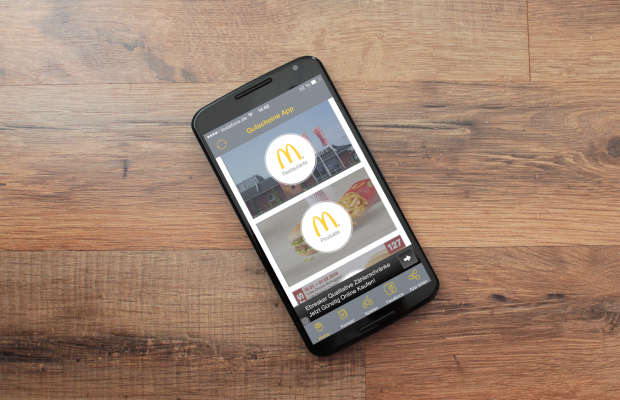
    McDonald’s Indonesia celebrates its 25th anniversary this year. The franchise of US-based fast food giant McDonald’s will launch a mobile application to serve customers amid growing technology development.

    Fast food giant McDonald’s Indonesia will launch a mobile application for food orders in the fourth quarter of this year to tap the growing smartphone market and keep up with the shifting customer behavior, a senior company employee said on Thursday.

    Customers can currently order food for delivery through the McDonald’s website, said Michael Hartono, McDonald’s Indonesia’s marketing and communication director.

    The food chain said that a mobile application would give customers easier access to order food order amid growing technology use and development in Indonesia.

    “We are currently developing the application and hope to launch it by the fourth quarter of 2016,” Michael said during an event in Jakarta on Thursday.

    Once it is launched, customers can download the app and click on the menu when they want to place an order, he added.

    McDonalds recorded a stable performance in 2015 amid the global economic slowdown affecting commodity prices and people’s purchasing power, Michael said without giving further details.

    McDonald’s plans to open 15 stand-alone outlets across the country, adding to its 168 outlets in Indonesia.

    The fast food giant aims to record 15 percent sales growth this year, Michael said.

    McDonald’s Indonesia operates under PT Rekso Nasional Food, which holds the franchise license in Indonesia for McDonald’s.

    Free Egg McMuffin

    McDonald’s will give away 1,000 Egg McMuffins at stand-alone stores across Indonesia on March 7 from 6:30 a.m. to 10 a.m. as part of a promotional campaign. They can be obtained at outlet counters or drive-thrus, Michael said on Thursday. A 50 percent discount will also be given on coffee and hash browns during breakfast.

    During what the company calls National Breakfast Day, held since 2013 on the first Monday of March, free souvenirs, such as T-shirts, will be given to selected customers.

    As this year’s event coincides with McDonald’s 25th anniversary, the company will also give free Egg McMuffins to public institutions, such as schools, police posts, firefighters and hospitals.

    Customers at the event could receive discount vouchers for the following day’s meal, Michael added.

  • Jollibee to continue stinging McDonald’s despite labor issues

    Jollibee to continue stinging McDonald’s despite labor issues

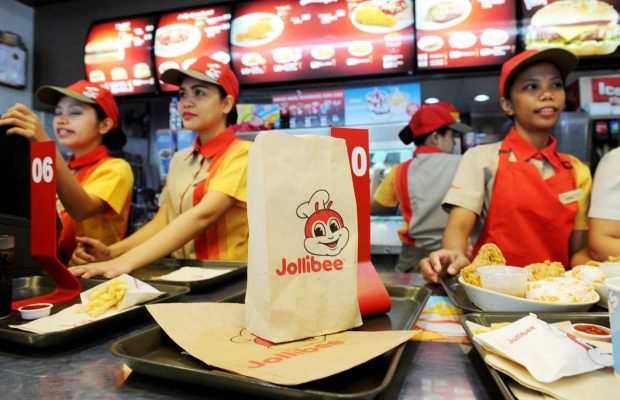
    Jollibee Foods Corporation’s largest brand has been experiencing some financial challenges since July 2016 due to the rising cost of raw materials and contractualization issues in the Philippines. But despite these, the homegrown fast-food chain expects to maintain its lead against rival McDonald’s Philippines, driven by its network expansion and product innovation.

    Jollibee, known for its Chickenjoy fried chicken and sweet spaghetti, told the Philippine Stock Exchange that the brand expects to maintain a “significant lead” over its key competitor in the coming years.

    This was despite two price increases last year due to higher raw material costs and the Philippines’ new regulations on contractualization, which resulted to increased labor expenses.

    “These price increases did not adversely affect consumer purchase volume regardless of income class. Over the past years, the pricing of Jollibee had been at parity with key competitors,” Ysmael Baysa, chief finance officer and corporate information officer of Jollibee, told the local bourse on Wednesday, March 29.

    Baysa said this in reaction to an analyst report from Macquarie, saying that McDonald’s has been closing in on Jollibee in terms of preference and that the new labor rules could affect its leading position in the Philippine market.

    Baysa said Jollibee has been incurring the costs of those steps since the 3rd quarter of 2016.

    Because of this, Jollibee said the cost of labor will be higher in the first half of 2017 versus the same period in 2016. However, the labor cost increase in the 2nd half of 2017 over the same period of 2016 will be at a normal rate.

    At present, Jollibee already has 978 stores nationwide, while McDonald’s has 521 stores.

    David and Goliath

    McDonald’s had said that it plans to open 45 stores this year, while Jollibee said it continues to enjoy higher sales in the Philippines based on its latest financial report.

    Jollibee’s same store sales growth in the Philippines in 2016 stood at 8.3%, driven by higher customer traffic and higher amount of purchases per visit per customer compared with a year ago.

    Moving forward, Jollibee said the growth in its brand in the Philippines will continue at a strong pace, at least sustaining the number of new store openings in the past two years.

    “The Jollibee Group of Companies had faced many challenges in the past. It had emerged stronger from these challenges and its profit recovered quickly. It has one of the most consistent sales and profit growth track records among all public companies in the Philippines, while sustaining one of the highest returns on equity (ROE) at 18% to 22% annually over different economic cycles,” Baysa told the local bourse.

    Overall, Baysa said Jollibee’s share in burgers, fried chicken, and spaghetti “actually increased in 2016 from its key competitor,” which is McDonald’s.

  • Burger King Is Launching an Ice Cream Shake Made from Cereal Favorite Fruit Loops

    Burger King Is Launching an Ice Cream Shake Made from Cereal Favorite Fruit Loops

    Restaurant Brands International is launching the Fruit Loops shake. Yes, for real. The company confirmed to TheStreet the shake will be available for a limited time only at participating restaurants nationwide starting April 17 for a recommended price of $2.99. It’s made from vanilla-flavored soft serve ice cream, Fruit Loops cereal pieces (compliments of Kellogg’s) and sweet sauce.

    Burger King is no stranger to thinking outside the box when it comes to fast-food. The company teamed up with beverage and snack giant Pepsi  last year to develop what it called Mac n’ Cheetos. The snack mashup was a portable combination of mac n’ cheese covered with crispy Cheetos flavor. Last March, it unveiled the “Angriest Whopper,” a burger with a red bun, jalapenos and hot sauce.

    And in September 2016, Burger King sold a black-bunned burger filled with Kraft Heinz’s A1 steak sauce called the Halloween Whopper for a limited time.

  • DHL Express forays into Sarawakian market

    DHL Express forays into Sarawakian market

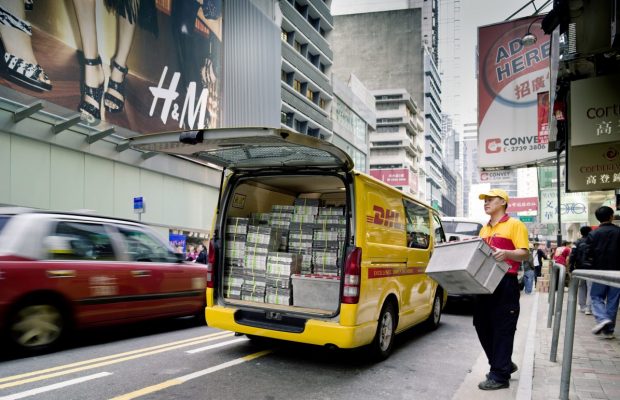
    International express services provider, DHL Express, has set up a direct presence in East Malaysia through the establishment of a new Gateway in Kuching yesterday.

    As the only international express services company with a direct presence in Sarawak, the new and upgraded Gateway caters to the increasing demand for international trade, supporting businesses operating in and out of the state.

    The Kuching Gateway serves as a clearance point for inbound shipments entering the state, before they are sent to DHL’s four Service Centers in Miri, Bintulu, Sibu, and Kuching for deliveries.

    Strengthening DHL’s network of 23 service centers, 90 service points and 6 gateways in West Malaysia, the Kuching Gateway improves the efficiency and responsiveness to meet the increased demands of customers in Sarawak.

    Speaking at the official launch of the Kuching Gateway, Christopher Ong, Managing Director of DHL Express Malaysia & Brunei said, “Previously operated through an agent, we took over the operations in Sarawak to enhance our services and interact directly with our customers.

    “The new facility delivers top-notch productivity and operational efficiency, with improved speed, reliability and flexibility. This will enable our customers in Sarawak to have greater access to international markets.

    “To provide our customers with peace of mind when they ship with us, we have invested heavily to ensure that the facility is built to TAPA “A” certification standards, to meet our global criteria for operational efficiency, quality and security.

    “The Kuching Gateway provides direct access to our global network of more than 220 countries and territories, allowing businesses in Sarawak to trade in the global marketplace more efficiently than ever before,” he added.

    The official launch of the Kuching Gateway was witnessed by over 30 guests including officers from The Royal Malaysia Customs Department in Kuching.

    DHL offers a portfolio of logistics services ranging from national and international parcel delivery, ecommerce shipping and fulfillment solutions, international express, road, air and ocean transport to industrial supply chain management.

    With about 350,000 employees in more than 220 countries and territories worldwide, DHL connects people and businesses securely and reliably, enabling global trade flows.   it offers specialised solutions for growth markets and industries including technology, life sciences and healthcare, energy, automotive and retail.

  • Honeywell’s New Satellite-Based Connected Worker Solution Keeps Remote Workers Safe

    Honeywell’s New Satellite-Based Connected Worker Solution Keeps Remote Workers Safe

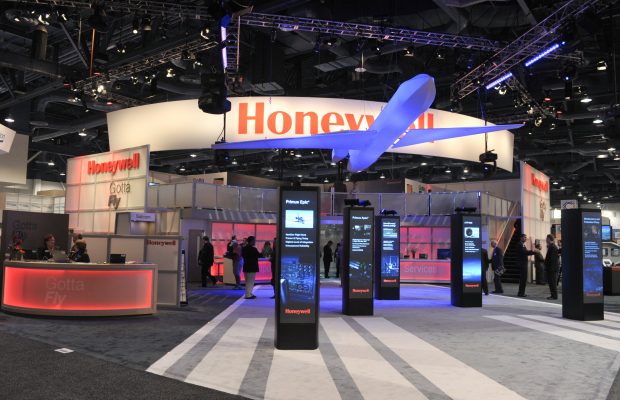
    Honeywell today announced a new satellite-based connected solution to help governments, companies and other organisations monitor the location and safety of workers in remote locations.

    Honeywell’s Personal Tracker utilises Iridium’s low-earth orbit satellite network, the only satellite constellation that provides pole-to-pole coverage, which is necessary for effective remote asset and personnel tracking. The mobile device allows companies to communicate with their workers or track assets anywhere in the world – across oceans, airways and even polar regions.

    “Those responsible for employees in remote locations, especially lone workers who may be performing risky work, increasingly need a reliable method to stay connected to those workers to keep them safe and secure,” said Taylor Smith, president of Honeywell’s Workflow Solutions business. “Honeywell’s connected worker technology and Iridium’s proven platform enable satellite communications from anywhere on Earth. This offers remote workers, such as workers on offshore oil platforms or forestry service workers, peace-of-mind and provides their employers with a valuable communication and search-and-rescue tool for emergency situations.”

    Emergency services, maritime, military and oil and gas workers can share their location with GPS coordinates and send text messages using the enterprise-grade, ultra-rugged device, which is certified to function in hazardous environments where explosions or a fire may occur due to flammable liquids or vapours. It can be used as a stand-alone, two-way communications device or can be clipped to a backpack to serve as a tracking beacon. It can also be paired with an iPhone so that users can access a Honeywell mobile app that offers features such as interactive SOS, messaging, push notifications, trip information and situational awareness.

    For example, in the event of an emergency, an organisation can send push notifications to alert its workers – regardless of their location – and then track their locations and provide updates as they seek shelter.

    The Personal Tracker is exclusive to the Iridium® network. With Iridium’s two-way communication capabilities, even when used as a stand-alone alerting and tracking beacon, the Personal Tracker can receive current location requests and configuration updates over the air.

    “We are proud to work with Honeywell in enabling their connected worker technology, and support their commitment to lone worker safety,” said Bryan Hartin, executive vice president of sales and marketing at Iridium. “This partnership comes at an exciting time for us as we are launching our next-generation global constellation, Iridium NEXT, and continue to expand our growing portfolio of satellite-based solutions for the Internet of Things. The unique architecture of our constellation makes it a natural fit over other providers for mobile applications, especially where safety is concerned. Providing reliable coverage is critical for companies tracking employees and assets located in remote areas, and Honeywell’s new Personal Tracker will make that possible.”

    The mobile device supports Honeywell’s ViewPoint software, a web-based platform that provides organisations with real-time visibility for tracking and monitoring high-value assets such as vehicle fleets and cargo containers. The ViewPoint platform offers organisations and government users advanced features, such as 90-day tracking history, geofencing, scheduling reports, alert management and messaging.

  • Singapore to raise $815m from spectrum auction

    Singapore to raise $815m from spectrum auction

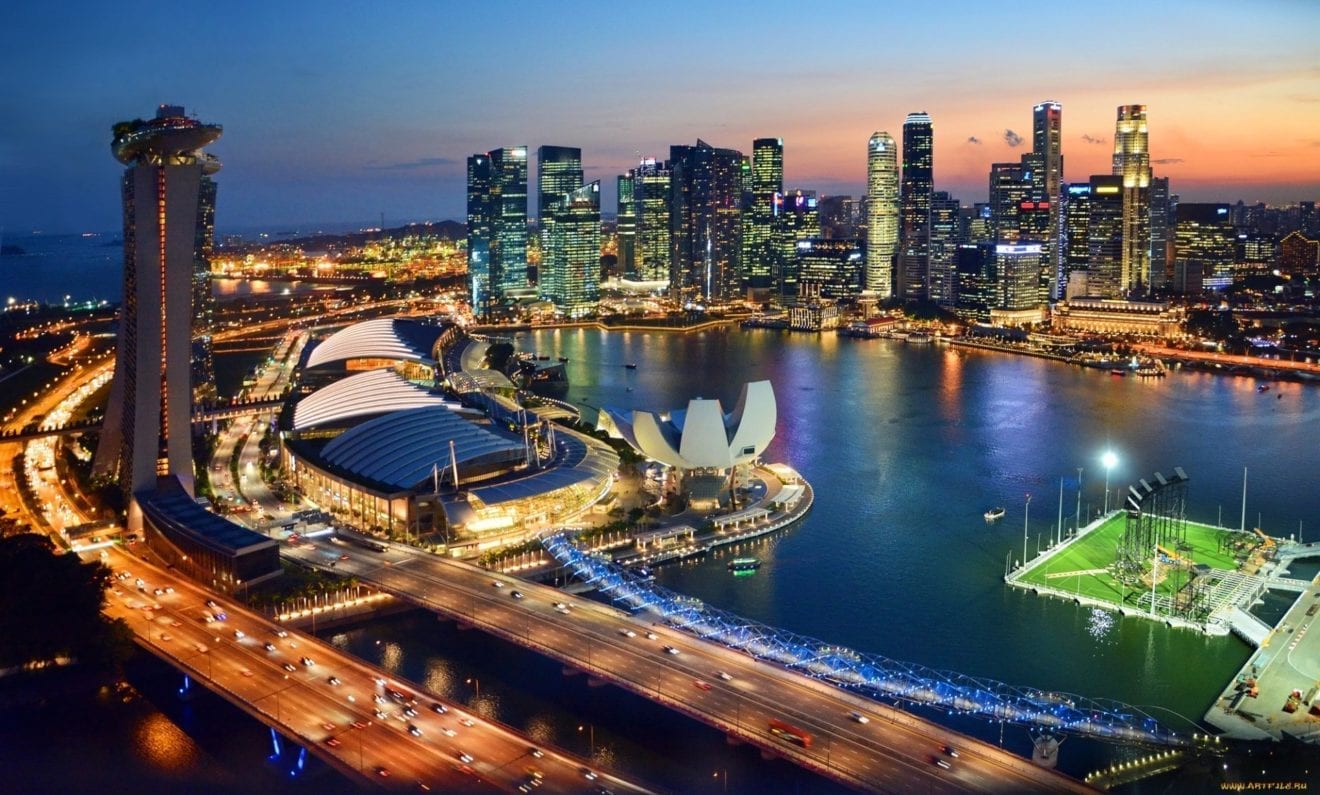
    Singtel has emerged as the biggest spender in Singapore’s latest mobile spectrum auction, bidding nearly half of the total S$1.14 billion ($815.2 million) set to be raised.

    Singtel will pay S$563.7 million for 75MHz of spectrum, consisting of 40 MHz of 700-MHz spectrum, 10 MHz of 900-MHz spectrum, a right of first refusal for a further 10 MHz of 900-MHz spectrum and 15MHz in the 2.5-GHz band.

    The auction of spectrum in the four bands had four winning bidders. StarHub was the next highest bidder, committing to pay S$349.6 million for 30 MHz of 700-MHz spectrum, 20 MHz in the 2.5-GHz band and a right of first refusal to 10 MHz of 900-MHz spectrum.

    M1 bid S$208 million for 20 MHz of 700-MHz spectrum and a right of first refusal to 10 MHz in the 900-MHz frequency band.

    New market entrant TPG Telecom will meanwhile pay S$23.8 million for 10 MHz of 2500-MHz spectrum. TPG last year won the auction to become Singapore’s fourth mobile operator after bidding S$105 million for a provisional allotment of 60 MHz of 900-MHz and 2.3-GHz spectrum.

    A total of 175-MHz of spectrum was allocated during the auction, and this includes the 900-MHz spectrum due to be re-farmed following the retirement of 2G services. But the total allotment was 50 MHz lower than the 225 MHz requested by the industry, because no other spectrum was available for allocation.

  • Massive shift towards hybrid infrastructure underway

    Massive shift towards hybrid infrastructure underway

    By 2020, enterprise spending on cloud, hosted and traditional infrastructure services will be more or less on par, Gartner has predicted.

    The research firm said the growth of cloud and industrialized services and the decline of traditional data center outsourcing (DCO) indicate a massive shift toward hybrid infrastructure services.

    “As the demand for agility and flexibility grows, organizations will shift toward more industrialized, less-tailored options,” said DD Mishra, research director at Gartner.

    “Organizations that adopt hybrid infrastructure will optimize costs and increase efficiency. However, it increases the complexity of selecting the right toolset to deliver end-to-end services in a multi-sourced environment.”

    Gartner predicts that by 2020, 90% of organizations will adopt hybrid infrastructure management capabilities.

    The traditional DCO market is shrinking, according to Gartner’s forecast data. Worldwide traditional DCO spending is expected to decline from $55.1 billion in 2016 to $45.2 billion in 2020. Cloud compute services, on the other hand, are expected to grow from $23.3 billion in 2016 to reach $68.4 billion in 2020.

    Spending on colocation and hosting is also expected to increase, from $53.9 billion in 2016 to $74.5 billion in 2020. In addition, infrastructure utility services (IUS) will grow from $21.3 billion in 2016 to $37 billion in 2020 and storage as a service will increase from $1.7 billion in 2016 to 2.7 billion in 2020.

    In 2016, traditional worldwide DCO and IUS together represented 49% of the $154 billion total data center services market worldwide, consisting of DCO/IUS, hosting and cloud infrastructure as a service (IaaS). This is expected to tilt further toward cloud IaaS and hosting, and by 2020, DCO/IUS will be approximately 35% of the expected $228 billion worldwide data center services market.